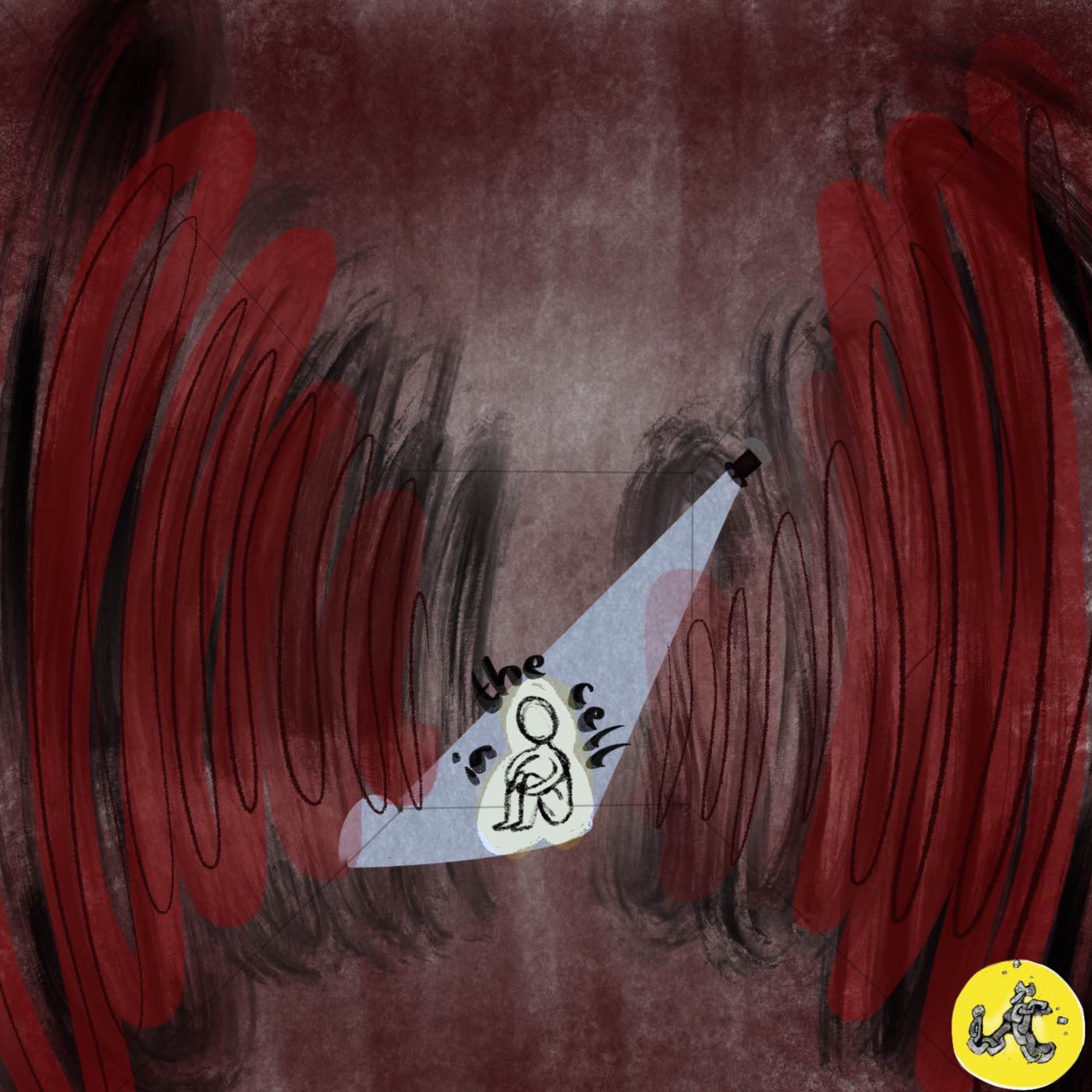
Blessing’s powerful story highlights the severe human rights abuses within the UK’s immigration detention system. After enduring years of family violence and loss—including the poisoning of her son—she fled to the UK on a visit visa, only to be detained due to expired status. She recounts being subjected to repeated detention cycles, during which she faced constant fear of sudden removals, poor medical care, and lack of legal representation. Detainees live in overcrowded, dehumanizing conditions, with no access to proper healthcare, medication, or mental health support. Upon release, she faces societal rejection, as people assume she is a criminal, and is denied housing, work, and basic dignity. She describes losing her identity, being reduced to a number, and developing deep distrust in others. Her experience reflects broader systemic issues: colonial-era legacies, economic exploitation, and dehumanization of marginalized populations. The podcast challenges listeners to confront the moral and societal costs of indefinite detention, urging a shift toward humane, equitable alternatives that protect human dignity and address the root causes of displacement and trauma. It calls for accountability, empathy, and collective action to build a society where everyone has the right to breathe and thrive.
Welcome to the first of our podcast series, Immigration Detention, The Hidden Costs,
brought to you by the Unchained Collective, where we will be hearing conversations between
those who have spent time indefinitely detained on administrative grounds in British Immigration
Detention Centers.
The aim is to raise critical awareness through the powerful voice of experience of the destructive
impact of immigration detention on many levels, on individuals, families, communities and
society at large.
Discussions encompass the ongoing harms of being dehumanized and criminalized, the stigma
and rejection individuals face upon release into the community, as well as the economic
impacts of the system on individuals and society as a whole.
However, these conversations importantly also demonstrate the strength and powerful resistance
of those targeted by this system.
A crucial question is raised - why is this system that destroys lives, wastes public funds
and fosters division in our society allowed to continue?
Can we envision alternative ways of being together in our shared vulnerability?
Can we build a society where everyone has the right to breathe?
Ultimately, these powerful accounts serve as a collective call to action.
When future books chronicle the history of systematic incarceration and torture sometimes resulting
in death of predominantly non-white individuals for crossing borders, what role would you like
to have played in that history?
This is a question, this podcast series, compels you to ask yourself.
All these women, all these people, they have passed through a lot of trauma before even
coming to the UK, so kind of detaining them is kind of re-traumatizing them again.
They would be walking up and down the corridors in the night, here they are boots, you know,
thumping on the floor.
You couldn't sleep because they would be taking people to deport them in the night.
The whole idea of a detention system, but they didn't tell me why I was detained.
It's based on past experience of colonialism.
I still don't know why they detained me.
The extension made us to be a net set from each other.
Nobody wanted anything to do with me because they felt I might have committed a crime.
I'm being labeled as a criminal, so I don't have any freedom.
The web stage of money involved in running this whole institution
and you just feel losing my identity, having to get adjusted through, you know, being called
out through a number.
I feel like I've made just a number.
You are unwanted, you feel like you're really not like a human being.
Everybody's men and women, to be behind bars, is an economic West, is a human West.
We need to counterbalance the negative rhetorics that come in out there that immigrants are
nothing but a board and two society.
And this hatred to hate other people who are not English, knowledge they say is power.
Ignorance is a very big disease.
They want to silence us.
It takes courage for us to be here.
I refuse to let their system break me.
I don't want to be a victim rather I want to be a victim.
Welcome to this podcast series, the hidden cost of immigration detention, brought to you
by the untrained collective.
In this episode, blessing shares her journey from the horrors that forced her to leave
her home to visa complications and once again losing her freedom in detention.
She remembers how difficult it was to sleep, listening to the trauma of enforcement officers
taking women unexpectedly in the night.
She powerfully expresses the long-term de-hemianizing impact of immigration detention.
Oh, thank you, blessing for being here.
Would you like to briefly tell something about yourself?
Yeah, thank you, Blau.
My name is Blessing and I come from a country in Africa, in Central, Eastern Central Africa.
Now I found myself living my home because of operation from my relatives where I was married.
Soon after my husband unfortunately passed away and I had four children formally and my relatives
they turned against me, these were people from my father in law side where I was married.
They had never accepted me in that family, so they made my life very hard back at home.
They used to be jealous, I mean before even when my husband was alive, doing bad things
to us, but at least because my husband was there, he was able to keep them from causing
too much damage in our family, but when my husband died and they just started being aggressive,
one time they burnt my house in the village at a certain point I lost my job.
They started doing other bad things and actually ended up losing my son, they poisoned him
and he died and this really made me feel my God, these people, they have done other bad
things, they were not even allowing me to cultivate in our land that time in the village.
And that is the time, it reached a point if I tried to do planting, somebody would just
come and bring some cows and graze them in the land, we had planted and all this was frustrating.
I tried to complain even to the chief of the area but nobody would listen to me, they
were like, this is just a woman and I didn't have anybody to support me.
Wow, I'm so sorry to hear that, when you came to the UK, were you detained?
It came later because I came to the UK to visit a friend, it was on a visit visa, but I lived
with a friend for some time.
That is the time, as I was living within these six months, it dawned on me that he would
find my freedom, I would be safe from the hands of my plan.
My son, you know, the way he died, his death came so suddenly and that is what now made
me really fear for my life when they poisoned my son and so when I got this chance and
I ended up here, I realized this is an opportunity not to be free.
I didn't know how to go about making a claim for asylum and I was so scared how will I start
and all this suddenly, they realized that my visa had expired and they arrested me because
I was asked for identification and that's when they realized that this is a person who
is here in this country illegally.
At that point is when they put me in detention for the first time.
I'm sorry to hear that.
So after that the detention, how do you find yourself in the community?
First of all, when I was in detention, that's the time I realized I had again lost my
freedom, I was a nobody, I lost my identity and that's the time it hit me bad again.
This is the point.
Kutakakakakakakakakakakakakakakakakakakakakakakakakakakakakakakakakakakakakakakakakakak
I started working for people taking care of their children in the houses.
So, I went through a lot in the detention period during that time when I was locked up.
There were letters for removal and this thing happened in the course of several months when I was inside there.
In the room you have to live like two people, you are strangers to one another, you don't know one another.
You have different mindsets and the officials who are taking care of us in those detention centers.
They would be walking up and down the corridors in the night, you hear their boots thumping on the floor.
So I was like they might also pick me in the night.
They gave us a chance of solicitors who they could give us inside there, you register, you have to register with them.
But most of these solicitors even to access them properly was not easy because they would come one day and they are given probably 40 minutes or so.
To attend to a number of maybe 10-20 people and they choose maybe two or three people only to represent.
Considering looking at their cases if they can help you, for them you would check these cases which one has better chance of winning the case.
So getting this you know somebody to represent you was like one in a hundred percent chances to get a proper solicitor.
And at the same time you are getting letters being written with removal anytime.
It was never easy, most of us suffered high blood pressure some people came with illnesses. I remember a certain woman had a bleeding issue.
She had a surgery to undergo just before she got arrested and she really suffered, she kept on bleeding every day, every day.
For almost three months she was crying because there were no medical facilities.
We had a health center but these are just clinical assistants, that's what we came to understand.
So they were not professionals to deal with cases like this.
And we all felt for this woman because everybody came to know her condition.
She was bleeding, the bedsheets were feeling with blood every night. Nobody bothered for like almost three months.
They take her to hospital. Other people were suffering. Some people came in, maybe they had been diagnosed with cancer.
Others, before they got arrested, they had medications in their houses, they were not allowed to have their medications.
They were using, if you ask them, then to provide you with the same medications from this health center, the small health center there.
They would not give you, they would just give you a paracetamol and to get access to the hospitals outside.
Oh, those chances were very limited, very, very limited.
Wow, I'm so sorry to hear that. And to you personally, how was the immigration detention affected your physical or mental life, or mental state of mind?
It's been a big traumatic experience. I've been through mental torture. I lost my identity as a person. I feel so insecure.
The community, the people I was living around with, they rejected me most of them. Nobody wanted anything to do with me because if you come from detention, they think maybe you committed a crime.
So you are like somebody living under rejection, getting help for anything is not easy. You're not allowed to rent a house. You're not allowed to work unless you're granted permission by the home office.
And you go through a lot of insecurity. Landlords do not rent your house because you don't have number one, you don't have ID.
And number two, you're not working. You can't pay that house. And they also threatened by the home office that they'll be fined over 10,000 pounds.
If at all they give you, they allow you to rent. So everybody fears. And you just feel, you know, you are unwanted. You feel like you're really not like a human being, you feel like nobody bothers about you.
It's been hard in many ways, even getting mental health access. It's not easy. Though when you come out of detention, they give you a letter saying you can register with a GP.
You go to these people, they start asking you an ID. When you come out of detention, they just give you a number, you know, prison number. Actually, the letter they give you, the number is written there and it stays clearly prison number.
So I would say it has really affected me mentally, traumatized because of the things I experienced in the detention, the removals which were being done, you know, many times in the night, carried out unexpectedly.
I was losing my identity, having to get adjusted to, you know, being called out through a number. Also, it lowered my confidence and trust. I couldn't trust anymore. I lost trust in people. Even the people I thought were my friends. I felt rejection everywhere.
It impacted negatively on my life. Yeah. So sorry to hear that. Yeah.
Thank you very much for talking to me today. I appreciate all of this. Do you mind talking about the impact that has on your family?
Yeah. It's really been hard for my family because these things separated me from my children. They have, because they are still back home.
And it's taken many years. Many times I've been pursuing my case with the home office because I ended up being released actually on a bail.
The bail conditions are so tough. I'm still not allowed to work. I have applied when I was still inside detention to be given housing which they rejected.
And they released me suddenly. I had nowhere to go and when I asked them, they told me you might have to probably stay inside here if you have nowhere to go until we find a place for you.
That because of the traumatic experiences I had been in, I didn't want to stay in that place for even another 10 minutes. So I just tried to call the person I used to formally live in his place who at first had said he'd not allow me back to his place.
He said, "Okay, if you have nowhere to go, you can come but just for a temporary time, you have to look for another place."
And that's how I came out with nowhere to go. So please remind me how many times were you detained?
I went through detention three times actually. Through three different times which were very hard, those three different times.
sef yw sef yw sef yw sef yw sef yw sef yw sef yw sef yw sef yw sef yw sef yw sef yw sef yw sef yw sef yw sef yw.
Kami'a, 3 jelik.
Kami'a, 10 jelik,
Kami'a, 10 jelik,
Kami'a, 10 jelik,
Kami'a, 10 jelik,
Y me diwetodau.
Y me diwetodau.
Y me diwetodau.
Y me diwetodau.
Y me diwetodau.
Y me diwetodau.
Kukitimakakakakakakakakakakakakakakakakakakakakakakakakakakakakakakakakakakakakakakakak
Hintiakutatatatatatatatatatatatatatatatatatatatatatatatatatatatatatatatatatatatatatatat
Kami ni, kaki ni, kaki ni, kaki ni, kaki ni.
So much for talking to me. I appreciate that.
and brought me safe, the sun and grace will lead me all was one.
Jelik,
Kami'a,
10 jelik,
Podcast Summary
Key Points:
Blessing, a woman from Central Africa, describes how prolonged detention re-traumatized her after enduring severe family abuse and loss.
Detention centers involve frequent nighttime removals, lack of medical care, and inadequate mental health support, leading to physical and psychological harm.
Individuals are stripped of identity, labeled as criminals, and face systemic rejection from communities upon release due to stigma.
Legal representation is severely limited, with solicitors selecting only a few cases and offering minimal support, increasing the risk of deportation.
Detained people are denied basic rights, including work, housing, and access to medication, exacerbating vulnerability and insecurity.
The system perpetuates dehumanization, fostering distrust in people, institutions, and even former friends.
Detention has long-term effects on mental well-being, including high blood pressure, chronic anxiety, and trauma-related illness.
The podcast calls for systemic reform, urging society to question the morality and cost of a detention system that harms marginalized lives.
Summary:
Blessing’s powerful story highlights the severe human rights abuses within the UK’s immigration detention system. After enduring years of family violence and loss—including the poisoning of her son—she fled to the UK on a visit visa, only to be detained due to expired status. She recounts being subjected to repeated detention cycles, during which she faced constant fear of sudden removals, poor medical care, and lack of legal representation.
Detainees live in overcrowded, dehumanizing conditions, with no access to proper healthcare, medication, or mental health support. Upon release, she faces societal rejection, as people assume she is a criminal, and is denied housing, work, and basic dignity. She describes losing her identity, being reduced to a number, and developing deep distrust in others.
Her experience reflects broader systemic issues: colonial-era legacies, economic exploitation, and dehumanization of marginalized populations. The podcast challenges listeners to confront the moral and societal costs of indefinite detention, urging a shift toward humane, equitable alternatives that protect human dignity and address the root causes of displacement and trauma. It calls for accountability, empathy, and collective action to build a society where everyone has the right to breathe and thrive.
FAQs
Detention causes severe mental trauma, including loss of identity, chronic anxiety, and a deep sense of being dehumanized. Survivors often lose trust in others and struggle with long-term emotional instability.
Detainees face serious medical neglect, including lack of access to proper treatment for chronic conditions, surgeries, or medications. Many report uncontrolled bleeding, untreated illnesses, and limited access to hospitals.
Upon release, individuals are often viewed as criminals due to the detention label, leading to social rejection, refusal of housing, and difficulty finding employment.
Removals often occur at night without warning, with officers walking the corridors, creating constant fear and trauma for detainees who may be taken unexpectedly.
Solicitors have extremely limited time and access, often only seeing a few people per day and choosing cases based on perceived chances of success, leaving most detainees without proper legal representation.
Detainees face long-term financial hardship due to inability to work, lack of a formal ID, and heavy fines. This creates a cycle of poverty and dependency on public support systems.
Chat with AI
Loading...
Pro features
Go deeper with this episode
Unlock creator-grade tools that turn any transcript into show notes and subtitle files.
 PodcastTranscript AI