In this episode of "Art in Permacrisis," host Sebekin Alesson and co-host Candela Kubria interview Kuba Shredder, author of "ABC of the Projectariat," about the precarious condition of artists in Poland and beyond. Shredder discusses Poland's political shift after the 2023 elections, where a democratic coalition replaced the right-wing government, leading to changes in cultural policy, such as replacing institutional directors and initiating reforms. However, he emphasizes that the economic situation for artists remains unchanged, with ongoing precarity exacerbated by high property prices and structural issues. The conversation explores whether artists are "special" workers, concluding that while their passion-driven labor is notable, it mirrors broader gig economy trends where unpaid internships and project-based work are common. Shredder introduces the term "projectariat" to describe project-based precarious workers in the art world, noting it emerged from a linguistic need rather than a theoretical ambition, but it effectively captures the reliance on securing future opportunities through unpaid or underpaid work. The discussion also touches on the proliferation of new class terms (e.g., precariat, cognitariat) as attempts to describe evolving labor conditions, with the projectariat offering a specific lens for understanding art world dynamics. Overall, the episode highlights both hope from political changes and the persistent structural challenges facing artists.
Welcome to the Void. The Void is a research project on technical audio-visual publishing hosted by the Institute of Network Cultures. This episode is the first in the mini-series called Art in Permacrisis, in which we discuss the organization of artworks in the face of the ever-growing stack of crises. How can artists make a living without selling their soul? Can we imagine a sustainable art economy beyond precarity? How would this change the circulation of artworks, the curriculum of art and design academies, the exhibition programs of museums, the organization of collectives and unions? Can Permacrisis is hosted by Candela Kubria and me, Sebekin Alesson. For today's episode, our guest is Kuba Shredder. Kuba is a lecturer in art history at the Academy of Fine Arts in Warsaw and a freelance curator. He co-initiated the free, slow University of Warsaw and the Office of Post-Artistic Practices. He is also the author of the book, ABC of the Projectariat, living and working in a precarious art world, which will be the main topic of our conversation today. Welcome, Kuba. Hi, thanks for having me. So Kuba, I wanted to start with a question from the Amsterdam point of view. Because I started Euro, wrote an article for the Dutch magazine, Metropolis M, about a year ago, about the kind of bleak reality of Polish art policy at the time. But speaking from this Dutch point of view, it seems like the tales have turned recently, since Tuskewundi elections in Poland and Wilders won the elections in the Netherlands. And I hear also around me that Poland has turned from a nightmare scenario into a shining example almost overnight. And I wanted to ask you, is there a basis for this optimism? How do you feel about the recent changes and how is the art scene in Poland doing right now? Well, not as shining as it looks like from the Netherlands, I can assure you. But also not as bleak as it sounded like a while ago. So basically you said it, right? There were elections in October. For people who do not wear the elections were won by so-called democratic forces. I think it was as surprising for us as it was for anybody else. I remember the election night when the first results came. And I'm sure was it to open this champagne or not? At the end we did. But we were all kind of anxious about the repetition of Slovakian scenario in which first exit polls were kind of favorable for the so-called democratic parties. And the day after it transpired, that the right wing coalition actually won the polls. But in Poland it didn't happen. So now we have a kind of like new government, a new democratic government, and maybe not to get too much into details because of the complexities of the political situation where presidency is still in the hands of the right wing. Because of the constitutional court and because of the ATS of entrenched rule of authoritarian areas. This is not as easy as it may sound or not as shiny as we would wish it to be. And still it's definitely, as I said at the beginning, not as bleak as it might have been. So currently maybe coming to more to contemporary art because I'm not sure whether you expected from your political commentary, but coming more to cultural policies. But definitely there's certain attempts to let's say unwind or rewind, certain kind of illusion, a kind of encroachment on artistic institutions that has been made by a right wing party. So basically a couple of directors, she's changed. Definitely there is a change in atmosphere. There is like a huge change in terms of let's say process of decision making. There is a lot of discussion about certain reforms when it comes to also let's say artists well being or like social systems of social insurance or how directorships should be decided. So basically whether or not you will make public competitions, how does competitions look like if there is like a currency at the helm of the major art institution or the next candidate would be selected. So all these things are now up in the air and I think lots of people got to quiet at least I can tell about myself and my friends who are working variety of artists associations. They have been kind of surprised by the pace of this change and a sense suddenly a lot of things were to be discussed. In a sense that you just need to you know like partake in a committee or we'll go somewhere and talk with people about whether or not or how to or if it makes sense or what would make sense in terms of cultural policies. Much was a business kind of like general underpinning situation is let's say as it's kind of like same old in a sense of that from day one to day two like you know like things like economic situation of artists has not changed. And it is as precarious as ever or maybe even more so because of that let's say certain structural processes that people are faced with such as the property market cranes that are suddenly not suddenly currently engulfed Polish major cities. Yeah. Okay so I thought we could start on a positive note but not the positive thing. No I'm a glass path empty character. You know like a video has created anyway. But you know yeah but at least some tangible changes are happening and there is some hope to be had. I mean I could have been like okay so maybe I will rephrase it. It would have been really really really bad. I met just recently I mean if if outer return is one power in October the situation would have been quiet I mean really sad and I think a lot of people would think about migrating on the like certain kind of energy that emerged or was accumulated over the last eight years dissipated because for some time people were simply protesting. There was like one amount of ten other you know demonstration what this demonstration about something else. And then in late 2023 my feeling was but a lot of this energy already run its course people were running on fumes already for a couple of years. And because of this election there is definitely a change in atmosphere and people but people it's a weird kind of situation people are so exhausted after these eight years but they did not really so it was not kind of like moment of you know joyous celebration or something like that. And yet of course the change is much for the better and you can already see how certain institutions that were being taken over by the right wing directors are changing its cause and the ones who are still under the hand of right wing directors she's they lost the how to say it. They lost a moment right they know not any longer thing as if they were on the edge of the kind of like nationalists to age they rather are on the defensive. So of course there is like politically speaking there is a major transformation. But okay I think this quite nicely sets the stage for also where you're talking from right now in terms of context. And we first wanted to go into some questions about the more theoretical side of what precarity is and how it relates to life as an artist. Yeah so to kind of open up the topic I'm wondering are artists special as workers as people or in their position in the labor market. I was like this is special. Tell me. So why do you for example if you are I don't like kind of you are currently in intern right in the the IC the aren't and are you getting paid for it? Yes. That's great. This is this is called but if we know that quite a few people aren't right. Yeah. No I'm thankful for it. Sure. I mean I'm not sure that you should be because you're making your work you know so you will be actually thankful for being paid for getting actually your work done right. But you know like when let's think about situation like in London when there is an opening for an intern in places like Seppentine Gallery there is like and this is actually a free internship free in a sense unpaid. You have 300 people applying.
for that. 300 people applying for unpaid internship in a major art gallery in London. So you can imagine how many people do actually apply to get paid positions. And possibly anyway, maybe just only one third of people who are qualified or maybe one tenth of people who are qualified do apply for this position because majority think that this doesn't make any sense because the competition is surface and possibly there is anyway an internal candidate. And the question is whether this is special or not because we can think about other professions which are quite similarly structured. For example, law, medicine, right? Like most of the middle class kind of jobs are in fact gaited or the access to them is kept behind several gates of Maria's but one needs to cross in order to kind of start working in this profession. Now currently I think at the EU level is a discussion about bearing free internships and to quite fully solve because this is of course like a huge gap to be crossed for a person who likes any kind of resources. And this is mostly people of color, mostly people for working class who are actually not having access to the resources that would help them to go through this period of unpaid internships in arts maybe in contemporary art when you are an artist. It's not necessarily internship you would not intend on the gallery but still between the moment in which you enter the market or like a finish your school or even between the moment in which you actually even decide to go to school and the moment in which you start earning on arts, educate or to make paths if it happens at all because generally speaking artist support. And yet quite a few of them decide to do it for many reasons. So in this sense art is special because we are people who are deciding to I mean special or exceptional if you think that the rule of time would be that people make work in order to earn money. And in contemporary art or like generally speaking arts a lot of people actually do this work like what they assess or even though they are not necessarily very well paid if they are paid at all. I think the background of the question is also that in many moments in your work you've pointed out that in order to actually address the structural issues behind the project area or the precarity of project-based art work we should acknowledge that art is not so very exceptional. So that maybe it's connected to the larger gig economy to the digitization of gig work as well and the globalization of gig work as a result of that. Is it fair to point that out that's your position that we shouldn't exceptionalize artists too much? Yeah definitely I mean well you said it possibly I said it too and in fact I would say it again. Yes of course but then you know like we need to think about the asset and the asset and issues that maybe kind of specific but they are not as exceptional as they used to be. In a sense like there's free labor because what Kendall asked me at the beginning right this is an interesting situation where when you have like a lot of people committing themselves to do their art but of course there are like a lot of other people who also do it in a sense of you know you may think about Hobbes or whoever else you know that quite a lot of people who are doing things for the love of it right. Then I was also like recently thinking about my neighbors who are farmers and they told me that they made an economic calculation after a few years because EO was actually asking them to do it like so you know they got a grant they had to and then at the end they had to make a kind of at the beginning they had to make a business plan and at the end they had to make a financial report. They were just farmers like you know doing like a regular with farmers do like possibly the cattle and a bit of crops but then and at the after kind of like three years period they discovered they are on surprise but they did not make any money on it right and yet they were toiling like day by day for you know like if you have a farm you basically need to wake up at 5 a.m. and it's a really hard work and after the end you do not earn any money on this. So I'm just saying this is an example but even this kind of like what would we think or what I even said that people are willing to commit to the activities that are unpaid or underpaid such as artists do. It's not necessarily as exceptional as it may sound at the very beginning and yet this is something but in order to understand the situation of artists we need to take factor in we need to take this into account this willingness to to commit themselves and I've already suggested a couple of reasons why people do commit themselves to this like so one would be let's say let's say love of doing something that is deemed important right. Another thing would be let's say here we come back more in a direction of projectarianism let's say or freelancing then like that you need to but this kind of like three labor is considered as an investment like with interest with internships so first you invest yourself with hope of getting a food court in the industry to which otherwise it is very hard to find yourself in right to get access to and then you have like a lot of barriers of access how this is structured it's also a way of prohibiting competition and impact and barring people who cannot afford it to enter into the fall and another thing would be not necessarily only getting a food court in the industry but also and here projectarians come to the fall it's about securing opportunities so basically you do start for free because you think that in the future you will get projects that are paid or you are kind of taking into account for one paid job you would need to have a couple of unpaid gigs right and you would think that this may be special but this is not actually so special if you consider this like think about all this tokenization gamification of the various industries right in which like even Uber drivers are becoming you know are tired they're having this task and so on and so forth so also like under the assumption they would need to commit themselves more than just making a simple service the smile they would be kind etc etc because otherwise the reputational style is they choose false yeah I think because they're also yeah sorry no I think I think this is very clear and I think a lot of artworkers will so definitely immediately recognize it but also in this connecting artworkers to add their types of precarious workers I wanted to follow up on that and go a little bit deeper theoretically and ask you about how do you understand precarity beyond simply living with insecurity for instance do you believe that there's something like the precarious as the new dangerous class or do you think that that's an unusual term well you know that was a little a little bit more I mean I'm how to say it because now you just like you get into theoretical debates and I just if I start to unpack them we will get into a long winded like time maybe you can just say if you think about if you know like there are some critics of precarious and like example Laurie for example she criticizes it because she thinks that precarious is not necessarily a specific group of people but precariousness is a general condition of existence and the kind of racial capitalism of let's say with this is something much more thorough let's say in fundamental and but I rather let's say for me these standing's concept is perfectly solid and events are very notion of projectariat is of course like let's say a slightly tongue in cheek take on this classical maxis notions and also on the standing notion of precarious or of maxis notion of proletariat and and yet I wanted to introduce it the color for a very specific cohort of people also like who like we we also can describe this artwork as of Finan says in order to get into let's say the specific mode of working which is the project related or project banks let's explain it or you want to be more philosophical? No no no I think it's it's it's clear and I just had one more follow question which is not so much theoretical book more about what are we doing when we make theories like this because yeah since at least discursive loss of the proletariat right we have seen the rise of new conception
of class constellations and the precarious is the important one but also we have B.F.O.'s Cognitaria, we have Sylvia Lotus, so it's Enter precarious. Rosalind Field talks about the cyber-terriot, AT King Smith has coined the notion of the effect-terriot and then here you are with the project-terriot and I just wanted to ask you as someone with the background in social science, how do you read this kind of trend of all these new kind of class definitions? And why do we need project-terriot then? It's not the funny thing. Maybe it's not necessarily what to say. I have an excuse because generally speaking I think that this is not necessarily a very good practice but of course I'm one of the examples of like as you named it, of like giving new names or like finding new names to let's say cover something that maybe said differently or maybe not. In this particular case the notion of project-terriot was without of linguistic not necessarily slippage but maybe more like translation because when I was working on a book, on the Polish book, an audition of ABC of project-terriot, I was about to translate certain concepts that I developed during my PhD which was focused on basically freelancing in contemporary curating. And then I had like not very good terms. I had like sort of structural opportunists to talk about the dependency opportunities, project workers or project makers to talk about the fact that people make projects or work on projects. They were all pretty clumsy in a sense of like linguistically not nice, right? I mean just simply when you say stuff you feel that this is not the right word to say. So if you say project maker it sounds like what the heck. And when I was translating it as a book I mean on like the PhD interview book, in the Polish book, a friend from Fristle University told me "Oh Kuba why don't you talk about project-terriot?" which is like project-terriot. And I said "Oh wow what a cool word why not to use project-terriot?" It's actually quite funny word. And then I typically try to say that this is a word that should not be considered to seriously but it covers something but it's also there is a good explanation why to use it. But I did not start with the definition of something. But rather with linguistic necessity it was more like let's say right as assignment. Then like a mysterious theoretical debate even though it was it resulted from a serious theoretical work. So basically I was working on the theory or like on the theory or like let's say on the analysis of the specific of the working condition specific to a group of people who I'm also representative of. So also it was a kind of auto-reflective try to understand what I'm doing when I'm doing project. And let's say somewhere down the line when the translation had to happen and I was about to write a book. It was a time somehow a match. That's how the time sometimes do. They just have a tendency to emerge or come through linguistic practice. So you talk to somebody like linguistic or basically try to reach somebody and if they ask you "Oh you know this can be named like that" and they say "Oh why not? This is pretty cool." And then let's do it in this way. It actually makes quite a lot of sense and then you think about this and then you think okay so if you name it project target how does it differ or how is it similar because at the end we are the reticent right so like I am at least the how is it similar to to proletariat right you think about what is specific to this condition and like if you wanted to have a bit of theory here you are so like if you think about differences and similarities to proletariat it's basically I think one of the similarities would be that people just as proletariat is defined by the fact that it has to sell its own labor or like the people have to sell their own labor in order to survive because it's a basic condition of it. They do not own means of production. They have to the only mean of survival but they own capacity to work so they have to sell it in order to get money so that they can buy all the things that are necessary for the living. It is a condition of proletariat right so the similarity with projectariat would be that people in order to stay in circulation they need to make one project after another. They basically have to get engaged in the projects in order to keep as part of the certain social strata but then just mind the wording right this is a difference let's say for proletariat the difference is that they typically it's not about the sheer survival they could go and they could drive ubers they could go and they could do different jobs maybe they can get employed as assembly line whatever right it's not necessarily working in order just to make the living they work in order to stay in circulation so if they want to be artists if they want to be part of the art world they need to make projects and this is of course a crucial difference because also I think in accordance to my general understanding like let's say the French research that has been done quite a few of projectarians basically it's a group of people who are standing would call proficient so the specific group of proletariat but own something so basically it usually also because of the selection processes but related to entering into this strait or into the art world so into artistic circulation these are people have we highly educated they have extended social networks usually one of the conditions actually can become and one of the differences between them and the cohorts of precarious people like my migrants so people who like any kind of papers which for example a good passport and this makes a huge difference right so that's why also if you think about precarious there was a tendency I'm thinking about let's say debates that were like in Germany in Elie-Drianbert also in France in Elie 2000s to say okay artists are precarious and they are just as other precarious people it's not necessarily it's both true and unsure it is true because in fact artists are precarious they are just like you know they typically and do not end so much money they are dependent with fundamental dependency on the flow of intermediate opportunities they lack stable sources of income etc etc right so there is a kind of like similarity to the general cohorts of precarious of like precarious people who work in precarious conditions but then on the other hand they also have at the disposal several capitals such as good education knowledge of languages right so like we both talked even now in international and our link English more or less fluently and you know some speak much more than others but then still invests how it is and and to we can travel we just we cross borders without major hassle and these are all differences to people who are for example crossing the Mediciari and who are like fundamentally precarious they do not have any papers when they enter into European unions they are completely on the mercy of others because this is the source of the condition of precariousness basically this is also the Latin root of it being the mercy of other people. Well thank you for this comparative definition of precarious and sorry of projectariat basically and also I think it's yeah it's clear that it comes from the engagement with the description of specific social group that you're all saying involved in so I guess that would be good way into actually going into your book in which you quite inventively and precisely describe different dimensions of the projectariat by the way of of an ABC so entries and we have picked out six or seven of them we have a little bowl here with little papers on them to draw and we prepare some questions about them so then we can go into this yeah more precise dimensions or the aspects of the projectariat. Yeah I can I can take a first one for us to start where. Oh okay this is a question on the general book format I suppose for me. Okay my new chitit. No I swear I know but I am curious how you've decided on the dictionary format and can you elaborate a little more on like the hyperlink format as well and how it possibly can
and creates pathways between the entries? - Well, this was also a kind of like pragmatic decision. You know, when you write it, but when you plan your PhD, which is typically extremely boring, and like written in a very deadpan kind of prose, like, you know, it's an academic narrative. And you have to expect your supervisors to read it or like your examiners. And that's where your readership typically ends, right? You need to be something more interesting when you write a book. And so when I was working on the Polish translation of the PhD, which was in 2015-16, I thought that much more appropriate format would be a lexicon. And one thing was, I think related, yeah, to basically readability. So that people can, you know, like, let's say, projectarians for whom this book is dedicated, let's say, they do not have too long of an attention span in my, yeah. I know common things, I know. - Sure. - Yeah, we know how it is, right? A lot of, a lot of texts is being written, but especially quite long-winded, two comments on the Instagram, or like maybe less on Instagram, but wherever, right? On social media, you write a lot, but then we'd maybe a bit less. But then, jokes aside, I think that short formats are quite good. I like this book to be sort of, like, but you can take it on a train or playing, or rather, you know, like being transition, and we'd hear a bit, hear something else. If you like, you can follow down the route and find other correlated entries. And I think that out of this, kind of, let's say, intuition, writers' intuition, can actually quiet, when I said this task ahead of me, right? So we need to make it into a kind of, let's say, short entries, and then the point is not only that it has to be short, but the point is that it has to be theoretically sound, right? So this is, so then the question is, how we translate or how you reformulate an argument into something that is, on the one hand, quiet, sort of short, and then on the other hand, kind of like, interconnected. And I told that, in fact, this is a very good, I mean, in the process of, let's say, working on it, I told that this, in fact, a very good, that this intuition was quite proper, because it's a really good way of how to explain this particular condition that I wanted to make, which is the condition of projectariat, right? Where we, which is seemingly chaotic, but then on the other hand, extremely repetitive. So like, let's say, it's very intermittent, but you still write applications. You still compete with others. You are constantly facing deadlines. You are partaking in this win-and-effects-it-all economy. You do start just to regain, or like, just to remain visible to the others, right? You think about, but then you also think about how to, let's say, counter the forces that may be, sort of detrimental to you, you may establish, but then institutions, you may establish different support structures. You are enthusiastic for the better awards. You are very eager to, or possibly that's why you have the highly motivated, independent, et cetera, et cetera. And this are all all of these things, like deadlines applications, interdependence, interdependence, enthusiasm, and so on. Entries in the book. But also, they are, let's say, like, gears in this social apparatus, or machines, that keep the circulation ticking. So I was thinking rather about this, like, let's say, a machine that you dismantle into smaller parts, but still, on the other hand, you always think that they work together only because they are interconnected. So on the one hand, you try to isolate certain traits, right? But then on the other hand, you try to put them into a kind of, let's say, systemic-- I mean, maybe the other way around. You try the connections between them, and emphasize the interconnectedness, because it never works in isolation, right? Like, the application itself can be quite neutral. But application is part of the wider system, in which people need to-- in which people need a force to compete for access. And this is part of the grand systems that are in themselves embedded in the neoliberal cultural policies. So theoretically speaking, this book is very much-- and it was also during my PhD from the very onset, it was very much embedded in the understanding of social apparatuses, let's say, materialist analysis of the conditions of artistic industries. But I think, let's say, I follow in the food steps about the banjo, I mean, like Michel Foucault, also a bit of the less in terms of theory of assemblages or the land, trying to understand the situations as certain apparatuses, and analyzing them by isolating the specific traits, but always trying to present how interconnectedly are. And I mean, just a comment on the outcome, which is this like quite comprehensive ABC, I think it shows that it was a smart decision to do so, because I don't know. I feel like everyone who has ever worked on a book or a program or an exhibition always runs into this interconnectedness and runs into the fact that they want it to be more than it can ever be. And this kind of almost network theory that you build really allows you to bring in so many different dimensions and elements and to keep them quite distinct. And the result is quite also-- it has a multi-level access or entry. So for the listeners, I suppose most listeners who didn't read the book or maybe didn't know about it, I think it's a really rewarding read as a result. So yeah, congratulations on that. And on that note, I would also propose to draw another paper. Shall I take one now? Sure, yeah. And see if we can go into some of these entries. I drew art strikes. So yeah, obviously one of the entries in your book. And my question for you is, do they work? Art strikes. And can you talk us through one or two interesting examples? I'm especially interested in the 2012 art strike in Poland. And maybe on a related note, I did notice that there is no "you" for union in your book. Is that related to how you think about art strikes, turn up? Well, there is no "you" for union because there is H for heading cats. Yeah. So we try-- we try to find a bit more-- funny way how to find more like funny take on the situation of unionizing, inside of freelance. And with art strikes, this particular entry is dedicated mostly to the tradition of individual art strikes. Because I like a lot of, let's say, individualistic or artistic gestures related to the withdrawal of artistic labor. And not maybe to get into the details of this, but a couple of names usually sprang when you talk about it. From Gustaf Mezghe, Outer Distractive Art, Milozano and her dropout piece to maybe nail his true dishamp, who was theorized by Lazzarato, as a figure of a person who basically withdraws from artistic activities like modern steel in Orbitra, like a lot of different names. But it's not about main dropping, but it's more about saying that there was this tendency as part of contemporary art to all like as part of the development of art, an artistic history and practice, to withdraw from art as part of, let's say, artistic-- because they're kind of like artistic gesture, let's say. and the difference.
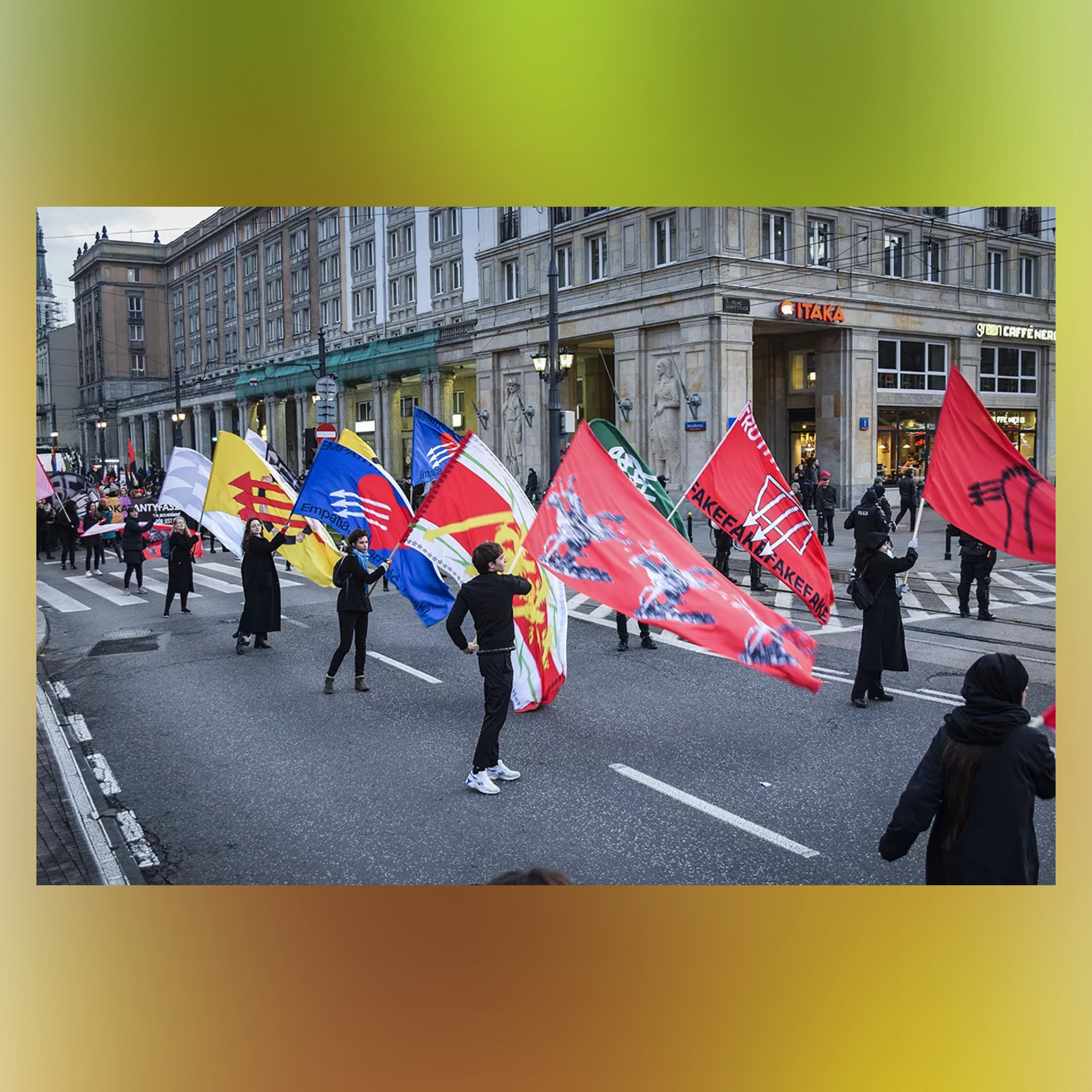
Let's say between these kind of strikes and the strike you mentioned, like this one from the 2012, but this one more let's say individual artistic gestures rather than a feats of collective organizing. And even saying that, like a lot of theoreticians like Gerard Rowning, those Steven Shrikides, or Boyan Akunz, they still find these individual gestures really interesting to think about the condition of labor on the flexible, like flexible work market in a sense that a lot of workers are currently completely individualized. A lot of workers are the switch-washers of themselves. I mean, they need to perform, they need to engage a lot of the different faculties and they are also expected to be very involved in their own work. I mean, not necessarily only artists, we talked about this exceptionalism at the very beginning. And for this reason, I think a lot of theoreticians find even this individual act to be an interesting, like relevant, in rethinking the general condition of withdrawn labor under neoliberal capitalism. But what I was a tried, and this is, I think, this is a very good theoretic control in any case. But this entry is in the ABC, connected also to another one, which is about productive withdrawals, like about basically, there's lots of collective action that are being organized, not by a not as part of an individualistic gesture, but rather, I think, more, let's say, down to earth, simply protest actions of strikes, or they have, you know, and then it's less about, let's say, telling us, and they are very much similar to other political activities in a sense, that they have, there is a set of demands, let's say, for example, betterment of the working conditions of artists, paying minimum fees for exhibitions, installing, installing of an insurance system, or guiding access to health insurance, whatever, you know, so it's like typical, let's say, demands for people who work and who simply want better wages, social security, et cetera, et cetera. So I think a lot of, let's say, art strikes, or like, different forms of art labor organizing, but emerged, I think, in the last 15 years, maybe 20, with some possessaments in the, in the pants, such as artwork, as coalition, or artist union in USA, they are more related or more similar, not to artistic gestures, but rather to political actions. They are one action that you mentioned, but they are not necessarily strikes per se, because striking, even if you are employed, at the regular industry, currently is pretty hard. I mean, you do not see a lot of strikes, they are not quite a lot of wild strikes, but take a look at, for example, farmers protest, they are not necessarily strikes or blockades. Right? I mean, you have a lot of this forms of apprisings when people are not necessarily having one, employer, because like, it's a strike, basically, it's about, we're drawing on labels, but you start the production, so that the capitalist who owns it, or like, or a stage industry, cannot produce any longer, so then they just lose money, and that's how it happened, economic leverage, to gain better wages, or like, simplifying it a lot. But for artists and for others, self-employed, or like, people who are not necessarily having any kind of, like, central employer, this mode of action is not necessarily possible, right? So they find different ways how to bring their postulates to the fore, and also struggle for the fulfilment. So, for example, this activity in 2012, and was not necessarily even, although it was called as strike, it was more like a picket, so like, and not only this was a picket, so let's say, in various cities of the impolite artists, just with flags on or some banners, and then they protested and tried to be as loud as possible, and also, I'm not so many, and tried to attract media attention, but this picket was made also in cooperation with different art galleries, for in solidarity, it was cease to work, or at least announce the support for this group of people, and hence trying to, let's say, convenes mostly politicians to change the statues of artists in part, what's the better? Did it work? partially, you know, it has never, this kind of stuff, this is not an easy dynamic, right? If you think that you organize one action, and then something happens, you are greatly mistaken, with some how it works. And in this particular case, what happened was that these institutions that were, let's say, a couple of things actually changed. One that did was an introduction of minimum fees for exhibition making and stuff like this, or when you know, they were really minimum, but at least this was a difference to what was before. Second thing that changed was a general, let's say, atmosphere of like the ambience or the discussion, like there was a, how to say it. So basically, misunderstanding, but artists work, and that they can be, that they require some kind of like basic means of survival, and they've started to be more widespread and accepted in the art world. So 10 years after, I think everybody knows it, right? Like before, not really a lot of people acknowledged that there is such a problem as artistic poverty, where people are like, you know, poor but sexy, or over artism, if they are, you know, if they are poor, they are more creative, and this kind of like a lot of this romantic, with mythology related, the artistic exceptionalism in fact, right? Artists need to sacrifice, artism on commercial, and then, but then on the other hand also believe that, let's say, Western art market will save artists, and then like here in the institutions they would show their work and then sell it else back. So this was the kind of like, let's say, preconception generally approved before this art strike, and art strike is more like an event that lets you also signify certain change, rather than a direct reason for this transformation. And there's a mischanged. Another thing that also changed, let's say, was a very, let's say, on an organizational level, people started to self-organize, right? More actively. So like, pulling this off, like basically making this action at the level of an entire country, really galvanized people. You know, and then even with galvanization, it's going to be apps and flows, you know, sometimes people are getting together, sometimes they dissipate, etc, etc. Still this organization is still functional. So like this citizen forum, picking up the changes in politics currently, this is one of the social partners often invited by the new government, or like by Ministry, to discuss for example, a system of social insurance for artists. Another thing that also imitated the better name finishing here, because we see that, but you ask questions, you see, and then like, what's my problem with the scene? But then, but hopefully it is to the point, and I still responding to what you've asked. But then another thing that changed, and this is quite concrete change, but it has taken 10 years to get to the point where there are legal, the basicities are now works being conducted to establish like a proper social insurance system for artists. But it is being shaped after, of course, the social case in Germany, so let's say a special dedicated system for artistic insurance. And if this was introduced, that would have been a major change. But you can see this has been like 12 years. And it's a from the very general idea, some kind of like political manifesto to more concrete propositions that are currently being debated in the panel. I almost couldn't wait to respond because interestingly we have seen almost exactly the same development in exactly the same time in the Netherlands in the aftermath of the financial crash, and also in the Netherlands a lot of budget cuts. And yet this rise of the discourse of fair practice, minimum fees that the organization I worked for is in fact, was the one to propose and implement that in the Netherlands, and also the rise of the social dialogue as it's called. So the structural conversation between
institutions and freelance artworks, we see the rise of this like fair practice, this course, minimum artist fees, social dialogue, insurances, etc. Which yeah, also in the case of analysis is the direct result of artists starting to organize and I mean, let's say productively withdraw into your terminology and publicly say no to unpaid opportunities and so on. So that this kind of like, yeah, the long March 3rd institutions actually happens and can start with the momentum like this is interesting to note I think. Also maybe just to point out and not to go into it too deeply now but then this again gives rise to its own problems like in the Netherlands I'm sure as in Poland there is now talk about okay if you have minimum fees that makes exhibitions for expensive so which artists can still participate in that right so it creates also an inclusion exclusion like who is that in that system and who falls outside of it creating some kind of new relations of of privilege and and gatekeeping. So I guess the the mess just continues it's never really resolved but something can be set in motion by something that we could call an art strike. Yeah, like this is one of the moment, it's just a moment in like a long time it's not you know like this kind of events do not you can galvanize or accelerate the processes that has been already in the making. It's not necessarily unless you have like revolution or something like really significant right but this kind of things I think whether yeah they happen because there is already a change in the situation and then they galvanize the process and and has an impact on how people think and organize in the future. Yeah, shall surely put another one more maybe. Yeah, final topic. I think your mic is uh mic yeah is good enough. Okay, yeah, I'll speak up. Okay, the final topic. Oh, okay, the apparatus which I think you did touch on when talking about you know the structure of the book and how it's kind of intertwined in that way but I am still curious about you know explaining your theory or understanding of the apparatus and then what that kind of means practically or how that plays out. It's specific like in general. Maybe in specific. Yeah. I guess it's like it's one of the theoretical backbones and you touch upon some of the theoreticians that that you use and it seems like like I was also not sure if you're taking like a structural list or post-tructural disposition or something in between and you know maybe just to bring down where you come from so that an artist listening to this can understand. Sure. Well, so where I come from is like I basically try to understand what I'm doing. I think that this is a, this is a fundamental one. Other people who are who I also were talk with or with whom I work with whom I also friends with how they also work. What they do when they actually make projects. What does it really mean? And in order to understand it I think for me one of the fundamental texts. It's not the theory about projects. It's more about like what do we do when we do art. You know how we how we work as artists or curators or people somehow engaged in this intellectual and industrial production. One of the fundamental kind of text for me is Outer as Producer by Walter Benjamin. The text with he wrote in 1934 where he talks about it's less important what people say about the about the relations of production of the period but what's more important is how they are actually operating within them. So what does it mean to be a literary producer to be able to be a literary to be a writer as a technician who is working in and then the exact uses this word apparatus who is working in this kind of like let's say literary industries like all like that apparatus that are somehow industrialized they are somehow organized with a specific division of labor with a specific division of resources. And and here this apparatus is like I think at the beginning I actually took it from there. And so basically to try to understand the condition of artists is a material condition as part of the wider division of labor and something that is also very material right. So like if you are operating if you are working let's say right there is or maybe the other way around. So but there is I'm a sociologist by training right. So for me it's also very interesting whether to see what people do how they operate in within the society. And and I shake the focus from let's say the work of art to artwork right. So it's not necessarily about thinking okay so this painting says that and that and that and that I'm rather thinking okay so who framed it how how can you organize yourself I mean how you if you paint what does it actually while mean how do you I mean in a sense. So how do you why do you buy your pigments where where do you buy your canvases. So how do you want to sell it you know how actually are these artworks evaluated to who does them in fact. And how later on they are being exhibited and if they are exhibited how the institutions that are exhibiting them operate. And this is the apparatus right. This is very this is always institutions people who cooperate together like a co-op backer would call it an art world right. Like this is like basically excuse me networks of social cooperation in which people function. But then another let's say very important in this shift from like shift let's say from from art to the art world. Another important inspiration for me is Pierre Boudier because also this industry and here comes let's say industry or like these are parameters. Even though it is supposedly kind of horizontal like you know with all this California my theology networks as basically joy writers you have this global artwork you go here and there it's funny it's nice it's useful it's energetic etc etc. And and that's what I take from Boudier it is always very much embedded in in variety of social therapies and systems of social reproduction. What it means basically that's why I already hinted at that that is a certain barriers of access and hierarchies that are predefined in a sense of like both class and race and also that gender we as our like our gendered and and here comes another let's say strength of of told like feminist critiquity of basically conditions or like conditions of labor. So what kind of labor you need to think about when you consider production of value but this already very it goes in the quite theoretical dimension but maybe what more important is that but in this apparatus is in which we function or in this industries like this artistic industries in which we in which we work a lot of work is kind of like being conducted in a similar manner to the labor of love or like labor of care in a sense that this is not necessarily a result of that any kind of direct employment you are not employed by anyone and there's a lot of work related like conducted like a lot of activities conducted outside of the formal employment and then yeah they are fundamentally important to how people operate in this field and structuralist then well what I'm not sure and I think that my my theory is more like a grounded theory in a sense you know I do not I do not necessarily and if this is quiet I hope it's not entirely eclectic I try to make it but I come out as a from the edge to understand a specific segment of human activity you know it's not a theory of everything it's like I try to understand what does it mean to be a projectarian you know how how best people operate what does the systems of value well how does it relate to to hierarchies that are being established and but maybe also quiet let's say ungraspable or not so easy to be understood because of this fluidity and supposedly distributed character of this specific social networks in which we function so they may seem to be let's say as I say horizontal or based on access or youful and so on so far but only because all the elderly people are basically excluded around already not part of the picture
just to give you one example, how this may operate. - Yeah, no, fate kind of took us in a very theoretical direction today. - Sorry? - Fate took us in a very theoretical direction today, which I mean, personally, I don't mind, I don't think if-- - Yeah, this will be a par at this, right? - Yeah, yeah, yeah. And I also think that Benjamin's text quite nicely and concretely takes home the point that looking at the artwork and interpreting the artwork can never be seen as separate from the production of the artwork. And also how an artist or artworker understands their own practice should be in these terms, right? I mean, I think he famously said that today a novelist writes in the newspaper, something like that, right? Like an author as producer doesn't just write a precious book object, which also then brings the question, what is the author as producer today? Does the author as producer today create UBI campaigns? For instance, I mean, I think this is-- - Yeah, this is a productive way of thinking about art still today. And-- - You actually brought me to the point, which is also extremely important in this type of materialist analysis, let's say, because what is the main point of Benjamin is that he says that, let's say, that the aesthetical innovation comes hand in hand with this kind of a technical resistance, or like that out of this under self-understanding of the writer as a technician or like as a producer, comes also a change understanding of what and how he writes. So there is this-- So there is this double take on it, right? It's not necessarily a technical innovation in order to be politically valid, needs also to be related to how to-- to changes in how people work. And how they operate with other groups of people who may share kind of similar conditions to that. But the solidarities are not only proclaimed. They need to be somehow enacted. And this solidarity is also funded on certain similarities in the-- let's say, position in the general social division of label and capital. Yeah, I mean, I think this is a really nice segue into also talking a little bit more about what you are doing today, what you're organizing, what kind of artistic practices you're-- or post-artistic practices you're involved in. Just for the listeners, the other things we could have talked about, entries we could have talked about, but that you can still read about our Pata institutions, productive withdrawal. I mean, we touch upon it a little bit. Time machines or better social time machines, as well as artisole, which is a fascinating concept you coin too much for today. But a little teaser, if you want to delve into it more. But yeah, having said that, I think I wanted to ask you, first of all, about this work that you do around the idea of post-artistic practice. I mean, also, Aga Antkomayak wrote a nice long from for the ANC website about duck rabbitism and duck rabbitism related to memes. Can you explain this idea of the duck rabbit and also how it's connected to how you think about post-artistic practice, possibly with an example? So like you want another 20 minutes lecture. Oh, no, no, no, no. Let's keep it brief. Close it. Oh, yeah. Duck rabbits and post-artistic. I mean, this duck rabbit is quite well known illusion. Like I think originated in the 19th century such a recall German magazine. It's basically about this kind of shape that, if you look at it from one angle, it looks like a rabbit or it looks like a duck. In fact, it is a duck rabbit. And we refer to it as also another kind of humorous take on the quiet perennial discussions about the usefulness of art and political and basically also about politics of art in a sense. Because usually, when you think about art, you think that art is a very specific set of objects that is distinguished from everything that is not art. And we, the group of people in Poland, we do quite a lot of stuff that we believe are not only in Poland, but I think it happens all over the place, wherever. You know, we can think about multiple, multiple activities like that. But it's very hard to say was it is art or not. Or it may be art when you put it into the white cube, but it also may be a banner if you take it to the demonstration. So what changes is rather how you use it and this, how you use it and also talking about assemblages is that because I think circulate, because they are exhibited, because they are maybe brought to demonstrations, changes what they are in essence. This is a very fundamental contribution of this assemblage of apparatus-related theories. So the same piece of literature, if read at the demo, and maybe a call for action, and if taught in the class, maybe an extremely boring part of the textbook, and if the salt commercially may be just a commodity, right? So the same-- same-- so like, let's say, for example, what we did, maybe more concretely. So you may organize a demonstration in solidarity of Ukraine, taking as an inspiration kind of Mondrian-esque compositions, using the fundamental colors of like the white, red, blue, and yellow, basically a group of people, just a few weeks after invasion, went to streets and organized this beautiful action. Or you may organize a group of ecophamines that were collected, that impersonate Polish reverse called reverse sisters, and you organize a campaign around that, which is spearheaded by artists. It's basically kind of like a part of the wider loading to keep to rewild Polish reverse or to stop building dams. On the other hand, it is also excavated. And you can see strong presence in the art world. It's an example of quite funny and interesting, let's say, politically engaged art. Or you may organize a drink enterprise, like my dear friend, Katzign Bądars, in London. She organized a social enterprise called Companjidryn, so you can group of other people. It originated as an art project. It is about making soda waters, but also every of the soda waters is, let's say, a baseball documentation of a process of its own production. And it has definitely involved an artistic, is motivated by an artistic intention and has an artistic merit. And hence, it is quite often excavated as let's say a collectible object inside of the art silk coat. And the bizdach rabbit is about suggesting that this is not necessarily either ostinario, right? But there are like-- but these things, they just shift between this variety of uses. And hence, also, the ontologies are very blurred, in a sense, but how they use impacts on what they are. But if it is so, then usually it is not that permanent situation, right? So I said, like, you have something in the collection. You can bring it to the street. I mean, this is much, much more complicated. For a variety of reasons, how institutions operate. But you can shift and blur and maneuver and make quite a lot of funergings with that product. Which also suggests that an artistic practice becomes a post-artistic practice. It might just come back to being artistic and-- or is not, indeed, nor all the time. Yeah. The term originates from the siftie, from the writings of the Polish theoretician of Conceptual Art, Yezor Ludwiski, who already in '71 to wrote an essay about 1971 wrote an essay about art in post-artistic age. We shifted it later to talk about post-artistic practices for better awards. But I think it's small, let's say, a certain condition of art. Where we're coming back to this exceptionalism, right? Like art, neither art is as exceptional as they used to be. No art is as you need as we tend to believe. It's like, if we're thinking, I mean, here I work in ICI, right? Like I mean, in the INC, right? Instead of that word, powder. So you are very well acquainted with this like myriad of ways. How people-- what people do with images. How's they operate on a daily basis? We have this flow of visual production. Not necessarily all of them are artistic, but if we consider art something that is with images, like visual arts, that's how art used to be defined. Now it's just changing fundamentally. Just like Benia Meene was also talking about press. He was talking about photography. He was talking about new medium of his time, realizing that like fundamentalism,
changes that occur in ways how artists actually operate. And I think that we have a very similar situation now, you know, like every art operates in a situation where there's a myriad of artistic paintings being produced hundreds of biennales, dozens of ways, how they are structured, you know, like millions of people who somehow deal with images on a daily basis, or like a variety of written texts as well. And with this comes a certain modality, I think, of approaching art, which Stephen Wright would call "user sheep", you know, which is kind of like more, let's say less, say, liberal, and more maybe pragmatic, but also certain this process also intact on the very high echelons of artistic, of high art as well. So if someone's listening to this and interested to learn more about what it actually looks like in practice, it's post-artistic practice or the duck rabbit work, there are some repositories online that I'll put a link to in the description. Yeah, sure, because of the certain. You can take a look at a museum of art from R2T, you can take a look at this Trilico Cache KPL, which is duck rabbits, BPL, you can take a look at the repository of antifascistiae. I think that's quite a like, there was this excellent project called Plasible ArtWords, my place camp, quite a lot of, or you can take a look basically at Documenter 15 and Lombon and Ruan Gruper, what they are doing, you know, this kind of shift between life worlds and art worlds, but some people hated so much, some others really liked it a lot. Some people were thinking, where is the art? You know, do you hear this critique? Well, you know, but funny enough, they do not ask this thing when they go to freeze, right? And then when they take a look at, I mean, if you take a look, this is an important, no, but this is very important to underline, you know, because this is not necessarily something, and maybe I try to do it as usual, and I just, I spoke, I tried to give a wider picture, but to be more precise, if you take a look at the higher echelons of contemporary art market, it's very hard to distinguish between art and the speculative asset, as simple as such, you know, like a lot of prizes are dictated by decisions related to art banking. And if you take a look at how, like, you know, sort of like contemporary art figures operate, they are very similar to luxurism, brands. The difference is really blurred, you know, it's, you have like large studios, a studio, it's not even a studio, it's like a mini factory, 300 people operating to build pieces or to paint paintings of his or the causes, right? This is a mass production percent, and I mean, luxurism mass production, so obviously limited, it's like this unlimited copies, there are certain conventions still in operation that are related to how we traditionally understood art, even though it also fluctuated over time, like for example, understanding of multiples, right? And you know, just in 60s and 70s, and now kind of commercialized and made operational at the art market, and everybody knows it, it's not, it's not a secret, right? And then on the other hand, you may have Lundbunk and you may have his art walls, like walls, and then people start to be, oh, where is art? But if they go to art as a thing, oh, this is art. Yeah. Where is art then? That rabbit also? I don't know. Yeah, with good lesson, we're gonna keep that in mind. There's so many more questions we have, also ones that I, that are burning, that I would love to ask, but we're really running out of time. So maybe we follow up with another conversation or send you an email. Yeah, for now, maybe to go to the last question. Yeah. So to kind of wrap this up, there is a post-artistic summit coming up in July. Can you tell us a little bit more about it? But how much do you see? The announcement tax, the elevator pitch. One minute. Right, so maybe this one will be, this one will be kind of short. So yeah, this will be a summit organized in one mining town in South Eastern, South Western Poland, in uponus during organized by the consortium for post-artistic practices. And I think this will be a gathering of more ecologically minded activists, of also artists and post-artists that dedicated to this particular place, which is located at the verge of the one of the largest open beat mines in Europe. So do you have dates? And if people are really inspired and they want to find out more, can they join or can they read reports afterwards? Can I get that? I think that it would be, yeah, it's hard to say, you know, I think that like I'm not part of this particular working group. We will have a conference later in the autumn in the fall in Warsaw, which will be definitely kind of more open for everyone. I think from understanding from what my friends who organized it say, they rather emphasize that they're working with the local community. As an organizing like a big international post-artistic summit. I think are bad, but they're also organizing something, I think, with the floating university between six and nine of June in Berlin. So there will be a post-artistic, or the post-artistic congress organized in fact in Berlin between six and nine of June at the floating university. And I think that there are currently, it will be a further addition of this congress to previous editions were organized in Soko-Obsko and they consisted of a lot of walks and seminars, yoga classes and cooking and this kind of stuff. So possibly it will be fun and I'm sure it will be fun, but I'm not curator of this, so that's why I need to be 17. Okay, so if you want to learn more or get engaged in post-artistic practice, go to Berlin between six and nine of June. Yeah, six and nine. Like possibly floating university, we have a like a post-artistic congress. If you google, then you can find it. Previous editions as well. Okay, we'll put that in the link as well. Thank you so much, Kova. Yeah, I want you. I found you. Oh, I know, I think it was a really good conversation and one that you know should be followed by many more. I have one like of the record question for you. I mean, which is kind of like it's fundamental. Which is about, I suppose you're talking to politicians and policymakers as well. Did you? Me? Yeah. In the organization. Yeah. Well, not so much. I mean, sometimes, but you know, it's now maybe a bit more than yeah, we used to. Okay. I mean, because I got sucked into this like lobby kind of circuits or policy circuits and I like looking back at it. There's such a void of vision. You know, there's so much talk about like pragmatism, about like a million here or there, about economic value over social value. So I mean, if you have any ideas, how to like pierce the skulls of these people and get vision across. I don't have a clue. You know, like, but the people who are. I mean, you know, like, yeah, we had this funny discussion recently with one colleague who used to be a director of one art center. And now she started to work at the ministry, like talking about the slung march to the institutions. And I think she's just basically experiencing it on a daily basis, you know, like, and it's not an easy thing to do. Even if you have like younger politicians, I mean, you know, it was really much better than I do, right? I mean, but the best. And one thing is what these people can do actually, what is that? What is a reach, right? Yeah. I mean, artists fees or like this fairness, you know, but basically repairing the market is what they can do. Setting boundaries within the market is like. Yeah, I mean, we have this discussion now, like, of course, like, there's a there is exactly this this aspect of fees that you've mentioned, right? But maybe, yeah, the alternative is much worse. I mean, the alternative is now, right? So like basically,
the market is still very much differentiated and still there is like this carrot that got in front of people who are basically running after it and committing the own labor for free with hope that this will result in some kind of substantial improvement of the livelihoods in the long term. And I think it's important work, I think it should be done, but like it's just I started feeling after a while, the lobbyist in my head basically, did the apparatus was working on me? But you know what, if you want to maintain, this is a whole thing, we didn't get there, but if you really want to be part of this circulation, do not have too much showing. This is not that this is a moral choice. Like this is not something, that's one of the good things about this material type of analysis. Like what also we know talks, but this is not a moralistic kind of, but moralizing is really a wrong way, a wrong take on that. Because if it's like that's why it's a relation of production, a relation of labor, right? I mean, if you want to be part of this industry, you do not have any choice but to do it, you know. You have to follow it. Otherwise there will be tons of other people who make this project for free, right? And when I talk with students, you know, there's already a sign of privilege when you can say no, or you can say, oh, I'm not interested in something like this. It's true. Yeah, or, yeah. I mean, I also had a, like, give a guest lecture in an art academy, and I asked who here would contribute to an exhibition for free, but would contribute to your CV. And then everyone raised their hands and kept from one guy who said, yeah, I used to do that. Now I'm a father, I can't afford that anymore. You know, he could not afford to say, yes. So, you know, if you're going down the privilege line there a little bit more, it even gets worse there. So everyone else taking those opportunities means that he's not, you know, in the circuit anymore. Exactly. And what is the result of this? Like when we did this research, you know, like you have mostly people who are under 40 and 85 percent of them without kids, like who circulate, you know, because basically if you start to have kids, you cannot afford it. This is a huge difference. And if you cannot count on your parents, your parents need to count on you or something like that, right? This is a metrass code. When you really cannot travel, you cannot make all this geek, etc., etc., right? Yeah. And yeah. Oh, you see? We should have, we should have, we still had a recording. No, maybe. Yeah. We have recording, Thomas says, okay. Well, we can put it in. Perfect. Yeah, yes. Yeah. But this is real stuff. You know, like the people working in this plan for care laborers now in Poland, this are mostly, the other artists. And this is exactly what you said. This is how it works, right? And in like this is very hard for them to maintain, you know, both very underpaid jobs and then this kind of like hard duties that take so much time. And then this is how, in fact, like talking about this gender analysis, you know, this is how exclusion actually unfolds in the field. Because of all these small tiny decisions, like you said, about this guy who's not partaking in the exhibition, right? Because he cannot, he cannot, but it's mostly movement, actually, he cannot do it. So then, you know, like, oh, we should like go for this opening or this are like, you know, we are as we, you know, like you just basically need to spend time with kids, you know, do you go to the opening or you spend time with kids? Do you socialize with art crowd? Or you basically need to bring a kid to a kindergarten? Or do I write another text for free? I need to feed my family, right? Yeah. Etc. Etc. And you know, with all this kind of like tiny, seemingly tiny steps, you sleep more and more from the horizon of the social world. Yeah. In that sense, I think also the rise of like motheringism. I don't know if you have the same in Poland, but in the Netherlands, people are talking much more about facilities for artist mothers, which, you know, again, is a patch. It's a patch on the broken system, but it actually makes a meaningful difference to the life of actual people. Yeah, I think that this is, I mean, I think it's like hugely important. It's not only, you know, it's not like also with fees, you know, there are things that are related to both in terms of material conditions. They may seem to be insignificant, but philosophical significance of them is tremendous, because if you pay fees for the exhibition, you change the status of a person from basically a commodity producer or artist who supposedly, supposedly, you know, like a sales on the market and then exhibits for free, because this is an official or Kimo Ha, nonetheless, to a person who is basically conducting some sort of service for the institution, because if you have fees, basically, this is made under the premise, but you conduct some sort of work, right? In Belgium, they even have temporary, like, really work contracts, labor contracts with artists who exhibit, you know, you get employed for a few months. It's possible. Yeah, yeah. You build up insurance, pension, etc. Of course, like, you know, so then, of course, it changes, and then the benefits, I mean, the benefits. The consequence is may also not be necessarily super cool, like, for example, people who are considering it to be a trade may want to establish a guild to limit access, you know, so that you know, to get a theater, to become a theater director, you need to finish a specific school, which is very, very, the, the, the, like, you talked about this, right? So you have maybe five to three to five people finishing this kind of schools in Poland every year. So there's a very kind of narrow profession. And then these people actually, I'm quite good money, you know, but, and all things considered, maybe this is not completely entirely misplaced, because at least people get a signal about whether or not they should proceed on this life path, early enough for them to, to something else. And but I'm just, I'm not, you know, I would be very hesitant to advocate it for this publicly, because I think that, you know, education is something that, and basically being an actor, being an advocate, and having a kind of, this kind of fluency in this, is maybe important in a lot of different works of life. And with this post art, I think it's an interesting part of this, there's also what you can shift, right? Like with this project, it's much more fluid, right? It's not this kind of decision that, or, as I'm, I'm totally committed, I have to work for free if I'm not in my studio, I'm a world's human being type of thing. You may be, you may work in one art project, also you may have a job, you may have a career somewhere else, and this is definitely fine, which I think is quite important for people psychologically. I think this is what the sense of success failures. This is what artistic autonomy means today, means you can have your free practice as long as you're, like, productively earning your money somewhere else in your own time. Or if you have, like, you know, mommy and daddy playing, yeah, which is possibly much nicer. Yeah, possibly. Okay. I'm, I'm seriously, I'm gonna think about coming in June. Sounds really good. It's an eight, seven hour train ride. That's so bad. Yeah, please, please join. Yeah, and let's assume that we will be in touch anyway. You are coming to Warsaw anyway, right? Well, I was thinking about, I mean, I'm gonna go on a writing retreat in Warsaw and Brussels are the two options I have on the table now, so I have to see. Yeah. Right. I would like to come. Yeah, please. I think there's a lot of people are interested in this art and label. It will be, there's quite a lot of things happening. So, you know, I hope you're up. You can get a couple of people and, so, I think you want to conduct interviews or something like that. Yeah. Like, for the artistic style of the capitalism. Yeah. - Very cool. - Good. Thanks so much, Cuba. Thanks for your time. - Yeah, thank you. - Thanks.
Podcast Summary
Key Points:
The podcast discusses the precarious state of artists and cultural workers in the context of ongoing crises, focusing on Poland's recent political shift after the 2023 elections.
While the new democratic government has brought changes in cultural policy, such as replacing right-wing directors and fostering discussions on reforms, the economic situation for artists remains precarious and unchanged.
Artists are not exceptional workers; their unpaid labor and project-based work mirror broader trends in the gig economy, where love for the work and future opportunity-seeking often justify exploitation.
The concept of the "projectariat" emerged from a linguistic need to describe project-based precarious workers in the art world, connecting them to the proletariat while acknowledging their specific conditions.
The rise of new class terms (e.g., cognitariat, precariat) reflects attempts to capture evolving labor structures, but the projectariat is rooted in practical analysis of freelance and project-based art work.
Summary:
In this episode of "Art in Permacrisis," host Sebekin Alesson and co-host Candela Kubria interview Kuba Shredder, author of "ABC of the Projectariat," about the precarious condition of artists in Poland and beyond. Shredder discusses Poland's political shift after the 2023 elections, where a democratic coalition replaced the right-wing government, leading to changes in cultural policy, such as replacing institutional directors and initiating reforms. However, he emphasizes that the economic situation for artists remains unchanged, with ongoing precarity exacerbated by high property prices and structural issues.
The conversation explores whether artists are "special" workers, concluding that while their passion-driven labor is notable, it mirrors broader gig economy trends where unpaid internships and project-based work are common. Shredder introduces the term "projectariat" to describe project-based precarious workers in the art world, noting it emerged from a linguistic need rather than a theoretical ambition, but it effectively captures the reliance on securing future opportunities through unpaid or underpaid work. , precariat, cognitariat) as attempts to describe evolving labor conditions, with the projectariat offering a specific lens for understanding art world dynamics.
Overall, the episode highlights both hope from political changes and the persistent structural challenges facing artists.
FAQs
It is a mini-series hosted by Candela Kubria and Sebekin Alesson that discusses organizing artworks amid ongoing crises, focusing on sustainable art economies, artist livelihoods, and institutional changes.
Kuba Shredder is a lecturer in art history at the Academy of Fine Arts in Warsaw and a freelance curator. His book 'ABC of the Projectariat' explores living and working in a precarious art world.
The new democratic government has created a more open atmosphere, with changes in cultural policies and institutional leadership, though economic precarity for artists remains due to issues like rising property costs.
Artists often work for love of the craft despite low pay, but this is not unique—other professions like farming also involve unpaid labor. However, art is special due to high competition and barriers like unpaid internships.
Coined by Kuba Shredder, it refers to project-based workers in the art world, similar to the proletariat but focused on precarious, gig-like labor. The term emerged from a linguistic need to describe this specific working condition.
Both involve unpaid or underpaid labor as an investment for future opportunities, with similar dynamics of gamification and reputational risk, connecting art workers to the broader gig economy.
Chat with AI
Loading...
Pro features
Go deeper with this episode
Unlock creator-grade tools that turn any transcript into show notes and subtitle files.
 PodcastTranscript AI