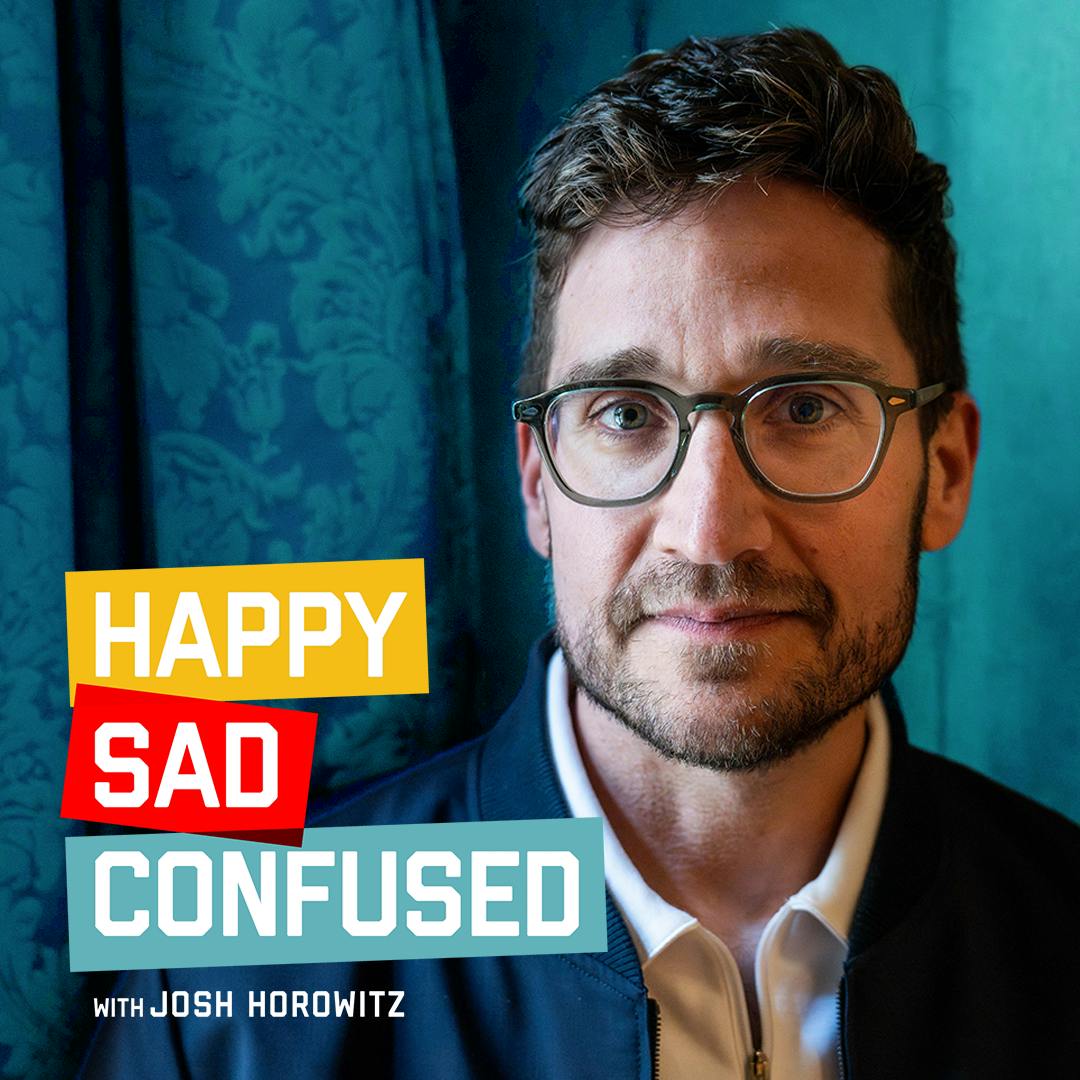
Kit Harrington joins *Happy, Sad, Confused* for a heartfelt and insightful conversation about his personal journey, creative evolution, and upcoming projects. He opens up about overcoming addiction and finding stability as a father and artist, emphasizing how these experiences shaped his artistic identity. He discusses his new period drama *A Tale of Two Cities*, which he sees as a bold, necessary adaptation of Charles Dickens’ work—overcoming challenges like the doppelgänger dynamic and linguistic complexity through creative and collaborative production. Harrington draws deep emotional parallels between the character of Sidney Carton and his own recovery, highlighting how addiction and redemption are central themes in both his life and storytelling. He reflects on his early career, from *Warhorse* to *Game of Thrones*, noting how the latter initially defined him but ultimately pushed him to seek broader creative roles. His interest in directing and producing reflects a deeper commitment to storytelling and creative control. He also shares personal passions, including horror films, the Harry Potter series (which he listens to nightly as a form of mental grounding), and a love for actors like Harry Melling. The conversation balances personal vulnerability with professional ambition, culminating in a celebration of his current life as a dad, creative professional, and fan of immersive storytelling. Harrington’s journey from a socially anxious youth to a grounded, joyful artist exemplifies how personal struggles can become the foundation of meaningful art and fulfillment.
Have you sorted yourself or have I well sorted yourself what what house are you in? Oh, oh, yeah, yeah, I'm Gryffindol. You're Gryffindol. Yeah, yeah, obviously that's the most important question I can possibly ask. I'm not slithering Josh. Yeah, yeah, yeah, Gryffindol. So just back off. Prepare your ears, humans. Happy, sad, confused begins. Hey guys, it's Josh. Welcome to another edition of Happy, sad, confused today on the show. It's Kit Harrington. Yes, John Snow is in the house talking not only Game of Thrones, but Harry Potter, Marvel, a tale of two cities, and more. Thanks guys as always for checking out the podcast. Remember to subscribe if you haven't already. YouTube, Spotify, whatever podcast platform you're using. I appreciate you guys. And remember to check out our Patreon. If you like what I do, if you want early access to what I do bonus materials, all the sorts of fun stuff that support happy, sad, confused. Check out patreon.com/happy, sad, confused. Okay, so main event today. We always have a first time guest on the pod, and this is someone that it's long overdue to have Kit Harrington here, but to be fair, he hasn't really done much in the way of podcast. So I really appreciate him taking the time to do this today. There was a ton to talk about his new project is a tale of two cities. It's on NGM Plus, and of course it is based on the Charles Dickens classic, but you know I'm going to talk about Game of Thrones and Marvel and Harry Potter. It all comes up here and Kit is in a great place in his life now. Well, he's been through it. He's talked about it openly dealing with addiction issues way back when and coming out the other side and now being a dad having a great career going just being happy and well adjusted. It was great to see him in good spirits today and have a great career chat about so many so many cool projects. So a brief intro today because we're going to get to the main event. I hope you guys enjoy this. Remember to check out a tale of two cities on NGM Plus and enjoy this conversation with me and Kit Harrington. Kit, should we do this? Yeah, let's do it. Welcome to the podcast, man. Thank you. It's good to see you. It's been a minute. And I know you don't do a ton of this kind of thing. So I really appreciate you, like the on-form stuff. So I think he's the second podcast I've ever done. I appreciate the trust. Yeah, so I'm sorry if I'm terrible. You're going to kill it. I think the first time I met you was briefly for you came to MTV Studios for Testament of Youth. That's my that's my recollection. You were a little intimidating to me back then. Really? You were. Are my less intimidating now? Now you're whatever. I'm like, Kit, coming in. No, I don't know. I think you project. I don't know. What do you think you project into the world? Like do you feel like you have kind of a demeanor that you consciously, unconsciously project? I think he's changed. I think I tried to project something, but probably around that time into the world. Maybe that came across as intimidating, I don't know. You were perfectly lovely. Don't get me wrong. He was not nothing rude about you. But, yeah, sometimes, you know, it's an energy thing. And maybe at that time you were, you were in the height of a lot of things. Yeah, I think I was trying to project some sort of gravitas. Is that right? And some sort of some seriousness. And now I don't really care. I've been too long in the teeth now. We were catching up in terms of like where you're out in life and work. Busy being dad, obviously, to two kids doing the press stuff or tell two cities that we'll talk about. I also seem to be working quite a bit. I feel like you've been in the city a bit. Have you spent a lot of time in our fair city? I was here for a good few months earlier this year filming a TV series for Hulu called Count My Lies. And yeah, we moved the family over here. I was here throughout the whole next run, which is amazing. Come on. Did you jump on the bandwagon? Yes, I did. I went to game four. I know. So lucky. I was so cheeky as well. I had no right to those tickets. You knew. I had zero right to do stick. Have you ever been to a basketball game before? No. Maybe like one at the next, like previously, but I was not, you know, I was passing people in the street on the way there that like die-hard next fan, crying. I did. There was a bit of guilt that I was getting to go, but I know you get it. Consider myself You better quite a serious next fan. Did you know what was going on? Did you know the basic rules of the sport? Yes, by the end I was really cleared up. No, I'm starting to resent you. No, I'm starting to get angry. I resent me too. I would resent me. No, not at all. What is your relationship to New York? I mean, it's like I always feel like the Twin Cities London in New York. I grew up in New York. I love London. I feel like a folks. I don't know. There is a symmetry there in some ways. I find it, I love it. I find it, I mean, it sounds like the most obvious thing. I find it quite intense. Yeah. It's about three notches faster than my general pace of life. Okay. And so I can deal with it for a few weeks, but then after that I find that my, I'm an anxiety-ridden person anyway. My anxiety is up. And I have to, and then questioning why that is and I go, maybe it's the city and then I step out. Okay, but I love coming here. And it has a kind of, like it gives me a fix, but I do also love leaving. I don't think you've done theatre here. Have you? You've done so much theatre in your life. Is that not a, I mean, again, for the reason you just described, maybe it's not a priority, but still there's something about ringing your talents here on the stage. It would be exciting, no? There's been times, and there's been times there are, I've done a show in London that, you know, there's been talk of it transferring or coming to New York. I've nothing against Broadway. I would love to do some Broadway or off Broadway or whatever. I think it is now, it's a practical element for me to have two young kids. They're in school. It means uprooting everyone for a long time. It's difficult. It's difficult to factor that, to factor that in nowadays. Did you come to the States a lot as a, as a kid? Like what was your relationship to? No, my first, the first time it ever came to America or was to New York. I did this trip down the East Coast. I was 18 and I came by myself and I went New York. It's not very long trip. New York, Washington, Philadelphia. Or New York, Philadelphia, Washington. Sure, sure, sure. Yeah, it's, it's, you've got some major landmarks out of the way. Yeah, that's good. Yeah, some of the. Yeah, and it was, it was, it was amazing. I remember feeling like I'm walking onto a film set. I fell in love with New York then. But yeah, it's sort of a bit in the misty, in the misty part of my memory. Were you, were you watching our silly sitcoms or silly pop culture? Were you as much engaged with American pop culture as stuff back home? Yeah, yes. I think it sort of was limited in my childhood to the Chicago Bulls. Yes. So there we go. See, so I am a MBC, and be even my, it is in my blood. The Chicago Bulls, what was my childhood memory of America, US? Chicago Bulls, friends or, which of course. Yeah. And like, and maybe that's it. And like just fake. You've signed up for America. I'm not aware. Whatever the word is in America, file. I'm not like, yeah. But I remember it feeling like, like, like being the center of the world. Sure. And, and I think if you were kind of born and raised in the West, like I was, yeah, it held a kind of mythical place. Yeah. The reason that you've come in today, as I was complimenting you before, I tell two cities, is an ambitious piece of work, as I would hope it would be based on the source material. This is on MGM Plus. Where were you at when this one comes around? I mean, I would imagine like, it's often as much about like where you're at in your life, what you're looking to do, lifestyle-wise as the material sometimes. Did this catch you at the right time in terms of what you were looking for? This was a long process. Yeah. About ten years ago, my producing partner and best friend, Dan West, and I, we did a show called Gunpowder. Right. Another period piece. And that was the first thing we produced in our company. And after that was done, you know, we started knocking around other ideas. And it was quite quickly that we landed on the idea of doing tell of two cities. Because we just felt it had not, that Dickens, we loved Dickens, and we were both big fans of the book. But it felt like every Dickens that there was had been trotted out almost yearly. Yeah. And he's having been done since the '80s. It's funny, I was thinking back to this. It's like I can actually think of like a definitive recent or even ancient kind of depiction of it. And not a successful depiction of it. It's a difficult one to adapt. There's the reason perhaps. Yeah. But it's the reasons it was difficult to adapt. We isolated to being, okay, you have these two central characters around this central character of the female central character. And then meant to be identical. Right. The doppelgangers. And that's always like, pose the question of, okay, do you have the one actor playing the same parts? And I think that never works. Right. Not tempting to you. Because like a lot of actors would be like, oh, not tempting at all. Really? Double the number of days. It's like thinking practically. And just like, my ego is big enough. I don't need to play too well. At the time, horror, did you all the double roles? I just think it never works. I think it's a really hard thing to pull off. And I don't think it works. Yeah. And that, that's one of the things.
reason we felt it hadn't really been done, and Dan sort of posed the idea that you only need these guys to be similar enough, that in a court of law you can throw up a reasonable doubt and that towards, without spoiling it towards the end, there can be a moment where they get confused for one another. And the other problem with it is it's bilingual, that you've got the tale to cities, it's French and English, but we felt that now audiences have a much greater capacity for reading subtitles. So we felt that this was the time to do it, and once you get past those two issues, the story is fantastic, it is a sweeping romance in the backdrop of the bloody revolution, it's got all of the elements to make a great entrancing, pulsive, period drama, and then you've got to try and sell the thing, period drama is difficult, because people love them, once they come to screen people really enjoy the period nature or something, but they're difficult to get off the ground at times, and that's why I took a little beat, but thankfully we had a wonderful company called Federation, and then MGN+ came in and they believed in it. So it's got a scale, it feels like it's a massive production again, as you know, something like this would demand, I mean it sounds like Gunpowder might have been a shift for you in terms of realizing to have some agency and crafting a production, do you get something more out of something like this, like Gunpowder, where you have a seat at the table? Yeah, I love it, and I'm not interested particularly in, when you're doing your actors' deals with things occasionally, they're like, they'll be an EP and I'm not interested in that, because I feel like if I'm an exec producer on something, I should be an exec producer on something, so I'm only interested in that regard coming in as an exec if I'm actually at the table, and with Dan and I stuff, we're there from work go, building it from the ground up, and learning our craft as producers as we go, we're still very green, I think. But yeah, I'm restless as a person, and I find that I am unsatisfied sometimes, this is very greedy of me, but I'm unsatisfied just being an actor on something. The famous outages that they pay you to wait, that's what you've been paid for, I'm bad at waiting, I'm an impatient, restless person, so I find myself on sets muscling in and trying to make directorial decisions, and I have to stop myself, and that's why I directed something recently, so I was like, if you really want to do that, you should go and direct something. And the producing is part of that, like I'm really interested in that creative producer side, which says, okay, this is an amazing story, can we build something out? But can I ask you, because you mentioned directing, I saw the trailer for it, I don't think it's available on one yet, you did a short, among others, great Harry Melling, I just saw him in a film, one of these festivals, he's just so talented, it's amazing. Did that scratch that edge, that kind of like knight something under directing side of things, like what did you get out of that experience? Absolutely did, interestingly, and it also gave me a new appreciation for actors, because until that point I'd be like, I was like, acting is actually not, you know, probably the easiest element of filmmaking, but I then, being on the other side of camera and watching what Harry was doing and Kira was doing, the two actors we had not in the short, you know, I would come in and I give some really crap, simple piece of direction, like, okay, that was perfect, could you try it with a bit of vulnerability, a bit more, just up the vulnerable, and watching them take this bad dialogue I've written, and upping the vulnerability in it, and just it totally changing, okay, and knowing that I knew how to do that myself, made me appreciate the art of acting, but the directing side, it was explained to me like this, and I thought it was, this is a really good way of putting it, Miguel Sapochnik, who I work with on Game of Thrones, has become a good friend, guided me through it, and he said, what you are is a fishing net, you put all the best people that you can find around you, and you catch their ideas as they go through, and I love that, because I love being at the centre of all these ideas coming to me, and going, that's good, I'm not sure about that, let's work on that one, and just like twiddling here and there, yeah, no directing is kind of like saying yes and no to a thousand actions essentially, and then that's how you're finding your own voice, but it's foolish to think you have all the answers, like the best as to, and knowing when to trust, and someone else's thing, more happy, second fused coming up, you've got your favorite blanket, a freshly poured drink, and a cold case burning a hole in your streaming queue, you're not just watching True Crime, you're running the investigation from the comfort of your couch, welcome to murder she watched, the podcast where we recap, dissect, and slightly overanalyze some of the best and craziest True Crime documentaries on our favorite streamers. Did the spouse do it? Why is the shady neighbor wearing leather gloves in July? Why did this guy agree to be interviewed in this documentary? We ask the tough questions that you're often just screaming at your TV. So every week we break down the twists, red herrings, and absurd documentaries that have kept you up all night. It's high drama, cozy vibes, and absolute couch detective energy. Grab your throw blanket and hit subscribe. Search murder she watched wherever you listen to podcasts, and let's solve this thing together. From the parents behind Law and Order, comes a mystery the whole family can enjoy. Patrick Picklebottom, everyday mysteries. Step into the whimsical world of Patrick Picklebottom, a precocious 11-year-old with a love for reading and an uncanny ability to solve mysteries. Inspired by the beloved children's book of the same name, this podcast vividly brings Patrick's tales of deduction and everyday adventures to life as he unravels baffling indigmas and solves clever cases. Patrick Picklebottom everyday mysteries is perfect for kids and is just as entertaining for grown-ups who love a good mystery. The whole family can listen now, wherever you get your podcasts. So back to this production from a character perspective, from an acting perspective, what's intriguing to you about Sidney? Kind of like an archetypal anti-hero in some ways. What do you get out of it from an acting? I think he fascinates me. I mean, there's so much about him that I relate to, personally, like he's gone through or he's going through. He's an addict. What I really love about that character is he is a lawyer and always two steps ahead of everybody else. And he's two steps ahead of the reader or the audience. And that's the thing he struggles with is that he's incredibly smart and almost too smart for this world, which makes him very cynical and nihilistic. But I think the way I approached him and I felt was the right way to approach him was at this point in the story, the only thing that keeps him going is the booze or being in a courtroom. And in walks this incredible entity of Lucy Manette. And he suddenly gets a new belief in life. The trouble is that he approaches it from an addict to his standpoint. So he looks at her to be his fix, that she's going to fix everything for him though. If they just are together, then that's going to be the thing that solves him rather than coming into it as an equal partnership. Now, I won't spoil the end for anyone, but the end is one of the most iconic endings in any literature. And if you are watching the show or going to come watch the show, please follow through it. The end is beautiful, but I think his realization at the end is about, I don't know, I don't want to spoil it for anyone who read the book, but it's about, he does feel completed in the choices he's making. I mean, it's interesting to hear you talk about parallels that you feel the character, and you've been honest and open about dealing with your own issues in the past, an engine, etc. I mean, is that scary for you to kind of like go to characters that share some of that stuff that you've reckoned with yourself, because you can go another way. I don't want to fucking even think about that. No, I love it. I realized I love it. You know, I did a couple of seasons on industry, and I'm filming that as well at the moment with a character who has to delve into that stuff as well, and I've realised
that it's a way of getting, it's now fun, and I'll get to have fun, a Sydney sozzled in a bar or Henry, you know, doing lines or like whatever it is, like I get to, I get to like really exorcise something without the consequences that you want to have to do without the consequences of drinking or whatever it is, you know, so yeah, no, I also think that, you know, I have this belief that any good character is addicted to something. Yeah, I think it's built into all drama. What's built into all humans, like we're all, we all have our addiction, some manifest in different ways, and I suppose some personalities just were wired differently, some have more addictive personalities generally. Yeah, so there's always, it's a cool thing, you want their super objective, whatever it is, there's something that they desperately want, and I look at that almost as from an addict standpoint, like what is he, what is he addicted to? You know, it's usually pretty clear, it's a person or a thing or an objective or a, you know, he's hunting the truth or he's addicted to himself, like whatever it is, like it's there, and then you've got your kind of, your core kind of principle to the person. That's interesting, it must like kind of clarify your purposes in the actor, like once you kind of walk in, like what is the reason for this person to get up and, you know, at a bed, what are they driving towards? It kind of like answers a lot of questions. Yeah, it does, and I often find if I'm reading a script and I can't see it, I'm like, I don't know how to play this. Yeah, right. Yeah, I don't know how to play this, I don't know what this person wants. Yeah, and there's probably something either wrong with the script or it's just a part that's not for me. Right. All right, since we have the luxury of time, if you'll indulge in me, let's go back a little bit. So young kit, I was just asking this to, I asked to do a lot of guests, like extrovert, introvert, where it was a clear very early on to those in your friends and family that like you were going to be a performer, or did that come weight? I think he probably was, I think definitely extrovert. Yeah. I would, I would describe myself still and then as anxiety ridden extrovert. Maybe, I think, I think I was, I was quite loud and verbose as a kid and me, me, me and, and look at me and wanted attention and enjoyed attention. Yeah. I had a very busy brain always and wanted to be heard a lot. So yeah, I think, I'd like to say I'm, I'd like to say I'm introverted, but I'm not. I'm extra introverted, but incredibly socially anxious at the same time. Well, how did anxiety manifest when you were a kid, when you were a teenager, like in what kind of situations, like, I, is it, is a teenager like I, I'm very, I, you know, I think that I would, I would crawl off into a, into a cupboard and hide. This is a metaphorical. No, no, a real cupboard. If I was in a social situation, I would, like in a party, he is in a cupboard. Yeah, yeah, yeah. I would often be found, like, just kind of like breathing because it all got too much. Yeah. But I think I'm, I'm one of, I'm one of those, whatever that is, and one of those. But I, I was, as far as being an actor or, or, or creative, I always sort of, sort of assumed, I actually have a distinct memory of wanting to be a journalist and then, and then I looked at some, some old school stuff, like age 12, I'd written and said, what do you want to be when you grow up? And I said, an actor, which is really clearly. Yeah. And I think that was my A plan and B plan. Yeah. It was, oh, my A plan is actor. Yeah. But my, like, that, that is incredibly, who becomes that? How does that happen? To make a life out of it. Yeah. And what else am I interested in? I'm interested in journalism. Yeah. So that was kind of my, my kind of B plan in some way. What were you? Did you put posters on the wall or their all icons, all iconography? It was like Bob Marley, Dylan for, are there any actors? I'm sure, like, I'm sure, why am I, why am I drawing on the name of Marlon Brando? Of course. Like, it was all big, but my whole bedroom was covered, every inch of it was covered with artwork or posters. And they were all posters of quite icon, icons really. Yeah. And both from the acting and the music world. Were there, did you have a genre of film you gravitated towards that were you into kind of like, you know, genre stuff? Obviously, you end up working in a lot of genre fair. Was that your bag as a kid too? Not really. No, no, it wasn't. Um, I always liked a, a horror movie there. Yeah. And I still do. What's your good, have a big year for horror to have you got up with obsession? I loved obsession. I thought obsession was brilliant. It's exactly the type of horror I like as well. Yeah. And they were both the two leads and that were both incredible. Yeah. I think she is, she, he is well, but no, indeed. There was something about her that was just, that was an amagnetic performance. Yeah. I love that film. Trying to think, have you done horror? I'm, I'm, I'm, I'm biking. I'm trying to. I did, I did, um, a very long, long, long time guy. I did, um, I did a movie based on the video game. Well, Silent Hill, Silent Hill, Silent Hill, Revelation 3D. That'll just not, that'll just not. But other than that, I took the time when you, I did one, I did, um, Baby Ruby. Okay. Was a kind of interesting, um, there's a lovely kind of little kind of horror thriller I did. That's what we talked about. That's what we talked about in Toronto. Yeah. It was that. We were trying to remember when we had a baby. Yeah. Um, really, Silent Hill, gamer, clearly not. You couldn't come up with the name of it. Were you a, a gamer? No. Uh, no. I, I, I, no, not a gamer. Not a gamer. I don't know why I, I feel like I, I played the only game I've ever played really was Mario Kart and Diddy Kong Racing and, and some Tekken. Sure. And then recently the Harry Potter game. That was the, that was the thing I played. I mean, it's like, we'll get to, we'll get to that, obviously. Yeah. It's not Grand Theft Auto. Everyone's going to be talking about Grand Theft Auto. No, but I do want to play that. Right. I've seen it. Um, uh, advertising. It's going to be bigger than any movie this year. You know, like, how much it's, it's, it's pretty in video of these guys. It's a video on YouTube that these guys like pretending they're in. Have you seen that? It's so good because of how real the graphics are now. Yeah. There's, there's videos of like people actually like walking across the street like, like, as in the game and then beating someone up in, it's brilliant. Amazing. More happy, second views coming up. Steve Cubine and Nan McNamara's podcast from Beneath the Hollywood Sun, a pulls out a box and gives McAllister a ring saying, here's something to remember me by Daryl Zannock hit the roof. Mary Astor has been keeping a diary. This torrid affair with George's Coffman is chronic old on a daily basis, talking about the actors and actresses who won an Oscar on their very first film. Get your fix of old Hollywood on the podcast from Beneath the Hollywood Sun. Oh, please, not that music. That music gives me nightmares from my childhood. Could we get something a little bit lighter, lighter music here? Are you a fan of True Crime TV shows? And what about Unsolved Mysteries, the show that jump started all of our love of True Crime? I'm Ellen Marsh, and I'm Joey Taranto. And we host, I think not, a True Crime comedy podcast covering some of the wildest stories from your favorite True Crime Campy TV shows all the way to Unsolved Mysteries. Baby, you will laugh, you will cry, you'll think about True Crime in a whole new way, and you'll also ask yourself, who gave these people mics? New episodes of, I think, not our released every Wednesday with bonus episodes out every Thursday on Patreon. And every Monday, you can listen to our True Crime rundown where we go over the top true crime headlines of the week. So come and join us wherever you listen to your podcast. Okay, so was there, was there a performance you saw on stage or film that really made an impact on you growing up that kind of cemented the cause? Yeah, there were a few. There was, I always admired D-CAP. I always loved what he did, but it's from a kind of like big movie star perspective, like watching him in Romeo and Juliet was a big formative thing. I've never heard him refer to as D-CAP. You never heard D-CAP? No, at first I was like, I don't know what the fuck he's talking about, and then I got it. You don't call him D-CAP? It's just Leo, just Leo. That makes you sound like a no-in. D-CAP sounds like he's a rapper. Like, what's the D-CAP? Yeah. D-CAP. So what were the D-CAP performances again? Romeo and Juliet, of course. Yeah. And you're gonna have to help me out with names of things. You're okay. Yeah, yeah, yeah, yeah. And what was the one he did where he was a basketball. Basketball D-CAP. Basketball D-CAP. Yeah, again, basketball's the theme today. You were a die-hard basketball fan. It turns out I was, yeah. It turns out I wasn't. Have you met D-CAP ever? No, he won't pass me once. Yeah.
and I sort of half-smiled and he half-smiled me and I always regret not to bother him. Yeah, I mean, yeah, but I always regret next time to be like, "Yo, Decap, what up? Decap!" Let's get higher over here. Okay, so that's an inspiration. It kicks in. I mean, Warhorse is the game changer. I would assume. Is that the one that really kind of puts you on the map in terms of. I mean, that was my first job. I had my trajectory out of drama school was unreal. Like, I got Warhorse while I was in my third year of drama school, so I knew I was leaving and two weeks later I'll start rehearsals to be the lead, alongside the puppet. There's a much more important lead in the national theatre. I'll great theatre in London. I still, to this day, don't think I've ever jumped higher than when I got that role. Right, there's never anything like that first moment, right? Yeah, just to be, just to be, spear carrier number three at the RSC would have been enough, but to be the lead on the Olivier stage, people work their whole careers to do that and I walked out of drama school into that role. And it's that show was remarkable. I mean, I didn't see. Did you see it on stage? I saw it here in New York eventually, but I mean, it's a historic production, obviously. It still, it still lives in my memories being one of my, like, my all-time great jobs because the audience reaction during it was astounding. And you got to feel it and witness it. And it really was, it was truly, truly wonderful theatre. Did you go up for the Spielberg film? Was that even in the cards? I did, I think. And I didn't, I didn't, obviously, didn't get it. But I remember, like, leaving Warhorse. And at the time, you know, especially my dad thought that was mental. He was like, why are you leaving a job? And as I know, I have to, I've been doing it for a year. And then a lot of stuff kind of came in. I had American agents by that point. And so, you know, the Warhorse, the movie was happening. Then I then thrones came along. And so I was, I was in, I was in that world. Was there a close call before thrones in terms of like, were you going up from major? I went Warhorse then thrones. I auditioned for thrones while I was in Warhorse. So I, that's what I mean. I went, boom, boom, boom. Crazy. But I remember there being some like, so everything had gone well. Like. And then I remember like, I was probably very hebristic within it. And I remember going up for a film called Arthur and Lance Lot. Right. Which never happened. That was, never happened. But I assumed, oh, now you go theatre, major TV, Hollywood film. Of course. That's how it works. You weren't like everybody else, some humility along the way. They're going to be ups and downs. And then I realized that that, and then that never happened. And I was like, oh, and I remember that being a bit crushing. But yeah. Yeah. That's good for me. That didn't happen. Good to learn that at some point for all of us. Right. So look, thrones obviously can take up an entire conversation. But like, it's such a huge part of your life. And for personal and professional reasons, I would imagine. I mean, when you think back to, I mean, can you kind of like slice it up into different periods of time? Like do you remember the first year or two when it just exploded out into the world? And just how that changed your life and practical terms and how you reckoned with it? Yeah. I can. And I can't, like, I think it was a slower build than people sort of remember. I mean, it really exploded after season three. Okay. But back at the start, it was obviously a big show that they were pouring money into. And it had done well. But it was still a kind of fringe show. People were like heavy into breaking bad, I think. Sure. And Game of Thrones was a kind of upstart one coming along here. But no, I sort of always assumed that it would never get another season until we got to like season five, where it kind of was inevitable. It was going to carry on. But I just, I just, I played each season, like each season. But yeah, I look back and I, and we talked earlier about sort of like putting up a front or like, I think I just look back and I just really, all of this, all of the fresh stuff was very alarming. You were, you were, you by necessity were playing a role. You were playing, this is how you're supposed to be. Yeah. In this kind of environment. I'm really cool. I'm really collected. I know I'm done. And inside I'm going to go and stand in a cupboard in the cupboard. Yeah. Well, by nature. And you've talked about this like that role. Also, that wasn't just the show. It was the role and everything that people put upon you as that character. Yes. Yeah. And you had this like bifurcation, this like this connection with like, I'm not that guy. No one's that guy. But I'm certainly not that guy. I'm sorry. Yeah. Well, this, it's, it's weird. You, like, I think that happens to a lot of actors. But especially if the, if the role is so, so seen, so known by, you know, it, that, and you look like it the whole time, people do sort of. Yo, Jon Snow. You got that. You got like, you get, you get a lot of that and you're like, hello. Actually, I'm just to, you know, I'm trying to get my coffee. Yeah. But you do. Yeah. There's a, there's a, there's a way of personality spit that happens. Is do you still get the Yo Jon Snow? Do you still get the, I know, you know nothing? Yeah. Yeah. You've reconciled that you're going to hear people scream, you know, nothing until the day you die. I know how I do. Yeah. You've come to that. You've come to that because I, again, I've talked to many actors that have these iconic roles associated with them. And it's a journey. There's that period of time probably where you feel like really today, like, yeah, I could use today off from it. And then you kind of go to the other side and become appreciative, hopefully. And I think I need to do some other stuff like outside of it. And it's been a number of years. And I've done all these, these different things. Some have been seen more widely than others. But I've done enough of them now that I don't just feel defined as that character. Yes. And of course, I'll always be asked to buy them. And I'll always be yelled out in the street, hopefully. Well, I won't always. There'll be a point where people aren't. And I'll be like, well, what happened? What happened? But, um, there's a sort of a yelling in the street. This is the amazing, I genuinely find this amazing that like, I'll get like a 20-year-old yell it. And I'm like, oh, you've just watched these shows, like, yeah, man, just came in and you're like, that's wicked. It's still got a life. It still people are still watching it. That's amazing. In our, in our, in our, in our world now, we're things a lot. Onto the next, yeah. Onto the next, sort of watching that. That's incredible. Yeah. I rewatched that like famous table read of the final episode, where you would say it didn't, you, you deprived yourself of knowing the end until that moment. Yeah. I took this day, I can't remember whether that was laziness or whether I don't know whether. I think I didn't, I intentionally didn't because I wanted to hear it. It's amazing to watch you react in real time and connect with a milieu across the table. I mean, do you remember what, I mean, I guess we can see it on your face? Well, I remember telling everyone stupidly when I walked in, I was like, I haven't read it. I was like, I haven't read it, so I want to hear it. And then they were like, oh, you see all the BTS guys going, okay, well, let's get this footage. Right. You know, the focus was on me. I was like, what the, you know, but I, yeah, it was, um, but there's something sweet about seeing like your authentic. Yeah. Like sadness and reacting to us by then. It was like the characters were everything to us. And the story was everything. So a gut punch like that is gut punches. It was for everyone else is kind of even, yeah, even bigger for us, I think. So the, the famed spin-off is not happening, but you went down that road. You, I mean, it sounds like you went down it for a while. How close did it come to come to happening? I mean, I don't know. I think we developed it for, or developing it for two, two years or so. Yeah. And I still think there's a world in which something could work. I wouldn't have gone into it in the first place if I didn't. But I was very insistent at the start. And, and they were as well, HBO and, and George, of like, if this doesn't, if we didn't find the right thing, let's not do it. Right. It's much, much better we don't. And after a little while of, of thinking about it, we, I, it, I kind of was me when I look out, I think, I think this isn't quite the right. Yeah. You want to either feel it. You don't want to go into that. Yeah. I think it was, right, because I, no, we've discussed before. I've gone and done all these other things. And now I feel more comfortable with, yes, that character in that world again in, in, in where it sits in my life. Totally. In terms of finding opportunities during that run, was it tough for you to kind of like, because you're, it's a, that was a big job. It took up a lot of just space in your life. In retrospect, when you look at the things that you took, the, the pompays, et cetera, only trying to find the best material possible. I don't know, how do you look back at that kind of like what you were prioritizing and what you were able to accomplish in those years? I think you always have, during the, my 20s, during the game thrones years, you had six months on, you know, and six months on.
off and and within that six months off window you had to find something that actually fit in that time and that wasn't other TV because you weren't allowed to do that right so it was either a play which you did a lot of yeah or it was a film and I'm really I'm always proud of everything I've done genuinely yeah there are some that works and some that maybe didn't but they all taught me something and I have distinct wonderful memories of Pompeii like and I think there are a lot of people who come up and go I love Pompeii great and probably a lot of people who don't but I have fond memories of of it but you had to fit something you had to find something to fit into that window and it's and that's not always like easy to find the kind of it was all big learning experience really yeah but I was sort of like a hit oh kind of weird hero character then right well the theater especially it was it seems interesting and it's how I wasn't able to see you do like Dr. Faustus in True West which is one of my all-time favorite productions was wonderful and what you did one of the alternate you did the alternating roles no we didn't no no no no I was Austin and Johnny and Johnny was Lee yeah special piece of material I would imagine like to just like on the stage with one other actor yeah not to link it back but I'm going to link it but I tell two cities here because I think there is a link between those two pieces and I think it's it's always interesting when a writer does this but in in true West Sam Sheppard yeah both those characters are him they they he's clearly split his personality between the writer yeah the sozled writer and the and the crazy guys trying to put he split his personality he's writing two versions of him Sam Sheppard and Dickens does the same in tell to cities is that both Dane and Carton Dickens at the time was having an affair with a younger woman he had many affairs I think the time he was really infatuated with this younger woman and I believe that Sidney and Dane had two versions of Dickens there's the sozled shameful guilt-written nihilist side which is his side thinking about him having an affair in this younger woman and then there's a heroic kind of French aristocrat Dane who he sort of wants himself to be and I think there is I think there's something fascinating in in tell to cities that it's two versions of Dickens he's writing that's why that double gang is I mean if you wrote the Kid Harrington biopic it would be the extrovert and the guy the cupboard that's the they're both him that's my next film right I'm giving you some source material all the films just in it covered it's cheap small sets you end up in the Marvel Universe and abbreviated fashion who knows what the future holds but when you look back at that like how did that how was that presented to you was there a full plan for your character that Kevin Feige presented when it came up I met Kevin for a general a while before that came up and he was he said we really love to find something and then and then it yeah it was presented in like this is you know how they do in the Marvel Universe they'll they'll throw a character in and then see if it goes anywhere or see if like they introduce him here and and in the end it it didn't and I think that that's always the that's always the the way of things is that they they're sort of testing to see if it if there's something they want to play with there was always the idea it might yeah I think he's a really interesting character totally is one of it he's a fascinating talking of addiction and all that I think there's something fascinating to play with the Black Knight and I felt this from the start that the Ebony Blade is is one that he uses and then gets bloodlust and I think there's an there's an interesting story of someone going from hero to villain right there so you know anyone from Marvel watching but I I do think it's a fascinating it could be a fascinating story but they got so much they've got a lot yeah was but I mean there was talk at some point like this midnight sun's idea was that ever communicated to you that like you would be in a film with rehearsal or no no yeah there were all sorts of ideas that might but nothing solid of kind of you know communicated now were you ever there was one rumor even I think that predated that that like you were on the list for for Batman every actor every actor plays Hamlet or Batman at some point and they're like I love these lists I love these lists of like it's a good list to be on yeah yeah yeah I mean as far as you know were you on a list I think I met someone early on but I think it was like when I heard it was Robert Pattinson I was like yeah of course but you did have a meeting it sounds like I can't you know what how do you forget that you had a meeting about that no I genuinely I can't I feel like I'm trying to wrap my brain there was some meeting in L.A. at some point you have a lot of meetings about other things sure I would in my diary wrote I met about Batman maybe this is why I didn't get the job so I said what's this job for again it's what you lost his parents as kids that's horrible that's a lot of trauma oh that sounds like it's a right idea you guys should you guys should stick with you should stick with that that guy you mentioned we mentioned at the outside industry that's got to be a gift to jump into something like that were you found of industry before you joined I loved it I still love it I think it's I think it's brilliant it's one of the funniest jobs I've ever done yeah it has a really very fond place in my in my heart and I'm still filming it sort of now like we're in the final season right to the final season right we know that for sure I guess yeah and and I think it's gonna be cracking yeah I I I I making con I think that they are just insanely talented writers yeah much much smarter than any of us it must be the security also in like jumping into something that like you already know works and just like your job is just to fit in and not mock up the rest of it in a way but that's a big duty though like I remember coming in and especially as a fan of it and they've done two seasons and I came in in the third and I was like I could ruin a show that I like really because because I'm coming in at sort of muscled my way into this show what I didn't quite but I got invited in but also was thrilled to be there but like was like I could really mess this up right and that would be horrible that might be a career ender for me personally I like if I come into a show I like and so actually the pressure was much higher than interesting that makes sense yeah well now hopefully you're not gonna mess up Harry Potter because I know that you're and dear to you very dear like true like this is legit you are hardcore Harry Potter all the way I am yeah I am I and I'll tell you why which is that I was when I was a kid and then I found a place for it as an adult and I know a lot of people have this which is that I listen to the Stephen Fry audio but right and I do that because I'm I have a my brain is incredibly busy especially at night and I've always found going to bed very difficult like my brain doesn't turn off and when I got sober that got especially bad right and and so I started listening to Harry Potter audio books and now they're the thing I listen to every night and they just I help you yeah so they they they have a very special place in my heart and when I knew they were doing this show I was I think that's a brilliant idea I think they can really delve into it further than the films did and I think I I'm fully supportive of it and then got a call to be in it and that was just a very simple kind of yes please and this character Guilder Roy Larkhart you know we talk about who they're what they're addicted to he's addicted to himself right I mean a very vain character it's just a tiny step to my left it's not a it's not a hot finally we're seeing the true kit yeah it's just there all I have to do is just take a four percent of the yeah and I'm there have you started to get into kind of like the look like how to kind of approximate yes and I'm going to say very little that anything because it's it's highly secretive but but yes it's I'm I'm engaging with that as we as we speak so that's going to be a trip for you like to step in onto those sets and then world even for like yeah I've been on Game of Thrones I've been on Marvel sets like that's going to be yeah crazy yeah I think so I think so especially as I'm a bit of a nerd for it right and and I love it like I do and have you sorted yourself or were you a have I well sorted yourself what what house are you in oh oh yeah yeah I'm Gryffindor you're Gryffindor yeah yeah yeah obviously you you you like that's the most insulting question as we ask I'm not Slytherin Josh asshole yeah yeah yeah yeah Gryffindor so just back off have you been to wizarding world where you have theme parks no I haven't done that okay there's there's a line there's not a theme park guy generally no no no no I I just think I I'm sure there's some Game of Thrones Harry Potter crossover and I think if I ended up a theme park it might get a bit intense where where are you at in terms of that's gonna take up I would imagine a bit of your time your dad which takes up I would imagine probably most of your time yes as it should do yeah yeah so um changing obviously this is the cliche but it's true it changes your priorities in terms of like where you're
going to work, how you're going to work, et cetera. What are you, I don't know, what are you looking for work-wise right now? Or do you feel like you're sorted in terms of like? I feel filtered. What I was looking for work-wise was something that would be close to home. So it could be a dad more because I've struggled this year and I've been away a lot. And Harry Potter came along, which films down the road for me. So I get to be a dad, I get to go and play in a world I love. Genuinely right now, I'm very content, yeah, enjoying being a dad, this is. Yeah, yeah, and that's the main job and always should be the main job. So, do you read them stories? Are you work? Yeah, yeah, we have wonderful voices we put on and I really perform them. They're very lucky, they've got two very talented performers as parents that can just do all the voices I would imagine. We compete. No. This is the problem. Rose, step off, I've got this wrong, it's not you'll get, my boy will be like, I won't mommy to read me a book tonight. I'm like, really? You want mommy? Wow. Okay, yeah. I'll do better tomorrow. I can try, I can, what do you do? What do you do? What do you do? No, okay. What's your wheelhouse? What's your in terms of the voices that you do that versus Rose? I go big, I go really big until I'm sort of shouting and they're like asking me to be a bit quiet. It sounds like story time is really my ear. It's really more for you than for them. But they'll talk in the middle, the trouble about having actors as parents is that they'll be like, daddy, daddy, no, no, no, no, no, I'm just in the middle of just one second because I was doing the elephant. So in a second, like, yeah, that's going to be there and Jerry memories, like, daddy gave a performance. Yeah, daddy, daddy wanted a second tape. And we had to listen. Yeah. Yeah. It's a good problem there. Yeah. It's nice. Okay, we're going to end with this happy, second-fused, profoundly random questions for you to. Okay. Uh, dogs or cats? Dogs. Do you collect anything? Oh, I mean, I feel like I do, but what do I? No, that's fair. That's fair. Do you have, we talked a video against the four. Is there a favorite video game of all time, ultimately? The Nintendo 64 James Bond. Oh, yeah. Yeah. Like the Golden Eye. Yeah, yeah. Yeah, yeah. Yeah. We didn't. You also do like a Call of Duty thing. You did the, yeah, I was in, yeah, I did that for my brother because he's a big call of teaching. Correct. You enjoy the mocap. Was that he just wanted to kill me in a video game. He did. Here's my gift to you. Yeah. Yeah. Uh, to put it, Johnson asked me, I ask everybody, would you rather have a mouthful of bees or one bee in your butt? Be in the butt. Yeah. Correct. Um, what's the wallpaper on your phone? It's my mom. Hopefully. We asked the actor you were mistaken for. Uh, I'm always, uh, confused with Christopher Abbott. Oh, really, but I feel like he's a better looking version is, yeah, I think he's coming in here in like two weeks. We'll see. Yes. We'll see. If you like, if you like, he said, uh, what's the worst than the director has ever given you? Um, yeah. Oh, was that good? Yeah. Doesn't feel good. Yeah, it doesn't feel good now. In the spirit of happy second fuse, an actor who always makes you happy when you see the one screen. Oh, gosh. Oh, that's too sloppy to say that, um, oh, I just could say Harry Melling because he does. Yeah. He's great. Yeah. Great movie that makes you sad. Oh, my God. Uh, oh, oh, oh, oh, oh, oh, um, it was that one with, I forgot all the names. It's okay. It's the one about the, the, the, the man he meets his parents at the same age he is. Wait, back to the future? No. No. I never cried back to the future. Back to the future. And extra two. Hey, do you know the one with, um, Andrew Scott, oh, yeah, all of our strangers. All of our strangers. Yeah. I wet like a baby doing that. Yeah. I'll be back to the future. And a food that makes you confused. You don't get it. Why do people eat that? Um, either, either, uh, celery or licorice or, um, or like chocolate lava cake. Just too much. No, that's what I don't like, like, like any sort of fruit with chocolate. Oh, okay. I don't understand. Like berries and chocolate, like chocolate, gato, like, right, that, that, that, give them separate. Yeah. Each fine, but combined. Together now. It's celery from I get it. I don't see the point. It's basically if you mix anything with chocolate, like if you mix like orange or like raspberry or any fruit, right? There's not a nut. Yeah. With chocolate. Do you want? I've never seen you so agitated. Yeah. I didn't realize it. I felt that strongly about it. We've discovered something here today. Yeah. Um, okay. Full circle. Back to the point at hand. Congratulations on a tale of two cities. It's on MGM. Uh, well worth checking out, everybody should check it out, support kit as always. Um, I'm so happy this happened. I really appreciate it taking the time especially because you haven't done a lot of this. So it's all the more meaningful, uh, keep killing it and come back anytime. Thank you very much. Thank you for having me. Thanks, dude. And so ends another edition of Happy, Sad, Confused. Remember to review, rate, and subscribe to this show on iTunes or wherever you get your podcasts. I'm a big podcast person. I'm Daisy Ridley and I definitely wasn't sure if you did this by Josh. Hi, I'm Whitney and I'm Katie and we're the hosts of True Crime Campfire. We set out to make a true crime podcast we'd want to listen to. We get right to the story. We don't do a lot of extra talk in and when we do, it's usually to roast the short hairs off of some loser murderer or scammer. You laugh, but only at the people who deserve it. Like which serial killer would you most like to shove into a locker? BTK and his awful poetry, dude got cut because he didn't understand what a floppy disc was. We look for the stranger than fiction stories like the case of Patty James, a killer catfish before the internet was even a thing. Or Howard Wombsley, a sentient wad of damp laundry who convinced his town he'd won the lottery. Fleeced local businesses out of thousands and then became a romance scammer. We've covered tons of cases you've never heard of, cults, scammers, killers. So come find your next great binge. Listen to True Crime Campfire on Apple Podcasts, Spotify or wherever you get your podcasts. New episodes every Friday.
Podcast Summary
Key Points:
Kit Harrington reflects on his personal journey from addiction recovery to a fulfilling, balanced life as a father and creative professional.
He discusses his new project *A Tale of Two Cities*, emphasizing its ambition in adapting Dickens’ work, overcoming challenges like the doppelgänger dynamic and bilingual elements, and gaining support through production partners and MGM+.
Harrington highlights the emotional resonance of characters like Sidney Carton, drawing parallels between the character’s addiction and self-destruction with his own experiences of overcoming personal struggles.
He shares insights into his early career, including his breakthrough role in *Warhorse*, and the transformative impact of *Game of Thrones*, which shaped his identity but also led to a conscious effort to move beyond being defined by one iconic role.
Harrington embraces a creative evolution into producing and directing, valuing collaboration and the actor’s craft, noting how observing performers like Harry Melling deepened his appreciation for acting.
He reveals a lifelong love for horror, British cinema, and the Harry Potter series, which he now connects to his personal healing and daily routines.
He reflects on the significance of personal growth, including his dual identity as an extroverted, attention-seeking youth and an anxious, introspective adult, which informs his approach to roles and storytelling.
The conversation ends with a lighthearted, heartfelt tone, celebrating his current life as a dad, his passion for storytelling, and his excitement for future projects including *Harry Potter* and potential for more creative exploration.
Summary:
Kit Harrington joins *Happy, Sad, Confused* for a heartfelt and insightful conversation about his personal journey, creative evolution, and upcoming projects. He opens up about overcoming addiction and finding stability as a father and artist, emphasizing how these experiences shaped his artistic identity. He discusses his new period drama *A Tale of Two Cities*, which he sees as a bold, necessary adaptation of Charles Dickens’ work—overcoming challenges like the doppelgänger dynamic and linguistic complexity through creative and collaborative production.
Harrington draws deep emotional parallels between the character of Sidney Carton and his own recovery, highlighting how addiction and redemption are central themes in both his life and storytelling. He reflects on his early career, from *Warhorse* to *Game of Thrones*, noting how the latter initially defined him but ultimately pushed him to seek broader creative roles. His interest in directing and producing reflects a deeper commitment to storytelling and creative control.
He also shares personal passions, including horror films, the Harry Potter series (which he listens to nightly as a form of mental grounding), and a love for actors like Harry Melling. The conversation balances personal vulnerability with professional ambition, culminating in a celebration of his current life as a dad, creative professional, and fan of immersive storytelling. Harrington’s journey from a socially anxious youth to a grounded, joyful artist exemplifies how personal struggles can become the foundation of meaningful art and fulfillment.
FAQs
Kit Harrington is a Gryffindor, as he stated during the interview.
Kit and his producing partner Dan West were fans of Charles Dickens and felt the story had not been fully adapted in recent years. They were drawn to the emotional depth and the challenge of portraying the doppelganger dynamic without relying on a single actor to play both roles.
He finds the character fascinating because he relates to his addiction and inner struggles. Sidney's journey from cynicism to hope resonates with Kit's own experiences with addiction and personal growth.
Yes, Kit directed a short film and has been involved in producing, including co-producing the series 'Gunpowder'. He finds producing rewarding because it allows him to be creatively involved and make decisions from the ground up.
Kit described feeling a strong internal conflict between his public persona as Jon Snow and his private self. He also mentioned the pressure of being associated with a highly iconic role and the emotional toll of playing such a demanding character.
Kit is a passionate fan of Harry Potter, especially the audio books, which he listens to every night to help calm his mind. He is excited about the upcoming film and sees it as a meaningful project that allows him to be a father and explore a world he loves.
Chat with AI
Loading...
Pro features
Go deeper with this episode
Unlock creator-grade tools that turn any transcript into show notes and subtitle files.
 PodcastTranscript AI