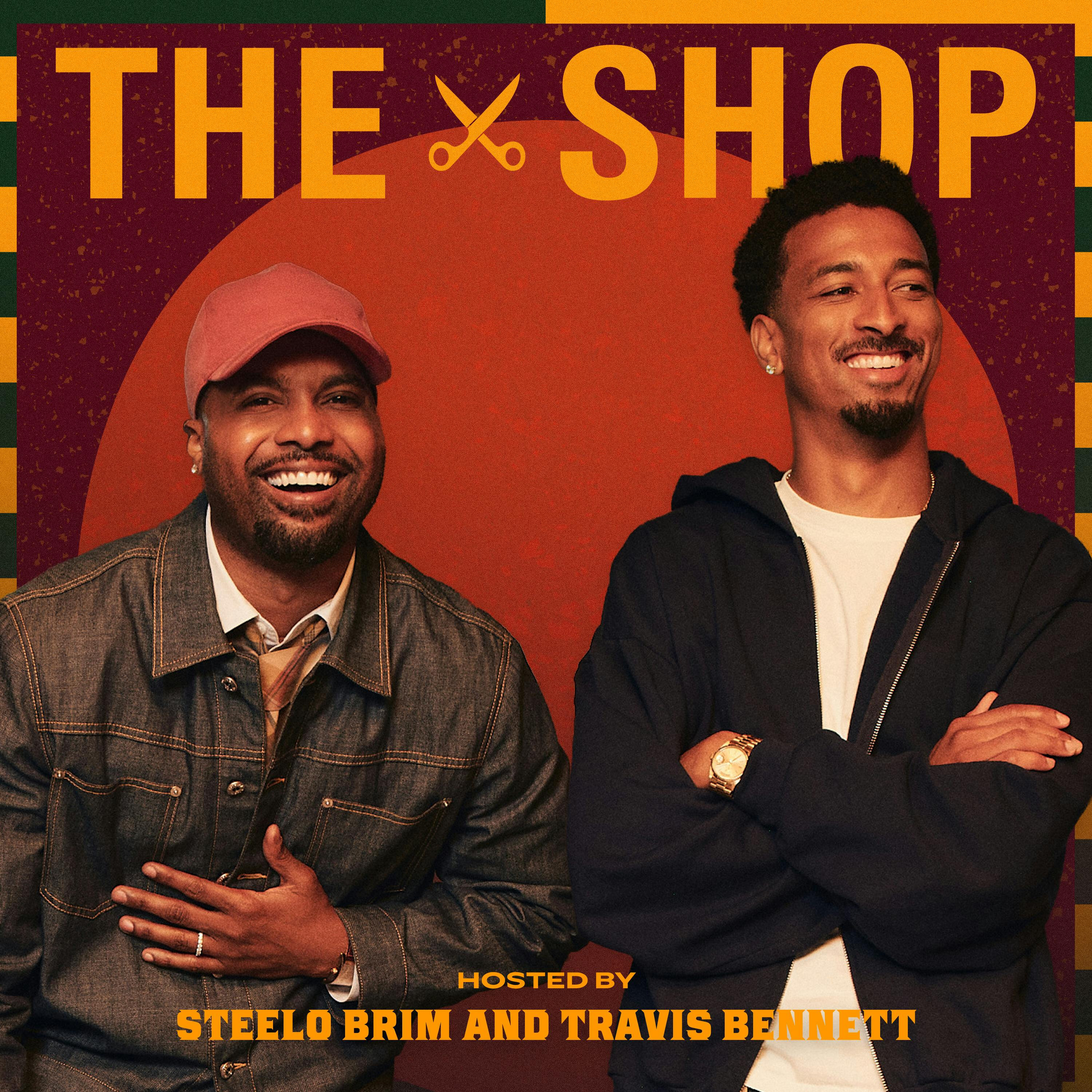
Kenya Barris, Chloe Bailey, J. R. Smith & Chiney Ogwumike
45m 36s
The transcript features a dynamic mix of podcast highlights and personal storytelling centered on Black identity, self-expression, and resilience. A new podcast, *Don’t Lie to Me*, introduces two friends with vastly different life experiences, offering authentic and contrasting perspectives. Roland Martin’s *Unfiltered* podcast addresses critical social issues like the absence of law enforcement accountability and attacks on Black farmers, calling out systemic injustice. The *Black Lit* podcast explores the richness of Black speculative fiction and literature, celebrating authors like Octavia Butler and Nisi Shaw. Meanwhile, *Betrayal* Season 6 delivers a gripping narrative of personal betrayal and survival. Personal stories from artists and athletes—such as J.R. Smith and Chloe Bailey—reveal struggles with depression, self-doubt, and identity, especially related to performance, belonging, and societal expectations. Themes of authenticity, overcoming cultural barriers, and breaking free from imposed roles emerge throughout. The conversations emphasize the power of community, the need for diverse representation in media, and the importance of self-acceptance. Ultimately, the content serves as both inspiration and a call to action for Black voices to speak truthfully, create boldly, and support one another in a world that often marginalizes them.
- Lisa, tell them about our new show. - We have a new podcast. It's called Don't Lie to Me. I'm Lexi Yuanu, we're two best friends, 22 years apart, but so close at heart. - And I'm Lisa Di Giulio, the old one, which means we have wildly different references, occasionally different opinions, and at this point in my 50s, I've lived it all. - Now in my 30s, being the founder of New Shoes, good taste is my business. - Listen on the I Heart Radio app, Apple podcasts, or wherever you get your podcasts. - Didn't catch the latest Roland Martin unfiltered podcast? - Here's what you missed. - There should not be a single law enforcement agency, and it's not have body cameras. - It's real. - Black farmers have been under attack. This is just the latest example of them just slapping DEI on anything. - It's raw. - And I'm sitting here going. They are playing y'all for fools. - Catch Roland Martin's daily commentary on the Black Information Network. - And download Roland Martin unfiltered on the I Heart Radio app, Apple Podcast. - Oh, wherever you get your podcasts. - Black lit. - October is Black Fiction Month, and the Black Lits podcast explores the minds of Cebu Campbell. - How speculative fiction works as you enter into a story with a question. - Nisi Shaw. - What kind of world would it be if these people had not perished? - And Octavia Butler. - In science, fiction, and fantasy, I can do absolutely anything. - As they pose the question, what if, listen to Black Lit on the Black Effect Podcast Network on I Heart Radio app, Apple Podcast, or wherever you get your podcasts. - You broke me. You do not deserve happiness. - I'm Andrea Gunning. On this season of betrayal, Carl thought he was living a normal drama-free life until the messages started. - Someone's not gonna make it out of this alive. - Every piece of evidence pointed to the wrong guy. - He was not going to stop unless we stopped him. - Listen to betrayal season six on the I Heart Radio app, Apple Podcast, or wherever you get your podcasts. - I'll never forget that we went in our jerseys to one of my parents' friends house on the weekend. And you know, when you're going just like back then, we didn't have like, I didn't know an edge control. Like, we were 10 years old. You know, like, they got from Glow Up. - Maybe here's where they live. - First, my baby hairs are never late. And I still have not figured that out. At this point, I'm trying to lay them down. And then, like, these are African 100%. (all laughing) - On this episode of The Shop Uninterrupted, Maverick Carter and Paul Rivera are joined by Kenya Barris. - There's not enough of us. And so we're supposed to speak to everybody. And you're saying like, one story, if we get success, they want that to be everybody's story. - Chloe Bailey. - The reason why I'm still like, so bubbly and like, is because that child inside of me never really had a true, true outlet. - J.R. Smith. - Feeling like for me for a long time, but like, still now, I feel like I can still hoop and not being able to do it on the level that I was expected, or I expect myself to do it on. Not being able to do it at that level, it like, put me in depression. - And the Chineo Guimeque. - And when I always saw people, we fell into basketball and fell in love with it. You know, we didn't think that that was something that would transform our lives. - Check it out. - Before we get going, we're gonna give J.R. before we start a big round of applause. And I got some, I wanna know about this. He was North Carolina, ANT, academic, athlete, Aggie, athlete of the year. (audience cheering) My learned. But I'm like, I got one big, how? (laughing) In high school, were you a bad student? - Yeah. (laughing) So how did you, what's going on? Is there something? I'm happy for you, but I've been one of those. I'm like, I gotta see where she goes. - Man, so honestly, when I stopped hooping, bro, and like, I was depressed. I couldn't get out of it. Like, I didn't want to do nothing else but hoop. Like, for me, for a long time, I felt like, and still now, I feel like I can still hoop but not being able to do it on the level that I was expected, or I expect myself to do it on. Not being able to do it at that level, it put me in a depression because from high school, I got drafted, I was 17. - Of course. - I'm 35. Like, just all I know. - That's my life. - More than that. - Even before high school too. - Even before high school, this is like, this is every day, this is a lifestyle, Jersey. - Did you grow up hooping? - No, I started playing golf when I was 24. But for me, in school, I grew up 80D, 80HD. Like, I'm not-- - Did you get diagnosed with that as a kid? - Yeah, as a kid. So for me, it was always something I was already shy of 'cause, you know, kids cruel. They pick on you, mess with you. - Meaning class, fucking my kids. - Yeah, if I could make it so bad, on top of that, I was one of six black kids in a whole school. People didn't realize that. People were looking me like, oh, he from the hood. No, but I'm from the farm that-- (laughing) The birds, like the birds, and then-- - The birds as a kid. - As a kid, all my family's from the hood. So for me, every day, like, I got 12 aunts and uncles on each side. Everybody got 16. - Are they 16? - Yeah, so 24? - Yeah, so it's like-- No, I got like-- - That's a lot, I got-- - I got a lot of first kids. (laughing) - My dad got six. My mom had two siblings. I got like 25 firsts. - Oh, it's too many. - Yeah, it's actually too many. - Yeah, it is, 'cause you-- - When you're black, it make money. It's too many. - It's show time. - I love that. (laughing) You don't realize that, it's too many. But Swiss, you mentioned, you know, being depressed once you stopped playing. And I know I've heard you say before, you felt there was a period. I don't know if you still feel like this, that you were black-bowled in MBA, that that add to it, that it wasn't on your terms when you stopped playing? - Yeah, for sure, because like, for me, it was like, I'm healthy, I'm capable, and I see with the product that's being that put out there, and I play against these people every day and work out and pick up, and everybody knows, like, it's not even-- - Why do you think you got black-bow? - For me, it's just like, I think it's just, I'm not gonna say I completely got black-bow, 'cause I added a lot of shit to my thing, so I wouldn't take accountability for more than anything, 'cause I definitely fueled a lot of the things that got to a point to where people probably just got tired of, you know, is that what he's worth and what is, what is his talent, what is he-- - There's a classic one, that one of my mentors taught me, Jimmy Ivean, which is, "When the shit gets bigger "in the cat, get rid of the cat." Oh, "When the shit gets bigger in the cat, "get rid of the cat." That's what you're basically saying is, like, you feel like, when you were JR 23 year old JR, you had some shit, but your talent-- - Yeah, my talent was way bigger than-- - The shit? - Yeah, the shit that I was doing, it was just like, I don't care, he'd better go get 30, and he's coming off the bench, like, and we already paying them low, so, like, let's just keep this going. And then, and once I got to a point where, like, my name and my, what I was saying started holding weight to certain people's ears and started, like, really rattling feathers, it's like, okay, now, what are you doing? - Do you regret a bunch of the shit that you did? Do you look back on it and go, like, damn, I was young, I was crazy, I was-- - I do, but I don't, because all of it, it's created who I am today, and made me so much of a better person to be able to appreciate what I have now, and anything that comes my way, because, I lived such a fictitious lifestyle for so long, and I didn't realize it, like, been a professional athlete at 17, getting throwing money, and all of a sudden, you hand some, and you're driving this. - You get cute. - You go real weird. (all laughing) - Like, bro, like, you get, you are awarded a certain lifestyle, other people just aren't. And I had this conversation with my boys all the time, and it's like, okay, you riding dirty, like, okay, there's a difference between you riding dirty and me riding dirty. - So they should get pulled over, they're gonna be like, "Oh, Jay, oh, man, come on." You get caught riding dirty, bro, I'm never gonna see you again. - I was watching Eddie House this morning. Eddie House actually made a good point. He was like, "Listen, ain't nobody in NBA a gangster, "because if you are a real gangster, "you don't make it to the NBA, "because they check your background, they know your family, "so we can all pretend this thing, "but you're not gonna make it to the NBA, "if you've got like a body on your record or something." But so, there's a lot of that, it seems, the guys that wanna portray that image, right? - No, for sure, it's a lot of dudes who wanna portray that image, but my thing was, I'm not from the hood and I tell people from the get-go, I'm not from the hood, but you're not gonna try me and disrespect me. That's different. When you try me and disrespect me or something like that, now I'm gonna get with you. But all of that, riff-riff, I'm cool on that. - Do you think it's the people that you were around or people people be around? Or do you think it's just a good question? - I think for me, it's really bad for a 17-year-old to go into an organization with really bad morals and who really don't like younger players and just who aren't into grooming them. Like, if you were 17, you go to a bad team. I want 18 games in my rookie year. You're not really learning how to be a professional. - Yeah. - You're not really learning what matters. You're really like, you're learning from, most of the time, older vets, better dudes who made their bread, who in the streets, like you're not really learning how to be a respectable man.
and opposed to just a number of athletes. And that's where I related to a person like John. At the end of the day, bro, you're gonna stop playing ball. We all go, it happens. I thought of it too. I was 18, 19. I mean, crazy to know, hey, I'm gonna be win-mill-the-feather, bro. You ain't gonna stop playing the game. The ball stops. It's inevitable. Father Tom is inevitable. And at the end of the day, it was more important than how much money you made, how many championships you won to me. If you, if somebody can sit there and say, you a respectable man, that's all I need to hear. How's that work for you, Quirky? 'Cause you obviously started very young. - I did. - Who has taught you, obviously, very professional? Who taught you how to dress? How to be a pro? - He's a stripper. How, what's been your process for that? - Wow. So it's crazy, like going down memory lane and everything, especially like going back home to Atlanta last year. Ever since I was like four, five, I was in the business and it was really all that I knew. And then I look back and I ask myself, and I'm like, do I feel like I really had a childhood? And I feel like that the reason why I'm still like, so bubbly and like, hey, because that child inside of me never really had a true, true outlet. So from jump, since I was a little girl, I was working. And the blessing in that is that my work was something that I actually did enjoy to do. And it was like, okay, the love of it outweighs the stresses and even now we all go through shit and we all have problems, but it's like when your love of something outweighs that, you'll do anything to keep it going. So that's truly been my heartbeat through it all. And I was lucky that God blessed me with the sister that I got to go through it with. And it's funny because we were like seven and five and our church dresses at the clubs in Atlanta singing. I remember being outside the W Hotel going up to pole to Don, like, hi, can we sing for you? - Really? - Yes. And it's so crazy to see how I've been working for so long and there's still so much more that I want to do and a lot more that I want to accomplish. So it's crazy that I have been working for technically all my life. - But who got you to work in your parents, right? And one of the days as kids when you guys didn't want to - Of course, of course. But what I will say about them is that I have to give credit to them for my work ethic. One thing I can openly say with confidence is that out of all my peers, I feel like I work the hardest. But I was explaining it to you earlier. I was realizing I was using it almost as my vice. Work as a distraction because we all kind of go through things and even though we're working and front facing, we seem okay. Like, you were talking about there's things internally that we have to work on. So I was using music. Yes, it's therapy. Also, constantly wanting to fill my schedule, constantly wanting to work as the escape from the holes inside that was making me doubt myself worth and lacking confidence. And I feel like especially all of us, I feel like we can say, people look at us and they think we're confident, they think we have it all, they think because we have money in the bank that we're truly happy. But that's bullshit. So now what I'm really proud to say, I was talking to God and I was like, okay, this year I'm going to find the healthy balance between working and having fun. Yeah, Chloe, has there ever been a time like, we talk about siblings, I know you have a sibling play and you have a sibling, obviously a sibling that your sister was working, you know, maybe got a big opportunity and you did it and you were maybe doubtful. Yeah, so ever since we were young, we were always together. Like, even when we got homeschooled, I was, I only got to seventh grade first semester until we were homeschooled and we were all that we had in the house. And the very first time we really did anything separate was when Sis Scott, Ariel and Little Mermaid, and she went out to London and I was in Los Angeles and it was like right around pandemic time. So it made traveling really hard and difficult. So it was like, I remember when she went back out there, like we cried by the car for like a good 30 minutes, I know the driver was getting annoyed with us, but we both kind of went through this journey of feeling like we had separation anxiety. But I never have any regrets. Even though in the moment it feels like shits feeling too heavy and too hard, that was what sparked me because I had all this free time. I was just shooting the season. I was like, okay, well, maybe this is the time for me to kind of rely on my inner voice and, you know, start working on my own project 'cause I was just going home, I was acting, going home and going to sleep. And I was still creating and making beats in my bedroom, but a part of me felt unfulfilled because the thing that I would do with my sister that would fill that void, she was gone. So through that scary path and fear, it was like a show from the universe out my comfort zone to kind of do something that I think has always been my purpose. - And that's when you wrote in pieces? - Yes. - Now, obviously, we've seen a lot over time of siblings or groups have success, like you and your sisters, and then one person decides to go solo. And a lot of them have worked. Timberlake, Beyonce, Michael, of course. And a lot don't have not. - Most, most. - Most don't work. - Yeah. - Yeah, did you think about that? Have you studied that? Were you nervous about that? - I didn't study that. Nerves, it was surrounding something else. I was like, do people want to hear my voice on my own? There was a, because I was the nerd behind the computer, engineering and producing and doing all this stuff for sister and I. So, you know, performing was really the place where I felt like my confidence shined, but other than that, I was like, I felt like, Frank, I was building Frankenstein with my computer because that was my comfort zone. So, where the pressure and the nerves came from was like, would people still be interested if it's just me? And it was like, what do I want to say? I don't want people to listen to my music and say, oh, that's Cully without Halley. - Was that what the album, a lot of the albums about? - Yes, so the records called in pieces because so originally I wanted it to be called Heart on My Sleep. And that was one of the earlier demos that I created and it's still on the record now. And why I called it in pieces is, what everyone sees on the front face, they see like you have all together, but they don't know like deep inside your left in pieces. So, that's really what the project stemmed from. And it was like me feeling heartbroken from the world that I can't blame the world. That's me not setting the proper boundaries in place. So, that's the first, that's the first meaning of in pieces and then it's also a double entendre. And I didn't really realize until. - Can you a Jay-Z home? (laughing) - And Phil, me and my creative team were figuring out how to properly represent the meaning of this body of work visually. And so, we were on the call and my godmom says, I see you in like this glass box. And so, I was like, oh my god. And so, the second meaning of in pieces, it means breaking out of any wall, any box, that someone has put you in. That idea that someone thinks if your Chloe Bailey is or whoever's listening to the album, it doesn't exist. And speaking of which, I feel like that transition for you, it was so beautiful, but it could have been challenging too. How do you, you know, make sense of what happened when you stepped into your own truth and maybe people were still internalizing? Oh, you're in your sister and like, maybe the young girl's not like the grown women. - And did you ever doubt is sister right thing during the process? - Absolutely, still doubting when I woke up this morning. Yeah, that will, I don't think that'll ever go away. And it's like almost a sense of imposter syndrome. But I think because I was finding who am I on my own, who was Chloe as an individual, it was scary. And I was like, I want to please everybody. I want everyone to like me. That's how I am in life. I hate confrontation. I don't really speak up for myself. How would be the one speaking up for me growing up? Like I've been talking to you. But I had to realize like, I have to learn not to give two shifts about what people think. Because at the end of the day, when I'm left looking in the mirror at myself, am I happy? And I am. And it got to a point where I had to like remove social media off my phone because things people were saying, you know, whether they were close or not was starting to affect me. And you know, as strong as we can try to sound like, oh yeah, that doesn't bother me. It doesn't matter. It does. It starts to weigh you down. It starts to affect you. And I began to do everything that people were accusing me of being something other than myself. Why is Beyond Her Year like you? Super. It's insane. It's crazy how all of these beautiful projects that I have been working on for years are now coming to light now. Like with Swarm, with Donald Glover, then my album's coming up. Then praises is coming out. And then, yeah. And then, yeah. And then five days after that, I start my headlining tour. So, within these three years, I was like beating on myself like, when is this going to happen for me? When is this going to happen? It's a-- When that's the window for you put all this in three years? Yes. So when I auditioned for Praise This, when I sent myself tape-- How did you know that role was for you, though, too? She loves music. She loves God. And I was like, oh, that's me. So I sent myself tape in. And that was two and a half years ago, right? When the pandemic started. So, you know, I met them. They came in. How long goes this, like how? Five years ago? Yeah, like six years ago. I mean, yeah, at least, yeah. You are introduced to me to them. And they came in. And I was like, are you guys just twins? And I was like, you're twins on this. Because they're like-- You're like, okay, you're twins? No, you're twins. They were completing each other's sentences. Everybody on the Grownage was sent from God. I met Lucas, a botan elevator. This one I've had on. High waisted.
and I was like, "Yo, you pulling those off." And I was like, "I saw how the girls were around him "that we both, I was writing a shot to my mind. "And I come downstairs, and he's down there, "smoking a cigarette." And I'm like, "This was meant, we saw each other "somehow, so we started talking, and he's Haitian, "and I was like, "Yo, you alright." That's what we named the character, look, it's him. You know what I'm saying? - You just told him, "Bee you." - I saw him, "Bee him." You know what I'm saying? I was like, "Do you wanna come do this?" And the same thing, y'all introduced me to them. I was fans, they produced, the theme song, which changed, changed Gronish, they went, we had one that we really, really wanted in Big John, where he's at, like, you know what I'm saying? We just couldn't get it done. But like, they went and overnight, created something that like, changed the show. On their own, kids, you know what I'm saying? In their room, like, really, I'm like, they were like, "We have more, we need you more here." (audience laughing) But I got asked, so, how was that, when you decided to just say like, "You know what? "This is why I'm gonna be comfortable with who I am." And like, as an artist, I'm gonna introduce myself to the world. How was that perceived? What made you make that choice? - To be honest, it wasn't really a choice I made. And when people ask me that, I'm like, "Oh, 'cause most of those posts, I was posting was from my finsta, like, two years prior." Like, there was a dance video I edited, like a year ago that I posted on there. It was all these things that, you know, my close family and friends saw. I was just being myself. So when, like, Callie and I made our own socials and it was like this huge up, or no matter how, like, whatever thing I posted it when viral, I was like, I was quite confused if I'm being honest. I was like, "Oh, okay, that's cool." That's nice, because, you know, what people don't realize, whether it's good or bad discussion, they're paying your bills. So I was like, in the beginning, I was like, "Okay, I'm gonna use this, you know, I'm gonna get my music out there. I'm just gonna be positive." That's when I started making production videos because I was tired of people looking at me as just this girl with a body and curves. I was like, "I'm actually quite smart and I want people to see me for that." So then that's, like, if you go back through the timeline, that's when I started showing, like, "Yeah, I produce. I write all my stuff, I engineer." And that's what I love about being a woman is that we have so many layers to ourselves. Yes, we can be sexy and, you know, sexual and sensual and all of that in between, but at the same time, you can't fuck with my mind because I pay attention. So that's what I love about being a woman. That's very, I mean, my girls listen to that for sure. That's it, I mean, my girls listen to that. I mean, that's what I listen to that for sure. What about you and your sister? What show are you working relationship? I resonate with, like, 1,000% everything that you've said, just because I joke, like, "Neck is my lifestyle," meaning she styles my life. And it really started at a young age. It's not just two of us. There's four of us, four girls. And when I always sell people, we fell into basketball and fell in love with it. Literally, you know, when you talk about embracing who you are, growing up in Houston, Texas, in the burbs, the only predominant, like, black woman, black young girl in my classes, I went to Catholic school, then I went to public school. And I'm glad for both. 'Cause you, like, that's a nice mix to get you ready for the real world. But I'll never forget, you know, growing up, just having that idea that, you know, what I was at that time. You know, I was a girl, it's funny. Like, I used to be triggered in a chair like this because all the kids would be able to swing their feet, you know, in school. I used to put, like, books so I could swing my feet. Just, like, under me, just so I could be, like, the rest of the, you know, kids in class. And I was the only, you know, taller than the rest, blacker than the rest, smarter than the rest, though. And outgoing. But oftentimes, if you don't fit the mold, and that's how it felt, like, growing up, you know, in the 2000s, then you are looked to us less than or different. But different is actually your superpower because those things that made me different are the reason why I'm in league. That the reason why I have a voice as a broadcaster, I just wish I knew that earlier. So I could step into my confidence. - 'Cause you always knew you wanted to be a broadcaster. - Absolutely not. - No. - You just stumbled into it. - Yeah, so by age, thank you. I love to break down the game. I think it's just natural for me because all of this things with basketball's a bonus. Like, growing up in a Nigerian household, you know, you're supposed to be Dr. Lawyer engineer, right? But instead, we had parents that were progressive. They saw value in sports. They said, hey, our girls are out here, like, learning teamwork, camaraderie, work ethic, all those things by playing basketball because someone told them that's what tall girls do. And so we got a lot of benefits, but there was a lot of pushback culturally amongst Nigerians at that time. - And you felt that, even at that age, you felt that pushback? - I'll never forget that we went in our jerseys to one of my parents' friends' house on the weekend. And you know, when you're going just like, back then, we didn't have, like, I didn't know an edge control. (audience laughing) You know, like, they got from go up. - First, maybe here's where they live. And I still have not figured that out at this point. (audience laughing) I'm trying to lay them down, and then, like, these are after a 100 percent. (audience laughing) I'm just giving up. But yeah, you know, we come to our parents' friends' house. I probably was like 10. Neko was 11 or 12. We're in jerseys, sneakers. That's not the norm for what is traditionally expected from 10-year-old girls back then. And we see back then, it was quite recent. And I'll never forget some of my parents' friends would look and they were like, sort of like, why are they wearing this? Like, do they smell? Why aren't they in the kitchen? Why aren't they helping out in the traditional expected ways? But my parents, like, I love the fact that they did not care what they said. We're getting always. They needed to put four girls into something that would make them tired so that they'd go to sleep at the end of the night. And all the sun, that transformed our lives. And so when I was in school, never being the girl asked to, you know, the dance, you know, because I didn't fit the mold of the Texas little girl, right? But, you know, eventually, we started achieving at a high level through hoops. And so, yeah, it's been like a shift. I know what it's like to feel like you go from zero to 100 because on air, you know, I started really getting my opportunities through sports center in, like, 2018. But sports center, you're like sitting in a desk like this, right? And then we have the pandemic where we're doing everything in a box. And so all the sun, I stand up. And I'm walking and I'm wearing the clothes that I want to wear so I can represent who I feel I am. And everyone's like, hold up, she got body, like-- So can I ask you something? In such a male-dominated field, how did you get the respect you deserved? And do you feel respected? I absolutely feel respected as a broadcaster. And I think that's because I have realized that people see you and judge you before they hear you and know you. And knowing that as a black woman speaking on the NBA game that I will never play, because I'm a WNBA player, I was like, all right, if they already are coming to me and like saying, why are you talking on the NBA? Well, let me give you what you need to know. And so I usually go with facts, with figures. I'm the one that actually watches the whole games. You know, a lot of times, Hall of Famers can sit down and just give you their opinions because they have earned that seat based off of their resume. But me, I have to earn my stripes. And so years of just putting out there the information, the breakdown, walked in the game. People are like, she knows her stuff more than the guys. Yeah, of course. By nature of the expectation of perfection for women that put themselves out there. How far do you want to go with it? Do you want to go like, is it just staying sports? Do you want to be a next robber? Wobbers, do you want to be-- I love all of that, but you know what's funny. As I've grown older, at first, I think we get caught on. Like, I want to be an all-star. I want to be an MVP. I want to be a champion. But as I've gotten to this point where I start to feel every day the impact of what I do, like I'll walk down the street, and like, Cheney, you give Steven a hand. Like, keep doing it. You know what I mean? And like, before like, Cheney, I'm coming to the sparks because I saw you on TV and I'm going to watch you play. Like, those types of things have shifted the goalposts for my goals. And I feel like sometimes those labels that we get as athletes because they're like literally bonuses in a contract. For sure. They limit our mindset. And so my number one thing, everything that I do is about impact. And are you-- are you taking that balance because obviously you do a lot of like, oh, shit, maybe I could-- I thought I was going to play X number of years. Maybe I'll play less to focus on broadcasting now. Are you recalibrating how long you want to play in the-- I will tell you this. I don't know how long I want to play. But the moment I win a championship with my sister, I'm gone. You're out. I'm gone. And you want to focus on other things. Well, I don't know. It's weird. Like, it feels-- this is the part that stinks, because I work all year to be ready for the WNBA season. And then the WNBA season happens, and it's great. But then once it's over, I'm into another season. Similar to other women's basketball players who play your round, but my job is now on TV. And it's tough because I want to-- I give my all to everything that I do. But because of the season overlap, sometimes I have to miss work in the playoffs so that I can be there in training camp. So it's like, you never feel like you're getting everything that you need. But one thing I've realized is basketball is the one thing that grounds me. And so when I think about my sister and I, we won in high school, we won in AAU. And the only thing left for me is winning a championship with her. Well, there's one more thing. I read somewhere you guys are trying to play for the Nigeria national team. That's true. And also Nigeria has a new president. Yes. And how much do you pay attention to what's going on in Nigeria? And the office has been an economic crisis. And are you guys feeling this is the one president that can turn things around? Yeah. Narrative with Nigeria is always so unique to me, because people tend to talk about Africa as a whole, the continent, through crisis, through-- if it bleeds, it leads those types of things. But at one point, Nigeria had, I believe, the fourth fastest growing economy in the world. Nigeria is the most populous country in Africa. And 70% of its population is under 30 years old. [INTERPOSING VOICES] Why is that? Health care probably got-- Yeah, health. Health care is right. Yeah. But also, you think about health and through the crisis lens, You also have some of the. greatest longevity for those who live older, because they're eating all natural, right? But there are crises too that people hear about. I'm Nigerian, I'm Ebo. So Biafra is definitely embedded. Biafra was a movement in which the Ebo sort of tried to exert their independence, but it didn't work out well. So like my dad grew up in Nigeria, in the southeast, and was like his father and himself and his old generation, our survivors of a war as well. And like being born in Houston, Texas, you are, I'm dealing with a lot of the intricacies of the diaspora. Of course. But with the elections, it's been heartbreaking because when we talk about that huge youth population, they really created some powerful movements the same way the youth here did with Black Lives Matter and all the work that everyone did. There was an end-sars movement that really tried to liberate Nigerians as a whole through the youth. And so even though this election, let me just say, I am very optimistic about the activism that we're seeing globally from Black people. Yeah, I always feel politics is one of my favorite topics. But like I have lots of friends like Europeans from France or England, and we talk about things going on around the world. And it's always like, they'll talk about a bit or use about the wars in Africa or the way South America figured it out. Talk about the African people. And at my point, it's always like, yeah, but you fucking Europeans, you went around slaughtering people for hundreds of years. Thousands. And now you want to point fingers and go, oh, there's a warlord in pick a country in Africa or South America. That's suffering from the colonialism created. But I always tell people, it's very simple. Middle East in Africa, we lived in tribes, not states. Europeans came in and made states. And then went back to London and Paris and made decisions on how we lived in Africa. From 2,000 miles away, like screwed the whole thing up. So it's very, it's like, and people don't realize we're still reaping those issues to that, of course. Yeah, absolutely. And I think that what I love is a lot of times when you think about this international diaspora where my parents' generation, they felt like to get opportunity, they had to leave Nigeria. Well, it's cool. I feel like the shift is happening now, where one, actually, it's two things. One, we're actually still holding down our academics, like we make our parents happy. But we're also doing great things. But you're the one who helped us wish. Yeah. I'm the time right now. That's how I made it. We keep them happy to say, hey, we have our degrees. But we're also stepping into different arenas. It's not just myself as an abumacate. It's an artistic group, it's an imbede. It's a siyacum. It's an allajuan, they're generations. And then you've got Yvonne orgy, you've got burner boy. You've got whiskey. There's so many different people in different areas. So I say this to say that it's changing because the diaspora is more connected than it's ever been before. So we've been talking people. We've been talking race, culture, people. I want to talk you people for a second. Some backlash, I think. I don't know if you felt backlash. I want to talk about that. Why do you think that is? I get a lot of it. And I think a lot of it is because they want-- I think they, meaning mainstream America, you know what I'm saying, why not? You people are saying they feel like we're monolithic, you know what I'm saying? One of the things, it's hard for me to say, you know, I think there's so many different versions of us. And we have to say there's not enough of us telling stories. So when we got to have one person telling a story that's supposed to represent all of us, there's not enough of us. And you know what I'm saying? Like one story, if we get success, they want that to be everybody's story. I fell in love with you people in a crazy way. I felt it. And it's broken a lot of records. We were number one in 95 countries. How long was it to get that so like the concept? I'm going to tell-- I'm going to tell a story. It's super going to get mad at me. I'm going to show you something. So we did that-- we went to Netflix without moving. Love the script came out. They were like, I don't get it. They were like, you know, this is a walk-and-talk. That's-- and you know. And TV terms, that's kind of like a movie terms, it's kind of a diss. They called it a walk-and-talk. The offer is a certain amount of money. That was like, we can't make this. They were like, you can have it back. We took it. We took it out. Immediately, the way you do reads, you do a weekend read. People have to read it. And if we got five of the biggest offers from all the major studios, it came back. Stuber and Ted being the executives there. They were like, come back to us. And they gave us a lot more money to do it there. And I couldn't have done it anyways. But it was-- the idea of it, it was not seen because it wasn't what they're used to seeing as that. It's never going to be that until you do it. People didn't see it until they saw it. And then once they see it, they're like, oh, yeah, that's what it is, you know what I'm saying? Can you-- where's that confidence come from? Like, because it's easy to be like, well, maybe I'm wrong on this. Maybe this isn't it. Where's that confidence of being like, no, I know this is it. I don't know. I never know this is it, because I think that's what kills you. I was lucky I did a creative top model. It gave me the power of no. And not having to do something because you got a little bit of cheese where you don't to just take what they give you changes everything. You making a movie about the crepes, right? You're going to make that movie. And this idea, like that whole topic-- because I've been watching my favorite movie of all time. My favorite two movies are Godfather and Godfather too. The Italian mob on TV, since I was a kid, my dad-- well, my dad had babies at me, and I was seven. That's how he put me in front of the Godfather. He'd be like, my dad was a street guy, so drugs. Crazy story. What the federal parent had to treat. And that's what he knew how to teach me. So he was like, oh, this is the sophisticated version of what I've been doing. The sophisticated. The sophisticated. So he was like, so I'm going to watch this. But the black street life has always been treated differently on film. Are you going to do that different to this? How do you think about that? Why is that? So I want to go see the Irishman. I walked out of it, and I was like, this is the end of the Italian gangster movie. I'm saying, they've had a long run. But when you think about what being a gangster is now, you think about black and brown. You think about-- I was like, why are we not making-- why are we letting other people do this thing? I was like, I don't want to glorify it. But I felt like those are the best businessmen in the neighborhood, you know what I'm saying? My dad's so dope. But I feel like the thing that I feel like that I've learned from y'all, that I've learned from Jay, that I've learned from is don't just take and claim because it's black, we should get the thing. We've got to do it at the high level for sure. We've got to make sure it looks good. It sounds good. It's cask, well, and I feel like that's the thing when I got to two new people. There's never been-- and I had to like, resources. There's never been a-- it's never been a mainstream comedy directed by a black man, which is crazy because they-- I mean, I love people. It's been a lot of successful ones, right? It's like successful in the gym. I did growth trip, I did 10 years ago. But those are conservative black movies, you know what I'm saying? But like, there's never been-- they eat our comedy up. They eat up Kevin. They eat up Eddie. Eddie was there. They've never-- there's not one time been a mainstream comedy directed by us even though they love our fucking-- who we are is in our comedic sort of tribe to the America. And I'm like, why can't you take us and let us tell our stories our way? We don't get a chance-- like Larry Davis, Larry David, right? We don't get a chance to do satire. We don't get a chance to do things that feel like-- they want to put us in a box, right? And I feel like looking at this group and saying, just looking at just any group and I say, I look at Mab, I look at Richard, I look at Jay. When we break out of the box, we break all the way out. Totally. Jared going and playing golf. I messed with him, I was like, you want to live. Like the idea, like, schoolboy, you know what I'm saying? It's now saying how golf changed, it's like-- Totally. Like, I feel like Dan Fogelman, who's one of my best friends-- this is us. We have a movie we're doing about-- there's going to be a version. There's going to be a moment where there's an Allen Iverson in golf. Is it true? I'm going to have to decide. I'm going to have a ball of leg. Here we three years, baby. We talked about-- you were going to-- We did a talk with him by leg or redefine. We should have what he should see. Followed his career. Like, is that show-- do you feel that sometimes? Like, shit, I'm breaking all the other box doing this. And how far do you want to go with golf? Would you play after college? You know what? I'm listening to it kind of gave me goosebumps because like, I had that feeling. Like, when I got into the game of golf and like, doing certain things. And when I first started school, I started growing my hair. And I had locks. And then I cut my locks literally probably three months ago. And deals just start flooding through like-- Really? Oh, man. Like, it was like-- You were thinking with the score lady completely? Yeah, I don't think it was a change. Nothing else has changed about me. I was already in school. I already had the grades. I was already-- nothing, nothing changed. Literally, nothing changed. So now I cut my hair. It's like, oh, yeah, you can do this. Oh, you can do that. You can do that. And I'm not going to be the fool. Like, I got four little girls. I'm going to go, I'm going to get this one. Yeah, you can get this one now. But I feel like they don't-- the bigger thing is like, I look at y'all and I feel like I'm really blessed that I've been able to have a group of people around me that I can call and be like, "Mav, he's been in rooms that I haven't been in."
been in, how can I-- I never had that before. There is a moment right now that's happening that we are all doing things that we're not prescribed for us. Totally. And it's crazy to see how all of us have kind of come from society's version of nothing and making it so much at a something, especially being influential in successful black human beings. And it's so cool to say next to you. I know because we're the girls in the room, so I'm like, yes. I know. But it's crazy because you only hope for the best, but you hope that you get to fulfill your dreams, and you hope that you get to get there, but you never really know, you're just wishful thinking and hoping and now seeing the light at the end of the tunnel. It's like, oh, it's like a little bit of a deep breath, but still, in being in this industry and being human beings, there is the self-doubt and never not knowing if it'll work or things like that. Art is all about perspective. And any time someone looks at a painting and a gallery, nobody sees it the same. And that's what art is supposed to do. It's supposed to spark conversation. Nobody's supposed to like it. Not everyone's supposed to like it. Not everyone's supposed to hate it. Because then it's not doing its job. But we need that. The thing that we haven't had before is we haven't had this. The idea that we can call, and we can make favors-- No, that's good. --and we've never had that before. And that's terrifying. To the powers that be, if we ever come together, what we can do is race. It changes stuff, you know what I'm saying? And I think we need more of that. We need more moments where we can sort of know how powerful we are when we come together. I'm not talking about just from like a sense of life. I'm talking about making bags, talking about making changes, and talking about real things. And it's hard because you're all a little bit younger. The older generation doesn't get it. Don't, it's unfortunate. But by the way, it's not their fault. It's not their fault because it's just a different time. It's like the world is all they get. That's all they get. That's all they get. I can call you and get help. Yeah. The older generation is like, if helping-- That's what Jay said. See, you're all on there. Yeah. [LAUGHTER] So the older generation is never helping? Get over it. Yeah. But you can also call-- You can also call and get help without any expectation of anything in return. That's what I'm going to help you because that's the right thing. Here's the number. Call them. No problem. And we'll figure it out down the-- Troy Carter. I was talking in my summit and saw him in Jay at the game. And Dr. Jay Irvin. And I was like, yeah, Troy, where'd you get that couch? Because I can't find it. This nigga called me the next day. And was like, I'm sending you the couch. And I was like, oh, you're sending me a-- Yeah, right, right. [LAUGHTER] I was like, you're sending me a-- Yeah, right. People assume we're twins. But she's a year and a half old. What, you thought we were twins? I did. We were twins. I was four up next to him. I was like, I was one. Yeah. He was always like, hey, what's up? How do you know twins? I was like, we graduated two years later. Hey. [INAUDIBLE] Thanks for listening to The Shop Uninterrupted. Make sure to subscribe, rate, and review wherever you're listening to the show. For full video episodes, check out Uninterrupted's YouTube channel. And for weekly show updates, follow The Shop Uninterrupted on social media. Lisa, tell them about our new show. We have a new podcast. I'm Lexi Iwaneo, where two best friends, 22 years apart, but so close at heart. And I'm Lisa Di Giulio, the old one, which means we have wildly different references, occasionally different opinions. And at this point in my footies, I've lived it all. Now in my 30s, being the founder of new shoes, good taste is my business. Listen on the iHeartRadio app, Apple Podcasts, or wherever you get your podcasts. Didn't catch the latest Roland Martin unfiltered podcast? Here's what you missed. There should not be a single law enforcement agency. It does not have body cameras. It's real. Black farmers have been under attack. It's raw. And I'm sitting here going, they are playing y'all for fools. Catch Roland Martin's daily commentary on the Black Information Network. And download Roland Martin unfiltered on the iHeartRadio app, Apple Podcasts. Or wherever you get your podcasts. You broke me. I'm Andrea Gunning. On this season of betrayal, Karl thought he was living a normal drama-free life until the messages started. Someone's not going to make it out of this alive. Every piece of evidence pointed to the wrong guy. He was not going to stop unless we stopped him. Listen to betrayal season six on the iHeartRadio app, Apple Podcasts, or wherever you get your podcasts. Is there an epidemic against literature? More specifically, Black literature. I'm Jack Eastpeace Thomas. And on this season of the Black Lit podcast, we're outside asking why. They don't want a whole bunch of little elevators, Malcolm X's and Martin Luther King's on the round. And when you look at a lot of different cultures, feel like we need to know where you came from. And considering this is Black Reading Month, the only real question is, what are you reading next? Listen to Black Lit from the Black Effect Podcast Network on our iHeartRadio app, Apple Podcasts, or wherever you get your podcasts.
Podcast Summary
Key Points:
A new podcast, *Don’t Lie to Me*, features two best friends, Lexi Yuan and Lisa Di Giulio, with contrasting life experiences and perspectives.
Roland Martin’s *Unfiltered* podcast addresses urgent issues like law enforcement accountability and attacks on Black farmers, emphasizing raw truth and systemic injustice.
The *Black Lit* podcast explores Black literature and speculative fiction, highlighting authors like Octavia Butler and Nisi Shaw and questioning cultural representation.
*Betrayal* Season 6 centers on a dramatic storyline where a character’s life is threatened by misleading evidence and personal betrayal.
Panel discussions feature Black artists and athletes sharing personal journeys of identity, self-worth, and overcoming societal pressures.
Themes of authenticity, resilience, and breaking free from societal expectations are central to conversations about self-expression and success.
A key message emphasizes the lack of diverse Black voices in mainstream media and the need for authentic, unfiltered storytelling.
The importance of community, mutual support, and collective action among Black individuals is highlighted as a transformative force in personal and cultural growth.
Summary:
The transcript features a dynamic mix of podcast highlights and personal storytelling centered on Black identity, self-expression, and resilience. A new podcast, *Don’t Lie to Me*, introduces two friends with vastly different life experiences, offering authentic and contrasting perspectives. Roland Martin’s *Unfiltered* podcast addresses critical social issues like the absence of law enforcement accountability and attacks on Black farmers, calling out systemic injustice.
The *Black Lit* podcast explores the richness of Black speculative fiction and literature, celebrating authors like Octavia Butler and Nisi Shaw. Meanwhile, *Betrayal* Season 6 delivers a gripping narrative of personal betrayal and survival. R.
Smith and Chloe Bailey—reveal struggles with depression, self-doubt, and identity, especially related to performance, belonging, and societal expectations. Themes of authenticity, overcoming cultural barriers, and breaking free from imposed roles emerge throughout. The conversations emphasize the power of community, the need for diverse representation in media, and the importance of self-acceptance.
Ultimately, the content serves as both inspiration and a call to action for Black voices to speak truthfully, create boldly, and support one another in a world that often marginalizes them.
FAQs
The new podcast is called 'Don't Lie to Me'. It features two best friends, Lexi Yuan and Lisa Di Giulio, who have wildly different life experiences and perspectives.
You can listen to the 'Don't Lie to Me' podcast on the iHeartRadio app, Apple Podcasts, or wherever you get your podcasts.
The Black Lit podcast explores Black speculative fiction and literature, asking what would happen if key historical or cultural figures had not perished, and how Black stories reflect identity and resilience.
The podcast features discussions with authors like Octavia Butler, Nisi Shawl, and Cebu Campbell, highlighting the power of speculative fiction in imagining alternate realities.
October is celebrated as Black Fiction Month, a time to highlight and promote Black-authored stories and literature, emphasizing diverse voices and perspectives in storytelling.
Roland Martin's podcast addresses systemic issues, such as the lack of law enforcement accountability and attacks on Black farmers, emphasizing that these are real and ongoing issues in society.
Chat with AI
Loading...
Pro features
Go deeper with this episode
Unlock creator-grade tools that turn any transcript into show notes and subtitle files.
 PodcastTranscript AI