In this conversation, Kenneth Frampton reflects on his personal and intellectual evolution, beginning with his youthful desire to become a farmer, which was met with parental incomprehension and left him hesitant about parenthood. The physical exhaustion of farm work, leaving no room for intellectual pursuits, marked him deeply and steered him toward a life of the mind. Frampton discusses key influences, including Herbert Marcuse's *Eros and Civilization*, which resonated with his own experience of alienated labor, and Thomas Maldonado's critique of ecological consciousness as a distraction from capitalist injustice. He credits Juhani Pallasmaa for emphasizing the tactile experience over the visual, positioning this as anti-capitalist in an image-saturated world. Frampton’s own architectural work, such as the Corringham project in London, reflects his early fascination with Russian constructivism, while Alvar Aalto's Villa Mairea transformed his understanding of architecture's power through bodily engagement. He expresses regret over leaving practice for writing, suggesting his critical work may be a sublimation of that loss. Ultimately, Frampton champions architecture as a "microcosmos," a modest, small world that shelters the human subject and creates a space for society to recognize itself, opposing the ruthless scale of contemporary development.
From the Architecture Foundation, this is scaffold. I'm Matthew Blunderfield. This episode features the second half of my conversation with the architectural historian Kenneth Frenton, where we turn from the realm of theory to Fremton's own experiences, from his early desire to become a farmer, to the hesitations that kept him from starting a family, and his regrets around leaving architectural practice for a life of writing. These biographical threads are woven through his encounters with key thinkers from Herbert Mark Hughes and Thomas Meldenado, to Johani Polasma and Hannah Arendt, along with buildings like Coringham, a project in London that Fremton designed under the influence of Russian constructivism, and Alvar Altos Vila Maria, whose tactile richness taught him that architecture's real force lies in bodily experience. The discussion moves between ideas about anti-capitalist architecture, the inundation of images and contemporary life, and the importance of what he calls the microcosmos, this idea of architecture as the creation of a small world, where society can begin to recognize itself. And now this is part two of my interview with Kenneth Frenton. When I told my parents that I wanted to become a farmer, and that by virtue of that, I would become a apprentice to a farmer. And this is at the age of 17. My mother, I can remember my mother saying, "Well, if you do what he wants to do." But that was when I looked back at it, that was very inadequate. And what, her response to your ambition? No, her response. And I think that for all sorts of complicated reasons, I don't know how to put this really, but my parents didn't understand who the hell I was. They didn't really. And so maybe that was also an aspect of my own hesitancy about building a family. I think I was very reluctant to enter somehow. I did the fear that you wouldn't be able to understand your own child. So, something like that. All my own antipathy to the non-productive my own view of it being an unproductive or something like that. What do you mean, unproductive? I suppose what I mean is that non-recognition of the child, who is this child? Non-recognition of the child's capacity. That's what I'm talking about, I suppose, basically. Anyway. It's a big digression from what we're talking about. No, I think it's very important actually. I think that there are all kinds of parallels between the way we move through the world and experience being alive and the work that we produce. And it's not to say that there's a simplistic relationship between biography and one's work. But I think this act of parenthood is somehow not dissimilar to a certain kind of criticism, where we see something glimmering in the world and we work to embolden it, strengthen it and allow it to somehow flourish. Is that a stretch? No, it isn't a stretch, but it presupposes education. This is the big issue, I think. I can go on about this. So you could basically thought you could have been a farmer and you had your blessing, your parents blessings, to be a farmer. And yet somehow you changed paths. So what was the decisive moment? Well, when I realized something, which about agriculture, which is that one's energy is totally consumed so that at the end of the day you take food to replenish your body. And then you need to sleep. And there is no space left at all for anything else. Because you simply don't, I mean if you are fully engaged as basically as an agricultural laborer, you don't have, how can I put this? I mean that was such an experience that I was completely marked by that experience. Of realizing there was no time for a life of a mind? Absolutely, none. None because you didn't have the energy. And you were burnt, you know, every day your energy is burnt. And that must be true, working in a coal mine, working in steelworks. All these basic fundamental activities that human beings have found themselves, that is their life, certainly, their existence. That is quite sobering, I think, in terms of reality. And it's very different, I think. That's very interesting. Ruskin says somewhere, the correct question to ask about ornament. Was it done with enjoyment? I mean he's also preoccupied with with this question of pleasure. And cultural pleasure of that. So you could say that Crossman, and actually, that's also fascinating. On both sides I come from four bears that were Crossman. My father being a carpenter and my grandfather on my mother's side being a toolmaker, sort of metal and wood, really. And they must have been, it's a chain. God knows when the chain begins. Carpenters producing carpenter's produce, etc. And figures working in metal producing figures working in metal. And being well in different ways. Well, I suppose you can say that this would be a long month's work, line of reasoning. That's the question. Yeah, this question of what does he call it? He has this kind of periodization in which the predominant material is key. All of that is somehow contained. The book worth reading here, I think, techniques and civilization. This question of pleasure brings me to another thinker in your chain of criticism. Herbert Markius. Oh yes. He wrote the eras in Civilization in 1955. This is a book I was unaware of. And frankly, I think I had known real understanding of until I started researching you. But the book, eras in Civilization, was given to you by Alan Calhoun. It was, yes. But both Kahun and I are subject to Maldenado. Because we both meet him in Princeton. And I think that Maldenado turns Kahun onto eras in Civilization. And the other book, of course, is Dialectic of Enlightenment. Hawkeye Mordorno. And both these books are basically coming into, well, I think I'm affected by both. Alan certainly gave me his copy of the eras in Civilization. But we both encounter Maldenado at the same time, I think. You know, just to encapsulate that book for an audience who might not be aware of it. This book, eras in Civilization, it was central.
to the emergence of what's been known as the new left and a political strain of the American counter-culture. And Marquis was focusing not on class struggle, but on the repression of arrows. The product of what he describes as contemporary industrial relations, and namely the alienated labor of advanced industrial society. And it sounds like-- Yeah, right. This somehow corresponds with your experience of-- your early experience of labor-- Yeah. In Farming. Right. And it's alienation from the pleasure that you were seeking. Yeah, right. To some extent. I mean, well, I suppose I had this kind of very romantic idea that food production was the basic production, which is surely still the case. And therefore, the work in food production is the work in the basic need. And Bain-Aid. And-- But that's not true. No. No, right. And so not directly, but indirectly, it does relate to Marquis the whole idea of alienation, for example. And I don't know. I think probably Maldonado has things to say about alienation. I mean, the fact is that although this book was given to me in '72, I systematically haven't read it. But I am reading it now. And-- And the title is-- Design, Nature, and Revolution. He, in this book, is very succumbed to about the so-called ecological revolution. Or the rise in ecological consciousness. Because he's suspicious of it in that it becomes a substitute for understanding what he calls the scandal of society. I mean, it's clear he also is a Marxist, you know. And the scandal of society is the ruthlessness of capitalism and the injustice of it, of course, you know, in terms of the human subject. What would an anti-capitalist architecture even mean or look like? Well, it brings us back to the phenomenologically that the experience of the subject is fundamental, you know. And therefore, you know, because it's funny, all of this is not-- How can I say? I mean, my trajectory-- let's put it like that, you know-- is started by Hannah Arrent. But I've never been trained-- well, I've never been educated, which is true of most architects. I've never been educated humanistically, you know, adequately, I think. And in terms of, let's say, for a start philosophy. But history also. And actually, what is fascinating about this book is it's slightly true of him as well. Because, you know, the amount of material he's read-- I mean, Germany was terribly important to him, you know. In a way, you could say Germany transformed it in a way because German critical sort transformed him. But also actually somebody, by the way, who's a fascinating figure, who I sort of know and don't know, know of, whose name is Arnold Gailyn, he, H. L. E. N. Who is the German intellectual that Gailyn is very critical of, the idea of progress, you know. And it's totally skeptical about any kind of progress whatsoever. And, you know, progress-- since it seems we still want to go on believing in it. I want to go back to this question for a moment. Or at least you want to keep-- feel free if you were around. Yeah, that's fine. I'm fine. I'm good. I'll be still in the interview mode, I think. But I'm just-- Yeah. But this question of what an anti-capitalist architecture means or looks like, it brings you to figures like Maldonado and his book, Design, Nature, and Revolution, to figures like Gailyn and their suspicion of progress. Yeah, I think there's an increasing reluctance to build and an increasing suspicions of design and authorship as even in themselves being somehow destructive forces. And so what-- maybe this is why we're brought to these thinkers all of a sudden, but can we try again to approach this question of anti-capitalist architecture? Yes. Is it simply to abstain, to not build anymore? For me, it's constantly this thing. The experience of the subject. You know, that's why he is so important because he-- -Helasma. Yeah, incredible. He's not overtly political either, but he's constantly talking about the tactile experience of the subject. That's very important, you know. That's the issue in a way. You know, oh, yes. This is fascinating because it brings the whole thing full circle, which is the inundation of the world by media, by commodification, you know, what's his name? Maasambiklun, media is the message, right? And the cell phone, the whole thing, you know. We are absolutely overwhelmed by images, by the mediatic, and above all by the ocular, you know. And this whole thing is written against the ocular, you know. -This book, The Eyes of the Skin. -Yeah. And for the tactile experience of a human body, as opposed to the visual, you know. And I think it's there that it is anti-capitalist, in as much as it is anti-the inundation of images, you know. The mesmerization of images, in fact. And of course, he's talking about not only tactile, but also all factory experience as well, you know. Very influenced by Gaston Bachelard. -The poetics of space. -Yeah, right. -I mean, if you were to put together a short reading list for architecture students today. -Yeah. -Well, that would be here, of course, but. -So we have Pulasma. -Yes. -How the heart, of course, would be there. -Maldonado. -Maldonado. -Yeah. -Kana Aaron. -Yeah. Ah, the big figure from the pre-war period here is Adrian Stokes, who was a kind of art critic. One of Stokes' books is called Smooth and Rough. And, yeah. And another book is called The Stones of Rimini. It's very much an Anglo-experience of Italy. You know, it's very much built into Stokes' writings. But Adrian Stokes would certainly be there, you know. -Do we as well? -Oh, it gets so out as experience. -Yes. -And Susanne Langa, probably also. -These are all writers of experience. Chronicles of the relationship between experience and theory. -Yes. I would say yes. -What this leads me to is a question about your own experience. Now, we've been talking about writers, theorists, critics who rely on this subject of experience to inform the way they interpret architecture or contemporary culture. But I would like you to now recount your own direct experience with architecture. What kinds of encounters with architecture have somehow transformed your thinking? -Oh, yes. -Other particular moments or experiences of yours have changed the way you think about architecture, the way you write about it. -Yes. Well, the one way to answer would be to acknowledge one particular experience.
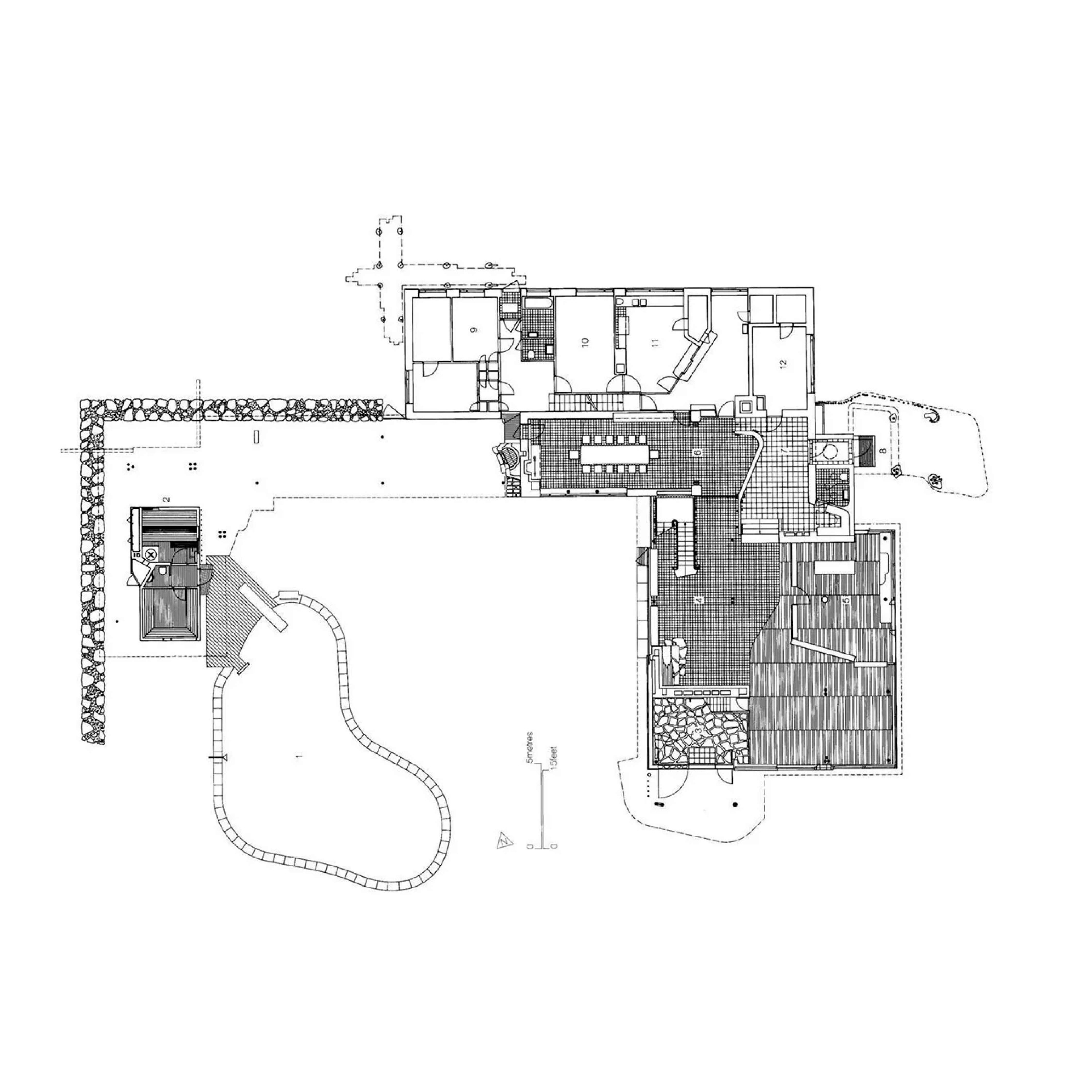
transformative work, which is a bit of a barrier in Norbarco, in Finland, of course, our autumn, and built for very wealthy clients. The totality of that work, from a tactile point of view, you know, is, you know, is transformative, I would say, and if I would point to one building, which transformed my current view of things, you know, it would be that building. And there is a journey here because, you know, when, well, it's also contained in the red book you have, you know, when, okay, very key person in my life was the important, but so far not celebrated Douglas Thiever, who had, who ran this kind of maverick office in the early 60s in, in Colonyby Street, for God's sake, well, close to Colonyby Street. And, and had this habit, you could say, this risky habit of giving young architects, let them do what they want, you know, in the name of the practice. And so Douglas gave me this opportunity, which is illustrated in the little red book. Yes. There's this block of apartments in Craven Hill. Yes, Bayeswater, yes, now called Corringham. And which now a great two historic monument wildly enough. And which at the age of 32, I had already realized it, you know, and I designed everything in that building because Douglas let me design everything basically. And it was actually a project that was also dependent upon a peculiar section which had been developed by somebody whose name I don't remember, unfortunately, inside the London County Council, but never realized, I don't think. So you either enter the unit and go up half a level to the living dining kitchen and then go up half a level to the bathroom and then go up, yes, another half level to the bedroom. With the result that the, all the living dining kitchen spaces face west and all the bedroom spaces face east. And for better or for worse. And anyway, where am I going with this? I'm going to the point that the, that in terms of my own kind of development, I was very impressed by Russian constructivism. And in a sense that building is designed by a young architect who's totally convinced about the validity of Russian constructivist architecture, you know. And not only its language, but also its content, both the content and the language. And of course there's a big move for me from that as a kind of face, if you like, to my appreciation of the Ville Marais. You know, it's a big shift. And you're aware of the question of the tactile experience of the subject. It becomes a paramount, you know. And that's a journey in my own life, basically, you know. Kenneth Frenton, why didn't you become an architect? Oh, yes. Right. You know, I mean, it's painful, really. It's very painful, you know, in that I didn't. And very difficult to answer this question, you know. I think I, I didn't really recognize who I was, even if it was what I mean. And you could place a construction on all the stuff I've written, is kind of sublimation of not having become an architect, right? You could. Yeah. You could indeed. So I do have regrets about that. It's funny, this kind of theme now of knowing oneself or not knowing oneself. Yeah. It seems like it's also at the heart of this decision to leave practice and become a writer. Right. Then you did it because you didn't know yourself. Right. And, and I mean, the, the reason of which one develops is very weird, you know. And, and, you know, like, for example, going to the States, of course, meant that I, yeah, I suppose, you know, it increased my, how can I put it? My, my intellectual aspect, you know. But it, it, it, it didn't allow the other side to develop at all, you know. I mean, I did work a bit as a designer in the States, but not very, I guess, well, not very successfully. And also, I think there's another thing you know, to do with the phenomena of what I would call self-imposed exile, you know. Which I felt, you know, the contradiction of a self-imposed exile. So coming back here, which is also has its fortuitous aspects, is a, is a way of overcoming in a way the self-imposed exile. Because that heightens the regret of, of not staying in place, you know. Not being a regional critic? Yes, because it was a particular moment, because he, because I was a technical editor of Art of Trafford Design, which meant basically I was an editor, because Monica let the technical editor. She was a British architectural journal, and you were instrumental in bringing a lot of European practices in front of English audience. That's right. The English audience. Yeah, correct, correct. Because I, I wanted to, and I still think that's, well, you know, Brexit is a, is a big huge mistake, you know, made for the most crashed political game, reasons, you know. And also predicated on the fact that I'm thinking of a phrase with somebody used about, I guess, the World Barrel Season, says of participatory design, you know, which he had to confront when the Portuguese Revolution occurred, and the Sal organization, virtually, uh, come indeed the entire profession to design low cost housing, including Elvara. The Barrel says about participatory democracy, most incredible statement. Suddenly the architect should learn from the people, but the people need to learn from the architect, but they are ill informed, and this makes for a very abrasive situation. And I think, you know, he's in that short, a forestic thing. He's encapsulated the problem of, of, of representational democracy, you know, that, uh, with a much-bonded representational democracy, we end up with Trump as president of the United States, putting place by people who are ill informed. If you could live another, I'm sure, if you could live another hundred years.
What would you hope to see the architectural project become? I don't know. It's an impossible question, you know. [LAUGHTER] I don't know. But it's amazing. I suspect the Blundin are these goddamn seagulls, which is part of the scene. We're on the roof top of Moralands right now. The lunches just ended, but the architectural project. Well, I think-- you know, it's fascinating to think about it. I come back to Helen Arran. This question of the space of appearance is profound, I think, because it is both the space in which the society recognizes itself. And it's also the space that is always potentially political in that it recognizes itself. So all the actual spaces are spaces in which the society recognizes itself, you know, I think. And therefore, they are fundamentally important. Therefore, schools of architecture should definitely give the theater as a problem, you know. Absolutely. I mean, the question of what has happened to schools of architecture is that the program has become very unclear, right? But I mean, schools clearly, you know, a school is a program, you know, that should be articulated by young architects, you know. One should reconsider, what is it? Because it's also-- ah, that's very important. You know, the importance is, in the end, the importance of the small world, microcosmos, you know. And architecture always has been and still is ultimately about microcosmos to shelter the human subject, small house, et cetera, et cetera, to create a space of appearance for a society, you know. It is fundamentally microcosmic discourse. And if it's not that, it's just-- it becomes ruthless, you know. So I think that the-- on the one hand, I tried to reground architecture in the poetics of construction. But I think absolutely important, I mentioned, is also the microcosmic dimension. And the virtue of the microcosmic is modesty, you know. Modesty in relation to reality. Because I mean, we've abandoned long ago the utopian modern project. But-- and rightly, so I think, despite my early enthusiasm, et cetera. But this task of creating a small world is, in the end, profoundly the task of architects, you know. It still has that dimension, you know. And-- sorry. I don't want to-- I mean, please, by all means, if you want to continue, I'm totally enthralled. I just don't want to exhaust you either. No, but, you know, in here, there is this essay-- This is your book, "Laboro." "Working Architecture." "Working Architecture." Yeah, which is out of print. Where am I here? Oh, yeah, the Volvo case. This arises out of-- anyway, when it came back to London, which was also a moment where I could have decided to stay. But I didn't. In 1970, to teach the other rock I was about, I went with a colleague to look at the Volvo production. I mean, to go to Kalmar, in fact, which is where-- how I knew of all this is because I heard Guillenama, who was director of Volvo lecture, in Columbia, about this Kalmar system, which was the system of rotation, you know, where the quality control depended upon the computer feedback, so that when faults arose in the production of the automobiles, then the feedback would go immediately back to the different stations where the fault had been made. So it was a constant auto-correcting device. And so it passed-- well, because you know, we come back to Ruskin and the quick, correct question to ask about all ornament is, was it done with enjoyment? And that's the move behind this corporation, which is job enrichment backed by the unions in order to overcome absenteeism. And therefore, the interruptions to the production caused by absenteeism. And it is, of course, the combination of the interests of the automobile company and the interests of the trade unions, that who, by the way, insisted that the system would be open enough to the production of an object not necessarily an automobile by the same feedback system. So it fascinated me because-- ah, yes, and what is fascinating is that a representative from the American automobile industry went to visit Kalmer and said, we're not interested. We just want more money, which is, of course, the voice of capitalism speaking through the worker exploited by the capitalism. You know. So we're back with Alvaro Ziza. But there's a key line in that essay, "Democlowne pulls out," in relation to your interest in Marquis and his calls for a non-repressive civilization. The quote, though, is that there's a refusal to separate the reality of work from the pleasure of life. Oh, that's-- That's in the Volvo case. Oh, it is. Yeah. It rises to be. Yeah. But it's very succinct that it somehow-- I think, captures this overarching attitude or a desire or ambition that the kind of criticism you've done over your career is trying to sustain. Yeah. That would sum it up, I think. Amazing. I've forgotten. I think that's why you brought me to that essay. I mean, I think there's a kind of subliminal understanding. But it brought us to that line. And I mean, I feel like we could go on for a day or more. Yeah. Yes, we could. It's a pleasure, in fact, to talk to you. Scaffled is an architecture foundation production. I'm Matthew Blunderfield, and I make this show. Music is composed and performed by Luke Blair. You can subscribe to Scaffled on iTunes or wherever you listen and follow the show and Instagram at Scaffled_podcast. If you like what we do, share the episode, leave a rating, and consider supporting the architecture foundation by becoming a member on Patreon. Thanks to Kenneth Frampton, special thanks to Sweet to Julia Bloomfield. Thanks as always to Skandalin. Thanks to you for listening. See you next time.
Podcast Summary
Key Points:
Kenneth Frampton's early aspiration to be a farmer was rejected by his parents' lack of understanding, influencing his hesitancy about starting a family.
He realized agricultural labor left no time for intellectual life, which shaped his later focus on the mind.
Frampton's intellectual journey was influenced by thinkers like Herbert Marcuse, Thomas Maldonado, Juhani Pallasmaa, and Hannah Arendt, emphasizing tactile experience and anti-capitalist thought.
His design of Corringham in London was inspired by Russian constructivism, while Alvar Aalto's Villa Mairea taught him the primacy of bodily experience in architecture.
Frampton regrets leaving architectural practice for writing, viewing it as a sublimation of his unfulfilled career.
He advocates for architecture as a "microcosmos," creating small worlds where society recognizes itself, and emphasizes modesty and the space of appearance.
Summary:
In this conversation, Kenneth Frampton reflects on his personal and intellectual evolution, beginning with his youthful desire to become a farmer, which was met with parental incomprehension and left him hesitant about parenthood. The physical exhaustion of farm work, leaving no room for intellectual pursuits, marked him deeply and steered him toward a life of the mind. Frampton discusses key influences, including Herbert Marcuse's *Eros and Civilization*, which resonated with his own experience of alienated labor, and Thomas Maldonado's critique of ecological consciousness as a distraction from capitalist injustice.
He credits Juhani Pallasmaa for emphasizing the tactile experience over the visual, positioning this as anti-capitalist in an image-saturated world. Frampton’s own architectural work, such as the Corringham project in London, reflects his early fascination with Russian constructivism, while Alvar Aalto's Villa Mairea transformed his understanding of architecture's power through bodily engagement. He expresses regret over leaving practice for writing, suggesting his critical work may be a sublimation of that loss.
Ultimately, Frampton champions architecture as a "microcosmos," a modest, small world that shelters the human subject and creates a space for society to recognize itself, opposing the ruthless scale of contemporary development.
FAQs
He wanted to become a farmer at age 17 and planned to apprentice with a farmer, but realized agricultural labor left no time for intellectual life.
He feared not being able to understand his own child, reflecting his own experience of feeling unrecognized by his parents.
Marcuse wrote 'Eros and Civilization' (1955), which focuses on the repression of eros under advanced industrial society and alienated labor.
It emphasizes the tactile experience of the subject over the visual, opposing the inundation of images and commodification in contemporary life.
Alvar Aalto's Villa Mairea in Finland, whose tactile richness taught him that architecture's real force lies in bodily experience.
He served as technical editor, helping to introduce European practices to an English audience.
Chat with AI
Loading...
Pro features
Go deeper with this episode
Unlock creator-grade tools that turn any transcript into show notes and subtitle files.
 PodcastTranscript AI