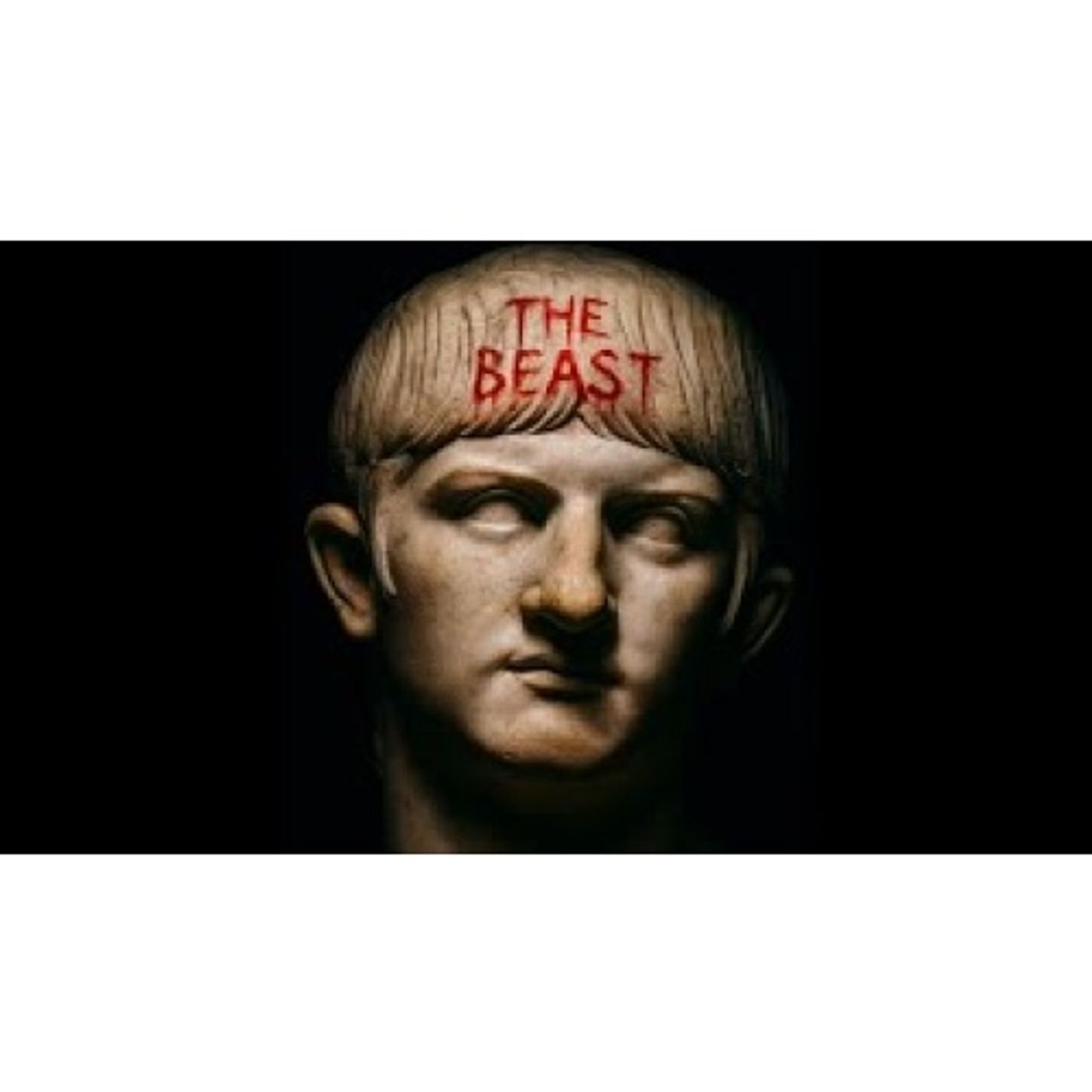
The transcription covers an introduction to the book of Revelation, highlighting readings from chapters 1 and 22. It delves into the challenges of interpreting Revelation, focusing on the writing date debates. The importance of audience relevance, contemporary expectation, and the thematic statement of Revelation are discussed in detail. The speaker emphasizes understanding the original audience and their context, suggesting a connection between the book's content and historical events like the destruction of the temple in AD 70. The thematic statement of Revelation 1:7 is explored, hinting at a judgment upon the temple rather than a literal second coming of Christ. The transcription provides insights into the complexities of interpreting Revelation and the significance of considering historical context for a better understanding of its message.
Transcription
10052 Words, 56129 Characters
We are now ready to consider the book of Revelation.
And as we prepare to do so, I would have you turn in Revelation to chapter 1, and perhaps
have your hand in chapter 22, where I'll read a portion, indeed, the opening and closing
of this book that it might set our focus upon the approach I will be taking.
As here, then, the Word of God, Revelation chapter 1, verses 1 through 7, "The revelation
of Jesus Christ, which God gave him to show to his bondservants, the things which must
shortly take place, and he sent and communicated it by his angel to his bondservant, John,
who bore witness to the Word of God and to the testimony of Jesus Christ, even to all
that he saw.
That is he who reads, and those who hear the words of this prophecy, and heed the things
which are written in it, for the time is near.
John, to the seven churches that are in Asia, grace to you in peace from him who is, who
was, and who is to come, and from the seven spirits who are before his throne, and from
Jesus Christ, the faithful witness, the firstborn of the dead, and the ruler of the kings of
the earth.
To him who loves us, and released us from our sins by his blood, and he has made us
to be a kingdom, priest to his God and Father, to him be the glory and the dominion for ever
and ever.
Amen."
And then skipping over to chapter 22, we'll read verses 6 through 10, "And he said to me,
These words are faithful and true, and the Lord, the God of the spirits of the prophets,
and His angel to show to his bond servants the things which must shortly take place.
And behold, I am coming quickly, blessed is he who heeds the words of the prophecy
of this book.
And I, John, am the one who heard and saw these things, and when I heard and saw, I
fell down to worship at the feet of the angel who showed me these things.
And he said to me, Do not do that.
I am a fellow servant of yours, and of the brethren, the prophets, and of those who
heed the words of this book, worship God.
And he said to me, Do not seal up the words of the prophecy of this book, for the time
is near."
Let us pray.
Once again, our Heavenly Father, we pause in thy presence to give thee thanks for revealing
thy truth to us.
We come now to this very difficult book which has perplexed the minds of thy church for ages,
ever since its original writing, apparently, and we pray, Lord, for the illumination of
the Holy Spirit, that we might have some of the tools, some of the keys for the proper
interpretation of it, and may we be diligent to search the Scriptures to see whether these
things are so.
For it's in Jesus' name we pray.
Amen.
Now, in this morning lecture, I am entrusted with the task of giving an introductory overview
of the book of Revelation.
It is the most difficult book in the Bible, I think, as all of us here would agree.
It has been said that wherever you find five commentaries on the book of Revelation you
will find six different views.
Unfortunately, many of the commentaries are like a black hole, they're so dense that no
light can escape.
Ambrose Bierce wrote what he called the Devil's Dictionary, and when you look up Revelation
in it, it says, "A famous book in which St. John concealed all that he knew."
There's more.
The revealing is done by the commentators who know nothing.
Well, due to time constraints, very obviously, I cannot deal with this very perplexing book
in the space of fifty minutes, but I do want to highlight some portions that I think will
be helpful as tools or as keys for opening up the book of Revelation to you.
You might be interested to know that I contribute to a book called Four Views on the Book of
Revelation, edited by Marvin Pate, where I present this view I'm about to give you in
fuller form if you want to search it out a little more.
Well, a day with the Lord is as a thousand years, but an hour at Ligonier is only fifty
minutes.
So I really need to get started.
I want us to focus on two big issues.
One is, and we'll focus only briefly there, the date of the writing of Revelation, and
the other is the theme, which includes the flow of Revelation.
I think these will provide for us helpful keys if you follow my thinking.
I think you'll see at least some plausibility in this approach, and I hope it's persuasive
to you.
I would like to begin with only a brief evidence of the reason why I argue that John wrote
prior to AD 70.
Now my doctoral dissertation was on that subject, and it's published as the book Before Jerusalem
Fail, which is over four hundred pages.
So there's a lot of material that we could cover had we the time, but because of constraints
I will have to be brief, so don't let the brevity of it make you think that's all there
is to the argument.
And so we will concentrate after giving a brief introduction to the date of composition.
We'll concentrate on the flow, the features, and the felons in the book of Revelation.
Let's begin by first considering the date of composition.
There are two basic schools of thought on when John wrote Revelation among evangelical
scholars today.
They are called on the one hand the late date view that says he wrote in AD 95 or 96 toward
the end of the reign of the emperor Domitian.
Then there's the early date view that says that he wrote just prior to the destruction
of the temple, which occurred in AD 70.
So perhaps it was written anywhere from AD 65 to early in AD 70.
These are the two basic positions that are presented by evangelical scholars today.
And what I want to do is just to present two internal indicators that will tell you why
or at least suggest to you as to why I believe this book was written prior to AD 70 when
the temple was destroyed.
And again, there's more to it than what I can offer you now, but in the first place
when you read the book of Revelation you find that the temple is standing in Jerusalem.
In Revelation 11 verses 1 and 2 we read these words, "This command of John, rise and measure
the temple of God, the altar, and those who worship there, but leave out the court which
is outside the temple and do not measure it," et cetera, et cetera.
So what we have here is when John is writing, the temple is standing.
That being the case, it has to have been written while the temple was standing, which is prior
to AD 70.
If John wrote 25 or so years later, then this would be a most anachronistic and confusing
statement for his original audience.
And then secondly, we find evidence in the line of the seven kings in Revelation chapter
17.
In Revelation chapter 17 we have in the first six verses a vision of a seven-headed beast.
Then we find also in that vision evidence that Nero Caesar, that infamous persecutor
of the church, is still alive.
Because we find not only the vision in the first few verses of Revelation 1, but we also
have by the grace of God an angel who comes on the scene to interpret the vision for John.
In verses 9 and 10 the angel is going to give John some wisdom.
And as he does so, he shows John that you can't interpret this book literalistically.
This is not a seven-headed beast.
He's going to tell John what is meant by the seven heads, and this goes on and on in
the book.
But my point is to notice how the angel interprets this.
The angel says, "Here is the mind which has wisdom.
The seven heads are seven mountains on which the woman sits, and surprisingly, they're
seven kings."
And then he says, and this is what's crucial for us, "Five have fallen, one is present
tense, and the other has not yet come, and when he comes, he must remain a little while."
Now on all hands, we understand that the book of Revelation was written at some time under
Imperial Rome's oversight during the time of the Roman Empire.
And so we are to see when this angel interprets for John these seven heads, that he says that
the seven heads represent seven mountains.
And when you realize that this was written during the time of Imperial Rome, that which
would naturally spring to mind in the original audience was the seven hills of Rome, a very
famous feature, even in antiquity Rome was known as the city on seven hills.
And so here we have a clear geographical referent to somehow this beast being associated
with Rome, which was the city on the seven hills.
But who are the seven kings?
I believe that what he's telling us here is that these are the emperors.
This is the line of emperors from Julius Caesar that he's counting forward, the first emperor
being Julius Caesar.
And he says, "Five have fallen, the first is Julius, the second is Augustus Caesar, and
then the third is Tiberius, and then Gaeus Caesar, and then Claudius Caesar."
The angel tells us that the first five have fallen.
Then he says, "One is, and as a matter of fact, Nero Caesar was the sixth in the line
of the emperors of Rome."
And this tells us that Nero is alive.
This tells us therefore that it's prior to June 8 AD 68 because at that time Nero commits
suicide as the Roman Empire erupts into flames through civil war.
And then he says, and remarkably, "The other that is the seventh, the other has not yet
come and when he comes he shall remain a short while."
Well, since Rome has been cast into the throes of civil war, and Nero dies after a reign
of 13 and a half years, interestingly the next emperor is Galba, the seventh is Galba.
And he reigns from the death of Nero in June until that next January.
He reigns but six months.
After the 13 and a half year leadership of Nero, we have a six month span for this emperor.
And so I think the evidence here is quite suggestive.
The temple is standing, Nero is alive, those being true, then we are to understand that
the book of Revelation obviously was written prior to the destruction of the temple.
Well, as I said, that's only a little tip of the iceberg there.
You'll have to check other sources to get more material on that, but I'm sure what
you're especially interested in is what the book of Revelation teaches us.
And so now I'd like to consider this expectation of Revelation, the expectation of Revelation.
We need to discern what does John expect in the writing of this Revelation.
And here it's vitally important to understand the original audience and what they, or how
they would read this book.
Many factors will emphasize the historical circumstances of John's original recipients
of this glorious revelation.
And the first of these factors that points to his expectation is audience relevance.
John writes to seven historical churches.
In Revelation 1.4 he says, "John to the seven churches which are in Asia."
In verse 11 he names those churches.
And then in chapters 2 and 3 he gives evidence of knowing those churches quite well because
they're subtle indicators of their culture, their social setting, and of their circumstances
in the first century when John writes.
And so John writes to seven historical churches.
And then also we notice that he wrote in order to be understood.
Take at verse 3 of chapter 1, "Blessed is he who reads, and those who hear the words
of the prophecy, and keep those things written in it."
The idea of hearing is not just receiving audible intonations, but that it is actually
hearing with discernment so that they can keep what he has commanded them so that they
would keep those things written in it.
Therefore, it is directly relevant to the first century church, particularly those
seven.
To the first century church it is not directly relevant to a church 2,000 years later.
He is writing to a particular historical audience.
And then notice that this particular historical audience is already in tribulation.
In verse 9 of chapter 1, John says, "I, John, your brother and companion in the tribulation."
In chapters 2 and 3, when he addresses the seven churches, he highlights some growing
problems that they are facing, some among them are being killed.
There's an awful long slot of Satan in some of those churches.
He's dealing, in other words, with real Christians, with their sandals firmly planted in the first
century, and so he is talking to them who have real problems and he's not taunting them
about Cobra helicopters and things like that 2,000 years away.
He's telling them about events that are going to be dealing with their circumstances.
They are in tribulation.
They need to know what is to become of them and what is to become of the faith that they
have committed themselves to that is causing this tribulation.
And so audience relevance is so important to keep in mind as you read the book of Revelation
than also the contemporary expectation.
Interpretation of the book of Revelation must begin in the first chapter.
John very clearly expects the events that he prophesies to begin occurring soon.
I'm going to give you two evidences of this.
One is varied expression.
He uses two different terms and the second will be strategic placement of those terms.
Let's consider first varied expressions that John uses.
And verse one, John says, "The revelation of Jesus Christ which God gave him to show
his servants things which must shortly take place."
These things must shortly take place.
That is the Greek word "tachos," like our word "tachometer," a "tachos."
It means shortly.
It doesn't mean thousands of years later.
It means shortly to take place.
This word occurs also in chapter 2, 16, 3, 11, 22, 6, and in its adverbial form in 22,
7, 12, and 20.
And so he uses the term "tachos," which means shortly, and then he also uses another term.
In case you missed that one, in case you skip over the first verse or you don't realize
the implications of it, in verse 3 he uses another term.
He says, "Blessed is he who reads and those who hear the words of the prophecy and keep
the things written for the time is near."
Here the Greek word is "engus," and it literally means "at arm's length."
I mean, it has to do with the limb.
"Guian" means "the limb," and it's at arm's length.
It's something that is at hand in a very literalistic fashion, if you were to interpret the word
as "at hand" instead of "near."
This word also occurs in chapter 22, verse 10, which I read for you a few moments ago.
Anyway, the temporal impression that the original audience under tribulational affliction would
perceive from this book is that John really expected these things to shortly come to pass
because the time is at hand.
And not only does he use two different terms to express this, but he places them strategically
in the book, in the very opening of the book and the very closing.
When you enter into the world of Revelation and when you exit out of it, in the introduction
he tells them what will be very soon, and then he reminds them of that as he closes
the book down.
These are in the didactic portions of the book of Revelation where he addresses them
and says to the seven churches and tells them things about the love of Christ and the blood
of Christ.
This is in the didactic portion.
Before you get to the dramatic images, the seven-headed beast, the locus with men's faces,
the fire-breathing prophets, and a lamb that's dead but really alive, before you get to all
of those images, you have once again a didactic introduction.
Very plain and very clear in my understanding of this.
But now the question arises.
We know the expectation of these people.
They lived in the first century.
They were under-tribulation.
They had been told by John that they are to expect something soon, but what is it they
are to expect?
And this leads me to my third major point, the theme of Revelation.
Let's consider for a few moments the thematic statement, that is, John states his theme
up front, and the whole rest of the book of Revelation is an explication of that theme.
And I'm going to be reading Revelation 1.7 from Young's literal translation of the Bible.
And if you find some of these real woodenly literal translations of the Bible, you will
find it interpreted this way, and then I'm going to make some comments on that.
"Behold, he is coming with clouds, and every eye see him, and they also who pierced him,
and all tribes of the land were mourned because of him."
You notice that read kind of awkwardly, Young's literal translation is pressing home the literal
translation here.
"Behold, he comes with clouds, every eye see him, and they also who pierced him, and all
the tribes of the land were mourned because of him."
Now remember, just four verses prior to this, this is Revelation 1.7, four verses prior,
he says these things are near, and just five verses, six verses prior he says that these
things are shortly to come to pass, and then he gives this theme statement.
Well, what does he mean by this theme statement?
This theme statement sounds like the second advent, and there is a relationship between
8070 and the destruction there, and the final glorious coming of Christ, just like there
are similarities between the language here, and the destruction of Babylon, and Isaiah
13, Itamiah, and Isaiah 34, and then other places in the Old Testament.
These are activities of God in the realm of men, so we can expect some similarities of
language there.
But what does he say here?
How do I know that this refers to 8070?
Why would I suppose that, since it sounds so much like the glorious final conclusive
act of history, the second coming of Christ.
Well, let me give you some evidence, three lines of evidence, that what he is saying
here is he's coming in judgment upon the temple.
First, and some of this you've heard before last night, particularly in my message on
Matthew 24, he speaks of his coming with clouds.
This is apocalyptic language.
This is language that we spoke about a few moments ago, and Dr. Ferguson gave a very
good reminder that this language is drawn from Daniel chapter 713, which is a heavenly
vision of Christ being given the keys of the kingdom, as it were, of being given the right
to rule.
This cloud coming is apocalyptic language.
It is common language among the poetically inspired prophets of the Old Testament, which
speak of divine visitation upon historical nations who set themselves against God.
When a nation falls, God is judging.
God has come into the realm and the experience of that nation.
This is not a mere evidence of history as sound and fury signifying nothing.
This is not simply history being read with tooth and claw.
This is interpretive history.
When Babylon fell, the secular historians might tell us, "Well, this is the way things
go among nations."
The Bible prophet tells us, "No, it's not just the way things go.
God, Jehovah God, is coming to judge."
And again, I'd like to mention that one reference that I used yesterday, since we don't have
a whole lot of time, Isaiah 19.1, when the Assyrians overthrow Egypt, the prophecy of
that event says, "The burden against Egypt, behold, the Lord rides a swift cloud and will
come into Egypt."
And again, no one, no sane commentator says that God hopped on a cloud and taxied down
into Egypt and became visible and began laying waste to the land.
The commentators tell us this is an apocalyptic reference to the destruction of Egypt in a
particular war.
Therefore, if apocalyptic language will allow us to understand a divine judgment in history
as a cloud coming, then the possibility is open to us here in Revelation 1.7.
And this becomes all the more significant, not only because he says these events are
near at hand and shortly to come to pass, which really is enough, but also if you consider
Matthew 21, verses 40 and following, which, by the way, is interpreted even by premillennial
scholars as a reference to AD 70, Matthew 21, verse 40, and then verse 43, for time's
sake, Christ gives the parable of the vine owner.
He says, "When the owner of the vineyard comes, what will he do to those vine dressers that
have abused his prophets and now his son?"
They said to him, "He will destroy those wicked men miserably.
When the vine owner comes, what's he going to do?
Destroy the wicked men."
Well, verse 43 has Christ saying, "Therefore, I say to you, the kingdom of God will be taken
from you and given to a nation bearing the fruits of it."
And in verse 45, we read, "Now when the chief priests heard, they perceived he was speaking
of them."
They had a little insight now.
My point is, Matthew 21 uses coming language of the destruction of Jerusalem.
The scribes and Pharisees knew exactly what he was talking about.
They perceived it, and I believe that's what John is talking about, even here.
But secondly, under this proof, this evidence for Revelation 1-7 being a reference to AD
70, notice verse 7 says, "In effect, he's coming against those who are in need."
"Who pierced him?"
Who are those who pierced him?
It is especially the first century Jews.
They are the ones who cried out, "Crucify him, crucify him.
We have no king but Caesar.
If you let him go, you are no friend of Caesar's, forcing Pilate."
Even he washed his hands in their presence and said, "I'm innocent of this man's blood."
And they said, "His blood be upon us and our children."
The Jews of the first century demanded the crucifixion of Christ.
In Matthew 27-25 is where he says, "His blood be upon us and our children crucify him,
and his blood comes down upon them and their children in that generation."
All the way through the New Testament record, we see the primary, covenantal focus of the
crucifixion of Christ falling upon the Jews in Acts 5.30.
Peter is preaching.
He says, "The God of our fathers raised up Jesus whom you murdered by hanging on a tree."
He's blaming his Jewish family for crucifying Christ.
He does the same thing in Acts 2.36, 3, verses 13-15, chapter 7, verse 52, and Paul does it
in 1 Thessalonians 2, verses 14-16, and on and on we could go with references.
And so the responsibility for the death of Jesus Christ, according to the biblical record,
even though physically the Romans actually pierced him, the covenantal responsibility
falls upon the Jews.
They demanded it, and Rome was forced, as it were, to do it.
And then thirdly, as a line of evidence for AD 70, being the reference for verse 7, notice
that he says, "All the tribes of the land will mourn."
Now the word "earth," translated "earth" there, is the Greek word "gay," which can
mean either earth or land.
And as a matter of fact, the land is a famous designation for Israel's land, the promised
land.
The land is something very dear to the Jew, as all of us, I'm sure, are well aware of.
And then he says, "All the tribes of the land."
And when you think of Israel, you think of its division into the twelve tribes.
So what John is saying here is, "Jesus, whom you crucified, is coming to judge you, and
all of your tribes, all the tribes of the land will mourn because of this."
It will be a public event, his destruction of the temple, not his appearing physically
as a public event, but his judgment will be a public event of great and grievous proportions.
Having said that, let us now consider thematic characters.
Revelation is a drama.
It's written in very vivid, terrifying imagery, apocalyptic imagery, as we've been mentioning
from time to time in the course of this conference.
Before we can trace the movement of the book of Revelation, I want us to consider two major
characters that are of interest not only to the modern exegete and prophecy enthusiasts,
but also are very prominent in the book of Revelation.
Of course, we won't consider Christ the most prominent, but two characters that hold a
lot of the emphasis of the story.
They are the beast and the harlot.
Now let's consider the beast first.
Remember, the whole idea of audience relevance tells us that these people were living in
the time of Rome.
The whole concept of it being near and shortly to come to pass tells us it must be something
in their time frame.
Let us notice in chapter 13, verse 1, John says, "I saw a beast rising up out of the
sea, having seven heads and ten horns, and on his horns ten crowns, and on his heads
a blasphemous name."
Now here we are going to look at this beast generically and specifically.
In other words, we are going to look at this beast in terms of its corporate reality and
in terms of a particular individual.
For instance, if I say the phrase, "The body of Christ," what do you think of?
Well, those of you on my right hand would say, "Well, that's the church of Jesus Christ."
Those of you on my left might say, "No, that's Jesus' body that he came through the earth
hand."
In other words, there can be a specific referent and a generic referent, just like the body
of Christ can mean either Christ specifically as a historical individual or it can mean
the generic body of Christ, those who are blood-bought trophies of his conquering power.
Well, so I want us to consider this beast both generically and individually.
Generically the beast represents Rome.
Remember, the beast has seven heads which are seven mountains, the angel tells John.
The seven hills are well known as descriptive of the city of Rome, seated on seven hills.
And also we see this beast arising up out of the sea.
And since I've already indicated, a lot of the, well actually the major flow of the book
of Revelation deals with Israel's predicament.
When you visualize a map of Israel, you see Israel right on the corner, right on the west
eastern edge of the Mediterranean Sea, and if you plot a path across the sea, you get
to Rome.
So in the imagery, the beast comes up out of the sea.
Rome and its soldiers will come that way up from across the sea from Rome.
The crowns on his head represent political power.
What nation in the world, actually it wasn't a nation, it was an empire, what political
entity in the world of that day had multiplied power at its command.
Obviously the Roman Empire.
In fact, in verse five and in various places there, it says that it makes war.
This beast makes war against the saints.
Well, that involves a national entity to actually make war.
And I think that that refers to the persecution of Christians.
But for right now, just notice scholars recognize across the board, there are scholars who recognize
that the beast represents Rome.
But the scholars also tell us that the image of the beast shifts between the generic empire
and the specific emperor, who is the representative of Rome.
Notice the beast has seven heads, and those seven heads are seven kings, and he says one
of those is, and I showed earlier just briefly, that the one that is is the six emperor of
Rome, who is Nero.
And then you're all familiar with Revelation 13.18, which says the number of the beast
is the number of a man.
Notice that seven-headed beast now becomes specifically a man.
And then in chapter 17.11, it talks about another who is one of the seven, a beast who
is one of the seven.
So you see, the beast has the seven heads, yet sometimes he is the one head.
Okay, well who is this one head?
The one head is Nero, the six emperor.
And in many remarkable and relevant ways, Nero fits the facts.
And let me just survey a few samples for you.
In chapter 13, verse 18, which I've already mentioned, it says the number of the beast
is the number of a man, and his number is 666.
By the way, it is not six and six and six.
In the Greek it says 660 and six.
So sometimes people make strange associations with the series of sixes.
It is a number, an arithmetical value of 660 and six.
Well the Hebrews, remember John was a Hebrew, and the book of Revelation is written in very
Hebraic imagery, even in awkward Greek that has a very Hebraic tone.
Hebrew does not have a separate numbering system.
They used their alphabet.
Of course, Rome did that too with the Roman numerals, but they did it in a different way.
The way the Hebrews fashioned things is they used the first ten letters of the alphabet,
and then the next ten to represent ten, twenty, thirty, etc. and then it goes to a hundred,
etc.
Well, very interestingly, when you add up a first century Hebrew spelling of the characters
that make up the name Nero Kaiser, Nero Caesar, you find that it adds up to 666.
So that fits.
In chapter thirteen, verse five, it says, "He was given a mouth speaking great things
and blasphemies, and he was given authority to continue for forty-two months."
And then in verse seven, it adds to that, it says, "It was granted to him to make war
with the saints and to overcome them."
You're probably aware that Nero was the first imperial persecutor of the Christian church.
In fact, the imperial persecution broke out in November of 1864 and did not cease in finality,
although it waned a lot.
It did not cease in finality until June of 1868, which is a period of right at forty-two
months from November 64 to June of '68.
In thirteen ten, we read, "Of the sword death of the beast, he who leads into captivity shall
go into captivity.
He who kills with the sword must be killed with the sword."
Nero died at his own hand by thrusting a sword in his throat.
He committed suicide with a sword that had been used by his imperial office to put to
death many people.
Nero, remember, this book opens with John saying, "I, John, was on the Isle of Patmos.
He's not there as a tourist attraction.
There's no Disney World there.
He is there in a penal colony.
He has been captured by the beast and sent to this island.
And therefore, we find that this fits as well."
Then we have something quite remarkable in chapter thirteen, verse three.
And this, which sounds like the most difficult element of my interpretation, becomes for
me one of the most conclusive elements of it.
In verse three, he says, "I saw one of his heads," and remember, I'm going to suggest
that that head is Nero, "one of his heads as if it had been mortally wounded and is
deadly wound was healed, and the whole world was amazed."
Okay, this beast has a head that dies, and yet the beast arises and lives again to the
amazement of the world.
Well, what do we say about this?
Remember, I said, when Nero died in June, eighty-sixty-eight, the Roman Empire was just
entering into the throes of civil war.
In fact, there's what's called in eighty-sixty-eight, sixty-nine, the famous Year of the Four Emperors.
There was one after another, Galba, Otho and Vitalius, each had three to six month reigns.
And then, Vespasian comes along, the Year of the Four Emperors.
Well, when Nero dies, and Rome goes into civil war, and Germany revolts to try to escape,
and Britain and the various far-flung areas of the Empire, we see what looks like the
death of Rome.
Roman Rome is collapsing to all eyes.
In fact, Tacitus, the Roman historian, says in Histories 111, quote, "This was the condition
of the Roman state when Galba entered upon the year that was to be for Galba his last,
and for the state almost the end."
You see, they saw this as a very tragic circumstance.
But what happens?
The nation revives.
The beast revives from this wound that all thought was bringing it to an end.
So that, Suetonius, another and a second-century historian, tells us in his book, Vespasian,
chapter one, quote, "The Empire, which for a long time had been unsettled and drifting
through the usurpation and violent death of three emperors, was at last taken in hand
and given stability by the Flavian family.
The beast was staggering to its death through the year of the four emperors.
And then finally, Vespasian comes on the scene and grabs hold of the reins of the kingdom
and stabilizes it, and the beast revives and lives again."
Notice how Josephus speaks of this.
And remember, when this beast dies and comes back to life, John says in verse 3, "The whole
world was amazed."
What does Josephus say?
In wars four, eleven, five, Josephus writes, quote, "So, upon the death of the two emperors,
so upon this confirmation of Vespasian's entire government, which was now settled,
and upon the unexpected deliverance of the public affairs of the Romans from ruin," and
he goes on, "This is unexpected.
The tragedy was a very complicated and ruinous tragedy, this Civil War of Rome.
So that in the Civil War of Rome, the beast is struck with a mortal blow that takes out
one of its heads, its reigning emperor, and if you give a head blow, you would expect
the animal to die, the beast to die.
It falls down, it's collapsing, it's staggering, it's going through usurpation of a series
of military leaders who try to take hold of the reins of government, and the beast, to
all appearance, is on its last legs, it's dying.
But then Vespasian comes in and revives it, and it becomes as great and even greater than
before."
Okay, that's my understanding of the beast, generically and specifically considered.
Now, what about the harlot?
And here's where we get into some really controversial exposition, but one I'm very convinced about,
and you will find, in fact, I'm getting ready to write a commentary, I've written half of
it, on the book of Revelation called A Tale of Two Cities, and I know who said that first,
but it's A Tale of Two Cities, and the two cities are the historic Jerusalem and the
heavenly Jerusalem.
That's what John is talking about here.
But notice Revelation 17, verses 3 and 5, and we'll see something about this harlot,
and then I want to declare something and then try to prove it.
Verse 3 of chapter 17, "I saw a woman sitting on the scarlet beast, which was full of names
of blasphemy, having seven horns and ten heads," and then verse 5, "On her forehead a name
was written, 'Mystery, the Bible and the great, the mother of harlots, and of the abominations
of the earth.'"
Or you could read, "The abominations of the land."
Now many would tell us that this woman seated on the beast is Rome, the city itself, because
Rome is, after all, seated on seven hills.
In verse 9 of chapter 17, she is seated on these seven hills, but the beast is already
Rome, and it would seem to be redundant to say that.
Actually, what I think the imagery here portrays for us is that this woman seating herself
on the beast is, and I'm going to suggest that this woman, the harlot, is Jerusalem,
and then I'm going to be defending that.
The way that she sits on the seven hills of Rome is she relies on Rome in the imperial
apparatus to get at Christianity.
After all, crucify Him, crucify Him.
We have no king but Caesar.
You are no friend of Caesar's.
If you release this man, give us Barabbas.
Notice how they are relying on the Roman judicial apparatus.
The harlot, Jerusalem, is seated, that is, leaning upon, reposed upon, and using, and
riding, and driving the beast, as it were, to destroy Jerusalem.
Well, in keeping with the theme in verse 7 of chapter 1, and the dramatic presentation
in chapter 6 through 19 especially, or actually through the end of the book, I want us to
note the evidence, the lines of evidence that are available to us, and these are only a
few, that demonstrate that the harlot is Jerusalem in the first place.
In Revelation 14-8, Babylon is called the great city.
Okay, so this Babylonian harlot, the harlot is Babylon the great, mother of harlots,
Babylon is called the great city.
Well, what is the great city?
Well, the first time you see the great city mentioned in the book of Revelation is in
chapter 11, verse 8.
There the great city is the place where Jesus was crucified.
The text tells us it was the place where our Lord was crucified.
And so, if our first occurrence of the great city imagery appears in Revelation 11-8 and
refers to Jerusalem, and then later this Babylonian harlot is called the great city, then there's
reason to associate the two in a remarkable way, but there's more.
So the Babylonian harlot is full of the blood of the saints.
We see this in several references, chapter 16, verse 6, 17, verse 6, but let's read
18, verse 24, "In her was found the blood of the prophets and saints, and of all who
were slain on the earth," that is, the land.
Now we understand, of course, that Rome had recently begun persecuting the saints.
I've already indicated that.
It could be Rome.
That would fit, but I believe the evidence suggests that Jerusalem is the perfect fit
for this autopsy of the harlot, as she has opened up and there is found in her the blood
of all the righteous who are shed of the blood of the righteous that is shed in the land.
Now the reasons I would say this are in Acts, Jerusalem begins the persecution of Christianity
all through the book of Acts.
You have Paul breathing out threatening and slaughter, his name was Saul at the time,
and then you have that kind of tendency in the whole book of Acts, and Paul is even using
Rome to protect himself against the Jews.
In fact, in chapter 8, verse 1 of Acts, we find that a great persecution erupts against
the church.
In chapter 4, 3 of Acts, in 5, 18, on and on we could go, Acts shows us that the Jews
are also persecuting Christianity, in fact, they started the persecution of Christianity.
Then we also have the theme, which I've already given exposition to in verse 7 that shows
that it's the judgment upon Israel.
It's very interesting that the theme says, "Those who pierced him, the Jews, will mourn
at his judgment coming, all the tribes will mourn," and then we find in the book of Revelation
that the harlot is severely judged.
If verse 7 of chapter 1 is the theme, then this harlot's severe judgment would seem to
fit that theme.
And if chapter 1, verse 7 deals with the theme of Jerusalem's destruction, then the harlot
is Jerusalem.
Also notice that the slain lamb appears 27 times in the book of Revelation.
The idea of presenting Christ as the slain lamb 27 times is showing that this lamb who
is slain for our sins, obviously, but nevertheless slain very wickedly, this lamb that is slain
is seeking vengeance upon his slayers.
Now remember, in Matthew 27, 25, Jerusalem cried out, "His blood be upon us and our
children."
Don't you worry about it, his blood be upon us, and they called down a covenantal curse
upon themselves.
And then consider this.
Let me read Revelation 18, 24, and then I want to read Matthew 23, 34 and 35, and see
if you make a connection there that fits everything else I've been saying.
Revelation 18, 24 says, "In her was found the blood of the prophets and saints and of
all who were slain on the earth or land."
Matthew 23, 34 through 35 says, "I send you prophets, wise men and scribes.
Some of them you will kill and crucify.
Some you will scourge in your synagogues and persecute from city to city.
That on you will come all the righteous blood shed on the earth or land."
You see, a direct correspondence there that fits everything else I've been saying.
Okay, well let's consider another line of evidence that the Babylonian harlot is actually
Jerusalem.
In chapter 17, verse 4, notice how she is dressed, "The woman was clothed in purple
and scarlet and adorned with gold and precious stones and pearls."
If you know anything at all about the dress of the high priest in Israel and the decoration
of the temple in Jerusalem, you can make a quick mental association here.
Notice in Exodus 28, verses 5 through 6, "They shall take the gold, blue, purple, and scarlet
thread and fine linen, and they shall make the ephod of gold, blue, purple, and scarlet
thread and fine linen artistically worked."
This was a dramatic feature of the ritual dress of the high priest, the gold, purple,
scarlet, etc.
These are the colors that deck the temple.
In fact, if you read Josephus' Wars of the Jews in book 5, you'll find he makes reference
to, quote, "Hanging in the temple, there's this, quote, a Babylonian tapestry in which
blue, purple, and scarlet mingled."
This is fascinating.
Not only is there this prominent temple, uh, tapestry there, this curtain, it's not
only the right color, but it's called a Babylonian.
One is picking up on imagery that is associated with the temple to portray this harlot, interestingly
as well.
You notice that one of the features of the harlot in Revelation 17 is that she has something
written on a forehead, mother of harlots, Babylon the Great, etc.
Interestingly, in the same chapter of Exodus 28, in verse 36, the high priest has something
on his forehead.
Of course, it's the opposite.
It says, "Holy unto the Lord."
But what he's doing is picking up the image of the high priest, because the high priest
represents the temple, the temple represents Jerusalem, Jerusalem represents the land,
and the land represents Israel.
And so he focuses in on the high priestly activity, and he ascribes that dress and the, even including
the forehead decoration, he applies it to the Babylonian harlot.
I believe that people in that day, aware of the temple, would make associations in that
direction.
And then also, let us consider the literary structure whereby John contrasts the adulterous
harlot with the chaste bride.
And here's where my commentary name comes from, a tale of two cities.
Now, in Revelation 17, and in Revelation 21, we're going to see a negative image of a
woman and a positive image of the woman.
And what I'm suggesting to you is John intentionally plays one woman off the other woman.
John's point is, this woman, the harlot, ancient historical Jerusalem, of course it was an
ancient at his time, well it was, it had been there a long time, but this Jerusalem that
you know very well is the evil harlot.
But there's another city coming down out of heaven, and what's the name of that city?
The New Jerusalem.
So we're having a New Jerusalem replace an Old Jerusalem.
Let's see how this is so.
Now remember, this playing off the historical Jerusalem with the heavenly Jerusalem is not
just in John's writing, is it not?
In Galatians 4-24, John talks about the Jerusalem that now is, and the Jerusalem from above.
And Hebrews 12, verses 18 and following.
He does the same thing.
He says, "You are come to the heavenly Jerusalem."
And so that imagery occurs elsewhere.
It's not a stretch of the imagination in the book of Revelation, which again is that reformed
principle of interpretation that R.C. mentioned about interpreting Scripture by Scripture.
Okay, now what I'm suggesting to you, and I'm going to try to prove with two or three
points, is that John is playing one Jerusalem, the historical Jerusalem, over against the
other Jerusalem, the heavenly Jerusalem.
He's playing Israel, or Judaism, over against Christianity.
Okay, notice this, chapter 17, verse 1, "One of the seven angels who had seven bulls came
and talked with me, saying, 'Come, I will show you the judgment of the great harlot.'"
Chapter 21, verse 9, notice how it starts, "One of the seven angels who had the seven
bulls with the seven last plays came to me and talked with me, saying, 'Come, I will
show you the bride, the lamb's wife.'"
The same angel, apparently, comes and shows the harlot, that same angel comes and shows
the bride.
Both are women, both have to do with a marital relation, a harlot, harlot's situation, and
then a bride.
They're positive and negative images, and their character is contrasted.
In 17.1, again, he says, "Come, I will show you the judgment of the great harlot."
In 21.10, he says that this city is the great city, notice the great harlot versus the great
city, the holy Jerusalem.
In other words, the other old Jerusalem is not a holy Jerusalem anymore.
She is wicked.
She's crucified the Messiah.
Notice the two contrasting environments where they're painted off against each other.
In 17.3, it says, "He carried me away in the spirit into the wilderness, and I saw a woman
sitting on a scarlet beast."
He goes into the wilderness.
This angel takes him into the wilderness.
But in 21.10, that angel does this, "He carried me away in the spirit to a great high mountain,
not to a barren wilderness, but to a great high mountain, and show me the great city,
the holy Jerusalem, descending out of heaven from God."
In other words, the heavenly Jerusalem versus, again, the earthly Jerusalem in her wilderness
of despair.
Now in Revelation, Jerusalem is called by pagan names.
Remember, in Revelation 11.8, the city where our Lord was crucified is called, mystically,
John says, Sodom and Egypt.
And this city where our Lord was crucified is not only called Sodom and Egypt in the
book of Revelation, but she's also called Babylon.
All of these are great enemies of God's righteousness and of God's people.
And Jerusalem is being painted with these horrible images.
Jerusalem is acting exactly like the enemies of God from antiquity.
That's the message that's in the backdrop of John's presentation.
Well, let's consider now the thematic flow, and we're coming to some conclusions here.
I want to sketch in broad strokes what I believe to be the vivid drama that John is declaring
here.
And to do so, I need to give you a little Old Testament background, not enough, but hopefully
wet your appetite to do more study.
Revelation is the most Old Testament flavored book in all of the New Testament.
You cannot read it and understand it very well if you don't understand something of
the Old Testament, much of the Old Testament, in fact.
It's important for us to realize that in the Old Testament economy, in the Old Covenant
economy, God's wife is Israel or Jerusalem.
Israel is the wife of God.
In the Old Testament, God graciously took this little nation of people and married himself
to her in Covenant.
And that's why in Jeremiah, as she's receiving her first destruction of the temple, the Prophet
says, "Return, O backsliding children, for I married you."
He appeals to Israel to return from the false gods they're following after, and he says,
"I married you.
You're my wife.
Why are you committing adultery against me?"
In Jeremiah 31, verse 32, where the New Covenant is revealed, he says, "They broke my Covenant,
though I was a husband to them."
But Israel is an unfaithful wife.
She commits spiritual adultery by chasing off after foreign gods.
Consequently, God sends His lawyers to challenge her.
The prophets are God's lawyers.
He is covenantally wed to His wife.
He entrusts the message to His lawyers, the prophets, and they come against Israel and
bring a case, a rieve in Hebrew, which means a legal case against Israel.
For instance, in Hosea 4-1 and Micah 6-2, we see the very strong legal imagery of a
case being brought to Israel.
Well, let me give you a few samples here.
On the basis of God's law, which affects the covenant between God and Israel, God calls
forth witnesses as His lawyers bring Israel to a lawsuit regarding her marital infidelity.
He sends His lawyers on the basis of His law and He brings forth witnesses.
Isaiah 1 will be a good sample.
Isaiah 1-2, "Hear, O heavens, and give ear, O earth," notice that they are the witnesses.
God is calling all of creation to be witness against Israel.
"Hear, O heavens, and give ear, O earth, the Lord has spoken and nourished and brought
up children, and they rebelled against Me."
In verse 21 of Hosea, "How has the faithful city become a harlot?"
The same problem exists in the Old Testament that exists in the New, different historical
factors, but the same problem of marital infidelity.
Ezekiel 6-9, Hosea 1-2, and Jeremiah 2-2 also refer to Israel's harlotress marriage breaching
conduct.
All of this covenant imagery and the legal actions involved in that come to bear upon
the book of Revelation.
For instance, and again we're giving a broad sweep, in Revelation 4, before John sees the
actual judgments beginning to unfold, what's the first thing he sees?
He looks up in the heaven and he sees God seated on his throne as judge.
The word "throne" appears in 18 of Revelation's 22 chapters in the whole New Testament.
The word "throne" occurs 62 times, but 47 of those are in the book of Revelation.
It is a judicially based book.
God is seated in judgment against Israel for spiritual adultery, for harlotress conduct,
and therefore the throne is thrust to the front of the book of Revelation.
In fact, the language in Revelation has a judicially cast, not judicially, but a judicial
cast all the way through.
There's the language of judgment, wrath, witness, and things of this sort that come right out
of courtroom terminology.
But what's about to be judged?
Why is God seated upon the throne?
Why is there so much judicial imagery in the book of Revelation?
Here you're already suspecting where I'm going with this.
But in Revelation 5, while he's seated on the throne, he hands out a seven-sealed scroll
which I believe represents God's divorce decree against Israel.
It's his bill of divorcement against Israel.
He is divorcing this harlot so that he can take a new bride, the church.
That's the imagery, the judicial imagery in Revelation.
The scroll is the bill of divorcement.
We read of a bill of divorcement in Deuteronomy 24 and Matthew 19, not against Israel, but
just the Old Testament legal structure of bill of divorcement.
And John is picking up on imagery that Jeremiah has already used in chapter 3.
In Jeremiah 3.8, Jeremiah says, "I saw that for all the adulteries of faithless Israel,
I had sent her away and given her a writ of divorcement, yet her treacherous sister Judah
did not fear, but she went away and acted as a harlot also."
See the judicial element, the bill of divorcement, and the harlotrous conduct of the people of
Israel.
Of course, he's speaking of the two parts, northern and southern Israel.
And interestingly, in that same passage in Jeremiah 3, we've just read verse 8.
But in verse 3, he says, "You had the forehead of a harlot."
You had the forehead of a harlot.
And in Revelation, the forehead of the harlot is expressly mentioned.
Jeremiah is writing about the original Babylonian captivity, and John is writing about a new
captivity.
And now Babylon is really Jerusalem herself.
Jesus, bad is that old enemy of God.
John is speaking of a new Babylon who causes the temple to be destroyed, Jerusalem.
The scroll reflects the judicial imagery found in Ezekiel and Leviticus.
For instance, in Ezekiel 2, Ezekiel is given a scroll that's written on the front and back.
Now this is unusual because the way scrolls were made, they pasted the papyrus up on the
back, running up like that, and then across like this on the front.
So it's easy to write across the front, but it's very awkward to write across the back
because of the seams.
But when a scroll is written on front and back, it's filled with information, so much
information that not just one side is used, but even awkwardly the back side.
Well, in Ezekiel 2, Ezekiel has a scroll written against Israel, written on the front and back.
And when you read Revelation 5, 1, there's a scroll presented, written on the front and
back also.
In Ezekiel 2 and 3, we find that that scroll deals with Jerusalem's devastation.
We find that going on in the book of Revelation in chapters 6 through 19, except for some
interruptions here and there.
The seven seals on the scroll seem to reflect Leviticus chapter 26, where he mentions four
times this, I'll give you the four verse references and then I'll just quote it once, verses 18,
21, 24, and 28.
If also after these things you do not obey me, then will I punish you seven times more
for your sins.
He says that four times.
This idea of a full judgment, a seven fold judgment upon Israel, I think is informing
us with the notion of this seven sealed scroll, a divorce.
Now interestingly after chapter 5, God has to capilly punish his adulterous wife because
is not adultery capilly punishable as a crime in the old covenant economy, well he capilly
punishes her.
Divine judgments fall upon Jerusalem in chapter 6 through 19 with a few interruptions
for the beast and things like that.
Interestingly in Leviticus 20 verse 10, the adulterer was to be capilly punished by being
stoned to death.
While discussing Babylon's destruction in chapter 16 verse 19, Babylon is mentioned
in 16 19, while discussing that in verse 21, 16 21 we read, "Great hail from heaven,
Philip Omen, every hail stone was the weight of a talent."
So as he's speaking of Babylon's judgment, she's stoned to death.
Hail stones fall from heaven.
Now interestingly and very fascinating, Josephus who was a Jew, not a Christian, a Jew who
lived during the Roman siege, he at first was on the Jewish side, he was captured and
then gave himself over to Vespasian and tried to get the Jews to surrender.
So he was on both sides of the conflict, he records for us the siege of Jerusalem.
Now remember in Revelation 16 21, it says, "Great hail weighing one talent each fell
upon the city."
Hail stones weighing one talent each.
What colors hail?
It's white.
What size is it?
One talent.
What does Josephus tell us about the siege?
In wars 5, 6, 3 he says, "The catapults that all the legions had prepared for them were
admirably contrived, but still more extraordinary ones belonged to the tenth legion, those that
threw darts and those that threw stones.
The stones that were cast were of a weight of a talent and were carried two furlongs
and further.
As for the Jews, they at first watched the coming of the stone for it was white.
What John is doing poetically, apocalyptically, is giving a picture of the Roman legions,
the tenth legion particularly, throwing white talent weight hail stones on this city from
all sides except where the Kidron Valley is and they couldn't get to, but Jerusalem is
being assaulted and talent weight stones are falling upon her."
Josephus gives us the historical record as a catapult assault.
John is giving us an apocalyptic foreview in a poetic description.
Now having legally disposed of his harlotress wife, Revelation turns to consider what?
A new bride.
God's old bride has committed adultery, she's caply punished, she's put away.
And so in the end of Revelation we see a new bride coming down out of heaven.
In fact in Revelation 19 the siege of Jerusalem becomes in effect, according to chapter 19,
the marriage supper of the Lamb.
In Revelation 21-2 he says, "Then I saw a holy city, new Jerusalem, coming down out
of heaven from God, prepared as a bride, adorned for her husband."
This bride is a new Jerusalem which fills the void left by the old Jerusalem just judged.
And that's the same imagery of Galatians 4 and Hebrews 12.
Revelation I believe is teaching us of God's divorce of Israel as a special beloved people
because they have committed a final transgression to him that is so horrible.
He's divorced her, he caply punishes her, and he turns to take a new bride and marries
the church coming down from above.
Now let me just caution you, I don't believe that that's it for Israel.
I believe Israel will experience a glorious renewal in the eyes of God, however I believe
that for Israel as a racial people, but I don't believe as a national entity there's
any significance to that.
Israel as a racial people was judged in their national claim to fame, their national standing
with God has been destroyed.
He's taking a new bride to church, but lo and behold by the grace of God all who profess
the name of Christ can enter the church.
As Christians, not as Jews, the old Israel, the old political structure that God used
in the Old Testament to secure his word and his will in the world has been done away with.
So Revelation explains, it justifies, and it warns about the removal of Jerusalem.
We must remember the original audience, the near time expectation, and the leading characters
of the book.
Thank you.
(audience applauding)
Podcast Summary
Key Points:
Introduction to the book of Revelation with readings from chapters 1 and 2
Discussion on the difficulty of interpreting Revelation and the different views on its writing date.
Emphasis on the audience relevance, contemporary expectation, and thematic statement of Revelation.
Summary:
The transcription covers an introduction to the book of Revelation, highlighting readings from chapters 1 and 22. It delves into the challenges of interpreting Revelation, focusing on the writing date debates. The importance of audience relevance, contemporary expectation, and the thematic statement of Revelation are discussed in detail.
The speaker emphasizes understanding the original audience and their context, suggesting a connection between the book's content and historical events like the destruction of the temple in AD 70. The thematic statement of Revelation 1:7 is explored, hinting at a judgment upon the temple rather than a literal second coming of Christ. The transcription provides insights into the complexities of interpreting Revelation and the significance of considering historical context for a better understanding of its message.
FAQs
The book of Revelation is about the revelation of Jesus Christ and the things that must take place, including messages to the seven churches.
There are two main views on the date of writing: a late date view around AD 95-96 and an early date view prior to the destruction of the temple, possibly between AD 65 and 70.
The author of the book of Revelation is traditionally believed to be the apostle John.
The mention of the standing temple in Jerusalem in Revelation suggests that the book was written before the temple's destruction in AD 70.
The theme of the book of Revelation includes the expectation of Christ's coming in judgment, especially focusing on events related to the temple.
Audience relevance is crucial as the book was written to seven historical churches facing tribulation in the first century, emphasizing the imminent nature of the events described.
Chat with AI
Loading...
Pro features
Go deeper with this episode
Unlock creator-grade tools that turn any transcript into show notes and subtitle files.
 PodcastTranscript AI