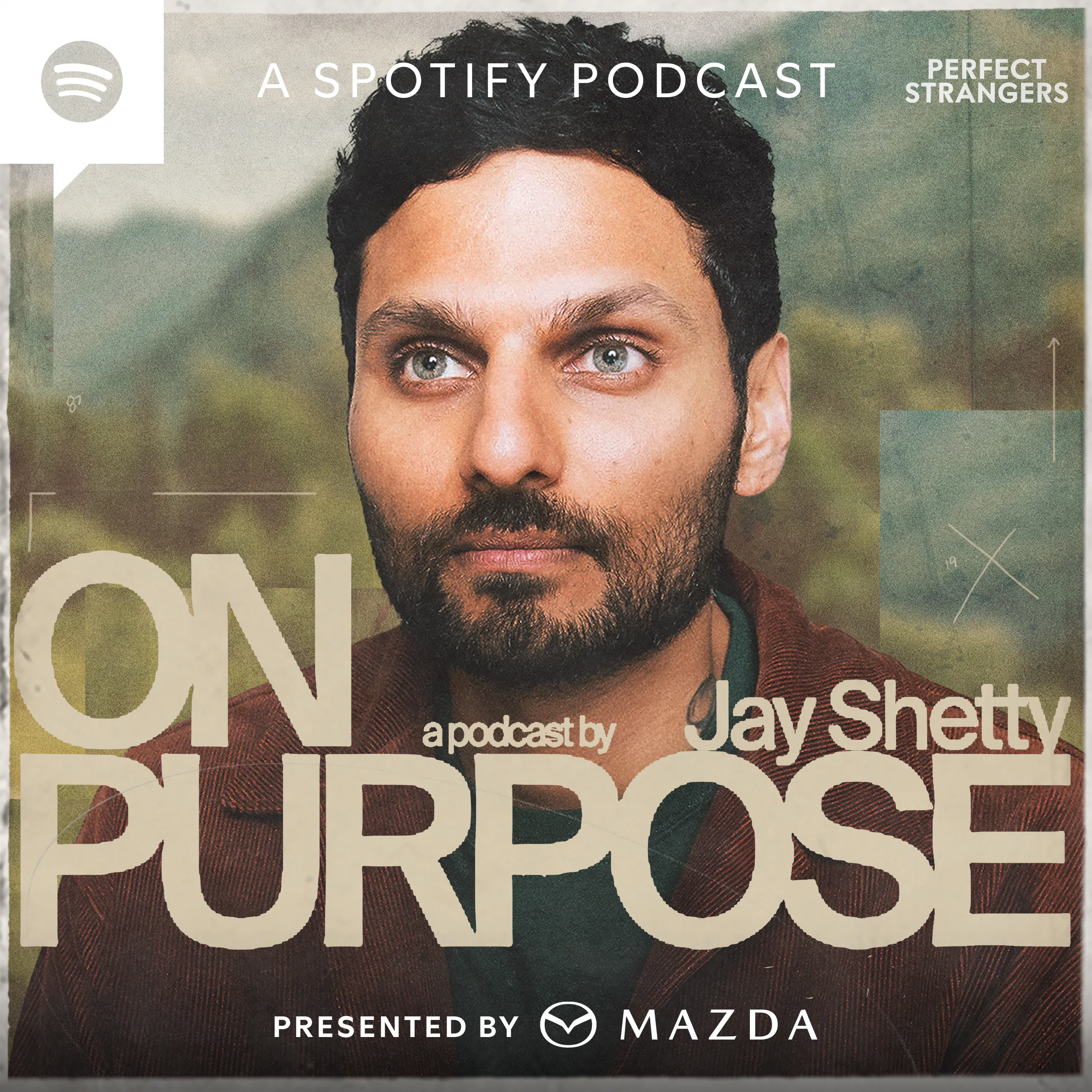
Kiki Palmer shares a deeply personal journey of self-discovery rooted in vulnerability, motherhood, and mindfulness. As a high-achieving entertainer and entrepreneur, she reflects on how years of striving for success led to emotional suppression and disconnection. Through motherhood, she gains new insight into her own emotional boundaries and the importance of honoring her limits. She emphasizes that true growth comes not from becoming a "new person," but from returning to and nurturing the authentic, compassionate version of herself that has always existed. Her experience with anxiety, early trauma, and public scrutiny highlights the transformative power of finding language for emotions—especially through journaling and spiritual practices. She credits mindfulness and self-reflection as critical tools that allowed her to reclaim her emotional well-being and establish healthy boundaries, both in personal relationships and professional life. The episode underscores that self-acceptance, including embracing one's emotional complexity and imperfections, is essential for resilience and authenticity. It also highlights how parenting and personal growth can be deeply interwoven, with children serving as mirrors that reflect one’s inner world. Ultimately, Palmer’s story affirms that true success is not measured by external achievements alone, but by the ability to live with honesty, presence, and self-compassion. This journey of self-reclamation—especially through moments of silence, honesty, and boundary-setting—resonates as a powerful model for anyone navigating pressure, identity, or emotional turbulence.
Imagine setting your makeup, then forgetting it's even theirs. Meet new groupie setting mist from Mavily New York. Gel to mist technology locks in your look for up to 24 hours, with flexible all day comfy grip. No tightness, no stickiness, no residue. Just plump, dewy, hydrated skin that still feels like your skin. Try new groupie setting mist from Mavily New York. Maybe it's Mavily. I've been waiting for this since you interviewed me, and made my life a living hell because I was like, where is she going to take this conversation? Only Kiki could put me in these uncomfortable places. Oh my gosh. Hey, it's Jay. I don't know what your day's been like, but I was just thinking about you for a minute. And I hope you're being a little patient with yourself because you deserve it. And yeah, I'll talk to you soon. Kiki Palmer, welcome to On Purpose. Jay, I also have you to talk to you. I just know we're going to have such a great conversation. I just love it. Kiki, I wanted to start with you do so much. I just talked about it. Film, television, podcasting, music, business woman, entrepreneur, mother. When do you feel the most like Lauren? When I allow myself to have uncomfortable feelings, because I think that that's what I've been working on getting back to because being able to do all the stuff I do and on the road to success, I was trying so hard to just be the best and be in a good mood and be ready. And so the part that really got pushed down was the human part, the one that just sometimes is sad and that doesn't feel very strong, that doesn't feel very capable. So what I'm learning is the more that I honor the space for that. And when I tell people like, hey, I could probably push it into this. But I would rather not, that's the part of me that has not gotten a lot of air. So I feel really good when I'm honoring the fact that I might have a large capacity but it's okay if I can't give it out right now. Is that part ever win or does it lose? It's getting better now. Okay. Most of my life, it's crazy. It's one, the part that just pushes through, that's been guiding everything to the point of being disembodied in moments. And I think that having my son brought me to a place of presence as kids do where I started to realize that maybe that disconnection was happening. And so now I'm more active in being like, it's okay if you don't have it. It's okay if you don't feel like I had something I was supposed to do after this. But my day got pushed back and I was late coming here and I was like, oh no, I said I can't do it. You know, the old me would have still tried to push through and I don't mean to say the old me, but part of me that was habitually thinking that what other people wanted was greater than what I needed for myself. That side of me is, you know, I'm aware of it now. And so I can say like, look, I don't have it. And that makes me feel really, truly confident and secure. Yeah. And that's hard to do when you're winning. Oh my gosh. It's really hard. It's hard to do when you're losing because you feel like you have to get going and you got to get tired. Yeah. And then it's hard to do when you're winning because you're like, oh, I got to keep this going. The momentum. Yeah. The momentum game that we play with ourselves. It can be tough. It's so funny how it does that because being good with yourself is actually what's going to make you better for those things, at least that I found. But we trick ourselves into thinking that by force is how we get everything. Yeah. And there might be some truth to it. There's a time and a place for everything where it's like, I got a hustle, I got a hustle. But you got to be also like, let me not be so in the hustle that I don't feel when the frequency has changed. And now is the time for rest. Yes. Like, you know, sometimes we can step out of the alignment when we, when we so busy thinking that there's one way to get it done. Yeah. No. So well said. And you mentioned there, you talked about your son who we got so much of in this adorable ADP. So I was like, oh my gosh, he's so cute. I'm so obsessed with my son. It's too much. He's just the best energy too. Like it just like flies off the screen. But I was thinking about that. I wanted to ask you like, what have you learned about yourself since becoming a mom that you feel you didn't know before? Well, I do feel like my son reflects qualities in me that are the most human before we get into like our adaptive way as human beings. We all do that. We adapt for the room for who we're around for what we want and, you know, all those kinds of things. So I get to see a human before they become aware of how they relate to others can impact them or how others see them might impact them. So I've learned that I'm very demanding. He's really demanding. He's demanding. He has clear boundaries, but he's also really loving and he's polite, but he's like, what are you doing here? And I don't have time for that. And so watching him in his like truth, it has really given me so much courage. So you're getting self-awareness. I'm like, so that's what I was like before I decided that I can't about folks. You know what I mean? And so I love seeing those. And then like I said, the presence piece, because kids make you be, you cannot be somewhere. I mean, you could, but it's like it's hard to go to that other place when you have this being in front of you that's looking and learning. And again, reflecting so much of you back that you start noticing space and time is starting to stretch in a way that it hasn't before. It's crazy when you have one, you realize that what we've always said is true. Children are really the future. They're the most greatest gifts. They're so bright, I'd, and their spirit is so open and pure and it can't help but affect you. This episode is presented by State Farm. We spend so much energy becoming the best version of ourselves, building better habits, showing up more fully, embracing mindfulness, but sometimes the most purposeful thing you can do is just handle the thing you've been putting off. If getting your insurance sorted has been living on that list, State Farm is there to help you choose the coverage that's right for you. Go online at statefarm.com or use the easily accessible app to get help from one of their over 19,000 local agents like a good neighbor, State Farm is there. What is he demand and what are the boundaries that he sets? So his boundaries, he's really boundary about like touch. He's like, he wants his space. I need space. Well, when you turn a hug, when I'm trying to hug him, I try to kiss him. No more kisses. Oh, ready. He'll tell me. He'll tell me. He's three. He'll be open to it. It's my mommy. No more kissing. That's too much kissing. And I say, okay, I understand. I respect that. You know, he'll be like, in terms of demanding, he'll be like, I want my lachita. You know, like, I want my milk. He's like, I'm very hungry. I want food. Or he was like, absolutely not. Don't try to feed me anything. Like he's really like, he will tell you the more words that he has, the more things that he says. He'll say things like, I would like to watch Monster Truck. And he's a really good debater, like a really good, like, he'll try to pick around. So he'll be like, can I do this? And you'll be like, no, what about this? And he'll be like, okay, no. What about that? You'll say, yes, okay, few. You know what he says? Like, few very expressive. He's actually very animated. Don't know where he gets that from. It's the cutest. It's the cutest. So it's like, it's so funny to just see someone's personality developing. And as a mom, as a parent in general, you want to be able to guide them, but you don't want to stop them from discovering who they are in their own way. You don't want to be so much of a curator that you impede their ability to come into their own character. My son has such a great sense of power with himself. And as much as I want him to be respectful and kind and all that kind of stuff, it's a constant balancing act because I don't want him to lose his strength and his ability to, especially as a young man, I feel like he's getting to live my male dreams. So I want him to know that he has power and influence and obviously, using it in the right way. Like he's only three years old, but these are the things that you're thinking about already because you just, you want to just make sure you set them up correctly. It sounds like you figured it out. Sounds like you're going to die. And so many, much more to come, that party training got me in a chokehold. Damn, it's hard. It's like, what? We threw it. Well, you don't, they don't know the comfortability of the toilet. Like for us adults, we could sit on the toilet for a long time on our phones. We could sit on the, you know, we, we have a different relationship to it. As him, he has the relationship where I use the bathroom. This is on my body, my diaper, I get to keep doing what I'm doing. I never have to stop and go to the bed. Like he doesn't get the whole stop and what you're doing and going to the bathroom and then sitting on the toilet and then the toilet being the place where it goes. So the conversation and the comfortability you have to get him with to understand like, another toilet is safe. The toilet is comforting. The toilet is your space. The bathroom is cool. You know, you get to have a private moment. And so it's just like getting that, getting his mind wrapped around and it's, it's not easy. And I don't have the same parts as him. He looks at me and he's like, who chopped it off? And I'm like, you know, it's like, I'm like, I can't, you know, I'm not a guy, you know what I mean? So that is like very funny, you know? That's hilarious. That's so. He's like, somebody took hers away. I'm spooked. Oh my gosh, for three, there's a lot of personality for three. Oh my gosh, such personality. What have you learned about your parents after becoming a parent? I've had my times of being very hard on my parents, especially like in my early 20s. Never as hard as that would have made me not hold space for them because we've always been really close, even in our times where we weren't as close day to day talking or being around each other when I was kind of being in my more like, I need to be independent back. I still think I was always very like, I understand my parents, I hold space for them. I have compassion for the things they did right and things they didn't do right. But I think that I understand it much more in body now. Before I was trying to be on my J. Shetty, I was just trying to be like, you know, I'm being mindful and I'm choosing the right path. But there's like doing that mentally and then there's like actually feeling it really. And so I think I was saying that.
for a long time without actually feeling it, and I think having my son, and obviously many things, you know, getting older, you know, allowed me to really understand from their perspective of what that challenge may have been like to just raise a child, let alone a child that's in the public eye, that many people are around and influencing, and you're trying to keep a hold, but you're putting them here to have opportunity to become more, but then there's also this whole idea that you become not enough for their world, or the assumed idea that you're not enough for their world. And so I just, I think that my parents have a lot of courage. I realize that they are really brave people, and they're so, they also love me enough to be that courageous, to actually open doors for me to flourish. Like they pretty much were watching me go down the Yellowbrook Road, and they had their ideas of what the wizard was, but they still held hope and faith for me, and I was able to come back and give them something to, in the end of it all, or as we continue to grow together in this new framework, but it was really hard. You know, they were there like my, you know, my, my, my, my, my scarecrow and Tin Man and Cowerly Lion, and you know, we're to, we've been together on this journey, so to see how they've been able to have the strength to allow me to become, I can only hope to be that brave with my child. Have you told them that? No, my mom's heard it just now, I guess. You prompted this question. I never have articulated or said it, because I never really had the opportunity to. But yeah, that's how I feel. I think that she's really brave, and my dad is really brave, and I'm really grateful that they weren't afraid to let me be me. Well, I could tell that you're like, you're like really living in it for a second. Yeah, I am. You know, it takes so much time for it. I think the things that we tell ourselves to hit us. And I think I spent a lot of time, especially in my early, my late teens, early 20s, really getting into like the concepts around mindfulness. I learned watching YouTube videos online that the only thing that separated me from the people that I admired was they thought differently. And so I focused on like, what are people that are successful too? What does it they put into their mind? How do they talk to themselves? And so I started like practicing those things, you know, going to a trip to Sedona. You know, having somebody beat on my chest would break you at night. You know, going on this excursion where I'm in silence. You know, I've tried to put those things in my life, but it didn't really hit me. You know, I was just like doing them. And I was believing, I remember one of my favorite quotes. I got a tattooed as Aristotle. We are what we repeatedly do. Excellence then isn't an act, but a habit. And that's how a started started as an act. Not a fake one, but me just trying to figure out how to get to this place where it feels real. And then when you arrive there, it's like it's, I remember talking to Raven Simone and she was like, 30s are the, is a decade of revelations. Like, and obviously I'm just like Jesus, you know, it's not unique, but it's like when she put it like that. It was like, okay. And then as I've been in my decade of the 30s, there have been so many revelations that it's like, what is coming next? And this year I turned 33. So it's like, what is about to happen? Come on, Jesus here. You know, what is about to be reborn? You know, what's going to happen? And it's been remarkable, man, because the seeds that I show, even though I didn't know, when it was going to really hit me, when it was going to really feel true, I still planted those seeds. I really did and I watered them sometimes every day, sometimes once a month, sometimes every couple of weeks. You know, and then I come back and I'm doing more consistently, but I kept watering and watering and watering. And I now I'm seeing the growth from those seeds that I sold or that I planted, you know. Yeah, what even took you on that journey? Why did you want to pursue the path of understanding your thoughts and mindfulness and even going on that silent journey? Like, I get that that wasn't even your path, but why did you even want to go on that path? What were you looking for? What was life like that you were asking those bigger questions? So I think what started me to get into these kinds of conversations was deep depression. I suffered from like a lot of depression and anxiety, a lot of feigning spells and panic attacks and stuff like that. Like I would go sometimes and like, my period would disappear because I would be so stressed. And this started when I was like 12. And I would always journal. My journal is I think one of my earliest rituals and practices. Brandy gave me my first journal. She said, you're going to need this and she was really right because it really allowed for me to get a lot of things out. I think it saved my life in a lot of ways being able to come back to myself and remember who I am while dealing with so much of my responsibilities and just the projections of being in front of the camera. And so I would journal a lot and I just started to really understand that I was dealing with stuff. And this is why I have such a, I really do love the internet and technology in a lot of ways because it saved me. I remember I started searching up words and searching up feelings in the way that I felt about certain things. And then different philosophers will come up. You know, or different people that would say certain things. I would put in a word on this website called ThinkExist.com. And I found out words about stress. Then I found out that what I was feeling was anxiety. And these are like small things to me. You know, in my mind now, I know them very regularly in my dialogue. But at the beginning, I didn't know any of those things. I thought something was wrong with me. And then I started to realize that these were concepts and things that people have been talking about for thousands of years. Like the fact that I was asking these questions, it wasn't actually crazy, it was kind of correct, you know what I mean? And I should continue to ask these questions. And so that's when I started to realize that there was other stuff out there and that how I was feeling, even if it wasn't something that was common in my industry or something that we were talking about in entertainment, there was a space for it. And so through that, you obviously learned about Buddha and you learn about like all these different concepts of, you know, monks and people going on retreats and the concept of all this type of stuff. And I started this looking at that when I was probably like 14, 15. And then by the time that I was 18, 19, I was like, I want to see these and have these experiences for myself. Because my identity was constantly being broken down and attacked. After I was 17, my TV show True Jax and BP went off of the air, it was like, I would liken it to a six-year-old man retiring or being removed from his top position as CEO. At 17, that's how I felt. I felt like, I was having a midlife crisis. Like it was like, whoa, like the money is different, my ability to help, my family is different. You know, I don't know who I am as an adult, let alone, as an entertainer, as now a grown woman. So it was a lot happening and I knew that if I was going to survive it, that I was going to have to get my mind right. I just knew that I would watch videos like Will Smith. Will Smith at this time, too, would always be talking about this kind of thing. Those old interviews, they're insane. He was always talking about get your mind right, get your mind right. And so I was like, I want to be like, well, I want to be able to be I robot. I want to be able to be the hero of my life. And I took it to heart, man. I took it so to heart. And so I started getting physical. I started, I got a trainer when I was like, 18, 19. I was like, I was on the Will Smith program. I was getting my mind started. You were the audience program, right? I was on therapy, getting my body right, getting my mind right. And it just became a part of the things I was into. It became a part of my hobby. It's kind of part of my personality. It was like doing my work and my job. And then trying to be on some wellness, nourishment, kick. And my family was like, OK, this is crazy. But that's who I've been in my family. And that's became a part of my life. And so yeah, and from then, that just kept being something that I always was chipping away at caring about, investing in, you know? That's incredible. I didn't know that. I love for everyone who's listening to know that. Like, how much would you dedicate and say, because of that work I did? When I was 18, when I was coming out of a dark period, when I went through this mid-life crisis at 17 years old. And I refocus myself. How much of your success today would you owe to that part? I mean, I want to be dramatic, but I would probably say everything. And I would say not just the success of me as an entertainer, the success of me surviving being an entertainer. I remember watching the Eddie Murphy documentary. And Dave Chappelle said, not only is Eddie Murphy successful, but he survived being Eddie Murphy. Being a successful person is a great accomplishment. But it comes with a lot of things. It comes with a lot of stuff. Well, you know, on the road to success is tough. I think you said something similar to this earlier. On the road to success is tough because it's tough. And then when you get there, the concept of sustaining it. What does it look like to evolve it? How does it look like to deal with what people expect from you? Because you are so successful. So, yeah, I think that beat, you know, people say, "Oh, you are childhood." You know, they survived and all this kind of stuff. Like, those are the practices that have helped me. You know, and when I started my company, KTV Network, that was focused on helping you with your business, your brand, creating the practice of being able to actually do stuff, I could not leave out an opportunity to build something else. Practice by Palmer, which is these are the practices that helped me be able to be the person that I am in business. You have to be good in your mind. You have to know who you are. And there's no way to stay in touch with you. You are in this world without having some type of forms of rituals. That's why a lot of people are like, "I'm not religious." So, I'm not, at the base level, it's a ritual. It's something that you can go to. You know, I'm saying, even though I grew up Catholic, I have not been consistently to a Catholic church in years. But those rituals, Lord, not let me down to sleep. I pray the Lord, my soul to keep. You know, it grants you. It's a conversation at the baseline of what it is. If you take away anything that you think about religion, it's a conversation with yourself. It's a conversation with the universe. Hey, you know, this is what's on my mind. You need to get that stuff out. That's how we know what's going on inside us, the journaling. Spinning moments of silence and seeing what comes up into your mind. And, you know, it don't have to be quiet. I remember when somebody first told me that mindfulness isn't just. your mind being quiet is actually you're watching your mind be not quiet. And actually just sitting back and be like, "Now that was interesting, I'm gonna let you rock." You know what I mean? Like being in that space, like so for me, it's like that is so important to go side by side. To me, you are not a successful person if you can't be with yourself, if you can't know who you are outside of your achievements. And I just, I really was afraid of, I didn't want to be lost. And I think it was also scary the feeling of having all so many things stripped from me at that age. I saw like, "I've got to always be okay. If the money not there, if the project's ain't there, if the people don't care, I gotta be okay." Because this could take me for a tailspin. If you ever open up a church, I'm dead. I'm telling you right now, yeah, I'm like, "I'm gonna come to your monastery." I've been going to the wrong thing. This is like, I'm like, "I'm in church right now. This is amazing." Like, "I'm all crazy." No, but it's, as I'm listening to, I'm like, "Wow, it's so fascinating hearing someone." What I love about this is I feel like everyone at their point in life comes to recognize the value of this work. Whatever you call it, whether it's religion, spirituality, therapy, coaching work, the work. Everyone comes to it in their own way. And when I hear people's stories about how they found it, it's never the same. It's totally unique. It's also someone from such a different background and walk of life. Like, I found it at the same age as you did. But I found it in a completely different way. And it was a completely different whirlwind and experience that I was having. But the fact that we both have so many things in common, even though we come from totally different value. I was saying, "Well, I'm really related to your story when we talked on the show." Even though I didn't go necessarily specifically in that path. I still have done entertainment work. I love it that much that I could see that for myself. So I'm like, "I love your life." Because it's like you get to do that every single. You get to talk about stuff that I think is so meaningful. I mean, I'm not trying to say entertainment is not meaningful because everything plays a part. Sometimes you want to lose yourself in a project. Sometimes storytelling is the only way you can understand something. So those things are absolutely useful. But what I love is just the opportunity to also bring it back to the attention to that. Because as human beings, it's really scary. Just don't think we talk about it enough. We don't know why we're here. We don't. We don't know if we're like a cell microbiome in some big, giant's life that lives on another planet. We don't know. Some sort of experiment. These are the things that go into your mind. And obviously there are ways that there are things that people do believe about that. But at the base line of it is, it can feel really lonely. It can feel really scary. You don't know if you should try to achieve something and be quote unquote successful or just be over there and village by a lake with your family and do nothing and just appreciate the opportunity of being. All of us are trying to figure it out. And so I love when we can talk about that because it's like that's the real stuff. That's that's the stuff that sometimes can drive you crazy or make you a narcissist as they say because you just want to feel like you matter. You know, at the core of that is just, I want to matter. I want to know that I matter and that my life meant something. And that's something that any of us can relate to. So it brings me great joy because it's always in my mind. Did you find that a lot of the people around you as you were coming up as a child star were struggling with that as well? Yes. Most of them were turning to different things to help them. And I felt like my parents were overprotective of me then. I felt very alone. And I felt like all I had was my journal and that I didn't have anybody that I could talk to. And I had one friend who just who passed away, named Brandon. Yeah, he was my first boyfriend. And we passed away recently. Sick of Selenemia, only 34 years old. And he was my friend that I would talk to a lot. And I had my friend Taylor Parks. Like I have very few friends that I didn't get to see often. And my journal, you know, I mean, thanks to my space, I was able to talk to them. Tom, I'll always love you. I will always love you. Okay. So it was very, you know, I had a couple of people. But I felt very alone dealing with things that I and I didn't have anybody to relate to because I didn't have a lot of friends in the industry. The ones that were were, it wasn't the same, you know what I mean, gravity. And a lot of kids my age I could see now. Like when I had conversations with people like Demi, I wish that I did talk to them. I think I also felt very isolated being a lot of times the only black. And my experience would be in the only black in my school back in Illinois. It was like staying a laying girl. So I was obviously disturbed my own show. And I never was like putting my head down. But I kind of was like, I don't know if I'm really what we really talking about. Like I really didn't know. So I was just like showed up. Hey, we polite, we talk. But we weren't really necessarily getting into it because we didn't have the language that we have now. Like there was no words from my questions. There was no words for, you know, what that felt like. And you know nuances. And so, but when I see now, I see that we all really was dealing with a lot of different, you know, and our own way, but a lot of the same things that I wish that we all could have talked, but there was no space for that. You know, so a lot of the time, you know, people were sex or drugs or whatever it might have been for them to be able to cope. And honestly, for me, I was really an internet kid. I went to the internet and I still be on air, you know what I mean? You know, so it's like I was, I was the kid that was the kid. You found the good side of the internet that. Man, it was me. We had some times, you know, those early days with a wild, wild west. But I really do feel grateful to have experienced my space. I really found some really genuine. Well, you're giving some big shots. Honestly, because it was the place where I just, I just was coding. Friends and learning about this space. I was having so much fun being able to express myself on my small corner. And it was private, right? Because this is before Twitter. This is before entertainers being online. This is like back in the day, me and any of the friends that I had or I should say peers, colleagues that I had on Disney and Nickelodeon. We had private pages. Like, our names would be like Fanny Fanny, too, too. Because we're like trying to be like all incognito. So it was like before all that time and it was the one place that I felt like I could express. So that was a save and grace for me. What's it like now? What are the rituals now? I thought you might say with the internet. Oh no. We'll go there later. Maybe. Maybe. Sorry, go ahead. Actually, let's go back to step. When you are 18 and you're looking forward and you're like, God, I've got to learn all these things and I've got to learn the mindset. I'm watching the worst myth video and whatever else it may be. Did you ever think you would find the answer or did you feel scared that you may never know? I actually did believe. I really did believe. I didn't know when though. So I had to really have a lot of patience. But I did believe. I believe that if I keep. Why would that not happen? If I keep chipping away, it's like that picture that goes viral every two years where the guy's like chipping away and he turns around and he was already that he was just there. I really believe that there's no way if I keep chipping away that I won't get to wherever I'm trying to be. I really truly believe that. And so even though it will be hard in times and then you see small things, things that stuck. Things that were like, oh, I went from working out and now and then to. Now it's a part of my every single day. I went to only going for a walk. X amount of times a year. Now I'm doing them. I'm doing thousands of steps. Whatever it is, I started to see those changes. But my attitude is, I think a lot of times you think you're going to have a new mind. But my mind is actually just so much more compassionate. The new mind was compassionate for myself to be able to grow. Like, I realized that it was not like a new person that would be, but that it would be like. It would just be a version of me that supports the person I've always been. And giving myself a safer place to land. And being okay with things don't go right. And knowing that I can get right back up again. Instead of thinking that, oh, I messed up on Monday. I guess I don't get another chance till Friday. It's like, why would that be the case? You still have the opportunity in the next couple of hours to decide to have a better mood. So I think that's the cool thing that I've discovered when I think about me and my, you know, 18 and those early, teen years of getting into awareness of myself with intention. It's like, wow, like, I didn't become a new person. I just started being nicer and more loving and supportive of the person that I've always been. And because of that, I've bloomed. That is so good. That is so good. No, because I think that we constantly convince ourselves that you're going to become a new person, that you've got to become a new version of yourself. And you're so right that it's actually just seeing the version that already is there that exists, that lives, that breeds, that has all the skills, the potential, the tools, the mindset and being present for that version and being compassionate. Because if you're always telling yourself, you have to be someone else to be successful. Well, that just sucks. You're just being so mean to you. You know, Brunei Brown speaks a lot about that kind of thing with the shame piece. And it's so interesting how that can show up in your life. And you just, you don't think that that's what you're doing. But you are. I think I used to feel so much shame or guilt around my large capacity. So I would constantly outsource it. And then I'd be so sad when I got nothing back. Because it was like that, the capacity that abundance, it actually should be inward. And I shouldn't feel guilty that I can pull myself up or decide to go out there for my goals or instead of always feeling like it's my job. To make other people feel great about themselves because they don't have that energy. Well, what would happen if I gave that out when I could and when I felt like doing it, but I gave it back to myself. And it's like, damn, yeah, I needed this. And when now I see how I feel when I'm actually giving what I've been giving out to me. And we feel selfish when you fast do it. You do, right? And I don't, it's a guilt. It's a shame. It's a shame around seeing something, having insight around something, feeling something, knowing something for whatever reason. I don't know what that is. But as human beings, the moment that we feel that we have a lot, it's just so weird. I don't know what that does. But, you know, yeah, I feel that I've had to deal with that. That felt shame since I was a little kid being able to be happy even. You know, those are like priceless things about I think I felt guilt about it that I was a
able to be so happy even when we was living in poverty and nothing was good was going on. I felt like I could find a reason to have joy. I could get out in the flow and dance and be, you know, I always felt like that. That was like a superpower for me. And I felt like, oh, guilty about that 'cause everybody else can't be happy. Now it's my job to make everybody, you know, and it's like that's different. It's a different feeling of giving because you want to and then giving because you feel that people need you to. And you're like guilty, giving from a place of guilt and shame for having joy as a whole, you know, that can really distort the gift. - Yeah, when you feel you're responsible for other people's emotions, that just sends you down the wrong path. Whereas when you feel you're on your path and you can overflow and give people the love that they deserve and need, that's a totally different thing. And it's such a fine line. - Yes, it is. - It is such a, for people with big capacity especially. - Because sometimes just your presence is. - I can relate to everything you say right now. - You know, because you get it. - And that's your work. And that's just a cool, I remember one time I was talking to and I'm sure I would. - Imagine setting your makeup. Then forgetting it's even theirs. Meet new grippy setting mist from Mavily New York. Gel to mist technology locks in your look for up to 24 hours with flexible all day comfy grip. Just plump, dewey hydrated skin that still feels like your skin. Try new grippy setting mist from Mavily New York. - Maybe it's Mavily. - I'd love to hear if you have a version of this. One of my teachers, the one of the people first that were mentoring me on this past was a makeup artist and she introduced me to another kind of master yogi type of person. But I can only call him at a certain amount of time. He was only available till a certain amount of time. And if you didn't catch him, you didn't catch him. And you also cannot call him after this time. - Wow. - And so I would talk to this man every now and then. One time I called this man, it literally like the time was like 8 p.m. I called this man at 8.01. He answered, "Oh, why would you call me?" Why would you call me? It sounded almost like we was in beyond belief that deficient and he was gonna disappear after this. Like it was like so urgent. He was like, "Why would you call me?" Why would you call me? And I was like, "I'm sorry, I'm sorry." I've never been able to contact that man again. - No. - I have never been able to reach him again. Never have been able to, it's like gone in the wind. It's like he's gone, you know what I mean? And I say that to say like, "I really respected that he had clear boundaries. He had a large capacity. Millions of people probably called that man a day to tell him about something, to talk to him about a new path. But he had very clear boundaries to the point where he said, "You didn't follow him. You can't be involved because I have a lot to give and I have to protect it so that I can keep giving it to its full capacity." So that made me think with you, I'm sure that you have so many friends that calling you, that telling you, "Do you have something that you try to let them know like, I'm not open for business with this right now?" You don't know me. - Well, when I have a rule that I don't give friends advice because I just want to be a friend. - Well guess what, we're not friends. - We're not friends. All right, keep going. - We're not friends so long. - I know you. - Yeah, you can call me, yeah, we're not friends. Because I used to feel like when we'd be just hanging out and someone's talking about their problems, I don't like giving on solicited advice. That's first of all. Like no one needs unsolicited advice. So that's first of all, I don't give that. But what I didn't like was like, "Friend should be just talking about their problems." And I'm like, "Oh Jay, tell us what to do." And then no one's gonna follow up and listen to it 'cause they're your friend. - Exactly. - So they're not gonna take it seriously either. So I'm like, "Look, I'm just gonna hang." We're just gonna talk about soccer or something. They talk about the basketball. Like, let's just be friends. And it's safer that way. And then when someone's coming to you, asking you for advice, truly locking in, truly saying, "Hey, I'm taking this really seriously. I'm not asking the group chat. I'm coming to you because I want your help and support. I'm locked in, I'm dead at help, of course." But that was my boundary setting where it was like, if we're committed to each other, that you wanna do the work and I'm gonna help you, then I'm in. But if we're just giving free advice and hanging out, that's not gonna help anyone because we're all gonna feel spent. But I mean, I should do the 801 thing. That's what I said. - I'm a fucking idiot. - That's what I should do. - I was trying to get back to him for years. It was like, you're done. But it's so important because I feel like we find ourselves doing that too. I can at least say for myself where it's like, when I take a step back, everything that I was trying to tell others or support others on, even if they asked, even if we were just having a conversation and I accidentally spilled extra over, those were things that I needed. And so I've really been in the season of restraint. Even if somebody asks me, I'm not telling them what to do or tell them. I'm just being a listening ear and allowing my presence to at least just be a bouncing board. Which is so funny because that's what we always say, good therapist is anyway. A good person that you actually are going to for help generally pushes you toward the answers that you have yourself. - Yes, yes. - So it's so funny how you can be thinking that, it's your job, it's your duty. And it's like, actually, your best thing is to just be there, to listen and to reflect. And so in my season of restraint, I feel like, hey, I'm getting so much of the things that I thought that other people needed for me. I'm actually realizing how much better off I am by having my relationships reflect information to me. And instead of thinking I'm supposed to share it, but actually like leaning into the intuition myself, seeing what reality reveals to me. And then also taking what I learn or what I'm seeing reflected in the relationship and actually turning it back into myself and say, well, what's my relationship to this? If I think that that's what's happening with this person, is that showing up in my life? Instead of thinking I'm supposed to tell the person something. - Yeah, yeah, yeah, yeah, what's up? - Yeah, we feel better when other people are doing worse. Instead-- - And obligated. And obligated is some way to be like, by the way, a Virgo was good for some, by the way, Ash, you know. - I'm a Virgo. (laughing) - I do it. - As a Virgo, we can be willing, if we're not healed, we can be actually. - Well, what's your birthday? - August 26th. - Oh, I'm 6 September. - That's crazy. - That's funny. - We can literally be by the way. (laughing) - I had to really control that, I had to reign it in. I had to reign it in. - Me too. By the way, Aries, you're not free. - Oh really? - Why are you calling that Aries? - Aries love to be like, actually. (laughing) - What's Leo? - Leo is a Leo rising, a Taurus moon, and a Pisces sun, and he's not an actually person. He's actually like, actually, you know what? Leo is like, T and Tamara, I got my own mind. - And you my own style, my own time. - He is so unbothered. Oh my gosh, what they say? Pisces are perfect opposites of Virgos. - Interesting, my sister's a Pisces. - Very let it flow, very let it go. Very my son is so present, and so like, he cool, you know? - Yeah. - Who gave you these blue eyes? They are remarkable. - Completely normally in my family. No one has them. - No one has them. - They're just awesome. - No one has them. I got really lucky. I grew up with jokes about how my mom had an affair with the milkman. - Oh my gosh. It's giving people, people got those eyes too. Does he? Does he? - Yeah, he got the eyes too. - That's so funny. - Mr. Worldwide. - I never knew that. Wow, that's funny. Yeah, no, completely, normally. You're so like, when you walk into a room, you are such a force. - Oh my gosh. - You're just such an energy is spark. Like whether it's a big room, a small room like this, whatever it is, how would Lauren walk into a room? - Hmm, well, she would probably walk in and not feel like she had to make people feel comfortable about it. See, I think that I always knew that the energy existed, but because it would make people feel some type of way, and I learned this very early on when I started going to private school, because the teachers were like staying in line. The energy was clear that for whatever reason, however I was perceived on the outside, the power that I had within was not allowed. And so I just, I learned not to silence the power, but to make it more palatable, and make it a little bit easier for you to get into. And that's when those skills sets, you know, of me being able to regulate the space or be able to translate who I am, whether through co-twitching or charm or whatever it could be called, that was me trying to create safety for myself. And it was the best way that I knew how to create safety. And then there are things that they are part of me, you know, they're who I am, but now I don't always feel like, you know, or at least better about where I choose to go, if a place requires me to do that, to be safe, because ultimately that's where it came from. It came from a place of feeling unsafe. Showing up, being seen as powerful, being felt as powerful, power that I didn't even know that I had, and trying to figure out how to make sure that it was hands up, don't shoot basically, you know what I'm saying? As a black, young black person, and as a young black woman. And so it was just me managing the fear that that would put into others. - Did you have experiences like that felt very, very unsafe? - Oh my gosh, yes, all the time, you know what I mean? Whether it was with, you know, misogyny, and then also racially, when people feel like you are challenging the status quo in some regard, also I saw it in history. I remember having a conversation with somebody, you know, and I was thinking about like Martin Luther King, you know what I mean? And it was like, that's a fear that black people really genuinely feel. Anybody that is a person of color or dealing, or from a particular group that decides to stand up, a lot of times they've been murdered, you know, they've been attacked, caring about my community, being passionate, you can't be Michael from good times and actually live long. That's what you've seen the pattern to be. And so, yeah, very young, knowing that I had impact, doing movies I could kill in the B, my community saying, we got, became kind of afraid at a certain age, where it's like, well, I don't want nobody to take my ass out. You know what I'm saying? I want nobody to be afraid of me, you know, or think I'm going to do, you know what I mean? And I remember after I did one of the marchings that we were dealing with, and I say one of the marches, because it's so many that it gets to the point Where it's like.
Like, you know, right after George Floyd died, I was like, I just something had come over me, and I had a moment with the National Guard that people filmed, and I remember being really scared. But I think that that marked like a moment in my life where I maybe was trying to come out of that fear because I was spooked that like, I remember calling my mom like, they're probably gonna get me for this. So I was really spooked that people were gonna get me for just standing up from my community in this way, and it was really scary to me, but something had just come over me in that moment, and it was during COVID and everything was fine. I felt just so like, I just was like, I just can't believe this. You know, I was just so unhappy and just so, but I didn't want that to make me silent, and then it was just so much feelings and that I had to do that, and then I, but I was a little bit scared, but I feel like it was the marking of me kind of shedding some of that fear, and also like being able to understand and articulate some of these things, but you're constantly trying to figure out how to manage these things. You know what I mean, from whoever you are, whatever background or whatever you believe in, you know, we're all dealing with some challenges, and I remember I would have these experiences like going to Harvard and the Harvard would be doing a thing on me and they would be talking to me about power, and I would be trying to figure out why am I the case study? You know, so it took me many years to understand what I was holding, how I was affecting people, and why it was such a thing that I had to manage all the time, and then to be at peace with that. Yeah, it's amazing how we developed all these skills and tools in order to feel safe, and then they become the very things that make us feel unsafe because we get so disconnected from who we are, be done. It's so fast today, isn't it? It's so fast today. You ate that. It's like our protective tool became so good. Yeah, it's like how your protective tool suffocates you, which is like a fascinating idea when you think about it, and we all do that with kids. For me, like watching my parents argue, watching my parents behave in the way they did, I was picking up cues, and I can walk into a room, and I know every energetic field that is going on in a room, in any room, I can listen to each corner, I know what's happening over there, and I can be fully present over here because I had to. I don't have a choice. And I love that skill. Yeah, I love that skill. I love that tool, and at the same time, it can take away from being able to flow and have human experience. And so you have to be aware of it. So you almost have to be aware of the tools that you built to protect, and make sure they don't suffocate you. What have you done to create those spaces where these incredible tools you have that you use so wisely, you've learned how to be really effective with them. And at the same time, they are true to you. They're not inauthentic, but then how have you allowed yourself to put the sword and shield down sometimes, and breathe? What does that look like? Well, I think when I did my tear talk, that was a big moment of reclamation. Thank you so much. I want to, I want you to know my whole team, what Stan, everyone was like braving about it. So just so you know, and thank you so much. That was a big rec moment of reclamation for me. Parasotionally, I think in my personal life, you know, like I said, my practices holding space for myself over time have allowed me to let those things, have those moments of breath, you know, but parasotionally, that was an opportunity to really also speak to my audience about that differentiation, my nuance, outside of just being fun, joyful, and energetic is, I have feelings, I'm a human being, I've had my experience in this and coming this has been, has cost me a lot of things. My nervous system is re-adjusting from all these experiences that I've had, and that it's okay to be nuance and complex, and that I don't want to be the poster child for hyperfunctioning if it doesn't sit alongside this truth. That was like a big, big moment for me in my life. Now everything is integrated, because it was always fragmented from my private life and my professional life, and so that was a big moment of integration in a major way. Again, being able to speak the truth, being able to speak truth to power, that is the greatest liberator of that voice that's inside that had to rest, is to actually speak truth on the things that I experience, and what it calls me and how I had to learn this stuff, and that adaptive intelligence, and what performance is, and what is authenticity that lives inside of that. Like, these are conversations that I felt like I wasn't allowed to have, or I couldn't have, and in a lot of times in the early days, people didn't want to have. Nobody can give a damn about this. You had to just be ready to go and be job. Like, you want to be just, hey, there's too much. So it's like, if you talk, if I can have the conversation, then I can have the conversation, so I'll also say time. And that's why I've taken care of yourself. I'm so happy that I did those things, so that when the world also was arriving at these times, then I could share this truth, because people could be open and ready to hear it. And so I felt like that was also true for my generation, how I came up in this industry, and what it took for me to get here was also waiting for spaces like this to exist. I feel like, I mean, obviously podcasting exists back then, but it was called talk radio. (laughing) - And you weren't having conversations like this. - Right, also we've all caught up to our period. So it's like a collective shift that has gone on that I get to be a part of. - No, for sure. And you were ahead of it. You were doing it when it wasn't trendy. So now that it's kind of come into vote. - Yeah, which is crazy. - This episode is brought to you by Amazon Health AI. We've got to talk about those panicked internet searches. You know the ones that I'm talking about, when something about your body just doesn't seem right. So you search and search and scroll and scroll and trying to figure out your body by endlessly looking for answers. Thankfully, now there's Amazon Health AI. It can connect your symptoms with your medical history and it can even get you care 24/7. So call off the search. Amazon Health AI is here. Health care just got less painful. - When you were talking about your childhood, I remember having what now I know are panic attacks or anxiety attacks. And I'd go to the doctor. The doctor would wire me up with this like crazy technology. Checking my heart rate, checking my heart beats. And then 24 hours out of to wear it at school. It would look really weird. And then the night said, go back and be like, "There's nothing wrong with him." And I'm like, "Mom, there's something wrong with me." Like, "I'm having an experience." And we just didn't have language for it. And so what you're saying about language is huge. But the vocabulary, emotional vocabulary is just so huge. And I feel like people being exposed to ideas and words is so important. - I mean, I didn't even realize that how the recursive like kind of like boom, that is when I was thinking about the fact that I did a key land to be. This movie that again, it's inspiring through in many different ways. But for me, it became re-inspiring because it's like, "Yes, a little girl having language to express how she feels." That's crazy. Yeah, that is powerful because words, once you can put words in it, I mean, we can get all into lecon that words have different meanings for other people. Like, you know, yes, of course, love doesn't mean the same to me as it means to you. But if we're generally speaking, having the words to define and articulate how you feel with precision is without a doubt liberating. And that's why the TED Talk experience was so major for me because it was a moment that I had to sit down, actually writing, I'm gonna tell you something that was crazy too, with this whole TED Talk thing. So I was getting ready to film a movie right in the middle of when I'm getting ready to do the TED Talk and have the TED experience. And I was fine with it. I was like, I'll go in, just do my talk that one day. I won't get to do the whole TED, but I'll get to do my talk that one day, that'll be fine. And the midst of me, you know, preparing for my talk, we're preparing for the movie. And there, there, there, chipping away a lot of stuff. Like the movie was supposed to be a certain amount of days, now I stand in two days, not literally, but you know what I mean, it ain't a long time. The movie was supposed to be this much money they're doing with it. Now it's crunched this much. Okay, that's gonna make things harder for us as well. You know, all these little things started to happen. That started make me feel really just not happy and uncomfortable. You know, and in the midst of that, they were also chopping down my TED days. So originally I was gonna have all my TED days and be able to have the experience, but then suddenly that stopped going from that to me just having the one day. And I was still like, I'd fine ever. Then they call and they say again, and pretty much they're gonna take away the TED day. And I did something that I've never done before, which I am still so proud of myself doing this. Said I'm not doing the movie. - Wow. - I'm not doing the movie. I'm done. 'Cause by the way, I already didn't want to do the movie. The truth of the matter is I was already doing the same, shit that I'm talking about doing in this speech that I ain't doing, doing no more. I don't feel good. It doesn't make me happy. I'm not going to enjoy this. This is requiring me to chop off pieces of myself that matter to me. Man, when I tell you that I said no to that movie, I feel so liberated and have my experience with my TED conference and have my talk. And was able to feel truly embodied in that moment and to know that I was actually making choices that really were real for the person that the true full person that I am. That was a moment. I'm so proud of myself. - I'm proud of you. That's amazing. - I'm so proud of myself. - Those are the hardest moments though. - Well, you're put to the test. - Yeah, exactly. You're up there saying the thing. And then you almost have to live it. I've had many of those moments. And those are the hardest because you can tell whether you're in alignment or you miss a line. - Yeah. - Because you're like, I'm saying this thing over here, but it's so crazy because then to get the feedback that I got in on my TED talk, I just like, God is just so real to me. You know, because it's like, God will show you. Life will show you. And it's not about like just data and insights. It's about impact. It's about the fact that somebody who comes up to me and they say, girl, I feel the same way. And this is what I've been experiencing with my family. Like, I love doing movies and I love performance. I love all that type of stuff. But you can't take these. If something is going to take moments like that away from me, true connection like that for me, then it ain't right.
I know that in a right, if it doesn't feel good, if I'm not liberating excited about it, then it can't be, it can't be correct for me. It can't be true. And so that really was a big moment for me this year. It really was. At the beginning, you kinda can cut corners, you're trying to figure your way, right? Like you, not everything's gonna be fully aligned when you start, you have to do certain things, you have to compromise. But then when you get to a certain point, that's why you get to that point, right? To your point about that point, you can't deny the awareness. I had become so aware. I had become much to aware. - When you started, you don't know. - But once you are aware, I was aware that if I said yes to that movie and didn't do what I wanted to do with Ted, I would've been betraying myself. See, these other situations, the self-betrayals are not as glaring, 'cause we don't really even know how to really show up for ourselves. We're still trying to become aware of what we want. But once you become aware of what you want and aware of what's not in alignment with that, and you decide to still do what's not in alignment with that, but now you're gonna have me dealing with, I betray myself. And that, once I become aware of what I could be betraying myself, I'm not closing my eyes to that. But you can, I am not going to be lie-folded to that. - Yeah, yeah, yeah. - One thing, if I can't really see it, I don't really know, and it's a delayed reality. But when I know straight out, this is the moment I was waiting for, what am I gonna do with it, and I'm going to show up for me. I must. (laughs) - I want to go to this church. I'm waiting, he's gonna set us up. I'm like, I'm on in, I'll be the first disciple. I'm like right there. I'll be the first student to sign up for subscribe. I'm in, I'm so in. I'm like, I've never been this motivated in my life. I'm gonna walk out of here. I'm like, change the world off to this. Like, no one does this thing. - No one does this thing. Like, this is the most pumped up I've ever been on. (laughs) I'm like, dude, you need to go out there and show your life out. What are you doing? - You want a partner. - I'm being serious. - I'm one brother to another. - I've been serious, I mean, I'm not just saying it. I actually mean it. I'm being very genuine. You mentioned a couple of moments ago, the idea of love, and I was thinking about a lot of our audience, our young women, their entrepreneurs, their doing incredible things, their winning at life. But the question that I constantly get is, Jay, I want to find the right partner. I want to find the right person. That's an important part of my life. What do you look for in a partner today with everything you've achieved, everything that you are, all the inner work that you've done? What do you look for? - You know, this is the question I've been asking myself. I had a cool little woman with my mommy at the day where it was kind of a realization of, if you're not really wanting what you say you want, your relationships are going to keep failing. And I feel like because my parents were traditional, I thought that that's what I wanted. And by traditional, I just mean like, particularly married. You know, we are in a very, just like, my parents are so all American and they ain't funny. You know, they found each other out of college, fell in love over a year, got married, they left each other's side since. They are an American story. And so I assumed that that was for me because I admire it so much. And I just thought it was just so awesome. But the truth was that actually is not an alignment with who I am in my life. My parents weren't entertainers full time. They weren't doing the kind of work that I were doing. They weren't dedicated to a passion in this regard. They don't have my same personality. They don't have my same makeup. They made me from that. But I'm not actually that traditional. I always loved whoever I wanted to love. Relationships can look any which way to me. Like, that's how they felt, even though I was trying to do something that I felt was the only way to do it. And so now what relationships look like for me is like, I'm somewhere between Uncle Jesse and Erica Badoob, probably. I'm living with my family. I love that. You know, I want to be in my own house. I want to be in my own house with my family with my sisters, with my niece, my nephew. Like I always want us to have that. Like that makes me happy. So I don't think that my real love or relationship with me necessarily looks like we live together. Or if we do live together, we live together part-time. Like when I'm coming to where you're at and I decide to stay with you for a little while, then I go back to my house. So there's a big space that has to be held for independence and freedom. That doesn't mean I want to sleep with everybody. And that's not what I mean by freedom. Although it could look, it could look like that. It really means I just want to have my own space to be me. And I think that's something I used to lie about to myself about because I felt like I had to perform what it was to be a partner. That means we got to be together all the time. That means we got to do all this together. But that actually isn't what I like. And so then my personality changed. I start being a little withdrawn. I don't really care as much. And now you feel like I'm lying. But I'm not intentionally lying. I'm just trying to be a role that I don't want to play. And I act most of the time. So now I'm tired of acting with you and now the relationship is done. Yeah. And so I think what I'm learning about myself are those things, right? I don't necessarily need to be with somebody all the time because I still want to be with my friends and I want to be with my family and I want to be with myself. That's number one. We have to have great sex. Sorry. Look at it. You know what I'm like? I mean, that's a reliever. You need that relief in life. So we have to have some type of passion and chemistry in that regard. I don't think I always was, again, as a woman, you know what I'm allowed to. You can't be truthful with it. But have the time, that's why you're mad. Because you're not getting that vitamin D. You needed it to be at a certain level and it was given not enough. So I gotta be real about that. So I think that's important to me and experiences. Like quality time, we could be on the couch watching a movie or show or we could be going on an excursion somewhere and the out. So experience. I think I see, I think for me, relationship love is less about what it looks like to other people, what relationships are supposed to be, and truly what makes me happy, what allows me to be fully myself, what's fun to me. Not that we don't have difficult times, but what is ultimately fun, respectful and true. I mean, I was talking to some guy recently and he kept saying sorry every time that he would be late to a message to me or something like that. And I really want him to know like, you're not obligated to me. We know, I know we vibe in and I love the vibe and I love that you want to reach out to me, but I want to know that you want to reach out to me because you want to reach out to me, not because you think I'm going to be angry with you or because the connection's then going to be lost or because if you need time, I want you to know that I can hold space for you to need time for you. 'Cause I want you to hold space for me because the truth of the matter is you don't want to talk to somebody all day long sometimes. Definitely. It don't mean you don't love them. Spaces get older, yeah. It just means you need to be, you might need to be in your mind for a minute or you might need to break or whatever. And then you come back and say hey, it was a hard day for me. I know you ain't heard from me all day, but I'm hold space for you because I don't need you to perform connection. I need you to just be truthful in you and I think that's what it looks like for me now. What is the truth for you? And can you still love me in there? Do you still like me in there? You still want to hang out with me? If you still want to hang out with me, then maybe we could be meant to be, you know? That's such a great answer. I feel like everyone's doing some version of that forming, folding, molding, performing, right, we're all kind of going, "Oh, you want me to be a bit more of that?" Then I'll be a bit more of that. And you want me to be a bit less that, then I'll be a bit less that. And then we end up becoming this version and then we resent ourselves. And then that person doesn't like us either because it's like, all of it, we failed at all of it. It's happened to me so many times because I've just thought that I had to be this traditional vibe and it wasn't me. So then at the while, I'm tired of playing this role and it ain't even like there's some secret that you're hiding. It's like, "I want to be in my room alone." And I just didn't take enough space for myself. And so now I'm mad in my relation because I betrayed me and I'm resenting. - We're scared that being ourselves will push the other person away. But then if you become the person, they want you to be, you push them away anyway. Because-- - You don't like yourself. - You don't like yourself. - You feel that. - And you can't do it for that long. How long are you going to do it for? And so it's so fascinating that, yeah, we'll say, "Oh, no, but if I tell them that this is what I want and this is what I need, then they might go away." And it's true, like that's what people are thinking. - And honestly, maybe they should. You know, some of these people, some of these people. (laughing) - I think this is a burger right now. It's like, you know-- - We are having a burger when you try, and it's absolutely incredible. But it's true because sometimes you're doing all that shit and it's like, that was never for you, girl, or guy, or them, or they, that wasn't for you. And so we do have to really start being truthful so that we can actually be connected with the people that are on our same frequency. The more that we're contorting ourselves into being, the more that we're actually getting what we don't want. Ugh, but just like so sucky. (laughing) - It's the worst, it's the worst. Do you find it hard to trust people? - I think so. Even just put some mosh it down with them, trust. Because I also feel like that my life comes with a lot of stuff that people can end up getting affected by. So it's hard A, because I feel that my life is a lot going on and I don't want it, like it's hard to trust someone with that weight. And so I kind of just say, I don't want to tell it because that's too much for you and I don't want to really put it on you. But then also, when I have let people into my world, the lights are bright. And the reality of it is, every relationship is a little bit transactional. Doesn't mean that it's bad. Like, you know, there's always a gift. Somebody's going to be getting something. You're going to be giving something. And it happens back and forth and that's, to me, there's nothing wrong with that's humanity. That's relationships. But what happens sometimes with me is that sometimes people get stuff they didn't even ask for. They get attention, the perception could be either inflated or it could be deflated. There's so much that they could get, that they're not even aware that they could get, that they didn't even necessarily want. But then they're then asked what they're willing to take.
And I've been very disappointed a lot of times because I've learned that a lot of people will take more than they need, just because it's there. And it's very human, but it's very hurtful to me because then I feel like I'm not being seen or valued really for who I am, but you're now being lost in the world of who I'm perceived to be and you're willing to take whatever that world gives you. And that is an extraction actually from me. It's very extractive. So that has hurt me a lot in relationships. Being able to say it has become so happy because I would just feel it. I'm being robbed of something. I don't know what you're stealing, but there's something being dimmed. But I've learned now what it is that's happening. And I hold grace for those people, but I create a healthy distance because without that awareness, you might rob me and I'm not open for theft, you know. Yeah, people fall in love with your avatar, they fall in love with that 2D version of you. And that happens to everyone by the way. You don't have to be a public figure or be in movies for people to do that. People fall in the 2D version of you and often that 2D version is the version they even made up of you and then the benefits that come with that 2D version and none of us want to be loved for that. No. Because it's a character. It feels like a racer. It feels like you're being erased. It's like, damn, I don't matter, it is so funny because you find yourself in these relationships where it's like, again, it goes back to what we're talking about where it's like, well, you erased that person first because you didn't speak the truth. You didn't actually say your boundaries, you didn't actually say your limits. You didn't actually, so they're only acting like you. And so it's really important for perception to not be something that guides you and for you to know yourself enough to know what is reality and what is just other pigment of other people's imagination. Yeah. Yeah. And we outsource that a lot. What is my mom thing? What is my friend thing? You know. And you can just outsource the biggest decisions of your life to the group chat. Honey. Woo! That group chat needs to be on pause. Yeah, yeah. Right now the whole world is up over here. Yeah. But we do it. We do all the time. We do all the time. Kiki, we've got a game for you. I want to play with you. A few more moments like this was made just for you. It's called, does it have a little sweetness to it? So I'm going to give you a scenario and you'll tell me if it's sweet or if it's a no-go when it comes to daying. Okay. All right. They create a playlist for you. Oh, the sweet. That's sweet. I did that sweet a playlist. I just made a playlist for someone. I did. I didn't know that. Okay. What you're scared of giving it to them? I'm not giving it to them. Are you not giving it to them? I'm not. I'm scared. It's for me when I'm thinking about them. Your playlist for me when I want to be the soundtrack of my mind. Morning evening. All day. Oh, day. Wow. Oh, wow. All right. Some lucky person, Kiki. This is all right. They keep a photo of you in their wallet. That's sweet. Okay. That's sweet. In their wallet is sweet. Yeah. Not their screensaver, though. They're phone. Screensaver or wallet? Just me. Screensaver is a bit much. I think screensaver. Screensaver is us. I'm happy with it. Got it. Just me. All right. They bring you soup when you're sick. That's so lovely. That's so thoughtful. Absolutely. You're a very empathetic, compassionate, loving human beings. Someone else would be a bit more savage with this. All right. They plan an entire date but won't tell you where you're going. I like that. Do you see? Do you see? I like it. Well, I like to know that I'm about to be surprised. So if he's set the context of this is a surprise, then I'm cool. Sometimes surprise can be a bit much if I'm not in the mood for the, because I get overstimulated. And this is what I've also noticed with my son. The reason why my son is like that is because he knows he's overstimulated. And so he'll be like, back up all his shit. Y'all doing too much. That's what I actually feel. And so I've learned to like actually just say, like, don't you know what I mean? Because it's, I get overstimulated and then I become plateaued. It's too much. I get it. Yeah, I get it. All right. A few more. They write you a hundred and letter. Is it positive or is it negative? It's a love letter. It's a love letter. Yeah. I'm here for the love letter. Okay. I love it. Oh my gosh. Oh, easy to please. You're like, yeah, I'll take it all. That's the problem. They asked to take a picture together off to the first day. Uh-uh. No. That's a absolute no picture together after the first day. What are we doing? This is not a no, I don't want that. There's no exceptions to that one. All right. They call instead of texting you back. Absolutely not. Do not call me ever. Ever. I'll call you. All right. If I don't start the calling with you, don't call me. I'm here for text. I'm here for voice notes. Don't call me. I hate voice notes. Especially people talk so much. Do you have your trance? I'm like, get to the point, bro. You're absorbed. Yeah. Yeah. I just read the trance here. At the time. I literally, I'm like, I can't stand voice notes. Unless you have an amazing voice, and I ask you to send me a voice, have something, please do not send me a voice note. Please send me a voice note. You are too funny. They want to spend every day together. Obviously, we know the answer to that one. That's too much. It's not even because I don't like you, but we're not going to be good if we do this. Like, we're just not. I think what would be like, really good, like, my minimum would be like once a week, seeing you in person. That's like a strategy. I would like to see you at least three times a week. I think three times a week is good, and then we can have space in between there. Because let me miss you. I also have learned that I like that, that I like being able to come back to be so, oh my gosh, you won't believe what happened the last few days, I didn't get a chance to tell you about this. We need that. Yeah, you don't want that daily. You just routine. Because what are we saying? Yeah. How's your day? Yeah. Yeah. They tell their mom about you after the second day. Mm-hmm. No. No, no, no. Has someone done that before? Yeah. Wow. Somebody had me meet their whole family. On this, after the second. On this second day. How did you move into that? How I was going through a break up, I said. What did you do? I just said, hey, y'all, I mean, it turned into a tour. I felt like I was on a super fan tour, you know what I mean? But it was, I didn't have anything else going on, so I went with it. Lost one. They danced with you in the kitchen. The sweet. I love that. We're dancing in the kitchen, yeah. It's great. I like it. I like it. Okay, so this is good. There's lots of opportunities. I'm super sentimental. Yeah, me too. I am too. I think that's, is that the Virgo in us? Is that just the hope that's romantic in us? We clearly have a similar personality. I don't know how much of that is our signs, but us having the same sign. I mean, it does seem like it goes hand in hand. We love genuine, sincere moments, that's always going to win with us. We don't like anything. Virgo's don't really like when stuff is like, just false. Yes. Yes, yes, yes. So those things feel pure. Pure, yeah, and real. We talked about this, but I wanted to talk about it from the perspective of like, you just took on so much responsibility when you were young. And for me, it's like, I remember taking on responsibility for myself and that was hard enough. I started working when I was 14, I paid for my, my own phone bill, paid for my first car, paid for all of that stuff, but I wasn't taking care of my family. My family is taking care of me overall. So I'm like, I can't imagine what that does. What do you feel you've had to unlearn from your childhood? That time is over because I think that that was necessary at that time. You know, I come from a village, the village of Robbins, and community is everything. And I still stand behind those rituals. And in order for my family to get out of poverty, that was what it took. But I just didn't realize when it was done, it did require a lot from me. But I didn't do it alone. My parents were there for me. It was definitely like, it was a scenario. It's like, there's some things that we've got to understand that like our systemically, what happens. And it's not a scenario that you would hope for, but I felt like I could do it. And so I did my very best. And my parents were there. And it was a business that we held up. It was a lot of it was on me because I was the one in front. I didn't do it alone. They were there to support me. And so it got to a point where it's like, that's over. So everything that I had to learn to be during that time, I just didn't learn and I'm going to have to have as many years of relaxing it to know that it's done with because I don't have to operate from that same level. I don't have to operate from that same place, that the same thing that was driving me then or what I was feeling like I was up against, I'm no longer up against. So I think that realizing that it's over, that we survived it, you know what I mean? It has been the biggest thing. It's so hard, isn't it? Again, it goes back to those tools that you develop. You develop a mindset that gets you out of the mess. And then you have to let go of that mindset in order to get the next one. Exactly. And really, self-compassion is the main one. My feelings were not important. My desires to rest, my desire to be free. So you see these collections of why I see love the way that I see it, you know, because being responsible for other people, I've exhausted that or feeling responsible for other people. I've exhausted that. That I've had enough time with that in my life. So being able to feel like I can be my own self, that's what's more connected to what is actually needed for me in my life, in love, in friendships and family. And so being able to be free, being able to be my own self, being able to say that I don't want this, being able to say that I'm tired of you, being able to say that I need a break, being able to say no to the project. Those are all versions of me reminding myself that I'm not in survival mode. I've survived it. We've survived it. I can truly be free. Kiki, I love talking to you. I love talking to you too. We have a bar. Yeah, we have a good time. I know you're the best at it. We end every episode of on purpose with a final five. These questions have to be answered in one sentence maximum. Okay. And so Kiki, the final five, the first question is what is the best advice you've ever had or received? Never let someone else's perception of you.
you be your perception of yourself. - Good advice. Question number two, what is the worst advice you've ever had to receive? - Oh, that's hard. - You don't remember anything. - Right, I probably had to block that shit out. I don't know. - That was hard. - Yeah, that's hard. - Sorry. - That's good. Question number three, how do you define a good friend? - I mean, it maybe seems simple, but a good friend is somebody that lets you be you. You know, good friend is somebody that you don't have to perform around, that you can truly rest in who you are. - Absolutely. - Question number four, I want you to repeat this and finish the sentence. I think too much about. - I think too much about systems and structures. - Tell me more. - I'm a person that's really driven on pattern recognition. Like that's like how my cognition functions. I'm like constantly searching for the pattern. - Really to do the same person. (laughing) - I love that, I love that we have us now for each other. - Yeah, good. - Because I'm about to be like, 'cause literally do, I just I'm always looking at the underneath, underneath of the underneath of what caused that and why was that? You know, it's a good thing. But sometimes it's like, take a break, tapes. Just, just, stop looking for the reasons, the reasons that we're here. (laughing) - Sing it. - What song is that? - I don't know. - Dad, I don't know what it happened to me when I just thought about it. I'm always doing that. And I remember back from when I was a little bit of girl in my grandma's house outside of a porch, looking at the ants, studying patterns, systems, structures. I've always been obsessed with that. With my lines, the way I learn my lines, the way I understand words, the way that I understand experiences. Everything is based on that. And so it's obviously something I truly enjoy. It's like math ontologically. It's like the experience of being able to recognize what's going to come next just because you're watching and learning through what you see. I love it. But sometimes I need to take a break and just be. And stop always trying to be out, but I'm on stock. (laughing) - I love that. Fifth and final question, we ask this to every guest who's ever been on the show. If you could create one law that everyone in the world had to follow, what would it be? - I hope nobody's mad at me. But I think that this would help us with all this over-fat manufacturing, everything like this. You don't have to be a vegetarian. Maybe you don't have to be a vegan. But let's be seasonal and have things for a period of time. Maybe only chicken this time of year. Maybe only beef this time of year. Maybe only fish this time of year. Maybe only these vegetables when they're in season. Only like we don't have to help us a little bit. I think, I've been thinking a lot about the global warming bit. I've been thinking a lot about the earth and how we can try to get something out of control. I think it would be good if we did things marked off so that we wouldn't overdo it. And then the people getting sick and then now we gotta pump everything up 'cause we don't have enough of it. Well, if it was only for this time of year, or if we had a year where it's like, this is the year of chicken, or this is the year of me. I don't know. I just feel like we gotta get that under control. - Yes. - So I would love to do something where the food and stuff was more accessible, especially in food deserts. I grew up in a food desert. We only had a liquor store. I remember working the first time when I was a kid with this organization called Urban Farming because they actually would go in urban areas and farm because there was no access to actual food. Everything was just processed, packaged stuff. And so like, you know, I wish that those things was free. I wish that people could have free foods that grow. They should be able to grow it where you are and you shouldn't have to pay for them. I know farmers is coming for me. I'm not coming for you farmers. I'm not saying you don't deserve to be paid. I'm just saying that maybe the government could gonna hook us up, help us out. - You're the best, you're the best, the best, the best. Honestly, I have not had this much fun on the podcast ever before. I have to give it to you. If anyone asked me what was the most fun you've had on the show, it's with you without a doubt. I mean, it's been seven years, too. So when I say that, it's a real statement. - I feel the same. I just knew that's why I was telling everybody 'cause I was working today and I'm like, "Uh, it's gonna be so great with Jay." 'Cause he's gonna be talking about something so interesting. I just knew. And so you know what I mean? Oh, interesting. I just knew. And so you didn't disappoint. - Good, I'm glad we'll come back anytime. - Imagine setting your makeup, then forgetting it's even theirs. Gel to mist technology locks in your look for up to 24 hours with flexible all-day comfy grip. - Maybe it's Mavily. - Yes. - Thank you. You're the boss. Nice to meet you. - You're the boss. - You're the boss.
Podcast Summary
Key Points:
Kiki Palmer reflects on her journey of embracing vulnerability and self-acceptance, recognizing that allowing uncomfortable emotions is essential to true self-awareness and well-being.
Motherhood has deepened her self-awareness, revealing her own demanding nature and teaching her to honor boundaries, presence, and the authenticity of her emotional experiences.
Palmer credits mindfulness, journaling, and spiritual practices—such as meditation and silence—as foundational tools for emotional resilience, self-compassion, and overcoming childhood trauma and public scrutiny.
Summary:
Kiki Palmer shares a deeply personal journey of self-discovery rooted in vulnerability, motherhood, and mindfulness. As a high-achieving entertainer and entrepreneur, she reflects on how years of striving for success led to emotional suppression and disconnection. Through motherhood, she gains new insight into her own emotional boundaries and the importance of honoring her limits.
She emphasizes that true growth comes not from becoming a "new person," but from returning to and nurturing the authentic, compassionate version of herself that has always existed. Her experience with anxiety, early trauma, and public scrutiny highlights the transformative power of finding language for emotions—especially through journaling and spiritual practices. She credits mindfulness and self-reflection as critical tools that allowed her to reclaim her emotional well-being and establish healthy boundaries, both in personal relationships and professional life.
The episode underscores that self-acceptance, including embracing one's emotional complexity and imperfections, is essential for resilience and authenticity. It also highlights how parenting and personal growth can be deeply interwoven, with children serving as mirrors that reflect one’s inner world. Ultimately, Palmer’s story affirms that true success is not measured by external achievements alone, but by the ability to live with honesty, presence, and self-compassion.
This journey of self-reclamation—especially through moments of silence, honesty, and boundary-setting—resonates as a powerful model for anyone navigating pressure, identity, or emotional turbulence.
FAQs
It locks in your makeup for up to 24 hours with a gel-to-mist technology that provides a plump, dewy, hydrated skin feel without stickiness or residue.
It offers a flexible, all-day comfortable grip without tightness or stickiness, and it maintains natural skin feel while prolonging makeup wear.
She has learned that her son reflects her most human qualities, helping her embrace vulnerability, self-awareness, and the importance of presence in her life.
She recognizes that giving unsolicited advice or being constantly available can drain energy and relationships; true support comes from being present and listening, not fixing.
She faced deep depression and anxiety starting at age 12, which led her to journal and explore philosophy online, helping her understand her emotions and find tools for self-growth.
Mindfulness practices like journaling, silence, and meditation helped her connect with her inner self, build resilience, and stop seeing success as dependent on external validation.
Chat with AI
Loading...
Pro features
Go deeper with this episode
Unlock creator-grade tools that turn any transcript into show notes and subtitle files.
 PodcastTranscript AI