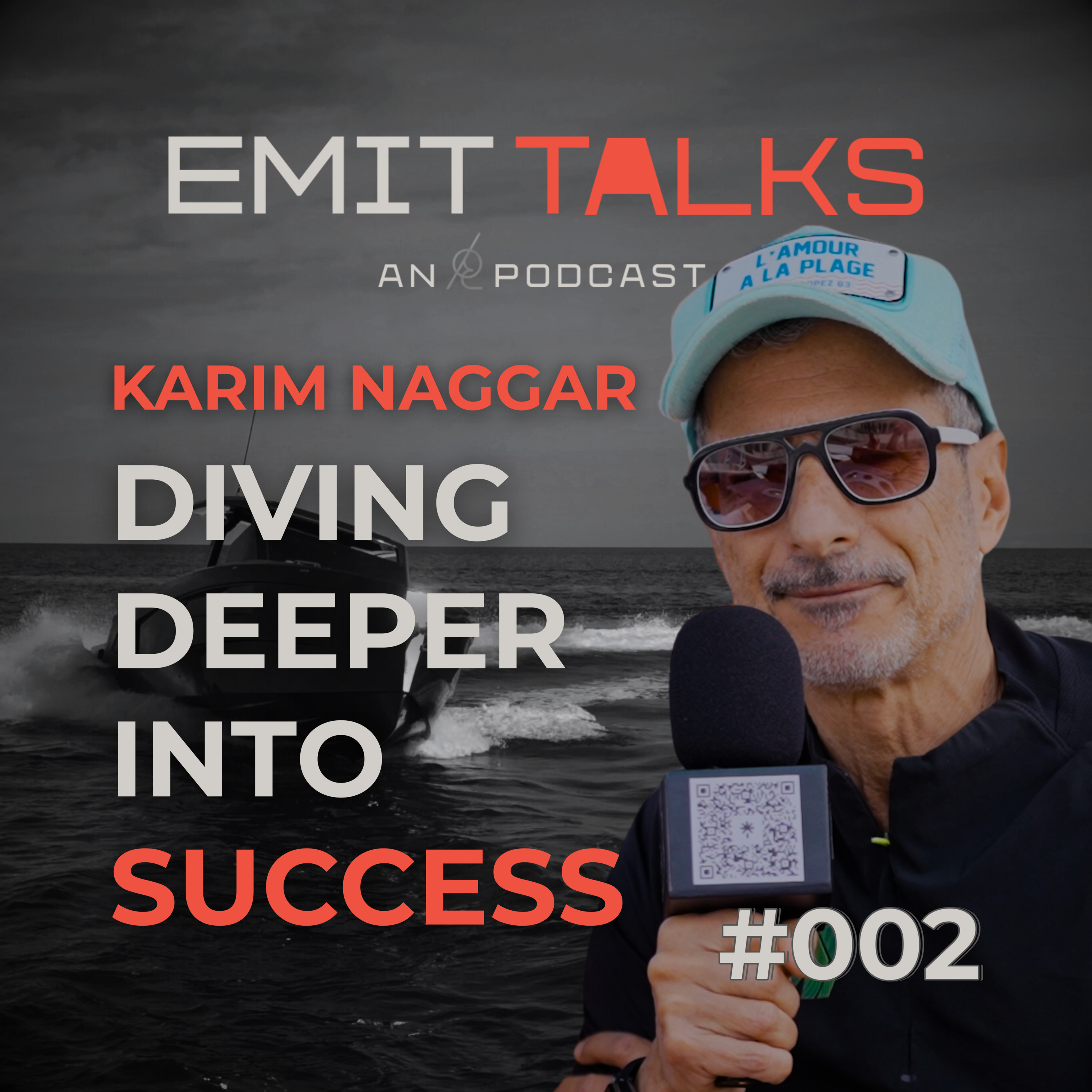
Karim Nagar's success story, rooted in 1987, began when he was hired to close a struggling company with 16 employees, no motivation, and a dilapidated workshop. Instead of shutting it down, he found innovative ways to import cars and appliances, forgoing a salary for shares—a risky move that laid the foundation for KM Group. He defines success as learning from failures, citing a costly mistake of ignoring a brand's potential, which later drove him to acquire volume brands like Skoda and Ciat. Today, his group boasts six automotive brands and supports nearly 1,000 direct employees, with a culture that encourages risk-taking, avoids excuses, and empowers young talent, including women who have risen to lead rival firms. His leadership philosophy rejects fear-based respect, emphasizing that employees work with him, not for him, and he fosters a problem-solving mindset where staff must exhaust solutions before seeking his help. Personally, Karim maintains discipline through daily gym sessions, which clear his mind, and prioritizes family time with two annual vacations, teaching values of respect and hard work to his children. He also highlights the importance of switching off, noting that a healthy body and mind are prerequisites for success, alongside relentless effort. His strategic acumen, particularly in reviving Audi's reputation by overhauling after-sales service, demonstrates his belief that addressing root causes, not symptoms, drives growth. Ultimately, Karim's journey underscores that success blends resilience, self-awareness, and a commitment to people—both employees and family—while staying adaptable to change.
What is success in Karim's mind? To achieve success, you need to fail and you need to learn from your mistakes. Don't do the same mistake twice. Respect does not come from titles. When you make it personal, you lose. Welcome aboard Emmet Talks. On this episode, we dive deep into the success story of Karim Nagar, chairman and CEO of KM Group, and one of the true automotive gurus of Egypt and the Middle East. Boasting a huge portfolio of brands such as Audi, Volkswagen, Skoda, Ciat and Coupra, Karim has built a true tale of success, spanning many decades, many emotions, and many critical moments and formulas to success. Join us as we dive deep into the mind and world of Karim Nagar, right here on Emmet Talks. Welcome aboard Emmet Talks, right here in the beautiful heart of the Red Sea, where we are diving deeper into success. Our guest, we've already explained years and years of success. We've got none other than Karim Nagar chairman of KM Group on board with us right here on Emmet Talks. Karim, welcome aboard Emmet Talks. Thank you and thank you for this beautiful introduction. Well, the introduction includes years of success on your part. Success that many would say started in 1987, and that has led to you today being the sole dealer and distributor of incredible automotive brands like Audi, Coupra, Skoda, Ciat and more, hopefully to come. But we believe that success always usually has to be linked to failures at some point. So I want to start by asking Karim's favorite failures in life. Well, I've had many, and like you say, to achieve success, you need to fail and you need to learn from your mistakes. And there's nothing wrong in making a mistake. I always say to my employees, don't be afraid of making a mistake, but don't do the same mistake twice. Then there's something wrong with what you're doing, and you have to really reflect and say, how could you have done something twice, two mistakes with the same thing. But having gone to 1987, this is a very, very long road that I've been through, and I've had a lot of failures like I said in business and in my personal life. And I learned from them. Maybe the biggest one business wise was a brand that is in the group. As you know, the group is 12 brands. I have six of them. And they did not start with six. They were two. When I joined the company in 1987, they were only two. They were Volkswagen and Audi. In addition to general electric, I believe. And of course, we had general electric. We had home appliances. And this is where I started. I didn't start in the car division in the company. And actually brought me to close the company. I'd say the owners at that time, they were foreigners. There was no importation of appliances or cars or any sort of importation. And they got me. I was still finishing my years in university. I was in the American university in Cairo doing my major in economics. And they got me and they said, okay, we have 16 employees. We don't know the labor laws. We are in debt. And we want to close the company. So please come and close this company. And this was at a time where you were saying there was no importation. It was sort of, I wouldn't say similar, but equally disruptive economic conditions that were happening in Egypt and the region at the time. Absolutely. It was, it was, it was, I mean, you could go into the company. I mean, the office was in Giza. This building, this 15 Giza Street Building, which still exists. Run down no cars in the showroom. Employees sleeping on their desks. Motivation zero. The workshop that we had at that time was in Shobralkhim. It was in a disastrous stage. The sewage pumping up and flooding the whole place. Cars could not even go in for service because of that. So a real, a real disaster. But anyways, fast forward. I came after six months and I told them, no, I don't, I don't want to close it. I found a way of, of, of importing cars and importing appliances. And there's a way to do the, to do businesses out of the box. But it's doable. So they said, okay, we won't be able to pay you salary. So I said, okay, forget, I don't want salaries. Pay me in shares. So this is how it started in 1987. Fast forward today. Like you said, I'm the chairman and owner of a gang group, which has more than one company under it. And I have now today, like I said, six brands. So it has, it has been quite a, quite a long road. It sounds like quite a long and, and fruitful road. You said the decision you took to tell them, no, pay me in shares. You feel internally for you. That was an instant decision and that was an instant decision where you were comfortable. I'm gonna accept this risky decision with whatever it may bring. Yes, absolutely, because at that time, it wasn't common that someone of my age, even older. You didn't have IPOs, you didn't have these sorts of things in general or in Egypt. But I was very confident that I could do something, something there. And it succeeded. And if we go back to the failure, along this road, there is a brand that I will not mention the name that is not with me, it was offered to us at that time. And I did not take it seriously because I did not see the potential of this brand. And it turned out to be a very wrong and costly decision. And one of the biggest mistakes, a business wise that I did. I mean, costly financially, yes. But from a learning curve perspective, that probably you probably now know when it comes to acquiring new brands. Absolutely. And this is how I acquired the two volume brands that I have today, Sayet and Skoda. And yeah, from this failure, I was able to get to these successes and known, like I said, not to repeat the same mistake again. And again, just to paint the picture, someone who's almost graduating from university, being asked by an international automotive giant at the time, like Volkswagen or Audi, to keep a shop going. And then you taking on that journey to a point where now the market share of KN Group is not to be underestimated. How was that journey for you? This journey was long and bumps, bumps everywhere. But mostly, mostly successes, like we say, because at the end, the success is when you see the company growing, when you see that you're employing additional employees, and we're close to 1000 employees today. So it's 1000 families that you're directly supporting. And indirectly, you're talking more than 5,000 jobs that you're creating. So this is the success, this is the beauty. But of course, it was very long because the conferences you had to go, the meetings you had to attend, the negotiations you had to go through. The trips you had to take planes left and right, and cities north of Germany, south of Germany, and elsewhere in Europe. Very tiring. It was very tiring, stressful. But like I say, the stress and the tiredness goes when you see the numbers, when you see the market share, or when you see the smile on your employees faces, this is the reward. You mentioned your employees, the backbone of your group. And you earlier mentioned how you tell your employees, it's okay to make a mistake, but making it twice is where we can draw the line. And I want to highlight this aspect, how you talk to your employees, how you set up their mentalities and their state of mind in order for them to help you achieve success. There's a lot that my employees could tell you about me. First of all, they know in the morning if I did not train, if I didn't go to the gym, they know because I'd be shouting left and right. But this is because of something is not working properly. But my employees know and they have this on their desk from me, and it says, think twice before coming and knocking at my door. Because once I let you in, the problem does not become yours anymore, it becomes mine. So look into it from left, from right, from north, from south. And like I said, if you come through my door, it means you really have not found a solution to whatever problem you have, and we will see what we do with it together or with the committee and so forth. This is number one. Number two, I always tell them and they know this by heart now.
that excuses don't bring results. There's always, you can always find an excuse. And this at the end will not bring you any results. So don't go that road. Today, of course, I do not run the company. It's my employees who run the company. I never say that to my employees that you work for me, to work with me. The success of the company today is the success of my employees. I only do the strategy, but the employees do the operation, the daily operation works. And we have committees today, different committees that run the company. And at the end, I look at reports. I give an opinion on the numbers, on the reports that are presented to me, but I do not run the company. So that's with regards to how you speak to your employees. I'm also interested and I'm sure a huge amount of success comes from the things we tell ourselves, how we speak and talk to ourselves. What would you say are the best things that Kareem has been telling himself throughout the years? Well, because they know the history, they know my history in the company and the history of the company. So this is something that they look up to. So the sky is the limit. And they know that no matter how they're young, because we are a young, I mean the employees that we have are young, they know that the sky is the limit. It doesn't matter how old you are or what background you come from, male, female, we encourage by the way, female is a lot in our company. Yes, you've even had females that have moved on and are now running rival companies. Absolutely. And this for me is, they asked me, "How do you feel bad about it?" I said, "On the country." I feel great when I see employees that have graduated like I see from the Kareem Nagar school. So yeah, they know that the sky is the limit like I said. They know that one day they can be in higher positions and they do. And they know that I always say if you find a better job elsewhere, take it. You should always look up and not look down or look in your comfort zone. Because we tend to as humans or even more as Egyptians, I guess. We like our comfort zone. We don't want to get out of it. The salary is good, the job is good, the boss is good, the company is healthy. Why should I change? I don't agree to that. If there is an opportunity, a better opportunity that comes knocking on your door should take it. Those are the things that Kareem tells his employees. But I'm interested in what Kareem tells Kareem on a daily basis. Throughout the years, what did Kareem tell Kareem throughout all these years that led to this success? Because I feel that if we are too hard on ourselves, then success will kind of have a limit. But if you're good to yourself, if you give yourself credit, if you're honest with yourself, if you trust yourself and you forgive yourself, has that helped throughout the way your own internal language with yourself? I'm not sure if that was the case. I think I was very hard on myself. I was always very lonely. They say it's lonely at the top. But it was also lonely because I didn't get any advice or anyone to talk to. I came. I was thrown in the company and I had to do everything on my own. So no, I was very hard on myself and maybe I was too hard on myself. But it's a situation I was in. But I used to wake up every morning and tell myself, "Oh, it's strong." And this was at a time where also I was personally not in a relationship. If you can call these failures, I've had two unsuccessful marriages. It was always at a time that also personally I was not in the best place. How is that the ability to differentiate between what someone might be going through personally and business? I always say to my employees, don't bring your problems, your problems from home to the work. You enter the doors, you leave your problems outside. If you bring them with you, you're not going to get out of it. It's going to be really very hard for you to be successful. So, and this I did also. This is why I say the gym. The gym in the morning was always important to go and get your stress out. Take it on the weights. And then you enter the company and your mind is clear, your body feels good. So, yeah, this is, again, this is what I say to myself. And I keep doing it up to now and I tell my employees the same, don't bring your problems to work. And that leads me perfectly into my next question. Daily habits that you feel lead to success, something like daily sports. What are the habits that have been absolutely essential for Karim throughout his life and his journey? Sports definitely. And this is what my parents, I mean, at that time we had no iPads and no iPhones and nothing of all these gadgets. So, we would be in the club, we would finish school, go in Gizera, stay from, I don't know, three, four till till night and come back. And this would be, we played all sports that were there. We didn't have to excel in every sport, but this was the outdoors. And this is what I miss and this is what I always tell my kids when I see them on their phones and their iPads, you know, go out and go out and play, go to the outdoors. And today it's, as you know, it's very difficult. But yeah, this is something I do every day. It's my routine to go to the gym to do my one hour, one hour and a half. We can sometimes do. What is also what I also do now is I travel a lot. I don't travel only for work, and I get used to be, but I travel for also for fun. And we are a group of three musketeers, as we say, the Kola sometimes. And it's led by Nagib, by Nagib Saviris and he takes around the world. So we enjoy going out together, have the musketeers given names to each one, someone's passport too. No, this is given by people, so we don't really. But yeah, so we travel, we enjoy beautiful cities, beautiful meals, food, drinks, you know, so it's a good life. So being good to yourself, treating yourself well, how closely would you attribute that as a habit to toward success? Very important. You have to be, your mind has to be your body, of course, and your mind. They have to be in a good place. And if they are, then you are going to be successful. Of course, you have to put the work. If you're not going to work hard and put the effort into your work, no matter how genius you are, I will lucky you are, you're not going to be successful. You have to put the hard work. And is there a line you draw? Because I met a lot of business owners who have lots and lots of employees working with them and they find it very difficult to switch off further and further for themselves. They always have the benefit of the employees ahead of maybe them being entitled to go and be good to themselves and take a holiday and do something for themselves. What would you recommend if you're a business owner? How to switch off in order to make time for yourself and for your family? Time for my family is number one today. Because my kids are of a certain age where they're still dad and mama still very much present in a few more years. They will be independent and they will not be with us anymore or with us as we wish to be. So one of the if you come back to the routine we have is we take two vacations a year, summer and winter and it's only us, it's only the family. So it's my wife and my kids and we go to Zermat every year for winter for skiing. Some of the best skiing in the world. Yes, absolutely and we also do a summer trip as it's either July or August and we are not they're not with friends and we are not with our friends. We are together. So this is time with your kids, time with your family if there's an advice I can give. Of course this is number one now. It's quality time. Time with your family.
friends comes after. And if you come back to your question to switch off, yeah, it's important. First of all, if I come back to my employees, my employees do not call me sir, it's scary because respect does not come from, I always say, respect does not come from titles. It comes from when you really look at your employee and you see him and he has respect for you. Fear is not important. I don't believe in that, but respect, there is a respect. And this is important. So if I have an advice to give anyone, a businessman or other, is this, to have a family comes first of course, and then everything else follows. And the ethics you bring to work, the ethics you will have from your upbringing, from your family, from your parents, what you took. And the fabric has changed as we say today, there is, there is all these gadgets that are available, that are time consuming, social media and so forth, but also the fabric of the society has changed a lot in Egypt recently, recently in the last, let's say, 15 years. So we keep, we keep to our values, the values that our parents gave us and we try to pass it on to our kids and hope that our kids will do the same with theirs. Speaking of kids, success in parenting. We were talking about how in our days there weren't any gadgets and we'd go out and play with rocks and stones. I feel that kids these days, newer generations, I would count them as a completely different species. We were born in analog and we witnessed a transition into digital. They were born purely in the digital world. What would you recommend as elements of success in parenting these days, especially raising a generation that we cannot compare to ourselves or our own upbringing? Well, basics, the basics are, should always be the same, even with all these distractions. Are you, you teach your kids? Like I said, what your parents taught you? So you teach some values, some how to be respectful to elders, to their peers, to their family members, to their siblings, if they're younger or older. So yeah, it's the basics. You go back to the basics, with Osool, here, Osool, there's no cornering on something of that. But we try to, I mean, nobody told us that parenting was going to be so difficult, but it is a very difficult job. I don't know if you have kids, but it's a, it's a, it's a, it's a, it's a, it's a, it's extremely difficult job and, yeah, yeah, there's no, how do you say that you can take advice also from friends on situations, but at the end, it depends on you. It depends on you and the, the, the kids, all kids are not the same, all humans are not the same. So what might work for me might not work for you, etc. Of course. So, let's move on to, to, to, to success in strategies, because you mentioned earlier before strategy, how you're basically in charge of stretching out. I'm very curious about the strategy that led to the success for Audi in specific. You took over at a time where Egypt was probably overtaken by Mercedes in the, in the 60s and 70s, maybe BMW sort of creeped up late 70s, early 80s, and then all of a sudden, Audi came along, which nobody really, really knew. Fast forward to a day like today, where if you're out in the luxury car market, no, Audi is definitely up there with the other two. It's definitely in the top three brands. So how did you get Audi to become such an established name and brand here in Egypt? Okay, so you're right. Audi, nobody knew about Audi, not only in Egypt, but in the Middle East. So even Egyptians that worked in Saudi or in the Gulf, they did not know what Audi was. So it was, we had to, to look into why, the wise, wise Audi not successful, why is Audi not known. And what we did at that time, what I did is that I got a small research company, and they went, they dived deep to see the root causes. And one of the main issues they found was service, that the after sales service or the service that was provided to Audi cars was very bad. And if something had to change, you had to start from there. And actually what, this is the, what we did now, we built a very big facility for Audi for service. And at that time it created a problem with my shareholders because they said, what are you doing? You're investing so much money in a brand that is unknown and where your volumes are very weak. And I showed them, I shared with them the research and they were not convinced. So I had to do it again on my own by myself. And this was how the success of Audi started. Then we had to choose the right models. We had to go and search for the, for the customer behavior, what our customers would want to have in an Audi. So we had to be different than like the competitions you were mentioning. So we had to be different. We had to get models that were more young, to attract a younger age group. Because the bigger age groups we found were more keen to buy Mercedes or like you say later on BMW. And yeah, it's so research. I did it the right way. I'm going to be very happy with you. And you go and you find what is wrong. It is laid down in front of you and you tackle them and you find the solutions. So would you say it was part of your strategy from way back in the day that the 24-year-old that bought an A3 in 2001 is now a longstanding customer that is investing in Q6s and Q8s? Yes, absolutely. Because if he's happy with not only the car, but with the service provided all around, then his customer experience as we say, or customer journey is a pleasant one. So he will be a faithful Audi customer. He will get an Audi for his kids. He will get an Audi for his wife. And he will keep on getting out these long, along the way. And we always said Audi cars, and this was not said by me, but by Germans, because Audi did not have the image of its competitors. They had to build better cars. So getting a customer inside an Audi was a difficult part. But once he's in, he's not going to leave it. If you're providing him, like I said, with a perfect customer journey. And this is what we did. That is great piece of advice, especially in a competitive and an aggressive market, like the automotive industry, getting the customer to try your product is probably the toughest part of the journey. And this is what I want to touch up on. You mentioned we're not selling cars, we're selling an experience. And I would say we're a culture in Egypt where focusing and really focusing on the details of customer experience may not be on the top of a lot of companies' agendas. How would you say you've tackled that? And what would you say the success factors of KEN group dealing with the customer experience? Well, it starts with the mission of the company. If you look into our company profile, you will find our mission. And our mission is very clear. We want to be the number one auto service provider in the market. And everybody knows that in the company from top management to the guy that serves the coffee in the buffet. So this is a DNA that we have that we put in each and every employee. And I believe that this is important and the success story that we have. And we pass this along not just to premium our premium brands, but we pass it along to even our volume brands because the mission is the same. And yeah, you have a lot of brands that changed companies, changed company hands. A lot of importers of brands, if you look around in the Egyptian market, they changed hands once or twice or more. Our company hasn't. From the company was established in 1976 up to now. And I can't start mentioning how many hostile bids and takeovers I've had during my time and people that were much stronger, much more powerful, much more resourceful. And they tried to take the brands that I was representing in a hostile way. But they all failed. I was always successful and always, I always say also with the hand of God because no matter how successful you are, you need protection, higher protection. And you need also luck.
to be on your side. So with all these elements you are unbeatable. And if you're doing your job correctly, if someone comes and says, "Ah, Karim is doing, I don't know, 100 cars, I'll do 1000," the person you're talking to has numbers that say you cannot do 1000. You're just talking crap. Because if we could do 1000, we would have done it with Karim. So, yeah, this is, again, we are, we have our history. We're very proud of and we will continue. We were talking to Jens here, whether my son will take over one day, I don't know, whether he will take over the business or not. I mean, his destiny is in his own hands. You try to give advice, to give the roads, but I will never force him or my daughters to take over the empire of the great. Now, staying with takeovers, you mentioned hostile takeover bids. As a business owner, someone who's built a company from scratch, where would you say you draw the line between my baby, I don't want to let it go versus this is an incredible exit and I'm sorted, me and my kids and my grandkids for life. Where would you draw the line between I want to carry on or this is a great business exit? I would always say don't make it personal. A lot of businessmen would tell you anti-cunes, including my dearest friend, that when you make it personal, you lose. So if I get an opportunity, a great opportunity, I would take it. I would not say no, this is my baby that I have to pass it on to my kids. No, this you're making it personal. And if you do, then you're going to lose a lot. If someone came today and gave me the offer that I want, I would consider it and look into it. But making it personal, no, it's my baby, I want to keep it, I want to pass it along is very wrong. So not good for business, very fair enough. And earlier on, you were mentioning volume brands and I want to discuss that a little bit. Volkswagen, I think second biggest car producer in the world. And I really want to touch up on a story that I think is close to you. The Volkswagen school, you guys decided to start up and apply it school here in Egypt, targeting people who might become future employees or future automotive industry workers. Where did that concept come from and what does this school mean to you because I know you guys recently graduated your first class? Well, we've done a great homework, I can see. Yes, so how did this start? This is what I want to leave when I'm not here anymore when I'm not between the living. I wanted to leave legacy. And this legacy was in education. We have problems in education as you know, the education system in Egypt has many flaws and problems. And I said, okay, I want to pitch in and I want to create not just one school, we're building also the second one. But I want to do the vocational training, which we also lack. We have a very big problem ratio in this. And with the direction that the government took and the state and head of the state and the prime minister who's still here was to really expand in that domain. So to go from some 20-30 schools to 2000 plus schools. So it was a big campaign that we embarked on. And like you say, my first students graduated last year. And it was the happiest day of my life of my career. Wow, really? Goose bumps and I had tears and I looked a bit silly, crying like a baby. But with my students around me, hugging me and you know, they're all students that could not have gone to a such a school and had such a learning without sponsoring, without our sponsoring of that. So having them all around me, hugging me with their families and their moms, you know, obviously the name in English, Bizarre Roto. I'm duulating, I think. So this was for me. It was the happiest day of my life. And we also built a school. I chose a high-school Asmarat. This used to be a slum area. So it was cleaned up and we built a really beautiful school. And what we do is with the vocational training, we have they take their education theory and we're hands on now because we have a workshop there. And we have the test equipment. And we send cars there. And so they work what they take in the classroom. They apply in the workshop. And like I said, we're building a second one. And I want to, before I'm going to be able to have at least 10. And to go out of Cairo because we have so many places in south of Egypt where, you know, there's so much potential. There's a lot of potential and great kids that need an opportunity. And if you give them the opportunity, they will, they will do a lot of successes. And you said might they might work. No, we take the top 10. They have a guaranteed job in the company. Wow. So straight from the school to the factory line there or whichever part of the company. And we give diplomas, certificates that are recognized by Volkswagen and recognized by the Arab German Chamber of Commerce. And we even fly a couple of them abroad to have an experience abroad. So no, this is we hired them. And I know that the ones that we don't hire are hired by competitive companies. So it's a success from the beginning to the end. Wow. I mean, I got a little goosebumps hearing how you how you felt about that. Now moving or staying within your industry, the ever growing debates. And I would really like to take your input on this electric versus combustion engines. How do you feel it's going? And how do you personally feel about this debate? That's a very very difficult question to answer because if you had asked me the question last year, I would have told you the industry is going or has decided to go electric. And by 2035, there was not going to be any more combustion engine existing in the industry. Why has it changed this year? Because the industry found out that 2035 is not a realistic year or time frame to have this to go to this transition or this revolution that I call. And the electrification is not going as fast as the industry wanted or is not going to be there. So yes, there is. They're starting to pay a lot of amounts because of the CO2 emissions. So a lot of fines, but they are discussing now with the EU and with the communities how to extend this deadline because they cannot do it. So combustion engines are coming. Are still going to be there probably till 2040 and if not beyond, all this is being negotiated. But definitely the deadline of 2035 is not applicable anymore. And would you say this is due to a slower than expected consumer uptake or is this due to a production sort of slowing down? No, it's the first day. The infrastructure is there and even in Egypt, the government has done very well in providing a comprehensive infrastructure of fast charging stations around the country. It's the consumer behavior. It's the consumer that doesn't is not convinced when they removed the subsidies they give on buying electric cars. This has dropped, has turned sales to costs sales to drop significantly because the government removed the subsidies, the subsidies used to get 2,000, 3,000, 5,000 euros on a car that you buy an electric car. All this was removed by governments and this resulted in the decline. So without support, without this amount, customer would rather stay with his combustion engine or diesel engine. So yeah, it's consumers have to be convinced with that and it will take time. And what do you feel would lead to the success of convincing consumers that
Do you know what? No. This Coupra Tava scan is a quarter of the price of the same level of car, but with a combustion engine. The transition is now, it's not just combustion engine or electric vehicles. You have what we call plug-in hybrid. We have hybrid. It's a mixture of two worlds. You have a battery, a car with a battery, but also with an engine or a small motor. This, I believe, is a good transition. If you look at the hybrid and plug-in hybrid markets around us in the world, they are increasing. Much faster and faster than fully electric. This is from one side. From the second part is the Chinese. The Chinese are coming very strong. They will dominate the market, the electric, or, as we call, the EV market, because they're coming with beautiful design cars. They're coming with something more important, because I always say a car is not any more design or a beautiful design like our generations are. It's the software. The Chinese have to shift from being a car company to being a software company. The Chinese are coming with software that are very user-friendly, very advanced. This is why they are dominating. It is the next big thing, as we say. Do they expect a Chinese brand among the Cayenne Group family? Because of connectivity, we are considered a super-hot country and batteries that are produced by the Group are not equipped for that. All the cars that you had from Volkswagen, the ID line or from other brands were gray market and they were not sold through our network or distribution. We are not allowed to sell them or to service them. Then Audi came and they provided us with the first electric models. It's pretty expensive. The volume brands that we have didn't up until you have mentioned it, and this is why I say it's done your homework. We are going to start with CUPRA in September. We are going to have finally a volume seller, a beautiful small car, a fully electric that we will sell in a group. To answer your question, if the group had continued not being able to supply us with electric vehicles, I would have looked elsewhere. I would have looked at the Chinese brand. But as long as we are going in the right direction and they are supplying us with the cars, then no. What about our own Egyptian automotive market? We have been through a very tumultuous last five years to say the least with dollar prices and inflations and the dreaded word of over price. I don't want to look forward with you. What would you say would be the formula for success to have a stable Egyptian automotive industry? Like you said, it's always a car. Car is always, I don't know why, it's a problem for people that are in governmental positions. A car is a problem. Why is a car a problem? I really don't know. They believe they have very wrong notions that importing cars or the importation of cars puts pressure on the dollar and foreign currency. I believe that this is very wrong. This leads to our market being an insignificant one. If you look at it, 100,000 cars, 110,000 cars, 120,000 cars compared to the size of the country and the population, it's a very small and insignificant market. If it stays like this, then you will not be able to convince big companies, automotive companies to come and invest and produce or assemble cars in Egypt. I believe that this market has potential to be more than 1 million cars. I always say we are very similar to Turkey, economy wise, currency wise, social wise, we have the same habits, the same language, the same religions. It's very close, but the Turkish and the Turkish leaders on a lot of pressure like our Egyptian founders, but their market has almost the touch of 1 million cars. We should be like Turkey and even better. I would look at Turkey and I would probably look closer to a country like Morocco, who in the past 20 years, I think they are now the biggest manufacturer or assembler in Africa. And with, I think last year, over 8 billion US dollars of exports. So it's not just the assembly. You don't just need to assemble. You need to export as well. This is why the industry has not involved through the past 30 or 40 years or even 50 years in Egypt, because it was always concentrating on the Egyptian market, the local market and not on export. And it was a way to shortcut the heavy customs and duties that were levied at that time. So there was no added value for the economy. And I always used to call and I still call these plans for these manufacturing plans as white elephants, potentials of producing 20,000, 30,000 cars and doing 2,000 or 3,000. And again, like I said, doing it for the local market with zero export opportunity. And this is why our discussions today with Volkswagen is based upon producing a car. And most important or more important is exporting it. Finding the right model, having the right price for the local market, but most importantly to export half of the production that we want to assemble here. Very, very interesting. And lastly, we began by discussing failures and I'd like to end by highlighting success. So what is success in Kareem's mind? What does it mean to you? It's not one thing. You cannot just pinpoint and say one thing. Like I said, it can be something very simple. The smile on your employees face when he's achieved success in his job. When you look at your employee and he has the smile on his face and he's proud of himself for you, this is success. You're happy. So it can be very something very small or can be very big when you're one. I'm in a conference. And I'm with my team, let's say a conference of Scoda or one of the brands and you're surrounded by markets from all over the world and you're voted as a reporter of the year. And we all start on the podium and we get people clapping us from all over the world. This is success. So it can be huge or it can be very small. But one particular thing I cannot point and sin and success is that black and white. No, it's so, so many things and you get that feeling from so many things small or big. Karim and Nagar, chairman of KN group, may you continue getting that small and big feelings of success over and over and from one success to another. Thank you very much for coming aboard with us on Emmett talks. Thank you. Thank you.
Podcast Summary
Key Points:
Karim Nagar, chairman and CEO of KM Group, started in 1987 with a failing company of 16 employees, accepting shares instead of salary to turn it around.
He emphasizes that failure is essential for success, but repeating the same mistake is unacceptable; a missed brand opportunity taught him to seize potential.
KM Group now has six automotive brands (e.g., Audi, Volkswagen, Skoda, Ciat, Coupra), employs nearly 1,000 people, and indirectly supports over 5,000 jobs.
His leadership style focuses on employee autonomy, discouraging excuses, and promoting a "sky is the limit" mentality, including encouraging staff to leave for better opportunities.
Personal habits like daily gym workouts, family vacations (e.g., skiing in Zermatt), and travel with friends are crucial for mental clarity and work-life balance.
He believes respect comes from actions, not titles, and advises leaving personal problems at the door to maintain focus at work.
For parenting, he stresses returning to basics—values like respect and discipline—despite digital distractions.
His strategy for Audi's success involved identifying poor after-sales service as a root cause and investing in a major service facility, despite shareholder concerns.
Summary:
Karim Nagar's success story, rooted in 1987, began when he was hired to close a struggling company with 16 employees, no motivation, and a dilapidated workshop. Instead of shutting it down, he found innovative ways to import cars and appliances, forgoing a salary for shares—a risky move that laid the foundation for KM Group. He defines success as learning from failures, citing a costly mistake of ignoring a brand's potential, which later drove him to acquire volume brands like Skoda and Ciat.
Today, his group boasts six automotive brands and supports nearly 1,000 direct employees, with a culture that encourages risk-taking, avoids excuses, and empowers young talent, including women who have risen to lead rival firms. His leadership philosophy rejects fear-based respect, emphasizing that employees work with him, not for him, and he fosters a problem-solving mindset where staff must exhaust solutions before seeking his help. Personally, Karim maintains discipline through daily gym sessions, which clear his mind, and prioritizes family time with two annual vacations, teaching values of respect and hard work to his children.
He also highlights the importance of switching off, noting that a healthy body and mind are prerequisites for success, alongside relentless effort. His strategic acumen, particularly in reviving Audi's reputation by overhauling after-sales service, demonstrates his belief that addressing root causes, not symptoms, drives growth. Ultimately, Karim's journey underscores that success blends resilience, self-awareness, and a commitment to people—both employees and family—while staying adaptable to change.
FAQs
Success requires failing and learning from mistakes, and not repeating the same mistake twice.
He was hired to close a failing company but instead found a way to import cars and appliances, accepting shares instead of a salary.
He missed an opportunity with a brand because he didn't see its potential, which was costly but taught him to evaluate new brands more seriously.
He encourages them not to fear making mistakes but to avoid repeating the same one twice, as that indicates a need for reflection.
He exercises at the gym daily to clear his mind and manage stress, which he believes is essential for effective work.
He prioritizes family, taking two annual vacations with just his wife and kids, and advises that quality family time comes before everything else.
Chat with AI
Loading...
Pro features
Go deeper with this episode
Unlock creator-grade tools that turn any transcript into show notes and subtitle files.
 PodcastTranscript AI