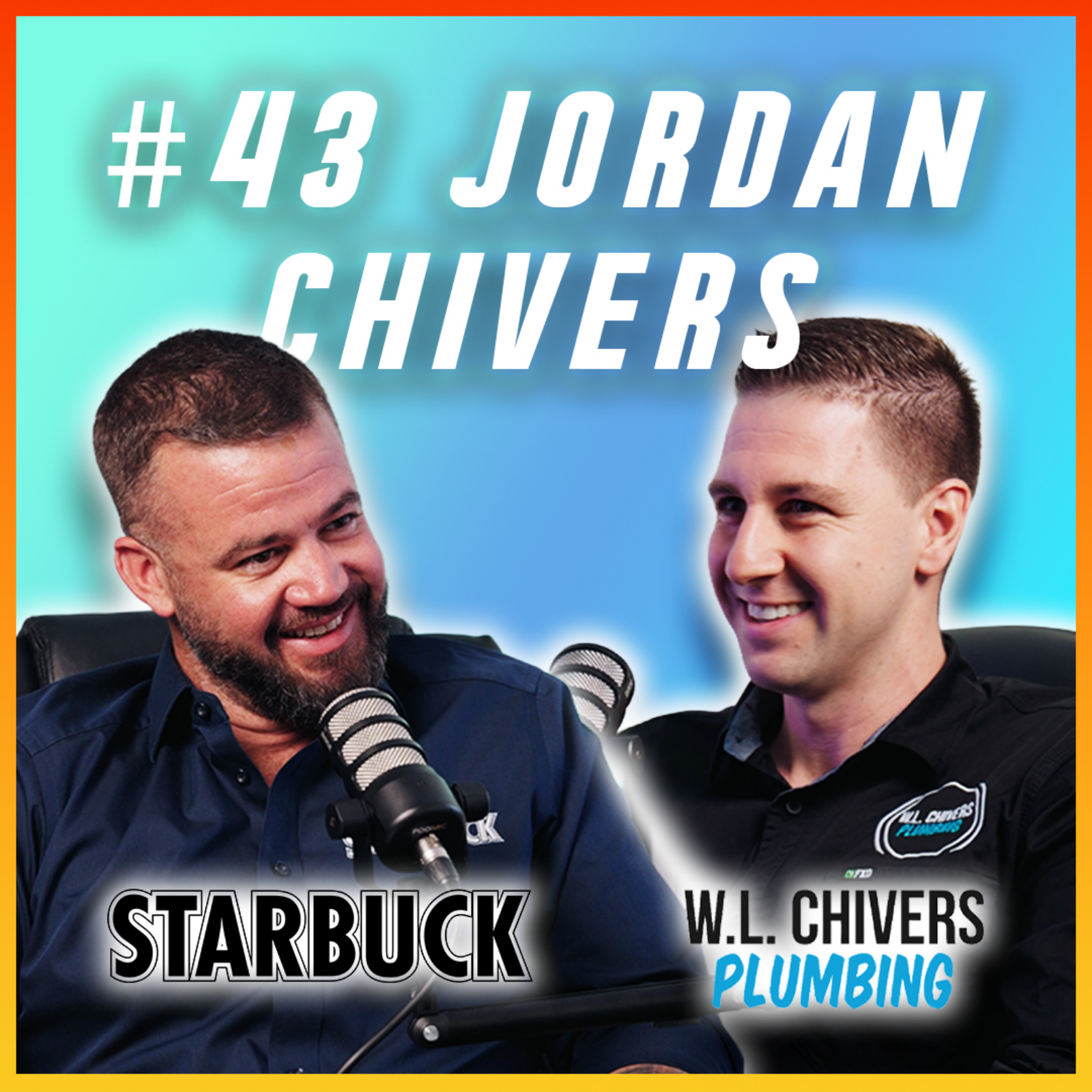
Jordan Chivers (Director of W.L. Chivers Plumbing) - Jimmy Talks Construction
from Jimmy Talks Construction
71m 54s
Jordan, managing director of WL Shivers Plumbing, shares his journey from a working-class upbringing in Melbourne’s northeastern suburbs to building a successful emergency plumbing business. Raised by a single father who was a maintenance plumber, Jordan began working at age nine, accompanying his dad on after-school callouts. His passion for earthmoving led him to convince his father to buy an excavator when he was 14, prompting him to leave school early to start an apprenticeship digging sewers. By age 18, he had his plumbing license and took over the business when his father traveled abroad. Jordan emphasizes the importance of resilience, noting that his father’s tough love—no overtime pay, mandatory weekend work, and constant challenges—forged his work ethic. He built the company alongside his best friend Danny, with whom he has worked for 16 years, stressing that mutual respect and hard work are key to long-term success. The business evolved from a chaotic, handshake-based operation into a structured company, focusing on reactive, emergency services with a one-hour response time for clients like the RACV. Jordan acknowledges the personal sacrifices, including financial struggles and loneliness, but views them as necessary for growth. He encourages others to enter the industry, calling it future-proof and vital for the future.
To anyone that's sitting out there going, "Oh, should I, what do I do with my career? What's the future look like?" Industries, in my opinion, very, very future proof. And there is a big growth opportunity in the next 10, 20, 30, 40 years in our lifetime. It's a fantastic pathway. And there's so many different facets of it. Yeah, if you're out there and you're thinking, "Do I don't I should I try?" Give it a crack and just give the industry a shot because the future needs you and the people need you and we need more people in the jar. It's interesting that a lot of the themes of these podcasts always remain consistent and you're touched on something I've bought up before, which is this, when you are going hard at it and looking for more work and chasing the dream, let's say, the dream is going to call you. It's going to call you when you mobile phone and you've got to answer it. And it doesn't say answer the phone unless you're at the pub and it doesn't say unless you've got something on on the weekend. The dream and the vision and the growth might call it a really fucking bad time. It normally does. It normally calls when you least want it to call. Good day, everyone. Welcome back. Another episode today with Jordan from WL Shivers Plumbing, Managing Director. Take it away, Jordan. Say good day. Good morning, Jimmy. Thank you very much for having me on. The pleasure is mine. A big fan of your podcast. You're doing really good work and a lot of people are watching on. And yeah, from watching, I thought, hey, I might come down if you'd have me for a bit of a chat and talk different sides of construction and say where it goes. Awesome. I might actually take this moment to, at the very start of the podcast and, Louis, you're going to love this, right? We need some reviews on the podcast because I never knew that they actually counted towards something and then I've had all of these people on the internet hit me up and say, you need reviews on it. You've got only 10 reviews or some shit on it. And if you get over 50, then the algorithm, I don't understand it, but I've been told, if you do like it, please leave a review, five stars or three thumbs up or some shit. Anyway, back to you and plumbing. Yes. Do you remember when we first met? No, I know you've done work at my house, but was that at my house that we first met? It was indeed. Ah, see? Yeah, it was absolute pandemonium. And you put an Instagram story up saying, I urgently need a plumber. Is there anybody that can help? Yeah. And I knew a couple of people that may still work for you or used to work for you. And, yeah, I followed your Instagram and I thought, oh, do I don't know. This guy looks like a bit of a lunatic, but let's give it a whirl. Small lunatic, yep. Yep. And it's more of a lunatic back then, though. Yeah, so we're probably going back seven or eight years ago. I was digging and I'd ripped out all of my pipes at my house. This is during COVID. This is what you fix, yeah? All of the pipes from the tank. Yeah, we had that big cabal go there and I fucked everything. And because if you've ever worked with me, sometimes we damage pipes. We do get jobs done fast, though. And so we've gone and I've ripped out all of the pipes from my tank to my house. Grey water. All of the boys were working at my house because COVID had shut down all of my jobs. So we've taken on a bit of a dig to do in the backyard. Yep. And I was fucked. Well, that's where our side of the trade kind of steps in. Yeah. We don't build and we're not part of building like what you guys are. We're there when the buildings break and when people need something done now. So, yeah, we're obviously plumbers, but our side of the industry is maintenance, breakdown, insurance and we come when there's problems. It's a very reactive sort of sort of game and a very sort of reactive business because like someone clicks the fingers and you have to come. Yeah. So our biggest customer that we work for is RACV and we offer the emergency home assist program. So it's basically like roadside assistance, but for your house. Toilet. Absolutely. Toilet. Toilet, shower. Yeah. Whatever runs. Wherever water comes out and wherever water goes down, that's us. So, yeah, so that's a big part of our game and it's reactive and our KPIs are basically one hour. One hour. One hour. Any day, anytime 365 days a year, midnight. I tell you what, Louis, WL shivers. One hour. I'm telling people they have to wait a month. One hour. But it would want to be urgent. Yeah. So, yeah, so that's what we do and that's a bit of our game. So, yeah, different field, but yeah, we've got a good little thing. I usually like to start off people at the very beginning because telling your story gets you pretty comfortable. That's why the podcast is set up that way if for anyone who doesn't realise that we do it in a pretty strategic way because most people are comfortable telling where they started, where they came from and everything else and by the end of it, they're able to talk about, you know, all of the problems and everything else. So, take it away because we shouldn't, we shouldn't deviate too far from the normal podcast. Absolutely. The scripts working. So, yeah, so I basically grew up in Rosanna. So, Northeastern suburbs of Melbourne, working class family. I was raised by a single dad from the age of eight years old. A maintenance plumber, Trady, proper Trady, old school hardcore. So, because it was the two of us, I had a lot of opportunity from a very young age to begin to learn about how the world works. And I was basically put to work. After school, dad would have to go out to an emergency. I'm a nine year old boy. It's him and I jump in the van. We go together. So, basically from the very early days, I was blooded into the trade and into the industry. At that time, it was just my dad. He's a W, he's names Wayne Chivers. Those at know him, absolute legend of the trade. Hard us. Proper. So, a lot of work with dad in the early days. It came to the end of year nine. I was 14 to nine months. I. Jeez, I wonder what happened. Just give me a second to think of it. What could possibly happen from a nine year old to a 14 year old? You're already probably outside, out of school before 14 or nine months. It's funny you should say that, Jimmy, actually, because Earth moving was my motivator. I didn't like plumbing. It wasn't interested. I like diggers a lot. And when I came through your door here and saw your little display cabinet of all of your models, that was my room and my house. I loved Earth moving. When I was younger, I'd get dad to go out to William Adams cat to buy me a t-shirt and to buy me one of the die cast expensive models of bulldozers or whatever it was. So, I wasn't going into plumbing. I was going into Earth moving. And when I was 14, I was so caught up in my dad's business, I convinced him to buy me an excavator. Of course you did. To dig our sewers. Takahoochi. Takahoochi, should I say? Yeah, that great machine. Takahoochi TB 108. Back in the days where the government offered the 50,000 instant asset right off out of a bad economic time, jumped on it, bought it. It's the best thing we ever did. So that, where was it? It was prosky or something in the mid-missile? Absolutely. And they had different prosky. That's him and he looked like Ned Kelly. Had the big beard. The big beard, asshole. But he looked after years. Well, like just like what you're saying about your dad. I get a real hard. I remember I went in there one time and I've broken a track on something. But the tracks were brand new and he said, "No, not on me." And he, or looked at him and said, "Well, when he goes, it's a 10 out of 10 warranty." I'm like a 10 out of 10 and he goes, "Yeah, 10 minutes or 10 meters off of the property? No warranty." And I said, "What do you mean no warranty?" He's like, "They're great machines. They don't break down. He goes and when they break, it's going to be your fault." Fair enough. Turns out he was right and I was trying to take back a track that had broken because I had done something stupid. So anyway, yeah. And the problem was I was still in year 9 when he bought it. Still at school. No one else could operate the machine. He had him and a couple of old sub-eas that worked with him. They'd want to dig sewers. They couldn't do it. So I started taking days off school in year 9 to go and operate the machine. That's how I started. So come to the end of year 9, 14, 9 months, as soon as I legally could, I was out the door, start the apprenticeship, straight into trade school, straight into the job. And that's how it all started. Digging sewers. Digging sewers. And we still dig them to this day. But a lot more now. A lot more. So yeah, went through my apprenticeship, managed to talk my old man into giving my best friend and apprenticeship 12 months later. That's Danny and he stands by my side today as my right hand man in the business. We did it two best mates from kindergarten primary school, high school work together. We've still doing it today. How long? So we've worked together for 16 years now. Isn't that some that would be very proud of? I'll sit here and tell you that that's probably one of the best things that you can have happened to you as a business. It means you're a good business owner. It means you're a good guy. It means that, you know, he's a great worker and you've been able to do it. Like it's two thumbs up and that sort of stuff doesn't often get spoken about enough, which is, you know, everyone talks that the industry is so hard. Well, maybe you just need to treat your best mate a little bit better and he needs to treat you a little bit better and absolutely. And I've also got another one of my very long standing so basically my other best mate. He's worked with us for 10 years and we're talking best friends out of work. He needs other bridal parties, you name it, as tight as it gets and we still operate in business together, work together and we kill it. And there's never a drama why respect.
respect and hard work like they can't take the piece right. You know if Danny was a a dipshit he wouldn't be where he is. He couldn't be. There'd be no money to fuel it right. So it's a two way street for all of us but I haven't been a bastard to them. I've been good to them and they've been good in return and now you know you look at where we are now. We're all doing great you know these guys are yes they don't own a business until you're now there are any more money than most business owners. Yeah yeah correct absolutely but we got to get from now you're 16 digging sewers to how old are you now? 31. 31 okay great so we've got 15 years left of putting sewers in and fixing toilets and putting your hand up a shit pipe. Yep so yeah let's see two from then. So got through my apprenticeship the day I turned 18 got my license Big Brods in Bundera the day after that my dad jetted off for a month to Italy for the first time in his life or recent life he said he's finally free. So as soon as I was on the road that was basically it handed me the phone handed me the keys. We had a couple of guys were doing a little bit of real estate work in hindsight pretty cruzy business at the time but it was a big thing you know for an 18 year old to step in. I was a license plumber by that stage or I've done a couple of my licenses. Advantage is starting early I was able to get trained put my head down early and yeah got my first license at 18 so that was massive and from there basically never gave the phone back to him he was a problem for us. He was not good for growth and not good for staff retention. Oh surely not the dad. I could I could a dad an Australian dad ever be a problem for a business. Yeah I thought that sounds absurd I'm sure everyone who's listening to his work with their dad would think fuck your dad must be so different than our dad. Mate I'm not here to degrade him at all. The he was a absolute nightmare how he would fight with customers he would fight with our plumbers he would fight with suppliers like he's just known as an industry. He's a hard us he's a hard us yeah he's a hard us so he made things very difficult for me I've said for a long time I felt like I've had to push shit uphill to get to where I am and if it was hard for somebody else to do what they were doing well I did it with resistance I did it with somebody pulling me backwards. So my grandpa and my great uncle so it was my great uncle's company my grandpa was his number two. They had about 200 and something bloke that their biggest like doing jobs like the ring road yeah you know that sort of stuff they were earth movers of that sort of scale and the prex complete and total ourselves to work with and I remember when I started I used to go out to jobs and I remember I rocked up the one it was the Munder rail I bought a brand new machine for it it was meant to be a four year long job. And got a drop off walked into the site shed and an old bloke looked at me from the corner and he goes starbuck you're related to Dave you know I said yeah he's my uncle great uncle that he's my uncle and he goes yeah he was a thief I'll be getting you off the job as soon as I can and I'm like. I fucking meant Dave like like like I think I met him when I was a baby but he might have died before I was a baby like I don't know I wouldn't know from a bar or so. And I got kicked off of that job I lasted three weeks out there before I got the ass that's rough you know what your name's your name right and it follows you yeah I probably should have I talked about it a bit I should have called my company like in viral something or you know like it seems like there I could have been northern plant higher because there's some other competitors of mine which have taken regional names I could have been the northern one you sure could have but instead what do I do last name starbuck that's perfect and that's. The same as us I mean we run our our surname and I never even took my dad's name out of the company I don't need to it's WL okay it's nearly at the end of the alphabet so basically last on yellow pages back then that was a mistake yeah not triple AWL shoot yeah well he knows about it but look these days that doesn't matter so much so yeah and then from there basically the company started to get legs there was some fresh blood and look let me just go back a couple of steps where I said dad helped me. Back he didn't hold me back he wanted nothing but my success but he just made me do it the hard way which maybe made the success at the beginning because like I I've spoken a lot of people and like I grew up great like you know my family were great my mum was great dad was great a lot of support food on the table every night never worried about a new pair of shoes or anything like that yeah knew that it had to come from hard work but wasn't allowed to get away with being soft and I think that that's the main part like looking back just you weren't allowed to get away with being soft you never got it easy there was never a hand down and like although there's resistance there maybe that resistance at what makes you like I can want it so bad literally you know and in my through my apprenticeship and through my early years working for my dad before it was my business never a centipoma over time never got paid for a sat day Sunday worked them all mind you yeah yeah every Saturday and I think I saw a money of podcast maybe yesterday clip where you're like you know we work every Saturday mate we worked every Saturday and most Sundays yeah like that was the normal that's how we got to where we are I used to I used to go in on a rain day when they closed me down I used to drive a rear and subdivisions till I found someone with a pile of rock and I'd say I'll take away the rock for free sometimes I even bought them some beer for the rock I drive a home and then I had to add for rocks on eBay and I used to deliver loads of rocks over after work and like just loads of paddock boulders usually broken up but I sold them cheap 300 bucks 400 500 for a load now looking back now like you know at the time I thought I'm just like trying to make ends meet I don't like I you know bit of extra spending money fuel in the tank money money when there's no one will let me work I used to deliver it early on a Sunday or something but what I was actually doing was is maximizing and all of these big business words but in actual fact it's just you were too busy to not work Saturdays and Sundays and what you probably even realize at the time that you were pouring the foundations for the empire that you know yeah it was done in those days time yeah no one was watching where you were doing a thousand dollars worth of work for 200 bucks and busting your house on a sat day but look where it is now yeah yeah correct and I love that I used to I can remember for some reason every asshole who wanted these rocks was up mount dandy no like cockatoo sassafras emerald because they want to build those rock walls and so for like their box a land to like this so every like it would be like nah couldn't get a delivery and door rain next to where I lived no has to be I want to in cockatoo on a Friday night at 6pm when I get home from work yeah but I'd rock up there and they give me 500 bucks cash and my diesel was like a tank was 300 bucks you know and so I'd get half a tank and a half a week from Friday night for three hours so my old man's mentality just to go up the back of that couple hundred bucks that you would have had left he go and do a job on Sunday he'd earn a couple of hundred bucks and we drive away and he goes well I've just paid for groceries for the week yeah I wouldn't have to worry about food and I don't get me wrong we were never struggling but it was almost like we were with these mentality but but maybe you weren't struggling because of that work ethic and mentality and everything else like that but it puts a value in the work and I also find that these days if you're not earning it you spend in it and so on a Sunday morning instead of going out to pancake parlor taking his 15 year old son out for the weekend he's keeping you out of trouble yeah and the second part is he's not outlaying it instead he's bringing it in exactly yeah I'm certain that a business guru would tell you what that actually is but like you know if you're not paying it you're getting it and that's what it thumbs up so now you work in Saturdays Sundays you 18 years old and your phones ringing yet phones ringing flat out like yours does seen this morning and yeah so I was building it up building the business never said no doing jobs killing it started to put on a couple more guys started to learn what real challenges were when I had staff no systems no contracts all just handshake what's this guy paying you yeah we'll match that off we go and we built a business on a shamble and it wasn't until about 23 24 where I think I built it up to six or seven staff where I said wow this is something now we were starting to get some pretty decent income I still had Danny alongside me working with me we were doing okay work a big opportunity to come along with a big company for some some serious work that required changes inside our organization and yeah that's when dad really started to take a step away because he's always there in the background and I took the business into a more from a hey where plumbers we get jobs done to a we're a company and we want to compete on a good scale and we want to be here for longevity and a long time and I went through some horrendous times and years of making no money at all and wondering why I'm even doing it and being left in the shit on a Friday night on my own while all my workers and mates are at the pub and I'm there fixing callbacks and nightmares and cross knows what it was a slow burn and yeah
I built it up, work came, we were strategic, I had my old man behind me, wouldn't let me get too big too quick. Calm, cool strategic growth. Yeah. And yeah, now we're a team of 17 full-time. We've got some contractors in there as well. So directly we have 17 of us in directly, there's probably 2025. And we've got a really good thing going and at the moment in our field, although the industry's perhaps struggling and constructions in a iffy place, particularly in residential construction, we're doing okay and we've got work. Well, when you can respond in an hour and I know that if my toilet backs up and shit flows out of my bathroom, I probably want a guy there pretty quick. And so if you're the hour guy in Plum, and you're going to have a good business because what do they say that AI is never going to be able to install a toilet? Can't do it. And I believe that on your on your little form that you had, you spoke about the trades and about the need of like, and it's a big, we talk, so many people talk about the labour shortage and what's coming. What's your thoughts around that? Hit me. It really worries me. It concerns me deeply from a skill trade point of you. Okay. So if I roll back say eight years ago, so pre-COVID, 2018, 2017, we would get one young person every single day, ring us, hello, do you take on apprentices? And we go no, no, no, no, one in every once a year, we'd pick one and they'd have a shot and they'd come on. But there was supply of young people that wanted to make a go of it. Now we go to the high schools begging for them to put forward one or two good candidates a year so that we can get apprentices. All right, it's got a little bit better in the last year, but through the COVID times, there was nobody, nobody wanted to do it. So what concerned me so greatly when I was going through trade school, which was back in 2011, 2012, NMIT and Haldelberg were producing, I think they had, what was it? I think every single year they would graduate a thousand journeyman plumbers so they'd have a thousand a year that would, so a thousand would have essentially start four year apprenticeship and they put about it about a thousand. Now they reckon there's about two or three hundred a year that are finishing rates are going up boys. Exactly right. And the problem is a lot of plumbers are old, they're retiring. The caliber of the new generation coming through, okay, there's some exceptions like anything, there's still exceptions in every generation, they're really not good and it really concerns me. Okay, so let's talk about the fact that they're not good because there's quite a bit of shit to unpack there because you have NMIT that now runs like an apprenticeship used to be, like the trade school component of an apprenticeship used to be minimal. Now it's maximum or it's now a lot more, but you're saying that what the education and sitting these guys in a classroom is not actually being as helpful as in the 1980s or 90s or even early 2000s where they spend in time with a highly qualified boss. That's exactly right. And to add to that problem, the trade school teachers are becoming a rear breed of their own. I wouldn't like to teach trade school if there was a, if there was a course for driving a digger, I probably wouldn't want to go teach it. I wouldn't want to teach plumbing either, but the problem is Jimmy is that these trade school teachers have to be plumbers and the government can't pay them what they can earn as plumbers. Sure they can. They have fucking every, they have every program known to man that these billions and billions, they can put money into plumbers if they want. Well, they're not, they're not. I think that that's more to the point. They're not. And I'm real critical at the moment of the government where film in this and my fuel price and the amount of fuel that I'm burning, the contracts that are out there is like, it is ridiculous what they're doing to the industry at the moment. Absolutely. It's a total total disaster. And look, we don't feel the fuel like you do. We're lucky in our service industry. We're not really on fixed cost too greatly. We can, we can, we can make a message. We can massage a fuel easily. That's not a problem for us. Back to the, to the trade shortage, all the government infrastructure jobs, your level crossings that you've been on and the Northeast link and all these tunnels and all this, all this, all this shit that our, our government has been building is fantastic. And it's kept everybody employed and it's made a lot of people a lot of money. But it's also disincentivized. Why would a young person want to come and do an apprenticeship with me and earn $18 an hour as an apprentice under a house on their hands and knees in sewage when they can go on down to Northeast link, hold a lolly pop stick and earn. And then whatever the, whatever the newspaper says that ranges from a fucking ridiculous amount of money to a higher ridiculous amount of money, which I get to you. And I understand and I get where all of that comes from. But you sold me on the being underneath the house covered in a river of shit like I'm here. That sounds great. Why wouldn't I want to do that for $18 an hour? And then is it one month out of the year? Have to spend it in a classroom? Is that one week in every six approximately? So it's a little bit more. It's eight weeks a year they go. So two months of it out of a year they have to spend it in a classroom. Mind you that classroom is half of a practice well. That's a sand pit that's digging with the boys that's putting drains in you, you're kind of half working at trade school anyway. Okay. Yeah. But you're saying that like they wouldn't have had like at the tech schools or trade schools that used to be out there, they wouldn't have had half of that stuff to do like in half of the curriculum, I suppose we could call it. Absolutely. But we're saying that we produced a better quality of plumber or yet any of the trade that's going to be a better quality of it without the teaching. That's exactly right because it was incentive to be a school tradesman. They didn't have the option to go and work on the government jobs as labourers and you know, but I think it's got a little bit more to do than that. Like the incentive here is like, okay, well, even if you earn you know, a hundred grand a year or two hundred grand a year, you know, there's a YouTube star out there that's vlogging themselves, you know, whatever fucking that means. There's a YouTube star out there who made a million dollars last month or there's some only fans person who made fucking a million dollars in an hour. Absolutely. And now you're going to have to vlog yourself for four years to get in a apprenticeship done. Like it's the world is changing. However, it comes all the way back to the start. That toilet is still blocked and someone's going to come out out there and put their hand up it. And with less and less people to do it. And I probably was a little bit too direct on the, you know, the infrastructure stuff. You're right. It's the TikTokers. It's the it's the YouTubers. It's the kids that are just generally soft like they kids these days don't pull apart bikes like we all used to when we're kids. It's I spent my entire childhood outside. And like my mum used to be like a Saturday and she'd be like cartoons and be finished it. I think it was like eight or nine o'clock and cartoons at finishing. And then it was go outside. Go ride motorbikes, go ride a bike, go swim in a dam, go chase your brothers, go have your brothers beat you up. You know, don't come back unless there's blood broken bone or it's lunchtime. And they were the best times. But now you don't even see kids in parks. We don't like you know, to within reason, there's still kids in parks, but you don't want to send your kid down there. They might get stabbed. Exactly. And they can't buy them a bike because the bike will probably get stolen or you know, or they'll get harassed by the police for riding a bike without a without an indicator on it or some stupid shit that is going to happen these days as well. 100% and I was born 94 and I know everyone reckons at their generation was the last of the good. But I really think I was born in the 80s on the last of the good. Yeah, very enough. Okay, I was born 94 and Danny and I grew up together. Our bikes were our wheels. We rode our bikes everywhere. We would be on the trains. We would be going to different places. We'd go and ride jumps. We'd do all of that. You're right. It doesn't happen. But maybe like, I don't know if it can happen. Like I you know, my the bus stop for my daughter is like 100 meters away or 200 meters away and you go, oh, should we, should she walk home at nine o'clock nine at nine years old or 10 years old. I could be like we I grew up in Greensboro than we moved to Doreen. Right. So I would ride my bike back to see my friends when I was 10 in Greensboro from Doreen. Yep. A BMX bike. Yep. And my mum and dad never gave a shit. It's but it was okay. Like it wasn't dangerous back then. But is it dangerous now or are they the channel nine trying to get news clicks on something which is the same reason why we got no fucking fuel because they're sitting down and they're going 35 service stations ran empty a fuel today and you go holy shit. But in actual fact now they get more clicks and the more clicks and the more views they get because channel nine acts like a tick tocker they do you know like trying to get revenue from their from their clicks and views. Yeah. And so it's the most extreme headline that they can put out, you know, and and this is why, you know, Australians, I like we put no toilet so a toilet paper on the shelves and every time
time something happens everyone's fuck on the paper. Well now it's happening with the fuel and it's because we're bombarded daily by, you know, the media trying to make clicks like if no one heard about the fuel price you just look at the pump and go fuck $2.90 that's a bit expensive. Exactly. But unfortunately the media has this influence. It does. And you know, if I had a nine year old daughter I would absolutely second guess can she walk 200 metres down the road? How far did you go from home when you were nine or ten with your mates? Nine kilometres. Nine kilometres. More. I'd go to the city. On our bikes. We couldn't do it. It was a different time. Yeah. And I don't know if it's actually gotten more dangerous. I think that it has in some parts but I don't think that that's like Australia in general. I think that that's some different factors. But I think that like the danger is there more aware of it. Which is like this fuel. Like guys are aware of the problem that fuel can be. In which case we're trying to protect the fuel and everyone's going to buy it. Yeah. You know, I like why for my ass with toilet paper. And they're saying there's a shortage on channel nine. So I've got to go buy some too. Yeah, probably. I mean, people are panic buying fuel. Oh yeah. Well, we kind of are a little bit. I mean, we haven't, as I said, nothing is our scale to you. We've got 16 vans on the road a few excavators. We don't shoot through very much diesel. We're now talking about do we need to get some diesel in supply? You know, but these are factors that businesses have to think about. One of my mates bought 200,000 litres. And I'm like, mate, like, do you do know that this is part of the problem? Yeah, like the demand for fuel. 200,000 litres. Yeah. I assume he's got quite a few. He's not a small, he's not a small chicken. Yeah. But 600 gram worth of fuel at retail today. But he was a bit like at the time I was absolutely ribboning like, "Fuck and making that much fun of him." Like, you just think if you'll make with the dick, it's been half a moon bucks, I feel. So he bought it like 220. He uses like, I think he uses like 30, 40,000 a week. So he bought five weeks, $2. Now he's a fucking genius. He's a genius. I'd to call him up the other day and apologise. It's like three or three weeks ago. Oh, he's bought on the way. On the right time, mate. What, what, what, like, do you know what? I should buy a toilet paper like he buys fuel. 100%. You know what, save money and quilting shares on the internet as well. But yeah, that's part of the problem though. Yes. That's true. Because like he went out and bought like some, he found available tanks, big, big, big, whatever. Like some available tanks, got it done. Some, maybe some tanks that maybe ear, are or are not compliant, maybe a little bit. But that's okay. Yeah. You know, as long as it holds the fuel, we're all good. But yeah, and so, but that's the issue. Because now if you, if you had a mind site and you had 200,000 liters of capacity, but it never, you never cared and you let them sit there at 100,000 liters, you're telling the people, I need to be full at all times now. And if everyone's doing the same thing, then we'll have no fuel. Then we'll have no fucking fuel. I know. It's a major problem. I mean, who knows? This could be like a pandemic. We'll have again. I hope not. I hope not too. Because it's been too many hard years, right? It's been six years of harder business. Real hard business. And there's no playbook to play with it either. It's not like you can call up. If you have a business coach or if you talk to your old boy, you're like, hey, Dad, what did you do during the pandemic? Any goes? Pandemic. There wasn't no fucking pandemic. And you go, okay. Exactly. And you go, what do you do when you pay out half of every dollar you earn in tax and he goes, half? That seems a bit high. I never paid half. Different times. It was different times. The taxes are fucking just faster in Victoria. But business. Yeah. I think that the amount of money you get is like, next level. I think people like you get a stronger opinion because you're hustling and you're working bloody hard for your money and then you're giving it to a career politician who's never had a fucking hard day's working their life. Not spending it the way it should be. Well, not even like being like, okay, we just passed, Australia just passed a trillion dollars in debt. And some guy commented on it because I put up a thing that said, you know, fuck, if every truck driver got together and went and sat there trucks on Tullum Marine Freeway, we get our fuel-less-sized tax gone like in a day. Yeah. It would just be gone. We'd say 50 cents a litre. Well, I think it's 52 cents or something. But like the government does not give a shit. They have never had to hustle for their money. They get a pay rise every single year. They keep getting pay rises no matter how good or bad of a job that they do. Of course. Like if I don't make money, I don't have any money. You don't eat, mate. You don't eat. There's no food. But if they don't make money, they sign up another bill that says that the budget's going to be this and whatever and they do a press release and then they give themselves another 30-grin a year. Well, these are the people that write the rulebook in their favour. Yeah. They don't care about people like you and I that don't think like us never been in our position. And so what do we do then? Because it sounds like we're a little bit fucked. I think, yeah, I don't know. I think there could well be a change of government coming. I think so, you know, because I talk about this sort of stuff a lot and it's a huge impact to our industry. But, you know, there was politician who came out and they said that the best politicians are the ones who plant the trees that the future generations will sit under. Unfortunately, we do not have patriots that are running a country. What we have is we have people whose loyalty sits in their political party and so the only thing they give a fuck about is getting re-elected. Of course. They do not care about spending money. They do not care about what they promise delivering on the promises or anything. All they care about is getting re-elected and keeping their paycheck. And that's disgusting. It's a big problem. Oh, fuck, Louis. Oh, yeah. It's a big problem. I don't know where it goes. I don't know what happens. It's part of my fear about, you know, I sit here and represent the maintenance plumbers. And, you know, we're a tiny, tiny minority in this huge cog of whatever this Victoria is. We got problems and we force C problems in the next 10 years. There will be problems. My finance broker, one of my finance brokers rang me up and he said, "Listen, if we don't get some fuel, I reckon." So, he says a lot of paperwork, a lot of book work. And he said, "He reckons that 30 to 50% of transport. " So, my dude, now this is me doing channel nine again, 30 to 50% of earth movers and transport companies will close up. Oh, fuck. If there is an. In Victoria from what he's seen and who he speaks to, like, there wasn't much money in it beforehand. Everyone thinks that there's a lot of money, but there wasn't much money in it beforehand. There's fucking no money in it now. And those FISO statements, if I pass on the full whack, which you have to at some point, because what am I going to hold up for? You can. But if I pass it on a full whack, the FISO statement isn't going to stack up on the $100 million building and guess what they're going to do. Not build it. Yeah, of course. Well, and if the concrete's gone up 10%, and the pipes have gone up. Can't even get PVC. Can't even get PVC pipe. I don't know how they make it. They probably make it for more or two, don't they? I spoke to my race manager two days ago and they didn't even have any 100 mil sewer in their branch and couldn't get it. That's OK. Use 150. It doesn't have to go. It can go flat on 150, I think. Or is it the opposite way? It can. It's OK for big stuff, but household sewer, it doesn't really work too well. It doesn't help. Yeah. There's already PVC shortages. Is that made from oil? Yes. So one of the magic ingredients is I've never really looked at it. I've put it in. I've put it in the ground, but I've never looked into what's made of that. Because someone who's listening to this who's a genius in pipe making, tell me what the pipes are made from and how much of it's oil. Because that'd be interesting as well, I think. Yeah. So there's no pipe. There's no pipe. There's no pipe. That's sounds ridiculous. I've got a mate of mine that works in. They do like commercial, like the factories and they do all the big conduits and, you know, hundreds of kilometers of big, big conduit. They're already going, mate. We all already nearly at a standstill in two weeks over PVC. Well, no one had thought about the fucking PVC here. No. You're not complaining about fuel and plumbers can't get pipe. Can't get pipe. And that, supposedly, you say because you're in it that I can't use 150 mil pipe now. Not at yes. No, doesn't work. Doesn't work. It doesn't work. Why not? Well, if you. The pipes are pipes. Surely everyone's sitting here listening and we get a few listens now. Like, if the pipes, this big or the pipes, this big, does it fucking matter as long as the shit flows downhill? The problem is Jimmy the connection to the mains in 100 mil. Oh. Can't you get a reducer on that? Backwards, yeah. It would be non-compliant, but. Oh, we're back to compliance level now. I don't like saying that word because everyone just throws around non-compliant as if they're the TikTok inspector. Yeah. I'm sick of it. I'm sick of it. He's a legend that bloke. Good on him. He's a proper hard-ass. Yeah, but sometimes it's like that's 7 mil. I think there's nothing instead of 9 mil. I think I was speaking to a building surveyor. I'm not a builder, but I've done some projects at home. I've done owner builder. And I'm doing a very small job at home at the moment. I'm building a front fence. Of course you are. And I have a building permit to do it because I want it to be done properly. And I was speaking to the building surveyor about TikTok inspector. And I said, "Oh, you know, what do you think?" And he goes, "Look, good on him. Grouse, a lot of awareness, a lot of shit work in the industry, right?" And he calls out. He calls out a lot of shit. And I absolutely back him for that. But I also think when you just said those little. three, four, five, seven, whatever, mill clearances on a really top quality builder that's getting pinned on. Yeah, like some multi-millionaire has got to call them in and this is my house in Hawthorne and the building code says that the waterproofing has to go 450 mil and this is 430 and you go. All this bathroom's got to be ripped out. This has got to be started again. This is a $60,000 fix. That's clicks. Yeah, so then I think, but he's moved further away from that, which is really great because they were some of the videos at the start. Now it is like he puts out some fucking rubbish. There was one that Roof wasn't even done. Like he's like, they're charging a little old lady, you know, the final roofing claim. She called me up. I've jumped up on the roof. The flashings aren't on. The downpipes are not connected and all of it, well, I'm not a Roofers asshole, so I wouldn't know nothing about Roofing. The industry is completely Roof and that's why there's a new building, but it's a BPC building plumbing commission. They're the new BBA and you regulate it because they're going to clean up the industry or whatever. When did they come in? About six months ago. Are they going to do anything? I don't know. I like to hope so. But how, like, I often think and sit, okay, let's say I was invited to be on the board of the BPC as an advisor. I say you'd come along from the industry, someone like me and whatever. They got some proper people that kind of know what they're doing and sat on the board. Where do you even direct a start? You know, it's so far fucked. Where do you start? Who do you go and who do you deregister first? Do you want to meet? Is that actually the starter? Is the start the education and the education then feeds into people who aren't taking it because there has to be some sort of industry engagement with those bodies because like, you know, I put out a thing the other day that said, you know, like are any industry bodies going to do anything about this feel like this is fucked. Like friends are mind-burned. Like 50,000 litres a day. 30,000 litres a day. Like if that be in the cost, so in some of the big earth moving and big trucking, that cost of running the business can be 20 to 30% of the cost of business. Sure. It's risen by 50%. Like if your cost rises by 50% for one of the major components in business, you're not making money anymore. Can I ask a question? Let's say you're on one of those government sites and know you're very familiar with how they work. Yep. And you have machines sitting there and your fuel increases by 30% overnight. Are you just running at 30% less money or have you got a clause to. So there's. So the runs into a couple of different things. The hourly hire blokes are getting it. They are. The contract guys that don't have rise and fall have a chance of getting it, like I'm talking about, like the guys who sit in between the hourly hire and let's say a bit bigger ones, you know, like let's say you've got 20 guys on site. You might be able to renegotiate a contract and stuff, but then it's these mid tier, like the big ones. They've still got. They don't have rise and fall. The only mechanism that they can use is that force major or major or whatever the word is because I'm not French. But that snaps your contract. Now there is the mechanism. They'll leave it to pull to say, right, in our contract we have this. Most contracts have the force measure or thing, but some don't. You can pull it hyperinflation, act of war, all of these things. Here is the lever I'm pulling, but it opens up not just the negotiation on your cost of fuel. It opens up the whole negotiation again. Sure. So you basically tear your contract in half? And so do you want to tear contracts in half that might be worth a lot of fucking money? Not if they can say, "Hey, thanks. You've done us a favour by tear in that in half. See you later. Thanks for everything. We've got someone else coming." And so everyone's sitting there, like at the bottom level, they've gone for the fuel levies. A lot of people have got them. Yeah. Then you have the mid to your level, you know, like where it's a 50/50 let's say on if you can get it or not get it. I had a guy the other day, we didn't supply trucks last week or we didn't supply well. And he pretty much said to me this, he's like, "You didn't supply trucks because you're not paying the trucks enough." And I'm like, "Yeah, but I want to fix price contracts and be fucking shit at the moment." I'm trying to supply enough trucks to get it done but not trying to overpay. And he goes, "Well, have you ever given me the full part of the rise and fall?" And I said, "Probably if you want me to be completely honest, no. No, I haven't." "Yeah, no, I don't usually go round and give the fall part." And he said, "Then no fucking give me the rise part. Price your jobs in the future. You'll pass on this fuel cost on the next contracts." He goes, "But get me my fucking trucks, Jimbo." Fair enough. And? Fair enough. 100% get him his trucks. Get him his trucks. Yep. So, and we got him his trucks. We killed the job. We got it done. I took on it because he's right. Got it done. Have a straight shooter like that though. He is one of my favorite people to work for because when he, like, that's not how he explained it, but that's what he meant. And he's fucking right. He's good at his job. He's getting shit done. However, he is like if everyone passes on the fuel full cost because the stuff in the pipeline now, pardon the pun, the stuff in the pipe now is going to get done. Whether it's done with just a pressure on place that says get the contract done, or it's done by, yeah, we'll give you a little bit of, a little bit of leg up with the fuel. Or if it's done by renegotiation or whatever, it will get done. What about pricing a job? And now you can't get PVC. Yeah, no. And you have to buy it instead of buying it from Reese. You have to buy it from a supply that, you know, double because I know that Reese actually is all right with their pricing, but there's Reese sellers that, you know, get out of it. Yeah, yeah. Exactly. I mean, it just becomes a game of who's got it and who will pay the most. And someone, I mean, the end of the day, the consumer has to pay the bill. It's fucking toilet paper all over again. It is. That's pie, diesel toilet, Australians, we're done. Mate, it's not looking good. It's not looking good. So anyway, yeah, I guess that's the politics part. The last part that I want to say, and I wanted to bring up when you bought, when you wrote that, which was great, is that one out of every million people can be on YouTube, make a money. Okay. Every plumber will make money if you work hard at the job. You just got to show up. You just got to show up and that you will make more money into the future. And it's a great job. Digging holes, trucking dirt, driving types, grass job. It is, it is fucking great. And you meet some of the best people at it. And AI will never install the toilet. No. AI might dig a hole, but it's, we always got to need people on site. We're going to need truck drivers. We're going to need everything. Yeah. And if you're a kid that's out there, you know, watching it, like I love Tonka Toys, as you did. Love it. But, like, you, it's a fulfilling thing, you know, to do it. And you will be the richest kid in the, you know, the richest 15-year-old, even on $18 an hour. But definitely one day, without the industry's changing and how the world's changing this AI. And you know, there's a couple of the American, you see him on TikTok and they go, mate, the electricians or the plumbers or the whatever of the future. They're the new doctors and lawyers, you know. The pendulum's going to swing. But it's about creating awareness on how do we get young people to join this job and to do it. Another thing, how do we get more women into it? Because I know that you've been big on women in construction and we've all seen your pink ex-cavator and I think that's grass and. We've got three of them now. Grass. Three pink ones. Audrey, maybe we need a paint one of the trucks, pink. I've got two pink trucks too. I'm all about it. So you've really done that. Yeah, but if you walk through my office, my managers or women, I have a. I don't try and give women the job. They come now and like if they work hard, they get the job. Like that is that simple. And there's just the same level of accountability out there. But you know, I just did it because I got a daughter that fucking was interested in Barbies and fucking Princess dolls and didn't want to think about Tonka toys. And so I painted them pink and she loved it. That is grass. And I did it. And wanted to go see them and wanted to look at it and drive the pink one. Yep. And is she the succession plan of Starbuck? I don't have a succession plan. I have. I know I meant to have a five year plan about what I do, but sometimes in my brain I can't figure out what I want for lunch. Have you ever done those business plans? No. Neither. No, not once. And like everyone says to be a fantastic businessman, you've got to have a plan. Well, I listened to this thing while I was overseas and he said, okay, so what we're going to do is we're going to, you know, when you're a small company, I want to give you this, sell you this thing, which is, you know, I've broken down the first month of work into, you know, day one, hour one, week one. And this is what you should do. And then, you know, week two, hour three, day seven, what we're going to do. And like, fuck, I've like rocked up on a Monday morning. I'm like, here's a catkey. Load the trucks. That's it. 100%. He was still loading trucks.
- Year three, hour seven, you know, whatever it is. - And that's the sort of thing that there's people in that crowd look at to make a construction business, mainly and think, okay, week one, hour one, what was that? But the truth of the matter is it's like, here's a sore, cut the pipe on the line. - Exactly right, I mean, I've started to do like to do this. I've punched some notes, maybe the night before, try to get stuff out of my brain into my phone. By hour five the next morning, I haven't ticked off one thing. You know, I walk into the factory at 6am to be hitting the face with the first curve ball of the day. And then the rest of the day I'm putting out fires and nightmares and who knows what comes next. You know, you can't plan this stuff. You know, if you had asked me a week ago, oh Jordan, do you think in two weeks you won't be able to buy a PBC? Or have laughed at you? Do you want to mean what business plan can, can equate for that? - No, and what, and even if you did have that in your business plan, if you said you weren't gonna be able to buy, what do you do with the bike? - Yeah, exactly. - The piece of paper said, I'm not gonna be able to. I told good. - F***. So I've never had that. And I think that there's, I know that in America and here, a trade is not, so they have these, the careers cancel the people that sit down and they're like, oh, you, so when I went to them, which I was, I wasn't a annoying student for teachers, no doubt. I got a cause problem. But I remember when I went to the careers counselor in year 10, I sat down and she said, so what do you wanna do? And I said, like I was genuinely, like I did not know that she was meant to ask me, and then I tell her, and then I do the work. I said, I don't know, what am I meant to do? I said, don't you give me tests and then you tell me, I'd be a great, something, you know? Like I, you've, you've, you've just scored this? - Yeah, you've been to it. - So that means you'd be a great plumber. - Yeah. - So you should do plumbing and or, you know, event planning. I can remember the reading thing that said that there was 1,000 university or 1200 university spots open for event planning for the year. - Is that a university degree? - Yeah, event planning. And this was during COVID and during the year, there was only 10 jobs advertised for event planning. - Unbelievable. - Where did I go? - Well, it's like the arts degrees that they make in coffees because everyone goes there, gets an arts degree and whatever. But so how do you make the industry better? What we put on a sausage sizzle on a Saturday afternoon? - It's a great, it's a great question. And I just think again, about awareness. So we're putting it out there. I mean, you've been one of the pioneers of social media and exposing what your job is. And I, I could imagine you've inspired dozens and dozens, if not hundreds of people. - Well, that's a kind of, I don't know if I have. - I think you'll find, I think you'll find you will have because you know what, you're putting it out there. And you're going, oh, look, there's Jimmy. He drives trucks and they dig and holes. And you know, you put out things anyway. You know, is truck drivers, if anyone machine drives or on a labourer, you want to drive a machine where you start by holding the shovel. - Sure, surely people have gone. I want to drive a machine. I'm going to get in touch with Jimmy, I'm going to do it. - Yeah, dumb end of the tape measure. You don't even get the smart one. You don't even get to read the numbers. - That's right. - You're holding on a little silver part. - But you know, what if they're there and they're not sitting at home on their ass, that's what he's fucking gross. - I think that I've gotten to the stage where if they're there, they're engaged. Like some of the people that I have worked with and some of the kids who have came through working with me because like I used to call it like the Starbucks Academy. We can't do it as much anymore because I'm not on site as much. - Yeah. - And that teaching level of what they're doing. But when I was on site, I used to have these kids working and fuck some of them was so good. I had a guy who caught the train from when he was 16 to 18 to work. - Yeah. - And when he came, he's like, I wanna work for you. I'm like, I can't employ a 16 year old with what we do, mate. I'm sorry. - Yeah, he can't get to the job. - And he goes, why? You know what I said? Because we work in Dandy-Nong and because we work in, you know, where are we? And because we work anywhere, he's like, if you can get me picked up from the nearest train station from the job, like he's like, if we're working in where are we, where are we station? Because sometimes the walk or bike ride might be too far. And then I'll get there. And you just divert the person past to that. I said, okay, that sounds fair. You know he got sicker waiting. And so he used to take his bike to the train and then ride to the job. - Do you still have him today? - No, he left me after about 10 years that bike. - What a shame. - Real shame. Still sometimes comes and works for me now. - Good. - You know, like left on great terms. - Grouse. - Killer guy. - Yeah. - It's just that he got put on it. He ended up getting like a supervisor job on one of those big infrastructure jobs. Where I couldn't match the dollars. - And then you know what he deserves at all the sounds of it. Just at just like I can remember, I've rocked up one morning really early. And like quarter past six, we didn't start until seven. And he was waiting out the front of the job on his bike. And I said, what the fuck are you doing? I knew how far he had had to catch two trains and whatever. And he's like, oh, the trains have been a bit funny. So I thought I'd catch an earlier one. - Just to make sure I was there on time and I didn't rock up like unbelievable. - And then if you can keep them off of the phone. - Yeah. - Which like the phones, because I know myself I walk around on my phone all the time, you've seen it this morning already. - Yeah. - And the big challenge about it is is it's very hard as a boss to sit there while the phone's stuck to the side of your head to say, oh, you put that back in your pocket. - 100%. - Go and sniff the glue like a good apprentice plumber should. - Absolutely, yeah. I'll look at it. We've been pretty good with phones 'cause we make it super clear straight away there apprentices. They don't come out. There's just no chance. The only time that it becomes out if you're making a call for work, or if you're on your lunch break. So we've been big on that. Also because we work in people's homes. And this is where our side of it, it's so, so different. We work in your grandmother's house changing her mix-a-tap. And then the next hour there, it's somebody else's house and all type of different. - My grandma's passed away, but I would definitely would change her mix-a-fore. It's not a hard job. You probably overcharge her. - We probably would. If you looked at it for half of the pension for the week to change her mix, or it's like one screw at the bottom and two hoses. - It is, but we do it with a smile and the customers feel good. - And you're there within an hour. - And we love it. - Bigger, I'm not going there within an hour. You've still got that over me. But it's very interesting. So when you went from, you know, work with your dad, how did you lean into this maintenance side because if your dad's still on sewers, - Yeah. - That's not maintenance. - No, so look, he was doing like a combination of sewers and maintenance. And the sewers that he was doing was like a flow on from maintenance. So he wasn't doing new home sewers or anything like that. He got specialised in unblocking sewers on houses and then digging him up and fixing him. - Did he get the, what did they call him? Like a mull or whatever he put in his. - Yeah, they just called it a sectional drain cleaning machine. Sewers machine, snake. Yeah. Yeah, yeah, that's all he did. Spend his life on that with the cables. Back breaker, right? But that would lead to the sewers. And that's why our business became so sewer and we had excavators and we've got three excavators now. We do a lot of pipe re-lining and a big part of our business is drainage specialty. But it always came from the maintenance feed, okay? So I kicked it off with real estate agencies, go around there with a little price book, give me an opportunity, I'll answer the phone 24 hours, seven days a week, I'll go whenever. Of course you don't need to get called at seven o'clock on a Friday night when there are other plumber and switch the phone off. What would they call any other time? - Exactly, but show up that time. Make it, yeah, like your guy, show up early, be there. Yes sir, no sir, do the hard yards. Before you know it, you were too later, you're the primary contractor. You could be doing two, two thousand jobs a year for them. And in some cases we've done that. And that was exactly the same thing when my opportunity came along with the RACB. I got one or two jobs in the first month at the worst times imaginable for the worst imaginable things. But slowly but surely, keep showing up. Now we do 20 jobs a day for them. - Yeah, mixes in a grandma's house. - As many mixes as you could imagine, should see how scrap bin. So many, you know, so yeah, so I moved into the maintenance, household residential. So as I said, we do anywhere between 150 and 200 jobs a week. That's good for cash flow because we take credit card payment on the end of every single job. - Yeah. - With the exception of our commercial customers, obviously they're on accounts, but we don't have issues getting paid very often. And that's something that. - Every earth move is crying as they hear that. - Literally. And I've listened to a lot of your episodes. And I know that cash flow is such a big problem for a lot of people. So yeah, I guess I'm very, very grateful to be on that side of the industry. We have to work that as well though. - Oh, of course. - Of course, and it doesn't come easy. And it's not like you've gone around. And for anyone who thinks that maintenance, plumbing's the deal and everything else like that, okay, you're, what did you say, 19 years in? No problem. Grind for 10 years, you know, and then be stressed out of your brain for five years. And maybe you'll get to do some jobs with a credit card payment at the end of it, and be great. - Exactly right. You know, we've chased money. We've been at V-cat people, a stolen appliances from us, run away. Like we've gone through all of that, all of that shit. But we are now also come from a little position of power. We're a known company. You know, maintenance plumbers generally are a team of between one and four, okay? We're a team of 17. So we have capabilities to look after more complicated jobs that allow us to do so.
of the smaller guys walk away from, all right? But we're also at a size where bigger projects, like the bigger plumbing companies of 40, 50, 100 guys, they don't care about your grandmas mixer. - No. - Not interested. So we found ourselves right in this little kind of niche spot where we're big enough to be able to facilitate when Jimmy rings up and says, I've just torn through five pressurized, 150 stormy lines. - That's pretty much exactly what happened just so you know. - Right. - I think it was five. - There was a heap of water. - There was like a water loron to it. - Yeah, the charge lond to your tank. That's what was running. Like when you hit it or it was charged. - I don't know, but it was a fucking nightmare. Let me tell you, I could still remember and like, I put out the post and you were there like, I think you were there in like an hour, an hour like there. - Yeah. - You know, from me posting to being there, I suppose that that's where the hour max comes from. - Yeah. - You actually think about it. - You came out and you looked at the job and you were, "Wah, yep." That's a, you know, you've got to do this. And I'm like, here I am thinking it's just another plumber off of the internet looking to rip me off. While I've absolutely destroyed the infrastructure at my house with a 20 ton. - Yeah. - It was, it was unfort, they go off with a bit of a pop though. - They do, they do, particularly when they're under pressure and you hit them with a seism machine that you did. - Well, we were just trying to get the job done. - And you did. And you know what though? Do the right thing by people. I wouldn't be sitting here today if I had ripped you off that morning. - No, you definitely, you've looked after me actually a number of times over the years and, you know, the go-to person, I think at my house for plumbing issues, actually you're a little bit of a tick of approval there because honestly, like you're just answer, you come, you get it done, you bring whatever's needed and sort it out, which is what I want to be for, I think actually any good business wants to be. You want to be the guy who just gets the phone call and sorts it out. - Absolutely. - Say yes. - Yeah, be in the business of solutions and it's interesting part of, sorry, I want to play with that a little bit at the end of the podcast. It's interesting that a lot of the themes of these podcast always remain consistent and all stuff like that. And you're touched on something I've bought up before, which is this, when you're in the, when you are going hard at it and like looking for more work and chasing the dream, let's say, that the dream is going to call you. Like people forget that part. - It's like, answer the phone. - And it doesn't say answer the phone unless you're at the pub and it doesn't say unless you've got something on on the weekend. - It normally does. - Well, I won a huge job and we still work for them today. We did a one and a half million dollar job for them in November. - Yep. - They called on Australia Day as I was at my mates house, opening a beer. Like I had the beer in my hand, I was gonna open it and they called and said, we need an excavator today. - Wow. - And I went, what on earth were they doing on Australia Day? - I can't say too much because it'd give away who it is in their little bit. So they were working on Australia Day. The machine had broken down. They had a float. They'd gone to someone else on site to help you organize a truck. And someone had said, Jimmy Starbuck, he's got a machine. - Yep. - He'll come. He's fucking starving. - Yeah. - It's starving. Answer the phone and they said, when can you come? And I said, well, I just, I don't have the high viz in my car now. But I could, but a rob, because one of my good mates, Rob, do you have high viz here? So then he said, yes. And I put on an electrical high viz top with his business name on it, which was his bosses. - Correct. - And I drove straight there. - Yep. - I put down the beer. Thank you for the invitation to the barbecue and I left. I think I worked like 20 hours from then and it was the biggest shift I'd ever done in my entire life. They were behind the eight ball and everything. That was opportunity. - You sorted it out and you stepped up when you needed to, where so many people just stay in their comfort zone, Jimmy. They then up appeared to take that risk. And not that it was a risk, but it's like, oh, do I know this guy? Is he going to pay me? What am I doing? Walk headfirst into it. - Yeah, yeah. - That's the only way that I've never known. I've never shot away from a challenge. Whatever it is, give me an opportunity. We'll give you a chance. Burn us, you're gone. - Of course. - And we've been burners, I'm sure you've been burnt. - I once was thrice. - Yeah. The guy that the Hydro excavation guy you had on. - It's a Brendan. - Yeah. - Great episode. He's been burnt. You know, all these guys have this story. But then these, I don't know if you're course on entrepreneur or whatever business owner's. - Entrepreneurs dirty wood. - I don't know. - You think you're some used car, someone stood in front of me the other day and called himself an entrepreneur. - Oh, really? - And he's like, I'm an entrepreneur like you and I'm like, I'm not one. - No. - That's embarrassing. - You don't know, I fully agree. - I was just driving an eight-tonnexcavator. I'm a digger operator. - Yeah. - Don't drive trucks anymore because I hate traffic on the road and like to the, but love driving trucks on a Saturday afternoon on a highway, listening to the right music. - Yeah, so you're still involved, right? - People have this, and I've said this on our own, our own podcast and for your listeners, it's called Plumcast. - Plumcast for the big time plumbers out there. - Plumcast by WL Chivers Plumbing, not here to sell my own product. But if you want to listen to something more plumbing - Just sit up like this. - If you like listening to me, you might listen to that. I do it with my co-host Danny and we talk plumbing. We talk similar things like what we're saying now, Jimmy. And I find that the trade owners that are still on the tools and involved are those that are doing the best. Right, and when you say you were on eight ton of this morning, mate, you will see me at any given time. I pulled up here in a high ace. I still drive a work fan. I've got a change of clothes in there. I've got two sets of-- - Does it have pipe in there because you better lock it? (laughs) - I don't do too many PVCs. I've got a bit of copper for some emergencies. - The big stuff. - Some burst pipes, but you know what? It changes. And in an hour, I will probably get out of here and my phone will likely dictate what my next movie is. - Yeah, that's cool. I've got a meeting, but I jump in the car so that I can return phone calls in peace and quiet and drive to my meeting. Then I put down my phone again, and then I jump out and then I might go past a job. And I actually stopped going to the jobs as much and we started going through the numbers and the numbers aren't as good. - 'Cause you weren't present? - I think that-- so I've removed myself from it and tried to be a bit bigger of a company where we have this Friday meetings and sit down and run through work and progress reports. - So suddenly Jimmy wasn't rocking up on the job, that's what you're saying? - I wasn't there as much and I wasn't involved in the day to day. We'll say, I've removed myself more from the day to day. Well, fortunately for me, 20 years in, however many cubic metres of move, excavator operators I've employed and truck drivers I have, my numbers need me to be on the job. - They want to see your face. - My numbers of, we on that Friday meeting, if I rock up or not rock up, there's a difference. - I could not agree with you anymore and that stems to culture. You have respect from all of your people. - Yeah. - That's why, and when they see you, they feel good. Digging's not easy. - No, no. - It's cold, it's muddy, it's shitty, there's shit days, grumpy truck drivers, whatever, right. But then they see you and they go, "Hey, I'm not in here alone." - Not only that, you've got a 10 metre tall arm that sits there and is like a beacon for people noticing if you're working or not working. And so, you're like in a plumber in a trench, lean in against it, they get someone to look at and go, "I don't know if he's working or not." If you're not working in a dig, it is clear as day. And so they get ridden really hard. And then not only that, we're always in the way. We're a trade that all they want is us out, mostly so the fucking plumbers can screw it up. But plumbers or concrete is always there. And they get more money. The bank drawdowns get drawn down with concrete. No one gets a drawdown with digging. - No. - Yeah, outlaying it. And so we are really pushed hard. - Yep. - To get it going, to get out of the ground. - And then from that, the last and other challenging part is is because I've run their trucks and I have the diggers and everyone just assumes I have this capability to be able to move as much dirt as you want. So I've, right, so we've programmed this drop, which is 10,000 cubic metres for four days. And you go, there is no fucking way for you. - Yeah. - No, there you go. You can just send more trucks. - All of those trucks they starbuck on the country just bring them all here. - Yeah, sure. There's nowhere else for them to be. - Yeah, and we've just staged the job correctly. Did you just have every truck waiting in Brunswick or some stupid thing? - And that's for a basement. - Yeah, for the basement. - For the basement king. - Nah, but barely. I've dug one or two. That's all. - Oh, bullshit. - We're a bit wrapping up. But I always throw it back to the people who were sitting there to touch on anything that they want to touch on. To say anything that they haven't said before I wrap it up with a my stupid montage thing at the end that Louis tells me to do. - Sure, I'd just like to say for any person that's looking to get into the industry, whether it be earth moving, electrical, plumbing, construction, bricklaying, concreting. - All of it. - Not that I'm a concreter, I'd love to be a concreter. - Yeah, don't they finish it lunchtime? - Oh, mate. I just think it's such a satisfying job. But to anyone that's sitting out there going, Should I, what do I do with my career?
what's the future look like? Industries, in my opinion, very, very future proof, and there is a big growth opportunity in the next 10, 20, 30, 40 years in our lifetime. I see it's a fantastic pathway, and there's so many different facets of it. And you will have a great life and have great friends and great industries. It is fucking brilliant to be able to have. And you have a fulfilling job, as you said. It is grouse. The job is fulfilling. So, yeah, if you're out there and you're thinking, "Do I don't I should I try it?" Give it a crack. And just give the industry a shot, because the future needs you, and the people need you, and we need more people in the job. Fuck yeah, that's a good clip right there. Thank you very much for listening. Like, uh, Jordan. Pleasure's mind Jimmy. Good on you, mate. You appreciate it. Like, subscribe, share, and review now. We want five star reviews so that we can get more, you know, listens on YouTube, the more we listen, the more when we send it to some big wig, I ended up, we were, I was DMing a CEO of one of the fuel companies about coming on to talk about the fuel. And if I had more listens, I reckon I would have snatched them, but I wasn't able to get it done. They got sent across from a person that I know, you know, and that got sent to someone, mutual mutual mutual, got sent across, was DMing them, they looked at it, and they said it probably doesn't have the reach. Ooh, that would have been grass right now. Well, that's what I wanted. I put out a big post about it. So we didn't quite get there. So if you want to listen to a CEO of a fuel company or whatever the next fucking disaster that happens is, we'll get someone on board. Subscribe, like, share, all of that shit, and we'll end up getting one. Good on you. Thanks a guy. Jordan, WL, Shiva's plumbing. Appreciate it.
Podcast Summary
Key Points:
The plumbing industry is described as highly future-proof with significant growth opportunities over the next 10–40 years.
The speaker, Jordan from WL Shivers Plumbing, emphasizes a reactive, emergency-focused business model, with a one-hour response time for urgent callouts.
Jordan’s career began at age 14, inspired by earthmoving equipment; he left school early to start an apprenticeship, digging sewers with his father.
He highlights the value of long-term relationships, such as working with his best friend (Danny) for 16 years, built on respect and hard work.
Jordan’s father, a hardcore tradie, both supported and challenged him, teaching resilience by making him earn everything the hard way.
Early struggles included no overtime pay, working Saturdays and Sundays, and side hustles like selling rocks to make ends meet, which laid the foundation for his business.
The business grew from a handshake-based operation to a structured company, facing financial hardships and personal sacrifices along the way.
Summary:
Jordan, managing director of WL Shivers Plumbing, shares his journey from a working-class upbringing in Melbourne’s northeastern suburbs to building a successful emergency plumbing business. Raised by a single father who was a maintenance plumber, Jordan began working at age nine, accompanying his dad on after-school callouts. His passion for earthmoving led him to convince his father to buy an excavator when he was 14, prompting him to leave school early to start an apprenticeship digging sewers.
By age 18, he had his plumbing license and took over the business when his father traveled abroad. Jordan emphasizes the importance of resilience, noting that his father’s tough love—no overtime pay, mandatory weekend work, and constant challenges—forged his work ethic. He built the company alongside his best friend Danny, with whom he has worked for 16 years, stressing that mutual respect and hard work are key to long-term success.
The business evolved from a chaotic, handshake-based operation into a structured company, focusing on reactive, emergency services with a one-hour response time for clients like the RACV. Jordan acknowledges the personal sacrifices, including financial struggles and loneliness, but views them as necessary for growth. He encourages others to enter the industry, calling it future-proof and vital for the future.
FAQs
The speaker encourages people to try the plumbing industry, describing it as future-proof with big growth opportunities over the next few decades.
WL Shivers Plumbing specializes in maintenance, breakdown, and insurance work, offering reactive emergency services like the RACV home assist program with a one-hour response time.
He began working with his father at age nine, left school at 14 to start an apprenticeship, and got his first plumbing license at 18.
His father was a hard worker but difficult to work with, often fighting with customers and staff, which created resistance and made growth challenging.
The speaker’s last name, Starbuck, carried a negative reputation from his great uncle, leading to him being kicked off a job site early in his career.
He collected rocks from subdivisions, sold them on eBay, and delivered them on weekends for extra cash, maximizing his time to build his business.
Chat with AI
Loading...
Pro features
Go deeper with this episode
Unlock creator-grade tools that turn any transcript into show notes and subtitle files.
 PodcastTranscript AI