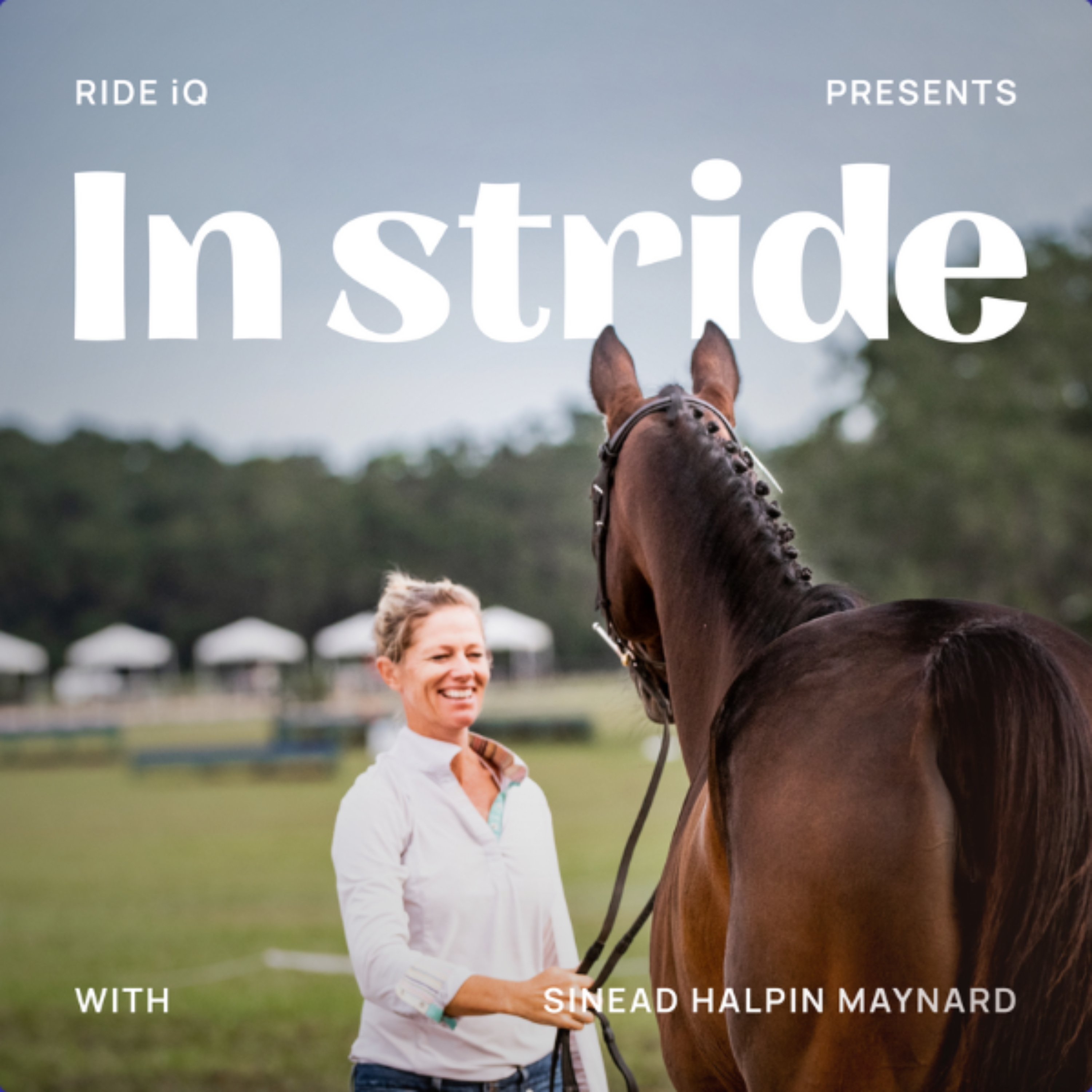
In this podcast interview, host Shaneid Halpin-Mainard welcomes John Kyle, an accomplished equestrian sports commentator currently at the Winter Olympics, where he coordinates over 30 commentators across 16 sports. John shares insights from his career, emphasizing the importance of authenticity in commentary—finding one's own voice rather than mimicking others. He discusses the balance between thorough research and delivery, noting that effective commentary involves pacing, pauses, and making content accessible to diverse audiences. John also highlights the evolution of the broadcasting industry, pointing out various entry opportunities such as sideline reporting, analysis, and production roles, especially with the growth of digital platforms like Clip My Horse. He encourages aspiring commentators to gain experience through volunteering and smaller events, underscoring that seasoned professionals are actively seeking successors to expand quality coverage in equestrian sports.
(soft music) - Hello and welcome to the Instride Podcast. I'm your host, Shaneid Halpin-Mainard. Our next guest joins us from the Winter Olympics, and he isn't gracing the slopes, but helping over 30 commentators navigate 16 different sports in Italy. John Kyle comes to horse sports organically. His mother, father, and brother have all had Olympic level experiences, but from in the tack, but John beats them all with six Olympic gains. All behind the microphone. John's professionalism and humility shine through in this conversation. The spotlight being focused on the industry, past, present, and future. But listening closely, you hear the story of John carving out his own path through self-reflection, self-mastery, and showing up. There are many different ways to make an impact on sports and the people in them. John is who showed me the ropes of commentary and broadcasting over 10 years ago. I sat with him for like an hour, so at Kentucky as the color commentator. He made a huge impression as I watched him move seamlessly through a live opening. I went with the largest eventing broadcast in horse sports around the globe. He made it seem as easy and effortless as pouring his morning coffee. John, thank you for setting the bar so high and for being the voice of our sport. I probably wouldn't even be doing this podcast if it wasn't for my time with you. When I was sitting next to you in the booth, you made me feel comfortable behind the mic and inspired me to do my research and to combine knowledge with pace and cadence. I hope you guys enjoy this show. Please follow along if you like what you hear. Leave us a high rating or some comments. They mean so much to us here at INSTRIDE. Follow along with our sponsors, check them out. The more you follow along, the more you like. The more we can bring you these awesome podcasts. Thanks again for the time that you choose to spend with us here at INSTRIDE. All right, everyone. I am super pumped to welcome my good friend, John Kyle, to the show, sports commentator extraordinaire. He is currently joining us from Italy, which is bananas. And I want to hear everything about it. How are you, John? I'm really good tonight. Great to talk to you. Well, tell us what you're doing because when I reached out a couple of weeks ago, you were like, yeah, well, I'm heading to the winter Olympics and I'm doing these things, but I probably have some time on Monday. And I'm like, what? Like, are there horses there? What's happening? So tell us what's going on. Yeah, we're trying to get snow polo in. No. We-- this is my second winter Olympics. I obviously have since Rio, I've been working for the Olympics as their equestrian broadcast lead, which is a great privilege. And one of the great privileges of that is that they consider a question of sport where they want to have the commentators at the venue, which is great. But it means that I arrive. I get my briefing in-- I'm currently sitting in the International Broadcast Center, which is this huge convention center full of TV studios and production suites and stuff. Like, one entire floor is taken up by NBC Universal, as you can imagine. So I don't kind of get to see this. And the thing I really miss out on is sitting with the commentators from other sports. And when I went to the Paralympic, St. Tokyo, we called the equestrian from the IBC. And I got to know some of them. And I was like, this is fascinating. This is-- I know nothing about technical. I can't fix anything, but it kind of fascinates me. I'm an early adopter of tech, and then it always lets me down. Whereas my wife is a Luddite, and she's like, yeah, yeah, I told you not to do that. You should have just used a pencil. I was like, but I wanted to use my electric take open. So I volunteered to come to the Winter Olympics. The boss was a little bit concerned that I was trying to get a Winter Olympics commentary gig through the back door. But he invited me to Beijing. And I ended up as a coordinating producer for all of the commentators, which meant that I was dealing on a daily basis with then just under 30 here in Milan. It's 35 commentators across all 16 winter sports, which is interesting because I'm finding out all that. But mostly it's just the conversations in the room, as Lin Manuel Miranda says, the room where it happens. When those guys are like sitting, doing nothing their research is done, they're just kind of chilling. We just talk about the business and the mechanics of commentary, which is just so fascinating to hear. How much is the same and what's different? What have been some of the standout things that you feel like you didn't know or kind of a light bulb moment or-- I think we're probably-- as an industry, we're all very self-taught. And there's very little these days feedback from directors or producers. One is because they're a little bit too busy. They're doing many more jobs than they did 20, 25 years ago, creating the Bob Costasers of this world as they might have done in the past. So you don't really learn except for reflecting yourself and thinking about it or maybe watching other broadcasters. And a lot of us also-- it's one person will express something and you go, yes, that, that, that. So actually, it's really about realizing that we're all self-taught and that what works. And about finding your own voice, we were dinner last night, a couple of us, and we were just talking about that moment. I'm working a little bit with Clip My Horse and on starting some new commentators. And we got flagged up a guy in South Africa that somebody said he's really good. We gave him a job from a class in Abu Dhabi, and he did a really good job. Yeah. But there were moments when you could hear the commentator he will be. When he just relaxed, he's a really high level trainer, good rider, he knows the people, he knows the sport, he knows breeding. And when he just let that carry him, and he relaxed, if you heard a whole broadcast of the quality of those few seconds, I'd be out of a job. [LAUGHS] What is-- when you talk about you find your voice, was there a time in your career where you found yours? And how would you kind of describe your voice, like what your authentic-- I think-- So one of the nicest things I ever heard was, I think it was after Tokyo, was-- I was watching the Olympics, and then when I watched the equestrian, I was watching the equestrian with my friend John. And I mean, I don't think I come across this that maybe the most approachable. I think I'm quite authoritative and blah, blah, blah, and booming voice. But I do think that I don't take myself terribly seriously if I screw up, I'll own it on air, and I think that little bit of weakness that chink in the armor. And I do like it to be-- we had a radio presenter in Great Britain called Terry Wogan. He had the biggest morning show. And he always described it as he was talking to one person at a time, like he wasn't addressing this huge audience. He was just trying to create a conversation and a relationship with a single imaginary person. And hopefully that was everybody. And that kind of rattles around in my brain a little bit. But yeah, I think one of the things as well is finding the authentic you because we all start being the person who's at the top of our maybe industry at the time and going, well, I want to sound like them. I want to ape their mannerisms there. Their turns of phrase. And then again, one of the commentators was that with dinner last night. He did get a little bit of a producer, walked past him and said, don't be scared of your own talent. And he thought to himself because he'd actually-- he'd come into the sport a little later, or at the industry a little later, he'd been a drama teacher. His vocabulary was enormous. His way of turning a phrase, his ability to bring maybe like Shakespeare or something in accessible, but just lift it. And he was like, yeah, I'm working alongside soccer commentators who have just lived with Breathe Soccer their entire life. I can bring something different. But I didn't want to stand out. And actually standing out has made him. He's now done over 100 different sports. And this is his umpteenth Olympic Games, just from finding his authentic self. But such cool and good advice. I mean, I remember I've been fortunate enough to sit next to you for like 10 years, we're old now, maybe more. But I so remember the first time sitting in with you. And we were just kind of shooting the shit, like chatting, blah, blah, blah. And then they were in our ear and kind of were like, OK, two minutes to show time. And I start sweating, right? I'm like, I don't know what to do. And you're still like having a coffee, blah, blah, blah. And then it's 10 seconds to the countdown. And you do your John Kyle little shuffle, where you know, you like make sure your jacket's straight. And you kind of move around and you shuffle your papers a little bit. And then you were just like, go. You just went and you weren't reading anything. You were just watching what was playing in front of you, calling it like, I mean, my jaw was on the floor. I was like, this person is incredible. And and you were just, it was just amazing for me to see that because watching it, you know, it's kind of like watching a good rider. You don't really appreciate it until you see somebody. It's not very good at it. And then that stands out so blatantly. But when you see something done well, you just expect that's the norm. And when you hear your commentary, you don't really notice it as much because it's just so seamless and flawless. And it's so professional. But when you're kind of next to you and you, and you've got the head set on and you realize like, what if I had to say something like that? Like I would just never speak again. It's, it's incredible. But I think you said that to me last year, the year before, when for the first time, I was going to be in an anchor position and I was freaking out. And this was nine years after sitting next to you for like a long, long time. Like I should have a clue. And I just thought I'm never going to be able to sound like JK. And you said, you're great. You're fine. Just go be you. You'll, you'll be good. And I was like desperate for you to give me some more information about exactly how to do this. You were like, just be cool. Like I don't know what that means. Be cool. But you know, I know. I'm like, ah, but you wrote something or you said something in an interview that said, that really stood out to me. And it said, or you said, combining research and knowledge with pace and cadence is more difficult than people think. Can you speak to that part of it? Gosh. I know it sounded really good. That's good quote from you. So research is, it's a never ending hole. And then it's about knowing how much to use knowledge is, but because also like if you're doing an Olympic Games, there's going to be an athlete from Latvia or a stone year or something. And then there's Boyd Martin. And we know everything there is to say about Boyd Martin. But you have to sort of make the Latvians feel that they're not second class citizens. So you can't use every single thing you know about Boyd. You've got to go, okay, well, this is kind of how much I know that's, you know, the French announces in Paris wanted to be really excited about the breeders, which are not listed on the Olympic start list. And I said, okay, do you know the breeder of every single horse at this Olympic Games? Well, no, we just want to do the French ones. Like, that is not allowed. So again, with research, you want to keep people interested, you want to keep them engaged. And you want to give them somebody to root for. As you said, we're talking this morning in a seminar. There was a track and field event at the Paris Olympic Games where they split gold. That was the narrative. I think it was the high jump. You know, people were a little bit more into wider sports than we are with a focus on the ponies. They remember the moment. They probably even remember the names, the two countries. Probably nobody remembers the height that they jumped because that's kind of a fact and it's a stat. It's not emotional. French then is really interesting because here at the Games, we've got a lot of lead commentators who are working with excellent experts and they're all cute to get the best out of those experts. And they have done research. What kind of makes our sport a little different and the way people like me have been developed in the sport is we do know something about equestrian sports. So we can again, like a good lawyer, we can ask questions that we definitely know the answer to or should. But that's a little bit different to a lot of sports and it's a little bit different to how, for instance, a big broadcaster like NBC will do it. NBC will have a Kenny Reiss or somebody working with Melanie and they come from racing so they kind of can speak horse, but the nuance maybe that I've got locked away here, you know, that it was 15 for a flag last year. It's nine for flag this year. I think we're quite lucky as a sport that we have accepted that model and adopted that model. It's great for me because I don't know about anything else, but you might say you don't need to know about anything else. You just get a very good expert and you get used to working with them. The pace and cadence is also quite interesting in a whole, you know, you could try and look at this and you could try and map it out and think, you know, write the formula for all this. But of course, it's just, it's real gut instinct. But it's about pacing and leaving a pause. Like I sometimes say to people, if you said something really clever, take a pause so people can go, oh, that was really clever because you've rattled on to the next thing. It's also maybe interesting, although they haven't noticed that you said something clever and actually it could totally revolutionize their enjoyment of the sport. It might just be one of those killer hooks that makes them go, oh, now I understand flying changes because you've just got the words right that day. The other thing then from the broadcast side of it all is these days of social media people are trying to make the little snippets, the tech talks. So talking in a way that allows people to clearly come in and out and just clip Hannah Sue at the rail ditch rail combination for a thing, for her sponsor, you know, that works really well. And it gets you a good reputation with production teams and you know, they go, oh, he's a joy to work with not because, you know, he turns up on time and he buys everyone biscuits and coffee because he should and does, but because actually professionally we can, you know, work with his work. You know, sometimes it does feel a little bit, I guess maybe talk a little bit about how the industry is growing and evolving because there's only so many top seats. There's only so many anchor roles or lead roles and then and only so many events. So when people are trying to get experience on the way up, like how do you see that pipeline working? And also what are some different jobs within the industry that people could think about getting involved with to kind of get a side door. A number of very, very good questions. The first thing is I think a lot of us comes from the live announced. It makes our early years in broadcast quite difficult because we really shout at where you have that real, an answer style. But again, when you find your voice, when you relax and stop assaulting with your voice, your listeners, it's certainly, you know, it's where you will find out if you enjoy it, if you can do it, if people like what they hear. And you know, you can test and adjust some ideas you have about how you might like to do it. And one of the things I suppose when I was younger and I was starting was an answering in the UK and Ireland was moving from quite an old fashioned formal to a little bit more of a broadcast narrative style. So that's it. That's a very good first place around the TV trucks. The places are the sideline reporter, actually on camera. You know, if you've ridden to a decent level, you know, you could offer to come in as an analyst and, you know, we spoke last year in O'Cala to a couple of riders and I've had riders in with me at Kentucky before, you know, there's actually quite big benefits to that. Like I mean, if you are, you know, sponsored by a particular feed brand, you know, without absolutely rounding it home, you can go, oh, you look, I know a lot about Lauren's program because we actually feed the same and blah, blah, blah, blah, blah. And she was doing this. And so you can gently support one of your sponsors while it's actually also saying that, oh, well, Lauren had done this and that and the other with her feed over the winter and it's really turned around this horse. You know, so the opportunities, the payback is quite good. So in terms of decent level ethics, I would say, you know, it's something to think about. I know there's so many calls as like you've got Rob Burke as well. Well, you should also volunteer and yes, we all should and give something back to the sport. Annie Bishop has done a very good job as well. I mean, she's a super fan and she's kind of ended up in our world because we need people like Annie. And one of the big things is like in larger productions or where a TV company are kind of doing cross country for the first time, somebody to sit alongside the director whilst it's happening and also before it's happening to help with the planning and explain things. Could some of these things that feel so obvious to us comes a complete mystery to them? We can roughly predict that when somebody's at Fence 8, the next person's going to be at Fence 17, how can you do that? It's like, well, because we've got minute markets, we've got, you know, and people, you know, traditionally here at Moorvin or wherever they're going to, you know, make near the time. So this is the rhythm. So you can kind of help them with the camera planning and calling the camera. So the coverage looks at a horse in action as often as possible. And that's something you don't need to have stage fright about at all because you can get into the industry. You can be really supportive to promoting a question in sport and making it better. Without having to get your face on camera or talk into a microphone. The opportunities, as you say, particularly in eventing are frustrating, you see, more. Eventing broadcast is something that, you know, as an industry, it's expensive and we need to find ways to get more of it. I mean, I think I don't think I'm speaking out of turn when I say even like the whole US open series is not all televised, which is a huge shame, because it'd be great to follow that narrative in that way as well as through their podcast and microsite. You know, we only have seven five stars. But if you take the opportunity with five star show jumping, for instance, we've got 125 star shows or something this year. There's more than two a weekend. And not all of them are, you know, they're not all global champions. They're not all FEI TV. There are opportunities, as I say, I gave the South African commentator an opportunity to force star show where in Clip My Horse, we tend to just do the Grand Prix. With English commentary, we know that there are competitors that are premium subscribers are likely to tune in and watch. So there are places out there if you've got a little bit of mileage then from the other things I described. And you can present a little bit of a show reel or we've seen you somewhere on a broadcast off Clip My Horse, for instance, or whoever else. As a community, we top commentators out looking for our replacements. Absolutely. You know, and the work is there. And it's kind of, you spoke to it how there's been a bit of an evolution from like, like calling on the field like on sites to a more traditional way of calling to more of a broadcasting style. And when you think about it, like the person that's the broadcaster, like, are they like a fan, a critic, a judge, a reporter, you know, like what are a combination of all of those? And I even, you know, when you think about it too, knowing you guys well, there is a certain bit of acting to it as well. There's a certain persona and a voice and a way that you're casual and approachable in some parts and then in some parts of it, it's the action and it's bringing the drama to it. So you kind of speak to the different layers involved in that. I think there's probably a few different personas as well. You know, there's probably also the very buttoned up person who does the metal ceremony, you know, at a games as well, you know, the introduction at the beginning is quite friendly but it's quite formal. But yeah, I'm interested in your question about who we are. And I suppose where we're a fan, when we have a friend with us to get that friend to help us enjoy it even more. But we know some stuff. We're already in there and we've got some guys we're going to root for and we're going to tell you their story. But we want our analysts then to help us, you know, to help really amplify and focus that those narratives and then, you know, to have those moments where, you know, somebody jumps down into the sunken road, they slip the reins right to the buckle and then the horse buckles, the front legs and you're both just there. And there actually is in our booth in Kentucky, a camera and how Shane and I have never been, you know, how it hasn't come back on replay later. But basically we are, spend most of our day, you know, just like flailing backwards away from the screen going, what the, whoa. But you know, again, you're hoping that the people at home on their sit here are also going, what the, whoa. So, you know, it's best that we join them rather than just going, well, a little bit of a moment there for which happens to, I mean, I've said, I think it actually would be really funny to have some clips of when we actually are like shocked about something but have to kind of be quiet and we're doing like all these gestures back against the wall in total silence. It is, I mean, it's fun. Well, and that's what I was going to ask you to like for you and maybe it's a combination of both, but is it horses or is it sport? Like what is it that gets you? It's not sport. It's not. So, you know, here I'm with huge sports fans every day. I'm being asked, you know, oh, you're Irish. Are you getting ready to sport six nations rugby? No. I'm aware every weekend. We just canceled our like cable subscription, having not watched it in like three years. My wife, Pippa, has turned on the television twice in the last week, which is like more than the last year because I've been away. So she's just like, oh, I'm not out tonight. Well, maybe I'll try this box thing in the corner. And so we don't watch TV. I don't watch sports. I was the least sporting child ever at school. Anything, especially between me and a ball, like a racket or a horn or a, I have no hand eye coordination. So no, it is absolutely not sport. Except for the narrative, the story, the excitement, the journey. And if I was into other sports, I would follow that the same way. But, you know, from that perspective, yes, wear a question and sports, then diagrams cross in that whole emotional connection. Yes, I mean, I follow the sport. I'm a fan of the sport. My Facebook scrolling every day is full of horse people and horse news because I am interested to do it. I follow it, not because I have to do this. It's my job. I ran away from horses. You know, I'm still not sure I've totally closed this loop and really come to it, but I, you know, I really feel bad because so many people want the opportunities in the sport to ride, to have my brother's cast off junior and young rider horse and La La La, his cast off ponies before that. Like, they were perfectly prepared. I was successful, but only off the back of other people. But I didn't enjoy it because I was the second child. It wasn't my thing. Turns out I didn't have anything else either. I wasn't like, I want to go and go sailing. It's like, no, I just want to sit and watch TV. You know, and I went away from it. And I know so many people in the world would have begged for that upbringing and that opportunity in the sport and, you know, that's that thing. But I'm, you know, but to stop you there, like, I actually, in thinking about you and thinking about the career, I thought how wonderful that you chose a different way to be involved that fits you so perfectly where I think there's a lot of people that actually end up going, there's only one way to be involved in this game and they feel bitterly and they're not happy doing it. And they don't admit that, but they stay stuck and end up not reaching a different way to be involved. So, but I do want to like back up there and talk a little bit about your upbringing with horses because some people might not know that you're not actually British. Yeah. It's not here. My Irish passport is somewhere in the office, but yeah, I think Shaneid might be aware that if I've had a few beers, I'd become more Irish by then. So, does it everybody? Yeah. Yeah. So, I grew up just south of Dublin, went to, went to school in Dublin and then college in Glasgow in Scotland. Well, they'll speak like that. You know, so God knows where I end up. And so, why the accident is like this except that it's very successful for broadcast. So, it's worth doubling down on it because it brings in the dollar dollar. So, when, but your family, like your family was real horsey, but in a pretty traditional way, right? But your mom also is a TD. Yeah. Mom's a TD. She did the North American young rider's a couple of times. She's been out to, to go away for Robert, a few other places, done a couple of European championships and that. Mom, so our whole Olympic thing is mom should have gone to 19 A'sy, but we boycotted it. Dad should have gone to Seoul in '88. Dad was more of a show jumper. You became an event later in life. Both had show jump, but mom really focused on the eventing. Mark then, my older brother got to go to the Athens Olympics and then the London and Rio Olympics where I called him at both those games. Oh, wow. I didn't realize that. That's amazing. It's in proud parents. Yeah. So, I think maybe it was the Rio Olympics. No, that was cool. Somewhere he rode a home bread horse as well. So, that was, that was doubly exciting. Yeah. So, they all do the riding thing. And when did the path become kind of a commentary path? So, when I was in secondary school, so pre-college, I went into school in South County Dublin. Essentially, there were 150 people in my year at school. Probably 50% of them would have gone to Trinity College Dublin and the other 50% would have gone to University College Dublin. So, if I went to college at either of those places, which were kind of the obvious places, I would have gone with a lot of people I already knew from school and I would have lived at home. And that wasn't the experience I kind of wanted from college. So, I had my eyes set on going to the UK and I, you sort of get to choose six. I visited those six places or I think maybe a couple more that I shortlisted and then I did my college application and I got into Glasgow, which was my number one choice when I visited because it was very like Dublin. It was fun. It was vibrant. I really liked the university. And so, that also meant one slightly focusing on exams. I was relatively lucky with exams and stuff at school, so I didn't have to work super hard. As I hope is coming across, I'm inherently lazy. I just happened to be brilliantly smart, so I don't have to study for my test. That's what I'm hearing. Well, okay, well that was not the point I was trying to make. But it came at a point where I finally worn out the next cast off horse and it was like, it would almost come to the point where my parents would have had to buy a horse for me. But, and I was like 18 months, two years left in school, important exams, and I certainly wasn't going to be ever able to afford to take a horse to Glasgow or to be able to ride at Glasgow when I was there. So, I just kind of said, you know, that's it. That's the end of riding for me. I'm going to do school. I'm going to go to college by the last. So, at the time we had these really great three day events in Ireland, Punches, Tann, Kahn, Blarney, all of which have gone. And I got a job because I still wanted to go to them because they were the best parties going. And Mum organised me a job helping out in the commentary box. So with control. So the controller is helping just liaise between like ambulances, vets, fence stewards, crossing point guards, the organisation of the event, all those aspects. And one of the parts of it is just keeping absolute track of where the horses are in the course. So I was sitting with a walkie talking on my head, listening and moving the representative blocks of the horses for the commentators. I'd done that a few events and then I was at Blarney Castle. The landowner, the same two commentators had done the whole day and they had both gone out for a break just before the final class, which is going to be the international ponies. The landowner came in and said, oh, there's a lot of rubbish on the grounds. Can we make an announcement just about rubbish? Everyone in the commentary box from the controller down said, you're the noisy one. You make the announcement. And the commentators heard it as they came back from the restroom and said, that sounded pretty good and we're pretty tired. You can do second chair for this next class. It was like eight ponies at the end of the day doing cross country. And that was my first time. And one of them, it was largest Stuart Delves and Tomba Steed. Tom still commentates and Tom and I do the Monarchs sail together each year. So that particular weekend, it becomes Tomba Steed is both the first and the most recent commentator I've worked with. That's wild. That's amazing. Trash talking ponies. I like it. What is your favorite, like, I don't even want to say competition, but your favorite kind of way to be involved in the commentary because you're kind of like a chameleon. You can step in and produce. You can be the anchor. You can go and do awards. You can run a sail. You know, like, where do you find most of your kind of, when you get real good energy, what do you like about each part? In particular, what I like about what I've been able to generate for myself is the fact that I can look down the barrel of eight or ten weeks work and maybe each week is a little different. So you may be announcing the arena show jump. You're announcing, preventing broadcasting, broadcasting, broadcasting, but broadcasting dressage, broadcasting show jumping, broadcasting, preventing. So I think if I had to face down a calendar where I was just going to go and announce show jumping every week for two or three months, I'd be like, "Oh, no. This is mentally hard. This is not fun." So I think the variety is really nice for me as I've been able to turn this into a real job. Just when it goes great, the London 2012 Olympic Cross Country where I was the live announcement. Like myself and Jars Rysel did it. We did the whole day. We just locked into our tracks and just went and it was a great day, a great call. I was, you know, my first Olympic announcing as well. So it was like it had the opportunity to go dreadfully wrong. So, but, you know, a lot of great people around me supported me. You know, I've called the Nations Cup, the Agacan in Dublin live and that's incredible. I think a little bit what I'm getting to and I'm reminded of a colleague in Germany, Kai Vornica. We were at a, not a small show. We were at Ludgerbyer Bams doing the global champions tour, but it was 8 a.m. in the morning. We're doing a two-star class and Kai is announcing very nicely and I'm following a long in English. And then every school child in a five-mile radius was deposited into the show ground and made to sit in the stands and Kai suddenly had an audience and he changed. He just went up two gears and he didn't mind that they knew nothing about what was going on. He had people to talk to and, you know, sometimes when we're maybe commentating remote or you have to try and build that buzz for yourself. And I, I try and stay really even, you know. So if the audience are there, like, I mean, I'll feel it if the audience is like incredible and like if the, if a seven-horse jump off just gets starts fast and then just gets crazy, faster, faster, faster, you know, and all stars in it. Like I remember what in Santa Payne was just incredible with Mal and Barry and Johnson. But it was so interesting watching Kai just step up those two gears because he had people to physically speak to. So yeah, I mean, I think anything where you can just get the reaction and I think even on TV, I can just, I know from the way the pictures have gone, the way the sport has developed, especially with eventing where we're getting, you know, the reverse order on the final day, you can just tell when the people should be enjoying it. So that, you know, even though you can't hear them go, "Oh, that was, yeah!" Like, but again, we're sitting in Rolex Stadium as well. So we're getting that from, from our crowd right there. Like, I mean, well, they enjoyed what he did. So hopefully, you know, the guys at home did. So hopefully we've done a good job of, you know, conveying it. Where do you think, like, the responsibility lies with a broadcaster looking forward, you know, with, with eventing in particular where the sports headed, which is hopefully the right direction, the voice of the sport is really important and how, what you say and how you say it to that one person that has never listened before that is about to become a fan or never watch again. You know, how do you conquer or think about that part of the job? Yeah. There's a couple of aspects of that. The first is, I think we have to be super careful of language. Like, as I say, growing up with horses, you know, I know what nervous and frightened means to us. And it's not bad, you know, because we just, "Oh, he's just, you know, he, oh, that frightened him or something." But if you come into a sport, you go, "Oh, they're setting up a scenario where they're frightening their horses." Like, that doesn't seem good to me. I'm not comfortable with that. We have to be so conscious of, in Europe in the 1950s, so many farms were still being worked by horses. The connection to horses was really direct for almost everyone. You know, heavy deliveries in cities, maybe still in Ireland in the 50s, you know, the Guinness was being delivered to pubs by horse-drawn cars. People saw horses. It's amazing now to have people who have no connection to horses are terrified of them, because they're big animals that could lash out. They're dangerous. So we have to really try and convey the beauty and the incredible nature of horses, how spectacular our sport is, and how acceptable they should find our sport. And we have to be so careful of portrayal, of language, to make sure that people think that what we are doing with horses is okay. And there's a little bit of, we need to be on the front foot about saying why stuff is okay that might appear, you know, to somebody who just walks past going, "Oh, it's like, no, no, no, like, you know, I carry a whip because, you know, when a horse starts backing up and falling off the bridal, a couple of strides from the fence, I just need that little bit of extra aid because otherwise the two of us are going to be in a lot of pain, you know, but we need to understand, and, you know, Lucinda said very good things like, you know, we should stop calling it a whip, because that has a bad connotation, you know, so it's so much to think about, and it's so much that we take for granted. And the other thing then is about taking for granted the information. It's about reminding ourselves what we do need to explain to people who just come past so that they can feel that they're involved in it. Mark Phillips, a few years ago in his horse and hand column, was talking about, "Oh, it takes X,000 litres over an acre of ground to replicate one inch of rain." And I was like, "That's really interesting, Mark." Blah, blah, blah. It goes, "Oh, doesn't everyone know that?" It's like, "No, Mark, no." But again, I spent a little bit of time serving in the army very badly, and so I know about shooting, but a few years ago, one of these Winter Olympics, a journalist wrote about reviewing the broadcast and the games and, you know, from one of those points of view of, "I know nothing about the Winter Olympics. I watched it. Here's what I thought." Seeing that journalist picked up on was a commentator who just that one time talked about in the byathlon where they cross-country ski and then shoot that they lay there and they try and control and balance their breathing and their heart rate to get the most accuracy shooting. That's day one of shooting training in the army, and I'm sure it probably is in the byathlon federation as well. And that commentator might have not said that in five years on a broadcast, we said it that one day and it booked that journalist and that journalist became absolutely fascinated by the shooting for that and kind of hinged his whole article around that comment. You know, a girl here, she's a gold medalist, Canadian gold tender for mysocki, and she's like, "Oh, you know, I'm talking about the play, but what else can I talk about?" And I said, "I was watching a thing about the speed skaters where the skates, the blades actually are only hinged at the front, they detach at the back." And she's, "Oh yeah, well, my gold tender skates are different to the other skates because we have to go up and down from our knees all the time." So, and I was like, "Say that." She goes, "It would never have occurred to me to talk about my skates because I've been strapping them on since I was seven." Yeah, yeah. It's so interesting. I remember being at the US open and talking to Paul Kosooth, who's just retiring now, but the director of USET Network. And I was just talking about the Saturday morning vibes and the barn and how nervous everybody is and had been talking to some of the top competitors. And he was like, "But everybody looks so relaxed." I'm like, "What?" No, this is, you know, these are top athletes. They're doing this. He's like, "Well, what are they nervous about?" You know, it was this conversation and he goes, "Do you think they'd be willing to talk about that?" Yeah, to a point. But it's exactly what you're saying. It's things that you just don't think are fascinating because it's so the norm that if we can pull things like that out so that people watching can hang on to that idea or that concept, there's no something new. I always think that's fun too because I like that. If I learned something new about a sport, I have no idea about one little tidbit. I'm writing it down and repeating it to all my friends. Like, "Did you know?" Which is really, really cool. If you had an unlimited budget and a crew, that would take the lead from you. But what would you do with a production to really send it to the next level, to get more people behind it, more people involved, more people invested? Like, how could you shift things to that next level that you think would kind of take courses or a question or a venting, even more mainstream? Caring for your horse should feel organized, not overwhelming. And that's exactly why we created Equal Health App. From your daily training sessions and health records to appointments and long-term goals, Equal Health App keeps everything in one easy place. No more scattered notes or forgotten details, just a clear picture of your horse's care and performance, so you can spend less time tracking down bits of information and more time doing what you love the most. Enjoying your horse. Please visit us at www.equalhealth.net or search the App Store for Equal Health App. The In-Your-Pocket, Digital Equine, Health and Performance Companion. If you're a rider with a lot going on and a bit of a nerdy side, then listen up. RideIQ brings a coach to your arena or field whenever it works for you. RideIQ is a mobile app with on-demand audio lessons taught by top trainers, including the host of the show, Shaneid Main Art. With RideIQ, you can choose a lesson, put your earbuds in, and you'll have step-by-step guidance and insight with you throughout the ride. After experiencing schooling rides with RideIQ, you won't want to go back to riding on your own. And if you can't get enough audio, RideIQ has tons of exclusive podcasts episodes to keep you learning and entertained on the go as well. Try RideIQ for free by signing up at ride-iq.com. That's ride-iq.com. Now back to the show. It kind of is budget, but it's people. We've had an Olympic Games, for instance, we get in comparison to Kentucky Babin to North Barely, you get a pretty much unlimited budget. The number of cameras, the options director has to play with are second to none. And really very little cost, say. So if you think, oh, up at the My Sustainability Water, wouldn't it be great if the camera platform could be that little bit higher so we can see genuinely over the top of people's heads and see the last element really clearly. And that comes down to, if we do that, we maybe don't even have a camera platform somewhere else. And we're working within a very good budget at Kentucky, but it is a budget. But I think we've all maybe watched moments of Olympic Games at some stage and thought, oh, wow, I can't believe we didn't get to see X. And it's the people. I think you can spend a lot of money and what we really need is also to have developed people who can really offer the best, like cameraman who really understand. And we have had the time to brief them that this, you know, all the routes through this fence, you know, this could end up with them going that way, blah, blah. So they don't get wrong footed, you know, directors who just really understand the sport, the producers who really understand the sport and make sure that they know every possible route. They know exactly how to rehearse their cameras to make sure that we have a horse in action on our screen as much as possible because, you know, the frustration of cutting away in the middle of a combination or joining somebody in the middle of a combination, you know, it's no trade secret. But, you know, over with us, Baban, to the early, a lot of it comes out of a replay machine. So if somebody's at the Trighthatchery and somebody's at Defender Valley will record Defender Valley, play the Trighthatchery live. And then because they're now galloping around the back up towards the Malttings, then we'll play in Defender Valley. So it's a few seconds later. I think it was, was it, Benny Sturgis knows Daisy Barkley was with me at Babanton one time and she'd been doing radio Babanton. It says she was watching the same feed as me and she goes, it's incredible how quick they get from the lake to Huntsman's and I was like, Daisy, you've walked the course and you've ridden here, right? You know, it's like, it's 90 seconds. It's just, yeah, I mean, it just happens like that. It's like TV magic. It's live TV, baby. TV magic. So yeah, I think as much as anything, it's a self-licking lollipop or chicken and egg situation. The bigger we became, the more, you know, if we became like soccer in Europe or Formula One worldwide or American football or baseball and the commercial money was there, television would get better because people would choose a question television as a career or it would become more specialist or, you know, our people who are very good at it now would be doing even more so it would become second nature. They would relax into their seat and find their voice. So it is that circular thing of the better we can make what we have at the moment and attract some blue chip sponsors and a few eyeballs, it will cascade it. It just naturally happens, but it's getting the ball rolling downhill, you know, at the moment we feel like we're pushing up. Yeah. When you're, I want to go back to what you're doing now because for somebody who's not, you're not into sports. You're there at the Winter Olympics, you know, organizing 35 commentators of different sports. Focus through like your day there, like how that works. So we've come out, they've just started arriving. We've been out here a few days getting ready for them and it's just basically putting together support for them. So there's two levels of support they've got there on air support which are there. They're not really producers because here at the Olympics you're left quite independent, but we've got what we call commentary monitors and they will talk you in particular onto air. So your first five minutes and your last two minutes, so fair. And then anytime you need to pause in the middle, which like, you know, in a quarter in a hockey game or for us, you know, a coffee break in dresser. Then there's my team which is production coordination. So we've got a team that logistically gets them to Italy. Then they're handed over to the team I work with and we have people like me who are based here in the center and we also have a couple of people who support the venues and the venue team have been super busy in the days. We've been coming out here. They've been going to the venues. They've been working at the exact transport from the commentators hotel to the venue and maybe the days they need to go one venue to another, some of the ice hockey commentators need to do that. Writing all that up, testing the route to the commentary position for those guys. So those guys, you know, it's not baby, but it's literally so that they can go and just focus on delivering the best possible Olympic commentary because everything else, Bob, Bob, Bob. Same here, we've been, you know, making sure, oh, we found this research asset for you. We found this. This is the thing you need to log in to find all the biographies. La, la, la, you know, we're putting together emails and briefing packs so that they can arrive, you know, some, some, for instance, ski mountaineering is a brandy sport. It's towards the end of the games. It's about 20th of February. So that commentator won't come here for a while. But she's already included in all our emails. She's been emailing with me. She's gotten on to the portal for biographies and research and stuff so she can feel part in the games. And then the big thing is then just supporting them when they're on air and there's two big, big things for me. The first is that when they come into the room each morning or whenever they start their shift for their sport, hello, how are you? Just, you know, that check in. And the other one is, you know, we've kind of all maybe had it a little bit even when you're at the venue and a lot of our guys are calling it from, from these booths. So they're trying to pick up the atmosphere. But they will because they're, you know, they're the best and they're going to call like, you know, a 10K mass start cross country skiing race and somebody's going to win a gold medal and they'll learn, you know, they've called history in a little black box in the land and then they'll walk out through that door and then back into our office where this commentator's waiting to go on, we're there doing our emails and stuff and I'm like, our policy is one, we listen a little bit, you know, to make sure. But, you know, when somebody walks back in having just called Olympic history, you go, how is that? Tell me about it. Blah, blah, blah. Try and join them in the enthusiasm because there's nothing worse than like building yourself up. And like, if you have to do it in a little black box, you've worked quite hard to do it. It's been part of history and that your voice might be on that for the, you know, however long if that's a really, you know, exciting games moment that echoes down the years and then walk back into a room where everyone's just like, well, cross country, what? They were at a coffee. Like what? You left three hours ago to get coffee, where have you been? It's like, what? Just, you know, watching history. That is, that is really, really cool. So are there things that you're taking from the Winter Olympics? Like you've worked at four different Olympic games. Like talk about that trajectory because that's quite right for London Rio. Four summers. Four summers. Yeah, yeah. Four summers. Sorry. Summer Olympics are the only ones. There's a, there's a summer sport process. So, you know, so busted right there. Winter. Like that other Olympic games. So what are we six? Six Olympics. Yeah. Because you've done two winters for summers. See, I know. I just like to make sure you're listening to me, John. The one rule, don't say things out loud that you don't know in commentary, that you aren't 100% sure of. What have you taken throughout your different Olympic experiences to kind of impact to, like, I don't want to say normal sport, but like, you know, you're, you're show jumping, the Kentucky badminton early. Like, what have you taken from the Olympics back? I hope I'm getting better at it. I know I have a lot more work to do, but my Olympic commentary, one, it's, it's definitely that's best on day one because I'm so conscious of the new audience. And by day 17 of Olympic games, I'm probably doing exactly the same as I do on a normal a question broadcast. And I know I need to get better at remembering that there could be a new audience every day. Like, people might just come for the jumping individual final on the final day. And it's the only a question they watch. So I have to be very conscious of trying to be inclusive and informative right the way through the games. Then knowing that that's a fault of mine, I turn around and talk to my commentators about that when we're riffing and thinking about how we could all be better. The other thing is I have taken more and more of the simplifications. If that's the right word backwards with me back into the sport where 375 meters a minute show jumping pace in five star show jumping. It's meaningless to us in metric over here in Europe. It's totally meaningless in the United States of America. It's 14 miles an hour now, you know, and then here's the spiel. You know, that doesn't sound super fast if you were in your car, but, you know, who has ever run a half marathon in an under one hour, you know, it is a decent pace. And putting maybe the heists of jumps in perspective like that. And again, I was making that exact point in my colleague here who's probably the me for volleyball. Yes, the volleyball net is 2.84 meters off the ground, which is the same high as the soccer crossbar. It was like, I have no idea what 2.8, but I do know what a soccer crossbar looks like. That has helped me. And just, you know, those little things. So again, hopefully, as you set network and clip my horse and FI TV are garnering a wider audience than just the super fans were being that little bit inclusive and bringing them with us on the journey and the story because they can start to understand and go, ah, okay, yeah, yeah. I even think that information when you know is super cool. Like, when like 375 meters per minute does mean something to me, but when you say 14 miles an hour, it means more to me, you know, like even when you know, you're like, oh, that's cool. And comparing things and feet with, you know, spreads and stuff like that is a. Again, like, when I, you know, if I've done the police on several times at Washington Horse Show for the venue, and I know that like, I'm going to get every dimension in meters and people in America don't speak meters. So, you know, I've got, you know, my phone, I googling, what is, you know, what is 2 meters 5 in feet and inches, you know, so I can tell the audience in something that they will, you know, work out. And again, you know, talking and these moments probably here, sticking my mind, you know, I'm always thinking about Mando de Plantis, this Swedish guy who constantly is breaking the pole vaulting world record. And I was like, yeah, Mando jumps higher, but, you know, he's not doing it 18 times in 500 meters. Right. Not a sport horse. Yeah. So, what is kind of your next thing? I mean, it feels like Olympic Games, World Championships, traveling all over the world, live in this glam life that you live, John. In the back of the play. In your little black box. But what is kind of looking forward in the next five years, what would be really exciting for you to get on your list? It doesn't even have to be commentary oriented. I could run a 10k. I would like to run a 10k again. The aim of these games when I go on to shift and start looking after the afternoon and evening guys is to get back in the gym and get on the bike until I'm, you know, light enough to not damage my knees when I do some running. So yeah, that needs to happen again. I don't know. I mean, I am very professionally fulfilled. As I say, there are very few mountains left to climb, which is a wonderful thing, but we shall see. Life is a way of throwing your carables. You know, you made a comment earlier, which was really interesting. And I have found it to be very true is that it is hard to get feedback, like even from the people on your team, you know, even from the, because like you said, they're very busy. So they're listening, checking in, making sure you're not doing anything stupid. They're not kind of listening for, you know, here's a little place that you can tweak something. So who, who gives you most of your feedback? Does Pipa get in and give you the truth? I mean, I think you've seen it. Like the texts come in on air is just like, you know, you know, he has one eight five stars, not seven. It's like, thank you, dear. And it's always that moment when you've, you've shot from the hip and hope for the best, you know, it's just like, I'm pretty sure that it's like, no, you are not sure. You are not right. Do you see that being something that, that will change as things get more progressive that they'll be more structured feedback or more? I mean, you've started it yourself with giving classes and, you know, I've attended a few and some of my friends have that, you know, you go in and do a three hour, two a day or three a day kind of these are the dues and these are the don'ts. Do you see that changing ever? Do you still think there will be a lot of responsibility on the people talking? The responsibility is going to remain one's own, but it's how you, how you do that. And I mean, I think potentially you and John Holling probably text each other a lot. If you're not working together at the same time and just go, you know, hey, Jean-Hail, I was listening to you blah, blah, blah. I thought maybe and vice versa. And that is what you need. You need somebody who's going to be, who's going to listen to you and is going to be honest and constructive. So when we say you're trying to sort yourself out, you're trying to build your own team of people who can maybe support you, what was as well listening. And then you're the filter because people will give you feedback at stages and you just go, thanks for your input, but that's, you know, or, you know, I tried that before. It didn't really work for me. It just sounded really false. I'm still, you know, playing about with stuff and I, we had this thing, there's a, there's a French writer and he rides in almost no bridal. He's got like a bit and a headpiece. And I was doing the live announcements in Dublin and Lala. And I just do this thing where I go and, oh, everybody of you know, blah, blah, I see in his bridal, I just heard myself and I just sounded like this sort of weird pony club dad or something and it was like, oh, I did not like that at all. That did not land. And no, let's never do that again. So yeah, a bit of a media self assessment, but yeah. Yeah, being authentic with yourself, but it's also, it's, it's tricky, right? Because I think you're, you're dead on. It's kind of creating a crew around you that you know, we'll tell you the truth with the best intentions because, because you don't want to give somebody feedback and it shuts them down, you know, in the chair, because that's the hardest thing. And it's probably the timing of that. So anyone that's texting in saying, hey, you're doing a terrible job right now. Maybe, maybe relax. Maybe don't do that right on air. But it is an interesting space to, you know, self assess, but I think you're right. I think you kind of know often afterwards where you made some mistakes and you try and clean it up or who to ask for a little bit. Because often I find sometimes the feedback is, you know, it's kind of from like your mom, she's like, you sound great. Okay. Give me some. Wow. I ended up in my mom are very different. Well, she probably, probably wasn't listening. She was probably playing golf or something. So she figured the safest thing to do is to say, great job. But all right. I'm going to move on to these questions that are all about you, John. Oh. Oh, so what is the biggest lesson horses or commentating on horses has taught you about yourself? I looked at these questions and I was really going to struggle and how to answer them. My connection to horses really is like mind clearing. I used to just love hacking. And I found it again in running where, you know, when you want to write that angry email and you just go out hacking, oh, no, go out hacking a horse and you can just, you know, you can compose it all in your head. And actually then by the time you get home, you don't need to write it anymore because you've kind of got a doubt. You're a system and you write, write a self to one. And the piece, I did a lot of the fitness work for my brother's horses. He was, he was in boarding school when he was a sort of junior and young writer. And I would be sent off trotting his horses around the, the roads near us up the mountains. You know, it was back in the days of steeple chasing roads and tracks. And yeah, I probably had to be shoved out of the door doing it to do it. But when I was on the horse up in the mountains, I, you know, I absolutely loved it. And just the, the peace and the clarity and the time to think. Do you find, you have like a, I don't know how to ask this question, like a different relationship with horses when you're calling a competition. And do you think about them separately? Like are you thinking about competition in sport separately than you think about horses? Yeah, I, I probably don't personify them as much when they're in action. I, you know, they're definitely more than, more than a hockey stick or something. They're not equipment. But, and I think that probably comes from my eventing background because in cross country in particular, the horses are mentally, they're just, they're simply machines. A really good cross country horse does not react like an animal. It reacts like a machine because it is just so focused. But, you know, a horse in a stable, like an horse on tack. They just, you know, sometimes they just look so dopey and different. They're like, hello. It's like, really? Did you just do that? Yeah. And it's like, have you got treats? And as I said to you as well, like, for me a little bit, the riders are the soccer team and, and the horses are the players. Because especially in show jumping, they move around, they get transferred, a lot of a lot of they'll be playing for another team in a couple of weeks or, or next year. And it's great to build up their personality and their narrative. But unfortunately in our sport, the kind of way it is and the time we have to present all these aspects, it's going to be really the rider in it. It's that's easier for the people outside the sport to hook onto. There we understand humans who are scared of horses. Whereas, you know, in in thoroughbred racing, the jockey, some jockeys are absolute superstars, but they're, they're drivers. That narrative is all about the horse, the breeding, its past form, which could have been with three to four different jockeys. So that's trainer and horse becomes the story there, which is quite different, I think, to the sport horse side. That's really interesting. I hadn't actually thought about it that way. Thanks, John. It was a new bit of information. Do you have a favorite training or competition mantra, you reference? And you could, you could use that as well as, you know, something you say to yourself before you get pumped up to go on. No. I, one of, one of the, one of the guys here apparently says he has over a studio computer. It's like, whatever is happening, remember, this is perfectly normal. He's just trying, trying, trying to channel his, his moment of zen. Yeah, it's, do you have to get yourself psyched up? Do you get nervous still or it like a good buzz? You have to. I don't massively psych myself up going back to fundamentally lazy, but I think if you are not going to sit in this box looking at the Olympic rings and about to turn on a red light and don't have some butterflies and the same, you know, if I was, I'm going, I'm going to do a national horse trials in England in April and, you know, before I turn on the microphone. I hope I feel something. Otherwise, it's time to stop. Yeah. Yeah. I agreed. It's kind of finding that right, that right energy. Yeah. Is there a piece of advice someone gave you along the way that you still reference today? I think there's probably lots of different ways, you know, early in my career, I've heard it and thought about it. I couldn't point to one specific, but, you know, some of the people I worked with and took advice from, you know, Mike Tucker, Hey, Michelin, Haw, Hughes, Dad and commentators at home in Ireland as well, but just relax and be yourself. You know, like we were talking about it at the very, very beginning. I think if in one of these creative industries or on stage industries, if that's not the distillation of the advice you've been given, you might be going down the wrong track, unless you are just so horizontal and chilled like the snowboard commentators. And, but I think coming at that from the other end of the telescope, like what I found a great honor was at the end of his career, Mike Tucker, I remember at Babmonton, he would come and we would talk about what do you think of the course? Now, Mike had designed World Championships, he'd teedied, he'd of course he'd been doing the BBC forever and ever, he'd been second at Babmonton. And he would have a conversation with me as a peer, as a broadcaster about what I thought of the course. And like that was, you know, that was a huge privilege for me. Hmm. I think that's one of my favorite parts at the competitions when I'm getting to be in the commentary box is the, how great actually the designers are, the show jumping designers, the cross country designers, the judges, the anybody that you can talk to, the riders, to kind of give you some insight. And you can really talk like you're really, you learn how to kind of interview in a better way than when you're actually like the sounds bad. But when you're actually there riding, it's so self-centered. You know, like it has to be, but it's really like you're just, you don't even know there's other teams there that are running the show because you're just like so focused on your job, which is what you need to be doing. But when you're going out around and kind of talking to the people that are really putting their hearts and souls into just the infrastructure, it's pretty incredible what they, and how open they are to talk to you about it, you know. And I, and I, I think that's almost the difference between the disciplines as well, because from, from an eventing background, I was slightly taken aback the first time I was at a five-star show and I saw the riders would go over to the course designer and go, "Well, what do you, that line there, that, you know, what, what's your thinking? What, why have you, you know, talking about the stride?" And like, I was thinking, "Gosh, I can't really think of, you know, this sort of scenario where people have walked up to Peter Jeffery in Kentucky on the final day and asked him about a distance or something or the whole course, so, you know, probably with Peter Wilde working with people now, it is happening a bit more." But, you know, it took me by surprise, you know, it was sort of at the time one of the major disciplines, a difference as I thought between the disciplines and, and the, the, the riders, you know, relationship with the officials. Yeah, yeah. Also, one or two, if it's like, culturally something that's starting to change and shift a little bit, like, I think sometimes there's fear around asking questions, because you don't want to hear a response that's different from your plan. Yeah. Because then it psychs you out or messes you up a little bit. Like, I don't know if that is in the other, like, when you're at a certain level and you're show jumping, you know, like you said, you know, different countries every week or month and competing at that level. And then when you've just got Kentucky or you've just got Badminton and it's like you're one big one and you're worried, you asked somebody a question and they tell you something and maybe you don't have the confidence to filter what works and what doesn't. And then you're like, I actually am not going to ask anybody anything, which isn't, you know, the best, the best way. But if there's kind of starting to be a little bit of a shift where, you know, getting the information doesn't mean you have to listen to it, but it could, could ultimately be helpful. Okay. What do you do when you are seeking inspiration? What are they used to saying the exam hall? Look up for inspiration, look down in desperation, but neither to your left nor your right for information. And this is what I'm talking about. You just proved my point. Talk to God or no one else. This is maybe becoming a, my wife constantly says I like the Harry Potter line. I have the emotional range of a teaspoon. I'm quite insular in self-supporting. So if I need to do myself, I look inside myself. I don't know. I'm a sort of do it. Like one of the things here is on my team, I have to remember that I have to let the other people know what I'm doing, find out what they're doing and work as a team because otherwise I would just run around like a Jack Russell Terrier and I do it all myself. So yeah, if I'm trying to get myself going, that is what I do. I get myself going. I like that. But I also think that's one of your, it's like everything, right? That's one of your strengths why people really like having you on the team because a, your versatile, you can kind of step in and you do have a, you know, like there's a professional accountability when you're in the room that everybody's got to adhere to, which is really good. And you're like, well, if you can't do it to this level, I'm just going to do it. You know, you're like, all right, which is, which is great. But I think with that, you know, is a, yeah, there's kind of like an inner drive, which is, is really, yeah, it's really cool. Okay, last question. Have you had an experience or an adversity separate from horses in your life that has influenced you as a horseman? In short, it's me as a horseman. I've been, it's been quite a few kilograms since I was a horseman. I think probably, you know, Churchill said there's something good about the outside of a horse that's good for the inside of a man. And I think if I hadn't had the upbringing and the exposure to horses that I'd had growing up, I couldn't do the job I do now. And as I say, maybe I would have found my way into multi sports like these guys here, but you know, where a question is something I already knew about. I had that little bit of leapfrog in a head start. You know, I'm incredibly lucky to have had that exposure to horses. I think, you know, there's a, there's a sensitivity about us in our relationship and approach to horses and other animals that just comes from that exposure, I think, at whatever age. But again, it feels a tiny bit innate for me and it's become a bit of a running joke, but sometimes there are loose horses and they run around the arena forever. And I eventually put down the microphone and say, I've had enough of this. I walk into the arena and the horse comes to me. I catch it and we get back on with the competition because this is what I mean. This is what you do. It's like to hell with this. I can't catch the damn horse. I'm going to get it myself. I mean, I also think the horses look at me and go, he looks like the sort of chap who's constantly got treats in his pocket. And there's no way he's getting on me. He's too big. So I think, hello, Treesy Man, Treesy Man. And I think, you know, maybe it translates then into the way we deal with other people and the way we just deal with people because we had to deal with animals and we've had to deal with horses and they are innately brittle. They break. They're innately stupid. But they are, you know, very loyal and very lovely creatures to have in one's life. Yeah. Totally agree. Well, this has been super insightful on so many different levels, John. And so what's next? You're there till the end of. Yeah, I'm here to closing ceremony. Then I am home for like just over 24 hours to the chagrin of my wife and it's two weeks at Weft. Oh, wow. Great. Back for Satogen Bosch, the Dutch masters and then back to the USA, Longing League of Nations and Weft 12. How do you. This is my own personal question. How do you handle travel? How do you keep yourself. Because your voice is really important that you stay healthy and you're traveling all over different time zones. Like, do you just. Are you just a super acclimator or how do you navigate that? I think it's probably going to get worse. I get older. I was talking, catching up with a friend today. He's a sort of Olympic friend. We see each other every two years. He goes, "I think I'm going to have to stop traveling so much I can't do it so much anymore." I'm super lucky with my voice. And again, I don't know whether it's just like hard and like those horses trotting on the roads because I just do not stop talking. But a few throat lozenges and I'm good to go. I don't like traveling east. Again, fundamentally lazy. Don't like waking up in the morning. So traveling east, of course, you go to the Middle East. It's four hours in front of us. So like when you have to get up at seven in the morning, that's three A.M. No, no, no. And traveling to the west coast of the U.S. is really tough as well. As much as anything, just keeping in sync with home and in touch. But the five hours to the east coast is pretty easy and the one hour to Europe is pretty easy and that's 90% of my travel. What you do. All right, John. Well, I look forward to seeing you this spring and good luck wrestling all of those winter Olympians and their commentators. I'm sure you are doing a masterful job. And thanks for sharing all your knowledge of the behind the scenes of what actually goes on in John Kyle's mind. If you love this show, check out Ask Me An Expert, Horse Care and Riding Advice, available wherever you listen to podcasts.
Podcast Summary
Key Points:
John Kyle is a seasoned equestrian sports commentator with extensive Olympic broadcasting experience, currently working at the Winter Olympics in a coordinating role for commentators across multiple sports.
Effective commentary relies on authenticity, self-reflection, and finding one's unique voice, rather than imitating others, with an emphasis on combining deep research with natural pace and cadence.
The industry offers diverse entry points, including roles like sideline reporting, analysis, and production support, with opportunities growing through digital platforms and a need for more accessible event coverage.
Summary:
In this podcast interview, host Shaneid Halpin-Mainard welcomes John Kyle, an accomplished equestrian sports commentator currently at the Winter Olympics, where he coordinates over 30 commentators across 16 sports. John shares insights from his career, emphasizing the importance of authenticity in commentary—finding one's own voice rather than mimicking others. He discusses the balance between thorough research and delivery, noting that effective commentary involves pacing, pauses, and making content accessible to diverse audiences.
John also highlights the evolution of the broadcasting industry, pointing out various entry opportunities such as sideline reporting, analysis, and production roles, especially with the growth of digital platforms like Clip My Horse. He encourages aspiring commentators to gain experience through volunteering and smaller events, underscoring that seasoned professionals are actively seeking successors to expand quality coverage in equestrian sports.
FAQs
John Kyle serves as the coordinating producer for commentators, managing 35 commentators across 16 winter sports at the International Broadcast Center in Milan.
He came from a family with Olympic-level equestrian experience and built his career through self-teaching, reflection, and finding his authentic voice behind the microphone.
He emphasizes finding your own authentic voice, relaxing, and not imitating others, as standing out with your unique talents can lead to success.
He notes that balancing research with pace and cadence is challenging; it involves using knowledge selectively to engage listeners without overwhelming them.
He aims to be approachable and authoritative, not taking himself too seriously, and often imagines speaking to one person to create a conversational tone.
Opportunities include live announcing, sideline reporting, analyst roles, and behind-the-scenes work like assisting directors with event planning and camera coordination.
Chat with AI
Loading...
Pro features
Go deeper with this episode
Unlock creator-grade tools that turn any transcript into show notes and subtitle files.
 PodcastTranscript AI