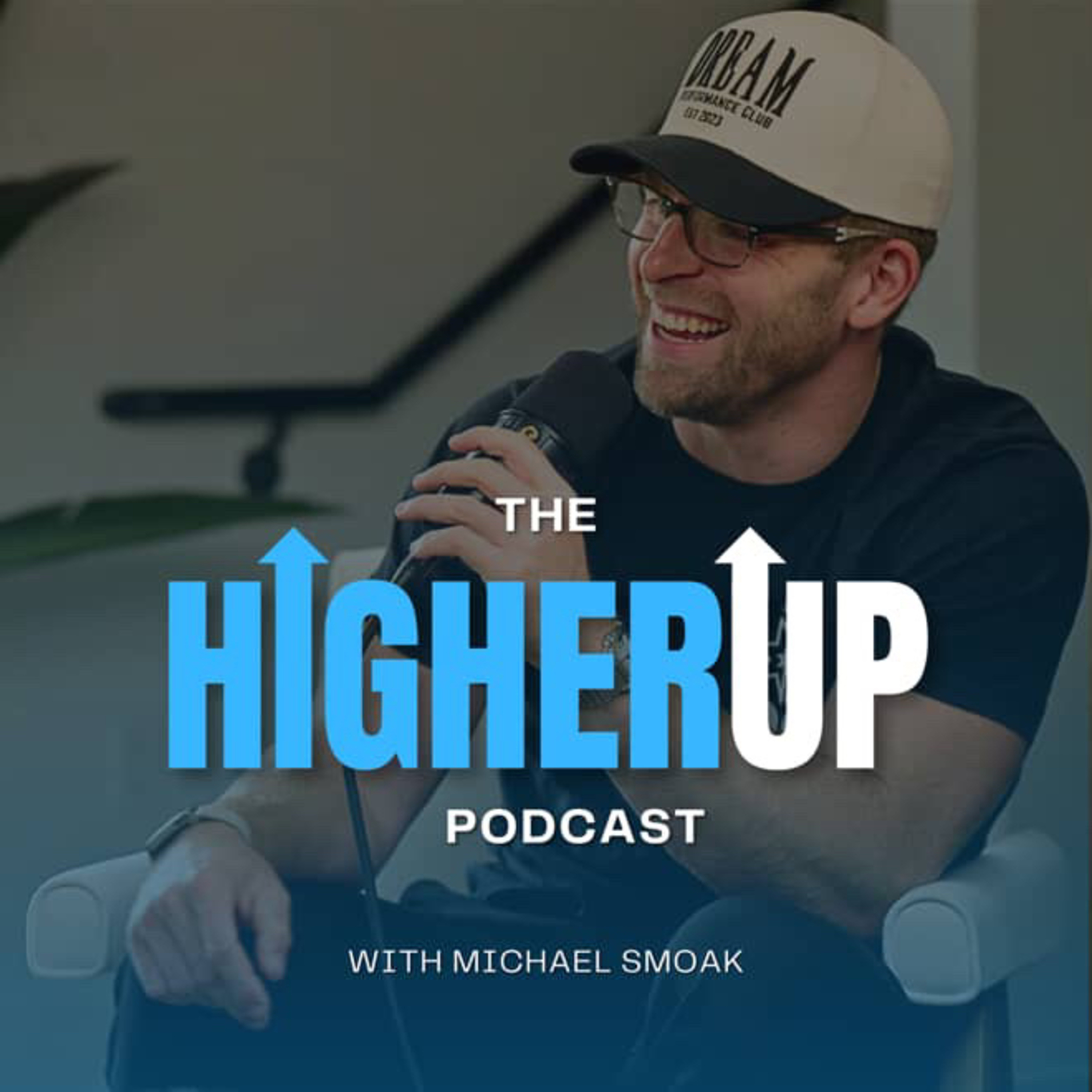
Jesse Itzler: The Two Rules That Create Life-Changing Opportunities | The HigherUp Podcast Ep. 72
from The HigherUp Podcast
59m 36s
In this podcast, the guest describes how Jesse’s concept of the *Musogi*—a single, year-defining challenge—radically reshaped his life. After struggling with confidence, he saw a short clip of Jesse explaining the idea in 2021, signed up for his first marathon in 2022, and completed it in 3:48. That achievement gave him a lasting belief that with preparation, he can accomplish anything, which spurred his content creation and eventual meeting with Jesse two years later. Jesse elaborates on the *Musogi* philosophy: it should be a physical, slightly frightening goal (about 50/50 odds of success) that you earn through effort—unlike a gifted trip or car. To balance multiple ambitions, Jesse stresses eliminating low-value activities (e.g., excessive sports TV), using seasonal cycles to avoid burnout, and reverse-engineering big objectives into manageable steps. He also highlights the importance of saying no to distractions while still making a positive impact (e.g., buying a round remotely). For standing out and building opportunity, Jesse recommends daily micro-actions: sending short video messages, handwritten notes, or thinking of others—planting seeds that attract luck and referrals. The guest concludes by revealing his own 2024 *Musogi*: a multi-day “Everest triathlon” combining swimming, biking, and hiking 29,029 feet each, training for which he is now locking in.
You were recording that podcast one of your whales here and now. Yeah man, this is two years in the making. I met Jesse at Running Man in 2023. We had a 10 second exchange. You had no idea who I was and no reason to really. But I remember thinking, I would love to be on this guy's radar and I'd love to learn from him. Because I found him in 2018 on Joe Rogan. And I heard him speak about the Musogi in 2021, the year defining challenge. And that is that video of him explaining the Musogi is why I'm here in his house today. It is the catalyst that changed everything for me. The year defining challenge is what gave me confidence in myself, belief in myself, and spurred me into my first marathon, which spurred me into a cataclysm of events that led to content creation and ultimately this podcast. So this is a really big moment for me and the most important thing to do in a moment that is big in my opinion is to do nothing but have fun. Remember that we're just two guys that want to have a conversation and help a lot of people. And that's the goal and intention for today. But it does feel damn good to realize a two year goal. So let's do it. Are we rolling? I'm so excited. I can't even explain it to you. You had such a profound impact on my life four years ago, five years ago now. And it's the reason honestly that I'm here, that in this room with you is, I originally found you when you were on Joe Rogan in 2018, back in I think June of 2018, you did that show. And in 2021, I saw a short form clip of a version of something you've put out so many times now, which was explaining the Musogi. And I struggled deeply throughout all of my years being a kid in middle school's hard anyway, high school's hard, never really fit in particularly any group. And the biggest struggle I had was confidence, self belief. And you brought up and explained the concept of the Musogi. And that was 2021. I think I saw that video maybe. And I signed up for my first marathon in 2022, had never run before, scared the shit out of me. And ended up running a 348 marathon. My first time ever running. And I remember in that moment, crossing the finish line saying, for the first time in my life ever, that I can do anything if I prepare for it. And I've had a Musogi ever since then. And so I just, I wanted to formally thank you for introducing me to that. - Thank you so much. That makes me feel great. I thought you were going to say, when you crossed that finish line, you said to yourself, I'll never do this again. 'Cause that's what I said after my first marathon. I thought I was like, there's no way I'll ever do this again. And then I wrote, I ran 50 more after that. But yeah, I thought I was like, I hated the feeling. I didn't know what I was doing. I just felt, ugh. But, and then it became super-addicting. - Yeah, that is the pain, the dichotomy of running is it sucks every step. But here I am still doing it. I'm training for London right now. - Nice. - What, let's start with the Musogi. What, how would you explain that to someone who has never heard of it? - Yeah, it's, so it's a, a Musogi is a Japanese phrase that we kind of repositioned or took the liberty to change the definition a little bit. But the idea around it is that you do one big year defining thing every year. I think that's super important. At the end of the year, you have something to show for your year, like one big achievement. You don't wanna go 365 days and have nothing to show for it but work. And I think people get so consumed with, there's so much ego in, how old are you? - 28, this 29 this year. - There's so much ego in your 20s and 30s and business, podcasting, competitive, Instagram, like this is so how to ego around that. Social media is magnified it 'cause you can see how many followers you have in comparison. That opens up comparison. And so you're working so hard to compete with that ego that sometimes you forget like, I just wanna do things that like I'm super proud of and fun, you know, and that's important. So by having one big thing on the calendar that like challenges you or defines your year, I think that's really important. If you don't, you really kind of are out of whack on like work, life, balance and prior. You can't have one big thing. So whether that's a marathon, once you got a podcast writing a book, I'm not smoking whatever. You wanna have something to show for 2026 this year. So that's the idea behind it. Is it criteria for the Musogi? I've self adopted this. I think you've said it. Should it scare you a little bit? She's scared you. I think it should be physical personally. I think it should be something that has a 50, 50, you're not 100% sure you're gonna even finish it. I mean, every time you, even if you train for London, there's still a chance in the back of your mind. Like what if I get hurt? What if I cramp? What if I hit the wall? It's not a locked city that you're gonna finish it. Even if you're trained, even if you're trained up for it. So I think it has to have an element of that. And I think the things that really have the biggest impact on your life are things that require you to push through something to complete it. You know what I mean? Like if I buy you a car, you're not gonna take care of it. Mealy is good as if you worked your ass off a Chick-fil-A to buy your own car. You'll be washing and taking care. Don't eat it in my car. Don't eat it in my car, man. I paid for that car. It's a lot different than if someone hands it to you. You know, you go to a trip to Italy. That's an amazing thing. But you didn't earn that. You didn't earn that. Like that's a different kind of feeling than something that like, I'm an entrepreneur like I earned my exits. I earned, you know, the chair, like all of this, you know? And that feels a lot different than going on a trip or something given to you. So you wanna put something on the calendar that, like makes you feel accomplished. That's really what I'm trying to say. - Yeah, yeah. And I heard you say in a podcast you did with Ryan Holliday, the more you experience, the more you have to offer. - That's my wife's cool, but I love it. - Oh, that's from Sarah? - Yeah. - Okay, it's beautiful. It's the concept of what kids, my age would say, building lore is having more to show for yourself, more stories and saying, I've run a marathon, one alone is something most people will never experience or do and it makes you interesting. But in terms of offering, like this world is, I believe my mission in life is to serve as many people as I can. And the more stuff like that that I do, the more I'm able to serve the better that I show up for other people when I do things that humble me. But most importantly, I think what I learn about myself throughout the Musogi training or prep is altogether more important. Like I said, it wasn't about the fact that I ran the marathon. It was the lesson that I learned for the first time of my life, I felt like I could actually do anything. - Yeah. - Yeah. - It's really beautiful, which amiss all of that. You have a Musogi for this year, have you shared it yet? - Yeah, yup. - What is it? - So it's a Everest thing. So Mount Everest is 29,029 feet. So it's like an Everest thing triathlon. So we're gonna swim 29,029 yards, which is like five and a half miles. We're gonna bike 29,000 feet of elevation gain, which is super hard. And then we're gonna do an event called 29,029, which is an event that I host where you climb up a mountain and take the gondola down until you climb 29,000 feet. So it's swim 29,000, climb 29,000 feet on a bike and then hike 29,000 equivalent amount Everest. So we'll do it all boom, boom, boom, boom. - So you're doing an Everest Ironman, basically. - Yeah. - I mean, yes, we are. - Over the course of what span of time? - Back to back to back. I mean, we'll sleep, but like, I don't know, four days, five days, holy shit. When are you doing this? - We're doing it in July. - June. - June. - Okay. I'm assuming you're locked it on training, you're hopping on a bike. - Huh. - I'm locking in training. - In the process of locking it right now. Well, then that's a perfect segue to my question, which is how do you do it? Like, and I don't mean this in this big grandiose and big, you know what I mean, you're obviously busy. I've seen you at Running Man, I've seen how you get pulled in different directions. I feel that that's a microcosm for your actual life, is when you're there, everybody wants to grab your time. But when you're here, when you're living, everybody wants to grab your time, you protect your time. I've heard you talk about how good you are at saying no, not to be a dick, but to be protective of that asset that we can make more of, which is time. I get a lot of questions from people about how do I achieve everything I want out of life and still maintain some degree of balance. So actually, practically, how do you do the things you say you want to do or do do with the Musogi and showing up for Sarah, showing up for the kids and running businesses and planning Running Man? Like, what does that actually look like practically? - That's a complicated question, and there's a lot of ways to answer it. So I would say that first of all, as you get older, and you want to put more on your plate, things have to come off your plate. So you can't keep piling things on and expect to get good results. So like, as you put on a marathon and other stuff, what's the beauty of that is it forces you to say no to things that aren't as important that you don't want to prioritize. So like, in other words, when I was your age, I was watching, I was bedding and watching football, like a fucking lunatic. And I calculated how many hours I would spend watching college games, pro games, Monday night, Thursday night football, Saturday games, Sunday games, like it was insane. So I just pulled the plug out of the TV. Like, I got back tens of thousands of hours over the course of my life from not watching so much sports. Something has to give. As you put more on your plate, things have to get off your plate. That could be.
friends that could be going out the bars. I don't know, but you can't keep adding. So like one thing is just realizing that like some things have to get eliminated. I think that's a really important thing. I think that I do things in season. So like I was just talking to my wife about this, but like when I go start to train for this Iron Man or whatever you want to call it, I'll be like, that's going to be a season of training. Like I'm going to train a lot several hours a day. Right now I'm in like a season of fun. I'm just doing things that like are super going skiing with my kids and going on trips. I'm not like, I go through these cycles. I put things in, you know what I mean? Like I'm in and out of different seasons. There's a season of recovery. There's a season of learning. Like so like compartmentalizing that for me is really important because you can't step on the gas the whole time. Maybe in your 20s you can get away with it, but like I can't do that. I can't stay full throttle all the way through. So like taking time now and being like, okay, I'm fine that I didn't run today. You know, but what I click on in three weeks, I'm clicked in and then that's where I'm going to focus on. Like I was writing a book. I'm in writing a book. I'm like really like head down into that. But when that's over, I'm going to start training. So like compartmentalizing that doesn't mean I don't do multiple things on the same day, but like really stepping on the gas in those lanes is important. As far as actually accomplishing big tasks, you know, you got to break things into digestible bites. So I'm not going to go from couch to run it to iron to to to to to every sting iron man overnight. You got to break it down into digestible bites. And I think lastly, it's important to have a plan and a path to whatever it is that you want to get to. You can't just wing it. You need to have a game plan of how you want to, how you can you have to reverse engineer it. So like I'll go to the end. Let's just take this big race that I'm talking about. I'll go to June that date and say, okay, this is the date we're doing the race. I have this many days to get there. How do I want to reverse engineer it? So I'm in a position to succeed when we get there. I can't start training. You know, June one. So I'm going to start now and I'm going to build out a plan. So again, having a strategy versus winging it, breaking things into digestible bites, going into a little bit of seasonality with it. Eliminating things that aren't as important. The number one enemy to most people watching this podcast. How well does your average listener? 40% of them are, I would say 21 to 30. The biggest thing that they're going to face in their mid in you two from 25 to 35 is going to be you can mark my words for this distraction. And figuring out what you want to say yes to and what you want to say no do is super important. And if you can eliminate your distraction and and to free up more time for what matters, it's because everyone no one wants to say no in your 20s you want to say yes to everything. You know, you know, I know you don't want to say no you don't want to be like, oh yeah, like you feel bad about saying no. But distraction is a serious enemy and to success. So you want to figure out how to eliminate as much of that as you can. Okay, let's get advice. So being in a season of sprinting and then being discerning with what makes like maybe like like maybe you prioritize your podcast. Like that you're in a seat like that could be something. But like you can't have like winter doesn't happen when summer happens. There's a reason why bear like the cycles like you just can't do it. So like and I allow myself to go through those periods. So like if I feel super you only have a limited amount of energy. Where do you want to apply that energy and how do you want to apply that energy in 2026? So if like for me, I'm going to put a lot of energy into my book. I'm going to put a lot of energy into my kids. I'm going to put a lot of energy into this race. I'm going to put a lot of energy into blah blah blah blah and then and that's like the extent of the energy that I have. But I'm not going to put a lot of energy into like dickwads, you know, like that are zapping my energy or whatever. So getting a line for that is important. Do you ever struggle with the actual playing out of saying no to people as often as you have to? Do you ever feel worried about the fear of being perceived as a dick or just is it unprotected with my time? And I can't help how you perceive that. Again, like I'm in a different chapter than you in my 20s. I said yes to almost everything because I think that's an important time to say yes to things. And I I mean, I encourage people to say yes. But you can't give everybody 15 minutes of your time. You know, so you have to be selective with it and there's ways to say no to things that make that can get you out of it, looking even better. If you invite me to dinner and I'm like, I can't I would love to but I can't do it. First of all, I don't need to give you a reason why I say no. You know, most people feel like they need to have a reason. I just can't do it. But now you go out to dinner with a group of friends. I can still call the restaurant and say, hey, buy these guys around the drinks with a note from me, man, sorry, I couldn't be there. Have I could pick up the bill. I could send you a video, wish I was with you guys and like still have an impact. I can still have an impact on that dinner without even being there. If I buy you guys around the drinks and I'm sitting here watching TV with a note like, am I sorry, man, I couldn't be wish I could be there. Have a ground on me, man, you'll be like, this guy, this guy's a legend. He thought of us like there's ways to, and I've been really good at that throughout my career of having a presence without even a bigger presence than that without even having to be there. That's a perfect, perfect example of, you have a lot of unique perspectives on life and unique ways to stand out. I think that's a perfect example of it. And something Jimmy mentioned, he hears you say a lot is everybody's trying to win a nine inning game, but I'm playing a ten inning game. And that feels like a ten inning action. What examples, if you have any, would you recommend that people can implement into their life to stand out? Like, I know you're a big fan of, I think, a beautiful strategy, a beautiful example. This is knowing how to order for the table or sending a note when you can't make it. Like, these rare little things that would make it a ten inning game and make you a little bit different than everybody else. Do you have anything else like that or example? We just mentioned too. I mean, knowing how to order is definitely a skill if you're, if you entertain a lot at restaurants. And that might sound so insignificant and ridiculous, but it's not. It's not. You're taking control. You're showing your elite. Guys, I got it. What do you guys like? And like, that takes a lot of pressure off of people. Like, if I go there and someone's ordering for me, I'm pretty psyched that guy is with us. You have a phone? I do. Yeah. If you just simply hit record and say, Hey, Jesse, I know you love surfing. Check out this link to this surfing video. I think you'll really dig it. Just thinking about you, man, send. That would take about 30 seconds. So if you took two minutes a day and send four of those over the course of a year, you know, you'll sound, you'll sell, send 1200 videos to people. It's a pretty good networking strategy. And just you're thinking of people. It's one way to send out a video recording on your phone to someone, Hey, man, I was just wanting to thank you, man. Like, I love the way you do this. Or I saw that you did this. Or I know you love this. Check out this recipe. I know you were looking for gluten-free recipes, whatever. Check this out. Boom. You start thinking about people and they're like, and just sending out correspondence and planting seeds. See, everybody is only just like one meeting or a referral or one person saying, oh, you got to, you know, check out this. And then they're a sponsor or what, away from changing your whole trajectory and getting you going. But you got it. You have to create that luck and opportunity. And you do that by putting yourself out there till the universe rewards you. So that is planting seeds, sending videos, writing handwritten letters, sending notes. Like if you, I think one of the things that people, they think people think like it's very easy to network if you're consistent. And it's very easy to like, I think if I was an entrepreneur in my 20s, I would put, if you can't put aside by, if you did put aside five minutes a day, 10 to reach out to people consistently. If I was in my 20s right now, I mean, you're just going to hit so many people. So it's not like, that's easy to do. Jimmy, oh, you know, I know you're launching blah, blah, blah. Check out this article I just saw in the New York Times. Send. It's just like, well, how's he even thinking about me? And you're just saying, and now gives you permission to, if you see that person, to go up to that person. So I think having a strategy where you're, you're outreach. We've been taught our whole life that opportunity, when opportunity knocks, take advantage of it. It's not going to knock for a lot of us. It's not going to just knock on the door. We have to create it. And if you, and you create it by putting yourself in situations where you can attract that kind of luck. And so I think it's really important to every day, every day, not like once, so every day aggressively connect with somebody. So take a look.
making a conventional route of outreach and making it even more unique. - That's a tenting game. - Everyone's gonna return DMs. Everyone's gonna return phone calls, but not everyone is going to be like, oh, you're going to Mexico? Check out this article of the 10 Best Restaurants in Mexico. You start just thinking about people in your orbit and sending them that kind of stuff and communicating like that and connecting over the next two or three years by the time you're 32. And you do that every day. You're gonna have a network like, I have an insane network and I built it by caring about them. Pick simple. Not like because I outsmarted them, not because I'm the best at breaking down financial sheets or cap tables, none of that or a deal maker, none of that. It was just that hand-to-hand combatman, like including people, Kamsana, you know, no empty seats. If you're renting a bus and you're going to a Lanark city from New York and the bus has, if you're taking six friends, but the bus has 10 seats, fill it up. - Pick four people. - Fill it up. And even if they say no, they're gonna be psyched that you ask them and included them. So that's the kind of stuff that I was doing in my 20s and still do now. The hand-written letter is something in there that I think is the best thing in the whole strategy and nobody does it anymore. You write like 25 to 58 year, right? - I wrote 45 yesterday. - Really? Just to various friends, partners. - I wrote 48. I got 12, 24, 30, 30. I got 48 thank you notes and I sent them out. Jimmy, you just got one. Yeah. - What's the significance of the hand-written letter for you? - Not everybody reads their DMs or their emails. Other texts, but everybody reads a hand-written letter and just the energy that goes into writing a hand-written letter. It's a lot different to get a note, write it, write an address, get a stamp, lick it, go to the mailbox. That energy is a lot different than send. I get 10, I think I get like 480 of those a week. You know, I mean, hand-written letters I got this week? - None. - None. - So I mean like 480 versus zero. Two, you know, in a month, 1,1200 versus 1 hand-written letter, like I'm gonna remember that one. I also like writing a man, you know? I like, it's this old school. I just like that form of communications been here for hundreds of years and it just hits differently. - Wow. So the 10-in-in-game, it sounds to me like the 10-in-game's a book. - Yeah, it is. Are you gonna write it? - Maybe. - I think you should. - I think I should. - It just can be the catalyst. (laughing) - The 10-in-in-game, like secret, you know, subtitle would be like secret tips to networking, marketing and getting billion dollar relationships that don't cost any money. - Yeah, I'm gonna write you a letter reminding you to write the book. (laughing) - Okay. - What, can you think of a time where you were in a 10-in-in-game situation in business? You have a crazy story, something you did to really separate yourself that worked or maybe didn't work, crash and burn. I think I was told that you wore a wig to a meeting once, like an important meeting you showed up in a wig. Just do like unusual things. - That's different though. Those are more like, I feel like if you have, I'm trying to, how many big meetings have you been in in your life? - A handful. - Right, like how many game-changing meetings do you really get? Like I've been in a zillion meetings, but like, I remember when I was your age, not that I've, that's a sound super old, but like I remember in my 20s, I meet a lot of big deals in my 20s. I sold two or three companies in my 20s. I had big meetings, I had nothing, and those meetings mattered. And I remember walking into the meeting with my partner, like I remember thinking of you smile. But I remember like, we would walk into meetings where like this is big, this is big, man. This is, this is, this is big, this is big, this is fucking big. This is fucking big. And like just being aware of the magnitude that this meeting had, like I remember going into the New York Nix trying to sell them a song, and I'm like, they're either gonna buy it or not at this meeting. I remember going to the NBA for a licensing deal. Like I'm either gonna be a licensing or not. Mark E.J. They're, Nick, they're either gonna give us our planes to launch our company or they're not. Like these are make or break meetings. We don't get a lot of those. You don't get a lot of those. You get a lot of meetings like, oh, let's see. If I maybe like we sell it at this store, wants it, they don't want, okay, I'll go to another one. They don't want it. I can go to Target, Target is the one and I'll go to Walmart, Walmart is the one. Like those are big meetings, but they're not like the mega meetings. You don't get a lot of them. You gotta make those count and work and stand out and make a memorable. And so I wore wigs to meet, I wore a wig to a meeting just to prove a point and be funny and like whatever. And that's different than the tenening game is a consistency. It's a consistency around doing more than anyone else in the industry. Everyone's gonna do the basics, the blocking and tackling, the returning the phone call. Like if you're not returning phone calls, you're done. If you're not sending thank you notes and thanking your customers and appreciating, you're done. So you have to do all that 'cause all your competition is gonna do all that, but then you have to do the extra inning, the extra inning. And those are the things that I just, they're always, that's always on my mind, you know? And there's not a playbook for that. It's innate to me. It's like I'm not the smartest. I gotta be like, I gotta really shock and awe people and just, you know, yeah. - Do you think that's your X factor that desire to connect with people at a different level? - Yes, yes. - So you could be an X factor for everybody? - Yes. - 'Cause nobody's doing it. - Yup. Yeah, I mean, if I see something a quote that I like, I might just, or like a book or poster or something, I'll buy it and then send it to someone that I think it would hit with. I have a gift person that sends out gifts to everybody, every podcast I'm on, gets a thank you note, you'll get one. Which is like completely opposite. Usually the host should thank the guest. Like thanks for coming on my podcast. I'm like, I literally was just sent out one to Ryan, Holly you mentioned. And I was like, there's 8 billion people in the world and you had me on your podcast? Man, thank you so much. He's gonna freak out. He's like, he's never been approached like that. He's the one giving people a gift. Pick a book at my bookstore for being a, no, thank you man for having me on. So you gotta flip it and look at like things a little bit differently. It's so important. And by the way, like, as a business owner, you're a business owner, you're a brand. That's a part of the fun for me, like of shaping that and being able to do that on my terms, how I wanna do it, without following the rule book and the playbook that everybody else in the industry does. I think that's part of the fun of being, of why you choose to be an entrepreneur. So you can make your own rules and color outside of the lines and take risks and all that. And Jimmy's here, people can't see him, but we always have this conversation about you two videos and this and that. And I'm like, I know what everybody's doing and I know the formula that works. It just doesn't feel right to me. Like I wanna do it this way, even if it doesn't. So you get the freedom to do that when you have your own business. So why not take advantage of it? I'm not saying don't do things that don't work, but I'm saying that like part of the customer service thing to me is the beauty of it. Like I get to like gift people things and surprise them and be a hero and write a thank you note and do the unexpected. So fun. - That's really honestly, selfishly affirming for me to hear because I think it can be easy for me. I don't wanna speak for anybody else, but it can be easy when you establish a bit of growth, you get a bit of success and then you get around people who are doing things a certain way. It's been a challenge of mine to not trust in my spirit. What I think is the right thing to do because I've grown on social media exclusively through talking into a camera like we're on FaceTime. I don't do production. This is the best production you'll ever see out of me. And I don't know how to do any of this is 'cause of those pros back there. Normally I'm on my iPhone like I'm FaceTiming you and God has blessed me with the ability to grow to read that I can't explain other than God's grace and His will for my life. So it means so much to me to sit down with you and hear that from someone in your position that hey, it is okay to trust your God and if everybody's doing things a certain way and it's worked, that's fantastic. But if I have an idea to try it, to just be audacious enough to try. - And it's got to feel good. Like that's part of it too. Like yeah, but I thank you, I agree. - Great. - Where does this come from? The drive to be different and deeply connected people. Did you have a mentor that taught you this stuff or failed to get here? What got you to this outlook? - I don't think I have a drive to be different. I just think that,
Like you said, your spirit, like it just got things that just feel right or natural to me. Now part of that comes from I have no experience background in like training. My dad on the plumbing supply house, I was never taught business. So everything is just like, how would you do it if no one ever told you how to do it? I'm an example of that. You know, no, I have no idea what I'm doing. And that's for a lot of people that's so intimidating. And for me, it's so exciting because it just means that like my cart, my cart, like we, my business, like I have a company called the Big Ass Calendar Company. We sell these big ass giant 365 days at a glance, all on one piece of paper. The calendar's huge. That is literally big ass. It's huge. It's huge. So I was like, well, when we send thank you notes to people that buy, like maybe should they get a big ass thank you cart? Like why should they get a little card? Let's send them a card that opens up that's huge, you know. No one taught me that. No one told me that. I don't know if you know if that makes sense. It might be, I don't know, whatever, but I like it. So I want to do it. So I just told my team. I'm like, I want to order. Can you order me 100 giant thank you cards? Like six foot thank you cards that'll fold that like can't even fit in this door big. They just say thank you and I can write a thank you and send them to people. It's just like it's, you know, like that's not, um, that's just how I feel like we should do it. That's the name of our company. That's our brand. So I mean, no one else is doing it. So to the extent that you can think of not gimmicky things to be gimmicky, but things that like are fun and to you and your spirit or whatever, I think you have to follow that even if the industry and people say, I don't like it, you know, um, you know, Jimmy and I, Jimmy does my socials and YouTube and he knows a way more than me and I told them that. But sometimes you do think that just don't feel like even though it's going to work if it doesn't feel like it's you, you have to stand up and speak up about it. Um, and then you have to follow your instinct on what you think is right. And usually it works out because it's just so authentic. You know, everybody uses it. Most industries, people follow the same playbook. If you're an insurance, I've been approached by so many insurance people. It's the same thing. Different logo on the cover. I've been approached by so many different investors, you know, manager, you know, business managers, same exact thing. Buy a stock, buy a bond, different logo on the front of the brochure. And like I just, it's just, you want to stand out and you do that by thinking about how you would do it if no one taught you how to do it. Yeah. Is that what it takes to get your approach, right? You got a camera and no one taught you how to do it. And you're out there talking about like things that are natural to you and you're not kind of blocking out the noise and you're just following your instinct and you're like, well, you're doing it by God's grace. Well, sort of yes. But also, no, you're doing it because people are are believing the authenticity and where you're coming from and your own style. And then the not so sophisticated, polished look and all those things are playing to your advantage. Yeah. That's the X factor. I tell people in creation and business is there's a lot of people doing a lot of things, but none of them will ever be you doing anything. You are the niche is what I tell people you are the bit. I always tell people you're the business plan like you are the business plan and and to rip up the playbook. Yeah. That's perfect. You mentioned your dad earlier just just a moment ago and I know he passed a few years ago. He had Alzheimer's, right? Two days ago was the one year celebration of my father's passing. He died January 19th of 2025. How if it all has your dad played a role and Y'all's relationship played a role and who and how you show up as today. I mean, in a very big way when I was younger, yeah, I mean, my parents were together for 65 plus years. So I had nothing to do with that. And you know, so my dad played a huge role in my both of my parents played a really big role in my development. You know, he had a huge impact on me. He's a part of the, I think Todd was mission. You do a keynote spiritual billionaire and he's a big piece of that, right? Yeah. Yeah, is a big talk part of my talk and, you know, I lived in an era. I grew up in an era where there was no Instagram and there were no virtual mentors. The only mentor you had where the people, it was the roof that you lived in, you know, your house and then any other leader or person in your neighborhood, I lived in a small town, relatively small town. I didn't grow up in a city or anything. So it's like, we had one car. I went to my high school and like my movie theater and my like there was one daily one movie theater like where were my mentors? We had three channels on my TV at MPC, ABC, and CBS and then we had local channel 11 where we got the Yankee games. Like where do we get our information from or where do we get our advice from? I got it from two people. I'm on my dad. There was no other way for me to get information. You guys can go on and you can get information from Tony Robbins. You can get wellness tips from the best nutritionist. You can get anything, you get to ask chat GPT and you have you have a literal, literally, the smartest person on the planet in your pocket. I had my dad, you know, like he had a plumbing supply and he's like from Brooklyn, my parents, I mean, like so yeah, I mean humongous role. But you're right. You were limited. We have an insane opportunity to be successful in my generation. It's ridiculous, man. You don't even have to know anything. You can just recite everything from everybody else. You guys need to know shit. We don't. We don't. Say your eyes are. Honestly, that's what I tell everybody is that like I'm just regurgitating information from people 10 times smarter than me. And I'm quick to give them credit. But I reference you all the time. I tell all of my clients to have a Musogi. I stole that from you. And it's everything that, you know, nothing, there's nothing new under the sun. Just new people doing it. But it's never been easier to tap into like you said, the world's more most previously inaccessible authority figures. Used to the only way you get Tony Robbins is you could get his tapes. But you got to go to a seminar and I was lucky enough to go to day with Destiny in December. And it was crazy. It was, I mean, he's really got a cold following. It was transformational. But if you can't afford a day with destiny ticket, then you can just go to his Instagram. Yeah. And there's, I mean, he's Tony Robbins might be the Michael Jordan. But there's a hundred of people that also are really good at providing information or advice. Yeah. I don't have any of that. Yeah. So, um, yeah. I mean, the people you look up to an hour growing up were just the people that certain like, oh, the sky is like, he's an amazing, you know, like, picture or something. And little like, like, it was, it was so limited to things that were happening in my town. Yeah. Well, to the tune of having people in incredible positions, doing incredible things accessible, I'd be remiss if I didn't ask you a little bit about communication and speaking. That's a biggest passion. I told you before we started. It's somewhere I want to take my career. And I know you do keynotes out the wazoo. You did more than 50 last year. I think you told me when we were here a few months ago, about 50 about 50. What does it take for you to be impressed by a keynote speech? Well, what do you do to see like, wow, he did a great, great job. That's a great speaker. For me, in a keynote, if someone can make me laugh, can teach me something and can make me cry, that would be a really good speech. All in one. All in one. All in all three of those things. I mean, it's easy to make someone laugh. It's easy to give someone a tip. And it's a little bit harder, but doable to make someone cry. But to do all three in a talk would be something that would be kind of memorable. I think also just hearing things that are unique. And a lot of the speaking that, like you said, I'm just regurgitating things that I hear from people 10 times a day. I want to hear stuff that's unique. And I don't want to hear get uncomfortable being uncomfortable or slogans that you can just slogans. I want to hear something that I'm emotionally connected to because someone's telling me a story that moves me. Stories that move me are the most impactful speeches. Stories. Do you have a process before you get on stage to go give a talk? Is there something you do? Do you have a ritual? Do you follow? I mean, I've given like probably 400 speeches now. So the routines, it's, I do have a ritual. Like, I have like a little bit like, I still, I care about each speech, whether there's 10 people or 10,000 people, the approach is always the same. I'll go through it once or twice in my head beforehand. That's super like 10 times speed. So I'll go through a 40 minute speech in four minutes, just in my, like just go through all the points. And then a couple songs I do to listen to to get ready, but read up on the audience. And that's really it. What did I got in it? What are the songs do you have go to? So does it rotate? I have, I have go to
I have go to I have a go to song. It's yours right now. It's right me. It's it's it's Drake. Okay. Yeah, so it's a song called "Pompano Freestyle" by Drake. It gets me really fired up. Yeah, I think that one of the things I learned from from Tony Robbins was the concept of changing your state before you do something and getting people really like excited and if I walk in nervous, they're gonna perceive that energy off of me. So I prefer to get amped and fired. I was listening to rap music when you walked in because it changes my state a little bit and then I do some some deep breathing as well. I like that. I like that. Yeah, I would say in the beginning that was important and now it's just more I can just go I can just walk on. Yeah, because you just done it so many times. Yeah, so many. Do you do you practice communication outside of speaking or is it just the reps that you get now in the shows because you're a really good orator and that's something that I tell people they can change but not everybody can do it. I think it's a muscle that we train. Do you do you practice this formula or is it just reps through what you do? I don't practice it. I think like writing a talk is difficult. It takes time. I mean, I think writing for me to write a speech. It's not like I can just sit down and write a speech in an hour. I don't have that talent. It takes me months to write a good speech and like tweak it and then and then all to me speaking come from me it's a standard. It's like so I've given certain certain speeches. If I don't have a talk that's going to be as good or better, why do it? Like why then just give me out the other speeches I've been giving and getting above the standard that I'm holding for myself like everything is a standard. I wrote a book living with the seal. Now it which was great because it did really well but now like any book I've thrown four books out over the last two years that I spent two years writing because the standard wasn't what seal was and the speech is the same thing. I've written 10 speeches that are in my garbage can. They're good. Probably really good but they're not as good as what I have now. So like this your standard matters really matters and so not settling on your talk on the talks is a bigger issue for me than practicing like you know my inflection or my voice or my pauses like that's stuff I have down but it's the content itself and I don't like to go up there and just wing it like okay today give me a topic and I'm gonna go give a 45 minute keynote. I need to have it written out and prepared. I want it to be more polished than I could just go freestyle something I think but I've never really done that. Do you write every line or is it like full of bullet points? No because mostly I'm doing stories so like I'll be like I want to tell the story of my parents blah blah blah or I want to tell the story of this widget so I have so many I call them vignettes. I probably have 50 different vignettes that I could talk about. The world's probably heard 30 of them, 20 of them they haven't but I told those stories at dinner tables at at dinner meetings at in office settings to friends I know what gets laughs and what doesn't get laughs and I'd say to me the challenges how I put these vignettes together. You know what I mean like how do you string them all together in a cohesive way that makes people laugh make people cry and makes people inspired so that's the challenge it's like a it's like a rubik's cube you know it's like a puzzle how do I take these stories and then combine them into a certain yeah but I have a framework and I do think I can teach people to be a better speaker and maybe not the best speaker but people are scared to speak and communication has so many different levels but I'm talking about speaking but it does take reps and I think you can I think with coaching you could get better at it too. Yeah they've done multiple surveys where they found that the number one fear ahead of death was public speaking for people and I think it's I think it's an X factor I think if you can their my dad from an early age I mentioned he passed away but he was my biggest role model like he was truly I would tell him pop if you had a social media following because he thought what I was doing for work was just crazy as shit and he's a boomer didn't understand any of it but I would tell him if you had a if you had a social media following or if you had social media in your day you'd have 10 times the following I did and he told me from an early age there's no better feeling than getting up in front of a group of people being able to help them and unknowing in your heart there's not a question they can ask you that you don't know the answer to and people are really scared to do that man like terrified they get panic attacks they get shaky and I think it's truly an X factor of a skill if you can build the callus in your mind to not get nervous in front of people you can have a lot of success in life yeah I agree is important I mean start just talking on a stage it's being able to communicate across the board you know whether it's on a job interview whether it's if you're a parent here in a parent teacher conference whether it's on a set leading a sales team whether it's pitching an investor like if it's to me the most important thing you could learn is communication skills yeah that you're dating everything in life you're communicating your value and that speaking and writing I think writing is equally as important really yeah you write consistently well just like I just writing an email to get to get the right answer writing an email to get a response writing a thank you note to get a reaction writing a sales pitch writing a sales copy like just writing in general is I think insanely important um I'm not good I'm like seriously I really consider myself back of the pack and so many of the of categories when it relates to business but when it comes to speaking and communicating through writing I think I'm a really good writer and I'm not talking about like books and I think I'm a really good communicator speaking and I think that those two skills have really helped me especially the writing I mean I've been able to get meetings off of emails that other people can and responses from secretaries and gatekeepers that other people can and it's just the way that I've crafted and positioned stuff the good thing the beautiful thing about writing is like writing an email or a letter you don't have to respond on the fly like like we are now you ask me a question after respond I could take my time live with it have a cup of coffee come back check it proofread it read it to my hand I liked it edit it try another version of it this one's better which one you guys like better and then send it and sleep on it that's a lot different than what we're doing right now you're asking me a question I have one second to respond I don't like my answer I can't change it it lives forever on video but when you come home from a meeting and you're gonna write a letter I want to get a meeting with you I can take my time and figure out the words that I want to choose to use in a pattern that will get a response that that's favorable to me and that's a big advantage yeah that may that makes perfect sense that's probably something I could do I could do more of is is polish up my writing skills I think so much about speaking and I make a living talking on the internet but I don't have a lot of opportunities to write copy I'm great at emails really great what makes it great just the ability to have to make it different than everybody's ability to have a subject line that people are going to want to open up click and open that's really important subject line when we write out emails from my team like I always look at the email at the subject line is like is that going to make me want to buy click look at read whatever and then the ability to write a short email like I'm always like can I get rid of their five words I can lose here like to make this two sentences shorter you know and then just wordsmithing in a way that you get what you want I mean that's just I've always been good at that subject line succinct body and make the words good subject line super important and sometimes it's just like it could just be like let's say it's like I wanted to get to Nike it could just be like Nike slash whatever whatever like one word like I might it's very simple but like curiosity make some curious or it's funny like curiosity works humor works and then in the email also just just not leaving it open ended like asking for the order asking for the call is there a time that you know does this time work tomorrow or but like I am really good at that and I'm really good at helping people with that okay I know you're gonna I know you're gonna do a lot today you're on a podcast again in a few hours you're probably filming every time Jamie's here you guys are in a sprint with film and something and I think you're you're 56 right 77 57 how do you maintain the vigor and the energy to do all that I know your kids are doing that shit like crazy how do you how do you maintain from a health perspective the vigor and the energy to do all of this do you have non-negotiables that you put into your routine from a health standpoint I know you do some interesting stuff you fast a lot no fruit till or only fruit till noon what are your health non-negotiables to maintain this level of of speed really um a lot of its diet so I mean like exercise diet sleep if you take those three categories and out getting outside I think getting outside is really important Yeah, I mean.
I mean, I have not negotiable somewhat I eat. I'm not like, I don't really drink alcohol, I don't smoke, I don't eat many fried foods, I don't need a lot of dairy. I'm basically a fruitarian. I mean, all I've eaten today is a smoothie, and it's one o'clock, two o'clock, 12 o'clock. I don't even know what time it is. - 12 o'clock. - But I won't have anything else besides fruit until I dinner. Exercise, yeah, I mean, I gotta get a little bit better on my sleep. My sleeping isn't great, just 'cause of my children and like, you know, that's what I was most curious about is how do you sleep? You sleep enough, do you sleep well? - Some days, yes, some days, no, I mean, my kids get up early and I take them to school at so I'm up early no matter what. But I'll stay up and watch, you know, highlights in this matter. My sleep could be better, but I mean, in general, in general, the basic blueprint for me has been avoiding, is the number one thing is food, without question. Do you eat meat at all? I do, I went 35 years without meat and then I reintroduced it fairly recently, maybe like once a week, I'll eat meat. I went, but I had zero for 35 years. But even that is grass fed and high quality and but like not a lot of package, not a lot of processed or packaged foods, yeah, I mean, there's an old, you know, that old quote, if you have a lot of food, many problems, no food, one problem, like I'm trying to just eat less and eat the best, better stuff. - Yeah, it's not like brain surgery, but you know, I eat pretty clean. - Well, if you get on the internet long enough and you end up in the fitness algorithm of Instagram, you would think that people are trying to do brain surgery to get fit and they say it's impossible. When reality is just eat stuff that grew in the ground, grow in a tree or had a mom and dad, get fit isn't a priority for me, like healthy is a priority for me. Like when I was in my 30s, I wanted to, you know, you want to have a six pack and meet somebody and like get girl, like those days are so over for me, it's like I just want to stay out of the hospital. So it's like getting fit, being the fastest marathon runner, all that stuff, like that's all over for me. I had that until I was like 50 and now it's like I just want to stay out of the hospital and act as long as I can. That is my number one goal. Like to do the things I love as long as I can go, I've been going to a basketball camp for guys over 35 since I'm 35. So I've been going for 20 plus years once a year. And of the original guys that I went with, I went with 20 friends from New York. We all went and we were 35. We went for like every year we would go together and then like one guy would drop out. I'm the only one left. I'm the the only one none zero. And of a camp that's had about 500 people, there's like five people my age or older that are still going. So, you know, and I'm super psyched about that and I want to do that as long as I can. So I'm not the best, I'm not like even close to where, like you know, it's almost getting to a point where it's somewhat like it's kind of like frustrating for me because, but I'm still going. My friends are camp-alive it. Like they camp-alive it. It's just like a multi-day basketball camp. Like a sleep away camp? - Yes, yes. - You're going to sleep away basketball camp right now? - Yes. - That's where is it? - That's in junior university. - No way. There's 160 people, there's 16 teams of 10 and we play two games a day for five, there's like 10 games. It's amazing, it's called the K Academy. And you have to be 35 or older. But it's skewed 35 to 40 now. And there's a much bigger difference between 40 and 57. I can't even explain the difference. - And you're the oldest cat in there? - I'm not the oldest, there's probably a handful of guys older, but I'm the only one left of my group. - Wow. - So you've been doing this for 20 years? - I don't play basketball. Now I haven't picked up a basketball to play in a game other than that five day tournament every year. So I don't play up to it, I just show up to it. - Is this just the reason for that? It's a means of staying healthy and active. - Oh, it's just fine. I like the guys, the camaraderie of it and yeah. - That is so cool. I never would have guessed that about you, man. - Yeah. I'm curious. And I know this is a broad question. I know it might be a little tough to answer, but I'd be remiss if I didn't ask you. You've talked a lot about being in certain seasons of life, when you're in your 20s and 30s, say yes to things, limit distractions. If you were 28 and you were in my position with social media, being my full-time job, wanting to speak more, do you have any advice you give me? Something to focus on, something to eliminate, something to stay away from or lean into? That I would say. - No, I think like you're doing what you should be doing. I mean, you're doing what you love to do. And you're trying different things, which I think is really important in your 20s. You just figured out and discovered that you like speaking recently because you tried it. And I think you would have never known that if you didn't get over the fear of trying it or whatever. So I think in your 20s, you should be trying as many different things because you just don't know what you're gonna stumble upon and like. Oh, I like sales. I didn't know I like sales or oh, I like running marathons. I didn't know I would like, yeah, to try it. So I think 20s and 30s is a great time to try as many things as possible. That would be my advice. And like I think a lot of people give up their 20s. Yeah, a lot of friends that went from 20 to 40. They won't even have their 30s 'cause they were like busy working head down, selling stocks, looking at a computer all day. They made a lot of money, but now they're 40. And now they would pay all that money to get their 30s back. So you don't wanna lose your 20s and your 30s. And you know, you wanna just go out there, you're gonna run a man, you're gonna advance, you're doing your thing, you're gonna Chick-fil-A, you're giving podcasts, you're interviewing people, you're learning, like that's amazing. So I wouldn't change anything. I would just do it as big as as you could do it. That's the goal. I'm so excited for running man this year. Yeah, that's gonna be great. I think it's gonna be huge. How do you explain it to somebody? Everyone that I've talked to that has known that I went to this thing. I'll just say you just gotta come. I need a better descriptor on it because to say it's like a running festival or a festival, it doesn't do a justice. Because it's kind of one third retreat. It's like one third mastermind, one third like festival, and one third like sleep way camp for adults. It's really hard to explain that in a sentence, but it's a really fun three day event in Georgia where you meet people, you can run if you want to, any race distance that you want. But with all the breakout sessions that we have, what a chance to learn about wellness and like sitting, it's like I don't even know what the fuck it is and outdoor conference. I just know it's the best weekend. It's so fun. It's the best I look forward to it. It's the highlight of my year. That's so fun. It's such a blast. It's so fun man. It is so fun. But people get so confused because they'll see pictures. I've got a picture of you on my phone and people know we ran a half marathon. There's music and all these health vendors. I'm getting my blood work and then I've got a picture of you with a tequila bottle in your hand and Devon's like about to crowd surf and we're all raising face while they're playing live music. - Same. - I think it's a perfect example of following and trusting your gut and building something that's authentic and centered around community. - Yeah. - And not trying to be anything. - Yeah. Yeah, we're great at that event. We're not great at marketing it because it's hard to explain it. But I don't even care. It's just like, it's just fun. - It's so much fun. Anybody listening that's on the fence should go. - Thank you. - It's transformative for me. - It's in September, yeah. September 18th? - Yeah. - And it's affordable. It's not like if I was going to go to a conference or a webinar or a seminar or something, it would be way more expensive than running man and get in there for under a thousand bucks. - Yeah. - Yeah, that's great. - Are you planning anything bigger for it this year? It seems like it's gotten bigger every year. You guys had a full of errors. - Yeah. - Hey, we're gonna keep adding to it. - I'm excited. I've got one last question. I want to play you something. Let's see if I can get this teed up. Oh yeah. (upbeat music) - How you doing? - How you doing? - Todd. - I got my sources, Jesse. When are you gonna drop wild and loose? When is it coming out? - 2026. - 2026. - I think I do the video at Running Man. I think we shoot the video at Running Man. - Shit, yeah. That's a summer boat banger. I need that for the lake. I need that for the beach. That's a great song. - Yeah. - It's a great song. - So 2026, we can expect wild and loose. - I think we should do it. Yeah. - Fuck yeah. Let's do it. I'm so pumped. Jesse, thank you for spending some time with us. - My pleasure, man. - My pleasure. - Absolutely. - Thank you guys for listening. If you got something from the show, don't forget to drop a comment. Let me know what you thought of the conversation with Jesse and I. We'll see you in the next episode.
Podcast Summary
Key Points:
The guest credits Jesse’s concept of the *Musogi* (a year-defining challenge) as the catalyst that transformed his life: he ran his first marathon, gained self-belief, and launched his content career.
*Musogi* is defined as one big annual goal that should ideally be physical, have a 50/50 chance of completion, and require effort to earn the sense of accomplishment.
To manage multiple priorities, Jesse advocates eliminating distractions (e.g., cutting TV), using seasonal cycles (sprint, recover, learn), reverse-engineering big goals into digestible steps, and strategically saying “no” to free up time.
Jesse emphasizes creating luck through consistent, small acts of outreach
The guest shares his own 2024 *Musogi*
Summary:
In this podcast, the guest describes how Jesse’s concept of the *Musogi*—a single, year-defining challenge—radically reshaped his life. After struggling with confidence, he saw a short clip of Jesse explaining the idea in 2021, signed up for his first marathon in 2022, and completed it in 3:48. That achievement gave him a lasting belief that with preparation, he can accomplish anything, which spurred his content creation and eventual meeting with Jesse two years later.
Jesse elaborates on the *Musogi* philosophy: it should be a physical, slightly frightening goal (about 50/50 odds of success) that you earn through effort—unlike a gifted trip or car. , excessive sports TV), using seasonal cycles to avoid burnout, and reverse-engineering big objectives into manageable steps. , buying a round remotely).
For standing out and building opportunity, Jesse recommends daily micro-actions: sending short video messages, handwritten notes, or thinking of others—planting seeds that attract luck and referrals. The guest concludes by revealing his own 2024 *Musogi*: a multi-day “Everest triathlon” combining swimming, biking, and hiking 29,029 feet each, training for which he is now locking in.
FAQs
A Musogi is a Japanese phrase meaning one big year-defining challenge, like a marathon or writing a book, that scares you and has a 50/50 chance of completion, giving you something to show for the year.
It provides a sense of accomplishment and confidence by pushing you through discomfort, making you earn the achievement rather than having it handed to you, which builds self-belief.
Eliminate distractions like watching sports, break big tasks into digestible bites, and use seasonality—focus intensely on one area at a time, like a season of training or fun.
You don't need to give a reason—just say you can't make it. Then soften it by sending a thoughtful gesture, like buying a round of drinks or a video message, to show you care.
Send personalized video messages or handwritten notes to people, thinking of their interests. Spend a few minutes daily reaching out, planting seeds that create luck and opportunities.
Reverse engineer from the end date, break the goal into smaller steps, and start training early with a detailed plan instead of winging it, ensuring you're prepared.
Chat with AI
Loading...
Pro features
Go deeper with this episode
Unlock creator-grade tools that turn any transcript into show notes and subtitle files.
 PodcastTranscript AI