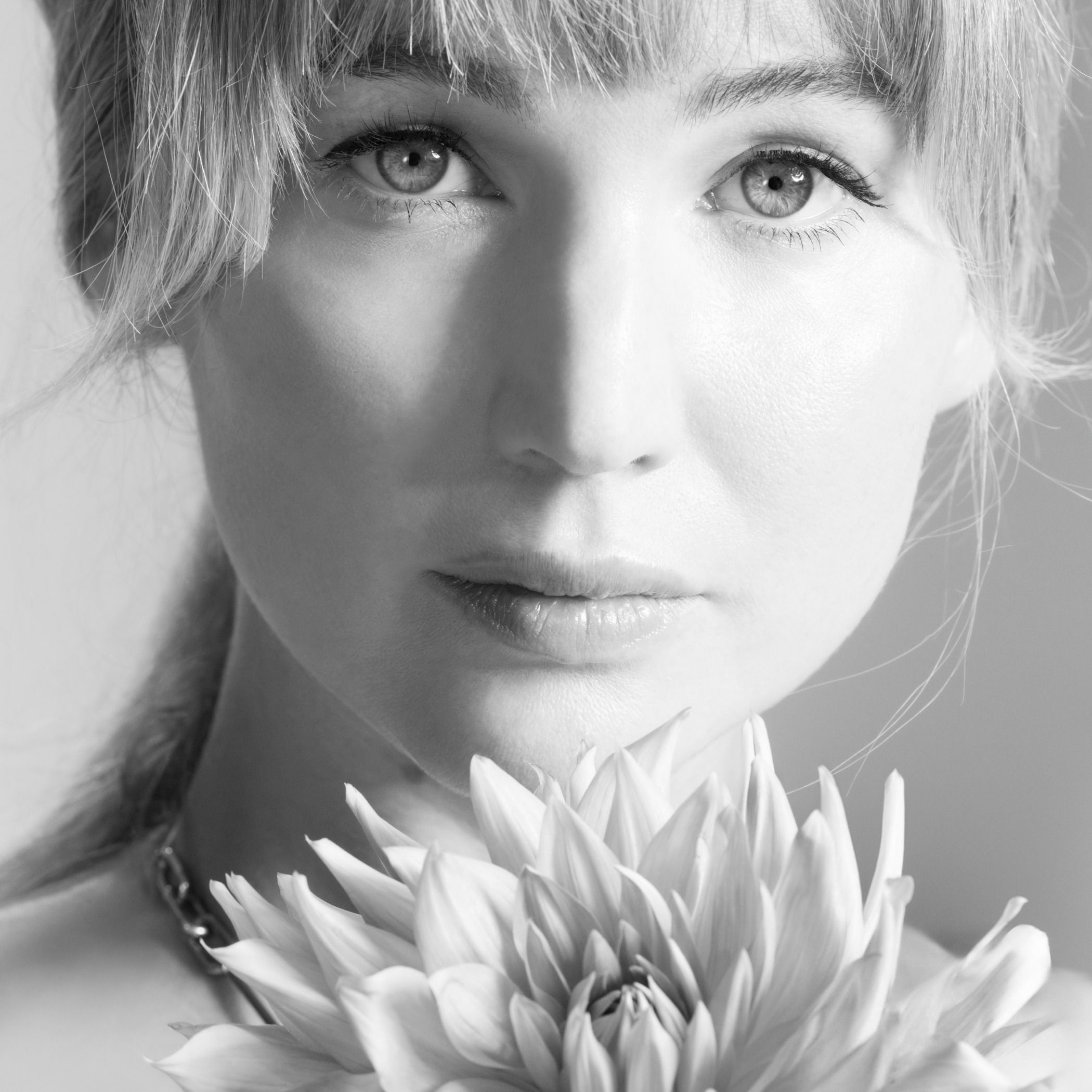
Jennifer Lawrence Regrets Everything She’s Ever Said or Done
36m 22s
In the interview, Jennifer Lawrence discusses her career, fame, and struggles with mental health, highlighting her experiences with anxiety and postpartum depression. She delves into her role in the film "Dy My Love," sharing how her personal experiences influenced her portrayal of a character dealing with motherhood and identity loss. Lawrence reflects on motherhood, creativity, and the challenges of balancing personal authenticity with public perception, particularly as a female artist. She touches on the complexities of interacting with the media and the scrutiny faced by women in the industry. Lawrence's candid reflections provide insight into her growth, self-discovery, and evolving approach to navigating fame and personal boundaries.
Transcription
6070 Words, 31989 Characters
Hi, I'm Juliette from New York Times Games and I'm here talking to fans about our games. So you play New York Times games? Yes. Do you have a favorite? Connections. H's Scratch is an H in my brain. It's really out of the box thinking of that game. I play with my husband every night. I refuse to let him play it without me. I love that it's like a real-life connection. Yes. While you guys play connections, it's very sweet. I promise I didn't play that. New York Times Games subscribers get full access to all our games and features. Subscribe now at nytimes.com/games for a special offer. From the New York Times, this is the interview. I'm Lutha Garcia Navarro. One of the things I often get asked about this job is what is the hardest thing about interviewing famous people? And the answer is both obvious and a real challenge. Many stars, and especially female stars, have experienced the ugly side of celebrity culture which has made them worry about opening up. That's also true for today's guest, Jennifer Lawrence. Lawrence had a heady start to her career, starring in two huge franchises, the Hunger Games and X-Men, and winning an Oscar for Silver Linings Playbook all before she turned 23. Off camera, the public couldn't seem to get enough of her offbeat humor and outspoken persona. Privately though, Lawrence told me she was feeling pretty beat up and was waiting for the inevitable backlash. And it came in waves of negative attention and headlines about whether she was too much, too annoying, too outspoken, a fake. So after almost a decade of being in the limelight in 2018, Lawrence took a step back from acting, fired her agency, and did some soul-searching. And now, as I found out when I sat down with her, she is demonstrably different. We talked in advance of her new fill, Lin Ramsey's "Dy My Love." She plays a young mother, losing her mind in rural Montana. Lawrence told me her character grace brought up a lot of complicated feelings because of her own struggles with post-partum symptoms. We started there talking about how this project came to her, which involved a very famous director and his very private book club. Here's my conversation with Jennifer Lawrence. Thank you so much for joining the interview. I'm so excited to talk. Thanks for having me. I want to talk about your new film because I have a lot of thoughts. This film was adapted from a book by Ariana Harvitz and Martin Scorsese was the one who wanted you to play this role after he read the book in his book club. When you reached out, what did he say? It was very complimentary. I would be remiss to repeat it. Please repeat it. No, it was very nice. I think, first of all, he said that I should read it, and that I would be good in it. I read it. I had just had my first baby. It was a lot. It was really overwhelming. I read it in one sitting. I was actually in a really good place in my post-partum journey. I didn't struggle in the kind of classic post-partum way. I bonded right away with my son. I think because of that, I was able to allow my mind to go to those darker places. I think if I was in a dark place and I read it, I would be too afraid of it. It's turning all the lights on and looking at the monster under the bed or something. Before we move on, who is in Marty Scorsese's book club? I know. I don't know. I could just ask. I think the worst he could say is I don't feel like telling you. Are you in a book club? I'm in a soft book club. We tried to make an official book, but we're just two different in our tastes. Back to the film. As I was watching it, it seemed to me sort of like this scream against the current elevation of domestic life and perfect motherhood as sort of the pinnacle of female achievement. What is this film about for you? It kind of morphs for me. I think that it's definitely about somebody losing her identity and motherhood and rage at not just her husband, but the change of the relationship, the change of the love. But what I really like about it is it's poetry. There's not kind of a single way to look at it. There's like a statement and then breathing room for you to read into what the statement means to you. Everybody I talk to comes away with something different. How do you view what grace your character is actually going through? Because I've read reviews that say that she has postpartum depression. I've read reviews that say that she is bipolar. I've read reviews that say that she has psychosis. What in first of all does it matter and then how you understood what she is experiencing? It's another thing that kind of morphed for me and never really felt like one thing. I was pregnant. I was in my second trimester. When you were filming this? When I was filming this. I think there were certain realities that I couldn't look at. I spoke to a postpartum specialist who told me that number one cause of death and mother is in the first year as suicide. That obviously went into thinking about the ending, the forest, what is the forest, what is the fire, do they find their way back to each other? What does all of it mean? I think I saw the forest as more of a cleansing. We should say at the end she walks into this burning forest. Are we supposed to do this? Am I going to ruin the movie? I don't know. You brought it up. That's why I have to be clear on what it is. I guess I have franchise paranoia, but maybe it's fine. I think there's not going to be a franchise of this film. I would agree with you. Anyway, she is someone who is very serious. She's really depressed. She's really unhappy. She's really angry. And I think the love that you have for your child, I think sometimes when I think that she was so lost that she felt like she was the only thing wrong with her baby. And that she was the only thing that could ruin her child. And when I watched it back after having my second child and actually experiencing postpartum depression that was a really, really weird experience. I walked away with so many different opinions about it that I don't want to share because then I'll give up the whole movie and the allegories. What am I doing? Well, let me ask you something else then. You just said you experienced postpartum depression after your second child. Can you talk to me a little bit about what that looked like for you? I guess that must have been surprising, perhaps, because I was ready and I knew what I was doing and I felt more confident. I just expected to feel the way I did with my first, which I feel like it should just be said. I think postpartum is just a physical experience that happens to everybody. Your hormones are doubling every day in your first trimester and then those hormones plummet after you have a baby. They plummet again when you wean. So my experience with my second was I just felt like a tiger was chasing me every day. I had so much anxiety. I had a nonstop intrusive thoughts that I was just like at the whim of they controlled me. Fear about your child, fear about yourself. Fear about my child, just picturing every worst case scenario. And then just doubting everything that I was doing, everything that you know. And then I was already in therapy, but I got on a drug called Xerzovae and I took it for two weeks and it really helped me. So if anybody is having postpartum Xerzovae, I'm not paid by them, but they could maybe throw me something. But that helped. Yeah, I went on a pill that was designed for postpartum. I took it for two weeks and it helped a lot. I'm a parent myself and also someone who suffered from mental illness PTSD and other things. And so, you know, I was watching the film and again, I think what's really powerful about the film is that it can't speak to different things that people have experienced. Yeah, there's a universality of course, anyone who's been a parent and a mother, but also just anyone who's struggled with their mental health. Have you other than that time of postpartum depression struggled with mental health issues, things like that that helped you sort of understand the character a little better? Yeah, I've struggled with anxiety for most of my life and anxiety's close friend is normally depression because by the end of the day or so exhausted from the like adrenal burnout that is just kind of plummet and get really sad from that. So, I've struggled with that before. I think more of what I brought into the head space is the feeling of just never feeling like you're doing it right? I just kind of like live in guilt and just, you know, is this the right breakfast? Is this what we should be talking about on the way home from school? I just kind of, I'm always worried that I'm failing them and I can keep myself from being like swallowed by that because I know I'm a good mom and I know my kids are happy and I have a great husband and I have like great support at home. So I can like do a reality check and be like, everybody's okay, you're just spinning, but she can't and she doesn't and so she really just goes there. So that was very easy for me to follow that that's kind of yeah, spin down the drain. The other thing that she sort of deals with is a loss of her creative self that is also really hard. I mean, one of the things that I think is as mothers, you can feel often is just how your child seems to just leech all of the. All of the energy, all of the feeling of motivation out of you and you just give it all to them and as someone who is in a creative field as an actor, I mean, was that something that you kind of were able to connect with? Yeah, I mean having kids is sacrificial and I was like gratifying and it's amazing and rewarding. It's all of the things, but it's not not sacrificial. And yeah, I've never had to say no to something before that I really wanted to do. I could just go do it. I do wrestle with it feels vain and selfish that I love being a creative person as much as I do. My kids and my family are more important, obviously. But they feel like equal parts of me, like an equal part, I would not be complete if I couldn't make movies, I just wouldn't. And on the one hand, like when I had my son, my first born, I was like being an actress, it's the perfect job for being hands on mom. I can go years without working. I can be so hands on, you know, and then I go work a little bit, they visit, yada yada yada and like this is perfect. And then now I'm realizing I'm like, oh, that was COVID. And you are quite busy. And so I'm kind of reckoning with that and have been of just like how much is it okay to love this and not want to give it up. I definitely relate to that. I found the opposite problem with creativity. I had so much anxiety when my second was born that the only way I could escape was in stories and books. And in particular, the American Revolution. And so I really lost myself and kind of ideas. And that's always been how I digest feelings. The American Revolution, do you tell? Well, I read this amazing book called The Revolutionary by Stacey Schiff. It's about exam atoms and just kind of, I feel like the closest thing we can get to a crystal ball is history. And I feel like we're all kind of fighting over what it means to be an American right now. And so I just was interested in what the original Americans ideals were. What did they think that they were building? What did they think they were getting away from? And what did they think they were creating? I do want to talk about the American Revolution and politics. But I wanted to ask you one more thing about the film that struck me. There's a lot of nudity in the film. There's a lot of unvarnished nudity in the film. And knowing that you were pregnant, I'm just wondering how you. We have such a complicated relationship in this country with nudity and women. And I was wondering how you thought about that in the film and challenges of that? I'm definitely not bothered by people that are bothered by nudity. They don't have to see it. They can fast forward it. But I don't really care about being judged in that way. There's this freedom of vanity in a way because I'm pregnant and it's my second. I really was not adequately prepared for how. I was like, "Oh, I'll just be like four or five months. I won't even start showing until I'm like six or seven months." And that's not true when it's your second. I just kind of had to let go of any vanity. I mean, I sucked in as hard as I possibly could have. But I wasn't going to die it. I was pregnant. I couldn't exercise. I was working. So there's just like this kind of like real freedom to it. Do you think I feel good? Yeah. Yeah. It feels nice. I mean, I do have moments where I'm like, "What technically are the differences between me and a prostitute?" But it doesn't keep me up at night. What? Well, I don't think that there's anything wrong with prostitution either. I'm not saying that there is. It's funny that your mind went there. Oh, I'm just very good at attacking myself. I can find every angle. In fact, I should do this interview. What would you ask you? No. I thought it would be so sad. I'm sorry. I have to ask you a question. You could say a couple of says, ask you for just your jacket. Oh, no. I mean, she didn't like something. What did I say? Actually, now that we're positive, I'm going to be. Okay. At this point, Jennifer Lawrence gets up. We take a little break. Then a few minutes later, she comes and sits back down for the rest of the interview. Is everything okay? Yeah. No, I didn't get yelled at. I just peed. I believe in freedom of the press. I believe in freedom of the press, too. It reminds me of one battle after another. Talk about freedom, baby. Okay, so the other thing is that you, your sort of persona in the world, has been someone who is very funny and out there, and has sometimes been viewed as like too loud, too much, and has sort of faced backlash, and also people are charmed by it. And I was wondering now looking back at that era. What do you think about how you were perceived and how you sort of interacted with the public as you were coming up when you were younger? I mean, now that I'm in my 30s and a mom, I can see that how young I was. When I meet a 23-year-old now, I may think about a 23-year-old. They're their children. And so as horrified as I am at some things, like if something comes across my phone, I just like absolutely could never watch it. Like an old interview or something. I'm just like, oh my god, like so cringe. But I get it. I was young and nervous and defensive and awkward. I remember when I was nominated for silver linings and somebody was like, everybody loves you. What does that feel like? I was like, they feel like precarious. I'm waiting for it because it's going to come down. That's just like the nature of things. And then I fell getting my Oscar. And then the next year, I remember the moment I was waving to fans and I tripped on a cone. And I remember being like, fuck, that's it. Like nobody's going to believe that. Nobody's going to believe that I fell two years in a row. I did. But it just became like people said that I faked it. That you faked it. Yeah. I didn't. And so that became I was just like, yeah, I'm fucked. And I was. Everybody just kind of thought that meant everything that I did was fake. And it was like all a stick. This is how it felt to me. That I just kind of got like found out as this like fraud. I mean, you said at that moment that you felt that other people had gotten sick of you and you had gotten sick of yourself. And I'm interested in that you had gotten sick of yourself. What did that mean? I was sick of doing this and doing interviews is really scary. Like, I'm very blessed. I'm very lucky. I'm very grateful. I have a great job. But it's terrifying. Like you finished an interview and. Or you know, you're gearing up to release a film. And it's like that, you know, the circus tent, the curtains are opening. And it's just like. You're putting yourself out there and you're putting yourself out there to be picked apart. And it's scary. I was just so tired of it. I was just so tired of being quoted and people talking about the quotes. You know, I just was so tired of seeing myself in that. In that way. I needed a break from it. People needed a break from it. And then I took a break and enjoyed the break. It was a mutual break. What did you do during that period where you took a step back? Because that was a two and a half year period where you weren't actually out in front that married. It was COVID. So there's reasons for all of that. But how were you recalibrating during that period? I really know. I lived with my cousin for a little bit. Hi, because we were like in our, I don't know, mid 20s. She just kind of moved into my apartment in New York and we became roommates. And it was fun. We watched TV. I took my dog to Central Park. Then I fell in love. When I started learning more about contemporary post-war art. As you do, as you do, my husband's an art dealer, right? May I ask how you met your husband? Yeah, he showed me art. I was considering buying something and I asked my friend Jean, who actually ended up directing me in no hard feelings. But I asked him, do you know anybody in the art world? And he sent me Cook's number. I didn't know. And then I showed up to the gallery. I was like, oh my God, what is your deal? And then he stopped being my, my art advisor. Do you find it hard to be your authentic self when you're trying to interact with the public because of what you went through? Because I saw you at this press conference that you gave in Spain and you seem a lot more reserved than you used to be, more careful, more considered. And I'm just wondering if that is deliberate? Yeah. I mean, I think I've also grown up. And I'm a lot more nervous about whatever I say publicly. I try not to, you know, I don't want to like give an interview that's like a bunch of sound bites and like a word salad. I just like, I don't think that that's like interesting and I don't feel like that's like what I'm like, it just would feel so and authentic and not like what I'm here to do. So I'm trying to strike that balance. I mean, I'm going to break the fourth wall here, but I mean, it's always a strange thing to do, right? I'm a journalist asking you questions. I obviously want you to give revealing answers and you have to protect yourself as an artist and as a private person in the world. So I often think about how complicated that that dance is, especially for women. I mean, do you think as a female artist that you have been treated differently than perhaps other, you know, men because you were young, you were open to the world in a way that perhaps other people aren't. You didn't seem so jaded, I think. Thank you. I don't know if it's different than if I were a man, because I've just never lived at that existence. I only know this one. That was a wrong question. No, no, no, I'm getting around to it. I'm just dancing around your question because we are doing the dance. We are. I feel it when it's time for women to be the morality police, you know, it's easy for me to see it when it's happening, you know, when somebody does a Woody Allen movie and they only asked the women, you know, well, how do you feel about working with Woody Allen, you know, and you can just watch it. You just watch not one male actor get asked that question and I see that play out a lot of just like women being the examples, women being the morality police and also I think there is something I don't know what it is. It's really easy to hate women viciously in a way that it's almost like we have this. Iron and us that specifically, there's like an extra pocket for it and the higher the people are capable of, I think is different. I never at any point felt like this is unfair because of my gender. I felt like this is unfair because you created this. You ask and you ask and you ask and you want and you want and you want and then you don't want it anymore and I felt like rejected but that's now that I'm older. That is a natural push pull of the process and I have to be in control of how much access is given and how much isn't. After the break, Jennifer tells me about being politically outspoken early in her career and why she's approaching things differently now. Celebrities do not make a difference whatsoever on who people vote for and so then what am I doing? I gave my brother a New York kind subscription. She sent me a long subscription so I have access to all the games. We'll do a word on any spelling bee. It has given us a personal connection. We change articles and so having read the same article, we can discuss it, the coverage, the options, not just news. That's a diversified bit. I was really excited to give him a New York Times cooking subscription so that we could share recipes and we even just share to recipe the other day. The New York Times contributes to our quality time together. You have all of that information on your fingertips. It enriches our relationship, broadening our horizons. It was such a cool and thoughtful gift. We're reading the same stuff, we're making the same food, we're on the same page. Connect even more with someone you care about. Learn more about giving a New York Times subscription as a gift at nytimes.com/gift. I did want to ask you about your relationship with some of your directors because you have been with directors who are known as being very difficult, challenging directors, people who are our tours have really clear visions. For example, when you were making mother with Darren Arnowski, you hyperventilated, you tore your diaphragm, you got medical attention, and then he made you film the scene again when you got back. I'm just wondering what that kind of intensity does for you. How do you work with directors who really bring that out and you and demand that of you? I stay loose. I think David O'Russell really taught me how to. I think because of David, I've never really mattered what the director's kind of methodology is. I mean, Amy Adams, who was in American Hustle with you, and that was obviously David O'Russell, said of you, Jennifer doesn't take any of it on. She's Teflon, sort of saying that you don't absorb some of that stuff. Yeah, I didn't. But I really felt like David, that was his way of communicating in a non-bullshit way. I never felt like he was degrading or yelling at me. Like if he didn't like something, he was just like, that was terrible. It looked like shit. Do it better. And that was like a very helpful conversation. I'm like, oh, okay, they do it better. How so? I don't know, slower. Not so loud. It was just very, you know, and I'm not sensitive. I don't know how you can be in this industry. Especially, I mean, these young girls, hopefully, are going to grow up in a different way. I mean, Amy Adams said that she cried on set. When she talked about you being Teflon, she said that for her it was hard. Well, he might, maybe he was harder on her than he was on me. And also, I don't know. I mean, yes, of course I'm sensitive. I'm really sensitive. I was about so we literally had this entire conversation about how sensitive you are. I'm so sensitive. I can't believe I just said that. That when I had a conversation with a girl the other night, she was like, oh, I'm the middle of two, with two brothers. And I was like, I'm the middle child with two brothers. And we just like talked about it passionately for five minutes. And then I was like, I'm the youngest. I'm sorry. And she gave me the weirdest look, obviously, because that was that. I'm like, I'm not sensitive. I'm extremely sensitive. I was going to say I didn't want to say anything, but I was like, we have talked now for a moment about more sensitive than Amy Adams. Just flat out. I guess I don't mean anything I say. Do you still want to continue interviewing me? Absolutely. But maybe you're less sensitive about the acting. I guess what I'm trying to get out here. I'm not sensitive about acting. I'm not competitive about acting. My husband is always really amazed because I am so competitive. Like when we play tennis, I throw my racket, I scream, I rage. I like, I can't do a puzzle. I'm so competitive. I make eye contact with him when we're brushing teeth sometimes because I'm like, I did it a little bit longer than you to do notice that. And so he finds it fascinating that I'm not competitive with acting. But I think it's because I feel secure. So why would I get competitive? I feel fine. And so when it comes to getting the director, I mean that you need to have a visionary. I think it's working with a real artist that I can trust. I mean, you're about to do a film with Martin Scorsese, which is coming out. I don't know if I trust him. Yeah. I mean, why would you? He's going to have to really prove himself to me. Tell me about in advance of working with a director like Martin Scorsese, you haven't actually been directed by him. I mean, how do you prepare for something like that? I'll probably do what I always do, which is panic and then try to get in touch with like an acting teacher and then meet the acting teacher and then never see them again. That's what's your process. That is my process. And at this point, it's almost like superstitious if I don't take the one meeting and then not follow up. I'll read, I'll be prepared. I'll memorize. Leo is, you know, Leonardo DiCaprio. We work together and don't look up. And he knows when his character was born and what kind of cologne they wear. And like Leo and one battle after another is so serious and his commitment. So it's so real. And that's what makes it hilarious. You know, his sides are covered and like he's like Carrie Matherson, you know, and homeland. I don't know what the whole script. You don't know what sides mean. Oh, excuse me. Sorry. I didn't mean to get all of silver screen on yet. Well, kid. The sides are just like a few pages, like a scene from the whole script. So when I was working with Leo, I was just like, I got to be doing whatever he's doing, like this is incredible. But Christian Bale changed me a lot to an American hustle. I was 23 and I remember like I was always very sensitive about getting embarrassed in front of the crew. And like I thought acting was like embarrassing. And so I would just kind of try to make a point of like not acting until I just absolutely had to like an action. But then I would see Christian, who didn't like it's not like he's stating character like all day or anything like nothing. He just, when the crew started getting ready, you know, like in the light, started getting ready in the sound. And it became clear. We were going to start rolling soon. He would kind of slowly start getting ready. And then I was like, that seems like a good idea. And I should do that when I'm more mature and can handle people looking at me and being like, she's acting. You mentioned one battle after another. Oh, my God. I saw it last night. I know that it is now further in the future. If you're hearing what time stamping it, you saw it last night. I saw it last night and 70 millimeter IMX as God intended. It's the most incredible movie I've ever seen in my entire life. I feel so grateful. Just for that to exist. I just like kiss the ground that that movie walks on. It's also a film that it speaks to as we started discussing. It speaks to this political moment in a very interesting and important way. That is funny, that is complicated. It's a good idea. It's not a bad idea. What do you mean? I'd rather Lucian. You have been politically outspoken in the past. In the first Trump administration, you know, you had a lot to say. I'm curious how you feel about talking out now. I don't really know if I should. I think the first Trump administration was so wild. And just how can we let this stand? I felt like I was running around like a chicken with my head cut off. But as we've learned election after elections, celebrities do not make a difference whatsoever on who people vote for. And so then what am I doing? I'm just sharing my opinion on something that's going to just add fuel to a fire that's ripping the country apart. I mean, we are so divided. I think I'm in a complicated recalibration because I'm also an artist. And with this temperature and the way that things can turn out, I don't want to start turning people off to films and to art that could change consciousness or change the world because they don't like my political opinions. I want to protect my craft so that you can still get lost and what I'm doing, what I'm showing. And if I can't say something that's going to speak to some kind of peace or lowering the temperature or some sort of solution, I just don't want. I don't want to be a part of the problem. I don't want to make the problem worse. I mean, I saw you at a press conference recently when you were speaking about Gaza point to our elected officials as the people who need to be responsible for answering those questions and not putting that on actors and other celebrities to sort of take a stand. Just like if it's like looking at a chess board, you know, you just watch these actors faces who have had incredible careers and done amazing things that made incredible contributions that all of a sudden one half of the internet or one half of the country just can't stand anymore. They don't want to see their face anymore because blah, blah, blah, blah. I had so upset for those people and those actors and it just feels so wrong. So I don't, I don't know, I try to express myself and my politics through my work. I made a documentary called Bread and Roses at the Taliban retake over in Afghanistan and Sarovsky versus Texas about the abortion ban. So much a lot of my movies coming up for my production company are expressions of the political landscape. That's how I feel like I can be helpful. That's how I feel like I can, I don't know, bring awareness or do something. Do you regret how you dealt with things before? I don't know, probably. I mean, I regret everything I've ever done or said, but five seconds after you've done or said. Yeah, of course. I'm going to take the zip drives out of all of these cameras when I leave. The second term feels different because it's like we all knew he said what he was going to do. We knew what he did for four years. He was very clear. And that's what we chose again. I think there's something that just feels different about the second term. I want to thank you for being so thoughtful. Thank you. Thank you for having me. That's Jennifer Lawrence. Her movie Die My Love will be in theaters starting November 7th. To watch this interview and many others, you can subscribe to our YouTube channel at youtube.com/@symboltheinterviewpodcast. This conversation was produced by Seth Kelly. It was edited by Annabelle Bacon, mixing by Sonia Errero, original music by Dan Powell and Marion Luzano. Photography by Philip Montgomery, our senior booker is Priya Matthew and Wyatt Orm is our producer. Our executive producer is Alison Benedict. Video of this interview was produced by Paola Newdorf, cinematography by Zach Caldwell, with additional camera work by Jenny Levitt, Luke Pietrovsky, Zebediah Smith, and Alfredo Chiarapa. Audio by Nick Pitman. It was edited by Eddie Costas. Brook Mentors is the executive producer of Podcast Video. Special thanks to Alyssa Wilkinson, Roy Walsh, Ronan Burrelli, Jeffrey Miranda, Maddie Messiello, Jake Silverstein, Paula Schumann, and Sam Dolnick. Next week, David talks to Fox News' late-night star Greg Gutfeld about his hit show "Humor in the Time of Trump" and why he thinks the right is having all the fun. The way people view conservatives versus liberals is Dean Wormer in Animal House. The liberals are in Animal House. The conservatives are always Dean Wormer. And my goal was to flip that. I'm Lulu Garcia Navarro and this is the interview from The New York Times. [MUSIC]
Podcast Summary
Key Points:
Jennifer Lawrence reflects on her career, fame, and struggles with mental health.
She discusses her role in the film "Dy My Love" and her personal experiences with postpartum depression.
Lawrence shares insights on motherhood, creativity, and her relationship with the public and the media.
Summary:
In the interview, Jennifer Lawrence discusses her career, fame, and struggles with mental health, highlighting her experiences with anxiety and postpartum depression. She delves into her role in the film "Dy My Love," sharing how her personal experiences influenced her portrayal of a character dealing with motherhood and identity loss. Lawrence reflects on motherhood, creativity, and the challenges of balancing personal authenticity with public perception, particularly as a female artist.
She touches on the complexities of interacting with the media and the scrutiny faced by women in the industry. Lawrence's candid reflections provide insight into her growth, self-discovery, and evolving approach to navigating fame and personal boundaries.
FAQs
Jennifer Lawrence's new film is about a young mother losing her mind in rural Montana. Martin Scorsese recommended her for the role after reading the book in his book club.
Yes, Jennifer Lawrence experienced postpartum depression after her second child. She described feeling like she was being chased by a tiger every day.
Jennifer Lawrence sees Grace as someone losing her identity and grappling with motherhood and rage. She appreciates the poetry in the character, allowing for various interpretations.
Jennifer Lawrence embraced the freedom of vanity during her pregnancy, letting go of any concerns about her appearance. She did not mind the nudity in the film.
Jennifer Lawrence felt tired of being judged and quoted in a certain way by the public. She took a break from the spotlight to recalibrate and enjoy some time off.
Jennifer Lawrence has struggled with anxiety for most of her life, often accompanied by depression. She also shared feelings of guilt and self-doubt as a parent.
Chat with AI
Loading...
Pro features
Go deeper with this episode
Unlock creator-grade tools that turn any transcript into show notes and subtitle files.
 PodcastTranscript AI