Go back

January 1926 with Nathan Oxenfeld and Yannic Schwerdtfeger

141m 3s

January 1926 with Nathan Oxenfeld and Yannic Schwerdtfeger

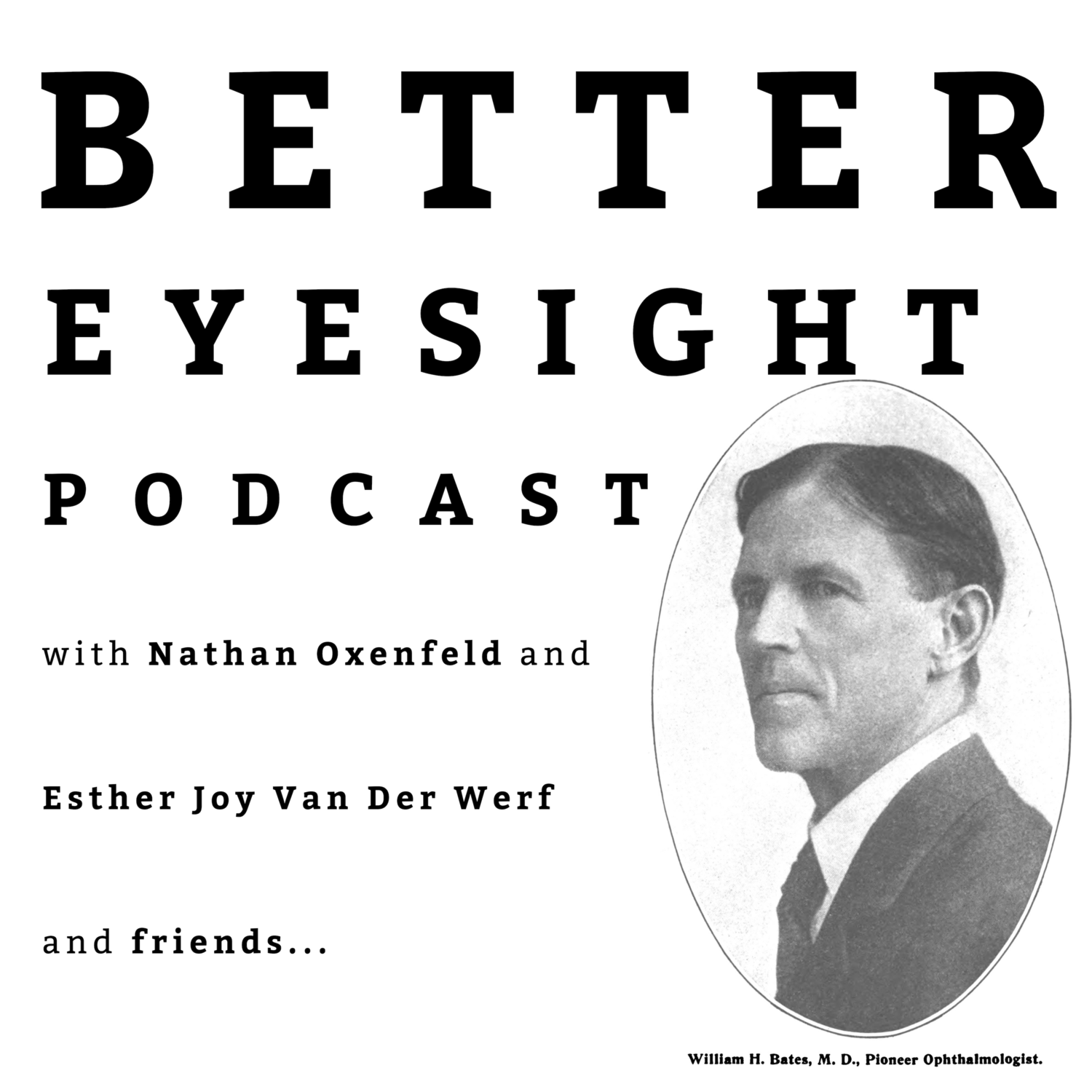
This podcast episode features a discussion on the January 1926 issue of *Better Eyesight* magazine, originally published by Dr. William H. Bates. The hosts explore two key articles: "The Period" and "Swinging." The first article asserts that perfectly remembering or imagining a small period (dot) can cure imperfect sight, emphasizing relaxation, central fixation (seeing one part best), and mental shifting without effort. It notes that this practice can enhance mental and physical efficiency, even relieving pain. The second article, "Swinging," describes how individuals with normal vision perceive stationary objects as moving opposite to eye movement; this swing is absent or modified in those with imperfect sight. By practicing and imagining this swing, one can reduce strain, improve vision, and alleviate conditions like pain or mental discomfort. Both pieces underscore that natural vision improvement hinges on relaxation, mental techniques, and avoiding forceful efforts, rather than relying on glasses or rigid exercises. The episode also touches on personal anecdotes and practical applications, encouraging listeners to experiment with these methods for themselves.

Transcription

19167 Words, 101004 Characters

English
The readers of this podcast are quoting the exact writings word for word from the original better eyesight magazines which are in the public domain. The views and opinions expressed in these magazines and podcasts do not necessarily reflect the views and opinions of the readers. The content of this podcast is intended for educational purposes only. It is not in any sense diagnosing or advising any medical treatment for any pathological condition and is not a replacement for advice or care from a qualified health care professional. Hello and welcome to episode 79 of the Better eyesight podcast. This is Nathan Oxenfeld. I'm excited to be joined by Yannick Schfertfeger today to read the January 1926 edition of Better Eyesight magazine which was a monthly magazine devoted to the prevention and cure of imperfect sight without glasses originally published by Dr. William H. Bates and his team 100 years ago. And we're here at the start of a new season to bring in 1926 and 2026 and also kicking it off with a brand new guest. So I got to hang out with Yannick in Spain in Valencia at the big international holistic vision conference at the end of 2025 and definitely a big highlight of my year personally and it was really cool to get to know you more Yannick and excited to have you on the show. Welcome to the Better Eyesight podcast. And Nathan, great to be here. Thank you for inviting me. This whole magazine and your podcast was a big help for me and very happy to be here. Oh wonderful. And you're coming in from south of Munich, Germany so you're teaching vision improvement over there in Deutschland in Deutschland. I always hear you I'm saying some German words so you do that very well and I try to speak good English. Awesome. Yeah. Very excited to have you on and I'm excited for the topics that we get to talk about today. There's a lot of emphasis on movement like shifting and swinging but also relaxation and paulming and there's also a lot about the role of like memory and imagination as well. So I'm excited to dig into that topic which I'm always fascinated by. We have another fairy story from George Guild and lots of case histories and success stories of people successfully turning around vision problems and improving them naturally. And there's always a nice big questions and answers section at the end. So a lot to cover today. So do you feel like jumping into it together? Absolutely. Let's go for it. Wunderbar. You want to start with the first book? I'll take away with the first one called the period. Article 1. The period. The perfect memory or imagination of a period is a cure for imperfect sight. Only the color needs to be remembered. The size is immaterial but a small period is remembered with more relaxation than a large one. It is true however that with perfect sight one has the ability to remember all things perfectly. One cannot remember a period perfectly by any kind of an effort. It usually happens that one may remember a period for a time and then lose it by an effort. To remember a period stationary is impossible. One has to shift more or less frequently in order to remember one period perfectly all the time or one has to imagine the period to be moving or one has to remember the period by central fixation one part best. By shifting is meant to look away from the period and then back but to do it so quickly that it is possible to remember the period continuously although you are not looking at it all the time. This with the eyes closed. Every time you blink you shift your eyes. You can blink so rapidly that it is not noticeable. When you close your eyes and remember a period you cannot remember it unless you are with your eyes closed going through the process as though you were blinking looking away from it and back again but so quickly that it seems as though you were looking at the period continuously. You cannot remember the whole of the period at once no matter how small the period is. You cannot see or remember it perfectly all parts equally well at the same time. You cannot remember the period perfectly by any kind of an effort. When the memory of the period is perfect the mental and physical efficiency is increased. A perfect memory of the period does not necessarily mean that one should think only of the period. Thank you Nathan for reading this article. I really love the simplicity of the period and it's just great how it it shows everything about vision with this simple thought in your head. That's really really love about this simple stuff. What do you think about it? I love the words you're using to describe it simple because not only is a little dot quite a simple image but yeah this is almost sort of a simple technique if we want to call it that but at the same time it can also be a little confusing and intangible because it's not a always a physical period. A lot of times he's talking about the memory or imagination of a period. It's quite a bold claim in that first sentence. The perfect memory or imagination of a period is a cure for perfect in perfect sight. You can read that and get like really excited of like oh I just found a simple answer. But then you know how do we apply that and what does that actually look like and feel like so I have a story from one of my students I can share about that because sometimes we start with the period but then we replace it with a different image and so one of my students decided to replace it with a duck and this idea of okay my job if I want to be working on improving my vision is to remember the duck and imagine this duck while I'm doing other activities and she was finding it pretty challenging to like not only keep remembering it but to like practice holding it in the mind and it was interesting because she was describing it as sort of like an unused muscle. It feels like a weak muscle like it's almost like this mental focus takes some training but in the session we were able to kind of come up with some ways to make it a little easier and come back to that that word that you said sort of simplify it as well because I think we can sort of overcomplicate it and it almost make it harder than it needs to be and I love that duck because I think with a duck you have kind of a with that picture she had kind of emotion behind it so you can kind of remember that emotion with a picture and I think that's very helpful and that's also so interesting with the period because it's I mean it's a period but it's also showing so much of how our vision is working and that's so interesting about it and now it's like kind of what was my mind like how did Dr. Bates even come up with this you know like to boil all this stuff down to just one little dot it's very impressive it's very creative but I think not only is the very beginning of this article quite important but I think the last sentence is also super important a perfect memory of the period does not necessarily mean that one should think only of the period yeah I think that was kind of at the root of the difficulty of the duck for my student was there was this feeling of like I need to always be thinking about it or only be thinking about it and it almost then kind of turns into a stare as opposed to it being a very sort of relaxed um continuous memory of it that's sort of a fine line to walk there absolutely and that's already with the dot I think it's it's kind of hard to imagine the dot the period follow of people because they're straining through I have to see this and yeah it's really that letting go of it and look around it and then it maybe flips into your mind and that's very yeah that's cool yeah you're reminding me of how he was talking about the idea of sort of shifting away from it but coming back to it quite fast almost so it feels like you didn't look away from it or you know the blinking every time you blink yeah also after blinking in the imagination that's that's pretty cool to to get other senses in there and that's kind of making the scene real or as relaxing as so you can really think about the period yeah I don't think everybody knows they can blink with their eyes closed I know one of my other students recently that was kind of a big revelation for her was like I would just close my eyes and kind of not do anything or not move but then I started like doing the motion of blinking of my eyelids even while they're closed and it like really increased her relaxation and and helped with this visualization thing too because you need to blink even when they're they're closed you know I love how this whole article is about the the mental period and practicing doing these things with the eyes closed and the other big principle here is central fixation and specifically mental central fixation absolutely because I like that clarification of remember the period by central fixation one part best which might challenge people because the the period is already maybe pretty small and then you're being asked to imagine or remember just a smaller part of it at a time and that could maybe be a challenge at first but hopefully it'll feel really good to do it that way instead of trying to see the whole period all at once or imagine the whole period at one time absolutely and it really kind of demonstrates the central fixation in your mind that for most people it's easier to imagine the small period to imagine something smaller and bigger and then often they start imagining a big dot big period something very big and then when you shrink it down getting kind of easier in the mind and that really shows everything yeah yeah because I don't know about you but I've heard a lot of people report difficulty with the physical central fixation like if they're near-sighted and things are blurry in the distance they look in the distance and it's difficult to connect with the central vision or to you know see that one part of one small object best because it's blurry but I really think this period thing with the eyes closed and imagining these tiny movements it's really giving the person an experience of central fixation without the physical eyesight playing a role it's just the memory the imagination and then maybe after practicing that with the eyes closed then they look in the distance with eyes open and it's like oh remember what I did with that little black dot I was able to kind of shift to the left and the above and the side and back and and now I'm able to do that on the tree in the distance yeah it's kind of like this training for the physical central fixation yeah and training without the the eyes training that's so important to know the relaxation with it yeah yeah because that comes up a couple times you can't do this through effort yeah not just not just in this article right true relaxation is the key yeah absolutely and I also love the second sentence where it talks about yeah um only the color needs to be remembered and to go away from that well that's the size that's the form that's the edges or something just think about the color it's easier for you that's amazing yeah and it's pretty much to me I get the sense it can be any color it's not like you know sometimes you'll see in beta's work this swimming black period and a lot of times when we see periods written in you know paper it is in black ink so there's maybe part of the reason why but here it just says only the color needs to be remembered so it could be a period of any color yeah he also does claim the size is immaterial but like you mentioned usually the smaller the period is to remember with more relaxation than the large one but it doesn't mean you can't experiment or maybe like you said start with the larger one just to kind of feel it out and then eventually refine it down absolutely and it's I think it's just a great way to train the center of fixation and the whole idea of awareness of it and get it in this picture in the head yeah and it starts in the head and it is very mental memory imagination visualization but it does affect the physical too you know there is the section towards the end where it's talking about how with the memory of the period physical efficiency is increased yeah and in other places we see even in this magazine in an upcoming article there are hints that central fixation and this period practice can help decrease pain and it's something I experimented with when I broke my leg and was going through lots of physical therapy and was dealing with all kinds of new painful sensations I would do this I would remember I would do my best to remember a perfect little black period and imagine it swinging and centralized you know on the top and the bottom and it was pretty amazing how it worked I mean it was like fun to kind of like test out these theories that baits puts forth and obviously I'm not wishing pain upon anybody but if if anybody does have pain and you try this you could experience some relief from it maybe maybe not but could be worth trying and seeing not much to lose other than maybe the pain absolutely and it can be always the one thought that relaxes you because with your physical pain it's so much off it's just thinking about a dot and not trying to fix something in your mind or something yeah it's great yeah yeah yeah so I love these little short articles because they they tend to set a theme for the rest of the articles and just being at the beginning of this new season looking ahead to all the 1926 better eyesight magazines to come it looks like from here on out there's a lot of demonstrate articles to start off the magazines so the title of this one is the period but moving forwards it just says demonstrate and then the the article itself gives you a different kind of practice to try out so I have a feeling this year is going to be very hands-on and very practical and I'm excited for people to be testing these theories and trying these things out for themselves because that's really the only way to find out you can read about it you can listen to the podcast you can watch videos but until you get into it yourself and experience it that's truly when when you'll see it absolutely that's the only way yeah and the next article is a little bit hands-on I guess yeah yeah because there's a whole article by baits here called swinging which I'm really excited about because not only is it going to continue unpacking some of what we've already talked about but like you said at the end it includes a nice little user manual or little guide for the main types of swings so yeah do you want to read our second article or is there any any last points from this first one the period that you wanted to touch on no absolutely I would love to read the next article all right swinging by William H. Bates MD swinging when the eyes move slowly or rapidly from side to side stationary objects appear to move in the direction opposite to the movement of the head and eyes people with normal vision are not always conscious of the swing when called to their attention however they can always demonstrate it and are always able to imagine all stationary objects to be moving in imperfect sight the swing is modified or absent this is a truth which has been demonstrated over a long period of years by a great many people and no exceptions have been found the normal or perfect swing is slow short easy and continuous when the swing is normal it is always true that not only is the vision normal or perfect but also the memory the imagination or the mental efficiency correspond when the memory is imperfect the imagination the mental efficiency and the sight are also imperfect all cases of imperfect sight from myopia or near-sighted ness become normal when we when the swing becomes normal the same is true in cataract glaucoma diseases of the optic nerve or retina for example a woman aged 63 was treated for imperfect sight from cataract a vision was 10 to 100 and was not improved by glasses for 20 years see had not been able to read a newspaper with or without glasses in three visits with the help of the normal swing her vision approved to 10 10 minus with flashes of normal vision and she read diamond type at 12 inches rapidly without glasses other similar cases have been relieved as promptly it is important to understand how the swing can be imagined some people with mild cases of imperfect sight can imagine a letter or other objects to be moving when they see or remember it perfectly there are many others who fail severe pain fatigue or worry often prevents the demonstration of the swing blinking and parming are helpful and demonstrating the swing the distance of the object regarding is important the patient should be placed at a distance at which he can't best demonstrate the swing the distance varies with the patient it is unfortunate that many patients consider the swing complicated or impossible however they can usually demonstrate that a sterile strain lowers their vision when holding a test card at a convenient distance from the eyes patients may be convinced that the test card is seen better when moving they may not profit by their experience but continue to stare or strain which always lowers the vision one patient was unable to imagine any kind of a swing he was suffering from pain mentally pressure and imperfect sight for the distance reading the newspaper even with glasses was impossible since nothing he tried gave him any relief I suggested that he stop trying to see and make no effort to imagine stationary objects to be moving he practiced this while sitting in my waiting room he paid no attention to the apparent movement of stationary objects nor did he look at any object more than a fraction of a second his vision after that improved from 2050 to 2010 he became able to imagine the movement of objects and demonstrate it that all of his pain and mental depression were caused by a stare or an effort to see all things stationary when he regarded remembered or imagined him he was comfortable when he imagined objects moving or swinging but very uncomfortable when he made an effort or imagined them to be stationary recently I tested the side of a girl about 10 years old she read the snout and test card at 10 feet with normal vision she was asked do you see any of the small letters moving from side to side yes she answered they are moving now can you imagine one of the small letters stationary at once she quickly looked away and frowned why did you look away her father asked her she replied because it gave me a pain in my eyes and head and the letters became blurred don't ask me to do that again the experience of this child is the same as that of everyone young or old with perfect or imperfect side when the side is normal and continuously good to try to stop the swing of a letter or other objects necessity and the strain an effort which always lowers the vision produces discomfort or pain in one of both eyes it has been repeatedly demonstrated that a letter or other objects can be remembered or even imagined perfectly and continuously unless one can imagine it to be moving or swinging not only does the side become imperfect but also a memory imagination judgment and other mental processes are temporarily lost these facts should be known to teachers because they greatly affect the side the mental efficiency and the scholarship of their pupils when the memory imagination vision are normal the eyes the brain and the entire nervous system are at rest the reverse is also true for when the muscles and nerves of the body are not at rest the side memory and imagination are imperfect and the mental efficiency is lessened or lost it is impossible to imagine pain or any symptom of disease and the normal swing at the same time children with whooping cough have been immediately relieved by the relaxation obtained from the swing many patients suffering from severe attacks of bronchitis have been promptly relieved in the same way angina pectoris proymonia trifacial neurologia and other serious diseases have also been relieved after renexational rest was obtained with the aid of the swing the swing is generally beneficial some patients obtain more relaxation from one type of swing than from another the long swing however is most helpful in a great many cases the long swing stand with the feet about one foot apart turn the body to the right at the same time lifting the heel of the left foot the head and eyes move with the movement of the body do not pay any attention to the apparent movement of stationary objects now place the left heel on the floor turn the body to the left raising the heel of the right foot alternate pain and fatigue are relieved promptly while practicing the swing when done correctly relief is felled in a short time the long swing when done before retiring lessons eye strain during sleep the variable swing hold the forefinger of one hand six inches from the right eye and about the same distance to the right looks straight ahead and move the head a short distance from side to side the finger appears to move in the direction opposite to the movement of the head and eyes drifting swing the patient does not think or nor regard anything longer than a fraction of a second it is helpful in doing this for the patient to imagine himself floating down a river you may be able to imagine the drifting movement of the boat in which he's floating better with the eyes closed than with them open in this case alternate the imagination with the eyes open and with them closed the imagination may be improved in this way the short swing when the side is normal one can demonstrate the short swing when it is imperfect one can demonstrate only the longer swing when a patient with imperfect side regards the snow and test card at 10 or 15 feet he may be able to imagine one of the letters on the card to be swinging a quarter of an inch or less the imagination of a short swing always improves the sight some patients can imagine the short swing better with their eyes closed than with them open alternate the imagination of the swing of the letter with the eyes closed and with them open where repetition the vision of the letter with the eyes open will improve at first and flashes later more continually if the memory of the short swing is perfect with the eyes closed the universal swing and the eyes are at rest they are always moving when the body is at rest it can always be imagined one part in turn to be moving or swinging the chair on which the patient the patient is sitting is swinging the floor on which the chair rests is also swinging the walls of the room are also swinging on the floor swings when one part of the building swings one can imagine the whole building to be swinging the ground on which the building stands it's also swinging when the ground swings other buildings connected with its swing one can imagine the whole city to be swinging this continent and all other continents on the earth can be imagined swinging in short one can imagine not only that the whole world is moving but also the universe including the sun the moon and stars the practice of the universe and swing is of the greatest benefit for in this way one can obtain the maximum amount of relaxation wonderful thank you yonik for reading swinging this one is a good one it's i love baits as articles they are chock full of important information and little nuances that may help you glean something new from something that you may have already known like the swinging was one of the first things I was taught in the baits method you know like 15 years ago now and yet I still learn new things about the swing today you know from this article so it's kind of hints at the nature of this work is that there's layers to it and it's almost going to like the more we relax the more we get because I was like full of strain when I was first learning the swing yeah so I got it to an extent but but then as things relax more then it's like I was able to take it to the next level and understand more absolutely and the the awareness is just rising so you can read the same thing or get the same thing over and over again and learn something new and so it's awesome yeah yeah because it's we're given a pretty simple straightforward definition of swinging which might be helpful just to repeat when the eyes move slowly or rapidly from side to side stationary objects appear to move in the direction opposite to the movement of the head and eyes I think a lot of people my self included kind of stop the definition halfway in other words I think I was just thinking swinging is when the eyes move slowly or rapidly from side to side period and I wasn't including the appearance of stationary objects moving oppositely into the I mean I was seeing it but I wasn't I don't think I was including it into my understanding of what swinging is yeah absolutely I was I was kind of I was seeing the swing first I would say in in like 2D there's like a plane wall with a period on it and it goes from left to right and when that swing opened out it was really a 3D seeing space experience seeing the things in the distance and then seeing space and how it moves differently in different distances and and that I also love that and in this article that he's talking about these different swings yeah because for me when I started and I tried to make it left and right the letter was like going up and down and somewhere else and like with a period and first I tried to make it right and then I was happy to learn that the swing can go in any direction and it's right like it is that's so much more relaxing to let it swing then to try to swing in yeah yeah that's so funny you're making me remember so early on in my process I got index card 3 by 5 index card got a sharp black sharpie marker do a black circle right in the middle of it to practice this and like okay I'm gonna look at the left side of index card the right side and like can I see that that dot moving and yet felt a little arduous and like I wasn't really getting it in a relaxed way and yeah I think I was also probably limiting it to maybe either 2 2d looking like you said or maybe just one direction but yeah it really is omnidirectional and hopefully omnipresent you know it's this thing that baits claims that people with really good eyesight you know that they're in a constant swing which means they never see an object stationary everything is always moving yes but it might need to be called to their attention like at the beginning it says you know they're not always conscious of the swing so they're in a state of constant seeing things moving but it's normal that's just the way things look and it's with the imperfect side with the blur that then the swing gets interrupted absolutely and then people are trying to grab it and keep it stationary yeah absolutely yeah not only does he give us a little menu of different swings like the long swing variable swing drifting swing short swing universal swing so it might be good to unpack those a little bit but he also gives it a more overarching definition of what a normal or perfect swing is and he uses words to describe it like a perfect swing is slow short easy and continuous yeah and it's also something to receive and I think he's telling this because it's something that is just there that's not something you have to you have to produce yeah it's like a natural state of being and then the stare is the effort you know that's what we're doing to get in the way of the natural resting state which is swinging and then the steering is that strain that comes in on top of it and gets in the way of the movement absolutely and it shows again that it's nothing we have to do more it's something we just have to not stay in the way yeah because it's happening yeah that was actually I'm grateful you just said that because that was a big realization I had about a later article in in this episode about the students experience so I'll make a note to bring that back up when we get there yeah based off what you just said in this one but until we get to that students experience there is one case history in this swinging article or a couple of them but I'm thinking of that 63 year old woman with the cataract and just through the swinging it was able to loosen things up and not only benefit the cataract but the visual acuity got much better and it is one of these cases where it seems like a pretty fast change which once again people listening might be like well I want it to work in one day but sometimes there's layers to release and you know more swinging is necessary to get those kinds of results sometimes too absolutely and I think like with the long swing it's kind of beneficial to everyone maybe not this amount but even if if it's just a little bit you can improve these little steps and that's really the game changer I would say in this direction yeah yeah I was also enjoyed the other story about the 10 year old girl who was looking at the chart the eye chart and she was asked if she saw the small letters moving from side to side and she said yeah they're all moving but then she was asked if she could imagine one of the small letters stationary and she had to look away from the chart and she frowned and and the father asked why did you look away and it's because it gave me pain in my eyes in my head and the letters became blurred don't ask me to do it again and that is almost verbatim to what one of my students experienced in Canada his wife has really good eyesight and he has myopia so he's working on improving his vision using the eye chart so his eye charts up on the wall and he asked his wife to look at it like what do you see you know you have good eyesight like we're he and I were learning about the swinging and the shifting and seeing things moving so he wanted to ask someone with good eyesight if that's really what was happening or not and sure enough you know he was like she was seeing all the way down to the bottom and he was like well how are you seeing that she's like oh well my eyes are bouncing around like that's the word she used to describe as their bouncing and she wasn't even talking about seeing the letters moving per se it was more so feeling oh my eyes are moving but then he asked you know she asked him like well what do you do when you look at the chart and he said well I stare at it and and so she he asked her to try that and within two or three seconds of staring she had to stop because it physically hurt it was painful yeah and that was like a huge wake up call for him to realize that wow I've gotten so used to staring that not only does it not hurt but it's actually become kind of my main way of trying to see things yeah so that then that became a goal for him is like I I need to get to the point where staring hurts just like this little girl experience 100 years ago it was physically painful to stare at the chart don't do it again and I mean for for the most people there's like on this path go to go out of staring there's there's this moment where you realize where you feel what is happening unconsciously or what was happening unconsciously before all the time and yeah it's just I mean this kid is demonstrating it perfectly and I think that's the whole problem with with the testing it sits still and stare at it until you get it right it's kind of yeah and totally get it right and it's kind of figured out that's the way how every vision gets blurry it's just not the way to use your eyes properly yeah yeah I mean it I think that revelation comes through in his writing in the first paragraph he says this is a truth which has been demonstrated over a long period of years by a great many people and no exceptions have been found so to think about how many thousands of pairs of eyes he has studied at this point and how there's just this you know resounding truth that every single person that I analyze that has some sort of vision problem is staring and every single person that I analyze so that's good eyesight is not staring like that's a pretty big you know give a way there of like what direction to be going in if we want the better eyesight absolutely and yeah it's just I think it's amazing for everyone when you find out that one practice that practice or that one technique that is relaxing your eyes because you understand what relaxed eyes are and that's so good that's a great point Yannick because I think I know when I first started I did not know what relaxed eyes felt like I didn't know how to achieve them it I knew the concept was probably true but I think the swinging was one of my entry points to feel what relaxed eyes felt like I just remember doing lots and lots of big long swings big movements and my vision teacher encouraged me to swing for about six minutes if possible and by the end of that six minutes usually I would be feeling my eyes change you know within the minute one or two or three or even four my eyes were still straining and I was still staring even though I was moving my whole body something about that you know five minute mark six minute mark and sometimes it didn't take that long sometimes it would happen faster sometimes it would take even longer but but that that could be something for people to try out if if maybe you've tried some swinging and you do it for 30 seconds a minute and then you stop and it's like oh well that didn't really do much like just kind of stick with it get into a rhythm put on some music just swing to the music and just follow that kind of rhythm and it it almost kind of builds this sort of not only like translate mentally in terms of all that oppositional movement but then really loosens up those tight eye muscles that might be clamping down on the outside of the eye and holding them in a stair takes some time for them to kind of soften up and loosen absolutely and I also love what it says here that do it in a distance where you can see the swing easily and I think most people try to okay I can't see back there so I make that swing that's straining to swing that's not and to really do it in the distance yeah make it relaxing yeah and it's also a highly meditative state it's it's something and it's it's something very very holistic the whole body needs this to to deal with experiences and everything and this little movement in the eyes yeah yeah I'm hard pressed to think of any part of the body that doesn't benefit or require constant movement to function you know whether it's the breath or the heart or the digestion you know the vision so yeah there's sort of a yeah universal thing which and it's always like something like the breath is always very often complemented with the with the trying to see that we're trying to make something swing then the people stop breathing and yeah and to really get this on a holistic level to let it swing and breathe this whole different experience yeah big connection there for sure I see that a lot a lot of breath holding yeah would you say you have either like a favorite one on this list of five swings that baits lays out or maybe one that maybe took a little longer for you to to kind of understand or apply or because we've got the long swing the variable swing the drifting swing the short swing and the universal swing I will say my favorite is the universal the universal swing because it really triggers the mind you can really imagine your chairs moving buildings moving and going bigger and bigger and the whole planet is moving from side to side the whole universe it's really great for elemental work with this I would say yeah that's what I thought of when you said that it's like meditative out of all these different I think all the swings are meditative but yeah I think the universal swing really has that capability of really kind of zooming us out and in helping us really connect with things that are greater like the cosmos and the universe and it's kind of a a very far reaching version of the swing absolutely and it's it's creating great pictures in the mind and that is as always relaxing and I have to say for me it was really like the baits played was in the beginning it was easier to do the long swing to do the big swings yeah and then when I was getting the swing shorter and getting it's yeah getting to this short swing was was away that by step way yeah and that's something of course I tried it first to make it very short but that was not the way it was really working yeah yeah and the drifting swing is a little less common we don't hear it so much but I'm really drawn to that one as well of maybe this could be one of the more straightforward ways to help somebody break a stair if it's really a habit is to just kind of prompt not looking at any not holding the eyes on anything for more than a moment and right when I started trying that my eyes were open and it felt a little frantic of just like go go go go go but then the next sentence it says you know this is usually done with the eyes closed and and maybe you imagine you're laying in a boat going down a river and so it's the the scenery is always changing so it's not like you're just sitting still on have to be moving the whole time but rather you're just relaxing in a boat going down the the flow of the current and and it's like new things keep coming to you and then maybe you open your eyes and and you feel the eyes hopping around from one part to another in a relaxed way not in a frantic way and not even putting too much emphasis on like seeing the oppositional movement just being very nonchalant about it very simple goal of just like oh my eyes are just drifting around they're not getting stuck on anything pretty amazing yeah and it kind of brings the whole body in as you're just laying there and this feeling of floating in the flow already really relaxing for everything I would say yeah but then with the universal swing like you brought up the the idea of the chair on which the patient is sitting is swinging for some reason that really just clicked with me in a very tangible way today of just I think so much when we're thinking about swinging we're up in our eyes or we're up in our head and to then connect us with like the object we're sitting on is moving it's like wait what and then if you just imagine that the chair itself is moving really slightly really gently for me at least it just filled my whole body up with this feeling of like oh I want to move too you know if my chair is moving I want to move as well it just kind of gets you into that you know synchronizes you into that so yeah it's it's so interesting how many different ways we can prompt that swinging phenomenon and and feels some sort of physiological response from it absolutely and I think it's different for everyone what works best absolutely it's just important to really try to change it just let it come and then enjoy this this sense of movement and oh yeah and and I think this could also benefit people who maybe struggle with visualizing or if they feel like their imagination is not good or their memory is not great is you know he says it's been repeatedly demonstrated that a letter or other object cannot be remembered or even imagined perfectly and continuously unless one can imagine it to be moving or swinging so majority of times when I hear students say that they they they can't visualize something very well or it's not working chances are they're imagining it to still or they're trying to imagine the whole thing at once kind of like we talked about in the last one with the period so those are the two things I I have them try is like okay well can you imagine it moving and can you imagine individual parts of it as it's moving and it's not always but a lot of times that immediately gets them in touch with this feeling of like oh I can I can do it for longer and I can do it better and so that that's the whole like mental efficiency that he talks about is is allowing this stuff to permeate into the mind into the memory and imagination absolutely and I mean especially in these days where this attention time this attention spend is very low with every with everyone because of social media and everything goes so fast I think everyone is it's beneficial for everyone to to work on that mental focus yeah yeah he harped on that a lot in this one I think the whole memory imagination and the connection with the swing so yeah definitely a very tangible thing to for people to explore and see if you have been working with memory and imagination or visualization could you infuse any more movement into it you know what would it feel like to start imagining more motion and swinging with the eyes closed and tying it in with the physical alternating between open and closed you know thinking about the short swing with your eyes shut and then opening up on an eye chart and then closing and thinking about the short swing and opening up and doing the short swing on the chart you know that that's how we kind of bridge the gap between the the mental swinging and the physical swinging so it could be turned into a fun practice yeah and Rudy helps to keep that mental focus up not regarding what your eyes are doing yeah that's a big card nice so yeah really called deep dive into the swinging here one of the kind of classic baits practices so any other thoughts on this or do you want to shift into Emily's article the stories from the clinic let's go to Emily's article all right I'll take this one article three stories from the clinic number 71 partial paralysis of the third nerve by Emily C. Learman George aged five years was sent to me by a physician who diagnosed his case as paralysis of the third nerve of the right eye a number of eye specialists said that he could not be cured one gave him internal treatment for about six months and used electricity on the eye without much permanent benefit when a nerve is paralyzed its function is lost in other words the nerve is not able to bring about a contraction of the parts supplied by the nerve to explain further that branch of the third nerve distributed to the muscle which raises the lid has lost its function in general it has been believed for many years that a paralyzed nerve is relaxed after many years of observation and experimental work it was demonstrated that a paralyzed nerve was under a great tension treatment which relieved the tension and brought about a sufficient relaxation was a cure for the paralysis in Dr. Bates's book is an illustration of a patient with paralysis of the seventh nerve one of the functions of the seventh nerve is to close the eyelid when it is paralyzed the eye remains open not only does the eye remain in this way but the lips are separated the patient is not able to close the lips sufficiently to whistle by paulming and swinging relaxation is obtained the patient becomes able at once to close the eyelid and to close the lips sufficiently to whistle these cases of paralysis do not need electrical nor other stimulation they are cured by rest I believe that electricity is a valuable remedy but it has lost much of its prestige by being employed in cases where it was not needed Georgie's mother has unusual intelligence and she came to us confident we could relieve or cure Georgie's eyes this is the history of his case as she described it when he was born his right eye was wide open and the child was unable to close the eye about three months later the eyelid closed and the child was unable to open his eye several eye specialists in Brooklyn told the mother that the eye could not be cured from the very beginning Georgie was a source of pleasure to me he seldom spoke above a whisper and preferred to go through each treatment without speaking at all if possible at such times he was given the card with the letter E pointing in different directions when I asked him which way the ease were pointing as I pointed to each one with my pencil he would say left right up down but if he were not in the mood he would raise his hand and indicate the direction in which he was pointing in the beginning this card was the only one used in his treatment because he did not know all the letters of the alphabet after he was admitted to the kindergarten school he asked for the alphabet card and also a figure card which children favor a great deal for testing their site when Georgie's first test was made he was unable to open his right eye the left eye was normal or ten ten I taught him to palm and while he sat quietly I began to talk to his mother the conversation was solely for his benefit so I talked about him like all mothers of her type she praised her little boy and informed me of all the wonderful qualities of his mind and that he was most obedient I saw him smile and for a moment he peeped a little through his fingers after he had rested his eyes for ten minutes I told him to keep his left eye covered and look at the card with his right eye his mother sat facing him with her eyes wide open with a astonishment as she saw the eyelid open just a trifle he was able to keep his right eye open long enough to read ten seventy when the eyelid dropped again his mother obtained a number of different snow and test cards and used them at home for the daily treatment of the paralyzed eye I treated Georgie again one week later and I have immediately had him practice the palming so many patients have failed to palm successfully because they stare even with their eyes closed Georgie pomed successfully because at my suggestion he remembered the things that were pleasant and easy to recall if I could not think quickly enough of a story to tell him I would show him something from my room which pleased him then he would palm and describe it to me at one time I showed him a box of bond bonds which were attractively arranged and promised him some if he would sit in palm for a long time his mother and I were amused because he was unusually quiet when he remembered the candy after he had palmed a while I suddenly asked him what he was thinking about he opened his eyes long enough to say the word candy and then closed them again the vision of his right eye improved from ten seventy to ten fifty that day and the eyelid was more open than before the left eye improved to twelve ten at every visit his vision was improved while the paralyzed the paralysis diminished with the increased relaxation of his eye I noticed that occasionally he would forget to blink and then he would stare and strain which lowered his vision and increased the paralysis his eyelid has opened more and his vision has improved since he became the owner of a little puppy whenever he played with the little dog his mother noticed that both eyes would blink this is evidence that things seen in motion are seen best the vision of his right eye was improved to more than ten ten while that of his left eye to eighteen ten which is very unusual in a child six years of age he had been under my treatment for about a year so thank you Nathan for reading this article yeah this was a sweet one with Georgie and his mother and their dog i was pretty pleased to see that little section at the end there about how they got all this benefit from palming and relaxing and using the eye chart and these different kind of baits things and then turns out his eye would open more and his vision would improve since he got a puppy so you got a puppy and playing with the dog yeah that's so cool and it really shows I mean overall baits was really not just looking at the problems of this child he was really focused on what he can do and that's what I really love about the article and both baits overall and yeah the thing with the puppy really shows when the immersion rises when you really do something you love when you when you come into this flow and to this good feeling it's very beneficial for our eyes as well yeah yeah because you know at the end Emily says this is evidence that things seen in motion are seen best about the puppy but I think you're bringing in another layer of it too which is that he probably loved the puppy and it was just filled with emotion and and that that connection there so I think that's worth mentioning and of course also the motion of sure puppies yeah wide in motion yes yeah but you know the the title of this one partial paralysis of the third nerve just to be clear they're talking about the cranial nerves you know we've got these 12 cranial nerves that come out of the brain and a lot of them are connected with our senses so the third cranial nerve is the ocular motor nerve which is connected with eye movement and pupil constriction and Dr. Bates was pretty keen on studying these nerves that's anybody who's read his book perfect sight without glasses might remember the whole beginning section before he starts talking about human eyes he's talking about rabbit eyes and fish eyes and all these other animal eyes where he was doing these experiments and tests to figure out which cranial nerves are connected with accommodation because a lot of times these cranial nerves are associated more with like that ocular motor it's like the eye movement and Bates was seeing well what do these have to do with accommodation like do these eye muscles also then they don't just move the eye around in the eye socket they're also contributing to the axial length or the shape of the eye for accommodation so that was a big discovery he made was that both the third and the fourth cranial nerves are connected to accommodation and I think the fourth in particular is the one that he was really looking at because that's the one that supplies the superior oblique muscle so yeah I think that's the one that maybe made him stand apart from the other scientists at the time researching this stuff was realizing that it's not just the third but also the fourth cranial nerve that are associated with the accommodation but in Georgie's case it was the third and it was affecting his eyelid as well unable to open so just kind of echoes what my vision teacher said is all vision problems are nervous problems they have to do either with these cranial nerves or just the overall nervous system which you brought up a couple times today on it absolutely yeah and I mean that I opening up opening up more and the vision of the eye improves and he's got the puppy yes also referring to that yes yeah and I guess it also gives baits and Emily a chance here to put force this other notion that a lot of times nerve paralysis or nerve damage is kind of misunderstood the way they explain it is that that nerve is under a great amount of tension I think sometimes if we think of nerve paralysis or nerve damage it's like oh that's unplugged or it's broken or it's it's just not working so why would it be tense it's not functioning anymore but this idea of like no it's actually under a lot of strain and tension then it creates a pathway potential pathway of oh well even though it's not functioning maybe there is something that can relieve it of tension and relax it and enable some functioning again even if it's not full functioning but that's always I've always been fascinated by that like what can we do to kind of bring some life and movement and electricity back into this nerve yeah and all of baits work is really showing what relaxation can do in nerves and muscles and relaxation is really very helpful in a lot of cases I would say yeah Georgie was interesting I mean it because like sometimes he was even like nonverbal you know he would be asked what direction the the ease are pointing and sometimes he wouldn't even say it out loud he would just hold his hand up and point the direction and yeah just maybe think of of all these different types of people coming in through the clinic and no matter what they were dealing with and how they were learning these things it was still translating into some results absolutely yeah he also seemed quite motivated by candy yeah but yeah it's also interesting that his eyelid eyelid always opened up more when his eyesight improved and I think that's that's something you see with everyone and the eyes that is improving this kind of squint is going away and the eyes are opening more up and can really see it in the faces that the eyes don't want to relax that's a great point how I just remember one of my buddies who I was teaching some of these basic baits things too and he was starting to get clear flashes and improvements how does he remember him asking me one time like wait are my eyes supposed to be like all the way open and it just it made me laugh because it just seems like something that's kind of like common sense but but it made me also remember when I was going through this process how yeah a lot of times my eyelids felt kind of heavy and my eyes felt kind of dull and sluggish and just like kind of exhausted and so it was this feeling of like carrying a lot of like weight around that area unnecessarily and then as that went away and my vision improved it's like my eyes opened up more and and I was like taking in more light and it's like my eyes became like eager and excited to go out and explore and see things as opposed to this kind of like shutting down so yeah not only can we feel that change in ourselves but like you said it might even be apparent to others like our appearance changes our our face changes our our eyes brighten up absolutely and it's really something you kind of have to experience because this closed eyelid squinting thing is really unconscious yeah yeah most cases some people are really they're like saying I can read it better when I really squint my eyes that's the tricky part right it's like sometimes when we do lower the eyelids it does kind of clear things up in a sense but it's it's not generally coming from a place of sustainable relaxation it's coming from a place of maintaining some sort of effort or strain and then right when we stop it because worry again so yeah so it's always great to demonstrate that yeah squinting isn't that working for a long time because you wouldn't get worse and worse in the moment while you're doing it yeah so that's a great demonstration of how relaxation is working in the other way yes yeah and then maybe just one other thing that stood out to me in this article was the the role of George's mother and you know when they would have him paulming Emily and his mom would be talking about him right there how how good of a boy he is and how you know how special he is and all this stuff and like you know it's not once again it's not just about okay do 10 minutes of paulman go it's like well what's happening while you're paulming what are you thinking about like what what are you feeling are you just continuing to stress out and worry in your mind while you're paulming or is something relaxing on that inner level absolutely and it's um to get this support from a mother from a parent I think it's a very good way to um to all the kids to get a good thought and relaxation totally yeah but maybe looking ahead we have a story coming up next that starts with kids who are not getting very good support and it's really showing in their difficulties with seeing so but that quickly gets turned around with some some magic so yeah we've got a very story coming up do you want to take this one yannick i would love to awesome the blinking night by George M. Guild inside a dark dingy little shop a group of children bent over their work outside New Year's Reveally echoed along the streets but the day had no joy nor marry meant for these little workers it was just like every other day it meant sitting from early morning until late at night stringing countless numbers of little beats together to make ornaments they stooped over their tasks until their side grew dim and colored spots danced before their eyes they could not stop their work nor rest for even a moment but the angry proprietor prop them on today fear and dread settled in the hearts of the poor children had then up and told that their work was very bad and that they would be dismissed they knew it was because they could not see too much the beats in the dull light of the shop perhaps glasses would help them but where was the money to come from as evening approached the light grew dimmer and dimmer it seemed to the children that they could not longer go on when from a dusty comma they heard a voice say good evening children as they looked they saw light shining the light grew stronger and stronger and seemed to fill the room the little workers almost shouted along with joy suddenly a little man with a flaming sport jumped out to the center of the room on his head he wore a soft velvet hat with a very large brim a cluster of huge diamonds shown on the front while smaller ones covered the headband his coat had a long tail which swayed with every movement he made the many glittering buttons were immense diamonds as yellow vest which contained a great many more pockets than any vest the children had ever seen was decorated with diamonds rubies emeralds and spheres his violet trousers reached only to his knees and they too recovered with jewels he wore long stocking of fairy red and his low patent leather shoes were trimmed with large silver pacots the belt of the scabbard for his sword sparkled with jewels when the children gazed on this night they become very quiet and curious to know who he was his eyes were sympathic as he smiled good naturally on them when he spoke his voice was like music to their ears and made them all feel comfortable and at peace with the world children he said the fairies have sent me to help you to be happy I love each and every one of you and want to cure your eyes so that you will be able to have perfect side all the time you will be able to see even in the dimest light without glasses all of you are working too hard make believe that you can see fairies that you can talk with them dance with them and be like them when i was a boy i wanted to be a fairy but then i grew up the king made me a knight and sent me out into the world to slay as many bad people as i could i was very skillful at doing this one day while riding through a wood i saw some blue flowers they were so beautiful and fragrant that i said aloud oh you lovely blue flowers how i wish you were all fairies and then much to my surprise every flower turned into a blue fairy they climbed upon a state and urged him to counter as fast as he could very soon we came to a field of beautiful yellow flowers while i looked at them and dressed merits of yellow little fairies danced galley from the paddles and mingled and danced together when i looked at them and dressed marriots of little yellow fairies danced galley from the paddles and mingled and danced together leading us on until we reached a meadow of violets nodding in the breeze they were even more beautiful than the others i wished that they too were fairies all at once the violets turned to violet fairies and they froliced with the other fairies the night ceased to speak for a moment and then suddenly held up a bouquet of blue yellow and violet flowers the children saw him leap to the middle of the large table in center of the room there he began to dance and as he danced he blinked his eyes and waived the flowers around his head crying out to the children make believe that these flowers are fairies remember the colors perfectly blink your eyes as you see me blinking and never forget what you will see now immediately the flowers all turned to fairies of the same color at once they all began to dance around the blinking night laughing shouting and enjoying themselves the night touched each child in the shop with his wonderful sword and each child as soon as she was touched turned into a fairy some blue some yellow and some violet and all blinking as frequently as the blinking night now that you are all fairies he said you must think remember imagine and believe all things which are good tomorrow morning you will awaken and believe that all this was a dream i want to tell you that i was born a thousand years ago i speak with the wisdom of the ages when i say to you that if you will only remember me and make believe that your fairies you will always be happy and good the rest of your lives wow thank you yannick for reading our blinking night story this one was really really special it absolutely yeah kind of tied in a lot of the other elements that we've been talking about so far into story version going all the way back to the second sentence in this whole edition only the color needs to be remembered back in the period article and now in the night the blinking night article we've got this magical night inviting these kids to remember the colors of the flowers that turn into fairies so it's it's right there you know they're remembering the color but we've seen this before in other fairy stories where flowers turn into fairies and up to this point i've just kind of thought like oh that's a sweet idea that's very beautiful but it something new jumped out to me about it today where what we're doing is we're imagining a stationary object to be moving absolutely yeah because the flower is stationary but we imagine it turns into a fairy and fairies are moving they've got wings they're flying they're dancing they're bobbing up and down they're swaying and so i don't know why i never picked up on that before but it really really jumped out to me today it's awesome it's really a transition from an object seen stationary to an object moving perfect and i really love that you've been back in the days that was like a guided visualization for kids yeah and they also already worked with that with that a lot and with the colors and yeah it's just i love the transition to the moving colors and to yeah yeah and actually i got some feedback from one of the students in my current six-month vision improvement program where she was driving her kids and listening to the better eyesight podcast in the car and when the fairy story came on her kids like cut very quiet and listen to it and were really engaged with it and intrigued by some of the imagery and seem like they were excited to maybe listen to more and yeah that made me really happy to hear that these stories obviously were helping kids a hundred years ago in the 1920s and they're still just as helpful and powerful even though like you said earlier we've we're in this new age with technology and distractions and shorter attention spans and everything and and yeah this this story can still like really capture that attention and imagination and and hopefully translate into their vision of like oh next time i see a flower i'm gonna imagine it turns into a fairie i'm gonna practice remembering the color perfectly you know just gives us these really simple things to play with absolutely and i also love i had to think about the the mirror neurons the blinking night was blinking all the time oh yeah showing his blinking and his habits to the kids that's pretty amazing yeah that was one of our experiences at the Valencia conference meritio cagnoli did a whole talk and workshop about mirror neurons and how important that is with the vision how we really emulate each other's vision habits even if it's like non-verbal like that but actually it was verbal because the night was like yeah blink like i blink yeah i'm conscious and conscious absolutely yeah and just i couldn't help but when they were describing his whole outfit you know with all the diamonds and the yellow vest and the coat with the long tail that swayed with every movement and the glittering buttons and the flaming sword and all this stuff it's like there's so much to look at and shift around on and take in and all these cool details to explore and really shows and it really shows how important this central fixation is also in our imagination and when you do a visualization really get into get into details yes oh i love that yeah because it wasn't just like okay picture of night yeah it's okay well what is that well let's go through every single garment every little detail and then you're left with this like potentially very vivid mental picture of it so yeah being very descriptive about the the visualizations and that's always amazing and it's so cool that they already did that 100 years ago yeah you're making me think you on it i think that's probably at the root of some people's difficulties with imagining or visualizing as maybe they're keeping it a little too vague or a little too broad or just expecting to say okay i want a picture of beach and then they expect every little detail to just be there but it might benefit to take your time and go through okay well there's the seashell and there's a palm tree with a coconut on it and there's you know a family over there playing games in the sand and there's some people out swimming and there's a boat out there and like by going through and kind of building the the picture without just trying to force it all all at once yeah and really was the huge difference for me to get this periphery first and then get into the details and really creating the scene yeah because that's really how we see yeah and potentially even in very poor conditions like in this case this whole thing came from helping the kids see without glasses in very dim light yeah and usually in dim light we feel like less access to details a lot of people feel like the darker it gets the less details they see so that you know there is some optical fact of that the more light we have the more sight we have but i love that this blinking night is inviting us to think about well actually it can be possible to still maintain good detail vision even in dim light and and what what might that look like and feel like to not feel like i just lose my sight when it gets dark and it's also great to bring that into the imagery in the hat to imagining something and dim light and not always in bright light you mean like with your eyes closed or like while you're falling yeah yeah that's a great point yeah and also for these kids to kind of train and mentally yeah well they had to do it there yeah i love that it's a pretty old night too didn't you say he's been alive for like a thousand years yeah that's pretty old night so that would have been he was born in the year 926 yeah he was mature around before bates yes i'm having kids i said yeah and you know it's kind of cliche that a fairy story would end with something like happily ever after but i think that there's like actually some intentionality to that of you know it says i speak with the wisdom of the ages when i say to you that if you only remember me and make believe that you are fairies you will always be happy and good the rest of your lives if we're talking about the bates method here i mean the bates method is meant to last for life you know it's it's meant to give you good vision habits for the rest of your life absolutely so it's like and it's not from doing eye exercises it's from remembering the night and making believe you're a fairy so using your memory and your imagination and also he's making the kids believe when you wake up tomorrow that this was a dream and that's kind of also yeah showing it's it's about imagining it dreaming it yeah but dreaming it first and yeah yeah this was a really good one might be worth giving it another listener too absolutely it was really fun reading it cool yeah i find these stories from George Guild to just be very important because i think we can easily get kind of bogged down with kind of the seriousness or like oh i have a vision problem i'm worried about it i'm concerned about it i'm scared about it you know what can i do to help myself oh here's the bates method and i can do these practices and start to take control of my eye health naturally and and that's all well and good but then to get the reminder of the the magic and the and the fun and the playfulness and the the the essence of all this through these fairy stories i think has been yeah very important for me personally and i've been hearing that from a lot of a lot of listeners as well so we'll keep sharing more of these as we go yeah and it kind of makes this shift automatically to find and think about something else and it's still helpful because when you first come with your vision problem and you really want to focus on this on the problem and someone is telling you why don't you make this fun it's kind of you don't want to hear this really yeah so that's where the stories and thinking about fairies and then colors and just something else that is relaxing for you and beneficial for your visual system that's really coming in now cool well we're making our way through we've got a couple more articles to go we've got of students experience and how a still helped and then we've got our questions and answers so yeah any final thoughts on the blinking night or do you want to move on to our next one let's move on all right here we go article five how a still helped by Beatrice Smith there are many cases of imperfect sight many cases of pain and fatigue which can be cured by other patients who have obtained normal sight without glasses by practicing relaxation methods about three years ago a young man aged 17 suffered very much from pain in his right eye the pain increased quite rapidly and finally became so severe that in order to get any relief he was compelled to take morphine as time passed the dose of morphine was increased and increased with unusual rapidity the outlook seemed dismal the eye specialists in some of the large cities prescribed glasses for him but without benefit one day while walking along the street he met a lady whose daughter had been cured by the treatment of imperfect sight without glasses discovered and practiced by a physician living in New York City the lady recommended him to practice palming swinging and some other methods described in a book called perfect sight without glasses the palming gave instant relief by palming for 15 minutes every night and morning the pain was relieved or prevented this treatment was continued for some months usually about three times daily for 15 minutes each time as the days went by without a return of the agonizing pain he practiced palming less frequently until after three months not having had an attack of the pain he stopped the palming and forgot all about his right eye the patient lived in one of the large cities of the west it was interesting to learn of the great number of people who followed the treatment of this case of pain and kept in mind all the particulars when the boy began to lessen the number of treatments by palming some of his friends were very much concerned for fear that he was stopping the treatment too soon when he remained free from pain for some time they were relieved but still more or less apprehensive I believe the boy felt deep down in his heart that if that pain ever came back he would know how to handle it the patient who recommended the boy to palm had a daughter about 10 years old who had been to New York taken the treatment and been cured of imperfect sight without glasses this little girl kept after the young man in the early days of his treatment and insisted that he practice all those methods which were beneficial repeatedly and continuously I believe it was the efforts of the little girl which did more than anything else to benefit the patient true he was willing to palm and did palm but there were days when he would forget and she kept after him till he was cured I believe that she had more to do with the cure of the boy's pain than did the supervision of other people thank you Nathan for reading this article what an interesting story yeah it's sort of like dissemination of this information through many layers you know a couple degrees of separation of this girl going to see Dr. Bates getting improvement and then just so happen to share it with this other guy who was really suffering in the 17 year old and the ability for him to not have even seen Bates but still get this benefit indirectly you know secondhand knowledge it's pretty interesting pretty amazing and I love the last sentence yeah I believe that she had more to do with the cure of the boy's pain than did the supervision of other people yeah because that seemed to be kind of the primary thing is is the pain more so than the eyesight they're connected but I mean yeah he was to the point where he was taking lots of morphine you know to to deal with the pain and you know we don't run into morphine so much nowadays unless you're in the hospital but now it's been replaced with you know the opioid epidemic and you know people use it getting kind of into the pain killers and things like that and so that that might be the more kind of modern version of that but the fact that something like paulming for 15 minutes every night and morning could help someone deal with that and not only get off of a potential addiction but actually help with the root cause of the problem and and address the pain as well makes me remember if you're sorry with your leg with your broken leg and centralizing in your mind and yeah I mean it's it's the perfect addition in these cases yeah yeah because that was I was given morphine in the hospital and so I could compare like what kind of pain relief does that provide versus the bait stuff and they were different but the bait stuff felt much more pure and sustainable like the morphine would only last a very short time and then the pain was right back versus these more mental approaches it not only would diminish the pain but then it would kind of stay diminished for longer and it's really interesting to kind of have that firsthand experience with it I wonder which large city of the west he lives in i wonder why they didn't clarify clarified yet well up until after the three mouth not having had an attack of the pain he stopped the paulming and forgot all about his right eye yeah that's very telling is like it probably went from something that he couldn't not think about this just constant chronic pain to the point of forgetting about the right eye I mean that what a huge transformation absolutely and I have to think about the Easter Thunderbird's book and she always had this imagine your eyes are not there just forget about your eyes yeah and how helpful this is in eyesight to don't think about this yeah because people with perfect eyesight don't think about the eyesight this time is yeah so it's a little paradoxical in nature but yeah I can imagine that could be something that if someone listening has been either struggling or working at this for a long time or feeling like they're plateauing or like nothing's working that could be a little antidote for that of like have you tried not thinking about it or forgetting about your eyes and and yeah like sometimes we can get very over eager and over zealous of like I'm going to work at this every day until it's fixed but we need those days off where we're just like not thinking about it taking a break put it on the back burner and I try to remind people to not beat themselves up about putting it on the back burner because I think that's how this works like I've never met anybody who just learns the bait's method and they're like doing it all day every day it's like other things come up we get distracted we need to prioritize other things in our life and that's okay and it's it's always there to bring back to the front burner when you're ready but yeah I think sometimes when we see these stories it almost seems like these people learn it and they're just at it you know until it's fixed but we're not getting the full story here so it's good to remember that these are real people and they have other you know things going on in their life too but somehow effective calming is and calming can be just to dance a day and he's also saying the palming gave instant relief by palming for 15 minutes every night and morning and I think palming is very effective right in the morning when you wake up and right before you bed before you go to bed yeah it's just something with your random morning your thoughts are not everywhere it's been your easier to go into that relaxed state and yeah it's just easier to do and easy as always the way yeah I'll say oh yeah yeah I've just found myself palming last night in bed you know I don't do it every night but there's definitely some nights where it's just like I really need this and then you know it's just such a night even if it's a short little session but yeah you're right it's amazing how much I can just settle things down kind of collect all that mental energy from the day and kind of help that smooth that transition into sleep absolutely and I still do that when I kind of when I wake up and I come to sleep again it's yeah something relaxing and helpful in the small ones and when you add in you know back from the swinging article at the end of the long swing bait said the long swing when done before retiring lessons eye strain during sleep so you know maybe doing some long swing and then some palming it's like we can stack these things and get even more benefit getting more and more relaxation yes so I think one one thing that I wanted to echo from this article about how Estelle helped is anybody listening you never know what how you're going to help people you know all Estelle did was just told this guy about palming and it like totally changed his life so don't hold back you know if if you feel inclined to share a bait's practice with someone or invite somebody to try some of this stuff like for the most part it may it may just you know go in one ear out the other and it doesn't make that much of a difference but sometimes people hear it at the right time and some light bulb goes off in their head and it sets them down a completely different route or pathway and could be potentially even life changing for the better so I mean that's kind of what drew me into this work and wanting to become a vision teacher but even without becoming a certified vision teacher you can still help people and that's kind of the beauty of this work is it's it's kind of there for the taking I mean everybody's got hands that they can put over their eyes and go into a relaxation state so it's it's kind of there and available for anybody it's just a matter of are we willing to speak it up and share it and kind of be brave enough to be like yeah I like palming and you you can try it too you might like it as well sometimes people feel like they have to kind of keep it in or they're not allowed to share it or they feel embarrassed or ashamed about it in some sense so yeah just to hear these stories and see like wow it could be cool to like have a positive impact on somebody's life absolutely you never know but it does like the first time you heard of the big memory oh um I was in an airport I was in the Boston airport getting ready to fly to Iceland so I was going on a three-month study abroad program and one of the other students in my cohort was wearing pinhole glasses yeah and we were at this restaurant ordering dinner before getting on this long flight to Iceland and he was looking at the menu through these like black plastic glasses and I was like the heck are those and so because he had just come from India he was at the school of perfect eyesight in Auraville and yeah he proceeded to just tell me yeah I'm improving my vision naturally and I had contacts in at the time when he was telling me all this and I was like never heard of it before and I was like would you be willing to like take me on as your student essentially or just kind of you know teach me some of the basics and so he agreed and he said but I'm only going to do that if you stop wearing contacts and so I that was the last day I ever wore my contacts was that day in the airport I got to Iceland I took them out and just wore glasses those three months and he taught me swinging and sunding and paulming and reading by candlelight and uh yeah that was like I was off to the races that he gave me a book to read about it and I was just just gobbling it up and just couldn't get enough of it and yeah then when I got back from Iceland I had already improved like I went to the eye doctor my eye glasses were already weaker um so that really lit the fire under me of like whoa if I can do this much in just three months you know then there's got to be something to this that's amazing and it was one guy just really telling you what he's doing there yeah that's cool yeah yeah what about you my first contact was actually at the eye doctor's office um I was asking her about um about a lasek and what it would help and I had like um three therapists of astigmatism and one eye was a little bit far-sided and one eye was a little bit near-sided and she said maybe we can fix it to a certain amount but with astigmatism and no room to to cut out stuff um we can't fix it to like at 100 100 percent 2020 and um but but the rest you can do with um like eye exercises and I was in there okay what eye exercises and then I kind of just had the thought in my head when I can improve it from there why not from here and so it was it was the beginning well after three days of just trying some it was even before I met the Bates method yeah I'm just doing some simple looking up down eye exercises I had a clear flesh nice and then I wasn't to it that's amazing yeah I think that's a little less common that um you actually get tipped off about it from your eye doctor sometimes we have to kind of seek it out elsewhere yeah yeah that was exciting and then did you go back to that person afterwards um not really I thought it's better to go to a different person for the next test once it makes like yeah blank plate yeah and um after three months I had an improvement of um and in one eye one and a half diopters wow and the other eye was 2030 2025 so after three months wow pretty pretty good yeah that's awesome yeah I did the same thing I I was going to an eye doctor and it um they had all my records and so I was working on improving my vision and I had improved but I went in for an eye exam and they sat me in the chair and they just plugged in all my old numbers as kind of the starting point yeah and that almost kind of like pulled me back in a sense so then I decided like yeah maybe it'll be good to actually go to a new doctor who doesn't have my information and they're not having that bias and they're just treating me like a blank slate and like I don't know what to expect so let's start you at zero and then and then we'll go from there as opposed to starting me at a certain number of diopters uh so yeah that could be an interesting strategy for people to try if they haven't branched out and uh it may be specifically even seeked out a specific eye specialist who's open to this work or open to alternatives at least yeah absolutely and it's yeah starting clean starting new I mean it's I mean it was pretty logical that this is the better way to go for it nice cool well it looks like we have a couple more case histories coming up next with a student of Dr. Bates teaching this in Illinois and maybe this all get us chatting about a couple more experiences from our own experience or from people we work with ourselves so do you want to go ahead and take this one I would love to sweet a student's experience by Margaret Robinson author's note Dr. Bates has asked me to send some report in regard to my teachings of his methods in Bloomington Illinois converts to the truth of Dr. Bates explanation of eye troubles are pursued that glasses for the average person are unnecessary also that the vision is lowered as a result of their use it is appealing to find how many people are actually struggling with glasses which they have been told would relieve their strain and save their vision if in my very limited experience I have found so many of this type there must be a great number of such unfortunately and every community the three following cases illustrate what I mean miss i age 30 at one glasses since she was 10 years old in the past two years since uh goiter operation she said she had visited the Oculus at least once a week he had changed her glasses four or five times during this period had stopped all reading and was putting medication in her eyes to relieve a distress which she said was almost constant he seemed uncertain what to do next as her vision was steadily growing worse with her glasses she read 10 30 with both eyes and 10 to 100 with the right eye alone after taking off her glasses and parming for a short time she read better than 10 20 with both eyes both eyes and almost 10 70 with the right eye the near vision of the right eye was also impaired on the first day she could not read ordinary type with this eye alone in two weeks she lost all sense of strain and read 10 10 with both eyes and began to read 10 50 with the right eye she read diamond type readily with both eyes together and slowly with the right eye alone at six inches she reported that she was able without fatigue to read two hours or more at a time day or evening she looked and acted ten years younger miss j h 42 was very much frightened about her eyes and very low to give up the large glasses behind which her eyes looked so tired and drawn she had been forced to give up her position at an embroidery counter because of the failure of her vision in eight months she had three different pairs of glasses and said that the Oculus told her frankly that he was much puzzled as to how to relieve her very serious strain four lessons with her intelligent cooperation and less than a month time relieved the situation her eyes were comfortable and she was able to see satisfactorily for reading and suing as well as at a distance the look of relief on her face was very gratifying missus w h 49 had suffered with very severe eye difficulties for 20 years she had been forced to give up her piano work could do practically no reading and sad in fact that many of the interests of her life had been dropped because of her eyes bright lights and use of her eyes for clothes work produced a sharp pain in her head which she had learned to greatly dread sad for about a year she was allowed to use very strong glasses 10 minutes at a day of late she had used them longer than that but it made her eyes very tired to do so she wore dark she wore dark rings under her eyes and she was very nervous without her glasses she was able to read 10 15 also large clear type at reading distance but better at arms length she did this however with fear and trembling often stopping to close her eyes in two weeks she was reading 10 10 rapidly without fear also getting flashes of clear vision when practicing with a diamond type card held at six or eight inches from her eyes she was comfortable had lost all dread of bright lights did not get the pain on her head anymore and was losing the dark rings under her eyes she stopped taking lessons at this point but continued to improve according to reports which reached me several months later in each of these cases glasses were not only useless but actual torture in each case the individual had given up what she wanted to do because of her eyes in each case a couple of weeks without glasses combined with learning how to relieve the eye strain made life as each wanted to live it possible it seems incredible that the value of such facts is not more quickly more generally accepted thanks to lionic for reading article six the students experience got a few more case histories here to add to the list which kind of reminds me that one of the people in my natural vision teacher training program is starting this project where he's compiling a big list of case histories from these writings so he took like baits his book and i'll just Huxley's book and Margaret Corbett's book and Mayor Schneider and all these different sources and actually like ran them through AI and asked it to extract all the case histories and success stories and you know where they came from and who these people were and what they're before and after was and so he's kind of building a whole spreadsheet to build this collection of these positive experiences from people so I imagine these would be easy ones to add to the list absolutely and it's it's pretty amazing how fast this whole better yeah yeah in first person in two weeks I love the the description in two weeks she lost all sense of strain yeah that's such an interesting way to describe it and I think that's part of what helped me make this little realization today that I hinted at earlier I said we would come back to when you made a comment earlier about how this holistic approach it's like it's not adding more stuff to the problem it's actually removing things like the the the Margaret Robinson here from Bloomington Illinois I was just commenting this author's note before of how surprise she was to find that how many people are actually struggling with classes yeah you know people come in with these vision problems and the conventional approach is let's add things to the problem let's add things on top of the problem so if you have a refractive error let's add these glasses her nowadays let's add these contacts or you know this this first person was getting medicated drops eyedrops in her eyes to relieve a distress which she said was almost constant it's like that's the conventional approach it's like I have this distress in my eyes okay let's add these medicated drops to your eyes or you brought up Lysik earlier it's like okay I have this vision problem let's let's add a surgery to the to the problem yeah versus the holistic approach it's kind of opposite we're removing things from the problem right it's this person lost the all sense of strain and and we're releasing you know we're relaxing we're loosening and and that's when the improvements emerge it's not when we add more stuff to it it's the removal of something actually and it's really a whole different focus point it's not preventing something from getting worse and worse it's really believing in something getting better mm-hmm yeah and it's not just about eyesight right obviously these three cases are about people improving their eyesight but at the end sure reminds us that in all of these cases it had to do with the individual giving up something that they wanted to do because of their eyes so it's not just that you know they lost some sort of visual function but they also lost some kind of other functionality in their life or a hobby or a skill whether it's reading or sewing or working or whatever and in the fact that through the vision improvement those things can come back that that's what excites me a lot yeah totally and to see what this is giving them back something they love again and have this yeah shift in their whole whole life own experience yeah especially when it is tied to your either profession or your career or you know part of your identity in a sense where if all of a sudden this is something that you've invested a lot of time and energy into of like well this is who I am I'm an artist or I'm a you know I use my eyes for this I'm a reader I'm a writer whatever it is and then if if that feels out of touch then it's almost this identity crisis of like well who am I and and what do I do now and so yeah it's it it goes much deeper than just can you see clearly or not it's like okay well then how are you using that and what activities is that being applied to in your life absolutely and it's allowing yourself again to do the stuff you love yeah and I was keen on seeing the word lessons in here in the second case history Miss Jay it said four lessons with her intelligent cooperation in less than a month's time relieved the situation a lot of times we're hearing from Dr. Bates or Emily talking about their patience and people coming in for treatments and cures and all this kind of more medical jargon and and this person here Margaret Robinson a student of Dr. Bates you know she's not an eye doctor and so she's calling her people students and and having them come in for vision lessons and that to me sounds more a lot like the language I use and there's just kind of jumped out to me I'm like oh vision lessons don't see that often in the better eyesight magazine oh also the description of glasses as not only useless but as actual torture that was a little stark I think of the you know the glasses are torturing me but sometimes it can feel that way I mean especially if they're not working like they're supposed to yeah it's like I've been given this thing by the eye doctor who said this was going to help but it's not helping and if anything it's making it worse like then that can send you off in a a bad direction mentally if like well now I'm hopeless there's nothing that I can do so to discover these natural approaches can be very liberating from that absolutely and what I love here in each case a couple of weeks without glasses combined with learning how to relieve the eye strain made life which at each wanted to live it possible and that's you don't have to learn to see clearly you just have to reduce an eye strain eye strain so yes yeah yeah that's a good that's a good reframe there of like I'm not learning how to see clearly I'm learning how to relieve my eye strain I'll just do it in an easy way yeah and then it clears up for itself which kind of fits into that model I was talking about of instead of thinking what what do I add to the to the situation more what do I remove so I'm not adding in clear sight I'm removing eye strain yeah and clear sight is discovered is the logical consequence yeah yeah let removing eye strain absolutely yeah and you know at the end here once again just more confoundment about the fact that you know it seems incredible that the value of such facts is not more quickly and more generally accepted and you know I was even just doing my winter solstice calming party on YouTube recently and somebody was asking you know why why don't more eye doctors talk about this or why don't more people know about this and I mean we're still finding it incredible that the value of these things are not rapidly and widely accepted so I like to say that each podcast we put out and each conversation we have is kind of moving us in that direction though yeah we kind of still in the same situation but I can also see the the shift happening yeah yeah yeah because like that was one of my favorite things about the conference in Valencia was the announcement of this new longitudinal study about natural improvement how visual acuity can improve so if anybody hasn't listened to last episode from December 1925 with I know a who's involved in conducting that study we we talk about that a lot in the in the last episode and I have a feeling that that is going to make a big difference in this taking this to the next level of acceptance and people believing getting on board with these claims that were made 100 years ago they've been simmering and percolating for a century now so like it's time to get them out there absolutely and Bates made so many studies 100 years ago yeah but it's very important to bring this in the new time totally yeah yeah because it's not to say that the results we see from Bates 100 years ago aren't still just as impressive but but yeah it's after a certain amount of time it can almost kind of lose some of its shimmer and and to really see that you know in 2025 2026 this stuff is is still happening yeah and that's pretty amazing what I know I was doing there and yeah it's just very good to see so many new vision educators this at the seminar and Valencia at conference oh yeah and Alejandro Gonzalez you know a lot of the work he's been putting into it behind the scenes as well and I'm one of the first collaborators to start inputting more data from my students and he's been really helping out with onboarding my six month group students and introducing them to the study so I want to give him a shout out too because he's he's putting a lot of the legwork for the collection of all this information and data so but yeah like you said just the amount of people at the conference and Valencia and this burgeoning energy behind the movement it's really cool to be a part of and especially with it being a kind of grassroots sort of movement that feels very exciting to just be be a part of it exciting and some empowered yeah and I'm sure people listening can tap into that and and feel that for themselves as well and if anybody listening is excited to learn more about you and your work or your approach whether they're locally in Germany or elsewhere and want to connect online is there somewhere where you might direct people to learn more about about that absolutely I have a website it's called relaxis.de and I teach this in English and German and I also have an office in the south of Munich and I yeah I love to work in person with people so anyone's listening I'm a Bates teacher in Germany doing this and I was really looking for a long time to find a Bates teacher and yeah I'm happy to hear that's wonderful I'll make sure I add that information in the notes so people can check it out and reach out because yeah this has been awesome to go through this with you and get even clearer picture into your experience with it so thank you so much for coming on the day and sharing thank you for inviting me Nathan was an honor absolutely and as we always like to round out these episodes with some questions and answers we can go ahead and move into our final section here article 7 and see what people were confused about a hundred years ago and see how Dr. Bates set them straight so to speak and see what other kind of discussions come up in this final one let's go article 7 questions and answers question I can reach with no trouble but cannot distinguish things at a distance especially the features of people what would you suggest answer you are near-sighted the imagination cure is the quickest and most satisfactory cure of myopia use two snow and test cards one held at one foot or nearer or at a distance where you can see it best the other placed at five feet or further look at the first letter of one of the lines of the near card and with eyes closed remember it for half a minute or longer then look at the same letter on the distant card at five feet or further and imagine that letter for not longer than a second then look at the near letter again for part of a minute close your eyes and remember it and then glance at the same letter on the distant card for not longer than a second and imagine it as well as you can alternate when you become able to see the bottom line of the distant card place it a few inches further off and repeat wow I love it yeah that's got to be the longest most detailed answer we've seen from Bates usually he's just given these one word answers here so that was quite a treat there we just got absolutely and it's so cool he's just stating you're near-sighted yeah and then goes the totally off-topping and just explains what this person can do in this moment to improve their eyesight it's just amazing yeah I love this description of using the eye chart I mean this is really yeah really powerful I mean and not only the the description of it but even like the time suggestions yeah of you know really just spend a lot of time enjoying the clear version up close with your eyes open you know close your eyes imagine it for 30 seconds or more but then when you go to the distance don't spend a lot of time out there just give it a quick glance close your eyes don't even think about it too long just think of it for a fraction of a second and then back to the near one so it's it's really positioning the person to just really stay grounded in that rest and relaxation and then giving these chances for the distance thank you for listening to the Better Eyesight podcast this concludes the free version of the podcast to unlock the final article of this month's episode you can sign up at patreon.com/bettericeight and support the show you'll get the full audio episode and a pdf version of the magazine so you get the text version there's also ways that you can become a better eyesight league member to get an invitation to join us for our monthly online meetings to discuss each month's episodes and topics and you can even become a better eyesight student where you get a one-on-one session with a natural vision teacher you can find more information at betterisightpodcast.com or patreon.com/bettericeight thank you so much for listening and have a relaxing day [BLANK_AUDIO]

Podcast Summary

Key Points:

  1. The podcast episode discusses the January 1926 edition of *Better Eyesight* magazine, focusing on Dr. William H. Bates's methods for improving vision naturally without glasses.
  2. The first article, "The Period," emphasizes that the perfect memory or imagination of a small dot (period) can cure imperfect sight, highlighting principles like relaxation, central fixation, and mental shifting without strain.
  3. The second article, "Swinging," explains that normal vision involves perceiving stationary objects as moving opposite to eye movement; practicing this swing reduces strain, improves sight, and can alleviate physical pain and mental stress.
  4. Both articles stress that vision improvement relies on relaxation, mental visualization, and avoiding effort, rather than mechanical exercises or staring.

Summary:

This podcast episode features a discussion on the January 1926 issue of *Better Eyesight* magazine, originally published by Dr. William H. Bates.

" The first article asserts that perfectly remembering or imagining a small period (dot) can cure imperfect sight, emphasizing relaxation, central fixation (seeing one part best), and mental shifting without effort. It notes that this practice can enhance mental and physical efficiency, even relieving pain. The second article, "Swinging," describes how individuals with normal vision perceive stationary objects as moving opposite to eye movement; this swing is absent or modified in those with imperfect sight.

By practicing and imagining this swing, one can reduce strain, improve vision, and alleviate conditions like pain or mental discomfort. Both pieces underscore that natural vision improvement hinges on relaxation, mental techniques, and avoiding forceful efforts, rather than relying on glasses or rigid exercises. The episode also touches on personal anecdotes and practical applications, encouraging listeners to experiment with these methods for themselves.

FAQs

The podcast is intended for educational purposes, reading and discussing original Better Eyesight magazines from the public domain to explore natural vision improvement methods.

The magazine was originally published by Dr. William H. Bates and his team 100 years ago, focusing on preventing and curing imperfect sight without glasses.

The period technique involves perfectly remembering or imagining a small dot (period) to improve sight, emphasizing relaxation, shifting, and central fixation without effort.

Swinging involves moving the eyes or head so stationary objects appear to move opposite, promoting relaxation and normal vision when done slowly, easily, and continuously.

Yes, practicing the period technique may help decrease pain by promoting relaxation and mental focus, as suggested by experiences shared in the podcast.

Central fixation means seeing or imagining one small part of an object best at a time, which reduces strain and improves clarity, often practiced with a period or other images.

Chat with AI

Loading...

Pro features

Go deeper with this episode

Unlock creator-grade tools that turn any transcript into show notes and subtitle files.