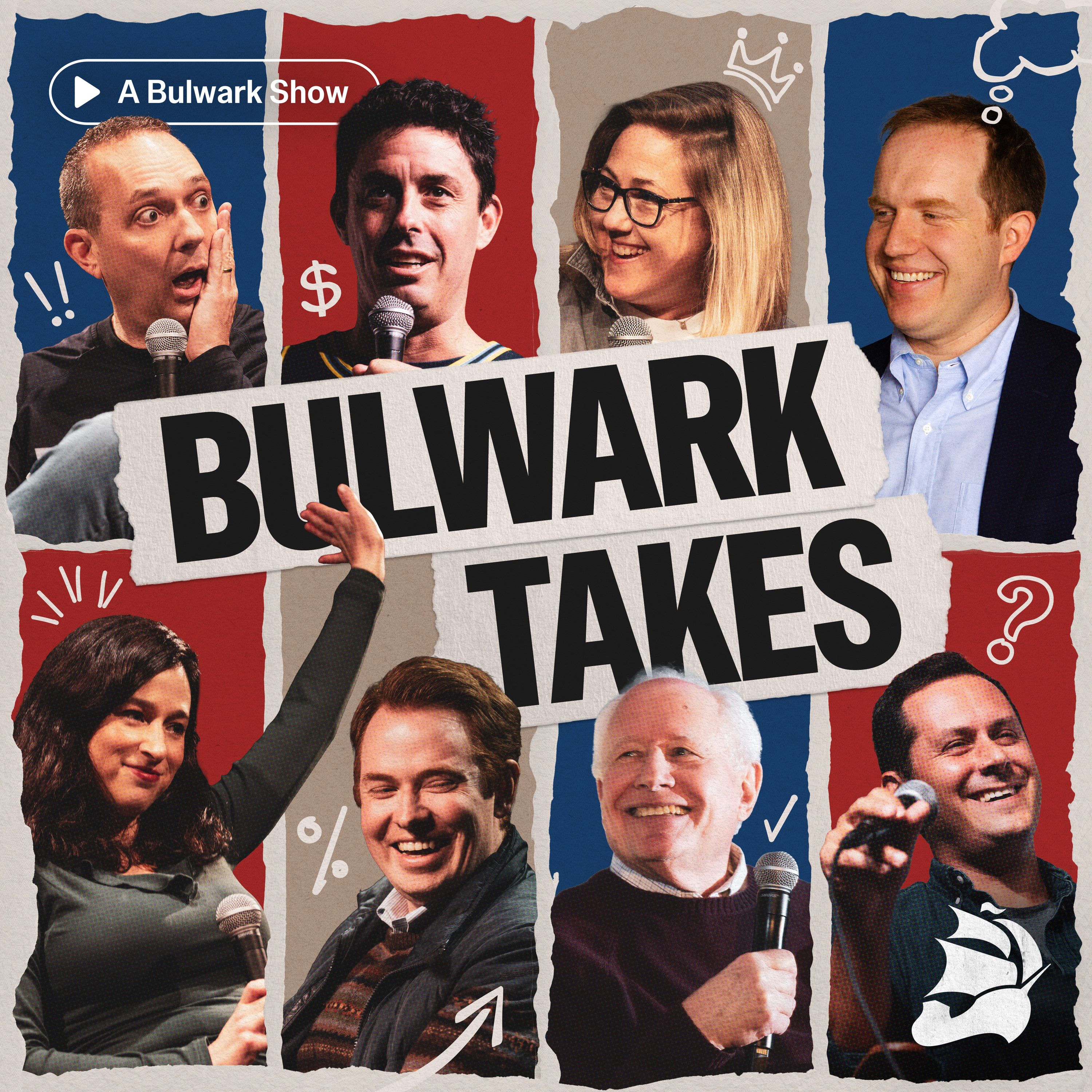
James Carville’s Midterm Predictions | Bulwark on Sunday
34m 57s
James Carville, in a candid conversation with Bill Crystal, analyzes the 2024 election landscape with a focus on voter behavior, political realignment, and the risks of authoritarianism. He observes that while enthusiasm exists nationwide, especially in traditionally conservative areas, there is little visible political momentum, suggesting a cautious or disengaged electorate. The central theme he identifies is a wave of voters rejecting Trump’s policies, symbolized by the “four sales sign,” signaling a desire to dismantle what he sees as an overreach of power. Carville warns that a narrow Democratic win in the House could trap the party in a dependency on the Senate, limiting governance flexibility. He remains optimistic about Senate gains, particularly in states like South Carolina, Mississippi, and Louisiana, where demographic shifts—especially among Black voters—could create decisive margins. He notes a growing trend of moderate Republicans voting Democratic, fueled by endorsements and political permission, and questions the GOP’s ability to execute effective voter suppression. Carville also highlights the emergence of strong, grassroots Democratic candidates with public service backgrounds, signaling renewed civic engagement. He sees significant political shifts in Florida and Texas, where competitive races could redefine redistricting and national dynamics by 2028. Ultimately, he believes the election will mark a turning point in American politics, with a decline in trust in powerful institutions and a rise in grassroots activism, especially among younger, service-minded candidates. The outcome will likely trigger a wave of political realignment, with both parties responding to voter demands for accountability and change.
>> Hi, Bill Crystal here. Welcome to Bullwork on Sunday. Very pleased to be joined by my friend, James Carville, and we'll get to James in one second. I just want to remind people that tonight for Bullwork Plus members on Sub-Second YouTube, we'll be streaming our Charlotte show, Sarah and JBL, Tim Sam, Oral and Charlotte, along with others, and Pete Buttigieg live from Charlotte. So after you watch this, we'll find out from James exactly what's going to happen in two weeks, you can watch Pete Buttigieg. And incidentally, I'll be along with Andrew Egger, and others in Atlanta, Mark Hurtling. Tuesday night, there's still a few seats left at the Eastern in Atlanta, and you can get those seats on bullwork.com. Okay, enough of all this promotion. James, thanks for joining me today. >> Oh, God. Again, looking forward to the election, for our chat. >> Tell me about the you were saying off there, I was going to ask you more generally about the wave, and how big it will be. But I'm just talking to you. I think you were in Atlanta recently yourself, so we're going there on Tuesday. What did you see there? >> Well, I saw it, I saw just really nothing, but enthusiasm. And it's pretty consistent what I see around a country and what I hear. You never, you always want to tip of your expectations, but it's increasingly hard to do that. And I spent a lot of time in red areas, and boy, you just don't see it out here. You just don't, not anywhere. >> Yeah, it's amazing. You were saying that you did a ton of races in Georgia. Remember you're doing-- >> You did, you did. >> Right. >> Does El Milla, and then I'd re-elect there. And I have a ton of friends. I still stay in touch with people there. The accident was born, and I didn't even know that. But it was only because my daddy was in the army. It was in Fort Benning, I don't know what they call it now. >> Yeah, that's right. >> But didn't buy a question, Bill. I'm asking whether some disillection goes the way that we think it'll go. What should we say? That we took the four sales sign down, or we put up a knot for sales sign. It's going to be one or two. >> Which do you, for well, which do you-- I mean, it seems to be the election has been a little bit more about the first, right, taking down the sign. We shouldn't get ourselves into a referendum. >> I think it's voting to take the sign down. The four sales sign has been taken down. >> That's a good line. I hope people like to use it. >> I swear, I want to run it by you. >> Okay, good. Okay, everyone will pick it up. We'll see, you know, 50 Democratic candidates who'll clearly saying it's saying it tomorrow. How big? What do you think about the wave? What's your analysis? You've been through these elections on both sides. >> I, you know, Peter Hart told me when I first started, who said, Peter, who you think you'll win? And they said, it's not my job, and it's not your job to predict elections, it's your job to affect elections. The truth about it is, I don't-- I see-- I don't have anything that I know that somebody an informed person listens to this podcast doesn't know. And maybe I see through a form of polls and you do, but they're just like the ones you see anyway. So it is no-- however, I would be disappointed if it-- if it comes into our 25 House seats. That would be-- that would almost be-- I would rather the Republicans keep the House by five than the Democrats win by five. Because if that happens, they're hostage to the DSN. Hey, Hawkeen cannot move. There's no place for him to go. Even if you have a close Senate, Federman would keep Schumann. Tepdel, this mall all night. So I think this is one of these races where margin matters a lot. >> Yeah. >> Margin is-- winning big is how most is big is winning, which is weird, but it's a nightmare at $2.25. >> Yeah, it's a good point. But I-- so you think that sort of-- but I think that's the bottom bound. Wouldn't you say this with the lower bound for the House? I feel like just looking at the numbers, right? I mean, I feel like you could go above that. And the Senate, what about you and I? I think when we talked about a different podcast, I don't know, a little while ago. We were both more bullish on the Senate, and on the Senate map than the conventional wisdom. I feel like the conventional wisdom has been moving towards us, which makes me nervous, of course, because the conventional wisdom is often wrong. But I don't-- it feels like that map just keeps on expanding, you know? >> Yes. >> So, let's say that there are 10 states that could go to the Senate seat. The most unlikely outcome is they break 5.5. That could happen. It happened in kind of '98, you know, 2. So, they said it happened in '24. It happened in '24, where we weren't Senate seats in Michigan, I think Wisconsin, Nevada, Arizona, and last one in Pennsylvania. But it was all that close. >> Right. >> I think they're going to break our way. I mean, but I think they're going to break. And if you look at Washington Post poll the day, that could be the worst poll I've ever seen, for anybody in the whole life. Other than Welfare guys, Bay of Sao Paulo, South Sao Peter had a 3% approval. That didn't get to that. >> And what struck you about, you know, the inside of the poll, would it with any particular issues, any particular aspect of the poll? >> The first thing I look at is strong approval versus strong disapproval. Because without asking people, you know, his strong approval was 16. His strong disapproval was 52. That's an over, I'm going to ask my friend, you're a man first. Is that ever happened before? I don't think I've ever seen anything like that. And so that means that almost 70% of the country is passionate about this. And the other thing, I think you'll love this result, is that non-Maga Republicans are leaving house. But I don't think they're collecting them wrongly. They just get out of that. It's like a bear playing on fire, you know what that's? >> Do they vote Democratic or stay home? >> According to this, I think more than a few are going to vote Democratic. And they're getting a lot of, you know, two Republican governors have endorsed a Democrat in Kansas. There have been a couple of high profile endorsements in Texas. I mean, right now is what we call the permission structure. It's okay to vote Democratic. Okay, to see, if maybe, you know, maybe it's going to all want so twice that you got to do something like that, but you have permission to do it. It's the right vote right now. And we're getting a lot of that. And the more of that we get, the better it is. Because you got people that, you know, now I know vote for Democrat in my life, but I can't vote for this crowd and tell them to do. And if they see a enough walk and say it, it's okay, go ahead. Then I think we'll get a lot of them to vote. >> Say, we're worried about the psychology of wave elections. You and I have been through a few, 94, 06, 2010. I think those qualify. But I feel like if you're younger, you've seen some movements in off years. But you haven't seen a real wave, right? I mean, I don't think 2014, 18, 22 counts that. So, I mean, what is the psychology of a wave election? >> So 94 was the, it was the mother of all wave elections. But I'm not 10 and 14, but really big too. The psychology is, who in the hell is that? And you got to research people on that word. Hey, tell me who this person is. It's just what this house seat and somewhere. But we can't find him and work a pee. But give me a few minutes. Who's going to ballot pee? And now we're down to something else, okay? They're going to be people here and get elected or who? Where did it come from? You know, we're trying to find what we can about the new congressman from the Ohio Ex-District milk. Our research staff will be back to you after a break. >> Yeah, that's funny. No, it is true. I was in a 94. I had been running this little project for the public of the future. And I was bullish on the public ends. And I was kind of, you know, put a beer. But it attacked me the week before the election. That was nice of him. George Stephan Opeltson, and he was at the White House, obviously, then with you. And we were both on nightline with Ted Coppel. So, I'm 30 live. We were in the studio in DC. And I think the fully, Tom Foley, who was a speaker of the house, had been there forever. And sort of beloved, I think, in his district. No one had anything against the person. >> And their wife had no- >> And I remember those numbers coming in. I think began to come in there from Foley's district in Houston, Washington, and it was sort of unbelievable. None of us knew the name of the person running against Foley. You know, like, who is that? What's going on there? It is, that's what a way of life. >> Yes, look, this thing. This has every indication that this is a dying empire. This is a favorite example. Dan Crenshaw, who is not, he lost his partner. He was kind of, I don't say thoughtful, but somewhat. I mean, he blew $300,000, taken a trip on his campaign money. Like, this is the end of the day. I don't give a shit. And they were spending money in Europe and $800, $1000, and everything else. This is a guy who says, this thing is going down. I don't owe it anything. Whatever I got in my campaign account, I'm going to travel for the rest of my life. That's what happens as it powers disintegrate. And I think this might be a leading indicator. >> That would be exciting. You told this wonderful story somewhere. I think maybe it was, actually, a week or two ago about a focus group. I think you had seen or you've been told about. And some voter was being asked about the Democratic candidate. Do you remember? >> Would I say? You said that, I think they showed the voter some of a research or an op-o ad or something. >> Oh yeah, yes. >> The Democrat.
So, when do you know you're gonna win? Is this okay to, candidates are Bill Crystal Republican and James Call of the Democratic. Who you gonna vote for? It's like 47 James Call of the old 45 Bill Crystal. So, let me tell you some things about James Call. He's been convicted of pedophilia three times. He's convicted of perjury. He's been fired from three jobs for embezzlement. He's been married five times and had eight years of mature. After hearing this, who you gonna vote for? James Call of the old 48? Yeah. And they don't care. I mean, when you know you're gonna win, and people are calling me and saying, "They're okay." You just, you can read the most ridiculous. And according to local news, he did this and they don't care. Okay, I'm for help. And I think that's gonna take us a long way. What do you look for in the next two weeks? What do you worry about? What would be a sign of anything much one way or the other? I look at how we close and this is one of these things where you have so many different things you can close on. But I think the most effective message is look, if you live in Ohio or Kansas or Texas, some Mississippi or South Carolina, you're far. Now, you've been to control, but say how to live, to say how to say, "Send it to Governor." To the House of Representatives, you know, I say, "Send it to President Supreme Court." I said, "Work it out for you." Maybe you want to try something different. You know, just maybe somebody could say, "We ran $2 trillion deficit in one year." All right, let's try something else. If they got the keys to the court, they got the keys to the House, they got the keys to everything you can imagine in word as a country in a ditch. Now, that means you can't talk about how you family and talk about all the wonderful things you did when you're on the city council, it means you're leaving a lot of stuff on the table, but you're bringing home the point that they've had everything. No checks, no balances, no anything. And now it's a time to intervene. I think that's the best, easiest message that you can give people. - I agree with that, so I'm happy to hear you say, no, I just think I worry that Democrats, they are earnestly want to govern well. And so they want to talk about what they're going to do if they get some power, and that's a little bit of a distraction at this point. - Yeah, it's a terrible distraction. - Yeah, go ahead, sir. - It's a terrible distraction, okay? Don't just stay on there, do nothing. Shut up. As soon as you open your mouth, they want to vote for you. All you gotta do is talk about it. It just be for simple things that they can't be for. So you can say, oh, you don't have a plan. You just, okay, I'll give you a plan. Let's raise a minimum wage to $13.25 an hour. Let's increase the taxes on people that will make it over half million dollars. You're going to start opening rural hospitals. Let's end the tariffs. Let's end the war in Iran. Let's have a national legislation in Jeremiah. They can sign any of them, or it's a plan. None of us go home to what you want to plan. We'll give you a plan. But no matter what you fall, it's not going to be implemented because you can be to it. So be for easy, easy, low-hanging fruit. Don't go too high on a tree. Okay, don't go for entitlement reform right now. That's down the road. Kick that can down the road for now. I think the post-polish, some other post-tooth showed the numbers when you ask, do you want a Congress that will go along with Trump or check Trump? Those numbers are very strong. And that is a literally, and that's a correct question. Well, that's a, how should I put it? A truthful question in a sense that that is actually the choice, right? At the end of the day. That's the choice people that will make. Okay, you're asking the judge that the Garden of People's Mind, that Trump's so, if you remember, in June of '25, it's not that low above. Trump commanded everything. He was controlling the agenda. He was doing this in foreign policy. It was passing a big, bad, beautiful bill. It, it, okay, now, you're right. And we don't need to make another case. - Yeah, anything, what would work? Any surprises, do you think they can pull anything off, either in terms of substantive surprises or, I mean, policy, I guess, or in terms of voter suppression and all that? - But I think all of that is going to happen. I think they're going to try something to voter suppression, I don't know. Whatever they do, the two advantages that the good guys have. First, we fall one. So you take away the element of surprise, in the, this I do know, the, like, loyal network that is around the country that people have already prefiled, breathe. There's a lot of people that don't break the glass and get to ask out. Secondly, and most importantly, to really steal an election requires some coordination, some competence, some ability, some talent. Why would you think they could get away with this? What, what is it about them that you think they have, the competence to perform with, with any, under any circumstance, would be a very difficult, multi-front attack. I just don't, I just don't much confidence in their, in their ability to do it. Now, they go try, they should be where you want. - And they got a lot of levers of power in the federal government. And I guess I worry the most about the blue areas and red states where they would have a friendly governor, perhaps, or Secretary of State, and control of law enforcement. Locally, at the state level, at least, and control, obviously, the Justice Department, FBI, DHS, and that there you could really, I could see, couldn't you see, you know, Abbott getting on TV Tuesday night at 11 p.m. at an incredibly close text center race and saying, "Well, we've got reports of fraud and intercity Houston, we're gonna have to impound 400,000 ballots." And Top Atlantic gets on, the Attorney General and says, "Yeah, we agree, we've heard reports too, we're gonna work with the governor of the state." I feel like the reds, I feel like the blue states can take care of themselves, probably. But some of those reds, of course, they would do that. And if the race is like 2,000 close, they got away with it. They might get away with it. But if it's 3,852, and, you know, it's election night with Tau Rico headquarters and people who weep in, and now we have the Ken Paxons headquarters, and if I was kind of gloomy here, and then two hours later, we're seasoned ballots. I think so. I don't think people will sit still for that. - I really don't. - Yeah, well, that's good. That's great. I couldn't help it. You mentioned, as you were running through quickly, through red states, center races, they're all in basically, almost all the competitive ones, well, literally, all the competitive ones are in red states at this point. You mentioned in passing, South Carolina, and Mississippi, states close to you down there in Louisiana. What, talk a little bit about those races. - Sure, okay. - So you think of a big kind of real, real upset possibilities. Beyond the four or five that everyone now has, obviously, the Iowa, Kansas, you know, Texas. - I'm not going to ask a big question. - On macro, election day protection is flat turnout is going to be really high. It's going to be really high relative to the white turnout. In the reason I would say I'm more optimistic about South Carolina, there's a third party. The Democratic does not have to get to 50. So somebody said, for a chance, I just can't see a Democrat get to 50 in South Carolina. Okay, they don't have to. Mississippi is 38% of my population black, maybe slightly more. And the operating theory of which I was a proponent of, we would nominate moderate whites in that way and we lose every time. We have a really good black candidate. He's a DA and 22% of the whites are going to vote Democratic in Mississippi. That's about, I mean, that's why you can go anything. 22 are just, there's just Democrats. So if the difference between getting a 30% black share and a 35% black share is all the difference in the world. Because the black share goes up, by five points, you're going to get 93% of five. But remember, if it goes up by five, the white share or the non-black share has to go down. So you're going to be getting 30% of a lot less number. And that's why I think black turnout could make a difference in South Carolina of Georgia, good matter. It makes a difference in the Georgia governor's race. It could make a difference in Louisiana. And what's may happen is we wake up the day after the election in let low winds by three and a half. And somebody says, "Well, we don't put any money in there." Yeah, but that's where Louisiana's a third population, we're second highest percent of population black, in the primaries, the Republican spent 28 million, the Democrats spent 400,000. 35% of the electric was black. If we get a 35% black electorate on election day, watch out. Watch out. - That would be interesting. - That's where the black vote really is going to, anything, we got a black candidate again, but a lifelong former really kind of salt, I guess he's called Jamie Davis, a salted earth guy, just got really calloused hands and it runs a successful big firm in the maybe poorest, one or three poorest where he's populated parishes in the state, but he did, and they're doing so. And let low is just doing the classic we got this one, don't rock the vote, calling them a pedophile or whatever they do, go into life. So we're probably gonna lose, but we're going to come.
pretty close. Well, that was something that I think we can wear. And I guess to finish up the South Florida. David Jolly might be the best candidate of the cycle. And I mean that in his speech, his dad was a pastor. And he has a, it is not obvious. His rhythm is unbelievable. His story is to, I'm not, understand. I didn't leave the Republican Party. I joined the Democratic Party. And I shat, I, it he very, he's got every little rhetorical thing. I'm knowing pretty well. I've seen him any number of times. I'll tell you the other candidate whose all world is Gina and Hosea. Now, you would never know if there was any race outside of Maine in Texas. It's all Tau Rico and Susan Collins. Yeah. Yeah. Yeah. The comedy time, many times young times, we'd be a sorry. Oh, no, seriously. Hannah Hosea is a, um, she's not that experienced, but man, she's got like J6 guys on TV for her. I mean, she's, she's going all in. And she's pretty skilled. So in the Republican running for governor of Florida, it's just crazy. I mean, I think David's going to win that. I really do it. He's, he's that good a candidate. He works like, he works like already knew. I mean, he dies everywhere. I mean, it changes American politics for the next four years, at least with maybe beyond if Democrats win the governorships of, I'd say either Florida or Texas because there's and they're really good. And they'll certainly pick up Iowa and I think and like very likely Ohio, right? So I mean, that's redistricting. Yeah. Redistricting. If you got the governor now, you'd have to get reelected, but having a governor, Texas governor, Florida, Ohio, Georgia, gonna mean a lot. That means a lot for 2028. And just generally, I just feel like the whole, the whole Republican, Texas and Florida, so much the heart of the Republican party and the growing states. And if suddenly they are back in play in a real way and have Democratic governors or even have come very close, it just changes the dynamic of things a lot, I think. The insurance thing is, it's gonna tell the take and then the insurance rate. And that's where the message, they've run everything, they've controlled everything in Florida. You name it, they control it. High things going for you. And Florida is turning into pretty close to a failed state. Is that right? They're insurance rates. So people, you know, it's become too expensive to live there. That we really have. So I think David's gonna win. I really do know whether or not the Senate candidate, you know, I'd have to win by a certain amount to carry it across, but you don't know what could happen. She's a pretty good candidate, I think. I mean, I would have probably voted for her opponent in the primary, the more moderate, down. But I think she's on a good campaign, I think so. She has pretty good. Yeah, 10 similar. Now, this is the, this is the play that I'm gonna tell you what's happening. Give it a take behind the curtain or Democratic party. House side had AOC campaign with him on the upper peninsula. All right, that doesn't make any sense. That's five progressive Democrats on the upper peninsula mission. What they're lining up to say is you see that the moderate, the Clinton Democrats, like Carlville said, they can only, all the DSA can win is in hardcore urban areas. We have showed you that the people all over the country are waiting to be the sound of true progressors, and then they're gonna come out. And so let's say outside wins by one, they will say that's proof we can anyway. Okay, what events in win by eight? Okay. If they're setting themselves up, by bringing her to the upper peninsula, she gave a hundred, the million dollars outside, Bernie gave him quarter of a million. And they're setting up the argument that this is a show that we take on the road anywhere in the country. It's not, but it's not gonna stop them from saying it. Trust me, that's what they got to say. And we even bought AOC to the upper peninsula. Well, they're not, they're not stupid politically, you know? No, no, no. They're not gonna be, they're not gonna be persuaded by any facts either. Yeah, and I look to more, the better Democrats run some of those independent Democrats in South Dakota and the Grask and the better they run. And those are Democrats in Montana. I don't know. Those are moderate veterans, business types. And they're competitive, but all those states, I think. Why do I dislike Angus King more than I did, Genie Shia, the same to me. I'll be okay. You go through it. Yes. And that is that's what it takes to win an election, shit. Do it. And the Democrats for all their problems, which you've analyzed and lived with an awful lot over the years. I mean, they did do the right in those states. They stepped aside in Nebraska. They stepped aside in South Dakota. They got an independent candidate's running. They're not making them pledge to support Schumer from a majority leader or anything. I mean, it's pretty, it's pretty, all things considered, I'd say the Democrats have done a much better job this cycle than I would have expected in terms of getting out of their own way as it were and letting their candidates win or try to win. So at the bottom of the despair, which would be probably first six months or 20 or 2025, the amount of people that came out of Woodward to run for office, and Jason Crowe is going to be a MPP. All right. He's the head of the house. The people they have recruited and Alan and I on our podcast are going to try to do one a week and find somebody. You know, we call the D-Triple C and who's on the red of our triadist person. And the people that have come on, holy moly, I mean, most all of them, though in the military or some police or some element like that, they're inevitably pretty young. They're really talented in, you know, I mean, I think the stories will be when 98% of the country quit, 2% of the country got up and put their boots on and did something about it. And like, oh, Joanne Mendoza, who's running that Tucson district, was a Marine Corps true instructor. I had a count cadence on the podcast and the person in the Western North Carolina, I mean, the people are just staggeringly talented. And I think that's going to be a great story about how real Americans woke up and put on their boots and went to war. And they ended up winning. And none of them are Kate Conley running against Mike Lyle. I mean, if you just go down the line, they're really, really un-enhancing the cause for that Charleston verse. Steve Vincent, he's running that kind of Myrtle Beach district. He's 20 years in the Navy. He made Chief Betty Officer E9. I don't know if anybody has done that in the history of the United States, Navy. And he's out there plugging away, man. The guy in the Kentucky Sixth Dembo. It's good, it's great candidates. I don't forget something. I don't really do a little bit. But my point is, the candidate quality, which I think is a big factor, is really good for the Democrats this year. Really good. Now, it's greatly pay tribute to them stepping up when things looked bleak. I would say the same suddenly about no Kings. I went to our local little no Kings thing yesterday here in North of Virginia. A lot of ex-experience public and types, ex-experience. Reagan types here in McLean, as you can imagine. And, you know, look, they don't get credit because it's among elite circles here in DC. It's, you know, they're a little, it's demonstrations rallies. That's not their thing. And they're working on the lawsuits, which are important. And they're working on quote messaging, whatever that's worth. But, you know, no Kings was there in June 14th, right? When Trump was at his peak, and the army they, he's had that ridiculous, you know, military parade in DC. And they turned out millions and they stuck with it. And they're pretty careful on their message. I mean, every local no Kings rally I've been to and I've been to a couple not in the claim have American flags that are good-natured and cheerful and patriotic. I think they, they, and then made it and then met a our wonderful tech oligarchs, tried to shut them down yesterday for, you know, for three hours, right? And stopped their website, people getting on their website. I feel like it's a pretty, the economic populism, if I could say word if you want about no Kings, but also you've been pushing this for a long time. The economic populism message. And that's got to be strong, right? It's gigantic. And they'll serve the, the reaction to power. So Trump, it's almost like he's trying to do something because he talks about how good he, you don't have to say, oh, tech is awful, you can say, we need, this needs to be closely monitored, we did regulated, we need to make sure that it works for him. Because people, as soon as they say, hey, I'm for big tech and I'm going to come in and spend $50 billion in your hometown, it's going to be good for you people. I don't think so. I mean, power has lost its relationship with the public. The public just does not trust power. I think that's pretty simple. And that's, it's good year to be the out party. Yeah. Say a word, we'll close up here about what happens afterwards. I mean, November 4th, what does, what does the world look like? Airbrush was born for president in our world. It said, okay, well, that's done. They're going to, you know, have a lot of investigations. They're going to be a lot of vetoes. By the way, who, who came out of this? Was it Rubio? Was it Ted Cruz? Is it JD Vance or something else or whatever, and the Democrats, you know, who's going to be a lot? That could be 15 people wrote as a Democratic nomination. And the guns going off from November 4th. Don't get yourself it.
The lag time between the off-year congressional election and the beginning of the presidential election is nothing. I mean, they're gonna be like in the middle of the campaign in November, but die will you have whatever all that happens in January. So I think what's gonna happen is, you know, they're gonna run through the tape on one day and the gun's gonna go off the next day. Don't political junkies, you got a lot to look forward to, I promise you. - We do. One final question about the country. I mean, I've been hopeful that a big enough wave, you know, can snowball in the sense that all the outside groups that have been sucking up to Trump and the Trump administration cutting their deals being totally shameless and opportunistic. Did they start to think a little bit if the wave is big enough that maybe I need to think a little bit of that? - If you know anybody that's kind of largely talented and needs money, just tell them to hang up a shingle and be a democratic lobbyist. You know, all that money is going somewhere. So I, I just laughed at Mary and I never did. But boy, if I ever was the time to be a democratic lobbyist for, you know, meta or any of these places, I mean, a lot of people have to get right and the people that they're all invested in are gonna be looking for something else. That's just the way to Washington works. - I think it's important for the country because I mean, one thing that's been scary, I think about Trump is, you know, one thing to have a authoritarian government that's bad, something to have an authoritarian government supported by a ton of outside, powerful groups with real levers of power, right? I mean, these are not, these are important institutions in America and powerful ones. If they start flaking off, I just think a weakens Trump and the authoritarianism quite a lot, hopefully, over the last two years, over the next two years. - Well, the whole idea of the tech people is that they create some kind of a tech oligarch that runs the world. I mean, it's really crazy, but, you know, like, Peter Zee, a lot of these guys are young to that. They're gonna have to adjust. The whole, when we got hit in '94, the entire culture changed. It wasn't just we lost the election. It was that it rejected this and all of the things that people thought, you know, we were fortunate because we had new ganglatures of foil. I don't think how keen this newt and I don't think that Trump is Bill Clinton. And it's going to be a mess. It just hits you so hard. It throws everybody off God. It is going to throw companies and firms and law firms and they all go to try to figure out how to live in a new world and then two years later, the world's going to change again. - Well said, but now it's an exciting moment. So, I love knocking on wood or whatever superstition we like to do for the next two weeks. And if you voted or you voting early, you voted on election day, what's your habit? - You know, I have a shameful thing. I've left it all in zone. I don't think I'm going to come back and I didn't vote absentee. And you know, when people talk about voting fraud, it ain't worth the chance to try to vote in Virginia because if you get caught, just then five years in jail, it's just one vote. I mean, it doesn't even make any sense to buy. I'll give you $100 if you vote. Okay, you get one more vote. What the hell is your $180? It's the stupidest crime. That's why they can't find it. - Right. - Because it makes much more sense to hold up a 7-11. At least you can get some money for it. - Right. - Yeah, Brian, I'm not going to get spend more time in jail. But no, I'm not going to be able to vote this cycle. I'm sorry, David. I screwed up. - Well, but I'll say this for you. I mean, you have really thrown yourself into this over the last several years. And really we've been so pleased, really an honor to work with you. Out that wonderful piece for us in late 2020 and near the end of the campaign about how this was a real, a noble crusade. I quote that all the time. And I, it's really been, I admire you for doing this. You didn't have to do, you didn't have to do everything you've been doing for the last 10 years, right, Billy? - I don't know. But thank you. And, you know, it has, and it is a crusade. This thing, when it gets squelched, and I think it will, I'm going to, the people, I'm going to give it a real credit for at least double credit candidates that didn't do the Chaps and of all depression when everybody was, what are we going to do? Man, they, they just, Jason just got them and they stepped up and Jason's going to be, Jason's going to be a huge factor. Difficult credit politics in the future. There's not much question about that. - Great. James has been fascinating. As always, it's really terrific. We'll talk after the election. - That's street port bride. Hello, homie. I will tell my, I will, yes, you have that street port connection with my wife, so that's great. Thanks, James, for joining me. Thanks. Thank you all for joining us on Bullwark on Sunday.
Podcast Summary
Key Points:
James Carville observes widespread enthusiasm across the U.S., especially in red states, but notes a lack of visible political shifts, suggesting voter disengagement or disillusionment with current leadership.
He argues that the election is less about ideological shifts and more about a wave of voters rejecting the "four sales sign" — a symbolic reference to Trump’s policies — indicating a desire to dismantle perceived authoritarianism.
Carville believes the House of Representatives outcome will be critical, warning that a Democratic win by a narrow margin could trap them in a dependency on the DSN (Democrat-controlled Senate), limiting legislative flexibility.
He expresses optimism about a Democratic Senate gain, citing potential upsets in key swing states like South Carolina, Mississippi, and Louisiana, where demographic shifts — especially among Black voters — could tip the balance.
Carville highlights the growing trend of non-Maga Republicans voting Democratic, driven by political permission and realignment, as seen in endorsements and changing voter behavior.
He identifies voter suppression as a credible concern, particularly in close races, though doubts the GOP's ability to execute a coordinated, successful fraud campaign due to lack of competence and public skepticism.
He praises the rising quality of independent and grassroots Democratic candidates, many with military or public service backgrounds, as a sign of renewed civic engagement and authenticity.
Carville sees a shift in political power dynamics, especially in states like Florida and Texas, where strong Democratic candidates could reshape the future of redistricting and national politics in 2028.
Summary:
James Carville, in a candid conversation with Bill Crystal, analyzes the 2024 election landscape with a focus on voter behavior, political realignment, and the risks of authoritarianism. He observes that while enthusiasm exists nationwide, especially in traditionally conservative areas, there is little visible political momentum, suggesting a cautious or disengaged electorate. The central theme he identifies is a wave of voters rejecting Trump’s policies, symbolized by the “four sales sign,” signaling a desire to dismantle what he sees as an overreach of power.
Carville warns that a narrow Democratic win in the House could trap the party in a dependency on the Senate, limiting governance flexibility. He remains optimistic about Senate gains, particularly in states like South Carolina, Mississippi, and Louisiana, where demographic shifts—especially among Black voters—could create decisive margins. He notes a growing trend of moderate Republicans voting Democratic, fueled by endorsements and political permission, and questions the GOP’s ability to execute effective voter suppression.
Carville also highlights the emergence of strong, grassroots Democratic candidates with public service backgrounds, signaling renewed civic engagement. He sees significant political shifts in Florida and Texas, where competitive races could redefine redistricting and national dynamics by 2028. Ultimately, he believes the election will mark a turning point in American politics, with a decline in trust in powerful institutions and a rise in grassroots activism, especially among younger, service-minded candidates.
The outcome will likely trigger a wave of political realignment, with both parties responding to voter demands for accountability and change.
FAQs
James believes a significant wave is possible, especially in key states like Georgia, South Carolina, and Mississippi, where voter turnout and demographic shifts could tip the balance. He notes that the current political climate shows growing support for Democratic candidates, particularly in red states, and sees strong potential for a shift in the House and Senate.
Yes, James believes the 'Four Sales Sign' will be taken down, suggesting that voters are rejecting the current political establishment. He sees this as a sign of a broader shift in public sentiment, where people are voting to dismantle the status quo rather than supporting a new one.
James predicts high turnout in competitive states, especially where there are strong demographic shifts. He emphasizes that voter engagement is particularly high among Black and young voters in states like Mississippi and South Carolina, where turnout could dramatically alter the outcome.
He points to strong public disapproval of Donald Trump, rising support for Democratic candidates, and a growing number of voters who are opting to vote Democratic for the first time, rather than staying home. He also highlights polling data showing a significant gap between strong approval and disapproval of Trump.
No, he does not believe such efforts will succeed, especially in close races. He argues that coordinated voter suppression would require significant political competence and coordination, which is unlikely given the public’s strong awareness and resistance to fraud claims.
He highlights Mississippi, South Carolina, Georgia, Texas, and Florida as states where Democrats could make significant gains. In Mississippi, he notes the potential impact of a strong Black electorate, while in Florida, he sees David Jolly as a strong Republican candidate who could help Democrats win key governorships.
Chat with AI
Loading...
Pro features
Go deeper with this episode
Unlock creator-grade tools that turn any transcript into show notes and subtitle files.
 PodcastTranscript AI