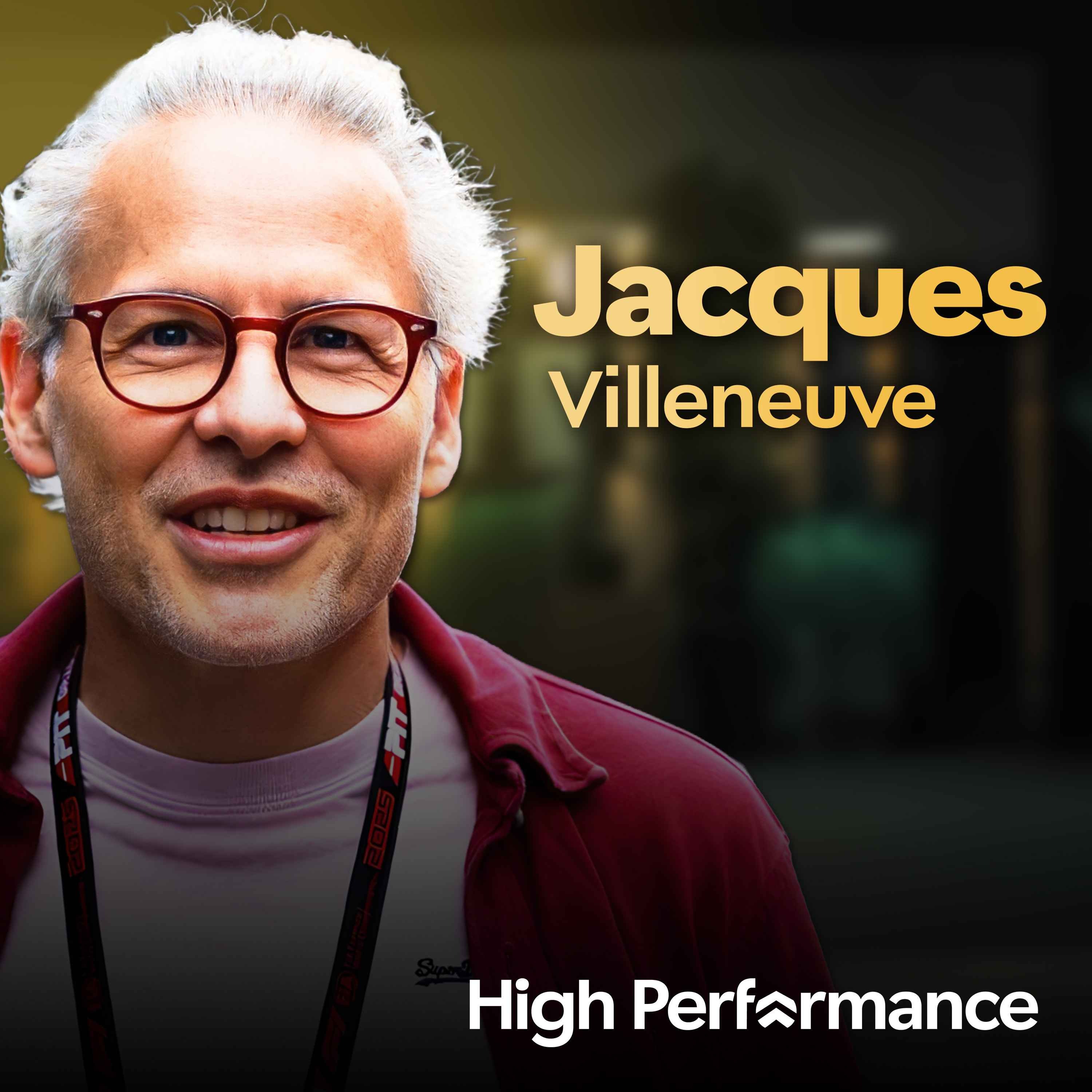
Jacques Villeneuve | Papaya Team Politics & Hamilton's Next Chapter (E383)
67m 8s
The speaker emphasizes the significance of pressure and unwavering belief in achieving success in Formula 1 racing. They attribute their strong mindset to early challenges they faced, which instilled in them a fighting attitude and belief in themselves. The discussion delves into the impact of trauma and challenges in molding individuals into formidable champions, noting that adversity can lead to triumph. The speaker reflects on the critical role of mental strength, quick decision-making, and natural instincts in high-pressure situations, highlighting the importance of facing and overcoming difficulties to achieve success in competitive sports.
Transcription
13364 Words, 69781 Characters
The name just opened the door to say stupid stuff like, you know, max eats papaya breakfast. Every team have their papaya room, they don't mention it. We're incredible, everybody's been saying, oh, but the car is made for max, poor, poor second driver. I actually know, max is working on it, making the car better and better. I wasn't even considering the fact that I was not going to win, and that belief helps you not doubt. But it's not something you can invent, you cannot just force yourself to believe like this. Hey, just a really quick note to say, thank you so much to all of our new subscribers. And if you haven't yet subscribed, why not? It means you're the first to know about brand new episodes of High Performance. And it also means we can attract incredible new guests to the show. So please hit subscribe right now. Enjoy the show. Well, Jack, thank you very much for joining us on High Performance. I was actually thinking about you on Sunday night, because I was hoping we were going to have a chance to have a conversation. And I was watching Lando across the line in tears wanting to hug his parents. And I thought, I want to find out whether Jack is transported back to 97 every time he watches an F1 World Champion being crowned. It depends which kind of world championship it is and how it's won. Yeah. Because we've seen some easy championships. One, four or five races to go, or the battle only against a teammate, but not really the two drivers at the same level. When you get a championship like this here where there's two or three drivers, two separate teams, and there's tension, because there was tension. Lando had to react because Mac was coming back with a vengeance. I mean, it was, it was really, you know, really in the bin surprising. And he cut them, he cut both McLean drivers and the team by surprise. Lando had to react. So that made it exciting. That made it tense. It's a championship he could have lost. And in the end, he made sure that he drove the same way he drove and the last year when he was fighting Max. And that gave him the title. So those kind of championships, yes, they do bring memories. I think there are so many parallels between your world title and and those world title. The fact that he was going up against Max to step and you were going up against Michael Schumacher, the fact that we saw some questionable driving from some teams in that race, the fact there was all this talk about backing up a driver, which is exactly what Heinz-Hauer-Frenzzen was doing for you back in '97. What would the emotions have been like in the cockpit for Lando? Because what you experience would have been so similar to him? Super chance. The big difference with Lando is he got into the race leading the championship, which means he wasn't in a position to take all the risks necessary. And you could see it. He wasn't, you know, he probably could have driven a little bit harder. He could have taken more risks maybe. But all he needed was P3. So all he needed was to make sure that the Licklayer didn't get in front of it. And then he was okay. So I think those kind of moments are very tense because you're under defensive. You're not going out there and think, okay, nothing to lose. I need to get this. Now it's more, hmm, if I mess up, I actually lose what I already have. And that kind of pressure I'm guessing must be very difficult to handle. Much more than having to go for it. I thought it could only after his pit stop. And I know that when you won the World title, you basically had a couple of laps to get past Michael Schumacher right to make sure you won the World title. And we can talk about that in a moment. But I think another parallel is that Lando came out of the pits on those new tires. And he had to get past the backmark as one of whom, of course, was Yuki Senoda. And that was some edgy driving, wasn't it? Yeah. Well, with the DRS now, when you come upon a slower car, a car that's on older tires, and definitely slower, because Junoda was slower even on new tires compared to Lando, it's only a matter of lap or two to get by. The track has been changed. The straight lines are very long now. And there's no way that Junoda could have held him other than crashing him out, which he wasn't going to do. So Junoda, if he really wanted to disrupt, Lando should have slowed down in all the slow section, not wait until the straight line. My dad is too late. So he could have made him lose a couple of seconds. That might have helped look down, but that was it. There's not that much he could have done anyway. Where were the AG out on the tires anyway? How impressed were you with Lando that said? Because there was that issue in Canada when he crashed into the wall. There was a few other moments. But then suddenly, he seemed to just find a calmness. And I remember watching the interviews before and after races for the last three or four weeks. And he was like, let's see what happens. He was, fell like he wasn't trying to control everything, you know? We've seen two Lando this year. The Lando until Baku. Okay, Melbourne, remember, it was great. He was quick. A month surely was aggressive. That was not a very well-calculated move, even though it was a legal move. And that really set a little bit the balance until Baku. Then he had the engine failure. So out in between the two drivers of McLean, he had the short stick in that respect during the season. So he lost more points. And Baku was really the turning point because his teammate was not there in Baku. For some reason, the whole weekend went wrong. And he did not use that as an opportunity. It should have been an easy way for him to get back on to pastries level and points in the championship. And instead, he had an awful weekend as well. And Max just appeared out of nowhere like, "Oh wow, he's a contender now." It started gradually before, but that's when it became really clear. And that's when we saw Change in Lando. Up to that point, he was always separating a lot, always pointing the finger at himself, even when it wasn't deserved. And apologizing all the time. And then from that point on, he became more like a winner in his attitude as well, like going for it. I guess him fighting Max is easier than him fighting his teammate. It's a very different approach when you find a driver from a different team. You don't know what strategies they're doing. You don't need to play nice against your teammate. Of course, you need and you want to beat your teammate, but you also have to be friendly. You so have to play along the team's lines. It's a very difficult balance as a driver where you have to be selfish because you're in your car. It's not like playing soccer or hockey, where you pass the ball and you can score together there. You're kind of working on your own because you do have to beat your teammate, but at the same time, you have to work for the team. So it's a very difficult balance to handle. And the minute he started focusing on Max, instead of his teammate, he started driving like he did the second half of last year. And he became a lot stronger, both mentally on the track, driving and he got the point. He got the point. So there was only Qatar that was not fantastic in the scheme of things where things kind of went wrong and they had the pace. But otherwise, that second half, then he went out of his teammate and he managed to keep Max behind. What about the fact that the rules of engagement when you're battling a driver from another team are very clear? The rules of engagement when you're battling someone within your own team is very different. I mean, you battled famously with Damon Hill, right, in 1996. Heinz, our friends are not quite the same, but he challenged you quite often in races. And what is the secret to battling with a teammate and just getting, I don't know, we're all different. You know, it's all our mindset. You can see, I guess, the best way to test someone's attitude in this situation, how, how they are, when you play a board game, you'll see the sore loser. You'll see the ones we will try and cheat. You'll see the ones we'll try to destroy everyone, just for the sake of it. You can really see it's like playing a game like that. It's very interesting. With your teammate, a lot depends, first of all, on your contract, what you're allowed to do or not. And it's written in what the two drivers are allowed to do or not. It's quite clear. But also, you should never do anything that's detrimental to the team in itself. That's the first key. Because ultimately, contract, even if it's in your contract or not, if you do something gentle to the team at some point, you know, you'll pay the price. That's normal. It will come back to buy to you. Karma. Anyway, when I was battling Damon and Frenzen, it was two different aspects. And that's what happened to Lambda as well. When I arrived in the team, Damon was the one that was supposed to be World Champion in '96. He had been working with the team for a long time. He had sweated for that team a lot. Two champions had taken away by Michael, not always in the nicest of ways. Michael was to learn from him and, obviously, to beat him. But I was also okay with him winning because he did deserve it. So there was a lot of respect. We fought hard. I pushed him. And he made me better. But at the end of the season, when I was like, okay, no, that's what deserve. It's fair. He's been working hard at it. And next year's my year, that's okay. When Frenzen came, that was very different because the team took Frenzen as the next future World Champion. And that got on the bad side of me because I'm the one who had been working on that card, developing it, working hard a year before to make sure '97 was my season. So the internal work was more selfish, I would say. And part of the work was to try and also destroy Frenzen to make sure that the team would stop or the head of the team would stop pushing on that side and refocus on me being the World Champion. That was it. So that was my first job. That's not something Damon did with me or I did with Damon because he could see that I didn't come in to beat him. That's a very different thing. So the similar thing happened with Pastery. He's the one who's been building that car, building that team for quite a few years now. Pastery is the new boy in the team. Last year, his own was kind of fighting for the championship. Didn't really get any help from his teammate when he could have and he could have won it last year. So he had to put his foot down. He had to cement his position as the team leader and win it this year. That's where it's very different as teammates, how you battle and win. And also, this could be the only year in the next 10 years that McLaren has a shot at being champion with the new rules coming in. How do you think Oscar feels at the moment because he's saying all the wrong things in the media. Terrible. He must be feeling terrible because he's been, he was, he had the championship in hand. He was controlling it and it all disappeared and he didn't, and by the time you realize it was disappearing, it was too late to react. You know, he got speed on the last two races but it was too late. It was just way too late. When you feel like things have been unfair, will he feel like he didn't get much help in his title challenging season and his team may got help from him this season? He might feel like that. Some people might be talking in his ear say, you see the team didn't help you. They went wrong against, but that's not the truth. It's a big team. They didn't make one car slower. There was no work done that way. Ultimately, they were wanted to be World Champion with either drivers. They both have, you know, Piazza is this new upcoming young driver. A great image of he wins. Norris is there for a while strong. It'd been worth me with the team. So either or would it would have been good. But ultimately, he might start thinking like this and might start believing it, but that would be far fetched. What did you think of Lando being booed at race because people? And I've seen it online as well. Say he doesn't deserve the title because McLean over his teammate. Do you think that's total nonsense? That's a little bit ridiculous. When there was some booing in some race, that was embarrassing. You should never boo a driver that's clean. Doesn't do anything dirty. On track is respectful. And on top of it, it's super fast. What's wrong with people? That was embarrassing. Now, how did being that Piazza was second to last faster than him? And somehow, Lando was winning because a lot of things were happening. It's car breaking down every time. Then you could start thinking, okay, that's really not cool. That's not fair. But I was in the case. And in the second half, Norris has been faster right at the beginning as well, last year as well. So there's the sole middle of the season where Piazza was driving a lot better than Norris and was getting the points. Norris had an engine blowing blowing up, not Piazza. And so those fans, they don't look at that either. So you have to look at the whole picture, the whole season. And suddenly, if your favorite is starting to go backwards, you just got to buy the bullet and accept it. Your favorite is just going backwards. Doesn't mean that the other one is treated better or the other one is undeserving just because the one you're a fan of is not winning right now. That's really wrong. If you're a fan of the sport, then you have to be a fan of the sport. And understand, when your driver is maybe not cutting it at this point in time, even though he was before, and he will in the future again. It's all a question of timing. But that's a price we have to pay now with social media and how big I want to become. It's very passionate. The people are passionate. Fans come from fanatism. You stop thinking when you get in that mindset. And it happens to all of us. You want something so much that you get attached. It's hard to start seeing reality. So you will try to mold the reality to your thought process. And if your champion is not winning, then it cannot be as fault. It has to be something from the outside. It has to be the team destroying his chance or not favoring and so on and so on. But there's nothing concrete behind those comments. It's pure fandom. And it always be like this. And ultimately, it's not a bad thing. You know, drivers at that sportsman at that level have to grow a thick skin. If not, you don't deserve to be there. You just have to have a thick skin because they're all very happy to get the compliments. They love it when it's just positive. But it gets balanced out with negatives. And you need to be able to take and accept the negatives as well. It goes both ways. You cannot adapt to the good. You just have to be a thick skin and know that it's part and parcel of what's going on. And in one month, it will be forgotten. And maybe everything will change and it'll be the other driver that suddenly will be criticized and so on. So it's just that's just the way it is. What is the secret as a formula one driver to getting your mind in a space where it is your friend and not your enemy? Did you ever have issues with it? I never had an issue with that. The more pressure there was, the better I was. Why? I don't know. I don't know if it's the way I grew up. Everything has an effect on who you are today. Everything that happened from being born until the day you become a world champion. It's old part and parcels of growing up, of becoming the man, the woman, the person that you are at the end of the day. And something that happened to you when you were three or old is probably something you'll carry on for the rest of your life. And you're not even aware of it. I always reveled when I was a little bit the other dog, when it was tough, when you had to go for it. You know, the American way, like they do in sports. They all turn up at the Olympics suddenly, they start winning and so on and so on. And then the World Cups. There's a fighting attitude, like a belief, I can do it and I will and I will show them that I can do it. But you truly believe it. There's not just words that you say out there because it's nice to say, you deeply, deeply believe it. And I've had this situation. I remember like four races to go. I think, and Michael had a big lead, points wide, not a lead that I could catch. And I was having dinner with a friend and you say, okay, you lost the championship. And what are you going to do? You know, it's tough. And I looked and said, what do you mean? I'm winning this championship and I was convinced that there was no doubt. He said, but how? No, you'll see. It will happen. I will win this championship. And I wasn't even considering the fact that I was not going to win. And that belief helps you not doubt, helps you move forward. But it's not something you can invent. You cannot just force yourself to believe like this. If you look at Max, the way you grew up, the way you got into racing, you know, it was make or break. It might not be the best way or the easiest way to raise a kid. And most kids would be destroyed by that. Him it made him stronger. It made him the racer and even the man that he is today. And you see him socially as well. And he's a pure passionate and he goes out there and nothing else exists. And you will always get the results somehow. For me, I guess it's my dad's passing, really changed me, where on that minute, I went from a crybaby to someone super strong for some reason. Then I went to boarding school, so away from family, away from everything, started ski racing. And for me, that was very constructive because the boarding school is like a little society in itself, with its own set of rules, you have to make your way, which is what happens when you're older. And that was very constructive. But I knew all my life since I was five years old, I would raise cars. I didn't know how, but it was going to happen. So the minute there was a tiny opportunity, I jumped at it. And when I started racing, I was judged as if I'd been racing for the last five years. Instead of this is the first time I hold a steering wheel in my hand. So that put huge amount of pressures. The same thing was go home or find a way to become competitive. So all that was super constructive. And when it became the time to win the championship, when it was crunch time, all that baggage was super helpful. It's what allowed me to believe and go for it at the one millisecond where I could make the move or not. There's that split moment of decision. And it worked out. It does damages in other areas, socially or whatever. It's not a perfect school. But for that, for what we're talking about, which is you need to go win your world championship or your sports, it was very positive. Then you just have to decide how to work with all the negatives. It's very interesting, isn't it? Because we've done over 400 episodes of high performance, Jack. And so often when we sit and have conversations with people, they talk to us about trauma, leading to triumph. The challenges at a young age are often the things that create people. And we spend our lives as parents trying to help our children to avoid anything that is challenging, anything that is disappointing, anything that's hard. Yet you are able to sit here and probably say if it wasn't for your trauma as a young boy, there's a strong chance you wouldn't be sitting here as a formidable champion, right? Oh, I wouldn't be. I definitely wouldn't be. And it's not a question of talent. It's up here. How you approach situation, how you react, you're gut feeling. And that controls a big part of your life. And the decision making, when you don't have time to think about it, when you have to, you know, when you're that hunter and you have to pounce, you don't have time to think. It has to be natural. It has to be what you're driving force. But the thing is, yeah, okay, we call it trauma, but I don't see it as trauma because it made me who I am today. And I don't have somehow, I don't see almost anything as a negative memory, which is maybe what is with it is a help. I don't, I've never spent any of my, even my youth feeling sorry or sad for myself about having lost my dad and so on and so on. Everything was a construction and what was happening tomorrow. And that's how I've led all my life, but not by decision, just naturally, that's how it's happened. So how can we impose people to have that kind of winners mindset that you've got, but also not not have to have them go through the kind of like the challenges that you went through, or the hard times that you went through, if you don't look at them as trauma. You can't, you can't actually, you can help, you can give a line, but then everyone has to do it on their own. You can make someone's life as hard as humanly possible. It might not make them strong, it might just make them collapse. Everyone is different, but ultimately, unless you have to fight for something, you won't build any strength, if it's given to you on a planter. So you can still be amazing, you can still be super fast, you can still go out and win, but there will always be a tough moment, something that will crunch you, and the key is, how will you react to those moments? Back to the racing. Have you changed your mind on papaya rules? The name, it's the name that's awful. It's the name. It likes the name. I don't know, think about it. The name is a bit cheesy, isn't it? Yeah, exactly. The name, the name just opened the door to say stupid stuff like, you know, Max eats papaya breakfast. You know, that kind of, it's fun, and it was great when they were winning easily everything, because it's all chummy and friendly, and we all love each other, and we all live in La La Land. That's not the case, and every team have their papaya rules. They just don't call them like that, and they don't bring it out. They don't mention it. It is lovely, though, seeing them race like that. You know, 2007, when McLean lost their title by a single point, because they allowed their drivers to race each other, would definitely have been in Zack's mind, and I do, I do now think that he does, he does it as more credit than he gets, for allowing even in the last race of the season for Oscar to Thunder past Max in that first corner. That's one question we need to, to raise. Did he allow it, or was it in the driver's contract? We don't know, because, you know, every contract is either one driver is the clear leader, fine, or other contracts, we cannot stop you from going and trying to win your championship, as long as you mathematically can win it. If the contracts are like this, they could never ever have told Oscar to help Lando, because he still had a shot, and both Lando and Max could have blown an engine on the last lap, and it's that simple, so it's used to say papaya rules, but we don't know what's in the contract. If they had had a contract where Lando is a number one, because he's been with us for five, six, seven years. You're the new driver, so right now, the first two or three years, you help him, and then the balance will change. Then we would have seen team orders earlier in the season. It's that simple. Now, you made illusions to the 2007, but I'm not sure they were allowed to race each other that hard, but they couldn't just, they just couldn't be controlled. Remember, Alonso was signed by the team as the double world champion, meaning you are our hero. You're the one who is here to go and win, and then suddenly they signed Lewis, and the whole team is, hey, he's a champion, not you. You don't do that, Alonso. So he turned evil. He turned really mean, and his only work at that point was it was better for him for Lewis to not win the championship, and him finishing second than the other way around. And understand, because that's exactly what Williams tried to do when the friends and came in. Like, well, what's going on here? I wasn't world championship, but that's what I worked on. So I understand, and Alonso's reaction was completely normal. So that's where the damage to the team happened. It's when that socially happened. Instead of just let that also win this year, you know, Lewis is his first year. And then they would have finished first and second in championship, instead of second and third. I went friends and came in, and you noticed the behaviors among the team and the message that you were getting. And you said you had to destroy your teammate. How did you go about destroying him on the track, mentally playing psychological games? What was your, what was your, it's a mixture, but it mainly happens on the track. It mainly happens to track, but then there's a few situations out of the car where you just show that you actually don't care. And that the guy is not there to win. Can you give us an example? It happens a lot in testing. And the same happened with Jensen when he joined the team, because it was my team, B-A-R. And then when David Richards took over, suddenly they signed Jensen, because he's our future champion. Hold on, what's going on here? So the same thing happened there, sadly, because we actually get along even with Ainsaro. We get super well along. You spend the whole winter testing. You always a dancer to be on your teammate. Because you've been there for a while, and you're busy setting your car up. So you don't push to the edge, but your new teammate wants to demonstrate that he is the real deal. So he will do quality laps the whole time. So you let him be 10, 32. Until the last five minutes of the last test before the start of seeing where suddenly you put in a quick one, you beat it by one tenth and those two month of winter testing suddenly disappear because of that one lap. And then you fly to the first race. And that has a big effect. It starts with stuff like that in Australia, up against Jensen, but didn't you pit a lap later than you hold intentionally? That was a nod season because I think was it was it? Yeah, first year, no, no, I don't remember which of the two, but the car was breaking down every race, every single race, which was so frustrating even my steering wheel broke. So that become that became very frustrating. And it was the time where you would qualify with fuel. Like you would choose how much fuel you wanted to start the race with. So if you wanted to do it, a one-stop fuel, you have 30 kilos more fuel than your teammate. So in quality, you qualified behind and you looked like an idiot, which was okay in the race because then you would do one pit stop and you would end up ahead except that my car was breaking down almost every time before that first pit stop. And I was almost always qualifying with more fuel because I could I was always good at saving the tires, saving the fuel. So going one stop suited me once we got in race trim. And there was one race like that. I was so frustrating, which was Barcelona, where I qualified one tenth behind in my thing. So very close, but with one fuel load. So that's like half a second of fuel. So that was very good. We're very happy. Then we start the race and I mean, it's gearbox the whole time. So okay, great. He will pit in a few laps. Then I'm on one stop and race done. But my car broke down even before he pit it. So the perception is, well, you know, what a loser. Look at and there's nothing you could say. So though, at that point, maybe I should have focused on qualifying instead of race. My goal was to go get races, race points. So we did what we thought was the best. It didn't pan out. And that made it that made it very very difficult, but that was never a battle against Jensen. Anyway, so we got along. There was never an issue there. It's just before the season started. I think I called him a band. He was a boy's band. He was part of a boy's band. And just when we did the driver presentation, and he wasn't expecting it. So that kind of shocked him a bit. But then we had fun. So the problem is I was being pounded from inside my own team and I actually owned the team. So that was a very difficult situation. And I didn't know how to handle that. I always add my or my management, my people around me. And I always felt protected. And that was the first time where I was just out down my own, no protection. And that was a very, very, very difficult moment because of that. When you suddenly feel completely alone, of course, you engineer, you have a few people like this. But politically, certainly I wasn't protected anymore. So that made it tough. But it never stopped us from from working together with Jensen because we knew that we didn't have a winning car. And we had to work together to make that car better anyway. So by helping each other out, we would make each other better as well. So that was okay. That was never an issue on that on that respect in between us. It all kind of exploded outside with the media. And then it became just bigger than it actually was. I want to talk about the day that you became world champion because I remember I was a big fan watching the sport at home back then. And in the buildup, remind me if I'm right about this, in the buildup to that race, it felt you were constantly reminding people that Michael Schumacher might a dirty game. Am I right? 100%. You were talking about before how you play the game outside of the car, politically and socially. And that was a big part of it because we got to Suzuka two weeks before I think it was. And I had a nine point lead and that was 10 points for a win. So and that's there were three tracks where I was always unbeatable. It was Melbourne because I in '97 I beat my teammate by almost two seconds on pole and he was P2. So that and every year this was the track where for some reason I was quick. Spa and Suzuka. Those were three tracks where I always ended up both finding better better than the car. And other tracks were like many cool. I wouldn't even make Q2 in a car that should be top three. So there's a few tracks like that that don't work and some that you don't know why you're always quick. So gut pole, but Saturday morning we get out of the pit, a car stops on the on the back stretch. So first lap out of the pits and six of us drive by, we're not that speed yet. Just didn't lift. Just like, okay, yellow flag is a car that's strange. And then we got our run going. And they use that to disqualify me from the whole weekend. Like, oh, okay, cool. That sounds a bit odd. That sounded extreme. So instead of winning easily the championship in Suzuka ended up getting to Harris with one point behind Michael. That made us feel like the underdog. Why was that penalty applied for you? Do you now believe? Because four months earlier something happened. I don't remember what. So it's only four months ago you did this. So now we disqualify you. But not the other five yet. So that was a little bit harsh. And that put us in a very aggressive mood. And that's when I started using the media really pounding on the fact that he had taken them and out to go and win and so on and is driving antics just to start first of all to put pressure on him to make sure the media would start talking about it. And then we got to Harris and the FI said if something nasty happens, there'll be a huge penalty that driver will be disqualified. So that work was super important. The outside of the car. Because then once we got in the race, Michael drove differently. It wasn't planning on taking me out because he did let me dive on the inside. He didn't see it coming. So it was at the back of his mind. And that made him do the move in a wrong way. It made him react instead of preparing it. And that's in the end what allowed me to win. So do you think that he was planning it in head that if he saw you overtaking him at any point, you would try and take you out of the race? I don't think so. Not in that race. But it was a reaction. And you can see it was just an instinct, a reaction. Thankfully, it didn't work out. But it was it was an attempt to take it out, right? You're clear on that now. Oh, well, yeah. It is clear. It's it's been it's not just me. That says it. And he also got disqualified for the old season. So it was quite clear. Yeah. I remember the Martin Brundel commentary because we were watching it in the UK. Jim and the Martin said he goes, you've hit the wrong part of his car, my friend. Obviously, you know, those two had a bit of rivalry going back as well. And I just, I mean, what a moment. What was sort of as soon as you get hit by Schumacher? You're are you then thinking I'm, is my car broken? Are you wobbling the wheel? Are you trying to work out of your suspensions? Did intact? Are you looking for a puncture? What are you thinking at that point? Well, the first thing my car bounced up in the air. So it was a big hit. And then my first thought was, okay, let's stay on the track. Let's make sure that I don't get into gravel. And a couple of seconds later, once I am on the track and manage to slow down, I'm thinking, okay, that was a big hit. Something will have been damaged or will have lost its strength in the car. So I just slowed down. Not slowed down really in the last time a bit, but mainly not hitting the brakes like a hammer. Not getting on the throttle like hammer. So doing everything and the same thing with the steering wheel. So driving driving it as if you are the, you know, a kid in your car that's about to puke. Or a dog in the trunk. You need to just be everything super smooth. Or you have eggs or something in your car, you know, just starting avoiding the curbs, just focusing on that until the end of the race. Not paying attention to anything else on the race track. So how can it not you, Maka? You let them come past you because for you, it was then just a case of get to the end, pick up more than a more than a point and become the world track. Well, the team didn't let me know they were catching me. I didn't pay attention. I wasn't, and in the mirrors, I didn't see it. I wasn't paying attention. I was really just focusing and thank God I did because the battery mount was broken. It was hanging on the on the electrical cables. So it should have come off. Yeah, because that's exactly what he hit. So it should have broken there and then and it should have survived the rest of the race. Had I not slowed down, it would have broken for sure. But then when they got closed and Joe came in and say, you know, the Mika is just in your gear box. So that, you know, don't be stupid. Remember what what we're here for, which is going to win the jam chip. And I said, yeah, no problem. Don't care. Well, also, I thought I would win so many more races after that. So I didn't care about one. Today I care about that one. That, you know, that would have been one more, mostly because not a win chain afterwards. Yeah, but Jacques, if you'd have tried to win the race, that could have been the thing that knocked the battery off. And then you might have not been the world champion. Oh, definitely. But ultimately, and I known 10 laps earlier, the rate that was it were catching me. I could have gone a 10th lap faster. Right, right, right. That that wouldn't have made the difference. And then it would have been okay, because they caught me with three corners to go. But then once Mika was ahead, then I let David pass because we're good pals. So I thought, oh, come on, that'd be nice. You know, I don't care where we'll build a podium together. I really didn't care. And it's funny because he gets by me and then on the front on just just before the start, he slowed down as well because he told me he was thinking, man, is that champion or not? Am I stealing away his championship? Sorry. So it was a very fun and confusing, confusing moment. So at that point, when I saw him there, he was my party dude that year. So when it's funny, because all the time, I spent with him in 97 away from the track, mentally helped me as well to take this team off. So I think that that that's why when when he was third and I was second, I just really made as well. It was like a little thank you. So you and David go and out and party in that title winning season helped you because again, this is really interesting. The media, if they see a driver challenging for a Formula One World title and they go out drinking or they have a bit of a party, suddenly criticism and are they professional? Do they really actually what you're saying is there's an argument for the fact that everyone in life needs a counterpoint to the pressure of doing whatever is they're doing. And for you, it was human DC and you're having fun. Yes, you need to let the team off somewhere or another. But back then, you didn't have social media. You didn't have cell phones that took picture every five seconds. It was just a different different era and we didn't have simulators. Well, all they do is play on their simulators or do something else. But we were racing. We had less races, but we're testing in between every race. So it was intense. It was continuous. The amount of mileage we were doing was just crazy and we're training like maniacs as well. So you needed that one or two days where you could just let loose. But oftentimes it would just be David or me, you know, call, hey, what are you up to? You know, let's go for coffee. Let's just go for a little bite, a little drink. But that little bite or drink would end up going finishing very late. And there's one race where we almost paid the price because we had a big party like that on the Wednesday night before going to Budapest. It wasn't planned. We're about to go to bed and coffee turned into a five AM party. So then we get to Budapest and it's the hottest race of the year. It's hot. There's no straight line. And we're running second and third, I think, because David is up in the lead anyway, we're not leading. Maybe even third and fourth. I don't remember, but David is catching me. And I'm saying, oh, come on, just stop pushing, you know, because I was sweating. It was hard. So I had to push because he was pushing me. And then he was thinking the same thing. And he told me after race, he said, why didn't you just slow down? I would have slowed down too. I was like, so that was that was that was a very funny. So for the last week, Lander Norris has worked on up every day as the Formula One World Champion. What does it feel like those first few days? It's an achievement. And and someone, I think my wife told me, there's less world champions than the astronauts that, you know, went into space. It's just a very small, tiny number of us that have achieved that at the pinnacle of the sport. And it's now become the bigger sport in the world in life. So it's a it's an incredible achievement. It's a lot of work. And it's something that you will have within for the rest of his life. His parents invested a lot in him, supported him all the way through. And it's a huge risk. It's a huge investment. It's paid off big time and he went, he went and snatched it and he became competitive and quick and hard when it mattered. And is there a risk that when you win a world championship, it doubles, it doubles the flame to desire to go again, which is why people like Max and Lewis and Michael are so unique. It depends on the driver, technical Rosberg. Science is biggest contract ever with a lifetime ambassador deal and he just threw it all in the garbage. Because suddenly he realized he didn't enjoy racing. He didn't enjoy cars. The only goal was to become a world champion like is that, but no, no passion. And I find I find that very odd. And there's a few drivers out there like that. They're having fun. They can drive fast, but they don't have that hunger that will keep them driving hard. And when you look at Max, it doesn't matter which race it is, how many championship he's won is always the same. Actually more and more, he wants it more. Prost, Santa, Mansell, all those drivers never slow did stand down, only made them better every time. No, okay, one done. How can I be better to go get a second one? How do I keep on driving? Even if it's not winning easily, so I don't fall asleep. Like has happened to some drivers, it's really hard to get the diesel going back. If you're going to sleep a bit, if you lose your mojo, it's really hard to get to get it back. So you need to keep it going. It's just driver-dependent. And it's how much passion there is into, is your passion just F1 being a star and driving fast, and it's fun? Or is your passion racing, just being out there, the competitive nature of it? And all the tough moment it brings, you know, it's like golfing. There's not that many shots that make you feel fantastic, but the few good ones make you swallow the bad ones, all the bad ones. Same thing in racing. There's many more lows than highs off the time, but it's how you keep coming back. And for that, you need that drive. You need that passion that Max is showing. And it's a passion, not about F1, not about being a star. It's a passion about racing, being competitive, always becoming better, working with a car, the engineers have set up. What can you get? What can you make different so you can be better than the rest every time? I don't think sometimes a driver just has that passion because they love driving. I think other times things happen to them, that lights that fire. And I think a good example of season is carless signs. I mean, I wonder whether the phone call from Ferrari to say, "Hey, guess what? We've signed Lewis in your place. Lit something in him that we've seen this season." I remember you saying, actually, that season, you said he'll be the biggest surprise of the season, didn't you? So you obviously knew that he would deliver. Yeah, that probably didn't go downhill from moving from a team like Ferrari to a team that last year was not in the top tier. But seeing how the seasons went, he's probably very happy. On the other hand, it's what he's done everywhere he's gone to. You know, when he was teammate with Max at was a Torero so at the time he was doing quite well, there was nothing to be shy about or embarrassed about. So he was doing well. And he comes in very educated, very focused, different upbringing than a lot of others. Obviously his father's still racing and that car is still competitive. So there's an attitude there that he saw, that he grew up with, I think that is helpful. But every team he's been to, he's made the teams better every time. It took time. Like the first half of the season, he was a little bit struggling himself, pace wise compared to his teammate until he made the car better. Through to the car, more better for himself, it made both drivers go faster, but it had a bigger positive effect on him than his teammate every time. And every time he left the team, the team went down. That's happened when he left to Renault. That's happened when he left McLaren for a little while, and it's happened to Ferrari now. Then he gets to Williams and same things happen again. It ponses teammate, the teammate goes super fast. You were said it works, it gets the car better. And they got, as a team, much better results with very little evolutions on the car. Just working on what they are, getting a direction, being focused, imposing also what he feels, what he wants. And at the end of the year, he's quick and the car's quicker. And that's why they signed him. What is it that he does other than drive the car falls? That means he has this kind of impact. He's working on the car. That's all. He actually understand what the car is doing and he's thinking about it. You know, like Max, he goes, "Oh, he's always thinking about racing about the car." He knows what he needs. And it's not a question of, "Oh, there's understood, there's oversteer." No, that's useless. That is completely useless. There are times where you have to adapt your driving to understand what the problem on the car is. So you can fix it so you can go back to your normal driving style and so on. It's everything complements itself. And there's a million reasons why you might have understood. Do you have understood halfway through the corner because the rear is a little bit loose when you go in, a little bit nasty. So you can't turn in, you can't try to speed in. And because of that, the front is not loaded. So halfway through the corner, you start to understand. And because of that, you'll come out of the corner completely sideways. So sometimes, "Hey, listen, I've oversteered when I come out." No, you don't. You have understood in the middle, but because of that, understand. It's because you have oversteer when you come in. That's where the problem starts. And they have no clue. They don't comprehend it. These drivers will be incapable of making car involved because they'll try to fix a problem that does not exist. They will try to fix their own problem. So they just keep making the car worse. And they might get to a point where they go two or three times faster themselves because they've fixed their, but they made the car worse. So both drivers go slower. And that's been an issue where everybody's been saying, "Oh, but the car is made for max poor, poor second driver." Actually, no. Max is working on it, making the car better and better. If you're incapable of driving it or figuring out what the issue is, during the season, you'll end up going slower and slower and slower. Not because you're actually slower, but because Max will go faster and faster. That's because you're incapable of actually understanding what is going on with the car. So obviously, they will work with Max. And obviously, the car will become undrivable for you. We saw it with Paris every year. There was start of season on par. And that was it. Paris didn't start going slower. Max starts to going faster and faster and faster and very, very simple because he could actually comprehend what was happening with the car. And sometimes you'll have understood because the front is too soft. Some other times, because it's too stiff. Some other times, it all, it all depends what is actually happening. And in the middle of that, you have to add the aero package, the closer you are to the ground, the more grip you have. So you need a very stiff car, but the stiff car mechanically slides. So you need to figure out what you need to do to get into that perfect zone where you drive the car, where the car becomes an extra part of your body, that you don't have to think about it anymore. And very few drivers can do that. So for Isaac Hajar, who's now chosen to do something that was a challenge for so many drivers before him, his job really isn't just to drive the car fast, it's to feed back on that car. So he gets the car that he wants. Now, it's not just driving the car fast. If you get out there and testing and you do quality laps, during a quality lap, you don't set the car up because you're driving on the edge. Your focus, your brain power, and it won't be thinking about what is that happening. You won't be feeling it. You'll feel the edge, but you won't be feeling what is happening mechanically. We got how the car is moving. You see what when I was working with with Jock, clear. As I was driving, I could visualize how the car was moving around the dampers, the strings. What's happening? And every time was turning the wheel of break, I think, ah, okay, this is going wrong because like the dampers are holding the car down. If this wasn't happening, the car would be reacting like that. I could drive it this way. Then the next part of the corner would become better. And then then it's like a puzzle that you keep adding to. Then you get out of the car and it's all there. But you don't have to explain it to engineer yet. It takes a while. It needs, you know, your subconscious has to do the work. And then it comes out and you always have these ideas thinking, that's the issue, but maybe the issue is because of this. And if we did this with that, it would make that other bit of the car that's not working, working well and so on. And that's the discussions you need to have with the engineer. And then you look at the data so it can help you with what you've already felt and thought, not the other around. Most drivers get out the car, look at the data. And then they have the answers. But they don't actually have the question. So the answers give them the questions. And oftentimes you'll see them going completely wrong direction. But that's the more than a modern way of racing. Max is very old-fashioned in that. And I think Carlos as well, you'll use the data a lot, but he actually has a comprehension of what is happening to the car, as he's driving. So every straight line, you assimilate it, then we'll go into the next corner and repeat it the next lap. So you can double check what I felt. Was that what really happened? So you arrived to that corner on the second lap prepared. So then you can really think about it. A masterclass in how to make a car faster. If you were Isaac Hajar, would you have gone to Red Bull? He didn't have a choice. He's a Red Bull driver. Red Bull decides which cars the driver's drive. That's it. But ultimately you get an F1 to be with the best. Because how do you learn? By working alongside the best, by being beaten by them, figuring out how and why they're beating you, then becoming better at their game. It's not easy. But if you want to be a world champion, if you want to be the real deal, that's what you have to do. That might not be the best thing to have a long and fruitful and financially great career. But if you're getting an F1 because you're passionate, because you believe in yourself, because you know deep down that you are a world champion. That's what you have to do. It's interesting. Now, isn't it that everyone thinks Isaac Hajar was given the choice and chose to go and take Max on at Red Bull and you're saying, no, no, no, they would have just said next season you're in a Red Bull, right? Well, look how often they change drivers. Once from Red Bull, once in the racing bull, they just keep moving that them around. And from what we've understood over the years, you're a Red Bull driver and you do whatever Red Bull tells you, other than Max. Max is a special case because everything wants him. So he can do the contracts he wants. All the other drivers, you know, they're 18, 19, 20 years old. They get their racing racing finance. You sign whatever you're given. You're that age, you're an F1, you make money because you've had a good season in Formula 2. That doesn't happen to a lot of drivers. So when you're given that opportunity, you dive and then if you become like Max, then you decide what you want to sign, not before then. You need to, you need to earn it first. Look, you, it's a very different situation for Lewis, but you joined BAR. Lewis has gone to Ferrari. I built BAR. It's very different. Okay. You built BAR. You built BAR. But you know, had, had some early challenges. First level races in 1999, you, you retired from you finished first season with zero points. Lewis Hamilton, it's not that, but it's not been a great season at Ferrari Vim. And my, one of my worries for Lewis right is so much of his self-worth is built around being a Formula 1 driver. I worry how much of an impact this season has had on him. And I hope that he kind of realizes that he's much more than just a guy that wins races, you know? It's had a big impact because a lot of championships were one against a teammate and there was no battle really. The one yet to fight was against Nico when he lost. Now he gets into Ferrari and he has to get back to his fighting ways and it does, it looks like he got used to the easy years. You know, that's what I was talking about earlier. Like, well, you know, it's hard to get the diesel going again. If, if you just back off a bit or take it easy or, or think that it's easy. Once you start believing that you're untouchable, you slow down and, and that's where Max makes a difference. Even a season where Red Bull will win every race easily, he's on it as if though that was the last race of the championship and he's behind in the points every single time. So when it becomes tough and he has to fight, he's used to it. And I think that makes a big difference in the process that Lewis has been going through. So how do you mean Lewis got used to the easy years? Well, his championships weren't difficult to go and win. Remember, cities was miles ahead. Once the new engine came in and every time someone positioned, became close, they just turned off the power of it. It was there in hand, ready. You know, like when you buy a phone, but you know they already have the next model, they're just waiting for people to buy this one. So they put the next one out. It's a little bit what happened with Mercedes. So it was only a Mercedes could have won at that point, almost with any driver on the grid. At that point, great. Then the battle was against your teammates. So the question is what kind of teammates did he have? That's what we have to look at. So where does Lewis sit for you then in the list of great drivers over the years? That's a tough one because he's got all the records. Actually, there's one I shared with him, which I'm very proud of. But other than that, do you just look at the numbers or do you look at how those championships happened? And then you quantify the good ones. That's the key to the matter. If you look at the prosthena era, they were the two greatest and they were fighting each other off, stealing championships from each other. Yes, they had the best car like Lewis had in Mercedes, but they were the two best drivers fighting each other off. So that gives it a lot of credibility and value. Yeah. The record you're referring to, I think, that you shared with Lewis is coming into Formula 1 and being the most successful rookie, right? No, it's most wins in the first season. Yeah, most wins in the first season. Was it four wins? I think so. It should have been five. I'm so upset about that. But I see, I know it's down as one of the greats, it's not the greatest, right? Because he came into Formula 1 and was faster immediately in his very first season. He then managed to win the title. Obviously, final lap of the final race. And he was up against Felipe Massa, all season long. He kind of dealt really well with Fernando Alonso when Fernando was the master and he was a young guy. He can't help the fact that the Mercedes was an incredibly quick car, but he did everything that he had to do in that time to make sure he won the title. 2021, I'm sure we both agree that he should have been the world champion that year. It deservedly. No, do you not? I'll be right away. Lewis won the world title that year apart from an a really erroneous decision by. No, no, no, no, no, no, we'll get back to that. I don't know how you as a race. I don't think that Lewis should have won that world title. It wasn't for Michael Massey's decision on the day he would have been the world champion. No, actually, what you forget is it's the work of a whole season. Okay, it's not just that one race. He should have won it before that race. That that was the issue. Max should never have been able to fight so hard at the end, but what everyone forgets is on lap one, Lewis cuts the chicane steps on it. Doesn't even try to slow down and does not even get a penalty. That gives him the lead of the race. Without that, no lead of the race. With a penalty, then he's just five seconds behind Max anyway. So we don't even get to that point. So that's where the issue started. You can't just look at that moment where everything happened in chaos and done and happened quickly where the team could have pitted Lewis and they chose not to. So that that's their decision. It was a gamble. They chose not to. Very simple. And then when you look at the restart, Lewis wasn't even fighting. It's as if he had decided, oh, I'm done. I'm beaten. And he wasn't even fighting. Okay, well, it looks bad because oh, they gave him the championship. No, they had the choice to pit and they did it. Very simple. And on that first lap, that should have been a big penalty. Now they give 10 seconds for that. He didn't even try. Just didn't make the corner floored it and got out of the corner five seconds ahead, which gave him the lead, which then changed the whole rest of the race. So why can't people look at that as well? That's part of the whole race. Very interesting. I could talk about. I could talk about it for a long time. Who is your rookie of 2025? The year when Great War appeared, Bam and appeared. There was some brilliant drivers. And as someone who was one of the greatest rookies we've ever seen, I'm interested in your opinion. It's a tough one because it's changed during the season. Like there's a moment where I was thinking, okay, it's Bortoletto, then Ajar, then Bearman, and it keeps switching in between those three because there are the three who aren't in a great team. And Tonelli is in a Mercedes. So you can't compare him to the other other two drivers. You can only compare him to his teammate. Bortoletto at the great middle of the season, he started a little bit low, was learning from from Hulkenberg, getting better and better. Then the last few races, last race, we start making a few mistakes, crashed. But he shows a lot of potential and he seems to be very serious. Ajar was hit and miss. He had some crazy, it's a very Red Bull way. Now, very aggressive, some crazy races. I mean, some races, wow, where did that come from? And then some other races where he was behind Lawson. So if he can keep that special momentum going, and it was only his first season. So if he gets that keeps that momentum going, he's in the perfect team. Red Bull with his attitude, it works well. It probably wouldn't have worked in the McLaren, for example. The approach is different. He's a very spirited driver, very emotional. He's cool. And he's quick. So he needs to always be in this top game. Bearman started to go that little dip, but then suddenly became super impressive again, because he was next to a very experienced teammate. And he really got some amazing results. And he has good race craft. And he's good, good spatial awareness. He can read the race quite well, which you don't see in every driver. You can see it when he makes his moves, when he goes to overtake. He really has a good, good race craft. So I wouldn't know how to choose how to pick in between those three. It's a tough one. But if you think about it, Bearman is a Ferrari driver, just waiting for a seat to become available there, right? Although the team will not really be a Ferrari team next anymore, because Toyota is getting more and more involved in the team. So at some point this will stop. Bortoletto will be with Audi. So that's now an official big team with really great people around. So it won't be in a small team anymore. And Ajara, well, he'll be where it will. So those four rookies of this year will all be in top teams next year. So it will be very interesting to see who has made the step from being a rookie to an actual racer full on. I'm an F1 driver and I'm not a rookie anymore. I'm not making those mistakes. I'm really there to go and win the championship. There will all be in that position to really show how they've evolved. And that will be super interesting to watch. I can't wait. But Jacques, I've loved this conversation with you because I watched from afar. You not just driving brilliantly in Formula One, but I loved it when I was a young kid. I would have been 17 growing up and you were like outspoken. You said exactly what you thought. You took no prisoners. Like no one spoke out against the FIA back in your day. No one turned up in the mud at wearing anything other than team clothing. And suddenly there was this rock star guy rocking up. And I think a lot of people feel the same that you brought a real energy to Formula One. And it's lovely to have the chance to sit and talk to you. I've got a couple of quick predictions to ask you. But before we get to that, for people that listen to this podcast, it's called high performance, right? And you've done so many amazing things in your life. Both as a parent, as a partner, as a racing driver. How would you like to leave people thinking about what high performance is and how they can find high performance in their own life? That it's actually good to be of the beaten path. Basically, because that's how you phone in most of your skills. And all my racing came from skiing and playing ice hockey. I didn't do karting. But it taught me skiing mainly. Well, those two taught me about spatial spatial awareness, 3D space, what's around you, most in ice hockey. And that's kind of very useful in racing. Your gut tells you there's a car next to you that you don't always see. You kind of feel it. So that really helps the racing. I found skiing also super helpful to corner, to change lines, to adapt lines, not to go straight for the apex, and to sacrifice a corner to be quick in the other one. You need to do that in skiing. And you kind of feel a medium under your feet. And how do you use that to create more speed? That was always super useful than transferring it to setting a car up. And it also helped to drive when we're driving in the wet completely blind. Because when it's snowing, that's why then you're still racing in skis. Well, you go by feel. You don't see anything. You see a pool of a few colors here and there. And the other amazing thing that I found from skiing that I realized lately, and that's something we did because we did it at B-A-R, which was very interesting. It dissociates your medium for where you look at and where you want to go. I mean, your skis could be pointing anywhere. You don't care. You just know you want to go somewhere and you dissociates the two. In a car, if you get sideways, your arms go this way, so you can see. Visually, you're getting sideways and some people panic. The same thing happens in a car because of the visually, you see what's happening. So skiing helped that. So what I had done at B-A-R, I was wanting to, instead of a steering wheel, to have like a tank, thinking that useful because then you can sit in the car and not moving around. It'll be even safer. So they built a go-kart like that. And it was quick. It was actually supernatural to drive. But the funny thing is, you didn't care anymore for your sideways or not. It didn't matter, just like on skis. So I think that was also a very good schooling. But being off the beaten pass, because if you only stick to what people you have to do this, these are the next step. You'll be molded and you will never ever be able to adapt or to figure out by yourself, you know, without coaching, but I just by yourself how to become better. What can you change to make that tiny little step? Because sometimes you're on top of the hill. You know, you're the best, but there's always someone out there that will somehow beat you. So how do you react to that? And when that happens, you think, oh, I need to find another tenth now. I need to figure out how to go get that. And somehow you find a way. That's how you build it up. And it's also as a kid playing games, playing games, and always wanting to win, but fairly. And it's okay to lose. You just have to understand why you have lost. And another key thing I've noticed is always try to point a finger at yourself. Always take the blame. Because somehow you might have been able to avoid that crash, even though you were in your right. And as you avoided that crash, you would have won the race. So you have to think about that. Something that I think was racing in Austria, and that Johnny Z behind me, he wasn't the sauber at the time. I could see him in my mirrors, and he was, I could see, okay, he's aggressive. He's like, he's going for it. So I just let him buy thinking, it's okay. In 10 laps, you will crash with someone, so I will get in a position. And that's exactly what happened. And I thought it might probably have crashed with him. So sometimes you have to to understand how you can learn from losing and how you can make situations your responsibility, even if they're not fully. That's the only way you can improve. It's not easy to do. It's easy to point the finger. And everyone tells you, oh, he did this to you. He took you out and so on and so on. Sometimes it's 100% clear. There's nothing you can do. Someone didn't break and just ran you. But always tries to find a way, how could I have made the situation better? So I could have profited from her. So then you turn it back onto yourself. That's the only way to move to make progress. And you were talking about the 99 B.A.R. That you almost didn't, we know points and so on. And that was one of those seasons. Okay, how do we not give up? How do we and every time you come back and you still try and oftentimes we're running ahead of Michael top six. But yeah, the car broke down every time and when it didn't break, we would finish eighth. Which back then was a lot of bunch of losers today. We finished eighth. Well, you're so amazing. You got some points. So it's I think it's just a question of perception. Thank you for joining us. Some one word quick, far questions. Who will be the 2026 driver world champion? No idea. We have this new rule set now that it's so it's so left field. It's so out there. Engine car, but also no DRS, but we said that there's there's so many things that will change how drivers race, how this tragedy will pan out. Fernando Alonso. He's still got it. Give it a little carrot. And Adrian Newy car with the money from Lawrence stroll to rhythm by Fernando Alonso. Yeah, my pick for 2026. But you see, we're talking about passion earlier and why you race. It's not age. You might slow down to 10 because maybe you won't take that risk or something, but you'll overcompensate with your experience and your hunger. Yeah. If the hunger is still going, if you're racing for the right reasons and he's race a little bit in everything. He loves racing. He's a pure passionate. Then he's still willing to make all the sacrifice to go at it and he'll still be better than the 2/3 of the grid because he has that hunger. He has that passion on top of the talent and everything. So let's agree, then, Fernando Alonso to be the world champion in 2026, right? Very limited information at the moment. Well, normally Adrian is very good at new rules. Definitely. I got someone told me that the data coming out of the wind tunnel, they think, is incredible. Yeah, but they don't have the data of the other wind tunnels. So everything might be thinking like maybe the rules set gives you, you know, a sheet of paper that has amazing downforce for everyone. So they'll come out of their wind tunnel and I think, oh wow, we've won this. We're amazing. But maybe they're all at that same amazing level. And everyone is thinking the same with Mercedes engine because when the hybrids came in, Mercedes was worse. Step ahead. Yeah. Well, that's not the hybrids coming in. It's just the hybrid being adapted. So everyone knows how to make that. Let's see. It's hard to predict until we see the car. That's why it's exciting. Any of the 10 teams or 11, no, maybe not the 11. Not the new team because they have a lot to do. But any of those 10 teams can be the force next year. That's what's super cool. Great. Well, Jack, thank you so much for what you did as a driver, what you do now is a pundit. Thanks for joining us on high performance. Thank you very much. Hey, wasn't that an interesting conversation? So I recorded that chat with Jack in my study at home. He was actually in his house in Italy. He was about to head off to the mountains and he kind of gave us over an hour of his time, not just to reflect on the format on season, just gone. But to give us some amazing insights into his time as a world champion. And I thought most interestingly of all revealing that he is just as opinionated and just as vociferous as he has ever been. I mean, what about his thoughts about Louis Hamilton? And look, I'm not going to say that he's wrong and I'm right or that he's changed my mind about whether Louis Hamilton is an eight-time former one-world champion. But the fact that Jack isn't scared to voice his opinion right, I believe, is one of the reasons why he made it in motorsport. But as he said, he's also a longer way. He had to really learn to deal with the trauma of losing his dad at a young age. And the fact that really in him, it kind of lit a fire. It got something going that maybe is the reason why he is the Formula One World Champion. So there was so much in that conversation. I hope that it acted as a really good review of the 2025 Formula One season. It certainly did for me. I love just going back and talking about a few things. And when you speak to someone who's actually not just been behind the wheel, but been behind the wheel in F1, fought with some of the greats and won a world title, like there's a reason why when Jack Villanerv talks, you listen and you've just had the chance to listen to that. So thank you so much for tuning in. Don't forget if you can just hit subscribe or follow wherever you're listening to this, whatever app you're using, it makes a massive difference to us. And I look forward to sharing plenty more conversations with you into 2026. Thanks for listening. [MUSIC]
Podcast Summary
Key Points:
The speaker discusses the pressure and belief required to succeed in Formula 1 racing.
The speaker reflects on their upbringing and how early challenges shaped their mindset.
The importance of trauma and challenges in shaping individuals for success is highlighted.
Summary:
The speaker emphasizes the significance of pressure and unwavering belief in achieving success in Formula 1 racing. They attribute their strong mindset to early challenges they faced, which instilled in them a fighting attitude and belief in themselves. The discussion delves into the impact of trauma and challenges in molding individuals into formidable champions, noting that adversity can lead to triumph.
The speaker reflects on the critical role of mental strength, quick decision-making, and natural instincts in high-pressure situations, highlighting the importance of facing and overcoming difficulties to achieve success in competitive sports.
FAQs
Lando had to manage the pressure of leading the championship by ensuring he secured at least a podium finish, focusing on defensive driving and avoiding unnecessary risks.
F1 drivers face the challenge of balancing competitiveness with teamwork when battling a teammate, needing to be selfish in their pursuit to beat their teammate while also working for the team.
The rules of engagement differ based on the driver's contract and team dynamics, with an emphasis on not doing anything detrimental to the team when battling a teammate.
Jacques Villeneuve approached battling with Damon Hill with respect and collaboration, while adopting a more selfish approach when battling with Heinz-Harald Frentzen to assert his position as the team leader.
Fans' reactions, including criticism and booing, can affect Formula 1 drivers like Lando Norris, who need to develop a thick skin to handle both positive and negative feedback.
Jacques Villeneuve thrived under pressure and had unwavering belief in himself, attributing his mindset to past experiences and upbringing that shaped his approach to challenges.
Chat with AI
Loading...
Pro features
Go deeper with this episode
Unlock creator-grade tools that turn any transcript into show notes and subtitle files.
 PodcastTranscript AI