Chris Marquess, a business professor at Cambridge and former faculty at Harvard and Cornell, argues that business schools are fundamentally flawed and need a complete redesign rather than being abolished. He criticizes their curriculum for promoting a narrow mindset centered on shareholder value, deal-making, and corporate success, which undermines students’ civic and social aspirations. Case studies, a core teaching tool, are seen as biased because they often rely on corporate narratives and favor successful companies—illustrated by the misleading Enron case studies. Many graduates end up in consulting, finance, or tech, despite entering with ambitions to improve public health or environmental sustainability. While business schools teach transferable skills like finance and marketing, critics believe they fail to address broader social and environmental issues. In response, deans like Erica James of Wharton acknowledge the need for transformation, emphasizing that business education should evolve to include sustainability, policy, and social impact. She sees value in integrating liberal arts perspectives with business acumen. Both critics and deans agree that business schools must shift focus from producing bankers and consultants to preparing students to tackle global challenges such as climate change and public health. The conversation suggests that business education should evolve to serve a more inclusive, socially conscious purpose.
"NPR."
Each year hundreds of thousands of people attend business school to learn the art of American
capitalism.
Among bachelor students, about one in five of them majors in business, while MBAs are
the most popular type of master's degree.
And that's why we were intrigued when we saw a recent op-ed in New York Times by a business
professor who wrote this.
We don't need to fix business schools, we need to abolish them.
Whoa, strong words.
That is Chris Marquess.
He teaches at the University of Cambridge and his research focuses on sustainable business.
Previously, Chris taught at Cornell and Harvard.
You also say, I mean, this is a quote from your piece, "The modern business school is designed
to promote deal-making, simplification, and optimization.
This mindset has escaped containment and has spread to the wider world.
You make it sound like a virus."
Yeah, I actually sort of do think it's a virus to be honest.
This is the indicator from Planet Money, I'm Whalen Wong.
And I'm Adrian Mah.
What's wrong with today's business schools?
Today on the show, Chris lays out the argument for abolishing the school as we know it.
And a business school dean responds.
When Chris says we need to abolish business schools, what exactly does he mean?
Do you literally mean abolish?
So this is something that has created lots of consternation among people.
When I say abolish, I mean, really a fundamental redesign and recreation of the existing
business schools.
You're a business professor, so how did you come to the belief that business education
is just fatally flawed in ways that need serious reform?
I think it's been sort of building over time.
One that teaches a lot on sustainability, social responsibility, social entrepreneurship.
So I interact with a lot of students that are interested in making the world a better
place.
But I think that with a lack is an institution that is worthy of their sort of interests
and impulses.
Of course, many people go to business school because at the end of the day, they just want
a ticket to a high-paying job.
According to a Bloomberg survey, the median return on investment for an MBA after things
like tuition and loans is about $665,000 over a 10-year period.
Pretty good, but Chris says in his 20-plus years of teaching, he's seen a lot of students
arrive with idealistic, civic-minded dreams, like improving public health infrastructure
or innovating clean tech.
And he says those aspirations are being sold to them by the business schools.
For example, Stanford's B-School website talks a lot about changing the world.
While Harvard says it wants to "educate leaders who make a difference in the world."
People that want to change the world go to business school, and they end up going through
this two-year process where their interests and desires are squashed.
Squashed, he says, by curriculums that focus mostly on corporate shareholder capitalism,
career offices that steer students toward higher-paying fields, and plain old peer pressure.
As a result, as much as 80% of grads at some top B-Schools end up working in one of three
fields.
Consulting, finance, or tech.
You know, they want the big bucks.
And they probably want to pay off their big student loans.
I mean, it's just basic math.
I may be changing the world as a luxury you can have after you pay off your loans.
Maybe so.
But Chris also has another big criticism of business schools, which he says stems from their
reliance on case studies as one of their main teaching tools.
Now case studies, if you didn't know, are these 10 to 30-page documents that lay out
a scenario involving a real company, and they ask students to make decisions based on
the facts and data provided.
The goal is to generate a good 80 or 90-minute discussion in a class.
When he worked at Harvard Business School, Chris says, he wrote dozens of case studies.
The problem, he says, is that they're inherently biased.
Many case studies are written with the cooperation of the companies they're based on, and they
can't be published without the companies signing off on the final product.
A curriculum based on case studies over represents sort of winners.
So the companies that are willing to have their cases told, you know, are probably just
companies that have actually had some success to celebrate, or a carefully packaged corporate
narrative to push.
For example, in the early 2000s, Harvard Business School published multiple case studies
based on the energy giant Enron, which painted the company's business strategy in a very
positive light.
But their usefulness as teaching material quickly disappeared when it turned out Enron's success
was driven by massive accounting fraud.
I guess you could argue that the Enron scandal generated a whole host of other business
case studies.
That is literally true.
But not once I would have been signed off by the communication staff at Enron formerly,
and a relevant to the discussion at hand, many of Enron's top execs had MBAs.
Coincidence.
Now, after the Enron scandal, many business schools instituted new courses on ethics.
But Chris sees that as a sort of band-aid solution to the bigger problem.
He says these programs essentially inculcate students into seeing the world in terms of
profit and deal-making while ignoring things like the public good and social costs.
Harsh critique from a business school insider.
But we wondered, what would a business school deans say to Chris' essay?
The headline, at least, was so outlandish that it seemed worthy of a response, quite
frankly.
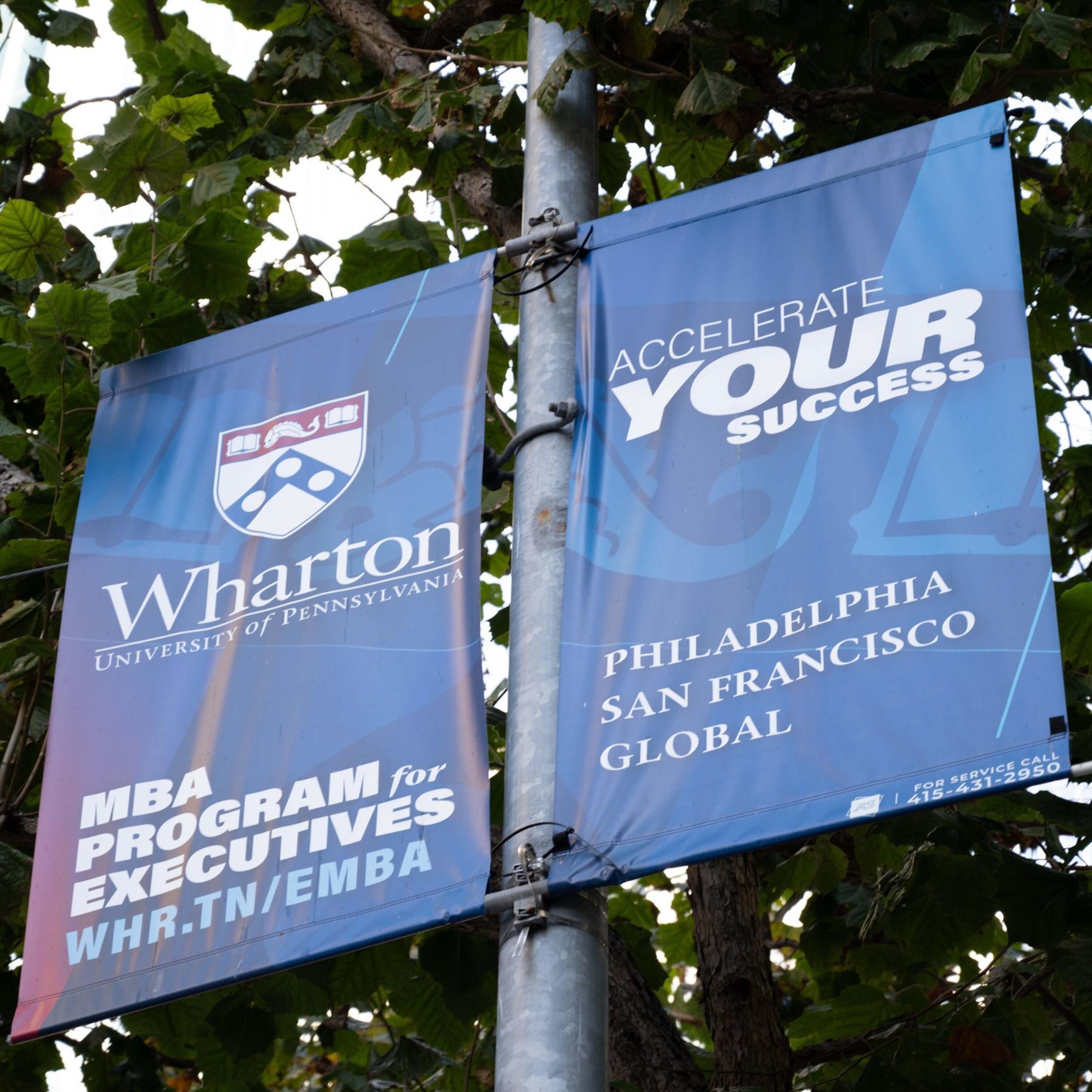
Erica James is dean at the University of Pennsylvania's Wharton Business School.
I think that was a salacious attempt to be critical of business schools.
But I also say it's an oversimplification of what business schools do.
Sure, the core curriculum often includes things like accounting, marketing, finance, and
management.
But Erica says these skills come in handy in today's workforce.
Regardless of who you are, chances are you're going to be working in some form of organization.
And most of those organizations have resources, people, and money that requires an understanding
of how to manage those resources.
People need to understand how to sell.
And those are all skills that come from a business education.
As to the criticism that schools tend to funnel students into fields like consulting
and finance, she says that is partly because those industries tend to aggressively recruit
students, and business schools have been complicit in that.
Still, she says things are changing.
I'm recognizing generational shifts that exist with young people who are way more focused
on businesses' contributions to society and social impact.
And they are coming to us with the expectation that they will get exposure to how businesses
operate in a more broader, impactful manner than just profit seeking.
Now, taking a gander through Wharton's course catalog, I can kind of see what she means.
I mean, you mostly see courses on things like accounting, finance, marketing, but also
classes on government policy, environmental sustainability.
There's even a class titled reforming mass incarceration and the role of business.
Well, Erica doesn't agree that business schools need to be abolished.
She does think they need to evolve.
I'll go full disclosure here.
I do not have an MBA myself.
I graduated with an undergraduate degree in psychology.
My PhD is an organizational psychology, not in business.
And so, when I think about the opportunities to marry both that liberal arts mindset with
the acumen that comes from a business education, to me, that's the goal standard.
Business is good at providing a solution to some of the world's most challenging problems,
but we don't have the only solution.
And this is where Erica and Chris actually agree.
Chris wants to see business schools engage more with other disciplines, think government
policy, social work, environmental studies, things like that.
Maybe then he says business schools can help prepare students to take on big societal
problems, like public health or climate change.
The purpose of business schools needs to fundamentally change, to not just sort of be about
churning out consultants and bankers in big tech, but actually oriented to these fundamental
existential crises in our world.
What if Sartre went to business school?
Everything would be different.
That would be, what was one of his famous saying?
He's an existentialist, he wrote, you know, no exit.
No exit, so he said, like, you are, life is what you make of it.
I thought that was the Muppets.
Was that the Muppets?
Oh, he was hell as other people.
This episode was produced by Angel Coreros with Engineering by Jimmy Keely.
It was fact checked by Sierra Juarez, Kagan Cannon edits the show, and the indicators
of production of NPR.
Podcast Summary
Key Points:
Chris Marquess argues that business schools should be fundamentally redesigned rather than abolished, criticizing their focus on shareholder capitalism and deal-making.
Business education often squashes students’ idealistic aspirations by steering them toward consulting, finance, or tech due to career services and peer pressure.
Case studies, a core teaching method, are biased because they rely on corporate cooperation and often promote successful or positively packaged corporate narratives.
The Enron case study example illustrates how business schools can present misleading narratives that ignore ethical failures and fraud.
While business schools teach essential skills like finance and marketing, critics argue they fail to integrate sustainability, social responsibility, and public good.
Business school deans, like Erica James of Wharton, agree that schools need to evolve to address societal challenges and include interdisciplinary topics.
A growing generation of students seeks education that connects business with social impact, such as climate change or public health.
Both critics and deans agree that business education must shift from profit-driven optimization to addressing existential global problems.
Summary:
Chris Marquess, a business professor at Cambridge and former faculty at Harvard and Cornell, argues that business schools are fundamentally flawed and need a complete redesign rather than being abolished. He criticizes their curriculum for promoting a narrow mindset centered on shareholder value, deal-making, and corporate success, which undermines students’ civic and social aspirations. Case studies, a core teaching tool, are seen as biased because they often rely on corporate narratives and favor successful companies—illustrated by the misleading Enron case studies.
Many graduates end up in consulting, finance, or tech, despite entering with ambitions to improve public health or environmental sustainability. While business schools teach transferable skills like finance and marketing, critics believe they fail to address broader social and environmental issues. In response, deans like Erica James of Wharton acknowledge the need for transformation, emphasizing that business education should evolve to include sustainability, policy, and social impact.
She sees value in integrating liberal arts perspectives with business acumen. Both critics and deans agree that business schools must shift focus from producing bankers and consultants to preparing students to tackle global challenges such as climate change and public health. The conversation suggests that business education should evolve to serve a more inclusive, socially conscious purpose.
FAQs
He doesn't mean to completely eliminate them, but to fundamentally redesign and reconstruct business schools to better serve societal needs.
He believes business schools prioritize corporate shareholder capitalism and sneak in a mindset of deal-making and optimization that spreads beyond academia.
Case studies are often written with company approval and favor successful, well-packaged corporate narratives, overrepresenting winners and ignoring corporate misconduct.
Enron case studies initially portrayed the company positively, but later revealed massive accounting fraud, showing that such case studies can be biased and misleading.
These fields offer high-paying jobs and are aggressively recruited by business schools, leading students to prioritize financial returns over their original civic or social ambitions.
She disagrees with abolishing business schools, arguing that core business skills are valuable and that schools are evolving to include social impact and sustainability.
Chat with AI
Loading...
Pro features
Go deeper with this episode
Unlock creator-grade tools that turn any transcript into show notes and subtitle files.
 PodcastTranscript AI