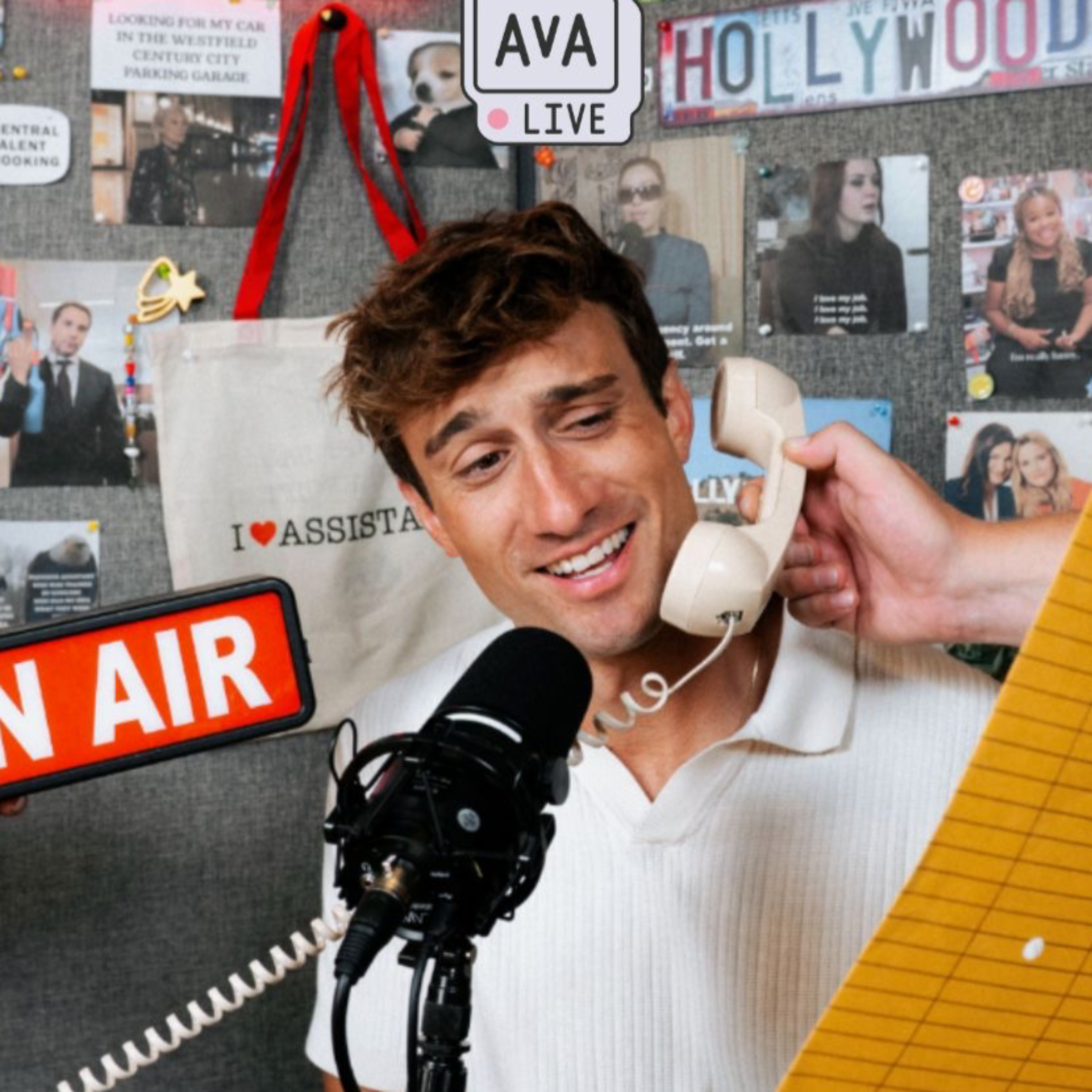
Is AI taking your job?, Investing $250M in creators, Running the largest national touring festival
1h 6m 20s
The episode explores the intersection of AI, media, music, and career resilience across Hollywood and the creative industries. Laura and Kristina Brown share their personal experiences of being fired—highlighting how vulnerability and honesty enable career reinvention, especially for women. They stress the importance of self-trust, long-term relationships, and rejecting outdated career structures. Reed, a director at Ogle V, observes a growing convergence between Hollywood and advertising, driven by Gen Z’s desire for authenticity and participation, with brands like Vaseline and the US Open exemplifying this shift. Nicholas Thompson of The Atlantic discusses his early career missteps, including being fired on day one and a brief kidnapping, and reflects on the rising influence of AI in media. He emphasizes the need for better data protection, AI transparency, and a meritocratic system where talent is rewarded. The Atlantic has strengthened its business through a tighter paywall model, boosting subscription revenue. Breakaway Music Festival’s growth is attributed to focusing on a core electronic music audience, learning from early missteps, and empowering young talent. Tucker Brown’s new $250M fund at CAA shifts the focus from talent representation to investment, offering creators financial and strategic support. Together, these stories underscore a future where creativity thrives through transparency, resilience, and a departure from traditional gatekeeping.
It is Wednesday, September 9th. Welcome to AV Live Entertainment's weekly talk show. The only thing hotter than the weather in LA right now is the topic of AI. We talk about it weekly, but we wanted to talk about the subject as it relates to three things-- Hollywood, the job market, and the current state and future state of media. So we decided to bring on a CEO of a publisher that's been around since the mid-1800s, but had a resurgence since he's taken over in 2021, Nicholas Thompson. He's the CEO of the Atlantic. He's also written one of my favorite books of the year. We also have the CEO and founder of Breakway Music Festival, which is the largest touring music festival in the US. After that, we have Tucker Brown. He's a 15-year vet at CAA. He recently took over a $250 million fund investing in creators. Tucker-- give me some of that-- will take it. He's really turned the company from one that represents talent to one that invests in talent with more than their time with their money. We also have someone who is very dear and near to the program. He's a director at Ogle V talking about the resurgence, or I guess the convergence, rather, of Madison Ave and Hollywood. But first up, two of my favorite people in the entire world. I was on their show before we even started the show. And I said, the only way I'm coming on is if you both come out of this one. So we have two iconic people, Laura Brown, Kristino Neal. They're listed there as journalists and authors, but they've done so much more. Let's bring them live to the show. Laura and Kristina will be joining in just one second here. And we're very excited to have them. This is their book that we've been reading. And we have a funny story as it relates to it, but let's bring them live. Laura and Kristina, how are you? We're live. We're live. I feel so alive. We're so live. How does it feel to be so live? I love this angle on you. You kind of look like Easter Island. I know. Well, the good news is that the viewing party around sees me straight on, but all these guests see the underside here. So hopefully it's a better view when you rewatch later. But let's give a quick background of both of you in your own words. Oh, wow. OK. You have like 30 seconds, and I'm going to hire some questions off. I never-- I always get first. Kristina, you have a go. OK. Hi, Kristina O'Neal, a 30-year media veteran. Currently, the head of media at Sotheby's. But Laura and I have been in the trenches together for many, many, many years. And we're both editors in chiefs. I worked at the Wall Street Journal magazine for over a decade. And we met at Harper's Disar in our formative years. And like you said, thank you for plugging the book. We are the co-authors of all the cool girls get fired. Because we did. We got fired. We're going to get into that. If you know, yeah. Media peers, allies, natural blunds, and within about 14 months, we both got shit canned. And then we write a book, and here we are. Let's-- before we get into hearing about how you got fired. Because I think it's a very important topic that does not get talked about enough and actually shared some stories on your program. Let's find out how well you know each other. And so I'm going to go through four questions. You have 10 seconds to answer. Laura, we're going to start with you. Are you ready? Yes. What was your first impression of each other? Oh, easy. But she was judging me. OK. Christina was judging me. And-- oh, is her impression of me? Of each other? I am person of her was that she talked too much. That's why you have a show now, it's fine. And neither she changed. And OK. Who would play each other in a movie? Laura, start with you. Oh. Oh, my god. Play Christina. Oh, god. I feel like I've aged out of the appropriate answers. How is the hottest? We have 10 seconds to count her on. Yeah, Jen Lawrence, because of the hair. Jen Lawrence, because of the hair with a little more gravitas. There you go. And me, just me, I've always wanted to be a star. Christine, do you? I was going to say Laura would play herself. I love that. That's so fair. That's the correct answer for both. All right. Who is each other's dream guest on your own show? Christina, we'll start with you, Laura. I mean, I think we would probably go back to the person who's sort of unlocked a lot of what the foundation for cool girls came to be, which I would say is Oprah. I think all roads lead back to Oprah. She was one of the first people who agreed to be featured in our book. And her kind of crossed in the stories that we wanted to tell opened a lot of conversation starters with other people, obviously. Once you have Oprah booked to participate in something. So I would say we would love to have her on to thank her again. We went on her pods. So in the sort of reciprocal nature of part of Erin says, we'd love to have her on ours. And can I say something a bit more general, actually. I've been thinking about this a lot. I'd love to have, as a guest, any woman who has not admitted she's been fired and is carrying that around with her. That's the issue that we're trying to hit out with this book and with our podcast, too. There's no point in carrying this around this shame, this waste, this weight. And we actually have women coming up to us. We're going, thank you for giving us permission to say this happened. So we want more women to put their hands up and say, this happened. I'm owning it and I'm moving on. So whoever you are, Julie Jenny. You don't even have to show anything. Come on. I love it. Or I mean, all the cool boys get fired. It was a line I said in your show. But why do you think there's so much stigma around getting fired? And a lot of people been in that situation. What do you recommend that people quickly do and tackle when they're in a situation when they get laid off or fired? I think the stigma comes from taking it personally when the broader environment now does not require that. That you know, it is things happen at a huge scale. Thousands of people getting laid off all the time. So I wanted to take it personally and to admit it. I made it right off the bat. You know, I just feel like this happened to me because as we say, if you don't put your hand up, no one's going to grab it. There's no point sitting there alone, solitary, trying to spin it. It just makes you sink even deeper. So say it happened and guess what? There's going to be thousands of other people who are like, actually me too. So you take that experience, you take that experience, right? Because it happened to me, it happened to many others. How do you then turn that into fuel to get your next job and further, what advice do you have for people applying for new jobs? Yeah, I mean, I think this sort of delight of this sort of journey we've been on is just seeing how many people have decided to bet on themselves. I think when you get fired, it's a gift it really is. And it gives you an opportunity to sort of reset. Look at all the things maybe that you always wanted to do. If there are things, passions, side hustles, all the things that you've been keeping on the periphery, this is the chance to really look at what fills you up and what you want your next chapter to look like. And I think that's the sort of like silver lining in all of it is this is your chance to take a bet on yourself. And we've met so many people who've set up, whether it's new media companies or gone out on their own to launch projects, companies, brands, cookies. Yeah, all sorts of things. So that's been, I think one of the most rewarding outcomes of hearing all these stories. And you have interviewed many people, which is in this book. You didn't even ask me to plug this, but I am. I don't know if you remember this book. Yes, this is not a promo, but what I will say is, do you remember what happened in this book, this very book right here when I went on your show? So I had my wife's contact lens I found on here 'cause she was reading it. I picked it up, started reading it. So you've talked to a lot of people throughout your careers as editor-in-chiefs, as well as writers and authors and now hosts. What are some of the biggest pieces of advice career-oriented that you both have heard throughout that journey? I think it is to trust yourself. No, do not overthink. Not to overthink things, and it's something that people have mentioned to me, but have also learned myself. No one goes. I overthought that, and that worked out better? No. There's something to be said for God-instinct, there's something to be said for trust. And also, I would say, it's more of a long game, like the further you go along in your career, the more trust you earn. And yet, that helps you stand, taller and taller and taller, and helps you out in a situation when you might have a change, or you might lose your job. If you build trust and goodwill through, any of these interactions, and we've been like, we have talked with a lot of people, but a lot of people have talked to and worked with us too. And we've been good ladies, and we've done good work, and we've talked and worked with people we respect. And it is, to Christina's word of the day, reciprocal. Love that. And what about that? What about, unless Christina gives something to add? But you also probably have gotten some bad advice throughout your own careers. What do you think is the worst piece of career advice you've gotten? Well, we grew up in an era where you really were expected to sort of stay put and climb the ladder in a very methodical kind of way where every kind of move on your resume had to be the appropriate next step. And I think what's so exciting about the sort of like new world order, for better or for worse, they sort of chaos that people find themselves in now is that you can have gaps in your resume. All of this sort of like old fashion, thinking that's gone out the window. So I think that's one of the most exciting things is that the rules don't really apply, that the rules that we were raised with don't really apply. And so I think a lot of that came with bad advice, you know? And now I think also as we get older, I think finding a mentor in the field that you're really inspired by whether it's the job you're already in or the job you want to be in. And I think that that's like the best advice, right?
is to find someone who's doing what you wish you were doing if you're not doing it and figure out how to get on that path. - I've got some advice that I think is shit. And it is, I guess we used to get this a lot, don't take no for an answer. I hate that. Take no for an answer. There will be a time when something's right for someone. They'll write for something. There will be a time when they're not. If you build a relationship and you know them and they get their own trust you, the time will come. Oprah showed up in our book because we had a relationship with her and we were knocking on a door every single day. So it's a long game. It's okay to take no for an answer and keep your eye on the price. - I just wrote about this recently, but I actually published a published on LinkedIn. My last rejection letter that I ever received right before I went all in on AVA. And I think I took that as a no that opened up a bigger door as a yes for me to go in on this. And the last minute here, what are some goals personally and professionally that you both have moving forward, looking this next chapter your own careers? - Well, looking at you with your big microphone there, Warner, it's sort of like that because we started a conversation with this book and we are continuing it with a podcast and how thrilling it is to once a week sit down and have a thoughtful, undisturbed personal conversation with someone we admire about what they've learned about attachment to their career, loss, inspiration. So we want to broaden that into cool girls, that form cool girls empire, but cool girls podcast number one. - Yeah, no, cosine, cosine. I mean, I think that's been such a rewarding part of that the book is wasn't the end, right? It was really just the beginning of having these conversations. And like you said, it's so important that I think women talk about it, that society talks about it. And we're lucky that people trust in the conversations that we want to have and we want to have more of them. - I think we declared today, it's pretty cool to get fired and you two are pretty cool people to my favorite in the world. And we appreciate you joining the show. - We are honored. - Thank you. - We'll have to have you back. I think we should do this every year. It just feels like therapy to start the episode every time. - Every year, see you next week. - See you next week. - See you over here. - Yeah, exactly. - We'll see you soon. - Thank you. - From Hollywood to Madison Ave. We have someone joining us who's a director at Ogle V. We're about to find out what Ogle V is. If you're not too familiar, he should be. He's worked with brands like Coca-Cola, Nike, and Google. And has a big focus on Gen Z, as it relates to the industry. His name is Reed, we're gonna bring him up. Reed, how are you? - Hey, man, what's going on? Can you hear me all right? I can, great to see you, great to hear you. Last time I saw you, we were in New York. Did you stay up late watching that match last night between Alcaraz and our new American hero? - I caught a little bit of the game last night. We're excited about the open in New York. There's been a lot of news. I'm sure you've been on top of it. And thanks for having me. I'm excited to be here, excited to see you again. - I'm excited to see you too. And I mean, Ben Sheldon put on an app super performance. I was up till 1240 here in LA. So I can't imagine anyone who stayed up. What do you think is the coolest thing happening in New York as it relates to brands right now? - Man, it's been fun to see the evolution of brands and creators at the US Open, but also in sports all summer. I think brands leaning into this sort of crazy flux of different fandoms, all at once. This has been super, super cool. Like we've seen anime and fashion crossover with sports. We've seen, you know, the foodie brands and foodie festivals leaning to sports. So I think it's the intersection of these brands that's interesting and new. And also watching some of these legacy kind of institutions throughout exactly what to do with the fandoms and the creators of oftentimes behind them has been interesting. You know, I think we saw Wimbledon release a statement on whether or not it's gonna allow influencers or give them media passes. So certainly it's a conversation unfolding in real time. - Yeah, if you missed it, I think at the Greg, not to throw them out of the bus. The Greg is box invited some creators or influencers out. To talk about banning ring lights was the title out of it. But I think it's really important to see that there has been this convergence of the creator economy, Hollywood and of media. From your standpoint, talk to us a little bit about the work you do and the trends that you're seeing in the industry. - Yeah, I mean, super, super quick context on me. Read Litman based out of New York. Can I run the Gen Z in youth culture practice at Ogleville? It's called Pulse. And half of mine for me right now is one of the things that we do is every year we go out and we survey a few thousand Gen Zers across places like the US, the UK, Australia and Mexico. And we try to map how they're actually navigating life. And so it's not like a trend report. It's a read out on how Gen Z is resolving these four primary life tensions, which are function, think like optimization versus indulgence, control, which is independence and wanting to go out on your own versus guidance and seeking support, identity, which is individuality in this need for personal brand versus collective connection, which is like belonging. And then fourth, social natives and being online versus skin hunger and being offline and sort of began wanting that IRL. And the main thesis of the work is that Gen Z isn't contradictory, which is how many headlines and publications and even agencies sometimes put it. But in fact, modern life is. And Warner, you and I have talked about this. But one of the reasons I think we first became friends is that when you're building a career right now, nothing about the traditional path guarantees success or really anything today. And there's this weird match between Hollywood and Madison Avenue or Adland right now where they're actually in quite similar positions. And I think that's for two reasons. And it ties back to the research that I just mentioned. One is that the career ladder for young people has been gutted in both of our industries, right? We're staring down a totally disrupted future. And two, is that both industries build their authority on traditional names and prestige and gatekeeping. And now have to find a way to build with a younger, much more decentralized audience that have just tried to dictate to one. So being a participatory brand rather than an authoritarian one. And both of these things are really a metaphor for the larger employment landscape that Gen Z at large is facing. Yeah, a lot of what you just said relates to the conversations I have with a program that you're very familiar with, breaking and entering, who's doing a lot of the same things in the media space as we're trying to do, and Hollywood make it more accessible, knock down the gatekeepers, take away a lot of the taboo nature of talking about what it's like to work in the industry. But on the brand side, you talk a lot about Gen Z, I'm 33. I can't relate to that generation as much as we talk about it. But I like to bring on people who represent it. What do you think brands are getting right and getting wrong about Gen Z as a generation? Yeah, I mean, I think this is important because a lot of times brands come to life in a bit more of an authoritarian way. I think Hollywood's guilty of that. And I think even agency brands are guilty of that. But what we really see is with Gen Z, this kind of dire need, this corny that they have for creativity and individual expression. And what that means is that brands need to let down the regard a little bit. They need to step away slightly from these tightly protected brand guidelines and embrace this participatory nature that a lot of Gen Zers gravitate towards in the brands that they love. And that's hard for brands that have spent decades building up protected IP to now try to open the door for Gen Z to play along with them. But it's critical in terms of engagement and loyalty, especially at a time where there's more brands, both creator-backed and traditional than ever. And just, I'll press you on that too, 'cause I'm really interested. You work a lot with brands. We mentioned some of them earlier. Who do you think may be a campaign or two campaigns that are sticking out to you right now as the best representation in culture? - Yeah, I mean, there's like a dope one that came out of Ogleby recently called Vaseline Verified. And the whole basis of the campaign was to go out and find new and interesting use cases for the product based on what actual consumers were doing out in the world. So it was totally sort of organic and rooted in what people are doing on TikTok, on Reddit, and across different forums. And then Vaseline went out and sort of verified select use cases and then either build products around that more specific use case or just highlighted the creator who is already doing their thing in sort of spotlighting it. So I think that's an example of a brand that's in a, you know, nearly medical or at least a wellness and health capacity letting down their sort of tighter more traditional brand guidelines and just opening up to the world and participate in. So it doesn't always have to be incredibly complex. Sometimes it's just spotlighting users who are out there doing their thing. And one thing we talked about to open this little segment was the US open. IRL has been such a big push for brands, especially post-COVID. There was a big boom then there was a little taper off and now we're seen in Hollywood with the theaters. Big IRL boom, what's your bet for the media industry and the convergence of Hollywood at least moving forward into the future? - Yeah, man, it's interesting. 'Cause I think you could find a headline right now that talked all about how, you know, short form branded entertainment or branded content series are the future. And then you could also find a headline that says, "Screw content, screw digital, the future's in IRL, it's in touching grass, it's not on the screen at all." But for me, there's, you know, in no surprise, there's kind of a convergence of the two where I think it's not about being anti-tech or anti-digital or anti-content first, but it is about being tech that leads somewhere. So don't just kind of create like the screen scrolling series, but tie it to an initiative that also brings people together somewhere like create.
paths for people to go from digital to IRL. You know, so you're not finger-wagoning saying, you know, get off your phone, people, you're telling them where to go or giving them something to do. So kind of trying to red-thread those two worlds together as opposed to like hard leaning into digital without IRL or hard leaning into IRL without an online experience too. Amazing. We'll read one. Thank you. In the last 20 seconds here, I want to hear your hottest take in the media industry. Hit me with it. I mean, I don't know if this is about media industry or about career more broadly, but I think there's this thing that I've been thinking a lot about that's for younger talent. You know, the real skill is managing your relationships and not the algorithm. And I'll tell you like what I mean by that because I think we're in this moment where as in younger employees, whether we work at an agency or in Hollywood or anywhere, where whenever you get an opportunity based on the content that you're putting out into the world or the brand that you might be building, your employer wants visibility into it. And that's not madalyst. There's nothing wrong with that. It's just risk mitigation on their part. And so my advice is to loop them in early and frame the ask around what it does for them too, but I think there's a couple other pieces of advice that don't get talked about enough. One is to choose a weapon as a young person and then go deeper. So find the thing that makes you smile and makes you useful and push the edges on it. You know, go deep enough that people start pulling you into rooms because you bring clarity or speed or taste that they just don't have. You know, and again, it doesn't matter what your industry is. Specialists or experts are going to get invited in early and those invites become paychecks. You know, whether that room is a client meeting or creative one. And I think as people continue to balance their offline identity with their corporate identity with their personal brand and create our identity, these conversations are just going to become all the more critical. I love it. Building public, that was a hot take. It was a little more than 30 seconds, but I'll let it slide. Reed, thanks for joining the show. We'll see you out there. Hopefully the US Open. See you out there, man. And if you're coming to New York, let me know. We'll go to that. If you have tickets, I'm flying there right now. Let's do it, man. I'll text you. We'll see you. Friend of the program, SJ, we usually have her here sitting next to me, but we got a little prerecorded segment she sent us. SJ, take it away. Hey, can I give him a mail check? For who? For you, silly. Kidding. Um, for Matt Damon. Hey, do you want to get networking drinks? Or we could just do coffee? Or you can go over to my house and we can paint together? Oh, my boss is crazy. I like your boss. Me too. I'm so bored. SJ, what are you doing? I was no vacancy last weekend. My house is like tons of vacancy if you ever want to come over. Do you want to mention a season of the pit with me? This is kind of like the pits, you know, to be in work, but then like we can go over to my house and we can watch the pit as well there. Thank you, SJ. Friend of the program. Hopefully she's here in person next week. So the Atlantic is a publisher that was founded in 1857, but it's had a resurgence in recent years under the direction of CEO Nicholas Thompson. He has a new show, Talks about AI. He has one of my favorite books that I've read during this year. Talks a lot about the job economy and the effects that AI has on both media and the job economy. He also has one of my favorite early career stories. So we're going to bring on Nicholas Thompson, the CEO of the Atlantic pleasure to see you. That's great to be here. Thank you. Thanks for joining the show. What is I know what it is behind you judging by that letter, but talk to us about that painting behind you, the picture. Well, it's the history of the Atlantic. It's a cover that we ran a little while ago, and it's got little clippings from famous Atlantic pictures, Atlantic contributors. So it's kind of our, you know, we were founded in 1857 to help prevent American Civil War. Frederick Douglas wrote for us. So we got a great history. We're proud of that. In a long history, what do you think are the two defining moments of the Atlantic? Well, the founding is an extremely important moment. I mean, that I'm going to say Martin Luther King's letter from Birmingham, Jim. Amazing. Two great answers. Let's talk about your career. I want to use this time in two sections. I wanted to talk about your career and the early career of people watching out there in media and also AI. You talk a lot about it. You have a show, it's catching up on a lot of episodes this morning. So let's talk about your early career. What was your first job? Because there's a fun story that goes along with that. Well, I was an associate producer at 60 minutes, and I was an associate producer there for less than 60 minutes. I graduated college, and I wasn't sure what I wanted to do. I met someone instead of apply. So I applied. I got hired, show up in the executive director, a guy named Phil Shepard called me into his office. I think, you know, who are you? I'm the new associate producer. What have you done in TV? Nothing. Give me a resume. Print it out. Hand it to him. You're fired. Boom. No exaggeration, just gone. I was like wiped out the organization within an hour. So I was 22 years old. That wasn't great. So that was my, my first job. I didn't collect the paycheck. I love it. And that wasn't the end of the career, thankfully. But most people would then pick the resume up and go apply. But you took a different direction by I believe getting kidnapped by drug dealer Maraka. Does that ring a bell? So that wasn't intentional. I would hope that you didn't get kidnapped intentional. But let's hear the story. So, you know, I was that that was um, December of 1997. And so I'm a little bit surprised, right? Like you've, I had moved to New York. I was ready for this new life. I was ready for this job. I was ready to be an adult. And I didn't know what to do. And so one of my best friends from college was beginning a trip around the world. And he was going to go to graduate school in September. And he said, I'm going to go through African asian. It's great. I'm coming with you. And so I go and I get my like injections against yellow fever. And I jump on a plane. I don't know anything. I'm bad at Africa. You know, never studied it really. You know, even though my father had worked there in a very little. I go to Spain. I then, you know, go to 10 years in northern Morocco. And I brought my guitar. I was a musician. And so I was playing guitar in a train station. A guy comes up to me and is like, Hey, American, it's Ramadan. You come home and you play guitar with my family. And I was like, that's why I'm here. And so I get in his car and then he starts driving in circles. And then he takes me with house, walks me in the bathroom. And then he keeps me there. And he says, you know, he's drug dealer. He wants me to help distribute his drugs in New York. And then eventually he decides on useless, right? Like, I'm. I'm not able to help him distribute his drugs. I'm not very valuable. Just like a third twist of the story, which is that my passport and all the money I brought in this tiny little computer I brought. We're all hidden inside the line on my backpack. Because I had a friend of mine had been a flight way to say it's an equal terrorist and he'd made backpacks that had smuggling components. And I happened to have one and not that I was an equal terrorist. And I had happened to put everything in it. So the drug dealers go through and they're like, this kid's useless. He's got a bunch of old t-shirts and like $40 cash. So they took the $40 and then threw me out about a day. So that was that was also an inauspicious start to my life. White to start to a career. You're fired within 60 minutes and got your kidnap. But there's a lot of resilience that goes that into launching a career that you have. A lot of people today feel that the early stage job market, although they're not getting kidnapped and fired within 10 minutes, feels pretty difficult out there. A lot of it's due to AI. What does your take on the early career job market right now? Early career job market is hard if you want a traditional, pretty good job. It's just going to change really quickly. And so my view is going to something you're passionate about. Excited about really learn the tools of AI. And then as things get bumpy and chaotic, like you're going to have a great career, right? The most valuable people and organizations will be young, creative people who are willing to take risks and to know a lot about AI. Like the hardest positions will be ones where, you know, you get, you know, you're really a want to lock in, doing the same thing. And that's going to be hard for a while. And you actually just talked to Kel and she in the most interesting thing in AI or show. And one of the things that stuck out are that 18% of Gen Z are enthusiastic about AI, which if my math serves me, 82% or not. Where do you think, and we'll talk about AI in a second as it relates to that, but where do you think the most opportunity is right now in the media industry? Is it the traditional sense or is it going independent to launch a career by putting things down on paper? That's the thing is to come to the Atlantic knew a ton of about AI and to just kick ass here. That's the absolute best job for a young person. And actually, you do see that you see young journalists and whether they're using AI. We don't use AI to write with some pretty firm lines about it. But, you know, if you're, let me say this about media and not be flip about it. One of the things that is amazing about media and one of the reasons why I got into it is that it is an extremely meritocratic profession. Right? If you are good, you get noticed, right? You can write a story, people pay attention and then they know your byline. And there are very few professions like that. You know, if you want to be a lawyer, you have to go to law school, you have to go to a language, you have to work your way up. And that's hard to tell. But like, you can be, you're at a cover story at the Atlantic when you're 25 years old. If you have a great story idea and you can execute it. So, for young people who are ambitious, media is wonderful. And that's like, weirdly, back to my career path, after I get back from Africa, I was going three months there. I don't know what I was going to do. I apply for these environmental organizations. I apply these nonprofits. I apply to law school, my PhD in economics, right? I work for Congressman Barney Frank in Boston. And then I got hired as an editor at this magazine called The Watch The Monthly because, you know, they were looking for ambitious people who wanted to try things and work all the time. And I liked it because it's a meritocratic profession. And you can get an interesting job and interesting work with little experience if you are willing to grind. And so,
So I did that, and that was the start. - Yeah, and so let's talk about from your career to AI, and also as it relates to the current business model that you have at the Atlantic, too. You were very early, I think it was July, 2024, when you struck an agreement with OpenAI, and there's things, there's actually a lawsuit and unfolding now between the New York Times and OpenAI. Can you talk about that decision? What went through your mind? You were very early on it. And how you think your relationship has changed because in directly you said AI is coming, it's coming quickly, we wanna be a part of whatever transition happens. Do you think that transition's unfolded in the way that you saw it? - Some that has some that hasn't. So that decision, you know, the AI companies came, they took all of our data, they didn't compensate us for it, violated our terms of service, I believe violated American copyright law. So you end up in that situation, you're like, wait a second, they're building a competitive product trying to own all of our data, what are you gonna do about it? And you can yell about it, you can sue them, you can negotiate with them and the negotiations fall apart and you can sue them. So we go in and we negotiate and we say, look, hey, we don't think this was just, you know, let's strike a deal. And you pay us for the content and you give us input on to how you build your products and you give us some controls so that we can prevent some of the downside risks of what's happening. And we reached a deal, New York Times did not reach a deal. We're involved in other litigation and some big tech companies where we didn't reach a deal. And so to that quote, you know, I absolutely believe that probably the most important part of my job are one of the most important points is figuring out what AI is doing in the media and then adjusting the Atlantic's strategy based on that. And also pushing the AI companies, which are designing these platforms, which are not so much important for the world, to acting ways that are good for media, which in turn I think is good for democracy, which I care it's not about. And so do I think things have unfolded from the moment of that deal as I predicted? Yes and no. AI has improved more rapidly than I expected. I expected a lot improvement, but it's gone even faster. The AI companies have not built a search engine or discovery engine that drives people to media. I regret some degree resent that I wish they had. But it's also the case that the tools of AI are amazing for reporters. They're making us run our businesses more efficiently. And there's all kinds of stuff that we can do using AI to make ourselves more resilient, more successful. And ideally, make more money to hire more reporters write more good stories and have that beneficial effect on democracy that all those people in that picture behind me is not cared about. It reminds me a lot of the early days of streaming. I come from the music industry and a lot of the deals that were struck then and how they then turn profits through a lot of the early bets they made. You made an early bet at 2018 at Wired, launching a paywall. Your quote said it worked mostly. What's a big bet you're making now? And what is the future of media? Look, that's a hard question. What does the future of media really look like? And that's two part. How do you ensure that remains profitable? Yeah, so the biggest bet we made ties in with that. It's not bet we're making right now, but Wired, I launched the paywall. At the Atlantic, we made a very fundamental decision to make the paywall way tighter. And there's an argument that when you have a paywall, it should let people read four or five stories in a month, let them learn to love the brand and then ask them to pay or require them to pay to read the next one. And we said, now we're going to change that. We're going to make it one or we're going to make it two. We're going to make it one. We're going to make it in some cases, zero. And that was probably the most important decision we've made in my time here at the Atlantic. And it's a good part of why our subscription business has gone into the digital, right? And why our economics have gone like this. Not saying they will continue to go like that, but why things have gone so well here. And looking towards the future media, what's one thing that makes you optimistic about, not only financially, right? I mean, you talk about behind you, democracy, people being able to write more, get noticed more, what makes you optimistic about the media world right now? You know, I think that demand for true information and trusted information is going to go up in a world of nonsense and AI slop. And, you know, the creation of platforms we don't even know is real and it's not. So I think that if you are a serious media company with a real band and you have real trust and you work and preserve that and you use AI smartly, you never to see people. I think there's a lot of economic opportunities. So that excites me. I also think back to the question you asked earlier. Should you go solar or should you go to a company? Being an individual creator is kind of an amazing route right now and the opportunities and the abilities to do it, you know, without gatekeepers, without having to design your own social media strategy while you're able to get legal advice from a chat bot which is a little questionable, but the ability to get all infrastructure report as an individual creator. It's a pretty interesting time to do that. And I don't, you know, if I were the same thing I was coming back from Africa and I was 23 years old. Would I go to an established company like Washington? Well, they were trying to do my own thing. I don't know, but, you know, both routes have really exciting elements to them. - Yeah, I mean, look, I'm sitting in here in front of a mock cubicle sitting across them one of the most respected CEOs in the media world having launched a solo company. I think there's so much opportunity for people to go without the gatekeepers and the traditional sense to go and create. So if you had advice to your younger self right now or at least other 22 year olds sitting out there, what would it be? - Well, I do have an advice. I have an 18 year old son, a 16 year old son, a 12 year old son. So I do give them lots of advice. So my advice to them is this, which is one of the, and we talk about this a lot. One of the hardest and most important choices they will make is how they use AI. And I want them to use it and I want them to use it smartly. 'Cause you use it poorly, right? And you use it to think for yourself and you use it to write your papers or to cut corners, you're going to become dumber and you're going to get lost, right? And that's going to happen though lots of people, right? They're going to get, you're going to come out of college and they're not going to know anything 'cause they cheated their way through using AI. But if you learn the inner parts of the system and you learn how it works, you use it respectfully and you use it appropriately and you use it as a tutor and you use it as a guide and you use it as a search engine. You figure out how to build agents and you understand the linear algebra behind it. Well, then you're going to be an amazing place when you come out. So then you come out with these skills and then my advice is follow your passion. Find the thing you really love and pursue it 'cause we don't know what careers are going to change and we don't like, yes. If you are like a repair person on quantum computers, you will have a very good job in five or 10 years. But there aren't that many like jobs where you could be certain that you know, it's going to be stable in there. So if you don't, that actually creates opportunity to do the thing you love. - Amazing. Nicholas, thanks for joining the show, spreading advice, wisdom and your story. That's a crazy one. Let me tell you, I appreciate you joining. - It's awesome to be on. Thanks so much for inviting me. - Cheers. - Cheers. From the world of media to the world of music, placed here near to my heart, the world of music festivals. Adam Lynn is the co-founder and CEO of Breakaway Music Festival, which is the largest touring festival domestically. We've got a clip we're going to show you to talk about Breakaway. - We're here again, 2026. - Her is Breakaway, so seriously. - Dude, I feel like it's going to be the best season ever. (upbeat music) - I've been waiting, super excited to get back and come to work these days. (upbeat music) - And we're finally back to being epic dead. (upbeat music) - Adam Lynn, we have him here, the co-founder and CEO of Breakaway Music Festival. How are you? - Good. - Good to see you, Warner. - Good to see you as well. - We showed a little clip about 20 seconds of what the festivals like on site. Can you talk to us about what Breakaway is and the evolution of the brand? - Yeah, so the whole concept with Breakaway was to take a large festival concept but bring it to smaller cities, right? So before it was Breakaway, it's called Prime Social Group, which you might remember. - Absolutely. - That was college tours around the Midwest. And so we were based in Columbus, Ohio. And back in 2016, we had the idea of, hey, can we do this a little bit bigger? And maybe steal a playbook from, you know, the big guys, Coachella is in love with Luzas. But on a smaller scale, well, let's bring this to Columbus and let's bring that to Michigan and North Carolina. We're up to 13 cities this year, which is pretty crazy. So we're now the largest touring festival in the US. I think the world, there might be a touring festival I don't know about, but for right now, we'll claim the US. - We'll give you internationally as well. I mean, I grew up on the Vans Warped Tour. That was my introduction to the touring model. It's amazing to see the growth. But I want to go back to the 2016 Columbus, Ohio first edition of the Festival. I think you sold 16,000 tickets, which is crazy for first go and chance to wrap our headlining if both of those are correct. What was going through your mind in the lead up to that first festival? - Yeah, so we actually, we had, we got to practice before going to the major leagues. So we used to do a festival called The Number Fest, which was down in Athens, Ohio. So Athens is Ohio University, which at the time was number one party school in the US. And so the first year we got involved, we booked with Calipha as the headliner and then Kendrick Lamar and Steve Ioki. We bought Diplo down there. But it was a believer now as a BYOB festival in a cornfield in Athens. And, you know,
So that gave us the opportunity to try some things, make some mistakes early in our career. And so by the time 2016, I rolled around, you know, we kind of figured out security and a great concessionaire and staging and production. And so, you know, there's not a class on that in college. So we learned in the cornfields of Athens and then brought it to the big, big city of Columbus, and now we're in much bigger cities. So we've got Philly this weekend, we've got Charlotte coming up two weekends after Salt Lake City and Houston, and yeah, it's been really exciting, long, long growth story. I love it. I'm a Philly guy. So it was good to mention that. I know you guys are doing this weekend. What were some of their early mistakes that you had overcome to put these festivals on? Yeah, I think I think a lot, you know, I think like any early startup, I'd say the biggest mistake was getting a little ahead of ourselves, right? So just going too big, too quick, trying to launch our first festival on, you know, four months. And, you know, I think when you're younger, you kind of think that like, you got to make things happen so quickly versus, for me right now, it's September 26th, and I'm planning 2028, right? And so like, as I've gotten later in my career, just taking a longer look at these things. So don't rush too early and don't go too big too quickly. I'm going to post you on that because I used to work and run music festivals. What's the craziest thing that's ever happened on site? You can talk about. The craziest thing on site, some funny port-a-potty stories will probably leave those out that I can talk about. Oh, yeah, we, I won't name the artist, but one of the artists had a cash payment that was needed to be made. The initial wire was set in front and then there was, you know, they had asked for some cash. And so they actually left the cash in the Uber that they were taking. And so they actually had to take an ATV, one of the guys on my production team had it taken an ATV all the way around to catch the Uber, to get the cash that was left in the Uber, saved the day, it was a lot of money, and now we stick to the wires. Well, wires are good. Are you sure you're not talking about grand theft auto six coming out? That sounds like a scene right out of that. But there are a lot of hurdles and I wouldn't say failures because you guys have been very successful. There's, there's a, there's the path towards success. You guys just raised a bunch of money, 30 million nine figure valuation. But why do you think what you're doing has been so successful and I'll put you on that. What do you think the recipe for a successful music festival is in 2026 or beyond? Yeah, I think, I think hyper focusing on, on your choral audience, right? So it goes back to one of the initial mistakes that I made where we were trying to serve, you know, hip hop and dance and pop and everything at once. And so if you actually look at the evolution of like these breakaway lineups coming out in COVID, we we realized that dance and electronic was really the genre that that we saw the most upside in that we that we love personally. So we doubled down on that. So now, breakaway is fully an electronic music festival. And so really sticking to that that core audience, I've seen other specific genre festivals, you know, you can look at rolling love, for example. And so just hyper serving that, that demo as opposed to just trying to be a mini lava poluzo, which is what we had initially set out for. And we've seen a lot more success with that. And then you could start blending like sub genres, right? So when you look at breakaway, a few of our festivals have multiple stages, but we'll have, you know, a base stage and a house stage and a commercial, you know, and so like, there's different audiences within the electronic space, but again, just sticking to like, we want to just be breakaway to be an electronic show. So so even when you we talk internationally, is there an appetite to move beyond just electronic music as an umbrella, which stretches into other genres now or now? Yeah, we're actively looking at other genres, nothing on the meat horizon, I think for next year. We're really excited. We've been scaling the team. I'm actually in our New York office, which just opened two months ago. And so we now got New York, LA, Columbus, the OG, Charlotte, and Nashville. And so I think as the team has gotten so strong, you know, I think for us 2027 is going to be a year where we just get, we get everything right. And just really push for profitability and success, and you'll see a pretty large expansion in 2028. And so that will include international expansion that will include other genres, continue to expand further on breakaway studios, which was a record label, which had a billboard radio number one, two months ago, Bonnie and Clyde. So I'm seeing a lot of success and gently outside of just the live event. Let's look at the artist side, whether it be in the label or the curation of artist booking, how close are you to continuing to book the lineup, yourself and have a follow-up based on that? Yeah. It was a sad day when my co-founder and I, Zach, had to sit down together because in the first couple of years of our career, we booked everything together. And it was like, Adam and Zach, and we'd call the agents, and we'd go to CA, we'd go to WME together, just think about like 22-year-old Adam with the notepad, you know, sitting in Carolus' office, and we got to a certain point where one of us had a focus internally, one of us had a focus externally, and Zach had always been a better buyer than me. You know, and he likes it, right, you know, you know, the agent, promoter battle, and it is battle. I've been on both sides of it, so it is certainly a battle, fun story I used to be when I was on my third desk working for the head of music at WME, I've told this publicly, promoter of the biggest, one of the biggest festivals in the US used to call us and say, "No, no, I want to talk to you, not your boss, like who should be booked between these three artists and put us on the spot as 22-year-old kids having no idea about the role, but it taught me a lot about where influence comes from when these festivals are getting booked, and how much are you looking at the younger people, and where are you really pulling data from, or gut feeling from, to book these lineups now?" Yeah. Well, it's funny that that is what I used to do, right, so then to the story was I actually, Adam Land no longer is curating the lineups that is Zach Rubin and his talent team, so I kind of have to pass that combo, but I will say, when I was a talent buyer, I always wanted to talk to the assistants, because those are the ones that 22-year-old Warner was the one who was going out, going to the clubs, seeing the crowd reactions, and at a certain point, the older agents, wife, kids, family, and I can't go out on Tuesday night and go see that up and come in DJ, so super important just to keep, if the average age of breakaway is 24, 25 years old, keep that ecosystem close to you, like hire kids out of college, bring in the interns, we had five summer interns in our LA office, and they helped us sign a ton of talent, and gave us great ideas that we're not on the cutting edge, like we were when I was 22. We had an assistant last week, current DreamWorks assistant who sold his spec to HBO. As an assistant, crazy stories, the influence, the pace, the culture is coming from people in those roles. We hire a lot here, grow younger than me, smarter than me and more in tune with culture. Let's talk about just finished the conversation artists though, throughout the call of 10 years of running breakaway, what have been some of the biggest bets that have paid off on the artists that you were making that made out of made sense on paper? Yeah, I think the easy one is John Summit, so coming out of COVID, I had a buddy living in Chicago who was up and coming DJ himself, and he sent me a couple of tracks, he's like, kids buzzing in Chicago, we were in Columbus at the time, so this is 2021, this was like the second festival coming out of COVID. So the vaccines, I think, came out in January, and so we were producing in the fall of 2021, so these are the first events people are coming back to, and yeah, I got hit to John. We had an open slot on our Corona stage, which was the second stage, and it's actually funny, John later than headline the festival two years later, and so I'm sitting with him in the green room and we're talking about it.
it. One thing about John that I love is just such a smart dude. As many shows as many gigs travel the world a hundred times over, he's like, "Oh yeah, I remember playing Breakway. I played the Corona stage, second to open, and rocked the crowd for a really small fee, and now he's headlining, you know, basically a sold-out festival. So, I've loved actually watching the rise and like rooting for someone like John. Also, Dom Dalla, I remember booking our first club gig with him at like this 500-cap room in Columbus, and it didn't sell out. It wasn't a sold-out show, you know, he was still grinding and touring and playing in these small markets, and now watching these two guys basically through the biggest DJs in the world, and just genuinely good guys with great teams around them. And so, I'd say those are two of my favorite that there's like countless, there's Griffin and two friends, and you know, I go through, it's fun being at all these shows because we've known these guys for such a long time. And so, I go out to their careers, they go off, and you know, to turn and stack, they've seen like my career takeoff and go from, you know, 25-year-old kid throwing music festivals to, you know, having 13 of them this year. Yeah, I mean, you rattled off a couple of my favorite hours. In the last 30 seconds here, I wanted to talk about that 25-year-old Adam Land, what would be your single piece of advice for him? Enjoy it, and take a second to to look around at the team, and I think, again, back to my mistakes early, it was just like growth instead of foundation, right? And so, build a foundation then grow, not grow then build a foundation. So, would it save me a couple of bucks along the way, but happy to be here and let it hang with you today. Appreciate it. Thanks for joining Big Fan of You, Big Fan of What You Built, Congrats. We're excited to see the show and Philly won't be there from afar, but the growth continued for the for the Breakway Music Festival brand. Thanks for other. We'll see you. Cap this off with one of the most important and busy people around the entertainment industry in Hollywood. His name is Tucker Brown. He's an executive 15-year exec at CAA. There was an article that came out in June that talked about their $250 million fund and partnership with a private equity group, TPG, and his name was all over and his face was all over the press. And at that moment, I knew I had to bring him on to the show. So, we have Tucker Brown joining A.V. Live. How are you? Hey, Warner. Good to see you. I'm good. I'm great. Are you back in New York? I saw you in L.A. a couple weeks ago. I'm back in New York, although I'm always moving around. So, I'll be back in L.A. a couple of weeks, London next week, Dallas the week after. So, keep it, yeah, keep it moving. Yeah, you mentioned a couple to see. It doesn't sound like you're very busy after the news broke. What has Summer brought you this year and things that you've been closely focused on? Yeah, listen, Summer, I think as we chatted a bit about, there was a lot of lead out to launching the platform and the fund. So, we had a bit of a running start by the time we launched it, announced everything and used that as a moment to formally draw attention to what we were doing. But we were able to pretty quickly pivot into to deal note, right? So, it was a little bit of just establishing ourselves as a business, as a brand. Talking to the market, I was in Camlion right after we announced and was able to use that as a moment to introduce compound more formally to folks that matter in the industry. But yeah, pretty quickly turned to focusing on trying to generate Teofloat for ourselves, talking to creators that we've been speaking to for a while, advancing those conversations. This is a relationship business. So, a lot of it was taking the time to really introduce us, even if they'd known me, get to know us as a business and a platform and think about a partnership that could make sense and trying to make progress on those conversations over the last few months. Yeah, and one of the first times I saw your name was around a $100 million deal. And, dude, perfect, I saw you post something on LinkedIn and so it was a career highlight for you. What were some of those early deals that you did that gives a little point of reference for some of our audience? Yeah, sure. I mean, so the dude probably deals the best point of reference. It was the first that I had done in this category. It was the biggest at that point in time to transact in this category. It stills one of the largest control sales of a creator business ever. And it was an introduction to what it looks like to essentially take a scale to create a business to market for a private equity-like transaction. The economics of the business works extremely attractive. I was used to doing deals like that in different categories. I was not used to what it would be like in the creator space, though, where you're dealing with a different kind of business. You're dealing with different kinds of talent. It wasn't necessarily a comfortable category for private equity then, which sort of started the brainstorming. On our side around how we could build a platform to be a partner to those creators in a different kind of a way. So we got that deal done. We saw, you know, we did a large private equity transaction for Dude Perfect. It brought a lot of capital into that business to allow them to build for, you know, the future of what it could look like to do perfect brand as it might live beyond the five founders themselves. And there's a lot of future sort of planning for these businesses that have been built around creators to try to, you know, to have a brand that sustains beyond the life of what they might be able to commit to the business. So that was really eye-opening for, you know, for myself, for us at CA more broadly. And got us thinking about what we could do ourselves to be a different kind of a partner to those businesses because we feel like we understand talent. Well, we understand what, you know, their motivations are as creators as founders. And we can be a different kind of capital partner that we think the market is looking for. Yeah, and I want to break this down simply for people who may not be as familiar with how creators or creator businesses take capital injections or capital in general. Where are you seeing the real need from a creator side to be taking on capital right now? Yeah. So what happens in a lot of instances because pretty low barriers to entry in the creator ecosystem, right? If you have a camera or a phone, you can start to be a creator overnight. And when it works, when the content's resonating, you know, a lot of creators do have a real strategy. But what happens often is you build an audience pretty quickly and the business scales economically, the content, you know, strategy might scale. But you don't always have the infrastructure to sustain what quickly, you know, a pretty quickly becomes a media company. So what you often see is a really meaty business that's generated in a lot of revenue, but doesn't have the infrastructure to support what should be a really robust media company in ways that you're sort of used to. So a lot of the capital is dedicated towards just putting the pieces around the business to allow it to be a really fully functioning operating company. What you'll see often is creators themselves might be the ones doing all the things running the company in ways that they're just not used to or best positioned to do. You want them to be the creatives and do what they're good at. You want other folks to come in and help run the business and kind of keep it, you know, just keep everything sort of running and smoothly and the way that it should be. And that allows the, you know, the company to be better positioned for future growth. What you often see too is, you know, these businesses build really skilled audiences on a platform on YouTube or any other sort of social platform or digital platform. There are a lot of natural business extensions you can explore. You see a lot of creators launching some of our products, businesses, you know, other business extensions that might require some capital. So bringing in some growth capital that a partner gives you both infrastructure and also potentially some growth capital for exploring other areas outside of whatever the core of the business might be. So it's sort of a situation independent. There are a lot of uses of capital that are pretty interesting. Yeah, and for us too, I bootstrap this. We've had a lot of conversations about fundraising just transparently. And it's interesting to follow a lot of peers who have taken on capital for certain reasons. I think a lot of companies have taken on too much capital, probably trying to figure out how they're allocating it. But from an investment standpoint investor, you were more broadly, what are some of the things that you're looking for when you're going out and trying to invest in a creator or the business that they've created? Yeah, it depends. And there's, you know, there's value to investing in all sorts of different businesses at different stages. From the earliest to later stage businesses, we are more focused to compound now on later stage businesses that have achieved a certain amount of relative scale. So in more instances than not, not only are we overly prescriptive or what we will or what to because part of our founding thesis was to be flexible and creative and how we approach a deal. But we're looking for, you know, for scale at a business level infrastructure around the business, even if it is relatively rudimentary or needs for finding, but some infrastructure at the business and employee base. We're looking for revenue diversification. So in more instances than not, we're going to have, maybe it is a core YouTube business, but they'll have business extensions. Maybe there's, you know, a real long form content strategy, TV film, audio strategies, live entertainment, consumer. I think a lot of what we're looking at right now, some of these larger businesses probably have at least four or five pretty robust revenue generating segments. And you always want to be thoughtful about how dependent is the business on any one individual or collection of individuals. And that doesn't mean that we're going to shy away from talent. We actually mean into talent. We think it drives value for any of these companies in a really meaningful way. But if you were to extract that individual with everything collapse, you probably have a bit of an issue. You need to be able to solve for. So building more of a brand that resonates with an audience, you know, outside of one individual speaking to that audience. We're looking for that in the ability to at least
if it doesn't exist in a really meaningful way today. - And real quickly, could you give a maybe an instance or a specific dude perfect, I think is the best example. Mr. Beast is someone everyone goes to. But what are some other creators of creator businesses that are really interesting out there, either you've invested in or that you've just seen? - Yeah, I mean, listen, I can talk about other deal that we had just consummated actually on the advisory side when I was at Evolution. We did a deal for the Midas Touch Network, which is a political news platform that received investment from Soros Fund management. That category generally is really interesting. There's a lot of disruption, fragmentation within the news, journalism, politics, category where traditional media is in a bit of a period of fluctuation. I don't know if you wanna call it a crisis, but there's a break in that business model when you're seeing creators be able to build things overnight that become quite massive. Midas Touch, I can't get into specific numbers, but they build a really robust business, not overnight, but very quickly because they were speaking to highly engaged audience around politics, offering just more direct content daily, right? They had a live sort of schedule and they were giving their audience what they were looking for, active kind of real time news and information. I like that kind of a lot. I think we're gonna see a lot more activity in that space. Sports, I mean, every major league is looking for ways to connect with a younger audience. So sports creators, whether it be the, you know, do purpose a lot in sports, Simon and global football, Jesser with his relationship with the NBA. There are a lot of really interesting businesses built around the sports category in different sports. And yeah, I mean, there's a lot out there that we're excited by right now. - Yeah, and in the last couple of minutes, I wanna talk about two things. First, your career, 'cause I think it's really interesting. Most people look at C.E.A., they're like, you start in the mail room, you go become an agent. We won't go back to a physical academy. Some have it for guys, so fellow mainline man. But I wanted to hear about your experience of pivoting into the world of entertainment from more of a traditional finance role. A lot of people reach out to us, they say, how can we prepare ourselves to pivot into the entertainment industry? What was that experience like? And how do you think you successfully did it? - Yeah, to be honest, I was forced into not really have to do a hard pivot. I mean, if there was a pivot when I was quite young, I did a banking stand out of school for about a year before I moved over to C.E.A., also in a banking role. But was forcing to grow up in this environment where I was within an agency, right? within a talent agency working for an investment bank and had exposure early and quickly to every segment of entertainment within the largest global talent agency. So I think it was just simple as having a skillset and finance, again, it was quite crude back then. I was still young in learning that skills, that skillset. But we need into sort of passions and interests and how that ties into what you're good at. And for me, it was figuring out how to put together a deal and have that migrate to all sorts of different situations with different clients and different categories, follow areas of interest. So I know I wasn't, as of a few years ago, really a creator expert, but it was an interesting category where it was the highest growth segment of entertainment. There's something to do there. Just follow the area of interest and passion. And again, apply the skills you might have. And you can find yourself pretty quickly in an area of pretty interesting situation for yourself. So yeah, I think it's passion driven first and foremost and just recognize what you're good at and what you're not good at. - Yeah, a lot of when I was at WME early, early career, a lot of the people that took bets in the digital world which seems obvious now in the creator businesses that these agencies have built up. We're at 24, 25, 26, we're now in leadership roles in our early 30s. I mean, that's finding opportunity. Internally, I think it was interesting about you. You found opportunity, potentially you say externally, but it feels that it was a pivot into the creator economy and you've taken advantage of it. And the last minute or two here, we actually have a fun game. What do you say to a little game here? Make it a little light hearted fun. - I'm nervous, but sure, let's do it. - Okay, let's do it. So we actually have a, we're gonna, we read creator economy hot takes and I want you to react to it. We have a beautiful pink shredder next to me. You can't see until you rewatch this. And you're either gonna tell me you agree with it or you disagree and I'm gonna shred it. Are you ready? - I'm ready, let's go. - All right, let's do a lot of pressure here. Creators can only generate hype, not loyal customers. - Don't agree. - Tell me why. - It depends on the kind of creator. There are hype-driven creators, but they're also those that build a really meaningful engaged audience over a period of time that they build trust with. So I think it can be much more than hype-driven. And there's a lot of attention on things that are hype-driven that fade quickly, but I've seen plenty of single businesses built around a long-term loyal engaged audience. - Then how do you turn an audience quickly into customers? - Yeah, I mean, again, it's sort of building trust, having them understand what it means to interact with you, whether it's with your content or with your products. So when you build that trust first and foremost, you don't too quickly try to sell them other things. Once you have that trust and it's captive and there's engagement with them, then anything you offer them for the most part, as long as it's high quality and resonates with what they're used to receiving from you, they're gonna be customers for that kind of a business. You see that with creators that build, the deep-perfect guys go on tour. They sell out MBA size arenas because their audience wants to come and watch them and interact with them. They're customers across the board. - I love it. Last one here, you're a good sport. Putting a creator in the board room is just stunt casting. A career, should I shred that? - I think you also shred that, right? - I want to shred that. - Creators are, you know, they are really important entrepreneurs in this generation of media evolution. So they should be listened to. Again, not everybody's cut out to be the entrepreneur, boardroom level can, you know, contributor, but there are plenty that are, that are really smart. That should be listened to and will help a lot of legacy media businesses build better companies themselves for the future. - Amazing talker. Thanks for being a good sport playing along with our game, but thanks for the insights and incredible to see what you're all doing and excited to track it. - Appreciate it. Thanks for having me. - See you soon. - Big shout out to many chat for being the behind-the-scenes heroes helping creators turn their passions into income and for bringing our beautiful pink shredded to life. That was it, AV Live. We're gonna see you at the same time. We're gonna see you in the same place next week. Have a good week. We'll see you soon.
Podcast Summary
Key Points:
Laura and Kristina Brown, former editors-in-chief, co-authored *All the Cool Girls Get Fired*, sharing their experiences of being laid off and advocating for honesty about career setbacks.
They emphasize that admitting to being fired is a form of empowerment, enabling others to reclaim control and pursue new paths in their careers.
The book and podcast highlight the importance of self-trust, long-term relationships, and rejecting outdated career norms like rigid career ladders.
Reed from Ogle V observes a convergence between Hollywood and Madison Avenue, driven by Gen Z’s demand for authenticity, creativity, and participatory brand experiences.
Nicholas Thompson of The Atlantic shares insights on AI’s impact on media, advocating for strong creator rights, transparent data use, and a meritocratic future where talent shines.
The Atlantic’s shift to a tighter paywall model has strengthened its subscription economy and reinforced trust in quality journalism.
Breakaway Music Festival’s success comes from hyper-focusing on its core electronic music audience, learning from early mistakes, and empowering younger talent in artist booking.
Tucker Brown’s new $250M fund at CAA invests in creators beyond representation, focusing on long-term financial support and innovation in the creator economy.
Summary:
The episode explores the intersection of AI, media, music, and career resilience across Hollywood and the creative industries. Laura and Kristina Brown share their personal experiences of being fired—highlighting how vulnerability and honesty enable career reinvention, especially for women. They stress the importance of self-trust, long-term relationships, and rejecting outdated career structures.
Reed, a director at Ogle V, observes a growing convergence between Hollywood and advertising, driven by Gen Z’s desire for authenticity and participation, with brands like Vaseline and the US Open exemplifying this shift. Nicholas Thompson of The Atlantic discusses his early career missteps, including being fired on day one and a brief kidnapping, and reflects on the rising influence of AI in media. He emphasizes the need for better data protection, AI transparency, and a meritocratic system where talent is rewarded.
The Atlantic has strengthened its business through a tighter paywall model, boosting subscription revenue. Breakaway Music Festival’s growth is attributed to focusing on a core electronic music audience, learning from early missteps, and empowering young talent. Tucker Brown’s new $250M fund at CAA shifts the focus from talent representation to investment, offering creators financial and strategic support.
Together, these stories underscore a future where creativity thrives through transparency, resilience, and a departure from traditional gatekeeping.
FAQs
They emphasize that being fired is not a personal failure and should be openly acknowledged. They recommend speaking up to reduce shame, as it connects with thousands of others who have faced similar situations. This openness helps build resilience and fuels the next career chapter.
The traditional career ladder is no longer reliable. Young professionals now face a fragmented, decentralized landscape where gaps in resumes are acceptable and success comes from passion, adaptability, and being willing to take risks rather than following a rigid, predictable path.
The most promising opportunity is in independent journalism and creative media work. The media industry remains meritocratic, allowing ambitious individuals to build careers through strong ideas and execution, even without extensive experience or traditional gatekeepers.
AI companies have accessed media data without fair compensation, raising copyright concerns. The Atlantic negotiated a deal to be paid for content and to have input on AI development, ensuring media integrity and protecting against misuse. They also use AI tools to improve efficiency and resilience in reporting.
He advises young people to use AI smartly—learning how it works, using it as a tutor or guide, not as a shortcut—and to follow their passions. He stresses that stability is uncertain, so pursuing what one loves creates both personal fulfillment and long-term opportunity.
Breakaway succeeded by focusing on a specific audience—electronic music—rather than trying to appeal to all genres. This hyper-focus led to stronger fan engagement. The festival has since expanded its operations and team, with plans for international growth and genre diversification in the future.
Chat with AI
Loading...
Pro features
Go deeper with this episode
Unlock creator-grade tools that turn any transcript into show notes and subtitle files.
 PodcastTranscript AI