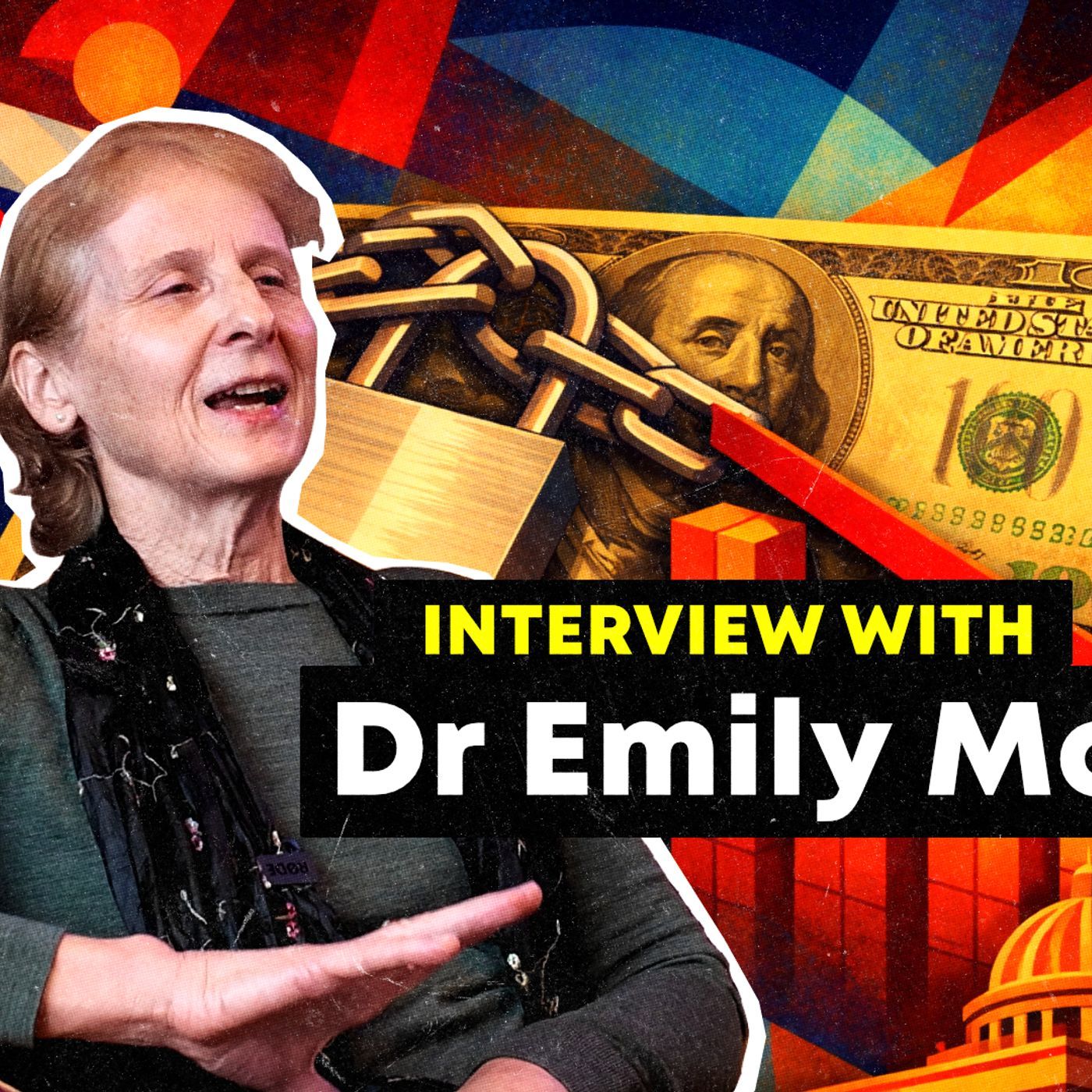
Interview with Dr Emily Morris, development economist and Honorary Senior Researcher
63m 8s
Dr. Emily Morris, an economist, first engaged with Cuba in the late 1980s, intrigued by its outlier status in development metrics. Her professional analysis for the Economist Intelligence Unit from the early 1990s to 2008 provided a detailed view of Cuba's economic survival during the Special Period. She observed that U.S. sanctions, especially the Helms-Burton Act, created a persistent "cloud" over investment by introducing legal and financial uncertainties, deterring foreign businesses and banks—a phenomenon of "overcompliance" that severely restricts Cuba's international trade and finance. The current severe economic crisis in Cuba stems from a perfect storm: the pandemic drained reserves and halted tourism, the U.S. terrorism sponsor listing tightened financial isolation, global commodity prices soared, and a major domestic currency reform launched in 2021 triggered hyperinflation. With exhausted reserves and no access to international lenders, the government's policy space was eliminated, leading to desperate shortages in essentials like food, fuel, and medicine, and creating a profound social and economic shock for the population.
[Music] This is Cuba Analysis Podcast and we're delighted to be joined today by Dr. Emily Morris. Emily, can you introduce yourself please? That's supposed to be here, thanks for inviting me. Yeah, my title at the moment is I'm an honorary senior research associate at the University College London Institute of the Americas and I'm also a director of a small, very small community interest company which facilitates research collaboration between the UK and the Caribbean. So, Emily, you first went to Cuba in the 1990s during the special period and after the collapse of the Soviet block. Can you tell me why you went and about your long, you know, association with Cuba ever since? Yeah, well, the first time I went was actually because I was teaching developed with economics. And when I was teaching development economics, you look at the relationship between economic growth and social indicators and so on. And quite clearly, Cuba was complete outlier. And so that's what first drew my attention to Cuba. It was just an outlier compared to all of the other countries developing world. And so that peak made interest. So I went over for the first visit and discovered that there was an awful lot to know. So I started to think, you know, this would be worth investigating. Although I was a mature student, I thought maybe I would think about linking up with academia and doing a study. And so that happened in the early 1990s because what I saw there was how complicated that question was, you know, the extent to which Cuba was an outlier, it was an outlier geographically, historically, socially, economically. But my focus was on the economics. It was actually, so by the early 1990s, not only was it an outlier, which I'd discovered in the late 80s. But it was also an outlier in terms of the former Soviet bloc because whereas the rest of the countries were going for economic transition, Cuba was heading in another direction. It wasn't clear where it was going then or whether it would, what kind of results they would be. But I could see that it was a very interesting case study. So that's why I became interested. Yeah, really sparked your kind of like out of all the other countries you looked at, this was something. Yeah. And as an economist, you need to look at outlines. You need to see, you know, the exceptions to the rule in order to understand how strong the rule is if you like. So, you know, for me, it was an intellectual exercise. I didn't know much about Cuba until I started to, you know, teach about economic development. So, you know, I kind of came at it from very much an economist's point of view, which was kind of unusual as I discovered later because most of the writing about Cuba is from people who are committed one way or the other on the politics. And mine was just curiosity. So you're talking about studying Cuba as an economist. And for many years, you carried out the analysis of Cuba for the economist intelligence unit. And, you know, because the the level of detail, this gave you an intricate knowledge about developments in Cuba, about policy measures and their impact. The reports were mainly produced for non-Cuban business interests. Can you tell us about this work and how through this work you found out about how the US blockade obstructs foreign investors who do business in Cuba or want to do business with Cuba? Yeah, it was quite an unusual career move. So I went from teaching to working for the economist intelligence unit where I was in the team looking at Latin America and the Caribbean. So, we each of us had a group of countries to look at and a very interesting time, 13, 14 years I spent there. And generally what we did is we circulated the countries between us. So I was given the Cuba portfolio, which actually meant that I was following every quarter we had to write a report about what had happened in the economy. And every year I was able to travel there. And with a press visa, because the economist intelligence unit is a publication, I was actually able to talk to people who are making policy at the time. So I was following the data and I was talking to people who are making policy and I was making friends over there. And so I had a kind of snapshot over more than a decade of what was going on in Cuba from the early 90s until 2008. And so even before I started there I was thinking that Cuba was an interesting place. By the time I done that I realized I gathered really unique set of insights into how Cuba survived the special period. Because I started going there you know when it was in the pits and then it was gradually going up. Now the economist intelligence unit at the time used to run economist round tables with the governments of different countries around the world. And at that time because Cuba was opening up to foreign investment, it did several of those in Cuba. The first one was done before I arrived, but then while I was there because I was on the Cuba desk I was involved in organizing those events. I believe the first one was in 1993 or four. At that time there was quite a lot of excitement about investing in Cuba. Cuba was opening up. Lots of business people were going there. The economist intelligence unit made quite a lot of money out of the conference and so on. After Helms Burton in 1996 you could feel the difference because the Elbert and Law was deliberately aimed at foreign investors and told them that if you were trafficking in properties which might have a claim on them it was very ill-defined but it was sufficient to deter people. And that was a really interesting moment. So there were two things going on. One of the reasons why people weren't interested, well, why it was difficult for foreign investors to get into Cuba was because Cuba was different from the other places. It wasn't doing a transition and there are a lot of people who had invested in Eastern Europe and the former Soviet Union who were expecting a very big return and the Cubans weren't selling as cheaply. So the terms were not the same as it was in other places so people would be put off by that. At one conference I went to, there was somebody who wanted to set up casinos in Cuba and the Cuba was very clearly said from the podium we don't do casinos so this man has wasted his money really in going to Cuba. Humans were actually setting limits on what people could do but Helms Burton really the economist around table conferences petered out after that because it was there wasn't sufficient international interest in investing in Cuba. So even though the economy was growing and beginning to diversify and that there were opportunities there weren't enough people to fill a room on investment in Cuba at that time. Can I follow up that question by saying so obviously this is the US legislation the Helms Burton Act that was passed in 1996 but actually title free was suspended at that time because of complaints by Canada and the EU and so on. They came to an agreement which was that the European Union would support the US politically within Europe and the US would suspend title free which enabled US citizens which extra ordinarily includes Cubans who weren't citizens at the time of the nationalisation saying were Cubans and then claimed US citizenship but it enabled them to take to court anyone who and the word they use is trafficking, trafficking anyone who was trafficking in properties which they previously had an interest in. So that was suspended actually until 2019 when it was lifted under the Trump administration. So I mean can you tell us about how that hit Cuba so many decades, well two decades later? Two decades well yeah so I mean even while it was suspended it was still a deterrent that's the interesting thing because the US allies demanded that it would be suspended but it still had when they were the cloud over investment because in order to test it you would have to spend an awful lot of money on legal support and so you know Cuba's not a very big market and so if you're a multinational company you're not going to be looking at Cuba if it's involved that amount of uncertainty and cost. So there was a big deterrent before but of course now it's
the situation is far more extreme. So now it's still for investors, the reversal of the Obama opening, if you like, was really a lesson to people to, well, a deterrent, a huge deterrent, because at the time, investors or cruise companies thought that they could operate in Cuba, and then afterwards you have a kind of retrospective of attempt to prosecute those investors and those businesses that dealt with Cuba. And so that was kind of, now the situation now is much worse, even than it was then. For investors, I think we need to say and maybe we'll come onto that as well, it's also for any company that's doing any transactions with Cuba, never mind investment, just simple trade, is also hampered by what we call overcompliance. And the overcompliance is by businesses, but it's particularly by banks. And so you have financial institutions will not actually process payments, which makes it incredibly difficult for Cuba to do international trade at the moment. Yeah, I was going to touch on that, actually, that was my next question. So how do US sanctions, the US blockade, through international financial systems, and how have they found walk-rounds or have they to cope with these obstacles? Yeah, that's an interesting question. How have they found work-around? Because if you like that, the impact of the threat to financial institutions wasn't immediate. It was gradual. Some of it was immediate, but since then, in a way that what we call the overcompliance has got tighter and tighter. So more and more banks have been refusing to do business with Cuba. So initially it was the big ones with US interests, but more and more, if any bank that's doing any business in US dollars feels threatened. So they do this risk? Yeah, so it gets flagged up by the compliance department, and they just say no. And again, it's because the market isn't big enough, and the costs and the uncertainty are too great to operate in Cuba. So in terms of working around it, how do you work around the fact that none of the banks will own your payments? And you're not just talking about US banks. You're talking about all banks. Yeah, you're being bad. Absolutely. And actually the UK was affected very strongly, very early on, because it only has, it got a very concentrated banking system. So there's only really four main banks. Whereas in other countries in Europe, they have more banks, and so they had, you know, it was possible to find your way around or to find a smaller bank. But gradually, and it's interesting, because at the moment, you know, in the past few years, there's been more and more efforts to anti-Money laundering and anti-terrorism finance, which we all support and is very good thing. But it does mean that their compliance departments are much more active. The computers, you know, have developed to be able to trace transactions much more effectively. So what was a problem before is now an absolute barrier for most banks in Europe now. So in terms of working around it, I think what, for Cuba, it's been, I mean, I actually interviewed somebody in the Ministry of the economy a couple of years ago, it's three years ago. And she just described having shipments being cancelled on their way to Cuba, you know, so that the disruption, as well as the prohibition, you know, the conblocking and then the disruption to supplies was something which is very difficult for people over here to understand, or people in other countries to understand. Because, you know, we do have a very liberal, very open international trade. We have, you know, finance flows freely between countries. We don't understand what it must feel like to actually have your trade blocked or suspended, the ship's being prosecuted. So ships which are insured through companies that have US interests are also finding their insurances cancelled, which is a complication which they didn't anticipate when they'd signed a contract for delivery from such and such a country with such and such a shipping company. And so it's, it's, the tightening has been particularly obviously from when Cuba was listed as a state sponsor of terrorism. The tightening of the following months was something which people couldn't even have predicted. I think, you know, nobody quite anticipated how a heavily integrated global financial system would be affected in this way. So it's been extremely difficult for Cuba to get around it, which is why, and I think we could have predicted this, if you try to close off the Western financial system, Cuba will be forced to go further to its political allies or to allies which were prepared to take the risk and to have official backing and that means China and Russia in particular. So what the US has effectively done is its forced Cuba, absolutely forced it. Back into a closer economic and political relationship with the countries that the US sees as a threat, which must be, you know, it's not what that was intended. What they intended was for the Cuban economy to be under such a strain that there would be political upheaval and so on or regime changes. They say, but what they've actually done is they pushed Cuba back into where it was during the Cold War in trading with the US rivals. And just took it back to your banks. In Ireland, actually, we only have two banks and they're completely blocked. So, you know, it differs actually in each country. The situation in Cuba right now, so can you summarize the current economic crisis in Cuba and why has the inflation been so high if the government controls the price of goods and utilities? Why are Cubans facing such long daily blackouts? And why, these are a lot of questions, why there's so much scarcity in food, fuel and medical supplies? Yeah, that's a big question. I think we have to take it from the COVID. So, in the first year of the COVID pandemic, if you remember, is everybody, there were shutdowns all over the place. Cuba had a shutdown. They threw everything they had at it. So, they people were stayed at home. And their performance in terms of a number of people who died in COVID in 2020 was actually very positive. It was really quite impressive what they did during that year. So, by the end of the year, they were feeling in a way a little bit pleased with themselves. November of that year, Biden got elected. And so, they had been planning for an occurrence, a year or four, for many years, postponed it for many years. The conditions were never quite right. They were quite clear that they needed to do it. So, they've been planning it and they decided to go ahead. And it would be introduced on January the 1st, 2021. Just before Trump left office, he put Cuba on the state sponsor terrorism list, which was not predicted, but it had that effect that I've described. At the same time, a new variant of COVID arrived and spread very fast in Cuba. During that year, also food and fuel prices bloomed. And food and fuel absorbs about half of Cuba's import capacity in terms of its foreign exchange. So, there was no tourism. There was much more expensive imports. There was the state sponsor of terrorism. And then there was also the reform of the currency system. Another reform of the currency system was always going to be inflationary. Everybody knew that was going to be inflationary and actually in December, the increased state salaries by around four times. So, they were anticipating that prices would rise something like three or four times. But what happened when all of those things conspired together was that shortages intensified, which meant that prices rose of anything that was not controlled, any other prices that weren't controlled by the state. So the. state controlled the prices of basic goods and utilities. But to get anything else, you had to go into the private market for the informal market or black market. To get them and the prices there rose astronomically because there were so many shortages, because the imports weren't coming in, because the fuel prices, and because the state lacked the capacity, because it had spent so much money in the previous year keeping everybody safe, to compensate and to bring in more imports as well. So therefore, an exchange had been exhausted, they dipped into their international reserves in 2020. In 2021, it was getting really very, very tight. So we don't know what the level of international resources. We do know that Cuba had no access to international finance. So whereas the the World Bank and the IMF at the beginning of the COVID pandemic had actually stated that they needed to loosen the criteria for offering emergency finance in order to prevent political explosions. They said so explicitly, Cuba doesn't have any access to those. And so there was so the shortages of what fed the inflation and the inflation then took off into a spiral. So that was a terrible shock for Cubans because they'd had stable prices for generations. I mean, actually during the special period, black market prices had gone up. But official prices to stay the same. During this period, official prices were actually adjusted up to as well because that was anticipated as part of the adjustment. But they were supposed to rise in line with the increasing people's incomes. But it took off into an expectations and spiral. So this was hugely frightening for Cubans. I think that you can actually say that. So the kind of combination of all of those things and the fact that Biden left the state sponsor's terrorism in place, which surprised everybody. I'm not really quite understanding why that happened. It created this huge crisis. And you can see that in the middle of 2021, you know, the fact that you had these kind of protests of desperation. People come into the state, paying plans and so on because they were so frustrated and they weren't used to their government, which has a commitment to providing all the basic needs, it says that it will protect people being unable to do what it had promised. So that was a terrible shock. By the end of 2021, the Cuban vaccine had been, you know, was starting to be rolled out. The COVID problem was being kind of pushed back. But by that stage, they run out of money. They're not at money, the reserves are gone. And they had this terrible inflation. An inflation is fed by expectations. So unless you can tackle the expectations, you can't defeat inflation. And I think what maybe nobody was really prepared to explicitly acknowledge was that this is a real danger of high-preinflation. That's when it's completely gone out of control. And so I think the kind of commentary from economists was interesting because people would say, why don't they do this? Why don't they do that? There was the room for policy space, if you like, was zero. They had to rein in the growth of the money supply. And so they had to rein in the fiscal spending. They couldn't increase wages or pensions in line with the rising prices because to do so would have feds inspired a little more. And I think that, you know, sometimes again, you know, people outside don't understand what that felt like, because of course, here we always have a choice in policy. There they actually have no choice. The risk was so great. So that moment, the end of 2021, was a moment of acute peril for the Cuban economy, I think. So, but it was that combination of international prices, states, boxed terrorism, meaning, it's not arriving. The outbreak recovered again and the reform at the same time. So the timing of the reform was like as bad as it possibly could have been. But if you have said at the end of that, when they made the decision, probably November 2020, that all of those things were going to happen, you know, they took a risk and it didn't pay on. Just to unthink that as well, because on top of all that and what the Cubans are suffering at the moment is fuel and blackouts. But like, that's not just full of blackout. That has a back story as well of the ships and of the financial system. So could you kind of, could you talk about that for a little bit? Yeah, well, there's two, three things. Yeah, explaining the blackouts. One is the decapitalization or the running down of the power grid over many years. I mean, a lot of their machine reels very, very old. I didn't interview with a foreign business person who was working in Cuba many years ago and he said it's amazing. The Cubans are amazingly good at keeping old machinery running. So they were coming into Cuba, expecting to have to invest in new machinery. They decided not to because Cuba could keep these things running. So that was an investment decision from them and the Cubans had got very good at keeping their old power stations running fat. They were old and they needed spare parts and they were coming to the end of their life. So even more than during a special period, you know, this is 30 years later, after a special period, those power stations were even older than they were before. So the power stations were running down. They needed spare parts. Cuba had very much difficulty in getting spare parts. And so the why can't they get spare parts? Because of the whole problem with the problem with making payments and buying things and sourcing things, finding a supplier that will supply you. Because of US sanctions. Yes. But also because they didn't have very much money. Yeah. So that's the other thing. So the Lack of Foreign Exchange meant not only did they not have very much money to buy fuel, but also to buy spares. So the Lack of Foreign Exchange and then on top of that, the ships bringing oil if they were insured in the United States would cancel. And so then they had interruptions. They had shipments that they expected to arrive and they didn't arrive. So then you'd have the supplies not arriving. Now in contrast to the beginning of the special period, at that time, Cuba had been almost entirely dependent on Soviet fuel. This time, Cuba does have its own subplot Cuban oil, following our foreign investment in Cuba. They produce about a third of that oil. But it's very heavy and it is actually, it means that maintenance becomes even more challenging. And so they had some of their own fuel, but the supplies were being interrupted. They couldn't afford to buy fuel sometimes, sometimes the delivers and they arrive. And so you have this kind of very sort of stop and start energy system. You have breakdowns, you have the whole bit, the whole grid collapsing at some point. And you have not enough money or non-delivery of fuel. Both of those, both sides of the equation. And so energy has become very unreliable. The power system has become very, very unreliable, which is one of the reasons, on several reasons where Cuba's been pushing so hard for renewables. But it has to be said, actually, before COVID happened, before the crisis hit, they had a pipeline of solar farms with foreign investors lined up ready to enter into Cuba. All of them were cancelled with the state sponsor terrorism thing. So there was a pause in that whole program. But eventually, in negotiations with China, they've managed to get some kind of arrangement for the Chinese to sell the solar panels. So there's a very accelerated program. It was all in place before, it was all planned before, which is why it's been so rapid now. So once they had the supplies of solar panels, they move very, very fast. But it's nowhere near enough to make up for the problem with the power supply, with the fuel supplies and the power system in Cuba. I mean, it's risen from something, I think, from that 4% of the national production.
the photovoltaic to maybe double 8%. I mean, so you're not talking about, you know, overcoming the problem. And of course, it's only at certain times a day that it comes. It certainly reduces the total amount of oil needed to, to, for imports. But it's, it's only certain times today, they're big task now is to install sufficient energy storage system. The batteries to be able to make the photovoltaics play their part fully in providing energy security. So for the moment, the fuel that there is is very much prioritized to those areas where it's absolutely essential. And when I say, you know, just absolutely essential hospitals is to run, you know, intensive care machinery and so on. So that hospitals have their diesel. So what they have is fed into that. And I was quite interesting, you know, when I was in Cuba, I was staying close to a hospital and all the lights would be off. So you wouldn't know the power card. It except you heard the diesel generators start. You said, all right, okay, the powers go off. So, you know, so there's a prioritization, which means that everywhere else doesn't get it. And everywhere else includes what industry that they have doesn't have fuel. And so they did introduce, I mean, the whole energy question is very interesting one. I'm trying to produce an article at the moment, but the one of the things that they, they did is that they increased the price of fuel because it was heavily, heavily subsidized. So they've increased its price. So that producers and consumers might be a little bit more careful with their energy because it's incredibly cheap. When you're talking about like for your electricity bill, electricity. So it was very cheap. So we just leave the light off. Yeah, so it's electricity and also fuel for cars. So that was, I guess, to the Cubans there as well. Yeah, no, they were used to having at one price and it was a shock. But still it's, it's for Cubans, it's nowhere near to the actual cost of providing it. So it's still a burden on the state, but the burden on the state is not what you're saying. It's still subsidized, but not for, I mean, they thought to do it very carefully. So for people who have US dollars, hard currency, that is foreign business people and so on, they should be paying something like a market price in dollars. But the Cubans are paying a different price, a subsidized price straight away. You can see that there's an opportunity there for intermediation or for buying from one and selling to the other. And so you see enormous crews by the Cuban peso petrol stations and that is because people have to get their fuel and they're cool night and they go around the block. But it's also because some of them are certainly number of them will be buying to sell to other people. I mean, one of the big problems that the state has is the burden of price subsidies is huge. But under current circumstances, when they're trying to squeeze out inflation, they can't make the adjustment and also wages are so low in real terms, they can't make the adjustment. But it calls these huge distortions in the domestic economy and a huge difficulty in terms of integrating with the global economy, because the kind of set of prices in the domestic economy is very different from set of prices outside. If you are trying to export using subsidized prices domestically, then effectively you're being, it's the state is subsidizing your exports. The state can't afford to do that. So they're kind of forced under current circumstances to maintain exchange controls, which are hugely debilitating in terms of the effort that they want to make. To increase exports and to reduce imports. So the exchange rate distortion creates enormous problems in the domestic economy and people clearly pushing against that. You know, you want to, you've got something which you can export. Why then, then they say why then what if I export and I earn dollars, can I not spend the dollars that I've earned from my exports. And the actual answer to that is quite complicated and it's to do with the fact that effectively your exports are being subsidized by the state. And they can't afford not to allow you full access to the dollars, which you can convert at the informal rate in order to enjoy an enormous subsidy effectively from the Cuban state. So this kind of price roundabout creates not only distortions, but also kind of perceptions of the arbitrariness of the currency exchange control system. It's clearly recognized seems to me by the policy makers I've spoken to, but there's a moment to make the change and having been very badly bitten by the last time they tried to do a currency reform. I say that they risk of us at the moment inflation is coming down. It's now I believe somewhere close to 20, 20, 20, 20 years, but it was up in hundreds. So it's come down. It's calmer, but it's still a high rate of inflation. And so until this kind of stability, they feel that they can't make the next move. There's a lot of debate to be had about that. But it's a difficult one. It's not a problem with a simple solution. As a development economist and economic analyst, he use various sources of data and statistics, including data from Cuba, obviously for the economist intelligence unit, unit you also produce your own figures. Cuban sources are often completely ignored or dismissed as unreliable by Cuba's critics. What can you tell us about the reliability of Cuban statistics and the Cuban states capacity for data analysis? Yeah, no, that was a big question. Obviously, it has been a big question for me is getting reliable data. I spoke to the people at the National Statistics Office and I've looked at what their methods are and all the rest of it. The huge problem with Cuba is this price distortion problem. Okay, how do you measure it from the size of the economy when they're using a completely different set of prices? They're not using one different set of prices. They're using a whole range of different sets of prices in the different areas, different markets. So it's very difficult to measure national income. There is no reliable measure of Cuban national income in terms of US dollars, which is the standard way of doing it. The standard way of doing it is just US dollars at current exchange rates. You've got the official exchange rate 24 to one and then you've got the other exchange rate, which is 500 to one or whatever. So, you know, it's very difficult to measure the size of the economy. The data that I think is the most reliable and internationally comparable, which is completely internationally comparable is the trade data. So the external sector is all measured in hard currency, obviously because Cuba does its external trade in hard currency. So there you can see in a way the drivers of the economy, it's an open economy. And if you trace the components of external trade, you can see how that relates to the level of economic activity within the domestic economy. It's quite clear. It's also relates to policy decisions and the timing and the way that the economy has managed. And those are reliable figures. They're good figures. They're gaps. So you can see the visible trade, the good trade. And actually they've got quite good data actually on the services trade. So the trade part is quite easy to follow. So the remittances is more difficult to follow because of course a lot of remittances come in formally and people suit cases. And so you can kind of see indicators of that and how the currency moves and so on. And then the other data that they have which is pretty reliable is physical production figures for manufacturing for state owned businesses because they know how much they produced. So in real terms, they know how much they produced physically, they know how much energy they produced, how much has been consumed. That's a very good measure if you like of the level of economic activity.
activity. I think the agricultural data is more problematic because a lot of agricultural production goes into the informal economy. So if you measure, now it's just what I tried to do during the special period, you know, how much people were eating compared to how much was declared, you know, there was a gap, there was a gap because people were actually managing to find food that wasn't registered. So you know how much food has been imported, which is mainly the food, which is either for tourism or for the Russian system. So that's your rice and your beans and your dried milk and all the rest of it. So there are some figures which are that's certain. The trade figures are actually broken down by product and you can see it very clearly, you know, how much has been spent on what. And so in a way that's kind of the main indicators in the economy. What I think is misleading is people who ignore all the all of the data, which is very, very useful to find out. I mean, that's how you trace what's going on in the economy because they say that the government has, you know, just said what they want to say or they're lying or whatever. I don't think that's a case. So I think that they're, you know, they have a whole network of people with the national statistics of this going around gathering data and they gather data on a monthly basis, quarterly, you know, all the rest of it. They publish it all. So they do gather the data. Like I said, it's physical production data and trade data that most valuable. And then you have the growing private sector clearly in a growing private sector with an underdeveloped system for text collection or all the rest of it, you're going to have a lot of that is going under the radar. So you can't quite see that. So you do have then you have periodic household expenditure survey, household and those ones are done by surveys by people going around to people's houses and finding out what they're spending their money on and how much they've earned and what's in their fridge. You know, actually seeing what's going on. So you've got all this data seriously being collected. I think that there was one point during the crisis, the current crisis, where they really undermined their own plausibility, which was in the inflation data because they took, you know, to measure inflation, you have a basket of goods and you look at what's happened to the prices of each of those. And then you see how much a basket costs at one point and then how much it costs at another point. If you don't change the basket of goods, then you're not capturing actually what people are doing because once the price of something goes up a lot, then you're all when it becomes unavailable, you'll shift to another market and in Cuba there are lots of different markets. There's the informal market, the black markets, the formal stick to markets and so on. So when you have shortages, one area, then people fall into another market, but that's not monitored. That's not in the basket of goods. So they were talking about an inflation rate of 80%. When people were experiencing, you know, hundreds of percentages in terms of their everyday life. And it was quite clear. Everybody knew how much the goods that they were buying were costing. And then the other thing is the basket of goods also includes the things that people don't pay or don't pay very much for, heavily subsidise things, which have a heavy waiting in the basket. So the inflation figure was completely out of line with people's experience. And it was reported and by political leaders as if it was the official figure, as if it was the figure. And you know, ordinary households were saying, well, you're lying. It wasn't a lie. And I spoke to the people that the National Statistics Office bought it and they said, yeah, we know that that doesn't fully reflect the increase in how much it costs with your salary to buy the goods that you buy with your. Because on a personal level, they're experiencing it themselves when they go and buy their own food. Yeah. Politicians knew that. No, it wasn't as if anybody was shielded from that reality. Everybody knew that. So therefore, it was a bit incomprehensible that you'd report that figure without qualifying it in a public space because it was a nonsense. It wasn't a complete nonsense in terms of what it was measuring. You know, it was a figure that came from the formula they used, but it wasn't a true reflection of the increase or the reduction in the value, the purchasing power of your salary. And there, I think, they really undermined their own plausibility in that way. So it wasn't the fault of the people collecting the data so much as the people using the data or reporting what was going on. Emily, I'm really interested to hear about your renewable energy project in Havana. What's the goal? And what are the the obstacles and what have you already achieved? So what we do is we work with scientists in the UK and actually in Europe as well in this particular case and in Cuba to look at how they can do sustainable development. What possible is there are one of the projects is a couple of projects relate to renewable energy. One of them is battery investigation. Cuba has nickel production and it seems the people at University of Havana are looking at the the chemicals in batteries and how they can use their home produced chemicals for batteries. And they've found some very interesting things about the either by boasting their chemicals, you know, by interfering with the chemical composition or actually from using their own materials as two separate research areas, they could enhance the performance of batteries. So that's really interesting area that we're looking at. So UCL has partnered with people at University of Havana to share access to laboratories and so on to work on, I think it's very early stage is not yet at the stage where they can actually produce batteries. They will need international partners because they don't have the money to invest and so on. So that's a very early thing. Another one is the landfill sites and however two largest landfill sites and have been going for a long time and they're heavily polluting. And in landfill sites who have the emission of methane, which is a very powerful greenhouse gas. So we have we've facilitated the participation of a foundation, a charitable foundation in Europe who've sent their experts over to Cuba to look at what you can do with the methane. And what you can do with methane is you can use it to generate electricity rather than let it leak into the into the atmosphere. So you drill into as far as I understand I'm not. You drill into the landfill site and you extract the kind of pockets of methane and you convert it into electricity. Well, I mean that's technology. It's tried and tested around the world and but you need money to do it. What our consultants have have experience of is using carbon credits to help to pay for this project. So you have two sources of income to finance it and carbon credits you get for reducing methane emissions. So you have to measure very carefully and you have to plausibly demonstrate that you're reducing emissions by this amount and then you can sell that emissions reduction on the international market for carbon credits. So that's one way to raise money to do this job. And the other way would be to sell the electricity that they generate from the methane to the national grid which is another whole area. So you get the money from that from the electricity company that Cuban state electricity company would pay the operator of this installation for that energy. So we're working on that. We're working on a proposal but it's several stages along. You have to do a feasibility study which involves a huge team of Cuban specialists. So what Cuba does have is a lot of scientists, a very high quality. Not only scientists but also you have to do environmental and social safeguards. They also have a lot of social scientists. They have a lot of people participating at the local level to really make this into a kind of you know a demonstration project which would be benefiting the local community as well as the environment and so on. So this is quite a complicated thing. So what we'd need for it is money from an international climate fund to finance the feasibility study and then when the feasibility study has demonstrated the feasibility then you have the carbon credits. And so it's a process but it's one that's you know going along in actually as a priority in Cuba and it's kind of for me it's demonstrated how that capacity to bring these things together because this is an enormous team, enormous challenge and it is actually one of the I mean they've only just recently engaged with carbon credits. They had a very bad reputation. Some of them have had a very bad reputation for being projects which don't actually do what they say that they're going to do.
- General's carbon production. - In general, not in Cuba, 'cause Cuba hasn't involved. - Yeah, yeah. - So globally, they're quite - They're quite a bit of planted forests, which are then not found a few years later. - Yeah, they haven't engaged it. - Yeah, so it's been something that should Cubans have been watching and been interested in for a while, but they've now reached the conclusion that the monitoring and evaluation systems are getting stronger. And Cuba is comprised of that because they can do them on a tracking evaluation. And so this whole process is quite new to Cuba, and it's newer to Cuba than it is to other countries in the Caribbean, which is interesting as well. I worked in the Inter-American Development Bank for a while, and you could see they had a whole machinery. They had a whole community of people who knew about how to do bids for international finance as well. - So that's when you say they're not used to doing the bids. They've got the scientists, they know all that, but it's the kind of application side of sage. - It's a lower level. - We feel, if you want. - Yes, but it's definitely what needs to be done. - But there's something that you have to learn. And they had it because the other countries had it because they used to deal with the World Bank, the Inter-American Development Bank. And Cuba hasn't had funding from those sources before, so it doesn't kind of have the infrastructure for doing it, but they've been setting it out at pace, as they say, over the last few years, and they're getting to the point where they have the potential to do some interesting project. - The projects that you're talking about, I assume that they're being run through cricket, which is the Caribbean Research and Innovation Knowledge Exchange. And transfer fund, is that right? That you set up in 2021. So we had a question about the objectives and what's been achieved. Are there other projects? I mean, previously, when Nina asked you about the renewable energies, I don't think you mentioned the transport project in Havana, which also stands in here. - Yeah, I mean, actually, the first project has started all of this research collaboration, facilitation going, was the transport project. And that actually arose strangely. It was because you could quite clearly see that Cuba was quite exceptional and in having very few private cars compared to other countries. It wasn't a car-based, a private car-based system. Very heavily resting on public transport, obviously, bicycles during the special period. And so we started the discussion between people at University College London and actually the Ministry of Transport's Research Institute initially. Whether it might be possible for Cuba to kind of leapfrog those countries elsewhere in the world, which had gone down the car route and now retreating from it. So if Cuba to think, okay, so rather than go for a private car-based system, maybe we should develop a system which doesn't go through the congestion and the greenhouse gas emission type intensive. So they were interested, but they didn't really have anybody with the capacity to work in that area, but the first workshop we did, we came across this fantastic team from Coo-Hi, which is Havana's technological university. And there there was team people working on urban planning and architecture, and there were people from engineering and transport and so on. And so that's when we created this collaboration between the UCL, actually in the Open University as well, and the Coo-Hi. And that project went on for 10 years and we had a whole series of workshops working with, which wouldn't have been possible without the people from Coo-Hi, the transport authority for Havana, the extra on Hina Radeh transport day, which had actually just been set up, I think in 2013, as a unitary transport planning authority. So it wasn't just buses, it was also interested in other aspects of mobility around the city. And they were fantastic and they facilitated so many things. So we looked at technology of, you know, the transition to electric vehicles. We looked at cycling, we looked at walking, we looked at health and transport. So we looked at all of these different aspects of transport in a series of workshops where we bought different people over from UCL and other places to, and actually a consultant as well to talk about planning the transition to electric vehicles and so on, electric buses. And so that went on for a long time. And the outcome was, I suppose you could say, a kind of a change, it was already happening in Cuba, but it was, it was informed the change in emphasis in transport planning in Havana, which led to a bid, which we helped to submit to the European Union for funding for a sustainable urban mobility plan for Havana. And so other consultants came in on that, but then of course COVID hit. And now there's no money for any investment. So there's a kind of, there's a plan, it's in the back drawer, it's in people's heads, it's in an awareness of what they're hoping to achieve, but there's no money for public investment. So what's happened in the meantime is the small private sector has been growing, the first thing that people in private sector want is a car. And so you've got the importation of new cars, you've got an increase in the speed of traffic in Havana, which has made it even harder for people on bicycles. It was already difficult with the holes in the road and the fumes from the cars, with the use of, but dirty petrol. So yeah, so in a way we've kind of gone back and the buses aren't working, because they haven't got spare parts and they haven't got fuel and so on. So, it's tragic to see this happening, but I think what we have achieved is a change in or a kind of commitment on the part of the Ministry of Transport. And in fact, the minister who's been appointed since we first started is very clearly on board with this, but at the moment he's got his hands full with trying to keep buses on the road, trying to just allow people to move from one part of Cuba to another. So I think, you know, when, if, when there's a recovery from the current crisis, we could see some very interesting things happening in transport policy in Havana. But at the moment, it's, we've seen in a way a regression, because of the increase in inequality, the growth of the new private sector and so on. And the public sector, a lot of vehicles have converted to electricity. It's a really interesting case. It's a photovoltaic panel being erected by enterprises and then powering their car fleet. You know, this is interesting, but it's, it's a small part of the whole picture. What you're talking about these incredible projects, these innovative, creative, collaborative projects. What I hope is that other people watching the podcast will think, you know, maybe I've got some way that I can carry out the similar types of collaborations with Cuba. Because as you're saying, you know, the Cubans have the commitment to a shift to renewable energies. They have the experts, they have the scientists, they have the policy commitment. What they need is the technology and the finance, which obviously they're obstructed, their access is obstructed by the US blockade. So it's really great to hear these projects. I mean, you know, you're one person or a small team who's been able to make quite big impact. Obviously, we hope that the transport project can, can see its full potential. But yeah, that's just one thing I wanted to point out. Is there anything you'd like to add? I think, I mean, just picking up on your point about the innovation. I mean, at the moment, I think the creation of our tiny little community interest company has been, the timing's been really fortuitous in a way. I mean, obviously we're at the crisis. There's no public investment or risk. But the emphasis of policy at the moment on innovation and on local engagement, participation and innovation is, I think a really interesting innovation, an interesting perspective on economic development. So, you know, I said at the beginning that what interested me in Cuba was about its outlier status. And I think this is a really, if Cuba can get through this crisis, and they have lost a million people going abroad and a lot of their research capacity, actually, among young people, you know, it's, it's, in a way, it's touch and go, but there is a, a kind of a stock of innovators in the country, and a commitment to locally driven development and sustainable development, the commitment on climate change, adaptation and mitigation is very strong. So, what you have a potential for is, you know, a real case study in how to do development from below. Whether or not it has wings, whether it can take off is a really, you know, important question. And I don't think it's, it's, we know.
But we find that the interest in collaboration, international collaboration is very, very strong. They want to work with foreigners, not just for the, you know, the access to laboratories or the potential investment, but also just to share knowledge, to exchange it, to engage with scientists from abroad. And when I say scientists, I mean scientists, natural scientists in biotechnology, in material sciences and so on. And also social scientists to explore how to engage the knowledge economy with economic development, economic development for economic growth, but also for sustainability and for social development. And that kind of approach is, you know, we all know that that's a good thing. But they, from the fact that they don't have easy access, well, practically no access to international finance, they're forced into pursuing an alternative route, which I think is going to be a fascinating thing for me outside to study. But it does make me feel, I suppose, you know, hugely privileged, because the people I'm working with are suffering enormously. With the loss of their colleagues who are going abroad, as well as with power cuts, transport problems, communication problems, everything they try to do, you know, even when we try to find partners that the, the sanctions by in every area, including trying to find academics who will travel to Cuba when it means that they won't be able to get the estuvis away, but, you know, small things like that, trying to get equipment, donated, sent to Cuba is very difficult because they're trade between UK and Cuba is negligible. So therefore, you have to find another way around, find shipping. So yeah, it's some enormous challenges, but also enormous, in a way, enormous demand from the Cuban side for the work that we're doing. So it's, it's, it's kind of rewarding in that point of view. I think that's something that's a feeling we all share that it's been a real privilege to learn about Cuba, to engage with Cubans, to really sort of dig into their alternative development models. And our call to arms for our listeners that, you know, don't just sit and listen, think about ways that you could carry out projects with Cuba, because the Cubans are waiting for you. [Music]
Podcast Summary
Key Points:
Dr. Emily Morris's interest in Cuba began in the late 1980s due to its status as an economic outlier, which deepened during the 1990s Special Period as Cuba pursued a unique path distinct from other post-Soviet transitions.
Her work for the Economist Intelligence Unit provided unique insights into Cuba's economic policies and the significant deterrent effect of U.S. sanctions, particularly the Helms-Burton Act, on foreign investment and trade, even when certain provisions were suspended.
The current Cuban economic crisis is a result of a confluence of factors
Summary:
Dr. Emily Morris, an economist, first engaged with Cuba in the late 1980s, intrigued by its outlier status in development metrics. Her professional analysis for the Economist Intelligence Unit from the early 1990s to 2008 provided a detailed view of Cuba's economic survival during the Special Period.
S. sanctions, especially the Helms-Burton Act, created a persistent "cloud" over investment by introducing legal and financial uncertainties, deterring foreign businesses and banks—a phenomenon of "overcompliance" that severely restricts Cuba's international trade and finance. S.
terrorism sponsor listing tightened financial isolation, global commodity prices soared, and a major domestic currency reform launched in 2021 triggered hyperinflation. With exhausted reserves and no access to international lenders, the government's policy space was eliminated, leading to desperate shortages in essentials like food, fuel, and medicine, and creating a profound social and economic shock for the population.
FAQs
She was drawn to Cuba as an outlier in development economics, with unique social and economic indicators compared to other developing countries, sparking her intellectual curiosity.
The act deterred foreign investors by creating legal uncertainty and high costs, even when its Title III was suspended, as it threatened litigation over 'trafficking' in disputed properties.
Overcompliance refers to banks refusing to process transactions with Cuba due to U.S. sanctions risks, severely hampering Cuba's ability to conduct international trade and receive payments.
Cuba has been pushed into closer economic ties with countries like China and Russia, as U.S. sanctions limit its access to Western financial systems and trade partners.
A combination of the COVID-19 pandemic, U.S. sanctions (including the state sponsor of terrorism designation), soaring import prices, and currency reform led to shortages and inflationary spirals.
Shortages resulted from disrupted imports due to sanctions, high global prices, depleted foreign exchange reserves, and limited access to international finance during the pandemic.
Chat with AI
Loading...
Pro features
Go deeper with this episode
Unlock creator-grade tools that turn any transcript into show notes and subtitle files.
 PodcastTranscript AI