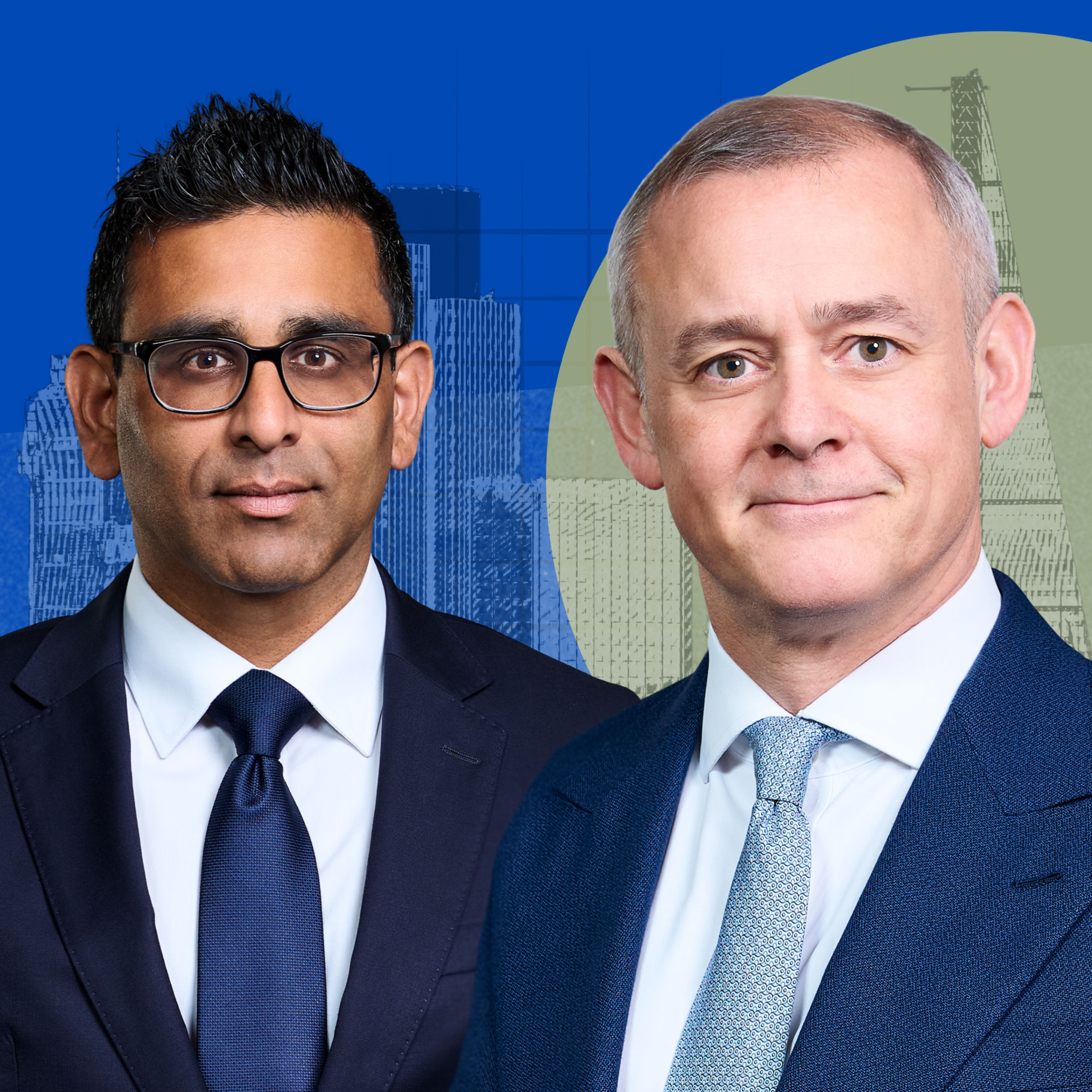
Inside Ropes & Gray's Europe strategy: Private capital, Milan and an all-equity partnership
29m 14s
Ropes & Gray has transformed its London office from a small, late-entry outpost into a major 250-person hub focused on private capital and cross-border transactions. The firm’s strategic expansion into Paris and Milan underscores a broader pan-European vision, with London serving as the central hub for integrated, collaborative client service. Unlike many peers, Ropes & Gray maintains a single-tier, all-equity partnership structure, emphasizing merit-based growth, collaboration, and transparency. This model allows partners across offices to work seamlessly together, delivering the best possible teams for complex transactions. Talent is a critical driver of growth, with the firm actively recruiting elite professionals who value collaboration and long-term development. The absence of individual client ownership or tiered incentives fosters deep, institutional client relationships, with over 65% of partners being internally promoted. Ropes & Gray sees robust growth in Europe, particularly in private capital, tech, healthcare, and strategic transactions, driven by strong capital flows and client demand. The firm remains committed to international collaboration, regular partner gatherings, and in-office presence to maintain dynamic, human-centered operations. With ongoing expansion plans and confidence in Europe’s economic outlook, Ropes & Gray is positioned as a leading, agile, and client-focused player in the European legal market.
Welcome back to the Numbillable Podcast.
I am your host Oliver Attinger.
Today, I'm joined by two leaders
from ropes and grays, London office,
Rowan Massey, the firm's London managing partner,
and Richard Patel, an antitrust partner
who also sits on the firm's governing policy committee.
You might have seen recently
that the US firm is now firmly on an expansion driver
across Europe after seeing its fair share
of mainly private equity-focused partner exits
in London last year.
We talk about how ropes has built its London office
from a two-partner outpost into a 250-person hub.
Why the firm is doubling down on Europe
with new offices in Paris and Milan,
and how that fits into a broader, private capital strategy
across the continent.
We also get into talent
and why the firm has chosen to stick
with a single tier all-equity partnership
at a time when much of the industry is moving the other way.
A big thank you to LaGoura for sponsoring
the Numbillable Podcast.
LaGoura is the category-defining AI platform
empowering lawyers at top firms and in-house teams
to achieve more with greater precision and confidence.
It solves concrete tasks like document extraction,
reviewing against the firm playbook
and suggesting well-crafted markup
directly in Microsoft Word.
Already trusted by 250 leading firms and organizations
across more than 20 markets,
LaGoura is setting the standard
for how great legal work gets done.
You can find out more at LaGoura.com.
- So should we kick off with a couple of intros?
If anyone doesn't know who you are,
Rowan, do you want to start quick?
- Sure, good to meet you.
I'm Rowan Massey, the Office Managing Partner
of Ropes and Gray in London.
In my day job, I am the leader
of the Data Privacy and Cybersecurity Practice here at the firm.
- Yeah, hi, I'm Richard Patel.
I'm an antitrust partner in the firm's London Office
and I also sit on our global management committee.
- So I will just quickly start.
Rowan, tell me a bit about the background
to the London Office
because it opened in 2010,
Ropes London Office, didn't it?
We're relatively speaking compared to other US firms
as quite late in the day.
Why was it so late?
- I think with everything that the firm does,
we do it with driven by clients.
So we saw a greater client need here
from sort of 2010 post the financial crisis of 2008.
We came in and we've grown over the last of 15 going
into 16 years now from a two partner office
up to a 25 partner office with 250 people in it.
- Okay, so you took over about 10 years ago,
or you joined the firm even 10 years ago, didn't you, yes?
- Yeah.
- Now I joined the firm 10 years ago
and I was promoted to managing partner three years ago.
So you've seen the sort of growth
from the start to where it is today.
When you look back, what would you see
as the kind of the key drivers behind that growth?
- We've grown in all areas that we've focused on.
So our goal is to be a preeminent private capital
advisors, we look across the office now.
We've got strength in our private equity group,
our finance group, our asset management group,
as well as our anti-trust group,
data protection group, our litigation enforcement group,
and our tax group.
So we've got that sort of broad breadth.
We've grown in the depth there.
We've reacted to client need right the way through
and that's what really has helped us to grow.
And what about you, when did you join the firm?
- Yeah, same time as the Roman actually
was the best vintage of Roach and Gray London,
the best year.
So I joined in 2015 round there too.
And yeah, and Roach was sort of five years old,
then it made a fairly significant impact
on the London market.
You know, it sort of started with the real bang.
And particularly coming out of where you mentioned it too,
they're coming out of the global financial crisis.
That was the time where law firms were kind of looking
in with, right, and getting smaller.
A thing actually opening around that time and expanding
was a moment of inspiration all of that
because we were able to get talent
that we otherwise might not have got, frankly,
and we're also able to attack a market
that where people were sort of more inward looking,
rather than external looking.
So I think that's an indicator of what Roach does, right?
It's a very long-time investor.
They understood that the financial crisis was a problem
and was going to be certainly a transient concern.
But more fundamentally, they understood London's potential
and what we could do in this market
invested despite the difficult financial climate.
- What have you made of the rise of the US law firms
in London, something which has definitely accelerated
in the last eight, nine years?
I mean, when I was practicing back in the 2010s,
obviously there were lots of US firms around,
but it was still seen, especially if you were to move
to US firms, it was still seen as a bit more sort of risky,
whereas now it's completely changed.
But what have you made of the growth there, Roach?
- You're right.
In the last 20 years, we have definitely seen
the development and growth of the US firms in London.
They really have taken hold.
We've seen the growth in the size of US offices
and the way the US offices work within the London market.
You don't see satellite offices as you once did.
We're now, you know, the London firms are here
with institutional clients in London,
with relationships that are built in London,
and I think that has been a really key part of this,
as well as, of course, being plugged into global platforms.
Clients now want firms that can advise,
not just in London, but can advise in the US,
they can advise in Europe and advise in Asia.
So having that global outlook,
I think has really helped the US firms in London
to make them establish themselves more fully.
- So let's talk about that in relation to Roach's a little bit more.
Specifically, I suppose, guys, in relation to your kind of. I keep calling it a kind of pan-European private capital play
that you are focusing on at the moment.
London sits at the centre of that, it seems.
You opened in Paris last year,
and then you opened in Milan at the end of last year.
Tell me a little bit more about that playbook
and why you are so focused on the European platform,
the single hub idea.
- Look, Australia has kind of always been client-driven,
client-led, and we want to be in the places
that our clients ask us to be in, of course, in the markets.
We care about, maybe, going back to the question
you asked a moment ago about the growth of US law firms in London.
I think that's a function of a few different things.
It's a different style of law firm.
It's different markets, right?
I mean, the private equity market is just more mature
in the United States.
What do you think of that as sponsor LBOs,
or asset management, or fundraising, whatever it is?
It's just a more mature, and they're different markets
as a traditional market that magic circle firms have been.
So you look at kind of our heritage and our legacy,
and look at what they wanted us,
where their clients want us to be,
and so our expansion into these markets reflects exactly
that they want us to be in those markets.
That's important for them.
And therefore, it's important for us.
What I think is wonderful there about our firm,
and the way we're building this,
is it is a hub, all of our right,
that this isn't localized PNLs.
This is not a farine.
We are not like, we don't approach geographic expansion
in the ways that some of our peers do.
They approach it very differently.
We have a single equity partnership,
and a single PNL, not a single office PNL, all right?
What that drives, is a particular kind of behavior
that allows our London partners to work with our Paris partners,
to work with our Milan partners,
and just put the best team on the field,
for a particular transaction.
And we see, we're seeing expansion.
We're seeing extraordinary expansion investment in Italy.
Let's take an example.
Italian deal, maybe in Italian deal,
but we'll have a London component, say, fine, aren't thing,
or we'll have a French component, say an FDI approval,
and something we start to have the right places
and the right places to service that client base.
So is that then, I mean, what is the pitch to clients?
Is it mainly about your big US private capital clients
being able to service them across Europe,
or as you kind of hinted at there,
is it about work that originates within Paris or Milan?
It was clearly both, Oliver, but what I will tell you,
is that we're not opening to service, right?
Just, I think that model, I mean, look,
so a lot of the law firms do it,
and they're very smart.
Pender prizes, no second guess, any of it.
But when I sit back and think,
does a significant client vise in the United States,
just come to Roach and Grey,
because we have a brand on a street in a city?
I don't think that's how this goes, right?
I think these clients are extraordinarily sophisticated.
They know who the best in class is.
They know it's a talent game.
They have their own relationships.
And so if you want to expand into transactional work
in the continent or anywhere else outside the United States,
it needs more than a name plate.
It needs the right talent.
And this is the talent game,
and that really is what explains Paris,
it's what explains Milan,
and those two expansions, Oliver,
we were able to secure market leading extraordinary talent
in those markets, and they were the perfect fit for us.
Talking about private capital,
we also talk about strategics, right?
And we have a big percentage of our clients
are made up of international, multinational companies
that are looking at complex cross-border transactions,
and that's what we're looking to advise them as well.
So when you sort of set focus on US clients,
or it's not that for the platform,
the platform is far broader than that.
Okay, so tell me then where is the big growth area then because you hired a big team over from link leaders in in Paris recently
You obviously opened in Milan with a team from from from from lathe and moccans
Where is the big growth because everyone talks about Milan is this big sort of hot spot
Especially in terms of private capital private capital private capital everyone's talking about private capital
Is it Milan? Is it Paris? Where are you seeing that the growth? I mean those two offices for us have been just kind of
They're off to extraordinarily far starts all of it and I struggled to say this out loud because I mean I do it
You sort of jinx it, but it's beyond that kind of my wildest expectation. It is amazing to see what Milan is already doing
Just with the throughput of their transactional flows and it's not from one client. It is
From everywhere and it's from the most sophisticated occurs and that's amazing
And see what Edward and Jonathan have done in their first few weeks with us is also so I will try and write in there
They have elite clients who are so interested and invested in their careers that they're willing to move with them to
To Roach and Gray and invest in their careers here and invest in the rest of the relationships and importantly those relationships
I think it's it's really exciting. So I think both of them are
Hot spots for growth, but I would also say all of it
Last year was London's best year ever by a very very material
Distance, right? I mean it was a huge year for London and so we're seeing you know
We're seeing growth across the platform in Europe and that's pretty exciting
So so what would you say then your your sort of advantage your your edges over the other big sort of
Private capital focus firms that people often talk about maybe it's a Kirkland or a Latham
What is Roach's advantage in Europe over them? Yeah, we are a single platform
One equity one to equity partnership
You know one profit pool and that drives about behaviors of collaboration, right?
And I think our real USP is the driven focus on collaboration
So we are always looking for the right people the right team to advise on the client
We're not thinking we need it for this office or this or this practice group P&L or anything else
There is a driver for all of us to act in the best interests of the partnerships and our clients and that remains our singular focus
And is that what sort of you feel the the clients really look for these days?
Yeah, we know that it's true
You know, we've recently hired Paul Dali who's come out from a client
Yeah, we know that where what clients are looking for is that collaboration is that expertise?
You know, that's I think it's say it is our differentiator because it means that they can get the right people efficiently and effectively to get for that
Does it deals, Dali, the transactions or the advice that they need as quickly and exactly as possible?
I think that's a great point
Roach, I think Paul's perfect example of this
Coming out of a GC role at one of the biggest P firms in the world
He had a choice of where he could go right and he wants to go to a place where he'd seen collaboration working the best
That's why he's with us
So what's next then in Europe for ropes and gray because you've got London, Paris, Milan
You also have Dublin which you opened a couple of years ago. Yeah. Can we expect any more office openings for ropes?
We're also going to be looking at things right there's no there's no world in which I tell you that's it we're done
But look, we are in the markets we like from a practice perspective
Those markets are markets in which we're always going to be competitive
And we're going to continue to invest in those markets and I certainly see continued investment in in London, Milan
in Paris in private capital, but I'll see
Would not surprise me if we do another one of these calls
Oliver in another 12 months and we've done something else which is transformational, right?
You seem to be excited here Roach and so maybe you're you're holding something back
Not holding anything back. I just sort of you know thrive off Roach's energy
It's true. We're always looking for opportunities, right?
That's what drives us and we you know if we have if we see an opportunity and we see a client need
That will drive us into could be a new market could be a new practice area
And we want to be reactive and fast moving on all of those so yeah, what's this space?
Yeah, I mean look look at what we've done in January of February this this yeah all the numbers there are in 15 new partners
Yep, globally, globally 18 New York
hiring from
Wokdale and bullwise and I mean, you know the most competitive market in the world and then you mentioned already
Arden Jonathan extraordinary highs in in Paris and
There's more to come you'll you'll see more soon
Before we carry on a quick word from Define Lee who are supporting today's episode
Define Lee is the fastest mover in the legal drafting tools market with data from skills and legal tech hub
Showing the strongest year-on-year gain in user engagement design for control and built for lawyers working on complex contracts in word
It's specialist tools help you maintain context and flow and surface the ripple effects of changes reducing review time
Standardizing quality and mitigating risk book a demo and discover why Define Lee is trusted by over 150 leading law firms and in house teams at
Define Lee dot com slash non billable
So so let's talk about talent and because certainly in in London last year at least
There were a few senior exits from from ropes and now it seems to be you are in in proper sort of build rebuild mode
However, you want to put it
Yeah, you mentioned Paul Daly there you had another partner who was formerly a client that was announced very recently
Who's joined the firm? How are you thinking about attracting talent now? What what do you look for in in a good in a good lateral?
Yeah, I mean, I think we look at I mean look there's the this the talent game is exactly as you say Oliver and I think we look at
Their reputation with clients their track record
If winning there are our own experience of working with them
We see what potential they would have on our platform as compared to their existing one
Um, because I think we we've got this record of unlocking I think rowing in our examples of this we've got a track record
allowing people when they transition onto our platform to unlock true potential right because
There isn't a ceiling here. We don't have
You know two tears of puncture. We don't have stars. We like that's not how that's not how our model works
Our model allows you to be as good as you can possibly be
We've talked already about collaboration
That's really important for us some people fantastic practitioners
But don't really collaborate that well across groups are outside their specific area of practice or expertise
We want real collaborators
And I think that's when we're talking about how do you know somebody's going to be good?
That's the kind of personality that we're looking for
So that's an important part of the the ropes and gray partner
I think now not all of our partner to the same
I wouldn't say there's any cookie cutter ropes and gray partner or type of us
But there is that desire to collaborate that desire not only to self-promote but to look at the benefit to the partnership
So one thing I'm always interested in is is you know the the lateral market in London is at record levels
It has been for the last couple of years a lot of it is private equity private capital practice area driven
Um, ropes as we mentioned it like any other firm is not immune to partners leaving
How do you think about kind of preserving protecting client relationships when when partners leave
We have done right if you think about
2025 for us massive massive record here
um
Despite yeah, as you say some exits in London that shows you that our platform is still going to win
Okay, we're in this is something you always think about very deeply 65 70% of our
Partners here are are actually homegrown talent at this point. I know which is
That's very different to when we started this office in London right and and obviously I think fairly different to the way different
You know, other many of our peer offices are
are constituted
I think that's that's a very important difference right these are
People who have grown with our plant base have entrenched
With with those clients to you know an our platform working in the way that we think is differentiated
Is there anything uh rowing that that the firm does differently to try and sort of institutionalize those relationships because it seems like
You know the direction of travel last few years has been that those
Core relationships for a lot of firms have become more personal hence the sort of boom in lateral hiring
It makes it much more easier to move those sort of clients across
Yeah, it does if you have a system whereby you're remunerated on your specific client relationships
And you're looking to build that within your pressure. That is not us
We don't have origination credit. We don't have people saying this is my client
You know when Richard was talking then he was talking about our clients
That is the way we as a firm think about this every client we have is a client of this firm not of an individual partner
Not of an individual practice and every client we have we try to expand that relationship across our practices
And across our offices it where we can right so I think that is a a really big strategic difference
You know as Richard alluded to as well having a a partnership now relatively young
It must be said that 65% made up of internally promoted lawyers
So it's those that have worked yeah in different departments possibly across across the office those that have
Sort of cut their teeth with colleagues and friends coming up through
Working with different clients working with a whole array of clients has really driven a lot of those
A lot of that feeling and made it more deep rooted. So I do think we're getting far more
Institutional or partnership driven clients
And that's really important for us, that is a big difference.
Is there anything specific that you do as a firm that really sort of ensures that?
One of the things we celebrate is the more people that work on a client, the better for
us, right?
The more relationship partners there are, we don't have, this is where it's point, right?
We don't have a single relationship lead for the client, we don't have somebody who owns
that client or an origination credit person for that client.
That's not how this goes.
If you look at some of our biggest clients, our top 10 clients, it would surprise me if
there's not kind of 30, 40, 50 partners working on each of those clients, that tells you
kind of how entrenched we are with those clients and how important they are.
So you're kind of losing ones or twos, it's not really going to touch it.
So let's talk about the partnership model.
It seems to me like while everyone, almost everyone is, is Zagging or Zigging, ropes
is kind of Zagging, right?
The firm has been very clear that it's sticking to an all-equity single tier partnership model.
Why do you feel so strongly about having a single tier or all-equity model?
Yeah, look, it's a great question, and we looked at this very, very deep year of the course
of 2025 Oliver, and I think there's a few different things.
Look, our decision was really data-driven, it was a data-led decision.
How is it, how important is it to our clients?
How important is it to our people, right, our own people?
And what we learn was that clients, they want to know who then a partner can deal with
their most complex problems, right?
They want to trust the partner.
I think it's having somebody with a partner tag who can't solve their most difficult problems
wasn't really a particularly interesting thing for our clients, right?
That wasn't what was driving their decision-making or their behaviour.
So that isn't a driving priority for us.
And then looking at the second constituency, which is our people, they're a real cost
to having a two-partner or two-tier partnership, right?
They're extreme costs that I think are ones that we wanted to avoid, right?
What we want to have is a system, including us to compensation that is built on a meritocracy,
right?
And we want a class feeling and have a group of our partners just kept in a box so that others can benefit.
That doesn't make sense to us.
What we want to do is create the right incentives to allow people to grow.
And then we want the partner tag to meet something.
There's a moment to really celebrate.
Now we're going to a point that gives you no.
For some firms, partnership classes are so big that the human announced it anymore, right?
They're named, who they're partners are, which is, I just cannot see a world where that's
not important to us.
This is a moment for us to celebrate, it's always a memorable point in someone's career,
right?
And it's a moment for our clients to celebrate with us.
They're the people who put us in that position is wild to me, wild to me, that you dehumanize
and depersonalize that experience.
So do you think that the clients care if they suddenly see that the firm firms that they're
working with have these big tears of non-equity partners?
Do you think the clients mind?
Do you think that they sometimes can feel that maybe this sort of six, seven-year qualified
lawyer, very good no doubt, but maybe wonders why suddenly they're called a partner and
charging out at much higher rates?
I think they do care exactly about that.
They care about that.
That is for sure, right?
I think clients will and do know that when it's a rich and great partner, it's a real
partner.
So look, guys, just to finish, so maybe Ron, I just wanted to ask you then, when you look
back up your time so far, what are the kind of decisions that you think have kind of
both shaped the firm since you've been at the helm in London?
Well, I think obviously the opening of Paris and Milan have been pretty critical there.
That idea of us being an integral part of this European hub, you know, as we look to
expand there, London is a key piece in that growth, right?
We wouldn't have that growth.
I don't think in Paris and in Milan, and we not managed to build London into the success
that it is with the strength that it is and the size that it is.
Now, leveraging that going forward is going to be critical.
I think I see London is very much in the sort of centre of the hub, as it were, for Europe
and want to see us going on from there.
So as a single most important decision, I think that would probably be it.
And I guess that means now, then, that you're going to be spending a lot more time traveling
to Paris and Milan and the like.
That changes things day to day for you, doesn't it?
Did you enjoy that aspect of leadership?
Yeah, look, I've always travelled a lot, you know, when I headed up the data privacy and
cybersecurity practice, that is an international practice, you know, data knows no borders
and clients the same.
So I was often travelling.
These days I travel still travel as much for the practice as I do for the management piece.
But yeah, it's just important that we are there.
We are there for clients to meet them in the flesh with there to meet our partners in
other offices and to make sure that that integration of those offices within the platform
happens successfully as well.
So there's always, you know, a focus on the international travel, and it is a time sync,
but it is a beneficial time sync and I think that's a really important part of it.
And what's your style then?
Are you someone that likes to just go and meet your fellow partners as regularly as you
can and keep that communication as free flowing as you can?
Yeah, well, it's a firm we do that.
You know, we get together at least once a year as a full partnership, usually sort of in
December.
And there's been a tradition that we've had for a very long time now, so often in Boston
last year in fact in New York for the first time, but it's important that we do get together
that we share time with each other.
We do partner retreats every other year again for more in depth discussions on issues that
may be pertinent at the time.
And aside from that, I do think it's important to spend time with people, whether it's partners,
whether it's clients, we are in a people in relationship business, right?
It is critical and this is what I will always tell the juniors coming through, you know,
your network, your interaction with people is so important.
I was very keen on bringing people back to the office four days a week post-COVID because
I do think, you know, we've all learned better together.
We have a building, you know, the office if it has no people in it is just a building.
We have to be in here together to make it in an office, to make it dynamic, to have that
energy.
Yeah, I do think meeting people traveling is critical and it's critical not only to
take success of an office, but to anybody's practice.
You know, this is a relationship business.
Is there anything at all that keeps you up at night as leader of the London office?
Space most definitely keeps me up at night and that's not the final frontier, although it
may be, you know, it's always good to be an office in growth mode and thinking how we
should use space, where we should use space, reading about the lack of space and office
space in London, if it's the last two years, always something that keeps me up.
Okay, what's the space to say you are looking to kind of expand your London footprint?
Is that right?
Well, we're also looking at, even within the office at the moment, I'm thinking about space,
but yeah, I'm sure at some point we will be looking to expand.
Okay, good stuff.
So okay, so look, if you could sort of predict then let's say two, two, three years sort
of horizon, something like that, where is ropes going to be in Europe, reach it in that
time?
Look, I think we're going to be the permanent firm for several of our key markets.
As management, private capital, strategic firms, but in the, in the vegetables we like,
places like life's answers and healthcare and then tech and then I think that's where
we're going to be.
I think it's a really exciting time right over the next two to three years, there's been
a huge shift in momentum in Europe over the last 18, 24 months.
And I expect that to be kind of a force multiplier for us.
And Rowan, just to finish, are you bullish on on Europe's economy generally?
You think sort of deal flow and things like that look pretty good?
Yeah, I think it looks really strong, you know, you read the press every day, certain things
happening in other jurisdictions that are causing imbalance and putting a greater focus
on Europe more than anywhere.
So I think, you know, the outlook is very positive.
Yeah, in fact, I would say sort of more positive than ever, right?
If you think about the current flow of capital, if you look at the flow of capital into
Europe today, even compared with a couple of years ago, it is a material difference.
And we're quite good at following money.
Good stuff.
much for joining me, guys. It's been a pleasure. Thank you. Thank you.
Podcast Summary
Key Points:
Ropes & Gray has grown its London office from a two-partner office in 2010 to a 250-person hub, driven by strong client demand and a focus on private capital.
The firm is expanding across Europe with new offices in Paris and Milan, positioning London as a central hub for cross-border private capital transactions.
The firm maintains a single-tier, all-equity partnership model, prioritizing collaboration, meritocracy, and transparency over tiered structures.
Talent acquisition is a core focus, with strong emphasis on hiring individuals who collaborate well across offices and practices, including recent hires from top-tier firms.
Clients value collaboration and true expertise over brand recognition, and the firm’s integrated platform enables access to the best talent regardless of geography.
The firm’s client relationships are deeply institutionalized, with no individual ownership of clients, leading to broad team involvement and stable long-term engagement.
Growth is not limited to private capital but extends to strategic, cross-border transactions involving multinational firms in tech, healthcare, and life sciences.
Ropes & Gray sees sustained expansion in Europe, with ongoing investment in key markets and a strong belief in Europe’s economic momentum and deal flow.
Summary:
Ropes & Gray has transformed its London office from a small, late-entry outpost into a major 250-person hub focused on private capital and cross-border transactions. The firm’s strategic expansion into Paris and Milan underscores a broader pan-European vision, with London serving as the central hub for integrated, collaborative client service. Unlike many peers, Ropes & Gray maintains a single-tier, all-equity partnership structure, emphasizing merit-based growth, collaboration, and transparency.
This model allows partners across offices to work seamlessly together, delivering the best possible teams for complex transactions. Talent is a critical driver of growth, with the firm actively recruiting elite professionals who value collaboration and long-term development. The absence of individual client ownership or tiered incentives fosters deep, institutional client relationships, with over 65% of partners being internally promoted.
Ropes & Gray sees robust growth in Europe, particularly in private capital, tech, healthcare, and strategic transactions, driven by strong capital flows and client demand. The firm remains committed to international collaboration, regular partner gatherings, and in-office presence to maintain dynamic, human-centered operations. With ongoing expansion plans and confidence in Europe’s economic outlook, Ropes & Gray is positioned as a leading, agile, and client-focused player in the European legal market.
FAQs
Ropes & Gray is focusing on building a pan-European private capital platform with key offices in London, Paris, and Milan. The firm emphasizes collaboration across offices and serves clients with cross-border transactional needs.
The offices were opened to serve growing private capital markets in France and Italy, where transactional activity is high and client demand is strong. The expansions were driven by significant market opportunities and access to top-tier local talent.
The model promotes meritocracy, collaboration, and career growth. It removes tier barriers, allows partners to grow without ceilings, and strengthens client trust by ensuring all partners are equally involved in complex transactions.
The firm focuses on hiring individuals with strong client reputations and collaboration skills. It offers a platform where talent can grow without limits and emphasizes deep client relationships across offices and practices.
The firm's strong emphasis on collaboration, cross-office teaming, and a single equity partnership creates a unified platform where clients get the best talent regardless of location, differentiating it from more siloed or tiered firms.
The firm does not assign individual client ownership. Instead, every client is a firm-wide responsibility, with multiple partners contributing to relationships. This ensures continuity and stability even when individual partners depart.
Chat with AI
Loading...
Pro features
Go deeper with this episode
Unlock creator-grade tools that turn any transcript into show notes and subtitle files.
 PodcastTranscript AI