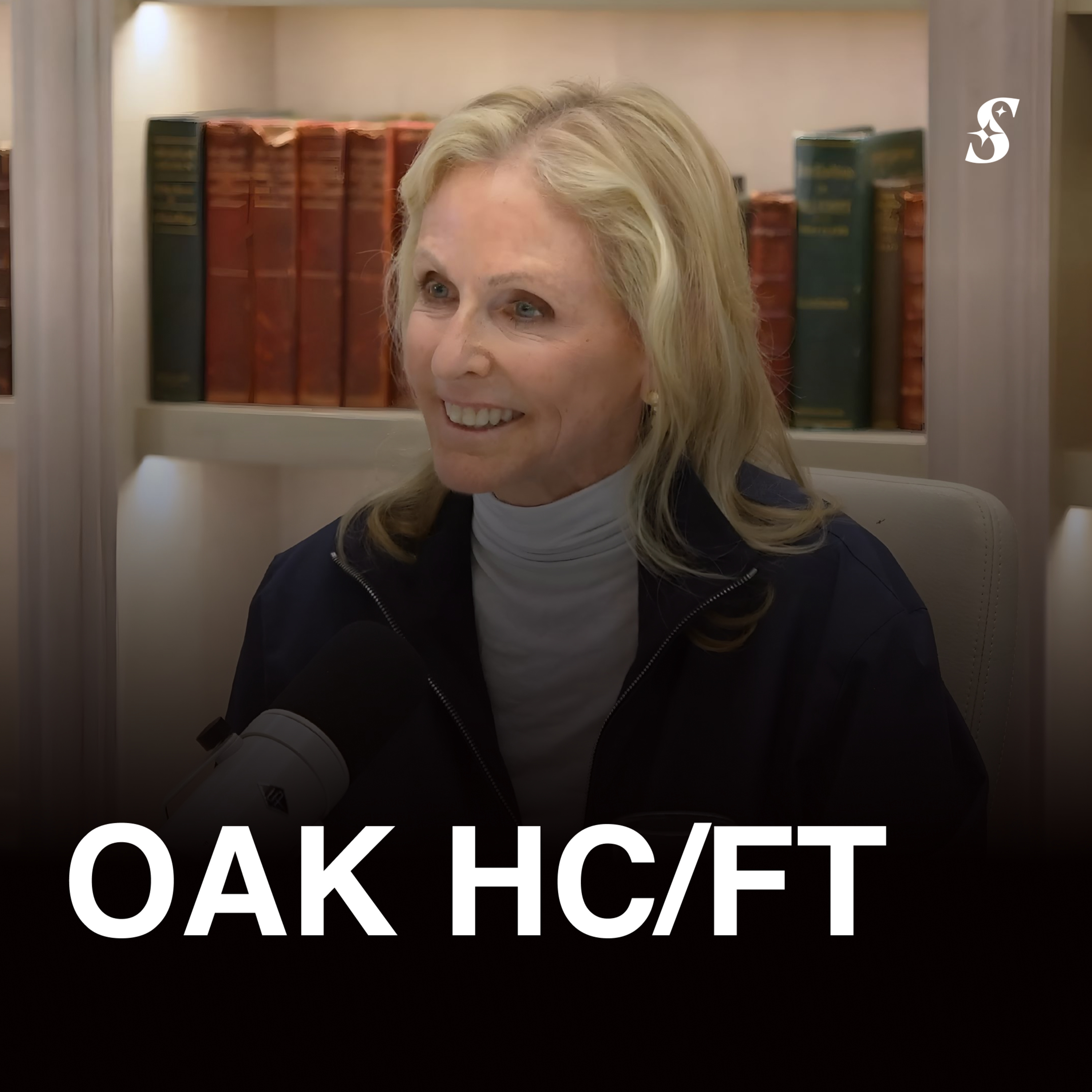
Annie Lamont, a 40-year veteran of healthcare and tech investing with 70+ successful exits and 15 IPOs, shares insights on how artificial intelligence is transforming the economy—especially in life sciences and healthcare. After a decade of observing limited AI impact, Oak has seen a dramatic shift in the last two years, with breakthroughs in drug discovery, AI-driven clinical workflows, and horizontal platforms. Companies like Devoted and Chai exemplify this transformation, achieving rapid growth and operational efficiency through AI-integrated models. Oak’s deep industry knowledge and network enable it to identify and back high-impact innovations, particularly in areas like antibody design and supply chain optimization. The firm is also deeply concerned about China’s growing influence in biotech R&D, which threatens U.S. innovation and requires urgent investment in domestic research. AI is not just changing healthcare—it is redefining how drugs are designed, how care is delivered, and how companies operate. M&A is shifting toward strategic, technology-led acquisitions, with AI companies becoming essential assets. Oak’s investment strategy remains rooted in founder trust, early-stage involvement, and long-term value creation, with a growing emphasis on AI’s role in solving complex, high-stakes problems. Ultimately, AI is not replacing humans in healthcare but augmenting them—making diagnostics more accurate, care more proactive, and outcomes more positive—while remaining a deeply integrated, invisible force behind improved patient experiences.
You've managed 14 billion across your career, 40 plus years of investing across healthcare
and tech technology, 70 plus successful exits, 15 IPOs, number one healthcare investor on the Forbes
widest list, seven times. We've been looking at AI for the last decade and have not seen it produce
more developable products, therapeutics, everything's changed in the last two years. With devoted,
you now have AI entered the picture. Over the last year, they've tripled the size of their
company, have their operating ratio dramatically increased their EBITDA. In my over 30 years of
investing, there's nothing been as interesting as this or seminal in terms of just realigning the
entire economy. When do you think these legacy institutions will actually take a hit?
Annie Lamont, first lady of Connecticut and founder and managing partner of Oaks HCFT. Thank you
for joining us at Sorcery. I'm so happy to be with you. We're here at the New York Stock Exchange.
I just want to start off by your background by the numbers because you are a legend as they
would call it. You're an icon and a legend. You've managed 14 billion across your career,
40 plus years of investing across healthcare and tech technology, 70 plus successful exits,
15 IPOs, number one healthcare investor on the Forbes minus list. I think we've said seven times.
We'll talk about the portfolio and everything, but notable investments include Athena Health,
devoted health, one medical, care bridge, creativity health, village MD, Main Street, Commodo,
try and a handful of others. But to start, again, it's great to have you on. The last time I saw
you was in Napa, which was an amazing event. So could you explain what was going on there?
So we invited all of our CEOs and then we had a group of industry individuals and advisors and
panels, but it was mostly just to create connectivity amongst our portfolio,
talk about strategy and just have a blast. So I want to talk about Oak today. So you're notably
known as the healthcare and FinTech fund. And that's definitely changed over time with the proliferation
of AI. But what has that tension been like for you and the evolution of the firm?
I think no fundamental tension because we have invested over time in horizontal platforms that
apply to healthcare and FinTech. And FinTech is it's the movement of money. It's sort of it
complied at anything and everything. We have invested in supply chain in the past. And we've
invested in risk and cyber and fraud. So I think as you think about the new AI world and you look
at horizontal platforms, what's interesting is that between our FinTech and healthcare practice,
it's really 50% of the economy. So we know intimately a lot of the enterprises and customers,
these companies are selling too. And it's very hard, for example, particularly in healthcare,
it's selling to healthcare companies, understand the buying motion, what they're interested in,
who the people are, and we know all of that. And it's the smallest large market you've ever seen
in that it's 100 providers that matter. They're 10 large payers. And having that depth of time,
experience, relationships is incredibly helpful to a lot of companies that are selling horizontal
solutions that they that often need to be. I mean, what's the advantage of AI that you can create
a horizontal product that actually works in a deep way with workflows or specifically in a
particular industry. So what are you seeing in the market today? Why don't we not see?
I think what I said, what are we seeing now? I would say what is what is interesting and change
for us? I mean, if starting with healthcare, that's about 70% of what we do. Life sciences is
something that I started my career in in biotech, you know, with the early days with
Gensheim and Southland and on Crewmage and Lexian. And so we we deeply understand that we've
done pharma services for a very long time. We've been looking at AI for the last decade and have
had not seen it produce more developable products and therapeutics and everything's changed
the last two years. So we're incredibly excited with a condition of child discovery investment
last year, which is now creating has amazing models and products oriented towards drug design and
discovery. And we're and we are intentionally going into that space and we're going to be deeper
and deeper in it. We're going to be adding partners on San Francisco, building out our San
Francisco office further because of so much of AI, whether it's life sciences or any other
industry that the AI is that software AI is being developed for is happening in San Francisco.
I was recently speaking with Ben Lamb, who's the CEO of colossal biosciences. And you know,
I haven't had many health biotech life sciences conversations yet, but it's something we're
going to be doing more of because it is really hitting now. It's exploding. So could you explain,
like, why is it exploding? Why is AI working its way into this category so well now? Why is it
matured at this point in time? I think it was so interesting. It was the advent of
LLMs with the infrastructure around them. You've created biological models and models around
chemistry that are not LLMs. They're very specific to the industry, but people see the opportunity
physical AI, robotics and labs. There are so many opportunities to change the cumbersome
process of drug-design development that it is like everything else. Every industry is being
transformed. And this is one of them. And it's probably the most difficult, the most expensive
industry today to develop products that most have hazard, probably the highest fail ratio.
Of any product that's being developed out there, and to be able to increase the odds of success
and accelerate that drug development so you get life-transforming products into human beings
is just game-changing. And I think it's incredibly exciting and it's a moment of the sciences
between immunology, oncology and some of the great research approaches that are now happening.
That it's just a confluence of events that are all coming together to inspire and
develop therapeutics. And I think we also have a China is in the last four years the trajectory
of China in life sciences is wildly threatening to the United States of America and for not only
commerce here and our pharmaceutical industry, our biotech industry, but also the delivery of
drugs in the U.S. and we found out during COVID. You don't want them producing 90% of all the
ingredients for antibiotics, right? It's not that companies won't partner with them here, but
you know, the pharma in last four years has 50% of the outside dollars they're spending on
research are going to China. That was not the case five years ago. And so we have an existential
threat in this country and an industry that is being co-opted and we need to through technology
and tools and investment and a complete re-engineering of our FDA and processes fix that rapidly.
Yeah, can you can you speak to that a little bit more and lay out the field for the China situation
and even drug development? I mean, I know India is a big part of that as well, but can you lay out
kind of the framework and I guess they've mapped for that? Well, I mean, it starts with fundamental
research and I think people would say, oh, there's lack of creativity in China, you know,
therefore they haven't produced as many patents and everything is a me-to-drug and the reality is
is they have a look, they have a lot of me-to-drugs, right? They they are absolutely taking something and
then maybe changing, you know, one, any bit of it and in order to be able to reintroduce it
into America as a new drug. But the truth of it is that on the research side, they have as many
and more patents now coming out of university and out of the research arms as we have. And that is
something that, you know, we need to think about as the NIH is pulling dollars from investment and
research in our universities. Our universities are the bedrock of all discovery, you know, all these
products and drugs in America, right? And if we're fundamentally undermining those internationally
globally they can come to our universities that we're undermining.
in grants to those individuals, we will compromise the ultimate, you know, the pipeline of drugs.
You know, to date, that's not a problem. I just fear it's more of a problem in the future.
But from as industry, we're now like Chias and drug design, you know, creating models,
creating products that are not, you know, not just models, but products that can be used very
effectively by non-text-avvy individuals within Pharma to build new drugs and to improve drugs
they already have. So it is drug design and discovery, but it's also reinventing what has already
been created. And every step of the drug design discovery process, all the way through clinical trials,
can be redesigned and rethought. And so much of that can be done through simulation and through AI,
you know, as long as you test what is coming out of design and then compare what wet lab
result would be, right? And then animal model results and look at the molecules and realize that
we now have, we're creating model models that are computational models that approximate the results
in those existing models that we have been using for 40 years. In terms of the categories of
discovery that Chias going after, what is their roadmap, like what are their goals? Well, they're
rough at first, antibodies. So they've nailed that, they're nailing that, it's getting better
every day, but they're incredibly productive right now, like 100 times more productive than a lab
without them. And then X would be peptides and then small molecules. So, and they're already a
fairly long way and peptides, nothing that they are ready to show customers yet, but making material
progress. Yeah, I mean, it's, it's been awesome to see all of this proliferate because I think,
and you'll, I mean, I've seen this in the headlines, you see this by the dollars being allocated
in different directions for philanthropy or like those kinds of purposes, but some of the biggest
names like the Zuckerbergs, like they're putting all of their time and attention into life sciences
and biotech and biology, all that kind of stuff. Other people are as well, but I think the main
narrative out of that is that science will be one of the biggest benefactors of AI and what we're
having happen with AI. So, as you in the firm are seeing everything shape with AI, like how,
how do you put time kind of scales and when to go into this category, when to start researching
and what are the categories that you're looking at? I think we we've always had a diversified
strategy in healthcare. And I think there are opportunities obviously in the payer provider,
life sciences and pharma markets. And I think the the way we're thinking about it now is
you're right. The biggest impact is probably going to be in life sciences and drug creation.
Certainly, we care about outcomes. And I think those are going to be life changing outcomes
from these tools as well as drugs that come out of them. So I think the we have been, as I said,
looking at AI for a decade in that area and felt like we are now at the precipice, we are at
a point of real impact. And that's generally when we get involved. I would say you still have,
I think, devoted such a fascinating example of a company that started 10 years ago.
And when you talk about scaling power laws, it's engineering because what you have to also
think about, you're not just the speed of growth, but the defensibility of something, right? And
the reality is is they have created by starting with a Medicare Advantage Health Plan that is
very expensive to develop and very difficult to develop against the behemoths that own these
markets and including the blues. And they spend time getting licensed in every state. They spend
time getting a provider network in every state. Go to market brokers, go to market to members.
All of that takes tremendous time and energy and dollars. At the same time, they were building
their own platform, technology platform that nobody else has done in the payer world.
And at the same time, they're building a devoted medical group, which is essentially their
own primary care network, which is a virtual overlay in managing their patients. But with devoted,
you now have AI enter the picture along with them actually owning the risk and owning the
member through the primary care doc and the healthcare system. And they have
built over the last year. They've tripled the size of their company. They have
have their operating ratio. They have dramatically increased their EBITDA.
And you have a company that is, I would say, almost impossible to compete against in the future.
And they will be going into commercial in the future. And it is what all of us want.
You know, we want somebody who, you know, virtual overlay thinking about our health in a proactive
way as an AI front end and a doctor behind the AI on the medical care caregiving side as well
as you're insurer and your member experiences fairly seamless. So in terms of payments and processes,
it's just, it's a beautiful thing to say. Like it is definitely the most AI, probably the best
example of AI applied to healthcare in the world right now. Really? Yeah. Wow.
I'm not one that is gently hyperbolic, but this is true. I know you speak from experience.
I'm curious. When do you think these legacy institutions will actually take a hit the will
day? Like does healthcare have a long lag because of how ingrained people are at the lock-in
with customers, clients, patients, providers, that kind of thing? I think from our hospital systems
and providers, they're not going anywhere. They don't, I mean, our acute, you know, hospitals that
take care of acute care patients mostly are needed. And we need them to be the best that they can be.
And I do feel like we're at the very beginning of a transformation there that will be held by AI
in terms of taking administrative costs and burden off of clinicians so they can focus on
patients. And it's probably the first technology that's done that. I mean, electronic health
records were the great organizing principle for the data that now can be used by AI.
And so I don't know how much that changes, but I do feel like cost should be lowered because
their administrative costs are such a burden on the system. It's, it is 25 to 30% of all health
care costs are really administrative. And on the clinical care side, there is no question that,
you know, AI, I mean, just how many people are using CHATGBT to actually diagnose themselves?
It might be better than your doctor. And taking that, you know, one next step and, you know,
looking at radiological images, 30% of images are read wrong by radiologists. There's something missed.
And it made, to me, an epilife threatening, but sometimes it is. And if you have AI behind
that radiologist making sure that it's nothing's missed, I mean, we're not going to eliminate
radiologists. We probably need more of them. But the reality is, is that with AI behind it,
you're probably not going to miss much. Yeah. And I would want that. You would want that.
So I think there's just going to be so many ways that AI helps in terms of improving
care, along with the drugs that it will be helping to develop faster. I think it's also,
you think about robotics and AI and vision, you know, these vision models, you're actually going
to be able to, a surgeon will see better than he can now in terms of, and a robot,
and ultimately, probably with the aid of a surgeon, see and be able to manipulate things better
in your body as they do surgeries. And all of that is changing. I mean, DaVinci was a
brute forcing, and that was compared to what we're going to see now. This episode is brought to
you by Brex.
My favorite. You become what you spend on and I refuse to spend my time on work that shouldn't exist
expense reports, receipt chasing and manual closes
The company is building what's next from Versell open AI and
Thropic granola and deep gram all made the same call. They all run on Brex
Brex is the intelligent finance platform that combines cards, expenses and banking into a single stack
with a genetic finance built-in AI agents that handle expenses automatically
Enforced policy before spend happens and close your books in minutes
That's why sorcery runs on Brex so I can spend time on building and not busy work
It's time to get Brex AF
Learn more at Brex.com/sorcery. That's b-r-e-x.com/s-o-u-r-c-e-r-y
Turing is training the next generation of AI with tasks that require real expertise and real-world judgment
That's why companies like Nvidia and Thropic sales force and Gemini partner with Turing
Turing builds realistic reinforcement learning environments and data systems based on real operational traces
The kind of infrastructure frontier labs need to train super intelligence visit Turing.com/sorcery
AI needs more than chips. It needs power, land and infrastructure
Zone develops next generation data center campuses partnering with AI companies site developers and
Technology leaders to bring compute online faster and at scale zone is building the foundation of the AI frontier
Visit zone frontier.com to learn more. That's zone frontier.com to learn more
It is still crazy, though like I recently
Through a friend saw like a specialist doctor. I didn't see the doctor, but I was chatting with the doctor and
They do a specialist type of surgery kind of a thing and I don't know how this even popped up
But she was like, yeah, I don't think AI's gonna take my job
I'm like, what do you mean like whoever said like AI would take your job?
You do something that's like completely manual
But like I think a robot and computer vision would definitely help with the time the procedure takes
Because you'll be able to do things much faster like maybe it can be automated in some capacity if it's a repetitive function
But I was even surprised here that it's like I don't I don't think you're gonna go away
Entirely like this is just not possible especially for something like
Healthcare you want a human working on you
You do want to do the most part on you. Yes, and I do think I mean just think about the discrepancy between treatment and
oncology and rural environments versus if you're close to
One of the leading research hospitals right the outcomes are dramatic
Mm-hmm. We worse in rural communities and same with surgery, right?
Can you get to that surgeon fast enough? Are you going to do you have the money to actually get to the hospital?
Where the surgeon has done that certain that particular surgery, you know a thousand times
Versus somebody has done it twice in their life
And just think about the ability to remotely
direct
Thurgeon or remotely direct robotics in these environments to
To do surgery
That's leading it
There's might be more of like a macro thought or comment or question, but
It is interesting to think that healthcare will be such a positive
Benefactor of AI, but
Patients rarely ever know will know that like they won't know that AI is involved in the process at all because it is like
So behind the scenes and in so many different layers like they won't know that you know
They're nurse or their clinician whoever they're speaking with has a better day because they're not scribing everything or
That they have like more access to tools and like they don't have all this like you know
Menial burden on top of them or have harder time of diagnosing something because they've access to these things
But like it is one it's just a really interesting paradox because it'll be the most positively effective
Effected categories, but the person who by the way like health care affects all of us
We're usually very upset with the outcomes or it's not a good process. Maybe you're in the waiting room for like very long time
Like it's it's such a challenging environment that will be greatly affected for the most part. I would have assumed but
It would be the best place for people to know that the you know the the growing negative narrative of AI is actually not bad
Like it's the only place like you have an opportunity to reset the narrative, but those patients probably won't see it
I think the fascinating things they will see it in a positive way. They will they're
Their clinician will not be behind a laptop now. Yeah, right. We'll not have their back turn to them while they're inputting data
And so they should actually have a better experience, but you're right. Will they attribute that to AI?
Will they know that the diagnosis was actually refined by AI?
Will they know ultimately a surgery?
You're right. No, but I think that's what's going to be fascinating about AI in general. It is going to
People fear it at some level they should but and I would say in health care it is going to be
Extraordinary and in so ways and so many parts of our lives. It is going to
It is going to make our lives better. I augment our lives. I mean, I already feel like I'm learning so much so much faster
It's not taking away
Insight judgment. It's just educating me as those the world you know moves
It's it's you know, I think it should transform education all these things right that are so hard to do and so hard to
Customize it can it can help do that. It's not going to eliminate teachers. I don't think there's anything better than a great teacher, but
The customization of what the teacher is doing for that child. Maybe they should be in eighth grade math and not fourth grade math
They can stay in fourth grade, but also be you know being taught in a different way. So I think it's I think the benefits are just going to be
Extraordinary to society. How has this macro shift will go into the investing lens a bit
But how is a macro shift?
Change how you evaluate companies is there like another item or two that you look for in diligence and how do you back test?
You know claims
People are claiming more than they were before well first it always starts with the entrepreneur
I mean it really is. It's just like do you do you trust that person?
Are you inspired by that person?
Do you are they the absolute best person to be talking to this subject and actually creating a company around it?
Is there I would say intelligence and intent you know
I've never seen a group of entrepreneurs work harder than this generation of entrepreneurs. It is it's truly extraordinary
And I think in part the world is moving so fast the rate of change is so
Fast and so great that what change what is different now is the leveling up of an entrepreneur the people you are backing
Have to be better than in the past. I mean not the top point one you know percentile
But they have to there have to be many more entrepreneurs closer to that level in order to build these great companies
And compete with all the companies and all the money that you know is being created now all the companies being created so
I do think it's just
The entrepreneur everything centers around an entrepreneur. They have to be able to pivot. They have to be able to grow
I think they're more there are more product oriented and tech oriented come you know tech
Lead companies now
It's funny because people said we're not going to need engineers or these companies
Everything will be done right by people who are product oriented but I don't think in the first wave that is actually happening
I think the
The connectivity even in health care. It's always been about health care
One reason devoted, you know, it's really Chai obviously
Compside both of compside backgrounds and chemistry and biology and
And devoted the CEO who's had a computer science major from Harvard
You know when he's been in health care for 30 years Eddie Eddie Park and Todd Park
Who were founders of the thing held
Um, and I think right now you're going to find that more entrepreneurs
are
You know, particularly in every industry are product, you know, the product oriented
Um, and they're learning a new market and so figuring out like do they actually understand to go to market?
Are they humble enough to get the right people around them ask the right questions?
Um, and then ultimately a great entrepreneur is a pipe hyper like I have to be excited right after walking a room and
You know when I met Brad Smith or Todd Park or Josh and Jack and Chai I mean
You walk in the room and you know in five minutes you want to back these people. Yeah, that's just the way it is
You just know they've they have it, you know
They have that intensity they have that insight. They had you know any intelligence they just
They're gonna make it happen and they're gonna make it happen with integrity and in many cases you backed them again
So can you share some of the stories where you've backed founders multiple times? Yeah
Of course, you know, we do back repeat founders
than I think what I'm most proud of is they choose us to back them again.
And certainly with Todd Netty at Athena and then Casla, Todd was one of the founders,
even though he went off to the Obama administration and then devoted with the series A and Brad Smith.
Another Harvard guy, I keep trying to backstamp her guys. And so Brad came, I had been looking,
we had actually invested in the first for-profit hospice company. I'd been looking for a
palliative care model that made sense over 15, 20 years in. And then Brad came along and he
described a palliative care model that was a win-win-win. Win for the patients, win for the payers,
and the healthcare system lowered cost and yet was, you know, and was a win for the company,
but it was a win for the patients and the people who were paying the bills. And that's the perfect
transfer for healthcare. And so we, I'm immediately backed him, you know, that was a quick win for him.
And then we started the next two companies together, Carebridge and Main Street and I de-aided for
a year on both of them. And we thought of you warm, but we ended up, they ended up both being
really fascinating companies. And I think what I said to Brad is like, what do you think I'm doing
that's different? I said, you are building something that nobody else is doing. There's so many
me two companies. There's so many and I, that was one of the reasons I can healthcare. We didn't
do as much in the valley at one time because somebody starts a company here and they're five other
companies here. And the reality was that Brad would start a company. It would be a different model
that nobody else was doing. And that made them unique and successful at the end of the day.
And so we backed him three times, all quite successful, we'll call Carebridge to Elevance. And so
we love that because it's a durable company that has been created that is working and inside
of the strategic that sometimes can destroy things. And yeah, and then I mean, I think those are two
of the best examples that we have. And then obviously I think it'll be interesting, Jack and Josh,
this may be a company for the ages because I think they could own a huge piece of the
continuum in healthcare and drug development design. And they're on their way and they really are,
they're going to have a majority soon of the largest pharmaceutical companies working with
them in a very deep way. And they're in a building mode that is creating a motion because of the
the data that they're working with. The models are evolving and developing faster than anyone else's.
And that's, you know, that's the true sign of a, you know, a company that in AI that can be
differentiated and defensible and durable. I think that's a really good point. I'm curious
from your standpoint what you're seeing because the players on the board are changing very
freak like very rapidly. Like how is the M&A landscape changing? How is the exit landscape
changing for healthcare? We're excited because it is broad, it is good broadening things. So we've
always had, you know, the Macassans and Cardinals and all the payers, mostly like five payers that
usually bought things. And, you know, provider world, they don't usually buy things. So, you know,
if you create a software company, I mean, it's ultimately a theme in public and, you know,
it was, was been traded in the P.E. world, you know, now. So you can create, you can create
very positive EBITDA companies. But now you have technology. Like you actually have software
in a world of AI where you have the frontier labs actually interested in moving into these
spaces and very hard to create companies embedded in providers, I think within a, within a lab.
But, you know, it's certainly possible that they could end up wanting to own with 20% of the
economy between, you know, pharma, life sciences and, and software and providers. So they may,
you know, that may be an opportunity. I mean, Microsoft tried before, you know, and they bought
new ones, which is used elsewhere, but new ones is mostly dedicated to healthcare. So they could
go broader and deeper. Many, a lot of these companies could oracle, obviously, on a broad
serner and they might want to go deeper there. So I just feel like there's, there are many more
opportunities than there were before in technology because we are going to not be in a backwater
that we have been in technology and in healthcare in the past. We're moving quickly, rapidly into
the 21st plus century. Yeah. I mean, the main word with M&A is synergy, but how many of these,
do you think are actual synergies versus, you know, a momentum play? I think in the new world,
you're also going to have so many companies with valuations where they won't be able to really
start these companies. They won't have the embedded expertise. They won't have the very best
people to create them and they will have to buy them. And if they want to, like, keep expanding
the their team, you know, that's going to be a great way to do it. What have been the best
key scenarios of a good M&A transaction and onboarding experience? I would say, say, when healthcare
would say care branches and like the most recent great example that's working extremely well
within Elevants and is rolling out and they're dramatically expanding the company within the company.
So that we're happy and excited about. You know, we've sold companies that are
you know, aggregations before of services. And that's probably easier for service companies to
acquire. We've created PBMs in the past that have been acquired and helpful in like the middle
market. But you know, it's it is hard. I would say, they're probably more failures than successes,
but that has so much to do with how an acquire treats the people and retains the people and the
talent or whether it's just a product acquisition and or a data acquisition. And that's going to be
extremely successful, right? If you just want product and data, then that's what you're getting.
And if you want product to evolve, then you probably need to figure out how to inspire a team
or keep them separate to evolve the team. It's a very interesting topic and I only lean into it
more because of the recent conversations I've had there and they're across categories. So I did
an interview in the cash Aurora at Palo Alto Networks. He's while he's been there in the last like
eight years or so. He's done 40 acquisitions. Cyber is a very inquisitive environment and always trying
to out maneuver the hackers and the bad actors and that kind of thing. So acquisitions have become
a part of that structure to maintain that you're on the edge and like you're working with the best
teams. And so he was clear. He was very like, I mean, you don't you don't hear this quite often with
CEOs or explaining acquisitions because some people just be like, oh, we're acquiring it. We're
dominating you. We're the emperor. We know better. But he was very clear. Like they're the expert.
We got to make sure that we retain that and that they know that and we're not better than them.
We're acquiring them because they're smarter than us. And so that was a really interesting
perspective to hear in that category. And then in this recent series we did with Rocket Lab.
So now we're in aerospace. Cyber security to aerospace. He's done I think seven acquisitions
so far and small to large companies. And he said there's no such thing as a small acquisition.
They're all big. They all take up fair amount of your time. But yeah, so it's been interesting
to hear all of the different, you know, perspectives on what takes place during an acquisition.
And I lean into this because we're in an acquisitive environment. M&A is certainly
become a part of strategy and growth and momentum of what's going on in the AI era.
Also, these companies are just growing faster than they ever have. So you want to pick them and you
want to, you know, make sure it's a good part of your process. Like even small startups are
acquiring companies much earlier than they were before. So it's just something that has been
like a curious point to dig into a little bit further. Have you been seeing smaller companies
make those acquisitions earlier? Yeah, I think from a product perspective and I would call them more,
I guess they're acquisitions, but mergers, you know, there are a lot of smaller companies that
realize their product and not a company. Yeah. And so that can work, right? If you inspire people,
if you're respecting a team and you're basically buying a product and integrating into what you're
doing and empowering those people, then it absolutely works. And I do think tech and product
there's more respect for product within tech companies, so therefore I think they've generally done
that better. I mean, if you, it's just interesting, you know, if you look at like the analogy of
Amazon banks, there were certain groups. I mean, JPM did that really well. You know, they brought in,
they figured out who the best people were, whether it was the JPM or the acquisition, and they made
those people the right people there. I think there's a, you know, in the credit Swiss world, they,
they didn't do that well. They actually prioritized the people that were out already at the company,
as opposed to we're buying a company and they're the best in the world at, you know, lending,
debt, credit. And, and yet, and then they disrespected those people and, you know, and did not put them
in, you know, senior positions. So why did you buy the company in the first place, right?
And I think it's a matter of, are you really strategic? Do you really care about building the best
enterprise? Or are you in a culture of, um, political culture that is, um, you know, like,
I mean, interested in maintaining status quo and empire building. Yeah, that's fair point.
So we've gone this far, but we haven't really talked about the Oak model. You have a wide
investing strategy, a million to a hundred million dollar check sizes. So could you explain the evolution
of the fund and how you've grown it over time and, you know, the structure of checks and that kind of
thing? Yeah, absolutely. So we, um, we've always been in early and growth. We were in our past
live, Andrea Adams, the co, my co-founder and myself. Um, and so we started, we were early in growth,
but we started with a five hundred million dollar fund. Um, we wanted to get going quickly, raise
that quickly, um, and deployed it. And I think the, the model really hasn't changed. The world has
changed. Um, so we've gone from the five hundred million to now, it was two billion in the last two
funds because the world, uh, there are many more opportunities. Um, we, there is more capital required
for the companies that are being built now. Um, and we wanted the lifecycle investor. So we'll invest
a million, but we often invest that million, sometimes committing a hundred million to the company
from day one. Um, or we're doing it or a seed stage and the expectation is that we'll participate
in most rounds, but we, we're very founder friendly. Like if we have enough ownership of the company
and the founder wants, you know, two new investors because those investors are going to be helpful
to the company and the best thing for that company, then we'll, you know, great. Then bring two
invests, new investors in and we believe they're good partners because having good partners is
everything. Um, you know, we all know that a board can destroy a company. It's possible. Um,
so we, we care a lot about that. Um, and so we're, we feel like it's the best of all worlds for our
entrepreneurs and it allows us to figure out if we're interested in a particular area, do we
invest earlier, do we invest later at what stage do we invest? You know, we can, we even can invest
10% of our fund in common stocks. Um, so we've done pipes in, you know, in the past, we did it
with a kind of called psych solutions, which was in behavioral health. But we, and you, you know,
when they're rampant in biotech life sciences, so we may be, you know, sort of back there because
you've actually got proprietary information in a public company. Mm-hmm. And then you're investing
into many of these things, particularly in life sciences or, um, it's really a funding mechanism
to be public, not a liquidity event to be public for them. Um, so we, we really, it's all about
best entrepreneur, best opportunity. I know theme that we like. And it's just, we have to have
that flexibility and how the world has changed is I just feel like we have a bar bill world right now
of investing. You know, it's the early and seed funds. So they have a place in this world,
you know, to be early, uh, really important part of the ecosystem. Um, and then, you know, to have,
we have laid very late stage money that sort of come back and the crossover funds. Um, but you do,
I think from a brand perspective, from the ability to, you know, to fund growth companies to be,
uh, material in that world, like you have to be able to write relatively large checks. Yeah.
Our entrepreneurs, like, you're not going to be a factor. Like, what do they care? Um, so I think
that's, that is an important part of the strategy is to be big enough to be able to write large
enough checks, but also to be able to do enough early. And we've always done early. So, you know,
it's vacillates between 20% of a fund of 40% of a fund early. And if you think about that in our
fund, that's 400 million to 800 million early, um, and say not, not insignificant, um, in terms of
the early portion of the fund and pretty important in an environment where valuations, because of the
rate of growth is so high, valuations increase so quickly. It's sometimes hard to get in and, uh,
to get at a price that you think is right. And I, I think the inflation in the market is
appropriate for 10, I don't know, 5% of these companies are worth the number that they're given,
you know, the billion, the 10 billion dollar valuations, 20 billion. But there are only so many that
actually have a tam. Yeah. That's that large. And the tam, because it's not just software and
I don't include services is obviously much larger for many companies. But in general, there's still
a lot of these companies that are not going to get past a billion or two billion in total value.
And so you've got to be cognizant of that. And I think, you know, we're in a period where everything
is distorted. Every company is, is getting probably inflated valuations. Um, and, you know,
that will correct at some point like it always does. And, uh, I just think you've got 10% of the world
that's worth it and 90% is not. I mean, that is really interesting. Some people forget that,
well, it was a 2021-22 when everybody got like in the private markets by 80% and the companies
are some of them are still around because they raise so much money that they can continue on. But
they have to completely re-evaluate. Yeah. They're pref stacked completely disoriented. Yeah. Yeah,
it's, it's so funny. As you look back and like, why? Why? Actually, like, we feel like a 2021
sort of why was it inflated? Why was there rampant event? It's an interesting and it was sort of
about the digital economy. But obviously, AI is so much more fundamentally different. So much,
you know, it's created actually extraordinary opportunities that are unique. I, you know, in my
over 30 years of investing, there's nothing been as interesting as this or seminal in terms of
creating just realigning the entire economy. Today's episode is sponsored by VCX by Fundrise,
the public ticker for private tech, allowing investors of all sizes to invest in venture capital.
Learn more at getvcx.com. Some of you may not have heard this yet, but our sponsor public just launched
something called generated assets and it brings AI into investing in a way I've honestly never
seen before. Here's how it works. You type in an idea like AI powered supply chain companies
with positive free cash flow or defense tech companies growing revenue over 25% year over year.
Public's AI then dispatches a swarm of agents that scan every single US stock, evaluates them
and instantly builds a custom index around your thesis. What really stands out is how clearly it
explains why each stock is included. And before you invest, you can even back test your idea against
the S&P 500. So you're making decisions with real context, not just guessing. And beyond generated
assets, public lets you invest in stocks, bonds, options, crypto, all in one place. They'll even
give you an uncapped 1% match when you transfer your investments over from another platform.
If you want to build a portfolio that actually reflects your thesis, visit public.com/sourcery,
paid for by public investing, full disclosures in the description. Founders scale faster on deal.
Set a payroll for any country in minutes, hire anyone anywhere, get visas handled fast,
and get back to building. Visit deal.com/sourcery. That's D-E-E-L.com/sourcery.
So do you think that AI does justify the inflation on valuations?
I think certainly for probably 10% of the market, yes.
But do you think that that actually increases the TAM 10 fold, 100 fold? At well point,
is your line of rationale and discipline? Where does that come in? Where it's just like,
"Okay, this is just getting beyond us to your point." The TAM is not even a billion dollars
for some part of the economy. Enterprise tech, the realtor of the world and
ERP, they've got a huge runway. In healthcare, there are markets that have massive runways,
farm up, try, certainly some of the companies like Ambience and others.
But a lot of these companies are niche companies that are only going to be so large and then
you're like, "Who's going to buy this? Who's going to buy even if it's AI applied to a TPA software
company?" They're going to buy it at an EBITDA. Who's going to buy this? It's going to be ultimately
It may be incredibly profitable, but. like I don't know why some random tech company would buy this for some strategic multiple.
And I think we have always done, we when we look at what companies are going public at and
finally said, we've generally been able to sell things at like a 30% strategic multiple because
there is some strategic element to a strategic buyer. Yeah. And some of these companies will live
long enough to see themselves as a new cloud. Right. Right. I'm curious. So we didn't talk too much
about the newer part of the portfolio. I know we talked about real it. We talked about Chai.
But and we talked about devoted as some of the key companies, but
illuminate is a company that's like well on your radar and is like a core position now, right?
Yes. So can you talk through illuminate? We love these founders. Jerry's amazing.
So this is it's engineering. It's horizontal, but it's also relevant to our sector and our expertise.
So it's a reinforcement learning environment. The customer for creating agents, these agents are
creating financial and economic models. And basically mimicking mimicking environments.
And their customers are the large labs. And they're they're training effectively. So it's a
reinforcement model where they're they're they're looking at things like what a financial
analyst does in an investment environment. And it's not just how what are the key strokes on
those spreadsheets. So it is looking at the financial elements. It's looking at how you get to
the investment summary. How do you get to a recommendation? Your score cards. How do you think
about the legal work applied to it? So they're creating a whole financial environment. And then
a simulated environment that then one can use to test. And obviously these agents ultimately
are going to be used by financial entities or anyone, any corporate enterprise that has
is evaluating investments. In one case, they've actually created a simulation, but for an entire
real estate broker. So you could you know, you could test out a new business model with it. And
figure out like, what's working? What's not working? Because it's effectively a real estate broker.
And how would that, you know, how would that actually work? And what would be the best way to put
the pieces of this business together? So it's kind of it's exciting. And they've gone from like
zero to 60 and six months. And, and you know, we think it's an incredible trajectory. And it's
very, very interesting horizontal, but applicable, you know, applicable to our markets. How do you
guys come across them? Yeah, just that working, talking to people, you know, YC talking to others.
And I think they the nice thing is they found us because of the financial services
expertise and and some of the customer obviously were we are embedded with many of these labs and
they know about us and recommended us to another one of these companies is auger. So what is auger?
And how did you guys get more auger? So auger is, we have an amazing talent function. I know. And
it's really embedded in our investment strategy. And they are identifying people every day that we
should be talking to who are great entrepreneurs, great talent, whether it's in, you know,
existing large legacy companies, whether it's in, you know, the new entrepreneurs, whether it's
20 year olds that are dropping out of college. And so they actually introduced us to Dave Clark,
the CEO. We ideated with him for a very long time. His background and his team are from
Amazon. He for 22 years built up the entire supply chain all logistics at Amazon. Yeah.
And then Randy Commerce. He's rather famous in that world. I know his name for sure. Yeah. Yeah.
No, he's incredible. His team's incredible. And so, you know, at first, honestly, he wanted to
buy a company or buy a majority of a company to do more of a PE play. And he soonly was cured of
that and decided to start an AI supply, you know, it's basically the orchestration layer data
insights, operational layer for supply chain and logistics. And what they're doing, and they
now have something like eight clients. And these are all major, you know, fortune 500 companies.
And I and what they're doing is not just providing insights, providing agents that are actually
then executing on the insights throughout their entire supply chain. And I think the amazing
thing to me was we all know the supply chain broke during COVID, but we thought people that all
these companies, these major companies had very sophisticated supply chain software analytics.
We're driving them. And then you get into these companies, you're like, holy shit, you know, like, what were you doing?
How did you really ask? You know, like, how were you managing this? And why was the supply chain so
seamless for so long? Because if anything, you know, so many things went awry. And there, I think it
really raised the issue in executives' minds about like, what are we doing with supply chain?
Like when things change, they really couldn't, they couldn't adapt quickly enough. And so this is
like real time analytics on everything that's going on in your supply chain. And then an agent that
could actually act on it, you know, immediately. And that's just something that is, you know,
we don't know anybody else that's doing that in the way that they're doing it. So really excited
about that. We're kind of in the second year of life with, you know, real revenues, real accounts,
and real results. And so this should, this is a company that's going to scale. And that's a company
that we, when Dave came in, we know like he's got a big team, expensive team, a lot they needed to
do quickly. And we committed a hundred million dollars to them up front. Damn. Yeah. Wow.
How often is it that you're helping build these companies and start them from the very idea?
Yeah, it's been, it's probably 15% of what we do. You know, different and different funds. Like
sometimes you're seeing more early, that's great. You don't feel the need or desire to or,
you know, find the great entrepreneurs. But I think in general, we've done that. We've done a
number of buildups where you, you know, you buy in the whole value-based world. You know, we've
company called Kirano, you know, where we've bought a company and then we like built around it
across the U.S. and infusion for health. And this is the thing where we, we've started infusion,
ambulatory infusion centers all over the country. And sometimes you buy and sometimes you build.
So this is all, you know, build process where we've committed material dollars from day one with them.
So as we close out, Annie Lemma. Yes. What are you most looking forward to in the next 12 months?
The thing that always excites me and that I always look forward to in this job is just meeting
the next grade entrepreneur. It's just there's something just so inspiring when you see it. And
they're always educating you. And I think the reason I love this business and I'm still so engaged in
it is I'm a lifelong learner. And you know, like this isn't, I've never learned so much so fast
in my entire life. You know, if you think about how we had to learn biotech and life sciences
years ago, it was like books or like showing up, getting professors to talk to me. You know, now it's
like, this is like, using AI, I can learn about anything and everything so quickly. And then,
yeah, what, what's amazing about meeting with entrepreneurs and this is why they're entrepreneurs
and we're the investors is they're dreaming up this next new company. So it's just that
incredible education process. And then obviously the fun of working with your
the great entrepreneurs you have and watching them grow and learn and have their companies grow and
you know, face challenges and then feeling the satisfaction of helping them rise above those
challenges. I mean, it's just it's just amazing profile. It's just an amazing career. I love that.
It's a great answer. I haven't had many answers that are like a process of way of life, but like,
you just genuinely love the job and the role that you play. I do. I love it. So with 40 years
of investing, I have to ask you, this is our Brex performance question. They're a partner of ours.
So Brex is all about spending smart and moving faster. But I'm curious for you, across your career,
I like to think that performance really leans into who you surround yourself with or who's
been a motivational factor. It could be like someone stoic and like very wide reaching,
but it could be someone you've directly learned from. But who are those people for you who's kept
you motivated along the way? I think when I first started my career, I was more focused on thesis
and less focused on the great entrepreneur. And even though people, and I see this over and over again,
and actually with as we're training people in our shop and teaching them to be investors,
it's so easy to get excited about ideas or even numbers. You know, looking at a company,
oh, it's growing from zero to 10, you know, it must be great. Serve with the people every time.
And there was an individual who was the greatest retail investor at Bergeri Gallagher,
who we had and it was, you know, exporting goods and PetSmart,
and just a whole office depot.
I mean, he could just stay on the line.
I mean, it was just like incredible.
And he'd been a manager himself, and he said to me,
and it's always great when people are direct and honest.
You are not.
The bar for your entrepreneurs is not high enough.
And that was very early in my career,
and it was incredibly important.
And I just, that, it just stuck with me.
So, and then along the way, I mean,
and so I'm inspired every day by entrepreneurs.
They have the hardest job ever.
So, you know, I'm totally genuine in saying that I remain excited
because I'm learning all the time.
And it could be from an experience entrepreneur.
And it could be like, now I'm learning more from 25 year olds.
It's insane.
So, it's, it's so fun.
So, and then, and then I, well, I'm so lucky
because I have at Andrew Adams as my partner.
And we are, you know, calling my work husband.
I mean, we are, we are, we are not the same person.
We, we almost always come to the same conclusion,
talking it through.
But it is incredible to have a partner
who you respect so much who is, is just somebody
you can work every problem through with.
And you feel great and, and, and we're,
we're learning from each other all the time.
- It brings a lot of energy.
- Yeah, yeah, yeah, yeah.
- Well, it was fun.
- It was a pleasure.
Thank you so much.
- You're like, it's so much fun to talk to.
You're very eloquent.
You explain things out very well.
You have like a dense set of knowledge.
Not many people do.
So, thank you so much for joining us.
- That was fun.
I was, I was excited to do it with you, Molly.
- Oh, it's great.
- Cool.
- Hey, it's Molly.
If you enjoy our interviews, check out our newsletter,
sorcery.bc, where we deliver a once a week top deals
and tech headlines email and also go deeper
on our podcast interviews.
Subscribe to sorcery today.
And don't forget to subscribe to the podcast
on YouTube, Spotify, Apple, or wherever you listen.
Link in description to sign up.
Podcast Summary
Key Points:
Over 40 years of investing in healthcare and tech, Annie Lamont has achieved 70+ successful exits and 15 IPOs, positioning Oak as a top healthcare and FinTech investor.
The last two years have seen a breakthrough in AI applications, particularly in drug discovery and life sciences, where AI-driven models are accelerating development and improving success rates.
Oak is deeply invested in horizontal AI platforms that integrate across healthcare and FinTech, leveraging deep industry relationships and operational insight to drive adoption and efficacy.
Companies like Devoted and Chai exemplify transformative AI use in healthcare—Devoted has tripled in size and significantly improved EBITDA through AI-powered patient care and risk management.
AI is reshaping drug development by enabling faster, cheaper, and more accurate modeling in areas like antibody design, peptides, and small molecules, with significant potential in oncology and immunology.
Global competition from China in life sciences—driven by increased R&D spending and patent output—poses an existential threat to U.S. innovation, prompting urgent investment and re-engineering of research ecosystems.
M&A and investment strategies are evolving rapidly, with AI-driven companies becoming strategic acquisition targets due to their scalability, defensibility, and integration potential.
Oak’s model emphasizes founder trust, early-stage investment, and long-term partnership, with a focus on entrepreneurs who combine technical depth with real-world execution and integrity.
Summary:
Annie Lamont, a 40-year veteran of healthcare and tech investing with 70+ successful exits and 15 IPOs, shares insights on how artificial intelligence is transforming the economy—especially in life sciences and healthcare. After a decade of observing limited AI impact, Oak has seen a dramatic shift in the last two years, with breakthroughs in drug discovery, AI-driven clinical workflows, and horizontal platforms. Companies like Devoted and Chai exemplify this transformation, achieving rapid growth and operational efficiency through AI-integrated models.
Oak’s deep industry knowledge and network enable it to identify and back high-impact innovations, particularly in areas like antibody design and supply chain optimization. S. innovation and requires urgent investment in domestic research.
AI is not just changing healthcare—it is redefining how drugs are designed, how care is delivered, and how companies operate. M&A is shifting toward strategic, technology-led acquisitions, with AI companies becoming essential assets. Oak’s investment strategy remains rooted in founder trust, early-stage involvement, and long-term value creation, with a growing emphasis on AI’s role in solving complex, high-stakes problems.
Ultimately, AI is not replacing humans in healthcare but augmenting them—making diagnostics more accurate, care more proactive, and outcomes more positive—while remaining a deeply integrated, invisible force behind improved patient experiences.
FAQs
Oak HCFT is deeply focused on AI-driven innovations in healthcare and FinTech, with particular emphasis on drug discovery, AI-powered healthcare operations, and horizontal platforms that integrate across industries. They are expanding into life sciences, especially AI applications in drug design and discovery.
AI is transforming drug development by accelerating research, reducing costs, and increasing success rates. Advances in large language models (LLMs) and industry-specific AI models are enabling faster design, simulation, and testing of drug candidates, especially in oncology and immunology.
Oak leverages deep industry knowledge and long-standing relationships with healthcare providers, payers, and institutions. This allows them to identify and support AI solutions that seamlessly integrate into real-world workflows and address specific, high-impact challenges in healthcare delivery.
Oak sees China as a growing threat to U.S. life sciences innovation, as it now captures 50% of foreign research spending in pharma. This raises concerns about the erosion of U.S. university-based research and the need for stronger domestic investment, technology, and regulatory frameworks.
Legacy institutions will face disruption gradually, especially in administrative costs and diagnostics. AI is already reducing errors in radiology and improving clinical efficiency, with transformative potential in remote surgeries and patient care. Disruption is expected to begin within the next 3–5 years.
Key investments include Devoted Health, which uses AI in payer and primary care operations, and Chai, which applies AI to drug discovery and design. Oak also backs Illuminate and Auger, which use AI in financial modeling and supply chain optimization.
Chat with AI
Loading...
Pro features
Go deeper with this episode
Unlock creator-grade tools that turn any transcript into show notes and subtitle files.
 PodcastTranscript AI