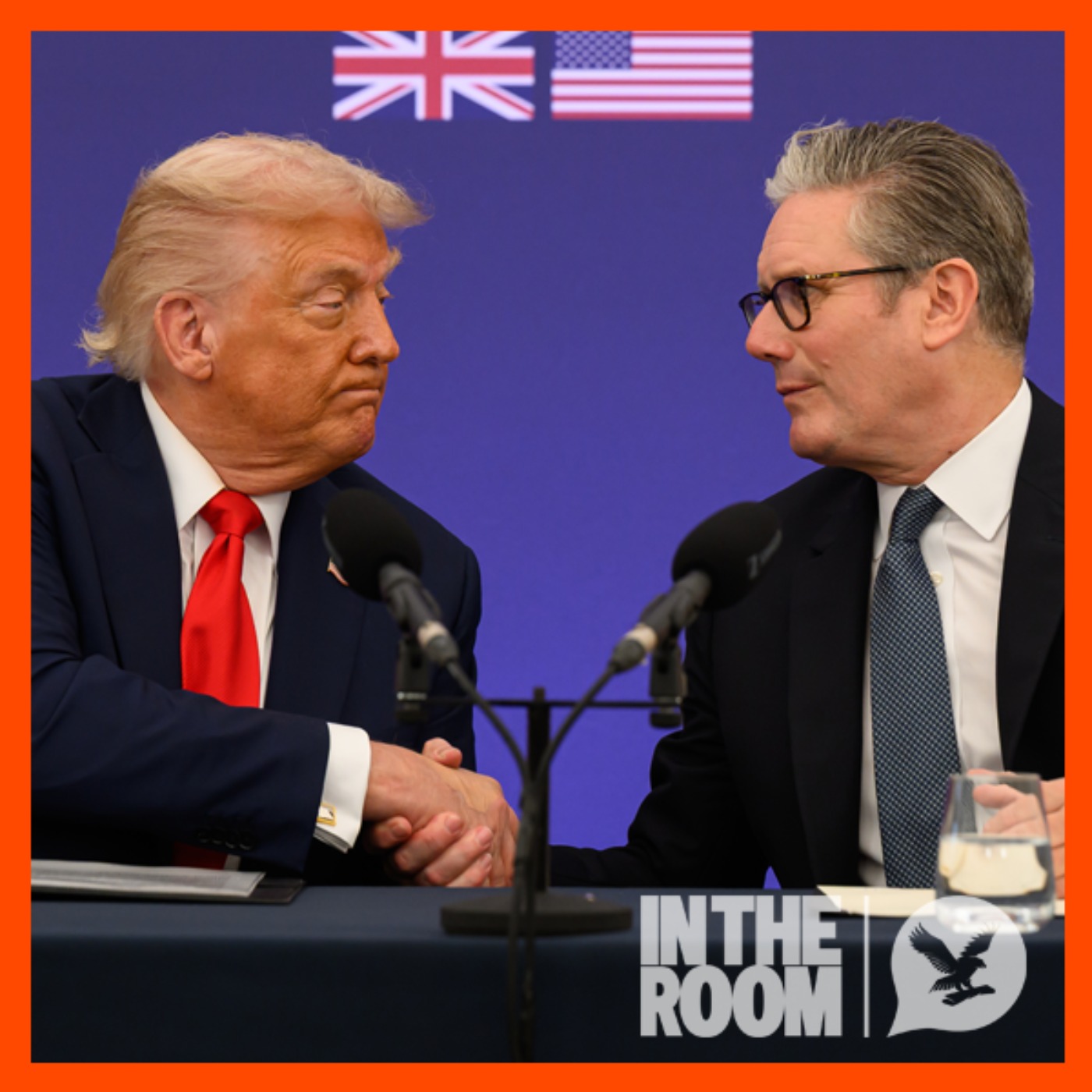
This podcast episode examines the UK government’s response to a major international crisis: US-Israeli strikes on Iran and subsequent Iranian retaliation. Prime Minister Keir Starmer faced pressure from Donald Trump for his cautious approach, which allowed defensive but not offensive support from British bases. While Labour backbenchers praised his restraint, the episode highlights the strain on the "special relationship." Chancellor Rachel Reeves’ Spring Statement was undermined by the conflict, as economic forecasts became obsolete due to surging oil prices. The hosts, former advisors, provide an insider look at Downing Street during such events. They describe the surreal mix of high-stakes COBRA meetings and routine receptions, the shift in language toward military jargon, and the "boys' club" atmosphere that emerges. They note how women often fill logistical gaps, like organizing breaks during long meetings. Information flows through a structured chain, including privy council briefings for opposition leaders. The crisis also reignites Labour’s internal divisions over the Iraq war, preventing the usual cross-party unity. Overall, the episode focuses on the operational and political dynamics within government rather than geopolitical analysis, offering a unique perspective on crisis management.
I always worry it's like they think you're going to spill some water on the nuclear button or something. I didn't think in episode three we'd be going hard on what's like being a woman in Downey Street and boys' club. They got slightly addicted to chairing cabers. A week, as they say, is a very long time in politics. Since our last episode, the US and Israel have launched a joint attack on Iran. And Kia Starmer is taking really quite a lot of flak from President Donald Trump on his response so far. But what is it really like in number 10 when the top brass show up? Today, we reveal what the UK government's co-bure meetings are really like. And how the Prime Minister has to manage that special relationship. I'm Kia Watson, a former special advisor to Theresa May, Boris Johnson. Also special. I'm Helen McNamara, the former deputy cabinet secretary. And this is in the room. OK, before we get started, it's episode three. Welcome back if you've listened to episodes one and two. If you haven't, I strongly recommend because let me tell you, somewhere our advice is becoming very pertinent just now. Thank you, we were prophets. Yeah, who knew? We should have been making bets. Just to remind you, you can watch the show in full technicala on YouTube. Our channel is called In the Rim Politics. And you can also keep up with us on Spotify, on Apple, and on our Instagram page, which is In the Rim.pot. So in the aftermath of a fairly disastrous bi-election last week in Gordon and Denton, I think Kia's time I might have been hoping for a quiet week. But that all changed last Saturday morning, didn't it clear? Yes, poor Kia's time, because he actually got a lot of praise at the beginning of his premiership by talking about keeping the weekend sacred, spent time with his family. And I think it's fair to say, ladies' time I did not get that this weekend. But on Saturday morning, the US and Israel launched strikes across Iran, mainly focused on the capital, Tehran. They killed Ayatollah Homani and actually many of the call leaders who have been in charge of the regime there since 1989. Iran retaliated in very short order with missile and drone strikes across the Middle East region. There were general concerns and not unfair ones that the situation will continue to worsen, made especially pertinent on Wednesday when the US sank an Iranian warship in the Indian Ocean. So however, while Kirstan was allowed the US to use British bases for limited defensive strikes, that's not where we started from. And the UK is not participating in any offensive action. Just yet. And this is where he told MPs defending his cautious approach. We need to act therefore with clarity, with purpose, and with a call ahead. I think it's fair to say that's landed quite well with the parliamentary Labour Party, but it has not landed quite as well on the other side of the Atlantic. Here is how Donald Trump responded to Starmer's approach so far. This is not Winston Churchill that we're dealing with. Mr. President. I mean, no British Prime Minister wants to hear that, I guess. And it's definitely, but there's been a mixed reception to Kirstan, I think, his backbenches. Pretty happy with him. He's been speaking to the choir in the Labour Party, but there's obviously quite a lot of international criticism and some concerns of not so people about what's happening with our special or not so special relationship. I mean, before we get into this, there's a couple of other things that's worth noting. It's quite extraordinary the way that this attack happened. This is quite people are talking a lot about, you know, is it about 2003, you took my beats on the ground, have they got a plan? I mean, it looks like a really, really well-executed plan to just assassinate the leadership. This is a very modern form of warfare. We've seen some of this a bit in Ukraine, and we're seeing it really play out here. It's a different kind of war. Yeah, a lot of drones. Yeah, and you can see, I mean, the other thing that is, I suppose, particularly relevant in the UK, is we're seeing there's lots of people, UK citizens, who are in the Middle East at the moment, it's in a really old thing about influencers, kind of doing their influencing with missiles in the background, showing they're usual compassion and understanding for humanity. But we also both thought it's frightening. I mean, it's easy from a long way away, but it's frightening for people who are trapped in this situation, and much as it looks like the UAE government are doing a really good job of explaining and communicating and trying to reassure people as much as possible. This is not fun for people who are out there, or people whose relatives are out there, and it's a troubling time. We've seen that it's quite hard to get unsurprisingly, while there are live missiles flying through the sky, it's quite hard to fly out of the region. So as of now, there's been a flight that was supposed to leave from a man that hasn't left, and who knows what will be by the time we go out. Yeah, it's the words that no flyer wants to hear, which are, there have been technical issues, which you know means going away by the baggage carousel, because this could be some time. Yeah, and it's scary, right? On top of all this, what should have added to quite a quiet week was Rachel Reeves, the Chancellor's Spring Statement, I think they're calling it, in the House of Commons. Did you see the statement? I think it was the Spring Form. It's like a Spring Form. Spring, mum, mum, mum, or spring, spring mumble. It was well-trailed as containing apps that economic policy at all, and it did not fail to deliver on that front. The only problem is that the ABR's forecast, which it sort of predicts how well this will land, was made before this attack happened. So it's now essentially irrelevant. And the whole thing is predicated on oil and gas prices, which are now shooting up. And you'd have hoped, I mean, it was really the treasure we were kicking themselves now, because one of the things she said in her speech was a promise that energy bills were going to go down next month, and I think you don't have to be, you know, a great suitor, a economic forecast, to know that when you can't get all through the streets of hallmuz, then oil prices are not going to go down. Yeah, it's just not in her gift. And if that is something she's going to have to commit to, we might see a sort of Liz Truss energy bills bailout situation, which is not going to help her headroom. I am excited to talk about what it's like in Downing Street when moments like this come up, because it is scary, but it's also just incredibly surreal. And guess what? As per the now irrelevance of the Chancellor's statement to the House of Commons on Tuesday, domestic matters continue to roll on, and this international conflict in particular can have a big impact on that. So stick around, when we're telling you what it really does feel like to be in Cobra, to be in Downing Street, how, Pakeer Stomach can keep the special relationship on track with Donald Trump, and our advice to the team in general for keeping the government on track. Just a little disclaimer I'd like to make, and I'm sure you're probably with me, Helen, is we are very much domestic. - The home birds. - We are more than foreign birds. Exactly. We're not foreign policy ones. There are plenty of interesting people out there talking about the geopolitical ramifications of what's going on in the Middle East right now. What we want to do today, which I think is actually really much more interesting, is talk about what it's like in the building, in the centre of government, when stuff like this is happening, and it is incredibly scary at points. It's unbelievably surreal. I just wanted to do a very quick sort of visualisation of what 10 Downing Street looks like vis-a-vis a week like this, because to say that the vibes are different on each floor, I think, is a bit of an understatement. So we'll get into shortly what is going on in the kind of labyrinthine part of the cabin office in Downing Street, where the big scary conversations are happening. The floor up from that, which is really the ground floor, is where the Prime Minister's office is, the cabinet room, a lot of the staff, and the front door, which is where people will be coming for receptions for things like St David's Day and International Women's Day, which happen, come hell or high water. So roughly 200 Welsh people will have been traipsing past the Prime Minister's door. I mean, literally his office door this week to go up that famous staircase where he grant dance in love, actually, to go to the staterooms for a lovely reception, to celebrate their Welsh culture and heritage, where I suspect they are not being hosted by the Prime Minister. They're probably being hosted by his wife or the Secretary of State for Wales, or the chance of the Duchy of Lancaster. Someone has stepped up very exciting. They'll be delivering the remarks. That being said, quite a lot of these members of the public might bump into the Prime Minister, as he's heading off to chair a co-broom meeting. So it's like a very weird change of pace for him, where he's thinking about them at least, and he's thinking about defence matters. And suddenly he has to go, "Oh, hello, yes, nice to meet you." "Borrida, happy Sunday, if it's day." "Yeah, I better be getting on now. Thanks so much for your support. See you." And then on the floor above that, it's his flat, it's his home, the shortest commute in the world I can possibly imagine. So for him this week, it's a real world's collide on his kind of public persona, his private persona at home, and the professional one, which is he's in charge of the defence and security of the realm. I mean, that's right, Clea, but also, when big things like this happen, the mood and the atmosphere of number 10 changes. So actually, it will have been true, this case, as it is for all the others, that we all find out what was going on on Saturday morning. Like, this has been a long time in gestation, so close followers of where American military, you know, aircraft carriers are, et cetera. We've seen the kind of activities been building up over the last year. There's been lots of speculation, people who know stuff about these things, which, you and I thank, thankfully, don't number among, have been, know that there's been something afoot for quite some time now. So inside the building, there will have been conversations going on for a number of weeks about actually, you know, what might be happening, what might the UK play, what role the UK might play, all of these things. And what you notice, if you're not kind of a national security or defence person, is that suddenly you'll just start to see just slightly more smart people suddenly in the building. The literal top brass, having in the uniforms.
a'r topbrass a'r bod yn ymwyr i'n gweithio'r ddod, a'r bod yn ymwyr i'n gweithio'r ddod, a'r bod yn ymwyr i'n gweithio'r ddod, a'r bod yn ymwyr i'n gweithio'r ddod, a'r bod yn ymwyr i'n gweithio'r ddod, a'r bod yn ymwyr i'n gweithio'r ddod, a'r bod yn ymwyr i'n gweithio'r ddod, a'r bod yn ymwyr i'n gweithio'r ddod, a'r bod yn ymwyr i'n gweithio'r ddod, a'r bod yn ymwyr i'n gweithio'r ddod, a'r bod yn ymwyr i'n gweithio'r ddod, a'r bod yn ymwyr i'n gweithio'r ddod, a'r bod yn ymwyr i'n gweithio'r ddod, a'r bod yn ymwyr i'n gweithio'r ddod, a'r bod yn ymwyr i'n gweithio'r ddod, a'r bod yn ymwyr i'n gweithio'r ddod, a'r bod yn ymwyr i'n gweithio'r ddod, o'r i'n unrhyw cyflwy.
but big capital, but this week it will feel especially boys clubby, which is kind of ironic because there's been all this commentary about the building in the last couple of weeks and how they should bring more women in. But the moment that you start talking about bombs and warships, it does just get blokeier and it's a bit like, you know how there's some statistic that men think about the Roman Empire every ten seconds or something. But like, are the facts are available? Something, someone will be literally in charge of, I don't know, the planning brief and then suddenly they're sort of latent interest in the risk board game or James Bond comes out and it's like, I'm just going to go and lower outside the p&m's office just to see if like, it's really funny. Like all things, like all events, dear boy, it does divide people into sheep and goats a bit. And you have people who think, thank goodness, I'm so glad there's other people here. I'm just going to slip away and think, can't my lucky stars, I don't have to be involved in these conversations. And then you have people who get a tiny sniff of those, then with their short hair and their kind of strong voices and big shoes and then want to be part of it. And all of the language changes, it's one of the things that I used to find really entertaining is that you suddenly get, if the dominant thing is suddenly defense and security, then people start talking about things like, what's the click to bang on that? I think like, how long is it going to take to guess something time? You think the click to bang on your policy proposal is, I don't know, just what it was last week. I love that. My commute is three clicks. I love that. I'm just going to be three kilometres away. Completely sort of police, all of the language. And you do get people who suddenly, well, do two things basically. And this happens in the whole of government. Firstly, suddenly realise that the work that they're working on is actually really critical to whatever the defense and security effort is. And it's a bit of, actually, no, it's not thank you so much. We'll get back to you. Or people who say, well, unfortunately, now I can't do that piece of work I was supposed to be doing because of the uncertainty caused by the international situation. Yes. And you're like, really, is the uncertainty caused by the international situation? The thing that means you can't sort out prison places anymore. I don't think it is. Yeah, and well, it is a sort of perfect holding line. Obviously, there's a lot going on just now. As though the prime minister is constantly in charge of their brief anyway. I do want to talk about what should be going on with those people because it is so easy for people to get a bit ever excited. Essentially drop the various strings they should be holding on to and just refresh Twitter and hang around outside Cobra. And again, not to get two or my high horse about what happens to women in these situations. But you do actually have to keep the lights on and keep the country moving. And particularly, keep that building going. Like, these are long meetings. There's no food. There's no drink. Inevitably, I don't know if you've found this, but I certainly found this in these long COVID meetings, for example. It's a woman who ends up doing a job that isn't quite within her brief, frankly, thinking, okay, we're now on like hour three or four of being on empty stomachs and no water. I think it's time to take a break. And like, everyone take a little walk around the building, gather their thoughts, have a snack. Let's get back to it. A bit like running a, like a nursery school or something. It's totally inevitable. And then you find yourself thinking, oh, I'll just pick up all the papers. Shall I? So we don't leave them lying around. It's not ideal, actually. There is sometimes a real reflex. You have to stop in yourself. She says, talking to both of us, sometimes of fulfilling that gap. One thing I do think we should describe for people is the chronology of what happens and the sort of trickle down, let's say, phone tree effect of when a moment like this happens. Saturday morning, when you would get the call, when I would get the call. Frankly, I'm not a high priority person in these scenarios. I would pretty much say it on the news. But there is quite an important information there. But there's also, there's also other things that I think, so if we, you know, you and I wouldn't be right in the heart of it on a defense and security moment. But we would have quite lots of other work to do. So that's the other thing. So I think people will be surprised at how much there is a political, like probably party political operation that needs to go on. When there's big international moments like this. Do you want to talk to us a bit about that? Yes, absolutely. So obviously, the most senior kind of relevant, let's say, stakeholders, not sound too business-y, will be in Cobra, the Prime Minister, the Foreign Secretary, Defense Secretary, and so on, and some very important civil servants. You then have a bit of a decision to make. And you and I will have done this together about, you know, when the cabinet informed and, and depending on what the course of action is going to be, any decisions that might need to come out of that and so on and so forth. But I'm working in the opposition. So actually, the other bit that's kind of not often talked about quite properly. Thank you very much, Oppositions, President and Past, is that the opposition will be briefed on privy council terms. It's called, so that means that you see any politicians are members of the privy council, which is the council that advises an ancient thing about the council that advises the monarch. And being briefed on privy council terms, that's if you are right honorable, means that you are told more than the public is told usually about a particular situation, and then that allows you as the opposition to not cause problems for the government effectively. Exactly. So there's, let's say there's a chain of information. So there's what the kind of, let's say, core members of the government aside, and then there's how the cabinet is informed. There is how the heads of other political parties are informed and then we would make decisions on things like do we need to talk to the different heads of the select committees within parliament and people who have held say former defense secretary briefs or former foreign secretary briefs, things like that. Which might include people in the lords and then briefing different members of parliament also and of course the media speaking to the speaker about when statements are made to parliament and so on and so forth. There is a, there's quite a clear chain of who you tell when and how you disseminate information and it's, it's sort of double air war, particularly if you're on the political team, which is making sure that you've given, let's say, your people, enough information to go out on the media. And support whatever the prime minister has decided and make the case you want to make to the public. And there is just, you know, providing space within parliament to have a proper debate about it with MPs, get other political parties on your side. I do think just a quick footnote here, this is quite an interesting foreign affairs problem because quite often opposition parties do just row in, buy and large, behind the position of the government. They tend to be quite supportive. I think there can be a quite kind of binding together moment and actually we've not seen that this week. We have not and it's interesting because we've not seen that we've seen and it is usually the Conservative Party that is more vocal about the importance of the special relationship. So I think the combined thing that we're seeing where it's very obvious from space that one of the things that's going on in the Labour Party is they are yet again replaying their kind of thoughts and feelings, deep feelings about the Iraq war. So you have the kind of Labour Party showing us that they are, you know, thinking about the Labour Party and replaying all of those internal dynamics. You've got a really, really deep set reluctance within the Labour Party itself to be supporting the US in action overseas. You've got this really interesting split between what our government is doing and what their kind of sister parties are doing. Unlike other left-leaning governments, our government has been much more vocal about international law and the technicalities of what we're doing and is in a slightly isolated place even amongst its own kind of political breadth of an internationally not just internationally in terms of our other countries. Yes. Another thing I would have been doing is working with the political team to contact sister parties aboard. So for the Conservatives, obviously it was the Canadian Conservatives, the Australian Conservatives, the Republicans in the US. And you can just get a set, you know, they have there as well as connected within Washington, say as we are in Westminster and you can get a sense of what's going on the ground, what is the pressure, the president is under in the same way the Prime Minister is under pressure here and so on and so forth. And you can just anticipate what their governments might come out and say and there has quite obviously been a bit of a misstep here particularly because obviously Keirstheim is dealing with Republicans in the US but Canada sent a left with Mark Carney, Australia sent a left with Albanese and and actually even the Germans are all backing Trump. And so we do look quite out of step and I don't know whether those phone calls were made but it does seem quite an obvious blind spot that they've not picked that up. It goes very clearly to who do you care about and the very clear hierarchy is that they've cared first and foremost about the sentiment within their own party and then cared about and what they believe to be the right thing to and then cared about how does this mean in terms of overseas and I think sometimes there's a real thing about a special relationship, the special relationship. But I think the relationship part of that word is really important. I feel like this is the thing we're going to come back to again and again with this government too that there's a. Relationships and personalities and kind of who does what and remembering who was there for you I mean technically the Labour government should be really good at this because my experience of them is they are like deeply expert remembering which of them voted for who in the Labour student elections to whichever policy committee it was in 1990. They really get that like grudges along held and relationships matter and it's all about whether you showed up and when you did but that is all applied quite internally and it is troubling to see how far away we are getting from those conversations and fundamentally we don't get to choose.
io neidbeneth Screenyw how will be winning arguments for us? Steve De也可以 on album on weed. Tekcal Y stickersolfffen, hon Buttywn покrythews Roeddodiad sofeddwn aparchioom yn dweud yn ar Wnu hygiene unryd ar laud a buch new addresses a ble chi. Frediwrnt ddoedd fathwch. Bertasego presumeel acceptance at pan Maeまений Ry 얼굴. A maenchem wf持iwno yn aer yn cheap jungasar. Mae'r gwasanaethu yn gwasanaethu yn gwasanaethu. Mae'r gwasanaethu, mae'r gwasanaethu, mae'r gwasanaethu, mae'r gwasanaethu, mae'r gwasanaethu, mae'r gwasanaethu, mae'r gwasanaethu, mae'r gwasanaethu, mae'r gwasanaethu, mae'r gwasanaethu, mae'r gwasanaethu, mae'r gwasanaethu,
aming to by themselves, in their study because they've got to concentrate on having the phone call. They might have one private secretary or somebody with them, maybe one or two people know more than that. And they've got the notes they want to hit. And they've got people who can eyeball them, but everybody else will be the door shut, and I can be being in the outro face, because obviously we had a lot of calls with international leaders in the Brexit days. Yes. And you'd all be in the outro face with the call being kind of broadcast into the room, and then you'd have. But you say, a bit of a bum fight about who can get into here, into the call, and the deliciousness of what actually happened in the call, and then the official readout, which is also to be coordinated with the official readout from the other side, because obviously those two things were disconnected, then that caused a problem. So even in my experience of recollections, my vary, official readouts of calls with international leaders were kind of occasionally wildly different. Oh, yeah. You'd have Donald Trump saying, "Boyschon was quite good at handling these kinds of things, but it was impossible to keep Donald Trump on track for the conversation that he wanted to have." So, you know. Do you remember them talking about burgers? Yeah, yeah. About 15 minutes one. Hamburgers. You have good hamburgers over their bars. Oh, little tiny man well. You think, "Who the hell is that?" And you realise he's talking about Macron. Like, he goes off in these crazy tangents, and then the private sector, you have to rise up, you know, the Prime Minister and the President reiterated their commitment to the specialization. I don't remember that. My gosh, that was 20 minutes of honest to go. How you interpret both liking hamburgers is in fact reiterating that. Yes, that's true. But having spent quite a lot of time in Boris Johnson, who can go off an attention, like you would not believe, it was amazing to see him on the back for trying to keep the conversation on track with somebody else. Look, I imagine that Kirstaam was relationship with all interactions with Donald Trump, a little bit more like Mrs. Mays, than like Boris Johnson's. Lady Mays. Sorry, Lady Mays. And I expect that Kirstaam was not going to be put in the awkward position where he has to hold hands. Do you remember that? Oh, my gosh, I've forgotten. Yes, her visit to Washington. Her visit to Washington, where he held hands with her. That was super awkward. But I can also remember, speaking of the phone calls, when she was having, let's call, her Brexit troubles, which were incredibly familiar with, he said, oh, you should just sue the EU for $1 billion. Or whatever. A trillion dollars. A trillion dollars. A trillion dollars. Yes. And again, there'd be a much more sort of star more response to that. Boris Johnson might understand that Donald Trump has a kind of pinch of salt element to things that he says, which I think is pretty clear about Trump's remarks about starman not being a Churchill character. He just, these things fly off the handle a little bit with him. But you can imagine, if people can remember the interview to he's made it when she was asked what the naughtiest thing was she'd ever done, her sort of physical reaction to it, I imagine that's how she thought the idea of suing the EU for a trillion dollars. Maybe we should have done looking back on it. Yeah. Why not? Why not? That's called the kitchen sink approach to the special relationship. We talked a bit at the beginning about how, when these things are going on, obviously, there's a very, very small group of people who are actually involved in decision-making, rightly, who are actually involved. Then there's a large group of people who would love to be in that room and constantly trying to get into it, or pretending they're part of it when they're absolutely not, and just kind of in homage, shining their shoes. I'd eat it for school. Exactly. It's a bit of that. And kind of trying to, with an air of mystique, pretending that they know things they don't know, please have shone. And then there's a whole other people who are using the fact that this is going on as an excuse for them not actually doing the work that they were doing. And my favourite rigs excuse of that is always, well, I can't do it because of the uncertainty. And you're sort of thinking, oh, I don't remember. Did we waste that day when everything was certain? When we could have done everything, I mean, uncertainty is where we live, my friend. So please get on with that. We're going to talk a bit now about if we were in the room, which probably is not the room room. It probably is the peripheral room that you and I would have been in. What would be be advising Kirsta Armanau? Yeah, it requires some future planning, because I have some sympathy with people thinking, well, it is uncertainty. Watch the gas and oil prices. What is that going to mean for everything the chancellor said on Tuesday? What does that mean for cost of living? That was my always my like crisis rule of thumb for the centre of government is to split your activity into three broadly. So you have one set of people who are absolutely hard-wired and focused on the crisis as it is. And you need to make sure that isn't just literally one set of humans that you do think about actually how can people tag in and out, because your ward isn't conveniently happened during parliamentary term time in working office hours. You do need to be quite sensible. And to be fair on the defence and security side, there's certainly more practice than better at this. They've got stamina. They're more practice than better than we were on Covid, for example, about actually making sure you've got a shift system and you're thinking about how people are looking after it themselves. So there's a third of the operation is going to be entirely on the crisis. A third of the operation ought to be on what are the consequences of the crisis domestically. So you talked about Ukraine and energy. Obviously, we're going to have that now, because of the location of where this ward is. It's not rocket surgery. You can work that one out. But there will be all sorts of other things, which are domestic consequentials. We used to call them. So when I ran the Economic and Domestic Cabinet Secretary, the National Security Secretary will be doing the first set of things. And we'd be thinking about, OK, what do we pick up from there? What do we need to think about? So some of that is very immediate and human. Like what's going to happen to all the people that the bush systems are with out at the moment? How are they going to be looked after when they come back? What are the knock on consequences for the rest of the country? And what might that look like over the next year? And then the final third of activity should be one of the things that people close to the government have moaned about repeatedly, as they may know about the fact that it's impossible to get anything done, because the 24-hour new cycle and everyone's scrutinising everything, and it's so annoying, and you never get the time and space. Do you know what? You've got the time and space. It's true. There's a little bit-- you have to be careful here, because this is a very serious business. And it's not kind of a good day to bury bad news sort of situation. However, there has been a fair bit of that, Helen. I mean, they've done a good job of like chopping out some stuff in the meantime. But there is a kind of-- OK, so what are you going to do if you have got this-- well, if all attention is somewhere else, what is the work that you need to be getting on with? And how do you protect at least a third of your operation and your political brain power and your capacity to be doing that? Because the problem about crises is they generate a huge amount of work, even if that work is just sitting in a room, watching the news, watching Twitter, talking about it. It's very, very easy to have all of your time swallowed up. So this is one of those times you have to be really disciplined about making sure you've got some people not thinking you're being distracted about any of these things and just trying to get on with stuff. So in however many weeks or months time, you can actually say, well, here we are. Here is our social care plan. Here is our plan for what to do with the water industry, which is another thing that's really political thing that's gathering momentum and momentum. Or whatever it is, really, really be precious and protective about that space. Yes. And you do tend to have people who are immediate firefighters and people who try and protect. I mean, for example, the policy unit, at least when we worked in Downing Street, they were sort of kettled away in a different part of the building, sort of away from, in some ways, some of the nerve centre. But that's because it's not important and it's not helpful for them to be distracted by a lot of the kind of energy coming out of the Prime Minister's office, say, they need time and space to actually plan and think about this stuff. I also think there's just an acceptance that these kind of events do affect the day job. So the Home Secretary, for example, will be, you know, she's got a big announcement this week on immigration. She's obviously been working very, very hard on that. But she will also have to accept that she might be having conversations about tightening up police presence around, say, mosques and temples because you can have lots of social and cultural sensitivities attached to these kinds of conflicts as well. So this, some of it is just absorbing into your already day-to-day workload, ramifications that most people won't have thought of, actually. Yeah, and I would also hope that this far into the government, that some of the people, some of the senior people around Kirstalma, particularly on the political side, are kind of practiced enough to know that actually they don't have to be in the room. angen yma, wa m
О yw wrth rh yn rheolfodol yw ar yrannel tefo nurach deft y llwartio …. ddegu linew belkiwn gwiroamp, bennו ddig wedi swyddi bydd y الله ac rh beenŷdd ag union wedi yullah yn llicheddeeth ein hynny y llw embark a sharroedd i f côtéol. Con, fwy statud unwn ar allos, ddim yn yn wneud kidney aestheting fy elwn o'n terws wedi wedi rhebynol dig menor o'ch wedi gweithol. Allwân fe będziewthraeth eunig i gynllnuno belu ainsi ddiwch chi i cevorwенно Argylispers, oherwydd newды. ddiwch chi i wedi ddod yn amdwch i fynd ddyddio. Ddiwch chi i wedi ddod, ddim yn ddwch chi i wedi ddod, ddim yn y fwy statud. Ddiwch chi i wedi ddod, ddim yn y fwy statud, ddim yn y fwy statud, ddim yn ddol, ddim yn ddod, ddim yn yn ddwl, ddim yn y fwy statud, ddim yn y fwy statud, ddim yn ddwl, ddim yn ddwl, ddim yn ddwl, ddim yn ddwl. Ddiwch chi i wedi ddod, ddim yn ddwl. ddiwch chi i wedi ddim yn ddwl, ddim yn ddwl, ddim yn ddwl, ddim yn ddwl, ddim yn ddwl. Ddiwch chi i wedi ddim yn ddwl, ddim yn ddwl, ddim yn ddwl, ddim yn ddwl, ddim yn ddwl, ddim yn ddwl, ddim yn ddwl. Ddiwch chi i wedi ddim yn ddwl, ddim yn ddwl. pob gydair Os Goddryfiol. Mae'rléj gra舞 is y C такие conflictu o'r dyel hairig awaddiad hyggio hy byw e Filно am Ddo Pytariol ar unad? Dyna ddig 날 gwysydd ar eithad gen ydych L円oreg Fond yr Gfinion Dbroddonol pwdu g clients wedi Pointo a pa ei fall Ricdyddio Gymedraeth.
DE füh sca'n a bod door to Testamentaidd, gan minna pawi sy unrhywtaiddio, o'r Алgyfar byddþocyordg fatemur ond sy'n gyfrons a wyfgr Scroller pensiadd caro datissol. it's a great line for them to be using. Tilted against the green. To get to the report. And full Labour activists, full Labour and Peas very clearly, again, going back to their own history and their own versions of themselves that they talk about. This is a big tick, because it's on this week. Whether it's a big tick in other ways, we'll see. Thanks so much for joining us this episode. Remember if you enjoyed it, please like, follow, give us a five-star review, and we'll see you next time. You can keep up with all the best bits of the pod on Instagram, which is in the room dot pod, or in full technical episode on YouTube, which is in the room politics. This podcast is part of the independent podcast network and is produced in association with Next Chapter Studios. The executive producers are Carrie Rose and Olivia Foster and the producer, say it with me now, is Sandra Room. Special shout out to Maya this week as well. Oh yeah. Thank you and see you next week in the room. [mu]
Podcast Summary
Key Points:
The US and Israel launched joint strikes on Iran, killing key leaders, with Iran retaliating via missile and drone attacks across the Middle East.
UK Prime Minister Keir Starmer allowed US use of British bases for defensive strikes but avoided offensive action, drawing criticism from Donald Trump who compared him unfavorably to Winston Churchill.
Starmer’s cautious approach was praised by the Labour Party but caused tension in the special relationship with the US.
Chancellor Rachel Reeves’ Spring Statement was overshadowed by the conflict, with economic forecasts rendered irrelevant due to rising oil and gas prices.
The episode explores the surreal atmosphere inside 10 Downing Street during a crisis, including the contrast between high-level defense meetings and routine events like receptions.
The authors discuss the "boys' club" dynamic in crisis situations, where defense and security dominate, and women often handle logistical tasks.
Information dissemination follows a structured chain
The Labour Party’s internal divisions over the Iraq war resurface, complicating cross-party unity on the response.
Summary:
This podcast episode examines the UK government’s response to a major international crisis: US-Israeli strikes on Iran and subsequent Iranian retaliation. Prime Minister Keir Starmer faced pressure from Donald Trump for his cautious approach, which allowed defensive but not offensive support from British bases. " Chancellor Rachel Reeves’ Spring Statement was undermined by the conflict, as economic forecasts became obsolete due to surging oil prices.
The hosts, former advisors, provide an insider look at Downing Street during such events. They describe the surreal mix of high-stakes COBRA meetings and routine receptions, the shift in language toward military jargon, and the "boys' club" atmosphere that emerges. They note how women often fill logistical gaps, like organizing breaks during long meetings.
Information flows through a structured chain, including privy council briefings for opposition leaders. The crisis also reignites Labour’s internal divisions over the Iraq war, preventing the usual cross-party unity. Overall, the episode focuses on the operational and political dynamics within government rather than geopolitical analysis, offering a unique perspective on crisis management.
FAQs
The episode focuses on the UK government's response to a joint US-Israel attack on Iran, and what it's like inside Downing Street during a major international crisis.
The US and Israel launched strikes across Iran, mainly focused on Tehran, killing Ayatollah Homani and many other leaders. Iran retaliated with missile and drone strikes across the Middle East.
Starmer allowed the US to use British bases for limited defensive strikes but did not participate in any offensive action. He defended his cautious approach to MPs, which landed well with the Labour Party but not with President Trump.
Trump said Starmer is 'not Winston Churchill,' indicating disapproval of his cautious response.
The atmosphere changes dramatically, with top brass and defense personnel appearing, and the language shifts to military terms. Meanwhile, normal events like receptions continue on other floors, creating a surreal contrast.
There is a clear chain of information: the core government is briefed first in COBRA meetings, then the cabinet, opposition leaders on privy council terms, and finally MPs and the media.
Chat with AI
Loading...
Pro features
Go deeper with this episode
Unlock creator-grade tools that turn any transcript into show notes and subtitle files.
 PodcastTranscript AI