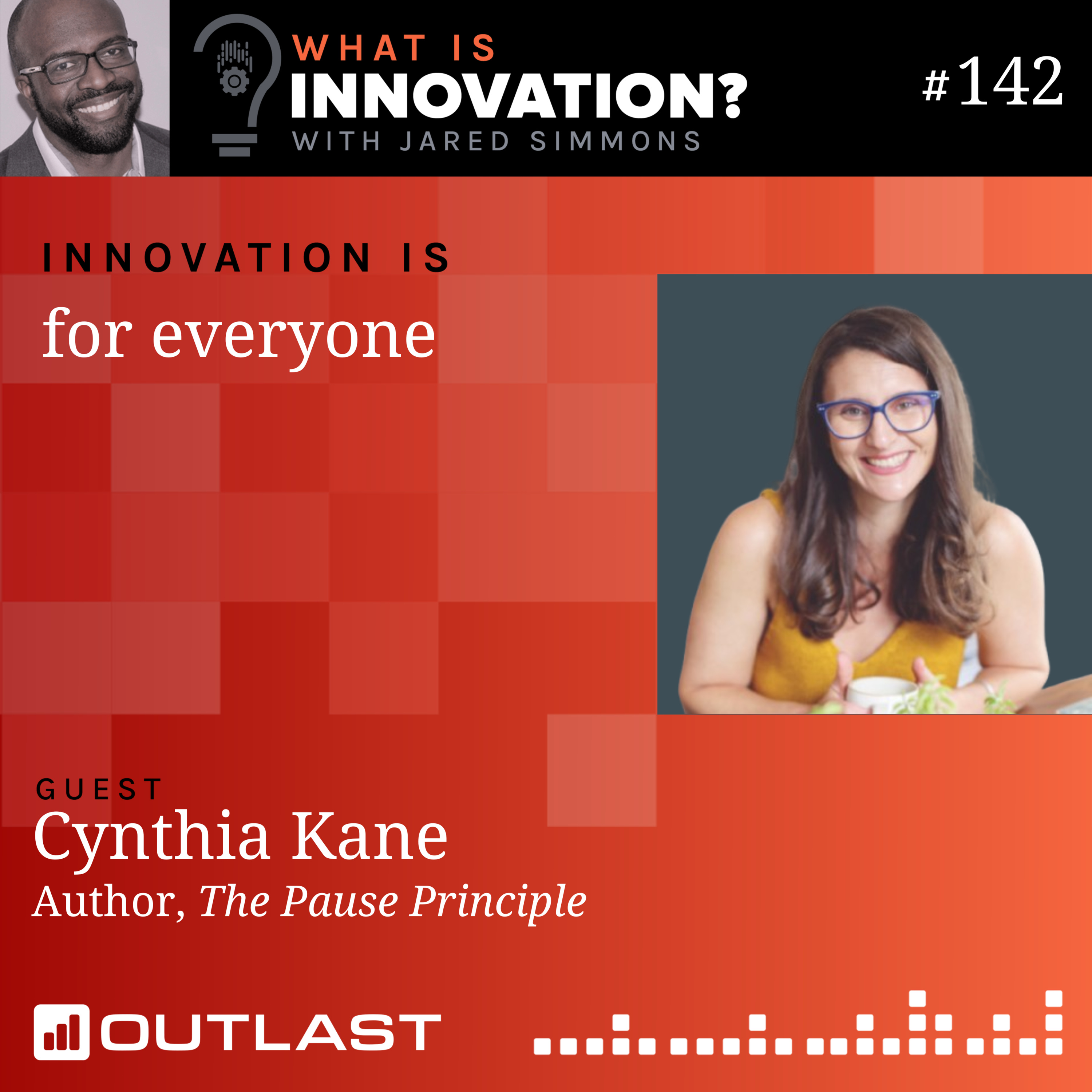
In this podcast, host Jared Simmons and guest Cynthia Cain explore the meaning of innovation, framing it as a dynamic, inclusive practice that sparks curiosity and reimagines existing ideas. Cynthia emphasizes that innovation is not static but a fluid, accessible process for everyone. She connects this to intentional communication, which she teaches as a daily practice to help individuals interact more calmly, kindly, and honestly. By starting with self-awareness and adjusting internal dialogue, people can improve their external communications, ultimately shaping healthier workplace cultures. Cynthia advises approaching innovation and difficult conversations with simplicity, viewing interactions as low-stakes experiments to reduce pressure. She shares her personal journey, highlighting how curiosity and practice led to her career in communication training. The conversation underscores that innovation, like communication, benefits from a mindset of adaptability, allowing for natural responses to change rather than resisting it.
[MUSIC] >> Hello, and welcome to What Is Innovation, the podcast that explores the reality of a word in danger of losing its meaning altogether. I'm your host, Jared Simmons, and I'm thrilled to be joined by Cynthia Cain. Cynthia helps people enhance their lives and relationships by teaching them how to become less reactive and difficult conversations and speak to themselves, others, and their environment in a kind, honest, and helpful way. She's taught over 70,000 people how to change the way they communicate through her books, best-selling daily own course, and the Cain Intentional Communication Training Program. She's a certified meditation and mindfulness instructor, breathing coach, and founder of the Cain Intentional Communication Institute LLC. Cynthia, welcome to the show. >> Thank you. I'm happy to be here with you. >> I'm so excited about this conversation. Let's dive right in. >> Okay. >> What, to your mind, is innovation? >> So, this word feels really big to me I was sharing before. So, when I think of what innovation is, innovation is something that sparks people's imagination, their curiosity. It is also something that is for everyone in terms of practice, and it is something that has maybe been done before, but never in a way that is being presented. Does that make sense? >> It makes perfect sense. It makes perfect sense. The beauty of your answer, I think, hinges on one word and kind of built out around it, but the word, it hinges on in my mind, is practice. >> Mm-hm. Yeah. >> And I know, as we've just heard your amazing background, I know as a musician, the word practice sounds different to me than it does to other people, like people in the more of a traditional corporate background. I'm imagining the word practice coming out of your mouth means something different from what some of our listeners might be hearing. So, tell me more about practice. >> So, practice for me means implementing on a day-to-day basis something that may be challenging for you. It's trying to bring in a way to help you reach potentially a goal or within communication, let's say, if we want to be able to speak in a more calm, kind, conscious and compassionate way, we have to start practicing doing that in our day-to-day lives with really small situations, right? We begin really within maybe just one conversation. Our intention is to practice seeing with friendly eyes, and so we take one conversation, we implement that practice, we see what happens with it, does it work, does it not work, or what have you, and then we move into the next. For me, practice is really, I believe that's what communication is, it is a practice. Communication as a practice. When I think of practice, I think of creating low-stakes, private situations to get better at things. So, when I'm practicing piano, I'm not practicing in Wrigley Field or at the Hollywood Bowl, I'm practicing in my room. Yeah, it's smaller moments, right? Let's say you are at Wrigley Field, all that practice is going to show. Right, right, exactly. I would imagine that for a lot of folks that you've trained in other people every moment, whether it's a small meeting or a meeting with your manager, there's only one other person in the room to forate, every moment can feel like that Wrigley Field shakes stadium kind of moment. Yeah. So, how do you help people think about practice in that context? So, a lot of the work, like in this regard, really, is to take the moments that feel really big and see if we can make them feel smaller. By bringing it back into this idea that this is every interaction you have is an experiment. Every interaction you have is a time for you to play around with the practices that you're learning. It can take potentially the pressure off like the big feelings that we get around meetings and so on and so forth, but it has a lot to do with understanding what is a really big deal and what's a little deal because right now a lot of things feel really big, big, big moments and they're often not. It's just the way that we talk to ourselves about certain meetings or certain sessions and so on. How do we change, and this is an unfair question because you've got entire courses on this, but how do you think about changing the way you speak to yourself? Yeah, so this is one that is really common, right? We all talk to ourselves whether it's through the way we think, through the way we write, through the way all of it. So we're always in constant contact with ourselves and the way that we can begin to change it is when we start to pay attention to how we're speaking to ourselves. If we're speaking to ourselves in a way that creates more discomfort or more anxiety or more distraction or more fear or worry, then we are going to continue to play into that within our interactions. So we start to notice, are we speaking to ourselves in a way that's kind, honest and helpful? And if we are speaking to ourselves in that way, then we know that we're going to be able to express ourselves more clearly and consciously and compassionately to others, right? Without blame or resentment or all of the insecurity that we can feel coming out as well. That makes so much sense. It sounds like awareness is the kind of the first step, becoming aware. It is, yeah. So we become aware of how the language we're using affects us, affects our emotions, affects our relationships, and then it's not so much, you know, coming in with positive language. But it's coming in and just noticing, oh, wow, I'm talking to myself in a way that's pretty hurtful right now. How can I talk to myself in a way that's kinder and more familiar in this space? Kind and friendly. Those are words that we all aspire to kind of embody and feel in our day-to-day personal lives, but not words that come up in the office every day. Yeah. No. And so it is a practice, right? Because you have to really set aside time to cultivate that. It doesn't just happen because we want it to happen. Right. Right. And I can imagine thinking about this and talking about this at the individual level, people use words like culture, environment, things like that, culture to me is a collection of individuals. And so I would imagine that everything you just said could almost be extrapolated to say, okay, how does your environment, how does your culture, how do your people talk to each other? Are they kind, honest, and helpful with each other? I would imagine that could shape the culture and the environment in the office. 100%. And I think that with the work that I do, sometimes people are surprised that I do focus so much on the individual. And it really is though each person forms that collective, right? So if we are talking to ourselves in a kind way, then we're talking to others in a kind way, and we don't have to use dialogue scripts or break off into groups and have forced conversations, it really just becomes a natural way of connecting. That's such an important more natural way of connecting because so much of the work that happens in innovation and just management of day-to-day business, so much of it is complex and unknowable and dynamic. It feels like being able to communicate and collaborate in a way that is natural just keeps from adding one more thing to have to think about and have to organize and what framework am I going to use to communicate this? How am I going to approach this person? Which personality assessment should I use to understand how this person thinks the field of behaves? Yeah, so much thought. So much. There is. And that's what I talk about how once we are able in those unpredictable situations or those challenging moments to feel calm, then we can actually access our own words, we can access the clarity we need, so we don't have to work ourselves up so much trying to figure everything out beforehand or make sure everything goes perfectly because then we know, okay, here we are, we're in a real-life situation, it's not going the way that I just planned it. How do I actually navigate? Right, right. It sounds like it frees you up to think more about the problem and the shared opportunity or whatever you're trying to accomplish versus manufacturing a method of communicating based on, as I think about what you're saying, it's making me realize a lot of times if we're trying to find a structure or a way of thinking or all those things, we're probably basing it on what we perceive to be going on in the room. And I've learned over my years that I'm not a good judge of that and most people aren't. My fears, I usually project my insecurities on facial expressions, on body language and all those things, or this person's board, I knew I was born. This person's already checked out, I knew I was going to lose people with this slide. So I really like the element of focusing on yourself and focusing within first, I can imagine it could help me and others better react and respond to what we're seeing in the room. Well, and also I think what you touched on is also that notion that it's really hard to be present and actually know what is going on when we are stuck in our heads about what is going on, right? Because there is a difference between our thinking mind and existing in the space that we're in. And so a lot of it also is how can we be present in a conversation without letting the thoughts distract us, but being able to really see what is happening and see it clearly, right? Right, right. So well said. I think the seeing it clearly aspect of that is, it's very hard to do. I'm not saying any of this is easy, by the way. What I love about what you're doing is you're making it simple. Yeah. And you're making it simple so that you can make it accessible and people will engage with it. Yeah. Making it simple doesn't make it easy. Correct. Yes. But leaving it as this big complex, unknowable, unassailable behemoth of a problem does no one any good. Because simple and easy are different things. Yeah. And I think sometimes people feel like they have to meet complexity with complexity. And I love your approach, which I aspire to, which is to meet complexity with simplicity, because that's the more sustainable path forward. So we've talked about what innovation is, what isn't innovation? Innovation isn't static. I feel like it moves. It breathes. It's fluid. It can respond really like quickly, but in a very open way, right? Yeah, it isn't static. I mean, you're open and responsive. Yeah. In a way that isn't, I don't hear any sort of critique or judgment in your definition. No. I mean, I think that it can be guided, right? Right. Right. But there's a dynamism in how you're describing it that comes through. And I think that dynamism is, I could imagine that it might be intimidating for some folks, people who are responsible for delivering specific outcomes on a specific timing. Yeah. People who have expectations that they've placed on themselves, that others are placed upon them, a fluid approach, open approach, a dynamic approach, things that change from one day to the next, one consumer conversation to the next, one competitive response to the next could be upsetting or disconcerting to people who have high stakes, expectations placed upon them. Yeah. Are there folks through your courses, through your training programs, things like that? Is that something that you see people struggling with? Yeah. It's a very different way of approaching conversations. It's a different way of approaching just day to day. Being able to find a way to allow what is happening to be happening. And to be in a conversation and it go a different direction, right? Or to show up with, we have a plan A in our mind and we have an expectation and then suddenly it's completely different. And for us to be able to find a way to keep moving forward can be very challenging in that moment. When we want to maybe dig our heels in and stick ourselves to what it was supposed to look like, what it should have been, why wasn't it this way, right? We can get really stuck. Whereas if we open ourselves up more, if we're able to respond or maybe just even kind of take this stance of the observer, which I talk about a lot, observing what is happening, then we get to stay in the clarity that we want to stay in so that we can navigate right and respond differently. But it's a challenge because it's not how we're wired. We're not necessarily wired to interact this way. If we're met with a challenge, that is a direct threat sometimes. And because of that, our defenses are up and we're ready to roll. And we have to do the opposite of what biologically we were created to do, basically. Right. Right. The threats that we evolved to respond to were life or death. And those are not the ones we deal with on a day-to-day basis. No, though it feels that way in our body now. 100%. The concept of allowing is something that I think is really fascinating. I work with individuals on coaching and career and stuff. And then also the consulting things. And I'm thinking about how this concept of allowing could be so important, not just for businesses trying to achieve goals, but also individuals trying to achieve career goals. There's a lot of identity tied up in world of career management and it becomes part of who am I and why am I here on this planet? Am I being valued as a human or am I being valued as a contributor of my expertise? And yeah, that response, that sort of resistance to things not going the way you expect. Yeah. It's like a certain need for control. I mean, we all have that. I think though when it comes to business or when it comes to career that it feels tighter, a little tighter in terms of controlling situations. And it's harder to allow. Titer. That is another great word. So many great words. That's the only word I could think of. I'm just circling and underlining words like, okay, how do I figure out how to use that word? That way. That is a perfect description because it's that whole concept of bracing for impact and the impact that has on your musculature, your physiology versus remaining flexible and fluid and allowing. And I wonder how much suffering, lack of a better word. I feel like people suffer a lot in their career decisions and their career management process. Yeah. And I wonder how much of that suffering is the resistance versus the allowing. Yeah. So you have an amazing career and they've done incredible things as you look around that your career and what you've built. Are there any thoughts on how innovation might have knowingly or unknowingly played a role in that for you? I mean, I think it played a major major role for me. Whether I knew it or I called it that or not, when I think about it, I think there was a period in my life where there was no innovation. I liken it to kind of doing the same thing that I'd always done, not necessarily realizing that it wasn't helping me. And then I lost my first love very unexpectedly and it threw me kind of into this whole trying to figure the world out. And that get really pushed me forward into this world we'll call it of innovation, meaning I could no longer be static. I really needed in my way to figure out a new way to live in the world and figure out it had so much to do with communication for me. And once I learned certain practices or for me, it was really the elements of right speech and Buddhism. I thought, how do I do this? How do I actually speak in a kind, honest and helpful way? And that one question created an experiment of trying to practice. And so when we get back to this idea that innovation is practice, that I really believe is what created where I am today. Because when I look at it, it is because I started practicing that and writing about what I was practicing and seeing the benefits of it. And then I started sharing it with other people and it started helping other people. And then it just became this ripple effect. And it all kind of grew from there. So I would say I am innovation. I love that. I never thought of it before. But yes, like I am made up of a lot of it. That is such an amazing story. And thank you for sharing that. It really goes back to the elements of your definition around curiosity. It sounds like you were very curiosity led and curiosity driven in terms of exploring and trying to figure things out. Yeah. And it's a relatable experience, which also taps into the element that you said the innovation is for everyone. Yeah. And that's something that is important, whether you're a CEO or an executive or you have a baker here. Yeah. Whoever you are, your employee entrepreneur, whatever innovation is for you and part of you. I think that's core to how we've survived on this planet as the fragile beings that we are. Yeah. And your story I think will help a lot of people connect to that in their own lives and their own goals and aspirations. So thanks for sharing that. Yeah. It's been an incredible conversation. Like I said, I'm just furiously making notes here. But before I let you go, I want to ask if you have any specific advice that you'd offer to innovators. Well, I think that you pretty much nailed it when you said it really is for everyone in this sense. And I think it's more a matter of going where you're led. I think that there's an easy way and there's a hard way. And I think as innovators or with this idea of innovation, I don't think it needs to be hard. I think it can be easy. So I think that my advice would be go where it's easy, go where it feels easier for you because I don't think innovation is something that it's more like a flowing river as opposed to jumping hurdles. If that makes sense. That would be what I would say. So great flowing river versus jumping hurdles. Go where it's easy. Yeah. Where did I need it today? And probably decades ago. So thank you so much for sharing that. Yeah. Tell us a bit about where we can hear more from you. It's been a great conversation. How can we learn and hear more from you, Cynthia? Yeah. So you can go to my website, syndiacane.com. I also have a YouTube channel. You can check me out there. And I'm on Instagram at CYKN1 as well. You can sign up for my newsletter. I have a 30-day pause challenge, which is kind of cool. Well, that does sound cool. Yeah. To just learn different practices to be able to pause in difficult situations. And I have a new book that came out. The pause principle, how to keep your cool and tough situations so you can check that out so you can find me. Just look for me. You're not hard to find. That's great. That's great. Cynthia Cain, author of the pause principle. Thank you so much for taking your time out to speak with us today. It's been a great conversation and hope we can stay in touch. Me too. Thank you. All right. Take care. Thanks so much for listening. Please subscribe on your favorite podcast platform to get more insights from innovators across the world. You can also subscribe to our YouTube channel for additional content and conversation. I hope to see you there. Until next time, keep innovating, whatever that means.
Podcast Summary
Key Points:
Innovation is defined as a dynamic, accessible practice that sparks curiosity and imagination, involving new approaches to existing ideas.
Effective communication is a learnable skill requiring daily practice in low-stakes settings to build calm, kind, and honest interactions.
Self-awareness and mindful self-talk are foundational for improving personal communication and fostering positive workplace cultures.
Innovation thrives on simplicity, adaptability, and allowing fluid responses to change, rather than rigid control or complexity.
Personal growth and professional innovation are interconnected, often emerging from curiosity-driven experimentation and resilience.
Summary:
In this podcast, host Jared Simmons and guest Cynthia Cain explore the meaning of innovation, framing it as a dynamic, inclusive practice that sparks curiosity and reimagines existing ideas. Cynthia emphasizes that innovation is not static but a fluid, accessible process for everyone. She connects this to intentional communication, which she teaches as a daily practice to help individuals interact more calmly, kindly, and honestly.
By starting with self-awareness and adjusting internal dialogue, people can improve their external communications, ultimately shaping healthier workplace cultures. Cynthia advises approaching innovation and difficult conversations with simplicity, viewing interactions as low-stakes experiments to reduce pressure. She shares her personal journey, highlighting how curiosity and practice led to her career in communication training.
The conversation underscores that innovation, like communication, benefits from a mindset of adaptability, allowing for natural responses to change rather than resisting it.
FAQs
Innovation sparks imagination and curiosity, is a practice accessible to everyone, and involves presenting something in a new way, even if it has been done before.
Practice means implementing challenging skills daily in low-stakes situations, like starting with one conversation to build calm, kind, and compassionate communication over time.
Self-talk affects emotions and interactions; speaking to yourself kindly, honestly, and helpfully enables clearer, more compassionate communication with others.
Treat every interaction as an experiment to practice skills, which reduces pressure by shifting focus from 'big' moments to smaller, manageable practices.
Allowing means being open and responsive to change instead of resisting it, which helps maintain clarity and adaptability in unpredictable situations.
Go where it feels easy, like following a flowing river rather than jumping hurdles, to make innovation a natural and sustainable process.
Chat with AI
Loading...
Pro features
Go deeper with this episode
Unlock creator-grade tools that turn any transcript into show notes and subtitle files.
 PodcastTranscript AI