Infrastructure and the Declaration of Independence
from The Trans-Atlanticist
57m 29s
This podcast episode explores the overlooked role of infrastructure in the Declaration of Independence and early American history. Host Andrew Sola introduces the topic by highlighting how ports, roads, and waterways were critical to the Revolution, from the Boston Tea Party in a port to Paul Revere’s ride on roads. The episode focuses on a specific grievance in the Declaration: moving legislative bodies to inconvenient places, which disrupted governance. Guest Professor Alec Reichart explains that this grievance, seen in Massachusetts and South Carolina, was part of a broader struggle over access to information and communication hubs. He traces the development of colonial infrastructure before and during the Seven Years' War. Initially, infrastructure was disjointed, with poor connections between colonies and slow transatlantic mail. The war prompted massive expansion, including westward roads, an enlarged postal service under Benjamin Franklin, and regular packet boats to London, all aimed at supporting military campaigns. However, early efforts like General Braddock's campaign failed due to inadequate roads, which were often narrow dirt paths. Reichart notes that military needs drove infrastructure growth, but colonists sometimes resisted projects that did not align with their local interests. Ultimately, infrastructure networks, many originally built by Indigenous peoples, enabled the coordination, communication, and commerce that made the revolution and nation possible.
[Music] He is called together legislative bodies at places unusual, uncomfortable, and distant from the depository of their public records, for the sole purpose of fatiguing them into compliance with his measures. Welcome to Life Liberty and the pursuit of happiness, a podcast commemorating the 250 year anniversary of the Declaration of Independence. The show is sponsored by the American Center for the Homework of Germany, and I'm your host Andrew Sola. Today we're going to discuss a neglected aspect of the Declaration of Independence and early American history. Infrastructure. Here I'm talking about the stuff of the nation, the skeletal system of the body politic, the veins and arteries of North America. I'm talking about ports and harbours, roads and highways, canals and locks, lakes and rivers, boardwalks and sidewalks, sewers and drainage systems, all of those things that make a nation actually work. Without infrastructure there is no declaration of independence. Without infrastructure there is no war for independence. Without infrastructure there is no United States of America. If we think about the famous stories we all remember about the war for independence, infrastructure is always there lurking in the background, but we rarely pay attention to it. When on the night of December 16th 1773, a group of men dressed as Native Americans boarded a British merchant ship and threw 342 chests of British tea into the freezing waters of the sea, they were in the port of Boston. Ports, these critical pieces of infrastructure extended up and down the Atlantic coast from Nova Scotia to Florida, and were a critical part of colonial infrastructure. When on the night of April 18th 1775, Paul Revere went on his midnight ride through Massachusetts to warn the minute men about the advance of British troops before the Battle of Lexington and Concorde. The British are coming, the British are coming. He was riding on roads, constructed to connect towns and cities and villages and ports and rivers and lakes throughout North America. Along those roads were in and taverns where travelers could water their horses, where they could eat, drink and rest, where they could trade news from other parts of the colonies, and where they could share their opinions about the sons of Liberty or King George. All of these networks made the nation one nation and the people one people. And farther inland from the Atlantic coast, a vast network of lakes and rivers stretching from Lake Superior to the Gulf of Mexico connected indigenous nations and European traders to coastal ports and the rest of the Atlantic world. Just to give you a sense of distances, a trip from the northern tip of Lake Superior to New Orleans is 2,500 kilometers or 1,500 miles. Try doing that in a canoe. And a trip from St. Louis to Boston is about 1,100 kilometers or 700 miles. Just try doing that on a horse. In conclusion, we're talking about a vast area of landways and waterways that needed to be surveyed, mapped, signposted and secured for commerce and communication. And all of this territory had already been navigated and settled and surveyed by native peoples. So today we'll be discussing colonial infrastructure and the Declaration of Independence. And my special guest today is an expert on the subject, Professor Alec Reichart. Welcome Alec. Thank you. Alec is associate professor of history at the University of Missouri. His first book "Rodes to Power" "Rodes to Crisis". The war for the American interior and the infrastructural roots of revolution was published by University of Pennsylvania Press in August of 2025 and a link is in the show notes. So Alec, let's start with that grievance you chose. He has called together legislative bodies at places unusual, uncomfortable and distant from the depository of their public records, for the sole purpose of fatiguing them into compliance with his measures. So that's a strange grievance and I have never really paid much attention to it. So how do you want to unpack that grievance as a way to talk about colonial infrastructure? Yeah, so the grievance itself is largely thought of as being about what's happening Massachusetts. You have the relocation of the capital from Boston to Cambridge and then from there to Salem and this is putting it about 25 miles away from where the Massachusetts General Court has been meeting for extended period of time, where they've been carrying their legislative business, where they keep their records. And this is sort of a grievance that we tie up in particular to what's happened after the Boston Tea Party, after the coercive acts, as Massachusetts is more or less being punished. But it's not actually just about Massachusetts. We have a similar issue take place in South Carolina in 1772. There's this effort to move the capital from Charleston to Bufert, which is about 70 miles away. It's not met well. It never actually ends up going into fruition. But there's this attempt by imperial officials who are upset with the kind of colonial rabble rousers with these kind of proto-revolutionaries, or revolutionaries by the time we get to 1774, where they want to move business away from where it's being conducted, where policy's been made, made to make it more inconvenient, to make it where people don't have access to their records, to make it where communications are far more difficult. To get to Salem is not the same as to get to Boston. It's a lot harder for people to assemble. It's a lot harder to actually coordinate things, to send letters, to do all the work that's required as part of these legislatures meeting. In South Carolina, that would have been an even bigger difference. You have pretty good robust infrastructure in the northeastern colonies, but you do not have that down south. And so to move from Charleston to Bufert is really, really an untenable situation. It would be very difficult for people as part of the legislature to get there, and it would be putting you far away from major roads, from major ports, from the kind of hub of the postal service in the area, all sorts of things that would be really, really isolating. Now, this in and of itself is a small grievance, right? We're talking about two colonies out of 13. Of course, Massachusetts taking up a lot of people's attention. But it's part of a much broader thing happening, where there's an attempt to wield access to information, a wield access to infrastructure, both on the part of revolutionaries who are trying to mobilize and to coordinate cross-colonial response, but also from imperial officials who are trying in their hardest to keep these colonies apart, to keep peoples away from this kind of rising sentiment that they see as being tied to major hubs, and major hubs that aren't just cities, right? But major hubs of print, major hubs of communications, major hubs where people are gathering in large numbers and are circulating ideas. So a lot of this is tied up in what's seen as kind of a competition about access to information, about access to correspond, it's about access to print. I mean, it's such an interesting story. I mean, the way you describe it, it seems like, it almost seems like childish. How can we kind of annoy the colonists? Well, let's just force them to meet somewhere else. And yet childish things can be very effective in politics. I'm thinking of arcane rules and now in the Senate or somewhere where some obscure rule means that a single senator can shut down the entire workings of government in filibuster, say all of this legislation. And in that respect, when I look at this, just making governance inconvenient, you know, imperial officials making governance or local governance inconvenient is in a certain respect kind of childish. But it's actually quite can be quite effective to to prevent people from meeting is very effective to prevent people from saying, you know, gathering momentum as opposition to whatever is happening with the imperial government. I mean, it's very much a move that would have been seen as pretty much impossible to have considered, I'd say a couple decades before. And if anything, the imperial government is really focused on trying to improve. I mean, they're obviously not pleased with everything that's always passed by every assembly. But they're trying to improve communications, the ability for people to get to these legislatures, the movement of information around them. And they see this as something that helps the empire, that empowers it. It is good to have regular communications moving not just within a colony, but across them. But yeah, by the time we get to this eve of the revolution, it's been a really big shift. And the shift is tied not just to the fact that you have far, far more increased revolutionary sentiment, right? And so, it's a little bit more important for more or less in the revolution, but it's also tied to really changing British imperial officials. Those that were encouraging this kind of cross colonial communications, encouraging the improvement of infrastructure, the improvement of print access, the kind of greater circulation of ideas. They were very, very different. These are the sorts of people who were empowered during the seven years war a little bit in its aftermath, but they're very different from those who have taken control in London. And so, they're not just a number of different ministers, but it's largely of a much more authoritarian bent who are looking for a much more top down hierarchical centralized empire. And are very, very concerned in particular with the circulation of private sentiment of newsprint.
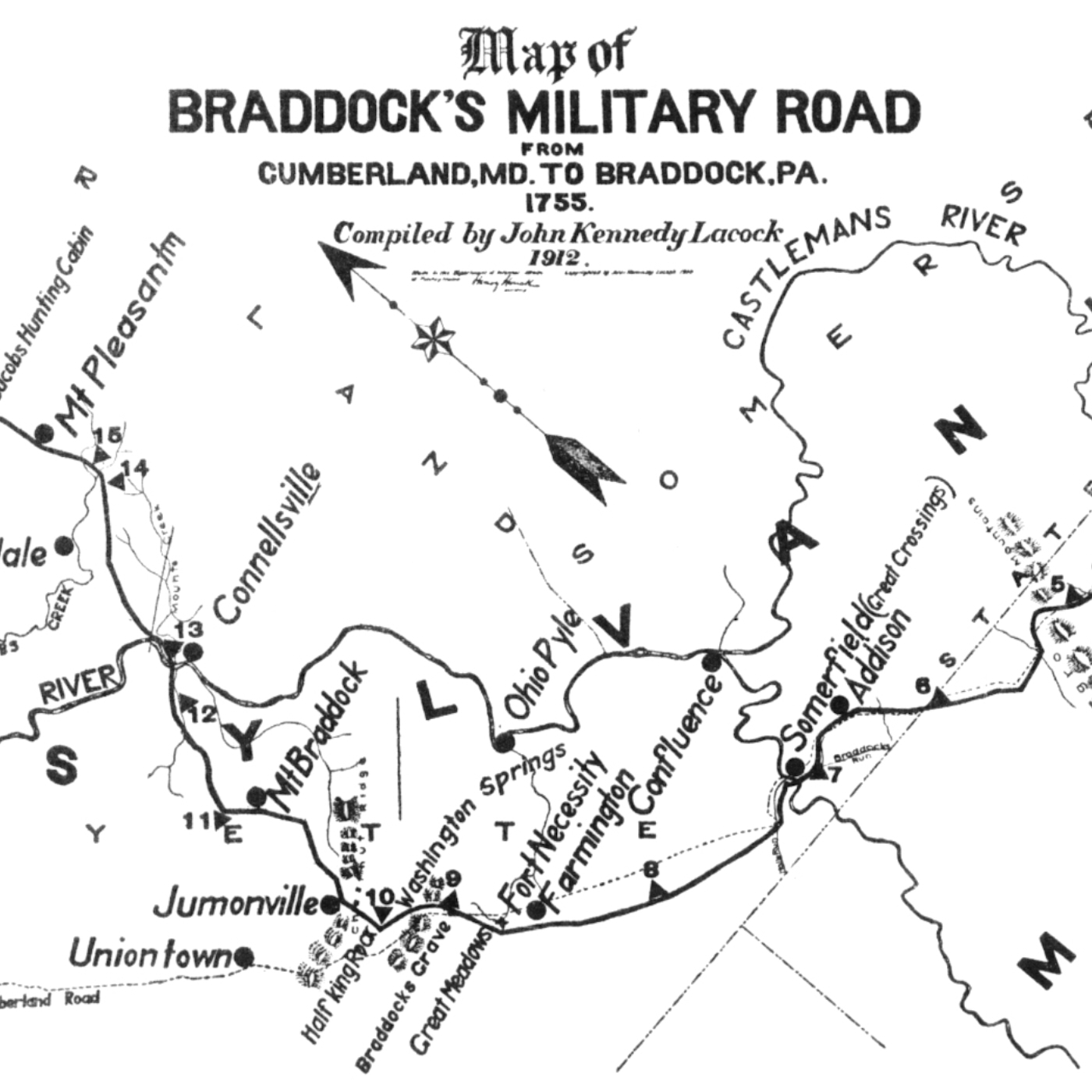
of propaganda and of colonial correspondence. - It's fascinating. And you mentioned the Seven Years War, so let's rewind the tape and go back into history. Why is it important that we start to kind of understand how this important infrastructure was developed over the course of, say, the 1700s, the ports, the roads, all of this connected network of different ways of allowing goods and communication to travel through this huge expanse that is North America. - Yeah, so before the Seven Years War, I would say you have a much more disjointed set of infrastructure, so New England is pretty well knit together, but you don't have great connections to it to New York and then down through the Mid-Atlantic and certainly not to Southern colonies. A lot of this is being built and kind of guided by either private subjects or by their colonial legislatures or towns, but I would say, you know, things are pretty kind of hackneyed. They operate pretty defective. To give you an idea of how the Postal Service is operating before we get to the Seven Years War, it's pretty much just from Philadelphia on up. You do have it operating Virginia, but it's much more of a Northern thing. You don't have much of a Postal Service happening in the Southern colonies, and you don't have any regular communications back to London. And in this era for news to get back to London, when people want to send letters or their exchanging news prints, you're putting a board merchant vessels that are going to eventually make it to somewhere in the British Isles, and eventually that's going to make its way down to London. And so because of this, you have slow communications between your various colonies, really slow communications across the Atlantic. We're talking things that, you know, could take two months, maybe a tiny bit less, but could take four. It really isn't a very kind of coherent system. And so of course you have ports, of course you have roads, but a lot of these are really intended for broad cross-colonial movement. I mean, they are to a certain extent, right? We have a postal service, but it's small. It doesn't have many days of service, and you don't have any kind of major highways in particular stretching westward into the interior. Most of this is up and down the east coast. That's going to change as we get to the war, and it's going to change in particular because you have not just a British state, you know, in London, but also colonists who are eyeing lands to the west and are looking to build up roads that direction, are looking to build up infrastructure to connect to back country settlements, but in particular to also move westward towards where the French are staking out claims. And so you get this real sudden burst in this moment beginning the 1750s of trying to build infrastructure not just up and down the Atlantic coast, but deeper into North America, and part to counter French claims to build roads out towards territory where say land speculation companies or fur traders or others are trying to get access to, but it's really going to take the war itself to really transform this. So you have the beginnings before it, but it's once that you have an official declared war in 1756 and really even predating that in 1755 that you get a huge emphasis on the expansion of all sorts of infrastructure. And so this is going to mean money and emphasis on road construction projects in particular those heading westward. This is going to be a massive expansion of the postal service that begins again a little bit before that 1753, then Franklin is put in charge of an expanding postal service. There's a big postal act, but it's really 55 forward that we're going to see the postal service begin to expand not just its regular days of circulation, but it's going to create new routes. And in particular routes that are supposed to be connecting more westward settlements as well as more southern settlements. So the postal services going to expand roads are going to expand. There's going to be a greater emphasis on now creating communications back to London. 1755 is also the inauguration of what's known as the packet boat. This is a regular mail boat. It's supposed to sail monthly that's going to go between Falmouth and New York. The idea again of creating coordination for the broader empire. Things aren't just going to be hackneyed necessarily. We hope it gets on a merchant vessel back, but instead, no, the state is putting in money to make sure that we have regular communications. All of this, though, again, is really in its infancy at the beginning of the war. And this is part of the reason that the British fail so spectacularly in the beginning of the Seven Years War, the French and Indian War. 1755, Bradx Campaign, a huge embarrassment. They're trying to build new roads. There's something known as Bradx Road. It's predicated on an indigenous path called Neumicholens Path that's cutting from Virginia through Maryland up towards the Forks of the Ohio, what's Pittsburgh. But it's a very slow project. And so this is coming out of Virginia. You have supply roads being cut across Pennsylvania, but they never actually get completed. And Bradx Campaign ended up itself as this huge disaster. He dies on this. Large numbers of colonial militia as well as soldiers die on this. And it pretty much is going to set the British back for a long period of time. They're not going to be trying to take the Forks of the Ohio. They're not going to be trying to access these faces more in the interior for a couple of years. Same time that the French are really kind of cutting down on expansion across the Mohawk Valley in New York, cross parts of Pennsylvania for their north. There really is this kind of stagnation in large part because of what's happening with how this is being done. You mentioned so many interesting things there. And I've just making little notes here. I have one note here that's just like roads, question mark, describe. Yeah. So the definition of a road in the 18th century isn't perfectly-- I don't know-- regularized. You have ideas of, say, cobblestone roads. If we think of Philadelphia or some other cities, you're like, OK, this looks like a road. As you go further out, it's going to be largely dirt. It counts as a road because people have cleared it. They've pulled out stumps. And they've made it wide enough for a wagon. Now, this is going to change the further and further we go from major settlements. And so quite often things are referred to as roads that are really footpaths, trails. And they need to be widened to be considered a road. And so the kind of working definition, in particular, seen through the eyes of military in this, is that it has to be at least 12 feet wide. 12 feet wide, because that's wide enough for wagons to go past each other. Now, again, some people have much bigger ambitions. At 1.1755, you have this quartermaster general arrive. He gets to Virginia. He's in charge of creating this campaign to go out to Pittsburgh. And he's decided they should build roads through the mountains that are 30 to 35 feet wide. That is insane. It never happens. It has no basis in the topographical reality, as well as the logistical possibilities of actually getting people to widen roads this wide through the Appalachians in this time period. But there are a lot of different ideas, right? We are going to make the biggest, widest, greatest roads on earth. Well, it didn't happen. But in terms of the way people would recognize a road, I think the moment it is big enough for a wagon, big enough for something that's not just a footpath. Most people would recognize it as such. And that has pretty big military implications, the wagon concept, because of the movement of supplies. One of my other notes here was good infrastructure equals good communication and good supplies for the military and good coordination of military forces, right? Yeah. I mean, that's where the big emphasis for this comes. You don't suddenly have British imperial ministers deciding we should improve our infrastructure or improve colonial infrastructure because we want the colonists to get around more easily. They're doing this because they are embarking on a big military campaign. And so that's the biggest thing that they are planning on in 1755, when large numbers of troops come over under the celebrated general Braddock, their whole point is how can we get to what's now Pittsburgh? How can we get to the Forks of the Ohio? And so they are looking at various roads that already exist in the colonies. Again, the same guy with the idea of 30 to 35 feet with wide roads, John St. Clair. He pretty much goes out in surveys all the roads that already exist in Maryland, in Virginia, in Pennsylvania, and it's like these are terrible, right? These are really hard to get across. There's no way military wagons are going to be able to. There's no way large numbers of troops are going to be able to. And so that's why they're putting such a big emphasis on creating these roads. The problem is though, you have guys arrive from London part of the military who want to do this. But they're trying to get the colonies to be in charge of this. And so they're asking people in Virginia, do you have road cutters? Can they help us do this? In Pennsylvania, they're asking the governor, can you recruit people to go out and build these roads that will be supply roads to help bolster the military coming out of Virginia? And a lot of these roads are not roads that necessarily the colonists themselves want. You have people safe in the town of Hopewell, where one of these proposed roads is going to cut in Pennsylvania, who say absolutely not. We already have a good road for us. It does the sort of trade that we want. We have no interest in supporting this military campaign. And so it's really hard to coordinate this in the beginning because large part, because a lot of the people's living in these areas don't really have a vested interest in it. This isn't to say a lot of colonists don't. You have colonists tied and say, the Ohio company, land speculation companies, who are also then tied up in the military, like George Washington, who have a great vested interest in improving this infrastructure, because they see something that will help the military now, but will help their land speculation company later. And so it's not that you can say colonists are all opposed to this, but it's really hard to get people on board. Fascinating. Generally speaking, travel by waterway still in this period is much preferred to any other form of travel, right? And I know that the sort of, if obviously,
if you're going to go from New York to say Boston or Philadelphia or further down South to Charleston, you're going to want to take a boat. But like going from the Atlantic coast inland, there aren't that many options for rivers. So that's when you do have to kind of figure out the roads, especially through the mountains, the Appalachians, yeah? Yeah, I mean, there's right been a grand search for some sort of water passage that's going to take you. It doesn't exist. It won't exist until we build canals in the 19th century. And so at this point in time, right, the watershed split, the Appalachian mountains, pretty much everything is going to flow towards the Atlantic or it's on the other side and it's going to flow towards the Mississippi. And so because of that, you can't just rely on water transport. And they are privileging some water routes. The Mohawk River across New York is a really important one. And so this avenue that would take you up the Hudson River across the Mohawk, then you have to go over a portage, what's known as the O'Nida Carrey. It's called that because this is right controlled by the O'Nida Nation, one of the Haudenosaunee. But this thing can connect you to Lake O'Nida, which then takes you to River that can take you all the way up to Lake Ontario. So they do see one water route they have. The French have a great advantage because they have the St. Lawrence River. You don't have that advantage on the British colonial side or the British imperial side. So yeah, they're really emphasizing roads because it's the only way to get across the Appalachians. And so in the early years of war, they're going to be looking at these ones that come out out of Virginia. By the time you get to the changing part of the war, you're going to be looking across Pennsylvania in particular. But you of course also have roads coming out of say South Carolina, what's known as the Cherokee Trading Path or the Great Trading Path. That's going to go from Charleston up or you could say in reverse right from the Appalachians down to Charleston because largely this is still controlled by the Cherokees. You do have some existing indigenous roads and pathways that are already there. But these are not the sorts of things that are constructed already with the idea of large numbers of European troops coming through. Not constructed to move cannons or wagons. Western style wagons. Well, you just mentioned Native American trails and pathways. So do we consider Native American that various Native American nations at the time to have developed what we understand here, I guess at the time in European settlers understood as having sort of infrastructure. So they have certainly, as I said in the introduction, they know exactly how to get around. I mean, I'm not making that assumption. But I mean to what extent do they have ports on rivers? You mentioned the portages. Are they doing the moving of earth and stuff that would consider to be like infrastructure development? Yeah, I mean the landscape has been shaped by indigenous peoples at this point for thousands of years. Now some of these pathways actually have a much deeper history. They come out of buffalo traces. And so we picture right bison as we much further west in North America. But I mean, they are all the way almost to the east coast in a much earlier era. They start to move further west. But even something like Wisconsin Avenue and Washington DC today, that was originally a buffalo trace. And so you have a lot of those that already exist. And so a lot of indigenous nations and peoples have of course taken things that are also there because of buffalo traces are natural topography. But they've definitely changed what this landscape looks like. And one of the key ways that indigenous peoples are able to assert their sovereignty over the land is to control key pathways. In fact, if anything, right, you don't generally look to an indigenous nation and can draw a hard border around it. That's not how people are claiming territory. But they do claim it by controlling major pathways that go in and out of their homelands. That's true in particular of the Haudenosaunee. So they control what's known as Iroquois, what more or less is New York state today. But they also control pathways that go up towards what's now Canada by Oswagacci, Ogdenberg now, that go west towards the Great Lakes, that go down. One of the main indigenous thoroughfares that would definitely be seen in some ways by Europeans as infrastructure, though of course people are coming at it with their biases. It would be what's known as the Great Path or the Great Warriors Path. That's not a singular path. This is a chain of networks that go up and down the Appalachian spine. And so they connect peoples all the way up in New York, all the way down to the Carolinas, to Georgia. It's a really, really large network and different indigenous nations control different legs of this or regularly use different legs of this. So this is not an apolitical landscape. It's something very much controlled by indigenous nations and really important to how they consider their access over land, their relationships to other nations, as well as their relationships to Europeans. None of this rogue construction or infrastructure will build up that the British or the French are doing is in isolation. They're doing all of this either predicated on an existing indigenous path. So that would include things like the Venengo path. This is a roadway that goes down from Lake Erie to the Forks of the Ohio to Pittsburgh. That's what the French end up fortifying. They put a bunch of their forts on this, but this is a long existing indigenous pathway. The Niagara Portage, right, to get around Niagara Falls, that it long be controlled by the Seneca's of the Haudenosaunee. Again, another thing that becomes militarized. So you have shifting understandings of this. I would certainly say when you bring over engineers from Europe, or these coder master generals, who have a very specific idea of what military infrastructure looks like, of what military roads look like. They don't recognize these as being exactly what they want, but they do recognize that these have been selected, that these have been. There's a lot of maintenance to them. For indigenous nations, when you get to meetings or conferences, they're regularly talking about, you know, we've opened, we've cleared this road, we've cleared away the brush. And so the physical maintenance of this is the expression of not just their control and access to these pathways, but again, right, the actual physical maintenance of it. So it might not be the same thing, but there's a lot going on with the development of infrastructure on the indigenous side. And Europeans really want to tap into that. The French and the British are very keen on accessing indigenous allied infrastructure. That's fascinating. And of course, one really good definition of infrastructure, I'm just maybe considering now is that it's something you maintain. And over the course of maintaining something, it must be part of the infrastructure of your civilization. So that's just kind of, I think, the very fundamental definition of what we mean by infrastructure. Okay, I want to talk to you just in this section of our discussion about a final thing and that has to do with money. So whenever I think of infrastructure projects now in the 2020s, what I'm thinking about is, you know, what's being made in airport, a port, a new highway, whatever. And of course, how is it being finance? In other words, who's paying for it? And how's that going to work? And of course, money is a problem if we start thinking of building, say, a new port in Boston or something, it's not like there's any gold or silver coin around to pay for it. So how is the state, the government, figuring out how to pay for these enormously expensive infrastructure projects? So that in many ways is tied up in the same kind of disjointed, inquate, kind of fly by the seat of their pants issues that we have early on in the 18th century. So pre seven years war, right, this is going to be largely paid out by colonial legislatures or by towns. Of course, you have individuals sometimes or companies that are looking to improve a particular pathway, but we haven't reached the era of same turd pikes, the sorts of things that we think as being financed by corporations, they're actually getting money for people traversing it. That's going to come later, really as we go from the 18th to the 19th century. So in this era, largely this is coming from local purse strings. That's part of the issue as we get into the seven years war, though. And so as you have these grand ambitions, let's build these gigantic roads and we're going to do them far out into the west and we're going to use this to confront the French. And then they turn and they go, Pennsylvania, you need to pay for this. Maryland, you need to pay for this. Virginia, you need to pay for this. It's not happening. You're getting very little money. And so a lot of these projects aren't just not being done because maybe they're impractical or maybe there's less enthusiasm. But part of the reason there's less enthusiasm is people are just not getting paid. And so that's one of the big issues. The other one too is you have these things being cut across multiple colonies. So for example, during the Bratica campaign in 1755, they're going to go from Virginia and they're going to build this road. It's going to go through Maryland and ultimately make its way up to what is now Pennsylvania at this time is really kind of contested Ohio Valley territory. Well, that's all going to be different species. And so how are you going to convince colonists to give up their wagon, to allow you to use their horse to help you cut the road? Their idea as well, we should bring gold. So they have this crazy idea to as they're going on roads that don't even haven't been finished yet across these mountains to carry wagons that are heavy with gold. Now these wagons ultimately end up even being abandoned because the campaign is such a disaster. And so you have this idea of how on earth are we going to pay for this? Well, we can't get people their local species. We don't have it. We haven't figured out how to actually get them to take bullion. And this is just awful. Like all of the kind of payments aren't working. In fact, even in Bratica campaign, the few things that they are doing through receipts, through paperwork, they lose all of it. It's left behind in the wagons that the French then claim. And the French are able to
pick up all sorts of British information and intelligence, paperwork, and obviously they're not going to get it back. They're not going to be like, "Here you go, figure out how to pay your wagon years." And so there's this big issue where they're trying to figure out how can we standardize this, how can we standardize this, how can we standardize this. They don't figure it out for the first few years of the war, but the time though you get to 1758. This is going to be the real turning point in the Seven Years War where the British are going to take the advantage. Part of the advantage is that suddenly this is not being fought as much by provincial troops, including fought as much by colonial militias, but instead you have a massive influx of the Royal Army. And with the Royal Army, comes funding from the Imperial Treasury through the war office. In addition to that, you have a new prime minister William Pitt who has come to power and who has decided that you are going to extend all these basic kind of policies and regulations onto the colonial troops as well. So everything that is going to be applied to the royal troops that have come over will also be applied to troops that are coming out of New York, that are coming out of Pennsylvania, they're coming out of Virginia. And so with that, everyone now is much more tied up in the Imperial Treasury, in the Imperial fiscal system. And so that makes it a lot easier. The funding is just coming from the Imperial Treasury. And in many ways this is going to be great, right? You are coordinating this, they spend, spend, spend, spend. They greatly outspend the French. This is one of the big advantages that they end up having that allows them to win this war. Of course it's going to create a big fiscal crisis at the end of the war because the Imperial Treasury has spent, spend, spend, spend. But it allows you at least to get over these kind of cross-colonial issues. The other reason why this is so important though is that this is really the kind of expansion of infrastructure itself, right? They are bringing in this paperwork system, this fiscal paperwork system that is going to be funded by the Imperial Treasury to help build infrastructure, right? To create these new roads that are going to cut across, in particular 1758 there's Forbes Road and large today that's more or less the Pennsylvania Turnpike. It's going to be one of these major infrastructure projects. But at the same time it's the cyclical system because the fiscal military state, right, is going to be made up of monthly returns, of muster rolls, of accounts of stores, of warrants, of vouchers, of receipts, all of this fiscal paperwork to pay the soldiers to pay the wagon years. Well, all of that has to be moved, right? It's one thing to give someone a receipt, but if you aren't going to be able to actually make it actionable, to send it back, it doesn't matter. And it does. And so what they end up doing is creating an entire system based out of New York. Before it had been hacked, need up and down the East Coast, everything now will be based in New York. And so in New York is where you have your office of the quartermaster, or the Department of Quartermaster, the Office of the Paymaster. All of these various offices from the war office and from the Imperial State now had quartered in New York, headquartered in Albany, and they are going to be the repositories of all of this paperwork. And so at once, right, you are creating a paperwork system to allow for the infrastructure, but the paperwork itself is also what's making the infrastructure work. These become these pathways of paperwork that then are what are expanding the postal service, are improving the roads, are improving and regularizing communications, that then also became the routes of correspondence and news for colonists. All of this is built from the imperial mindset for the war, but colonists themselves are able to take advantage of these exact same routes. As the postal service is moving more efficiently, why not I use it? Once these roads are better and more cleared, why won't I use it? And so they're building this entire thing based on the fiscal military machine that can also now make it a lot easier for colonists themselves to circulate their own correspondence. That's a fascinating way of thinking about how the idea of British Empire and what the British Empire thought was valuable during the war to beat the French, building up these excellent logistic systems, we can call them that as well, infrastructure systems. Of course, it's not like when the war ends, these go away. All of these networks can be used in other ways by other people in the future. And almost just like when British settlers started taking over native land and using their trails, you know. So then patriots can use the roads that the British Empire built to fight the French two decades later or so. So that's fascinating. I'm really happy because I really understand now how we get from with this theme of infrastructure, how we get from the seven years war period to then the Revolutionary War period. And I just kind of want to focus on this interwar period now and focus specifically on how the expanded communication networks started to expand patriot political ideas around the colonies. Yeah, so part of what happens is you actually get an increased state expansion before even that. So with say the addition of Canada, which right is now going to be renamed Quebec, become a new British colony, one of the things that they want to do is connect that to the existing 13 colonies. And so you have the British military going, well, we need to build better roads up there as well. We need to expand the postal service to Canada. And so you have actually a really focused effort by the state to keep replicating what they did during the war. So we beat the French and we did this because we had this great communications infrastructure. We need to continue that, right? How else can we continue to grow and strengthen our empire and strengthen our control over new territories in North America without doing that? And so you actually see a continued increase in not just road construction and a lot of this again will be built by the military, but you also have a greater expansion of the postal service continue post war. So if it's already increased substantially during the seven years war, during the 1760s and it's aftermath, it's going to increase yet again. And so we're going to have more postal days. We're going to have an improvement of the postal service up and down the East Coast, but also new routes that are going to Western settlements. That's packet boat, that transatlantic mail boat that was connecting from New York to Falmouth. They build another one or they create another route. And this one's going to go to Charleston and Charleston is now going to have its own packet boat. And that packet boat, some years, connects them to the Caribbean, other years connects them to Florida, but in large part they're allowing for still more greater expansion of communications. And from the perspective of imperial officials, this makes sense, right? We're trying to grow our control. We're trying to make the state a bigger presence in North America. We're trying to have greater, closer connection to these colonies. Well, as you do this, the state has also put a lot of money and investment into print. During the Seven Years War, they were like newspapers of the greatest thing. We love newspapers. When a letter is lost, the information might still make it into a newspaper, thus we have the intelligence we need. And so they've actually pumped a lot of money into this. It also helps write things like the postal service in newspapers can't be extricated. You have people like Ben Franklin. He's not the only one, many different people who are in the postal service, who are also newspaper printers, and how do newspapers circulate, but through the postal service. And so it's one of these things where as you expand the state, you're purposefully expanding what's happening with print. And they're very, very happy about this during the war. In large part, again, the people in charge of William Pitt as Prime Minister see free print, the free press as a really big beneficial thing for the empire. Now, that's going to become much more of a tenuous thing as we get to the inner war period. So in this imperial crisis era, as you have the rise of people like Grenville, as you have the rise of these various ministers and other officials, a lot of them don't love print. They don't love propaganda. These are people who have decried freedom of the press in England itself. I've always said, if only we could have the censorship that they have in France. And so you have a very, very different set of people running politics, running the ministries out of London. And in that, they're still supporting the increase in print. We still have that. I mean, the numbers of newspapers from 1763 to 1776, more than doubles. A huge, huge increase in newspapers in this time period. But you have officials who are starting to get concerned about this. This is why we have things like the Stamp Act. And the Stamp Act, right, in some ways, is to get money because again, this is an empire now in financial crisis. They spent, spent, spent, spent during the war. And large part for that infrastructure, and now they're without a lot of money. But the Stamp Act is also famously intended to curtail print, right? Every newspaper, every legal document, any sort of printed thing is going to require this stamp. And the stamp is going to have to be paid in British pounds. It can't be paid in local currency. The intended idea, right, is to have a chilling effect on the press. What's interesting though, is that the exact same moment, this is 1765, within a month, you have a different act, the Postal Act. And the Postal Act went, we should spend a lot more money on the Postal Service. We should expand it. It's great. And so you have this thing you're like, they're concerned about the colonists communicating, right? Through print, but they want to improve the movement of letters. And so many, right, the Postal Service is also movie newspapers. So you look at this and you go, are they just completely unaware of what's going on? And my argument is that I just don't think they're seeing the Postal Service through that lens. And I think that's why I think the Postal Service is something that helps the British state. It helped the military move communications, it helped the other imperial officials move communications. Of course, we should improve that while curtailing print. Now it makes no sense, right? Again, the same people are controlling Postal offices. Who control newspaper? Anyone with like half a brain who's looking at the reality on the ground would know that this doesn't make sense. But you do have a lot of people who are looking at the Postal Service.
continued improvement of the infrastructure itself, happening throughout this period, even as they're worried about colonists communicated. And this is going to increase over and over and over. And so, cross-colonial communications have sped up. They're much better than they were before the war. People are able to get news from Boston down to South Carolina and much quicker speeds. People are able to know what's happening around the colonies and much faster speeds. But they also know what's happening back in Europe and much faster speeds, right? If it used to take a couple months for things to get back and forth across the Atlantic and now we're talking about usually a little over a month, people are able to coordinate not just with those who might be revolutionaries, approach revolutionaries in the colonies, but those patriots back in Britain who are also largely supporting their cause and also critiquing the current British administration. As you have this massive movement of information all along this infrastructure that the state built for the state's purposes, but now it's being co-opted and used by others for things that could have been in line with the state. Say the state hadn't cracked down, hadn't imposed a lot of authoritarian measures. Maybe the colonists would be using all this infrastructure and it would be no issue. But you've now connected the colonists and you've greatly upset them for a lot of reasons, right? They're act after act after act. Well, you've given them the means to voice their displeasure and you've given them the means to actually coordinate across great expanses of space. That's such an interesting analysis of this interwar period. And I too hadn't connected the Stamp Act and the Postal Act until you explained it so well there. Of course, the Imperial government will think of their post-aphas as their thing that they can control, which is only a tool of their control. But yeah, obviously the newspapers are going to be there in the post for hall to see. The other interesting thing that you mentioned there takes me back to Canada in France. You mentioned that some of these new British ministers wish they could censor the press just like they could in France. And I recall that in now British Canada at the time there was only one printing press, right? And in the colonies there were dozens and dozens and in fact in the failed invasion of Canada. One of the things that they tried to bring the 13 colonies was a printing press because there was only one source of information in French Canada. And boy wouldn't it be good for any despot or tyrant to be in control of the only printing press in entire region? Well, one of the things that made the British 13 colonies, British colonists so very enamored of their own freedom was indeed the freedom of the press. Only a tyrant would not allow us to speak our minds and write our opinions in the newspaper, right? And we don't want to be like that. Yeah. So it's important to stress and I can't stress it enough that freedom of press is a critical kind of idea here at the founding of the United States. Yeah. It is though. I would say people are happy for the freedom of the press when it tends to support their means. You have plenty of patriots, right? Who are attacking? Who they see as loyalist printers, right? Or is people voicing sentiments that they don't want? Like I can think of Riveringtons paper in New York, right? Is a regular target? People are trying to destroy presses are actually tracking down printers. Some of them have to shut down before the war begins because they're so afraid. So the freedom of it is very much a thing, right? But freedom for our team. And that's regularly an issue right to you with a lot of the kind of committees of correspondence and the committees that are tasked by the first continental Congress is don't let anyone say anything that would make them seem like they're an enemy of us, right? And so they are trying to stifle certain voices, but voices that they see as supportive of the authoritarian officials. Well, in many respects, this is no different than what we see today in contemporary politics. Control of communications, control of the media is a form of political control. And there's constantly a battle and I don't care what administration we're talking about in US history. There's always and every administration wants to exert some control over how people report them, you know, and think that goes, we can see that all the way in going back 250 years now. Okay, so we've discussed the seven years war. We've discussed now the interwar period and all of this in relation to the importance of communications infrastructure and other infrastructure roads, etc. So let's now get to the start of the the period that we think of as the immediate lead up to the war of independence and the declaration of independence. How do you continue telling the story of infrastructure in this period? Yeah, so when I think of what the patriot movement is doing, what these revolutionaries are doing, to more or less take British infrastructure or imperial infrastructure and use it for their own means, the first step is what I talked about, this idea of making use of what's already there, right? We have expanded print centers, we have an expanded postal service, we have better roads, let's just send our letters, let's just print things, let's take advantage of what the British state has built us. There then a couple more stages. So in stage number two, you actually get the creations of new institutions or new infrastructures that are overlaid. And so as we're getting into the 1770s, this is going to include things like the committees of correspondence, which you can think of as sort of a proto-state institution, right? These are not obviously colonial assemblies, these aren't what are going to end up being the assemblies later, but these are things that are working on behalf of their own colony as well as across colonial communications. Well, they're taking advantage of this. Then we get to the creation of the constitutional post, right? So 1774, we're going to have a new postal service created. Well, what is that going to do? It's right going to operate outside of the royal post. It's not going to go through those postmasters, but it is still using largely the same roads. So it's some people think of this as a parallel infrastructure. I tend to think of it as overlaid, but you have the creations of new institutions for the movement of this. And this is going to increase the ability for colonists to keep things outside of, say, the attentions of British ministers or British officials who were trying to open the letters, who were trying to police what's happening. And that's kind of stage two, right? Build these new sorts of mechanisms. But stage three, I think, is the most dramatic one. And this is when the colonists actually start taking control of the physical infrastructure itself. As you get into 1774, in particular in 1775, when you read these letters of people who are postmasters, who are involved in the royal post service, they're afraid for their lives. Some of them are actually on the run from rebels who are trying to kill them. They are complaining about how they have no control over any of the postal network from New York on up. They've lost New England. They've lost New York. There's no connection to Canada anymore. By the time we get to later in 1775, they've lost control of Philadelphia. The post office at this point time too is split and two. So there's a northern district and a southern. Well, the same things happening the southern district. They are of lost control over most of the postal service beyond what's in Charleston. They can't get post out from Charleston to Georgia, from Charleston up to North Carolina up to Virginia. The colonists themselves are physically taking over control of these roads and using for themselves and not allowing the British officials in the British Royal Postal Service to operate through it. The other thing they're starting to do too is they actually start attacking the packet boats. So these transatlantic mail boats, they've never really, during the war with the French, they would run or they would sail alongside military ships to keep them safe. There's a lot of taking a prize ship, a lot of privateering during this. You need to protect them. But they're not really doing that much in the inner war period after the war because why would they? They're not at war with France. They're certainly not at war with their own colonists. And so the mail boat is just this mail boat. It's a big, large ship, but it's not militarized. It doesn't have cannons. They're starting to go, we need to make this full of cannons. Why? Because you have private tears out there trying to attack the mail boat to actually physically get the mail off of it. And so it becomes one of these things where they've decided the packet boat can't sail to New York anymore. It's going to have to go to Boston where we have the headquarters of the military moved. We're going to actually not do the packet to Charleston this year. And so you start having this like major actual physical attacks on the bodies, on the materiality of British infrastructure. While they're also then taking a lot of it for themselves. So a lot of these roads, a lot of these printing presses that have been abandoned or been broken are also being claimed. It's just this big, big takeover throughout much of the colonies that are leaving British officials now being the ones isolated. If one of the complaints this grievances you've made it where it's difficult for us to communicate, we're at a distance. Well, you have people on board ships in New York Harbor who are supposed to be postmaster generals. They're not. They're just sitting there on a ship hoping someone comes and helps them. You have people sitting in their offices. They can't send letters back and forth. They can't communicate with other British officials. And so they end up these ones in these very isolated nodes as most of this infrastructure has now been rested away from them. That's fascinating. And the period you're talking about now is from like, I'm just wondering at what point are we seeing the private tears going after the packet boat? Is this after the start of hastilides with Lexington and Concordia or even previously? So the taking over the postal roads definitely predates that. That begins in 1774. The attacks on the packet boats more or less coincide with Lexington Concord and then continue after it. So really beginning in kind of spring, summer of 1775. This one we've seen.
see much more of this. Okay, so we see that it's a really important part of the Patriots, the colonial army, the colonial navy, the privateers to really start controlling the infrastructure, to limit communication between the British army and London and to take over not only the post offices, the post routes, but all of this because again, good communication is good coordination and if you can disrupt logistics and communication, it's easier to fight a war. So give any other infrastructure lessons for us that are important to understand the rest of the war, maybe how the Patriots eventually won the war. Well, they're going to end up running to many of the same issues the British state did too. Once you move beyond the seaboard, I would say, "Cunications kind of get steinied and infrastructure is not so easy as you go further west." In large part, because again, you're departing from spaces that are controlled by Anglo-Americans to spaces that are still largely controlled by indigenous peoples and that's where the complicated politics come into place. If the British state had had easy time communicating, not just along the Atlantic coast, but also say through Iroquia, well, that's going to be really different as we get into the war because you're going to have things like the Haudenosaunee Confederacy splitting their allegiances, some of them allied with the American, some of them allied with the British. That means no one has an easy time in and out of this. If before, right, you were allied with the entire Confederacy, well, you can move information from the east, which would be where the Mohawks are all the way to the west, which is where the Seneca are, that gets you more or less from Albany all the way to Lake Ontario. There's no movement this way now. It's much, much more violent. It's much more impacted. And so, largely, you're going to actually be running into a really difficult war. It's easier for the colonists, I'd say, to control the communications when it's this kind of era right on the eve of the war in large part because you haven't had a bigger influx of bringing in yet more troops, but you also haven't brought in the contingency of what's happening with indigenous allies. And so, that's going to really complicate things for the west. To the east, this is also going to change over the course of the war depending on whether certain cities are occupied. And so, with these occupations, right, these are instances in which the British are able to take the upper hand again in communications. So, they can do that in Charleston again. They can do that in Philadelphia. And so, this thing changes hands throughout the war. The one benefit though that the colonists are always going to have over what the British state has is an imperial core or a kind of national center that's local, that's nearby, right? And this might be a moving node. It might be in Philadelphia, sometimes, it might be elsewhere, but that's a lot easier to communicate to than having to get things all the way back across the Atlantic. And part of what's going to make this so hard for the British is, is it not just that distance, but what that distance means once the French and the Spanish enter the war as well. Because that trans-Atlantic communication is going to be now not just contested on Atlantic shores, but it's going to be contested across the Atlantic itself. That's such an interesting and fascinating history. Again, for all of our listeners, infrastructure, it's critical in winning wars. So, I like that was a fascinating discussion. I fear we've come to the end and I ask all my guests at the end of each episode. Here we are 250 years after the release of the Declaration of Independence. What are your big takeaways? I think one of my main takeaways would be what this means for the US going forward. One of the things is that a lot of early US state building is going to be kind of building off of the models from the British state. And so, this is going to be creating a legislature that's based off of what's happening in Parliament. It's going to be about creating a numbers of different institutions, award department versus a war office. All sorts of things that are based on it. But one of the other things that I think American state makers have taken away from the British example as well as this conflict over it is how to wield infrastructure. And the American state, just like the British Empire, is going to be a very expansionist. It's going to be very interested in connecting its various states together. They've all banded together for this war and they've been brought together during the Seven Years War and in that imperial crisis era. But we need to keep them together. And so, how are we going to do that? Expand the Postal Service. Improve infrastructure. Major roads. And many of these like they are for the British are going to be done for war campaigns. Right? As the US state expands, this is going to be involving wars with, say, the Chica Maga's groups of Cherokees. These are going to be wars with the Hone Shone. These are going to be wars across the Ohio Valley. And so, a big part of the infrastructural development that we get that allows for the expansion of the US state is going to be done now by the American military. On these big war expeditions to create, again, more roads to move wagons, to move ordinance, to move supplies, to move peoples. The same expansion of the Postal Service is also going to follow. And so, the US state in many ways takes the lessons that the British state taught them. Right? Improved infrastructure. Improved communications allows a state to grow. It gives the state power. It allows them to take over new territories. It allows them to coordinate across great expanses. The one thing that the American state is capable of doing, though, is staying away from the other lesson, which is don't connect to your peoples and then make them really, really upset. And so, you don't end up having the same sort of backlash any time in this early American period. In response, taking advantage of this infrastructure to voice major dissent and then violence against the state, that doesn't happen. And so, they take the lessons, right? The roads to power, sorts of lessons are there. But they're able to build this infrastructure in such a way that it's not been used against them years later. Professor Ella Khraschart, thank you so much, you're sure it's my turn. Thank you. [Music] If you enjoyed this podcast and would like to support German American friendship, why don't you visit us at our website, americ concentrum.de, where you can become a member and donate. The American centrum is a nonpartisan and not-for-profit institution, dedicated to strengthening the transatlantic relationship. The views and opinions expressed in the episode are those of the guests or the host, not the American centrum. We take our nonpartisan mission seriously. Therefore, we do not take any institutional positions on politics or policy. Learn more about us, become a member and donate at americ concentrum.de. Thanks for listening. [Music]
Podcast Summary
Key Points:
Infrastructure such as ports, roads, canals, and postal systems was essential for the American Revolution and the formation of the United States.
A neglected grievance in the Declaration of Independence involved moving legislative bodies to inconvenient locations, which disrupted communication and coordination.
Before the Seven Years' War, colonial infrastructure was fragmented, with poor connections between regions and slow transatlantic communication.
The war spurred major infrastructure expansion, including westward roads, an expanded postal service, and regular packet boats to London, driven by military needs.
Early military campaigns failed due to inadequate roads; definitions of roads varied, but a functional road needed to be wide enough for wagons (at least 12 feet).
Infrastructure projects often faced resistance from colonists who had different local interests, complicating coordination.
Summary:
This podcast episode explores the overlooked role of infrastructure in the Declaration of Independence and early American history. Host Andrew Sola introduces the topic by highlighting how ports, roads, and waterways were critical to the Revolution, from the Boston Tea Party in a port to Paul Revere’s ride on roads. The episode focuses on a specific grievance in the Declaration: moving legislative bodies to inconvenient places, which disrupted governance.
Guest Professor Alec Reichart explains that this grievance, seen in Massachusetts and South Carolina, was part of a broader struggle over access to information and communication hubs. He traces the development of colonial infrastructure before and during the Seven Years' War. Initially, infrastructure was disjointed, with poor connections between colonies and slow transatlantic mail.
The war prompted massive expansion, including westward roads, an enlarged postal service under Benjamin Franklin, and regular packet boats to London, all aimed at supporting military campaigns. However, early efforts like General Braddock's campaign failed due to inadequate roads, which were often narrow dirt paths. Reichart notes that military needs drove infrastructure growth, but colonists sometimes resisted projects that did not align with their local interests.
Ultimately, infrastructure networks, many originally built by Indigenous peoples, enabled the coordination, communication, and commerce that made the revolution and nation possible.
FAQs
This episode focuses on the neglected role of infrastructure—like roads, ports, canals, and postal systems—in early American history and the Revolutionary War.
The grievance highlights how British officials moved legislatures to inconvenient locations to disrupt access to records and communication, using infrastructure as a tool to fatigue colonists into compliance.
Before the war, infrastructure was disjointed: New England was well-connected, but links to other colonies were poor, with limited postal service and no regular transatlantic communication.
The war spurred major expansion of roads, especially westward, and the postal service, including regular packet boats to London, to support military campaigns and improve coordination.
A road was typically a cleared path wide enough for a wagon, at least 12 feet wide, though many were just widened trails or dirt paths, especially away from cities.
They needed to move troops and supplies for military campaigns, like Braddock's expedition to Pittsburgh, which required building new roads through challenging terrain.
Chat with AI
Loading...
Pro features
Go deeper with this episode
Unlock creator-grade tools that turn any transcript into show notes and subtitle files.
 PodcastTranscript AI