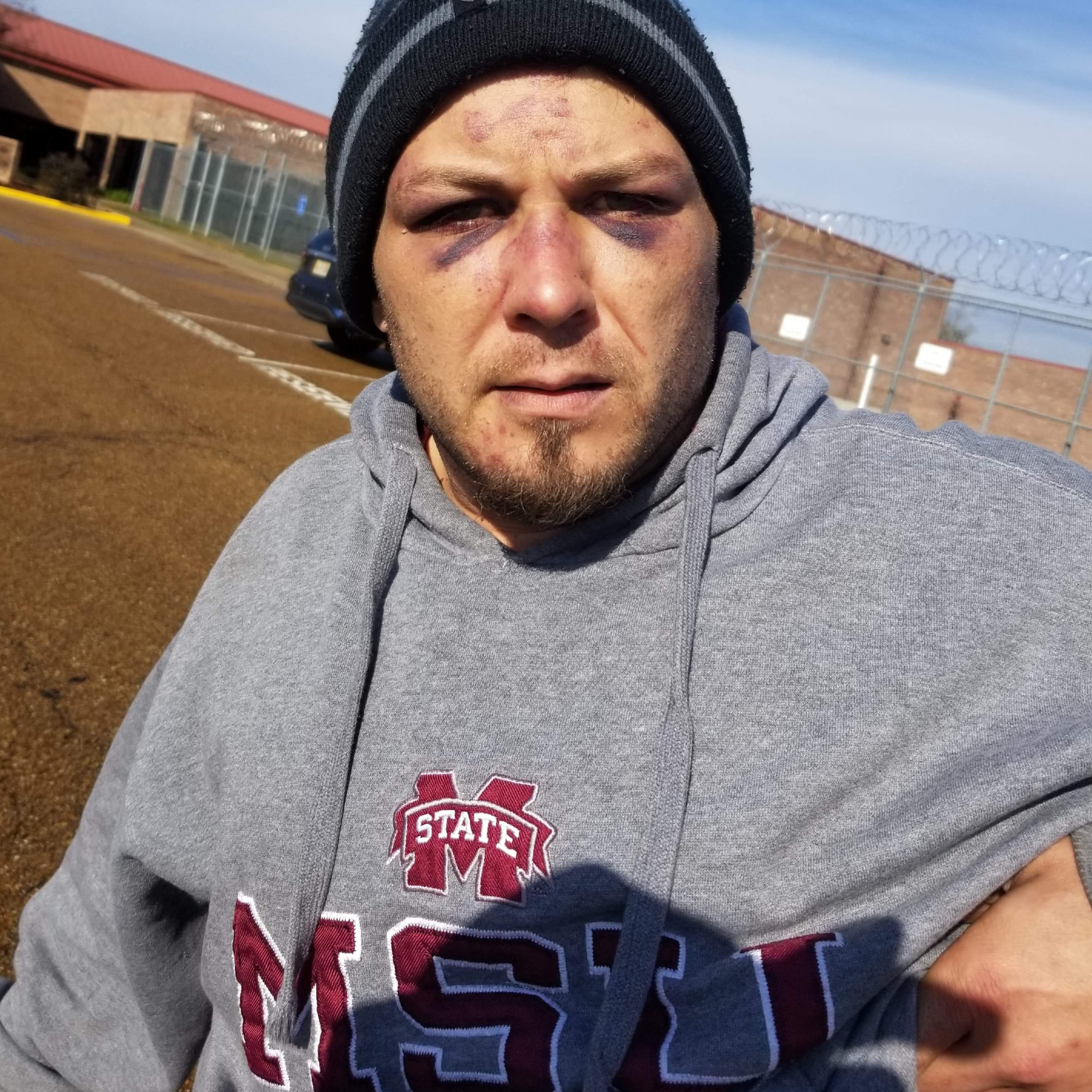
The transcription reveals deep-rooted issues within the Rankin County Sheriff's Department, starting with a scandal where deputies from the Goon Squad tortured two men. Despite legal action, the department settled for a fraction of the amount sought by the victims. The focus then shifts to the trustee program in the county jail, where inmates faced violence and abuse, with some trustees forming a group known as the Blue Wave. The program, initially intended for rehabilitation, turned into a system where inmates were coerced into assisting guards in beatings and shakedowns. Reports indicate that even higher-ranking officials, including the Captain and Under Sheriff Vaughan, were involved in or aware of the abuse. The investigation exposes a pattern of violence, cover-ups, and a culture of fear within the department, shedding light on the need for accountability and reform.
Transcription
6735 Words, 37635 Characters
From the Center for Investigative Reporting and PRX, this is Reveal. I'm Al Etzah. It's a Saturday morning in Rankin County, Mississippi. A suburban community just outside the state capital and a prayer breakfast is about to begin. All right, we love Rankin County. That's why we're here. We pray, bless us. I know all the officials here that have to make hard decisions. People are sitting around tables drinking coffee and grabbing food from the buffet. Many of them are local business leaders and politicians here to mingle. Every month, this prayer breakfast is co-hosted by the local sheriff, Brian Bailey. At this breakfast in May, a recent scandal was on everyone's minds. Bailey's department was under intense scrutiny. Two black men were tortured in their home by a group of Rankin County deputies who called themselves the Goon Squad. A deputy shot one of the men in the mouth during a mock execution and the officers planted drugs and a gun to cover up their crimes. The deputies have been convicted and the men sued the Rankin County Sheriff's department, seeking $400 million. But just days earlier, the county settled for 2.5 million. County Supervisor Steve Gaines takes the mic and says the quiet part out loud, keeping praise on the department's attorney. We could never expect to come out like that. The lawsuit was supposed to be a path towards accountability, but Supervisor Gaines was focused on the legal victory for the department's attorney. After the torture of the two men first came to light in 2023, reporters at Mississippi today and the New York Times found that there were many more Goon squad victims in Rankin County. They uncovered dozens of similar allegations of brutality spanning decades. A federal investigation soon followed. Sheriff Bailey denied knowing anything about the abuses in his department, but community leaders and voters were calling for him to step down. For a while, his political career seemed to be in jeopardy. But then President Donald Trump re-entered the White House and froze many of the federal investigations into troubled police departments. It seemed like good news for Bailey, like the scandal would blow over. And in this room at the prayer breakfast, it was easy to see that Bailey still had plenty of friends. And we're back. Last week, we brought you the story of how far the Goon squad torture scandal went inside the Sheriff's department. But our partners from Mississippi today and the New York Times never stopped following this story. After their first round of reporting, they kept getting tips about violence in another arm of the department run by Sheriff Bailey. One less visible, less scrutinized, the county jail. Mississippi today reporter Mukda Joshi looks into an inmate work program that was revered in public, but feared behind bars. One of the first tips that led us to the Rankin County jail came from a guy who had spent a lot of time there. His name is Chris Mack. I've been going to that jail since I was 16 years old. In 2021, when Chris was in his mid-30s, he was pulled over by local police. Officers found weed on him and took him to the county jail. And even though he'd been booked into the Rankin County jail a bunch of times, he said this time was different. In a lawsuit, Chris says officers brought him to an interrogation room and asked him to name other drug users. And when he refused, jail guards assaulted him. I wonder what broken real, broken nose, two black eyes. But it wasn't just guards. Chris says there was also a group of jail inmates who joined in. They wore blue jumpsuits. And they were called trustees. They're in the situation. I think two trustees, at the time, came in and helped them. Chris says these trustees had a name for themselves. We're called the blue wave. The blue wave. Chris says that a few days after he was attacked, he got his bail paid. Still covered in bruises, he ran into the sheriff on his way out. I walked out the front door and Brian Bailey came out and he was like, Chris, for who did this to you? I looked at him and said, Mr. Bailey, you know who did this to me? Your officers and trustees did this to me. And he skewed my language. He murdered, booked on his breath and walked off. We didn't know what to make of Chris saying he'd confronted Sheriff Bailey directly, but it raised a lot of questions. Chris's lawsuit was dismissed in court. He had filed it after the statute of limitations. What was going on with this trustee program? It was supposed to prepare inmates for the outside world, but Chris was describing it almost like a gang. So our team started reaching out to dozens of former inmates to learn more about the trustee program. And that's how we met John Phillips. Hey, Mr. Brown, this is John Phillips, man. Hey, John, thanks for calling. John spent many hours talking to my reporting partner, Brian Howie. He would video call about once a week from state prison. Are you looking at him? Can you describe it to me? That's the record. You can see people playing volleyball. You can see people walking around. That's the youth in another wonder world. John's in his 40s, born and raised in Mississippi. For years, he worked in fire safety, installing sprinklers in offices and industrial buildings. He's a chatty guy, and he's made a lot of friends in prison who call him by his nickname, Little John. I'm a cabricore, Brian. I'd be able to do whatever it was. Someone did the same routine. You know you started. I'm a, I'm a Sagittarius. This February, John was picked up for a parole violation. He'd only been in prison for a few months when we reached him, but he was looking at 10 more years of being locked up. When I lay on my side and go to bed, it's why bricks everywhere. I mean, you want to consider being insane. There's almost 2,666 bricks in this motherfucker. I mean, you gotta take that time and you gotta count in bricks. But back when John was in the rank in county jail, serving time felt easier. John was a trustee in Sheriff Bailey's program from 2017 to 2021. Typically for nonviolent defenders, the trustee program lets inmates work in the jail in exchange for reduced sentence. This was a huge deal for John. After getting arrested for burglary, he was facing up to 25 years. Until prosecutors let him sign up for the trustee program, cutting his sentence down to less than 4. Like dozens of trustees before him, John started in the jailhouse kitchen. After a few months, he worked his way up through the ranks of the program, earning a spot with the trustees who had the most responsibility. The blue suits. He was the head of jail maintenance. And as a blue suit trustee, John was allowed to join the work release program, which meant he could leave the jail by himself. The best part of being a blue suit was the perks. John said he had a custom made cabinet in the cell and he could roam around the jail as he pleased. The guards even got him a pet dog, a border collie named Ellie. He said the guards even let him go hunting with traps. What he caught, he could bring back and cook for the other guys. Raccoon Alfredo. John thought he had it made. He was making money working and had access to comforts from the free world that were motivating him to stay out of trouble. That was all part of the design of the trustee program. There are similar rehabilitation programs across the country where nonviolent offenders can work in exchange for privileges. But sheriff Bailey's became a model for other jails across Mississippi. His program offered counseling, GED classes, and job opportunities. Former trustees told us the program turned their lives around. Here's the sheriff speaking on a panel about the program success. You all have had three cases of people in my program that came to me in tears saying sheriff, "I'm not ready to get out. I need longer. If I get out right now, I'm going to fail." That's how well they learn their self and how far along they come. It was working out for John until he realized that there was more to this deal than he'd signed up for. A few months into being a trustee, John says he was expected to join the jail guards on shakedowns, searches for any contraband or items that didn't belong in the jail. "We're going out with the guards. We took everything extra from law. Anything that was not supposed to have." One day, John said he and a few other trustees were helping out with one of these shakedowns. One of the inmates got angry about his things being taken away and got into an argument with the guard. And the guard turned to him and said, "You need to look at this or you're not." There was no violence that day. John said it ended with that conversation. We weren't able to independently verify this account from John, but we spoke to three other former trustees who told us similar stories of how they were expected to help guards during shakedowns. John says this was the beginning of a new chapter for him at the jail. Now when his fellow inmates got rowdy, he had to step in. "I have us going there basically. We'll get some money, we'll come in there, stomach in the ribs, don't hit them in the face. You know, basically get them to comply." Not all of the trustees were involved, but he says the blue-suited trustees who joined in on these beatings had a nickname. "They called it the blue wave." Chris Mack had used the same phrase, the blue wave, to describe the trustees who beat him when we spoke with him a year before. We heard that beatings by guards and inmates happened all the time. Inmates who got caught with contraband, who mowled off to guards, or tested positive for drugs, often got the same treatment. And we heard over and over again that the guards had a few tricks to cover their tracks, like beating people in corners of the jail where the cameras couldn't see. Just that room, you will, and all the showers. John said he didn't like participating in these beatings, but he didn't feel like he had much of a choice. All of the perks, the promise of getting out of jail years sooner, all of that was on the line. "I don't believe it will turn another invite, man. You know what I'm saying? Because we all mess up. But if you don't do what they say, they will put you back in front of the judge and reset you. John was one of the first sources we got in touch with, but he was hardly the last. We spoke to dozens of other inmates and former members of the trustee program, and we kept hearing the same story." Up next, how this wave of violence spread across the jail. People would do just about anything for a cigarette, or a box of churches chicken with a honey biscuit or something, and that was the motivation of the blue waves. "You'll take much." "Man, don't take much." And the reporters try to find out who knew about it. You're listening to reveal. I'm Alex. In 2022, a movie called "The System" came out in theaters. The movie is about a guy whose mission is to expose a corrupt prison warden, who forces inmates to battle each other in a fight club called The Dungeon. The movie was filmed inside an actual jail, the Rankin County jail in Mississippi. And in the credits, there's a special thanks to Sheriff Brian Bailey. The reporting team with Mississippi today and the New York Times was uncovering similar violence in the real Rankin County jail. It wasn't an inmate fight club like in the movie, but they were hearing about abuses in the jail, and that the top officials knew about it. Before we continue, just a note, this segment has graphic descriptions of violence. His reporter Nate Rosenfield. We interviewed more than 70 former inmates from the Rankin County jail. Many of them had great things to say about the trustee program, but the vast majority told us the same thing we'd heard from our source John Phillips. How a group of blue-suited trustees would terrorize the jail, following guards orders. They called it the blue wave. The blue wave. The blue wave. How guards and trustees would be inmates who broke the rules. How guards covered up their tracks by hiding the violence off camera. I've seen some of the inmates start screaming and everything because they knew as soon as they turn that color, there's no cameras. Guards ordered beatings and rewarded trustees who went along. And people would do just about anything for a cigarette or a box of churches chicken with a honey biscuit or something, and that was the motivation of the blue waves. They don't take much, it don't take much, man, it don't take much. Our sources said the beatings were punishment for everything from breaking rules to getting rough with staff or even just getting on guards' nerves. About half the former inmates we talked to asked not to be named because they were afraid of retaliation from the department, but the other half were willing to put their names to what they told us. We also confirmed our findings with four former Rankin County jail guards. They worked for the department from the early 2000s to just a few years ago. In total, we investigated 69 alleged incidents dating back over 10 years. And it's not like no one ever brought these abuses to the department's attention. At least eight inmates filed official grievances with the jail, claiming they were beaten by guards, and sometimes trustees. 11 different inmates filed lawsuits with similar claims. Most didn't have lawyers and their lawsuits were dismissed, but these documents show that inmates have been reporting similar abuses again and again since at least 2013. We also looked through medical records, video evidence, and department documents. They started to show us the full extent of the violence in the jail and who knew about it. Take the case of Carvis Johnson. He spoke with my reporting partner, Brian Howey. We filed a few lawsuits against the Rankin County Sheriff's Department. It's safe to say Carvis didn't get along with the jail staff. His disciplinary records show he had a history of fighting with guards and trashing his cell. But there was one incident in 2020 that caught our attention where Carvis was accused of breaking an emergency sprinkler and flooding his cell. In his lawsuit, Carvis described a group of guards and trustees ordering him out of his cell into the hallway. The guards had a different story in their reports. They said they went to Carvis's cell to deal with the flooding. And when they took him out into the hallway, he threatened them and turned toward them aggressively. So a guard punched Carvis and threw him down. But we talked to Brock Reed, one of the trustees who was there that day. So the guards came and got us and they were like, well, y'all got to clean this shit up. So y'all should be the ones beating him up. Brock said that the guards took Carvis to a corner of the hallway and beat him up. When Carvis hit the floor, Brock said he kicked him in the back and hips. I wasn't going to be the one trustee to tell the police that I'm not doing that because I know how they look at you for that. So I got that with the program kicked in a couple times. Brock was one of nine former trustees who told us they helped guards beat people up. The other thing about Carvis's case is there wasn't any security footage. One of the jail supervisors did a routine review of the incident. In a report, she wrote that it happened beyond the view of the cameras. We found a few cases just like this where guards reported using force on an inmate in an area that wasn't covered by cameras. Many of the inmates and guards we spoke to confirmed blind spots were used as a tool for hiding evidence. So there's no footage to prove what happened to Carvis. But we did find a separate incident involving guards that was recorded on a cell phone. All right, so my name is Larry and I volunteer for this. We got a disturbing video from one of our sources who asked not to be named at a fear of retribution. The video was taken in 2018. It shows a thin man named Larry Buckhalter sitting quietly in a chair. Larry is the only one in the frame. And over his jumpsuit, he's wearing what looks like a white bulletproof vest. It's actually a kind of teaser that guards used to keep combative inmates under control during court hearings. Wait, hold on, let me take a deep breathe. Come on. My name is Larry and I volunteer to this. A guard triggers the vest and Larry begins to scream. Larry had an intellectual disability. In the jail, he was called crying Larry because he'd often ask the guards for things. The day the video was taken, he'd asked for a Coca-Cola. And the guards said they'd give him one if he agreed to get shocked. Larry got out of jail the same year this video was taken. He died a few years later. People definitely should have seen this video. We were in their office to go to jail. We met with four of his relatives, including his nephew, Derek Shoto. It's clear to know that he's not mentally all the way there. So why don't they even do them like that? That's just that's terrible. Like. When we asked the department about this video, they responded with a statement pointing out that we hadn't talked to Larry. And they said our reporting relied on hearsay from quote people with no personal firsthand knowledge of events. All the guards in the jail reported to one person the captain who ran the jail. And until last year, that was a guy named Barry Vaughan. We heard about Vaughan from former inmates who said he was a serious guy, a former Marine. And if you stayed on his good side, he would help you out. But he wouldn't tolerate inmates breaking the rules. We heard from many of our sources that Vaughan not only knew about the violence in the jail, he participated in it. Eight former inmates told us Vaughan himself punched, slapped, and even beat them with phone books as punishment. A former guard told us they saw Vaughan beat an inmate in his office. And we heard the same thing from a former sheriff's deputy about another case involving a different inmate. One former trustee named Cameron Kennedy told us about a few times when he was on the receiving end of these office beatings. Once Cameron was caught sneaking a contraband cell phone into the jail. He says Vaughan brought him into his office and handcuffed him to a chair. Vaughan grabbed an antenna with a makeshift duct tape handle. In 2023, right in the middle of the Goon Squad scandal, the sheriff's department went through a big restructure. Vaughan was eventually promoted to under Sheriff. Sheriff Bailey's right-hand man. We were seeing that the abuse in the Rankin County jail climbed the ranks from the trustees to the guards all the way to the person who ran the jail. But even Vaughan had a boss. John Phillips is one of our early sources who had been a blue suit trustee when Vaughan ran the jail. He didn't see Sheriff Bailey around during Blue Wave incidents. But there was one time. John wasn't the first person who told us this story. Eight other people also told us about this incident. Like other blue suit trustees, Keith had a free-world job. It meant he could leave the jail. He just had to come back at the end of the day. But one night in September 2019, he didn't. We spoke to several other trustees who were there that day, including a blue suit named Zachary McClendon. He and the others told us that while they waited for Keith to be brought back to the jail, Sheriff Bailey gathered the other trustees and gave them a piece of his mind. I remember going in there and the sheriff talking to us about holding each other accountable and we can't do that if their sour apple still in the basket. According to multiple people who were there that day, around this time is when a sheriff's deputy named West Shivers drove up with Keith in his truck. Shivers is also a six-foot-eight former UFC fighter. Former trustee Malcolm Porter was also there that day. Malcolm said the same thing is John and a former guard that they saw deputy shivers pick Keith up by his throat. Then we heard that a group of guards and trustees dragged Keith into a dressing room with no cameras and attacked him. Four inmates told us they saw Keith days later in the isolation wing of the jail battered and bruised. One of them was former trustee Brock Reed. It just looked like you got into a fight and the loss pretty bad but it was also like a week like I could feel the bruises around this throat. Keith Richards declined to speak to us for this story but my reporting partner Brian Howie spoke to deputy shivers. He confirmed that Keith escaped the jail and this is how he described what happened when he brought Keith back. There was a lot of the bruised trustees there standing around because they wanted to make a that it was going to be known that if you escape or you try to escape you will be brought back. Okay that's basically all it was. Deputy shivers told Brian he did not choke Keith. How is it that multiple people are saying that you choke Keith Richards if that didn't happen? I can't I can't I can't sit here and tell you what somebody says what they say. He also said our sources were unreliable. You're getting all your information from from prisoners from inmates. Of course they want to talk negatively about anything and everything that is going on there. Deputy shivers said there's no culture of violence at the department and he had nothing but praise for his boss. Sheriff Brian Bailey has been the bare sheriff that I've worked for at office. He cares for the people of Rankin County and there's a reason they keep voting in there because they know but we had another question about this incident that hadn't been resolved. Where was Sheriff Bailey when Keith was finally brought back to the jail? Some trustees said he was there. Others said they weren't sure. So we asked Deputy shivers. And was Sheriff Bailey there when you got back? Oh yeah he works there. I'd be honest with you guys nine years ago I don't really recall. Okay because you just said that he was there. Well you got to office the jail and the office everything is connected. We spoke to other department employees one former guard who is there that day and asked not to be named said that they saw shivers choke Keith. They couldn't remember if Bailey was in the room but they said that Sheriff Bailey definitely knew about the choking because they heard other guards talking with him about it. We also heard about what happened to Keith from someone we never expected to talk to us. Christian Deadman used to be a detective at the Rankin County Sheriff's Department. Today he's serving decades in federal prison for his involvement in the Goon Squad scandal. He and four other deputies tortured two black men in their home and shot one of them in the mouth. After Deadman's conviction in 2024 he started emailing with our colleague Jerry Mitchell from federal prison. Over hundreds of emails Deadman said he wanted the public to know that the abuses he committed were part of a deeply ingrained culture in the department. And in order to rise through the ranks Deadman said you had to be willing to go along with it. He said that Sheriff Bailey would joke about deputies roughing people up. He also specifically remembered Bailey bragging about West shivers picking up an inmate by the throat with one hand. He wrote in one email quote truth is that house is horrible and anyone there is far from a saint. Bailey and those close to him will always win. For months the reporting team from Mississippi today and the New York Times had been having almost weekly calls with their source John Phillips until this past August when John stopped calling. The team asked around look through John's prison records and found that he'd been transferred out of state prison back into the Rankin County jail and the officials there knew he'd been talking to reporters. What specific wrongdoings do you know? I don't know what have you heard? The team meets with the Sheriff's department coming up next on reveal. From the Center for Investigative Reporting and PRX this is reveal. I'm Alexan. John Phillips have been talking to reporters regularly for months about his time as a Rankin County jail trustee. He told them about the abuses he witnessed and took part in at the jail. But it had been six weeks since journalists from Mississippi today and the New York Times had heard from him and they started to worry. In September reporter Brian Howie met up with John's girlfriend to see if she'd heard from him when out of the blue. That's so crazy, just in case. That is crazy. John calls his girlfriend's cell. Hey John. I've been I've been so worried about you man. I haven't talked to you in weeks. Yeah we got a lot to sit down and talk about that. John's girlfriend passed the phone to Brian. They talked through everything that happened when John was out of touch. He tells Brian he was transferred out of state prison back into Rankin County jail. And officials at the Sheriff's Department had a lot of questions for John about things he told reporters. Here's Brian on how that exchange went. When I finally got a hold of John again, he was back in state prison and it didn't sound so good. I hate this. It ain't no I'm tired. I hate this shit. John had been transferred to the Rankin County jail to a weight sentencing on a new criminal charge from earlier in the year. While he was in there, he felt like a pariah. After days of getting the silent treatment from guards, he used to be friendly with. John got called to see Barry Vaughn, the same Barry Vaughn who ran the jail and allegedly beat inmates in his office. Vaughn was now the number two person in the Sheriff's Department. John said there was another man in the meeting, Jason Dare. He's the department's attorney and he and Vaughn then started to question John about his time in the trustee program. He's talking about me. Dare knows me from our past reporting on the Sheriff's Department and John admitted that we'd been talking for weeks. John says he felt intimidated during the meeting. So he lied and told them what he thought they wanted to hear. That he hadn't seen any abuses in the jail. Then Dare suggested that he put that in writing. I had never heard any wrong doing it. I had never heard of something like this before. Two top Sheriff's Department officials meeting with an inmate alone to ask about his conversations with a reporter. Did you have to write in the statement you're reasoning for making false statements to us? Now that John had sworn in writing that he hadn't seen any abuse in the jail, everything he told us was thrown into question. So we asked to sit down with the Sheriff's Department to learn more about what happened in that meeting. Last month, my reporting partner, Mukda Joshi and I met with Dare. As the department's attorney, he's the person we're always redirected to when we ask the sheriff for comment. And he's been pretty upfront about his skepticism. Correct me if I'm wrong, but this is going to be nothing but a hit piece on the sheriff anyway. So why would the New York Times or Mississippi today want to shut down the trustee program of all things? We asked Dare about the meeting with John and why he wanted to talk to him in the first place. Similar to y'all going out and trying to meet with a bunch of folks, I sit down and try to meet with folks, figure out what they know. I'm trying to defend the trustee program. That's all. Dare said he never pressured John to make a statement. He also said he'd collected statements from former trustees who only had good things to say about the program. But he wouldn't say who they were. Dare eventually gave us audio recordings that captured a portion of the meeting with John. That deeper voice is Barry Vaughns. It's clear that at this point in the meeting, everyone knows that John has talked to us. And you can hear Vaughn and Dare asking about what John knew and what he told us. I don't know. I don't know. What have you heard? And John says he didn't see any abuse in the jail first hand. But he'd heard rumors about the violence. And that's what he shared with me. Just rumors. My thing more is, if it's the truth, let us know. But if it's not the truth, then it's just trying to hurt somebody. It's childish. It's just all lies. It's all just about bond to a drama and all it is. It's a bunch of mess. Then, just like John said, we hear Dare ask him to write out a statement saying he didn't see any abuse in the jail. And John agrees. Dare gave us a copy of the statement. John hand wrote it on a legal pad. And it says, quote, I, John Phillips, is writing this letter to let whoever know that I never seen anything that the news reporters are talking about when spoken about inmates on inmates or the blue wave. All I wanted you to do is give me a true accurate statement of your dealings with the folks of Mississippi dying. Is that what you've done on that pieceback? Yes, sir. It's what I did. I gave a volunteer statement. This recording didn't cover the whole conversation. So we don't know everything that was said in the meeting. But we'd heard enough to know that John had changed his story about the incidents he'd spent months telling us about. The thing is, John wasn't our only source. Nearly all of his allegations against the department were supported by our reporting. When we sat down with Jason Dare to ask about his meeting with John, it was too early to ask him to respond to our findings. But we did ask him more generally about violence in the trustee program. Here's what he said at the time. The trustees are not allowed to use any force on individuals. And there have been investigations launched by the department into allegations of trustees laying hands on people. Since I've been there, I have never heard of an allegation that a trustee fought with anybody. Dare has been on the department's payroll since 2023. But he's been defending it in civil lawsuits since at least 2010. And he's defended the department in at least five lawsuits, claiming that trustees had attacked other inmates, including one file just last year. We followed up with the Sheriff's Department asking to sit down again. But they refused. So we sent them a long email detailing all of our findings. Then Jason Dare sent us an email categorically denying our findings and calling our reporting deceptive. In his response, he cited unnamed experts who said the jail is, quote, "one of the cleanest and best-run jails in Mississippi, with jailers never having been found to use excessive force." We also tried to reach both under Sheriff Vaughan and Sheriff Bailey by phone. They both answered, but declined to comment. "Any form of punishment without a due process hearing is categorically and completely inappropriate." David Vauti is the director of the National Prison Project for the American Civil Liberties Union. When we showed him our reporting, he said that the violence we uncovered by ranking county jail staff went way beyond what could be justified as self-defense. "No reputable correctional professional will defend this. Everyone will tell you this is a bad practice that we got rid of 50 years ago." Until the 1960s and 70s, many prisons across the south had trustee programs that would arm their trustees and let them beat up other inmates to maintain order and save money on guards. Then a Supreme Court ruling stopped the practice. Today, trustee programs are common at county jails across the country, but they aren't supposed to let trustees have any power over their fellow inmates. "I have not heard of anything like this since literally the late 60s, early to mid-70s." One of the main local groups continuing to shine a light on the Sheriff's Department is the local chapter of the NAACP. "I would be lying if I tell you anything that's going on in that jail surprises me." Angela English is the chapter's president. She grew up in ranking county, and her parents, even her grandparents, have done civil rights work here. "My father and mother never told us to run away from my problems. We faced everything head on." When the Goon Squad scandal became public, she started organizing. She got together a petition calling for Sheriff Bailey to resign, but she knew the most likely path to accountability was through the Department of Justice. And when the agency began investigating the Rankin County Sheriff's Department, she coordinated with the DOJ to collect testimonies from the community. "We encouraged you to tell their story based on all the information I collected in turn over to US DOJ and that they were able themselves to collect. It was just obvious that this was a pattern." English felt confident that with all the materials she had helped them gather, the DOJ would have a strong case against the Sheriff's Department. But then, President Donald Trump was elected for a second term. And when he took office in January 2025, he steered the DOJ away from their investigations into local law enforcement agencies. "I was greatly disappointed, but still, even in the midst of all it, I said the E&WACP was formed for such a time as this." In the months after Trump took office, English called her contacts at the DOJ again and again, to ask if they would continue their work in Rankin County. But no one got back to her. And she could tell the changing political tides were having an effect on Sheriff Bailey and the county leadership. "They feel emboldened. They feel like they got their ace in the hole now." But she never stopped calling. And then, her phone rang. It was the DOJ official. "I see these good news are bad news." And they said, "Well, I think you're going to be pleased." And I said, "Oh, thank you, Jesus, thank you, God." We reached out to the DOJ and they confirmed their investigation into the Rankin County Sheriff's Department will continue. "And I said, so we're going to be able to finish it?" And they said, "Yes, and that's all we can say." And I said, "Okay, thank you, that's enough." Angela says the continuing DOJ investigation is a win. But it seems to be business as usual in Rankin County. "There's a bunch of people who seem to be walking in." "Do you know where the main entrance is, Terry?" "Yeah, right over here." Last month, my colleagues looked at Joshi and Jerry Mitchell went to a campaign fundraiser for Sheriff Bailey. Despite all the controversy that surrounded his department, Bailey is running for a fifth term. And based on the people attending the fundraiser, it's clear that he has powerful supporters. Headed to the entrance of the event was Terry Reeves, the father of the governor, Tate Reeves. "Can you tell me a little bit about why you're attending the fundraiser today?" "Well, he's been our sheriff and done a good job, so I'm really proud of him." Looked to also spotted a Mississippi kingmaker, Earl Dean Rhodes, a former local politician. To run as a Republican here, and one of the reddest counties in Mississippi, you basically need Earl's blessing. "I wanted to ask why you're here at the fundraiser today." "Well, I'm here because I'm supporting Brian Bailey." "Okay, why could you elaborate on that a little bit?" "Well, I got a little cram rate, good law enforcement." After a group of his deputies were sentenced to federal prison, after investigations into his department were launched at the state and federal level. It seemed like Sheriff Bailey's political career wouldn't survive all the controversy, but with Mississippi's political elite lining up to support him, a full three years before he's even up for re-election, it seemed like maybe Sheriff Bailey had weathered the storm. Just as Mukda was about to ask her next question, Brian Bailey's daughter walked over and shoot her away. "You have a private advantage. This is a private property. We've rented this, so we're going to ask you to leave." "Okay, thanks." "You shit." "You're really nice to do it." "I'm just making sure y'all can get inside good." "How you doing?" [Music] The reporting team published their findings this week in Mississippi today and The New York Times. You can read their work there and link on our website at revealnews.org. Today's story came from reporters Mukda Joshi, Nate Rosenfield, and Brian Howey. Steph Quinn, co-reported this episode, and Jerry Mitchell also contributed to reporting. Our lead producer for this week's show was Nijiba Mini. Jenny Kossis edited the show and Kate Howard was the executive producer for this hour. Editorial reporting guidance from Debbie Skipper, Chris Davis, and Dean Baquet. They've worked with the reporting teams from Mississippi today and The New York Times since the beginning. Special thanks to the reporters committee for freedom of the press and reveals associate producer Stephen Raskone. Artist Jeriscus is our fact checker. Victoria Bernetski is our general counsel. Our production manager is the great Tulemokab, score and sound designed by the dynamic duo. Jay Breezy, Mr. Jim Briggs, and Fernando Ma Manio Arruta. Taki Telenidas is our deputy executive producer. Our executive producer is Brett Myers. Our theme music is by Kamarato Lightney. Support for reveals provided by the Riva and David Logan Foundation. The John D. and Catherine T. MacArthur Foundation, the Jonathan Logan Family Foundation, the Robert Wood Johnson Foundation, the Park Foundation, the Schmidt Family Foundation, and the Hellman Foundation. Support for reveals also provided by you, our listeners. We are a co-production of the Center for Investigative Reporting in PRX. I'm Al Letson. And remember, there is always more to the story. From PRX.
Podcast Summary
Key Points:
A prayer breakfast in Rankin County, Mississippi was overshadowed by a recent scandal involving the local sheriff's department.
The scandal involved the torture of two black men by deputies who termed themselves the Goon Squad.
The trustee program in the Rankin County jail, run by Sheriff Bailey, allowed inmates to work in exchange for reduced sentences and privileges, but reports of violence and abuse emerged.
Summary:
The transcription reveals deep-rooted issues within the Rankin County Sheriff's Department, starting with a scandal where deputies from the Goon Squad tortured two men. Despite legal action, the department settled for a fraction of the amount sought by the victims. The focus then shifts to the trustee program in the county jail, where inmates faced violence and abuse, with some trustees forming a group known as the Blue Wave.
The program, initially intended for rehabilitation, turned into a system where inmates were coerced into assisting guards in beatings and shakedowns. Reports indicate that even higher-ranking officials, including the Captain and Under Sheriff Vaughan, were involved in or aware of the abuse. The investigation exposes a pattern of violence, cover-ups, and a culture of fear within the department, shedding light on the need for accountability and reform.
FAQs
The recent scandal involved two black men tortured by a group of deputies known as the Goon Squad, who were convicted of crimes including a mock execution and planting evidence.
The men sued for $400 million but settled for 2.5 million.
The trustee program was supposed to offer reduced sentences, privileges, and rehabilitation opportunities like counseling and job opportunities.
Reported abuses included beatings, shakedowns, and hiding violence in blind spots without camera coverage.
Accusations pointed to the involvement of guards, trustees, and even high-ranking officials like the under Sheriff.
Allegations of abuse reached the top officials in the department, including the under Sheriff, indicating a systemic issue within the jail.
Chat with AI
Loading...
Pro features
Go deeper with this episode
Unlock creator-grade tools that turn any transcript into show notes and subtitle files.
 PodcastTranscript AI