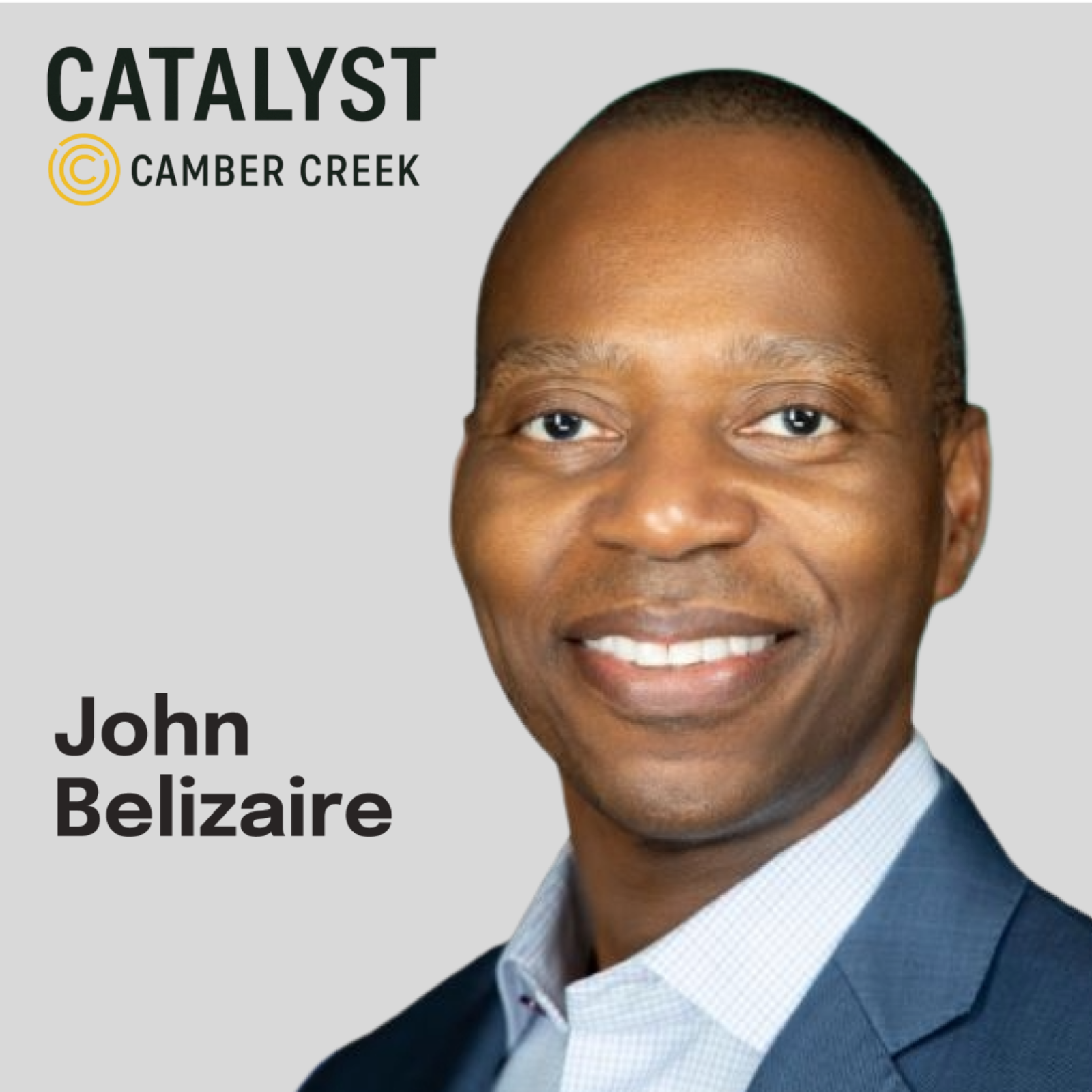
If “Renewable Computing” Works At Scale, There Might Not Need To Be A Data Center In Your Backyard
50m 54s
John Belizere, CEO of Saluna, shares his entrepreneurial journey on Catalyst, from growing up in a tough New York City environment to founding multiple tech companies. His early exposure to computers in a new middle school ignited a passion that led to a career in enterprise software, including founding FirstBest (insurance software, sold to GuideWire) and Theory Center (component software, acquired by BA Systems). Saluna, his latest venture, addresses the energy bottleneck for data centers by building them directly at renewable energy sources, bypassing grid interconnection queues that can delay projects for years. This model, termed "renewable computing," leverages wasted energy from wind and solar farms, which often face congestion and curtailment, offering customers faster time to power and lower costs. Saluna's flexible data centers can adjust size based on power availability, and for AI workloads, they use batchable computing to pause and resume training. The company has grown its power pipeline to 4.3 gigawatts and is transitioning from Bitcoin mining to AI and high-performance computing. Despite a dramatic stock price decline from over $300 to around $2, driven by macro events like the crypto winter and FTX collapse, Belizere remains committed to solving big problems in power and compute, emphasizing that entrepreneurship is a painful but rewarding journey.
This is a Canberra Creek production. Welcome to Catalyst. The conversations that sparked something, I'm Lionel Foster, head of platform at Canberra Creek. John Belizere and his company Stockprice had been on a roller coaster ride. Saloona connects clients with big computer processing needs to the energy to power those calculations. Because it was so heavily tied to Bitcoin mining, the share prices risen and fallen with the cryptocurrency and is now down more than 3000% from its 2021 peak. But John is convinced that he and his team are solving big problems, like how to efficiently power data centers. Instead of requiring utilities to build expensive new infrastructure in highly populated areas, Saloona locates its data centers next to renewable energy assets like wind farms, where the marginal cost of a kilowatt hour is minuscule. And he spends a fair amount of his time on social media explaining this approach. It's fascinating. Even though Saloona is a public company, it leverages the strategies of startups and influencers to reach retail and institutional investors. Because the price and energy is rising, but the value in capturing people's attention is even greater. John, welcome to Catalyst. Thanks for joining. Pleasure to be here, Lionel. Thanks for having me. Yeah, yeah, it's good to see you. So we're going to have so much to talk about, but I'll start with a bit of your personal background. Where did you grow up? And was there a direct line between wherever that was and entrepreneurship? Good question. I grew up in New York City in the late 70s, early 90s until I went to college. I was just on a show recently, and we were talking about this background, and it lamented to me that, you know, basically I grew up in New York when it was like a war zone. Really tough times, you know. Hip-hop New York, you know, Biggest Mall is New York. Like it was sort of like that era. And what was able to allow me to prepare into the technology industry that had been in the 20 plus years was the lucky opportunity to go to a brand new middle school that was not too far from where I was living at the time in Crown Heights, Brooklyn. It was just built. Otherwise, I would have gone to the other, you know, zone school that was older and apparently, you know, not a place you wanted to go to. And so I got an opportunity to go to brand new school. In that school, they were implementing and testing a whole new set of education and gifted student programs. And I had the opportunity to participate in that. And one of the new curriculums was information technology. They had a computer lab in the school. And I was just blowing away like, what is this thing? And how is it that I typed something here? In this case, it was, they had many, many computers still. So there was like a room with a computer. And then you had terminals on the desk. And then you type into the terminal. And then it goes into the room. And you had to do a floppy disk to put the information in. And what was fascinating was that I just couldn't stop thinking about it. And the teacher realized that, hey, you have an interest in this. You know, I'm going to give you some extra curricular projects and programs to write. And before you know it, I was doing those things. I was telling my dad to stop giving me his trucks and, you know, you know, classic soldiers to play with and just give me the money. So I can save it to buy a computer. He's like, what is a computer? He's a computer. And I did that. And that was that key sort of moment that changed everything. You know, wrote my first basic program. So when you imitated your dad lovingly, is it, is your family Haitian? Yes, yes. That's what I thought I heard. That was that. That's why you would say, what is this? And that sent me on to, you know, basically 25 plus years of computing training and being in the enterprise software space and then now in the data center industry. So, you know, in terms of like my background, I've essentially spent most of my career founding and scaling technology companies. My first company, my first foray into the professional world was within, within tell. Also sort of, you know, driving the PC revolution. And so I came into the company with that excitement. And, you know, Saluna is the latest chapter in that journey. But before Saluna, I found it first best, which was an insurance software company. We built that to market leadership. And it ultimately sold to a company called GuideWire. It was in the sort of basically taking insurance underwriting, which traditionally has been sort of like this, this opaque. And somewhat bespoke process to optimize it and digitize it into systems. And use data and analytics and ultimately, you know, AI these days was the, was the whole idea of the company. And we built that into a recognized leader in the space. And before that, I found a company called the theory center. And it was a software company was acquired also by BA systems. And that company was focused on building component software, the software that you. And think about, you know, putting together into Lego blocks to help you bring back, back office systems to the front office. So this was during the time of the, the internet boom. And folks wanted to bring some of their financial systems to the web. So banking, you know, trading that sort of stuff. So they would use our software. And this was called the theory center. Yeah, exactly. The theory center was the name. How did you come to the end after the theory center, which was a research facility. At Cornell that the four, five pro co founders of the company spent a lot of time in it was the first of many supercomputing labs. That were funded by the National Science Foundation. So to pay homage to where we get our idea for, for these types of systems, we, we named the company theory center. Where there was the, the, what, the IP implications around the name to drop the paper with them. No, actually by dropping one word, the, and just calling it theory center, you know, nobody called us and said stop that. But, but it was clear, you know, that we were paying homage to our alma mater. And certainly they, they enjoy that, you know, especially if it works out and you make a lot of money in the name. They can call you and say, hey, you know, we've got this library, you know, this chair, you put your name on. So part of what comes to mind is you talk about your journey. I think about, you know, you mentioned your dad. I think about your family and friends and entrepreneurship is a, it's a peculiar way to live. And, you know, even, even if you're a specialist in a different field, sometimes your family won't really understand what you do. No matter how many times you explain it. So was it ever difficult to explain to the people in your life? This is what I'm doing now and why it's changing and, you know, what their eyes glaze over because sometimes it was so technical. Absolutely. To this day, my mom still doesn't understand what I do. She's like, she just notes, I go around, I have meetings and I give, I talk to people. How was the meeting? Are you in a meeting now? I'm just a meeting, though, it's time. You know, it's just, you know, these things are hard for folks to connect to because entrepreneurship is a unique experience. You know, it's not a journey for the faint of heart, you know. If you look at my experience, it's kind of a full arc of company building, you know, more than once. But it's like early chaos, you know, scaling challenges, you know, exits it. If you're, if you're lucky and they just kind of shaped me to where I am now at Saluna. And, you know, entrepreneurship is really a, it's a journey. That's what I like to call it, a journey full of pain. And you're really going to lean into that to be successful at it. And I encourage lots of young people to do it. But do it with your eyes open. It's not going to be easy. You know, you see all these guys that have made lots of money and, you know, are the examples of success and so forth. There's a very good chance that anything you start is not going to work. You got to be okay with that. You got to be okay with all, you know, the win being all of the things that you learned from that experience, you know. So. So what is.
- Saluna. - Saluna is a digital infrastructure company. This is one of the most exciting companies I've built to date. We developed and operate data centers that are built directly at the source of power. So we co-locate them behind the meter with renewable energy power plants. And one interesting thing is that those power plants need us to connect there because they have lots of unused power, power that they can't monetize. So what that means practically is instead of connecting to the grid to build data centers and waiting on a really long into interconnection queue, especially these days with AI, we actually plug directly into the generation resource. And that generation resource is far away from population centers and doesn't have a way to get all of this energy to those places. And actually, even if it did, chances are there's just not enough consumption there to do that. And there certainly isn't enough consumption at the local place to do that. But this approach creates a unique opportunity because we give our customers much faster time to power because we're bypassing these queues, right? We go directly to that power plant. We have lower costs of energy as a result. And some people say, well, most of the costs in these AI data centers is not energy, so that's not really helping. But what people forget, and as I'm sure we'll talk about is sort of how technology waves happen and how they mature. Eventually, the cost of this compute will drop to the cost of power. And it's not true that they don't care how much the power costs. They actually do care a lot, you know, our customers. And so having access to that low cost is really, really helpful to them. And it gives us, you know, more operational control, you know, things that basically other ways to connect to the grid to build data centers can't really match. So we've got something fairly unique here and we call it renewable computing. You know, the power model basically is the product and whether the workload is Bitcoin where we started and or AI training where we're going now and high performance computing. The underlying infrastructure advantage really stays the same. We have this large power corpus, almost 4.3 gigawatts now in size. The bug was my mind that, you know, we started 300 megawatts or something like that and now we're four times, you know, a gigawatt. We've got contracted capacity for that pipeline. It continues to grow. And then we've got this proprietary software that allows us to connect into that substation with the power plant and then also pull power from the grid and determine where the electrons are coming from at any given time. It's a very smart system and delivers a whole platform, essentially, that's well positioned in all the exciting things that are happening right now. So that's all. - No, that's great. I want to talk about energy cost and this term just occurred to me. But increasingly there's a bit of a politics around energy and energy consumption, energy transmission. And, you know, this better than I do, but for folks who are listening who may not follow it as closely. So one of the major bottlenecks to energy is not necessarily the production per se, but it's the transmission. So when the, again, the infrastructure around that, how much of it is aging, how much of it needs to be upgraded, what that costs, you know, construction labor cost and just about any sector in the US are quite high right now. And there's a demand for that, high demand for that labor. So, yes, so much of it is the transmission bottleneck. So when you were talking about interconnection and, you know, hooking up to a localized energy supply, that's a transmission issue. And you want to get into a utilities queue and they might literally tell you, we cannot plug you in for four years. Right. Yeah. So you have found a workaround. Correct. Yeah. And we've been working on this concept now for almost eight years. And at first people were telling us, we're crazy, which is, that's entrepreneurship, right? You're doing what? But, you know, it's wind, right? Wind doesn't blow all the time. And we're like, yeah, we know. It's really far away from, you know, we do a lot of stuff in Texas. So really far away from Dallas, like, what are you going to do with that? Yeah, we know. And all of those, you know, we know these are interesting challenges and problems we have to solve. But if we do, we can create a tremendous amount of value and something unique to customers in the future. And it's funny today, people say to us, that's brilliant. Like that's exactly how you should do it. And that's how you know you've won as entrepreneurs at everything. Now what you're saying is, it's just boring. It's like, of course, yeah, you're supposed to build it where the power is. You bring the compute there. It's easier said than done, but we've perfected it. And we've also shown that essentially, when you look at the wasted energy problem, it's driven by two primary things. One is that the source of energy we're connecting to is sustainable and has evolved to become the cheapest form of energy you can add to the grid. And the fastest form of energy you can add to the grid. So it just makes, just make good industrial logic that you should build more of that power. As it gets built, the problem becomes exacerbated because, well, when you find a good spot for wind, you know what? Everybody else comes and builds a wind farm in the same spot. You know, we call it the McDonald's Burger King problem. You know, when McDonald's finds a good location to sell hamburgers, Burger King does too automatically, right? So you end up with a lot of energy that's trying to get out from one location, but the power lines that move that energy don't upgrade or move or expand nearly as fast as you can build a power plant. And so you get this thing called congestion. So all the electrons trying to get out, can't get out. So the wind farms and solar plants get curtailed. They're told to send less of your energy. And by the way, if you want to send more than I'm telling you, you can send. You're going to have to pay for it. And that's creating all sorts of financial challenges for these projects, which works against more sustainable energy on the grid, right? So we bring a economic driver, catalyst for those projects. And we think that approach is the future approach for power and compute and whatnot. And yes, the grid will evolve. The grid will become enhanced and meet the challenge for the future of power infrastructure. But the global grid, we believe, will be completely different. We think there's a convergence happening where these two worlds meet. Happy to talk more about that at some point. But you're right. Your insight is dead on that. Is a congestion problem? People are worried that putting data centers close to-- where all the other load is. Like, how do electrons are going to get there? The power lines are only so big. The solution is to think laterally, rather than bringing the power to the load, bring the load to the power source. And that's how saloon it doesn't. Yeah. I imagine localized energy storage. Since this is renewable, often when the production is intermittent. So you must need a way to store that capacity when you're not using it. Am I thinking about that correctly? So for one design of our data centers, there's no storage because the data centers are flexible in nature. So the way it works is the saloon or modular design basically builds this campus of a bunch of mini data centers, almost like Lego blocks. And so when there's not enough power or the grid needs some of that energy that's going to us back, then we'll shrink the size of the data center. So imagine some of those blocks have a different color. The green ones or the ones pulling power and the red ones are off. And so your data center can become really, really big or get really, really small, depending on what's happening at any given interval, time interval. And that's called a flexible data center. And that's one design that we have. As we look at our AI data centers, we're essentially doing something different there where we will design the site. So it's a 24/7 site. We'll run it continuously. But if the grid needs power, we can come off grid and use onsite power. So we'll bring our own power plants and build them there. And bed systems, so battery systems that store power to provide power to the campus for a period of time. And depending on the applications, like training,
That's actually okay because something's training on a very large corpus of data it can pause and return to that training when the power is available again. And so we've had that insight for a very long time, this concept of batchable computing allows us to rethink the data center if the application really doesn't need the power to be on all the time. You don't have to build all the redundancy and so forth. But some customers still need it, want to have it just because that's just the way things have always been. But it won't always be that way. Some of the big labs are becoming smarter and they're like, yeah, we don't need all that redundancy. We just need the power. Just get us the power so we can run this model. And that's pretty exciting because that means it's going to lead to a whole rearchitecture of the grid and a whole rearchitecture of compute and everything. So I've been listening and I can totally imagine the converts you mentioned years ago, people said you were crazy and now they're saying, well, obviously that's the way to do it well done. Yeah. All right. So I get that. But in preparing for this as I, Solune is publicly traded. It's on the NASDAQ. And as I look at your stock price, I go holy moly. That's maybe the element. So that's stored your stock fully covered through. It's just to give folks context within, within the past four or five years, your stock price was above $300 per share and it's now closer to $2. So there's a lot to unpack there. Eventually, I want to hear what it's like leading through that and what that must feel like. But what's the story there? Well, that's some honest, that's some honest framing and the simple answer is leading through that is hard. But that's where leadership is. I think the short version is that we've navigated building a company that's going after innovation that is a heart tech, heart structure. And we had to run that and build that company through some pretty genuinely turbulent macro environments. The compute that we chose initially was Bitcoin because it was easy to prove, I wouldn't say easy, it's like, it's a natural application of this approach to use this flexible compute because of the nature of the compute, use the fact that as mining infrastructure, this compute that's used for crypto gets older, you can actually move it to the places where the power is cheaper and our sites become great places for that. But it's still a, at the time, it was still a fairly volatile product, because the revenue comes from the generation of Bitcoin, we initially started building the facilities where we buy the machines and generate the Bitcoin ourselves. And then we've moved to more of a hosting model where we remove part of that risk and put it on the customer. But if you look at the macro events, if you graph that chart, basically every major downturn in the business was driven by these big macro events. We had the crypto winter, we had the FTX collapse, I like to say, that's when they grabbed a young man and and Bahamas and brought him back to New York and said, stop doing what you're doing with people's money. There was a broader tech sell-off and there was a period where we were transitioning our strategic focus to AI and did some deals that didn't work out. And if you look at those peaks and in Trots, they generally have tracked the Bitcoin cycles and moments where the market kind of understood our model clearly. When they understand, it's on the uptrend. When they've moved or pivoted away from the industry, it's on the downturn. And so I would say the valleys often reflect macro conditions that have been beyond our control or periods when we were doing the hard internal work that's always looked, people don't always see, and doesn't look super exciting from the outside because you're building a company and pivoting it and restructuring it and so forth. But what I'm proud though after going through all of that is we have kept building the entire time. The business has been growing the entire time. We've operated through that compression, proven that our model works. So we've proven it multiple times even within the Bitcoin market. And we've come out with a cleaner, more focused thesis. And that is that power first digital infrastructure, which is what we do now is proven in Bitcoin and built for AI also. So we can do this for future type of compute. And I'd say the stock price in my opinion is a lagging indicator of that future potential. And the pipeline and the call it the, you know, our operating track record, if you will, is really what I focus on building that pipeline and then continuing to build and prove our model out. Is there much institutional ownership of your stock? In my real question is what types of groups own it? And yeah, because you tell the story of this transition, Saluna is still going through quite well. I'm curious the types of groups and the personas you have to explain this to. So our stock is its ownership has evolved over time. It has, it was originally into company when we took it public and merged with the smaller company that was around for a long time in public and we turned that company into Saluna and used it to start raising money and building it out. It was a small cadre of investors that own that stock. Then it, we got some institutions to come in and own some of the series of stock that we raised to finance some of the build out of some of these data centers that we've constructed. So you have some institutions and family offices that invested in that. And more recently we've attracted a fairly large and robust retail group of investors who do their own research, not always very well. And we try to help them to fill in the gaps and understand what we're putting out a bit better. And that has helped to shape more larger institutions to start to come in. Most of my conversations now are with banks and capital allocators that are looking to understand our company a bit more so that they can invest. We've gotten very large individual investors coming into the business. If you look at our filings or filings of folks, we now have very large 13F owners of approaching 9 to 10% of the company, kind of thing, buying into the business. And just a quick explainer, I imagine tell me from on that that form 13F once a buy an investor reaches a certain threshold of percentage of the company owned that they have to register that. Correct. Yes. If you look at those 13Fs, you start to see some pretty big investors in the business coming in and increasing their investment over time. Anytime to stock is down, they seem to add more shares. So they definitely have some conviction. And so we have a fairly diverse set. And as we grow in our market cap increases and we've put up more catalysts and wins and proof points about the strategy we're implementing now and where we're going, we expect more institutions to begin to make their way into the stock. It looks like we maybe added to the Russell 3000 or 2000 here next month. We were included in the recalibration or addition report that came out earlier this month. And so a lot of good things working for us in terms of the maturity of the business. And it's a great time because this is the clearest and most opportune moment for the company right now based on our trajectory. So you mentioned some retail investors. And you've been cryptocurrency active, certainly cryptocurrency adjacent for many years now. Right. And I am worried, man, because there's what feels to the the average reader of the news or consumer like inexplicable highs in the public equity markets that have been continuous for some months now up and down for some years now. You've got the rise of prediction markets, which are pretty hairy. And then volatility within cryptocurrencies and then add to that increasingly professional sports leagues with the legalization of sports betting in the US. And then some retail investors.
investors that mean stocks, not that it looks like Saluna is not a mean stock right now. And good for you. Yeah, that's good. It's going to be very bad. Yeah, okay. We agree on that. But my fear is that there are sections of the populace where investing in the public equity markets is essentially indistinguishable from gambling. So, I'll just try to make this a question. That's what I've said. Advocates are divided. If that would it looks like from your vantage point? Well, I'd say depends on your perspective and what perspective you're looking from. The markets are certainly acting differently than they've acted in the past. And a lot of that has to do with some of the inflows in which driving them. But when I take a step back, I think the way to look at it is there's a spectrum of risk taking that runs from, let's say, genuine long term investing, you know, buying assets before you believe in their underlying value over time. That's a bit of a risk spectrum all the way to pure speculation where the outcome is essentially like random. And usually in that case, the house tends to win. And so I'm not espousing any judgment to those who are somewhere on that far end of the spectrum. But when you conflate those things, it becomes a real problem, particularly for younger people entering those markets for the first time. There's a lot of technology out there that has brought these types of opportunities to folks who aren't trained in it to really understand it. And so they may not be equipped to tell the difference between a long term thesis driven, investing versus price momentum chasing. If you understand why you own something, the business model, the competitive advantage to long term thesis, you know, we have one. That's going to be fundamentally different from buying something, you know, because the price went up last week or because, you know, you get a little indicator or some gamification thing on your app that says, this, you know, XYZ company is on the rise, you know, and everybody else is like, let's go. You know, you see some social media thread and it's like, you know, the, the rocket ships and everything. Look, I think over here at Saloono, we take all of this stuff pretty seriously, right? We believe that if you're going to ask people to invest in your company, you owe them a genuine understanding of how the business works, the model, the risks, the strategy and how you're performing against those things. So, you know, as a company, we put a lot of energy into educating the market, publishing content. Some people say I'm, you know, the most active guy on X mostly is to put information out to, to help people do better research, understand our infrastructure model, our pipeline, you know, how we think about energy and economics and really what renewable computing actually means and why we believe it's like a durable category. And we try to avoid promotional content as much as possible. I do put up some funny videos because just, just, just, just because, you know, otherwise it's boring. But it's like, you know, substantive content that really ties to big wins that we just did. People ask like, why, why is your CEO always walking in the woods, you know, that's, that's where the videos are. That's where the videos are easier to, there's no loud cars driving around, you know, and you can hear what I'm saying, you know. And it's really, you know, to help these prospective shareholders to your point that might be on that spectrum. And we want to make sure that they're, they're making their decision for the right reasons, right, that they're, they're, they're, they're looking at their decision from a real thesis. And, you know, because fascinating, you are actively educating a broader audience and within that broader audience, some of them are meant to be prospective investors in saloona, actively educating them on how to think about your industry and within that, I imagine how to think about your company when, and you're doing it with intention. Yeah, keep going. Yeah, we tell them the problems we solve, you know, do we actually, do we actually have a real business? Real businesses solve problems. They do it well, better than anybody else. And the problem they solve is a big problem. And if you can do that really well for a very long time, you can build a very valuable business over time. And so, but people don't always understand the problem, if, especially when it's related to infrastructure and digital infrastructure, that's not something, it's not something you, you go and buy at the Apple store or something like that. And you understand this thing, you know, plays music in my ears. What you don't understand is how electrons get to your toaster and make your breakfast. Once you understand that, you understand that, that infrastructure has a lot of problems. And it's going to have a lot more problems as we evolve the way we use that resource. And it's going to reshape the future of what that resource looks like. And there are going to be some real problems to solve in order to do that. And we're one of the companies helping to do that. And, you know, that intentional approach to helping people to understand that is really to get them to invest closer to the long-term thinking, real thesis-based investment decision, as opposed to, you know, whatever momentum our stock is doing today or yesterday or something like that. Like, if you're going to invest, have some conviction. And here's all the information you need to gain that conviction. And we're going to give you resources that allow you to get the best possible insights. And so, in a previous era, many companies probably would have left that. That explaining. And the, at least they would have made the target of a lot of that communication, public equities analysts. Correct. Yes, that's right. The major investment banks. So how is that part of your strategy? And if so, how's that going? Yes, we also do that too. We talk to the analysts. But that's, I don't want to say it's a, it's a dying breed. But in a way, it's not what it used to be. Most of those departments are actually quite small. The, you know, there are certain sets of banks that can't cover you until you're a certain size. What's your market cap right now? I think as of recent close, it's probably like 2 AD almost 300 something like that. Million. Yeah. Got it. So, you know, we're starting into, you know, these days even 5, 500, 700 million is when, you know, folks start picking you up. 300 is when, you know, the Russell starts waking, who's saloona and that's at that to the, to the, to the basket. So, but at the same time, the market doesn't rely as much on those analysts to make decisions anymore because the stock investing has been fully democratized. It's a scalable ubiquitous series of platforms that allows anybody to wake up and start learning how to invest in stocks and can do it in two seconds. You literally can download an app. After you heard about saloona at the barbershop, walk out the door before you get into the subway, you've bought saloona. Yeah. Whether you know why you did it or not or, you know, and then you can start learning from there. And so, what we realized was that we needed to build a content platform to help the entire larger and fast growing investor base learn about our company. And I think the people are literally trading stock recommendations, lay people at barbecues and you mentioned that's barbershop. I mean, this is, this is not made up. Correct. It's absolutely right. And so, you know, we have to, as I said, we take it seriously. We want to make sure that they know why they're investing. So we give them a lot of information. Maybe they buy a few shares just to get in and then they've got to spend some time and do the work. And they may not have access to those investment analyst reports, right? Those are typically reserved for clients and so forth. And so we have built an entire system to deliver that content out as far as wide as possible and freely available to current and potential shareholders. How does compliance and regulation come into play? What types of rules does your team have to be mindful of as you're speaking directly to the public? So we do follow all of the SEC rules, SEC, if you're listening. We distribute the information simultaneously to all of our channels. We tell the public where they can get the information. We ate cake content and sources to content. So there's a, you know, it's in the public register so they can get that information. And of course, we, we wrap a lot of what we talk about in standard safe harbor statements and there's legal review.
on all the content we put out. So there's not a lot of forward-looking stuff. But people deserve to understand the direction we're taking. They deserve to understand why we made a transaction recently. We just bought a wind farm this past quarter. And people were scratching their heads. People's necks were hurting because they were like, "Wait, what did they do?" They just bought a power plant. The one that's powering one of their most important data centers, "Why did they do that?" And I can't tell you how much time and money we put into putting content together, too, as if we're talking directly to the shareholder. Here's why we did this and what it means to you. And those analysts, they get that content, too. And it saves them a lot of time, because getting on my schedule forget about it, like, I don't even see my wife at the time. So they can also use the content as well to update their reports and models and whatnot. And so it's proven to be a very effective tool for our company. Well, well, this is fascinating. So of course, I work in the startup world. But so this sounds to me, I have a bit of a bias. It sounds to me like you're very much a publicly traded company that in some ways is in a startup mode of building and coordinating with constituents, the constituencies, and developing a relatively unique business model, proving it out, scaling it. So it all sounds very exciting when it's not hair raising. Yeah, exactly. You're right. I mean, let's take Amazon, for example. They were startup as a public company for a very long time. They got lucky. They went IPO, they raised a bunch of money, and then the dot com hit. And I remember I read all of the Bezos letters, but that was his tool that he built to talk to shareholders, right? Instead of publishing, you know, your standard decks and cordless and so forth, he would just write a letter and say, here's what we did last quarter and his why. And his first one was his first one. I remember the first sentence. It was like, I'll just stop like a stone. You know, he was like, wow, okay. All right. Well, listen, I, I, I, I, that, that hurt. But listen, here's what we're about. You know, you're going to, you're going to see what we're going to, we're going to start to do. And I promised it, write you this letter so you really understand what we're doing on a continuous basis. And that proved to be the best thing he ever did. And ultimately, people started to understand what he was doing because he was, he actually did everything he said he would do. And he built up the fan base, built the investor institutions. And then, you know, clearly, he's built a successful company. And sometimes you got to do that when, yeah, you're a startup in this sort of environment. And people need information to understand. So we decided to do the same thing using the systems I talked about. So we have a podcast, for example, where we, we, we talk about the business, we, we, we bring on guests who can help people understand those hard things that we do. We have team members on, on there. So people to understand who's in the company, what are they working on and why. And then we've got all sorts of other tools like AMAs. There's a once a, once a month, we, we put out this sort of open letter, ask us any question. And I mean, any question, we try to answer most of them because somebody, you know, they're not worth answering. But let's put it that way. They really appreciate that we do that. And we get that out to the public and again, delivered in a SEC compliant way. And that's proven to help people build some real conviction around the company. Yeah. And of course, AMAs asked me anything. Yeah, ask me anything. Yeah. What's the name of the podcast? It's called clean integration. Definitely check it out. It's on all platforms. All right. Well, you know, your explanation of Saloona's history and where you are, it just puts me in mind of yeah, businesses are comprised largely of people and know how and capital and then all of that has to be knit together with narratives and ideally the narratives are true. And they they stand up to scrutiny. But the narrative piece is huge and that's what you're working really hard on right now. Yeah. That's right. Yeah. You, you have to set a direction. People have to know where you're going. You have to know why. And they have to understand how you're going to get there, even if you don't know how you're going to get there yet. You have to at least give them a sense that you're trying to figure that out and eventually you do. And that's where all the value gets created. Yeah. Well, John, we talked about a lot. Is there anything else you want to mention that I did not ask about? Well, you touched a little bit on this public sentiment toward data centers, I guess. Yes. Yes. And, you know, why there's increasing resistance to those projects. And, you know, if I were to frame it as a question, you know, why is that true? Why are why are all of sudden everybody's mad at AI data centers? And by the way, we've been in this business for a long time. People were mad at Bitcoin too. They were like, what? These things are loud. You know, they're going to eat up all the energy. They're carbon heavy and the industry, we spawned it to that, at least mostly industry responded to that and made changes. And most of that has either quelled or it's just been overcome by all of the AI negativity. But if I were to answer the question is basically a couple of reasons, you know, the first is that, you know, the scale of what's being proposed has changed dramatically because data centers have existed for a long time. So, and that market has been growing for a long time. Cloud has, you know, quietly become a large portion, almost one to two percent of the global power usage comes from data centers. People don't realize that. Now, at the time, like, you know, data center drawing 50 megawatts is, you know, a very different conversation from a hyperscale campus that's growing like 500 megawatts or more megawatts like a city, right? So 500 cities worth, you know, the grid infrastructure upgrades you're alluded to before, you know, that require water consumption for cooling, the, you know, the visual or acoustic footprint of these facilities, you know, all of that, if you scale it up, you know, communities aren't really ready for that type of scale. And, you know, call it industrial demand, you know, as, as a stuff is taking place. And I think that's, that's, that's one of the key reasons. It's just happened so fast and it's gotten so big. The second is really more of a, let's say, a trust deficit, you know, when large companies come into a community, they tend to make big promises. Jobs, economic benefit, but if the projects turn out to, you know, require a lot of local infrastructure subsidies, you know, roads, those jobs, you know, those jobs don't come, then people will lose trust, you know, the, the, and they're going to remember that. And so the resistance will start to grow from that perspective too. I think what we believe here at Saluna is the, the answer isn't to fight that resistance. And that resistance is natural, people fear the unknown. Resolution is really to build projects that are genuinely compatible with the communities needs and expectations and where they're going to be. They should have smaller footprints. They should, they should source power locally, right, integrate with the power plants, provide some real employment for the communities. You know, we spend a lot of time on training, local people to do some really interesting new technology, especially young people who might find it hard to go to school, go away to school, and then want to live near their family, but there are no jobs there. So they end up living in big cities or whatever. This creates an opportunity for them to come back and be part of this whole new, you know, network and growing technology wave. Things important to be transparent with the economics of these projects. And at the end of the day, we think that our model, which is co-locating with renewable projects, rather than demanding new good capacity at these traditional locations, is a structurally better approach that's suited to community acceptance and community harmony and collaboration, you know, versus the traditional hyper scale approach. So I just wanted to get that out there. I think I think we're one of the good guys. Yeah, man, it was like,
uh, suddenly they gave, they've been sentimented shifting. So they had data centers that were seen a, a little bit like coal mines used to be. Right. Yeah. It's getting pretty bad. Getting pretty bad, which is wild. But yeah, you are, um, you're, you're, you're, you have a different way in our, our popularizing that. So John, thank, thank you for your time. Thank you for sharing your story. Appreciate you having me on the show, Lionel. Of course. We want to hear from you. If you are a catalyst, change in entire industries, or are we writing a rule book, let us know at catalyst at cambercreek.com. And we might have you on the show.
Podcast Summary
Key Points:
John Belizere, CEO of Saluna, grew up in 1970s-80s New York City, where access to a new middle school with a computer lab sparked his interest in technology, leading to a 25+ year career in software and data centers.
Saluna builds data centers co-located with renewable energy sources (e.g., wind farms) to bypass grid interconnection queues, reduce energy costs, and monetize unused power, a model called "renewable computing."
The company has grown its power pipeline to 4.3 gigawatts and uses proprietary software to manage energy sourcing, including flexible data centers that can shrink or expand based on power availability.
Saluna started with Bitcoin mining due to its flexible compute nature but is transitioning to AI training and high-performance computing, with designs for 24/7 operations using onsite power and battery storage.
Saluna's stock price fell from over $300 to around $2, driven by macro events like the crypto winter and FTX collapse, making leadership challenging but highlighting the company's resilience.
Summary:
John Belizere, CEO of Saluna, shares his entrepreneurial journey on Catalyst, from growing up in a tough New York City environment to founding multiple tech companies. His early exposure to computers in a new middle school ignited a passion that led to a career in enterprise software, including founding FirstBest (insurance software, sold to GuideWire) and Theory Center (component software, acquired by BA Systems). Saluna, his latest venture, addresses the energy bottleneck for data centers by building them directly at renewable energy sources, bypassing grid interconnection queues that can delay projects for years.
This model, termed "renewable computing," leverages wasted energy from wind and solar farms, which often face congestion and curtailment, offering customers faster time to power and lower costs. Saluna's flexible data centers can adjust size based on power availability, and for AI workloads, they use batchable computing to pause and resume training. 3 gigawatts and is transitioning from Bitcoin mining to AI and high-performance computing.
Despite a dramatic stock price decline from over $300 to around $2, driven by macro events like the crypto winter and FTX collapse, Belizere remains committed to solving big problems in power and compute, emphasizing that entrepreneurship is a painful but rewarding journey.
FAQs
Saloona is a digital infrastructure company that develops and operates data centers built directly at the source of power, co-located behind the meter with renewable energy plants. It provides faster time to power, lower energy costs, and operational control by bypassing grid interconnection queues.
The stock price has fallen due to major macro events, including the crypto winter, the FTX collapse, and broader tech sell-offs, as the company's revenue was initially tied to Bitcoin mining. Saloona has since shifted to a hosting model to reduce some of that risk.
Instead of bringing power to the load, Saloona brings the load to the power source by building data centers next to renewable energy assets. This avoids long interconnection queues and utilizes unused power that would otherwise be curtailed due to transmission bottlenecks.
A flexible data center is a modular design of mini data centers that can scale up or down based on power availability. When grid power is needed elsewhere, some blocks are turned off, allowing the data center to shrink, while others remain active.
For AI data centers, Saloona designs 24/7 sites with onsite power plants and battery systems to provide backup power. Additionally, batchable computing allows training tasks to pause and resume when power is available, reducing the need for constant redundancy.
Renewable computing is Saloona's approach where the power model is the product, leveraging low-cost renewable energy at the source. It applies to various workloads like Bitcoin mining and AI training, with a large power pipeline of almost 4.3 gigawatts.
Chat with AI
Loading...
Pro features
Go deeper with this episode
Unlock creator-grade tools that turn any transcript into show notes and subtitle files.
 PodcastTranscript AI