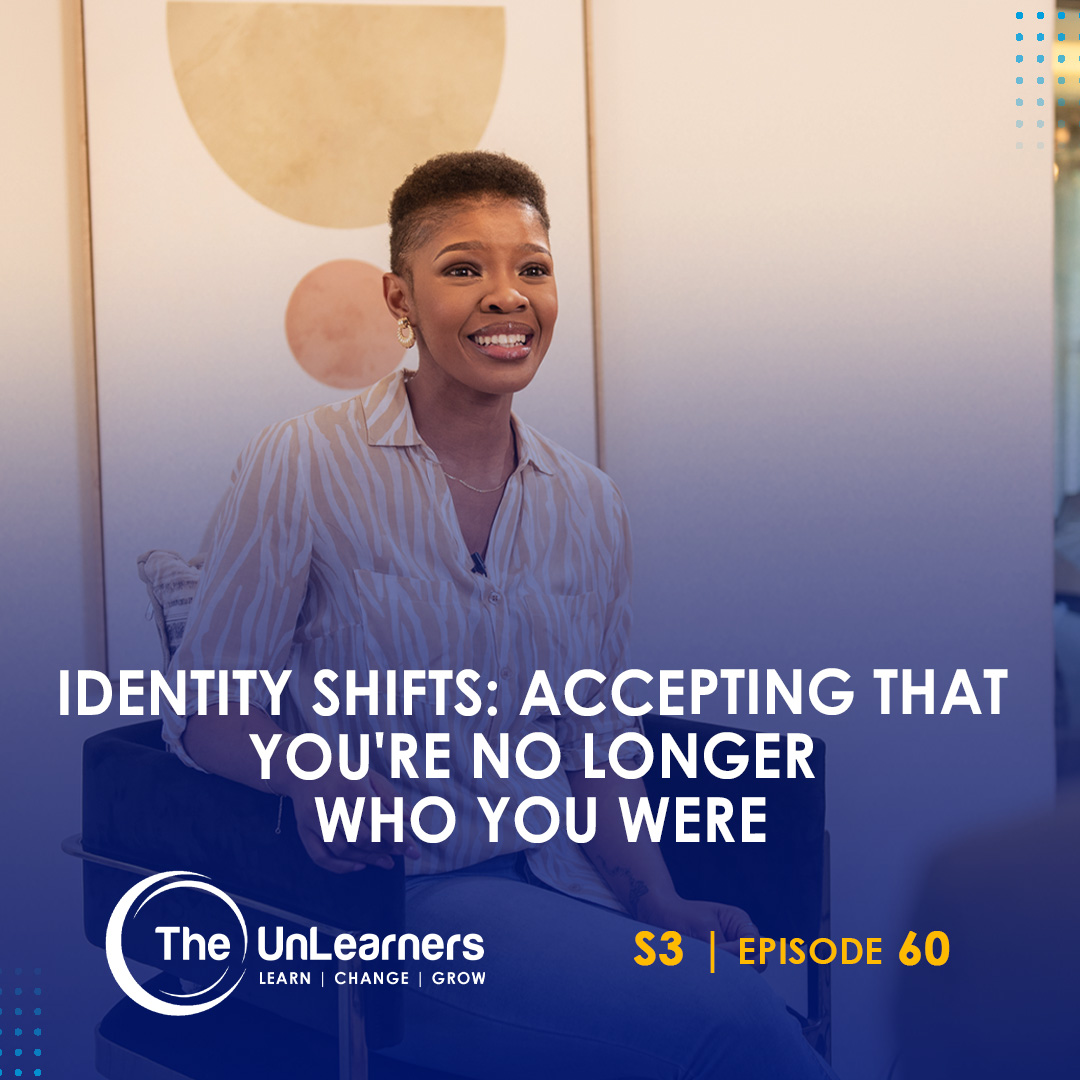
Identity Shifts | Accepting That You're no Longer Who You Were.
31m 48s
The discussion centers on the fluid nature of identity, arguing that it is not fixed but constantly evolving. People often define themselves through external, changeable factors like physical appearance, careers, possessions, and relationships. However, when these factors shift—due to life experiences, transitions, wins, or challenges—it can create inner dissonance and identity crises. The key difficulty lies in letting go of outdated self-concepts. The speaker emphasizes the importance of "unlearning" rigid identities and making space for personal growth. To help, a reflective exercise is proposed: list aspects under "what I have," "how I look," and "key people," then separately define "who I am" without those elements. This aims to reveal a more stable core identity, detached from transient external markers, fostering acceptance of change as a natural part of life.
Today, I'm learner, we are talking about one of my favourite topics, identity. When someone asks you who you are, I really want you to think about how you define yourself. Because the word identity has the root word identify in it. The Cambridge dictionary says that a person's name and other facts about who they are is their identity. But I always go right back to that root word identify. Because an identity is how you identify when you are with the group of people, when you are alone, when you are at work, when you are in an academic setting. How do you identify? And often the words that come to mind, or even the categories that come to mind, or how you look, how you sound, how you grew up, how you act around others, how you prefer to be engaged or interacted with, those are all things we bring up as parts of our identity. But the conversation we are going to have today is a conversation that invites you and I to really rethink that. Because as one author says, how real is an identity? If it just keeps changing, you use to define yourself very differently 10 years ago to how you do now. And so this conversation is about how to let go and to grab hold, but also how to be at peace and to accept the changing identity. Because one thing we know for sure is that when we change identities, the hardest or trickiest part for most of us is having to let go of who we thought we were, that we no longer are anymore. And I'm going to give you some really, really sticky examples as we start this episode. Welcome to the Anilunas podcast. The Anilunas. The examples that always come to mind when we have this conversation are examples around our bodies and how many of us grow up in a setting where we define ourselves according to how we look. So for example, you might have gone, I am short and I have maybe long arms when ever it is. And then what happens, and this is really where the tricky part comes in, what happens when those parts of who you are then change. So let's say for example, you're sitting in a conversation with someone in a mentor of mine used to say that human beings are funny because we take the parts of ourselves that are around us. So let's say for example, our careers, where we work, our children, where our children go to school, the sport we use to play, and we intermingle those into our identities. And we make them mean us. So if I take all of those different components and I put them together in our minds, oh, that's me, it sounds like me. Instead of really defining ourselves and then saying that those are parts of us or things that make up what we enjoy or how we have created our personalities and how we express ourselves in the world. Now here's another really great example. If you think about going right back to work or that particular arena, if you think about the kind of car you drive, if you think about where you live, the clothes that are in your closet, a lot of them are all speaking to the same sort of theme around who you've created yourself to be or who you have defined yourself to be or how you identify. Maybe you identify as a male or you identify as someone who is sporty or physically active or you identify yourself as someone who is bubbly and cheerful. And I want you to call to mind all of those aspects around your identity. And then I want you to just have a look around at how, even how you have curated your environment speaks particularly to that. And it almost becomes a chicken and egg where you go nose and eat, but this is my identity. And so I've acted from that and curated my environment to support the identity I say I have or how I identify. And I would actually argue that it is very much chicken and egg. You end up then responding to the stimulus of your environment that you've curated in that very way. And so all you ever really are or show up as is how you've curated your environment. So it becomes then very tricky when something happens. And this is really what the just of the conversation we're having today is is it becomes really tricky then when something in your environment changes and you get information that then contradicts what you thought was the reality of your environment. So let's say for example you have identified yourself for a very long time as a legal practitioner or a lawyer and attorney. And this is you know how who you are for a very long time maybe as you were growing up this was the career path you told yourself I'm going to be a lawyer. I'm working towards it. I'm studying for the LSATs now so that I'm nice and ready when I have to write them. And this is just how you have identified for a very long time as someone who wants to challenge the status quo wants to you know really make sure that justice is served to those who really need it. And then all of a sudden something happens later on in your life maybe you've practiced for a few years you even have your own law firm and then something happens that has you changed careers maybe not because you wanted to but because there was a need out of necessity in that moment. Now what starts to happen is that you as an individual who has defined yourself this way then start to have a almost a real confusion you know there's a dissonance that happens within your mind around who you actually are because what you have done and not just in your mind but in your conversations in your curation of your environment you have read you have defined yourself you have identified as this lawyer as this attorney as this person who is fighting for justice consistently and now that that that association is no longer happening in your brain so maybe you've moved into a different career now all of a sudden you're going so who am I was I really that lawyer was I really that person and this is the part where unlearning becomes so critical or having the the capacity or the tools to be able to unlearn become so critical because you are in a state now and I often say this to organizations that we work with is the critical nature of grieving through transitions and being able to hold space for the part of you that is now no longer existing the version of you that you are shedding that you are letting go of or the parts of you that or the the liquid that's being emptied out of the cup if you like that analogy and this is the part that really needs you to hold space for yourself and this is really where I want to dig in now so the big idea that I would like to invite you in this episode to start challenging is the belief that your identity is fixed because once you start to fix your identity or even define your identity based on shifting factors and I'm going to dig into what some of those are that's where the trouble comes in because then when those factors are no longer meeting your expectations or they're not showing up consistently the way they used to then you have this dissonance that happens you have some trauma that you experience and a few other things that then impact your wellness their impact your perception around life how you receive yourself how you regulate as an individual as well so what are the different ways that we see key identities shifts happening and these are happening all of the time I heard someone once say that the body that they had a good few years ago is definitely not the body that they have now and if we think also about the the human being we are regenerating every single day with thousands of cells being added to the human body brand new ones and thousands dying every single day and so you really by the time you you reach a good few years you've regenerated all over and you're completely new being but we tend to have this idea that we are fixed and it's one of the things that we need to work through and work towards really detaching from this idea that we are fixed in any way so what are the different identity changes we see most prominently especially in our coaching work at the unlearness and some of the key ones are life experiences things that you experience as an individual maybe it's losing someone that you deeply care
about is one of the experiences that really cause an identity shift. Because when we are surrounded by individuals we care about so deeply, we associate them with who we are. We start to identify as I'm a person with a mom, I'm a person with an aunt, I'm a person with a dad. And then all of a sudden when those people then pass on, then it becomes, oh my goodness I used to define myself as the person with the mom, who am I now? And it's an almost identity shift like we mentioned that needs to happen there. So life experiences one of the key categories. Another one is relationships. And this very much like with life experiences is either the shifting of a relationship is in the relationship is no longer present. Maybe it's even the relationship changing form. Maybe someone who used to be a friend becomes now a romantic relationship of some sort in your life and then there's that shift as well. And that's definitely associated with the change in identity because it's I used to see that person in one way. Now all of a sudden they've taken a different form within my life, within my circle. So that's the other one. So it's life experiences, relationships could also include things like welcoming a new family member for example, or getting a new dog or whatever it is. Those are all relationships shifts. And now you're needing to redefine yourself because maybe before I was the person with two cats now, you know, I've brought two on this week and now maybe I'm the person with four cats. And this is a shift in identity primarily at the level of the brain you are having to go, okay, so now this is sort of who I am. But going back to that idea around really detaching from the idea that your identity is fixed, it means that when the relationships change and when the life experiences happen, you have the capacity to open yourself up and not hold on too tightly to who you were so that you can grab hold and fully accept who you now are in the moment. So that's a second identity shift or area in which we see key identity shifts. The next one is transitions of various kinds and we've put this one as a category, but you'll see that really all of their more transitions. This transitions of any kind in the sense of some of our younger individuals, it might be something like moving from a particular grade, maybe going from your first year at university into a third year, maybe you are leaving undergrad and you're moving straight into post-grad. That's a transition that can sometimes really have you rethinking your identity, rewriting who you are and how you identify as an individual. Next one and this one is absolutely my favourite out of the list. This is good times and wins. Good times and wins are so key and so pivotal when it comes to helping us shift our identities because when we win, it reinforces certain beliefs, but sometimes it just builds them when they haven't necessarily been there in the past or starts this beautiful curve and starts this pattern of, oh my goodness, I'm a winner, oh my goodness, I'm the person who wins things, oh my goodness, I'm the type of person who gets things, who achieves things and just to that. And I think sometimes we don't realise just how much experiencing good things, experiencing things that make us laugh, really having good people around us. Really those high moments create some kind of a shift in identity because they reinforce beliefs that are already present and cement them, but also they might shift a pattern that had been playing in the past and contributes so these shifts happen over time. When you think about neuroplasticity and functional structural neuroplasticity, it is over time especially at the chemical level where it starts, but it does start to contribute to a shift because if I've believed myself to be the kind of person and I've heard a lot of people say this, oh maybe I'm sitting at an event, they're about to draw a prize and I sit back and I go, nope, it's not going to be me, I'm not one of those people who wins, I'm not, I never win anything. That's a belief that you have that's been built up maybe over time, maybe the first few days you enter, first few times you enter a competition, you don't win anything and now you've created this belief, but if something starts to happen and you see a pattern, maybe you win three times and you start to go, okay, I've been winning three times, maybe I am a winner, maybe I am the kind of person who wins things and you start to create this beautiful pattern within yourself that shifts your identity, how you see yourself, how you identify because maybe previously you identified as like we'd said I'm not the kind of person who wins things and it became who you were and now all of a sudden you're starting to go, okay, maybe, maybe I am a winner, maybe I'm the kind of person who does win. So that's the other one, my absolute favourite and then the next one is challenges on self perception. So this is really almost the, I want to say opposites and I'll use the word opposite here but I think you know where I'm going with this, really the opposite of those good times and those wins, challenges and how experiencing a deep challenge but also how you approach the challenge or some of the things that shift an individual's identity or how they perceive and identify as an individual. For example, if I lose a very dear friend to myself and I maybe don't have the coping mechanisms or I'm not able to regulate my emotions as well as I would have loved to in that moment and I really break down and it takes me so much longer than it could have to really process what has happened to grieve to say goodbye to make peace and I might look back on that experience and go, oh goodness no no no, I'm not really good with grieving, I'm not really good with losing people please don't leave me because if you leave me, oh my goodness it's going to take me all that time like it took me when I lost that person so now you have identified as someone who isn't great at that process or someone who doesn't take that well or someone who doesn't want to be left by other people who is not open to other people abing and flowing through your life and that for me is such a person to understand because our challenges and how we approach them so not just what happens but how we interpret and approach what happens as such a big effect on how we then identify there often. I'm going to end the episode or thing with sharing three key things that I'd love to challenge you to do that will help you be the kind of person who can open yourself up to a shift in identity because sometimes we and this is one example that I've seen quite frequently in my own life but also in the lives of some of our coaching clients as you'll look in the mirror and maybe it's you're with a friend and you're looking in the mirror and you're going oh my goodness this wasn't there five years ago or this wasn't there 10 years ago what is this oh my goodness this is going to be so different in 20 years and the emotions that you feel in that moment are indicative of how you have taken your physical appearance and your body to be who you are and not just something that you have you have a body it's not who you are but let's go into those strategies and almost there they can also count as key reframes that I'd like to encourage you to make. As you open yourself up to saying my identity is always changing and that's okay it needs to be okay to always have a shift in your identity or how you identify because most of us place the expectation on ourselves and others that can be very damaging and very hurtful we place the expectation on others to always show up the way they have oh but yesterday you said you were quiet and now look at you it's okay if today I want to talk I want to talk it needs to be okay that individuals can even flow through different identities just because this is how they showed up 10 years ago it doesn't mean that that's how they're now going to show up if our bodies are always changing if the world is evolving why in the world do we expect human beings ourselves to always be showing up the same way so let's go into those strategies then strategy number one is I'd like you in your journal wherever it is that you're taking your notes to create one two three four columns and in column one you are going to make a list of who you are so how you identify yourself or how you identify and I'm before you write it down just take a second you'll hear what else is in the other columns then you can go back and you'll see just how interesting this activity is column number two is going to have the title what I have column number three is going to be how I look and then the fourth column is key people or individuals in your life you can always add a few more columns here once you really understand the just of this activity but for now we can start off with those key ones but here's how you're going to fall this out you're going to start with the last category so don't start with who you are you're going to start with the one on the end and then move towards who you are so start off with key people.
Write down the key people that when you think about who you are, these people are always the people that come up. Maybe it's people like your spouse, maybe it's the children, maybe it's your fifth grade teacher who had a beautiful impact on your life. Whoever it is that you think about when you define who you are, and want you to just put down as many of those people in there as you can think of. Make that list. And once you've got those people, you move over to how you look physical traits around yourself. You can say things like, "If you define yourself as short, you can say shorts. I might put shorts in there for myself." Short, tall. You might use the words "musculable" if you feel like you are doing that kind of work and this is how you appear. You might put those types of things down. You might say, "Long eyelashes," you might say things like, describe maybe your long arms. Some people say they have long arms. Maybe you have tiny hands, soft hands, whatever it is. Put it in there. Carry touristic around your physical appearance and your physical build or whatever it is or how you appear in the flesh or how you identify in the flesh. Put all of those down and then move over to what I have. And here is where you will put things like your car, you'll put things like your career, you'll put things like your home and everything else that you have in the physical, in your day to day life. You might even put things like relationships maybe, you feel like you have a really good relationship. But think about things that when you identify yourself or when you explain who you are, you often will put in that description. And you will often say, "This is who I am," but it's actually just things that you have. So put all of those down. And then you're gonna come back. Once you've exhausted as much as you can, all those columns you're going to come right back to who I am. And I would like to challenge you not to put anything else that is in those other categories. Must be a key person. It mustn't be anything about how you look your physical appearance, your characteristics, your traits that have to do with your physical appearance or your body or your makeup. Not makeup is in makeup that you put on your face, but makeup, your physical makeup. And then nothing to do with what you have. And then I want you to just write that down. And you'll notice that you probably will only come down to just a word. Just keywords, very punchy, raw words. And the thing that you'll probably notice is what we spoke about before. That it'll be the things about you that don't change. If you look at all the other characteristics or the other columns, those are all things that change your car that you might have put under what you have. Key people, their relationship with you might change or they may change in one way or another. Their relationship to you might change. How you look, that's definitely gonna change. But then who you are? So who are you really? And maybe that column stays empty for a few days. Well, you think about it. And that's perfectly okay. But I would like you to use this exercise as a way to always be defining yourself. Because one of the things we spoke in about in a previous episode as well is that we often take the things in all of the other columns and we use them to describe who we are. Only to realize that once those things change and we've started with this, once those things change, then we have real difficulty really defining ourselves. So you want to, whenever something happens, just go okay, here's what happened, here's what I have, here's how I look, here's the key people that were involved in this incident. And then go back to who you are. Because often we say things like, oh, goodness and this. And then she said this and it was a huge mess and we use the situation to define ourselves. But at the end of the day who you are is the unchanging part, is the true essence as you define it and I'm not going to prescribe anything here. But I'm going to leave you to fall that column out for yourself as it resonates with you. So that's the first thing is that activity, the who you are activity, one of my absolute favorites. Second thing that you're going to do is you're going to take stock of your learnings, always, I often say, take stock of learnings like you are, like it's going out of fashion. And just always in the moment when you get an opportunity, whenever you are in a situation where you're meeting someone, you're attending an event, always be the kind of person who says, what am I learning from this? What is the gift that this experience is giving me? And I'd like to challenge you that even if you're not able to do it so consistently, when you lie down at the end of the day in the bed to sleep or you sit down at the end of the day after a long day or just a short day, I'd like to challenge you to ask yourself, what is the big takeaway from this day? What are one of the biggest experiences of the day? Teach me today that I can take further into tomorrow, into my future, into the world, to really support not just myself, but what I'm building, who I'm becoming, the world that I choose to contribute to and to create. So that's one thing that you can ask yourself as you think about that. Is what am I learning? What's the big lesson? And it doesn't have to be anything deep or really complicated. It can just be something simple, something tangible, something that makes sense and is real for you in that moment. So that's a second thing. Take stock of your learnings always. And like I said, like it's going out of fashion. And then the very last one of the three is ask. Ask, always be asking yourself. I often say that you want to almost turn this into a ritual. Every quarter, every month, every year. Go right back to that activity we started with and say, who am I now? It is such a beautiful practice to ask it that way. Because when you say who am I now, you acknowledge that you are a changing being, that you are a shifting human, that you have a changing identity. And when you take an opportunity during chunks of time, like the quarter, like the month, like the year, to just ask, who am I now? Who do I now identify as? How do I now identify myself? What's my current identity? Then you're able to always be taking stock of who you've changed into, but you almost allow, you know, imagine sitting back during the quarter or maybe just during the end of the year, right at the beginning of a new year, and sitting with pages from the last five years where you fold up the identity activity and you end, yes, who I am. And you look back and you go, oh my goodness, I am not that person anymore. And you look back at the next sheet from another year and you go, oh, that is definitely not me. But you know what? When you do it again, the next year, you're going to look back at this year and right now and go, hmm, okay, that's interesting. I am not that person. And that's okay. It is all okay. It is all great. It's all fine because you are ebbing and flowing, right? Through, through those different versions of you. It's almost very much like our devices that are shifting in versions or our apps and our software that's always changing versions needing these upgrades. Okay, so here are the three strategies that I shared to give you a quick recap. The first one was the who I am activity. You're going to do those different columns and then fill those out. Full them out, not from who I am, I all the way to keep people, but from key people all the way back. So you're going to work your way back. Then the second one is take stock of learnings at the end of the day, at the end of the week. Be taking stock of your key learnings that you have accumulated and gathered during that time. So you can integrate them into who you are and then into the rest of the time that comes whether it's the week, the quarter and be developing in that way. And almost this helps you take stock of the smaller shifts that are contributing to the biggest shift in identity. And then the very last one was ask who am I now? Instead of asking who am I? Ask who am I now? Who am I now? Because you're always changing. And you almost want to have this as a regular practice whether it's every quarter, every month or every year. And then use it to track back and see just how much you have changed. The reason why that matters and this is where we started is because as we age and we go through so many of the transitions that life presents to us and that we immerse ourselves in, you know, we often question the purpose of some of these. And in this episode, I really wanted to offer you this hope and guidance for that reinvention that's happening consistently to you and I as individuals and understanding that our identities are not fixed, but they're ebbing and they're flowing and they're changing. And so our biggest work then is to be able to hold space for ourselves and make it okay that we're no longer the people we used to be.
So how do we let go of that version of ourselves that we used to be that we actually really liked sometimes? I think we have hold of this new version of ourselves that also has all of this beauty that we sometimes won't be able to tap into if we're just so hung up on who we used to be and we're so attached to who we no longer are and who we need to let go of, right? Okay, and Luna, that's the end of today's episode. Thank you very much for taking the time to have a conversation with me today about the shift in our identities, or identity shifts, and how to really navigate those, right? If you know anyone who is currently going through some kind of a shift in identity, maybe they are having an experience of some of lives, experiences like we spoke about, maybe there's a change in relationship of some sort, they're going through some kind of a transition, maybe they're experiencing good times and they're shifting, their idea around who they are, or maybe they're just experiencing some kind of a challenge that's contributing to how they see themselves and how they identify themselves. Definitely share this episode with them. I think they will be very, very grateful to you for doing exactly that. Thank you so much, and Luna, for your time. I will see you on the next episode of the UNLUNA's podcast. It's been myself, Zanele and Japa, the UNLUNAING Lady, saying bye for now. The UNLUNA's.
Podcast Summary
Key Points:
Identity is not fixed but fluid, shaped by how we identify ourselves in different contexts and over time.
People often mistakenly tie their identity to external factors like appearance, possessions, careers, or relationships, which can change.
Significant life events—such as career shifts, loss, new relationships, personal wins, or challenges—can trigger identity crises by disrupting these attachments.
Holding too tightly to a fixed self-concept causes inner conflict; embracing change requires "unlearning" old identities and grieving past versions of oneself.
A practical exercise is suggested
Summary:
The discussion centers on the fluid nature of identity, arguing that it is not fixed but constantly evolving. People often define themselves through external, changeable factors like physical appearance, careers, possessions, and relationships. However, when these factors shift—due to life experiences, transitions, wins, or challenges—it can create inner dissonance and identity crises.
The key difficulty lies in letting go of outdated self-concepts. The speaker emphasizes the importance of "unlearning" rigid identities and making space for personal growth. To help, a reflective exercise is proposed: list aspects under "what I have," "how I look," and "key people," then separately define "who I am" without those elements.
This aims to reveal a more stable core identity, detached from transient external markers, fostering acceptance of change as a natural part of life.
FAQs
Identity is how you identify yourself in different contexts, such as with groups, alone, at work, or in academic settings. It includes aspects like how you look, sound, act, and prefer to interact, but it is not fixed and can change over time.
Holding onto a fixed identity can cause dissonance and trauma when life changes, as shifting factors like careers or relationships no longer meet expectations. Accepting that identity changes allows for peace and adaptation to new circumstances.
Common triggers include life experiences (like losing a loved one), relationship changes, transitions (such as career or educational shifts), good times and wins, and challenges to self-perception. These events prompt re-evaluation of how you see yourself.
Good times and wins can reinforce or build new beliefs about yourself, such as seeing yourself as a 'winner' or achiever. Over time, these positive experiences shift identity by creating new patterns of self-perception.
Create columns for 'key people,' 'how I look,' 'what I have,' and 'who I am.' List items in the first three columns, then in 'who I am,' write only aspects not tied to those external factors, focusing on unchanging core traits.
Grieving allows you to hold space for the parts of yourself you are shedding, such as an old career or relationship role. It helps process the loss and accept new identities, reducing confusion and supporting emotional wellness.
Chat with AI
Loading...
Pro features
Go deeper with this episode
Unlock creator-grade tools that turn any transcript into show notes and subtitle files.
 PodcastTranscript AI