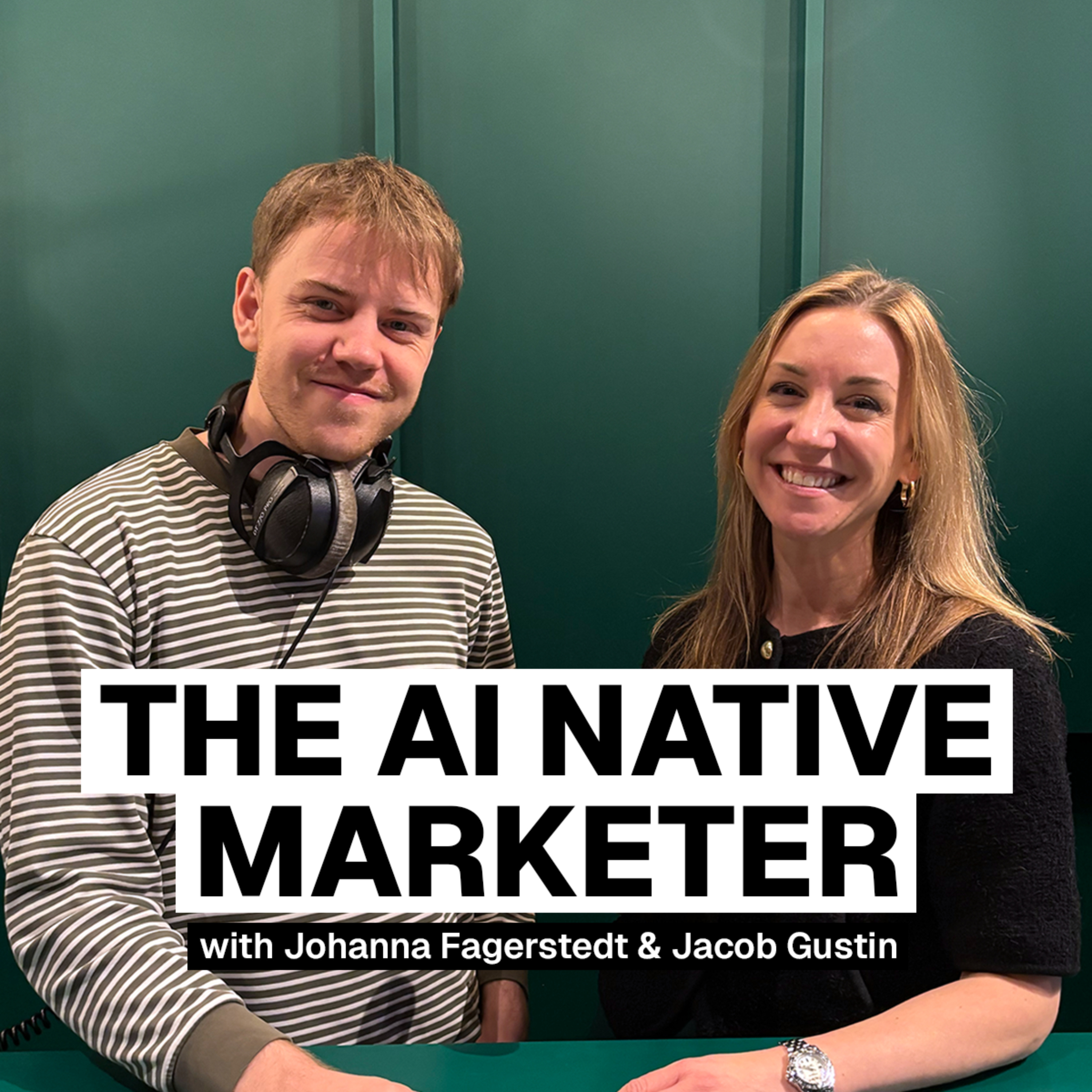
Ian Browaldh from Tandem Health on Building AI-Native Workflows
from The AI Native Marketer
35m 41s
In this podcast episode, Ian Brovald, Head of Growth at Tandem Health, discusses how his AI-native company integrates AI into daily marketing and operations. He wakes up focused on growing the business, leveraging AI to speed up execution while keeping humans in the loop for creativity and critical decisions. Ian highlights a key innovation: a Slack bot that allows any employee to edit website copy across 10+ languages, using an LLM to structure changes via Framer’s API, with marketing team approval before publishing—solving a major bottleneck of small, frequent edits.
He also details a 12-step content workflow that automates the entire pipeline: generating themes and topics, researching web and PubMed sources, writing in Tandem’s tone, checking for hallucinations with an LLM judge, and publishing directly to Framer. Built in-house after a $5,000/month tool pitch, it saves countless hours and ensures high-quality, research-backed articles. Ian emphasizes a decentralized AI approach where employees identify pain points and build solutions fast, not waiting for perfection.
His key advice: buy foundational tools like OpenAI or Slack, but build the "behavior layer" connecting them, since that requires company context. He recommends automating entire workflows, not isolated tasks, and believes everything is possible with LLMs, even for non-coders. His favorite tool is Claude, which he uses for chat, coding, and updating Notion, and he predicts AI will become a primary interface, consolidating tools and reducing UI reliance.
Welcome to the AI Native Marketer. My name is Jacob and I'm Johanna.
We've created this podcast to talk to SaaS marketers who live and breathe AI,
to learn from their wins and failures and get inspired for our own marketing work.
Today we're speaking to Ian Brovald, Head of Growth at Tandem Health.
Yes, and Ian and his team are really at the forefront of AI marketing,
from how they run their website to how they create content and how they do thought leadership.
I was really inspired by this chat.
As always, tools mentioned will be linked in the show notes.
Here's our conversation with Ian.
Hi, and a warm welcome to the podcast.
For people who don't know you, what problem do you wake up thinking about solving every day?
I think since I started working back in the days, my goal has always been to grow a business.
And now. I'm normally growing a bit smaller business to becoming something very big.
So that is what I'm waking up every morning thinking, like, how do I do that?
What do I need to find out to be able to do that?
And how do we execute sort of as fast as possible to reach our goals?
So I would say that's what I wake up to every morning.
Super exciting.
And do you want to give a brief description of who you are and what your role is?
Yes.
My name is Ian Brovald.
Originally from France.
From Sweden.
I have been working around 13 years now within the tech startup space here in Stockholm.
Started out my career in iSettle, now called Settle by PayPal.
And that's where I sort of fell in love with working in a startup environment.
You know, seeing this company grow from like 30 people when I started to 300 when I left.
So I think that's where I started to fall in love with it.
And then it has just continued.
So I've been in several scale-ups here in Stockholm, mainly working with consumer products, actually, after iSettle and then past six years, but on the move to the agency side, so worked at Twigio, where I mainly worked with other consumer brands like Bumble, Revolut, New York Times, mainly with their apps, obviously.
And then I felt I wanted to go back to the customer side or client side or whatever we call it.
And that's when I joined.
And Tandem, where I am today.
And Tandem Health is essentially one of the AI boomers here from Stockholm.
And what we do is that we simplify mainly documentation for clinicians across various verticals.
So we started out in healthcare, have moved into several other verticals.
But our goal is to sort of save time for clinicians across Europe.
Thank you so much for joining us here today, because Tandem is also one of the real upcoming hottest agencies.
And we've got a lot of AI native companies out there, so we are so happy to have you here and to deep dive into how you work.
And you were also a recommendation from Varun from Agora to speak to.
Exactly.
He was like, "If you should have one person on the show, it should be Ian."
Yeah.
Happy that you referred me.
Yeah.
Sorry.
So being in an AI native company and working so much with AI on an everyday basis, like, where does AI not show up in your work today?
Good question.
We discussed it today.
Like, you know, what do we don't use AI for?
Yeah.
I would say one thing that we sort of keep, not AI out of it, but we try to get the human interaction going is essentially creative work like brainstorming, coming up with the, you know, new ad concept, et cetera.
Sometimes we start out with AI or, like, refine with AI, but we always, like, try to think more originally.
I would say human to human, like, having these weird discussions.
And we also have so much context about our company and our target market that it's, like, it's easier for us to do that.
And, of course, we could instruct an LLM to be, like, this is us and this is our, you know, these are the cultural things that are happening at the moment across Europe.
But it's hard to give it so much input.
Sometimes those kind of things, like creative brainstorming is better without an AI at the moment, I would say.
But we'll see when that will change.
Yeah.
We've actually heard this from a lot of guests that sort of the idea generation and the planning is sort of where humans still are really the best at.
And AI is more into the execution.
Do you want to share any specific example of how AI can speed up execution at Tandem?
How AI speed up execution?
I mean, it's part of my work for sure to make our team and other teams more efficient.
So I think and that's also why I think it's so much fun.
Like, I'm not only working with, you know, growing the company, you know, working with paid marketing, et cetera.
But I'm also trying to jump into processes that are more technical and that can allow others to sort of work more efficiently.
And one example of that would be something that we launched.
Just a few days ago, we actually I actually haven't haven't released it to the full company.
We're still like testing it out, but it works now.
And it's a bot that we have in Slack where you can edit any website copy on your own.
We used to have this big pain point where we have we're live in, you know, 10 plus markets, 10 plus languages.
You know, we ship things pretty fast, right in the marketing team and across the company.
And and normally when you ship things fast, you know, not everything is fast.
Everything is perfect. Like our product needs to be perfect.
So that's another story. But everything in our communication, like our website, it's it's it's more important that it gets ships fast than it's that it's perfect.
So there will be, you know, some mistakes and, you know, spelling mistakes, grammatical things that are not there.
You know, German as a language is super difficult.
So sometimes it's like formal, sometimes it's informal.
So we would always have like whenever we launched like a new page on the site or whatever, when people were just browsing the site like our own employees, they would find stuff.
And like, oh, you need to change this.
And, you know, here we want to change this to that.
And we got like so many of those requests, you know, every day.
And we were like, you know, we need to do something about this.
Like we can't we can't sit and like do these small changes.
It takes forever and like it breaks our focus.
So we built this bot now so anyone can go in and they can basically say, like, I want to change like in, for example, Swedish.
I want to change from this sentence to this sentence.
And then we basically send this information to an LLM that recaptures it.
Structures it so that it's readable by Framers API.
So Framers, our website provider.
So it sent this to Framer and then it looks at what are all the copy fields that are sort of matching whatever this person has said.
And then, you know, get an answer from Framer.
The LLM sends it back in a nicely formatted way that you can actually enjoy and read in Slack.
And then the person can say, OK, yeah, OK, OK, these 10 and maybe there are 10 copy lines that you that it suggests that you should change.
And then the person can.
Basically choose like I want to change like one number one, three and five, like not the other ones.
And you can just say that that gets sent to staging in the in the Framer in the Framer software.
And then we in the marketing team can decide, is this good to go?
Can we ship this?
And then we just add a little emoji, actually like a little ship and then we can ship it.
So it's a much faster way for us to sort of just not having to basically be involved so much in changing these things.
But we still want to have some sort of control.
Like we don't want people to change anything like, you know, the headline on the start page in Germany.
Like maybe we want to keep that sort of a line between the countries, but all the other stuff they can go in and change themselves.
Oh, I love that.
But then it's like it's still like a marketer in the loop kind of process or ways of working.
So it's like they make the change, but you're like, OK, let's ship this.
Exactly.
And that's important to us.
Like we still want to be have a human in between, like at least for more important things, because otherwise you don't know.
Yeah.
What what people might do, what an AI might do.
Like now we have two different filters.
One is that you actually get sent back from the LLM like, hey, is this what you meant?
So that's the first filter.
So it doesn't go rogue.
Right.
And then we have the second filter, which is us humans.
But I think like the more advanced this bot gets, I mean, probably we're going to skip the last step and just like ship anything that people are saying.
But with a filter from an LLM, like how important is this copy line?
Like is it, you know, far up on the page?
Sure.
Is it a headline or whatever?
So I think we'll add that as a step.
But now it's, yeah, 1.0.
And what LLM are you using for this?
For this one is it's Entropic.
So we normally connect to that one.
So that's what we work in here.
Like we work in Claude.
Our product is not using Entropic at the moment, but we are using it across the company.
So certain people have access to the Entropic API so we can actually use it without using Claude as a, you know, the Claude app.
That's the LLM we're using.
For that one.
But I think it's got, you know, we're going to, it's such a simple LLM request.
So it doesn't matter.
Like you could probably use like a free one because it basically is searching text strings, which you don't need like a really advanced model for that.
And just saying and messaging back to a person, not so.
So I think like use whatever for this, for this sake at least.
And I love that.
And a curious question, like how do you come up with use cases for finding new ways of using Claude?
For example, or because this is such a smart way of solving a problem that is time quite time consuming, but you're still using, you know, the, your colleagues to solve it while using LLM.
But can you walk us through like how you actually sit with your team and come up with solutions and use cases for LLM applications?
Yeah.
Good question again.
I think what we always try to start with is like a pain point.
Like we see that all this takes so much time.
We're like, oh, this is a hassle.
Or, you know, normally start with someone whining about something.
And then, uh, and I mean, most likely I was not thinking, okay, wait, how do we, this is a pain point.
But.
like what could we do and what's nice nowadays is like we can basically do anything right it feels
like you know the world is ours and we can do anything so i just know that we will be able to
solve this and which is such a it's a nice feeling i don't know how much time it will take i don't
know how advanced or complex it will be but just know that we will be able to solve it so yeah back
to your question like i think this starts always starts with a pain point and not with a specific
tool like normally you see for example when something new gets launched and now i think
open ai launched like a new image model and normally you see on linkedin like thousands
of people like posting oh this is like the death of that or the death of this like now like i have
this guide now how we can use this tool etc and they're like they build they sort of frame it like
this is the this is the peak of everything i mean you should more see that okay yeah an improvement
in the image model it's going to be nice but it's not that's not uh what will sort of make it or
break it for your ai strategy
would be more like how you build the workflows around it like just prompting an image and
getting it it's not that's not so interesting anymore that that was interesting like two years
ago one and a half years ago so now it's more like how do we build the full workflow which is what
we're aiming for now like so that you don't have to do one thing here and one thing there and one
thing over here and i think that it's the same as what we're trying to solve with tandem as well
like from bridging it back to our own product like we're trying to solve the pain point that a lot of
clinicians are working like
10 different software like they're moving information from one to another and they're like
context switching all the time and we we're trying to you know sew this all together and i think
that's our sort of internal ai strategy as well and i'm curious because does that does that like
come naturally that people sort of take ownership and tries to solve their own problems using ai or
is there like specific functions or people at the company that are sort of assisting you know we hear
about rev ops being an online app or something like that so i think that's a good point i think
lock for for a lot of organizations to help with this or does it's like everyone have the sense of
owning it and doing it themselves or how does that work yeah i would say that at tandem like it's
it's your own responsibility so sort of to grow to develop but to take responsibility for for
things that are you know pain points that are in your in your life essentially we don't have like
a central team that does like oh we're going to set up all these processes we do have an ops team
that's like doing a great job in i'm going to say like you know creating their own sort of ai
workflows that we can use so that we can you know become faster or more efficient or you know push
out more quality stuff um so they're great but they are not saying like oh the marketing team
should do this and the tech team should do that that's like up to the teams themselves and each
individual i would say so like i'm i'm going a bit rogue like right now in the company like i'm
i'm just i'm building things to left and right
you
, and it's not because someone has told me it's because i've picked up these pain points and just
run with it and and then we're trying to ship quite fast like we don't want to be perfect because then
it will take weeks so instead we'll be like yeah like did the the translation bot for example like
it took me like four hours did it in an evening and then i come in the day after like okay i want
feedback it was like it was breaking to left and right so it wasn't ready right but we learned
by just testing it out we learned so much and then like a few hours after that it's like okay
now it's actually working i think
uh that's the general perception the company like just do it uh ship it fast like get all the
bugs out of there and then hopefully have something that's that's really good so no centralized i want
to say strategy like that you should do this you should do that but still some sort of like
centralized notion that we not notion the software we also have that centralized notion that ai is
should be should be applied like whatever whenever it can improve your work basically thank you for
sharing it's really really interesting and i think this is a big shift for many marketing
departments and many companies out there to make that i mean this is a dream state for many of us
but another topic that i would like to dive into is what you shared before and you told us that
you built a 12-step workflow handling the full content pipeline from topic research scouting for
research studies writing in your tone of voice hallucination checking even could you walk us
through that like step by step yeah sure could you walk us through that like step by step yeah sure
i'm pretty proud of this one but it was just we just launched it like a couple of days ago so we
we've just started creating content we were a bit late on that we've been like a three-person
marketing team up until january and then now we're a six-person marketing team so we're quite small
a very very nimble team you know working across 10 markets in 10 languages it's not
has it been easy so that's the hence the late delivery just
connecting it back to like us shipping fast sometimes not um but here it was the same kind
of thing like we saw this pain point in general like you know we need to produce more content
um we we need to be you know become sighted by the llms i mean to be you know run the standard seo game
to get up on google etc but we also have the pain point of like we cannot throw anything out there
like we cannot just throw out low quality content it needs to be validated it cannot be just anything
so for a standard sas business i would say like it can be you know you're always aiming for high
quality but it's not like your reputation maybe uh i'm gonna say like uh depends on it but in this
case we that's what we feel because like what we sell a tandem like is is basically trust right
and we are the ai medical assistant in europe that are the most serious when it comes to like
compliance and security and we can't have them content that's that uh sort of represent the
opposite so hence uh we we went and talked to this uh this company that uh that does does just this
like they create high quality content and they create like uh you know steps uh of uh basically
llm prompts uh that in the end spits out written content for for the website we sat there and we
were like yeah it's you know it seems like a great product like oh let's go for it and then we just
saw the price in front of us like you know five thousand dollars a month we were like it's quite
a lot like that's almost like one person working here right so we just like looked at each other
after meeting let's just create ourselves and took maybe maybe it's taken like 40 hours probably to
do it but now we have a tool that i will tell you the details but like it's a it's a tool that it's
built for tandem right it's like we have so much more than the other tool could probably give us
because now we can build it just like we want and we can give it so much more context than than we
we could have given it in the other tool so so i can just tell you the the details of what it does
so essentially it's first so it's a little bit more complex than what we're used to so it's a little
bit more complex than what we're used to so it's a little bit more complex than what we're used to so
it's a little bit more complex than what we're used to so essentially it first spits out different
essentially it first spits out different
essentially it first spits out different themes like different themes of what could
themes like different themes of what could
themes like different themes of what could we write about like what are the you
we write about like what are the you
we write about like what are the you know various broader themes in in the
know various broader themes in in the
know various broader themes in in the space of healthcare for example and it
space of healthcare for example and it
space of healthcare for example and it will give give us this and from those
will give give us this and from those
will give give us this and from those themes it will spit out topics so it
themes it will spit out topics so it
themes it will spit out topics so it could be anything from like you know how
could be anything from like you know how
could be anything from like you know how how do clinicians or why do clinicians
how do clinicians or why do clinicians
how do clinicians or why do clinicians use coding
use coding
use coding uh when you know when they have their
uh when you know when they have their
uh when you know when they have their consultations for example so those kind
consultations for example so those kind
consultations for example so those kind of things that are more like
of things that are more like
of things that are more like informational but it could also be like
informational but it could also be like
informational but it could also be like very detailed
very detailed
very detailed articles or article topics and then from
articles or article topics and then from
articles or article topics and then from the topic
the topic
the topic we we have this 12-step um
we we have this 12-step um
we we have this 12-step um workflow and it starts with just
workflow and it starts with just
workflow and it starts with just creating an outline
creating an outline
creating an outline and then it goes through everything
and then it goes through everything
and then it goes through everything from like you know from the outline we
from like you know from the outline we
from like you know from the outline we create we do research so we research we
create we do research so we research we
create we do research so we research we research the web for like articles that
research the web for like articles that
research the web for like articles that are you know have talked about this
are you know have talked about this
are you know have talked about this this topic or this outlined uh headlines
this topic or this outlined uh headlines
this topic or this outlined uh headlines so that's what we start with so we
so that's what we start with so we
so that's what we start with so we always want to sort of base the articles
always want to sort of base the articles
always want to sort of base the articles in in research and like the recent
in in research and like the recent
in in research and like the recent things that people have written about it
things that people have written about it
things that people have written about it and the next step is actually pulling
and the next step is actually pulling
and the next step is actually pulling articles like scientific articles from
articles like scientific articles from
articles like scientific articles from pubmed which is like a depository of
pubmed which is like a depository of
pubmed which is like a depository of you know basically all like medical
you know basically all like medical
you know basically all like medical journals um that exist so
journals um that exist so
journals um that exist so we can actually get access to like you
we can actually get access to like you
we can actually get access to like you know we can cite sources that are very
know we can cite sources that are very
know we can cite sources that are very relevant and hence making the article
relevant and hence making the article
relevant and hence making the article even even more a high quality and then
even even more a high quality and then
even even more a high quality and then it goes through this uh you know the
it goes through this uh you know the
it goes through this uh you know the rest of the steps you know creating the
rest of the steps you know creating the
rest of the steps you know creating the article editing it with our tone of
article editing it with our tone of
article editing it with our tone of voice and our editorial guidelines in in
voice and our editorial guidelines in in
voice and our editorial guidelines in in the end we you know we look for
the end we you know we look for
the end we you know we look for hallucinations for example so we have a
hallucinations for example so we have a
hallucinations for example so we have a uh like an llm as a judge you could call
uh like an llm as a judge you could call
uh like an llm as a judge you could call it and it basically looks looks for
it and it basically looks looks for
it and it basically looks looks for hallucinations uh within the the final
hallucinations uh within the the final
hallucinations uh within the the final text it flags it and then it suggests
text it flags it and then it suggests
text it flags it and then it suggests sort of this is what you could do to
sort of this is what you could do to
sort of this is what you could do to sort of uh to sort of mitigate this risk
sort of uh to sort of mitigate this risk
score, you know, to change it. And we can actually click on a button to sort of make it, you know,
do more research here, like add a, add a link here. And then when it spits out, it's essentially
an article that we can either send to like a team member, if we want like, you know, wanted to want
him or her to, to check it. Uh, so we have like a human in the loop if we want to, otherwise we
can just click one button and we'll send it immediately strictly straight into framework,
which is our website provider. Uh, and that's the, that's the workflow that we wanted to be like,
fully autonomous, but still like you want the human in the loop because we don't want to throw
out anything. And we want, uh, sort of integration with framer, uh, because we don't want to be like,
Oh, adding it and formatting it, et cetera. So now it's like flows quite nicely into that. So,
uh, we'll probably save us countless of hours in terms of what we can produce and also probably
going to give way better results than if I would just create an article like this myself.
Nice. This is so cool. Uh, and is this for,
for web articles, blog posts, like what are the use cases?
Yeah, it's, it's, I mean, we call them like knowledge articles. It will be sort of what
many would call blog posts, but it will be like more objective article about a certain topic.
Yeah. Long form. Um, so we haven't created it for like short form copy for example, but I mean,
could probably reuse it for that as well.
Also, does it also have like a geo strategy behind it and like adding in those required
to make sure they're being captured by like LLM models out there for discoverability, for example.
Definitely. So one of the steps in the workflow is just checking like, okay, are we using sort
of language that people would search for? And we also plug in like keyword research. So it would
take in like both the SEO and the AO angle. And right now the tool is not, for example,
looking at our current articles, trying to understand like, where do we have content gaps?
Like how could we improve articles? But that's probably the next step for us to just like,
you know, iterate on this product because we, I mean, as I mentioned, like we wanted to ship it,
test it out, see if we can create things. And then next step is basically just, you know,
improving and editing. This is so interesting. And I think about what you said previously,
that it feels like you could do anything. And here you have an example of, you know,
getting pitched a solution from a tool, but then deciding to build it yourself. And we usually end
the podcast with that, with that question, but I'm curious to ask it now, like,
what should you build and what should you buy? I think that's a very common question you have to
ask yourself now, where if you can build anything yourself, like what would you say is something
that you still should buy in this age? Yeah. I mean, good question. I think it's,
you know, there's people talking about like, you know, the death of SaaS companies, et cetera. And
I don't believe in that. Like, just look at our tech stack at Tandem. Like we use, we just list
10 different SaaS tools that we're using, not SaaS,
but more like tools that we're using internally because it's just easier for us to buy them and
cheaper than if we would build them ourselves. And then I, you know, we discussed this on our
offsite, like in last September, like, you know, when should we build and when should we buy? And
it's, it's more like, it's not a matter of like, like building or buying. It's more like,
okay, we should, we should sort of buy, we should always buy like the foundational stuff.
Like I'm not going to create like an open AI, right? So I'm going to buy that on the market
because they're, we will never be able to.
To replicate that. And we should buy foundation stuff, like, you know, like notion or slack or
like Claude or anything or whatever. Like those are more foundational things that it's way harder
to build ourselves. And it's more, more generic. Like those tools by themselves do not need any
context from us. What needs context is essentially the next step, which is more like, you know,
what can we call like some sort of behavior layer? Like when we use Claude, what, uh, what do we feed
it with? It's like all of those things.
We'd be something that we build ourselves. It's like not something we, we buy. So we say like,
buy the foundational stuff and then build whatever connects the foundational stuff,
whatever makes workflows flow more efficiently between them so that that you can build. So for
example, like the tool I just mentioned, like, it's not, uh, I guess we could have bought that
tool, but it's not like, it's not a foundational tool. It's based that is based on, you know,
other tools underneath the hood. Right. So, so then it didn't make sense to sort of buy it
because like we, I mean, I have all the.
Foundations here. Right. And, and I can just build a tool on top of that. And then it makes
sense to build. So I would say like buy the foundational build for like behavior and context.
Amazing. Yeah. I love that focus on like focusing on the processes and the workflows and being a
bit tool agnostic. I wanted to ask you what your like orchestration tool was for this 12 step thing,
but then I'm like, yeah, but that's probably not a relevant question because that might
be old in six months. So it's much more interesting to focus on this like pain points,
processes, workflows, and then you're correct. I mean, it's, uh, we didn't use an orchestration
tools. Like I actually started building this exact tool in safe in SAP year, like in November. And I
was like, yeah, it's perfect. Like SAP year. Great. Like I can, I can do all of this. But then I was
like, uh, when, you know, cloud code became more like user friendly for, for, uh, for marketers,
I'm like, wait, could I actually build this by myself? If I just have like access to, uh, to an
app and I, you know, cloud code can build the actual, what I actually see. Okay. It actually
be what's much better to actually do it like that, because then I would actually have an interface.
I can, I can look in if I wanted to, and I can do much more like what has been the success, I would
say of getting like high quality content out of this tool has been like all the arrow logs, like
all the bad stuff that had come out of it. And to be able to get all of that out of SAP year, it
would have been like a mess. Uh, so I think it was, uh, good for us in like, you know, an aftermath
used our own because I could actually say like, oh, build me an arrow log, like build me. I want
to see all the prompts like in front of me all the time. And, and I want to be able to choose like
which, uh, which model on tropic that we're using for each step, like those kinds of things is it's,
it's harder to, to iterate in, in SAP year, like a tool. And like in, it could be like in six months,
SAP year is not the best. And then I, you know, I don't want to be stuck in that. So, yeah.
So what are your, like now you're in an AI native company, but like we talked about before,
most companies are still,
Yeah.
not AI native, even though it's increasing. What are your tips? Cuz you've been in, I mean,
you've been in more traditional companies. You've been in on the agency side. What are
your tips and learnings from being from within an AI native company? How can the,
the rest of us apply those learnings at our work?
A good question. I haven't like thought, thought of like a world without an AI before,
but, um, I would say like, just start with the basics, like, you know,
ultimate one part of what you're working with. And
um, first of course, like check, okay, what am I spending the most time on? What is the most
repetitive work that I have? Like list all of that. You could even ask Claude, if you, if you
have Claude and you have like, you know, plug in your email, plug in your whatever, using Slack,
plug in your calendar. And you can actually understand a lot about how you, how you work
and, uh, what you work with. And I think even Claude could tell you like, these are the things
that are repetitive. These are the things that you spend a lot of time on. These are the things that
that we could automate, for example. So I would maybe start there pinpointing that and then,
you know, start with one workflow and preferably start with something that is more than one step.
Like some companies are like, we we're now using AI. We're like getting texts from Claude. We're
like prompting it with the, I want a LinkedIn article and then, but they prompt it every time.
Right. And then the thinker should be like, okay, wait, we need like three posts a week on LinkedIn.
Okay. Can, can we optimize this flow? So it actually like, here's,
there's a lift list of topics that we wanna do. Okay. We get that from the AI. And then the next
part of the workflow is like, okay, we wanna do three posts a week. Okay. Give me three posts a
week so that you can just like create everything like there and then, and then it can create stuff
for you. And then it's like, you think, okay, wait, now it has created the post. So wait, now I need
to actually post it on LinkedIn. Okay. Is there an integration with LinkedIn? Could I actually make
it posted for me? Like, because that takes time for me. So like, just think about the whole step,
like from when you do, you know, the start a task to when you end it. And then you, you try to sort
of, you start with the first one. Yes. But you try to actually automate the whole flow, even though
it's a short flow. I think that's way more valuable than just like automating one little thing because
it, it is the, I think it is the steps of one task. That is the, that takes the most time,
not like getting what you want in each step. Like that is not as, uh, uh, what can I say?
Like time saving for you. So like try to automate one, like one pain,
a full workflow that you have, and then start from there and think, always think like everything's
possible because everything is possible and everything can be integrated nowadays. Like,
like I, you know, I built the, the frame of API connection. Like I have no idea how an API works,
but I could just instruct Claude. This is what I want. And it, yes, it did a lot of errors in
beginning, but just by finding out like, what did it do wrong? And then prompting Claude to be like,
okay, you know, solve this for me in a few prompts. Like I actually had the, a working connection with
an API that I would never have been able to create. So just think like, you know,
you're invincible and then you'll, you'll manage. That is fantastic. I love that mindset that
everything is possible. It's just a matter of like figuring out how to do it. You could also
ask Claude to do it. Yeah, exactly. How do I do this? And then it will tell you, right? So it is
not even, even if you didn't know, or even if you exactly, if you, if you can't find out how to do
it, like you can let Claude find out how to do it. So, or whatever LLM, like I'm always talking Claude
because I'm like, so in love with it. Yeah. But that's actually our next question. Like
what's your most used AI tool, but I guess we already have the answer, right? Yeah, I think so.
I mean, Claude the, the, the native app I'm using all the time and Claude code is, I mean, part of
that, but I would say I use Claude as in, in like the chats more than I use code at the moment. But
code is probably more tokens grabbed by code than by chat. I would say. Do you have any favorite
unexpected or
slightly weird use of AI that you would like to share with us?
Weird use of AI. Like we're trying to not do so much weird stuff. I don't want to like,
you know, destroy the environment, but sometimes one thing that, that I do sometimes is like,
if I see a conversation in Slack, that's like a bit humoristic. For example, one of,
one of our doctors said that he had, he had a meeting and he didn't have a meeting room
because his kids were like screaming. There was something that made him like,
he didn't have a room in his apartment. So he went, went into his sauna to, to have the
meeting with a very important client. Um, and then I was like, I got this image in my head,
like him sitting in a sauna with his computer. And then I just prompted a chat to be seen. I said,
like, Hey, give me this person. And I shared the image of him showing this person in the sauna,
having a meeting on his computer. And they got me this great image that it was like, I think when I
posted it, like everyone thought like, this is exactly what we saw, like when we heard this story.
Um, and I mean, then I think it's like, AI makes, you know,
makes it more fun to work sometimes. It's just like throw in those things. Like everything is
so serious. And like, maybe, you know, I'll throw one of these things out so that that's,
it's not a crazy use of AI, but it's like,
like more of a humoristic one.
It's so easy to go from thought to action
and something concrete.
Otherwise, like you had that idea,
but it's also hard to share that image in your head
with other people, right?
Because that would take you hours.
I don't know.
Exactly.
I love that.
This is super inspiring.
And thanks for all the insights.
Can you, as a wrap up question,
can you complete the sentence,
I can no longer do hmm-hmm-hmm without AI?
There's a lot of things,
but I would say one thing
that I've just realized in the last two weeks
is that I can no longer update content in Notion
without AI, without Claude.
It's been a game changer.
I've always, in the back of my head,
hated Notion a bit
because it's like so much stuff in there.
And I only sometimes just look at my own things.
But just like, if I want to,
for example, an example is that
we created this email drip flow in English
and I had it in Notion.
From the beginning,
I just did it,
manually.
This was like a few weeks back
because I didn't think that,
okay, maybe I can use Claude
to actually create this for me.
And then I was like,
okay, I need translations for, you know,
six other markets.
And I just create like one database item per email.
Okay, it's going to be six per country.
It's going to be a lot.
Like, how do I do this?
And then I just like,
wait, if I connect Claude and Notion,
okay, connected Claude and Notion,
told it like,
okay, here are six database items.
These are six English emails.
I want this translated to,
and then I did one language at a time
to not like overwhelm it.
And then also made it sort of localize,
then edit it according to native,
like a native speaker.
And then it just magically creates stuff in Notion.
And just like,
when I saw this the first time,
I'm like, oh my God,
like it was like epiphany.
So now I don't like,
I almost never write anything in Notion.
I just write in Claude
and then it writes it in Notion for me.
So I would say that's what I can't live without.
Sort of becomes that the LLM chat
is the interface to all your different tools
and databases.
And you never have to,
I can't believe it's ever.
- Yeah, for sure.
And then like we have cases now
where we have like Slack messages coming in
that are directly like created by Claude
and then sent from Claude into Slack,
which is a bit like,
sometimes I feel like it's a bit non-human to do that
because it's like,
it will say, for example,
from Claude in Slack.
And I'm like, okay,
haven't you put a lot of love into this message, right?
So it's sometimes some use cases I don't like right now,
but I know that in a few weeks,
I will probably get used to it and just accept it.
- Will Claude be our only UI in the future?
- Not specifically Claude,
but I don't think,
I mean, I discussed this with actually with Varen,
who were at your show,
like one and a half years ago,
we worked together on a project back then.
I don't think there will be a lot of like UIs
in front of people like in a few years.
I think it would be already now,
like we're seeing people here in the company,
like instead of typing in Claude,
they speak to it.
So like I have one guy sitting like quite close to me
and hear him speak,
and Claude all the time,
like he writes emails in there and then he,
I mean, he dictates into it,
but he dictates the prompt, right?
And then that's how he works with it.
And I think we will see more of that.
So like less need for a UI,
because you also trust that the LLM will do a good job,
right?
Right now we need a UI because we wanna see like the result
and we'll see what it's doing, right?
And, but the more we trust in AI,
the more, the less we need a UI.
So yeah, the back to your question,
I think Claude, I mean, in short term, yes,
I think that I will be using it more and more
for like these kind of things
to just like steer your work day from Claude,
that we also have people doing.
That they, in Notion,
they have this like what they call like context OS,
which is essentially just a long,
like a database of who you are,
like what you work with,
what you have been working with,
who you're talking to,
like all your transcripts from all your meetings
that you have.
And he has that connected to Claude.
And then whenever he comes into work in the morning,
he just asks Claude like, "Hey,
what's a good morning or what's up?"
And then it gives him like his whole day in front of him.
So he will say like,
"Yeah, you have this meeting with this person,
you need to prep this.
Like here are the action points from this email
that you need to like follow up with.
This is how many hours you have in,
in terms of like free time today that you can work on.
And then I would suggest that you work on this and that,
because these things are urgent."
Like he doesn't even go into his calendar and email,
et cetera, he has everything in there.
So I think we will see more consolidation into a tool,
if that is like Claude,
or something else we'll see,
but more consolidation and that you will work
from like one, like a terminal,
sort of, you know, connecting back to tandem.
This is what we want the clinicians to do as well.
- Ian, this has been amazing.
Thank you so much for joining us.
My head is as usual,
like hopping with ideas and feeling so inspired.
So insightful.
Thank you so much.
- Yeah, great to have you here.
- Thank you.
Who do you think we should invite next to the podcast?
Who would you like to hear?
- I would like to hear,
I mean, I love a conversation
with my ex-colleague, Kalle Mobeck.
He's always been like,
I don't know what he's done with AI in the past year,
since I left Twiggo,
but he has always been like one of the first movers
in any type of LLM model getting released.
And he's very much of the, on the creative side of things.
I think it could be good to be on the other side
of the spectrum from me, like, okay,
you have someone who uses AI for more for creativity.
So I would say, yeah, go talk to him.
Invite him to the podcast.
He's also a super fun guy to hang out with.
So it's going to be a good conversation.
- Thank you so much.
This has been such a pleasure.
- Thank you so much.
Yeah, awesome.
Thank you guys.
- Thank you.
- Okay, bye-bye.
Podcast Summary
Key Points:
Ian Brovald, Head of Growth at Tandem Health, focuses on scaling businesses by solving pain points and executing quickly, leveraging AI across marketing and operations.
Tandem avoids AI in creative brainstorming, preferring human-led idea generation, but uses AI extensively for execution, such as a Slack bot that lets employees edit website copy via Framer API with human-in-the-loop approval.
Ian built a 12-step AI workflow for content creation, covering topic research, PubMed citations, tone-of-voice editing, hallucination checks, and direct publishing to Framer, replacing a $5,000/month tool.
The company’s AI strategy is decentralized
Ian advises buying foundational tools (e.g., OpenAI, Slack) and building the "behavior layer" that connects them, focusing on automating full workflows, not single steps, to maximize time savings.
His favorite AI tool is Claude, used for chat, coding, and even Notion updates, where he now writes via Claude instead of manually, and he predicts AI will become a primary interface, reducing need for traditional UIs.
Summary:
In this podcast episode, Ian Brovald, Head of Growth at Tandem Health, discusses how his AI-native company integrates AI into daily marketing and operations. He wakes up focused on growing the business, leveraging AI to speed up execution while keeping humans in the loop for creativity and critical decisions. Ian highlights a key innovation: a Slack bot that allows any employee to edit website copy across 10+ languages, using an LLM to structure changes via Framer’s API, with marketing team approval before publishing—solving a major bottleneck of small, frequent edits.
He also details a 12-step content workflow that automates the entire pipeline: generating themes and topics, researching web and PubMed sources, writing in Tandem’s tone, checking for hallucinations with an LLM judge, and publishing directly to Framer. Built in-house after a $5,000/month tool pitch, it saves countless hours and ensures high-quality, research-backed articles. Ian emphasizes a decentralized AI approach where employees identify pain points and build solutions fast, not waiting for perfection.
His key advice: buy foundational tools like OpenAI or Slack, but build the "behavior layer" connecting them, since that requires company context. He recommends automating entire workflows, not isolated tasks, and believes everything is possible with LLMs, even for non-coders. His favorite tool is Claude, which he uses for chat, coding, and updating Notion, and he predicts AI will become a primary interface, consolidating tools and reducing UI reliance.
FAQs
Ian's main goal is to grow businesses, specifically taking smaller companies and scaling them into something very big. He focuses on figuring out what he needs to learn and how to execute quickly to reach those goals.
They avoid using AI for creative brainstorming and coming up with new ad concepts, preferring human-to-human discussions. They believe humans have more context about the company and target market for these tasks.
The bot allows anyone in the company to edit website copy by sending a change request in Slack. It uses an LLM to find matching copy fields in Framer, then sends suggestions back for approval before the marketing team can ship the changes.
They always buy foundational tools like Claude, Notion, and Slack, which are generic and hard to replicate. They build the 'behavior layer'—workflows and connections that require their specific context, like the content pipeline bot.
It's a workflow that starts with generating themes and topics, then does web research and pulls scientific articles from PubMed. It writes the article in their tone of voice, checks for hallucinations with an LLM judge, and can publish directly to Framer.
Start by identifying your most repetitive work and pick one full workflow to automate, not just a single step. Think about the entire process from start to finish, and believe everything is possible since you can use AI to figure out how.
Chat with AI
Loading...
Pro features
Go deeper with this episode
Unlock creator-grade tools that turn any transcript into show notes and subtitle files.
 PodcastTranscript AI