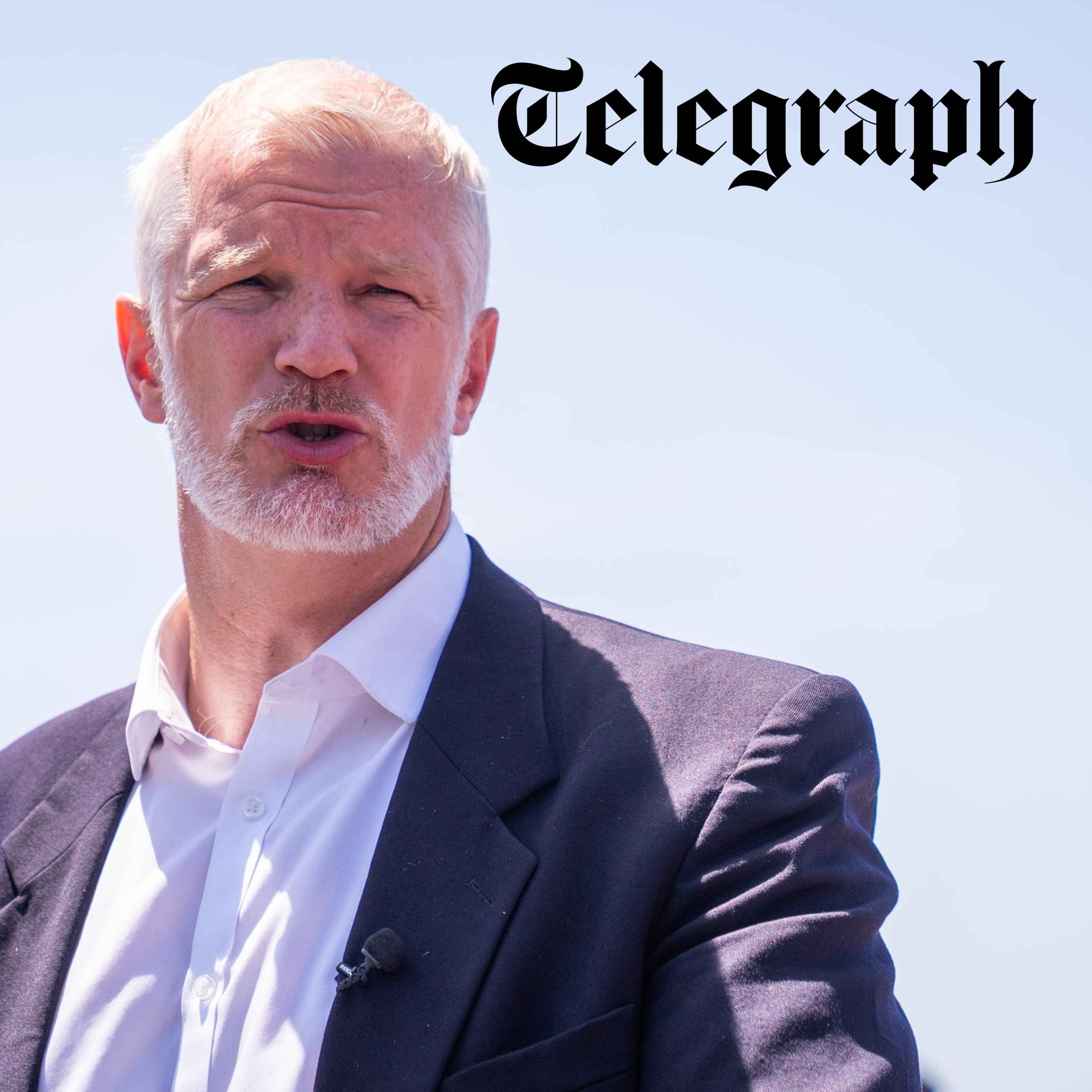
How weak Starmer left Britain defenceless: Rebel armed forces minister reveals all
from The Daily T
38m 21s
Al Carnes, Labour MP and former Armed Forces Minister, resigned over the government’s defence investment plan, which he deemed insufficient for current threats. He outlined three key reasons: a financial settlement of only 2.68% by 2030, a plan that buys outdated equipment instead of transformative capabilities like drones, and a broken trust on the Northern Arm Legacy Act for veterans. Carnes warned of a potential conflict with a hostile state within 3-5 years, criticizing the lack of prioritization for defence amid competing demands like welfare and net-zero policies. He praised Dan Jarvis for steadying the ship but noted the plan needs urgent revision. On energy, Carnes advocated a balanced transition from oil and gas to renewables, protecting jobs and energy security, indirectly criticizing Ed Miliband’s approach. He defended Labour’s record on child poverty and workers’ rights, stressing the need for long-term vision to address deprivation. Dismissing leadership bid claims, Carnes emphasized his commitment to national resilience and opportunity, rooted in his own military experience. The interview highlighted tensions within Labour over spending priorities and the moral duty to support armed forces.
The Telegraph He's the man who resigned over Keirstarm as refusal to spend more on defence. We're joined by Renegade MP and ex-military man, Al Karnes. It leaves the PM on a precipice, accused of failing to invest in the security of his country, and now pushing a social media ban that critics call "pointless". And we speak to Kebi Badenock, who accuses leadership hopeful Karnes of being a bit of a narcissist. Welcome to the Daily Tea with me Tim Stanley and me Kimmel Atomini. We're delighted to date be joined by Al Karnes, Labour MP for Birmingham's Celly Oak, but originally from Aberdeen, and I'm sure very happy about Scotland and Haiti. I'm looking forward to an England Scotland World Cup final. Who do you support? Who do you support? Because you're from Aberdeen, but you now represent Birmingham. I support all of the countries that night kingdom, but I have a definite bias towards Scotland. You were until last week armed forces minister, you resigned in the footsteps of John Healey, who resigned, saying that the government's defence investment plan did not have sufficient funds for the threat that we face. You wrote that the armed forces were being asked to operate in a more dangerous world on a budget written for a calmer one. Now, let me get the timeline right here. On June 11th, you appeared on TV, and said that you would have to see what was in the defence defence investment plan before deciding whether or not to resign from your job. Less than an hour later, you had resigned. So what happened in that very short period to make you do that? Well, there are two things, just a correction on that. I'd been brought into the defence investment plan about two weeks before. Okay. So this defence investment plan had been building for some time, months and months, and I'd only been briefed on the detail of what was in it, what capability we were going to continue to provide for armed forces two weeks prior. So I was already a little bit myth that I hadn't been involved or included in the decision making as to what our armed forces required to do. Is that normal? So I've worked for three defence sector, and in some cases it is. It's primarily who you want in this around the table, discussing those capability decisions. So I hadn't been brought into the defence investment plan, and then I had to wait for the. We were trying to horse trade things in and out of that defence investment plan, you know, right up to the very end. And then when a financial settlement was sort of exposed to me, the two didn't match. I actually think there were three key reasons why I'd run out of road in government. The first one was that the financial settlement, you know, 0.08 increase, 2.68 by 2030 was not going to deliver what we required, given the threats that we face and we see around us every day. We can talk about that in a second. The second bit was the defence investment plan was no way shape-reformed transformative enough, given the lessons of what we're seeing in Ukraine. And so it was buying kit, I thought, for the last war, not the next war. The funding profiles and the capability delivery tanks, whatever you want to deliver drones, needed to be delivered this side of 2030, not in 2030, 3,2034, because the rest of Europe is heading to 2030, time went. And then the final bit, which is intrinsically linked, was the moral component. So why are forces fighting? They have a contract with us that they do a hard day's work, they work on the front line, and then we need to support them after their service. And I've been tow to tow on the Legacy Act, the Northern Arm Legacy Act, about bringing veterans back to court and ensuring that we have a balanced programme toward truth, reconciliation and justice. I lost trust in that ability to deliver, so I couldn't ask veterans to have trust in it either. Okay, but can you explain what precisely happened in that hour? Because cynics within Westminster are speculating that what happened in that hour is you were told you would not be replacing John Healy. And I think that's a very good line to spend, to make it look like me, you're not the system. And I absolutely understand why the system would want to do that. I'll be really clear, I've sat in government for the last two years, trying to take 24 years of military experience, some working for sector states, three-seq three-defense sector, and trying to get the military back into a space where it has the capability and capacity to fight the next war. I had run out of road trying to achieve that. Forgive me, you wouldn't have stayed, had you been offered the job of defence secretary? I think it's a poison cellist, unless they were going to give you more money, allow you to renegotiate the dip I what in that dip, which bits of drones, ships, planes that were buying, and move on the Legacy Act. Okay, in which case it's hard not to infer a comment upon Dan Jarvis, because he has taken that poison cellist. Why do you think he's done that? Well, first of all, I want to be really clear, Dan Jarvis is a good friend of mine. I think he's top quality. He's got good military pedigree, so X-Para Trooper, and he's a very steady hand at this type of business. And remember, someone's got to steady the ship. We have a 30% increase in Russian activity, and surface and subsurface activity in the high north, we have 15 billion pounds with a cyberattacks as a whole. We're in the Middle East now, a peace deal, which we're going to have to play a part in. We've got war in Ukraine taking place, so someone's going to need to hold it. I think Dan Jarvis is a good man to hold it steady. He's going to have a difficult fight. I thought there was some movement two days ago, but a movement around funding, it seems to have closed off. It'll be interesting to see where that goes. And I'd also like to see that defence investment plan. I wouldn't say it doesn't need to be torn up, but it really needs to have some of these capabilities injected in and delivered this side of 2030. Would you advise a man of character to resign if he can't improve upon the plan? Well, I always say, John Healy resigned on principle. I resigned on principle, and it's down to others to decide what they need to do. And I think we've got to leave them, leave them the personal space to come to their own conclusion. Would you see the problem here as you're saying effectively? The ship is sinking because the government's not spending the money necessary to keep it safe, which are also applauding Dan Jarvis for stepping in to keep the ship afloat. Which is it? Does someone at some point just have to say to the Prime Minister, "No one can make this ship afloat as long as you're continuing to deprive it of the necessary stuff?" I see where you're coming from, but as we talk, there are pilots flying defensive combat air missions in the Middle East. There are soldiers in the trenches in Estonia looking over the border at Russia, and we have ships pursuing Russian submarines in the high north. Someone needs to hold that line, needs to carefully articulate and understand the risk, and clear the Ministry of Submissions that come up. I think Dan Jarvis is a good man to do that. And there's a bit about when I left, you know, a little bit of not leaving my post, I was like, "I've got to leave this responsibility." Because I really care about what happens to our enforcers. It was a really, really difficult decision. But I have said on the record in the next three to five years, we will have a geographically constrained confrontation with the hostile state. Yes. That is the case, and we don't get it right now. There's every chance we will lose lives in the future. Okay, so mindful of everything you've said in the very perilous times we face, and we can look if we wanted to historically the armed forces being hollowed out by successive governments. Just put that to one side. Take us inside the thinking in the Labour government, because you're talking about military types holding the line. Why isn't the Prime Minister and the Chancellor holding the line when it comes to defence of this nation? Not least when Kierstarm does pride himself on his international statesmen credentials. He's leading coalitions of the willing. Yet he seems to be very unwilling to spend the money that's needed to protect this great nation. So I'll be really clear. I think actually Kierstarm on the international stage has done a very good job, especially the stuff that I've seen. First of all, I wasn't including any discussions between the Prime Minister and the Chancellor, that was the sector of state. And I haven't been including the defence investment plan. And so it is difficult for me to give you the in-n-out working of government. What I would say is that if you are, and as the Prime Minister has said, that we are heading towards potentially conflict, then we need to fund it properly. Now, nothing is black or white in government. It's always a trade-off, but that needs to come from a central prioritisation, decision-making in the centre. And if we decide that defence is a central-cahering principle of the government, which was also said previously, then it should be. What I would say is that we continue to talk about defence in Asylum, and we think of tanks and planes and soldiers and sailor and airmen and women. We need to think of defence as national resilience. IE, it's a much broader issue. Economic security is linked to defence. Our industrial policy needs to be linked to defence. Our foreign policy affects your gas prices. We can no longer detract ourselves or disconnect ourselves from global conflict. Mr. Kahn, you are preaching to the converted here. This is the rhetoric of the telegraph comment desk. But just to drill into the issue here, what is going on then with a Prime Minister and a Chancellor who have repeatedly boasted of this massive boost to defence spending that they are now not going to commit to? Clearly, there is something ideological at play. It could be that there isn't the appetite for spending more on, say, defence as there is on welfare, or indeed the NHS. The argument being mounted by critics of this decision is that they're prioritising welfare over warfare, because ultimately they think they'll get more votes for it. And that's extremely cynical when, if the former defence secretary, John Helius, to be believed, that decision-making is leading to Britain being less safe. The quote was less safe. So I would say two elements to that.
The first one is whether we like it or not, Labour has always spent more on defence than the Conservatives, especially in recent history. And this government has spent more on defence in the last two years than the Conservatives spent in the last 14. That's positive. The trouble is the geopolitical situation, the threats that we face are actually moving even faster. And this dichotomy and this gap is starting to build. When we talk about welfare or warfare, I don't think it's actually welfare or warfare. I think it's a much broader issue across all of our government departments. And I've been really clear that we need to really get our country back into productivity and then take the slices off that productivity and make sure it's then prioritised against the outputs that we want to deliver, which is primarily defence. But one of the blockies to this is Ed Miliband and his department. You know, we've reported and others have that when told to cut his own purse strings on his zero zealotry, something, not least telegraph readers, he resolutely refused. Now, that's. He has reportedly been refusing to even meet Kirsta, but to discuss it. Now, that's extraordinary when you consider, as you've talked about, how there's a bigger picture at play here and actually our defence and security plays into our energy security, which therefore plays into our cost of living crisis. So if you've got a moveable cabinet ministers like Miliband and actually the Prime Minister and the Chancellor of Bowen to them and not to you and John Healey, then that tells the public everything they need to know about the government's priorities. So I'd say to issue two responses to that. First, the conflict in the Middle East, and even now, if the streets of Hormuz opened and get back to 120, 130 ships a day, it stopped on average perhaps six to 7,000 ships going in and out to the streets or on Maruz. That economic ramification we're going to feel for the next two years. Some of the infrastructure destroyed in the Middle East will take five years to fix. That's just the LNG sort of processing facilities. So there's going to be a ripple effect for the Middle East for a long time to come. The second bit is from my perspective, less net zero, and actually ensuring we have energy security. And I would like to see a very balanced transition from oil and gas towards green and renewables to ensure that we, as a Labour government, protect jobs as we transition through. Because we are losing hundreds of jobs in the North East and particular member I'm from, I'm from Aberdeen and I, people speak to me all the time on this. And I would like to see that balanced transition. I'd like to see the profits of some of that transition go into people who are struggling with the energy costs. So you do think Miliband hasn't got the balance right? Because he thinks he has and you seem to be saying he has it. Well, I would like to see a balanced trajectory towards not net zero but towards energy security. That's the way I look at it. That's not his trajectory, is it? His trajectory is headlining into net zero. So are you saying Ed Miliband isn't being balanced? What I would see, and it's down to others to come in on the specific figures and the economics of it, is that oil and gas, whether we like it or not, is here to stay for a generation. Let me put it to you that you're in the wrong party. Absolutely not. What have I talked about here? I've talked about jobs. Yes. So our decision-making in government is absolutely critical to ensure that we sustain jobs for individuals who are trying to put a meal on the table, trying to get their kids to school in the car, trying to pay their mortgage. If we're making decisions that are putting people out of jobs, then that's not the right thing to be doing. Understanding that we may want to get to net zero and energy security, we need to make a balanced transition to it to limit the impact, not just on the jobs, but on the cost on everybody's pocket across the country. And I think that balance is exactly where we need to go. When I talk about defense and we talk about bombs, bullets and battleships, I'm talking about national resilience. I'm talking about cadet forces, giving people a lift up and allowing them to be more mentally and physically resilient, to achieve much more in school and then go on to succeed. I'm talking about how we can give people opportunity. Remember I come from Aberdeen, a relatively rough area, and I got an opportunity. That's why I'm Labour. But you're sounding like a conservative. Well, no, I think we need to be relist in our policies. Again, you're sounding like a conservative. Well, that's entirely up to you in your opinion. What I would say is, being brought up in a relatively humble background, I was given a chance. I had the rigs to go to offshore, oil and gas. I had the military, or I went slightly awry. That was a little bit of a rogue when I was young anyway. I then went into the military, and I found that I got a lift up and out. I always say, if you were a reg, you weren't stealing the lead off judgment. No, but I was brought up in a relatively rough area. And so I joined the Marines, that channeled my energy. It made a man of me. It gave me principles. It gave me boundaries. It gave me a structure to live my life. And it brought me up and up and through. What I'm saying to you is, if there's lots of areas of this country that they've been left behind, my sitting, Birmingham and my constituency, I cannot describe to you some of the level of deprivation. Yeah. That can't be right in a G7 country. No. It just can't be right. I've been to some of the worst places in the world, and I then go to areas around our country. I'm like, how have we allowed this to happen? And the one of the reasons is, because we blame the individual, not the environment. So I always say, if a plant is wilting, it's not the plant's fault. It's the environment. It doesn't have the right water. It doesn't have the right food. It doesn't have the right sunlight. I was one of those individuals who could quite easily have gone left a right and away from the military. But guess what? I'd a military captured my imagination up and away I went. And here I am now, rightly, or wrongly zoos and. You could argue that if your constituency isn't, has got pockets of deep deprivation, which I do not doubt, that the last two years of Labour government probably haven't helped. You know, youth unemployment has gone up by 2%. People are really struggling, and communities seem more fractured than ever. So the Labour solution so far, it's not really ticking any boxes. And so I can understand perspective, but I just want to throw back at that. And there's lots of criticism in this space, but I would say the people that I've met in my constituency, for example, lifting the two-child benefit cap, has lifted 450,000 children at a poverty. We have some of the highest poverty, children, child poverty levels in Birmingham. The Renters Rights Act, the Workers Rights, actually really support some of those individuals that are just getting by. And I think they're great things. I would say the youth guarantee that Pat McFadden launched two weeks ago. It's a fantastic initiative, but I want to scale that times 10. And this is part of the issue. For example, I mean, take some of the facts and state it as figures. And you can add circa around this, because I'm not exact. 300 billion on mental health. There's sort of the impact as in the economy. There's 110 billion of that that is lost economic output. 130 billion, which is the human cost and 60 billion on NHS. Now, let's work on how we can make our country more physically and mentally resilient. But that cost me money. It dies from the defence budget. That's what the government is trying to do. It's trying to balance all of these demands. Exactly. It's really, really difficult. But we've got to have a long-term vision. You mentioned two years. Two years to change in things, exceptionally difficult. And sometimes you've got to go down before you go down. Well, your starma might need to go down before he comes up. I was just thinking, Tim, you come in, but you're not just sounding like a Conservative, right? I take that. You've battered that back at me fine. But you're not sounding like an ordinary MP now. Are you keen to call me one to do? I'm wanting to do. Are you, is this also about your own leadership bid? This is about me, I'm not. OK, I will be honest. This is about me having a voice outside of government now and seeing the things that I've always been seeing in government that haven't been allowed to speak them outside of it. Well, Kenny Badek has been asked a comment on you and she said this. I wouldn't be surprised if Alcans launching a leadership bid very soon. I don't want to be cynical, but he's not afraid of getting in front of the camera, is he? I'm not afraid of anything. I might get fun. Are you going to run? Let's just ask you that question straight out. We've got Burnham in this by election on Thursday. Don't know whether he's going to win or not. That's his own attempt to unseat Kirstama. We know it is, regardless of what everyone's saying. There's then going to be a leadership race, which the Prime Minister wants to stand in. There's a huge amount of speculation that you're also going to stand. Are you going to stand? I do think it's as black and white as that, because I haven't actually made a decision either way. I would like to see a couple of things. I'd like to see, in particular, a large chunk of MPs listened to within the party who have great ideas and really want to be bold. And we need to be bold and courageous. The only way we are going to sort this country out in the next three years and head on our continual democratic process, my view, is unless we go really bold over the next three years. And that's primarily around education. I think it's so education makers, self-say, education superpower. When do you ever see a failing education system and a failing economy? I want to see, well, above all else, I want to see us move towards mental, physical health resilience and preventative health care strategy. And those government departments start to feed into each other. And they combine strategies to deliver outputs rather than silos. And I want to see us, and I'm really honest. I've said this a thousand times. I want to see us add a trillion on to our GDP in the next 10 years. By harnessing the talent we have in this country, the entrepreneurial startups and making business come here, provide jobs in exchange for skills and opportunity across society, not just really high end degree culture. These are the type of things the argument is going to be just a solution. OK, that's fine. But people might be listening and watching this with a degree of cynicism because we had all this from Keir Starmer. We had all this with a manifesto with him in a power stance. And the word change written on the front. You know, you seem to be inadvertently-- it's probably not on purpose-- damning Keir Starmer with your own analysis of what is needed. You're saying we need to be bold and radical. By implication, you're saying he hasn't been bold and radical. And frankly, if I can use a military analogy, you don't want to be in the trenches with Keir Starmer, do you, Al-Khan? That's the--
problem here, he's just weak and not good enough. I would just be really cool. I really enjoyed being in the trenches. I'm now in politics and then a different. To answer that direct question, because you know, to use that analogy. So I've been. You've been at the sharp end. I don't think you're the type of bloke that wants to follow Keir Starmor over the top. So I've been. I've been in government now for two years. I've sat in the veterans' job and now I've sat in this job. I've met Keir Starmor once in an official capacity to talk about the issues surrounding my portfolio once and two years. So, but my honest view is that he is a good, decent man trying his very besting and significant headwinds. What I am saying, and I say this ever so gently, we need to be bold, courageous, and we need to run this like we've lost it. Because if we don't, in 2029, if you end up with a conservative reform coalition government, you'll have a 16% pull swing towards Scottish independence and in 2031, you won't be dealing with any new idea that reform brings the table. You'll be dealing with a customs union and a border crossing issue going north. And it will be a disaster. I did not fight for England, Scotland, Wales and Northern Ireland. I fought for the whole of the United Kingdom and we must hold it together. Because we're in the foothills of a Brexit-style disaster. But forgive me, if you get a reformed Tory government, you probably will get the defence spending that you've been asking for. And secondly, the SMP has done well- You won't even get national service. The SMP did well in the last round of election. It was well-ish in considering the context of the enormous leadership scandal they had on Nicholas Durgeon. On your watch, Labour is not beating the SMP right now. And this is the point though, reform didn't beat them either. And Scotland sees reform as an English nationalist party. And if you have a reformed Conservative government, you will see an increased swing towards independence that will be deniable for any government to stop. And it will happen in 2030-31. And you won't be doing national service or defence spending. You'll be cutting up your GDP back to Scotland. And talking about the new co-editerran and our place in the world, the beacon of hope, which our country has been, irrelevant of which government has been. The last couple of hundred years, we forged democracy, created all sorts of things around the world. Is a way to tear itself apart. Are you sure about that, though? Because reform has performed well in Scotland, much better than the Conservatives. And indeed, I take Tim's point that. Wales too. The rise in fall of Sturgeon happened because of Labour's inability to retain those seats. Labour's collapse in Wales. And the rise of Labour. Where devolution, ironically, because it was the invention of Tony Blair has proved to be rather disastrous for the Labour Party. You know, 24 years was it of Labour rule in Wales, educational standards down, NHS waiting times up, Drakeford, frankly humiliated during Covid. Similarly, even if you reflect on the whole camper van gate, it's extraordinary that Labour aren't making more headway there with the lefties when you consider everything that's gone on with Peter Morrell, Nicholas Sturgeon and Beyond. Good grief. So, you're having a go at the right. This is a left problem. I'm with you. I think I should let you keep going, because I'm not a fan of the SMP either. I mean, we used to have one of the best education systems in the world. True. Yeah. Now, look at it. Taking us out of this, though, the ratings, because it's so well. But you take my point about. Well, in light of all that, when you're considering an electorate that is majority, less meaning. I just want. Labour should be mopping up there, not nine to five hours. So, I just want to be really clear. If we step back and look at this, look at the way it's going. We have. And this is my. One of my concerns, and I've said this on the radio the other day, is that we have some parties seeking to highlight division and discord, champion the problems in society, split communities along race, religion, indeed some micro-cultures that we have in the UK. My concern is that that is at a lower level. And if we end up in the next four years moving towards a reform, conservative government, it goes national. And what I want to be really clear is that we have the analysis and the discussion about what that means, because I love this country, the United Kingdom, I'm a proud Scotsman, but I love the country and I need it to hold it together, especially in this geopolitical environment. And it's really interesting fact. It will link onto next point in social media, which I know you're coming onto. About a year ago, when American Israel struck Iran, they destroyed a couple of targets in Iran to Iran, and it can argue right there wrongly so it's down to others. When they struck those targets, it destroyed 3% of all Scottish independence media. I just have to think about that. Just let that sink into your listeners. 3% of Scottish independence media was being produced by Iran. Now Iran's propaganda budget is minuscule in comparison to Russia's. Russia has 1.5 billion in its propaganda budget. Now think of the social division you can sow here in the country that results in this country breaking apart without firing a bullet, dropping a bomb or sailing a battleship. And I'm really concerned that when you look at the Wales leader and reform getting 10 years for taking Russian money, and you look at the system how it's starting to sow division in right down to the lowest level, street-to-street community-to-community, and then when you step back and you think, actually, hold on, are we defeating ourselves? And actually, where are the hearts and minds of the country? And who's affecting those hearts and minds? And I think we need a really detailed analysis into that. OK. You've made a lot of social media videos which have gained great deal of attention. Are you sad that people under 16 won't be able to see this? So I'm. can I be really honest? The social media ban as a whole that came out today, I welcome it. I hope it brings the tech industries into negotiation for much more nuanced solutions. But I do not understand why on earth we are allowed in our children unfettered access to extreme images on one hand and extreme violence on the other. You cannot stop it. It would be like allowing a weirdo into your kids bedroom. You have no control over it of what they look at. Look at. on I have two boys and a daughter. My young boys speak to me about things that I would never have considered when I was young. How old were your children? 14, 11. OK. 22. But my point being is I just can't understand it. It would be similar to a news agent when you're a young, taking the top shelf of the news agent magazines, bringing them down, locking kids in there and saying, "Read whatever you want." Yeah, and have some sweets while you're at it. Absolutely. But with the VPN, people have got a key to the show. And that's the problem. That's where the nuance comes into holding those tech. tearing some strips off those tech companies and saying, "You're responsible for this. You need to police it." Would your mum and dad ever have allowed you to go into an 18-on-hour rated movie when you're 11 or 12? No. Then why on earth are you learning? But why on earth have. Why on earth? Why on earth? I mean, I had two older brothers. I was watching all sorts of inappropriate films when I was too young. But whatever. With that in mind, then, why not go the full hog and actually ban smartphones for under 13s? Why do under 13s need a smartphone at all? Yeah, so I think the implementation of that, the safety elements that for instance, and I know there's lots of different views of it. I think we've got to be careful. There's this balance between individual freedom of speech and individuality and collective security and then everything in between. They can have a brick phone. They just can't have an iPhone and an Android. I would say that the ban has come in, I think, that's a good thing. What I'd like to see is consistent, very focused iterations of the legislation to hold the tech companies to account, to ensure we are protecting our youngest people in society. Okay. Before you go, can we ask you some quick-fire questions? Yeah. Just for fun. Yeah. A bit of fun, Alkan. That's true. Up for fun. Favorite war film? Seven Poverty. Is it? Favorite military leader in all history? Churchill. Interesting. I don't want the throne. But you throw them into every quick-fire. Favorite James Bond? Sean Conroy, obviously. I mean, he's a legend. He is. Favorite Prime Minister. Clement Attlee or Churchill? Okay. Favorite Scottish food stuff? Haggis. I mean, everybody loves Haggis. I think Tonnex Caravan. Of battered Black pudding. And how many Pints of Iron Brew could you consume in five minutes? Thousands. It's made of girders. No. Alkan, thanks for being good sport. Thank you for being so clear on your views. And thank you for coming on the daily TV. Thank you for having me. Coming up next, we've already discussed social media. But what does Kevin Badek not think of the band? What are the Tories' defence plans? And why does she think Tim has had a glow up? Camilla, this morning we went to listen to a speech by Kevin Badek about defence and it strikes me having spoken with our Kens who we've subsequently discovered voted conservative in the past. Yes, surprise, surprise. It's striking how similar their criticisms of the government are. Yes. It's not just they're not spending enough on defence. It's the lack of a bold big vision for the country. And of course net zero as well. Well, we spoke to the opposition leader after that press conference and this is what she had to say. Camilla Badek, thank you very much for joining us on the daily TV. Thank you. I just heard your speech about defence who said the government is not serious about it. Now, if he were here right now, I'd hear someone would say, "The Tories underfunded defence. I have made the commitment to raise defence spending from 2.3% to 2.6% in 2027, so it's heading in the right direction to hit 3.5% in 2035." How would you respond to that? Defence spending has been going down since 1989. Since I was 9 years old. There's no point us talking about what went on for those 30 years. The fact is we were spending a peace dividend and the peace dividend has now been spent. These are new threats that are coming in. The world is more dangerous than it has been before. And we need to get ready for those threats, not talk about the threats of 20 years.
years ago. That means we need 3% by the end of this Parliament. And the fact that the defence secretary and the armed forces minister have both resigned, saying, 'Costomer is not keeping the country safe as extraordinary. It's unprecedented. I don't think we should you know, underplay the gravity of the situation that we have right now.' You've made the offer before to Costomer, or we'll work with you to cut welfare in order to spend more on defence. And that was obviously ignored. Today, in your speech, you repeated that offer to Andy Burnham. Yes. You think he might accept? Well, I think that it's important that we know what Andy Burnham is going to do before he gets into the job that he is trying to take off Costomer. I think having somebody whose plans are unknown is extremely disrespectful. If he really wants to be the prime minister, then he should be brave enough and bold enough to say exactly what it is that he's going to do. And it is my job to hold Labour to account. That is what I am doing. I worry when I hear Costomer saying that he's increasing defence spending. He's talking about increasing defence spending. He's actually cut defence spending this year by three and a half billion. Most people don't know that because the smoke and mirrors of him talking about increasing it later while cutting it now seems to be working. He is not increasing defence spending this year. He's asked the department to find cuts. We need to stop him messing around. John Healy has done the right thing by exposing what was going on. Everybody else needs to join in hold Costomer to account and let's find a solution. By making an offer to Andy Burnham, you're not making it to Al-Khanz, you're not making it to where he's treating, I assume you think he's going to win the election and he is going to become prime minister. Is that the plan that you're working on? Well, actually I've written two more than Andy Burnham. I've written two to several people. But the truth is it doesn't matter. It doesn't matter who the Labour leader is. It's still the same back benchers. It's still the same Labour party. And as I've said, they're not the Labour party anymore. They are the welfare party. Pat McFadden, the welfare secretary, had his text messages to Peter Mandelson exposed and what did he say? That all Labour MPs want to talk to him about is who can we tax to pay for benefits? That's all they care about. The other big story of the day is the social media ban for under 16s at the Prime Minister announced this morning. I was with him earlier because we both appeared on this morning on ITV. And I made an argument that when a little further, I know you're supporting the ban in principle. You're a mother of three. I'm a mother of three. Your children are slightly younger than mine. So we've both been through this. I said, actually, if you really want to do something substantial for those generations, you should just ban the smartphone for under 13s full stop. Then you get around the issues of, oh, well, what if they circumvent it with a VPN? What if they do this? What if they do that? I think primary school children and smartphones just don't mix. Would you go even further than the Prime Minister? So I don't think primary school aid children should have smartphones. Our policy is to ban phones from schools. There are very good reasons why children in year seven, for example, might need a phone. They know red telephone boxes anymore. If you do need to call home, it's actually something's happened. It's actually very difficult to do so. But having the phones in schools distracting, I think, is a real problem. I also want us to distinguish between smartphones and social media. The social media worries me because it allows strangers to contact children. Their algorithms designed to be addictive. Social media making a lot of money off our children. Social media should be for adults, not for children. Kirsten has only done this because of amendments which can serve to put in place. We got them through bills in the House of Lords. He's been pushed into this. It's not something that he was interested in doing, but I'm not going to complain or let the perfect be the enemy of the good. He's at least done something. But it might be my, it might be. I think there's all sort of weird stuff that he's brought in, like the curfews for 16 to 18-year-olds. That doesn't really make it any sense. But let's see where we get to. With policies like this that come in on the fly because they didn't have a plan. I think we should see how it's working for us before proposing we go further. There's a lot that we'll need to clear up in terms of how it's going to work. It's not going to help everybody. Some children will circumvent with VPNs and so on. Some parents will care and will let their children go on social media just as some parents give their children cigarettes. But what I want to see, what I want to see is a culture change. We didn't have you and I didn't have social media when we were doing that. Happy days. Indeed. Indeed. And we've seen a generation now that has grown up with it. And what have we seen? More mental health problems, more anxiety, more depression, fewer friends, more fear. And this is contributing to our welfare bill. It's all linked. So if we can get people off social media, we should see fewer young people going straight from university onto benefits as we have been seeing in recent days. From smartphones to a question about smartness from Tim who you've noted, Kenny Baynot, had a bit of a glow-up lately. Tim. A lot of people were concerned about the Prime Minister when he appeared this morning with a t-shirt and a tracksuit top. And of course Andy Burnham never wears a tie. What do you think about politicians dressing as though their life has fallen apart? And will you demand high sartorial standards if you're Prime Minister? I do believe in high sartorial standards. I haven't actually seen the Prime Minister's outfit this morning because I was giving my own speech. But I do think standards are dropping everywhere. I think it's important that we have men wearing ties and parliament. I think women should be dressed appropriately. You hear that, Tim. Kenny Baynot is pointing out that you've asked this question. You're not actually an attire yourself. Ties don't go well with stubble. That's the issue. I certainly think in Parliament we should do. I've been in Parliament when Labour MPs, I should say, female Labour MPs look like they were going to a nightclub afterwards. I think that we've got to set the standards. We've got to set the standards in Parliament. So I always make sure that I'm dressed appropriately. We are representing our constituents. So high sartorial standards, yes, absolutely. The women in Westminster are setting these standards that you must achieve, Tim Stanley. Kenny Baynot, thank you so much for joining us on the daily tea. Thank you, Camilla. Thank you, Tim. So that's a nice endorsement. Isn't it from Kenny Baynot to you? It is. I'm not quite sure what a glow up is, but I can assure you I've not had one. You have, because you've got these new spectacles. And the glow up is where you have a kind of like a renaissance later in life where where you were perhaps not as attractive as a student, for instance. I'm speaking personally here because my eyebrows are just some of the photographs of me from the 90s. They're so embarrassing. And then later on. I trust more on the 90s than you. No, I think anyone looked good at the 90s. Almost. I put on a lot of weight at uni as well. I will show you at some point. But anyway, I'm regarded to have had a bit of a glow up. I mean, I don't want to brag. And she was just saying that you look like you'd had one. I've always been good looking. But what I will say, and some people will identify with this is how I look changes according to the weather. Yes, it really does. I cannot tell you what colour my eyes are. Well, they're bluey, greyy green. Exactly. Well, mine are. And it changes. It changes as well. It changes according to the season. So in winter, it does look like I've got grey eyes. And then in summer, I find they go blue. As you can tell, I spent a lot of time in front of the mirror. Yes, indeed. Asking who is the fairest journalist off the wall. And I think we've had a couple of people who the mirror mentions. Can I buy the way? Say, just a great David Cameron put on a bloody tie. I mean, if you could have asked about some tutorial standards, look at you in your open nigh shirt. I know, but it's because I cultivate stubble. And I just think a tie with stubble looks worse than stubble without a tie. Okay, but I'm just saying I want to see you clean shaven and suited and booted tomorrow. When I sit clean shaven, I almost always wear a tie. All right, I'll also have a shave for tomorrow. And we'll both be back at 5pm. (bright music)
Podcast Summary
Key Points:
Al Carnes resigned as Armed Forces Minister over insufficient defence funding, citing a budget written for a calmer world.
He identified three reasons for resigning
Carnes praised Dan Jarvis as a steady hand but warned of a geographically constrained confrontation with a hostile state within 3-5 years.
He criticized the imbalance in government priorities, suggesting Ed Miliband’s net-zero focus lacks balance toward energy security and job protection.
Carnes defended his Labour values, emphasizing opportunity through military service and addressing deprivation, while dismissing leadership bid speculation.
Summary:
Al Carnes, Labour MP and former Armed Forces Minister, resigned over the government’s defence investment plan, which he deemed insufficient for current threats. 68% by 2030, a plan that buys outdated equipment instead of transformative capabilities like drones, and a broken trust on the Northern Arm Legacy Act for veterans. Carnes warned of a potential conflict with a hostile state within 3-5 years, criticizing the lack of prioritization for defence amid competing demands like welfare and net-zero policies.
He praised Dan Jarvis for steadying the ship but noted the plan needs urgent revision. On energy, Carnes advocated a balanced transition from oil and gas to renewables, protecting jobs and energy security, indirectly criticizing Ed Miliband’s approach. He defended Labour’s record on child poverty and workers’ rights, stressing the need for long-term vision to address deprivation.
Dismissing leadership bid claims, Carnes emphasized his commitment to national resilience and opportunity, rooted in his own military experience. The interview highlighted tensions within Labour over spending priorities and the moral duty to support armed forces.
FAQs
He resigned because the government's defence investment plan did not match the threats faced, citing insufficient funding, a lack of transformative reform, and a broken moral contract with veterans over the Legacy Act.
The financial settlement was too low (2.68% by 2030), the defence investment plan was not transformative enough and focused on past wars, and he lost trust in delivering justice for veterans under the Legacy Act.
No, he denied this, stating he had run out of road trying to improve defence capability and would only have stayed if given more funding, ability to renegotiate the plan, and changes to the Legacy Act.
He considers Dan Jarvis a good friend and a steady hand to hold the line, given the current threats, but notes Jarvis will face a difficult fight over funding.
He suggests it may be a trade-off between welfare and warfare, with defence not receiving central prioritization despite the PM's stated commitment to security.
He advocates for a balanced transition from oil and gas to green energy focused on energy security and job protection, criticizing Miliband's approach as lacking balance.
Chat with AI
Loading...
Pro features
Go deeper with this episode
Unlock creator-grade tools that turn any transcript into show notes and subtitle files.
 PodcastTranscript AI