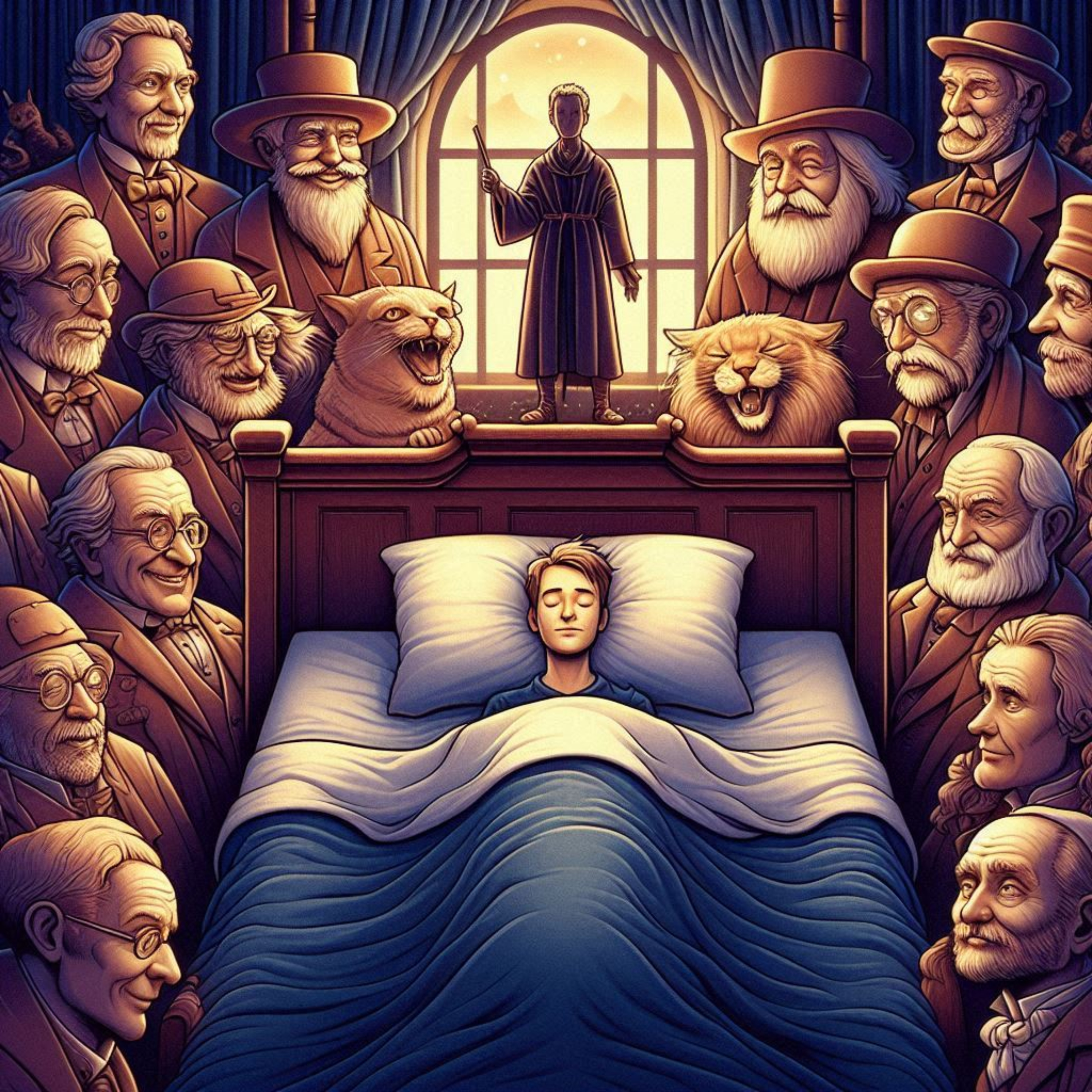
How VICTORIAN FAMILIES Survived The Coldest Nights and more | Boring History For Sleep
3h 16m 38s
Victorian families faced brutal winter conditions without modern heating, adapting with ingenuity and deep community cooperation. Instead of relying on central warmth, they created a network of personal and communal strategies to stay alive. Bedrooms were consolidated into shared, heated spaces, with families using warming pans, hot water bottles, heated bricks, and thick layers of flannel and wool blankets to retain body heat. The kitchen became a thermal powerhouse, where cooking, baking, and simmering food provided sustained warmth. Meals like soup and roasts not only fed the family but also warmed the air, while strategic timing ensured heat was generated before cold set in. Clothing was layered with strong, insulating fabrics, and daily routines emphasized movement and internal warmth. Social bonds were strengthened through shared activities—baking, storytelling, and visiting neighbours—where warmth was both physical and emotional. These practices show a profound understanding of thermal science, long before scientific principles were formalized. Victorian survival wasn’t just about enduring cold—it was a celebration of resourcefulness, cooperation, and the enduring power of family and community. In contrast to today’s climate-controlled homes, their approach made winter a shared, active experience rooted in resilience and creativity.
Congratulations friends, you're here with me tonight as we step back into the drafty halls and frost-tipped windows of the Victorian time period to see how families made it through the coldest nights of the year. No central heating, no electric blankets, just coal fires, thick quilts, hot bricks at the foot of the bed and every trick they could think of to keep the winter chill at bay. So before you get comfortable as always, please take a moment to like the video and let me know in the comments where you're tuning in from and what time it is. It's always comforting to see our little nighttime gathering stretch across so many time zones. Now, dim the lights and imagine the faint glow of a hearth in a quiet room because this is how Victorian families survive the coldest nights. Imagine that you're in a warm bed with an electric blanket that is quietly humming. The temperature in your home is a perfect 72 degrees. Now pictures taking away everything, like the temperature, the warm air circulating through the vents and any electrical parts. Welcome to a Victorian winter night, where the challenge of staying alive until morning was not so much about being cozy as it was about avoiding becoming a human icicle. Some might say that Victorian families were tougher than ours and there were times when they were. However, they were not superhuman. They just found creative ways to stay warm that would make current safety inspectors faint. Over the course of the 1800s, Jack Frost did more than just nip at noses. He made himself at home for the winter. In the 1800s, the average Victorian home used about as little energy as a submarine screened door. That kind of big room with high ceilings that look so classy in period dramas. They were monsters that ate heat. It would get warm up to those fancy carvings and stay there, making everyone below shiver like a bunch of chihuahua's in the snow. A single pane of glass could have been made of paper because it kept out so much cold. But this is where Victorian creativity came in handy. These families didn't just put up with it. They came up with a huge number of ways to stay warm that would make current survivalists look weak. In our climate controlled world, they understood that merely turning up the heat isn't the only way to stay warm. You also need to utilize available resources and think creatively. In Victorian times, most families started getting ready for winter, like they were getting ready for battle. In October, they would start the great move, but not to warmer places. Instead, they would go to warmer rooms in their own homes. In the summer, the lobby would be empty, like a ghost town, and everyone would cram into the room with the best fireplace or stove. The kitchen turned into mission control for staying alive in the winter. Not only because that's where the food was made, but also because the cast iron range was basically a small fire that cooked food. In Victorian times, smart mums would bake during the coolest parts of the day so that the bread would heat the whole family. For hours, the oven would stay on, warming the room and making something beneficial at the same time. In terms of being useful, nothing was thrown away when it was used for making heat. Instead of going down the drain, the hot water used to wash dishes would sit in tubs around the room and slowly warm the air. Even the family dog made money as a living breathing foot warmer. By December, he was everyone's best friend. Families would sit around the kitchen table for everything, not just meals. They would do their chores, sew, read, and even do their dentistry if Uncle Herbert had been putting off that toothache again. The kitchen table turned into the family's main meeting place, a place where people could hang out and a safe place to be. The real test, though, came at night when the sun went down and the temperature dropped even more. That's when Victorian families had to make a choice. Do they try to heat the bedrooms or just accept that going to sleep is like going on an Arctic hike? Most chose the second option, resulting in inventive solutions that would make your great grandmother proud in your heating bill envious. In a Victorian home, the evening routine began hours before anyone went to sleep. It was kind of like getting ready for a siege, but with a lot more flannel and a lot fewer guns. From the youngest child to the family father, everyone had a part to play in the big project of keeping warm every night. One could presume that Victorian families endured the cold in their separate bedrooms, each member confronting the chill in isolation, like thermal martyrs. But you'd be wrong, and that's a good thing, as that would have been a recipe for disaster that even Charles Dickens wouldn't wish on his worst characters. Victorian households innovated what could be termed "strategic bedroom consolidation". Consider it the antithesis of social isolation aimed at survival rather than indulging in Netflix consumption. When temperatures fell below tolerable levels, the family would forsake their dispersed summer sleeping arrangements and convene for a substantial slumber party in the room that retained heat most effectively. The master bedroom typically the most spacious and therefore the warmest, transformed into a shelter for family members escaping the frigid conditions of their individual quarters. Parents often share not only their bed, but also their entire bedroom with children, grandparents, and occasionally the family cat, which has an extraordinary talent for occupying the hottest spot while maximising area usage. This practice extended beyond mere body heat, although that was certainly advantageous. The focus was on concentrating all heating efforts in a single area, rather than attempting to warm the entire house. Consider it akin to indoor camping, or be it with greater decorum and far superior bedding. The evening migration would commence around dinner time. Initially the warming pans would be retrieved, these clever copper or brass devices resembling a frying pan with a cover and an extended handle. One would load them with hot coals or heated stones, then insert them between the sheets to mitigate the frigidness of the bedding. It resembled a rudimentary heating pad, but it could potentially ignite your residence if not handled with caution. Children alternated in transporting these warming pans from bed to bed, a task that encompassed elements of duty, adventure, and the challenge of preventing a fire hazard in the household. The warming pan procession was a matter of great importance. Failed to synchronise properly, and an individual would discover themselves in a bed that was either still frigid or bore actual burn marks on the linens. The warming pans were only the initial step in the process. The true protagonists of Victorian bedtime warmth were the hot water bottles, although referring to them as bottles is charitable. These were often composed of stone, ceramic, or subsequently rubber, and they retained heat akin to little thermal batteries. Families would operate several bottles simultaneously, creating a continuous production line of warm comfort that necessitated precision like that of a Swiss timepiece. One would heat water on the stove, meticulously fill the bottles without inflicting burns, encase them in flannel to avert scolding, and subsequently distribute them across the bed as comforting warmers. You would have one for your feet, one for your torso, and perhaps one to embrace if you felt especially cold. It felt like sleeping with a small army of warm companions, each gradually releasing heat throughout the night. The astute families would heat their hot water bottles in succession. Boil water to achieve optimal initial heat, thereafter, as the first bottle cools prepare a second one for immediate use. By morning, you may find three or four tepid bottles strewn around the bed like thermal casualties, yet you would have remained warm throughout the night. Subsequently, there came the bricks. Yes, they were real bricks. Victorian families would heat standard construction bricks in the oven, or by the fire, encase them in towels or flannel, and utilise them as bed warmers. These items retained heat exceptionally well and could maintain warmth for your feet for hours. Water the drawbacks. If you shifted improperly during sleep you may awaken with contusions resembling bricks on your shins. However, at least they would be warm contusions. The bed-sharing arrangements became rather innovative as well. Children would be organised by size and thermal output, the warmest positioned centrally, with the tiniest nestled between their siblings, filling in a human-heat sandwich. Parents would act as external barriers, preventing the children from rolling out and providing the initial defence against the chile air that invariably infiltrated even the thickest blankets. If you've wondered why your grandmother loved flannel, you're about to learn Victorian textile strategy. These families built sleep systems for heat retention with flannel as their secret weapon. Discuss flannel first. This was not the mull-style flannel that looks like fluffy paper. Victorian flannel was strong and durable like medieval armour. Wearing a vintage flannel nightgown was thermal warfare, not just a bedtime routine. Modern outdoor enthusiasts would envy the layering system. Start with a flannel chemise or undershirt, then a nightgown and possibly a dressing robe. You looked like a mobile textile experiment once you addressed for bed. The main goal was to be a warm, movable textile experiment which you achieved. Women's nightgowns were technical marvels. These gowns had more fabric than modern bridal gowns, with long sleeves that could cover the hands, high neck lines that reached the chin, and a large skirt that could fit a small family. One of these flannel fortresses wraps you like a toasty tent when you lie down. However, creating the bed was the real highlight. Victorian beds were thermal systems designed to retain heat. The base was usually a rope bed or metal springs with a straw or horsehair mattress to insulate the cold floor. Feather beds arrived next. The phrase "feather bed" conjures up visions of something airy and delicate. Yet Victorian feather beds were like sleeping on a down mattress. These items may be six inches thick and weigh a a small person. You sank into the feather bed
like a warm, lovely cloud when you went to bed. The fundamentals behind featherbed warming are brilliant. Feathers and down created tiny air spaces that kept your body heat close. It was like sleeping and soft comfy insulation, not harsh and pink. Once comfortable, the featherbeds weight kept one motionless, which was beneficial for heat retention, but detrimental if one needed to get up throughout the night. Sheets made of non-cotten were laid on the featherbed. Winterbedding was usually made of flannel or linen that had been carefully brushed to retain heat. Some households used wool winterbedding, which was harsh yet comfortable after a climatisation. The blankets were the real highlights. Victorian families arranged their blankets to resemble a winter shelter. Start with a lightweight wool blanket then a larger one, a quilt, another wool blanket, and finally a large coverlet with several sewn layers. Some blanket systems weigh over 20 pounds. Stepping into the bed was akin to receiving a warm embrace from a friendly elephant. The layers made mobility a theoretical concept rather than a practical one. You chose your position carefully because changing it would require major building work. The weight was useful, not decorative. The thick blankets caused deep pressure stimulation, which is why weighted blankets are used for anxiety and insomnia. Victorian families accidentally discovered the sleep promoting benefits of many pounds of wool and cotton in their mattresses. If all else failed, bed curtains were provided. Four poster beds managed temperature and were status symbols. Thick draperies around the bed created a separate sleeping chamber to retain body heat. One can create a separate warming chamber several degrees warmer than the room by closing the drapes. Victorian households last defense against the cold was the bedroom, whereas the kitchen was their proactive hub. These homes went beyond meal preparation to strategically use every calorie, flame and unit of heat from feeding a household. Your Victorian kitchen resembling a thermal power plant regarded dinner as a secondary concern. The home's heating system relied on the cast iron range which burned wood or coal to heat the air while baking bread, roasting meat and heating water. Military tactics were used to schedule meals. Breakfast fed everyone before they left and they started the stove early to heat the home as people got ready. Morning porridge was nutritious and filled the cooktop for an hour, warming the kitchen as the family gathered around the table like moths to a welcoming flame. The real magic happened at dinner. Victorian mums transformed meals into a decorative heat source. The Sunday roast was practical, not routine. The kitchen became cozy and provided enough food for multiple meals while a large piece of beef was baking in the oven. The leftover heat from roasting would be used to make bread, heat water or warm the kitchen at night. When each lit burner signified warmth, batch cooking took on new meaning. Families may cook multiple dishes at once for convenience and to justify burner use. One burner would boil soup, the oven would bake bread, water would heat for washing and tea might be brewing for beneficial measure. While the rest of the house looked like a walk in freezer, the kitchen was busy and warm. This soup was the classic Victorian comfort food for more than taste. A big pot of soup can simmer for hours, filling the kitchen with warm humid air and warming you. The soups vapor injected dampness into the dry winter air, warming the space despite an unaltered temperature. It looked like a tasty drinkable humidifier. A stoop families coordinated their cooking and heating needs throughout the day. Morning baking heated the kitchen for breakfast and dressing. Midday cooking, warm lunch and preps for afternoon activities. Dinner time preparation would warm the family gathering. The food plan looked like a heating timetable. Hot beverages became internal heaters instead of refreshes. Tea was a social drink, a way to warm oneself and a soothing object to hold. Victorian families warmed cups of tea, coffee, or hot chocolate by wrapping their fingers around them and breathing the steam. Families prepared hot spice cider or wine for a sale, a survival ritual. The alcohol and spices like cinnamon, cloves, and ginger gave these drinks internal warmth. Victorian medics called it internal warmth. A pot was kept warm on the stove for hours to make the sale, boosting the kitchen's heat output. Baking became wintery, bread making which requires several hours in the oven was conducted during the coldest hours. Needing generates heat through physical strain, rising dough demands a heated atmosphere, conveniently supplied by the kitchen and baking heats the space for hours. Many families baked multiple loaves at once to justify keeping the oven hot. Some families even invented thermal cooking. Cooking dishes that keep cooking and produce heat after being removed from the stove. Pot roast or stew would start on the fire and then simmer in a warm kitchen area, releasing heat. It evolved into a supper from a portable warmer. The kitchen became the family's unofficial winter living space. The warmth inevitably prompted socializing beyond cooking. Children did their homework at the kitchen table. Elders read and mended, and the family talked in the evening. The stove's constant heat and the warmth of family gatherings made the kitchen table the center of winter family life. Victorian families were geniuses. They turned themselves into human heating systems without comprehending the science. These people used medieval knowledge but got findings that would impress modern thermodynamic specialists. The Victorian approach to body heat management was simple. Heat yourself if you can't heat the air. This led to brilliant and dangerous answers frequently within the same home. Exercise became about internal combustion rather than fitness. Victorian households engaged in warming activities before bedtime, which were practical exercises that stimulated blood circulation rather than jumping jacks or yoga poses. Women may brush their hair harder, males may chop more firewood, and youngsters may play more active games indoors. The idea wasn't to sweat but to heat your internal furnace for the night. Victorian thermal science excelled in garments. Modern outdoor lovers would envy this family's layering skills. They understood loose layers held more warm air than tight ones. Natural fabrics like wool and cotton breathed better than synthetic materials, though they didn't know why. And covering your extremities was essential for core body warmth. It was an advanced undergarment game. Long underwear was the warming system's base, not merely for show. Victorian longjons were constructed of wool or cotton flannel to trap warm air adjacent to your skin and wick away moisture. Women's chemises and men's undershirts created a microclimate undergarments. The true invention was strategic warming. Victorian households discovered that heating certain body sections was more effective than warming up everywhere. Warm feet made you feel warm, even if the rest of your body was cold, so they learned to keep your feet warm. Creative foot warming solutions resulted. Families warmed their feet before bed using heated bricks, hot water bottles or stones in addition to thick wool socks and slippers. Some folks soaked their feet in warm water before bed to boost circulation for hours. Hand warming was crucial and Victorian families invented many methods. Handmuffs were handheld heaters that held heated stones or little metal warmers with hot embers. Many individuals carried little metal hand warmers, heated by the fire, which they slipped into their gloves or pockets. Victorian households intuitively grasped thermal mass even without the scientific name. They recognised that some materials retained heat longer and that pre-warming objects may keep them warm overnight. Thus, clothes were warmed by the fire before wearing, pillowcases before bed, and even the chamber pot, which was practical. Breathing techniques were discovered accidentally. Victorian households discovered that breathing into their hands, blankets, scarves and mufflers created warm air pockets that heated their surroundings. Kids learned to breathe slowly and deeply when cold, not for the physiology, but because it worked. The buddy method was probably the best body heat management strategy. Warmth was shared for survival, not romance or family. A couple under the same blankets can keep their sleeping space warmer than apart. Non-related guests sometimes shared beds for thermal efficiency because body heat sharing was so common. Victorian households also discovered thermal bridging that heat follows lines of least resistance. Instead of metal bed frames, they used rugs and carpets to limit heat loss to cold floors and moved away from windows and exterior walls where heat loss was highest. Timing for warming was important. Victorian families realised that creating heat before you needed it was better than trying to warm up after being cold. Warm hands by the fire, feet with warm water and bed garments at night was smart preparation for preserving body heat without external heat sources. Victorian families quickly realised that winter required community, resource sharing and even creative reinterpretations of social boundaries. As temperatures dropped, etiquette gave way to necessity, creating unique social arrangements that modern families may find endearing and challenging. Winter gave calling hours a new meaning. Families visited neighbours for social and thermal reasons. You might want to stay longer if the Johnson's had a better heating system. If your family had heated the kitchen for baking day, you would naturally ask the neighbours to assist with the bread, which kept everyone warm and allowed socialisation. House parties pretended to be social events but were survival techniques. A crowded room was heated entirely by body heat. Long evening assemblies with many families in one room were a Victorian social ritual that also conserved heat. 15 people in one room can be warm without heating.
the same 15 people in different homes would feel cold. Church attendance often increased during the coldest months, not always due to spiritual rebirth. Churches were often the community's largest heated venues, providing hours of warmth and socialising with neighbours facing similar thermal issues. In winter, extended sermons kept the congregation warm, as well as demonstrating the minister's dedication. Community baking became social, families coordinated bread making and baking, sharing oven space and fuel costs. In winter, people gathered around the bakery's ovens long after their purchases. It was socially acceptable to await your bread longer than baking time. Victorian boarding houses pulled heating costs and offered affordable rooms. A home with paying guests provided warmth, shared fuel expenditures, and social involvement to combat the long cold evenings. Bordinghouse parlors were often the warmest and most social places in a community during winter. Quilting bees and sewing circles provided thermal endurance support and needlework. As women collaborated, body heat would provide comfort while manufacturing comforters, blankets, and warm clothing. Cooperative quilting provided blankets for cold locations and fostered camaraderie among makers. Barn raisings and other community work often took place on the harshest winter days due to the cold. Since physical exertion required intimacy, it would warm everyone. The social dynamics also allowed many families to gather in one region, reducing heating costs and strengthening community relationships. Winter made sitting up with sick neighbours more important. Accompanying someone during an illness went beyond medical aid to include giving warmth and reducing heating costs during recovery. Neighbors alternated helping and warming during these vigils which often became community gatherings. Many children's winter activities promoted community warming. Groups of children playing indoor sports together stayed warm due to their physical exertion and the heat generated by their bodies. Storytelling by the fire united people in the coziest part of the home and provided midnight entertainment without lighting or heating. Reading clubs and literary groups thrived in winter because they justified long stays in warm places. During long winter evenings, body heat kept a house full of people discussing the latest novel warm, providing cerebral stimulation. Heat altered courtship behaviours. Young couples spent more time in family parlours with relatives, not just because of shaperoning customs. Large families, cold stoves and proximity induced social friction exacerbated many Victorian romances. Visiting relatives or acquaintances during the winter for their better heating became a social norm. If a relative had a functioning fireplace, it was fine to stay there for weeks or help extended family with heating costs. The visits were social but everyone understood thermal math. Winter survival in Victorian times wasn't only about sleeping. What occurred as you left your comfortable blanket cocoon to confront a frigid winter morning? This everyday activity required ritual, performance art and extreme athletic methods. Imagine being covered in 20 pounds of wool blankets and hot water bottles. You spent all night creating the perfect warm air pocket. Then you hear the church bells or your neighbour's rooster signaling morning. You must rise and face the world, where your breath will fog and your feet will go numb. Morning prep in the 1800s was like a planned dance while freezing. First rule, never stand up at once. You could just as well leap into a cold lake. It would jolt the system and erase all your warm work overnight. Instead, you'd slowly transform from a warm horizontal to a functional upright. While you slept, it started. Move your arms and legs under your sheets to get blood flowing. It resembled horizontal exercises. Instead of just warming up, you have to switch on your heaters inside before letting the cold air in. Even though Victorian families didn't understand metabolism and circulation, they understood that movement warmed things. A planned clothes arrangement followed. Victorians were sophisticated. Some put clothing beneath the covers and in a precise order adjacent to the bed the night before to warm it up with their body heat. Dressing became a military operation. They put on their underwear first. They often slept beneath the sheets and added layers quickly to avoid becoming cold. Smart families invented a relay system to stay warm in the morning. The first family member up and best able to endure the cold would start the fires, heat the water and warm the shared areas. The family's thermal advance scout ensured that everyone could get out of bed and into a safer world. Breakfast became about staying warm rather than eating. The morning meal was designed to warm you internally. Hot milk, cereal, tea or coffee was almost too hot to drink. Due to the necessity to feed your internal fire all day, Victorian breakfast dishes were high in calories and kept you warm. Doing laundry in the morning was brave, heating enough water for cleaning required forethought and fuel since there was no hot water. Many families used strategic hygiene by washing the most critical areas with warm water and saving the remainder for warmer weather or special events. Chamber pot etiquette became more complicated in the cold morning. In addition to convenience this thermal survival equipment kept you from leaving the warm house to use the restroom. Victorians covered chamber pots for more than aesthetics. They kept the contents heated at night to prevent freezing. Kids needed rewards, excitement and warmth to wake up on frigid mornings. Children's garments were warmed by the fire before going to bed. Dressing became a game where each item was a warm treat. Some families created morning rhymes or songs to keep kids moving and warm while getting dressed. In the morning the kitchen was the hub for cooking and finishing the heat before leaving. Families would gather around the stove for last minute warm-ups, outfit changes and mental preparation before opening the door and venturing out into the frigid winter weather that could cause eyes to water and lungs to burn. The most interesting thing about Victorian winter mornings may have been the sense of success they offered individuals. Not living in a heated home or taking hot showers today makes getting out of bed, dressing, feeding and getting ready for the day a daily win hard to conceive. People were proud of their frigid morning survival skills. In your climate controlled home you may dial down the thermostat to save electricity but think about the Victorian family who survived the cold with imagination, teamwork and a big collection of flannel. They survived winters that would send modern families to the nearest hotel. They did it gracefully with laughter and with a tenderness we rarely remember. They planned for winter warmth, family and neighborhood bonds and personal fortitude that would last. Victorian families discovered that taking care of each other in cold weather provides warmth that contemporary central heating cannot. Consider the Victorian family that made winter an art while you switch on your electric blanket and smart heater tonight. They proved that family love and creativity can overcome the harshest nights. Born in the port city of Genoa, Christopher Columbus entered the world under a roof that smelled of salt air and fish scales. His father, a wool weaver by trade, held lofty aspirations that his son might avoid the repetitive, grinding tasks of carding, spinning and weaving. The bustle of people coming to trade in the harbour, yelling over each other in half a dozen dialects, made an indelible impression on young Christopher. As he wondered the narrow alleys that snaked through the city, he would often pause besides ships being loaded with cargo's bound for foreign horizons. No matter the dampness or the fierce winds rolling in from the lagurian sea, he remained entranced by the idea of distant lands. This fascination set him apart from others his age. He was far less interested in the local gossip about the new bishop or who would marry into which family. Instead, he chased fleeting rumours about gold-laden shores where people spoke in languages sounding like music. When he was old enough to leave home, Columbus began to sail modestly, short voyages in which he served as a messenger or a humble hand, making sure to note every detail. Once, while aboard a small merchant ship, he encountered a fierce storm that pitched the vessel so violently, several men were lost at sea. Yet Columbus persevered, occasionally gripping the rigging and feeling both dread and a certain strange euphoria. He later recalled this episode as the exact moment he realised that "fortune favored risk" takers. The wind stung his face, but he felt alive in a way that overshadowed the fear. At that time, the known world for most Europeans was bracketed by misunderstandings about what lay beyond the horizon. Maps were often imaginative, featuring sea monsters, swelling vortexes, or vast empty spaces labelled terror incognita. Columbus devoured any chart or ragged bit of parchment he could find. In taverns, he listened to old sailors speak of land glimps through squalls and thick fog and not shown on official charts. While some dismissed these tall tales as bar brawler's fables, Columbus tucked them away in his mind like precious cargo, he made sure to learn from the best navigational minds available. By day, he subjected himself to the strict discipline of mathematics, angles, distances, how to track the sun and stars. By night, he poured over translations of Ptolemy, or any scraps referencing far off kingdoms. His curiosity was insatiable but always tinged with pragmatism. Even as he immersed himself in daydreams of unknown continents, he meticulously built his fundamental knowledge. The pursuit of novelty was anchored in the discipline of rigorous study. A lesser known anecdote concerns a letter Columbus received from a Venetian traveler whose name has been largely forgotten by mainstream history. This Venetian teased glimpses of a rumoured passage, a route leading west across the Atlantic to Asia's riches. The less
the letter wasn't coated with the florid hyperbole common in travel accounts at that time. Instead, it was almost stark, describing a place where the sun set over expanses of water few dead traverse. Columbus cherished that letter, convinced it held the kernel of a secret known only to a handful of traders or explorers who lack the means to follow up on it. The Venetian might never have expected his words to incite one of the most daring voyages of the age. Yet for Columbus, that letter represented a subtle push, a sign that the improbable might be real. In the decades leading up to his famed expeditions, Europe wrestled with power shifts. Italy's city-state squabbled with each other. The Ottoman Empire flexed control over trade routes and Portugal angled for maritime dominance. People in Columbus's circles debated the viability of sailing west to reach the Spice-Laden East. The question was more than academic curiosity. It came down to wealth, alliances, and bending the map to serve power. Genoa, sitting at the crossroads of so many trading arteries, was itself a testament to how maritime acumen could drive prosperity. Columbus was neither the best educated nor the wealthiest visionary of his time, but he excelled in marrying lofty dreams with a cany political sense. It became apparent to him that some power, be it Portugal, Spain or another kingdom, would eventually roll the dice on a transatlantic venture. And he, poised with a solid track record of smaller voyages, aimed to be the chosen instrument of that gamble. He saw himself as indispensable in bridging the gap between the idea and the deed. Others might excel in theorizing or financing, but Columbus believed he alone carried the peculiar mix of unwavering faith and nautical competence necessary for success. During these formative years, what truly set Columbus apart was not just his willingness to take leaps, but his ability to accumulate allies and supporters behind closed doors, yet a gift for speech, particularly when discussing navigation or potential wonders that might lie across the Atlantic. People described him as a steadfast man, perhaps even stubborn, whose visions shone through in conversation. Some dismissed him as over zealous, others were swept up in his unwavering confidence. Either way, they remembered him, in a society where reputations were currency. That was the first step toward finding patrons who could turn imagination into tangible backing. Stories about Columbus, often skipped from his boyhood in Genoa, straight to his lobbying at the Spanish court. Yet these in between years, during which he sharpened his craft, cultivated friendships, and scoured every port for whispered tales were pivotal. They formed a crucible in which the idea of sailing west to reach what Europe called the Indies, hardened into a driving obsession. By the time he embarked on the journeys that would etch his name into history, he was already a seasoned navigator with connections in multiple courts. Many might have possessed theoretical knowledge or raw courage, but Columbus combined them with a strategic sense of timing and persuasion. Ultimately, the sum of these experiences, the near death storms, the midnight confessions of old sailors, the letters penned by obscure travelers, wove together. Columbus stood as a man on the cusp of forging something vast. He was ready to propose a radical plan to whichever monarchy had the audacity to endorse him. And that moment was inching closer every time he set foot on a dock, every time he gathered new bits of intelligence, and every time he closed his eyes at night, visions of uncharted coasts dancing just beyond the darkness. Spain in the late 15th century was an agitated tapestry of ambition, religious devotion, and a desire to surpass other emerging European powers. After the reconquister and the unification under the Catholic monarchs, King Ferdinand and Queen Isabella sought new ways to smite their place in the world. While Portugal was establishing itself along the African coast, using caravels to probe new waters, Spain faced the possibility of being left behind. Columbus perceived this anxiety like a cat sniffing out opportunity. He had tried pitching his westward plan to the Portuguese crown previously, but was met with hesitation, some say scorn. His proposition sounded suspiciously like gambling with the unknown. Portugal, after all, already had an established route circling Africa. But the Spanish court was more impressionable, perhaps because they were eager to leapfrog over rivals in the exploration race. Columbus bided his time in Andalusian port towns, forging friendships with local captains, cartographers, and the occasional monk with an interest in exotic geography. He cultivated a sense of mystique around himself, dropping hints about rumoured islands beyond the horizon. And yet, winning over the Catholic monarchs demanded more than grand promises, Columbus needed to demonstrate some shred of credibility. So, he appeared at court armed with numbers and references. Although many modern experts debate the accuracy of his calculations, especially his underestimation of Earth's circumference, he was undoubtedly passionate about them. He insisted that the distance westward to Asia wasn't as colossal as mainstream scholars maintained. Moreover, he insisted on titles and privileges for himself if he was successful. This wasn't mere hubris. He believed that if he discovered new lands or profitable routes, he deserved recognition and wealth. It's worth noting that Columbus, as a man of his era, cloaked his intentions in religious justification. He talked about bringing Christianity to the far reaches of the world. This approach resonated with an Iberian court fresh from the triumph over Granada, and eager to spread Catholic influence abroad. But behind the religious language, there was also a shrewd negotiator who understood that spiritual rhetoric often smoothed the path toward funding. If you could couch your proposed voyage in terms of salvation or the glory of God, you'd find fewer obstacles in the corridors of power. What followed were months, some say years, of haggling. Advisors to the crown debated where the Columbus was an inspired savant or a fool. Traditional geographers scoffed, referencing ancient authorities who argued that the Atlantic was vast, filled with unknown dangers. A few murmured that even if Columbus did find land, it could be an inhospitable wilderness unworthy of the trouble. Columbus, however, radiated a calm sense of certainty. He occasionally flashed a map, though how detailed these charts were, remains a mystery. Scholars have speculated for centuries about the source of his unwavering assurance. Some pos it hidden documents or secret knowledge, gleaned from seafarers who stumbled upon unknown islets. Others assume it was sheer stubbornness, an unshakable conviction that a western sea route must exist. Eventually, the Catholic monarchs took a calculated risk. They granted Columbus the funds for three ships, a modest investment from their perspective. The arrangement was that if he found nothing, the loss would be brushed aside by the Spanish treasury. But if he succeeded, Spain would catapult ahead in the scramble for new lands and trading routes. The recollection of Portugal's prosperity from gold and spices weighed heavily on their shores. Nobody wanted to miss out on the next wave of riches. Columbus, exultant with the Royal Nord, hurried to assemble a crew. People often overlook the question of how Columbus gathered those men. It's true many were from modest backgrounds, with some rumoured to be on the run from the law, hoping to escape their past in the expanse of the ocean. But it wasn't just desparados who signed up. Skilled navigators from Palos, Huelva, and beyond joined, intrigued by the potential for fortune. The ships, commonly referred to in simplified form as the Nina, the Pinter, and the Santa Maria, were repurposed commercial vessels, not the grand specialized craft of some modern imagination. In those final days before departure, Columbus prayed publicly at small monasteries and confided in a handful of confidants. The air crackled with anticipation. Coastal communities whispered about the boldness of it all. Some saw it as an act of madness or vanity. Others felt the giddiness of perhaps witnessing the dawn of a new era, though they likely didn't phrase it that way. For his part, Columbus maintained a controlled composure, but one can imagine the swirl of thoughts in his head. What if the critics were right, and Asia lay much farther than he had predicted? What if the currents were too treacherous, the men mutinied out of fear? Despite the swirling uncertainty, Columbus pressed on. In the context of the times, caution often yielded smaller gains, while boldness, especially in exploration, could reshape kingdoms and redefine maps. And so, in August of 1492, with the last fleeting gusts of summer wind, he led his rag-tag-armada out of Palos de la Frontera. Spain's coastline faded behind them under a brilliant sky, and all that remained was the emptiness of the Atlantic. No one aboard those three ships fully grasped the magnitude of what they were about to set in motion. Columbus was convinced that on the other side of that endless horizon, lay a gateway to Asia. What he actually found would ripple through history in ways neither he nor his patrons could have envisaged, yet that departure day, so often depicted in simplified paintings, was anything but routine, the tension on back, the unspoken prayers of the men, the specter of turning back if storms threatened, it all brewed a potent mix of hope and dread. Columbus, unwavering, stood near the ship's helm, mentally rehearsing his route, likely feeling the weight of his deal with Spain's monarchy on his shoulders, but as a faint breeze pushed them out to open sea, he also might have felt an intoxicating rush of possibility. Sailing into the unknown demanded more than bravado, it demanded an unspoken agreement among the crew.
that they would trust Columbus' instincts for better or worse? For weeks, the men heard nothing but the wind snapping the sails and the whole creaking under the pressure of the open sea. Fears of sea monsters and bottomless whirlpools circulated in hushed conversations. Each day, Columbus measured the sun's position with the astrolabe. Jotting figures in a logbook he kept hidden from prying eyes. Rumour has it he maintained two sets of records, one genuine, skewed to soothe anxious sailors. As time wore on, their diet, initially bred, onions, salted meat, became stale and monotonous. Water turned brackish, tempers flared as frustrations boiled over. The sense of distance from any known shore was paralyzing for some. A few men muttered that they should force Columbus to reverse course. Yet each evening, Columbus delivered a kind of pet talk, reminding them of the wealth rumoured to be waiting just beyond the horizon, of the possibility that each day's sail brought them closer to Asia's spice markets. From a modern perspective, such promises might seem manipulative, but within their historical context. Columbus was playing the necessary role of morale builder. Along the voyage, certain signs stirred fleeting moments of optimism, floating clusters of seaweed, stray birds overhead, even the faint smell of unfamiliar vegetation on the breeze. Sailors latched onto these clues like lifelines, interpreting them as evidence that land must be near. Some historians argue that these were the crucial threads holding the expedition together, when minds threatened to unravel. Columbus, however, rarely displayed his own doubts. His journals hint at the internal turmoil he felt when days stretched into weeks, and no solid coastline materialised. But to the men, he projected unwavering determination. Then came a fateful night in October, when the cry of tiara tiara finally broke the silence. The men scrambled to the sides of the ship, eyes scanning the dark horizon. Shrouded in moonlight was a low, dark outline that could only be land. Relief, excitement, and a twinge of disbelief shot through the crew, they had survived the dreaded emptiness. When morning came, they saw a lush island, beaches gleaming under the sun. Columbus convinced he was near Asia, unfurled the Spanish flag, and claimed the land for the crown. In his diary, he described the islands inhabitants as friendly, curious, and naïve about European ways, though he likely wrote with the tinted lens of an outsider imposing his own world view. The early interactions between Columbus and the indigenous people, often referred to as the Taino, began with gestures of goodwill. Small gifts of glass beads and trinkets were exchanged for parrots, cotton, and rudimentary gold ornaments. Columbus interpreted these gestures in a context shaped by centuries of European feudal and mercantile culture. He wrote excitedly about the potential for future riches, and the ease with which Spain might extend its reach across these lands. That initial moment of wonder, two distinct worlds meeting for the first time, held a fragile promise of mutual discovery. Yet history shows us how illusions can fracture under the weight of greed and cultural misunderstanding. Columbus recorded that some of the islanders directed him farther to the south and west, mentioning places with greater wealth. So, he pressed on, navigating among the islands of what we now call the Caribbean. The further he travelled, the more he convinced himself that the Grand Cans' palaces might lie just around the next coastline. He heard stories and interpreted them through his own lens and wrote letters back to Spain brimming with excitement. However, the land was not the Asia of silks and spices he had imagined. The mistake was largely geographical. The world was far bigger than he had presumed. Unwittingly, Columbus had stumbled upon a separate continent that was new only to Europeans, though not to the millions who already lived there. The seeds of future conflict were sown in these early encounters. The Spanish Crown's policy was expansionist, steeped in an ideology of superiority, and Columbus's reports about malleable islanders only fueled the monarch's ambitions. He built a makeshift fort on Hispaniola, leaving some men behind while he returned to Spain with captured islanders as evidence of his discoveries. In modern eyes, that action signals a grim foreshadowing of how the new world's inhabitants would be treated, as curiosities, labor sources, or impediments to colonial aims. But in Columbus's time, such maneuvers were considered strategic. He wanted to ensure further funding by demonstrating tangible results. Returning with natives, though entirely unethical by contemporary standards, served as proof that he wasn't just spinning tall tales. As he sailed back, Columbus already envisioned subsequent expeditions, likely anticipated wealth, honors, and a permanent place in the aristocracy. He had entered the islands as an emissary of a new empire in the making. Much like a businessman presenting a prototype to investors, he came back with enough evidence to secure additional patronage from Spain. Royal receptions greeted him upon his return, and he responded by describing the islands as "paradise is brimming with potential for Christian conversion and resource extraction." The tale of first contact is often romanticized, but the reality was more complex and ominous. Suspicion lurked beneath the surface, both from the Spanish who found less gold than rumored, and from the indigenous peoples who now witnessed the arrival of more foreigners seeking land and labour. Columbus's navigational victory had unknowingly unlocked a door that would soon see waves of conquistadas, missionaries and fortune-seekers flood these shores. For now, though, in the immediate aftermath of that first voyage, Europe saw Columbus as a triumphant discoverer who validated the Westwood route. The next chapters would unveil the consequences of that discovery. For a brief flickering moment, there existed an in-between time when Europeans and native landers engaged without fully understanding what was at stake. The aura of curiosity pervaded their interactions, but behind the curiosity lay a chasm of cultural difference and the looming possibility of violence. Columbus, for all his zeal and cunning, remained somewhat oblivious to the Pandora's box he had pride open. His mind was fixed on proving to the Spanish crown that he was the man to lead the next wave of expeditions into these unfamiliar waters, confident that wealth and glory lay just over the horizon. Not long after Columbus's celebrated return to Spain, word spread throughout Europe about the new lands, the name Indies stuck, reflecting Columbus's ongoing misbelief that he had neared the outskirts of Asia. In response, the Spanish crown organized a second expedition on a much grander scale. Columbus would no longer command a modest trio of ships, but rather a flitilla, aimed at establishing a permanent foothold. Soldiers, settlers and clergy accompanied him, each with their own agenda, what was the ultimate objective. Transform these islands into profitable colonies for the Spanish realm. The spectacle of this second voyage contrasted sharply with the tentative nature of the first. Resources flowed in, cannons, livestock, seeds for European crops. The monarchy envisioned these distant shores as an extension of Spanish civilization. In Columbus's eyes, the project was both an opportunity and a test. He welcomed the chance to govern as a vice-roy of sorts, but the weight of responsibility also rested heavily on his shoulders. He had to turn uncharted islands into functioning colonies, maintain favour with the crown, and keep the natives from slipping out of Spanish control. Upon arrival back in Hispaniola, the atmosphere was palpably different. Where before there had been curiosity, now there was tension. The men Columbus had left behind in the makeshift fort had engaged in violent conflicts with locals, straining relations. The Taino were not a monolithic group. They had their own leadership, alliances and internal politics, but collectively, they recognised that these foreigners sought to claim land and resources as their own, ignoring existing structures. Discontent and confusion spread on both sides, often fueled by the language gap. Columbus tried to govern, but the role required more than just navigation skills. Administering a settlement demanded diplomacy, patience, and foresight. Pressed by the Spanish crown for gold, he imposed demands on the Taino for tribute. This policy alienated them, transforming a guarded tolerance into outright hostility. Rebellions flared, and the Spanish met them with harsh reprisals. Columbus found himself caught between his promise to Spain that these territories would yield wealth, and the reality that extracting riches from these communities required force or, at the very least, intimidation. Meanwhile, friction also arose among the Spanish settlers themselves, not everyone respected Columbus. Aristocrats resented taking orders from a Genoese outsider, soldiers chaffed under what they viewed as incompetent leadership, a swirl of accusation circulated, mismanagement of supplies, favouritism, and even cruelty toward both settlers and mined on natives. Columbus strove to maintain a grip on the situation, but as ships came and went, they carried back to Spain letters and rumours that cast him in a questionable light. People who once heralded him as a visionary began to wonder if he was a tyrant, and yet, Columbus managed to launch further exploration from these colonial footholds. He navigated around Cuba, ventured into Jamaica, and glimpsed more of the Caribbean's island chain. Each landfall brought new interactions with indigenous populations. Some initial encounters seemed peaceful enough, featuring small exchanges of goods or gestures of amity, but as Spanish ambitions grew, tensions invariably escalated into
conflict. Even so, Columbus's spirit for exploration never truly dimmed. He continued sketching rough maps, confiding in his journals about how these islands might connect to the broader Asian continent. One under appreciated dimension of Columbus's second voyage was the attempt to introduce European agriculture and husbandry to the new world. Horses, pigs, and cattle unloaded from Spanish ships trotted across Caribbean shores for the first time. Wheaton's sugarcane seeds were planted with the hope that they would thrive. These experiments would eventually reshape local ecosystems, though Columbus and his contemporaries didn't foresee how foreign plants and animals could disrupt native habitats. They also didn't foresee the profound demographic collapse that would befall the Tino due to disease, forced labour, and armed confrontation. Amid the daily swirl of colonial administration, Columbus also wrestled with personal disappointment. Precious metals seemed less abundant than he had hinted in his early letters. The dream of easy gold faded, forcing him to tighten the screws on both colonists and native populations to meet Spain's expectations. This pressure fueled further discontent. Some settlers plotted against him, drafting scathing reports to royal officials. Columbus responded with imprisonments and strict measures, hoping to maintain order and prove he could handle the responsibilities vested in him. He was not entirely oblivious to the unraveling situation. Letters he penned to the Spanish crown reveal a weary individual, pleading for more support, complaining that rebellious colonists undermined his policies and to defending his harsh treatment of natives as necessary under the circumstances. Historians continued to debate whether these please stemmed from genuine concern or a desperate attempt to preserve his authority. Possibly it was both. By this stage Columbus was no longer just the triumphant mariner who had revealed unknown islands to Europe. He was an embattled governor, pinned between colonial demands, rebellious factions, and indigenous resistance. Eventually, the tensions reached a point where the Spanish crown could no longer ignore the colonial chaos. The Spanish crown dispatched officials across the Atlantic to conduct an investigation. Columbus's name, once applauded in royal halls, started to be whispered with skepticism. The monarchy needed order and profit, not unending complaints and allegations of brutality. Columbus, for his part, insisted he remained steadfast in his loyalty, that his measures were misrepresented, that others were sowing discord against him. But the drumbeat of criticism was relentless. These were pivotal years in which the promise of new lands collided with the practical realities of conquest. The idea of finding a paradise was replaced by the harsh realities of colonisation. Columbus's navigational achievements could not shield him from the complexities of trying to rule a far-flung colony under the watchful, profit-hungry eyes of the style of Spanish crown. And so, amid fractious settlers and indigenous communities on the brink, the stage was set for a reckoning. The once celebrated admiral, whose unwavering conviction had brought him so far, found himself ensnared in the bureaucracy and violence of empire building, an empire that demanded more than a dreamer's spirit could easily deliver. When people talk about Christopher Columbus today, they often reduce him to a single act that of discovering America. In that narrative, the nuance of his multiple voyages and the complexities of his tenure as a colonial administrator often vanish. Yet it's precisely in the aftermath of these voyages that the full dimensions of his influence and his failures come into stark relief. As Columbus initiated further journeys, some leading him toward the coasts of Central and South America, he found himself increasingly marginalised by Spanish bureaucracy. This shift manifested most dramatically in the arrival of Francisco de Bobbadea, a royal commissioner tasked with investigating complaints about Columbus' governorship, the new bureaucrat carrying the weight of royal authority wasted little time in gathering testimony. Both Spaniards and local islanders recounted episodes of cruelty, nepotism, and questionable decisions. Bobbadea was apparently so appalled that he arrested Columbus and his brothers, sending them back to Spain in chains. Legend has it that Columbus wore his shackles defiantly. Even when given the chance to remove them on the ship, he saw them as a symbol of injustice proof that his loyalty and service were being repaid with humiliation. It was a potent image for someone who once stood triumphant before the same crown that now authorised his imprisonment. The question of guilt remains tangled in his historical debate. Some accounts suggest that Columbus, overwhelmed by the labyrinth of colonial politics and the pressure for gold, resorted to extreme measures. Others argue Bobbadea's actions were also politically motivated. When Columbus's escape goat to appease the crown's dissatisfaction with the colonist performance, upon returning to Spain in disgrace, Columbus managed to secure an audience with Queen Isabella. Accounts from the time suggest that he pleaded his case with tears in his eyes, amending how he had been treated. The Queen, who once supported him so fervently, was moved enough to release him. However, his authority over the New World territories would never be fully restored. The monarchy recognised his contributions as an explorer, but deemed his administrative methods unacceptable, or at least too fraught with controversy to continue under his leadership. Despite these setbacks, Columbus managed to mount a fourth voyage, albeit with far fewer resources and a more modest mission, to find a passage to the Indian Ocean. He skirted the coasts of Central America, enduring hurricanes, shipwrecks and near mutinies. This journey carried a distinct sense of desperation. Columbus remained convinced he could un-stumble upon a maritime straight that would vindicate his original thesis, that these lands were indeed part of Asia's outskirts. He found no such passage, of course, and ended up stranded in Jamaica for a time, relying on the uneasy goodwill of local communities to survive. During that ordeal, Columbus famously exploited his knowledge of an upcoming lunar eclipse to secure provisions from the indigenous people. By predicting the moon would "turn dark" as a sign of divine displeasure if they withheld supplies, he manipulated the local population. This episode underscores the lengths he would go to maintain authority and precarious circumstances, and it also points to the lopsided power dynamics at play. Even when cut off from Spanish support, Columbus found ways to leverage advanced European knowledge like astronomy for short term advantage. Eventually he managed to return to Spain in failing health battered by the years at sea. The illusions that he might still be recognised as the vice-roy of a new empire or that he might uncover the golden cities of Asia had diminished. Queen Isabella's death in 1504 further eroded his political support. King Ferdinand was far more pragmatic and less inclined to indulge Columbus' petitions for power or wealth. Over time, other explorers, such as Emma or a Gover Spucci, began to map the contours of the so-called "new world" inadvertently challenging Columbus' fixation on Asia. In his later years, Columbus lived in semi-retirement, dogged by lawsuits over revenues he believed were owed to him based on his original contract with the crown. The once-bowl dreamer was reduced to lodging legal complaints. He penned letters that oscillated between self-justification and appeals to higher Christian purposes. Even on his deathbed in 1506, he seemed unwilling to let go of the conviction that he had indeed found a western route to Asia. From a purely human perspective, these final chapters present a poignant figure. A man once lauded as an unrivaled pioneer, brought low by the machinery of the empire he helped expand. It's tempting to cast him as either victim or villain. He was, in truth, a complex amalgamation of ambition, faith, calculation and tunnel vision. His voyages unleashed colossal consequences for countless indigenous peoples who bore the brunt of colonisation's brutality, zeas and cultural upheaval. And yet, from a European standpoint, he undeniably altered the map and opened an era of unprecedented maritime expansion. One might argue that his ultimate downfall was that he neither adapted nor let go of his initial misconceptions. Had he recognised these territories as a separate landmass, he might have adjusted his strategies, perhaps forging alliances or seeking more sustainable ways to govern. Instead, he persisted, year after year, inclaiming that Asia was just around the corner, that a straight or a city of gold would validate his calculations. This inflexibility collided with the messy reality of empire building. The monarchy demanded tangible riches and stability, not unending quests based on outdated assumptions. By the time Columbus died, he had seen only fragments of his Grand Vision realised. The world had indeed changed, but largely beyond his personal control, ships from other European nations would soon arrive, each with their own agendas, as the scramble to exploit the newly unveiled continents gained momentum. Columbus's name would echo through centuries, but his latter days were marked by a troubled sense of having been eclipsed. The shimmering illusions that guided him across unknown waters faded into a legacy far more complicated and far more transformative than even he could have imagined. The ramifications of Columbus's journeys extended far beyond the man himself, unleashing a chain of events that would reshape the globe, with each subsequent ship sailing westward. More European settlers landed on Caribbean shores and, eventually, the mainland. While the Spanish crown extracted gold and silver from mines carved out of the soil, indigenous societies buckled under forced labor and diseases like small
pox, measles and influenza. These illnesses, new to the Western Hemisphere, devastated populations who had no immunity, communities that had thrived for generations collapsed, their cultural practices disrupted or erased. Within a single generation, the vibrant tapestry of the Taino and other native groups was forever transformed. Some scholars estimate mortality rates well over 70% in certain areas due to epidemics alone. The Spanish approach was typically to establish "chomiendas", a system in which settlers were granted control over local communities. They were supposed to protect and educate them in Christianity, but in practice, the system turned into a form of enslavement, extracting labor while paying minimal heed to well-being. Columbus's initial governance might not have single-handedly created these policies, but his methods and the Crown's encouragement of resource exploitation set the tone. The idea of the Colombian exchange is often used to describe the massive transfer of plants, animals, people and ideas between the old and new worlds. From the Americas came crops like maize, potatoes, tomatoes and cacao, which would revolutionise European cuisine and agriculture. Conversely, old-world animals like horses, cattle and pigs quickly became fixtures in the Americas, changing landscapes and indigenous livelihoods. This exchange also included the forced migration of African slaves who were brought into a place decimated local labour forces, grim escalation that Columbus may never have directly orchestrated, but that followed from the colonial blueprint he helped lay out. In a broader sense, Columbus's voyages sparked the European imagination. Portugal, England, France and the Netherlands soon launched their own missions across the Atlantic, driven by rumours of riches and unconquered lands, competing claims ignited conflicts over territory, opening a new age of imperial rivalry. The lines on maps were redrawn countless times, each iteration leaving a trail of treaties, wars and boundary disputes, and so the impetus that began with Columbus's belief in a westward path to Asia spiraled into a global upheaval that reached far beyond the Caribbean. As these powers jostled for control, indigenous nations across two continents faced waves of new arrivals. Some groups formed alliances with Europeans, leveraging firearms and trade relationships to gain regional advantages. Others resisted colonisation with every means at their disposal, whether through warfare or diplomatic negotiation. In that unfolding drama, Columbus's role was recast, overshadowed by conquerors like Cortez and Pizarro, whose direct subjugation of massive civilisations has tech and incur, dwarf the sawler scale conquests of the first islands. Yet the initial spark, the template for claiming land under royal charters, traced back to Columbus's insistence that these lands belonged to Spain. Over the centuries, his reputation waxed and waned. In Spain, he was intermittently lionised as a national hero, though he was Italian-born. In the emerging United States, Columbus was mythologised as an emblem of pioneering spirit, particularly during the 19th century, when a young nation sought founding myths disconnected from British colonial rule. Monuments sprouted in his name, poets and chroniclers polished away the unseemly details, painting him as a visionary chosen by fate. But as the modern era approached, historians began to piece together the darker facets, the enslavement of native peoples, the ruthless tactics to extract tribute, and the catastrophic demographic collapse that accompanied European arrival. Within academic circles, Columbus's identity has been dissected with increasing rigor. Was he a brilliant, if flawed, Mariner caught in the unstoppable tide of empire, a cunning opportunist who used royal favour to pursue his quest for personal glory, or a tragic figure who stumbled into a continent he never understood, living long enough to see his illusion crumble. The man's diaries, the letters he exchanged with monarchs, and the records of those who travelled with him reveal contradictions and complexities that defy easy categorisation. Social movements in the late 20th and early 21st centuries further heightened scrutiny, protesters targeted Columbus Day celebrations, calling attention to the brutal legacy of colonisation for indigenous peoples. Statues were defaced, public debates raged, and local governments declared alternative holidays like indigenous peoples day. The conversation shifted from glorifying Columbus's navigational triumphs to examining the price others paid for his endeavors. Some people clung to the older narrative, seeing him as an icon of exploration and progress, while others demanded a more candid acknowledgement of the suffering woven into his story. In many ways, Columbus embodies the paradox of exploration, a thirst for new knowledge and wealth, coupled with the violent imposition of power over those encountered. Modern sentiments often try to reduce historical figures to moral absolutes, hero or villain, but people, and particularly those who lived centuries ago, exist in moral shades shaped by the "the" context of their times. Columbus was no exception. He followed the traditions of his society, exploitation, religious zeal, hierarchical rule, while also forging new paths that irrevocably altered the world's trajectory. Reflecting on this, one sees that the significance of Columbus's voyages cannot be understated, regardless of how one judges his personal character. Entire continents were thrust into a new era of connectivity and strife, commodities, pathogens, and cultural practices mingled in a trans-oceanic dance, with consequences that continued to unfold. That global transformation can be traced to this determined navigator, who, despite incorrect assumptions and an inflexible mindset, was the catalyst for an epical shift. History. For all its tumultum tragedy, hinged on that moment he and his crew sighted land in 1492. With the benefit of hindsight, we might picture Columbus standing at a symbolic crossroads, holding the map of his flawed calculations in one hand and a fervent sense of destiny in the other. To some, he remains an adventurer who proved the feasibility of crossing the Atlantic, bridging worlds that for thousands of years had developed independently. To others, he represents the darkest impulses of colonial ambition, unleashing oppression and subjugation on societies that neither desired nor invited his arrival. Through the prism of five centuries, perhaps both views hold merit, intertwined in the complexities of historical momentum. In contemporary times, the story of Columbus resonates differently depending on cultural, educational, and national perspectives. For those whose ancestors hailed from Europe, his voyages might be hailed as the dawn of a new chapter in global affairs, an invitation to expand horizons and share in cultural exchanges. For the descendants of Indigenous peoples, it can symbolise the devastating onset of invasion and loss of sovereignty. And for countless African families, Columbus's breakthroughs in navigation would pave the way for a transatlantic slave trade, forcibly uprooting millions from their home lands to labour in plantations across the Americas. If we peel away the mythic layers, we find a man both guided and blinded by the convictions of his era. Columbus believed in a cosmology that insisted Earth's size was smaller than many experts claimed. He also adhered to the conviction that Christianity had a mission to spread to every corner of the globe, by force if persuasion failed. Even as a young boy, haunted by the brine-centred air of generous docks, he likely never pictured how far reaching the consequences of his ambitions would be. If anything, his only dream was to find a direct route to Asia's wealth, not to become the instigator of a massive reordering of human societies. His navigational prowess remains undeniable, crossing the Atlantic in those small vessels demanded skill, courage and an uncanny ability to rally terrified crews, navigated with rudimentary tools under harsh conditions, forging routes that would later become standard passages for ships of exploration, trade and conquest. Indeed, the staying power of his story rests partly on the maritime accomplishment itself, proving that a trans-oceanic crossing could be repeated and systematized, yet the same willpower that made him persist in the face of skepticism also fueled his unwillingness to abandon his original assertion that he was in Asia. This insistence might appear almost comical, given our modern knowledge, but in his time, admitting error could jeopardize not just personal pride but the entire framework of royal patronage. Stubbornness, ironically, became a tool for survival in a cutthroat political environment. Historians continue to unearth documents that color in the details of Columbus' relationships with both the Spanish monarchy and his relatives. Personal letters reveal a man vexed by the shifting allegiances at court and haunted by financial concerns. He yearned for the wealth and social status that successful explorers could attain, believing that divine providence had chosen him to fulfill a monumental role in human destiny. This near messianic self-perception sometimes contradicted the messy and often brutal realities he oversaw in the colonies. Whether a vile or revered, Columbus stands as a testament to how individual actions can reverberate through the centuries. The controversies surrounding how modern societies commemorate him reflect broader debates about how we confront our collective past. How do we honour navigational feats while acknowledging the suffering inflicted by colonial pursuits? How do we teach the achievements of exploration alongside the tragedies that followed in its wake? The question of where Columbus fits within the moral landscape of history has no simple answer.
For people in their middle years, like those between 45 and 54, revisiting Columbus can be a striking exercise in re-evaluation. Many of us learn a sanitized version in our youth, a simplistic epic of heroic discovery. Over time, reading more broadly or hearing stories from descendants of colonized communities might challenge those old narratives. The whole mark of historical awareness in one's middle years often involves reconciling childhood lessons with a more nuanced and frequently uncomfortable. Truth. Columbus's story exemplifies this process. Today, as technology allows us near instant access to the world's knowledge, it's sobering to recall the day Columbus ventured into the unknown with only sales and unwavering belief. That leap, underpinned by flawed assumptions, still gave birth to our interconnected modern world. A world where the ripple effects of his crossing shape are politics, cultures and environment, whether we choose to cast him as a visionary, a reckless conqueror or both. The fact remains, his voyages forever altered the course of history. And in contemplating his legacy, we peer into this broader quandary of how explorations, well-intentioned or not, can unleash forces that transcend the visions of those who first set them in motion. In closing, the life of Christopher Columbus offers us no tidy moral resolution, only an evolving dialogue about exploration, legacy and the burdensome complexity of the past. If there's a final take away, it might be this. To remember that progress and tragedy can arrive hand in hand. Columbus dared to sail into the unknown, an act that simultaneously expanded horizons and contracted the futures of countless others. Through his story, we see the power and peril of bold endeavors, reminding us that behind every famous voyage stands a mosaic of human lives, some forging destiny, others swept aside by its relentless tide. Picture yourself stepping off a dusty stagecoach in 1882, somewhere in the Arizona territory. Your back aches as if you've been sitting on a concrete park bench for 12 hours, a situation that, given the suspension system of frontier transportation, isn't too far from reality. The sun is setting behind the mountains, painting everything in that golden hour light that would make a modern Instagram influencer weep with envy. You're searching for a place to eat, drink and maybe wash off three days worth of trail dust, and there it is, right across the street, the silver dollar saloon. This painted sign creaks in the evening breeze, and those iconic batwing doors, you know, the ones that swing both ways and come up to about chest height, are practically calling your name. Now before you push through those doors, let's pause for a moment. You're about to enter what was essentially the social media platform of its day. Imagine a Wild West saloon as a fusion of Facebook, Twitter and your local Starbucks, all housed within a single wooden structure that exudes a scent of tobacco, whiskey and surreal dreams. The batwing doors weren't just for show by the way, they were brilliantly practical, like cargo shorts, but actually useful. They kept out dust and tumbleweeds while letting in fresh air and allowing people to see who was coming and going. In a place where your reputation literally determined whether you lived or died, knowing who just walked in was rather important information. As you approach the entrance, you notice the doors are worn smooth by thousands of hands pushing through them. The wood has that patina that only comes from decades of use, like the handle of a well-loved baseball bat or your grandmother's rolling pin. Inside you can hear the sounds of laughter, glasses clinking, a slightly off-tune piano, and the occasional thud of boots on wooden floors. You take a deep breath, catching sense of wood smoke, roasted meat, and something that might be coffee but could just as easily be paint thinner, your stomach rumbles, reminding you that hard-tack and jerky don't constitute fine dining, no matter how you look at it. Here's where your modern sensibilities start to kick in. You're accustomed to cruising online restaurant reviews and perhaps observing the health departments rating prominently displayed in the window, but this isn't that world. The only review system here is whether people are still alive after eating the food, and even that's not always a reliable indicator given the general life expectancy of the frontier. You adjust your hat, because everyone warcaps then, it wasn't optional like wearing pants to Walmart, and push through those swinging doors. They spring back behind you with a satisfying whoosh, and suddenly you're inside, and oh my it's quite a scene. The first thing that hits you isn't the sight, it's the sound, it's loud, it's not as loud as a rock concert, but rather as loud as a busy restaurant on a Friday night. Sounds overlap like competing radio stations, punctuated by the occasional burst of laughter, the scrape of chairs on wooden floors, and the rhythmic, thunk thunk of someone dealing cards at a table near the back. The second thing that hits you is the smell, it's a complex bouquet that no modern nose is quite prepared for, there's the obvious whiskey and tobacco, but underneath that is the earthy scent of wool and leather, a metallic tang of gun oil, and something that might charitably be called frontier cologne, but more accurately described as three weeks without a proper bath. The lighting is dim, not romantic restaurant dim, but we only have oil lamps and candles dim. Your eyes take a moment to adjust, like when you walk into a movie theatre, except the movie theatre doesn't have armed patrons and questionable hygiene standards, and there you stand, just inside those famous swinging doors, taking in your first real Wild West saloon. The adventure is about to begin, and honestly, you're not entirely sure whether to be excited or concerned. Maybe both, probably both. You can now see the faces around you, as your eyes have adjusted to the oil lamps and the glow, and what faces they are, it's as if you've stepped into a dynamic daguerre type, only with everyone in motion and some armed. The first rule of saloon etiquette which nobody bothered to mention in your guidebook is this, don't just stand there gorking like a tourist at Times Square, you need to move with purpose, even if that purpose is simply, find a place to sit without getting shot. The bartender catches your eye and nods, a universal gesture that transcends time, and roughly translates to 'buy something' or 'get out'. He's a large man with sleeves rolled up past his elbows, sporting the kind of mustache that requires serious daily maintenance. Think Tom Selleck, but with more experience breaking up fights and less experience solving crimes in Hawaii, you scan the room for seating options. There's the bar itself, naturally, with a few empty stalls that look about as comfortable as sitting on a fence post. The bar is actually quite impressive, a long stretch of polished wood that's seen more drama than a soap opera. Behind the bar bottles line the shelves like glass soldiers, however several of them have handwritten labels that raise questions about quality control standards, and there are the tables scattered around the room. This is where the study of social anthropology becomes fascinating. Such table seems to have its ecosystem, its own unspoken rules, and its potential for sudden violence. A table of real cowboys, not the Hollywood version, sits near the front window, their dusty, sun-weathered, and look like they haven't seen a barber in months. Their hats are sweat-stained and practical, their boots are scuffed from actual work, and their clothes have that lived in quality that comes from spending weeks on the trail. They're nursing beers and discussing something that involves a lot of gesturing toward the door. You decide to file these observations under "information to remember" and keep looking. In the corner there's a poker game happening at a round table. The players are a mixed bunch, a man in a slightly too fancy vest who might be a travelling salesman, a grizzled prospector who's a beard could hide a small animal, and two other gentlemen whose occupations are harder to determine, but whose serious expressions suggest the stakes are real. The fourth rule of saloon survival, which follows the first three rules of don't stare, don't touch anyone's hat, and don't ask about anyone's past, is this, never sit at a poker table unless you're invited and prepared to lose your shirt, literally. There's a piano in one corner, an upright that's seen better decades, where a woman in a blue dress is playing something that might be "O Susanna" if you squint your ears just right. And what they called a saloon girl, and her job description included entertainment, conversation and selling drinks. Despite what Hollywood might have suggested, most saloon girls were essentially the tavern's customer service representatives, not anything more scandalous. The characters continue to unfold before you, like the pages in a very dusty book. The gentleman at the bar dressed immaculately in a black suit, a clean hat and shining boots, is a sight to behold. He could be a banker, a preacher, or someone you really don't want to accidentally bump into. His coat hangs just so, and you can't tell if that's because he's very particular about his appearance, or because he's carrying something under there that requires easy access. At a small table near the back, a couple of older men are engaged in what appears to be either a heated philosophical debate or an argument about whose turn it is to buy the next round. Their voices rise and fall like a verbal tide, and occasionally one of them pounds the table for emphasis, making the glasses jump. You realise you're still standing there like a decoration, so you make your move toward the bar. The bartender watches your approach with the expression of someone who's seen everything at least twice and isn't easily impressed. As you climb onto one of those fence post-stools, you notice the bar's surface tells its stories, ring stains from countless glasses, small nicks from knives, and what might be initials carved by patrons with too much time and whiskey. stool creaks ominously under your weight.
Not because you're heavy, but because it's held together with hope, nails, and possibly some very determined termites. You settle in trying to look like you belong, while fighting the urge to ask if they have a wine list. The bartender approaches, wiping his hands on a towel that has witnessed better days. "What will it be," he asks, "and you realise you're about to make your first real decision in the Wild West? Choose wisely. Your stomach and your reputation may depend on it. "What will it be," the bartender asks again, "and you realise that this isn't like browsing through a 20-page menu at the Cheesecake Factory? Your options are limited, and some of them might be questionable for your long-term health prospects. Let's start with the drinks, shall we? The House specialty is whiskey, and by specialty, I mean it's basically the only option that won't require you to lie down afterward. However, it's important to note that the master distiller did not age frontier whiskey in charming oak barrels for 12 years. Oh no, this whiskey was aged for about as long as it took to make it, which was roughly the same amount of time it takes to microwave a barito. The bartender holds up a bottle with a handwritten label that simply says whiskey, in letters that suggest the writer's hand wasn't entirely steady at the time. The liquid inside has an amber colour that could generously be called rustic, or more accurately described as concerning. But you know what? When you've been eating trail dust for three days, your standards become remarkably flexible. Whiskey sounds perfect, when you say, because when in Rome, or in this case, when in a place where Rome seems like a distant fever dream, you do as the locals do. The bartender pours you a shot in a glass that's clean enough, assuming you don't look too closely at the rim. The whiskey boasts a colour reminiscent of weak tea and an aroma reminiscent of what could once had been corn. You take a sip and wow, it's like liquid campfire with hints of regret and a finish that suggests you should probably eat something soon. Speaking of food, let's talk about your dining options. The menu, such as it exists, is posted on a chalkboard behind the bar, written in the same shaky handwriting as the whiskey label. Your choices of beef stew, beans and bacon, cornbread and something optimistically labeled fresh fish. Now you're in the middle of the desert, so the fresh fish raises some immediate questions. Fresh from where exactly? How can the fish be considered fresh when the nearest substantial body of water is a three day ride away? The bartender notices your expression and chuckles. Don't worry about the fish, he says. Been on the menu for two years, nobody's ever ordered it. You decide beef stew sounds like the safest bet. It's a decision that shows wisdom beyond your years, or at least beyond your experience with frontier cuisine. The bartender calls your order back to the kitchen, which is apparently just behind a curtain doorway where you can hear the sounds of serious cooking happening, lots of clanging some creative vocabulary and what might be prayer. While you wait, you notice the other patron's dining choices. The cowboys at the front table are sharing a plate of beans and bacon that could probably feed a small army or at least three famished cowboys. They're eating with the efficiency of people who view food as fuel rather than an experience, which is probably the right attitude when your dining options are limited to brown stuff and other brown stuff. The poker players have ordered rounds of everything apparently, because their table looks like a frontier buffet. There are plates of cornbread, bowls of stews, stew, strip of bacon, and enough whiskey to fill a small boat. Of course they're playing for money, so they might be trying to fortify themselves for a long night of cards and potentially life-changing losses. The well-dressed gentleman at the bar is nursing a single glass of whiskey and a plate of cornbread, eating with the careful precision of someone who's either very refined or very suspicious of the food quality. He cuts his cornbread into perfect squares and chews thoughtfully, like he's conducting a scientific analysis of its ingredients. Your stew arrives, carried by a woman who emerges from behind the kitchen curtain, like she's stepping onto a stage. She's the cook clearly, and she sets the bowl down with the pride of someone who knows her craft. A tin bowl, hot enough to brand cattle, holds the stew, and its contents appear substantial. The stew contains chunks of beef that were once tough but have now become tender, vegetables that could be charitably described as rustic, and a gravy thick enough to serve as a mortar. It smells fantastic actually, like comfort food made by someone who understands that comfort sometimes comes in the form of calories and warmth rather than presentation and molecular astronomy. You take a spoonful, and it's delicious, really good. The kind of good that makes you understand why people wrote songs about home cooking. The cornbread that comes with it is dense and filling, with a slightly sweet taste that balances the hearty stew perfectly. It's nothing like the fluffy cake-like cornbread you might know from modern restaurants. This bread symbolises business and can sustain you throughout a long day of your planned frontier activities. As you eat, you start to relax a little. The whiskey has smoothed some of your rough edges, the food is warming you from the inside out, and the general atmosphere is starting to feel less like a movie set. And more like, well, just a place where people come to eat and drink and escape from their day, but then you notice something that makes your spoon pours halfway to your mouth. The conversation at the Cowboys table has gotten quieter, more intense. They keep glancing toward the door, and one of them has shifted his chair so he has a better view of the entrance. The well-dressed gentleman has also noticed the changes and has angled himself slightly on his stool. Uh-oh, you get the feeling that your peaceful dinner is about to become significantly more interesting. You're just starting to feel settled. The stew is warming your belly, the whiskey has taken the edge off three days of stage coach travel, and you're beginning to think that this whole wild west experience might be more civilized than the story suggested. At that moment, the batwing doors open forcefully, causing the room's temperature to drop by approximately 10 degrees. Three men walk in, and they walk like they own the place. They appear as though they're contemplating acquiring it without the need for paperwork. They're different from the other patrons, cleaner, better dressed, but with an edge that makes everyone else look like Sunday school teachers by comparison. The leader has tall and lean, wearing a black coat that's seen some use, but not much abuse. His hat is perfectly positioned, and his boots exude a shine that suggests he either meticulously maintains his belongings, or hasn't been traversing the desert dust for days. His eyes scan the room with the methodical precision of someone conducting an inventory. His companions flank him like bookends, one shorter and stockier, built like a man who settles disagreements with his fists, and another who's trying a little too difficult to look casual while obviously being anything but. They move to the bar, but not before the tour one makes eye contact with several patrons, including you. Now, you've never been in a situation quite like this, but some instincts are universal. It's akin to being in a restaurant when a group enters that exudes an unsettling presence, excessively loud, overly aggressive, and behaving as though they are seeking confrontation. Except in this case, the people who might find trouble are armed, and there's no manager to complain to, the bartender's demeanor changes subtly. He still approaches them and asks what they want, but now there's tension in his shoulders. The cowboys at the front table have gone completely quiet, which is probably the frontier equivalent of turning off your phone when you sense drama brewing. Whiskey says the tall stranger, the good stuff, not what you've been serving in everyone else. This story is interesting. Apparently there's a two tier beverage system in operation here, and you've been drinking from the economy section. The bartender reaches under the bar and produces a different bottle. This one with an actual printed label and liquid that doesn't look like it could strip paint. As the strangers get their drinks, you notice the poker game is paused, the players are still holding their cards, but nobody's looking at them anymore. The saloon girl has stopped playing piano mid-song, which creates an awkward sounds that everyone pretends not to notice. You continue eating your stew, trying to channel the energy of someone who's totally absorbed in their meal, and definitely not eavesdropping on potentially dangerous conversations. Your task is harder than it sounds when every instinct is telling you to pay attention to the new arrivals. The tall stranger turns from the bar, whiskey in hand, and addresses the room in general. Evening folks, beautiful night, isn't it? His voice is pleasant enough, but there's something underneath it, like a velvet glow with brass knuckles inside. A few people mumble responses, someone asks a question, but you're uncertain if the right answer could lead to your death. We're looking for someone, the stranger continues, taking a casual sip of his whiskey, we're searching for a friend by the name of Thompson. Bill Thompson, heard he might be in these parts. Now, you don't know anyone named Bill Thompson, but you can feel the collective tension in the room ratchet up another notch. It's like when someone asks, "Who broke this? And even though you're innocent, you still feel guilty." One of the cowboys clears his throat, "Doctor Thompson's in these parts," he says carefully, "might help if you could be more specific." The stranger smiles, and it's not entirely a pleasant expression. Oh, you'd know this Thompson if you saw him, about 40, brown hair, scar on his left cheek from a disagreement about cattle ownership, tends to be memorable. The description hangs in the air like smoke from a bad cigar. You notice the well-dressed gentleman at the bar has become very interested in the bottom of his whiskey glass, and the poker players have the frozen look of people trying to become invisible through sheer force of will. Can't say the name rings a bell, the cowboy says, which is probably true, but also probably not the whole truth. The stranger nods like he expected this
answer. Well, that's disappointing, but understandable. Sometimes people's memories need a little encouragement. And that's when you realise your peaceful evening has officially taken a turn toward the kind of excitement you read about in dime novels but never actually wanted to experience first hand. The stew suddenly tastes like cardboard, and the whiskey isn't warming your stomach so much as churning it. You keep eating, trying to look like someone who's completely oblivious to the growing tension, while your mind races through your options. You could finish quickly and leave, but that might draw attention. You could stay and hope things settle down, but that could mean getting caught in whatever's about to happen, but you could just keep eating stew and pretend you're anywhere else, which is your current strategy, but probably not a long-term solution. The stranger takes another sip of his whiskey, and smiles that unsettling smile again. Well, no hurry, we've got all night. Oh, good, they're staying. This should be interesting. In a situation like this, it can be quite challenging to focus on your own affairs when everyone else's activities are taking place right next to you. It's like trying to ignore a fire alarm, technically possible, but probably not advisable for your continued well-being. You've developed a sudden intense fascination with your stew, examining each piece of beef like you're conducting a scientific study on frontier cooking techniques. Meanwhile, the three strangers have settled in as to a table near the centre of the room, close enough to watch everyone, far enough from the door to make leaving quickly a challenge for anyone else. The tall one, seemingly representing a group, has initiated a conversation with a variety of patrons, is the kind of conversation where one person asks questions and everyone else provides answers that are technically truthful but carefully incomplete. "Nice town you've got here," he says to the room in general. Quiet, peaceful, the kind of place where a man could disappear if he wanted to. The cowboys nod politely, similar to how one might nod when someone makes a comment about the weather that could be interpreted as a threat. The poker players have resumed their game, but you notice they're betting much more conservatively than before. Nothing dampens the spirit of gambling more than the threat of unexpected violence. The bartender continues wiping glasses with that towel, which by now must be either perfectly clean or completely contaminated. He's developed the expression of someone who's seen this movie before and knows it doesn't end with everyone shaking hands and sharing recipes. You're making excellent progress on your stew, when the shorter of the three strangers, the one built like a human cannonball, stands up in stretches. It's an innocent enough gesture, except for the way his coat falls open just enough to reveal what's definitely not a pocket watch on his hip. "Then I'll take a look around," he announces. "Get familiar with the local geography." He starts wandering between the tables, not bothering anyone exactly, but making his presence felt. It's like having a tiger casually stroll through your living room. It might not eat you, but you're definitely going to keep track of where it is. When he gets to the poker table, he pauses to watch the game. Interesting, he says, looking at the cards. That's almost a winning hand you've got there friend. The prospector with the impressive beard looks up nervously, just having a friendly game, Mr. Nothing Serious. "Oh, I'm sure," the stranger applies. "Though I noticed you've got quite a pile of coins there. Lucky night." "Some nights are better than others," the prospector says carefully. The stranger nods thoughtfully. "That's true. Some nights, a man's luck can change very suddenly. It's not exactly a threat, but it's not exactly not a threat either. It's that special kind of frontier communication that says everything while saying nothing, like a passive aggressive email written with six shooters. The wandering stranger continues his tour, eventually making his way toward the bar, toward you. You become intensely interested in the last few spoonfuls of your stew, hoping to project the aura of someone completely absorbed in their dinner and definitely not worth talking to. "Evening," he says, settling onto the stool next to you. "Evening," he reply, "because ignoring him would be rude, and rudeness in this situation could have consequences that extend beyond hurt feelings." "Good stew?" he asks, looking at your bowl. "Yes, quite good," you answer honestly. "No point in lying about something so easily verified." "You're not from around here," he observes. "It's not a question." "Just passing through," you say, which is true and hopefully boring enough to end the conversation. He nods and orders a whiskey from the bartender. "Not the good stuff," you notice, which suggests either budget constraints or that he's not as important as his tall friend. While he waits for his drink, he studies you with the casual interest of someone examining a potentially interesting bug. "Passing through to where," he asks, "now you're in slightly trickier territory. Too much detail might make you memorable in ways you don't want to be. Too little might make you seem suspicious. You go with vague but plausible." "West," you say. "Looking for opportunities," he chuckles. " aren't we all friend? Aren't we all?" His whiskey arrives, and he takes a sip. Then he leans slightly closer, and you catch a whiff of tobacco, leather, and something that might be pomade or may be bear grease. "Word of advice," he says quietly. "Sometimes the best opportunity is knowing when to keep moving. Know what I mean? You nod because you do know what he means, and because agreeing seems like the safest option." He's telling you, in the polite as possible terms, that this might be a good night to finish your dinner and find somewhere else to be. "Appreciate the advice," you say. He nods, and returns to his whiskey. Apparently satisfied that his message has been delivered and understood. We finished the last of your stew and cornbread, trying to eat it a pace that suggests you're not hurrying but not lingering either. That's when the backwing doors swing open again, and this time, we know before you even look that whoever's coming in is going to make the evening significantly more complicated. Because that's how these things work in the Wild West. Just when you think you've got a handle on the situation, the situation decides to handle you instead. The man who walks through those backwing doors is about 40 years old, has brown hair, and sports a scar on his left cheek that looks like it came from a disagreement about cattle ownership. In other words, he matches the description of Bill Thompson perfectly, which means your peaceful evening has just transformed into front row seats for whatever's about to unfold. But here's the thing that makes this intriguing from a social dynamics perspective. Bill Thompson doesn't look surprised to see the three strangers. He doesn't pause, doesn't scan the room nervously, and doesn't show any of the signs you'd expect from someone who's being hunted. Instead, he walks to the bar with the casual confidence of a man who's precisely where he wants to be. Evening Jake, he says to the bartender, who suddenly looks like he'd rather be anywhere else. Perhaps somewhere peaceful, like the middle of a buffalo stampede. The tall stranger at the centre table doesn't say anything immediately. He just watches Thompson order a whiskey and settle against the bar like he owns it. The silence stretches out like taffy, and you can practically hear everyone in the room not grieving. Finally, the tall stranger speaks. Bill Thompson. That's right, Thompson replies without turning around. And you'd be Carson, unless I miss my guess. Carson. Now the tall stranger has a name, which somehow makes the whole situation feel more real and more dangerous at the same time. Carson stands up slowly, the kind of deliberate movement that suggests he's very comfortable with everyone's attention focused on him. "Been looking for you, Bill." "I figured that was the case," Thompson says, taking a sip of his whiskey. "Herd you boys were asking around. Thought I'd save you the trouble of hunting all over creation." Now this is intriguing. Instead of a manhunt, your witnessing what appears to be a planned meeting. The question is whether it's going to be a civilised conversation, or something that requires you to duck under tables. The cowboy at the front table shifts slightly in his chair, and you notice his hand resting casually near his side. The poker players have given up all pretensive playing cards and are openly watching the proceedings. Even the saloon girl is positioned herself near what you hope is a back exit. Carson moves away from his table but not quickly, not aggressively. It's more like a dance where both partners know the steps. "You've got something that belongs to my employer, Bill." "That's so," Thompson says. "What might that be? Don't play games. The money from the Tucson job. Thompson chuckles, but it's not a particularly amused sound. Money? What makes you think I've got any money? Look at me, Carson. Do I look like a man who's recently come into wealth? And he's got a point. Thompson's clothes are worn but clean, his boots are scuffed, and his hat has seemed better years. If he's sitting on a pile of stolen money, he's either excellent at hiding it or terrible at spending it. My employer seems to think otherwise," Carson says. "Your employer thinks many things. Doesn't make them true." The conversation is polite, almost casual, but you can feel the undercurrent of violence running beneath it like a stream under ice. Both men are armed. You can tell by the way they carry themselves, the way their coats hang, and the way they position their hands. The question is whether they're going to keep talking or start shooting. You're beginning to understand why the bartender was nervous about the fish on the menu. In a place where business disputes are settled with gunpowder, freshness standards are probably flexible. The shorter stranger, the one who gave you the friendly advice about knowing when to keep moving, has positioned himself near the door. Not blocking it exactly, but making it clear that anyone wanting to leave would need to get past him. The third member of their group has moved to cover the back of the room. Thompson seems to notice these movements without looking directly at them. What the whole crew did you? That's flattering. Though I have to say, for a friendly conversation about money I don't have, you boys seem a little prepared. Just being careful, Carson says.
"Nothing personal. Oh, I'm sure Thompson replies. Just like what happened in Prescott was nothing personal. Carson's expression changes slightly at the mention of Prescott, and you get the feeling that there's a whole other story there, probably involving more cattle, more disagreements, and definitely more scars." That was business, Carson says. So is this, Thompson replies. And that's when you realise that you're not just witnessing a confrontation between men with a disagreement about money. You're watching the continuation of something that started somewhere else. Probably involving cattle, because everything in the West seems to involve cattle, and definitely involving the kind of business that leaves scars on people's faces. The room has gone completely quiet except for the sound of your own heartbeat, which seems unreasonably loud given the circumstances. You're trying to decide whether finishing your whiskey would be a good idea, liquid courage, or a terrible idea, impaired judgement, when Thompson turns slightly and catches your eye. "You might want to step outside for some air friend," he says quietly. Sometimes these business discussions get a little heated, which is probably the brightest way anyone has ever suggested that you evacuate before the shooting starts. Here's the thing about the Wild West that all those Hollywood movies got wrong. Most confrontations didn't end in gunfights. They ended in negotiations, compromises, and people finding ways to settle their differences without ventilating each other. Because despite what the dime novel suggested, most folks preferred being alive to being legendary, you're contemplating Thompson's suggestion about stepping outside when something unexpected happens. Carson laughs. Carson laughs, not with a menacing or bitter laugh, but with an actual genuine laugh that changes his entire face. You know what, Bill? You're absolutely right. This idea is ridiculous. He sits back down at his table, and the tension in the room doesn't exactly disappear, but it shifts into something more manageable, removing the timer instead of cutting wires as a kin to diffusing a bomb. We're both getting too old for this, Carson continues, and honestly, my employer is an idiot. Thompson turns around, still holding his whiskey eyebrows raised. That's quite an admission coming from you. Well, it's true, sending me and the boys all the way out here to collect money that probably doesn't exist from a job that went sideways six months ago, from a man who's been trying to go straight ever since. Carson shakes his head. Some days I wonder why I don't just buy a farm and raise chickens. The shorter stranger looks confused by this turn of events. Boss? We came all this way. I know what we came here for, Mike, Carson says. But occasionally you get somewhere and realise the trip wasn't worth taking. Thompson moves away from the bar but toward Carson's table, not toward the door. He pulls out a chair and sits down, still cautious, but no longer looking like he's expecting to dodge bullets. So what happens now? Thompson asks. Now? Now we finish our drinks. You tell me what really happened in Tucson, and maybe we figure out how to explain to my employer that his money disappeared into thin air without anyone getting shot over it. And just like that, the standoff becomes a conversation. The cowboys at the front table start breathing again. The poker players remember they have cards to play. The saloon girl begins playing the piano again. But this time she selects a more cheerful tune than the one she played previously. You decide to stay put and order another whiskey, because the scene is turning into exactly the kind of frontier drama you came west to experience. Except, without the mortal peril you hadn't really planned on. Thompson signals Jake for another drink and settles into his chair. Tucson was a disaster from the start, he begins. Your employer had us hitting a bank that turned out to be expecting us. Inside information had to be. We walked into that bank and found half the territorial militia waiting for us. Lost two good men, barely got out alive, and came away with exactly nothing except a newfound appreciation for honest work. Carson nods thoughtfully. That explains some things. My employer has been mighty close-mouthed about the details. Probably because he set us up, Thompson says. My guess? He made a deal with the law, decided we were expendable, and figured he'd collect the reward money instead of paying us. The shorter stranger, Mike, looks between his boss and Thompson, like he's watching a tennis match played with words instead of balls. So there never was any money to recover? Oh, there was money, Thompson says. Just not where my employer thinks it ended up. He reaches into his coat and for a moment everyone tenses again, but what he pulls out is a folded piece of paper, not a weapon. Bank draft, he explains, showing it to Carson. It was intended for the Tucson Orphanage. Figured if I was going to steal money, I might as well steal it for someone who needed it more than your employer did. Carson examines the paper and his expression shifts to one that could be interpreted as respect. You donated stolen money to an orphanage? Seems like the right thing to do at the time, Thompson says with a shrug. Still does, actually. Mike looks completely baffled by this turn of events. Boss, what do we tell him back in Phoenix? Carson folds the bank draft and hands it back to Thompson. We tell him that Bill Thompson is dead. What? Mike's voice goes up an octave, died in a gun fight, tragic, really. He buried him outside of town and said some words, a very touching ceremony. Carson's deadpan delivery would make a professional poker player proud. Money was never recovered. He probably spent all the money on whiskey and loose swimming before he died. Thompson grins. I like it, though I prefer to think I spent it on whiskey and tight women. Details, Carson waves dismissively. Point is, as far as Phoenix's concern, this case is closed, and that's when you realise you've just witnessed something remarkable. A problem solved not with violence, but with creativity, pragmatism, and a healthy dose of frontier justice. This solution ensures that everyone leaves with their lives and dignity intact. The slune has returned to something approaching normal. The poker game has resumed with renewed enthusiasm. Apparently nothing makes cards more captivating than the possibility that you might not live to play another hand. Cowboys have ordered another round and are back to discussing whatever important cowboy business they were discussing before the excitement started. Carson stands up and extends his hand to Thompson. It's been a pleasure doing business with you, Bill. Or should I say, it's been a pleasure not doing business with you. Thompson shakes his hand. Likewise, give my regards to Phoenix. Tell them I died bravely. Oh, I will. I will probably include some details about how you took three of us with you, just to make the story more interesting. Mike still looks confused, but the third member of Carson's group, who's been silent through most of this, finally speaks up. Does your statement mean we can go home now? I'm tired of sleeping on the ground. Yes, Eddie, we can go home. Carson says patiently, and we can stop at that hotel in Flagstaff on the way back. The one with the actual beds? Eddie Brighton's considerably at this news. Apparently, even in the Wild West, a good night's sleep was worth more than a questionable gunfight. As Carson's group prepares to leave, the tall man pauses at your table. Thanks for the entertainment, he says. Not often do we get to watch a business meeting that ends with everyone still breathing. My pleasure, you reply, raising your glass in a small salute. Here's to creative problem solving. I'll drink to that, Carson says, and surprisingly, he does, finishing his whiskey in one smooth motion before tipping his hat and heading for the door. The saloon settles into a comfortable evening rhythm as the three strangers disappear through the back-wing doors. Thompson moves to the bar, orders another whiskey, and strikes up a conversation with Jake about the weather and the price of cattle. You sit back in your chair, nursing your second whiskey and marvelling at what you've just experienced. In the span of two hours, you've witnessed a manhunt, a stand-off and negotiation, and a resolution that would have made Solomon proud. You've seen grown men solve their problems with words instead of weapons and creativity instead of violence. The saloon girl starts playing Red River Valley, and this time she gets all the notes right. The poker players are laughing at something the prospector said. The cowboys are planning their next cattle drive. And you're sitting in a Wild West haven, drinking whiskey that tastes like liquid campfire, eating stew that could keep you going for a week, and thinking that maybe, just maybe. The real Wild West was more intriguing than any Hollywood movie ever suggested. Because the truth is, most people then, just like most people now, were just trying to get through their day without too much trouble. They want to do it a decent meal, have a drink with friends, maybe play some cards and go home to their families. The fact that they sometimes carried guns and settled disputes with jewels doesn't mean they preferred violence. It just means they lived in a time and place where being prepared for trouble was a practical necessity. As the evening winds down and you consider heading to whatever passes for lodging in this frontier town, you reflect on the lesson you've learned tonight. Sometimes the most dangerous situations are resolved not by the fastest gun or the strongest fighter, but by the person clever enough to find a solution that lets everyone walk away with their pride intact. Thompson glances at you from the bar, raising his glass in a small salute. To orphanages, he says quietly. To orphanages, you reply and you both drink to the kind of justice that doesn't make headlines, but makes the world a little bit better, one small act of decency at a time. Outside, the desert night is clear and cold, full of stars that seem close enough to touch. Inside, the silver dollar saloon, the oil lapse burn warm and steady, the piano plays soft melodies, and people who've never met before tomorrow will be strangers again, sharing stories and whiskey and the kind of companionship that travelers have always found in places like this, and that, more than any gunfight or cattle rustling or gold rush,
drama is what the Wild West was really about. People finding ways to connect, to solve problems, and to help each other through the challenges of living in a hard place during a hard time. Your stew is long finished, your whiskey glass is empty, and your adventure in frontier dining is complete. Tomorrow you'll climb back on that stagecoach and continue West, carrying with you the memory of an evening when the Wild West revealed itself to be not quite as wild as advertised, but infinitely more fascinating than you'd expected. Sometimes the best stories aren't about the fastest guns or the biggest fights. Sometimes they're about the moments when ordinary people find extraordinary ways to be decent to each other, even when, especially when, it would be easier not to be. And with that thought, you finish your whiskey, tip your hat to Jake the bartender, nod farewell to Thompson and the other patrons, and push through those famous bat-wing doors into the star-filled desert night, carrying with you a story worth telling and the kind of satisfied tiredness that comes from a day well lived and an evening well spent. The Silver Dollar saloon settles into its nighttime rhythm behind you, ready to welcome the next traveler, the next story, the next small drama of frontier life. Because that's what places like this do. They provide a stage where ordinary people can have extraordinary moments, where strangers can become friends over a shared meal and a glass of something that might charitably be called whiskey. And in the morning, the stage coach will come, and you'll climb aboard for the next leg of your journey, but you'll always remember the night you learned that the real Wild West wasn't one with guns, it was one with conversation, creativity, and the kind of human decency that transcends time and place, sweet dreams traveler, the frontier awaits, and now you know it's not quite as dangerous as the story suggests, just infinitely more interesting than you ever imagined. Now, picture yourself settling into a comfortable chair with a warm cup of tea, ready to hear about some of the most overlooked heroes of the Victorian era. You've probably walked through countless manicured gardens, admiring the perfect rose beds and pristine lawns, but have you ever wondered about the people who made that magic happen? Tonight, we are looking into the hidden realm of Victorian gardeners, revealing a life far more vibrant than the flowers they nurtured. You might think gardening in the 1800s was all about peaceful pruning and gentle watering. Well, prepared to have that notion thoroughly composted. Victorian gardeners lived in a world where a single wilted orchid could cost someone their job, where stealing a cutting from the master's prize roses was considered grand theft, and where the difference between knowing your Latin plant names and fumbling through common ones could determine whether you ate well or went hungry. Let's start with what you probably didn't learn in history class. Victorian gardens weren't just pretty spaces for ladies to stroll through with their parasols. They were status symbols as cutthroat as any modern luxury car collection. The wealthier the family, the more exotic and impossible their garden demands became. Imagine being told to grow pineapples in England in January. There were no greenhouses as we know them today. That wasn't a request, that was Tuesday. The responsibilities of the head gardener of a grand estate were far more demanding than those of today's corporate executives. You were responsible for feeding the family year round with fresh produce, maintaining acres of ornamental gardens that had to look perfect for surprise visits from the neighbours and somehow making it all appear effortless. One bad season, one failed dinner party centrepiece, and you'd find yourself looking for new employment with a reference that might as well have been written in disappearing ink. But here's where it gets interesting and where our story really begins. These gardeners established an underground network that would inspire envy in modern social media influences. They traded seeds like currency, shared growing secrets in hushed conversations at the local pub, and developed elaborate systems for covering each other's mistakes. A prize-winning dailyer didn't just represent one person's skill. It was often the result of months of collaboration between gardeners who officially weren't supposed to be talking to each other. You see, during the Victorian era, strict rules prohibited servants from fraternising, but it was nearly impossible to prevent gardeners from sharing growing tips. It's like trying to keep bakers from discussing yeast, completely impossible and slightly ridiculous. So they found ways around the rules. They'd accidentally meet at the seed merchant's shop, leave coded notes tucked into greenhouse flower pots, and develop a system of plant exchanges that operated with the efficiency of a black market. The real secret of Victorian gardens wasn't just the plants, it was the people. Behind every perfectly manicured hedge was someone who had probably spent years learning through trial, error, and the occasional spectacular failure that had to be covered up before the master noticed. These weren't just employees following a manual, they were artists, scientists, and diplomats all rolled into one soil-stained package. Tonight, as you drift off to sleep, imagine walking through one of these grand gardens at dawn. The mist is still hanging over the carefully planted beds, and somewhere in the distance, you can hear the soft scraping of tools against soil. And if you look closely, really closely, you might catch a glimpse of something far more intriguing than perfect roses. The intricate web of secrets, alliances, and gentle rebellions that kept the Victorian garden world spinning. Sweet dreams, and welcome to the real story of the people who made England bloom. Settle back into your cozy spot, because you're about to learn about one of the most delicious scandals of the Victorian era, and it all started with a fruit that had no business growing in England. You have to understand something about Victorians and their pineapples. In the 1800s, a fresh pineapple was worth more than most people's monthly wages. We're talking about a fruit so expensive, that wealthy families would rent them for dinner parties, just to display on the table, then return them to the shop afterward. Yes, you read that right. Pineapple rental services were an actual business model. Only the truly wealthy could afford to actually eat one, and doing so was roughly equivalent to serving your guests caviar topped with gold leaf. Naturally, these circumstances meant every self-respecting Victorian statona absolutely had to grow their own pineapples. Not because it made financial sense, it didn't. But because having a fresh pineapple from your own garden was the ultimate flex. It was like parking a Rolls Royce in your driveway, except the Rolls Royce needed to be kept at exactly 65 degrees, watered with precision, and could die if you looked at it wrong. Enter our unsung heroes. The gardeners who somehow had to make this impossible dream come true. Growing tropical fruit in a climate where summer temperatures barely reached what pineapples considered mildly unpleasant, required creativity that boarded on genius. They built elaborate structures called "pineries". Think of them as the great-great-grandparents of modern greenhouses, but heated with coal furnaces and maintained by pure determination. However, the truly clever aspect extended beyond just the buildings. Victorian gardeners developed a secret network for sharing pineapple-growing intelligence that would have impressed Cold War spies. They couldn't exactly advertise their methods. After all, each estate wanted to maintain the illusion that their miraculous pineapple production was due to superior breeding and natural talent, not borrowed techniques. So they got creative with their communication. A certain arrangement of tools left outside the greenhouse meant "my pineapples are struggling with fungus". A particular way of stacking flower pots was a code for "I figured out the heating problem". They'd slip each other notes hidden inside seed packets, share growing charts disguised as grocery lists, and develop elaborate excuses for visiting neighboring estates that always seemed to involve lengthy tours of the pineapple houses. The best part? Many of these gardeners were essentially running scientific experiments that wouldn't have been out of place in modern agricultural research facilities. They tracked temperature variations experimented with different soil mixtures and developed heating genuinely innovative systems. One gardener famously discovered that placing mirrors around his pineapple plants increased their growth rate, a technique that modern horticulture is still used today. But the pineapple conspiracy went deeper than just growing techniques. When a particularly important dinner party was approaching, and the estate's pineapples weren't quite ready, gardeners would engage in what we might politely call fruit diplomacy. A perfectly ripe pineapple might mysteriously appear from a neighboring estate, with the understanding that the favour would be returned when their crop was ready. Careful timing and absolute discretion were necessary for these exchanges. Imagine being responsible for secretly transporting a pineapple worth several months of wages across the countryside knowing that if it arrived damaged or if anyone discovered the deception, multiple jobs would be lost and reputations ruined forever. The length they went to were sometimes absurd. One documented case involves a gardener who dressed up as a travelling merchant to deliver a prize pineapple to a rival estate, complete with a fake accent and a made up backstory about fruit imports from London. Another gardener developed an elaborate system of underground tunnels that connected neighbouring pineuries, allowing for discrete pineapple exchanges and avoiding any awkward questions from the household star. As you nestle deeper into your blankets tonight, picture these dedicated souls tending their tropical treasures in the English countryside, armed with the monitors, cold shovels and an impressive network of horticultural spies. Their legacy lives on every time you casually slice up a pineapple for a snack, something that would have seemed like pure magic to the Victorian families they served. Pull yourself another
the cup of tea and get comfortable, because we're about to explore the Victorian equivalent of an underground railroad. Except instead of helping people find freedom, this network was all about helping rare plants find new homes. You might assume that in the rigid social hierarchy of Victorian England, a lowly gardener had no business dealing with exotic plants, worth more than a carriage horse. You'd be wonderfully wrong. Some of the era's most valuable botanical specimens changed hands through a shadowy network of gardeners who operated with the stealth of master criminals and the dedication of devoted parents. It all started with the Victorian's absolute obsession with collecting rare plants. The goal wasn't casual hobby gardening, this was botanical warfare. Rich collectors were dispatch plant hunters to remote regions of the empire, taking significant risks to retrieve unique species. A single rare orchid could be worth more than a house, and owning something completely unique was the botanical equivalent of having an original van Gogh in your sitting room. The complexity of our story begins here, the care of these precious plants required expertise. Surprisingly, the wealthy collectors who could afford to purchase them often lack the knowledge necessary to keep them alive. Enter the gardeners who suddenly found themselves custodians of living treasures worth more than they'd earn in several lifetimes. The smart ones quickly realised they were sitting on a gold mine, literally, but they couldn't exactly march up to their employers and demand raises based on their plant whispering abilities. Instead, they developed something far more clever, a secret sharing economy that operated entirely outside the official channels. Picture this, you're a head gardener at a grand estate and you've successfully propagated a rare Himalayan roaded engine that's supposed to be impossible to grow in English soil. Your employer thinks he owns the only specimen in the country, but you know better. Through careful cultivation and a bit of botanical magic, you've got three healthy cuttings ready to plant. Now tell your boss about your success and let him decide what to do with the extra plants. But you also know that the head gardener at the estate 15 miles away has been struggling to keep his employer's prize Burmese orchids alive, and you happen to have figured out the secret to orchid care. What develops is an elegant dance of neutral assistance that would make modern networking experts reap with envy. That roaded dendron cutting finds its way to the orchid expert's greenhouse, while orchid care knowledge flows back in return. Both gardeners look like geniuses to their employers. Both the states maintain their reputations for horticultural excellence, and nobody asks too many questions about how these botanical miracles keep happening. The network operated through what you might call plausible deniability. Seeds would be discovered growing wild in convenient locations. Cuttings would be found blown over from neighbouring properties during storms. Rare plants would develop mysterious twin specimens that appeared just when other gardens needed the most. The really sophisticated operations involved what gardeners called walking libraries, elderly gardeners who had worked at multiple estates over their careers, and carried in their heads an encyclopedic knowledge of who had what plants and who knew what techniques. These living databases would make casual visits to various gardens, ostensibly to admire the plantings, but actually serving as information brokers for the underground seed railway. Some gardeners became legends in this shadow world. There was reportedly one man who could take a cutting from virtually any plant and get it to root, earning him the nickname "the propagator". His services were so valued that gardeners would travel for days just to learn his techniques, and his methods were guarded more carefully than state secrets. The beauty of the system was its gentile nature. Unlike other black markets, the underground seed railway operated on principles of reciprocity and mutual benefit. No one was attempting to make quick money or dominate the market for rare plants. Instead, it was a community of crafts people helping each other excel at their jobs, while keeping their employers happy and their positions secure. As you close your eyes tonight, imagine the quiet satisfaction of these botanical conspirators, tending their secret networks with the same care they gave their visible gardens, knowing that their hidden web of knowledge and generosity was what really kept the Victorian Garden world blooming. Now, we're venturing into the surprisingly cutthroat world of Victorian weather prediction, and the lengths gardeners went to protect their green investments from nature's mood swings. You probably think of weather forecasting as a modern convenience, something involving satellites and meteorologists in front of green screens. However, Victorian gardeners were responsible for their own weather forecasting, and their livelihoods hinged on accuracy. A surprise frost could destroy months of work in a single night, turning a head gardener from a respected professional into an unemployed man with muddy boots and excellent references nobody wanted to read. The challenge was that Victorian England's weather was about as predictable as a cat on catnip. Spring could arrive in February or wait until May. Summer might bring tropical heat waves or chilly rain that last for weeks, and autumn. Well, autumn was when everyone held their breath and hoped their carefully tended charges would survive until next year, so gardeners developed their own intelligence network, one that would have made military strategist proud. They observed everything. The behaviour of birds, the colour of sunset clouds, the way there are thritic joints felt on certain mornings, and even the mood of the estate's cats. One famous gardener swore he could predict frost three days in advance by watching how the dairy cows position themselves in the pasture. But here's where it gets really interesting. They started sharing this weather intelligence with each other, creating what amounted to an early warning system that stretched across the countryside. A gardener 20 miles to the west might send word that storms were headed east. Someone near the coast would pass along information about changing wind patterns. The network operated through servants, delivery boys, and anyone else who travelled regularly between the states. The most sophisticated operations involved what you might call weather spies, gardeners who would make seemingly casual visits to other states to obtain information on growing conditions and share meteorological observations. They'd admire the roses while actually noting which plants were showing stress and discuss the beauty of the landscape, while secretly gathering intelligence about which microclimates were performing better than others. These visits served multiple purposes beyond weather prediction. The gardener might notice that his neighbour's tomatoes were ripening two weeks earlier than his own, leading to discoveries about optimal planting locations or soil preparation techniques. Or they might observe that certain varieties were thriving in conditions where their plants struggled, sparking seed exchanges that we discussed earlier. The really clever ones developed coded systems for sharing weather information without alerting their employers to the extent of their collaboration. A certain arrangement of tools outside the greenhouse meant "expect frost tonight". Specific flowers left on window sills indicated wind direction changes. Even the timing of gardeners work in visible areas of their gardens could convey information to observant neighbours. During particularly challenging seasons this network became a lifeline. The legendary summer of 1816, known as the year without a summer, due to volcanic ash affecting global weather patterns, would have been even more devastating without the informal cooperation between gardeners. They pooled their knowledge about which crops could survive in cooler temperatures, shared seeds for hardy of varieties, and coordinated their plantings to ensure that between them, they could still provide fresh produce for their employers. Some gardeners became famous within this hidden community for their predictive abilities. There was reportedly one man whose weather forecast was so accurate that other gardeners would adjust their planting schedules based on messages he sent through the informal network. His secret. He kept detailed records of weather patterns and plant responses over decades, creating what was essentially a localised climate database that he carried in his head. The weather wars also drove innovation in plant protection. Gardeners developed increasingly sophisticated methods for shielding their charges from unexpected temperature drops, wind damage, and excessive rainfall. Simple fabric covers and elaborate mobile structures quickly deployed when conditions turned threatening were among these methods. What makes this story particularly charming is how these weather warriors maintain their façade of casual competence, while actually operating with the precision of modern meteorologists. To their employers, it simply appeared that their gardeners had an almost magical ability to keep plants thriving despite England's unpredictable climate. The reality was far more impressive, a network of dedicated professionals sharing knowledge and resources to outsmart mother nature herself. Tonight, as you listen to the wind outside your window, spare a thought for those Victorian gardeners, peering at the sky and feeling the air pressure in their bones, knowing that tomorrow's weather might determine whether they'd still have jobs next week. We're getting pretty close to the icing on the cake of our experience tonight, but just not yet. We're now analysing the most daring Victorian garden capers, tales that would inspire today's art thieves. You might think the biggest drama in a Victorian garden involved deciding between roses and lilies, but you'd be delightfully mistaken. Some of the era's most elaborate schemes revolved around plants, and the lengths people went to acquire air specimens would make oceans eleven look like amateur hour. Let's start with the case that became legendary among gardening circles, the great greenhouse heist of 1847. Lord Pemberton had spent a fortune acquiring what he claimed was the only specimen of a rare Chinese chameleon in all of Europe. He kept it in a specially-
constructed greenhouse, complete with a lock that would have impressed a bank vault designer and hired a guard to patrol the grounds at night. What Lord Pemberton didn't count on was the determination of his neighbours and the ingenuity of their gardeners. You see, this particular chameleon wasn't just beautiful, it was also said to bloom in a shade of blue that botanists insisted was impossible for chameleas to achieve. Every garden enthusiast in the county was desperate to see it, and more than a few were willing to pay handsomely for cuttings. The plot that unfolded involved no fewer than six neighbouring estates and their gardening star. It began with the seemingly innocent delivery of a new greenhouse thermometer, except the delivery boy happened to be the nephew of a gardener from a nearby estate, and he spent just a little too much time admiring the famous chameleon. Within a week, detailed sketches of the plant and its housing arrangements had made their way through the underground network. The actual heist was a masterpiece of timing and misdirection. It happened during Lord Pemberton's annual fox hunt when most of the household staff was either participating in or preparing for the elaborate luncheon that followed. While the Lord was chasing foxes across the countryside, a small team of gardeners was conducting a much more valuable hunt in his greenhouse. They didn't steal the plant, that would have been too obvious. Instead, they performed what modern gardeners would recognise as expert propagation. A few carefully selected cuttings, small enough to go unnoticed, were removed with surgical precision. The mother plant remained intact and healthy, showing no signs of the midnight surgery it had undergone. But here's the really clever part. They didn't just take cuttings for themselves, they also left behind a few small gifts. Hidden among the soil around the chameleon, they planted seeds from other rare specimens that would take months to germinate. By the time Lord Pemberton's gardener noticed the new plants, they would appear to be chance seedlings that had somehow rooted near the precious chamelea. The blue chamelea cuttings were distributed through the network with the efficiency of a modern supply chain. Within six months, no fewer than 12 estates in the surrounding counties had successfully rooted specimens, though none of them could explain how they'd acquired such rare plants. The official story, when pressed, always seemed to involve mysterious seed packets that had arrived with no return address or chance discoveries of seedlings in unlikely locations. Lord Pemberton never did figure out what had happened. This chamelea continued to thrive and bloom magnificently, and he remained convinced that he owned the only specimen in England. Meanwhile, his neighbours would gather for garden parties where they'd admire each other's completely unrelated blue chameleas with perfectly straight faces. This wasn't an isolated incident. The Victorian era was full of similar botanical adventures. There was the case of the wandering orchid, where a price specimen somehow managed to appear in three different county garden shows in the same season. The mystery of the multiplying roses involved a supposedly unique variety that began showing up in gardens across two shires within a single growing season. Perhaps the most audacious scheme involved a gardener who became known as the Midnight Propagator. This shadowy figure would somehow manage to obtain cuttings from the most exclusive and well-guarded collections in the country. His calling card was the small gift he'd leave behind. Usually seeds of equally rare plants that the original owners would discover months later. The beauty of these operations was their gentile nature. In most cases, the original owners remained unaware of the visit, causing no harm or destruction. It was plant piracy with impeccable manners and a keen sense of horticultural justice. To drove these elaborate schemes wasn't just greed or mischief, it was a genuine passion for plants and a belief that botanical treasures shouldn't be hoarded by a few wealthy collectors. These gardeners viewed themselves as liberators, dispersing rare and beautiful plants across the countryside for proper appreciation and care. Now how did Victorian gardeners turn innocent flower arrangements into the era's most sophisticated communication system? One that carried everything from romantic messages to industrial espionage. You've probably heard about the Victorian language of flowers, where different blooms carried specific meanings that allowed people to send coded messages through bouquets. A red rose meant passionate love, forget me nots represented true love and remembrance, yellow roses indicated friendship and so on. The floral telegraph system was mostly run by the gardeners who grew the flowers and they used it for more than just love letters. The official flower language was charming enough. Flowers could declare their intentions through carefully chosen nose gaze and proper Victorian ladies could respond to suitors with botanical precision. But the real action happened in the servants quarters and garden sheds, where an entirely different floral vocabulary was developing. Gardeners needed to communicate with each other about everything from plant diseases to employment opportunities, from weather patterns to the romantic entanglements of their employers. The problem was that sending direct messages between estates was difficult and potentially compromising. Letters could be intercepted, messengers could be questioned, and too much obvious communication between servant staffs raised suspicions. However, flowers offered a unique experience. Flowers were innocent, a gardener could send a bouquet to another estate as a perfectly legitimate gift, a sample of his work or a seasonal greeting. To question the movement of flowers between gardens, it was expected, even encouraged. So they developed their own meanings, layered beneath the official romantic symbolism, like a secret code within a code. A bouquet that officially expresses friendship and good wishes might actually convey. The head gardener at Thornfield Manor is looking for an assistant, good wages and fair treatment. An arrangement celebrating the beauty of spring could be warning plant disease spotted in the rose gardens, check your stock immediately. The system was brilliantly subtle, take daisies for example, officially they meant innocence and purity. But among gardeners, the number of daisies in an arrangement indicated specific information. Three daisies meant urgent message follows, seven meant, all clear, no problems here, and twelve meant, help is needed, send advice. The really sophisticated communications involved what they called seasonal contradictions, arrangements that included flowers that shouldn't naturally bloom together. A spring bouquet with autumn leaves tucked discreetly among the stems was a signal that the message was time sensitive. Winter flowers appearing in summer arrangements indicated that the sender was dealing with unusual circumstances that required immediate attention. One of the most famous examples involved the network's response to a potato blight that threatened to devastate kitchen gardens across several counters. The first gardener to identify the problem couldn't simply send letters warning his colleagues. Such alarm might cause panic among the estate owners and result in hasty decisions that would make the situation worse. Instead, he sent carefully crafted bouquets to key gardeners in the network. The arrangements appeared to be celebrating the successful harvest of early summer vegetables, but the inclusion of specific herbs and the unusual combination of blooms actually conveyed detailed information about the blight symptoms, its progression rate and the treatment methods he was attempting. Within two weeks, gardeners across three counties were discreetly implementing coordinated treatment strategies, sharing resistant seed varieties and adjusting their planting schedules to minimise crop losses. To their employers, it simply appeared that their gardeners had shown exceptional foresight in preparing for potential agricultural challenges. The flower telegraph also carried more personal news. Information about births, deaths, marriages, and other significant events in the gardening community travelled through these floral networks faster than official channels. A gardener could learn about job openings, promising apprentices or troublesome employers through arrangements that appeared to be simple seasonal decorations. Romance also flourished through these channels, not just among the wealthy families who inspired the language of flowers. gardeners used the system to court each other across estate boundaries, with bouquets that carried layers of meaning that would have impressed professional cryptographers. The women in the network, and they were more than you might expect, working as kitchen gardeners, greenhouse assistants and specialists in flower cultivation, became particularly skilled at reading these complex floral messages. They often served as the communication hubs, receiving and interpreting arrangements before passing the decoded information along to the appropriate recipients. Perhaps the most impressive aspect of this system was its reliability. Throughout decades of operation, outsiders have virtually never discovered or decoded the floral telegraph. The gardeners maintained perfect operational security, partly because the consequences of exposure could be severe, but mostly because they genuinely enjoyed the elegant complexity of their hidden communication network. As you close your eyes tonight, picture Victorian drawing rooms filled with innocent looking flower arrangements that were actually carrying enough encoded information to run a small intelligence operation, tended by gardeners who smiled politely while managing one of the most sophisticated communication networks of their era. Now we're finally settling in for our final chapter of our journey through the secret world of Victorian gardeners. A story that ends not with an ending, but with a beginning that reaches all the way to your garden. You might wonder what happened to all these elaborate networks, secret societies and botanical conspiracies as the Victorian era gave way to the modern world. The truth is both simpler and more beautiful than you might expect. They evolved, adapted, and quietly wove themselves into the fabric of how we understand gardening today.
The underground seed railway never really disappeared, it just went digital. Those Victorian gardeners who traded rare cuttings through coded flower arrangements with a great great grandparents of today's online gardening communities, seed swaps and plant exchanges. The same spirit of generous sharing that drove gardeners to risk their jobs for rare orchid cuttings now motivates people to mail seeds to strangers across the country, post-growing tips on social media and share their garden successes with anyone who'll listen. Every time you see a gardening forum where someone offers to send free seeds to fellow enthusiasts, you're witnessing the direct descendant of Victorian plant piracy. When master gardener programs share knowledge freely with home gardeners, they're carrying on the tradition of those weather-watching networks that helped gardeners across entire counties protect their crops. The techniques those ingenious Victorians developed didn't disappear either. Modern greenhouse technology still uses many of the heat management and ventilation principles that pineapple-obsessed gardeners worked out through trial and error. The companion planting methods they discovered while trying to maximise production in small spaces became the foundation for sustainable gardening practices we use today. Even more importantly, they established the tradition of gardening as a democratic art. Those Victorian gardeners who refused to let rare plants remain locked away in private collections were fighting for the same principle that drives public gardens, seed libraries and community growing spaces today. The belief that beauty and knowledge should be shared, not hoarded. The record keeping habits they developed, tracking weather patterns, noting which varieties perform the best in specific conditions and documenting the relationships between different plants, evolved into the citizen science networks that help us understand climate change, track plant diseases and develop better growing methods. Their weather prediction networks were the ancestors of modern agricultural extension services and the informal climate monitoring that helps farmers and gardeners adapt to changing conditions. Those Victorian gardeners who read the sky and felt changes in their bones were practicing the same careful observation that helps today's gardeners decide when to plant, when to harvest and when to protect their plants from unexpected weather. Most beautifully, their tradition of mentorship and knowledge sharing continues in every experienced gardener who takes time to help a neighbour, every garden club that welcomes newcomers and every grandparent who teaches a child to plant seeds. The same generous spirit that motivated those underground botanical networks drives the informal education that happens over garden fences and in community gardens around the world. The flower language they used for communication has mostly faded, but the deeper principle it represented, that gardens are spaces for connection, creativity and subtle communication lives on. Modern gardens still serve as places where people express their personalities, share their cultures and create beauty that speaks to others without words. What would those Victorian gardeners think if they could see us now? They'd probably be amazed by our technology, automatic irrigation systems, soil testing kits, online plant identification apps and global seed exchanges that can deliver rare varieties to your door in days rather than years, but they'd also recognise the same fundamental challenges they faced. The need to work with unpredictable weather, the satisfaction of nurturing something beautiful into existence, the joy of sharing discoveries with fellow enthusiasts and the quiet rebellion of creating abundance in a world that often seems designed to limit it. The legacy isn't just in the plants they preserved or the techniques they developed. It's in the understanding that gardening is fundamentally about connection to the natural world, to our communities, and to the long chain of people who've worked the soil before us and will continue after we're gone. So the next time you're in your garden, whether it's a window box of herbs or acres of landscape beauty, remember those Victorian gardeners who worked by Moonlight to share rare cuttings who read the weather in bird behaviour and cloud formations, who created networks of generosity that spanned counties and decades. They're still there in a way, in every seed you plant with hope, every cutting you share with a friend, every moment when you stop to really notice the miracle of growth happening right in front of you. Their secret was never really about the plants, it was about understanding that the most beautiful gardens are grown not just with soil and water, but with community, curiosity and the kind of quiet courage that chooses to create beauty regardless of the circumstances. Sweet dreams, fellow gardener, may your plants thrive and your roots run deep. Year 742 CE, a prosperous city state of Corazon glittered under the Noonday sun. A nexus for caravan roots feeding distant empires, Corazon thrived on the exchange of saffron, silk, star charts, and rumours whispered behind curtained alcoves. And its centre loomed a grand market place whose vaulted roof trapped the daily bustle in a ceaseless echo, traders from Beento, Byzantium, Tangchina, the Abbasid Caliphate, and beyond mingled among stalls stacked high with lapis lazuli, dried fruit, and perfumed sandalwood. Some hailed it as a marvel of cosmopolitan life, where fortunes might pivot in a single conversation. Among the people navigating the throng was Korea Bint Yazd, a travelling scholar whose lineage traced back to the once renowned Zor Astrian priests of Persia. Her face portrayed concentration as she studied hieroglyphic notations in a weathered scroll. Unmarried and unconcerned with the expectations placed upon a woman of her station, she had roamed from one end of the Silk Road to the other, piecing together knowledge that seldom found its way into the official annals. The swirl of Corazon's commerce did not distract her. She focused on a lead suggesting that rare manuscripts had surfaced in a private collection near the city's eastern quarter. This rumour, if proven true, could illuminate corners of history barely glimpsed by modern scholars. Korea pressed deeper into a labyrinth of narrow lanes behind the fore, main bazaar, guided by a coded map etched into her memory. Eager boys offered to carry her satchels for a coin, and watchful guards in brass trimmed uniforms eyed each passerby. She brushed off all offers of help, too many watches, too many years. At last, she arrived at a courtyard hidden behind a plain wooden door. Its walls were plastered in cream white, while vines spiraled up lattices under a hazy afternoon sky. Within that secluded enclave, stood an elderly bibliophile named Kazem Altalavi, his hands trembling under the burden of a slender volume bound in Jade Green leather. Their meeting was brief. Korea offered him carefully wrapped objects, fragments of ancient mathematics tablets and covered near Samakand, and, in exchange, Kazem relinquished the Jade bound text. He warned her that certain circles would stop at nothing to keep these pages hidden, for they revealed knowledge rumoured to disrupt any empire reliant on controlling scholarship. She nodded gravely, accustomed to the shadows that dogged rare manuscripts. Across the years, she had learned that truth took many forms, each requiring a subtle approach to keep it from vanishing under an official censure. Emerging once again into the main bazaar, Korea carefully hid the new acquisition beneath her travelling cloak. She knew better than to linger. Horazan's seeming tolerance of foreign ideas could transform abruptly if power shifted. Memories of burned scrolls and harassed scribes in other dominions haunted her, fueling her determination to preserve the text at any cost. She arranged with a local caravan heading eastward. This leader, a woman named Afsoon, who had a reputation for outmaneuvering desert bandits. Without illusions, Korea recognised that partnering with such a skilled merchant would cost her, yet safety for the Jade bound book was paramount. Before the caravan departed, Korea paid her respects at a small shrine dedicated to wisemen of antiquity. A single candle flickered by the altar, illuminating offerings left by travellers praying for clear roads and fair weather. She exhaled a silent oath that she would not let ignorance devour the precious knowledge in her care. Beyond the city's gates lay an expanse of desert and studded with dunes and hammered by fierce winds, but her root led even farther, along mountain trails rumoured to house hidden monasteries and ephemeral oasis towns. The unstoppable pulse of curiosity drove her to press forward, regardless of perils that might lurk in the next bend of the road. Born arrived, painting the sky with ochre and salmon hues. Korea joined Afsoon and the other travellers at the designated meeting point, where camels braid and donkey drivers prepared loads of barley and dried fruit. The caravan's synergy was immediately evident, each person had a distinct task, ensuring that by the time the sun fully breached the horizon, they were on the move. Korea walked near Afsoon, who shared glimpses of the terrain ahead and introduced Korea to their caravans unspoken rules, trust the signals, ration water meticulously, and never question the necessity of midnight halts. In these borderless regions, vigilance was currency. With the sun mounting, the caravan snaked through a parched plain dotted by twisted shrubs. A hush fell over them, broken only by the soft shuffling of hooves and the gentle clink of metal fastenings. Korea's thoughts drifted to the codex inside her bag. She had only glimpsed a few pages thus far. Cricket diagrams of planetary movement, cryptic references to an ancient empire that preceded the Akemenids and footnotes crawled in an unfamiliar script. If accurate, these writings expanded the known timeline of advanced astronomy by centuries. She resolved to study every page once the caravan reached out.
to safe haven. Of soon signalled a halt near a cluster of sun scorched boulders, granting the group respite from the crushing midday heat. While some dozed in makeshift shade, Korea took cautious sips from her water-skin, feeling the dryness cling to her throat. A restlessness stirred within her, equal parts excitement and anxiety. She replayed Kazum Al-Talabi's warning. Powerful figures had an interest in ensuring no one deciphered the text. For them, knowledge was a finite resource, best kept under strict watch. As a swirl of wind kicked sand across her path, Korea gripped her satchel, silently vowing she would not be silenced. By twilight, the caravan approached a modest oasis, lined with date palms that cast long shadows across still water. Of soon guided her camels into a semi-circle, forming a protective barrier against stray wanderers. Several travellers set about directing tents, while others gathered wood for small fires that would ward off the chill of desert night. Korea found herself drawn to the water's edge, with subdued conversation rows among weary merchants. Some speculated about the political tensions brewing in distant courts, others lamented the rising cost of salt. As darkness settled, the oasis took on another worldly hush. A crescent moon glimmed overhead, illuminating faint outlines of crumbling stone pillars, suggesting an abandoned settlement from a forgotten era. Under that quiet vault of stars, Korea couldn't resist scanning a few more pages of the jadebound manuscript. Its text merged empirical observations with philosophical notes referencing the grand wheel of time. She recognised oblique references to astronomical systems older than the widely recognised tolemic model. If deciphered fully, such knowledge might challenge many assumptions cherished by esteemed academies. Meanwhile, I've soon stepped away from the main group, Beckoning Korea to join her near a withered occasion. You stand out among our company, the merchant remarked in a measured tone. Your eyes never rest, and you guard that bag as if it carries the soul of a king. Korea, wary of revealing too much, offered that she was merely a scholar and trusted with a rare item. I've soon nodded but warned Korea that roving spies seeking advantage for rival factions, often infiltrated caravans. She suggested Korea remained vigilant, especially given the extraordinary bustling Korazan, where rumour travelled like wildfire. Unable to sleep, Korea lingered by the embers of the fire after most travelers had dosed off. She studied the swirling patterns of the night sky, mindful of the coded star charts in the manuscript. Passing caravans sometimes recounted legends of a hidden library in the mountain city of Varish, where lines of knowledge stretched back to centuries unknown. Korea wondered if that library could fill the gaps in her text. She believed the Jadebound manuscript might be only a fragment of a larger puzzle, scattered across the Silk Road's shifting tapestry. Morning unveiled a horizon brushed with amber, and the caravan proceeded along a rocky escarpment overlooking a vast June field. Rolling slopes of sand rippled beneath the wind like the surface of a living sea. At midday they paused for water, rationed by a soon-with-practice deficiency. Korea noticed that one of the other travelers, a soft-spoken man named Malik, carried a small chest meticulously locked. He travelled with perpetual worry etched into his features, eyes darting whenever talk turned to rumours of desert raiders. Secrets seemed to coil around each member of this assemblage, as though no one ventured these roads without hidden motives. Late in the afternoon, the caravan encountered a party of horsemen flying the banner of a minor warlord rumoured to be in league with the region's most feared bandit clans. Tension crackled through the group as Fsoon halted the caravan, waiting for the riders to approach. After a terse greeting, the horsemen rode on, apparently uninterested in conflict, but the encounter rattled everyone. Korea noticed Fsoon's posture remained rigid with caution long after the riders vanished in a plume of dust. The merchant murmured about changing their route, seeking narrower trails less patrolled by predatory chieftains. That evening brought them to a narrow gorge, its walls towering on either side in jagged ridges. Ofsoon insisted they make camp in a sheltered alcove half-hidden behind weathered boulders. By the flicker of firelight, Korea finally delved into the central chapter of the manuscript. Strange symbols, park-kineer form, part-unknown script, decorated the margins, each sign accompanied by cryptic commentary. The text recounted a civilization that mapped constellations in ways contrasting with every known chart. Diagrammatic lines implied an advanced geometry, far exceeding the standard calculations of her time. Just as Korea's pulse quickened at the revelation, a cry rang out near the edge of camp. She rushed toward the commotion, heart pounding. Malik stood trembling by his small chest, which now lay open, its contents missing. Anguish coloured his voice as he pleaded for help, insisting that something vital had been stolen, a crucial letter from the governor of Bazarah hidden within that chest. After soon assembled the caravan members demanding an explanation, tempers flared, suspicion circled, and whispered accusations rippled through this group. Searching for footprints beneath lantern light, they discovered evidence of at least two intruders who had come and gone without a trace. No sign indicated who among them might be an accomplice. The theft underscored as soon as early a warning. In these transitory worlds, secrets attract cunning opportunists. Korea gripped her manuscript more tightly, wishing to vanish inside the labyrinth of lines and symbols that promised an era unbounded by petty intrigue. Yet she remained anchored in the caravan's tense reality. The road ahead felt increasingly perilous, and the cost of preserving knowledge seemed set to rise. The following sunrise found the caravan subdued, each member wary of neighbours who might conceal hidden agendas. I've soon led them out of the gorge at a brisk pace, aiming to put distance between their group and whoever had orchestrated the nighttime theft. A pale wind carried the scent of flint and dust, stinging eyes and chopping lips. Their route descended along a dry riverbed flanked by stunted tamerisk shrubs, offering scant protection from the intensifying sun. Korea trudged in stalls in silence, mindful that trust could be a luxury. As midday drew near, they spotted the remnants of a caravancer eye built against the side of a bluff. Its once sturdy walls had caved in and battered archways led into courtyard strewn with fall and timber. I've soon signaled a cautious approach, uncertain whether travellers or outlaws might be occupying the ruins. The group explored in pairs, stepping over cracked tiles littered with bust scorpion husks. No living presence emerged, though evidence of a hasty departure, scattered coals, torn blankets, suggested someone had sheltered there not long before. Since water was available from a half-collapse system, I've soon decided they would rest under what remained of the caravancer eye's roof. Malik hovered by his broken chest, sifting through remnants of cloth as though searching for any clue. Korea drifted away from the group, drawn to an overgrown courtyard where a dried fountain stood. Vines draped its cracked basin, trailing over carved motifs of intertwined serpents. Time and neglect had worn away the finer details, yet a mysterious energy lingered, as though the place once echoed with converse egg about cosmic truths beyond mortal comprehension. She pulled out the jade-bound book to scrutinise a passage describing the four points beyond the boundary of earthly measure. The text postulated that certain alignment patterns, stars in specific conjunctions, allowed glimpses into knowledge, unattainable through ordinary means. This notion was not entirely foreign, given that many mystical traditions in Persia and India spoke of cosmic gates. Still, the clarity of these instructions startled her. The manuscript seemed lesser mere curiosity, and more carefully constructed key. She wondered if others who sought it might comprehend its significance. Meanwhile, Afsoon prepared spiced lentils and shared them among the group. Her gestures calm yet determined to maintain unity. Tension still hovered like a low cloud, with suspicions that the thieves might be part of a larger plot. Over a sparse meal, Korea gleaned fragments of each traveller's story. A textile merchant returning from Cairo, a widow her heading to Samarcan to meet is a strange son, an amateur scribe hoping to gain employment in the libraries of Nishapua. Layer by layer, she sensed each person guarded secret spawn of loss, ambition, or desperation. As dusk fell, moonlight filtered through this harrow of answer eyes gaps, accentuating outlines of shattered pillars. The group huddled around small fires, soft conversation revolved around the abrupt shift in weather, the possibility of encountering warlord patrols, and weather rumours of a plague in the western provinces were exaggerated, though the chatter seemed ordinary, Korea felt a current emergency running beneath it. Everyone understood the precariousness of travelling these routes. At any moment, violence, storms, or human treachery could obliterate the careful calculations of even the most disciplined merchant. Restless, Korea ventured into the courtyard once more. She ran her fingertips over the carved serpents, using that knowledge itself often took the shape of something fearsome and winding, capable of enlightenment but also of destruction, depending on who wielded it. Before she could lose herself in speculation, a subtle motion in the archway drew her attention. She turned to see Malik shadowed in moonlight. His face still wore traces of anguish. He approached and in hushed tones, apologised if his panic had disrupted the caravan's stability. Then he posed a startling question, "Is your book truly worth risking your life?"
Korea hesitated, contemplating her answer. She confessed that its pages might safeguard insights from an older civilization, knowledge that could enrich the world if studied openly. Yet she recognised the hazards. No single text was worth a life, unless it also contained the means to prevent greater harm. Malik nodded, revealing that his loss led to held the potential to end a trade blockade strangling his hometown. Without it, he feared entire families would starve. They shared a poignant silence, realizing each bore a heavy burden for reasons that extended beyond self-interest. Their exchange was interrupted by a faint shout from Afsoon, who was patrolling the perimeter, a silhouette darted across the ruins, then vanished behind a crumbling wall. Alarmed, Korea and Malik hurried back to the main courtyard, only to find the rest of the travellers on their feet. The intrusion lasted mere seconds, but it confirmed the presence of watches trailing them. The memory of the stolen letter flared in every mind. Gathering her satchel close, Korea recognised that pursuit was inevitable. She could only hope that what she carried would outlast the desert's shifting alliances and the relentless greed of unknown adversaries. Early the next day, Afsoon insisted they abandoned the ruin before sunrise. Lantern swinging from camel saddles cast flickering halos in the pre-dawn gloom. Korea walked at the caravan's rear, scanning the horizon for silhouettes. She felt more exposed than ever, especially with the manuscript drawing unseen eyes. A swirl of wind rustled the sparse vegetation, carrying the full-on call of a distant jackal. Although no further intruder appeared, the caravan's collective nerves remained raw. Their route now wound through a series of rocky badlands. Eroded hills, tinted red anoka rose around them in jagged formations reminiscent of a broken amphitheater. At times the path was scarcely wide enough for two camels to pass, dust coated every surface, clinging to clothes and creeping into waterskins. The travellers advanced in single file, each footstep measured. Malik no longer shy, kept pace with Korea, forging an unspoken alliance based on empathy rather than shared purpose. By noon they reached an outcropping that afforded a sweeping view of the surrounding valleys. Of soon pointed to a distant caravan crossing a ridge, its figures small as insects against the harsh light. Better to let them move on without our paths into sexting, she murmured, concerned they might be bandits or rival merchants. She had planned a side route that skirted known bandits' strongholds, though it meant trudging through more challenging terrain. No one objected, safety trumped speed in these uncertain wilds. As the day wore on, the punishing sun pressed down. Some travellers began to show signs of heat exhaustion. Of soon allotted extra water rations, mindful that supplies were finite. Korea's thoughts swirled with calculations, how many days until they reached an established town. With the manuscripts possible revelations be worth the perils, she reminded herself that knowledge had never come cheap, especially not the kind that might undermine established systems of power. Still, she felt an undercurrent of apprehension. Unseen forces seemed determined to intercept their path. Twilight offered a brief respite. They pitched camp at a plateau peppered with hearty desert shrubs. Wind wove through the stony hollows, producing a low moan that set everyone on edge. This time of soon posted watches in rotating pairs. Korea volunteered for the midnight shift, hoping to glean some solitude for reading. When her turn arrived, she positioned herself near a small fire, scanning the starlit horizon, while carefully turning pages of the Jadebound Codex. A diagram carefully inked, depicted a swirling cosmos dotted with unfamiliar constellations. The accompanying text mentioned a geometry bridging mind and universe, though the specifics remained cloaked in archaic jargon. She sensed movement at the edge of the firelight and gripped the book protectively. But it was only an elderly trader from their group awakened by coughing. He approached nodding politely. "I see that you carry more than curiosity," he said, glancing at the manuscript's glowing pages. He spoke of his younger days when he travelled to a mountaintop sanctuary, rumoured to house writings older than any empire. The priest there, he claimed, hinted that scattered relics across the silk road formed pieces of a grand puzzle. He stopped short of elaborating, perhaps wary of scaring her with improbable myths, or simply reluctant to resurrect memories best left buried. Caria nodded, intrigued yet cautious. She had heard variations of the mountaintop library tale in her journeys. One version placed it into bet, another in the Highlands of Persia, and yet another in the Himalayas near the Indus. Regardless of location, the consistent theme was that a hidden repository of ancient texts might hold radical knowledge of mathematics, medicine, and astronomy. Could her manuscript be part of that lost legacy? She recalled hearing rumours that certain references connected the library's existence to the taboo notion of cyclical time, where civilisations rose and fell repeatedly, each leaving faint echoes for the next. The elderly trade a coughed again and excused himself to rest. A lone Caria gazed at the codex, a swirl of questions filling her mind. Just then, a sharp whistle pierced the night air. She sprang to her feet, have soon came running sword in hand. A scout on the perimeter shouted news of footsteps on the far side of the plateau, everyone scrambled for weapons, adrenaline surged. Within moments, the intruders fled, vanishing as swiftly as they'd arrived, leaving only footprints. Have soon suspected they were testing the Caravans' defences, tension sawed. Though no battle ensued, the message was clear, someone to track them with precision. As the group attempted to settle back into a semblance of rest, Caria's mind refused to quiet. She wondered if the vanished intruders belonged to a clandestine order, or were simply bandits with a knack for intimidation. Either way, the manuscript's significance seemed amplified. In that uneasy darkness, she cradled her precious book, feeling the weight of unspoken centuries pressed between its covers. The next day would bring new confrontations, but for now she could only watch the flickering embers and await the uncertain dawn. Dawn arrived with a brittle clarity that rendered every stone, a shrub, and wary expression in sharp focus. Have soon wasted no time ordering a quick departure. The Caravans assembled under a sky streaked with lavender and rose, a fleeting beauty overshadowed by a need for vigilance. Camels loaded, watch rotations decided, they moved out, following a narrow winding track that descended toward lower elevations. The arid air tasted metallic as if charged with pent-up tension. By mid-morning, the landscape began transitioning to hill country. Small streams, fed by recent rains, cut through the tupter rain, offering a chance to refill water skins. The travelers approached a shallow creek where reeds rustled in the wind. Caria noticed footprints in the soggy earth, a separate group had passed here recently, heading in the same direction. Have soon scowled, muttering about the possibility of thin mayo they might be trailing those who had invaded their camps. Concern rippled through the caravan. Eager to stay ahead, have soon pushed the group onward at a grueling pace. Caria's calves ached as the trail zigzagged between rocky slopes and patches of thorny vegetation. In the distance, the outlines of a fortified town occasionally emerged, only to disappear behind ridge lines. She guessed it to be garish, a mid-sized trading post rumoured to host pilgrims from the Indus region. If they could reach garish by nightfall, the caravan would have a solid perimeter wall to shield them, at least temporarily. Eventually they spotted walls of pale stone crowned by watchtowers. Of soon signaled for calm, reminding everyone that unknown dangers could lurk within a walled town as readily as outside. Approaching the gates, they encountered a row of guards wearing mismatched armour. After examining of soon travel permits, the guards allowed the mentoring and exchange for a modest toll. Inside, the streets were cramped with stalls selling earthenware, dyed cloth, and hammered bronze jewellery. The aromas of grilled meat and fresh bread teased weary travellers, but an undercurrent of weariness ran through the crowd. Of soon found a secure compound where the caravan could rest. Stone walls enclosed a courtyard that provided storage for the camels and a small stable for donkeys. Caria, anxious to glean any insight into who might be pursuing them, ventured into the town's winding lanes. She discovered a public square where men played strategy games on carved wooden boards. Nearby, a cluster of pilgrims chanted verses in a language unfamiliar to her. Amid these scenes, rumours floated. A band of masked riders had passed through a day earlier, asking about a certain travelling scholar. The mention chilled her. She hurried back to the compound only to find malloc pacing by the gate, fidgeting with a leather pouch. Yet overheard similar chatter, strangers seeking news of a woman carrying forbidden documents. Caria realised the net was tightening. They still had a window to slip away, but not much of one. She conferred with a soon who suggested leaving Karesh under cover of darkness, continuing east along seldom used back roads. Although it entailed more risk, waiting might let their pursuers converge. After sunset, the caravan packed up stealthily. Torches were kept minimal, camels silenced with calm handling. A hush enveloped them as they slipped through Gresh's secondary gate, bribing a night watchman who scarcely looked at their faces. Outside the walls, moonlight glimmered on the grassland. Caria clutched the manuscript, absorbing the night's chill. She couldn't escape the conviction that her mission had become a race, one in which the cost of failure was irreparable loss, not just for her, but for an entire lineage of knowledge that might vanish again.
Spided by aphsoons careful planning, they pressed into a region of rolling hills shaped by centuries of flood and drought. Occasional clusters of cypress trees broke the monotony. Crickets chirped in the darkness. The group maintained strict silence, halting often to listen for sounds of pursuit. Each time the night breeze whispered through the brush, Korea braced for a distant hoofbeat or a flash of torchlight. Yet hours passed with no sign of the ambush. As the moon descended, they reached a shallow ravine dotted with smooth ancient boulders. I've soon called for a halt to rest the animals. Korea found a flat rock and sank onto it, physically spent but mentally alert. She glanced at Malik whose eyes reflected the same exhaustion mixed with defiance. The sky above them showed the faint glow of approaching dawn. Tomorrow, or perhaps the next day, they would come upon the mountain routes leading to Varash, the rumoured city of hidden monasteries. If the caravan made it that far, the Jade manuscript might finally find a place where its arcane revelations could be deciphered without fear. But that hope remained fragile, like a candle flame in a gusty corridor. The first rays of mourning lit the ravine, revealing dusty grass and scrub that offered little camouflage. Wearily the caravan assembled and continued, mindful that speed was their best defense. Over the next hours, they traversed rolling slopes that ascended gradually into stony highlands. The trail grew hazardous, lined with the loose gravel and sharp descents. Several times a misstep nearly sent a donkey tumbling into a gorge. The group's morale, though frayed, held steady under afsooms firm direction. Korea noticed the air thinning as they climbed, accompanied by a crisp coolness that sharpened her senses. Tiny alpine flowers clung to crevices. Their vivid petals are welcome contrast to weeks of unrelenting dust. From a vantage point overlooking a sprawling valley, she glimps distant peaks wrapped in mysterious haze. Locals called these "the thousand year mountains", rumoured to shelter monastic retreats older than recorded dynasties. The prospect of reaching them bolstered her spirit, even as her body complained of fatigue. Near midday, the caravan stopped by a rivulet trickling through a rocky defile. While watering the animals, afsoon and Korea consulted a hand sketched map that indicated verashlay two more days beyond the far ridges. The path ahead would be even more treacherous, cutting across unpredictable passes sometimes blocked by landslides. Korea felt her heartbeat quicken, recalling rumours that entire caravans had been buried by sudden rockfalls in these mountains, yet the urgency to evade pursuers overshadowed every other fear. They pressed on, the route turning into a steep climb dotted with ancient stone markers. At each switchback, Korea saw inscriptions worn by centuries of weather. She paused to trace her fingers over a faint symbol, a stylized sun encompassed by the intersecting circles. Something about it resonated with the diagrams in her jade-bound codex. She made a mental note to compare them later, suspecting these markers might be vestiges of the same civilization described in the manuscript's cryptic pages. Whenever she glimpsed fresh inscriptions, her curiosity ignited and knew. Later in the afternoon, the sky is darkened ominously, thunder rumbled among the peaks, and a biting wind heralded an approaching storm, as soon urged everyone to hurry. They located a natural overhang near a rocky ledge, providing partial shelter from the elements. Rain unleashed its fury soon after they took cover, slamming the landscape in waves, lightning tore the sky, illuminating ragged silhouettes of mountains, the downpour threatened to wash away the path. Huddled together, the travellers watched rivulets form across the rocky ground, carrying pebbles and debris downhill. The storm raged for hours, pinning them under the overhang. Korea used the enforced pause to undu-wrap the codex, sheltering it beneath the canvas. She examined the section she had not yet deciphered, focusing on references to a temple of horizons. The text included mathematical guidelines for charting star positions from an elevated vantage. With each flash of lightning, she glimpsed the manuscript swirling lines and felt a peculiar kinship with those unknown scholars from centuries past. They had once braved the wilderness of ideas. Now, in a literal wilderness, she carried their legacy. Eventually, the worst of the storm passed, leaving dripping rocks in a deep chill in its wake. The group decided to remain under the overhang for the night, wary of slick trails and potential landslides. By flickering lamplight, Afsoon distributed dried figs and salted lamb, conversation drifted from the challenges of the climb to more philosophical musings, the futility of borders in a land shaped by millennia, the intangible line between faith and science. Malik spoke quietly of his father, who had died under a tyrant's regime while trying to protect valuable manuscripts. Listening to him, Korea sensed that each traveller had been guided here by a longing for redemption or renewal. Sometime after midnight, Korea woke to the faint crackle of footsteps. She inched toward the edge of their makeshift shelter, heart pounding. Two figures hunched low, hovered near the pack animals. She recognised them as strangers, not members of the caravan. Before she could raise an alarm, Afsoon emerged from the darkness like a phantom soared drawn. A turf standoff ensued broken by frantic whispers. The intruders fled once they saw they were outnumbered. The caravan's travellers, now fully awakened, spent the rest of the night in guarded watch, cold and uneasy. With dawn, they surveyed the sodden landscape. Landslides had ripped through parts of the trail, but it appeared passable with caution. Though the intruders had not returned, the sense of pursuit remained acute. Korea conferred with Afsoon, both concluding that time was running short. If a rash was within reach, they needed to seize the chance before more enemies closed in. Hoisting packs onto weary camels the group set forth again. The distant peaks beckoned like the aimland witnesses, and Korea whispered a fervent hope that the city's rumoured monasteries could offer refuge, and perhaps reveal how to unlock the manuscripts deeper secrets. The final stretch to Varash-proved grueling, narrow trails clung to mountain ridges overlooking mist shrouded abysses, each step required vigilance. At times they paused to listen for rock falls in the distance, markers of an unstable terrain. The air grew thinner, and breath came in short gasps, yet beyond every precarious turn and new vista opened. Crisp lakes reflecting the sky, hidden valleys studded with wildflowers, the occasional stone ruin perched on a ledge like an ancient sentinel. The extremes of this landscape both ordered and unsettled the travellers. By late afternoon, the slopes relaxed into a wide plateau, rising from the plateau's edge stood Varash, enclosed by a high stone rampart. At first glance, the city appeared carved from the mountain itself, its walls blending with the surrounding cliffs, mist swirled around parapets, creating a dreamlike vision. According to legend, Varash was older than any recorded dynasty, built upon a site revered for its celestial alignments. A hush fell over the caravan as they approached the massive gates. Inside, the city's winding streets ascended in tears. Houses with slate roofs leaned against sturdy ramparts, while cobblestone lanes converged on a central square. Steam rose from a communal bath that tapped into natural hot springs. Monks in dark robes shuffled along the corridors, carrying scrolls tucked beneath their arms. Maria's sense is ignited at the first glimpse of this environment. She could feel an undercurrent of scholarship humming through the city like a subterranean river, a potent contrast to the chaotic markets of Korazan. Af soon guided the caravan to a spacious courtyard in used by trade emissaries. Soon after settling, Korea excused herself and ventured into the city's upper levels, following directions gleaned from a scribe at the inn. She was searching for a specific monastery library, rumoured to house ancient manuscripts paralleling her jade-bound text. Crossing a series of stone bridges that arched over narrow gultures, she noticed the architecture displayed recurring motifs, spiral carvings, geometric borders reminiscent of the Codex's marginal designs. At last, she arrived at a massive carved door flanked by statues of robed figures, a discrete sign identified it as the library of high windows. Inside, the atmosphere was reverential. Unliked filtered through stained-glass windows, illuminating shelves stacked from floor to ceiling, with scrolls, codices and tablets. Monks, novices, and a few learned travellers from distant lands moved quietly between reading alcoves. Korea approached a tall, bearded monk who introduced himself as brother Callan. With measured politeness, he asked her purpose. Korea revealed her Codex, explaining in hushed tones that she believed it referenced an advanced astronomy predating recognised schools of thought. Intrigued, brother Callan led her to a private study at Chamber lit by oil lamps. There, he produced a set of meticulously preserved star charts inscribed on leather. To Korea's amazement, certain passages aligned closely with the diagrams in her manuscript. Upon closer inspection, they found near identical glyphs representing cardinal points beyond normal mapping. Brother Callan's eyes glimmered with excitement. These references appear in only our oldest records, believed to have been copied from text salvaged millennia ago. As the evening deepened, they pieced together parallel lines of text, cross-referencing them with genealogies, stir altars, and cryptic commentaries. The synergy suggested that the jade bound book might indeed be part of a nearly lost tradition. However, a vital section remained missing. It was rumored that a system manuscript lay in a monastery five.
the East, high in a remote range where few ventured, Carria's heart sank knowing the road ahead might hold even greater dangers, yet she also felt invigorated. The puzzle had grown more intricate, weaving her fate with ancient legacies that demanded guardianship. Upon returning to the inn she found Absoon and Malek in heated discussion with the rest of the caravan. News had arrived that unidentified riders were poking around Varash's gates, questioning travellers about a woman's collar and her prized artifact. Their arrival here was no secret. For the moment, the city's laws prevented open aggression, but no one believed that protection would last indefinitely. Absoon proposed they break the caravan into smaller groups for anonymity. Malek pledged to stand by Carria, recognising that her success might ripple far beyond personal gain. Under the in's lantern glow, Carria shared what she and brother Carlin had uncovered. The group listened in solemn silence, understanding the gravity of her discovery. Perhaps it offered a new perspective on the cosmos, or perhaps it threatened structures built on carefully managed knowledge. Either way, their pursuers would not relent. Still, Carria felt a renewed determination. The tapestry of centuries had woven her path into this moment. With the city of Varash as an unlikely refuge, she now held a clearer vision of the manuscript's purpose. Dawn would bring decisions, whether to remain, to search for the sister text or to brave unknown dangers. In that flickering moment of possibility, each traveller realised they had become part of a tale larger than themselves. Asaga carried along by caravans, forged in hidden libraries, and destined to echo across the shifting dunes and precarious peaks of time. Over two thousand years ago, in 469 BCE, Socrates was born in Athens, Greece. Athens was a city at the heart of the ancient world, a centre of art, culture and intellectual thought. Socrates' early life, however, was modest. His father, Sofraniscus, was a stone mason, and his mother, Feynareti, was a midwife. From these humble beginnings, Socrates would grow to become one of the most profound thinkers in human history. As a young man, Socrates likely followed in his father's footsteps as a stone mason, learning the craft of shaping stone and building structures. Yet, even then, his curiosity about the world and human nature set him apart. Socrates was not drawn to wealth or power. Instead, he found fulfillment in observing life, questioning beliefs, and seeking wisdom. Unlike many of his contemporaries, Socrates did not write books or leave behind written records of his teachings. Instead, we know about his life and philosophy through the writings of his students, particularly Plato. Through these accounts, we gain insight into Socrates' unique method of teaching and his relentless pursuit of truth. Socrates' approach to philosophy was deeply rooted in dialogue and inquiry. He believed that wisdom began with recognising one's own ignorance. To him, admitting that we do not know everything opened the door to learning and growth. This idea became the foundation of the Socratic method, a process of asking and answering questions to stimulate critical thinking and uncover underlying truths. Socrates spent much of his life walking the streets of Athens, engaging in conversations with people from all walks of life. He would approach artisans, politicians, and everyday citizens, asking probing questions that challenged their assumptions and beliefs. These discussions were not meant to humiliate or demean, but to encourage reflection and deeper understanding. Despite his humble appearance, barefoot, dressed simply, and often unkempt, Socrates' intellect and charisma drew people to him. Many young Athenians admired his wisdom and became his students. He got to learn from his insights. However, his habit of questioning authority and exposing contradictions in people's beliefs also earned him powerful enemies. Socrates believed that a life worth living was one dedicated to virtue and the pursuit of truth. He often spoke of the importance of the soul and the need to care for it through ethical living. To Socrates, material wealth and social status were insignificant compared to the value of living a just and honorable life. Athens during Socrates' lifetime was a city in flux. It faced political turmoil, military conflicts, and shifting cultural values. Socrates' teachings, which encouraged critical thinking and challenged traditional norms, were seen by some as a threat to the stability of society. His questioning of the status quo made him a controversial figure, admired by many, but also viewed with suspicion and hostility by others. In 399 BCE, when Socrates was 70 years old, he was brought to trial on charges of corrupting the youth and impiety. Essentially, for not recognising the gods of Athens and introducing new ones, his accusers painted him as a dangerous influence who undermined the fabric of society. During his trial, Socrates stood firm in his beliefs. Rather than plead for his life or announce his teachings, he used the opportunity to defend the principles he held dear. He argued that his questioning and discussions were a service to Athens, pushing its citizens to think critically and live virtuously. The trial was both a demonstration of Socrates' unwavering commitment to truth and a reflection of the political tensions in Athens. Despite his eloquence and integrity, the jury found him guilty. He was sentenced to death by drinking a cup of hemlock, a poison that would end his life. In the days leading up to his execution, Socrates remained calm and composed. Surrounded by his closest friends and students, he continued to discuss philosophy and the nature of life and death. He viewed death not as something to fear, but as a transition to another state of existence, where the soul might find true knowledge. On the day of his execution, Socrates drank the hemlock with dignity and courage, accepting his fate without bitterness or resentment. His final moments were spent in conversation, a testament to his belief that the pursuit of wisdom and truth transcended even the boundaries of life itself. Socrates' death marked the end of his physical presence in Athens, but his ideas lived on through his students and their writings. Plato, in particular, dedicated much of his work to preserving and expanding upon Socrates' teachings, ensuring that his philosophy would endure for generations to come. Today, Socrates is remembered as the father of Western philosophy, a thinker whose commitment to truth and virtue continues to inspire. His life teaches us the importance of questioning, of seeking knowledge, and of living with integrity. As you reflect on Socrates' journey, let his story guide you into a state of relaxation and peace. His dedication to wisdom reminds us that the pursuit of understanding is a lifelong journey, one that brings meaning and purpose to our lives. Imagine the streets of ancient Athens, the soft light of the setting sun, casting long shadows on the stone buildings. Hear the murmur of conversations as Socrates walks among the people, his questions sparking thought and introspection. Let this image fill your mind with a sense of calm and wonder. As you drift into sleep, let the wisdom of Socrates' life inspire your dreams. His legacy reminds us that even in the face of adversity, the pursuit of truth and the care of the solar endeavors worth striving for. Let the story of Socrates settle gently in your mind as you relax deeper into rest. His life, though lived so many centuries ago, carries timeless lessons that resonate in every moment of reflection and inquiry. Socrates reminds us that the simplest question can lead to the most profound discoveries and that truth, even when difficult, is worth pursuing. Picture Socrates standing in the Agora, the bustling marketplace of Athens, the air hums with activity, merchants calling out their wares, philosophers debating ideas, and citizens discussing the affairs of the city. Amid this lively scene, Socrates stands calmly, engaging those around him with his thoughtful questions. His unassuming presence and sharp intellect captivate those who stop to listen, drawing them into conversations that challenge their deepest beliefs, as the sun sets over Athens, the city quiets, and Socrates continues his discussions under the glow of oil lamps, the stars above twinkle faintly, a reminder of the vast universe beyond, as his voice carries the gentle rhythm of inquiry and understanding. Socrates believed that philosophy was not just an intellectual pursuit but a way of life, a commitment to questioning, learning, and living with integrity. Imagine his students gathered around him. Their faces illuminated by the soft light as they listen intently. Among them are young minds who would carry his teachings forward, shaping the future of philosophy and ensuring that his legacy would endure. The scene is serene, filled with the quiet joy of shared knowledge and the timeless beauty of human connection. Socrates' belief in the power of dialogue teaches us the importance of listening as well as questioning. In a world often filled with noise and haste, his approach encourages us to slow down, to reflect, and to seek clarity in our thoughts and interactions. His humility is willingness to admit his own ignorance and his tireless pursuit of understanding are qualities that inspire us to approach life with openness and curiosity. Now, as you drift closer to sleep, picture Socrates walking along the quiet shores of ancient Greece, the waves gently lapping at the sand. The moon casts a silver light over the sea and the cool breeze carries the scent of salt and earth. Socrates walks slowly, his thoughts
as calm and steady as the rhythm of the waves. In this peaceful moment, his dedication to truth and wisdom feels as vast and eternal as the ocean itself. Feel the serenity of this image envelop you as you rest. Socrates' life reminds us that even in moments of uncertainty, the search for meaning and understanding brings us closer to the essence of who we are. His courage to stand by his principles, even in the face of great adversity, is a gentle reminder to live with integrity and purpose. As you relax further, imagine the soft sound of sandals on stone as Socrates ascends the steps of a temple. The sky painted with the warm hues of dawn. The first rays of sunlight illuminate the ancient city, a symbol of renewal and the endless possibilities that come with each new day. Let this image fill you with a sense of hope and calm, a quiet reassurance that the pursuit of truth is always worth the effort. As you drift into a deep and restful sleep, carry with you the wisdom and spirit of Socrates. His life teaches us that even the simplest questions can open the door to profound insights and that the search for understanding is a journey without end. As the gentle rhythm of Socrates' life story echoes in your mind, allow yourself to relax even further. His life, dedicated to the pursuit of wisdom and the betterment of the human soul, is a profound reminder that every question we ask is a step toward understanding the world in ourselves. Socrates believed that knowledge was not about having answers, but about the courage to ask him to seek. Picture the calm stillness of ancient Athens at night, the soft glow of lanterns lining narrow streets. Socrates, with his simple cloak draped over his shoulders, moves quietly among the people, his presence as humble as it is impactful. Each conversation he sparks is a journey into thought, a reminder to those around him that wisdom begins with wonder. Socrates' approach to life was marked by an unshakable commitment to virtue. He often spoke of the importance of living a life in harmony with one's values, of aligning actions with principles. To him, the care of the soul was the highest purpose, far more important than wealth, fame or material success. This philosophy reminds us that true fulfillment comes not from external achievements, but from inner growth and ethical living. As you rest, let the wisdom of this teaching soothe your thoughts. The idea that our choices shape not just our lives, but the essence of who we are, encourages us to approach each moment with intention and care. Socrates' belief in the transformative power of self-reflection invites us to look inward, to nurture our inner lives with the same dedication and compassion we offer to others. Now imagine the gentle breeze of a spring morning in ancient Greece, the hills around Athens bathed in golden light. Socrates walks with his students along the quiet path, the sounds of bird song and rustling leaves, creating a peaceful symphony. Their conversation flows naturally, filled with questions and ideas that challenge and inspire. This idyllic scene captures the essence of Socrates' philosophy, a life lived in connection with nature, community and the endless pursuit of knowledge. As you drift deeper into relaxation, think of Socrates' courage in facing the end of his life. His calm acceptance of his fate, his willingness to stand by his beliefs, even in the face of death, is a testament of the strength of his character. He taught his students not to fear death, but to view it as a natural part of existence. A transition that, like life itself, holds the potential for learning and growth. Feel the serenity of Socrates' perspective as it envelops you like a warm blanket. His unwavering faith in the value of a life well-lived reminds us that even in moments of uncertainty, we can find peace by staying true to our values and seeking the truth within ourselves. His life, though marked by challenges, was ultimately one of profound purpose and enduring legacy. As the night deepens, imagine Socrates standing on a hill overlooking Athens. The city lights twinkling below like stars fall into earth. The wind carries with it the faint sounds of laughter and conversation, the echoes of a city alive with thought and creativity. In this quiet moment, Socrates reflects on the beauty of a world filled with questions and possibilities. Let this image guide you into a deep, restful sleep. The story of Socrates reminds us that life's greatest journeys are not measured by distance, but by the depth of our exploration. His commitment to wisdom, his humility and the face of the unknown, and his courage to challenge convention inspire us to live with authenticity and purpose. As the soothing story of Socrates carries you further into relaxation, let the timelessness of his teachings resonate deeply within you. His belief in the transformative power of questioning and reflection is a reminder that growth begins when we dare to examine our lives. Socrates once said, "The unexamined life is not worth living. A sentiment that invites us to seek meaning and purpose in even the smallest moments. Picture the serene landscape of ancient Athens at dawn. The first light of the sun spills over the acropolis, painting the marble temples in soft hues of pink and gold. Socrates stands with his students in the quiet morning air, his voice calm and steady as he shares his thoughts. The city begins to wake, it streets gradually filling with life. But in this tranquil moment, the exchange of ideas feels timeless as if the wisdom being shared is as eternal as the sun's light. Socrates' method of teaching was not about providing answers, but about encouraging others to think for themselves. He believed that through dialogue one could uncover deeper truths and challenge assumptions. His way of guiding others with questions was both gentle and profound. A reminder that sometimes the best teachers are those who help us find our own way. As you let these thoughts settle, imagine the peaceful simplicity of Socrates' life. Despite living in a city known for its grandeur, Socrates valued humility and lived with few possessions. He found joy not in material wealth, but in the richness of thought and the connections he forged with others. This simplicity is a reminder that contentment often lies not in having more, but in appreciating what truly matters. And now, as you drift deeper into rest, imagine the stars above Athens twinkling softly.
Podcast Summary
Key Points:
Victorian families endured harsh winters without central heating, relying on creative, resourceful methods to stay warm.
Key warming strategies included strategic bedroom consolidation, shared beds, and use of body heat through sleeping arrangements.
Thermal tools like warming pans, hot water bottles (often made of stone or ceramic), and heated bricks were essential for warmth.
Flannel and layered clothing were vital, with strong, durable fabrics used to trap body heat and prevent cold from penetrating.
Feathers and thick blankets created insulating layers that retained heat, while bed curtains helped form a warm microclimate.
The kitchen was the central hub of warmth, functioning like a thermal power plant with meals, baking, and cooking generating heat.
Meals like soup and roasting meat provided both food and warmth, with long cooking times releasing sustained heat.
Family routines were structured around heating, with activities like hand-warming, physical exertion, and breath-holding used to generate internal heat.
Community support was crucial—neighbours shared warmth through visits, joint baking, and group gatherings to conserve heat.
Morning routines were planned to avoid sudden cold exposure, with slow movement, pre-warmed clothing, and hot drinks ensuring survival.
Despite lacking modern technology, Victorian families developed an advanced, intuitive understanding of thermal physics and collective resilience.
Summary:
Victorian families faced brutal winter conditions without modern heating, adapting with ingenuity and deep community cooperation. Instead of relying on central warmth, they created a network of personal and communal strategies to stay alive. Bedrooms were consolidated into shared, heated spaces, with families using warming pans, hot water bottles, heated bricks, and thick layers of flannel and wool blankets to retain body heat.
The kitchen became a thermal powerhouse, where cooking, baking, and simmering food provided sustained warmth. Meals like soup and roasts not only fed the family but also warmed the air, while strategic timing ensured heat was generated before cold set in. Clothing was layered with strong, insulating fabrics, and daily routines emphasized movement and internal warmth.
Social bonds were strengthened through shared activities—baking, storytelling, and visiting neighbours—where warmth was both physical and emotional. These practices show a profound understanding of thermal science, long before scientific principles were formalized. Victorian survival wasn’t just about enduring cold—it was a celebration of resourcefulness, cooperation, and the enduring power of family and community.
In contrast to today’s climate-controlled homes, their approach made winter a shared, active experience rooted in resilience and creativity.
FAQs
They used a combination of methods including coal fires, hot bricks, warming pans, hot water bottles, thick quilts, and strategic bed-sharing to conserve heat.
The kitchen served as the central heating hub, with the cast-iron stove providing warmth for cooking, baking, and heating the home, making it the warmest and most active room.
They used heated bricks, hot water bottles, and warming pans filled with coals or stones, placing them between the sheets to maintain warmth throughout the night.
To maximize heat retention by concentrating body warmth in one area, which was more effective than spreading out in individual rooms exposed to cold.
They used flannel, wool, and cotton, which were strong, insulating, and retained heat well. Beds were layered with multiple blankets, and flannel clothing was worn under nightgowns for maximum warmth.
They baked and cooked during colder parts of the day, with leftover heat used to warm the kitchen, and large meals like roasts provided both food and sustained warmth.
Chat with AI
Loading...
Pro features
Go deeper with this episode
Unlock creator-grade tools that turn any transcript into show notes and subtitle files.
 PodcastTranscript AI