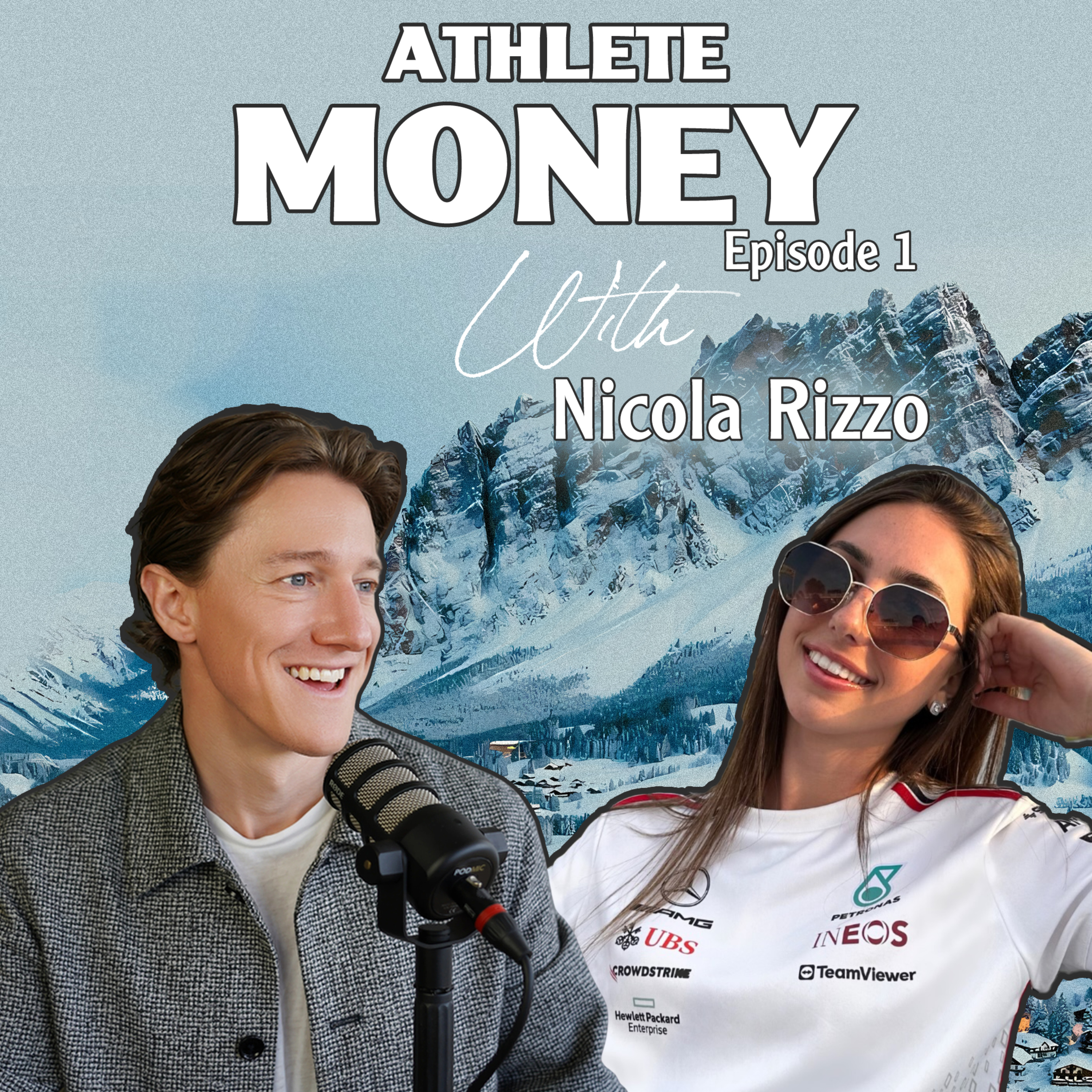
Just before we get into the episode, I want to say a massive thank you to all of the amazing friends who've listened to Count Antacortina in the run up to the Olympics. I've been posting obviously everything else on my social media channels, but for now, I'm going to pause the Count Antacortina because there's no Countdown. We've already been there. And I'm actually thinking about pivoting this podcast into a podcast dedicated to supporting athletes to learn to live from what they love. Interviewing sponsorship managers at brands that we know and love and want to do deals with. And also hearing from athletes who've developed personal brands, who built businesses, and so much more, and how they've done that. And use this podcast as a tool to share that knowledge. So that's what this episode is all about. This episode, I sit down with Nicola Rizzo, who is an incredible individual who's helped build social media brands around athletes like George Russell, some Formula E athletes, and she works today with many athletes of all different disciplines in how to craft an authentic personal brand that they can learn to live from. Be it creating sponsorship deals for them, branding, relationships, you name it. I hope you enjoy it. I haven't thought of a new name for the podcast yet. So if you have any ideas, I'm riffing on athlete money and all kinds of things. Let me know in the comments and I'll definitely consider those. Thanks for listening and I hope you enjoy the new narrative on this podcast going forward. Here's the episode. Nicola Rizzo, nice to see you. Nice to see you too. It's so great to be on this call after speaking over Instagram and getting on that call last week. It was just like we are so aligned in what we do and it's just so great to have someone in this industry that I can speak to about these things, because it's not very common that you come across it. So I'm very excited to be here and excited to speak to you and yeah, I feel like we have a lot to share. I think so too. And this is kind of a full circle moment here because we're going to talk about the power of social media and using it as a tool as opposed to sort of being afraid of it or seeing it as that's not for me or that's for quote unquote influences, which a cringe and etc. Because we actually found each other through social media. Either was one of your ads or you just popped up on my feed. So I know that Instagram at least has changed the algorithm recently with the five hashtags and I was like, either this is working really well because you just landed there and I was like that she has something to say and she has something meaningful to say. But who are you, Nicola? And as I understand, you have been involved in social media management strategy or the sort of thought leadership around building brands out of athletes for a decade or so. And like the highlight real includes George Russell and Formula One Formula E as well, I think anything to fill in. Yeah, no, I've been in social media since I was 15 so it was pretty much something that I kind of was just lucky with. You know, it was my first ever job and it wasn't something that I ever knew was a thing. You know, back then social media, it wasn't a thing and where I come from multi, you know, specifically. We're kind of always behind when it comes to these things. So the fact that I got into it at such a young age was, yeah, pretty much luck and over the past few years I've been working in motorsport and with athletes specifically. So that's where I am now and I'm now transitioning into helping athletes build their personal brands. So I guess that's why we're here and what we're here to speak about, which is great. Exactly because I've done it the other way around. Right. So I've been an entrepreneur before and then I've just been through the Olympic cycle went to the last Olympics, Malna Cortina and I learned the power of building a personal brand in the last three years of this Olympic cycle because put it this way. I came 108th in my race of the Olympics yet I think I was in the top five earners brand reach outs and terms of reach as well. Purely because I built a personal brand in the process, which taught me a big life lesson, which I think is really worth sharing. You are more than your results and you can win a gold medal both off the course as well as on it and I've met so many athletes across sports across disciplines, even some of the money sports who don't live from what they love and I want to help more athletes to learn to live from what they love and that starts with playing into the market that we live in today, which is the power of social media and building a personal brand. So let's get into it now. Nicola, I want to throw the first question at you because I asked my wonderful audience on socials for some questions. I have a winner feed them through this and it was a running thread there. But let's start with the first question. Like Nicola, why the hell should I as an athlete build a personal brand? Come on, I'm busy enough. Yeah, I love that question and it's something that I feel like would come. It comes a lot from education. So the thing I always say is that if you're not, if you're not ever being taught something, then you're not meant. It's kind of like if you're never taught something, how are you meant to know what to do? Right. So with anything in life, you know, if you were never taught maths at school, then you're not going to know what one plus one is. So it's simple things like that that I think we need to break it down because nowadays I feel like everyone sees social media as something that we all have access to and we're all kind of expected to know how to use it. But when it actually comes to using it properly and using it to build a personal brand, there's so much more that goes into it than just posting. So why should athletes build a personal brand? I mean, there are many reasons why and you can, you know, have your own reason for doing it. I don't think there's a black and white answer for that. But there are many avenues that having a personal brand can take you down and the opportunities that it can open for you are basically anything outside of your sport. So when it comes to, define a personal brand. I mean, as I see a personal brand, it's how does your name, face, likeness speak for you when you're not in the room. That's how I kind of define it as a personal brand. Like, you know, who is Matt Smith? What does he stand for? How would you describe Matt, see Smith? How do you describe Nicola, is that? How do you think of when you think a personal brand as an athlete? What does it mean to you? I think personal brand is very much, you know, people are already forming opinions about you, whether you're on social media or not. So having a personal brand and having that on social media gives you the control and allows you to be in control of how people see you and how people view you. So having a personal brand more than just, you know, putting your life online and sharing everything that you do in your sport is more something that, you know, you can curate your personal brand. And that's some one thing people don't, yeah, I feel like it's very misunderstood. People feel like they need to become influences. People feel like they need to share what they're eating today. They need to share what time they're sleeping in order to have a personal brand. But the beauty of having a personal brand is that you are fully in control of what you do share and what you don't share. So if you have those boundaries around, you know, what you don't want to share, then having a personal brand will allow you to be online without going into all of those personal details that you don't want to go into. So yeah, I feel like how I would summarize a personal brand is sharing who you want to be known as online and the way that you want to be seen by other people online as well. You know, it's shaping that perception about you and also just helping you reach the goals that you want to reach. You know, it's an amazing tool for you to actually go out and help have social media be that tool to help you reach your goals. Yeah, I think you said the perfectly that it's a tool and I, you know, have a decent audience and one of the larger ones in my sports. But this wasn't the case two years ago and three years ago, I started to try to do this and I think I'm we're going to get into this in a minute about, okay, where do I start? Take me as an example three years ago, I can just talk about the classic pitfalls I went through, but I think there's also a little bit of a misunderstanding. Like a personal brand is built using social media, but not just social media because social media is sort of your digital presence, your likeness, your name and things of that. But also there's an offline element as well that I think, you know, you are most athletes are already feeding into and there's a classic example in the world of media called the three C's. Do you know what it stands for? No. Content, community, commerce. So you create cool content, you build a community and then if you want to, you can monetize that community through all the manner of streams from partnerships to building your own products to, you know, training programs or whatever it might be. And that's something I want to get more into through these conversations is unlocking the potential of what athletes can use as tools to kind of monetize themselves as well, organically and authentically. But coming back to sort of the example of using social media and building a personal brand, you know, a personal brand, one of the tools is social media, right? And I think this conversation is going to be centered around social media, multiple platforms will talk about them, more generalized and then maybe dive in a little bit to some of them as well because they all, they each have their intricacies. But this one thing I want to dispel, which is to build a personal brand on social media does not mean you need to think and act like an influencer quote unquote. Because I find a lot of my athlete friends will go, oh my god cringe, Matt, like what you want me to be doing dancing videos on TikTok now. It's like, that is not what I'm saying at all. I'm not saying that because I feel like you can become influential quote unquote for different reasons. You know, there are athlete friends of mine who never post anything but win races and they have good audiences purely because people follow them because they succeed. That is really the minority. That is only the ones who actually win medals and gold medals and things like that. Gain a following purely from their success and then there's the rest. So how are you going to gain that following and we'll get into how you can use that following later. Being true, honest, organic, authentic is believe it or not sounds too easy and too, too simple, but is the way to do it, right? So to finish off the why like, you know, performance gets you notice, but brands actually pay you, right? And you build brand partnerships and relationships through building a personal brand decoupling yourself and your income from your results also sets you up for longevity as an athlete because if you're only getting rewarded by results. You know, we're not all performing all the time. You know, you are setting yourself up for six for failure in periods when maybe you're under performing or you're not.
your overtraining injury, et cetera, right? It extends your career and sets your career up post sports and in parallel to sports as well. So that's why building a personal brand is powerful because it basically, I like to say, it allows you to not just think of yourself as an athlete but think of yourself as an asset as a business. And you can have different avenues to monetize yourself in and around the sport, not taking away from the sport. And it doesn't mean that you have to post all day every day. You have to be pulling your phone up, filming yourself, eating meals, doing TikTok videos. It's not that at all. And we're going to get into some of the ways that you should approach that as an athlete, right? - Yeah. - So maybe let's get into it, right? - Let's do it. - So you work with athletes, right? And you work with the likes of George Russell and many others probably worth mentioning. So let's just take the average athlete. So let's take, you know, throw a random name out there. Sarah, she's a track and field athlete. You know, she has 2,000 followers on social media across platforms, you know, 500 on TikTok, 2,000 on Instagram. But she's, you know, she's in a, she's not in the big leagues yet. She's developing. She's maybe, you know, 18, 19 years old, early 20s, whatever. She's showing promise her goals to get to the Olympics in the next like, you know, after L.A. 28s, maybe this is going to be the cycle that she'll go for it then. Where the hell does she begin? What does she begin with? What would your advice be for her, Nikola? - Okay, this is a great question and something that I get a lot of. Where do I even start? You know, some people start with a platform, some people don't. So for Sarah, she has 2,000 followers on Instagram. It's already a good place to start because, you know, you have that audience, typically, when you have a smaller audience, they're more engaged people. So that's great. - Family friends. - Yeah. Yeah, so basically what I always say is that, you know, athletes specifically, they have actually something to relate it back to. They have their sport and in their sport, they typically start with, what is my goal for this year? What is my goal for the next few years? And then they know what they need to be doing to work towards that goal. Now social media is no different. You need to start by understanding what your goal is so you know what steps you need to take to work towards that goal. So let's say, you know, goal is to get to the Olympics. That's amazing. Now, if her goal on social media is to build up that following, so when she does get to the Olympics, she has that kind of fan base to go and support her and to, you know, follow along for her journey, then it would all be about, you know, documenting that journey. And I know you speak a lot about building in public, but I genuinely do believe that, you know, with athletes specifically, when they are working towards competitions or towards big things, that it is the best way to document, you know, what you're doing because that's the way people are actually going to build that personal connection with you. People don't care about the wins. They don't care about how well you did last week in your competition. They actually care about what happened to get you to that point and why you are at that point, you know, because many times athletes have to sacrifice a lot to get there. So people, you know, can relate to that struggle and to that sacrifice more than they can relate to a win. So showing the journey, I feel like is really valuable. So yeah, how would Sarah start? I would basically say just start with the goal. So if your goal is to build a community, focus on those metrics, you know, you need to focus on building up that following through the social media and then you reverse engineer the content that you need to post. So if your goal is to grow your following, it's focus on the follower metrics. So what are those? It's, you know, collaborations on Instagram. It's shares. So your post being shared to other people or through stories, it's comments and tagging people in the comments, for example, it's, you know, if you have a competition and there are many other athletes with you posting a story so then they can reshare that story. So you always need to think about, okay, if my goal is followers, what is actually going to get me more followers? And when it comes to followers, it's really important to note that the number of followers doesn't really matter, you know, the quality of followers is much more important. And when it comes to building a community, the more engaged that community is the better, you know, the community is that you're building. So, you know, something that we did for George, for example, was that we had his official fan page, which was GR63. And this was an Instagram account where we would share, you know, behind the scenes of what George is doing or, you know, like kind of fan edits. And they knew us as admin. So it was myself and my colleague that was running the account and we would come onto the account and specifically with the broadcast channel, that's where we really had that community to kind of make them feel like they were connected to George through us. So they would know us as admin, they would thank us every single day for the post that we would put out because they genuinely, they felt like we were, you know, we were their friends. And that's what a community is. It's not about just treating everyone as followers and them being helpful to you because, you know, there are a number on your following list. You should actually engage with those followers and make them feel like they're your friends because at the end of the day, your followers are the biggest asset you can have because once you have those followers, you can do anything you want with them. And not in a bad way of kind of using those followers for anything negative, but more so like, you know, if you're coming out with a brand or you're coming out with merchandise or, you know, you want to do something after your sport, you want to go and coach instead, you have that base already to be able to do whatever you want with it. So I'm completely off-topic now. But that's pretty important. - Wow, I'm wondering about the Sarah. - Yeah, it's a great example with George. And I want to only hear more of those examples as well because I come back to Sarah, right, who's sort of, yeah, you know, late teens, early 20s, division one, track and field athlete, for example, who wants to learn how to, and where to start, you know, building a personal brand on social media. Using social media is that tool. She doesn't post very often. It's resharing a couple of photos, you know, not really tracking anything. The way I, you know, the way I sort of approach this sort of from a kind of beginning zero, day zero perspective was, you know, I've always had brand values as an individual. - Yeah, you know, so I, that's, he Smith, my name, my brand, my three brand values are to educate, to entertain and to inspire. So those are the sort of, when I create any kind of content, I'm either hitting one of those, two of those, three of those, you know, and just in general, like my content would be not me inauthentic, if it was, you know, very rarely I'll do something comp comedic, which is, which is kind of, I guess, in the entertainment side, right? But in general, I'm trying to like, center my core approach to building social media content around those three themes. So three years ago, what I thought to myself was this, you know, I, like that you said that, you know, you're working towards something, because I think that's very important. What I learned during the last year, specifically, when my social media went from nothing to, you know, 40,000 on Instagram, I've got 20,000 subscribers on YouTube, TikTok, 13,000, they're not enormous, but they're a substantial, and I can show you what I've done, which is substantial with those maybe unsubstantial numbers, right, in terms of partnerships. But I approached it, you know, my story's always been zero to Olympics in three years, right? So I had this core red thread to what I was trying to do. And I actually follow several, several other athletes on social media for the very simple reason that they are on a path to LA28. Yes. And they're like, you know, there was, my journey started from a point of inspiration. So to bring it back to like where to start, I would spend a bit of time, Sarah talking to you, I would spend a bit of time looking at other track and field athletes, both those that are actually elite and those that are amateur, you know, someone who actually has a job and is a weekend warrior marathon runner, you know, follow those people and see what, you know, what, what do you like about what they share? What triggers to you, what, what you would you remember? Because I can remember specifically. I had three years ago dabbled a little bit in social media and I had a pretty low success rate. I was never consistent enough. I fell out of love with it because I hadn't set up the system to make myself be able to produce it sustainably. And I'm going to get into my system in a second. But I came across this guy called Boris Stanich, right? And he was an Australian, yes, Australian bi athlete. That's skiing with a gun and skiing and shooting, right? And, you know, he was, it was called Project 509. Project 509 was 509 days. And I can still remember the hook, he had a really good hook. And it was like, yeah, can I get to the Olympics by stacking 509 days, 509 productive days on top of each other? I'm more a Stanich and I'm going to try to get qualified Olympics in 509 days. It's called Project 509, right? He created a social media profile around him as the individual, the character in this documentary I was watching daily updates of him tracking his progress, right? And it was day 497 and 496, right? So that inspired me to go, you know what? I should do a countdown. So one thing I realized worked really powerfully for me and when I first started to take off on social media was when I decided inspired by Boris to do a 100 day countdown to the World Championships, which was just over a year ago now in February 2025. So I said, you know, I'm going to post every single day and, you know, in the rundown, 100 day countdown to the World Championships. And what I learned with that is people, if you want to sort of start, it doesn't have to be 100 days, it can be 30, it can be like racing in a month and I'm going to post every day until we get there. People, be it audiences, can commit to a specific time box time frame, relatively easily. So if you say like follow my journey for the next 90 days, 50 days, 30 days, I feel like that's like, okay, I'm in this for that period to see and if he gets boring, I'll drop off, but like, it's given me something to like follow for. You know, it's like the episode.
and drive to survive. I know that there's so many episodes and I'm committed to listen to and watch all those episodes, because I know there's going to be a story in those episodes. So one one thing I would my advice to Sarah would be, do you have an event coming up? Do you have something that is meaningful, where you have to qualify in a time, where there's some kind of reason to see if you succeed or fail in it. Secondly to that, if you combine your kind of first outreach through social media in a countdown to an event, often you will piggyback off the energy and the interest around the event. So for me during the World Championships, when it came closer to the World Championships, media wanted to talk to me and my media was being amplified as part of the bigger picture around the event. So my so to summarize, my recommendation would be start with kind of values and I was like, okay, what kind of content am I going to produce? Daily vlogs, am I going to produce a day in the life? What's my hooks going to be? Like Boris had a constant hook he always used, which also I think our overtime worked against him, to be honest, because it kind of got a bit too repetitive. But basically I was working towards something, which was easy to buy into as the audience was following along the journey and it showed progress and I decided to do daily vlogs because to finish this and I want to hear your side of this as well for Sarah, listen, I've been a professional athlete and a Lee athlete. When do you have the time to edit, to produce, release all this content? No one does, trust me. But what you have time to do is you document periodically throughout your day little moments and you can start the morning with, oh, just woke up late, but I'm going to start with a morning coffee and I'm going to go have a track session. You don't always have to talk to camera, but you can talk to camera a couple times. So what I did was every roughly one to two hours, I would film for anything from 10 to 30 seconds. Sometimes it was obvious stuff like hours on the ski track and something cool was happening, I'd film that for a second. Sometimes I'd forget for a few hours, but what it meant was at the end of the day, this is the system I set up to succeed making daily vlogs. The end of the day, I had three minutes of content shot from when I woke up to when I was at 7pm winding down to go to bed by nine, right? Yeah. So when I went into my cap cut, my editing app, and I just highlighted all those videos, they were in the order of the edit already. All I had to do was clip them and then I make it in like a one one and a one to 90 second video of a daily vlog. And then I maybe had some bits of talking and obviously as I got better, I knew when to do the talking bits and when not to. But I think a lot of athletes, including Sarah, maybe have a fear of putting the camera on their face. Like what do I say? What do I say? It feels unnatural. Here's the save and grace. You don't have to do that. You can do voiceover over videos of Beroll. Beroll is just filming stuff happening, right? But the bike filming things from A to Z of your day, you have a storyline. You have like a morning to evening storyline and things probably happen in your day. Sometimes I would just take the middle part of the day. Sometimes I would think, you know what tomorrow I'm flying. So I'd say we just got to the airport. I'm heading to Venice to go skiing in the Alps. Let's get there, right? Like four seconds of the airport. And then I would spend 30 seconds filming myself going through security, getting on the plane, eating something on the plane, landing. Now there's 30 seconds of my video, which I haven't done anything. And I maybe did a tiny bit of voiceover. Like I'm heading to Venice to go to this race. It's in the Alps. We have to fly to Venice to get there. Whatever. And then I had a video to produce. And I was, I found that, you know, Casey Neistat, very famously, who's a famous YouTuber. He, he became very popular on YouTube, not because he had the best content, but because he had the best content to follow along to. And much of his content was simply him talking over Beroll. Yeah. I think a lot of people think that, oh, Matt, it's must be so easy for you because you're, you know, quote unquote, good on camera. Listen, truth is, I am an extravert. So it comes more naturally to me. And I've done a lot of this. So yes, I will 100% put my hand in the air. However, I think I maybe have a 5% advantage, not 95% advantage. Everyone can gain and everyone can learn to do this. And there are a few hacks and tools and tricks to not make it all about you and having to be a BBC TV presenter on camera. Nicola, how does an athlete do this? Who maybe is afraid of being on camera, not comfortable being on camera? Doesn't want to constantly bring their phone up all the time. Like, what is your advice to them? I think that, you know, something, to be fair, I was also scared of posting and a door of a. I didn't want to post myself online. You know, I had a lot of fears around that from a lot of stuff that happened in my past and, you know, things that we don't really need to bring up. But I'm sure everyone has their fears as to why they wouldn't want to post themselves on social media. And something that really helped me was, you know, sitting with that for a while and not pressuring myself to do it while I was super scared because, you know, people are going to see that fear. People are going to notice that you're not 100% comfortable. So before I got onto, you know, speaking on camera and putting myself out there, I really. I did have to do some homework on, you know, what am I actually scared of? What am I fearful of? And writing all of those things down really, really helped me. And I know it sounds stupid. I know it sounds really simple. But genuinely getting all of those fears out and down on paper will really help you see them from kind of a bird's eye view. And then you will be able to understand that it's actually not that scary. And those fears that you have made up mostly made up in your head and they're bigger than you actually think they are. So number one, I would say is to really understand and try and uncover those fears and, you know, make sure that your understanding that fear is not there to harm you, fear is there to protect you. So if you see it in that way, then you can kind of create the boundaries around, you know, whatever you're fearful of and you can go ahead and do that without going into all of those things that you don't want to go into. So that's one thing that really helped me. Another thing that really helped me was a shift in my mind said that it's something that my mentor told me which was, you know, always try and connect versus impress with your audience. It's not about trying to impress, it's not trying to sound better than you are. It's not trying to, you know, be someone that you're not. Just try and connect on that emotional human level like you would if you meet someone in the street and, you know, they come up to you and have a normal conversation with them. And, you know, you can also think of it as what would your younger self so five years ago want to hear? Speak to that person because typically if you speak to that person, you're going to be speaking to the people that are following you. So if you think of it in that way where it's, you know, you're providing value in some way to these people and you're just, you know, being authentic, being real, that is, you know, one of the best ways to go about it. Now, it's all easier said than done and this is all, you know, good for us to say because we're on camera, but for the people listening, they're still going to be probably like, you know, this is all good and I've heard this many times before, but how do I actually even start? You know, what is the thing that I need to now get over to actually post myself? And the one rule that I give to every single person that I ever speak to or ask me for advice is that the first 100 posts are meant to be messy. Your first 100 posts are there for you to experiment. If you see social media as a training ground rather than, you know, you being on a stage and people are kind of judging you, then you're going to be able to be so much more relaxed with it. So the last thing that you need to be thinking about when you're posting your first 100 posts, even if you've posted before, but you know, now starting to build your personal brand is that, you know, just take it as an experiment, post and see, you know, how different things do, test out different types of content. This is your place to learn. You know, you're not going to know what's what's works and what doesn't work. Maybe you have an idea of what content you feel like would work, but you're never going to know. And the funny thing about social media is that the content that you think is going to do really well normally does quite shit. And the content that you think is really not going to do well, it does really well and ends up, you know, sometimes even going viral. So you think you know what is good to post, you know, even us as, you know, people that have done this for so long, we think we know. But once we actually post it, we understand what people like and don't like. And then from those 100 posts where you're experimenting, you can see, you know, the patterns, you can see, okay, why did these posts get, you know, this many shares or why did these posts get so many likes? There's normally a pattern that is repeated in every single content that does well that you can then build upon. So if you see going back to, you know, how do you actually start? How do you get over those fears? If you see social media as something to experiment with for the first 100 posts at least, then, you know, confidence is built through doing, you know, you're not going to ever be confident. And that's something that I also say is like, if you're going to wait for confidence, you might as well never start because you're never going to be at that level of confidence where you're like, okay, I'm, you know, ready to do it. I've worked on myself enough. Let's go for it. You just need to begin. And as scary as that is with every single post that goes by, you will start to realize that it's actually not as bad as you thought it is and it's actually really fun. You know, so yeah, that's, that's what I would say. I don't know if you have any other experiment and I can't, you know, agree with you enough with the fact
that when I finally committed to doing this 100 day countdown, that's when things really happened and changed for me. Right. Once I said I'm going to commit to a 100 day countdown, post a 100 videos, guess what? Guess how many day, guess which video of which day did things start to take off? Well, actually, ready starts to show some traction. Have a guess. Yeah, probably halfway through. Yeah, 63, 65, some of like that. You know, so it was an over halfway through where, you know, and you know, there was some that did a little bit better than others, but the truth is I just kept at it. And, you know, the truth that if you're an athlete, in the one thing you are a master of, Sarah is, you know, discipline and showing up, right? And this is some area where if you show up and this is why I think a lot of athletes that I hear from might be like, yeah, but why? Like, why should I bother? I've done it a little bit and there's, you know, it hasn't happened. The truth is, like, you know, if you go, if you try and run a marathon and you do three prep runs, I mean, you know, it's not going to go very well. You have to have done four months of training, 120 days, if not more, right? So why do you think that social media is going to blow up when you do four posts, right? You have to commit to it. You have to train it. Like you said, it's an experiment, right? And I would say train it like a muscle. Yes. So you have to build strength in it. And then you have to also, okay, well, what, what did I over train? What did I under train? Right? You have to be reflective on it. And so coming back to Sarah and her journey, here, I think what she needs to do is identify, okay, I'm going to commit to a timeframe that ends with something that is more than just me. Like, it's a, it's a meat, it's an event, preferably it's something where there's an amplifying amount of interest in. So people are, oh, cool. I know that event's coming. Like, you know, I've got Stockholm marathon coming right now. You know, so I'm like running up to that, for example. So people invested in that. Also, there are other people on the same journey who were invested in your kind of journey along there as well and experiment exactly. And so, so Sarah's on this journey now. She's experiencing with his 100 days. She's overcoming. And one thing I wanted to kind of say with you, you mentioned about sort of overcoming the fear and, and of doing it, right? And the truth is, I've learned that no one cares as much as you think they care about the things you think they care about, right? That trucks me. Everyone's worrying about themselves. They're really worrying about your videos. I know, like, my, my fiance, I'm sure she won't mind me saying this, but she, you know, she's, she's been developing really cool businesses now. But she's often like, I'm like, you just start building in public. She's, I don't want to post it on my main channel because I have my, my old school friends on there. Yeah. You know, and I'm like, listen, trust me, they're not waiting to see what you post. Promise you that. And also the one thing I will say about social media is here today, gone tomorrow. Yeah. Nicola, what was the, I mean, maybe because you're an expert on this, you probably may, maybe remember, but you asked pretty much anyone, like tell me the first thing you saw on your phone when you opened it yesterday. Yeah, I have no idea. What was the video you remember seeing last night? Maybe this morning, Nicola, tell me five videos you remember. You know, maybe you can do it. Close enough of it, right? We don't remember these things. No one's going, you know what? Nicola did 17 days ago. That was so fringe. Yeah. No. No. And to your point as well, like, so coming back to how I did this from a sort of grassroots step by step perspective, you know, I, I started by saying, I'm going to do a hundred day countdown daily vlogs. Yeah. There were days when I forgot when I, I just, you know, it was seven, eight, nine p.m. And, and one thing I will say, I think it was really valuable for me was I try, I edited it at the same time. I made it part of my routine. So I would fill in the day. Yes. And, you know, maybe 80 of those hundred videos, I would always edit between seven and nine p.m. Because I had like had dinner winding down. It was pre-having a baby. You know, and I remember sitting there in my fiancee Cecilia would be like, at the beginning, oh, for God's sakes, Matt, like, you know, just get on with it. And there was sometimes where I had forgotten. And I was like, what should I post? And then you start to think, oh, my God, people are expecting this to, you know, they're not. But, you know, I need to, I need to, I have this accountability. I need to live up to it. And then I would, you know, at eight p.m. She's like, just, just you get on with it because we are going to get to bed soon. Yeah. And I would go, you know what? I haven't, you know, I always found it funny how ski bindings go on. I make a video in bad lighting without audio. Unperfect, scrappy ugly, 170,000 views. Like that. I wake up 170,000 views. I think it was the first video that I took that went like viral. It's like, like 63 days through. And I was like, how did that go viral for me at least versus the other ones that are maybe I thought about how I filmed it or whatever, right? And the one thing I've learned about social media specifically is like, people aren't expect it's an amateur platform. They're not expecting high quality, high production value. Yeah. Try to film it in HD, you know, even if you film it in 4K, the, the platforms downsize it to HD anyway, right? You don't need to go and buy a lot of stuff. Phone, your phone is all you need. Definitely. And actually, if anything, like right now I'm filming this podcast on and Sony A7 III, you know, expensive camera lens, it's hassle. Because then I have to take the memory cards out, put them in the computer, put them into like a Adobe Premiere Pro. Whereas if I film on my phone, it's shot in the format that I wanted. It's all shot in HD anyway. I put it straight into the app and I exported onto my phone where I then release it. So keep it on your phone. Don't overdo it. Oh, easy. Yeah. Anyway, so, okay. So, you know, helping athletes like why and then now how and what and stuff like that, right? So, so let's, so let's, you know, let's, so we're posting now. We're starting to get some engagement. Maybe follow a growth as growing. We're feeling a little bit more into the journey. We're 120 days into the journey. When and what can we expect to happen for us as an athlete? You know, we're building a personal brand. We're being authentic. We're being ourselves like, you know, yeah, I think I've had that question. You know, like, well, you know, I don't have a million followers. So no one's going to come and pay me $10,000 to make a post, right? Like, is there a number of followers? Is there a time when it starts to make sense to reach out to brands and businesses? Like, what's your experience with that? Like, when can we actually make this work for us? Not just us work for it? Yeah, I feel like there's a lot of, you know, when it comes to specifically getting paid for staff and sponsorships and being sent things, I think it sounds very attractive to a lot of people. And, you know, once that does start to happen, then it's a very slippery slope because you don't want your whole page to be one big ad, you know, you need to remain consistent. And the people that do the best and succeed the most and do end up getting the most brand deals and getting the most sponsorships are the ones that integrate them, you know, naturally into their content. We don't need to be so too people hated. They can smell an ad from a mile away. You know, so if you are posting about the things and this is one thing that's really important to know, it is that, you know, you also need to start off with an idea of what kind of sponsors do you want. You know, it's not, it's great to, you know, have different things that you want to work with, but the best and the most natural ones would be the things that you already wear, the places you already go, the things you already use. So, you know, think about the things that you use in your sport and what you would want to be sponsored by and then you create organic content firstly around those things. You know, sponsors want to see that they can fit naturally into your brand. So, if you show them without them even asking you that, you know, you're, you're showing them a pair of shoes that you're wearing or skis, for example. And you're like, you know, I love these skis specifically for the sport because they do this, this and that for me. And, you know, I've tried many others, but these are the benefits of these ones. Not in a selling way. It's just more, you know, naturally organic, because you genuinely use those skis every single day. And this is why you like them. So, when a brand then sees that, they're going to be like, okay, Matt already uses these skis. Why don't we just pay him to, you know, send him a pair of skis, try them out, test out the different ones that we have and share to his followers why he likes these skis more than anything else on the market. And that's when sponsorships become so amazing, not just for you as a brand, but also for the brand, because it's an organic collaboration, you know. So, something that I want people to avoid as much as they can is not just to take the free product because they offer free products to genuinely only work with the brands that you believe in. In the beginning, you're probably going to have a lot of people, you know, once you start gaining that traction, you are going to have brands reach out to you because it's, it's natural, you know, you post stuff, more people see it, the more brands see it as well. So, they're going to end up reaching out to you. They're probably going to want to send you some stuff. I would say only say yes to the brands that you genuinely want to work with. And, you know, even if it's free for the beginning, take that free stuff, create really good content for for the brand. And then you can upsell, you can, you know, be like this campaign went really well. My followers loved it. This is what they said. These are the engagement metrics. I want to continue working with you. Can we work out a package? And that's the way that you get brand deals that actually lost. And the last thing on brand deals that I think is the way that the world is going and the influencer and social media world is going of, you know, getting sponsorships and partnerships is long-term brand deals. We don't want to just, you know, be so wanting once. And then it never be seen again on your page. You know, you're not building up that trust with with the brand. You're not building up that trust with your followers. They're just going to see this product once and then kind of forget about it if you don't post about it again. So, it's having a sustainable long-term partnership with a brand so that your audience associate you with that brand and trust what you're actually saying. So, when it comes to, you know, what you can expect as an athlete, it's very natural that when you start to post, you know, and you keep being consistent, your followers are going to grow because your content is going to be seen by more people. And, you know, naturally, if your content is good and if brands can see themselves fitting into your, into your brand, they're going to reach you and that's the way that you know is the best way in my opinion.
into get sponsorships. So I don't know if you have anything to add on that. Obviously, you've been in this space and you're actually on your self. So I'm sure you have some really good insights that you could share. I want to draw a parallel to the world of entrepreneurship because one thing I always advise entrepreneurs to do when they are in the early days of raising money or which is effectively getting partnerships, right? And sponsors in a way to equate it to the athlete world, I always say to them, what would your dream cap table? Now, cap table is the capitalization table of the company. It means the share structure who owns the shares in the company. So it's a table and everyone has percentages by them, that add up to 100. So I say to them, fast forward to the end of your business and show me what your cap table your share ownership of your business looks like. Who do you want to be there? So you have this dream team of investors and partners and all that kind of stuff, right? Who own own bits of your business. It's exactly the same for an athlete. So I love that you said, who do you actually want to work with? So I think from an athlete perspective, you should start from the basics, okay, well right now, you know, I'm wearing a garment. Yes, right now, this is a rudiment, right? Like assuming those are things that you like and enjoy, start with what you use regularly that you have a relationship and you have an existing relationship with already. Like garment, for example, I reached out to them and I didn't have a big following, maybe like 10,000 followers at the time. And I said, hey, you know, I've been with Garmin since 2000 and since a long time, right? And I told, I wrote in an email to this too. I got an email address. I actually guessed an email address by the way, this is a hack. That's true, isn't it? I guessed an email because they have like contact spots at lamin.no and all this stuff, right? And you're just going to get into an email list where someone's is going to get a lot of other emails, right? So I guess the person managing, you know, I went on their website and I just guessed the email. I had to send three emails to get it, right? Because usually an email is either
[email protected], right? Or it's or it's rizzo at or it's nickle at. You know, it's one of those three typically or n. And you can guess it a couple of times before you start to get blacklisted on Google Gmail or whatever, you know, whatever system you're using. Anyway, I actually guessed it right first time. So, so I even on this person, I said, you know, I told a brief story of my relationship with the brand and then I told a brief story of what it's to come, you know, I'm on the roots, all this kind of stuff and long story short, you know, I did it, I did a partnership with them, right? So start with the brands and businesses that you that you are in an association with by just simply being a customer with already today. And then you should think about the aspirational one. So this is what I say to entrepreneurs, who would be your dream investor, you know, it might be Elon Musk. I was like, yeah, put that in there. I would just we need to shoot for the moon here and shoot for the stars, you know, and end up end up, you know, in the sky kind of thing, right? So, so I would I would make a list of brands and businesses that you want to be a partnership with. And then the second thing is how you reach out, right? And then the way you reach out, because I've also found some power once I started to have a bit more of a following when I hit send them DM on social media, right? And I said, hey, you know, big, big fan of this would love to chat to someone. And then they would get me an email address. I've done this now with events. I will email a message event on socials and then say, hey, I'd love to be part of it. And then they'll be like, yeah, contact Benjamin at blah, blah, blah, blah, blah. And then Benjamin's like, yeah, cool. We'll give you an athlete deal, you know, kind of thing or whatever it might be. So, so that's a way that I approached it. But I with your point there, I think on the long term deals, I I I made it very specific with these brands that I had this advice, by the way, from a very famous skier. His name is Bjorn Darley. He was in my sport cross country skiing. He was the former goat before at this Olympics, Johannes Clebel became the new goat. But he was, you know, one of he's the it's the brand that sponsors me Bjorn Darley. It's like a ski brand as well, right? That's cool. I had him on my my podcast, which this is going to be in the same sphere of my account, article Tina, which was going to change name soon. And I asked him, you know, you built this brand in this business. Was this always a conscious effort? What would be your advice for others going forward from today to to be partnered with brands and businesses? And he said, think long term, but start with something, you know, short term. So he said, starts say, listen, I want this to this pilot we do this test to be a three month test, a six month test. Well, whatever it is, we do it, we do a test. And then I want this test to be the preamble to a long term contract. Yeah. So you you're very transparent from the beginning. You say, like, I want us to test. And then let's go into a long term deal. But this test from me is the intention to pilot us being long term partners. And what would that test need to look like? What does success need to look like? Because, you know, one thing is getting free stuff, maybe getting paid to market stuff. But what's the long term? The success for them. They're a brand. They're a business. They want association through you, but they also want to make money. They want to sell the product, right? So understand a little bit about what does success look like to them? So that's my favorite question. I always ask at the beginning of these meetings, when I have a meeting with Benjamin or whoever it is from the brand, they, what does success look like to you? Like, where do you really want to go with this partnership? Is it simply selling products? You know, and then you should get a kickback from that, you know, or is it actually, could we create something? I'm going to do these events and these kind of things. Offer things outside of the ordinary. One thing is posting and another thing is community meetups. Another thing is the podcast, for example, like right now I'm rocking Corona, right? Because this is the brand that I'm a global ambassador for from the Olympics, Corona Zero, the alcohol free Corona brand from AB and Bev. I was thinking to myself this morning, oh, we're going to, I'm going to do this podcast now. Yeah. Maybe I should reach out to them and say, hey, we already have this relationship. May, I can offer you a new media format and we can really go to do something as well. But that's very on brand anyway. So yeah, to come full circle with it, I think it's a very good point to say, think, look, look what you're wearing already. Yeah. Seeing what partnerships you can do around that. And for the most part, if you're an elite athlete, you were already getting a lot of that stuff for free already. But how can you build long-term partnerships that actually add financial value to you and them? And lastly, all our sayers, try to make it a win-win. Like if we promote a product line and that has a growth in sales, you as the athlete should get a percentage of those sales. It can be 5%, 10, 15, whatever, you know, there can be an affiliate program, but you should try to make sure that you win financially out of this because to offer them an opportunity to say that I'm going to help you grow your revenue and it's not going to cost me anything other than getting free stuff and me marketing it. And then I will get a commission from that. It's win-win. It's no marketing costs for them other than the cost price of the products they give you and they're going to give you those anyway. But the upside is that you both win. Now you have skin in the game as the athlete to promote a product, our product line or do a line with them and get a commission from that. That's how Michael Jordan made two billion from the night deal from Jordan's in over time in revenue from the sale of 20 billion in sales of that shoe line and that brand and that's more than he made in anything else because he tied himself into the success of their success. Yeah, I think that's all really helpful for anyone that wants to get into sponsorships and I think the last thing I would say on that is, you know, you reaching out and the way you did that through the emails and that's a really similar thing as to what I did to get into Formula One. You know, I told you on our call last week that, you know, I sent out 100 emails to get my job in Formula One and the way that athletes can find these people's emails is, you know, a simple way would either be by going on LinkedIn and going through the people's section on LinkedIn and finding the brand partnership managers or whoever would be responsible for sponsorships or just simply going on their website and, you know, you have their contact email or whatever email it gives you and then just asking for the person that, you know, they could be in touch with for, you know, reaching out specifically for sponsorships. So, when it comes to how to reach out, it is so easy for us to do all these two of three, you know, we have all of these things that are available to us and we don't need to do too much to actually get these people's emails. So, just use the free resources that you have, do everything that you can to get those contacts and then just send out a load of emails, you know, and make sure that they are not a generic email that is made with ChatGBT and, you know, it's just a copy-pasting that you've sent to everyone. Really do research into their brand, show them where you can add value to them and then, you know, send that as a proposal to them and kind of tell them, you know, this is the way I see us working together and this is the audience that I have. So, that's something that I would also say when it comes to reaching out to brands. And show something unique, you know, I was talking to brands about doing meetups and partners and things like that, right, run clubs, whatever it might be. But I want to flip the script as well because we've spoken about our outreach. So, we're building this audience, we're growing and remember that a lot of people, a lot of athletes think that I need to wait until I hit a certain level before I can do that. Remember this, instead of saying that I have this big following, you can say that I have one of the fastest growing chat on my spot. So, I use that as true. I had one of the fastest growing, arguably the fastest growing. Maybe I had 8,000 followers at the time, maybe I had, you know, nine, but I was growing a thousand a month, for example, which is more than most. So, I use that as a tool to say, "Hey, yeah, I'm not, I'm the fastest growing." So, it's a grow with me. Now, we've spoken about Outbound, us reaching out. I want to talk about Inbound as I point to the Corona Zero logo on my shirt because coming full circle to this point of this conversation around why build a personal brand, well, I'll tell you why because I built a personal brand and it wasn't through dancing videos on TikTok. It was on educational videos about the sport. It was about entertaining videos when I interviewed my fellow athletes when I created a podcast around the sport. So, I was contributing to the sport in other ways and also by being seen as a role model. I took it on myself to sort of talk about value.
use of sports and use as an example when I spoke about myself on social media. Then as a result of all of this and at Euras' work, I get reached out to. So it was inbound this time, not me going out. I didn't know about this. So Corona Zero for everyone's knowledge is one of the worldwide partners of the Olympics. They started, I believe, in 2024 with Paris and I'm sure that partnership lasts many Olympics. So they're one of the big sponsors. You'll see their logos all over the Olympics. They were going to do, well, they were planning to do this big campaign called the Golden Moment campaign during the Olympics, the Winter Olympics that I was part of. Now there are 2,900 athletes at the Winter Olympics, okay, across all disciplines, etc., etc., something like that. It's 10,000 at the summer, by the way. I was never going to win a medal. I was always going to come on the bottom five because I only started the sport three years before, right? But because of what I did over that last year in social media content, I created, again, not trying to be an embarrassing influencer, just trying to be educational, entertaining and inspiring, which gained me influence. Yeah. Never going to win a gold medal, but Corona Zero, when looking at the 2,900 athletes, chose me amongst the seven others, most of which won gold medals, by the way, including Lucas Brotten-Penero. And I was one of the ones selected to be part of the big paid sponsorship campaign as part of the Olympics. They reached out to me. And my point now, if you build a personal brand, that's Stan, and speaks for you when you're not in the room, that took notice from the brand, I'm like, Vayner, Vayner Media with a PR company. It was Gary Vaynerchak, right? So they all reach out to me and they say, "Hey, we'd love to talk to you because you're being considered as one of the potential athletes. We'd love to know how much money you want." And what we can do together, not because of my race results on the course, right? And my personal brand helped me get one of eight very unique, special partnerships paid partnerships. I was the only cross-country skier of 148 men and 148 women chosen for this campaign. And yeah, and there's your why, like why build a personal brand? And the truth is, I'm not going to lie to anyone. It's not going to happen overnight that you're going to get these partnerships and possibilities. But along the way, I also lost summer when I only had 10,000 followers. I only have four times that now. I was approached by the kind of Mercedes, if you will, or the Ferrari of Formula One in cross-country skiing. The best team is what I'm trying to say. I was approached by the best professional team called Team Akadali, who reached out to me and said, "Hey, listen, we love what you're doing for the sport. What you're doing for the sport, not what you're doing for yourself on the course. We love what you're doing for the sport because I was doing how-to videos over summer. I was doing how-to videos. That was the videos I was making. I actually at that point had hired someone to help me make that kind of content because I sort of value in creating it. So I professionalized the approach. They reach out to me. Again, another reason for having a personal brand is for what I stood for off the course. They come to me and say, "We want to sign you." I am not someone who should be in that team. If you look at just my results, but if you look at my results off the course, that's what they were lacking. So that's where I really feel passionate to help other athletes to realize that you are more than your results and you can win a gold medal both off the course and on. That was another example of how having a personal brand helped me gain things like these opportunities that wouldn't have come to me otherwise. It was just my results. Yeah. I feel like that's something that most athletes think. The best way to build a personal brand is to win. That's not the case. It's like there are people that are going to be worse than you at your sport, but because they are on social media. They are the ones that are going to get those opportunities because brands ultimately, they care about results. That's one part of it. But what the brands really want? Brands want to be seen by an audience. If you're winning and you have 100 followers and then there's someone that's in 10th place and they have 500 followers, they're probably going to go with the one that has the 500 followers because they want to get seen by the most people. That's one thing I also say is that you don't have to be the best at what you do. You just need to be the one that's online and building that personal brand because you will probably get the opportunities over someone that is a little bit better than you. Yeah. That's pretty much how social media works. Unfortunately, some people would say that's a bit unfair, but that is the name of the game. Social media is all about how many people do you reach and what can you do for brands. If you think of it in that way, then I feel like it's a no brainer to have your personal brand to start building that. I feel like something that is a really interesting one is the fact that AI is so big nowadays. I am still getting people asking me for help. Social media is something that you can easily ask AI for content idea. Why do people not use those ideas and be posted? They need help with the implementation. That's all I spoke about last time. It's all well and good for them to have all of this information and to be aware of it. But then when it actually comes to implementing it, that's where people fall off and they just can't stay consistent. I don't know if you have any tips on consistency specifically, but I think something that you mentioned, which is really helpful, is that you need to have it in your schedule. If you don't have it in your schedule, it's not happening. Yeah, I think it's just really interesting because I get messages every single day. It's like, I know what I have content ideas. I know one thing I need to post. I just don't do it. It's like, where do we put it? So I don't know if there's something there that we can touch on that maybe you have a schedule that you use in order to come up with content and post content that could be like a step-by-step guide that they can follow. Honestly, I think one of the easiest things to do for anyone who has chat with you or even paid or unpaid version is to ask them for content ideas. So you can actually have a chat GPT or some AI to give you content ideas. Give me 25 content ideas for a for Sarah who is a track and field athlete that would be easy to produce. Don't require me to set up too much or purchase anything and it will give you this kind of things. Another thing to do is inspiration. Like spend a bit of time instead of just scrolling with intention, trying to find athletes and other things that you can take inspiration from. You're not stealing stuff but you're being inspired. I was inspired by Boris and I immediately created a hook for a video to say, you know, I'm going to qualify for the Olympics three years, whatever it was. And then I started to see, okay, cool, this is working, right? So I think inspiration is a really important thing and, you know, we're not all expected to have all the bright ideas all the time. So try to find inspiration from others. And then the question is, how do you actually make it sustainable and do it over time? I realized that, you know, what do I do from seven to nine p.m. anyway? Like I, you know, try and wind down and I'm a bit, you know, I numb out or whatever, right? I sit on the sofa half the time I'm scrolling on my phone anyway. So I decided to, you know, make the daily vlogs that I was going to produce. I was going to edit them in that window. So I made it part of my daily routine, right? And then I knew that every single day at the end of that day, sometimes, of course, I needed to adjust that and sometimes ideas came to me in the moment, but I made that my edit and release time. I also found that the best time to release I found was between six and nine p.m. Obviously, like I really found that in the evening was the best time to release. So it really aided me because I knew that I would, and then I would wake up in the morning and it would be like, bang, you know, success or not, for example, right? So that was actually how I sustained those 100 days. And remember, I'm saying this to all athletes as well, test a period of time. Don't say you're going to do this forever. You know, maybe it's not a crunch time. Maybe it's, you have more, more flexibility. But the summer is a good time to use people kind of just training over summer, for example, as a winter athlete. So find something that works into your schedule. And, you know, they're going to be days when you drop off it, but try to be consistent with that, right? That's what really worked with me, making it part of my daily routine. Yeah. I feel like consistency is something that, you know, people know they need to be consistent, but it's all about, you know, how do you, what's your experience? Do you have to be posting every day? No, I don't think that you have to be posting every day. And yeah, I created a video about this a few days ago of just like, you know, it's, it's all well and good that these big guys are telling us you need to post every day to grow on social media. The reality is it is that these people have big teams. And these people can post every day on social media because they have someone coming up with the idea of scripting their content, filming their content, and editing their content. So yes, it's great that, you know, if you have those tools to post every single day, I'm sure everyone would want, you know, that team to be able to do all of that for them. But the reality is that, you know, athletes specifically, you guys are busy people. You don't have time to be posting every single day and coming up with content every single day. And the worst thing that I see is that, you know, if people do come into posting every day, that don't really have the time to do that, they end up posting content just for the sake of it. And the posting thing is that are just the chase of views or to fill in the feed. And a really important thing to note is that your social media profile is like a shop. So what I mean by that is that every single post that you post and that comes up on people's feeds, that's the shop window. So if people like what they see in the shop window, which for example would be a real, they're going to click into your shop. And if they see that the shop is messy, the shop is disorganized, the shop is not inviting, the shop is just, you know,
There's a lot of chaos. They're not really sure what the shops are about. One time they're talking about wanting, the next reel, it's about something completely different. So curate your content around what you want people to know about you in those first 10 seconds of someone coming onto your feed. So the worst thing that you can do is just post random content to fill in your profile. Your profile needs to be, it needs to be that shop window that people want to come into. And when they see what's inside of your profile, they're like, oh my god, this guy has insane content. I want to stick around for this. And some really simple ways of doing that before we even get into content is having a good username. I see a lot of usernames where it's just like some random stuff that they've put together. It sounds really simple, but just having your name is probably the best thing that you can do for your social media because people are going to know you by your name. That's what a personal brand is all about. We don't want to disassociate you from your name because then it becomes impersonal. And people connect with people at the end of the day. So what I would say is have a really good Instagram handle which is just your name. Make sure the name in your actual profile is your name because when people look that up, it's kind of like a search engine. If you're going to look something up, you're going to get the results that you look up. So have the name in your name field and maybe even the sport that you play so that people are looking up people in that sport then you would come up as well. Having a really clean bio is really important. Making sure that people don't have time to stick around and to decide if they want to follow you or not. If you land on someone's profile, you are going to make up that decision within five seconds. So we need to make that decision for the people that land on our page. We need to give them all of the information they need. So they don't need to think, do I want to follow this person or not? They know who you are straight away through your bio. It says exactly what you do. It says who you serve. It doesn't email there. So brands want to contact you, they can. And the last line of your bio is something like, what are you actually documenting on your page? So mine, for example, is building atlete accelerator. And then people will be like, well, what is atlete accelerator? And my first highlight says start here. And in that highlight, there are like 15 slides. That's basically a whole story of what atlete accelerator is and what it kind of the idea started from. And it brings people through that journey. So your highlights should not just be random stories that you like. They need to tell a story. They need to give people context as to who you are and make sure that brands, when they land on that, they know exactly who you are. And they know if you're responsible just from your bio and your highlights and your pin posts. So my pin post is a video explaining exactly what atlete accelerator is, for example. So that is my what. And then I have a personal journey story. So that's to build authority. So you need to think of it as if someone doesn't follow you. They have no idea who you are. So what would someone that has absolutely no idea who you are? You're a complete random stranger to them. What would they need to know? So my post that I have pinned on my page is all about my journey in all of the things that I've worked in and why I am actually an authoritative figure for people to listen to me. Why do people need to follow you over anyone else? There are millions of people doing the same sport. Why you? So that's where you really have to differentiate yourself from everyone else that's doing what you're doing. And then there's another video that's basically a real that summarizes everything that they would see on my page. So it's kind of like a trailer basically. So once people go through my bio, my highlights, and my pin post, they will know if they want to follow me or not. And they will see content that actually falls into all of the categories that I mentioned. So that is one thing about posting. You don't need to post every day, just post the things that are actually relevant to you and make sense. If something is random, just skip a day. It's not going to hurt your engagement. It's actually going to be a good role. I can honestly say as well that it might experience a posting consistently. I post a consistently, but I also, you know, you're missing a day, no one's waiting for the post. Just me. And posting it a day later is not the end of the world or the morning or life happens, right? I would sometimes put a post on my story. And also one thing I will say is posting a story, posting a video, my hack to when I was not posting a real, because I was posting reals every single day. My hack was to post a photo. Because the edit wasn't good or I wasn't coming together or for whatever reason I couldn't do it, I posted a photo. And then I would often do it. I would say, oh yeah, story, you know, story coming tomorrow or like real coming tomorrow. Yeah. And then I felt that. But the truth is there was this sort of accountability I held myself to, which you should have. But at the same time, there's no consequence. Right. But you know what I wanted to finish with? I wanted to finish with the questions I got. Because I made a post to my audience to say, hey, what questions do you want us to answer? And I think we've kind of answered a lot of them. But one of them was, you know, how do you balance the personal brand with the rules of the sports association puts in place? Right. Because in my sport, you know, for example, if you're doing behind the scenes content, you know, you have to be careful about what you film and what you don't. But the Olympics, for example, as well. So I think, you know, to answer that question, how do you balance the personal brand with all the rules the sports association puts in place? Like, so, you know, your, your federation might put rules in place there. I know that some athletes have like, they've signed off their rights to their federation. So firstly, I mean, like, you should never do that, right? But, you know, I think just being aware of what the rules are in your sport of what you're allowed and not allowed to post. But the truth is, the kind of stuff you want to post is the behind the scenes stuff. It's the, on the way to the race. Like, that's the stuff that is really valuable. And also, you can always post stuff after, like after the fact. Because I know like with the Olympics, you know, we weren't allowed to post any like live type in the moment videos during a race. But afterwards, it was no problem, right? Or before, 15 minutes before the race, and our five minutes after the race, you could post whatever you wanted, right? So there were rules there. Any comments from you? You have. Yeah, I would just say, you know, before you start posting, make sure that you know what the rules are. Because the last thing you want to do is get in trouble for what you've posted. And, you know, that's something that we want to avoid as much as possible. So even if you don't think there are any rules, they're probably also go through your contracts, go through the rules of the federation, see what there is in place, and then make sure you just have guidelines around that to never cross that line. And as you said, if you can post after, then just do create that content while you're in the moment. And you know, get all the videos and photos you can, and then see what you can do with that afterwards. Exactly. I'm an athlete and I'm shy. But I love working on myself, you know. I think we kind of answered it a little bit, which is, you know, a hack to sort of not put yourself on camera immediately is to film things and do voice over. And also one thing I tried to help others, 'cause I also work a lot in the world of sort of, public speaking, actually, right? And one thing I encourage those who naturally feel uncomfortable public speaking or speaking on cameras, no one's ever going to see the edits you don't want them to see. Yeah. People are only going to see the things that you post and that you're happy posting. So take the pressure of yourself, like, to get the perfect shot first time, one take, right? Like that's, I remember one time I was trying to do something, I was in New York, actually, kind of a location brag, but I was under a bridge filming something and it took me like 30 takes. And you know, you as a human naturally get a really frustrated 'cause there's people walking by, and there's people with a camera getting cold now, waiting, right? To take the pressure of yourself. Typically you're going to be filming this yourself. No one's going to see the edits that you don't want them to see. So it doesn't matter, you messed up, it doesn't matter. It doesn't matter, it doesn't matter. Take a breath, don't try and force the words out. Maybe film it in bits, jump cut it, for example, and worst case, do be a role, do voiceover after. And the truth is, you said this, and I've said this, the only way is through you become better the more you do. And especially with the 100 days you commit to, or the 30 days you commit to, the deeper I got into those days, the better I got at editing at the beginning, to be two plus hours to edit these videos at 7 to 9 p.m. And then towards the end, I mean, now I know how to film, now I know what to say, now I can film an edit something in anything from five to 15 minutes, right? Throughout a day, for example, just because I now know, I've got the format, I've got the flow. I've got the audio, I've got the music I like, that I've put into the videos and all this kind of stuff. And I use cap cut, we've spoken about tools here, simple, easy, I pay for the version, super, super easy, I'm very happy with it. I think you've said similar with the shyness and how to overcome that kind of stuff. And also that's a big issue. - Yeah, I feel like that's you off the authentic. - Definitely, but I am still, you know, I don't, I would never, I don't think go in public and film myself, you know, self-improve, so I find ways around it through those voiceovers, you know, I'm still not there yet. And the best part about this is that you don't need to be ready, you know, you are never going to be ready, you just have to do. So, you know, if you see my camera roll, you're going to see a million takes of the exact same thing, me saying the same thing and memorizing my script because I've said it so many times. So it's just the way it is. And, you know, even people that have done this for a really long time, they still mess up and they still have all of those different takes that they've done to get their final shots. So you're no different and, you know, it's just part of it, you know, you just have to feel, be comfortable with the uncomfortable at the end of the day because once you, you know, push through it, then it will always get so much easier every single time that you do it. So yeah, I think that's what I would say on that.
Great. The other ones are about sort of where we start. So we can run it off that. But just to finish, I think reminding everyone that, you know, why we build a personal brand, it's because it sets us up for success during the sport after the sport. Yeah. It opens up more opportunities and possibilities for you as an individual. It is a positive thing to challenge yourself to do as well. Because I honestly think that it will pay its due. But not like sports, you know, it doesn't pay its due immediately. It takes time to prove its value to you. And, you know, it took me six months before I signed with this professional team. My followers went from, you know, 3000 to 10,000 or something at that point. Then, you know, it took me another five months before coronavirus reached out to me for this big deal here. In the process, though, I had some, you know, brands and businesses that I started to reach out to you and do deals and things with. So it is, you know, building a personal brand is, I mean, I can flip the question the other way. Like, what's the alternative? Right? The alternative is you think just to win. Right? And I can guarantee you that there are plenty of athletes who win things who don't get put, like, you know, deals and partnerships because they, you know, no one knows who they are as an individual. Right? You know? And if you build in public, if you show your authenticity, if you talk about things that means something to you, you try to add value to your sports. And one thing I will, as well, is that I was seen because I started to educate around the sport, by many people in my sport as contributing to the sport. Yeah. Thank you for trying to make raise awareness for our sport. So one thing about building a personal brand is one thing, but I almost feel like athletes almost have a duty to amplify their sports by bringing people along the journey of what it's like to be an elite athlete in that sport, right? Because not every sport has a drive to survive to do that. We see a drive to survive, which is basically built, like, you know, it's exactly the same thing. It's building in public a documentary about the athletes in the sport. Most sports don't have that, unless you're a golf, right? So we need to do that. We need to, as athletes, do that. We amplify our sport. We bring people into our sport. And then we bring those brands and businesses that are, and we make the pie bigger. And I think honestly, the answer, at least my sport, which is, I don't really have the facts and figures on this because no one seems to have it, but the sentiment is that my sport is declining. That there's a lack of rest. There's a lack of nation's interest. And I honestly think the answer lies in, you know, in the athletes hands. If we all now go and amplify our sport by building personal brands, we serve us, we serve them, we serve everyone. It's win, win, win, win. And then regardless of you win or lose after the sport, you have some following you people follow you, not just for you being winning stuff. They follow you for who you are. And you carry that into something else you do. If you want to now in my world, launch a product, build a business, become an entrepreneur, you have all those people with you who have vested in that. And you have a, you do have a beachhead market of customers, probably even if one percent of my audience buys something for me, that's 400 people, right? That's 400 people who are willing to buy something from is 1% of my audience. I think realistically it'd be more startups spend two years to sell 400 items of their product, right? So athletes are so much better set up to be entrepreneurs than they realize. But you need to go to personal brand in the process. Yeah, I agree. And the last thing that you know, you can think of it as is think of every big athlete in whatever sport you do. You know, they all have social media presence and they're all on social media. It comes with the job, you know, most of them don't even enjoy it, but they know that they can't do it out of it because at the end of the day, it comes with being a high professional, performing athlete. And that's something that is just, you know, it's, you have an advantage because you're not there yet and you're working towards getting to be the best in your sport. So start now, you know, you're going to need to start at one point or another. So what better time to start then now? You know, so that's I think the last thing I would say on why having a personal brand is so valuable because, you know, you don't see anyone nowadays without it in the top 100 athletes in the world, you just don't. There's such a great point actually. You know, to flip in the script the other way. Thank you, Nicola. I think we've answered so many questions and so many more and we can talk for hours about this. Hopefully Sarah, hypothetical athlete sees some value in this. And I think maybe we should talk some more at some point about more in depth how to's, but let's let the audience decide. So let us know in the comments if you have any questions that need to be answered that haven't been in this conversation. Nicola, you are helping athletes as well. So if you're an athlete and you are needing support in understanding how to navigate this world of social media, build a personal brand, Nicola's a guru at it. She works with athletes across all different disciplines. So whatever you are tracking field Sarah or George Russell, who she has worked with running his fan page, reach out to her. I'll connect. I'll put all your details in this as well. And to go follow it and at Nicola Rizzo on Instagram, right? Yeah. That's that's it. Thank you so much. Thank you. And in multies. Gratzi. Are you okay? Is it like Italian or most or kind of? Yeah, we're very similar languages. Okay. Rizzo also sounds Italian. Nicola, that's right. Yes. I'll see me. I will say. Yeah. Nice to chat with you. And I hope everyone else enjoyed this conversation. Cheers. You too.
 PodcastTranscript AI