How to Turn Your Team Into an Owner Acquisition Engine
34m 10s
In this podcast episode, Annie Holcomb, a consultant and industry veteran, discusses common mistakes property managers make when attracting and retaining homeowners. She emphasizes that focusing solely on price is a misstep; instead, a compelling brand, clear messaging, and excellent service, supported by a cohesive team, are what truly matter. Annie advises turning the entire team into an "acquisition army" by ensuring everyone understands the company's ethos and differentiators, while avoiding negative comparisons to competitors. Trust is the cornerstone of owner retention, built through honesty about investment potential, proactive communication, and sharing market intelligence to prepare owners for fluctuations. She warns against rapid, unplanned growth, citing her experience scaling to 800 properties without robust onboarding systems, which leads to chaos and poor guest experiences that can tarnish the whole portfolio. Tactically, Annie recommends engaging with local DMOs and competitors, leveraging diverse distribution channels to boost owner pride, and nurturing owner relationships through personal calls and consistent, relevant updates. She also highlights VRMA's efforts to support small hosts and collaborate with destination organizations. Overall, the discussion underscores that intentional branding, trust, and foundational readiness are essential for sustainable success in property management.
What are the biggest mistakes that you see property managers make when they are trying
to reach out to homeowners? They think that it's all about price. And I think yes, absolutely. But
if you have a good brand and a good message and good service and you can back that up with a good
team, the price really doesn't matter. We started a management company from zero and within the
first two years we had about 800 properties. But onboarding, it's a nightmare and it sets the team
up for just friction and chaos and just frustration. And so I think it's just really
make sure you have all the foundational pieces of like your PMS can handle it, your accounting
systems can handle it. If you don't have the team to create a really great guest experience and
you're starting to get a lot of negative reviews on your portfolio, that can not only affect that
one listing, it bleeds into other listings as well in terms of visibility and conversion rates on
the different OTAs. So what do you think is the number one thing that makes a homeowner stay with
a property manager? And what's the number one thing that makes them stay with a property manager?
Trust and erosion of trust.
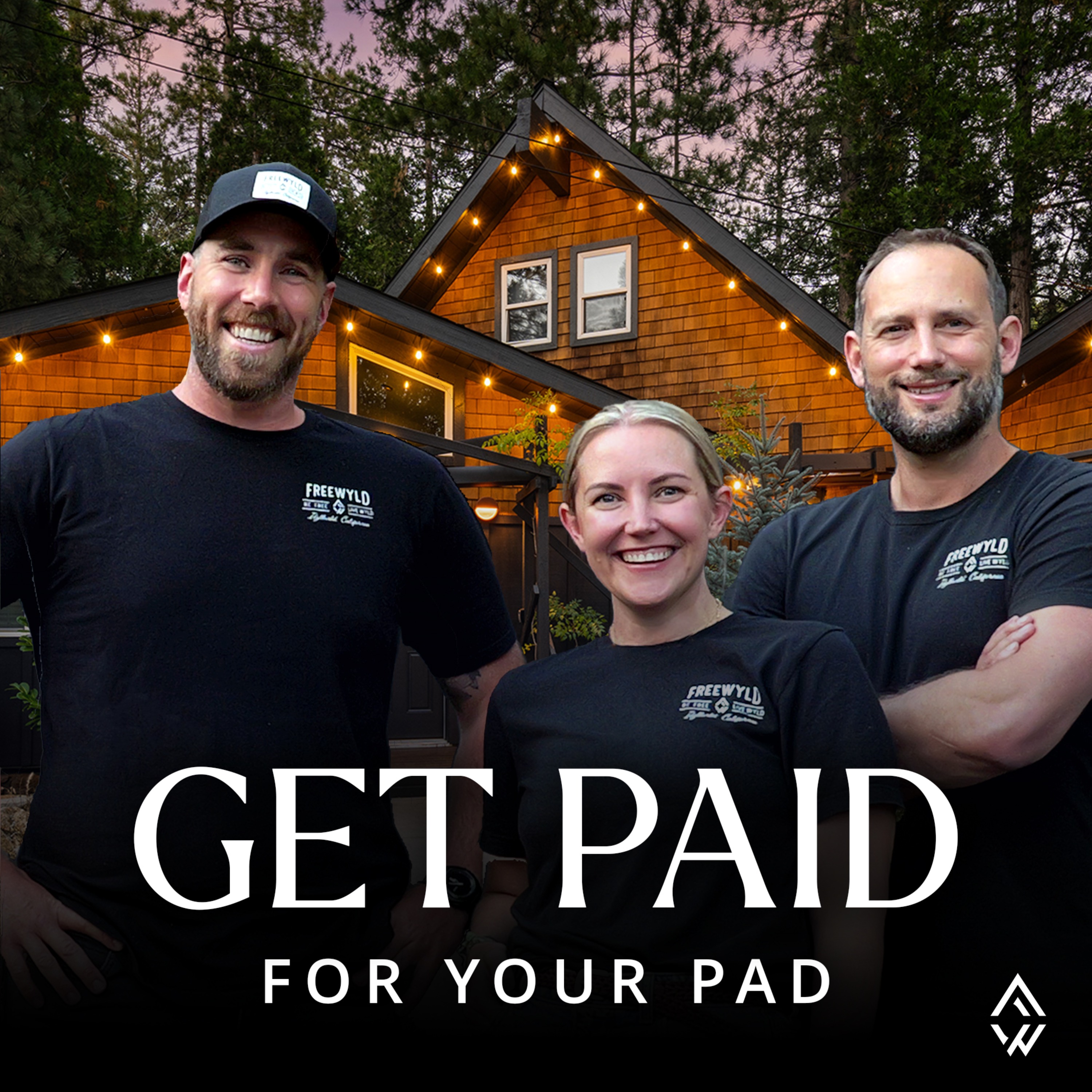
So here at Free Wild Foundry, we work with over 60 PMS, many of whom have over 20 listings,
50 listings. And one of the most common questions that we get is how do I acquire more listings and
specifically more of the right listings? So I am so excited for today's episode with Annie Holcomb.
We are going to be talking about how to get a homeowner stay with a property manager.
That very subject. Welcome to Get Paid for Your Pad, Annie.
Thank you for having me. I'm excited. I feel like it's a long time coming. I've been following you
guys for years and got the chance to meet you at BRMA. You were in the booth right next to me and
Alex with our podcast. So that was a lot of fun. And so this kind of feels like a full circle
moment for me. I'm so happy to have you here. Thank you for making the time and sharing your
genius with us. I mean that sincerely. I know it sounds cheeky, but you've been like on literally
every side of this industry from being an operator to channel manager with Marriott. Now
you opened your own consulting company. What unique perspective does that give to you when
you're working with PMs? You know, I don't want to sound trite about it, but I think it makes me
really empathetic to what they're facing. So I've been there. I mean, when I was in property
management, I started out literally with zero knowledge, just like everybody else does. I don't
think anybody gets into this business really by choice. I mean, there's a few people that you run
into, but a lot of this is very happenstance. It just kind of occurs over time. So I had to like
figure it out. It was kind of like, you know, what's the right way to do it? There is no right
way. There's no wrong way. I think that's the great, the genius of this business is it's really
just kind of what you make of it. But having been there, having had those hard conversations,
you know, getting owners on that don't jive with the, like the kind of the ethos of the company,
or maybe they're too demanding and they're really hard on the staff. I mean, there's just so many
ways that this, this whole relationship could go. So I don't think that there's any right or
wrong way, but I do think that there's some like foundational things that, that property
managers need to think about. And having been kind of in the full circle of the conversation,
I think I can lend a lens to their thought process that maybe they aren't seeing from
their perspective as just a property manager. Yeah. The consultancy is relatively new. You
started it in mid 2025. Is that correct? Yeah. Well, yeah. Labor Day weekend was like my, I mean,
it was like the oddest time in the world to launch, but it seemed like the good cutoff point of like
end of summer and starting.
I had been thinking about it for several, several months and I probably for about two years,
people had been asking me why I wasn't doing it and it just never felt right. And so, yeah,
so it's, I'm still relatively new at this. I'm not even a year in. So yeah.
How has the experience been so far? Just like truly owning your own thing. It's, it's a big
change. It's great. Yeah. It's, it's great from the, the fact that there's nobody like telling
me what I have to do from day to day. And I think like someone, I feel like everybody in this
business has some level of ADD. Like we just need all the things happening. And if you come from
management, for sure, you're used to doing, wearing so many hats, doing so many things every
day. So that's the nice part about it. The other like part about it is like, oh my God, I have to
like make sure that I'm, you know, like I'm a squirrel getting my own nuts for a change. You
know, I'm not like having anybody else show me where they are. So it's some of that, but it's
allowed me a lot of freedoms and creativity that I kind of didn't, oh, hadn't tapped into in a really
long time. I love that connection between being ADD and this industry. And maybe that's why I love it so much.
It truly is like a different situation, a different challenge every single day. And it keeps it so
interesting. All right. So let's dive into marketing to owners. You talk about turning
property management teams into an acquisition army. What does that look like in practice and
how do you do that? So for me, one of the things I try to talk to people about is like, what do you
want to be when you grow up? So if you've got five units, a lot of times that people started out,
they had five units and then they had a friend that said, here, could you manage mine? And then
another friend, another friend, another friend. So they really, it was kind of organic. It was really
just-
Other people were trying to do it and they realized, oh my God, it's not for me. And kind
of dumped it on you. Like some, some people have, have started out that way. And then other people
were like, just took on anything because they wanted to have those numbers. They wanted to
have the growth. They wanted to be like, to establish themselves. So I think it goes back
to the beginning of like, what do you really want? What does your brand say to, you know,
a potential guest? What does it say to an owner? What do you want? Are you looking for to be in
the luxury space? Are you looking to try to have inventory that fits all types of traveler? Are
you in a specific market? I mean, there's a lot of things that I think factor into it,
but at the core of it, it's really having a brand that has a message and that you want your team to
understand what that message is. Now that's not to say that you want someone who's working in your
housekeeping or maintenance to like have a pitch deck and that, you know, they're growing out,
they're talking about, but they need to be, they're selling the company every day that
they're servicing a property or every day that they're running into the hardware store to buy
nails, to fix something in a property, they're running into a potential customer, whether it be
a traveler in the market or an owner. So you want them to like buy in,
to what the message of the company is. And so that's kind of what I mean is in turning them
into the army is that makes sure that everybody understands what the company is about, what
differentiates them from their competitor, what the offerings are. And so people aren't working
in silos. I think it's really important that everybody in the company is kind of swimming
in the same direction. And I referenced a couple of companies that do, I think, do a really great
job of this. Abode Luxury Rentals out in Park City, Utah. They have three different markets.
I think they're very good. Like their company culture is like everybody's part of,
you know, where they're headed. And then Moving Mountains with Robin and Heather Cragen. They've
sent and sold their company to another group, but they're still active in it. But their whole
intent was like the team is part of everything that they do. So just by having your team buy in
and really understand that you're there to protect the investment of these owners that are
giving you the honor of representing their property, but then also that you are given
the honor for like guests that come to stay to help them create these memories. And so like,
just having the team buy into that is just so important.
Yes. Mic drop. I came to the short-term rental industry by way of brand strategy,
essentially. I started working with Freewild to build their brand. Prior to this, I'd worked with
a lot of different industries, lots of different types of businesses, but have gone all in on the
short-term rental industry. So you were speaking my language. The brand is so foundational and it
makes everything else possible. So I'm really glad that you highlighted that selfishly. I see it too often that putting down their competitors is the way they think that
they need to go, or they just, they think that it's all about price. And I think, yes, absolutely.
There are owners of properties that are very price sensitive, but if you have, again, a good
brand and a good message and good service, and you can back that up with a good team, the price
really generally doesn't matter. So never put your competitors down. Really try to find the things that
differentiate you from your competitors, whether it be, you know, you offer a service that maybe
somebody doesn't have, you know, what, you know, like going in and custom shooting photos for
properties. You know, a lot of luxury properties will do this. They'll go in and have photo shoots
for these higher end properties and really customize what they're doing for that particular
owner, making that owner feel seen and heard and make them understand that, you know, you know that
this is their investment. And a lot of times this investment is like maybe their future retirement
home, or it's something that they've been having their family, their family, their family, their
kids grew up in and they want their grandkids to. So there's a lot of emotion tied to it. So I think
that understanding one, the type of owner that you're dealing with, I mean, I think there's
different owner avatars that you could take a look at that you're going to be working with,
but don't put your competitors down. Just really, really try to find and hone in on the thing that
makes you different from your competitors, but also like know who your competitors are. A lot
of people will say, oh, I know that guy, he has these properties, but I don't know anything about
him. Make them your friend. I mean, I think that we, Alex and I joke about it on the podcast. It's
coopetition. You know, you're, you're competing with them, but you want to be cooperative with
them and you want to have a relationship where, you know, you might have an owner that doesn't
fit with you, but you could recommend them and you kind of have this like back and forth. But
I think that just partnering with your local competitors is important so that the owners see
that you're like looking at the bigger picture of what the industry is in the market. And you're not
a, I don't know, like a negative Nelly. I think people just don't, don't like that. Yeah. Yeah.
It's easy to resort to because you look at your own business and you have so much pride in, in how you do
things and how you build things. And you're like, I'm the best out there. And using that message
feels obvious, but like you said, it actually can create kind of a negative connotation if you're
constantly resorting to competitive language in your marketing. I think that's super smart.
I'd love to zoom in on the tactics for a moment. What's actually working in terms of like channels
or strategies or just things that people are actually doing in their business that attracts
the right owners to your property?
So, I think it varies from market to market from what I can tell. Like there's, I think that there's, you know, there's a lot of tools out there that'll say, well, we can
identify the owners, the second homeowners, and you can send them a mailer and here's the message
you should send. So, you know, there's a lot of those and I don't put any of them down. I think
they're great. They're great sources to get that information, but it really is about establishing
yourself in the market as a brand leader, being engaged with your market. There's a lot of
conversation around what destination marketing organizations can do for your property management
group. A lot of DMOs, CBBs, these marketing organizations kind of ignore the short-term
vacation rental market. They're just, they're there, but, you know, in some markets it's like
they're there, they don't understand them, or maybe they have a really large hotel group and
the hotel group is the one that generates the most revenue so they get the attention. So I think that
it's like you have to be heard and seen in the market and then just constantly engage, again,
you know, engage with your owners. Make sure that you're talking to your owners because they're
going to be your best source of referrals because they're going to say like, oh yeah, I am in a
private Facebook group with other owners within this destination and we're always sharing. And I
think that's what people miss out on. It's just they don't think
they're going to be able to do that. It's just they
these owners are talking, but I think at the end of the day, we all know there's private user
groups for about every possible thing that is going on. And so these owners are having
conversations. They're meeting at the local restaurants when they come into town, they're
talking to decorators, they're talking to realtors. So it's really about establishing a brand that
people are going to recognize and know where to go look for, you know, look for a manager.
Yep. I've had personal experience. My husband and I, we don't anymore, but we owned a second home
in the mountains of North Carolina and we absolutely had a homeowners group of all of those local
cabin owners. And the property management discussion came up often. It's like, man,
are you using this property manager? Are they charging you this fee? Have your bookings slowed
down? How are your bookings? So understand that those conversations are happening. And I think
the best thing that you can do to your point is to nurture and really love on those homeowners
as much as possible so that those conversations are as positive as possible. Yeah. Yeah. And also
share. I think, you know, sometimes people get concerned about they don't have anything good to
tell. So they're afraid to communicate. But the silence, I think the void is what causes, you know,
the most thing. It's like when people don't know, there's a lot of assumptions that get made. So
communicate whether you have something good to say or something bad to say. It's like they would
rather hear from you than hear it third party and have to come to you to address it. So make sure
you're just communicating with them. And that's just again, it just nurtures that relationship.
And then in terms of like what other things that you can be doing, this is another piece of my
consultancy and kind of where like my, I don't want to say like expertise lies, but like the
distribution conversation. There are, you know, the owners want to see that you're marketing that
their properties. They want to know that they can look on any channel and find their properties. And
AI is really, really changing that. So people are going to have to stay on their A game for it. But
I look at, you know, a channel like Marriott Homes and Villas is a really great example.
That's a channel that is a source of pride for owners when they get their properties listed
on that channel because they don't take every property. So a lot of times, you know, you'll
run into Tom has his property on it, but Bob doesn't. And Bob's really, really upset why
he doesn't. And ultimately, you know, the manager could say, well, Bob, the reason yours isn't on
there is because you need to upgrade and you need to do these things. And so think about like your
distribution mix. What does that mean in terms of like the, the, the pride factor for the owners?
Because at the end of the day, the owners want to see their properties out there against, you know,
they're competing with other owners in their, their neighborhood. I mean, it's, it's definitely a
competition. So think about those type of things. And then also like with your guests, you know,
take care of your guests. So those reviews are positive because owners are going to, and I'm,
I'm seeing it more and more with chat GPTs,
and Claude and all the different AI tools. People are plugging in like property manager in
destination and it's, it's sourcing reviews. It's sourcing distribution channels. It's sourcing all
the areas that these property management groups are, are, are out in and can find really, really
quickly the ones that you'll be able to tell, like, that's not who I want to work with. And
this is absolutely who I want to work with. So you really have to work so many different angles
at this point. Yeah, you really do. I can't remember where I read this of yours,
but I think you mentioned something about not just paying attention to,
like your pricing yield or your listing yield, but thinking about channel yield. How,
how do you recommend that property managers think about channel distribution? Is it just
be everywhere that you can, or what is your strategy behind that?
So I think it's be everywhere that makes sense. And again, going back to your brand and what
your goals are, if your goals are, you know, to book direct and, you know, attract owners,
then you're going to want the, to be on the channels that your owners are telling you,
the owners will tell you, and they're going to say, they're going to want to be on Airbnb. They're
going to want to be on BRBO. If they have higher end properties and they're a business traveler,
they're going to want to be on any of the channels that are like kind of in that. So like American
Express, Hyatt, Hilton, you know, the Marriott is like the easiest one that you could look to
because I mean, they've got what, over 200 million Bonvoy members. So a channel like that has a lot
of reach. If they're staying in Marriott's every week when they're traveling and they look on their
app and you know, they're looking in a market and vacation rentals are coming up, they want to see
their property there. So that is a really great tool. But I think that also not letting your,
to get, I guess, too heavy on one channel, like making sure that it's really spread out so that
again, you're getting more eyeballs, you're getting more diverse customers, but the owners
are shopping the channels just as much as a guest is. Smart. How do you advise or consult with PMs
or operators on when they should grow? Or like, how do you think about the effort or time or
investment mix between marketing towards guests and then marketing towards owners?
I think that's a, I got like subjective because it's really, you know, I've talked to property
managers that have 25 units and they want to just grow organically. They're not going to put any
effort behind trying to find owners because they're just not looking for a big growth. But
then you have some groups that I want to take on a hundred properties, you know, in the next year. So
then there's like an aggressive, you know, program that has to be put together that. So it really
just depends on what are you capable of handling? I mean, I think the, the biggest mistake, and I
know when I was in property management, the market that I was in was very condo heavy.
So it was very easy to pick up a building and you'd get 75 to a hundred units. But
the problem is having to onboard all of that very quickly heading into season. I mean, we went,
you know, my husband and I worked with a group, we started a management company from zero and within
the first two years we had about 800 properties, but onboarding is just like, it's a nightmare and
it, it, it sets the team up for just friction and chaos and just frustration. And so I think it's
just really make sure you have all the foundational pieces of like, you know, your, your PMS can handle
it. Your accounting systems can handle it. Do you have an onboarding workflow that you've put together
to take on owners from contract to go live? You know, do you have the team that can talk with
these owners as they're going through this process? Because a lot of times, I mean, let's face it,
you know, you'll hear time and time again from owners of they don't have the staff and or
property managers, they don't have the staff and they're doing, you know, 10 different jobs wearing
multiple hats. Well, that's the way your business is operating. You're probably not going to be able
to take on more than a couple of units at a time. So really be mindful of that. And you know,
if you need to partner with somebody, it's a, it's okay to, to like,
you know, create a partnership with another management company. I've seen that done
where you can take on some things over time. Maybe there's a manager that's looking to get
out of the business, or maybe they're looking to offer some properties and maybe they only want
homes and they want to get rid of their condos or they want to get rid of their homes and only do
condos. I mean, there's a lot of things if you work your market that you can do and you can kind
of put into a strategy, but I would say really think about what you want to do. Don't go into
it with like, yeah, I want to take on a hundred, but I have no processes in place to do it.
Sage advice. Yeah. Cause you're, I mean, you could be shooting yourself in the foot because
if you don't have the, the team to create a really great guest experience and you're starting to get
a lot of negative reviews on your portfolio, that can not only affect that one listing,
it can have, it like bleeds into other listings as well in terms of visibility and conversion
rates on the different OTAs. So you have to be ready for that growth for sure. In your experience,
what do you think is the number one thing that makes a homeowner stay with a property manager
and what's the number one thing that makes them leave? I think those
things just go hand in hand because if you, if an owner doesn't feel that you are protecting
their investment and being honest with them about their investment in terms of like what it can
actually do, you know, I see that a lot where people will, and this, and I see this more so
kind of in the real estate space where you have like maybe a real estate arm or somebody who's a
realtor and they're maybe they're not in the rental side of it and they're looking to sell properties. So
they'll say, oh, you can absolutely take care of the mortgage and take care of your insurance and
you'll make all the money that you need to do. And with given like the last couple of years with
real estate prices, that's just not feasible. So by the time they get to a rental manager,
the rental manager has to make the hard call of like, do I try to do this or do I tell them up
front that this is just not, you know, not sustainable, it's not going to work. So,
you know, it's just really about being honest. And I think a lot of times if someone bought a
property, realtor said, absolutely, they get to a manager and the manager says, look, there is no way
that I'm going to be do it, but I'll work really hard for you. You know, I would say nine out of 10
times that owner is going to say, I'm going to work with you. I'm going to give you a shot because
you're being honest with me. But if someone were to say on the count, you know, the flip side of
it, oh, absolutely, we can do it. And six months into it, they're so far off the mark, there's no
way they're going to be able to make half of what they anticipated. Then all of a sudden it becomes
panic and it becomes, they'll feel lied to. And so I just think it's, it's, it's absolutely about
the trust. It's, it's, there's nothing more important for trust or no trust to keep and lose an
owner. Yeah. We're, I mean, we're a couple of years off of this now, but we experienced that
with our cabin because when we started working with our property manager, they were quoting us
like returns and results from 2020, 2021, when the short-term rental market, particularly in that
area, because it was a drive to destination was just booming, wild, crazy. But there was no mention
of like, by the way, like the market is shifting. The demand has definitely shifted. It was all
sunshine and roses. And it took us a little while to
realize that as owners that, you know, what the actual expectation was going to be. And that
absolutely does impact the trust in the relationship versus them.
being more upfront and forward-looking, not just backwards-looking.
I think that's also important. I was going to say, I think that's also a factor of when you're
looking for a property manager, or if you are a property manager, think about your longevity in
the market and how you can talk about you've been through cycles. I mean, I think that people that
came on post-COVID, they didn't know anything previous. So for them, the market being on fire
didn't seem like it was really on fire like it was for all of us that had been doing it for a
long time. Because we saw it, and we were like, this totally isn't sustainable. But anybody that
got into it was like, this market's just going. It's great. It's like the stock market is just
going to keep going, and I'm going to get rich. But that wasn't the reality of it. So I think
it's like, if you've been in a market for a while, talk about your longevity in a market. Talk about
how you've seen the ebb and flow of the industry. And you know how to weather it with your marketing,
with your support services, those type of things. That's another thing that I think
managers don't play enough off of. Super smart. Do you think the messaging
to homeowners changes when the market is booming versus. When it's more steady or on a decline? Yeah, I do. I think that it could go two
ways. I think that when the market is booming, owners start to take notice, and then they get
a little more maybe aggressive about the things that they want, and they think we have to take
advantage of it now. And then they might go shop around and think, well, that could make a little
more money. I could cut a little bit on my commission here or there. But I think that
that's where it's important for you to say, this is great, and maybe we're reinvesting the money
into. I've talked to owners all the time. You've got cabins in the mountains that are
great examples. Some of these cabins have been in existence for decades, and some of the decor in
them has been in existence for decades. And these owners have just. They're very happy with it.
They're not dirty. They're comfy cabins, but they just need some love. They might need to get rid
of that flowered couch that grandma had picked out in 1970. So talking through the owners about
using that boom to reinvest and make better and preparing for when it eventually levels out. I
think it's just really, really sharing.
Data with owners. You don't have to share everything, but just share market intelligence
with them so they can see six months down the road what's coming. They understand the trends.
I think that everybody right now is seeing gas prices. We know that's going to affect summer
because all these drive destinations. That's going to affect maybe how far people are going to
actually go or how long they're going to go. They may have to cut back on that. So some of those
things, you share it in advance so that the owners aren't blindsided. But I think that it goes back
to the constant communication and keeping that trust.
When you're talking to the owners that you work with, do you find yourself repeating
pieces of advice again and again? If so, what is? What are those?
Oh, for sure. Communication. I mean, because again, people will say, oh, I send them a newsletter
every month. Okay, great. Are they reading that newsletter every month? Are you sharing the same
same every month? Are you giving them something informational, interesting? And I think we live
in a world now where news needs to be in these little soundbites. It needs to be very quick,
concise, like TikTok and Instagram.
And Facebook and all the things you just have to give them little bits of information. Don't write
an article that they have to, you know, nobody has the time anymore. And I don't think people's
attention spans aren't good for that. So I have, I tell people all the time, like, ask your owners
what they want. You know, you're going to hear things you don't want, but you can filter through
it and find the things that they really find relevant. And maybe, you know, there's Sarah
Bradford. She used to have Steamboat Springs. It was a property management company in Steamboat
Springs. I always get the name wrong, so I'm not going to try to remember it. But, you know,
she sold her company a couple of years ago. But one of the things that she said over and over again
is, you know, make sure that you're actually physically talking to an owner, not just through
an email, not through a newsletter, but picking up the phone and calling them randomly. Just call
them, you know, monthly. Make sure you're touching every owner. Now, if you have hundreds, it's a
little different. You've got to have a team of people to do that. But to physically just call
and say, hey, nothing's wrong. Just wanted to say hello, see how you were doing. I was thinking
about you, wanted to give you an update on X, Y, Z, you know, buy your property, the road being
paved or whatever.
It is. That means you're intentional about your relationship with them. And I think that too
many people get get bogged down in like the operations and the guest facing and guest facing
is so important. I mean, you have to have the guests and you want to take care of that. But
that owner relationship, too, because you could very easily, you know, lose a property that you've
had for 20 years just because you didn't call and say happy birthday or you had a granddaughter,
you know, like something. I think it's just to make put that on your calendar every week to call
an owner. You know, maybe it's you.
Walk an hour to call to own or something like that. But I think that's something that I feel
like I do repeat a lot. Yeah. And on the marketing side of things,
I always tell people like when they're doing market research for a new business or a new idea
or just adding something to your business that your best source market intelligence is the actual
words coming out of a human's mouth because we constantly filter ourselves if we're filling out
a form or a survey or even posting things online. All of that is filtered. So the closer you can get
to that actual human speaking to you, the better gold nuggets that you're going to find to help
in some of your marketing strategy and the things that you're doing. Absolutely. So Annie, you're on
the VRMA board. What changes do you want to see in this industry moving forward? And how is VRMA
shifting and changing to meet this new future that hospitality is going into?
Yeah. So I think the biggest opportunity that I and it was part of the reason that I started
in the way I did was that, you know, 90, the number changes, but like say 90% of the business
is small hosts. It's people that have less than 20, 25 properties. And the way that they've been
educating themselves is going to YouTube or chat to UPT or, you know, Google. And they're not talking
to other property managers because maybe they're in a market, you know, it's not a hotbed destination.
So they don't have a destination marketing organization. There's maybe not a really
large established property manager that's there. So, you know, from there, I think it's going to be
the VRMA standpoint. We recognize that like those people, we need to bring them into the tent,
so to speak. And so like trying to get to get in front of them to say like, hey, let us help you
get access to information, come to our conferences, participate in the webinars. I think that that's
something that's really a big focal point for everybody within the organization. So I think
it's an opportunity there to expand. And then, you know, I mentioned to this earlier, just the
conversation about destination organizations. So they are kind of the front line within a market
that's going to be a big focus for everybody within the organization. So I think it's an opportunity
they're handling the market messaging that's out in, you know, in the marketplace to the consumer.
But they're also very important in the messaging that gets to municipalities in terms of like,
you know, in terms of like regulation. So really engaging with those entities to make sure that one,
the association can be in front of everybody that's in the market. But also when there is
stuff that comes up, like they can come to the association as a resource for like, hey,
we think this regulation might be on the table soon. How can we,
you know, address it? You know, we have a governmental affairs group that really,
really works on that and working on the tonality of the way things are written and how to address
them when they come up and how to be proactive about it and not have to be reactive. So I think
it's overall just, you know, making sure that people know that the association is there to
support regardless of what market you're in and no matter what size you are. Smart. I want to dig
into that just briefly here. But if you're trying to build a relationship with a DMO, what as the PM
operator, what are the things that you're trying to do? What are the things that you're trying to
What kind of value can you give to them to help build that relationship?
It's really about showing up. So I think that there's that saying, like, if you're not at the
table, you're on the menu. And so if you're not showing up and you're not present, they don't
know you exist. And so it's very easy for, I call them in my market, I call them againers. And there
are people that come with an issue again and again and again. And nine out of 10 times, you'll find
out that issue doesn't even really impact them. They're just bored and they needed something to
do. So they'll show up at these meetings and complain that they heard from, you know, glass
when they were getting their hair cut, that their daughter was staying next to somebody that had
this house party in a town on the other side of the country. And they don't want that to happen
here. So like, they're showing up at these things. So I think it's, you know, you need to be as a
manager, you need to be present, you need to show up. Yes, at the end of the day, it's likely that
your DMO, CBB, whatever your entity is, is going to lean their voice and their messaging towards
the largest entity generating the revenue, which in most markets is hotels.
Understandably so. But if you take a look, I keep using this one market that I worked with,
Indianapolis is a great example. Their destination organization is phenomenal. They do a really great
job. They've got sports events, they've got concerts, they've got everything. But if you
look at the makeup of like what they market, they don't even mention vacation rentals. They've got
6,000 properties in their market. They don't mention it. I reached out to him and said,
hey, do you have vacation rentals? They said, sure. They sent me five different hotels that do
midterm stays. And that was their offering. And I was like, this doesn't make any sense.
And so I was working with a property manager there and I was like, you know, I was just
encouraging her to like get with other managers in the market. I said, 6,000 properties is not
a small voice when you get everything together, but you're 15 alone has no impact. So it's really
about creating a collective voice and showing up and being present and asking questions and just
letting people know that like, wait a minute, this is how the business actually is running.
And I talked to somebody about this recently. Most organizations will do the pitch of,
you know, buy from a local business, eat at a local business,
a local restaurant, you know, to get the local flavor. Well, there is no more local than an
operator that has 15 properties who lives there, who employs all local people, who is buying all
of their goods from the market. I mean, they're more local than most hotel companies. And so I
think that they have that voice that they could be utilizing better. So just be present, be active
and make sure that your DMO knows you exist. So Alex and Annie, the podcast has crossed
well over 200 episodes. What kinds of conversations are you guys having?
over there. And how can people go find you? Oh, gosh. So lots of great conversations.
We actually just launched a new program called the Growth Blueprint, and so we're working with properties on more of a larger marketing initiative so they can participate in the podcast and help us participate in educating.
So we're going to be having what we're calling Real Talk Roundtables.
We're going to do those quarterly where we have different people from the industry come on and talk about subjects that are important to provide education.
We interview a lot of the suppliers, their customers, to be able to give real, like you were talking about just with the owners, like that real voice of a customer that's using a product or using a property manager.
We just really want to take the Alex and Annie show to this level of really diving into education and hitting a broader audience.
I mean, we're going on five years now, which seems crazy that we've been doing it that long.
But when we started out, we had no idea what we were doing.
We joked before we got on camera.
I still feel like I still don't know.
I still don't know what I'm doing from day to day.
But the conversations we get to have are so exciting.
I mean, if I look back at it five years ago, and I think you probably have it with this podcast as well, there were people that if you try to talk to you, they wouldn't take your phone call.
Now, all of a sudden, they're reaching out to you saying, hey, could we talk?
And you're like, oh, absolutely.
And I'm not trying to sell them anything.
I just want to know their story.
And I think it's fun because I'm a genuinely curious person, so I like to ask a lot of questions.
And sometimes they're very random, but it's just the doors that it's opened to connect pieces of the industry.
That I think would never have been connected from all the great podcasts that we have in the industry.
I mean, I think just the Alex and Annie one is just one of many.
And we're just excited to be part of this industry that I don't know anybody that's in it that I talk to that just doesn't love being here.
And we're just such a good, it's a family in a weird kind of way, you know.
It's a good crew.
And I can't wait to see you again at BRMA in Nashville later this fall.
What are you excited about for the big conference this year?
Oh.
I'm actually working as a board liaison to the chair and co-chair, so Rachel Allday and why can I never remember April's last name?
April from ICND.
We just spent two days in Nashville doing site visits there, and we've got a lot of really exciting things planned.
We have a little internal theme called Yee-Haw, so it's like the Yee-Haw, but we wanted to create like a collected collection of like these awe moments for people when they come to the conference so that they walk away from it thinking like, I'm so glad I was there.
This was amazing.
I learned a lot.
I gained a lot.
I learned a lot from it.
And we've got a lot of things that are going to be different from years past that we're trying to get over the line.
So as we get those done, we'll definitely be sharing with everybody, but they're going to be doing a call for content, you know, for education sessions here in the next couple weeks.
And so we're excited to have that mixed up and be a little different, be a lot more interactive.
And so I think people are going to be really excited about this year's conference.
And, you know, I will actually be co-chair next year, so I think that what ends up happening is I'm just like, we're going to set the bar really high, so nowhere to go from here.
Step it up.
So, yeah.
Amazing.
Yeah, last year we got to teach a new education format around revenue management called a skills lab, which was super fun from our side of the table.
And we heard really great feedback.
The overarching sentences that I heard last year after the event was that things feel like they're changing.
They feel fresh.
They feel better than ever.
And I can't wait to see what you guys do in Nashville.
Yeah, it's good.
We're in a good place and headed in a good direction.
So we'll see you there.
Heck yes.
Annie, thank you so much.
Thank you so much for being on the podcast today.
Other than the Alex and Annie podcast, where else can people find you and connect with you?
I am like a voracious LinkedIn participant.
You're amazing on LinkedIn.
I'm in there all the time, yes.
That's my water cooler for the industry.
But they can go to AnnieCoSolutions.com, and if they want to book a meeting with me or, you know, want to learn more about my consultancy, certainly do that.
But, again, always just reach out to me on LinkedIn.
It's the easiest way.
Fantastic.
Annie, thank you.
Thank you.
Thank you.
I appreciate your time.
And like I said in the beginning, you're a genius.
Thank you for sharing all of your words of wisdom.
Thank you.
Podcast Summary
Key Points:
Property managers often mistakenly focus on price; a strong brand, message, and service backed by a good team make price less critical.
Building an "acquisition army" involves ensuring every team member understands and embodies the company's brand, which differentiates it from competitors without disparaging them.
Trust is the number one factor in homeowner retention; honesty about realistic returns and constant communication prevent erosion of trust.
Growth should be intentional, with foundational systems (PMS, accounting, onboarding workflows) in place to avoid chaos and negative guest experiences that harm portfolio-wide visibility.
Effective owner acquisition includes engaging with local markets, DMOs, and competitors (coopetition), leveraging distribution channels like Marriott Homes and Villas, and nurturing owner referrals.
Communication must be proactive and personal (e.g., random phone calls), not just newsletters, to maintain relationships and avoid assumptions.
VRMA is focusing on educating small hosts and building relationships with destination marketing organizations to address regulation and market messaging collectively.
Summary:
In this podcast episode, Annie Holcomb, a consultant and industry veteran, discusses common mistakes property managers make when attracting and retaining homeowners. She emphasizes that focusing solely on price is a misstep; instead, a compelling brand, clear messaging, and excellent service, supported by a cohesive team, are what truly matter. Annie advises turning the entire team into an "acquisition army" by ensuring everyone understands the company's ethos and differentiators, while avoiding negative comparisons to competitors.
Trust is the cornerstone of owner retention, built through honesty about investment potential, proactive communication, and sharing market intelligence to prepare owners for fluctuations. She warns against rapid, unplanned growth, citing her experience scaling to 800 properties without robust onboarding systems, which leads to chaos and poor guest experiences that can tarnish the whole portfolio. Tactically, Annie recommends engaging with local DMOs and competitors, leveraging diverse distribution channels to boost owner pride, and nurturing owner relationships through personal calls and consistent, relevant updates.
She also highlights VRMA's efforts to support small hosts and collaborate with destination organizations. Overall, the discussion underscores that intentional branding, trust, and foundational readiness are essential for sustainable success in property management.
FAQs
They think it's all about price. A good brand, message, service, and team matter more than price for most owners.
Trust. Erosion of trust is the main reason owners leave, so honesty and protecting their investment are crucial.
By ensuring every team member understands the company's brand, message, and differentiators, so they sell the company in daily interactions with potential owners or guests.
It creates a negative connotation. Instead, they should focus on what differentiates them and build cooperative relationships with competitors for referrals.
Establishing a strong brand in the market, engaging with DMOs, leveraging owner referrals, and maintaining a diverse distribution mix that owners see as a source of pride.
They need to ensure their PMS, accounting systems, onboarding workflows, and team can handle it, or they risk negative reviews and operational chaos.
Chat with AI
Loading...
Pro features
Go deeper with this episode
Unlock creator-grade tools that turn any transcript into show notes and subtitle files.
 PodcastTranscript AI