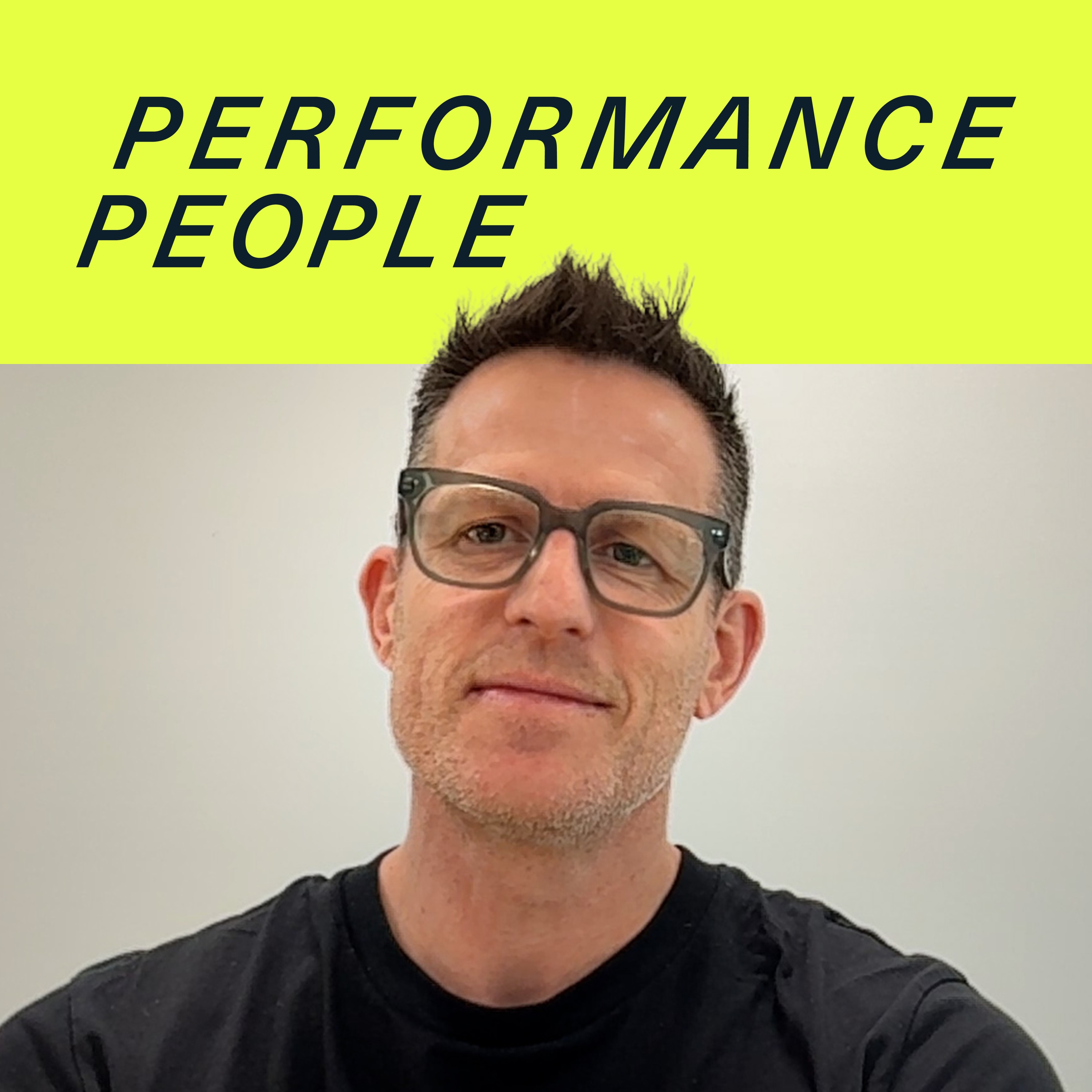
How to Train in Your 40s and 50s Without Breaking Yourself | Chris Tombs
26m 53s
Midlife fitness requires a shift from short-term intensity to long-term consistency. The key challenge for women and men alike is time management and lifestyle distractions, making micro-dosing—such as 20-minute targeted workouts—essential for maintaining momentum. Strength training is highlighted as a highly efficient form of training, as muscle burns significantly more calories than fat, improving metabolic efficiency over time. Success depends on a holistic approach: regular strength sessions, increased protein intake, daily step goals, and proper recovery. Fundamental movement patterns (squat, hinge, push, pull) should be emphasized, with variation achieved through intensity and volume changes rather than dramatic exercise swaps. For both genders, training should be future-proofed by avoiding high-risk movements that risk injury, adopting a "train like your 40 when you're 20" mentality. The core principle is sustainability—consistently showing up, layering habits over years, and embracing patience over instant results. This long-term mindset, rooted in consistency and recovery, enables lasting physical performance, better health, and resilience well into later life.
I want to be that guy who's 80 in the gym that I do want to be that guy.
I know that I don't have to basically ramp to 100 miles an hour today because I can start at 30 today
because tomorrow is going to be 35 and the next day is going to be 40 because I'm going to keep
showing up. People don't look at training in a in a longitudinal way. They look at it. I'm going to go
and smash myself in the gym today. Not think about tomorrow's training session. If you're just
redlining one after the other after the other, there's only one way your performance is going and
that's detrimentally downwards. My good friend, I got a name check in. He's been on the pod before,
Sam Wolverton. He's got it written in his gym. Everyone wants to be a beast until it's time to do
what beasts do. So Chris Tooms on the Performance People podcast this week. A man at the top of his
game after 30 years in it. He is a specialist human performance elite coach within elite sports
where he doesn't know about human performance isn't worth knowing. We're going to focus this episode
Toomsy on midlife fitness for women. So a tender area for yours truly. But what to work on and why?
Now I want to start with and once again I think I know the answer to this but I want to start with
what are the challenges that most women face at this time in their life where their fitness and
human conditioning is concerned? Well, I've got to tread carefully here Georgie. I think my wife's
about the same sort of age as you. So I've got to be a bit careful. But I think the biggest one is
time constraints given that and this is a very generic point. You've got a lot of other distractions
in your life and by distracting. It's the juggling. Juggling the demands of your life I think is
the biggest challenge. And I think that that would inevitably lean into a couple of things that
you can do from a solutions standpoint. I love micro dosing for example. I know we jumping
straight into some of the solutions to some of the problems but I love micro dosing when it comes
to physical performance and the delivery of a specific stimulus for a specific outcome.
All right. What does that look like? Explain micro dosing for those people that aren't
necessarily familiar with it and then also what that actually means in context.
No. So what I'll do I'll take it one step back. The biggest challenge that I've had in my career
when it comes to managing, let's call them athletes, everyday athletes when I've basically
delivered training programs to female athletes. The one biggest constraint or the one biggest
challenge and the one biggest misconception is that strength training is going to turn them into
this bulky human that's unattractive. And I know that's quite a generic answer and a quite a
general statement. But I think that in my experience is probably one of the biggest challenges to
overcome. It's the stigma that weight training is actually not going to do what I need it to do
for me. And so that's the first piece of education. We can get past that and we can
drive the benefits of strength training as probably one of the most
efficient ways of burning fat, maintaining strength levels. And it never to be those two things
then arguably lead to a sort of better physique and a happier human. That's not the only goals in
life. I understand that. But to answer the micro dosing piece, micro dosing is basically in a time
poor world. 20 minutes training with a targeted specific outcome is better than no training.
So, so whether that's, and I'll use any form of exercise if you're time poor, any form of
exercise for me as a performance coach is better than no exercise. But in terms of actually getting
the maximum benefit for a lady in that demographic of between 35 and 55, should we say, strength
training has the best return on investment when it comes to ultimately how you feel, how you
perform and inevitably a combination of both of those two things. So micro dosing might be as
simple as Georgie. I've only got 20 minutes. I'm going to do a very short warm up five or six minutes
and I'm going to do three or four sets of a lower body exercise and I'm going to do three or four
sets of enough body exercise. That is definitely forward progress and way better than just going,
I've only got 20 minutes, I'll do nothing. And I'll continue balancing all these other plates
and spinning all these other plates that I've got going on in my life and become more and more
despondent and frustrated because I haven't got time to train. Five of those a week
adds up to as close to two hours as as you can get. And so that is going to over time and it goes
back to the offline conversations we always have around consistency consistently chipping away at 20
minutes here, 20 minutes there, 20 minutes there. You've got you've got hours and hours of training
by the end of the month and your body will thank you for it. Why is strength training so important
for women at this stage in their lives? Because if you were thinking, oh well, I've got say three
hours to play with in terms of what I want to do physically fitness wise over course of a week.
Three runs or three spinning classes or whatever it might be might be the thing that you would
just go to straightway because you're feeling instantly like a sweat on and you're feeling like
you've achieved something in a cardiovascular way which might equate you to thinking I've
burning calories and I'm doing the best thing for myself. Why should you give up one or two or
three of those things for strength training? Efficiency, look at your body as a furnace,
strength training and muscle mass. Muscle is much more efficient than fat when it comes to burning
calories or burning fuel. So what you'll have and let's make the mass as easy as possible,
just say and I know I'm not a woman, I weigh 100 kilos and I've got 80 kilos of muscle.
Muscle burns, you know, I might get the numbers slightly wrong, 50 times more efficient at
burning fuel than fat. So the more muscle I have, the more fat I burn just going around my every day
or more fuel I burn, sorry, going around my everyday business. So what that essentially means is
the more muscle I have, the faster my furnace is burning fuel. So it's efficiency. So that
way don't get me wrong, high intensity exercise burns calories, but it burns calories now,
but it doesn't burn calories in a longitudinal sense. Your body holding muscle burns calories
on a longitudinal level. So that way it's just about efficiency and effectiveness.
Before we carry on a teeny tiny favor from me to ask of you, if you like what you hear or see
in this episode, please can you subscribe to our channels. It makes all the difference to have
your support. It means the algorithms pick that up and send it to everyone else who get something
from this episode too. Plus of course it means we can get the very best guests in the studio. Thank you.
All right, so I come to you 40 something years old and say and say, right,
Tumsy, I used to be sporty. I used to do this, this and this. I feel like I'm a bit out of condition.
This is feeling very autobiographical. I need to get myself well and truly back on the road map
to success from a physical performance perspective. So what is the first thing you do with that
information? Well, this is like a personal training session about paying for it. It's brilliant.
No, it's lovely. I know it's great advice that I'm about to give you. And I don't have to actually
do anything. No, you do. You've actually got to put this into practice afterwards. Okay, so does
it's like everything unfortunately. It's multi-disciplinary. It's multifaceted. There's a lot of
moving parts here. I think in order to be as effective as possible in your strength training,
which I'm advocating three times a week, you've also got to make some lifestyle changes
unfortunately. You've got to think about what you eat and I think going back to one of the other
challenges with the with the female population I've worked with particularly is an understanding
and an education around fueling for performance. I think a lot of the misconceptions around what you
need a much higher protein intake generally. I think proteins probably the missing macronutrient,
strength training and moving outside of training times. I think those are the three cornerstones
for success for me at the demographic we're talking about. If you can hit your three strength
training sessions a week, you can modify your diet and your nutrition to increase your protein
intake with every single meal and have the discipline to have protein with every single meal
and your your needs, your non-exercise step count basically has got to go up. You've got to find
a way in your busy schedule to do between I would say eight eight and ten thousand steps a day
as a minimum to just have your overall kind of consumption of calories, your fueling of cat,
your fueling of your your exercise and your I guess overall consumption and utilization of fuel
just to up the up the ante a little bit. That would be that would be where I'd go.
If you're doing three sessions a week, how important is it also to have a variety in the exercise
choice? Wow, all minefield. Or is it? The reality from a exposure to strength stimulus,
for example, what I would suggest for most people and I know that again it's a very general
statement. A lot of people think they get to advanced stages of kind of their training history
and they've actually only really just scratched the surface because if you think about training
age, my training age, I work today, it's 37. So I've been training
systematically for 37 years. And so I still consider myself at an intermediate
level. So I guess to make the point as succinctly as possible. Exposure to the
fundamental movement patterns of squat, hinge, push, pull, brace, rotate, all of
those kind of core fundamental movement patterns. You don't need, you don't need a
massive amount of variety. You can, you can offer variety through manipulation of
things like sets, reps, intensities, density. You can, I mean, people who know me know I love
a sled push. I've sled pushed three times a week for the last probably seven or eight
years, week in, week out. The mindset I need to do that is just I know that I need to show
up and just push that thing. I need to then go on and do the next thing, the next thing,
the next thing. And I'm sure we'll talk about lowering the orthopedic cost another day.
But that's, that's another area of focus that we can maybe talk about on another episode.
But the, the women's strength training movement needs to gather momentum. That for me is
absolutely the most efficient and effective way to basically manage your changing body.
Yeah, movement that goes with that. But I'm not for one minute suggesting that if you
like an exercise modality, and that's what's going to keep you compliant to an exercise
regime, I you're totally obsessed with reform at the moment. Keep on going. But what I would
suggest to you, if this is just our one-on-one consultation, is we've, yeah, you're laughing
at this. We've, we've that microdosing into your routine so that you might just start doing
a lower body exercise in, in addition. So I'm not asking you to do hours and hours more.
I'm asking you to do some Bulgarian split squats or some Romanian deadlifts. I know there's,
you know, they love the Eastern European names. Yeah, you know, you, you know, both of those
two exercises. Just three sets of each of those. Just do that for the next two months and
then let me know your progress and then we'll add something else and then we might take
something away. Just don't add a burpee. That's all I'm asking. I don't add a burpee.
I know. Okay. But we're back, we're back, we're back to where we, where we expected to be,
which is you've just got to do something. Yes. Absolutely. I know we can't get away
from it, but I think we do need Georgie in this day and age. We've got so much access to
information online, but we also need a solutions focused approach, which is if you are really
time poor, juggling all those demands, one, do what you like. I'm hearing from you. You're
really loving Pilate. So do that. And then I'm just making a subtle suggestion that just
add a little bit of something else because you're there anyway. And I'm sure we're, well,
I don't know where do you reform, whether it's a studio, whether it's in a bigger facility.
But if I've got a weights facility alongside your reformer, beautiful, you can add an extra
little minute, a minute dose, just a minute dose. I think compliance to exercise shouldn't
be underestimated. I think if you really like doing something, start there and then
maybe add some layers. Okay. Note to self, midlife fitness for men. What should they prioritize
and why? Right. I'm going to start with what matters most, what are the biggest challenges
that men have to face in midlife that they need to overcome from a fitness perspective?
Yes. There's a world there's many challenges to overcome. But yeah, from a fitness perspective,
I think it goes back to what we've talked about before as well offline. There's a lot of distractions
in the world. There's also a lot of social media pressure. There's a lot of expectation around
essentially getting everything done. If you're being a great father, being a, you know,
providing for your family, maybe your priorities shift from yourself to a much bigger sort of,
you know, community. It's, we're all time poor. And I guess the challenge we've got there is
to be effective and be efficient with the time we do dedicate to our training and our performance.
And so I think the biggest thing for me would be prioritizing yourself, but also you,
I mean, I, I'd sit in the, in the parent category and I think I owe it to my kids to look after
myself physically. So one, I can hopefully help nurture them physically, but also it sets the
standards for them to sort of monkey see monkey do. So my son, for example, is only 12. He came
to the gym with me on Sunday because I don't make him come to the gym because I've worked in,
you know, performance for 30 years. He comes to the gym because he knows that I value the gym
for either myself care or my health or my performance. And I think that trickles down into,
you know, setting standards for your kids. So that's one, that's one thing. But I think the,
the realities of the middle, the middle age man, should we say? Yeah, because I was going to say
you sit in the, you sit in the, I'll say it if you don't say it, but you sit in the elite athlete
category. So, you know, obviously what you, what you do for yourself and your work and, you know,
everything that you are, maybe very aspirational for the everyday athlete. What is the, what is the guy
who is working all hours? It has a gym membership. Super wants to go as much as possible, but
everything else gets in the way and it gets bifbed off for all sorts of different reasons.
What should they be prioritising in their working week now to get themselves back on track?
My, my biggest one there and it's great that you've mentioned it is you've got people who are
seriously busy. I still, even now, block my calendar with a meeting. I normally train in the
morning so I can get it done before all these other, you know, things get on top of you.
But I would, if I was an everyday athlete who's very, very time poor, I would be selfish enough
to schedule time in my diary. That's the first thing, block off time for yourself. Because time
for yourself is actually giving back to whether it's your workplace, whether it's your family,
whether it's, you know, the bigger picture in terms of your efficiency and effectiveness in
whatever you do. So that would be the first thing to do, block time out. And then the second one,
which goes back to, I guess, what we've talked about before as well is the lifestyle factors
that you can control. You have to try and control as consistently and as effectively as possible.
And I know we've talked before around checklists and all that type of stuff. Prioritise sleep,
prioritise good nutrition, prioritise hydrating, prioritise moving in a non-exercise induced
environment. So walking as opposed to taking the lift, little things that could make a big
difference. But Georgie, unfortunately, there's no quick fixes when it comes to sort of the elite
behaviours that I've talked about before when I know you and you and I have been talked.
Elite behaviours apply to anybody, whether that's a sports person or the everyday athlete.
And so preparing food, hydrating effectively, being conscious of those type of things,
even before you get to the gym are really important things. And I think the other thing
for that particular age group that I'm seeing more and more now is that
of 40-year-olds trying to train like a 20-year-old, this is going somewhere.
Oh yeah, no, I hear you, I hear you because I'm guilty of this myself. Yeah, so what I've tried
to do over the last 10 or 15 years particularly is I've come up with this thing that young people
do take that before, which is I say, and I've been quoted before online with this, which is
train like your 40 when you're 20 so that you can train like your 20 when you're 40.
And what I mean, do you got me? Yeah. So what I mean by that is basically,
when I was in my 20s, and I know I'm only n equals 1, it's just my example, but I see in the gyms
all the time, I'm in the gyms with 20 some things at the moment, and they are smashing themselves.
I mean, redlining sessions, lifting heavy weights day after day after day, and what that's doing
when they're 20, they're not really thinking about their 40-year-old self or not many of them are.
So basically what I've kind of come up with as a coach is lowering the orthopedic cost of training,
I call it. So what that essentially means is I'm an advocate for hard training. I really am.
I still advocate for hard training, but I also advocate for lifestyle behaviors, recovery,
sleeping, looking after yourself, and all the things that are going to help you perform optimally
for longer. But what the kind of concept essentially means is replace things that are going to cost you
in the long term. So I'm not going to bang on, I'm not going to give hard time to squatting,
conventional deadlifting, heavy weight training, but make adjustments now so that you can sustain
a program and not necessarily get injured along the way. So I'll give you an example and you know
this. I've said it before. I like pushing a sled. The sled is very joint friendly. Squatting
for me personally now at my age is not joint friendly. If I squat today, I'm going to pay for that
for the next two or three days with tightness, with soreness. It's going to derail my consistency
to be able to train day after day after day or move freely and pain free. So what I basically suggest
to the 20 year olds is you can still train heavy. You can still use a hex bar instead of a straight bar
when it comes to deadlifting. You can still do squat variations, but in a different way,
way. You don't have to try to lift as much as humanly possible or as much as your body's
not actually capable of lifting. It's going to cause you problems and it's going to cost
you in an orthopedic sense, i.e. back pain, tight hips, movement restrictions, all of those
things. So, so that's where the 40, 20, 20, 40 thing came from. You can still train, you
can still bench press, but I have this conversation and mostly with men fun enough, Georgie. Bench
press hurts my shoulder. So, my first question to those guys is, why do you bench? Because it's
the ego's talking to them. And it's like, swap the bench out. It's hurting you. Do something
else. What can I do? You can do dips. You can do incline dumbbell bench. You can do various
other things that don't hurt you. So, why go to the gym, a place where you should be enjoying
yourself or at least it's got a purpose, whether that's as a sports person or as an everyday
athlete. Why do things that hurt you? Because all that'll do is push you further and further
away from exercising because exercise hurts. Exercise doesn't have to hurt. So, that's
the concept of, you know, lowering the orthopedic cost. Make sensible adjustments so that you can
still train hard, but you don't have to do things that are going to cost you in the long
run. Nobody wants a knee surgery at 40 years old. I think that's a really interesting
concept, actually, because I mean, I, for a period of time, I dipped out of my sort of
physical training piece and then went back to it and started going at it in exactly the
same way that I would have approached it in my sort of late 20s and sort of, you know,
decade later, you're in a completely different place, especially having not had that build-up
of consistent performance. I mean, what is the sort of, you know, I feel like the word
that's the most sort of keyword here that we could both use is future proof. The idea
that you could future proof yourself and therefore, if you do that early enough in your
life cycle, you've then got a much better play at longevity later. I mean, we see that
with elite athletes, don't mean the likes of Roger Federer, you know, going on and on
and on in their tennis career because they've really looked after themselves. They've had
the right people around them to look after them. So, they've been able to, you know, elongate
that period of time. Yeah, I mean, it's about sustainability and
it is about longevity and I think the one thing going back to sort of the biggest mistakes
that people in this demographic make, the 35 to 50-year-olds, for example, is if you have
had an extended break, the hardest thing to do, if you are just looking at training in
isolation, i.e. in the moment right now, is revert back to what you thought your capabilities
were when you had stopped training for whatever reason. And I think it goes back to the longevity
piece, Georgie, like you're talking about, which is, I look at training and I laugh about
this with my wife. I want to be, I want to be that guy who's 80 in the gym that I do want
to be that guy and I'm obviously about 50. And I've had this mindset for about 15 years
where I know consistency wise and I know we've used this word a lot. I know that I don't
have to basically ramp to 100 miles an hour today because I can start at 30 today because
tomorrow is going to be 35 and the next day is going to be 40 because I'm going to keep
showing up and adding these training units all together. I think one of the other big,
big pitfalls that exists at the moment is that people don't look at training in a longitudinal
way and in a longevity in a sustainable way. They look at it, I'm going to go and smash
myself in the gym today, not think about tomorrow's training session, not think about all
those other stresses on my body, which may be work related, family related, financial
related, all sorts of other stresses, stress and our body doesn't differentiate very well.
So if you're just redlining fitness sessions, one after the other after the other, there's
only one way your performance is going and that's detrimentally downwards. So I think it
is, it is the mindset, George, about again, consistency, sustainability, showing up week
after week after week and not trying to bake a cake in 15 minutes when it takes an hour.
It's a bit like you can only, you know, you can't make a baby in four and a half months.
There's a reason why it takes nine months. The process is the process and I think if you
look at training in a longitudinal way and you just layer habits and behaviors on top
of each other for not just a 12 week program or a 16 week program, but for an extended period
of time and by that I know I may be a rare case, but we talk about decades. I want to
do 200 training sessions a year, every year for the rest of my life. That's only a commitment
of four training sessions a week, but so many people, as you know, in this instant gratification
type world, they don't look past March, let alone March, you know, 30, 30, 20, 35. Do you
know what I mean? I do. I do. I think it's a patience thing. Like we're all looking,
we're looking for instant results in every single areas of our life, right? So we can't,
we can't withstand the idea or cope with the idea that it might actually take some time.
But I guess that comes back to where we sort of set up with our conversation that actually
the elite athlete piece, what an everyday athlete can learn from an elite athlete is patience
and mundanity count. Yes, absolutely. And that consistency piece is all wrapped up in
it, isn't it? Yeah. He's been on the pod before
Sam Warbutton. Everyone wants to be a beast until it's
time to do what beasts do, which is show up week after week, day after day, month after
month and do the work. And that's that's the reality. It's a bit like and you've seen these quotes
all over the place of in training buildings and all sorts of places. It's one of those
ones where it's like everyone wants to win until they have to do the work that's required
in order to win. And it's day after day, who can do the most monotonous stuff week after
week after week? You know, when you don't feel like doing your mobility at the end of a training
session, you do your mobility at the end of a training session because that's going to
layer a level of longevity on your career. And it's just doing the things that also require
zero talent, which is just show up every day. Yeah, I think that's a perfect way to leave
it. Thank you so much, TMZ. No problem. It's been a pleasure. Thank you.
Podcast Summary
Key Points:
Consistency over intensity is crucial for long-term fitness, with gradual progression (e.g., starting at 30 miles and increasing to 40) being more sustainable than extreme "redlining" sessions.
Time constraints and lifestyle distractions are major challenges for midlife individuals, making micro-dosing—such as 20-minute targeted workouts—more effective than abandoning training.
Strength training is highly efficient for fat burning and metabolic health, as muscle burns significantly more calories than fat, even at rest.
A holistic approach combining strength training, adequate protein intake, daily step goals (8–10,000 steps), and recovery practices is essential for long-term performance and well-being.
Exercise variety should focus on fundamental movement patterns (squat, hinge, push, pull) rather than excessive change, with adjustments in intensity, volume, or form being more impactful.
Midlife fitness should prioritize long-term sustainability and injury prevention by “lowering orthopedic cost”—avoiding high-impact movements that risk joint damage.
Training should be future-proofed by adopting a "train like your 40 when you're 20" mindset, emphasizing smart, joint-friendly training over ego-driven intensity.
Longevity and success in fitness stem from patience, consistency, and daily habit formation—showing up week after week rather than seeking instant results.
Summary:
Midlife fitness requires a shift from short-term intensity to long-term consistency. The key challenge for women and men alike is time management and lifestyle distractions, making micro-dosing—such as 20-minute targeted workouts—essential for maintaining momentum. Strength training is highlighted as a highly efficient form of training, as muscle burns significantly more calories than fat, improving metabolic efficiency over time.
Success depends on a holistic approach: regular strength sessions, increased protein intake, daily step goals, and proper recovery. Fundamental movement patterns (squat, hinge, push, pull) should be emphasized, with variation achieved through intensity and volume changes rather than dramatic exercise swaps. For both genders, training should be future-proofed by avoiding high-risk movements that risk injury, adopting a "train like your 40 when you're 20" mentality.
The core principle is sustainability—consistently showing up, layering habits over years, and embracing patience over instant results. This long-term mindset, rooted in consistency and recovery, enables lasting physical performance, better health, and resilience well into later life.
FAQs
Micro dosing involves short, targeted workouts—like 20 minutes of focused exercise—instead of long, intense sessions. It’s effective for time-poor individuals because even small, consistent efforts add up over time and lead to better performance and fitness than doing nothing.
Strength training builds muscle, which burns more calories than fat, improving metabolic efficiency. This helps with fat loss, energy levels, and overall physical function, making it one of the most effective fitness activities for long-term health.
Muscle burns significantly more calories at rest than fat—up to 50 times more efficient. This means having more muscle increases daily calorie expenditure, leading to sustained energy and a healthier metabolism over time.
Key changes include increasing daily step count to 8,000–10,000 steps, improving protein intake in every meal, prioritizing sleep, and managing hydration. These habits support recovery and performance when combined with strength training.
Variety isn’t necessary if you focus on fundamental movement patterns like squats, hinges, pushes, and pulls. Instead, variation can come from changing sets, reps, or intensity. Consistent exposure to core movements is more effective than frequent changes.
Intense workouts can lead to long-term joint damage and injury. Sustainable, joint-friendly training—like sled pushes or modified lifts—helps maintain performance over decades and reduces the risk of orthopedic issues later in life.
Chat with AI
Loading...
Pro features
Go deeper with this episode
Unlock creator-grade tools that turn any transcript into show notes and subtitle files.
 PodcastTranscript AI