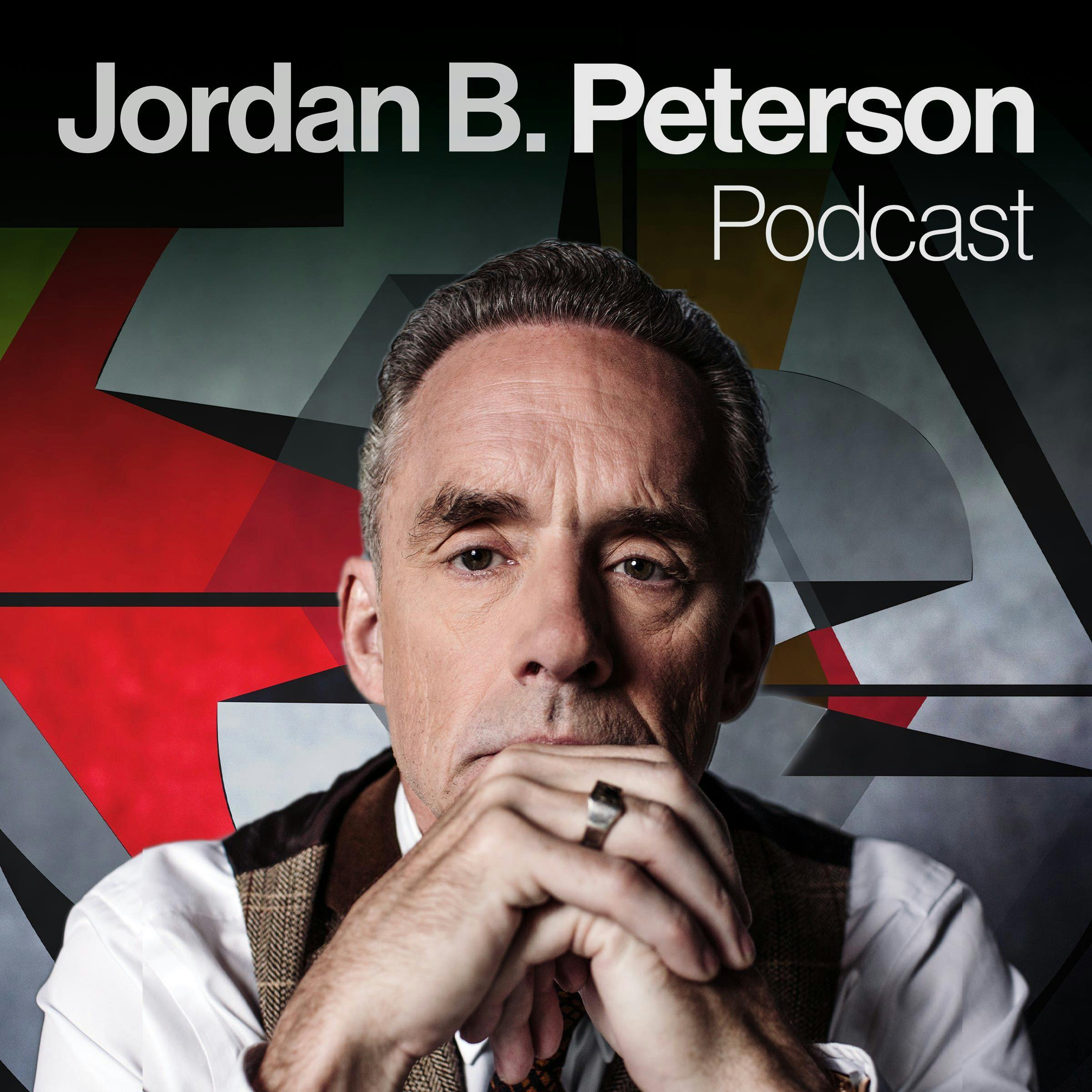
The transcription blends multiple themes, including energy production, personal psychology, and societal values. Chevron highlights American energy growth, emphasizing that U.S. workers are central to national energy security. A core narrative explores the biblical story of Cain and Abel as a metaphor for human behavior—showing how failure, resentment, and deceit lead to bitterness and violence when individuals blame external forces instead of confronting internal misalignment. This pattern connects to broader human experiences, such as how people interpret stories to understand themselves and others. The story's enduring power lies in its distillation of human priorities, values, and emotional responses. It also illustrates how personal failure can spiral into societal collapse through generations. Parallel to this, the transcript underscores senior support for Medicare Advantage, citing it as a vital cost-of-living measure, and notes that 91% of seniors view its funding as essential. Meanwhile, a marketing segment promotes a music service, and another highlights Peterson Academy’s educational offerings. Ultimately, the narrative reinforces that meaningful understanding—whether of self, society, or morality—comes through story, reflection, and confronting one’s own limitations. The deeper insight is that suffering and failure are not evidence of a broken world, but signals that one’s priorities or efforts may be misaligned. This calls for humility, self-examination, and a willingness to grow.
Who answers America's call for more energy?
Our people do.
Chevron's U.S. energy production has increased by nearly 60% in the past three years.
Hi, my name is Aaron, and I'm a WealthSite representative at Chevron.
I'm proud of the work that I do every day.
It gets more American oil out of the ground, and it brings America more energy security.
Learn more about what our people do at Chevron.com slash America.
This episode is brought to you by Medicare Advantage Majority.
For seniors on fixed incomes, there's no cushion when costs go up.
That's why Medicare Advantage matters.
More than 35 million seniors and people with disabilities choose Medicare Advantage,
in part because it offers benefits traditional Medicare doesn't, like dental, vision, and
hearing.
New research found that 91% of senior voters see Medicare Advantage funding as a cost-of-living
issue.
81% oppose congressional proposals to cut it.
The midterms are over, but seniors' message to Congress hasn't changed.
Three in four said they'd be less likely to vote for a member of Congress who supported
those cuts.
Seniors are one of the most reliable voting blocs in the country, and they're telling
lawmakers exactly where they stand and what matters to them most.
Read the full findings and take action at MedicareAdvantageMajority.org.
$15 a month.
A holiday deal this good obviously deserves an enormously expensive holiday song, like
All I Want.
Right.
Okay, we can't afford that.
You know what?
Forget the music budget.
We're going to stick with whatever's in the public domain.
Give it a try at mintmobile.com slash switch.
Upfront payment of $45 for three months, $90 for six months, or $180 for a 12-month plan
required.
$15 per month equivalent.
Taxes and fees extra.
New customer offer for initial plan term only.
Greater than 50 gigabytes may slow when network is busy.
See terms.
See terms.
Hello, everyone.
Thank you very much for coming tonight.
It's much appreciated.
I'm going to talk about an amalgam of ideas from, I guess, all my books.
Rule 11 from Beyond Order was do not allow yourself
to become resentful, deceitful, or arrogant.
I think I have the order of those things right.
And I wrote in my new book, We Who Wrestle With God, quite extensively about the story
of Cain and Abel, which I'd also began to investigate in my first book, Maps of Meaning.
So I'm going to try to meld those together.
I guess I'd start by telling you something about stories.
So you need to know something about the importance of stories to understand, for example, why
I would use a story like Cain and Abel to, as an investigative tool, to discuss, say,
resentment and deceit and arrogance.
I picked those three states, let's say, or spirits, because when I was a clinician, I
was a clinical psychologist.
Well, I guess I still am, even though Canada doesn't think I should be.
Because I saw that triumvirate of sins, of pathology, as particularly damaging to people.
And those things go together.
Resentment, deceit, and arrogance.
And that's exemplified in the story of Cain and Abel.
Now,
well,
a story has a very specific,
a very specific purpose.
And it's not one
that we've understood well, technically,
I think, before,
really, before the last few decades.
There's been a transformation
that's occurred in multiple disciplines simultaneously
with regards to our understanding of how we understand things.
It was an enlightenment idea,
a scientific idea, that we orient ourselves in the world,
in consequence of the objective facts.
And there's no doubt that there are objective facts.
But it's not the case that we orient ourselves in the world in consequence of the objective facts.
And the simple reason for that is that there's too many facts.
There's one fact per thing, or one fact per combination of things.
And just knowing what the things or the combinations of things are,
tells you virtually nothing about how to orient yourself in the world,
or how to deal with the facts.
Now,
there's a Scottish philosopher named David Hume,
who figured this out a long time ago.
He said you cannot derive an ought from an is.
And what he meant by that was that
merely knowing the geographical details of the landscape
doesn't tell you how to navigate through it.
You still have to know the geographical details of the landscape.
You still have to know where you want to go and why.
And then, knowing the landscape is going to help,
you can plot your route, but without an aim,
without some understanding of where you are,
and without an understanding of an aim,
you're going to get nowhere.
This is why, for example, in the story of Exodus,
the Israelites are lost in the desert for 40 years.
It's not a very long trip.
If you had your act together,
you could make it in a very short period of time.
But if you're sufficiently clueless,
it can take you forever to get nowhere.
Right.
You may notice that in government, for example.
$12 billion to build 1,500 feet of high-speed rail.
That's a good example.
All right.
So what does the story do?
Or what is the story?
That's even more important.
Well, we have this proclivity to assume that stories are entertainment,
and entertainment is light, and light entertainment is trivial.
It's something that you concern yourself with
when you don't have anything more important to do.
But that's not a very wise way of looking at human behavior,
because the story is a story.
The fact that we're so attracted to stories
is not merely reflective of our proclivity to wish for entertainment.
Not least because that theory doesn't answer the question,
why do you find stories entertaining?
Right?
That's a deep instinctive orientation.
If you want to teach a child something, a story works.
Children will clamor.
They'll clamor to be told stories.
And the stories can really push their limit of understanding.
So why would they sit and focus their attention so intently
on something that is really maybe even partly beyond them?
You know, if you're reading to a young child,
the best approach is to read something to them
that's slightly beyond their ability to comprehend.
In fact, parents, by the way, speak naturally to their children
at a level that's slightly beyond their ability to comprehend.
Slightly above their current level of understanding.
And you can understand why, right?
Because that brings the child along in his or her sophistication in communication.
But we do that naturally.
And we do that with the stories that we read kids do.
And they're naturally oriented to listening to a story.
Like a three-year-old doesn't want to listen to a story for babies, right?
Kids are very attentive to whether what they're being offered is in keeping with
their developmental aim.
Adults are like that, too.
If you have any sense, you want something that. You don't want something easy.
You want something optimally challenging.
That's way different than easy.
We're naturally attracted to stories.
We're so attracted to them that we can. We can learn through stories in some ways without effort.
Because the stories are so compelling.
They're so naturally compelling to us.
You'll pay to listen to a story or to watch one.
And that seems self-evident in a way.
You go to a movie and you'll pay to see a movie.
And you think if someone asks you, you'll say, "Well, I find it enjoyable.
I find it entertaining."
And that's like the explanation.
But it's not an explanation because it doesn't explain why you find it enjoyable.
And it particularly doesn't explain why you'd go see a horror movie because it's not obvious
that that's enjoyable.
But perhaps it's enjoyable to push the limits of your capability to deal with the elements
of life that are terrifying and that inspire horror.
And perhaps you have an instinct to master such things that's so deep that you'll pay
for the privilege of being voluntarily terrified in a theater.
That's how it works.
That's indicative of a very deep instinct.
It's an instinct that's so deep that it overcomes fear and disgust.
And it has to be a deep instinct to overcome fear and disgust,
because those are powerful inhibitory emotions.
Okay, so what does a story do?
Well, when you go watch a movie, for example,
this is how you understand people, by the way.
When you go watch a movie, the director, the producer, the writer,
they show you the character's priorities.
They show you what the character attends to,
what the character regards as important,
and how they sequence their actions.
And in consequence, you derive their aim,
and that's how you come to understand the character and identify with them.
And if the writer, the producer, the director is skillful,
they show you a number of different scenarios
where the character, the hero, the protagonist
demonstrates his priorities and his commitments.
You infer those,
and then you see the world through the eyes of the protagonist.
And then you experience the emotions and the perceptions
of the person that you're watching.
And that's what you do when you interact with other people, too.
You infer their aim.
In consequence, you adopt their frame of reference.
That allows you to experience their perceptions and their emotions.
You read that off your own body, and that's how you understand the person.
So our understanding of other people is essentially narrative predicated.
You could think that you come to understand someone
if you understand the story of their life,
while you come to understand yourself by understanding the story of your life.
So what does a story do?
It shows you how the protagonist prioritizes the facts.
Now, there's a very large number of facts,
but one of the peculiarities of your consciousness
is that it has a very low bandwidth.
The bandwidth of your consciousness is estimated at something like six bits.
It's unbelievably focused when you look at the world.
When I look at the audience, for example,
if I want to see someone's face, I can only look at one person at a time.
Like if I look at your face, for example,
I really can't see the faces of the people here.
I can sort of see your face.
You people are just basically blurs.
And then out about here, even though I can't tell it,
you're in black and white, and I can only see you when you move.
That's how your visual system is set up.
And so it's really pinpoint.
And not only when I look at someone's face,
I don't even actually look at their face.
I don't even actually look at their face.
I likely look at one of their eyes.
Or one of their eyes at a time.
I do that. I look at their eyes to infer their aim.
If I can watch what you're looking at, I know what you're attending to.
If I know what you're attending to, I know what your aims are.
I know what your priorities are.
I can infer how the world looks to you.
And then I can occupy your emotional state.
That's what we do when we go see a movie.
We do that with the characters.
Now, the movie is distilled.
Right?
You know, if you listen to someone who is telling you about their day,
there are people who are dull when they tell that story.
And there are people who are interesting.
And the interesting people don't tell you dull things about their day.
They distill the day down to the interesting occurrences.
And so then you can think of a story as a distillation of the. a distillation of the. the organization of attention in the most interesting way.
So when you go see an action-adventure movie, for example,
you don't spend the first 10 minutes, if your protagonist wakes up in the morning,
you don't see all the details of their breakfast and bathroom routine.
Right.
And that seems, again, it seems obvious.
It seems obvious because that's not interesting.
It's not obvious, exactly.
It's like, why is that not interesting?
What is it about what they do that's interesting?
Well, you want to see them pursue a goal that's indicative of their character
in a manner that's challenging.
And you can certainly see that in a romantic action-adventure movie,
which is, that's sort of the amalgam of the archetypal female and male plot,
a romantic adventure.
Right?
If you have a romantic adventure hero,
then you observe the optimal prioritization of attention
so that a romantic relationship can be established
in the context of a compelling adventure.
And that's actually what you want in your life.
Why should people sign up for Peterson Academy?
Well, at Peterson Academy, we can bring you 8-hour courses that will be the best lectures
you'll be able to get anywhere from the best professors in the Western world.
Bringing the best professors together, making sure they're not censored in any way,
giving them the audience and the remuneration and appreciation they deserve.
Learn about music, art, literature, mathematics, history, and biology.
A humanities education should enrich your experience in every direction.
We want to bring you the highest quality education possible at the lowest possible price.
Peterson Academy, if you want an actual education, join us.
Best possible courses.
Thousands of thousands of people signing up.
Consider deeply who you could be.
Join our thriving, ambitious community.
Our people do.
Chevron's U.S. Learn more about what our people do.
At Chevron.com/America.
♪♪♪
You might think you want security, but you're not going to get it.
You can have it temporarily, but you're not going to get it.
And you might think that you want, what would you say, immediate hedonistic gratification.
But that's self-defeating.
And you might think that you want things to be easy, but if you pursue what's easy, you forego further development.
And so it appears that what you really want is something like optimized challenge.
And that's something like the heaviest burden you could bear voluntarily.
Those are very similar concepts.
And when you go see a James Bond movie, which is a romantic adventure, obviously what you are watching is someone aiming at something.
someone aiming at a high order goal, service to king and country, let's say, self-sacrificing
service to king and country. Now, is that the highest goal? Possibly not, but it's a high goal
and it's sufficient to capture your attention
and you want to see someone contend with vital challenges
in the pursuit of crucially important goals.
That would be on the hero side.
On the villain side, you want to see people. I learned what the word iniquity means recently.
I didn't know what it meant.
Iniquity, it's an archaic term, biblical term.
Iniquity means consciously aiming down.
Right? That's different than stupidity. It's different than ignorance.
It's even different than error or sin.
Because you can make an error, you can be ignorant, you can be blind.
In some ways, accidentally and ignorantly.
That's very different than aiming down.
I read a book once called Panzram.
That's quite the book.
Panzram, he was a mass murderer, serial killer, and a serial rapist.
I think he raped 200 men, something like that.
I don't know how many he killed, but plenty.
His last words, they were going to hang him.
His last words were, hurry up, you who's your bastard.
I could kill 12 people in the time it's taken you to knot that rope.
Right, and so that was Panzram.
And he was brutally abused when he was a child.
And he made a conscious vow to make everything as miserable as he possibly could.
And he was very smart, and he was very physically strong.
And he was quite the bloody catastrophe.
And he met a psychiatrist in prison, offered him a cigarette,
and Panzerab told him that that was the only kind thing he could remember anyone ever doing for him.
Which may have had more to do with the character of Panzram than the people around him.
But he started to get to know this psychiatrist and to talk to him.
He warned him though, he said, "Look, if you're in the prison cell with me, never turn your back on me."
Because he had practiced malevolence to such a degree that even when he regarded himself as positively predisposed to someone,
wasn't sure he wouldn't kill them if he had the opportunity. In any case, the prison psychiatrist
convinced him to write his autobiography. And well, and you can read it if you're inclined.
Hans Ramp, he aimed down. And if you go see a villain in a, when you see a villain portrayed
in a movie, let's say, in a work of fiction, you occupy the attentional space of someone who's
aiming down. One of the best examples of that recently, I would say, is the Heath Ledger
character, the Joker in the Batman series, specifically the Heath Ledger character.
There's one element in that movie that's particularly telling.
If I remember correctly, the Joker,
arranges with the local mafia to rob a series of banks. And the deal is they're going to split it
50-50, which they do. And then the Joker lights the money on fire, which, what would you say,
terrifies the criminals, right? And that's so interesting because the thing about criminals,
the criminal is sort of like you. He likes money too. He just doesn't
agree with you about how it's to be had. And so you can actually understand a criminal because
you have a car and you like it, and he would like your car.
Now, it's a lot harder to understand the guy who would just take your car and burn it.
Right? Well, that's more like iniquity. And that's a much more profound form of evil.
That's evil for its own sake. That's a good way of thinking about it. And that's what iniquity is.
One of the things that you're doing when you're occupying the archetypal landscape of
villainy, when you're watching a movie, is fleshing out for yourself the attentional
structure of evil. Okay, so, and why? Well, because you should know what the dark part of
you is like. And it's a lot worse than you think. You may have noticed that during COVID.
Right? I mean, really, it was quite the bloody shock, wasn't it? Just how rapidly everything
turned into a tyranny. And just how many people were thrilled about that. Right? And so,
but then also, like, even if it isn't you that you have to be concerned with,
with regards to villainy, and it is, you also don't want to be naive about malevolence in general,
because in the world at large, you and your wife and your husband, your children,
you're going to encounter malevolence. And if you don't understand it, you're a sitting duck.
And it's, it's clearly the people who don't understand evil, who are most likely to be
targeted by the psychopathic and the malevolent. And they justify that as well. And the justification
is, if you're stupid enough to let me get away with what I'm doing, you deserve it. And
you can take issue with that argument, but it's not without its merit.
In any case, that is how particularly pathological people justify their predatory and parasitical
behavior, let's say. And the best defense against that is to understand that such impulses and such
people exist. And part of the way we practice that is by exposing ourselves to characters like that
in the realm of so-called entertainment. Why is that entertaining? In the
Harry Potter series, for example, there, of course, that's an archetypal battle between
good and evil, just like the Lord of the Rings or the Hobbit, just like Star Wars,
many of the like epic mass entertainment spectacles or battles between good and evil.
That's part of a romantic adventure. The reason it's entertaining for us to observe and participate
in the portrayals of villainy is because the impetus for us to develop wisdom is so strong that it overcomes our repugnance to the encounter with what's dark. It overrides it. It's so strong that it overrides it and makes it gripping and entertaining. And that's an indication of just how important it is. It's vital. And so you think, well, it's entertaining to see a movie. It's like, fair enough. But the story is everything.
If you tell someone the story of your life, you're describing the manner in which you prioritize the world. You're describing your structure values. You're describing what you attend to and what you ignore. You're describing what you elevate and what you denigrate. You're surprising. You're describing what you celebrate and what you, what do you say, what you ignore. You describe what you
worship and are subject to and what you have contempt for. That's what you experience when you see the characterization of someone in a work of fiction. That's what fiction is for. It distills. It's a distillation of priority. You know, and you might say, well, you see the world as a set of facts,
valueless facts, objective facts, and then you attribute value to them. And that's how you prioritize. But that isn't true. It's not true. You can't even perceive the world without prioritizing. So this is, this is a revolutionary discovery. It's really been made again by a variety of different investigators and over really about the last 50 years. But the way you're
visual system works, for example, is that you, as I alluded to, is you single out one thing and you suppress everything else. You can't even see the facts without prioritizing. So the prioritization actually comes before the facts. That's how important stories are. The world reveals itself to you in accordance with your prioritization. This
is something stunning, stunning to understand, because one of the things that you can infer from that is that if things aren't going so well for you, there's many reasons you can suffer. But one potential reason is the world is making itself manifest to you as an intolerable place because your priorities are wrong. Now, that's a frightening realization because it means that your error is
proportionate to your unbearable suffering. And that's a rough realization. But the alternative hypothesis isn't great, which is that you're doomed to suffer because the world itself is set against you. And that's like, what are you going to do then? Well, you're going to be resentful, but you're not going to have agency. You're not going to be able to change it because if the world's at fault, not at you and not you, you're doomed. Now, if it's you that's at fault, that's a problem. But if it's you that's at fault, that's a problem.
But at least it might be one you can rectify. One of the most profound and continual, one of the things that's insisted upon most profoundly and continually in the biblical narratives is that meditation on your own faults is, there's nothing more productive than voluntary meditation on your own faults. That's humility.
Why? Maybe you're wrong. And you might think, well, that's terrible. It's like, no, maybe you want to find out where you're wrong. Cammie mentioned in her discussion that you could be grateful, peculiarly enough, if you could find out where you were in error. Why grateful? Well, it's painful because you have to change and that's confusing and disconcerting and it can produce a decrease in hope. But God, if you
can figure out where you're wrong, you could stop being wrong. And then you don't have to repeat your bloody cataclysmic error. And maybe that's worth a little bit of short-term suffering. Well, that's the hope of humility. Where am I wrong?
The story of Cain and Abel for like 40 years, which is a strange because it's only about two paragraphs long. And you wouldn't think that it could be condensed enough to bear that amount of attention for that amount of time. But we already pointed out that like a movie is a distillation, right? If you watch a James Bond movie, you only see the most exciting things that happened to James Bond. Everything else is eliminated from consideration. Only
the story of Cain and Abel for like 40 years, which is a strange because it's only about two paragraphs long. Only
what's essential to carry the story and to characterize is presented to you. Well, you could imagine a story that people have worked on for
7,000 years, and then you might diligently, and then you might ask, well, how condensed might
that be? And the answer might be, it's so condensed that every single word
resounds with vital meaning. It's highly probable. Why would it be remembered?
Why would it be told? Why would it be transmitted across the millennia? If there wasn't something
incomprehensibly profound about it? Two paragraphs. Okay, so here's how the story goes.
Now, the first thing you want to understand about this story is it's the story about the first two
human beings. Now, you could say, well, Adam and Eve, speaking biblically, let's say, Adam and Eve
are the first two human beings, but that's not exactly right because they're made by God, they're
in paradise, not the profane world. Cain and Abel are the first two figures, the first two
characters born in our world, so to speak. Okay, so what do they represent? They represent two
ways of dealing with the world. Okay, so the hypothesis in that story, and this is the story
that in some ways, it opens history. That's a way of thinking about it. It's the story that opens
history after the fall. So that's the history of the profane world. That's our world.
The first hypothesis is there's two fundamental patterns of dealing with the world. Now, you kind
of already know that because you know that there's good and there's evil. That's two different ways
of dealing with the world. You know that in a movie, there's a bad guy and a good guy, right?
You know that Superman has Lex Luthor, and Batman has the Joker, and Harry Potter,
has Voldemort, and there's always this dichotomy between the hero and the what? The villain,
the sacred and the demonic, good and evil. That's the pattern.
The pattern of Cain and Abel is replicated by Satan and Christ at a higher level of abstraction,
but it's the pattern of good and evil. And those are the two fundamental
ways of dealing with the world. Okay, so what does that pattern look like?
Well, it's first characterized as two different forms of sacrifice. Now, this is a hard,
this is hard for modern people to understand because the manner in which the story is
presented, the story of Cain and Abel, is archaic. It isn't obvious to the modern reader what
it's referring to. We don't, we can't easily identify with taking the best lamb from our flock,
building an altar, and burning it to please God. That isn't something we do. And so to understand
what that means, it takes some work to understand what that means. And it's complicated. So let's
take that apart. See,
Abel makes sacrifices. And they're pleasing to God. And Cain makes sacrifices. And they're rejected.
Okay, so you might say, first of all, you might ask, why the hell should you care? And the right answer to that is,
have all your sacrifices been accepted? Right? And what that, well, that's, there's no difference between that question and are you successful?
Right? Is what you're doing pleasing to you? Like in a fundamental way? Is it pleasing to your wife? Is it pleasing to your family? Pleasing and successful? Is your community responding properly to it? Is it something that, what would you say, brings advantage to your nation? Like, what you do, there's no difference between what you do and your sacrifices. Those are the same thing. Well, you actually already know that.
In a deep way, because you understand, for example, that it's necessary to work. In order to live, you must work. Okay, well, what does work? First of all, why? Well, the answer to that is, well, things just don't come to you. Right? You're either going to put in the effort or someone else is going to put in the effort. Those are the options. Effortless success does not exist. Right? Your basic state is one of privation.
And in consequence, you have to overcome that. And the way that human beings overcome that is to work. What does it mean to work? Technically, what do you mean when you say work? It's not play. Work is what? Work is what you have to be paid to do, let's say. Right? You wouldn't, if you're fortunate, maybe you have a spectacular career, your interests and your work are aligned. But it's very frequently the case that in order to
provide for yourself, you have to forego the pleasures of the present for the stability of the future and the service of your wife, husband, family, community. Right? That's a sacrifice. You're sacrificing the immediacy of the present for the future and the community. Okay, now imagine you can do that well, in which case your sacrifices will be accepted, or you can do it badly.
In which case they'll be rejected. Well, so then that seems to make sense. You know that people are differentially successful. And you kind of know, I think, you know that if you put everything you have into something that you're much more likely to succeed than you are if you do a second rate job. I don't think anybody disputes that. Now you can get bitter about that, cynical, and you can say that
in the final analysis, consequences aren't related to effort. But the probability that you really believe that is low. The probability that that's a post hoc excuse for your fundamental uselessness is very high. Right? See, God tells Cain that if he did well, that his sacrifices would be accepted.
You know, and that's one of those phrases that carries an awful lot of weight, because it implies that you're constituted such that if your attitude was appropriate, and if your sacrifices were genuine and upward aiming, success of the highest quality would come to you. That's a statement about the structure of the world, right? And not just about the world, but about your relationships.
relationship with the world. It's a statement that implies that you're made for the world and the world's made for you, and that you could find your place. And now that would be a welcoming place. But that would be dependent on how it was that you conducted yourself. And it's possible that the standards for quality are high. Here's an example of that. In the story of Adam and Eve, when Adam and Eve get kicked out of the Garden of Eden, the way to paradise is barred for them. And it's barred by the way to heaven.
And it's barred by an angel, a cherubim, that has a sword. And the sword is on fire. And it turns every which way, which means you can't escape it. And what that means, it's self-evident once you understand what it means.
Then the way is going to be barred. Well, by what? By a sword that's on fire, that cuts and burns, that gets rid of everything that isn't acceptable. Or ideal, even. That's a high standard. But it's paradise you're talking about, so what do you want? A low-quality paradise? That's not going to work.
And so, that story precedes the Cain and Abel story, but there's an implication that's already built into the context.
That your sacrifices have to be of the highest quality in order to be acceptable. Now, then you might ask, what does high quality mean? That's a good question, because people differ a lot in their ability.
You know, imagine you have two children of very different ability. One of the ways you're going to judge the quality of their offering is in consequence of their effort. Right? So, if you have a child who happens to be intellectually impaired, you're going to use. You're going to use a different standard for what constitutes ideal for them than for a child that you have, let's say, that's more intellectually gifted. The standards can be stringent in both situations, even though they're adapted to the particularities of the person.
Okay, so now, Abel's sacrifices are characterized in a particular way. So, he takes care of animals.
End.
The sacrifices that he offers are the best cuts of the best animals.
So he has, he owns things of value.
He has a storehouse of value, that's his flock.
And to demonstrate his commitment to what's highest,
he indicates his willingness to offer what he has that's best.
Okay, so now imagine these archaic people are trying to act out something.
Right, they're trying to act out how you adjust yourself properly to life.
And one of the hypotheses that they're toying with is,
the higher the quality of your offering, the better the world will treat you.
And then that's concretized, it's like the best cut of the most flawless animal
from among the best animals in the flock.
But you can see the pattern there, the pattern is,
bring what you have of value to the table.
And God's offer is, that'll work.
Well, to dispute that, you'd have to assume that there's no relationship
between commitment and effort and outcome.
And you better pray you don't accept that argument.
Because there's nothing in that that won't make you cynical, useless and bitter.
Obviously.
Now, you know, you can be. You can be in a society that's so corrupt, that if you're good, you're punished, let's say.
But in a society like that, you should aim your efforts at revamping the structure of the society.
Right, that's what happens if you're engaged in a totalitarian tyranny, let's say.
Okay, so, Abel offers what he has that's best.
And the consequence of that is that everyone. Everything works for him.
Right, everything he does flourishes.
Women love him, the people around him are happy with him.
The sun is shining on Abel.
Whereas Cain, Cain's not doing so well.
Now, there's an implication in the text.
It doesn't say directly that Cain's offerings are second rate.
But it says directly that Abel's are first rate.
So there's an implication there.
That there's something lacking in Cain's offerings.
It's not well specified.
And I actually think that's reasonable.
Because there's lots of ways for you not to offer your best.
There's all sorts of ways to fail.
Willful blindness, that's one.
You're not paying attention to things you should be paying attention to.
Your aim isn't upward, right?
You're in it only for your immediate selfish gratification.
You're trying to take advantage of other people.
You're playing a crooked game.
You offer to people something that's second rate.
And you know it.
And you torment them if they don't accept your lie.
So there's lots of ways that you can game the system.
And it isn't obvious how Cain is doing it.
Although we know that he's not bringing his best to the table.
And we know that God is not pleased.
Okay, so Cain is suffering.
And he's suffering from failure.
Okay, now that's an interesting thing too.
Because one of the things you might say about your life is that
you suffer from failure.
And Cain takes aim at God.
So Cain's conclusion from his suffering,
this is a resentful conclusion,
is that God made an error in how the world was formulated.
The cosmos is not acceptable in its current form.
And the evidence for that is that what Cain is doing isn't working.
Now, it shouldn't take much effort on your behalf
to understand what that means and why that's a tempting conclusion.
Because you know, when you're resentful, for example,
that the probability that you'll blame external forces,
the patriarchy, for example,
your wife, your husband, your parents,
your friends, the educational system, the capitalists,
the probability that you'll find some external source to blame
is extremely high.
Why?
Well, it's pretty convenient for you in the short term
if it's someone else's fault.
And Cain takes that to the ultimate conclusion,
which we do all the time.
This isn't something that's unique to this primary villain, let's say.
If something untoward happens to you,
if tragedy visits you and you feel that it's undeserved,
the probability that you'll be tempted to question
the validity of the cosmic order itself,
the validity of your own existence,
the validity of the human race,
the validity of life,
the benevolence of God,
the probability that you'll question that is very, very high.
And it's not that surprising
because you can suffer a lot
and sometimes the reasons aren't that clear.
And so you can easily accept the argument
that if you're failing, you will suffer
and the reason you're suffering is because you're failing.
So that's what Cain tells God, essentially.
He says, look, everything's going great for Abel
and that doesn't seem particularly reasonable
and here I am.
You know, busted myself.
Working like mad and nothing's going right for me.
What the hell do you think you're doing?
Which is, you know, really quite the question to pose to God.
That's why it's resentment and arrogance.
It's like, I see.
So when you fail, you're going to make the decision that
your parents, your family, society,
the natural order and God himself are at fault.
Well, you've got to ask yourself in that situation
just exactly who it is that's introducing
such presumptuous thoughts into your mind.
Like, just exactly who's occupying your psyche
and to what end?
And this is exactly what God tells Cain.
It's a remarkable exchange because Cain says,
Who answers America's question?
Our people do.
Chevron's U.S. Hi, my name is Aaron and I'm a WealthSite representative
at Chevron.
It gets more American oil out of the ground
and it brings America more energy security.
America.
Essentially, or acts out, I'm bitter and unhappy
and angry.
And the reason for that is I'm failing.
And the reason for that is that preference
is being shown to my brother and that's unjust.
I'm miserable because of injustice and failure.
And God says, I'm angry, bitter, and resentful
because of injustice and failure.
And God says, no, that's not why.
Why are you angry, bitter, and resentful?
Okay, so let's take that apart for a minute
because pretty much everybody accepts this hypothesis.
You know, so here's an example.
You know, you hear about the high school shooters
and the first thing you always hear is they were bullied.
As if that's a just, well, of course, if you were bullied,
you're going to shoot elementary school kids.
That's obvious.
And then because you were bullied
and you had your reason to be bitter.
It's like, well, first of all, no.
Second, that's just not the case
because virtually everyone is bullied.
Like, I bet there's not a single person in the audience
who wasn't bullied for some reason as a child.
I know that 75% of children are bullied
because of some marked physical or psychological abnormality.
You know, a bully will pick on something strange about you.
And then you might say, well, bullies pick on the strange kids.
It's like, no.
No, everyone's got something strange about them.
Maybe it's your last name.
Maybe it's your best friend's last name.
Maybe it's the nickname that someone gave you accidentally.
A bully will find something peculiar about you to pick on.
And then you might say, well, if you're bullied,
do you learn to be a bully?
It's like, no, not necessarily.
In fact, most people, the lesson that most people derive
from being bullied is don't bully.
So you might say, well, there's a causal connection
between being bullied and being malevolent.
It's like, no, because there's also a causal connection
between being bullied and being good.
And there's lots of people in the world
who've had dreadful childhoods,
like pathological beyond imagining,
who conclude from that,
that under no circumstances whatsoever
will they take that road.
And so here's an example of that.
Most people who abuse children sexually
work with them.
They're abused sexually as children, okay?
And you think, well, causality, it's like, no.
No, because most people who are abused sexually as children
don't abuse children when they become adults.
And we know that because if the reverse was the case,
in a few generations, everybody would be abusing children, right?
It would spread exponentially.
Most people's conclusion,
in consequence of being subjected to malevolence,
is to control that within themselves and to quell it.
And some people derive the opposite conclusion,
that if they're victimized, and everyone is victimized,
although the degree to which that occurs varies,
if they're victimized, it's perfectly appropriate that they
themselves become victimizers.
And their justification is, well, you know, I was hurt.
You can see the causal connection and you can understand the motivation,
but that isn't the conclusion that most people draw.
And just because you can understand the conclusion
doesn't mean you can't understand the motivation.
And just because you can understand the conclusion
doesn't mean you can understand the motivation.
It does not mean it's valid or inevitable.
And that's what God tells Cain.
And it's very subtle.
It's hard to parse these things out in this story.
God tells Cain something very particular.
Cain makes this complaint.
I'm failing.
I'm bitter and resentful at a consequence.
Everything's going well for my brother.
That makes me angry and unhappy.
All that's evidence of the injustice of the world.
And God says, now you're missing an intervening variable.
Sin crouches at your door.
That's misaligned aim.
That's what sin means.
Sin means to miss the target.
Like a sexually aroused, predatory animal.
And you invited it in to have its way with you.
Now, there are echoes of that idea in all sorts of different ancient myths.
It's echoed, for example, in an Egyptian creation myth
where the spirit of evil rapes the hero.
There's this sexual element I wanted to point to, right?
Because it's very stark.
Sexually aroused predatory animal having its way with you.
Okay, why sexually aroused?
Well, you could say, I hate to be vulgar,
but because it wants to fuck with you.
And I'm sorry to be vulgar,
but it's appropriate in this case.
It's appropriate in this story
because it's pointing to what that phrase means.
See, I've talked to people in my clinical practice,
for example, who were harboring murderous fantasies.
You know, it was often the case that comes to mind
at the moment was the case of a woman
that I had in my practice for a while
whose family had been badly brutalized
by another family member.
She entertained seriously murderous fantasies
for hundreds of hours.
Now, you know, you don't get from bullied high school student
to homicidal school shooter
with notebooks full of plans
without several thousand hours of brooding.
Okay, so what does it mean to brood?
Well, that's what a hen does when it's brooding.
It sits on an egg, right?
If you're trying to bring something to life,
if you're trying to hatch something new and monstrous,
you brood on it.
Well, what's that?
Well, that's a creative act.
It's the consequence of consorting
with something you've invited in.
Well, what's the sexual metaphor?
It's a creative collaboration.
It's like, things aren't going well for you.
You're bitter.
Okay, you wouldn't have had to be bitter, let's say.
You could have decided that you were in error.
You could have foregone your deceit.
You could have improved the quality of your sacrifices.
You could have asked yourself where you were in error.
You could have been happy for what you did have.
You could have copied your brother.
There are lots of things you could have done
when failure came knocking.
You could have learned and improved yourself
so you didn't fail.
But you decided instead
that you'd be bitter and resentful
and you'd invite that in
and you'd enter into a creative collaboration with it
and that's why you're miserable.
It's like, that's how. See, that's what happens when you argue with God.
You don't win.
Right, and Cain definitely does not win this argument.
In fact, he hears the thing he least wants to hear.
And that's often how you can tell when you hear something true.
It's like, oh, I really wish it wasn't that, you know.
And that's certainly what happens in Cain's situation.
And then God says to him, it's at that point,
he says, if you did well, you'd be accepted.
And that's a hard proposition to accept too because,
and you know, we could even dispute that.
Is it systemic injustice that makes you fail?
Or is it the inadequacy of your own efforts?
Well, there's always systemic injustice, right?
Because society is always contaminated by corruption.
No relationship's perfect.
No psyche is perfect.
No relationship is perfect.
No family, no community, no state.
There's always injustice.
But people,
succeed and fail in different proportions.
Even if the level of injustice is in some ways held constant.
And you might say, well, it's unfair to blame the victim, Cain.
But then, I don't know, it isn't obvious to me that Cain is exactly being blamed.
What God says to him is something like,
there's a lot more to you than you thought.
And you believe that the only lesson you can derive from your failure is,
that you have the capacity to overcome your own misery and bitterness but you have within you the capacity to transcend even your own failure and to set yourself right and to succeed and you might say that while it's more difficult to succeed under challenging circumstances but then you could also say well the field of opportunity is much greater in challenging circumstances because there's more things to set right and that's true the more problems around you the more things you have to solve and you might say, well, it's more difficult to succeed under challenging circumstances but then you could also say well the field of opportunity is much greater in challenging circumstances because there's more things to set right and that's true the more problems around you the more things you have to solve
now that doesn't make it easy but
but it's a different way of looking at it
so God has this chat with Cain
and then Cain
leaves and
in keeping with his nature
he rejects
any contemplation of what he's been told
and it's not surprising, right?
because it's a really damning judgment
it, first of all, it undermines all his principles
rationalizations
you're not miserable because you're failing
you're miserable because you invited in
the spirit of resentment
to possess you
and you collaborated with it
and that's an interesting
that's a very interesting way of viewing it
because
I read fairly extensively
the accounts of
the Columbine high school shooters
and the main one
Dylan Klebold, if I remember correctly
shouldn't even say it really
but
he kept quite extensive notes
and they really become satanic
like he writes things
that you can't believe anyone would write
like they're metaphysically surreal
and this is 24 hours before he goes on his rampage
he says something like
it's surreal to contemplate
while I'm in my humanly form
what's about to transpire in 24 hours
it's like who the hell writes that
when you're 17
like what dark abysses have you inhabited
for thousands of hours
to come up with that
and he portrays himself as well
as the judge of the human race
finds it wanting
would be best if everything was brought to an end
that's the spirit of Cain
and he's like
that's the spirit of Cain
so then what happens
Cain approaches his brother Abel
now remember
Cain really wants to be Abel
that's why he's jealous
right
so Cain
Abel is actually Cain's ideal
Cain wouldn't feel like he was a success
unless he
a failure
unless he was contrasting himself with Abel
he obviously defines success
as what has befallen Abel
and so the reason
he's bitter and resentful
is because he's not his brother
so even Cain
even though he's aiming down
let's say
he's perfectly capable of
noting what up constitutes
and contrasting himself unfavorably with it
well then he goes and makes a false bargain
with his brother
he says
why don't we work together
come out in the field with me
and when he says that
and entices his brother out into the field
the field, he kills them with a rock.
so that's kind of a rough story
to open history with
it's very stark
and then it gets worse after that
because Cain goes to God
God calls him on his crime
and Cain says
my punishment is more than I can bear
well that's an interesting phrase
and why is that?
well what happens if you kill your ideal?
what if you kill your ideal out of resentment?
I mean you could do that physically
that's what Cain does
he kills his brother
but you could do it psychologically
you know imagine that you
are dallying with the spirit of resentment
because of your inability to learn from failure
and allow yourself to get so bitter
that you become cynical about the possibility of
valid success itself
and you use that to justify your own
failure
there's no such thing as real success
everybody who has anything took it
they're thieves
the whole system is corrupt
everyone successful
is manipulative
manipulative and criminal
it's like
there's some truth in that
some crooked people
are temporarily successful
what that says about
the world
marriage, family, community, city, state
that's a whole different issue
but if you accept that doctrine
then it means that
well then what are you going to do?
does that mean everything successful you ever did
was manipulative and criminal
and that's all that's left?
there's no such thing as genuine attainment or accomplishment?
well let's say you accept that
because you want an excuse for your failure and misbehavior
now you decide you're going to kill your ideal
psychologically
striving is for suckers
well then what?
you got no hope
there's no hope for you
because nothing is good
and you might say
well that gives you a good excuse to not be good
it's like fair enough
but nothing's good now
and that's Cain's fate
my punishment is more than I can bear
and then something else happens to him
so
I'm going to kill him
I'm going to kill him
I'm going to kill him
God marks him
and has him
condemns him to wander in the land of Nod
wander alone in the land of Nod
okay so
the land of Nod
you may remember
there's some of you older people anyways
that's where children go when they sleep
off to the land of Nod
so what does that mean?
well that's where the unconscious people are
and so why is Cain unconscious?
because he can't bear the knowledge
of his own misbehavior
and so he chooses
to sacrifice his awareness
rather than to be aware of who he is
and what he's done
he chooses to be foolishly unconscious and blind
and then he wanders alone in that territory
why?
well if you're resentful and murderous
and unable to cooperate
and unconscious and blind
you're going to be alone
and you're going to be alone
and you're going to wander from place to place
because no one's going to be able to stand
being anywhere near you
and so that's Cain's fate
and you might think
well that's bad
and it is bad
but it's not bad enough
and the story doesn't end there
it gets worse
and you might think
well how could it be worse?
because that's pretty bad
it's like hell is a bottomless pit
no matter how bad things are
some stupid story
some son of a bitch
can figure out a way to make them worse
and that might be you
and so Cain has descendants
he has descendants
and the first order
his second order descendants
I think his grandchildren
so if you bother
Cain's descendants
if you challenge or annoy them
they kill you
but the descendants of those descendants
kill seven of them
they kill seven of you
and the eventual descendant of Cain
is someone named Tubal-Cain
and Tubal-Cain is the first
artificer of weapons of war
and so what does that mean?
well it lays out a causal pattern
first you sacrifice improperly
then you consort with evil
then you become bitter and resentful
then you become murderous
then your children
so to speak
become mass murderers
and then everything dissolves into war
right
and that draws a causal sequence
between failure at the individual level
failure to make the proper sacrifices
failure to learn from experience
voluntary
failure to make the proper sacrifices
consorting with the spirit of resentment and bitterness
at the individual level
and then the degeneration of society as a whole
into a state of absolute warring catastrophe
and I think that's right
you know one of the things we know for example
about totalitarian states
this is analogous
you know we like to think of totalitarian states as sort of
this is a naive view
Freedom-loving people with a dictator.
So you get rid of the dictator.
This has happened.
This happened in Iraq.
You get rid of it, or Libya.
You get rid of the dictator and freedom arises
from all those people who are oppressed by the dictator
who've really been striving to be free.
It's like that isn't what happens.
What generally happens is a worse monster arises.
Why?
Well, here's one reason.
In a totalitarian, here's the definition of a totalitarian state.
A totalitarian state is not a state run by a dictator.
There's a dictator and his thugs, and there's hierarchies of thugs.
That's for sure.
In a true totalitarian state, every single person, every single person lies
about absolutely everything they think, say, or do to everyone,
including themselves and those they love and everyone around them.
And that's the lie.
And the totalitarian state is the grip of the lie.
And so why is that relevant psychologically?
Well, Solzhenitsyn, the great Russian dissident,
man who, in some ways,
he was instrumental in the demise of the Soviet Union.
He said, one man who stops lying can bring down a tyranny.
Why?
Because the tyranny is the dominion of the lie.
And so, a totalitarian state,
what that means,
you think about what that means,
is that each person could break a tyranny if they had the courage.
And that's relevant in your life.
Like, that is absolutely relevant in your life.
Because you're going to be subject to your own tyranny,
the tyranny of your wife or husband,
the tyranny of your family members,
your employer, your employees, your community, your state.
There's tyranny everywhere.
There's always tyranny everywhere.
How do you participate in that?
Well, that's a perfectly good question.
Because you do.
And maybe it's through silence, because that's the typical way.
But that's still participation.
So there's a line drawn in the story of Cain and Abel,
from Cain and his psychological inadequacy,
to genocide itself.
And one of the things that, one of,
part of what that indicates is that
the line between your misbehavior
and social cataclysm is a lot thinner than you think.
I'll give you another example of that.
In the story of Abraham,
Abraham is a sequence of adventures
and he transforms himself into,
what would you say, a hero, an adventurous hero.
And one of the consequences of that is that
he's visited by three beings.
Angels are God.
It's not obvious in the story,
but it's one of those two.
And they're strangers
and they come to visit him and his wife
and they reveal themselves as angels.
And there's a lesson in that too
because you don't know
when God is attempting to make himself manifest to you
in the figure of the stranger.
But it's more often than you think.
The angels are God revealed to Abraham
their plans to demolish the corrupt city, Sodom, Gomorrah.
The people in the cities have turned away from the divine
and in consequence, all hell is going to break loose.
And Abraham bargains with God.
That's part of the wrestling with God.
And he says, look, I don't think that's reasonable.
What if there's good people in Sodom?
And God says, I don't think there are.
And Abraham says, what if there's
there's 50 and God says,
you got a deal.
If there's,
you go there,
you find 50 good people.
They can,
they're saved.
And Abraham,
who's a pushy character says,
how about 40?
Cause he,
he's not so sure that there are 50 and God whose patience is being tested
says 40.
And Abraham says,
how about 30?
And he bargains God down to 10.
If I remember correctly.
And God says,
well,
if you can go to Sodom and find 10 people who are good,
then I'll save the city.
And so what does that mean?
Well,
it means that if there's 10 people who are good in a city,
it can be saved.
Well,
what does that mean?
Well,
if there's 10 people in a state who can still tell the truth,
well,
maybe it's not doomed.
Maybe it means that,
you're supposed to be one of the 10.
In fact,
it certainly means that.
And you might say,
well,
that's not so relevant to me because I'm not in a doomed city,
which you might,
you might think again,
if you're from LA.
Um,
yeah,
but the message is also relevant under circumstances like that,
because when a catastrophe visits,
it's an open question,
whether it's an act of God or the consequence of unbelievable blindness and
carelessness.
And maybe on the part of everyone,
including the people who could see and speak,
but decided not to.
And so that's also,
that's a hell of a burden,
right?
To think that while you could be one of the 10 in the
city who dared to speak the truth and save the city.
And what a risky venture that would be.
Although it's not as risky as being consumed by heaven sent fire in
brimstone,
let's say,
but it's also,
a Testament,
like a true Testament to,
you might say your intrinsic quality of character.
And that's,
what's offered decaying as well.
It's like you could learn,
you could learn to make the proper sacrifices.
You could learn to humbly correct error.
When you encounter it,
you could decide to refuse the temptation of sin that crouches at the door.
You could forego,
no resentment.
You could straighten out your life.
That's possible.
And the consequences of that would be far more dramatic than you could
possibly imagine,
because there's way more to you than you think for better and
worse,
but for worse,
certainly,
but equally,
certainly for better.
I'll close with this.
I guess.
Cain has his,
his reasons to be resentful and bitter.
And so does everyone.
And they're real because there's no shortage of suffering in life.
And there's also no shortage of suffering that seems unjust and incomprehensible.
And,
and you can imagine justifying your bitterness and resentment in response to that.
And you could certainly talk to people who have convinced themselves that that attitude is justifiable.
If you listen to their story,
you might agree,
don't like there are people as we all know,
who've had brutal,
brutal experiences in their life.
And when you hear them recount their story,
you can say you can understand how that might've warped them.
But as I said,
you'll also discover these people who've had equally cataclysmic histories who have decided to be far better people than
often than you can imagine.
And so that's equally,
that's there for the taking equally.
How do you become one of those people?
You practice,
and this is part of Tammy referred to the practice of prayer.
I want to outline that for,
I want to make that concrete.
Like one of the things I saw my wife do when she was a kid,
and she was told she was going to die in 10 months.
And that came as a shock as it often does to people,
obviously.
And she accepted that quite rapidly and too rapidly really.
And probably in part because she didn't value her own life enough to have enough regard for her own value.
She changed that attitude when she saw how distressed her son was on receiving the news.
And one of the consequences,
of that transformation was that she started to practice being grateful.
Now,
you know,
you'd think that's pretty strange circumstances under which to start that practice,
because if you're told that you're going to die in 10 months,
it's not like the obvious implication from that bit of news is that your gratitude should be exaggerated.
And it's a lot to ask from someone.
And if they didn't do it,
that would be understandable.
But then you could consider the alternative position,
which would be,
well,
now you're sick and you're going to die and you're bitter and resentful and miserable.
And so now not only are you sick and you're going to die,
but you're in hell.
And that's a lot worse than being sick and going to die.
Not that that's,
I'm not trying to minimize the catastrophe,
but,
as I said earlier,
you can always make a bad situation worse.
And then it's an open question as well.
How much better you can make a bad situation,
let's say with the right sacrificial attitude.
And you might say,
well,
that's a lot to ask of people.
And that's definitely true,
but maybe there's a lot to people,
you know,
my father-in-law,
his wife developed frontal temporal dementia and declined to give birth.
And he was,
he was a little bit of a whined over quite tragically over a 15 year period.
And he was,
he was kind of a fun loving guy and kind of disagreeable.
You know,
he was,
he spent a lot of time with his friends and he,
and I suppose if you would have,
if you disliked him and you wanted to characterize him,
if you wanted to characterize one of his flaws,
you might've said that he was selfish.
I don't think that was so obvious,
but be that as it may,
he wasn't the world's most maternal human being,
let's say.
And then his wife got sick and man,
he just took care of her.
Like you wouldn't believe like for 15 years,
he was patient.
He was kind.
He accepted help.
He did a spectacular job.
It was unbelievably important.
Impressive.
And what did that do?
It reconciled him to all of his children.
So that was a good deal.
So that's what he gained when he lost his wife.
He made her final years much less awful than they might've been.
In fact,
it's possible that they weren't particularly awful at all because well,
she deteriorated.
She didn't really appear to be suffering.
And the fact that she loved him was evident in her facial expression when he
appeared in the room she occupied long after she lost the power of speech.
And so he took a pretty brutal situation and made all the appropriate
sacrifices.
And I'm not saying that that was paradise,
but it certainly wasn't hell and that's something under those circumstances.
And so,
you know,
this episode is brought to you by Medicare Advantage majority for seniors on fixed incomes.
There's no cushion when costs go up.
More than 35 million seniors and people with disabilities choose Medicare Advantage in part because it offers benefits.
Traditional Medicare doesn't like dental vision and fearing new research found that 91% of senior voters see Medicare Advantage funding as a cost of living issue.
If you have any questions about Medicare Advantage,
please reach out to us at Medicare Advantage.
80% oppose congressional proposals to cut it.
The midterms are over,
but seniors message to Congress hasn't changed.
Seniors are one of the most reliable voting blocks in the country,
and they're telling lawmakers exactly where they stand and what matters to them most.
Read the full findings and take action at Medicare Advantage.
Majority.
Dot org.
Medicare Advantage.
Majority.
Dot org.
Medicare Advantage.
Majority.
And so what do you do about that?
Well, you practice gratitude.
That's the antidote to resentment.
You practice it. You become skilled at it. You ask for it to be, that's the spirit you can sort
with. You know, something's on your doorstep, and it's knocking to come in, and maybe it's the
spirit of resentment, and you let that in, and then you're in Cain's shoes, and that's not a good
idea. Or maybe what knocks and tries to enter is the spirit of humility and gratitude, and you let
that possess you and you become expert at that. And then whatever cataclysm befalls you, you don't
multiply with bitterness and resentment and deceit and arrogance. And so at least you don't transform
tragedy into hell. And how do you practice being grateful? Well, you're not on fire.
You know, that's something to be grateful for. And you might think, well, that's ridiculous.
It's not ridiculous if you've been on fire. Right. And so it is the case that you can
can and should become expert at
being grateful in the manner that
what would you say
makes the spirit of resentment, motivates the spirit of resentment to flee from you.
And then you might ask yourself too, if you were an expert at that, what changes would that bring
about in your life? You know, you know, perfectly well that it's, it's not pleasant to be around
someone who's resentful. It's not pleasant to be in your own skin. If you're resentful, there's few
States that are more unpleasant than being resentful or being around someone that's resentful.
It's really poisonous.
And so now, if you become an expert at gratitude and you, you develop that skill,
then that's a whole cataclysm, a whole abyss that you're not going to plunge into,
even if misery befalls you. And since you want to be protected from misery,
although you will not escape it, if you want to be protected from it,
you're not going to be protected from it.
Is it not reasonable to presume that gratitude is a shield, like a true shield.
You can't escape from suffering, but maybe you could become an expert in refusing to allow it
to corrupt you. And maybe the true hell in suffering is the corruption of resentment that
causes you to be resentful.
And so now, if you become an expert at gratitude, you're not going to be resentful.
And possibly it's worth the experiment to find out the stories that I told you.
The story of Cain makes the case that the evils of the world begin with the resentment of the
individual. That's worth thinking about. You want to make the world a better place.
The implication of that story is stop consorting with the spirit of resentment.
And then there's the Abrahamic story: ten people who are good are sufficient to save the city from
destruction. That says a lot about the power of the human soul. And it says something about you,
that you could be one of those people, that you're called upon to be one of those people. But more
than that, that you could be one of those people. And if you were one of those people, that would be
a pattern of sacrifice that God would find acceptable, that would set your life on the proper
path—your life and your community's life—on the proper path. And so, do not allow yourself to be
resentful, deceitful, or arrogant. Right.
Thank you very much.
Thank you, everybody.
All right, Tim, you ready?
I didn't thank you all for coming when I first came out here,
but I do want to thank you all for coming.
All right. Am I louder than you are?
No, I think that's good.
Okay.
Okay.
So, first question. If someone were uncertain about the existence of God and asked you for
proof of God's existence, how would you explain that God and Jesus are real?
Well, the first thing I would say is that it's pretty presumptuous of you to assume that if you
had proof, that you would believe. Right. That's just not the case. That isn't how it works.
Yes.
And part of the evidence for that, in a sense, is that there's proof everywhere and always.
And the fact that you're too blind to see it doesn't mean it doesn't exist.
It might mean that it makes itself manifest in a form that you refuse to receive.
And I can give you some concrete examples of that. I'm not talking about anything that's self-evidently
miraculous, although I would say in its essence, it's miraculous. So there's many ways that God is
characterized in the biblical stories. Because, for example, if you want proof of God's existence,
the first question you might settle is, "What do you mean by God exactly?" And you might think
that's obvious, but you're a fool if you think that's obvious, because nothing is less obvious
than that, fundamentally. Well, God makes himself manifest in many forms in the stories that are
at the foundation of our culture. So, for example, in the story of Noah,
God is characterized as the spirit of intuition that comes to the wise when trouble is brewing.
Okay. So you might say,
"Well, do you want proof that God exists?" Ignore your conscience when it has something to say
and see what happens. And you might say, "Well, that's not the kind of proof I meant." It's like,
"Well, I'm not sure you're the one to judge what form of proof might best characterize God."
God is characterized in the Old Testament, perhaps most profoundly, as calling,
and conscience. Calling is what entices you along the pathway upward, and conscience is what tells
you when you're deviating from the proper path. And conscience is the still small voice that Elijah,
the prophet, describes, which you can ignore. And you might say, "Well, I want the kind of miracle
that I can't ignore." But you have free will, and the kind of miracle that you can't ignore would
be a compulsion. And there's no reason to make the presumption that that's the manner in which
God would choose to make himself manifest. Why not in the still small voice of conscience?
You shouldn't do that. Right. Well, is that a miracle? Is it proof of God's existence? Well,
as I said, try ignoring it and see what happens. Right. Perhaps you won't immediately discover
that God exists, but you might well discover that hell certainly exists. Right. And that's a start,
because once you know that the abyss is real, you might become more capable of apprehending,
what would you say, the eternal path upward.
Elijah,
the prophet of sufficient status to appear with Moses when Christ is transfigured,
is the prophet who defines God as the voice of conscience. Is that miraculous?
That's a hard question. It's like, because your conscience is a very strange thing. It's you,
or so we think, but it doesn't tell you what you want to hear, and you can't control it.
So,
how is it you? And if it's not, it's certainly not the you that you normally think of as you,
because the you that you normally think of as you is something that you can do something about.
But conscience isn't like that. And so then you might say, well, from where does it emanate? And
that is a very hard question. The classic answer to that is that it emanates from above.
It emanates from what's eternal. And I think that's right. I think that's true. Is that miraculous?
Well, I can tell you this, that if you listen to your conscience, unerringly, miraculous things
Would happen around you.
Know exactly the same way.
That miraculous things.
Would happen around you.
If you followed your calling.
You see that things beckoned you.
In the story of Exodus.
Moses.
Is transformed.
By his encounter with the burning bush.
And when that story.
Begins.
Moses is an adult.
Who's taken on the responsibilities.
Of an adult.
He has a wife.
He has children.
He has a community.
He has a job.
He's a shepherd.
A hard ordinary job.
It's hard because he has to take care of the vulnerable.
And he has to fight off the predators.
The lions and the wolves.
So he's tough and compassionate.
Which is a good combination of virtues.
He's wandering out.
In the wilderness.
Taking care of his sheep.
Near Mount Sinai or Mount Horeb.
Which is the place where the divine.
Reaches the earth.
Or the earth reaches up to the divine.
And he.
Apprehends.
Something that attracts his attention.
Well that happens to all of us.
Because some things attract your attention.
You're interested in some things.
And not others.
Some things call to you.
And other things don't.
There's things you want.
And like and need.
And there's things that are.
Irrelevant to you.
And that's very particularized.
And you don't get to choose those things exactly.
You can't exactly choose what you're interested in.
For example.
You could say with some degree of justification.
That what you're interested in.
Chooses you.
And.
If you're studying for an exam.
And you're a high school student.
You can't force yourself to be interested in the material.
Even if you know the exam is important.
There are things that.
Call to you and compel to you.
That have an autonomy.
While Moses.
Decides that he's going to go off the beaten track.
And investigate.
What calls to him.
That's what you do when you decide to pursue something.
That you're interested in.
Maybe at some risk.
You know maybe you have an ordinary job.
That's secure and stable.
But there's something in you that.
Wants risk and adventure.
And so you decide that you're going to.
Stake yourself on a new business.
A new business venture.
A new plan.
Because it calls to you.
And what's the consequence of that.
If you pursue it.
If it's an honest calling.
And you pursue it diligently.
Your knowledge deepens.
And you become more than you are.
And that's what happens to Moses.
Is that he goes to investigate this phenomena.
Phenomena means to shine forth.
This phenomena that beckons to him.
This.
What would you say?
This.
This conflagration of life.
Because that's what a burning bush is.
A bush is a tree.
And a tree is a symbol of life.
And if it's on fire.
Then it's vital.
And it's metabolizing.
It's alive.
And so it's the spirit of life itself.
That's calling to Moses.
And he investigates it.
And he approaches it cautiously.
And with reverence.
And as he approaches it.
He learns.
He begins to realize.
That he's increasingly on sacred ground.
And so that means he's getting to the essence.
Of things.
And he takes off his shoes.
To signify his willingness to.
Transform and adopt a new role.
And he.
Investigates even more deeply.
And.
The spirit of God itself speaks to him.
And tells him that it's his destiny.
To face down tyranny.
And to free those who are enslaved.
And Moses objects.
I'm not someone who can do that.
I can't even speak.
And God says.
That's your problem.
You're called upon to.
Take up your calling.
And stand up against tyranny.
And free those who are enslaved.
Regardless of your inadequacy.
And there is to be no excuses.
And.
Moses says.
When God commands.
Him to return to Egypt.
And face down the Pharaoh.
Moses says.
Why will.
What makes you think they'll listen to me?
And God says.
Tell them I sent you.
And you might say.
Well what does that mean?
Well if you're talking to someone who knows.
You listen.
And the deeper the knowledge.
The.
What would you say?
The deeper the knowledge.
The closer that is to God.
And the more compelling it becomes.
And if you're someone.
Who's pursued what's called to you.
And you've developed the expertise and wisdom.
That's associated with that.
And you've delved farther down.
Into the structure of things in consequence.
Then when you speak of those things.
People will listen.
Because.
You know.
And they can tell.
So you want a miracle.
Well it's right there.
In front of you.
All the time.
You can.
Attend to what.
Compels you.
If you're aiming.
Upward.
And you can.
Harken to the voice of your conscience.
To keep you on the.
Straight and narrow path.
And if you do that.
Well then you establish a relationship.
A covenant.
With the divine.
And the miraculous will make itself.
Evident in your life.
And you already know that.
Because you know.
When the greatest things in your life happen to you.
And they happen to you.
When you take a courageous risk.
In relationship to what.
Compels you.
And.
You know that the greatest things.
In your life.
Happen when you have the courage of your convictions.
And so then.
You could ask yourself.
What would happen if you practice that.
All the time.
And.
Then everything that was great.
Would be happening.
Continually.
And.
Then you wouldn't have any doubts.
Or at least far fewer.
That you wouldn't have any doubts.
You wouldn't have any doubts.
strip steak
one and a half inches thick
frozen
cooked in an air fryer
with salt
sounds good
yeah
why an air fryer
and why frozen
well
air fryers are simple
they don't heat up your kitchen they're easy to clean and if you cook the steak frozen then it
gets crispy and while still being nice and medium rare or medium in the middle yeah right super easy
what would you change or add in the dsm-5s do you know we kept up with that so the dsm that's
the diagnostics and statistical manual that's used by medical practitioners mostly psychiatrists to
some degree psychologists um i can't answer that it's too complicated okay it's too complicated
it's too technical so it would take too many layers of explanation to get anywhere with it so
it's it's all right yeah i'll ask you another one yeah how do you overcome the feeling of never being
satisfied i'm not saying that like you're never feeling that way but somebody's saying that
how do you overcome the feeling of never being satisfied
always chasing something bigger and better is that a problem
well i would say is it a problem it can be a problem to the degree that it's a consequence of
let's say pride narcissism and ingratitude right it could be it could be a reflection of ambition
like so we talked about adventure right so you could think you know the story of Sisyphus who
rolls a boulder up the hill and then it rolls back down and he has to roll it back up the hill
it's kind of a image of difficult pointless futility and cynics use that as an image of
life and it's there's something to it but it's not it's not it's cynical you could imagine
instead a sequence of mountains each of which is higher than the last in an unending
chain infinitely forward and then rolling a boulder up the first only to see the pinnacle
of the second and then repeating that and you might say well that's pointless because you never
get to the top and in a way that's true but but not not with not not with sufficient depth because
you don't want to attain the final goal because then you're out of adventure what what what you
would want i got a vision of heaven at one point and in the vision i could see that heaven was a
place where everything was perfect and getting better and you might say well that's paradoxical
if it was perfect it couldn't get better but no that that's only true if you conceptualize
perfection as static if perfection is dynamic then it could be the kind of perfection that
kept going
getting better music does that so we have models of that right because a great piece of music it's
every moment of it is great and then something better happens and it just continues through
the entire piece and so you could be in a situation where you weren't satisfied because
you were on to the next adventure and if you were grateful for what you had then
you could regard your lack of satiation as the desire for the next thing right the next remarkable
thing and i don't think that's distinguishable from appropriate ambition but if you're chronically
dissatisfied and unhappy say because someone else has more than you which is always a very dangerous
thing to assume you know when you assume that you're making a difference and you're making a
an error in attribution because what you're really saying is i'd like all of your advantages
but i don't want any of your problems well like if that's what you're jealous of then you're
that you'll never be satisfied because there isn't anyone who has all the advantages and
none of the problems and generally the more you know someone the more you're happy you have
your problems and not theirs right right and so you could be chronically dissatisfied with what
you have because you're envious and jealous and resentful and bitter and ungrateful right you
want to sort that out you might be curious but you might be curious you might be a curious person
who's absolutely looking for the next you could be curious and adventurous and that would be the
positive side of that so you want to quell the bitterness and the resentment and the ingratitude
and the envy you know you want to see if you're on to the next thing and if you're dissatisfied if
how much of that's driven by the wrong aim but the fact that you want more adventure
that can be admirable and and can be indicative of a tremendous motivation
what could happen next you know where could i go from here and it's certainly the case that part of
the foundation of the american dream is exactly that because part of the dream in america is that
you can be successful say compared to your parents but that that success could expand and then that
that expanded success could expand and that could happen without end and that's a vision of a world
of abundance and also a vision that isn't zero sum it it it doesn't imply that i have to purchase
my success at your expense it might imply that
i can be successful and i could be successful in a way that would jointly increase the probability
of success for both of us that's what you hope for in a marriage and in a friendship and
in a business partnership if you have the least bit of sense that's the relationship you want to
establish with your customers if you're wise and you want to have customers for any length of time
and so you can you can be ambitious without being resentful and that's a that's a
virtue that
it's it's useful i think to practice as well remembering even if you're ambitious to be
to notice and be grateful for what you also already have right that's a good practice as well
one more
what advice do you have for a young couple to starting a family and becoming new parents
well the first thing i would say is uh
give yourself some credit for your decision
that's the first thing it's like
you're choosing voluntarily to have children and that's laudable and admirable and it's wise and
it's laudable because it's a lot of responsibility and it it indicates a kind of courageous faith in
the future and it's pro-human in its essence and it's indicative of hope in a courageous way
and it's what did i say laudable
i can't remember the three words i've i used unfortunately
admirable and what
wise admirable and wise thank you
admirable why admirable because it'll mature you if you have any sense
like you're actually not mature until someone else is more important than you and the probability
that'll happen in the absence of children is low right it isn't zero because you could devote
yourself to your parents for example or your wife or your husband but it's much more probable with
children and you're a way better person once someone or something else is more important than
the narrow you you know it's not like your children aren't you they're the extended you
you know and that extended you is much a much better you than the you that's all about you
jesus that's a dismal you and if you serve that you're pretty sad creature and so it's admirable
because you've you've decided to mature and it's wise because
it's like it's it's wise in the way that a wise investment is wise
we've been watching this television series called land man which i would highly recommend by the way
it is the least politically correct show i've seen for like 50 years and there's a scene in there
where this rich oil man has a show and he's like oh my god i've seen this show and i've seen this show
and he has a heart attack and a billionaire he knows comes to talk to him and it's it's actually
a cameo by an actual billionaire who made his fortune in the oil field who actually says
something that he means and he says that he had the opportunity to go into his business with his
children and that that meant more to him than anything that he accomplished on the materialist
side let's say
you know if you're relatively healthy in your orientation there isn't anything that you do in
your life it's more valuable than the relationship that you establish with your kids like and here's
why in part i mean it's in part because they'll call out the best in you they they can call out
the worst too but they can call out the best in you and they can call out the worst in you
because they call on you too they call on your proclivity for sacrificial service let's say
but they also offer you something children offer you the opportunity to have the best relationship
with anyone you've ever had in your life because that's actually what they want from you they're
the only people you'll ever meet in your whole life that want nothing more than to have the best
possible relationship with you
and that's a really good deal that's a really good deal there isn't a better deal than that
and so if you're wise then you note that and then you have that and then we're so foolish in our
culture you know here i'll tell you a terrible statistic this is terrible who answers america's
call for more energy our people do they've helped boost chevron's
energy production by nearly 60 percent in the past three years helping fuel national energy
security and drives down the open roads that make america learn more about what our people do
at chevron.com slash america
The typical 30-year-old woman in the West is childless.
So childless at 30.
Half of those women will never have a child.
And 90% of them will regret it.
That's one woman in four.
That's the fate of one woman in four now in our society.
That's awful. Why?
You know, maybe your romantic career is the be-all and end-all of your life
when you're 20 to 30.
And maybe even when you're 30 to 40.
And the probability that it's going to be that when you're 40 to 50,
that's pretty damn low.
And it's vanishingly small by the time you're 50 to 60.
What the hell are you going to do?
Like, you know, we live like we live till we're 30 and we die.
Like, we don't. We live till we're 90.
The time from 60 to 90 is as long as your career.
You have no family.
You have no marriage.
You have no one who cares whether you live or die.
What the hell are you going to do with yourself?
And what's going to happen to you when you're vulnerable?
And no one's there to look out for you.
No, your children are investment.
You know, and you don't have them as children for very long.
That's the other thing I would tell a young couple.
It's like, once you have kids, within six months after you have a baby,
it will feel like you've had that baby forever.
And that you're going to have that baby forever.
Like, there's a kind of a timelessness about it.
But that's an illusion, man.
That part of your life, the time that you have little kids,
when they're really dependent, say,
but when you're really integrally involved with them,
that's like seven years.
You know, if you have a couple of kids, it's hardly any time at all.
It's about coincidentally the same amount of time that women outlive men.
And so you should make the most of that.
And seven years, if you had three kids, seven years,
that's pretty good investment for something that pays you back
for the rest of your life.
If you're lucky, you're going to have grandkids.
That's a good deal.
They like you.
It's like, you're old.
You're old.
And some young people want you around.
So I would say, you know, congratulations on your commitment and courage.
And I guess the other thing I would say,
is don't let each other get lost in the shuffle.
You know, one of the things that often happens to people with very young kids
is that they don't make time for themselves as a couple.
You have to make that time, right?
Because once you have a couple of little kids and maybe you're both working,
nothing that isn't planned will ever happen.
Right?
So you have to consciously set aside time for each other to keep
your relationship intimate and strong.
And you want to do that for your kids too,
because there's nothing that does your kids a greater service
than for them to see the two of you as a unit, right?
As an integrated unit.
And that takes, well, my experience as a clinician essentially taught me
that a couple has to spend 90 minutes a week just talking.
Annoying as that is.
Addressing the issues that come up in the relationship and in the household.
If you're running a small business,
you're going to have to spend an hour and a half a week solving the problems.
It's exactly the same in a marriage.
It's also an economic relationship.
There are things that have to be sorted out.
So you've got to just sort out problems for 90 minutes a week
and you have to spend some time as a couple.
About the same amount, at least that much.
And if you don't do that, then it falls apart across time.
That's not good.
And so congratulations on your wisdom.
It's admirable and, do us another word, optimistic, maybe.
Laudable, yes.
And take time for each other so that your kids can see you as a,
impregnable unit.
And enjoy it because it doesn't last very long.
Way shorter than you think.
Just like life.
Okay.
Good.
Thanks for coming tonight.
Thank you.
That was fun.
Thank you.
Good to see you, everyone.
Thanks again.
Thank you, Ed.
Our people do.
Chevron's U.S. It gets more American oil out there.
It gets more people out of the ground and it brings America more energy security.
Share comfort and joy this holiday season at Tecova's.
Our boots are handcrafted in over 200 meticulous steps
and have a broken-in feel right out of the box
with styles for everyone in the family.
Our expert staff can help you pick the perfect gifts
and we have free in-store gift wrapping to help make the holiday season truly special.
See you soon.
See you soon at your local Tecova store or shop with us anytime at Tecova's.com.
New research found that 91% of seniors with disabilities
see Medicare Advantage funding as a cost-of-living issue.
Read the full findings and take action at MedicareAdvantage.com.
messagemajority.org.
Podcast Summary
Key Points:
Chevron’s U.S. energy production has increased by nearly 60% in three years, highlighting American-led energy growth.
The story of Cain and Abel illustrates how resentment, deceit, and arrogance stem from failing to learn from failure and misaligned priorities.
Human beings naturally prioritize experiences over facts, and stories serve as distillations of how we perceive and value the world.
Resentment often arises when individuals blame external forces for failure, but the root cause is usually internal misalignment with one’s goals.
The narrative of Cain and Abel shows a clear causal chain from poor sacrifices to bitterness, violence, and societal collapse.
Understanding evil through fiction helps build psychological resilience against malevolence in real life.
Seniors strongly support Medicare Advantage, citing it as essential for managing cost-of-living expenses.
People are naturally drawn to stories that challenge their limits, as they provide insight into priorities, emotions, and identity.
Summary:
The transcription blends multiple themes, including energy production, personal psychology, and societal values. S. workers are central to national energy security.
A core narrative explores the biblical story of Cain and Abel as a metaphor for human behavior—showing how failure, resentment, and deceit lead to bitterness and violence when individuals blame external forces instead of confronting internal misalignment. This pattern connects to broader human experiences, such as how people interpret stories to understand themselves and others. The story's enduring power lies in its distillation of human priorities, values, and emotional responses.
It also illustrates how personal failure can spiral into societal collapse through generations. Parallel to this, the transcript underscores senior support for Medicare Advantage, citing it as a vital cost-of-living measure, and notes that 91% of seniors view its funding as essential. Meanwhile, a marketing segment promotes a music service, and another highlights Peterson Academy’s educational offerings.
Ultimately, the narrative reinforces that meaningful understanding—whether of self, society, or morality—comes through story, reflection, and confronting one’s own limitations. The deeper insight is that suffering and failure are not evidence of a broken world, but signals that one’s priorities or efforts may be misaligned. This calls for humility, self-examination, and a willingness to grow.
FAQs
Our people do. Chevron's U.S. energy production has increased by nearly 60% in the past three years, bringing more energy security to America.
The story illustrates two fundamental ways of dealing with the world: through genuine, upward-oriented effort (Abel) or through resentment, deceit, and arrogance (Cain). It shows how personal failure can lead to bitterness and destructive behavior, which eventually spreads to society.
Stories distill the priorities, values, and attentional focus of individuals. When we watch a movie or hear someone’s life story, we experience their worldview and emotions, helping us understand both others and ourselves.
A story is a distillation because it removes the mundane details and focuses only on the most significant, emotionally impactful events—showing how a person prioritizes the world and makes decisions.
It shows a causal chain: improper sacrifice → bitterness → resentment → violence → generational violence and war. This pattern mirrors how personal failures can lead to societal breakdowns, including in totalitarian regimes.
Iniquity refers to consciously aiming to cause harm, unlike ignorance or error. It is exemplified by figures like Panzram and the Joker, showing how deliberate malevolence is a powerful and dangerous force in human behavior.
Chat with AI
Loading...
Pro features
Go deeper with this episode
Unlock creator-grade tools that turn any transcript into show notes and subtitle files.
 PodcastTranscript AI