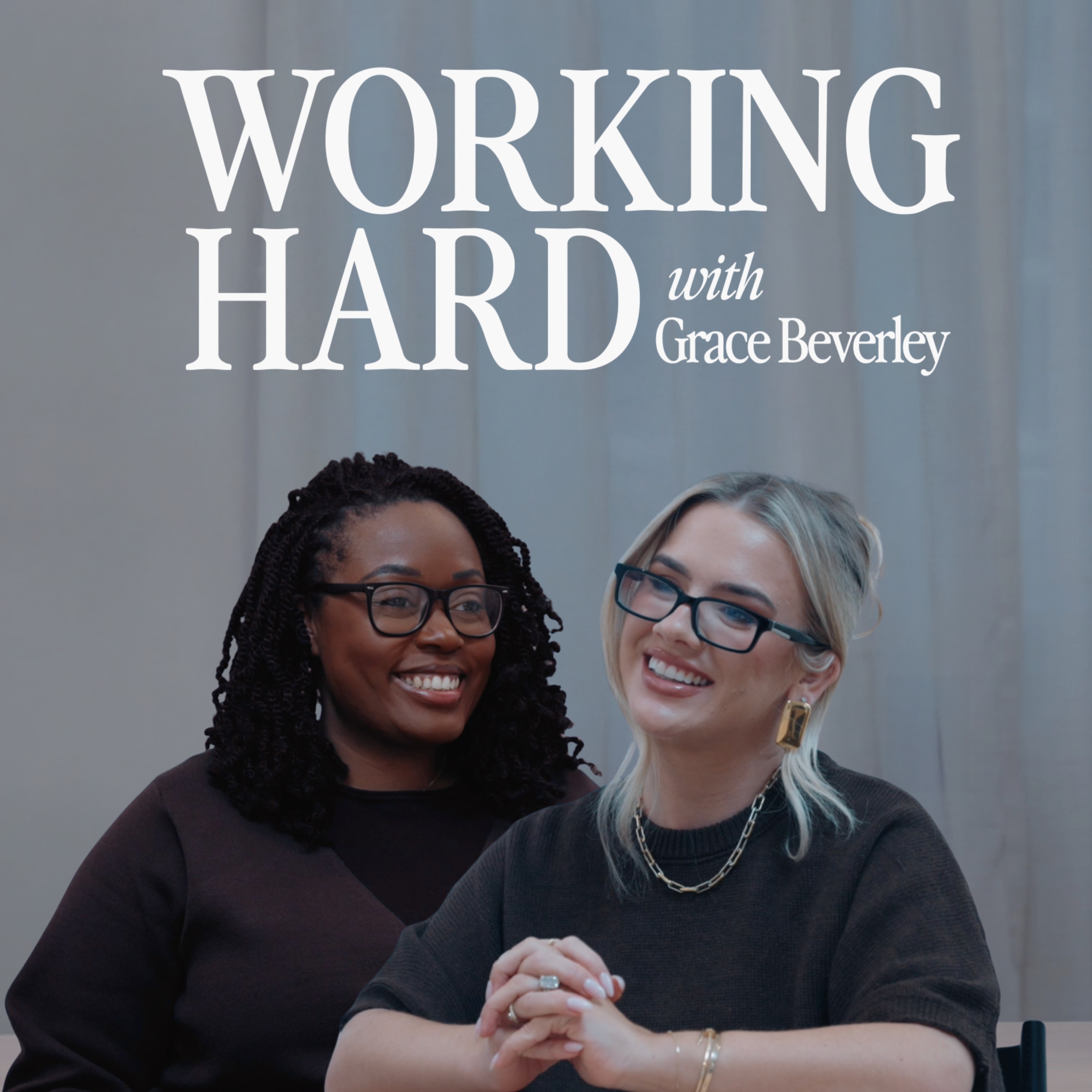
How to think clearly in the age of AI, anti-intellectualism, and doomscrolling with Shae Omonijo
from Working Hard with Grace Beverley
82m 10s
In this podcast episode, host Grace Beverly and guest Shay, a Harvard PhD candidate, engage in a nuanced discussion about AI's role in society. They acknowledge AI's environmental impact but stress the necessity of addressing its integration thoughtfully. The conversation centers on combating anti-intellectualism—a disdain for expertise and deep thinking—by encouraging critical thinking, curiosity, and an open-minded approach to information. Shay advises cultivating an "intellectual diet" that includes expanding knowledge, reading for pleasure, and engaging with opposing ideas to build a solid foundation for navigating complex issues. Concerns about AI include the risks of over-reliance on AI companions, data privacy, and the need for regulation to protect users, while emphasizing that human experiences and connections remain irreplaceable. Ultimately, they argue that maintaining unique human perspectives and critical skills is essential to using AI as a tool for enhancement rather than a substitute for genuine thought and creativity.
[Music] What is up? I'm Grace Beverly and welcome back to Working Hard. The podcast shake guidebook on how to improve your own life and achieve what you actually dreamed of doing because life's too short for boring podcasts and bad advice. What is up and welcome back to Working Hard? I want to talk about this for a while. When we talk about this, it has to be a nuanced conversation. But I feel like online for the past six months or so, talking about AI full stop has been a no-go because it is terrible for the environment. And that is something that we cannot avoid at the moment. It is the reality. But at the same time, we cannot avoid the conversation entirely. And honestly, pretending this AI takeover is not happening, is going to be a difficult strategy for ourselves, for our careers, and for policy around AI, for what we can actually do, to make it more environmentally friendly, for what we can do, to create a future that yes still has AI because realistically, I think that's the future that we're all looking at. But that is a better one and one that is more cognizant of people and planet and jobs, etc. So instead of speculating or pure panicking, I've wanted to have a really open frank chat about all of these bad points of AI and also the reality of what that's actually doing to us and our brains and our careers and therefore how we can control it. So we started looking for an expert who was actually thinking seriously about this space, not in like a hypey way or a doom way, but in a thoughtful academic way. And I came across one of Shay's videos and I immediately knew she was exactly the person that I wanted to have this conversation with. If you want to learn about AI without fear mongering how it's fueling anti-intellectualism and what we can individually do about it to use it in a more thoughtful way, stick with me because Shay is doing a Harvard PhD on exactly that. Before we get into it, please make sure you're following this podcast on whatever app you're listening to this on. That means that new episodes will land on your feet every single money morning and it helps the podcast more than you know. Shay, I'm a need Joe. Are you currently more working hard or hard to be working? I am working very hard right now. I have some really amazing projects that are coming out this year, so I'm working more than I normally do. And you like working hard I assume. I mean your work is very interesting. Well, I think that's the heart of it. I think because I'm doing work that I genuinely enjoy, I'm actually excited to work on it. So, you know, I'm looking forward to it. That's how I'll put out and definitely looking forward to it. And for anyone who doesn't know the basis of your research or what you research, can you give us a little bit of an introduction? Yes, so I help people think critically. And I start with that because I think oftentimes we focus on job titles before we focus on the impact that we want to have on the world. And that happens for me personally through research. I'm a PhD candidate at Harvard and I was trained as a historian, an intellectual historian. And I started to get really obsessed with how ideas form, how it transfers. And specifically, when it comes to AI, how does an AI system know what it knows? You know, how does it gather information, how does it give it to the user? How can we audit those systems? And in turn, I make sure that people are thinking critically alongside AI and without AI so that they can still be their most unique human selves. And also just on the end of what you were saying, so that they can use AI, because I feel like when you look at AI as a substitute for your own brain, no matter how you're using it, you lose the ability to actually use AI effectively, because you have no idea of what you're producing is actually correct, or is actually, I don't even mean fact checked, but like, is the tone of it right? Is the way it's communicating correct? Obviously the facts, all of those things. If you lose the ability to think critically, it doesn't matter how available AI is, you're not going to be able to genuinely even use it to further your career or better your work. Yeah. And I think for a lot of people, they don't realize that you need a good foundation before you use AI to amplify or multiply or to expand. So if you're already starting from ground zero, yeah, you know, you can't do, you know, zero times zero is still zero. At the end of the day, right? So I always tell people figure out what your unique angle is, what your unique tone is. You know, I have certain phrases that when people hear a voice note for me, they're like, "Oh yeah, that's shame. I mean, I know it from a million miles away." And it's the same with ideas. It's the same with how you think through problems or how you creatively get to a conclusion. I think people just have to be more intentional about what makes them them. And you speak a lot on your work about anti-intellectualism. Can you talk to me about what that actually is? Yes. So anti-intellectualism is a complete disdain or disinterest of intellectuals, of expertise, of anything that doesn't immediately make sense. And there was a great pull surprise winning book that came out in 1964, called Anti-intellectualism in American Life. And it really detailed how people started to really resist institutions and elites and anything that was sort of given from the top down. And that's expanded in modern eras because people didn't really understand what was happening in the ivory tower. I mean, I've been academic for how long, right? I've been in school for way too long, unfortunately. And I think that mysticism and not people not actually explaining what's happening is what's caused some people to be resistant to thinking deeply and thinking critically and questioning things. I'm not saying there's, you know, you shouldn't ever question. I think you should actually question more, but question with a desire to understand and not to reject. Right. And I think as a side point on that, that feels like a huge, it feels like it's had a huge impact on politics, which I don't necessarily want to go into because we will already speak about what we're going to speak about for so long. But like the instant you were saying that to me, that was kind of like, oh, that helps me to understand why we've got to where we've got to in politics. Because when you instantly reject the status quo or kind of have this, you turn on who you listen to and why you listen to them without questioning it with the aim of getting the right answer or landing in the right place, but instead just a question, if that feels like where we've got to, like it feels very hard at the moment to know what information is right, why it's right, who it's come from, where it's come from, and that doesn't seem to affect how believable it is at all. Exactly. And I think people have been so moved by emotions, you know, just because something feels right or something sounds right doesn't mean that the underlying claim or argument is right. Sure. And I think oftentimes people have confirmation bias, they have belief bias. So when something is already, you know, getting at something you want to believe, you start to ignore information that's contrary to what you already believe. Sure. Or you start to only focus on information that confirms what you believe. So it's a very natural phenomenon, but you have to be willing and open and curious enough to want to see opposing sides. And how do we increasingly do that in a world of increasing polarity, polarity, polarisation is polarity, word? Wow. Made that up and made it real. But like, because I find myself, I'm a very passionate person, and I'm very passionate about politics and what I believe in and what I believe in is right. I find myself doing that too. Like I wouldn't say I'm anti-intellectual at all. In fact, I really trying to encourage critical thinking and reading other sides and all of that. However, because of the amount of, I guess, misinformation thrown all over the place or arguments based on half facts or whatever it might be, I find myself automatically rejecting the other side, the second I hear and I think from it for the exact same reason. So how do we encourage ourselves to both engage and care about things and stand for what we want to stand for politically or otherwise whilst also understanding that in an age where there's often no right answer and it's often very fucking hard to find the right answer. How do we do that? It's all about existing in the world of nuance and understanding the way you come to your conclusions. So oftentimes it's just about looking at the evidence that's right in front of you. Whether it's good, whether it's bad, whether confirms it, whether it disregards what you're saying. And I think there has to be a certain level of openness to ideas. And I always say you're reading diet, your intellectual diet should compose
of three main things. One is a category that focuses on expansion, growth, you know, understanding more of yourself, of the world, you know, things you agree with. The second form is making sure that you're reading for pleasure because I think if you're always reading, you know, things or information, that's, you know, getting you riled up, that's for the long term, not really good. But then I say the third category and it doesn't have to be the majority of your intellectual diet, is reading opposing or challenging ideas, understanding what evidence are they relying on, is that evidence of today? Are they, you know, speaking from experience, are they speaking from fact? And I think the more that you can understand the difference between fact and fiction, the more you can understand how to pick apart other people's arguments, not for the purpose of picking the person apart, but picking apart the actual argument itself, the stronger you become, because then you know why you believe what you believe. Sure, because you consider the after side. Yeah, exactly. And I always feel like, maybe this isn't completely true, but I'd like to say that I'm happy with anyone believing in anything as long as they know why they do and they know the genuine evidence that's led them there rather than a lot of this stuff flying around at the moment that feels half-truthed and very specifically used to make you feel a certain way about certain groups of people or whatever it might be. And do you feel like at the moment it's being framed as less and less necessary to be curious or thoughtful with AI and everything? Yeah, you know, I think because it's so easy to get a quick answer, it can be seen as frivolous or not necessary to go down rabbit holes. Sure. You know, to explore, you know, to actually follow that train of thought all the way to its end. And I think that's actually really helpful exercise and I don't think it's frivolous at all. I think it helps us think about the way that we're thinking. And actually, you know, not every detour is a distraction. Some detours actually help us get to our destination as more complete and fuller human beings and actually encourage more people to take the long way sometimes. You know, even when I'm walking around London, I know my way around London, but sometimes when I just need to think for a while, you know, I'll take the long way and there's nothing wrong with that. And I feel like that's another thing that we're missing and I'm definitely missing is the the space to think the space to formalise your own thoughts all of that because there is so much information all the time and it's easily accessible, but also because our brains are so busy all the time, so we're always listening to a podcast or listening to music or watching something or whatever it might be. And it like that critical thinking and that ability to think that you were just talking about, it's definitely a muscle because I feel myself losing it like me at university in a tutorial versus now like I feel myself lessening inability to truly critique something and truly understand all different areas of it and whatever it might be. And I like I hate that loss and I really try and fight against it, but I think that it's I mean even without AI, even without social media life gets busy and but it's obviously just something that we still need to exercise and I want to talk I guess aside from politics and the media how you feel this anti-intellectualism crops up for us in like everyday decisions rather than just those kind of bigger areas. Yeah, so for a lot of people anti-intellectualism can be a matter of your health. If you're someone who you know can easily just read the first page of Google which these days have AI summaries even though I know that they're working on fixing that when it comes to medical information but dig a little deeper you know and for a lot of people anti-intellectualism may show up in how they speak with other individuals and I say this quite lightly because I know this is everyone's analog year analog Renaissance they want to spend more time in community but oftentimes we judge people before we speak to them and I'm someone you know I I love speaking to people whether it's on the tube or I'm walking somewhere in things of that sort but because we're not naturally curious because we think we know what we already know and we can't learn something new oftentimes we won't try something new we won't try that new community cafe we won't try you know watching a genre of a movie that we don't normally you know would be interested in and I think you know once again there's a real concern about the role that certain institutions have played in our lives think about college you were told if you go to college you will get a great job and then that will lead you to long-term financial success that's shifting yeah it's changing so that's a real concern like I don't want people to think the anti-intellectualism is like I can't critique institutions and you know I can't be mad about what the expert said please do that but do it critically do it with evidence do it with the desire to see real change happen as opposed to I'm just gonna reject it and not do anything and just sit here and what do you feel like the overall I guess cost of anti-intellectualism is then for people who are trying to build meaningful careers and lives understanding the fact that this is real and it's pervasive and it's it is what the next few decades are gonna look like yes the implications are so huge because at the end of the day experts whether it's people with PhDs or people with 20 30 40 years of experience they contain a level of wisdom that if you are a young person you have not accumulated yet you have to be willing to learn from them you have to be willing to at least hear them out you have to be willing to figure out how they think so that you can develop your own body of work you can develop your own set of ideals and wisdoms and things that matter to your life because get it like you know times are changing you know the modern world AI is shifting everything so quickly and I want people to just know that experts are not intentionally hiding anything from you I say this as a PhD candidate come up to me on the street and I will tell you everything I'm researching is what you don't I mean we don't want to hide anything from you if anything a lot of us would love to talk to more people and we're seeing more experts and intellectuals actually break down what's happening behind the scene so there's a real effort here to make sure that people actually understand what's happening and they don't just have to be told and then accept it you know so let's go into that then because I mean I've got a lot of questions from our listeners specifically on the future of AI and what they need to be preparing for and how it's going to affect them and a lot of these people I mean our core audience is 25 to 34 and therefore it's people in the early stages of their career a lot of whom probably don't necessarily know what their career is rather than their first few jobs or whatever it might be and I struggle with the AI conversation a little bit at the moment because it feels like no one wants to talk about it understandably because of for example environmental impacts and I think that's so fair enough and at the same time we have to battle with the reality of it that you know even if there's an AI bubble burst that doesn't mean much other than for the stock market like as in of course it has implications like of course I know that but I think we talk about this as if the AI the actual existence of AI is gonna burst which I just don't personally believe like we've come to this stage I think we're going further in that direction so I want to make sure that people who listen to this podcast are prepared for what that like without skirm on growing but like with what what that looks like for their career what should you be prepared for how can you future prove yourself all of that so I'd first like to ask what your biggest concern is about AI at the moment wow so my biggest concern is not something that I don't think will be a concern long term okay so let me explain I underestimated how popular AI companions would be I think as someone who you know I come from a humanities background I study humans I'm very interested in how humans are interacting with technology I really underestimated that but at the same time as people are going through this analog Renaissance as they're being more intentional about human to human connections as they're making sure that you know loneliness is not just an accepted fact like okay that's it people are gonna be lonely there's nothing we can do I believe that there will be ways to regulate over reliance on AI companions because that's another day AI companions don't have your full memories it doesn't know what she went through in college maybe the bits and pieces you tell that machine but does this know your full world and And they can't experience the world at this current point in time.
Only you can do that. Only you know the experience of seeing a sunset after a long day. Only you know the experience of going to a friend's house and crying over something that was really impactful in your life, right? And a machine can only provide the illusion of companionship. So I'm a bit concerned about that, but I'm more faith in humanity than I do in technology. This is a current point. So you feel like there'll be enough regulation and does that regulation come in the form of policy? Be on both sides. I think in many ways we do need stronger common sense regulation to make sure that AI chat bots are not you know pushing you to a crisis or making you believe something that isn't true or can you know potentially lead to harm. I think that's very important. Certain outputs just should not be possible for stuff. Yeah, just to protect the user, right? And there's certain also regulations you can put in place such that for example if a user starts to spiral or to have a crisis immediately send them to an actual human being that can help them. On the other side of it, I think we make an assumption that AI adoption will go on like an exponential curve. And I think a lot of people will self-regulate what they use AI for and what they don't use it for. And there's a lot of privacy concerns around that data. What I care a lot about is what's happening with that data. So for example, are there any legal protections? If you have a conversation with an AI chat bot and you're like, you know, I don't like so-and-so in the office and I'm going to do this. I'm going to do that. Can a chat bot snitch on you in court? You know, that's my concern. So far, yeah. Exactly. So far, literally, chat GPT history has been used in all sorts of legal cases. And people aren't aware of that, right? So there's a, I think as education increases, as people understand, you know, what is going into these bots, what's being saved, how is it determining the output? Like that is going to cause people to self-regulate. Yeah, they don't have patient confidentiality. Exactly. Exactly. Exactly. I always tell people, you can tell these chat bots, you know, as much as you want, but you have to remember, a chat bot can't serve 15 to 20 years from our practice. Like, you know, so it's stuff like that where, you know, that's why I was quite shocked how much people were using AI for companions. Look, you know, why do you trust this bot? It's not just the black bots. It's saving data on you. Yeah. Yeah. Yeah. No, you're so right. It's that, like, we have this kind of social understanding that, you know, even if it was just that, and even if it was about companionship, rather than a therapist, for example, that if I go and do something terrible to you and tell everyone, "Oh, your secrets, you might do the same to me," where it's those implications for a chat bot generally ever. I think that's really interesting. And definitely not something I thought about. And it's kind of, I don't know, there's always this gap between like, how do we use it to democratize things, for example, like how do we democratize therapy in a way where lots of people can't access that type of even ability to talk about certain mental health issues, like they might not ever do that with friends, but they would do it with chat T-PT in kind of order therapist and all of those things. It's kind of, it's a, I mean, it's a lot of the same issues that we had when we were going through the original tech boom of kind of democratizing things is great, but there are limits and there are, you know, there are still things we should be careful of. Yeah, and I think one thing I'm very interested in from a tech perspective is making sure that we're investing in as many privacy first apps as much as possible. Because, you know, when I think about using a nap, the first thing I think about is where's my data stored? How will it be used if a government authority or any authority really wants access to that data? What is the procedure for accessing it? It's so good. I'm like, it's this up-fright. Let me edit my photos. Will it put a nice filter on my face? The author, I mean, to be fair to you, all this comes from my research. Yeah, I'm chilling. The less one or the better. That's how I was doing it. You can have this data as long as you put a nice filter on my face. Exactly. And, you know, honestly, I think this is the part where AI policy and regulation actually comes into play. Sure. Because not everyone is always going to have that, you know, first inclination to say, oh, you know, how is my data being used? There should be protections for your data. Yeah, same with any consumer protections. It's like you should be able to eat something without assuming that the nutritional values are a lie or like you should be able to, I don't know, whatever it might be. That is the assumption because we have laws in place. And it is just obviously a little bit of a wild west at the moment because those laws are not in place and they take time and all of that. But, you know, it's totally right. It's like I shouldn't have to think about what happens if I download something or you use something because realistically, there should be enough protections in place for me, you know, knowledgeless consumer so that it's not inherently dangerous to just be, you know, downloading things or whatever. But it's kind of similar to, I mean, you know, when the internet was first around you kind of, I constantly get viruses on my computer, you know, like you constantly click on things and it's like all of that. It's a safer place now. And, you know, AI will become a safer place, but it is interesting because of those things I've, you know, never even thought about. And along those lines, then, if you are a regular user of AI, maybe less so for companionship and more so to support your work and your output. And, you know, I know a lot of business owners who've been able to stop businesses and hire way later and therefore be able to actually get a business off the ground, which is hard and statistically, you know, rare because they've been able to get AI support rather than, or just using chat GPT or whatever it might be, rather than hiring earlier, which I know has its own problems, but it's again a democratization. How do we avoid AI making us think less rather than just supporting us or like taking away our brain power rather than just supporting us? Because I think there is this constant focus on like, when are the machines going to take over? And we think about that as them getting smarter rather than asking them to get a good end, and I think a lot of the time like when I'm using AI, I'm like, wow, yeah, like if you broke right now and I needed to like fully write this for myself or whatever, that fucking hope I can still do that. And that's only, you know, a year or so into chat GPT being something that's publicly available. Yeah, and I always recommend that people have a pretty active analog journaling practice, just free write. It doesn't have to have a specific product or end goal, but like every morning I spent anywhere from 20 to 30 minutes just writing out my stream of consciousness. And I think that gives us the muscles and the exercises we need to know that you're still creative. Yeah. You still can come up with ideas and make connections and do pattern recognition and create something new like you still have that ability. And for a lot of people who are using AI, I love the fact that you mentioned that, you know, people are using it to amplify themselves and to, you know, compete with, you know, some, honestly, some industries where they wouldn't have been able to compete before. Just because, you know, they can move quicker and, you know, less overhead. I think that's really important. I think for a lot of people, when you use an AI chatbot, you should make sure that it's questioning you. Because oftentimes you put in an input, it does its thing, and then you have an output and then you're like, great. Yeah. What's the next thing? Yeah. But instead, I always tell people, include in your prompt, please know any assumptions I've made. Please let me know where someone from the opposing side would disagree with this. Help me understand how a competitor might pick this apart. And I think the more that you use AI to challenge your thing, the more that you use it to challenge your assumptions, the better. Because I get it. Not everyone has a thinking partner. Not everyone has someone that they can call 24/7 to work through a tough business idea or work through, you know, how they want to move a project forward. I completely get that. And I think, you know, just like you shouldn't have yes men around you in real life, whether it's friendships, relationships, whatever, maybe your AI chatbot should also not be a yes bot. Yeah. So it's like what I get from that is as much as you're using it to make your life easier. Also use it to make you think deeper. Yes. And really understand, yeah, as you said, your assumptions or way you might be thinking wrong or not not thinking about certain things. And that, yeah, I think that's also just a good integration in terms of AI habits because if it's your habit every day to help, but to get AI to help you write some emails or review a contract or like whatever it might be, how can you also use it to help you think more and better. Because I, I mean, I think constantly about how we, I think less so with AI, but probably as a byproduct of it combined with social media, I just like we are losing critical thinking at such a rapid rate. And we have to be able to think more critically and we have to be able to develop that muscle and build that muscle.
muscle, and I really worry about that for us as particularly the next few generations. Like I worry that it's more important than ever because the amount of information and incorrect information out there and how easy it is to represent a whole argument using tiny inaccuracies or whatever it might be. And it's less available than ever. Like I really believe that to be true. And I just have the answer, but I know for sure that we all just need to be thinking critically like far more. And it needs to be a built-in part of our kind of reactions to things like we have to stop like watching a TikTok and assuming it to be true. And I think for a lot of people, as skepticism grows, what's that? What's that? I don't think there's anything wrong with skepticism. I'm actually a hopeful skeptic. That's why I'm able to question so many AI systems and how it operates and how it works. But I think for a lot of people, don't let your skepticism end with just that eerie feeling. Actually interrogate it. Go down that rabbit hole. Figure out why doesn't this make sense to you? What information is missing? How can you think more deeply about this issue? Like actually be curious and expand your world view. Because in many ways, social media is echo chamber. The algorithm just reinforces what you like so you can stay longer on the platform. And that's why it's important to engage with ideas and challenge yourself and to also challenge the AI outputs. As much as it should challenge you, you should challenge it. Because they can create outputs that sound convincing, but intellectually hollow. My chat GPT always tells me it's like a Tuesday when it's Thursday and I might bro, this is pretty simple stuff. I'm constantly like, they read the time. Like read the time, look at the date, look at the thing. Before you send this back to me, tell check. But it's true. As in I probably find about, I'd say percentage wise of times I use chat GPT, I'd say I correct about 50% of the time. And it's so easy to miss it. I think it's also because we built this huge trust in search engines and Google that we're able to search something, get the answer, validate it, see its source, all of that that we've just adapted to AI in the same way. And actually there's rather than it presenting you with information for you to come to your own conclusion, it's presenting the conclusion. And we're just not good at that rigorous analysis. Exactly. Exactly. And then this is why I always tell people, you need to learn how to argue. And I'm not saying like, okay, who's turn is it to do the dishes? I mean, although got to. Yeah, it's good. So let's get that man off the stuff. Apparently, it's not pretty sure. It's Tuesday, it's your turn. But I think it's one of those things where it's like, people don't even know, like, okay, let's acclaim what's a premise, what's a belief, what's an issue, all those different things. And this is why I'm so intentional in my content to make sure I'm breaking down those basics. I'm not going to assume you know what those things are. But these are the building blocks of critical thinking. Because then once you know what these things are, you can break down bad logic. You can know when something's an ad hominem attack. You can know when something is just not adding up because it can sound once again, and that, you know, look, I'm an academia. I think sound is convincing, but don't intellectually hold up. And I think the better we get at understanding those building blocks, the easier it is to spot these different fallacies and things of us. Yeah, no, I think that's completely right. And I have a question on where we're going with the AI and where these, you know, the companies that are building AI are going. Because obviously they're all racing towards super intelligence. And like that's what they're all kind of running towards where you know, the AI can recreate itself that aside because we're going to get there and we're all, you know, all of those different things. The assumption is that we're going to get there. And like we've made enough leaps and bounds in the part, I say we as if I'm playing a partner. I'm busy. But to me, it's assumed that we're going to get there. What do you think the impact of that rather than just this kind of version one of AI error that we've had is going to be on people's careers? Like is there anything that stands out to you as something we need to see coming down the tracks? Yes. So it seems like across the industry, people have been using different terms to denote what AGI is. So there's artificial general intelligence, which is just to believe that you can create an autonomous system that can perform at the same level or better than humans at certain tasks. And then other people might use like humanistic super intelligence. So like an AI system that is more aligned with human values, it's safe things of that sort of safe super intelligence. So a lot of it's just branding and marketing at a certain point where you know, you want to show investors that you're trying to create an autonomous system. But I think what's more so important is whether or not you know how to adapt your unique memories, your unique skills, your unique experiences to the work that's ahead of you. And when you have autonomous systems, there's this assumption that everything is going to become very centralized. So this one autonomous agent is therefore going to be able to do all of your tasks and all of your work and all these different types of things. But most people don't actually know what their job is. Sure. You know, there's a research paper that came out from Microsoft, which they've long corrected. And it was like the list of careers that would be replaced by AI. And historian was like top of the list. And I'm a historian. I'm completing my PhD in history. and I laughed because I'm like, you weren't there when I was back packing to, you know, to the middle of the Indian Ocean, trying to access the archive. That's only open on Tuesdays and Wednesdays. Like you never heard me, like, do you actually know what I do on a day-to-day basis? 'Cause a lot of people think it's like, oh okay, you're just like reading books. - Blacks are counting like Wikipedia. - Exactly, it's like, okay, like AI consumerize that. AI can do this, AI can do that. And don't get me wrong, there are certain tasks that, you know, AI is much better at, you know, automating and making easier and things of that sort. But when you think about it, the task of a PhD is to create new knowledge. It's to take us to a new space. And I don't think that's limited to just doctorates. Think about the creative arts. Think about, you know, when someone writes a new novel that speaks to you in such a deep way, but, you know, focuses on perennial issues. Like, you know, like, it's so much more expansive than that. And I think the more people realize their way of seeing the world, their perspectives, you know, how they come to a text, that's why, especially, you know, let me actually say this, in the startup world, which I'm very familiar with, and you know, I have my own startup. People are always saying like, oh, I'm so afraid to share my ideas 'cause someone's gonna steal them. Yeah, but they're not gonna execute it the same way you would. - Yeah, stop, stop, stop, stop, stop, stop, stop. - I'm not doing this game. - Exactly, this is, it's not an idea scheme. - Yeah. - You know, the way that I relate to another human being, the way that I would sell my product is very different than someone else would. And, you know, I want people to start differentiating themselves now. Don't wait for AGI. - Sure. - Think about how you were different from other human beings. - Yeah, and what really stands out to me there is like, then if AI is amazing at ideas and knowledge, get fucking good at execution, and like, truly understand what execution looks like in your job, what it looks like in your business, what it looks like with your friends or in your life or whatever it might be. Like, if the ideas are generally gonna be covered, and I don't think all of them are gonna be covered because I do think, you know, a lot of ideas, particularly in creative spaces are not formulaic. They're genuinely about being able to think outside the box which kind of, by definition, AI is not great at, but like, get really good at executing following that. Ideation point, because to me with far further from AI, replacing that than we are from some other things. - Yeah, and I think this is where I generally veer off from most of the, you know, commentary on AI is that, you know, I know what AI can do, and I also know what humans can do. And I believe humans have way more agency than what the current AI narrative is giving them credit for. 'Cause right now it's like, okay, there's seven people in the world who are gonna determine your feature, and there's nothing you can do. So therefore, let's just all sit in the corner and let's just start crying. And I don't believe in that. I strongly do not believe in that. I'm a historian. I know that over time, people choose to accept or reject certain policies, certain technologies. You have agency. You can decide what the feature looks like. You can shape it. And oftentimes, it doesn't take that many people to change the direction and course of something. So I want people to feel empowered to know that you can decide what the future is gonna look like for your career, for your family, for your business. Like, you know, as much as the system is being created, there's always counter systems. As much as there's a revolution, it's a counter revolution. As much as there's a renaissance movement, there's a counter renaissance movement. And the more that you see that you have a role to play, that it's a song,
and dance, it's not just a top down thing you have to accept. I think the more people actually get involved, whether you like AI or not, you know, it doesn't matter. You should at least know where the off switch is. Yeah, no, I'm 100%. And I think that's exactly like why I want to have this conversation, for example, is like, I've been so scared about talking about AI in lots of ways because it just feels so out of bounds, but actually that's how we lose out. Like I'm not saying you now need to adopt it 10 times faster. Like that's never been what I've said, but it's, it's specifically, it's like knowing this, how do we make sure our careers are safe, how do we make sure we are still going to be fulfilled, how do we make sure we are future-proofed, and we're also not laden with anxiety constantly that we're about to be replaced by robots, because that's also not helpful. So I mean, I, yeah, I think that that's particularly helpful, particularly when women missed out on a lot of the benefits of the tech boom, just with like, you know, it's taken a long time to even get women into the workplace and then, you know, they weren't necessarily where they needed to be in a sort of very long way to go, but, we need to be able to at least prepare to take on this era whatever that looks like for you or at least, as I said, at least be prepared for it. And you talk a lot about a Renaissance mindset. Could you speak to me about what that really looks like in terms of kind of call skills and habits? Yes. So I would consider myself a modern Renaissance woman or maybe a postmodern, but nonetheless, a Renaissance woman, because I've had a variety of careers, you know, I was a ballerina, I did scientific research, my first academic papers, actually, neuroscience paper. No way. Yeah, people think I've just always been, I just woke up his story and it's like, no, I've had different careers. I've worked in politics, I've worked in corporate, I've worked in public art, I've done so many different things, but I did it one at a time. And I think oftentimes people hear a Renaissance thinker, a Renaissance mindset, it means that they have to become a generalist, they have to dabble a little bit here, a little bit there, you know, Jack of all trades, but yet master of none. For me, a Renaissance mindset is someone who is not afraid to recreate themselves. It is someone who is willing to go through the process of a rebirth, whether it's of their personal development, their projects, how they see the world, they're willing to adapt their experience and expertise to create something new. And there's actually a really great book that I always recommend to people by Michael Geld and it's called How to Think Like Leonardo da Vinci, who's one of the stars of the Renaissance period. And he has a really great list of things that you can do, curiosity, write down how you observe the world, how do you see different patterns? And this is why I love actually speaking with artists because the way that they gain inspiration from a trip to Tokyo or to Morocco and that shaped how they created this art piece, I love that because that shows that you can take the way that you observe the world and apply it to new context. And I want to speak quickly, I guess with that in mind, about education and higher education specifically, but I think this applies to general kind of how we educate ourselves and how we train and all of that. Do you feel like higher education is still worth pursuing in the world of AI? And if so, or also not just in the world of AI, but in the world of us, you know, we definitely went through an era where it was seen as it had to be for everyone. And who do you think it's worth pursuing for? I still believe in the power of higher education, but what was the two caveats because once again, I have so much empathy for people who were told that higher education was the absolute key to success. You were told if you dolled out all this money that you would be guaranteed to have success. And then, you know, you grow older and I was joking the other day, someone I taught when I was at Harvard as a teaching fellow. It's not a millionaire and I was like, dude, like I thought you had a right, right? Bring me up with you, bro. What do you mean you have this super cool AI startup, right? So you can see stuff like that and be like, wait, what's going on here? But I think ultimately, institutions are slow to change and they have to figure out what is going to be the purpose of education when certain tasks are automated, when, you know, there's no such thing as a career ladder anymore. There's more so a career portfolio. I think the value of higher education is being around other curious individuals. And in some cases, you know, maybe I shouldn't say this, but, you know, I went to the University of Chicago. It's where nerds thrive. I mean, they just like, we just nerd out. I feel like I learned more outside of the classroom than I did inside the classroom. Because in the classroom, you're just trying to absorb as much information as possible. But debating someone in my dorm room about the meaning of Das Kapital, you know what I mean? That had more influence on my thinking, on my abilities, you know, being around people that challenged me, you know, being able to test out a new idea, you know, with someone that I might not necessarily agree with on 100% of everything, but challenging me to think more deeply. And it's the social aspect of learning that I think people forget, which I also think not only people forget, but I think that institutions are not placing importance on. And therefore, like I look at someone by friends, university courses and they used to complain about them at the time, where it's like, you're sitting in a lecture hall and all you're doing is learning by route. And there's zero discussion about it. And then you replicate it. And it's like, or regurgitate it. It's like, that's not, that's, well, it's learning in a way, but it's not like what's going to actually help. Whereas I felt very fortunate to be at a university that based essentially all, like that was the basis. And then all of its tuition essentially was around tutorials, which were generally learning to argue about things. And I feel like most institutions, particularly in the UK, from what I've heard, only mean to one. But like, do not place value on that. And therefore, you know, I think the university experience person is incredibly useful for learning to be an adult. But with most institutions, it feels like they, like if that is what we're getting out of education. And if that is what we can do to set ourselves aside from, or apart from AI and to further ourselves in our career, then like, where is that formalized in learning? And in the UK, whether the university system might actually say pretty much nowhere, like you can't guarantee that if you go to university. Yeah. And this is where I tell people, it is so important to build a portfolio. We are slowly moving into an AI first economy where employers will start, will start to care more about what you can do, not just where you went to school. I say this is one of the most privileged people out there. Went to university, Chicago, went to Harvard, did everything right, did all the meritocratic climbing that I could do. I leaned in so hard I almost fell over. You know. And as someone who went through climbing that career ladder, and my generation, honestly, is probably the last generation to ever climb a career ladder, I encourage everyone now to start building portfolios. What are you interested in? What are those small projects that you can start to build together to show employers that you actually have a very unique mind? Even when I'm scrolling on Instagram and I look at different creators, I'm like, wow, like the way your mind works is so beautiful. I would have never thought to bring these things together to create the skit or to, you know, write this informative real. Like that is beautiful and you have to keep a personal archive portfolio, whatever you want to call it, of your particular genius. Because once again, you have unique neurons, you know, firing in your brain, and you need to lean into that. Because when everything looks the same, when everything sounds the same soon, you know, with overreliance on AI and you're not editing now, but what makes you different? One thing that really stand out to me there as well, it's like we know that there's a huge hiring crisis for graduates, particularly when it comes to AI because candidates are using AI to apply and companies are using AI to select. And therefore, thousands more people are applying than usual. And the parameters are completely different, all the criteria are completely different from what they would usually be because it's just to essentially the text arguing with each other and like the text applying to the text job or whatever, and they're kind of going back and forth. And I feel like what really stands out there is that there's no doubt that's going to increase. Like businesses love to save money and they love to, you know, streamline things. So there's going to be more and more AI hiring as well. And therefore, how can you show you are different from all of the other people who've had the exact same three last jobs as you or the exact like a lot of roles come from the same paths and they come from the same
like movement from coordinator to executive manager, like whatever it might be. And I feel like that really stands out. I've never heard that advice of kind of build a portfolio. And I'd love to know what your specific advice is there for someone who is at a corporate job, for example. So it's not super, it's not necessarily creative. There's not a lot of flexibility. How do you build a portfolio when probably you're not allowed to or don't have time to have an extra job? And therefore need to somehow manage that to be beyond your job role or show specifically what you're interested in outside of your job role that still could be connected. But it's hard to formalize that. Like how do you build that portfolio? Absolutely. And I really want to just share how much empathy and compassion I have for people who are graduating during this AI transition. Of course. A lot of the work and the advocacy I do when it comes to AI upskilling and re-skilling is convincing C-suite execs and people who work in the corporate world to invest in new career talent pipelines. Because you don't want to hire them now. But in five to 10 years, when you no longer have middle managers, when people start to retire, you don't have a pipeline. You won't have workers. And once again, there's this assumption that there's going to be an exponential AI adoption. OK, what if it's not exponential? What if actually we pull back a little bit? And this is why I always say you have to actually read the studies. Is there an actual ROI on implementing AI? All the people who fired people for the reason of it being AI? In some cases, they just want to fire people and they're just using AI as a reason. Is there actual return on investment? Because a lot of those companies actually hired humans back. So this is why I'm very intentional about saying, OK, please, let's be intentional about this AI transition so that we can upskill and re-skill them on the job. Now for people who already own the job, people who are already working in corporate or they're working on entrepreneurship, I always say, keep a journal or log of your thinking process. Because what a lot of people don't know is that an AI chatbot can't really reason. It gives you the illusion of reason. It gives you the illusion of thinking. But your unique way of coming to a conclusion-- because I love the example that you gave when it comes to Google search-- with an AI search engine, you're just being given the conclusion. You don't know the file process. You don't know what information it consulted. You don't know what its chain of reasoning was. But you know how you think. You know how you tackle this task at work, which workflows you implemented so that things are more efficient and that you understand how to get to your goals in a more meaningful way for both the client and for the company. Keep a log of your thinking patterns. And that in and of itself is a portfolio. It's not just about final products, because I think oftentimes, you're like, OK, I produce this report. But how did you do it? Document that. And it seems so frivolous. It's like, OK, document my thinking process. But the more you know how you think, the more you know how unique and irreplaceable you are. Not least, because executives are presented with so much every day that we know that, for example, it's better off presenting them with a conclusion rather than all the working or whatever it might be. So actually showing that you're the type of person who did all the work for something, analyzed all of that different information and suggested the following outcome and presented it in that way. That's a very useful employee in a way that actually just doing a lot of things is not-- I mean, it's also useful and also necessary. But yeah, feels less persuasive for who I want to have the job. Especially versus AI. I think that's really valuable. And I think that one of the things I just I guess wanted to add to that when it comes to portfolio is, if it feels like to me, portfolio doesn't need to just be experienced. It can also be learning. And the reason I say that is because when we've spoken to people about AI on this podcast, again and again, the main things that have come back are like, you have to be an adaptable person to survive in a career in the age of AI. You've got to be adaptable. You've got to be good at change. You've also got to be good at learning. And learning demonstrates adaptability and demonstrates ability to change. I know that if I was presenting with two CVs, they had the exact same job roles and the exact same success in their roles or whatever it might be. And one of them had also done XYZ courses on the side to be able to upskill. It's like, yeah, well, great. Well, good people will come with me all the time. I've never going to get my company down to just me or whatever. Good people will always be needed. And I think a lot of that comes from understanding how you can upskill. So the best people in my teams at work, I know that whether they were doing this job or another job, they'd do a great job because they would learn how to do it, learn the decision-making processes that make them good at that job, and then be able to execute that. Yeah, and I think that's a beautiful part about the open internet is that you can pretty much learn anything at a click of a button. Sure. And it's all about adapting what you're learning in an experiential way. So building that portfolio is also about, how can I apply this thing I just learned to maybe building a workflow or an app or a system that makes my life easier? Because not only times out of 10, if you're suffering from a problem, somebody else is too. So if you're able to solve that through what you learn, that is valuable. And you're doing it your way. And I think this is what I want people to feel like they can use specifically, genitive AI for is to solve real problems you have. And I think the problem with the way AI was rolled out is that it was rolled out so haphazardly. You know, people were just using it to create quote, quote, AI Slop, which is just like prompt input output put on the internet. As opposed to people who are using it more critically or more thoughtfully or other genitive AI use cases. And I think because people have already seen so much Slop, I mean, come on. Like if you just met a person and before you met them, you read like 20 articles that says that they're a horrible person, you're not going to want to talk to them, right? So the same thing with genitive AI. The first thing you saw is people producing deep fakes and people lying and cheating. The LinkedIn comments. Just regard your take your post. Just feel like thank you for that. But that's a lot better than that. And it's like, it's like who's that? That doesn't sound like you. Exactly. You know, you have people who are giving off the illusion of expertise without having put in in the work. And you put in the work. You built your businesses. You created that content that attracted followers. You put in the work to make sure that you are a good person to your team and to the people that you work with. You've built that. So for someone to come along and to say like, I can get two million followers and I can build a business and I can do this without putting in the work. You're like, okay, wait, what do I do? And like that's a front to skill and craft and expertise and that goes back to anti-intellectualism, right? So I want people to feel like, no, it's not just a matter of producing AI Slop. That's a choice by individuals and individual users. But you can build something that actually solves problems. You know, think about your normal day-to-day processes. You know, you don't want a system that's going to fully replace you. You want something that can actually solve these micro problems that are happening in your life so that you can enjoy life more fully. So I want to talk quickly about information diets and I guess how we've come to a lot of these places in terms of anti-intellectualism and maybe our loss of critical thinking and all of that. And the first thing that comes into my mind is a little bit of doom scrolling. And I'd love to ask from your point of view and from your kind of research background, why is doom scrolling so addictive? - Yeah, you know, I actually want to point to Tristan Harris and the Center for Humane Technology 'cause they do a lot of great work on the ways that our dopamine pathways have been hacked so that we stay on social media platforms and other addictive platforms. But I want to look at it from a humanistic perspective because when you think about it, people had the loneliness epidemic has been growing exponentially for quite a while. You know, the past five to six years, think about all the things we went through, we went through a pandemic. We went through economic crises. We went through so many political crises and now we're being told AI is gonna take everyone's job. - Yeah, that's a great one. - It's a lot to go through. - The girl needs to sleep. (laughing) Exactly. Back to back to back to back. And I think that stress of wanting to stay informed, like, okay, what's happening? What's this? And you know, it doesn't help that there's a lot of people who are sort of, you know, inflaming certain situations so that you stay hooked to your phone so that, you know, You also look for escape through your phone, you know? And I,
And I think, you know, I want to acknowledge those different trends because I don't want anyone to fill guilty about doom's growing. There's a way that it's been biologically engineered, socially engineered, like, you know, and I don't think guilt is the best pathway for transformation. Instead, I always say, you need to find something more appealing and attractive than your phone. So maybe that's, you know, being intentional about creating a new front group that you can turn to instead of turning to Instagram or whatever you doom's grow on. And there's a variety of things people do. It's about getting so immersed in a book that you look forward to reading that after a long day instead of scrolling. No, I think that's such a good point. I've never had it put that way. And it's so true. I've had a really good few books back to back that I've been reading. And last year I was reading a lot of the same genre. And I think I just burnt myself out a little bit on that reading specifically. And I switched to, I just read a really good thriller last week. And I could not put that down. A genuinely could not put it down. And I was walking around, literally, I did my makeup one morning, like, reading my book on my Kindle. And I was like, you're taking this too far. But I just thought I was like, God, I should just read thrillers all the time because actually it's really hard to find something more exciting than your phone because that's the way it's been programmed. Like, that's literally the benchmark of success for a social media app. It's, will they ever put this down? Like, can they spend five hours a day on it? But it's so true. And I think that we've also got to inject more joy into those areas. And that feels like a fun way of solving this is like, how do I find more fun elsewhere and develop things that don't just keep my hands busy, which I'm definitely known to do as well. I've started doing a Sudoku in front of the TV rather than being on my phone as well, which I know is terrible. But it's rather than that, genuinely something that you jump to do and allow yourself to get the dopamine from it. Allow yourself to feel sickeningly excited about seeing your friends or whatever it might be. But I think that's such good advice. And it also shows specifically why it's so hard to do because how am I meant to find something more exciting than this thing that a trillion dollar in some cases like company has specifically put in front of me to hold my eyes for as long as possible. And that is hard. But you're totally right. It's doable. We just need to be reading through all the time, basically. Yeah. And you know, I love everything you said because once again, I'm all about making sure people feel like they have agency. Like you don't have to you know, believe that everything is predetermined, that you have no say, that you, you know, just have to accept everything that's being told to you. It's like, no, you can shape the future. And I don't want to put an over emphasis on individual behavior. Show over what companies are doing. Because companies engineered this. It's not your fault that it became that addictive. And I think it's the same when we're just talking about AI in general, you know, sometimes people will be like, oh, okay, I mean, you know, do you know what this AI system is doing or the environmental impact of this AI and things of that sort. But I always say, you know, okay, now you made this person feel extremely guilty. For example, this is coming from someone who was vegetarian for seven years. So I watched a documentary that said it was my fault that the climate is like fall apart. Yeah. And I think, yeah, he said, so I took that personally and you know, I became vegetarian for like, you know, seven years. And I think, I don't know how helpful it is to put too much focus on individual behavior. Instead, it should be like, okay, how can we make sure that we're regulating these data centers? How can we make sure that no permits are issued if there's a release of toxic chemicals? How can we make sure that the water is completely recycled or there's alternative sustainable ways to make sure that these systems are running like, you know, getting to the specifics. Yeah. Your what screams out to me there is like, it's another example of like, the owner's being placed onto individuals versus like billionaires. And it is just a, I mean, that's a recurring factor, particularly with anything to do with the climate crisis. And that's not to say we don't each individually have abilities to change things like also coming from someone who's vegan for seven years. Like as in, you know, like as in we clearly believe that we can do our part and that that is important. At the same time, I don't want to be defeated and I don't think we should ever think that, you know, it's the same as thinking like my vote doesn't count as one person. Like, of course it does. But it is a distraction from the fact that the owners of this should be on regulation and on the companies so that we can still have a world to use AI on. Exactly. And I think you said, he said it so perfectly where it's like, okay, let's make sure people feel like they know what the next step is. Show up at your local meeting. Tell them you do not want any data center that emits these chemicals that poisons the water that does these things. There are actual actions you can do. And I don't think it's helpful to guilt trip or to make people feel useless because then you create the very conditions that allow these companies to make decisions that are contrary to what you want to do. There are real things you can do. And I say this as someone who's deeply invested in AI policy to make sure that, you know, these systems are being built just because it's the way it's always been done. You know, because people love comparing like, oh, you know, this emits more, this emits less. If my best friend suffered an asthma attack from what was being emitted from a data center, that's one person too many. So I fully acknowledge that. I fully know that, you know, it's not just statistics, it's not just numbers. And there's a real, there are real people being impacted by this. And that's why I always say we have to be very specific about the critique. Because if we're not specific, you feel like you can't do anything. Name the company. Which company is doing this? Which regulation are they exploring? Who's approving these permits? Add specificity so that it's not just like, oh, it's running the environment. I can't do anything. Did it? No, there's something you can do if you're specific about how these systems are running. This is why you need to learn about how AI actually works. And whether you pro or anti. Yeah. And you're in the middle. And that is the exact new one that we discussed at the beginning as well. Is it's like that's where it shows up, rather than every single tick tock or post or whatever being like, this is bad. This is bad. This is bad. Therefore, don't talk about it. Don't use it. Don't all of these things. It's like, you're in an echo chamber. Let's do something about it. Let's get, as you say, specific on what we can do. But at the same time, the demonizing, the guilt tripping is doesn't feel like the most effective solution given the fact that whether you want to or not, you're going to be using AI literally by just using Google or by taking a flight or by using any company ever now. So it's like, we've got to do bigger things. Like even if you're using Google Maps, like you're using AI, you just don't know you are. And that's what I keep telling people. AI is moving from just being a product, just being a tool. It's now becoming infrastructure. There are companies that are deeply invested in making sure that genitive AI, machine learning, whichever area of the system is deeply embedded into every hardware, every software, every system. It's an invisible layer that is now undergirding everything that we do. And this is why I always say people should be as informed as possible so that you can decide. Because at a certain point, genitive AI may become the default. Because I always tell people this, at what point did Apple stop being organic? Because throughout all human history, you go through the normal agricultural process and you get an Apple. But then at a certain point, in that industrial agriculture, became so mainstream that apples were grown in genetically modified ways. They were grown in conventional ways. And they stopped being organic. So much so that we started to need labels, not for what is conventionally grown. But for what's organic? And because once again, there's an effort to make genitive AI an entire system, we're going to get to the point where it's not actually helpful to know if something's AI generated or not. Yeah, sure, because it's going to be the standard. Yeah. No, I think that's a really, really interesting point of view. And I think that it gives a lot more colour to the overall question, which I think that we sometimes miss in just being, I don't think deliberately obtuse, but kind of so black and white about things rather than understanding the nuance and what we're actually up against versus a few people using chat-duty to do their shopping list. Back on the kind of information diets element, one thing I'm always back and forth about is I like to be very informed and I like to be, I feel like it's my duty to be in the know and understanding things that are going on in the world. At the same time, information diet wise,
That's not always the healthiest and I understand coming from a huge position of privilege that I Almost feel like Will of people can go through those things and I need to know about them because that's the least I can do, you know Which I generally agree with But I also, you know, I don't think it's good for us to be looking at the news every day Definitely not first thing in the morning. I don't think it's good for us to have constant BBC notifications Basically telling you the world's blowing up so What's that difference and where is that line between keeping informed and being like? A caring Citizen and you know someone who cares about morals and how people are being treated and what's going on and all of that and empathy versus Just being overwhelmed Yeah, you know, I think a lot of it is Splitting it into two separate things. There's consumption and then there's processing when you're costly receiving so much information You're consuming But imagine just like stuffing your face with as many sandwiches as possible and not actually Okay, let's imagine something You know stuffy stuff stuffy yourself and you never actually take the time to process and digest and that's how I see Notifications information, doom scrolling, we're consuming consuming and you're not actually processing and I often say that I think we're Genuinely moving from the age of information to the age of interpretation because there's such a volume of information You can get whatever you want at your fingertips, but you still need people that can help you interpret what's happening You know and I say this is someone who's a PhD candidate I mean I still have moments where you know for example I was like I just put out something on threads. I was like is there an economist here that can tell me whether or not I should be worried about the recent announcements In terms of the federal reserve you know stuff like that where it's like I'm receiving so much information You know, I don't know what's important. What's not important? Can someone make sense of this for me? And I think that goes back to once again why it's so important to understand who you follow where you're getting your information from knowing that Experts don't matter knowing that people who have experience still matter and then that make sure that you're not just you know Having an inflamed nervous system every time you receive a new piece of information I always say I have like a I have a you know This sounds weird to say but like I have like benchmarks or worry so There's so many great intellectuals and experts and journalists and people that I follow that I'm like You know they're really good at processing information Interpreting things making sure people can understand it when they're worried then I'll be worried sure You know if they start going like okay, you know then I'm like okay Wow, it needs to be you know, you know a little bit on the edge, you know And then that makes sure that you know, I'm not walking around you know on edge Yeah, no, I think that's I think that's very valuable and I think on top of that like I I love long reads and I love Discussive kind of essays or articles or whatever it might be and I think I kid myself that like because I love those That I need to be up to date with everything all the time and it's like I cannot open my phone every morning And it'd be like look like wild all three's about to start and I know that's a privileged standpoint but at the same time Let's keep our number system intact and I guess Along That same point but also with regards to social media What's one thing that you feel like we can actually all do To Protect our attention span and protect our ability to as you say digest information um And be able to you know concentrate on things whether online or offline when Our ability to do that is being zapped by the second by these social media companies I think the number one tool that has worked for me and I say this is someone who's Writing a dissertation. I have a startup. I'm creating content all these different times this stuff You have to deconstruct your phone Because your phone is a device that can do multiple things you can pay a bill on it You can respond to that text message you can scroll on Instagram you can watch the latest TV show all those different kinds of things What I do is I keep social media apps on my iPad Because I don't take my iPad anywhere. So that thing is tethered to my apartment So whenever I need to check Instagram whenever I need to it has to happen on my iPad Financials banking everything always happens on my desktop I don't want to be stressed in the middle of the street Exactly that was cash that was cash look at the business cash flow. Oh, we got to do you know that stressful Yeah, I don't want to look at that while I'm on the tube so that only happens on my desktop And I think because we've centralized so much into our phones That's how when you have one intention let me respond to that email You end up in the loop doing like a full-day work 50 years ago Exactly and this is why I tell people just deconstruct your phone. I mean there's I mean now as you know I call it the nostalgia account economy as an nostalgia economy Is growing and more and more people are wanting to get retro Retro tech You see that people are getting like MP3 players. People are getting physical cameras. Yeah People are investing in just like deconstructing all the aspects of their phone that has been centralized and it's good You know, yeah, this is why like I much prefer like my ororing to an Apple watch It's like I don't want to know when my emails are coming in from my fucking watch like don't tell me I have an email I really rather not know Like I'm checking you for the time not my fucking biggest problem today I just like this constant Obsession with making everything as connected as possible is something that I just think has happened without us even noticing and then we're just like Why the fuck do I need to know that right now? and it I mean it's no wonder all of us are in flight fight or flight because we literally wanted vacation away from like Being out our heads anxious and it's just yeah, it's not healthy And then it also feeds back in because it makes me think well, that's we're all so burnt out like a genuinely believe we're more burnt out than any Generation before us Because of this information diet and because the way we're relaxing is actually by filling our brains with more shit and just like being unable to get out of this like Labra doomschool cycle It's it just goes around in circles because that's in turn what's making us want to think less critically even though we know that if we actually did We would get a different feeling from our brain and all of that like you get that more sustained better kind of dopamine hit but it's all Sickly related and it's just yeah Sam's to heal yeah, and you know and I think part of Taking back our attention is a way of taking back agency Because what I worry about is not only the outsourcing of our thinking But the outsourcing of everything that makes us us, you know what I mean like we've given so much data To companies in exchange for convenience and I think now And this is why part of the reason why I started researching AI more deeply is because I want to know how can I get the benefits And limit the risks. So this is why I'm very heavily invested in privacy first AI startups I'm very invested in companies that you know make sure your data is locally stored and not stored on a cloud or server This is why I'm so invested in you know AI systems that can run on your laptops So you don't actually need to send out stuff to a data center like you know these are things that I only learned By being involved in the process of like okay, how does this technology actually work? How's it going to impact my life? How's it going to impact my community? Because like I say for every movement there's a counter movement And they're both studying each other And I think that's why I want people to feel empowered because I have a pretty nuanced perspective on AI Which you know typically doesn't do well on the internet because people want extremes They want me to say And it's like no like I had a good idea. Exactly You know I mean I'm like I'm an academic so you know I'll be a little bit more nuanced But you know I always tell people you can't change the way something's done if you don't know how it's done Yeah No that's so true So I want people to feel excited I want people to feel empowered I want people to feel like they have agency and that they don't just have to accept every narrative that's out there Yeah Thank you for this conversation No not at all you've been absolutely incredible I feel like I could talk to you all day But before we end I'd love to know what the best piece of advice is that you've ever been given Ah yes, ah The best piece of advice I've been given is from my mom And I always say my mom is like a well of wisdom that multiple people have gone to to draw water from Like she's a very important person in my community back home And one thing my mom has always taught me It's actually two things but the first thing is Life is about
direction. It's not about speed. Because oftentimes you can feel like, oh, you know, this person is doing this so well and look how much they did it. A PhD takes a very long time, but it makes a significant contribution. So if I was so worried about, oh, you know, this is taking too long. This is, it's about the direction that I'm going in. And I think, you know, if you focus so much on speed, you still have to go back anyway and then go to the new direction. So there's that. And the second thing that my mom always taught me is that you have to listen to people no matter how far you go in life, no matter what position you occupy, no matter what impact you have, listen to people. And that's been very helpful for me as someone who does research on AIs. You know, I can be immersed. I mean, I was immersed in like 20 papers this morning, just going at it, at it, at it, at it. And then I still go on social media and I say, how are you using this AI system? How is this impacting your relationships? How often do you use chat GPT? That's important. And the more I listen to people, the more I can speak to them in a way that makes them feel heard, that makes them feel seen, that makes them feel like they understand what's going on. And that's my way of combating anti-intellectualism. It's to let you know that while I'm doing the research, I'm also meeting you where you're at and making sure that you feel like you have a say. And it's not just a bunch of elites sitting in a tower determining the future. So those two things. Oh, so great. Thank you so much. You've been incredible. And yeah, I feel like this has been a discussion that I've wanted to have for a long time. So thank you so much. I'm just so happy to be here. I could literally talk to you for hours. You should be my thinking partner. That's really for me. I feel like that's my motivation to be here. You've taught me so much. Thank you so much.
Podcast Summary
Key Points:
The conversation addresses the need for a nuanced discussion on AI, acknowledging its environmental impact while recognizing its inevitable role in the future.
Emphasis is placed on combating anti-intellectualism by fostering critical thinking, curiosity, and a balanced "intellectual diet" that includes challenging opposing viewpoints.
Concerns about AI include over-reliance on AI companions, data privacy risks, and the importance of human connection and self-regulation alongside potential policy measures.
The importance of maintaining unique human perspectives and foundational skills is highlighted to use AI effectively without losing personal authenticity or critical analysis abilities.
Summary:
In this podcast episode, host Grace Beverly and guest Shay, a Harvard PhD candidate, engage in a nuanced discussion about AI's role in society. They acknowledge AI's environmental impact but stress the necessity of addressing its integration thoughtfully. The conversation centers on combating anti-intellectualism—a disdain for expertise and deep thinking—by encouraging critical thinking, curiosity, and an open-minded approach to information.
Shay advises cultivating an "intellectual diet" that includes expanding knowledge, reading for pleasure, and engaging with opposing ideas to build a solid foundation for navigating complex issues. Concerns about AI include the risks of over-reliance on AI companions, data privacy, and the need for regulation to protect users, while emphasizing that human experiences and connections remain irreplaceable. Ultimately, they argue that maintaining unique human perspectives and critical skills is essential to using AI as a tool for enhancement rather than a substitute for genuine thought and creativity.
FAQs
Anti-intellectualism is a disdain or disinterest in expertise and deep thinking, often fueled by mistrust of institutions. It can lead to rejecting information without critical evaluation, impacting politics, health decisions, and everyday interactions by prioritizing emotion over evidence.
Cultivate an 'intellectual diet' that includes reading for expansion, pleasure, and opposing viewpoints. Practice critical thinking by evaluating evidence, questioning with curiosity, and being open to challenging ideas to understand why you believe what you do.
AI companions can create an illusion of connection without genuine human experiences or memories. Over-reliance may lead to isolation, and there are privacy concerns, as data from conversations could be used in legal cases without adequate regulation.
Use AI as a tool to amplify your work, not replace your brain. Maintain a strong foundation in your unique perspective and critical thinking to verify AI outputs, ensuring accuracy, tone, and relevance before applying them.
Develop a unique voice and expertise that AI cannot replicate. Focus on building critical thinking, creativity, and human connection skills, while staying informed about AI trends to adapt thoughtfully rather than fearfully.
Avoiding AI discussions ignores its real environmental, social, and career impacts. Nuanced conversations help address concerns like sustainability and ethics while preparing for a future where AI is integrated responsibly.
Chat with AI
Loading...
Pro features
Go deeper with this episode
Unlock creator-grade tools that turn any transcript into show notes and subtitle files.
 PodcastTranscript AI