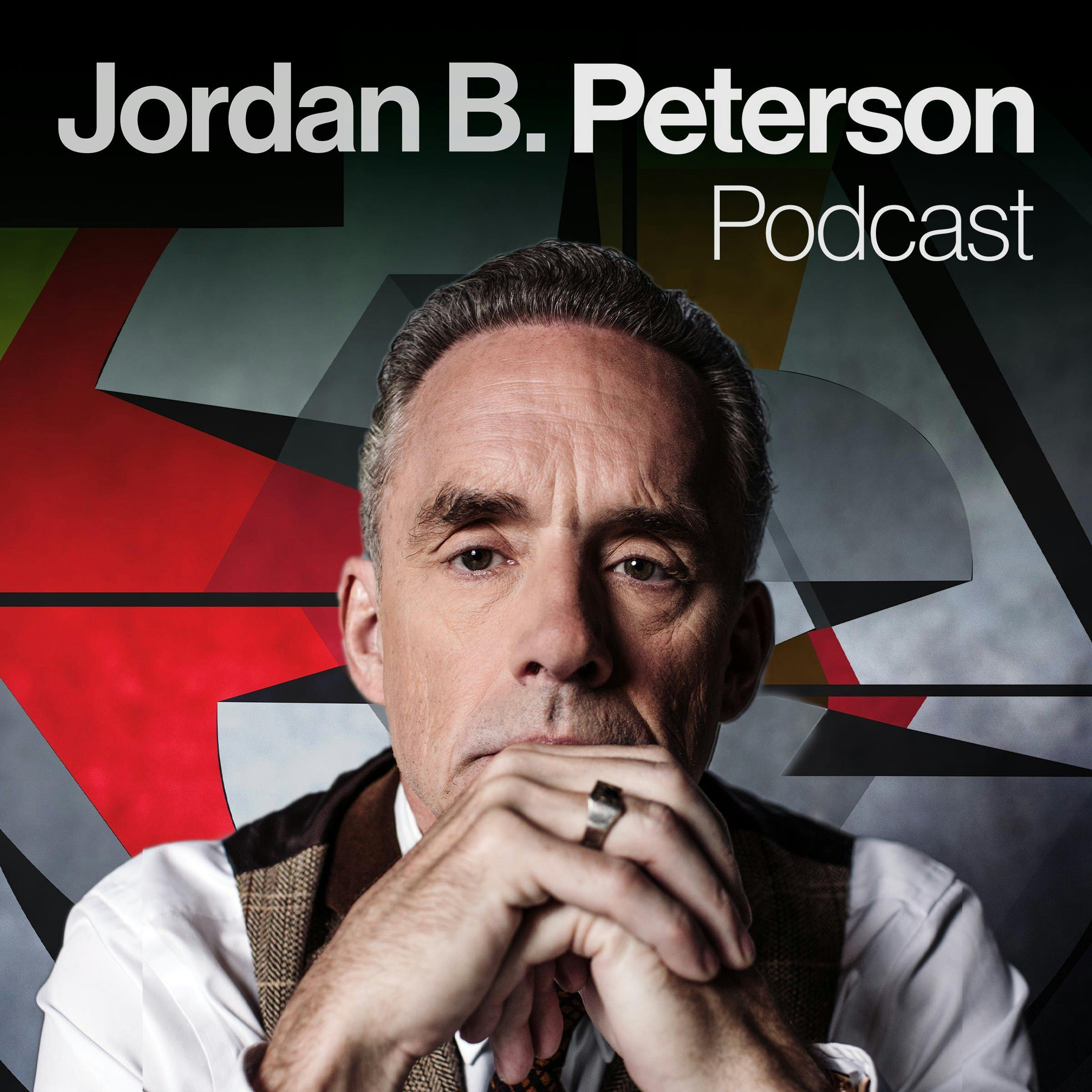
559. How to Stop Europe’s Collapse: What We Can Learn from Germany's Mistakes | Christine Anderson
95m 12s
Christine Anderson, a member of Germany’s Alternative for Germany (AfD) party, argues that Germany has become increasingly unsafe and politically disconnected from its citizens. She attributes this decline to decades of centralized European policies—especially under the EU—that have stripped national governments of sovereignty and accountability. The AfD emerged in 2013 as a reaction to what its members see as the abandonment of traditional values, economic stability, and national security by mainstream parties. Key concerns include unrestricted immigration, the collapse of national borders, and the implementation of climate policies that are economically unsustainable and environmentally harmful. The shutdown of Germany’s nuclear power plants—triggered by a misjudged disaster in Japan—led to reliance on polluting coal and unreliable renewable energy, resulting in higher electricity costs and environmental degradation. The party finds strong support in former East Germany, where residents remember the repressive era of Soviet rule and now detect similar patterns in the current political system. Anderson criticizes the EU’s centralized power structure, particularly the unaccountable EU Commission, as a tool of elite control that undermines democratic processes. She highlights how progressive policies, such as those promoting net zero, are not only ineffective but also serve as moral posturing that discredits economic realities. Ultimately, she sees a growing public rejection of what she calls "nonsense" politics and a rise in support for parties that emphasize national sovereignty, common sense, and real-world consequences over ideological abstraction.
Germany is turning into a, into a hellhole country. We want policies, we want politics that actually represent the people again. You got a radically centralized Europe where the distance between the citizens and the government grew to like slave, tyrant proportions. But now we are at a point where the peoples of Europe are no longer sovereign. Democratic principles have been abolished pretty much across the board throughout every single Western democracy. The real seed of power and the real decision making authority rests with supernatural organizations like the WEF and the EU. Hello everybody, I have a controversial guest today. I suppose that's not particularly rare, although she might be more controversial than most. Interviewing her, having the opportunity to interview her, brought to mind the conundrum I faced when my wife and I talked with Tommy Robinson, who brought the grooming gangs to the rape gangs, to widespread public attention in the UK. Tommy, who is a man, not without his flaws, like all of us by the way, has been pilloried in the UK press as far right. And that's the same fate that's befallen my guest, Christine Anderson, who is a member of parliament for the European Parliament, representing Germany, Deutschland, and the political party alternative for Deutschland, the AFD, which has also been described by the progressive mob, by the asleep liberals, and by conservatives who are attempting to virtue signal, I think, in the same way, as far right. Well, I'm quite curious about the AFD and its rise in Germany. The rise of populist, right wing, classic conservative parties throughout Eastern Europe. And in Western Europe, in Italy, in Sweden, in the Netherlands, and with reform, for example, in the UK. I'm very curious about this phenomenon, and I couldn't think of anyone better to talk to about this than Christine Anderson, who's also on a tour in Canada. And so it was an opportune time to discuss immigration, unrestricted immigration into Europe, particularly into Germany. The Euro, the European Union, globalization, net zero, and the COVID tyranny. And so join us for that on a related note, by the way, because I'm very interested in what is happening in Europe. I'm going on tour with my wife at the end of January till the end of March, 35, 40 European cities. It's a, I've been there a couple of times, and it was great. I'm going there to share what I have to say and to listen. And so if you're interested in that and hearing me speak and participating in the events, go to JordanB Peterson.com and check out the tour for January through March of 2026. Thanks very much and on with the show. So I've been particularly nervous, I would say, in the last few years, about two podcasts that I've done. I had a period of illness and when I came back to start my podcast up again in earnest, I interviewed Abigail Shryer and she wrote irreversible damage. She was one of the earliest critics of the so-called gender affirming care movement, which is composed of a pack of ideologically-addled, sadistic butchers in my estimation. And I felt that way then, although the situation was even worse than I had initially imagined. And so that made me quite nervous because at that time, three or four years ago, it was reputationally risky to take on the woke mob with their latest delusion. And more recently, I interviewed Tommy Robinson twice, both times with my wife, partly because both of us have been following him for a long time and we come from a working class background with Tammy and I and I am accustomed to people like Tommy. But more importantly, I'd been following him, the two of us had been following him for about 15 years. And as far as we were concerned, he was pretty much the only person in the UK. There's some exceptions, but he was very early on who was drawing public attention to the absolutely scandalous, depraved, rape gang situation in the UK. And you know, the KC report just came out right and that was commissioned by the labor government who are complicit in all of this to a degree that's almost unimaginable. And the KC report's conclusion, as far as I understand it, is that the situation is far worse than anyone had imagined. So those are two of the podcasts that made me quite nervous, but they were both all three of them because we interviewed Tommy twice. They turned out to be very much worse doing. This one makes me nervous too. And I'll tell you why, first of all, you know, I know a lot of the conservatives in Canada who aren't particularly happy with you. You know, I have some interaction with Pierapolia then some with Jason Kenney and you know, I'm, it was hopeful for the conservatives in the last election cycle, although that didn't work out so well. And so, but having said that, I'm curious about why the conservatives in Canada and maybe elsewhere in the world are so committed to distancing themselves from the conservatives in Europe, right? It's as if Canadian conservatives in particular find themselves obligated to swallow the progressive insistence that there is an emergent far right in Europe and that it poses a true danger. You know, and it's so interesting when those rumors or when that propaganda gets distributed because it's very difficult not to fall prey to it. Now the townter evidence is Poland, which seems to be doing quite well. The economist just said that Poland will be richer than the UK within 10 years, so that's quite the turnaround. I've been to Hungary a number of times and I've been to worse places than Hungary. Sweden tilted pretty hard in the conservative direction and Italy's prime minister doesn't seem to be the catastrophe that all the progressives predicted. And then there's Germany. And so I'm very skeptical of these far right claims, but we should grapple with that right away too. So I would like you to tell us how you see the political situation in Germany and then also elaborate on why it seems necessary for arguably centrist conservatives to insist that they're not the same people as the more conservative politicians in Europe. Well, it's pretty much a necessity to defame us, to stigmatize us. The simple reason being is we talk common sense. We want policies, we want politics that actually represent the people again, where I mean democracy what's it all about? It's government off the people for the people and by the people. But we haven't been seeing that in quite some time, for decades that's been going on. The erosion of these democratic principles. Nowadays it seems more like the people are being dictated to what their ones and what their needs are going to have to be. And these elected officials, they no longer take into consideration what is actually the best interest of the people that they were elected by and that they're paid by, by the way. So now this new party comes along, there was in 2013 and pretty much when my party was founded, the only thing we really did was representing or claiming to change policies in areas that the former conservative party in German, the Christian Democrats stood for as long as I can remember. I used to vote for the Christian Democrats, ever since I became eligible to vote, I voted for the Christian Democrats and the liberal party, the free democratic liberals. We have two votes in Germany, so you can split them like that. And it wasn't me that changed my political opinion. It was these two parties that I voted for my entire life that changed their basis, changed their policy. So my wake-in-up moment was in 2007 and it was actually the subprime crisis in the United States, where people getting kicked out their houses left and right. [BLANK_AUDIO]
was like, what is going on there? Why are so many people suddenly losing their homes and whatnot? And that was my waking up moment. And in 2005, I still voted for the Christian Democrats. So yes, I did vote for Angela Merkel, the first time she ran for Chancellor, but I no longer could vote for them in 2009 when the next elections came around. So I voted in ballot. And I really have to say this political homelessness that I felt, I would have never thought that it would get to me to an extent that it actually did, but not knowing who I felt represented by anymore, not knowing who was sitting in parliament and doing what I would want them to do. There was a horrible feeling, a really horrible feeling. So I voted in ballot in 2009 and then 2013. I was watching TV and I was some talk on TV about some new party being founded. And they were critics of the EU. They were critics of the euro. And I'm like, whoa, what is this? And I'm like, you know, all the years and listened to it for a while, turned off my TV and went on the internet, researched that party. And I was so glad to have finally found a party again that I felt represented by that I decided, well, this time I'm not going to leave it up to anyone else to do the right thing here. And I decided to become a member at that very same night, filled out an application. And I've been a member of that party from the very beginning, 2013. And yeah, that's when it all started, right? So first we were called EU haters, European haters. We wanted to just destroy Europe because we were critics of the currency that we had the euro. So it pretty much started right in the beginning. And as it, and they kind of were hoping that we were just short-term kind of phenomenon. We would just go away like that, but we didn't go away. And then the next thing happened, the mass invasion of these immigrants, so-called immigrants, asylum seekers, as they claim. And now we were Islamophops, we were xenophops. So the labeling continued, yeah, and now we are pretty much, I mean, we've been called every name in the book. You name it, there is nothing left to pretty much label us with. But it's no longer working really. Because I mean, if you apply a derogative label to just about anything and everything you disagree with, it no longer matters. And people are just so contired of being called all kinds of names. Yeah, my sense is, is that the far right epithet has lost a tremendous amount of its useful currency in the last two or three years. It absolutely has, it absolutely has. And like I said, I mean, the number of people they have to call these names or getting larger and larger with every controversial issue, there is. You once again have another group of people of the population. You need to stigmatize in such a way. Well, you know, sooner or later you're going to have a majority of the people of the population being slapped with that label. Well, seriously, that's what you're going to do now. So it's really no longer working. And I mean, they did whatever they could. I mean, they tried, they really gave it their best shot to just, you know, make us disappear. But it's not working. Why is it not working? Because everything we have been saying ever since 2013, we weren't making that stuff up. We weren't fear mongering. We were simply seeing where we were headed. And the people are now beginning to realize, whoa, they were right. They said that. That's what they said like 10 years ago. And here we are. So they're seeing all of this, the policies that have been implemented. And the consequences of these policies they were set a long time ago. They're seeing it now in their everyday life. And there is no denying it anymore. I mean, you can kind of play with numbers in some kind of a budget or in a balance sheet. You can hide certain things. What you cannot hide is your lift reality. And the lift reality in Germany, I'm really sad and sweet to say. But Germany is turning into a hellhole country. We're no longer safe in our streets. I mean, just go back to 2015 New Year's Eve. There was a mob of like 1,000 men ganging up on women just being out there celebrating New Year's Eve. And notably Cologne, it was just dreadful what these women experienced, right? So I'm echo of that in Paris two weeks ago. Exactly. Yeah. I mean, these are occurrences. It's no longer isolated incidents what we're talking about here. So that's been going on for quite some time. What we're seeing in Germany now is you have like two brutal gang rapes every single day in Germany. And when I'm saying brutal gang rapes, I mean, these women are not just raped. They're brutally beaten within an inch of their life if they're surviving at all, right? Two of them, every single day happening in Germany. And that's not even talking about the rapes where there's only one perpetrator, right? So these random knife attacks every day, not only every day, on an hourly basis, we have those like 12, 13, 14, 15 random knife attacks. Well, they were thinking about bringing in knife control in the UK for the same reason. They have. Yeah. That's really something. Yeah. Well, watch them caring about that. They don't. So what they do do, though, is once we had the Christmas markets and everything, yeah, they were, you know, heavily patrolled. Yeah, they took like the little knife that a grandma picked, right? So you can cut up an apple or something. Yeah, they were, you know, taken away from people like that, but the real perpetrators, they wouldn't go near them. And have they erected like barriers in Germany? Yeah. Because that's a terrible thing, you know? That's a terrible thing to see. When the state starts to erect barriers to protect people, you know, the things are in the dismal decline. That's the funny thing about that. I mean, what is the function of external borders? So the people that are inside can just go about their daily business and live in peace. Once you start tearing down the external borders, what are you going to end up doing? You're going to erect little small borders all over, that's supposed to secure area, and that's what we're seeing. So it's like, you know, if a family father just decided to bring in, you know, just any old Joe Schmoh into his house, you know, because he felt, you know, you needed to help these people. For whatever reason. And then he finds out his family is no longer safe in the house. What would this father do? We'll kick all of them out. But what we're doing is we're locking up our family, you know, in the individual rooms. So they're safe there, seriously. This is so beyond reason and beyond any rational thinking, it's actually ridiculous when you really think about it. But that's what we're doing. If you're serious about improving your health, but often ignore your gut health, then that's a huge mistake. The gut is foundational to how you feel, how you function, and how you think. When your digestion is compromised, so is everything else. That's where peak's poor tea comes in. It's a fermented tea used for centuries in traditional medicine backed by science today. Rich in probiotics, prebiotics, and antioxidants, the substance is your body actually needs to heal and regulate itself properly. Many of our daily wire teams love sipping on black poor tea in the morning, no crash, no jitters, just calm, sustainable energy. Plus, after meals, the green poor tea helps digestion and makes you feel lighter and clearer. Peak's poor tea isn't just high quality, it's the highest quality. Wild harvested from 250 year old trees, no pesticides, no artificial ingredients, and it dissolves instantly in water, no steeping required. Plus, peak is trusted by leading doctors and health experts, including Dr. Mark Hyman, in others who have spent their careers researching what truly supports long-term health, and they recommend poor tea for a reason. Now, peak is offering our listeners a special offer, 20% off for life. That's not a one-time discount. That is a long-term investment in your well-being. They'll also throw in a free rechargeable for author and glass beaker with your poor bundle. Plus, with their 90-day money back guarantee, there's no risk only the opportunity to feel and think better. Head over to peaklife.com/peterson. That's peaklife.com/peterson to get 20% off for life. Start taking your health seriously. Start today. So let's review a few things. Will you describe people, the federal political structure in Germany, so they have some sense, outline the main parties, and then maybe talk to us a bit about why these, what the fundamental issues are. Are you raised problems with the EU, problems with the Euro, and immigration? Those are the three things that we touch on, de-industrialization, or the catastrophic consequences of this.
net zero, which we should also touch on. But layout the political landscape so that people understand the German political scene more particularly. I'd like to for you also to tell people what you did before you got involved in politics in 2013, 2013, and then then let's address the main issues that we discussed as well. So we'll start with the German political landscape. Okay. So there's I think there's like seven parties represented in the in the national parliament in the Bundestag right now. So yeah, let's start with the Christian Democrats. The Christian Democrats are the former conservative party. Angela Merkel, she pretty much turned the Christian Democrats into this just woke kind of nonsense party, you know, just adhering to just a party, everything, you know, she wanted to be everybody's darling, right? And you know, but if you're everybody's darling, you're everybody's dead. Yeah, well, the conservatives say I know they take their base for granted, and then they try to occupy the center, right? Exactly. And so they're always pulled to the progressive side. Right. So we have the Christian Democrats, then we have the social Democrats. There they used to be the representation of the working class, right? But they completely abandoned that base too for all kinds of transgender issues and what have you not. So yeah, well, economic alienation, let's say characterized that characterized the working class has been replaced by postmodern alienation, right? So it's an absolute multiplication of of oppressed status. Yeah, exactly. People seem to suffer. Yeah, yeah. People who seem to suffer the most from that in terms of lacking representation are most perversely the working class people that some labor parties actually did work to represent not long ago. Exactly. Okay, so the social Democrats have got seriously postmodern and woke. Exactly. Okay. Then we have the free democratic liberals, what they were called, they were libertarian. They used to be. But they're just the same thing now pretty much as the Christian Democrats. So the FDP is what they're what their short name is. They have been in coalition with the Christian Democrats, with the social Democrats, whatever. So in like the 70-80s, they're really only worthy three parties. So they were here and then they were there. So they were kind of shifting. Then the 80s came about and this new party was found the Greens. So the Greens came along. And you know, what they did in the beginning, you know, we need to protect our environment. It really made sense. I mean, I never voted for the Greens because I just kind of even back then, as young as I was, I could see, you know, where they're going this ultimately and inevitably will lead into communism because there is no other way you can cut down on industry, you know, without having to redistribute whatever kind of wealth is left, right? So they were the Greens, but Janet, you know, what they stood for in the beginning as they came about, there was a merit to it and there was good reasons for it, right? So and then the next thing, then the wall came down and maybe we want to touch on that a little later. The wall came down and then the next party, the fifth party came along. There was pretty much the ones that was the SED, the Socialist Uniparty of Germany. They just renamed themselves. So that was the leftover communists? Exactly. That's exactly what they were. Just took a different name. So when you're now at five, and they were predominantly elected in the in ironically enough in the former GR states in Eastern Germany. Exactly. So you think people would have learned their lesson, but exactly. Yeah, you would have thought so, but unfortunately not. So now we had these five parties and for the most part, that was just about it, right? So and then the but the the former communist party, they split. So now that we had seven parties, and then my party, so it's eight parties now. So then my party came along in 2013, but like I said, it was really a necessity out of necessity because all of the other parties that back in the days, each had a different basis. They represent it. They all kind of represent the same kind of thing. They only vary in nuances from what their policies are, what they advocate for. So they pretty much have become a unity party. I think that's the term. What would you call it? So and now it's pretty much the unity party and it's us. So once again, we are we're back to a two party system. Right. You could call it that. Yes. So tell me about the rise in fortune and misfortune of the AFD. What does AFD stand for? Tell everyone that alternative for Germany. And ironically, Angela Merkel, believe it or not, she was pretty much the one that inspired our name because when the euro crisis happened, the debt crisis, particularly with Greece, and we send all these funds down to Greece to help them. And maybe it's worth noting, none of these billions and billions of dollars that were sent down to Greece, because we're supposed to help the Greek people. So once again, you have to act in solidarity, not a single set ever reached a single Greek citizen on the street. These billions and billions of dollars, we sent down there actually were used to pay off the debt with banks, whether it's a commercial bank was pretty, so it was pretty much German banks that were German French banks. Right. The Greek government went into debt and now they couldn't pay it anymore, but the banks insisted, "Hey, look, we want our money back. You better make it happen." So then the peoples of all the other European countries, they all chipped in. Germany, of course, the most heavy, the heaviest part of this, but it was directly went back to the banks to pay off the debt. Do you think there was any utility in doing that? Did it stabilize the banking system? Did it make it on? No, it did not. The lesson or what the banks got from that is, look, we can just fool around here. We can lose trillions. It doesn't matter. Taxpayers of all of these countries, they're going to step in and save us. If you run your business into the ground, you should be the one bearing the consequences for that, but since they were considered vital to the economy, privatize the gains and socialize the rich. That's exactly what it was. We were talking about Greece and and Angela Merkel said back then that saving the euro, it was without any alternative. There was no alternative for that. That's what inspired our name. That's why we were called our self-alternative for Germany. You should never get yourself in a situation as a government to claim something, there is no alternative. You back yourself into a corner and say there's no bargaining. Exactly. Let's talk about the EU a little bit. I remember when there were great hopes for the European Union, and so let me lay out some of those. The hope was, it's kind of analogous in a way to the hope that if we brought China into the capitalist economic system, that that would produce a liberalization in political ideology, in China, of freeing. You can understand that that was a plausible hope, and it's certainly the case that the Chinese economy has grown dramatically, and the cost of certain consumer goods have plummeted. The working class has paid a price for that, and absolute privation in many ways has been drastically limited in China, so it wasn't a complete failure, but the idea that it would liberalize China has turned out to be like that just didn't happen even a little bit. When the EU was formed, it was a thrill, I suppose, to some degree, that it became radically easy to move between countries, without the inconvenience of past ports and border guards and so forth. The hope, as well, would be that toxic elements of nationalism, such as they were, which had seemed to tear Europe apart multiple times, would be radically ameliorated, and that Europe could unite, that would raise the poorer countries out of their penury, and produce an economy, I suppose, that would be equivalent in some ways to the United States. That was the hope.
The consequence was, and this is why the UK left, the consequence was really the elimination of intermediary political structures and the creation of a super organism in Brussels. I've pinned two Brussels to the home of the EU. The building that that enterprises housed in is a monstrosity of cataclysmic foolishness. Just like the world's biggest and ugliest, badly designed airport. Tiny offices, I've got a comical story for you. I was there three years ago, maybe speaking to another far-right politician from Eastern Europe. Romania, I think, and he had this tiny little office, and while I was there, the environmental police came into his office and adjusted his thermostat so that he couldn't keep it cool fundamentally because of the green requirements. There wasn't a damn thing he could do about it. I've talked to Björn Longberg about thermostat adjustments and the fact that they're deadly, essentially, especially elderly people, especially in winter. I thought I was so telling that we had gone to this staggeringly hideous monstrosity of a building. It was just a rat's maze inside. I don't know how you would ever orient yourself inside that building. It's gargantuan. Then to speak with this elected official who was powerless, he wasn't happy about this by the way, but who was powerless to adjust his own thermostat, I thought, yeah, that's pretty much exactly it. But you've got to radically centralize Europe where the distance between the citizens and the government grew to slave, tyrant proportions, and so a hyper elite with disenfranchised people. That's what it looks like to me. And so I don't know, maybe we should start by making a case for the European Union. I mean, if you had to play devil's advocate and you looked at what's happened in Europe over the last 20 years, do you think there's been advantages to the European project? I mean, the UK certainly decided no and decided to go their own way, which I think all things considered was a good idea. And then they went and elected a labor government. So that's a catastrophe. But tell me what you think you intimated your displeasure with the European Union and the euro. So why don't you lay out why and give the devil his due to? Well, when it started out, it was a really good idea actually. And how did it start out? Well, let's start it out that the European countries decided to form a trade union kind of, you know? So there was a call the European Economic Union. And that was pretty much it. They were just seeing how can we support each other and we'll get rid of tariffs and everything. We'll kind of liberalize, you know, how we trade among each other, but that was it. That was the whole purpose of, you know, getting together at least so we were told. I'm pretty convinced at this point it was the idea all along to gradually upgrade this whole monstrum you said it correctly into this supernatural kind of government pretty much. So that was legitimate back then and it worked, you know, it was a good idea. But like I said, then they started evolving from there, you know, and they, sovereign rights were relinquished in the beginning, it was just, you know, things that kind of made sense. Let's invest in a common kind of external border protection. That's the type of thing, right? And now we are at a point where the people of Europe are no longer sovereign. They are no longer deciding their own political fate. And if they try to do so, as we have seen in Romania just recently, they just go ahead in an election and to this day, they have not brought up any substantial evidence for their claim that Colleen Chachezko was apparently allegedly financed somehow by Russia or whatever. Exactly. So they just claimed that that was enough to just annul the election and not only that, but bar him from running again. And he would have absolutely won the elections. So they barred him. So they tried similar shenanigans, let's say, with Marine Le Pen. Oh, of course. Absolutely. But they're not even hiding anymore, right? They're not even hiding it anymore. So the question really is, I mean, I'm speaking about, you know, how democratic principles are being abolished pretty much across the board throughout every single Western democracy. And yeah, it's a power grab. The question, or becks the question, and especially people that are more left-leaning, always ask me this. But why would the sovereign government of a country, let's say, Germany voluntarily relinquish their power to this supernatural organization called EU? Well, it's very simple. The agenda they are trying to implement, all of the policies they're trying to implement, they wouldn't get away with that in a democracy. They wouldn't get away with that in terms of, if the people saw, wait a minute, that government just is trying to do this, then we would no longer elect them. But what if they had a way of blaming someone else for that? And that's exactly how this play is. And what policies are you speaking of specifically? For example, the climate change policy. The net zero policy. Exactly. The whole transgender ideology. I mean, these are all things that they want to implement. So they wouldn't get reelected if they advocated for these things. But now, having the EU institutions, it's pretty much providing them of plausible deniability. Now the elected government in Berlin can tell the Germans, well, we wouldn't have done that to you. We wouldn't have passed this, but there's nothing we can do. It's coming from Berlin. And from Brussels, when national parties, I've seen this in other months, when national parties try to move in a direction that the Brussels elite do not approve of, then often environmental groups, the Greens in particular, take them to court and frequently win. Right? And so the activist types have got an appeal to a centralized authority that can supersede national sovereignty and that frequently does. Exactly. Exactly. You know, I saw it. I think it was Kier Starmer, if I remember correctly, who made some denigrating comments about Westminster, not so long ago. It's probably a few years pointing out that the real seat of power and the real decision-making authority rests with these supernatural organizations like the WEF and the EU. And so it also seems to me to be the case that politicians whose ambition, nose, no bounds have their eye on the ultimate prize. And if that means sacrificing local or national interests, so be it, I have a sneaking suspicion, we'll see how this plays out, that that's what's going to happen to Canada, because Karni has turned hard in the direction of Europe. Now, you know, he's done that under some provocation from Donald Trump, I think miscalculated greatly when he agitated for Canada to become the 51st state in the middle of our last election. And I think he'll regret that, because we'll see, Karni seems to have changed his stripes, which is something I don't understand at all. But I think if he's still the same man that he was, Trump managed to get a pretty county enemy instantiated on the Northern border. And I think Karni is positioning himself as the leader of the opposition, he's trying to do that, the leader of the opposition, to Trump across the world. So there is this desire, especially by the status types, to serve the highest possible master. And that has meant the WEF and the EU. And so yeah, you know in Canada, the liberals have decided, I think it's 2035 that will no longer be able to have internal combustion vehicles, say in Canada, in how insane that is. Yeah, I know. Totally insane. Yeah. And what's the legislation in Germany? Oh, they're like the EU is pushing forward with that. That's just, I mean, we're going to be seeing that, but this is like the overall issue. And we are seeing that in, like I said, in every single Western democracy. And it became abundantly clear during this so-called COVID pandemic, right? We've seen erosion of democracy, freedom, democracy, and rule of law across the board in all the Western democracies. And the question really is, why did they. have to push that in the Western democracies to that extent that they did. Well, they didn't need to do that in China. China already was a totalitarian regime. They didn't need to do that in North Korea, but they had to do it in the Western democracies because we do have this democracy, we do have freedom, we have constitutions, and that had to be, yeah, kind of, how shall I word this water down in a sense? You know, fundamental rights have now become privileges that the government can grant or would hold depending on how you behave, right? Well, if you lose your natural rights for the law, to make an image of God, let's say. And we are seeing that, like I said, in every single Western democracies, in Europe, however, they did face a rather difficult situation in terms of, and you mentioned that already, removing the democratic processes further and further away from the people to get it, you know, so the people no longer know who's even responsible for what decision and most of all, how, who can they hold accountable for what decision? So this is happening. In Europe, however, you know, just looking at this rather small continent, and I mean, you know, the entire world envies us for our small continent with all these different cultures, languages, traditions, history, right? We're living to trust. Right, yeah. So, but you would have never been able to convince any single European people to relinquish their sovereignty, their traditions to invest in some kind of, let's call it one-world government, whatever you want to call it, would have never happened, would have never been possible. But hey, let's tell the people, look, we've been, you know, having wars for centuries, and we need to go, get away with that, so we, you know, living peacefully, let's try to move together closer, you know, so how about we have this EU commission installed in Brussels, and, you know, we have parliament, so it's democracy and all of that, and so people were told this lie that because we are obviously incapable of living peacefully together, unless we have some kind of a king, exact sort of, right? So, and that's how the people were sold this lie. And now what we're seeing is they're moving closer and closer together, all the more rights, competencies that are going to transfer to Brussels, and speaking of the EU commission, what is the EU commission? It's not elected, it's appointed pretty much, so whenever, whenever a new country joins EU, they get to appoint a commissioner for that post, right? So it's not based on competencies, what areas do we have that need, we need to fill with someone to be responsible before it, know that they make it up as they go along, that's pretty much what they're doing. The EU commission is not elected, the president is elected in parliament, but it's more like she is selling whatever she has, you know, that's how she got the votes, Ursula von der Leyen notably, got the votes from the Greens, because she did commit to the Green Deal, which is now the industrializing in particular in Germany, where this is going on, so the EU commission is not democratically elected. Now the industrialization of Germany seems like a market, what move towards insanity, has a remarkable situation where China and India are industrializing at a rate that leaves Europe and its negligible effect on the environment in the dust, and increasingly so, and at an ever accelerating rate, all of the industry that's leaving Europe and the West in general is localizing in China and in India, China's building coal-fired plants at a rate that's just staggering, and we all breathe the same atmosphere. I know, the whole bloody climate change narrative is a scam and a lie, and it's a remarkable and destructive thing to see. So there's two things happening, maybe if you think about partly sociologically and partly psychologically, it's the pernicious combination of two trends, I know that in principle the EU was established on the basis of stated respect for the principle of subsidiarity, which is a principle I only discovered probably about five years ago that has been the time-tested alternative to tyrant and slaves, and the idea is a graduated hierarchy of responsibility from the individual upward, with as much power pushed down to the lowest possible level as can be managed. So the centralized authority has a very delimited scope of responsibility and authority. Okay, so now you fragment that, and so there's way too much power at the top, and not nearly enough authority or responsibility at the bottom, which is also very convenient for people who don't want to take responsibility. And then, as you said, that abstracts the political process so completely that it's hard to keep the elected officials, let's say, responsible for their actions. And so that allows the globalist ideological types to utilize their power-mongering at the highest level of enterprise, and so then that brings us to the second issue, you know. You have to ask yourself how a policy as reprehensible and vacuous as the climate change narrative, which the pathology of which I think was most amply demonstrated by the fact that it was once global warming, and then it become climate change overnight, which is really quite something. It's not warming up, it's increased variability. It's like, that's actually very different. And the fact that you're telling the same story with a completely different premise is extremely telling. And so then you might ask why, and I think it's the age-old story of the Pharisees is that these meta-narratives environmentalism in particular, but also concern for income distribution. There are ways of allowing people to claim a admirable reputation and morality, while doing absolutely nothing except power-mongering on the basis of that claim while doing absolutely nothing to deserve it. So you get that combination of centralized control and moral hypocrisy. That's absolutely deadly combination. But they kind of have to do this, the moralization. I mean, how else would they be able to tax people into oblivion? And the question really is, how is taxing people into poverty saving, going to save our planet? Well, especially in the universe. To even think that we could save the planet, right? Especially, we're doing that in Germany. I'll have you know. We shut down all of our nuclear power plants. Yes. Well, you even blew some of the mop pay. Oh, yeah, of course. Which is really something. Well, I mean, you know, just to think about how ridiculous that is. So in Germany, we had the most, the highest standards as far as nuclear power plants were concerned, right? They were the safest and the best engineering. Of course, we had all that. So we shut them down because of a catastrophe that happened at the other end of the world. So, and this hurricane only, no, it wasn't a hurricane. It was a, what's the word? It's a earthquake in a flood. Yeah. It's tsunami. That's the world we're looking for. So it destroyed one power plant in Japan, but this very same tsunami that never reached Germany, destroyed all of the power plants in Germany. And what did we do? So we shut them all down. Angela Merkel, once again, you know, wanting to, you know, peace just about everyone. She declared the moratorium back then. So they were all shut down immediately. And then they were taken out of commission, you know, despite the war's emphasis on carbon dioxide being the world's most toxic poison. Yeah. And instead, we, you know, putting these solar panels on prime farmland, by the way, erecting these windmills. I mean, Germany, you know, we have beautiful old forest. There are hundreds and hundreds of years old. We're just tearing them down to erect these ridiculous windmills. But solar, Germany isn't one of the world's sunniest countries. And it's also notorious for what do you call those wind droughts? Yeah. There's no wind at all. And that's the funny thing. All of Europe pretty much is in the same kind of condition as far as winds and that type of stuff is concerned. So it's not like if the sun, if the wind in Germany isn't blowing, well, then it might be blowing in Spain. So they can, no, then the wind is not blowing anywhere.
all over Europe. So it's totally ridiculous. So we're tearing down our nuclear power plants highest standard ever and but we are buying now the nuclear power from France or Poland or you know the Eastern European countries because they're building nuclear power plants. So I mean anyone with two brain cells left intact really has to see how this is the biggest scam ever. Well and what I understand and correct me if I'm wrong is that let's you know you gave the greens a certain amount of credit earlier in our discussion. They're very limited. Right right but you said that when the movement started that there was some reason to be to make environmental concerns part of the conversation and that that was reasonable. But let's say that the green aim was to produce a decrease at minimum a decrease in pollution even if it was even if there was some additional economic cost associated with that the idea being better to pay in the short term than the long term climate catastrophe and so it's actually an investment. You know the rationale and that would be fine if the policies that the green inquiry distributors because those seem to go together. If the policies they insisted upon actually produce the outcome they themselves desired but my understanding in Germany is that now electricity there like it is in the UK is prohibitively expensive which is a complete catastrophe with regards to competitiveness and has resulted in it's part of the cause of the deindustrialization that you described but worse than that and in particular because Germany shut down its nuclear plants which were carbon dioxide free. Germany has had to rely on coal burning plants to fill the gap left by the unreliable solar and wind energy and many of the coal burning plants burn late night which is the most polluting form of coal it's the cheapest but also the most polluting and so Germany now has electricity that's about five times higher than it should be in terms of cost which is really really hard on poor people and they pollute more per unit of electricity than they did before so it's a failure even by the standards of the people who pushed the legislation to begin with yes and all to what all to bolster the proclamations of the of the green income redistributors that their moral agents working in the service of the planet and the poor which they're clearly and they're clearly not in fact quite the opposite there's some mean some psychological studies recently on the on the psychological predictors of support for income redistribution so George Orwell said decades ago that when he was speaking of middle class socialists so the virtue signaling types because he could never understand their motivations or elite socialists that they didn't like the poor they just headed the right to rich well so there's been some psychological studies recently I know of three papers that measured people's attitude towards fairness as a motivation because that's usually the motivation right for income redistribution it's only fair compassion and malicious envy yeah right fairness didn't predict support for income redistribution at all zero compassion predicted a little bit but the biggest predictor was malicious envy right so it really is a destructive it is a destructive ideology masquerading as compassion and worship of nature right exactly I mean you know whenever especially young people you know they like God bless their hearts they always think you know know that the communists of their socialists they're caring yeah they're so caring for the poor people they want to listen out of poverty yeah right and you know but it's it's really not true what the communists or socialists actually do is they don't increase anyone's wealth they do not they do not contribute so that the overall income will actually increase what they're doing is pretty much just how shall I put this just to manage the pornists more fairly that's all they're doing right more they manage it more fairly temporarily exactly or they're trying to do that but they're not productive it never increases productivity it never increases anything why because if you are trying to establish a total totally equal society where is the ambition that is the actual driver of mankind to better themselves to have a better life for their children they will be willing to do a lot and work a lot if in the end it means I myself will have a better life and I will have a better life or will provide a better life for my children but if that is taken away because you're now being looked upon in like oh you've got too much you own two books you're only allowed one book so I have to take that one book away from you success is theft exactly yeah that's a that's a pathway rather poverty what does it lead to it takes away the drive to contribute to to better yourself right so people just well I work that that that drive to better yourself is also not merely competitive and comparative advantage it's predicated on the idea and western societies were unbelievably good at this that if you produce it then you get to keep it exactly right because yes and more than that if you produce it you get to keep it and other people don't get to kill you to take it exactly you know there's a mystery there's an anthropological mystery human beings have been around in the genetic form that we have now for about 350,000 years and nothing really seemed to get going until after the last ice age so you've got to ask yourself what those people were doing now there weren't as many of them and that makes a difference but there are theories that propose that human beings spent much of that 350,000 year period engaged in viciously murderous intertribal warfare and theft from anyone who had anything that everyone didn't have at the same time right the thing about like if you own something you produce something you own it that means you get to keep it and that other people can't take it so the whole idea of ownership which is your ability to store what you've produced is predicated on acceptance of inequality if you own something I don't get to have it so the whole idea of ownership is acceptance of inequality you know and it's a weird thing too and I've really only figured this out in recent years is that a certain amount of inequality is the precondition to raise all boats right okay and here's why when something new comes along it's scarce and it's hyper-expensive at first and so what you need is you need pools of you need large pools of wealth so that some people can afford the new thing now they get it first and you might say that's unfair but the thing is is if they get it that the cost comes down and then the next strata of wealthy people can afford it yes and then the cost comes down and then if you do that for five years then everyone has a flat screen TV right and so the rich guy up the street got one in 2015 but you got to get one and you got to have one in 2020 it's like who cares exactly all right that much inequality well then you'll end up right nothing well if the communists have their way no one gets to have the flat screen TV well that is that's always how it turned out right exactly the only way of producing equality was to equalize everything at zero right okay so let's let's talk about the AFD and its electoral popularity and its success and the situation politically in Germany presently so you said seven or eight eight political parties yes eight political parties as I count it correctly but yeah okay so it's right okay and so and three of those are major parties but not including the AFD no well there is two two of those are major parties okay and that's a Christian Democrats and they're not major anymore though by the way because there are so many parties now well so fragmented back in like the 70-80s and it was either the Christian Democrats were you know 50% and then social Democrats weren't and then it flipped so they were like you know close to 50% Christian Democrats they they actually got the the majority a couple of times but that they were far from that I mean the Christian Democrats in the last election which took place in February yeah of this year they came in at 27% right and they were considering that a huge success right right and where where what's the standing of the AFD we came in at 20% something. So, but it was a psychological threshold that
we, you know, went above the 20, then we were polling immediately after the election, because this is just the thing. The Christian Democrats, now Friedrich Matz, he's our chancellor. The number one issue he ran on during this campaign was, and he said, "So, I'm going to close the border on day one as chancellor. I will close the border on day one if I get elected to chancellor." Well, guess what? The precincts closed, and not 24 hours later, he was like, "No one ever said anything about any closing any borders, right?" So, immediately, he, you know, just was like, "No, never even talked about that." So, he, once again, the people were a bitrate. So, they were promised things that Matz was never even considering to, you know, implement them. So, and that's when we started polling the 27% actually, and the Christian Democrats had dropped down to like 24, 25%. What's the AFD at now? And we're now back at like 24% and the Christian Democrats are now up 26, 27%. Where's your support localized? Who are your supporters, most fundamentally? I think the AFD is more popular in the former Eastern European countries. Yes, it is. Yes, they are. And notably so, you also see this trend in the Eastern European countries, former Eastern European countries, that were once under Soviet taught, taught, taught, taught. Right. There are a lot more leery of the progressive claims. Right. There are common sense politics is more appealing to these people than in Western, Western Germany. But the point that we do have, my party has a lot of support in the former GDR states and Eastern Germany is for a very simple reason. These people, they remember and they see totalitarianism when they recognize it when they see it. And they are recognizing it as we speak. They have learned how to read a newspaper. It's not important what the newspaper says. It's more important what doesn't the newspaper say. And what does it say in between the lines? And they have very fine mechanisms. They can sense if something is not democratic. Like free speech, free speech is being stripped away pretty much everywhere. So they see totalitarianism. They see it once again being ushered in. And that's why they're voting in vast numbers for us. So we are like 38, 39% even 40% in the Eastern German, German states. And it's really, you know, just looking back, I experienced when the wall came down. So I probably have to start here saying, my family, my parents and my siblings, we were the only ones for my family that actually lived in West Germany. The rest of my family, aunts, uncles, cousins, grandparents, they all lived in Eastern Germany. And the reason being is, my dad was arrested in 1950. So my parents were born and raised in Afort, this is Thuringia, it's Eastern Germany. Born and raised there. And my dad was arrested in 1950 for having allegedly entertained or been involved in anti-Zubi, anti-Zubi, espionage. So he was arrested, he was tried, it was all done in Russian, by the way. And he was sentenced to 25 years of hard labor to one of the most horrific political persons you can imagine, Boutsen. So unfortunately, only had to serve five years of his term. So he was only exactly. So he was released, he was arrested when he was 22. And once he found out that was in Boutsen, they wouldn't even tell him how long he got, how long the sentence was, the comment of his and in Boutsen, he could read Russian. And he told him 25 years, my father was devastated. I mean, 22 years old, plus 20 years old. I'm going to be an old man by the time I get out of here. So anyway, he was released in '55 and he still would shut up. He still would not shut up. I know. So then he was about to get arrested a second time in '59, but that time he was warned. And he fled GDR, Easter Saturday before Easter in '59. My mom with my two older sisters who had already been born, she followed him in '61, May of '61. So I had the luck. How did they get out? Well, once my dad left, it wasn't that big a deal. There was no border, no nothing. So it was '59, like I said. He just, you know, pretty much, you couldn't tell anyone that you were trying to leave, right? You just did it. So when my mom did it in '61, it was a little more difficult. The wall hadn't been built, but it was already closed off. So that's a whole other story for some other time. So anyhow, I was born and raised in Western Germany, but whenever my family went anywhere, ever, it was always GDR, always. And I still remember the first time we were even allowed to go. There was Easter of '74. And the chance of Germany had struck a deal with GDR because they needed money. They were in desperate need of money. And he negotiated with them, well, look, you know, we help you financially. But in return, you will have to ease the restrictions on travel between the countries. So, and for the very first time, refuge or the ones that had fled the country, they were considered state of the, of GDR, enemy of the state of GDR. For the very first time, they were allowed back in the country to visit. So I was six years at the time, but I'll never, never forget that. So we were tearing up. I'm sorry. As we were driving up to the border, I mean, they were cars and cars and cars and cars. And we're like standing in four cars in a row just trying to get in. But it was like, you never knew what happened. You never knew what are they going to do to you this time. Take your car apart, you know, because they're looking for some magazine or whatever. It was like, it was always like Russian roulette really much, you know, will you be able to get back out? You never really knew. So, but the first time we went there, that was, yeah. So anyhow, we went there and then now going fast forward to 89, in May of 89, in Hungary, there was a pan-European festival of some kind. And Hungarian government, for whatever reason, had decided to open up a gate. There was the border to Austria, right, to the Western Western world pretty much. And they decided to open that up so that people could, you know, walk back and forth for that day. The plan was only for that day. But there was a lot of people from GDR, they were visiting Hungary. That was like the only country they could really go to within the eastern block. They were allowed to travel to. And a, that gates open, that gates open. They were like 400 people once they realized that they fled, right, to Austria. So, but since Hungary had done that, they couldn't really go back on that. So, then they decided to just tear down, start tearing down this fence. And that sparked something with the population in GDR. They were fed up, you know, with this communist system and everything. So, then they started to take to the streets every Monday night. They would protest. In the beginning, it was only a few people. So, the, the Stasi came in. You know, that's the secret state police. Stasi came in and, you know, to the rest of them. Particularly vicious in Eastern. Exactly. Arrested them, you know, to never to be seen again, whatever. The families didn't even know where, you know, their relatives were. But once this process all started, it was like the genie was out of the bottle kind of thing. And there is no way of getting it back in, right? So, it evolved. And, and I've been watching the news ever since that happened in Hungary. And was like something is evolving here. And they're not going to be able to, to, you know, contain it. I was sure of that. This is, this is just going to go now. So, I was watching the news, every news show on every channel. I was videotaping it to preserve it, you know, whatever. So I was really following this whole process very, very closely. And then the people of GDR, they occupied, they not occupied, but fled to the embassy in Prague. And pretty much the embassy in Prague, it was just overflowing. I mean, there were like 3000 citizens of GDR in the embassy requesting asylum, but the German embassy they couldn't like take them out because they would have to use a landline, right? Which inevitably would have meant crossing communist territory.
Soviet controlled territory. So, they were just trapped there. So, once again, they were negotiating and then was September 30th and 89th. The very first train with all of these refugees was transported out of Prague into Western Germany. The GDR, however, the government, they made a drastic mistake. They insisted that this train would not take a direct route, which would have been Austria and then Western Germany. They insisted this train has to cross through GDR territory because they wanted to keep their face and wanted to say, look, they didn't flee, we expelled them. That was, you know, their rationale behind that. Well, that was a big mistake because what it led to when there was known that this train was traveling through GDR territory, the people were just lining up by the thousands along where the train was going to come through in the hopes of being able to jump on the train, right? So, they were completely overwhelmed with keeping all of these people off of the tracks and off of the train stations that it passed through. So, they never made that mistake again. So, a few people actually that managed to jump on that driving train, especially in the stations where it has to slow down, right? So, they actually managed to jump on these trains as they were going, yeah, to freedom. So, yeah, but the whole system just failed. But I still remember, so October 7th, 1989, there was the 40th anniversary of GDR. And, you know, they always celebrated that with, you know, the international elites from the Soviets, the countries and all of that. And these protests, you know, grew. We're now talking like 10th of thousands of people. And they wanted to put a stop to this. The government wanted, they didn't want any interruptions during their celebration of their grandiose state, right? So, they had called in the military to, yeah, pretty much just cut it down, whatever protests there might be, right? And my cousin was in the military back then. He had to, because he wanted to go to university and you couldn't go to university unless you had committed yourself for the military for three years, I think it was. So, he was in the military back then. And he was called to Leipzig. And in Leipzig, there was like this big demonstration protest plant. And they were ready to go. They were deployed. They were ready to go. All was missing was the order to actually move in. And once they realized there was 70,000 people on the street protesting for freedom, they just crumbled. The order never came. But they were ready to go. And the pictures of this, I mean, and 70,000 again, it's a small amount of people when you really think about it. There were 16 million. The population was 16 million. 70,000 is like what, 0.5% roughly somewhere around there. That was enough. That was enough to bring the system down. They didn't dare to deploy or have the military move in. So in these pictures, there were two or three guys that had hit in a church tower to shoot, get some footage from that protest. And they were risking their lives. They literally were risking their lives just to hide up in that tower to film people protesting on this street. And we already had this footage in Western Germany by the time the 8 o'clock news came on. So once I saw that, I was like, it's done. This is done. And it was finally done then November 9th. The German government representative Gunter Schabowski gave a press conference and they had decided to probably to calm it all down a bit. And people wouldn't protest that much anymore. They decided to release the restrictions on traveling. So up until that point, the only ones that could have traveled from Eastern Germany to visit West Germany were pensioners, were people that no longer worked. If you were of working age, you were not allowed to leave the country unless you had a very, very good reason. And the government decided if that wasn't good, good enough reason for you to be allowed. They decided to remove these restrictions. But Gunter Schabowski was somewhat confused and he was just saying, well, we will issue visas for people wanting to visit Western Germany. And then the journalist he asked, he was like in what time frame are we talking here, when will that go into effect? And he was confused about that. So he shoveled the paper around and he said, well, as far as I know, as far as I know, yes, as far as I know, immediately. And that was it. People heard, I heard that. There was the five o'clock news, there was air and I'm like, what? Immediately we heard so many things. So we didn't really believe it. But the people in GDR and he said, he said immediately, we are going to, we're going to take his word for it. And they proceeded to the walls. And that's when the whole thing came down. And once again, there were no orders. So these patrols at the border, they didn't know what they had to do. They're having thousands of people standing there demanding to just open it up, open it up. And they were trying to reach someone high up in the command who could have made that decision. They didn't. They never made a decision. So they were pretty much left all of the people at the border stranded with no direction, no orders, no nothing, leaving him out to fend for themselves. It's pretty much what they had to do. So and eventually they just gave in and opened it up. And that's when this glorious night of November 9, then actually happened. Right. Well, in all the Eastern Europeans remember that and know that, you know, one of the things that part of the I started this, I helped start this organization in the UK called ARC, the Alliance for Responsible Citizenship. And we haven't been pilloried too badly with the far right episode, partly because we've tried to operate more in the philosophical domain than the political, which seems to be working quite nicely. But we're not big fans of net zero idiocy or centralized essentially fascist collusion between governments, media, large corporations, etc. And we're also, we also believe that the ethos that makes Europe and the West a high trust and therefore a productive society is Judeo Christian to its core. You know, 100% of Protestant and Catholic majority countries outside of Africa are productive Western democracies. One hundred percent. Right. And three of three of the multitude of countries that are Islamic are quasi democracies at best. Yeah. Right. That's a stark difference. So let's return to the AFD more specifically to to bring this in for a landing. You describe the machinations of the other political parties as a uniparty essentially. Pretty much. You said that regardless of their original place of origin or orientation, they've melded together. I suppose partly under the pressure of having to form coalitions, but they they seem primarily united by their opposition to the AFD. Exactly. What is it that you're offering the German population? You think that's appealing and fundamentally different. Let's see if we can tie that in with your concerns about the euro, about the EU, about the net zero catastrophe and about immigration. Are those the major themes? Are there others? These are pretty much the the major themes. Okay. And so what's the AFD's pitch to people and why is it why is it gathering steam as it moves? And I'd also like to talk about the fact that from what I understand, and I suppose this is a lesser severe what analog to the situation that occurred in Romania that you described earlier. The AFD is alienated from the possibility of participating in any coalitions, right? You guys are on the outs, right? The other parties will meld together. You've seen this happen in other places in Europe as well, where the rule is, you know, don't cooperate under any conditions, which is so called fascists. Okay. So tell me what the AFD is offering to people and why you think that's become increasingly popular. Well, pretty much all we are really saying is let's approach politics once again with common sense. What is good for the country? What is good for the people?
Like I said, if you, you know, just catering to niche kind of interest groups, you know, you are not representing the German people. So this is pretty much what we're saying. And going from there, the consequences of that is following, right? So should be flood our country with millions and millions of so-called asylum seekers, 99.9% of which are young men of fighting age. Should we really do this, right? Should we de-industrialize our nation? I mean, Germany, that we don't have any natural resources. Our resources is that it's always been our brains, our ingenuity, our, you know, engineers, that type, that was our resource, our only resource. We don't have natural resources, not, not a lot that is worth mentioning anyway. So in our industry, that was, that was our driving factor, right? So by tearing that down, it's going to end in tragedy. It's going to end in poverty. That's pretty much what we're doing. We're already seeing that because a lot of industry, they are moving out of Germany because they can't afford to pay these energy prices, right? They're skyrocketing. So and we were told, by the way, 1989, that's the first time that the Green Party became part of the coalition in the national parliament, in the national government. And we were promised that this whole climate change, no climate change, energy kind of change, it's not going to, it's not going to cost us more. No, it's going to provide opportunity. No, right. It'll be more economic. All of ice cream. It's not going to be any any more than that, right? That's what we've promised. People are now seeing it was a, it was a blatant lie. So that's what we're people offering. And the most important issue, I think, what we're offering is freedom, democracy, and the rule of law. It's our constitution, our country's assets. This is what we're offering to the people. We're offering freedom of speech, true freedom of speech. And not like this so-called freedom of speech, as Ed Amin, one said, this dictator from an African country, yeah, exactly. He once said, there is freedom of speech. I just cannot guarantee freedom after speech, right? So that is pretty much what the Uniparies, they're offering us, or you get to say whatever you want, you just have to suffer the consequences, right? That's not free speech. So freedom, individual freedom. That's the number one thing that our societies are based on. It's individuality. And there we will go into or probably get into this whole transgender issue and what's it called intersectionality and all of that. I think he once said that, said that if you divide the population into so many different individuals, right, and even find more ways to separate them, what will you end up with in the end, with the individual. But we already had that. We already had that. But we're pretty much abolishing that. That's right. Individual rights are the ultimate expressions of intersectionality. Right. But we were willing, the majority was willing to sacrifice the right of an individual to make autonomous decisions over his own body because of this virus that was going around and apparently killing people left and right. But that was not the lift reality. I mean, they made it sound like, as though if you woke up in the morning, you opened your front door. The first thing you would have had to do is work your way through all the dead bodies. That's what they made it sound like, what COVID was going to do. But lift reality was not anywhere near to that. But once again, they were praying on fear. We're putting people into fear. They would put on their masks. They at home don't ask any questions. And for God's sake, don't let any scientist speak who has unrefutable evidence for alternative methods of dealing with this. You see that as another reflection of that emergent totalitarianism. Absolutely. I want to ask you about your international work. I mean, I think, and that's particularly relevant given that you're in Canada and doing somewhat of a tour. And for everybody watching and listening, we're going to, when we move over to the daily wire side, I'm going to focus the conversation on immigration. And I'd like to address a question, which is, is it, is it even possible in Germany in particular to take a stance against unrestricted immigration without running into the problematic labeling of far right or fascist? And I think that's a more acute problem in Germany than it is anywhere else. So I'd like to discuss that with you on the daily wire side. For now, I think to close this off, I'd like you to speculate about, I don't know if there's a conservative politician in the EU in Europe that has, that's more widely known internationally than you. And I'm curious about, first of all, why you think that is, why you pursue that because you do, and also what you'd like to say to the conservatives, the more middle of the road conservative, so the arguably, the self, those who self proclaim themselves as more middle of the road, I'd like to know what you, what you have to say to them and what warning you might have for them as well. So let's start with your impact on the international front and why you think that's happening and why you also pursue it. Let's begin with that. Well, to be honest, I don't really know why it happened. I guess I'm just, I have a big mouth. My parents always, you know, told teachers too, but that may be one reason. And I don't really know, but why do I pursue it now? I think that's the more interesting question. And when I actually have an answer for, it's very simple. It's during the COVID, it was so obvious what the playbook was and it was to abolish freedom democracy and rule of law in every single Western democracy. Because I said earlier, they didn't need to do any of that in China anymore. That was already a totalitarian regime, right? So these people are being told to do something, they do it. And they have, they have means to make the people do it. But they lack. 700 million closest to TV cameras. They're multiplying like mad in the West too. Exactly. But they, they didn't have a way of making people in Western democracies to do what they were told to do. They didn't have, had no means. So they needed to prepare for that. And our freedom democracy and the rule of law, we are under attack, especially in the Western democracies. And that's why I'm speaking, I mean, most of my colleagues speak German in the EU parliament or they speak in a native language. I choose to hold many of my speeches in English and I do so for the reason because I want to, I want a lot of people to directly understand what I said. Well, that's another problem we have in the EU parliament, it's like this, this Babylonic language confusion is what we're suffering from actually. So I want to directly, I want to be able to speak to as many people as possible. And the English language is, so and that. So that's a key reason as well, that your message is spread. Well, you also say things that other people won't say, I'm sorry. You also say things that other people won't say and you're not particularly polite about it like you're very blunt and direct and not polite either. No, no, look, I totally get it. But I mean, the time where I exchanged verbal flowers and chocolates done, I'm done with that. They're not polite to me. I mean, they're calling me every name in the book, I've been called a murderer for not wearing a mask during COVID, right? I had reasons for doing that, I had a medical exemption even for not having to wear a mask. Still, I was called a murderer, it's ridiculous. So if they're like that as far as I'm concerned, why should I, you know, treat them any less, let's say, aggressive? So, and then to close, I would say, what do you have to say to the conservatives who insist upon distancing themselves from you on the grounds of your unacceptable far right views? Well, I just wish these people, I just wish these people, I just wish these people, I just
Idiots. I can't really say it in different. These idiots would realize it's Something the left is actually doing to keep them on a leash So it's actually harming them. They're harming themselves by doing so because they have to surrender Policies that they otherwise might have been advocating for but now can't because we're doing the same thing Right, so if we're advocating for a certain issue, they have to stay far away from that as to not be associated Anywhere near us or with us, right? So what they're Effectively doing is they are in the attempt To appeal to the left They're surrendering their ability to actually set policy If they want to do that that's fine, but like I said, I wish these idiots would wise enough to what the left is doing with them It's that they're putting them on a leash and they let them they let them So tell everyone what you're doing in Canada and how long you're going to be here Christine is in Canada. She's in Toronto right now speaking with me. She's going to Calgary So what are you doing in Canada? Why Canada and any parting words? Well, I mean that's really a grown fond of Canada And this soul started with the with the Canadian freedom trucker that the convoy back then and again I saw this happening and I was like, uh finally someone is doing something Um, it was you know Then I met a lot of people. They said, you know, you resonate it, you know, what we were feeling But I was like no, it was If you guys hadn't done that if you guys had done started the convoy I would not have had anything to resonate about right? So it was really it wasn't one way street It was a two way street here. So but um, yeah, that was just spectacular what they did here And once again, I realized this this is going to be a turning point here Um, it was a turning point in a variety of ways because it was the first time a western government froze people's bank accounts Exactly right. That was a turning point But exactly it was not in a sense of that it's going to stop now. No, no, that's for sure That will force them To show their true colors and they did freezing bank accounts. You just said that was the worst thing I've ever seen in the Canadian government Do as terrorists. Oh, yeah, it was unbelievable right, but they were they were forced to show their true colors And that's what they did And there is this maybe on on this uh, we can handle this note. There is a saying in Germany I don't like the person who said it first, but I the quote or nevertheless Um, we cannot force them to tell the truth But we can force them to lie even more blatantly And that's pretty much what the what the freedom truckers did Right just expose it expose all of their lies and their tyrannical ambitions and their totalitarianism. That's what they did And that's why I just love Canada and that's why I'm glad to be back Even though there are some people that don't like me being back But I guess Canada is still a free country and I will come here if I like and uh, I do like Canada and I will be back Well um, I'll be in Germany in Went in the winter between January and March. Um, I have a tour through Europe 35 cities, I think and I can go see for myself again. I've been to Europe a number of times and um, I'm hoping to go see for myself exactly the situation So thank you very much for speaking with me today and for Delving into the these issues and sharing what you know with everybody who's watching and listening. It's much appreciated Um, and thank you to everybody who's watching and listening It's a very important issue, you know, because Europe is shakier than I've seen it in my lifetime by a lot and that's particularly true of I would say France, Germany and the UK And those are the linchpin's of Western Europe all things considered Eastern Europe arguably is a little bit in a little better shape ideologically although it doesn't have the population or the economic clout But why pay attention to Europe? Well because they're part of the West and as Europe goes So go us so Um, that's why we're paying attention to the AFD in Germany and trying to sort out What's going on there politically? Thanks for your time and attention on the daily wire side we're going to talk about immigration and cultural differences because we haven't got herself in enough trouble yet So join us there if you're inclined and thanks to the daily wire for making this possible into the film crew here in Toronto today for Setting this up and thanks again Christine Thanks for having me you bet [BLANK_AUDIO]
Podcast Summary
Key Points:
Germany is experiencing a decline in safety and democratic representation, with rising incidents of violence and a perception of political erosion.
The Alternative for Germany (AfD) emerged as a response to perceived failures of mainstream parties, especially on issues of immigration, the EU, and economic sovereignty.
The political landscape in Germany is fragmented, with major parties like the Christian Democrats and Social Democrats shifting toward progressive and centralized policies.
Critics argue that the EU and its institutions have undermined national sovereignty, replacing democratic accountability with centralized, unaccountable decision-making.
The AfD gains strong support, particularly in former East Germany, where residents have firsthand experience with totalitarianism and now recognize similar patterns in current governance.
Policies like the phase-out of nuclear power and expansion of wind and solar energy are seen as economically disastrous, leading to higher costs and increased pollution.
Climate change policies are criticized as ideological scams that rely on moral posturing rather than practical results, often worsening economic and environmental conditions.
The erosion of democratic norms, combined with centralized control and lack of political accountability, has led many to view current governance as authoritarian and unrepresentative.
Summary:
Christine Anderson, a member of Germany’s Alternative for Germany (AfD) party, argues that Germany has become increasingly unsafe and politically disconnected from its citizens. She attributes this decline to decades of centralized European policies—especially under the EU—that have stripped national governments of sovereignty and accountability. The AfD emerged in 2013 as a reaction to what its members see as the abandonment of traditional values, economic stability, and national security by mainstream parties.
Key concerns include unrestricted immigration, the collapse of national borders, and the implementation of climate policies that are economically unsustainable and environmentally harmful. The shutdown of Germany’s nuclear power plants—triggered by a misjudged disaster in Japan—led to reliance on polluting coal and unreliable renewable energy, resulting in higher electricity costs and environmental degradation. The party finds strong support in former East Germany, where residents remember the repressive era of Soviet rule and now detect similar patterns in the current political system.
Anderson criticizes the EU’s centralized power structure, particularly the unaccountable EU Commission, as a tool of elite control that undermines democratic processes. She highlights how progressive policies, such as those promoting net zero, are not only ineffective but also serve as moral posturing that discredits economic realities. Ultimately, she sees a growing public rejection of what she calls "nonsense" politics and a rise in support for parties that emphasize national sovereignty, common sense, and real-world consequences over ideological abstraction.
FAQs
The Alternative for Germany (AfD) is a right-wing populist party that criticizes the European Union, the euro, and large-scale immigration. It advocates for national sovereignty, border control, and a reduction in EU influence. It also opposes what it sees as excessive environmental regulations and government overreach.
The AfD has gained strong support in former East Germany due to a deep historical memory of authoritarianism under communist rule. Residents there are more skeptical of centralized political power and see the EU and progressive policies as threats to democracy and personal freedoms.
The speaker believes the EU has eroded national sovereignty by centralizing power in Brussels, removing democratic accountability, and allowing policies like climate regulations to be implemented without public consent or oversight.
The speaker points to the closure of nuclear power plants, the rise in coal usage, and the resulting high energy costs and pollution as harmful outcomes of EU environmental policies, which have negatively impacted energy affordability and industrial competitiveness.
The speaker argues that Germany's political landscape has become fragmented and unrepresentative, with major parties abandoning traditional conservative and working-class values, leading to a sense of political homelessness and disenfranchisement.
The speaker criticizes climate policies as economically and practically flawed, citing high energy costs, unreliable renewable sources, and increased pollution from coal plants, which have harmed both the economy and public health.
Chat with AI
Loading...
Pro features
Go deeper with this episode
Unlock creator-grade tools that turn any transcript into show notes and subtitle files.
 PodcastTranscript AI