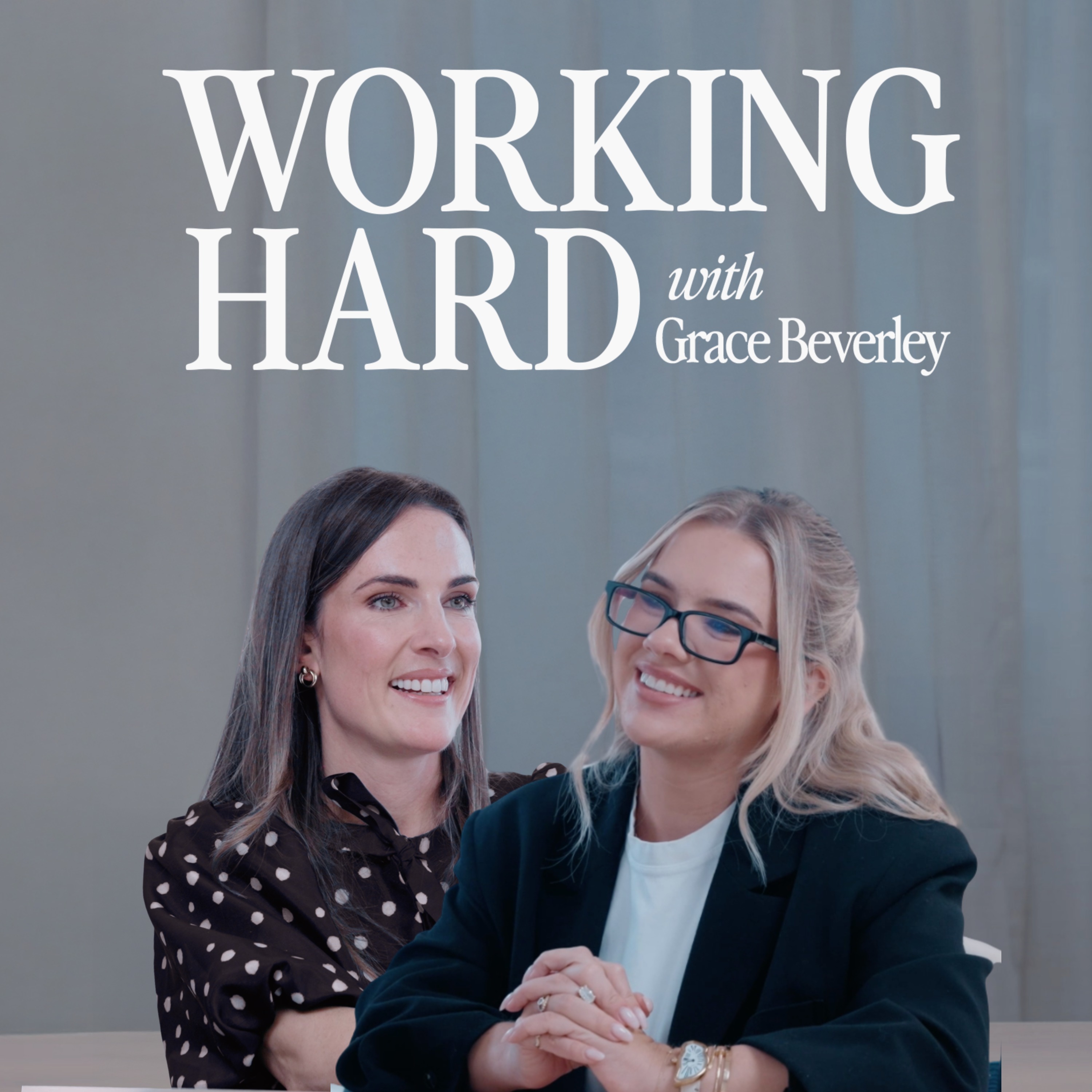
How to speak clearly and get rid of filler words for good with Susie Ashfield
52m 26s
In this episode of *Working Hard*, host Grace Beverly interviews communications coach Suzy Ashfield about becoming a stronger communicator in daily life and professional settings. Ashfield emphasizes that communication isn’t fixed; anyone can improve with small, consistent adjustments. The first step is not obsessing over filler words like "um" and "uh," since they’re natural; instead, focus on incorporating pauses to sound more confident and controlled. She advises against relying solely on self-criticism, as we are our own worst judges, and recommends seeking honest feedback from trusted individuals or recording practice sessions to objectively assess progress.
Ashfield highlights that strong speakers are clear about their key message and authentic in delivery. Storytelling is crucial—even for dry topics like sales data or cybersecurity, you can find engaging examples, such as a man losing millions in Bitcoin by discarding a USB stick. For quick preparation, she suggests asking why you’re in a meeting and what one message you want to land, then using a "statement, evidence, statement" framework to structure arguments. In interviews, prepare an opening statement and rehearse key stories out loud multiple times, rather than just writing notes. The core takeaway is that simplicity and practice—not perfection—build confidence and ensure your message resonates, helping you get further in life and work.
[Music] What is up? I'm Grace Beverly and welcome back to Working Hard, the podcast shit guidebook on how to improve your own life and achieve what you actually dreamed of doing because life's too short for boring podcasts and bad advice. What is up and welcome back to Working Hard? If you want people to take you more seriously without changing who you are and you are fed up of saying like every five seconds, this episode is for you. Today we are breaking down how to become a stronger communicator in everyday life and at work. This was such a highly requested episode and one that I've been wanting to do for so long. I've been working on this specifically myself for a while. So when I found speaking coach Suzy Ashfield, I knew she was the perfect person to talk about this with. We are talking about how to cut filler words, how to speak clearly without losing your personality, why women are taught to soften their language and what we can do about all of those things. I feel like throughout my career I very much learned that communication is absolutely everything for your job, for your relationships and generally for getting further in life. So I really hope you find this episode as life changing is added. Before we get into it, please make sure you are following the podcast on whatever platform you are listening to this on. That means that a new episode will land in your feed every single Monday morning and it hugely helps the podcast. Suzy Ashfield, are you currently more working, hard or hardly working? I am hardly working. Oh really? I'm having so much fun. Love that for you. I mean, I'm being paid to have the fun, which is fantastic, but it's too much fun to call it work. But simply, that's a very good position to be in. And for anyone who doesn't know what you do, can you explain that for us? I am a communications coach, so I help people work out what it is they want to say and make them look really confident when they say it. I feel like a lot of people assume that their communication style is quite fixed. It's something we do every day and it's something that I think a lot of us feel like is probably a bit ingrained and there's a bit of nature, there's a bit of kind of bad habits, all of that. How easy is it to actually make a significant change in your communication style when you're like, I don't know, you're an adult. You've kind of already established how you communicate. They're right and they're wrong. Absolutely. If you've been doing something day in day out in one particular way, that feels totally like it's nature to you. But of course, you can change stuff all the time. Tiny little changes made frequently are the best way to do this. And I can tell you exactly what those changes should be. So let's talk about it. Let's talk about the changes. If someone's listening to this episode and the reason they've clicked on it is because they think, "Oh, well, I'm just not the best communicator. Maybe I speak well sometimes, but I say, arm and arm and like and tend to fill silences and all of these different things which doesn't necessarily get my point across. Where would you recommend they start?" Everyone is worried about communication, particularly public speaking. I think they survey this stuff all the time. Number one, Fogor in the world is always public speaking. Really? Number two, Fogor in the world is Dave. Which is great. So if you've been doing us fears, what will happen today? Will I be made to stand on a podium or will I die? It means if you stand up and do next week's presentation, you think, "I'd rather die than be here," statistically you are correct. So no one really loves this. That's the first thing to note. But you can change it and you can get better at it. I think the first thing to say when it comes to little filler words, so ums and urs and you know like, "If I told you don't think about a red balloon, what are you going to think about?" Red balloon. If I tell you right, you're doing a podcast for fuck's sake. Don't um the first thing you're going to do, the first word out of your mouth is going to be, "Uh, so don't get in your own head about it." I think we're in our head so much about this kind of stuff and it leads to this real monster of overthinking and it's the overthinking that's the killer. You are going to um, you are going to uh, that's how we naturally communicate. If you are starting to think actually you know what every other word is um, every other word is uh, I'm just not as fluid or as fluent as I'd like to be. The best trick is this. Get out of your own head but essentially what's missing is the pause. That is the goal and ticket to all of this. If you want to sound eloquent, if you want to sound confident, the trick is just to slow it down. Slowing it down like you pointed out earlier might feel like changing the habit of a lifetime. But in an actual fact, if you change that and reframe it slightly not too, I need to slow myself down, which is almost useless because again I say slow down, slow down, slow down, slow down, and nothing will happen. Tell yourself, I'm going to add an applause. Every single time I finish the sentence, even if I have to break halfway, I'm going to set myself the challenge of three big pauses per meeting or one pause per statement. And if you just build in that regular little habit of adding in a pause here and there, you will find you are much more in control of what you're saying. And suddenly you will reduce those arms and reduce those ears. But honestly, step one, don't worry about it. And how do you start to identify maybe what your weaknesses are in communication? Because I think that a lot of people think that they want to communicate better but don't necessarily know what better looks like because they don't know what they're not necessarily doing up to scratch now. And I will put money on the fact that that same group of people are only listening to their own opinion. So we are our own worst critics when it comes to this stuff. You do a presentation the first thing you do is kick yourself for everything that went wrong. You go into a meeting, you make a few of points, you come out, you kick yourself and not expressing those points better. And the trouble with that is it's not going to improve you. If anything, you are going to feel worse and worse about your communication. You are only listening to the worst critic in the room. And more importantly, you are the only person in that room who wasn't watching you because you were speaking. A couple of ideas find someone you trust. Someone who you think actually their feedback is really honest and it's really fair. And I listen to them. I think they're good at giving feedback. That might be the only person you need to speak to when it comes to how did I do and push them on that. If you feel like they're going to sugarcoat it, say to them, look, I'm actually really trying to improve. So I've taken on board all of the nice stuff you've given me, all of the praise, all of the things you liked, and I'm going to do more of that. What do you think I could change in? What needs to be adjusted? And here's the important part. If they say, actually, that was fine. Just keep doing more of that. You've got to believe them. That's a really important thing to do because we just, if somebody's too nice to us, it feels automatic to just reject that and push it away. The other thing you can do, and I wouldn't do it until you're feeling a lot more comfortable with your communication, is you can always record yourself. You can always start to go, okay, got something important to do. A couple of weeks down the line from now. And what I'm going to do is I'm actually going to practice, and I know that first draft is going to be pretty rough, pretty stop start, but I'm going to push through. Do it the first time, see what happens. Second time, it'll be slightly better. By the third or the fourth time, something promising will start to appear. That's the one you want to record, and then hear yourself back. I'm a public speaking coach, and I think people assume you're just born like this, you're just born with this, aren't you? You just wake up and you're like this or you're not. Absolutely not. Professional speakers, really good communicators are either doing it every single day, they're living and breathing it, or they're practicing it. They're saying it out loud constantly. That is the best way to get better at anything. Interesting. And what would you say is the biggest change that people notice when they start communicating better? They'll start to feel it. They will start to tell me, do you know what? It wasn't as bad as I thought it was going to be. Do you know what? I made a few mistakes, but I let it go. That's a really important part. When they get comfortable enough to say, do you know what? I think there were points there that weren't up to my own standard, but it doesn't matter. Because I felt comfortable, I landed the one thing I want to land, and I'm feeling a little bit more confident about doing it again. That's the ultimate sign. Okay. And so I want to go into specifics of how we communicate strongly, how we improve who's listening to us, how to be able to work towards being both more engaging and more charismatic and all of these different things. What do you think both in public speaking and maybe speaking to someone in an interview or whatever it might be, so it's not public, but it's not necessarily with the friendliest audience. What makes people listen to you and really hear what you have to say. I think with the best speakers, the speakers that really seem to engage their audience, there are a couple of things. Firstly, they know exactly what their key message is. Even in a job interview, they have left you with a message. Second of all, there is an authenticity there. It feels like you were speaking to someone you've known for a very long time. That is tied to the third thing. Their story tells us, if there's one thing you take away from this podcast that's useful and practical and you can start to do it, tell more stories. When you're in a job interview, that's all you were doing. No one really knows where you were, or what you were doing before you came to this job interview. It's up to you to tell them. And you can put that forward to the other party in stories and they're going to enjoy it and they're going to get something from it. And if you can crack that storytelling formula and it's super easy, beginning, middle, end, but you may as well as it is to get wrong as well. That's it. People will engage with you because we love hearing stories. And that feeds into this authenticity piece. You are telling me who you are. It feels like I know you, it feels like I trust you. Tell more stories. And how do you make a story out of something that doesn't necessarily feel like a story to you in the beginning? So say you're
trying to write a speech or you're trying to write a presentation. And you know that storytelling is going to be most effective, but it's, I don't know, something about data or your work or whatever it might be that doesn't necessarily feel the most engaging as like a story in itself. How do you start to actually form that type of story in order to be able to then speak on it? Even if you've got something really dry, even if you think, "Pang on, I'm just presenting last week's sales figures." Behind every single number, there is an individual, there is a face, there is the journey of the consumer. All you've got to do is move past the facts and into the face. I'll give you an example. I was writing or helping a client write a talk, a really important talk about cybersecurity. And he needed an example to talk about, he needed stories and he said, "Look, there is nothing. I'm essentially doing data control. I'm earthy, we're going to get something. I'm also interesting or a story out of this." And all you do is you start using the internet. You start finding the stories or extreme examples of where things have gone really right or really wrong. There is, can you remember the guy in Wales who threw his USB stick away and it went into landfill and it's reportedly worth about 8 million quid and it's got all of his Bitcoin on it? There is a brilliant story. It's not your story, but you can borrow it and you can use that in a number of ways to sell really exciting lessons about why we need to just make things really secure and make sure we're not throwing things away and making sure that all of our data is protected. So find those extreme examples. They don't have to come from you but they're out there and they're everywhere, grab them, stick them in and suddenly you've got something really engaging. And if you start your presentation with that, people will just be hooked from the off. So I want to talk more about those kind of specifics because I feel like that's what people will really be able to grab onto and put into their own public speaking and put into their own interviews and all of that. Can you talk to me about the importance of things like the specifics of like, is it about volume, is it about confidence, is it about the message and the kind of clarity of that message? Like, what should you be thinking when you are walking into a room, when you have to do some effective communication and what of those things, just some like cheat sheet things that would be important and helpful for people. Great, okay, so let's say you've only got five minutes. Let's say this meeting's been sprung on you and it actually turns out to be quite an important meeting. You just start to panic a little bit, that's normal, right? Except that being nervous is a completely normal thing. That's the fine way to feel. What I would ask myself if I was in a similar situation is, okay, question number one, why am I here? And I don't want you to have an existential crisis in that. But really think about what is the purpose of this meeting? What is the purpose of this discussion? What would the right objective be here? What do I want to outcome? The more you kind of drilling to the, what is the purpose? What is the why? The more you'll understand it and that communication will get lost. Question two is much harder. But if you can work it out, then that's 90% of your work done. Let's say the meeting has happened. What is the one message I wanted to land? If they walk away and I was to ask someone who is listening to me, hey, what did Susie say? What would I want them to boil it down to? When you have worked out that, that's your job done. That's all you need to land. People think I'll be speaking communication interviews. They're very hard things. But if you land that one single message, chances are that's all the audience we're going to take away anyway. If you're looking for a bit of a blueprint or cheat sheet, I think you used. This is how I do it. Statement, evidence, statement. Let's say you are entering a meeting, the debate is coffee or tea. A new in your heart of heart say, coffee, I'm a coffee drinker and I really want a land of point about coffee and how caffeine is good for you. That's the point I want to land. So you come up with your statement. They're talking about tea, talking about tea. What I want to say here is caffeine has proven to have good benefits. Caffeine is actually good for you. Evidence. For example, I was reading this report the other day and they said, actually, caffeine has various benefits. And if you have a limited amount of cups, that's actually good for your heart and then come back to your statement, which is why I'm going to sit here and say caffeine is actually more beneficial for us than we believe. So it's that statement, evidence or example statement. And that's it. Now you've got a really neat, you're out succinct little statement. Yeah, it's like what's coming across to me in the way that you're saying this is like, usually when you're trying to get something across or you might have a half an hour presentation or interview or whatever it might be, it's actually a lot simpler than you think it is. And I feel like one of the things that really helped me with interviews overall was and this was actually when I was interviewing for jobs way back when. And the thing that I came back to again and again and again was I always went into the room with three things that I would make sure they knew no matter what they asked me by the time I came out. And I would have evidence for each of those things. So either it would be like that I'm a very tenacious person and I will make something happen if it needs to happen and then there would be evidence or whatever. And I remember as soon as I started doing that I started realising that actually interviews of course like there are going to be some tricky things that people throw at you. But really you can almost like dictate the narrative by just distilling it. And I think it's really easy to get overwhelmed by going into any sort of speaking scenario, particularly if you don't like speaking. And over complicating it and you know needing to be like, well you have to know about these ten years of experience and this and this and this and this and it's like actually in reality there's probably only like one to three things that someone needs to walk out of the room thinking. And if there's any more that it's probably quite confusing or it's just too much information and I feel like that's always really helped me and I feel like that's what you're kind of coming back to in terms of have your solid core argument know how to get it across. And I think that statement evident statement is a really great kind of hack in order to do that and just make sure you don't leave that room without that person knowing that. Yeah, totally. Just gather your stories. People panic about job interviews. How do I prepare for a job interview? I've got no idea what they're going to throw at me. Get your opening statement ready. You can guarantee the opening question is going to be a little bit like, tell me about yourself or what you've been doing for the past six months. So that's an easy one to prepare for. All you need to do after that is get your best stories in place. Go through the brief, go through the jobs, Ben go, right, what skills they're really looking for here. Like you say, pick out the words that resonate with you and then have an example, case study or story ready to go. And again, that final bit actually said out loud. If you've said it out loud a few times, you will feel ten times more confident than if you just walk into the interview go, well, I've had 16 coffees, we'll see how this goes. And would you recommend then before something like an interview practicing it out loud to yourself or the dog, anyone who will listen to you? Absolutely. It's a really good thing to do. And again, hit that record button. So lots of people I know, particularly the perfectionists, they really like to prep and their version of prep feels a little bit like exam revision. They write, they write, they write, they write, they write. They never move on to that second stage, which is, now I'm going to say the answers out loud and hear them. And I know why they don't want to do that because they know they're not going to give the perfect answer the first time. So they'd go back to what feels safe, which is prepping and writing and prepping and writing. Make that leap. It is not going to feel comfortable. But if you'd answered, what would I be up to for the past six months? Six times in the last week before you actually said it out loud to the person who was interviewing you, you would feel so much better than all of the writing you could have done. So when you're in a good place, when you think, okay, this is sounding quite good, be brave enough to hit record, hear what you were saying and listen to yourself back. I think that's such useful advice when it comes to interviews. What I really love to hear is like the equivalent for public speaking. Because I think as you said, it's people's number one fear higher than death. And I think, I mean, I get questions about it all the time. Like how do you get good at public speaking? How do you overcome the fear of it? How do you make sure that you go up there and deliver something engaging? You don't talk too fast, you don't talk too slow, you don't make everyone feel awkward and embarrassed more of these different things. So what would you say are the most important things to practice when it comes to public speaking? We've already talked about the kind of scripting and the storytelling, but the actual being there, walking on stage or walking in front of the presentation room, what are the important things that we need to remember? So don't stick rigidly to a script. We talk about rough you what you want to say. But if you script yourself, you are going to have a problem for a couple of reasons. One, it's going to sound stiff. People are going to tell immediately if you are just regurgitating something you've written out loud and it will feel really quite dull and a bit like a politician. We like moments where we get it wrong. Organic things happen and that's a really good thing. We like it when people are. We like it when people are because it reminds us of us. So get off the script, be brave enough to go. I would rather have this with a few mistakes and a few fluffs, but it's organic and it sounds like me rather than I can guarantee this is going to be a word perfect. And I won't shift from that script. The other problem is you are going to get in your head about it. If you're trying to remember a script and you want to not a trained actor, that is going to put so much pressure on you to perform. And you're going to stop thinking about the audience and what they need to hear and the only thing in your head is going to be, what's my next line? What's my next line? So get off the script. Five bullet points will be more than enough for a 15 minute, a dead style delivery. Get your five bullet points in place and I'm going to assume one of those bullet points is your key message because that's the thing you've got to land. Just practice saying it out loud. And know every single time you say it out loud, it's going to be slightly different to the last draft.
But you're going to land all of the messages you want to land and you're going to go on that again, except in those nerves. Remember nerves are normal. Remember the bit problem if you didn't feel a bit nervous and you're just going to fucking say it and that's it. And then instead of kicking yourself, you work out what went well and you do it again and again and again and again. The nerves in the adrenaline will lead to a little bit of humming and owing or maybe going a little bit red. So what? No one in the history of time has ever gone, oh well she's gone bright red. I think I'll just walk out of the room right now. But again, if that's the only thing in your head, you're going to really struggle to focus on what it is you want to say. We're worried about these tiny little things that don't really matter, except it is normal to worry about them, but they're not going to derail you. It is quite normal to feel that surge red red line. You need it. It actually helps you before. Use it. Yeah, that's so interesting what you say about bullet points versus script. And I like it. It holds so true to me because I can never learn a script. Like I am not, I'll get caught up on whether it was meant to be an and a weird or whatever and that's not the actual message. Of course, it's not like was this word meant to be before this word or whatever. Like my brain just doesn't take it in that way. And I feel like part of the reason that I've really come to terms with that is the fact that when I do bullet points, I know what I'm actually saying. I'm not just trying to say the thing that was in the right order of the right sentence or whatever it might be. It's like when you do bullet points, for example, like I used to do this before exams when I was trying to revise for them is I would know that I wouldn't remember something if I was just going by vote over and over and over. Like the way you learn something is by telling someone about it. So I would always, I'd be in my room or I'd be on FaceTime to a friend or whatever it might be and you're just talking to them about something and that. It adds so much engagement as well and it adds different ways that you think about things and that's kind of how you're able to add lib in there. And I just think that it's one of those areas where it's tough because preparation of course leads to better work in most areas. And I agree with that with public speaking too. But I so think that it has to be the right preparation because if that preparation is purely along the lines of like, as you say, reading this script over and over and making sure it's positioned exactly how you want it to be, rather than knowing inherently what the message is and what you're saying and then being able to kind of riff on that and add lib around that, whether you are doing a big talk or whether you are just presenting at work, there's this like level of competency that comes across as well when you're able to translate things from bullet points, rather than from scripts. I always see it anytime someone's presenting to me at work. If they're essentially talking to me about something and we're having a conversation about something, I believe they know what they are talking about 10 times more than if they are just, you know, saying and then this leads to this leads to this, particularly now I would say in the world of AI because this could have just been flung together by chat GPT. And actually if you're talking to me about this and you're saying, well, this has risen this much this year, but really we think this is down to this and the story behind that is that like whatever it might be, it's like, now I know you can do your job versus now I know that as much if I really appreciate the fact that you prepared so heavily, I don't want to hear what you thought three days ago when you were writing it down. I want to hear the engagement of what you're actually thinking now. And I think that's just where we've not necessarily, I don't think, been set up in the best way with education. Like I, formal education, I actually had zero presentations anyway for anything and any of my exams. And that was probably just a path I took. I know lots of other people did, but the only thing you really taught is like, don't read off the slides. But other than that, it's like, you know, there's not a lot of kind of forming a story around it or showing competence by even if it just looks like you're riffing on it rather than something you've practiced a hundred times in your room. Yeah. You know, this, if this could have been an email, why didn't you just send me an email? If it's written by chat GPT, why don't you just put me on chat GPT directly? And what we really want there, and this is what communication is really all about, is you? It should feel like you with all the stories and the jokes and the small fuck ups that make your human being. I would rather see that in a client a hundred a thousand times over than someone who's memorized a script beautifully that I could have read myself in my own time, lean in to what makes you you. It's not going to be perfect because human beings intrinsically are not perfect, but it's more exciting if I hear about your vulnerabilities than here's the perfect representation of a script. And kind of along those lines, because I think that I'm a hundred percent believe in the importance of authenticity and having yourself shine through and all of that. I also know that due to stereotypes and preconceptions and all of that, certain people might be taken more seriously than other people or certain people might be listened to in a way that other people aren't. What are some things you can do to change how you're perceived in that way? Obviously knowing that there are some preconceptions, there are some stereotypes. We all have them, even if you think you really don't like you do when you are hearing other people. So how can we have the best chance of overcoming those biases exist, of course they do. But what I would say is this, I more frequently see people who are so worried about that, that they overformalize and become ultra-formal versions of themselves, quite cold or steer characters. I've definitely done that before. Absolutely, because we're worried. We're worried about a confidence, we worry about how we're being perceived, so we decided to become ultra-cold versions. And it's not fun. What we really want are people who feel like, "We're just down the pub, you and I talking, having a laugh." That holds just as much credibility as the person who's going, "I need to grill you now and tell you how much homework I've done." We don't like it because that feels more risky. But every single day I asked my clients, "Who would you rather trust with 20 quid in the hopes of getting it back?" "Are you going to loan a friend 20 quid? Would you rather loan it to a politician?" Or to a comedian. Every single time people pick a comedian. Technically they shouldn't, right? Comedians are famously bad with managing money. Politicians go to better chance of getting it back. So why do we trust the comedian and not the politician? It's because the politician is that coldest-year person, telling us, "Don't do this, I can do that, but you can't." Whereas comedians go, "Hey, look, I fucked up today. I've spilled coffee on myself, but let's have a laugh and I'm going to make you feel better." That is the person we trust, that is the people who bizarrely, we give more credibility to. I think we're so worried in public speaking that this is a credibility test. That's actually having adverse effects. You do not need to prove yourself. Public speaking is not a test of your experience. Just as you've said, I'd far rather someone communicated to me in that organic way that feels a little bit rough already, but I got a sense of who they are and what their knowledge is rather than here as a beautiful, perfectly miller-used chat you be with. So it keeps coming back to that. Don't be frightened of showing them who you are. Very rarely do I hear any of my people who in leadership positions say, "I'm just not professional with clients." What they do say is they lack confidence with clients. On what they're actually saying there is they're so nervous they present as these unhuman-like representations of themselves. I want them to relax. My tip there, and I want to be very clear on this tip on what it is and what it isn't, because I call it the pint and a half effect. Think about yourself when you are in a relaxed environment, maybe after about a pint and a half, depending on your height and weight, you would be relaxed and you'll enjoy yourself. Me too. I've got. I'm also going to the pint and a half. I'm five foot. Very small girl. Yeah, so maybe half a pint for you and I, that will be fine. But after about that amount, you start to relax. You start to care a little bit less as it was to what people think if you. That is the version I want my clients to be. That person who comes on stage and goes, "Alright, let's talk about it. We've got some cells because it's a discussed guy." It's a bit rough and ready, but let's get into it rather than the person who goes, cells are up by 14.2% and down in Lissair by 33, but meaningless. Yeah, it's so interesting, because I think a lot about work as this. It's almost this facade for everyone. Yeah. You all have your home lives and the way you talk to your friends and the way you joke around. It feels like when you go to work, for some reason, everyone's defenses are obviously. So, people try to be taken a lot more seriously. When, as you say, there is that a verse effect of actually, if you come across on a level, you're more likely to be perceived as on a level to the person you're presenting to. Yeah. And usually the person you're presenting to is above you. So if you come across in that way of like, we are able to, like, you know, we might not be the same hierarchical level, but we're able to discuss things. We're able to say, "Yeah, God, that was a bit shit, wasn't it?" I would much rather work with someone who can look at their own results or the company's results and be like, "Oh, it has been a shit week." Because if we're both lying about things or we're both looking at something and we're both thinking, "Eh, and I don't want to say that because I don't want to hurt your feelings because you're on commercial." Or, "You don't want to say that because it's going to make you look worse." That actually makes you look less competent because you can't read the numbers. Because you can't perceive the numbers in the way that they actually need to be perceived. And things aren't always going to be good. But I think it's so interesting, I think, so many women, it's perhaps, and this is a huge, kind of generalisation, perhaps because men don't tend to need to prove themselves as much in order to be listened to. They don't think about that as much, which is why they come across sometimes more charismatic and sometimes more, you know, like they can just talk about this that and the other. And I think that that's so interesting. I'd never truly thought about the fact that one of the most valuable public speaking, both kind of public and private, whatever it might be, is that relaxed confidence, rather than confidence around culture.
competence, when it's confidence around competence, it's then you feel like, if that's what's being recommended, you feel like, okay, well, I've got to show I know everything, rather than just, I need to show up, make sure my point gets across. This is an evaluation of whether I'm good at my job, even if it is, even if it's like a promotion presentation. It's like, this is showing who I am and what I have to say, and it just takes away that whole kind of facade and clearly is a win-win as well. Totally. And the trick for that is to care less, an amazing skill if you can do it. But I would say the three points you want to consider, if you really think, do you know what, I'm just same a bar a little bit too high for myself here. If every day's a ten out of ten, and I'm kicking myself when I hit a nine, everything's going to feel super exhausting and super stressful for you. Care less. Three ways to do that. Firstly, acknowledge not everyone is going to love you. And that is absolutely their right. Second, no you know your shit. Women know their shit, but they need to know they know their shit and there is a big difference. And the final thing is to try. If you don't do it and you don't expose yourself to it, you're never going to get better at it. I have so many clients, particular women who go, oh no, I told my boss when I got this job, I don't present. I just know I'll be really good. I'm so good at my job, but I do not do public speaking. And they're holding themselves back. Why would, be shit, give yourself a mission to be confidently average, go into a room and say, do you know what, this actually doesn't have to be a ten out of ten. All it needs to be is confidently average. And you will bring that bar down from ten out of ten to six out of ten and you'll probably hit an eight, but you will get better and better and better and you'll feel a lot more excited about doing it, which is the best way to throw yourself at it. And with us talking so much about, I guess attitude towards public speaking rather than what you're actually saying, how much would you say perception is voice and kind of how you show up and that confidence of performance, I guess, versus the actual language of what you're using? It's an ongoing debate in my industry, but here's a little test you can do. So I want you to think about a teach you had at school. You either really loved or really loathed. Got one? Just bring them really to the forefront of your mind. Yes, okay. Great. Can you remember what that teacher looked like? No, but I can't remember anything. (laughing) And memory of a golf fish. Well, that's okay. Normally most people say, yes, I had, you know, Mr. Heaney, he was an awful physics teacher. I bloody hated him. I have a really clear memory of what he looked like. I can even remember the tone of it as always slightly and I know he's a little, now he's a little voice from physics teacher. And then I say to him, okay, great. So remember what they look like. You remember the tone of their voice? And they'll normally give me some information. And I bloody hated him because he made me feel like I couldn't do it. And I go, oh, okay. And he made you feel like you were full. Okay, fine. And final question. Can you now please recall something that Mr. Heaney said to you word for word about physics? No, no, absolutely not. And that's where the memory fails. So whilst there's no exact science, every single time I ask that question, no one to this day has been able to give me a single line of content, which makes me think that the delivery is so important. It is not what you say, but how you say it. It's not what you say, it's how you say it, that really lands with your audience. You do not have to go into a room with full confidence, but a little bit of pretending to be confident goes a really long way. Simple stuff. Pushing yourself back in your chair. A little bit of space here, that's it. You got great posture, roll those shoulders back. Hands on the table. Obviously not like that because you want to look like you're in the room. And occasionally, even if you're not speaking, just nodding and smiling at what the other person has said. And even if you say nothing, doing that entire meeting everyone will go, yeah, Chris knew what she was saying there. Even if you said nothing, I like to survey this with people all the time. Yeah, they didn't say anything, but they really wanted to be in the room. They looked like they knew what was going on. And I really trusted them. Body language is absolutely huge. These things matter. So if you go in to a meeting and you're sat like this and you're just slumping your chair and you say something really important, like we just don't have that in the budget. We're completely under-resourced in that area. But you present like you don't want to be there, that's how people will read you. If you go into the room with that kind of body language that projects confidence, even if you're not feeling confident, practice out everyone in the room will start to read you. And in turn, you will start to feel like you always have been that confident person. Good trick is just to imagine like there's a tiny piece of string just pulling you up like that. And suddenly, we look like we want to be there. And that is a really good trick for just getting by. Because the moment they start to look at you and think they're really confident, that's where the magic happens because you start to think, "You know what? I am confident. I am in control. I didn't make as many points as I wanted to make, but I landed the message and I looked like I wanted to be there." So confidence is not just fake it to make it. It's fake it to make it to actually become it. So just to recap, 'cause I think this is really important. If someone had their first presentation at work and it's a very important presentation, what should they absolutely make sure they do to prepare? Fine, okay, so you've got the brief. Someone has said, "We need a presentation on the thing you are doing." The first thing you're not going to do is see it as a test. Because immediately for whatever reason we think, "Oh God, this is a test of my credibility. This is to check that I'm actually doing my job." No, they know you are doing your job. That's why you are doing the job you are doing. So don't see it as a test. Ask yourself this question. So why are they asking you for this information? That's question number one. When you've worked out why they need the information they're asking you for, that will help you for point number two. What is the one thing I want to land? What is the one thing they really need to know? We need to change X if we want to do Y. We really need to change X if we want to do Y. That's the only thing I need to land. What I would do is I put that in the middle of a piece of paper, a pen and paper person myself. You put it on my computer screen if you like. There's my key message in front of me. And then around the key message, right? All of the stuff. All of the stuff that you think directly correlates to that message. What can I attach to this message? Now let's say you've been given a generous 45 minutes to deliver that message. Do not fall into the trap of thinking, OK? I've got something good here, but what the hell am I going to do with the other 20 minutes? The answer is it's up to 45 minutes. You can land your message in 15. Fantastic. Give people their time back or have a facilitated conversation. Or OK, so you've got my message here. What are the important questions we need to talk about? Do not feel like you have to fill time. I feel like that's a day one error. When you've got all of the content around that key message, and as you know, I suggest more than a few of those pieces of content, a case studies or stories, work out. What are the really important parts here? Don't go, how do I present all of this? Work out what to keep? Work out what to cut. The most confident speakers take a less is more approach. And then it's as simple as, here's my key message. Here are perhaps three case studies that prove what I'm saying. I'll add in some statistics for the guys who like statistics, but that's going in the handout. That's certainly not going to be the most important thing that I learned here. And they're going to wrap up with that key message again. That is the easiest blueprint for a good presentation. First of all, that's great information. Very important. And I got your key messages are very clear. I want to speak quickly about filler words, because I think this is something-- I mean, this is definitely something I struggle with. I think that naturally, I put a lot of uns and ass places that I don't necessarily need to, and I like to fill gaps and all of that. I've definitely improved over time in terms of not filling silence just because I need to, particularly, in important conversations or negotiations or whatever it is. But I think it's something we really struggle with, particularly when we're consuming a lot of media, where there are lots of filler words everywhere. Why do filler words creep in so easily? It's a replacement. So it's a verbalisation of a pause. A filler word is where you should have paused. OK, that's it. If you were my client, what I would tell you is, well, first of all, I suppose I'm going to give you a little bit of unsolicited feedback, which is-- I listened to some of your podcasts. You might not be aware that in your earlier podcasts, you are speaking a lot faster than some of your later podcasts. So whatever you're doing is working. Thank you, I've tried really hard. So there you go. But you tell me, what's working? What are you doing there? So I find it very hard to think in my head without thinking out loud. That's something I struggle with day to day. If you tell me to think about something right now, I'm getting monkey symbols in my brain. That's all I'm getting. I know that I naturally speak very fast. And that's something that's actually been rewarded on social media because people like you to speak at two times speed, which I'm great at. And I also like. I just think that I've tried to, gradually, not speak so fast and not need to hurtle from one thing to the next. And just try to practice the art of interviewing, because that is what I'm doing. I have absolutely zero experience in it other than just trying it. And it's making a difference. Thank you. Just in that question, you pause because you were really consciously thinking about it, monkeys with symbols outside of that. There was a lovely pause in the middle of that sentence, because you were telling yourself, God, I've always got to slow down. I'm going to repeat it. That is your golden ticket. The reason Louis Theroux, who I love as a public speaker, I think he's brilliant. The reason he gets so far with his interviewees is because he's given them space to talk. If you want to be a really confident speaker, it is so often not about what you're doing.
what you say, but what about what you don't say? Is that person who just goes over to you? And wait, that is the most confident thing you can do. And I want to speak about that in more detail in a little bit, because I also think there is a difference between being a woman and a man in that scenario, just in that I think that there is an expectation of women to make other people feel comfortable in all scenarios. And therefore, if someone isn't saying as much, it is more likely to be in our nature slash we have been generally rewarded for jumping in and making them feel less comfortable, which is not necessarily an experience where I've had when I've gone on male podcast, nor what I think they are aiming for, nor rewarded for. So I think that's also an added layer, which I'm going to come on to speak about, because I want to speak about women specifically in communication as so much for our audience is women. And I think that a lot of the advice out there is not so specifically taking into account some of these things that we've been conditioned to feel. Before we come to that, I'd love to know for someone who's trying to cut out filler words, but every time they try and do that, they just can't get a sentence out because they become so hyper aware of it. How do we avoid that? I had a client in that exact position, and she was brilliant and she was very intelligent, and she'd just gotten herself down this absolute wormhole of she had so many things to say. She held herself accountable to a really high standard. She said, "The thing that leaves my mouth has to be perfect, and if it's not perfect, I'd rather that it wasn't out there." And I think that's a really female trait. I really need this sentence to be perfect, and if it's not perfect, I don't want to fail, or I don't want to be a six out of 10 or a seven out of 10. It really took a lot of work, and the first thing we had to do was just get her out of her own head. So we were trying all sorts of techniques, and it wasn't an easy client to crack. She really worked herself up with this. So the first thing we did was, "Okay, do you know what? That's going on. There's little monkeys with their symbols are going on in your brain. Monkeys are over there. Let's push them over there for now, because they're actually not very helpful. All you need to do it in the next meeting is be present. That's it. Stop worrying about how you're being perceived, and instead, I want you to focus on three really interesting points from this meeting that you think other people have made. And we got her from focusing internally to externally. And then the next step was, "Okay, so now you're focusing not so much on how you're being perceived, and you're caring less about what other people are thinking of you. Now you're just going to be present. You don't have to say a single sentence in fact, in your next meeting, you're not going to say anything, but you are going to do that thing of going, mm-hmm. Okay. Tiny little noises to encourage other people to speak. And then the third step, "Okay, so you've got this other meeting coming up. This is the thing you want to say. Your only job here is to land one single sentence. Don't you owe that to yourself? That one single sentence because all of your research, all of your work, and that boss was really good, you know, her boss was throwing her questions to try and encourage her to speak up and she's going, "Oh, I've got nothing to add, nothing to add." Even though she had so much to add, build yourself up to that point slowly. One sentence is enough. Her concern was the moment would pass. And that's quite a valid concern, particularly when conversation moves so quickly to your point. You can bring it that round. You can always say, "I just want to add in one thing on that X that we were talking about earlier. I wanted to mention A, B, and C. And suddenly she was back in control of the conversation. Don't worry about the segues. Don't worry about how far that conversation has moved on. If you've got something to say, just fucking say it." So I feel like a lot of women are taught to soften their communication. As I kind of alluded to before, we have been conditioned to make other people feel comfortable in as many situations as possible. And therefore, even if it might be a really important conversation, you're asking for a pay rise. You don't want someone else to feel uncomfortable. And therefore, you're immediately, even before you've said something, you're saying, "Sorry, this is a stupid idea, but all you're saying, obviously, of course I don't need that full pay rise when you've just asked for that full pay rise." Why is it that we still feel like we need to soften our communication? And how can we fight that? I think to your point, it's around, we are so worried about making other people comfortable. We don't want other people's reaction to be upset or angry or anything like that. And it's that old cliche, but I think it's a good one. There is a reason on airplanes. They say, "You have the planes going down, fit your own oxygen mask first before helping others." We've got to get comfortable with being uncomfortable. This, to me, is huge. I think particularly in 2026, we feel like I have to be comfortable, but more importantly, everyone else around me has to be comfortable. We're on social media all the time. It is impossible for us to post anything without it being criticized. I said something the other day along the lines of, treat your audience with a message that makes them feel as they give them a basket of puppies. And someone wrote, "I don't like puppies. I like cats. This video is not for me." I think you didn't have to watch it. But you're right. Women really go, "Oh, wait. Could I say that?" Because what if there was some out there who preferred kittens to pup? OK. Just say it. Just say it. And it's that principle of, "Some people won't like it." And that's absolute. Some people will not like you asking for a pay rise because they go, "Oh, that's a headache. OK." But if you then immediately back down and go, "But obviously, if you don't want to give me a pay rise, we could revisit this conversation in 10 years' time." You've lost. Meanwhile, someone who is more comfortable when making someone else feel uncomfortable sits there and goes, "So what about that pay rise?" And they hold that silence and they wait the other person to slightly flounder and slightly go, "Oh, OK. What am I going to say here? They're going to get a pay rise. We have to get comfortable with being uncomfortable. You do not have a right to be comfortable all the time." Or you do have a right to be comfortable all the time. But in a few years, you're going to wonder where that pay rise was. Why you don't have the nice office? Why you're not getting as far as you wanted to. And everyone else is going, "Oh, they're so great. They're so lovely to work with." Because I just put more stuff on their plate than they never say no. We've got to get better at asking for what we want, making other people feel a little bit uncomfortable, holding that silence and words like, just so it was like, "And sorry, I have to go." OK. OK. OK. We're all in agreement. OK. I want to quickly speak about social media and speech and how it's affecting generally how we speak every day how we, I mean, there's so much that's affecting it how we consume information, how we believe we should be speaking all of these different things. How do you feel like particularly TikTok and short form content in general has changed the way we speak? It's going to. That's an inevitability. I spoke to a client the other day and I said, "Oh, how is that presentation you gave?" And he went, "Oh, immaculate vibes." I'm sorry. What? You went, "I'm sorry. I've been listening to social media too much. I went, "I can tell." We pick up language all the time. And that's not necessarily a bad thing. You will speak differently to your parents. The generation below us will speak differently to us. Language changes. If you are consuming too much social media, that's a bit like eating too much junk food. You are going to see the impact of that. You're going to get bad skin if you're eating greasy food every single night. Same thing with social media. It is going to have an imprint on you. There have been some really interesting cases in America. Kim Kardashian has this kind of, we call it vocal fry. It's when we go, "It's actually really damaging for your voice." And as Kim Kardashian's social media presence was on the rise, the increase in cases of vocal chords being damaged because it became people go, "I got it, which is bad for you. Don't do it." That went up because people wanted to speak like her because she was trained, she was cool, and people wanted to copy that image or that sound, rather. Sometimes I hear, and again, this seems to be particularly females. The inflection, the cally inflection, everything's a question. Everything's comfortable. And nothing is being allowed. It's a really great way of relaxing. Thank you so much. Really impressed. Land your sentences. I'd like to talk about our pay rise, not. I'd like to talk about a pay rise. Because that makes it complicated in your question. Land your sentences. So everything in moderation. Social media is going to have an impact. All you need to do is moderate that. If you are chronically online to use a young person's phrase, it's going to have some consequences for you. And do you feel like we are less likely to use kind of complex or precise language now? I don't think we need to use complex language. I have never walked out of a presentation and thought, "Oh, God, they use some really sophisticated language." "Well, I didn't know what's going on." Exactly. I didn't know what's the seven out of ten of those words meant. No one actually thinks like that. But I have seen the opposite reaction. Again, sometimes to use politicians as the example, we go, "What the hell was that about?" When politicians say, "Let me be clear." And then, "I'm completely unclear." We go, "You're not talking to me like a human being." So actually complex language is not something you need to take on board in order to be understood. Use a language that is your own. Not social media. Not fancy words that I'm doing to impress people because again, that's going to tie you up in knots. Find something that feels comfortable to you. Again, it's the pind and a half effect. I'm not telling anyone, drink it pind and a half before you're next presentation. But I am telling you, get comfortable with being yourself. Just ease into it. Not everyone's going to like it, but I'd rather you sound it like you with all of the little problems and all of the stums and all of the arms and ears than someone you are not. Because we pick up on that and we don't like it. So do you feel like people shouldn't
be trying to increase their vocabulary or they should be, but not necessarily using it just for the sake of it. It's the first one. You should increase your vocabulary. Great. If you come across a word, ask what it means, particularly polar acronyms. Somebody said, "Me and acronym yesterday was ASL." I said, "I have no idea what ASL means." They were a tech person. They said, "What do you mean?" I said, "Remember, unless I come from a tech background, I'm not going to know what ASL means." "I barely know what SEO means." We've got these acronyms happening all the time. Call them out. Everyone, everyone in the room is frightened of their own perception, which means someone uses an acronym, particularly if they're a leader and everyone goes, "Mmm, nice look that up later." Be the person brave enough, "I'm really sorry. Can I just clarify what that means there?" "Can we just clarify what an acronym means, take out the sorry." When it comes to expanding your vocabulary, brilliant, do it. One word a week. One word a day if you really want to push yourself, but don't feel the pressure to use elongated words, complicated language just for the sake of impressing someone else. I'd rather you or yourself. I think that's very good advice. I think that it's one of those things, like with anything else, if you go into it to Gung Ho and are trying to maybe do a new word a day or whatever it might be, they're all going to bounce straight out again. It's like, if you can do it at a rate where you can actually start to use things, like, "I love finding a new word," like, "I didn't know before," and then seeing it everywhere and trying to use it more and all of that. But it's, you're right that it's not jargon for the sake of jargon. Like, it's, again, that's then the false confidence that we don't necessarily want to incorporate into our speaking. You want to just naturally come across in a way that you're not almost speaking a hold of an language. And before we end, I'd love to ask you what I ask everyone, which is, what is the best piece of advice you've ever been given? I think it's that piece of advice around fitting your own oxygen mask first, and I have to thank British Airways for that. Thank you very much. Thank you, BA. Who knew a safety manual written in the '90s would have so much value. Bit your own oxygen mask first before you run around the airplane passing out and helping everyone else get uncomfortable. Good advice. Thank you so much. Thank you so much. You've been amazing. No, thank you. [Music]
Podcast Summary
Key Points:
Communication is a skill that can be improved at any age through small, frequent changes, not a fixed trait.
Filler words (like "um" and "uh") are natural; the key to reducing them is adding intentional pauses, not overthinking.
Self-criticism hinders progress; seek honest feedback from trusted people and practice speaking out loud or recording yourself.
Effective communication relies on clarity
Storytelling is powerful—use personal or borrowed examples (even for dry topics) to engage audiences and build authenticity.
Preparation for interviews or meetings should focus on key stories and practicing out loud, not just writing or over-preparing.
Summary:
In this episode of *Working Hard*, host Grace Beverly interviews communications coach Suzy Ashfield about becoming a stronger communicator in daily life and professional settings. Ashfield emphasizes that communication isn’t fixed; anyone can improve with small, consistent adjustments. The first step is not obsessing over filler words like "um" and "uh," since they’re natural; instead, focus on incorporating pauses to sound more confident and controlled. She advises against relying solely on self-criticism, as we are our own worst judges, and recommends seeking honest feedback from trusted individuals or recording practice sessions to objectively assess progress.
Ashfield highlights that strong speakers are clear about their key message and authentic in delivery. Storytelling is crucial—even for dry topics like sales data or cybersecurity, you can find engaging examples, such as a man losing millions in Bitcoin by discarding a USB stick. For quick preparation, she suggests asking why you’re in a meeting and what one message you want to land, then using a "statement, evidence, statement" framework to structure arguments. In interviews, prepare an opening statement and rehearse key stories out loud multiple times, rather than just writing notes. The core takeaway is that simplicity and practice—not perfection—build confidence and ensure your message resonates, helping you get further in life and work.
FAQs
Don't overthink them, as they're natural. Instead, focus on adding deliberate pauses after sentences, which slows you down and reduces fillers, making you sound more confident.
Stop being your own worst critic. Seek feedback from a trusted, honest person, and if they say you did fine, believe them. This helps you see your actual performance rather than imagined flaws.
Ask someone you trust for honest feedback, pushing past praise to get constructive points. Alternatively, record yourself practicing a speech or answers, but only once you're comfortable, to hear your real delivery.
The best speakers know their key message, show authenticity, and tell stories. Stories, even borrowed ones, make content relatable and memorable, helping you connect with your audience.
Move past the facts and find the human element. Look for extreme examples or real-life cases online, like a cybersecurity breach story, and use them to illustrate your points and hook your audience.
Ask yourself: Why am I here? What's the one message I want to land? Then use a 'statement, evidence, statement' structure—state your point, back it with an example, and restate it, keeping it concise.
Chat with AI
Loading...
Pro features
Go deeper with this episode
Unlock creator-grade tools that turn any transcript into show notes and subtitle files.
 PodcastTranscript AI