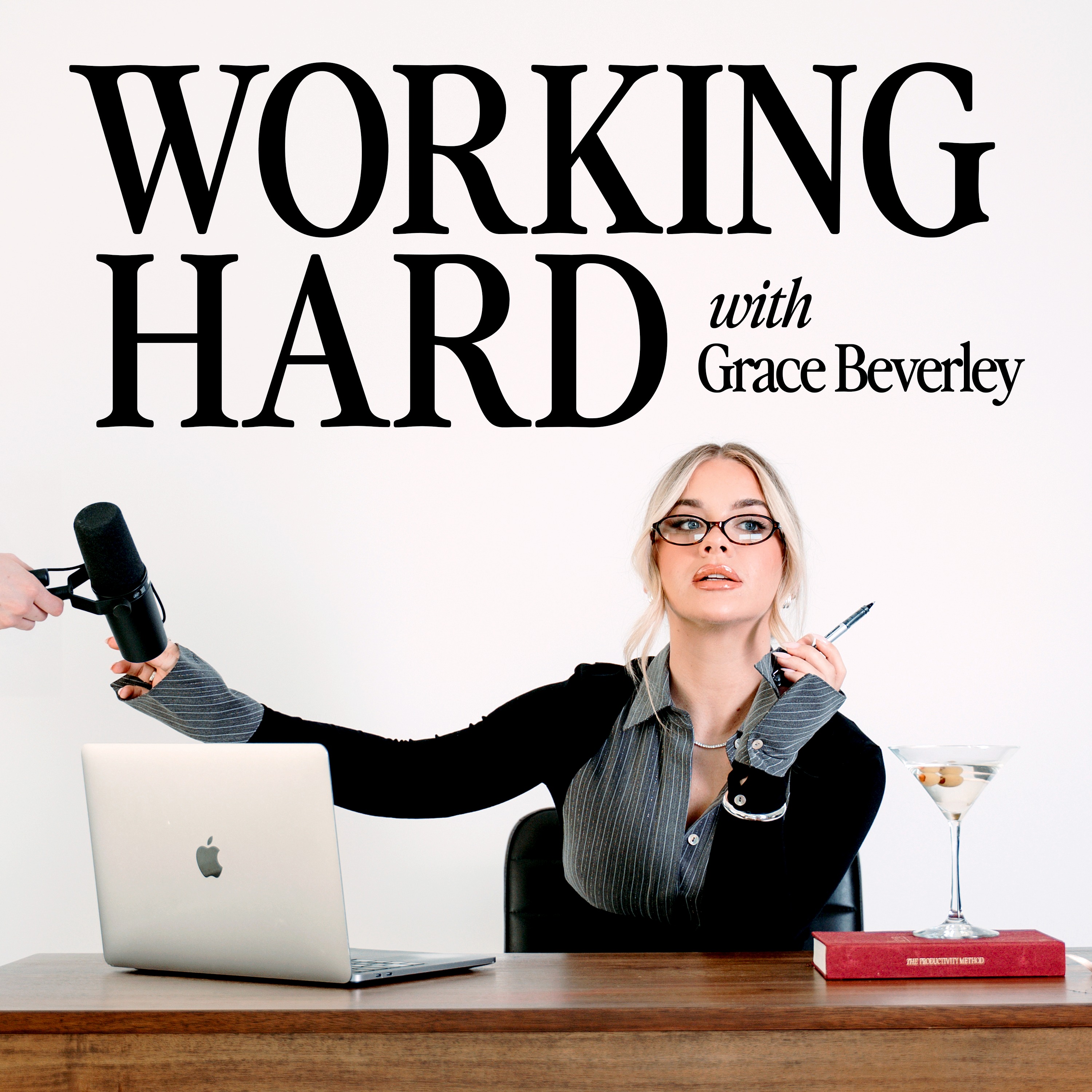
How to rewire your brain in order to start making your dream life happen with neuroscientist Dr Tara Swart
67m 29s
Grace Beverly interviews Dr. Tara Swat, a distinguished neuroscientist with a background in medicine and neuropharmacology. Dr. Swat shares insights from her books, "The Source" and "The Science," highlighting the significance of following instincts, decoding hidden messages, and coping with loss. She delves into the concept of neuroplasticity, explaining how individuals can rewire their brains to facilitate psychological changes and achieve their goals. Dr. Swat emphasizes the process of raising awareness, focused attention, deliberate practice, and accountability in manifesting desired changes. Additionally, she discusses the role of vision boards in setting achievable goals and allowing room for unexpected opportunities, emphasizing the importance of being open to greater possibilities beyond rigid long-term plans. Dr. Swat also touches upon the idea of "magnetic desire," encouraging individuals to pursue opportunities that resonate with them authentically rather than conforming to external expectations.
Transcription
13056 Words, 69077 Characters
What is up, I'm Grace Beverly and welcome back to Working Hard, the podcast-shake guide back on how to improve your own life and achieve what you actually dreamed of doing, because life's too short for boring podcasts and bad advice. What is up and welcome back to Working Hard, today I am speaking with Dr. Tara Swat, a world-renowned neuroscientist who helps some of the most successful people train and rewire their brains. Let me list her qualifications so you could understand what we're getting from this. She has a medical degree from Oxford, a PhD in Neuro Pharmacology from King's College London, and she lectures at MIT's Business School. She's also the author of the Sunday Times best-selling book, The Source. Since the release of that book in 2019, Tara's career went from strength to strength publicly whilst behind the scenes she was going through what she called the toughest time of her life, after the loss of her husband in 2021. In the wake of those years, she's released her new book, The Science, which is all about following your instinct and the magic of hidden messages, as well as dealing with loss. What I really wanted from this episode was a neuroscientist's approach to reaching your goals, planning your future, being able to develop resilience and being able to get to where you want to go, and what Dr. Swat really held true in this episode is how important a few things that I would never have expected are in terms of actually reaching your goals and building the type of life you want to build. There are parts of this episode I never would have guessed, and will be taking forward into all of my goal setting and planning, and vision-boarding in future. Also, if you're feeling off track, stuck, or you're someone struggling with a hard time, such as experiencing grief, this episode is perfect for you. Before we jump in, why don't you follow us on this podcast platform that you're listening to this episode on? The deal is, you give us a follow, and then I'll keep posting a valuable episode every Monday to help you start your week off-stral. Dr. Tara Swat, are you currently working hard or hard to be working? Working hard, yeah? Very hard? Yeah, well, I spent a year writing my new book, and then the book promo was really intense, I was back and forth to LA, had to do breakfast, TV, radio, or the newspaper stuff, so, yes, I'm looking forward to having a bit of a break. And do you always have this kind of, I guess, always on working hard setting, or do you like to see things as kind of push and pull? I mean, having been a medical student, and in the era that I was, I would say I'm very much a work-hard, play-hard kind of person. So that's kind of engraved in you, and you feel like you can balance a lot of that. Yeah, I've got a really strong work ethic, but I'm also very social, and, at first, in my career, it was, you know, times of feast and famine, but now it's continuous, so. Right, yeah. No, I think it. I don't know. It comes with the territory, it's always one of those things where it's like, the better you're doing, and kind of the more, successful you feel in that moment, also the more chaotic it is, you want to get more and more and more of that, at the same time you need to balance how you're approaching everything and not burning the candle at both ends, but it's hard. It's really hard. I was trying to take a sabbatical before the pandemic, and it just never happened because of the momentum in the business, but I do take long digital detoxes over Christmas in New Year. Okay, that's great. How long approximately? Two to four weeks. Oh, God, I love that. And this year I'm doing four retail business, it could never be me, but I'm such a big believer in learning your seasons and knowing what, particularly in different jobs, you know, what times of the year are more hectic for you, or if you're a super social person, you know, you're always out in summer, and so you need to recoup a little bit after or whatever it might be. But I think that that's so important, because it's just, you know, none of us can do everything all the time. But we want to get lots of different parts out of life. I think that, I don't know, I really like the idea of leaning into certain parts of the year and being like, okay, well, this is my cozy time and I'm not really going to see many friends that I'm going to, you know, just to not my maximum work and all of this and, you know, other times being like a real busy season. Yeah. And sometimes you have to go with, I like what you said about your own seasons, but you have to go, you know, what works coming in. How much do you have to travel and just take the downtime? I always take time off after a trip for jet lag recovery. So although I said I was really hecticly travelling, I was taking like blocks of days off after a trip. You're talking to a person who came straight into the office of a red eye yesterday? Oh, I can do that. So I know, and actually that was one of the things that I promised myself I would stop doing, because I do think it completely ruins you. However, Needs Bus, I don't do it as regularly anymore. I used to do it literally once a month, and it would just, I'd come back into a full week like yesterday, I came back into a Tuesday and I was like, you know, this could be a long week. But one of my biggest hacks is to take daytime flights only. That changed things for me a lot actually. Really? Yeah. Oh, interesting. So what was it that originally drew you to studying our brains? Like what fascinated you about it? I went to medical school and in the third, so you do two years pre-clinical and then three years clinical, but if you do an extra year, you can get a BSC, so Bachelor of Science. And for that, I just picked all the neuro topics. I can't even really say why, obviously it was just of interest. Then I got offered to do a PhD, and because I thought I was going to become a neurologist, I did a PhD in neuroscience. But when I went back to medical school, I realized that I found psychiatry more interesting, so I became a psychiatrist. Then obviously I massively changed career. I was just coaching, but I could deal with really highly stressed individuals because I'd been a psychiatrist and it was the banking crisis at the time. And neuro science became a popular topic in business and leadership, so I started speaking, writing books and the rest is history, really. And it sounds like a really oversimplied question, but is it true that we can kind of rowire our brains? Well, what's so interesting actually about that question just after what I've said is that when I was at medical school, we didn't know about neuroplasticity. So in my career, that has totally changed what we understand about neuroscience, and it's been so exciting for me to develop my career with this new research and new knowledge and just all the huge potential and hope that it has for people. And so if someone's listening to this and they're thinking, "So how do I rewind my brain? I want to be a person who does less of this or more of this or thinks less about this type of thing. How do they even start?" So it starts with raised awareness, which is bringing from non-conscious to conscious what it is that you want to change, what it is that you want in your life. And that usually starts with a repeated thought pattern that might be either holding you back or just a thought that you want to change. You need to dig under that. What is it that you believe about yourself that makes you have that repeated thought? And then there's a period of focused attention where you look at the times that you act in the way that you believe you don't deserve something, for example, or you miss an opportunity. The next stage is deliberate practice where you go and do the things and you act in this new way. You do affirmations you think differently. And the last piece is not a stage, but it's accountability because a lot of people give up, because it is hard work. And what we know now from neuroscience is that psychological change in work is physical work, because we're actually connecting up new neurons and changing structures in the brain. And it can actually make you physically tired and hungry, so you just have to have that motivation to keep going when you feel like it's not working. What's a good example of neuroplasticity and something you can change that you see over and over again in people's kind of mind sets all their actions every day. Because neuroplasticity applies to everything, it can literally be things like I want to make sure I sleep eight hours every night or walk 10,000 steps every day, all the way up to things like I want to get married, I want to have a baby, I want to quit my job and start my own business. So it's really kind of how long is a piece of strength, because things like the exercise or the, you know, dietary or drinking more water, you can kind of do that in a couple of weeks if you really pay attention to it daily, but obviously some of the bigger things take longer, but they're both the same process in the brain. And so that almost feels like manifestation to me. And I know spoken about this before and it's funny because I've spoken on this podcast about the fact that I'm generally skeptical of a lot of things that feel more less evidence back to me. And over time, I've become completely unskept to people about things like manifestation and gratitude. Purely from the, I guess, neuroscience point of view and understanding where the backing comes from that and what it actually does in your head, in your mindset, in your brain. Did you always believe in manifestation? I did. So I started in vision boards about 15 years ago and I changed career. And it just worked and I loved it, but it was when I was writing the source, which came out in 2019, so the year before, and I did the research to see if cognitive science can explain visualization and manifestation, that I felt more confident to have that in my work, you know, because before that it was kind of private, because like you said, I felt like I had to be a scientist and not sort of say Ruh-Ruh-things. Interestingly, the response to that kind of convinced me further, almost validated it. And an actual friend said to me, I've thought about doing a vision board before, but I've never done it because I didn't understand like how it actually works scientifically, exactly what you said, but now that you've said how it works from neuroscience, I'm actually going to do one. And so, talk me through how it works from a neuroscientific point of view. Well, you kind of already nailed it, because he said neuroplasticity sounds like manifestation and that's because it is underpinned by neuroplasticity. It's that the four step process I just mentioned is part of it. The visualization element is that the brain doesn't differentiate too much between something that's actually happened and something that you strongly visualize and, you know, I sort of add in, make, I call them action boards though because it's not about creating a fantasy and sitting at home waiting for it to happen. Make the action board, look at it daily, in your mind visualize through all your senses that being true like how that would feel and then give gratitude for that because that boosts oxytocin, the bonding hormone, which will then make you more likely to feel abundant rather than in a scarcity mindset and all of that stuff kind of backs up and boosts your ability to manifest. That's so interesting and I loved what you said there about the having gratitude for the things that you don't already have is what boost oxytocin, I always really say oxycontin, which obviously is not. That's so interesting because I don't know, I don't know if I've ever looked at my vision board and thought, I feel grateful for all of these things that haven't happened as if they have already happened. Yeah, so I only added that in fairly recently, so all of my work has kind of incrementally I've added things and that was the latest one. There's something else I'll talk about in a minute but it's not directly to do with, well, it could be to do with manifestation, we couldn't have that discussion, but adding in the gratitude thing was actually a game changer. And so what is it that that really does to your brain, like when you, because you might feel a little bit silly when you're looking at a vision board and thinking, I'm so grateful for all of these things that have come true and you're obviously trying to trick your brain really into thinking that they have come true and that they are part of your life. But what does that really do? By the time I added the gratitude element in, I'd already had many years of vision boards worth a lot of things did come true from small to big. So I already believe that they work, so I don't feel silly because I keep them quite realistic as well. So it's not kind of, you know, a mansion in the Hamptons, it's the next home that I actually want to buy that I think I should be able to afford kind of thing. Yeah, I think people maybe might need to build up too, so I mean I feel like it's a gift to give all those stages, which is look at it, visualize it, feel it in all your senses and give the gratitude, but, you know, someone has to start by just making it in the first place and then maybe building that up over time. But I think you make a really important point, which is that I actually used to display mine in, when I lived in a one bedroom flat in the bathroom, so that if anybody came to my house and used the loo, they would see it. And part of the reason for that was that I didn't want to be ashamed or feel silly. I wanted to be proud and kind of, what it led to that I didn't actually expect is my friends because they knew what was on it, messaging me and telling me about an opportunity that I might have not seen if they hadn't seen it, but it was related to what they knew I wanted. That's so interesting. And I think one of the most helpful things that I got from that was also this idea that, which I totally agree with, that vision boards should be realistic and should be a step ahead or a few steps ahead rather than an end goal type situation. Yeah. And I think that's where we often get it wrong again and again is we make this vision board this kind of aesthetic of a life that we'd like to lead in 10 years. And of course you're going to get to the end of every single year and think God that vision board didn't come true and that's really frustrating. Whereas in reality it should be, it's almost a plan. Like whenever I've done a vision board, it relates entirely to my annual goals, my quarterly goals, my monthly goals. It is, and that allows you to feel gratitude for it because as you say, you stop feeling gratitude for it because you realize by proving to yourself year after year, these things do come true because I make them come true. So rather than a vision board, it's almost, as you said, it's an action board. It's a plan, like whatever it might be. And there is this, I do, I feel this mindset change when I think in my head, well, next year, rather than just thinking these are my goals, thinking next year these things are coming true. That's like, I'm like, whoa, that suddenly shifts me into this mindset of, okay, what would the person who those things were coming true for be doing today? How would they be acting? How would they be treating their body? How would they be talking to their friends? All of these different things. It puts you in that position, kind of like if someone has high expectations of you, you rise to those high expectations. I don't know, it's so interesting for me to think of it in that way because I've always thought of it highly related to plans and a kind of strategy for the year. But I think it really doubles down for me on this idea that a vision board should never be, I don't think it should even be your five-year plan, in my opinion, it's not that helpful. No, I think exactly what you've said makes it more achievable and that's more motivating for you because you get the reward of the quick wins. And then some things might take, yeah, realistically, some of my things have gone almost, you know, slightly into the next year and I've learnt that that's okay too. I don't necessarily think, oh, well, I failed on that big one. I mean, I do remember a year, I was speaking with my friend who's a Professor of Neuroscience and he was saying, you said you were going to find husband number two this year and it's to December and you haven't. And I was like, well, okay, yeah, I haven't, but I still think it's going to happen. And then I met the person in the early February, so it was just a month and a half later. So I didn't let that kind of put me off. Yeah, but I wanted to come back to some of the things that you said, I think, I'm just not one of these people that can think of where my life will be in five or ten years and what I've learnt through experience is that things come from left field and completely change what you think your life's going to be, right? So in a way, if you've planned too much in advance, I think in terms of manifestation, a year is a good period of time. Yeah, and you get this kind of, you get this rigidity when you think of a five year or ten year plan, where anything that doesn't necessarily directly fit into that is automatically a no. And actually, I think you're so right there in that it's almost a blessing to be a person who cannot think five years in advance. I think, for example, the reason I've ended up where I am in my career is because I never knew what I wanted to do. Like I came out of university, not having a clue applying for all different sorts of jobs whilst already having two businesses, like literally having no idea. And I think it was almost like planning and I was always planning that year, but it was never about this is where I'm going to be in ten years time. And I think that that, I don't know, I think it could be quite reassuring for some people as well who don't necessarily have this vision of what their life is going to look like. What you just said relates to what I call leaving a bit of space for magic. So I started actually leaving blank space on my vision boards partly because I wanted to calm life that's not too crammed, so I don't want to look at it and think, "Oh my God, it's really full." But what started happening after that was that things that I didn't even expect or try to manifest or probably realistically going back to what I said earlier, maybe didn't even believe that I deserved, started happening. And I thought, "Well, I don't want my action board to be limited by what my brain thinks I can achieve. I want to be open to potentially much greater amazing opportunities." And for that, you have to be flexible, and like you said, if your plan is too long-term or too rigid, you might actually miss something that's better than what you think the plan should be. Yeah, that's so true. And I do, I mean, I believe so strongly in the fact that we, over and over, are held back by what we think we deserve and what we think our life. We deserve our life to look like, and I want to come on to that in a second. And so, yeah, it's like almost as if we were looking at it visually like a fifth of the board should come along in the year, and should be opportunities that you say yes to, not knowing what will happen next. But you've spoken before about this idea of magnetic desire. Could you explain that to us a little bit? Yeah, and I think it relates to what you said about this sort of end goal vision board, you know, that might be quite grand. What came into my mind when you said that is that there's also another issue, which is what everyone else is doing and what you think you should be doing and what you think you will, I should look like in this whole aspirational lifestyle that, you know, we see on television and social media. So the magnetic desire is an emotion that is so strong that regardless of criticism or, you know, perceived failure or other people doing things differently or sort of just it taking longer and you feeling slightly frustrated and maybe questioning it with magnetic desire, you would never question it. And so it is, it is to do with emotion, but I think it's also to do with being aligned in your head, your heart and your guard. So scientifically, I would call that in your logical thinking, your emotional thinking and your intuition. That's really, really interesting. I think that it explains a lot of the reasons why we go for things over and over again, also sometimes when maybe they're not the dumb thing or it feels a little bit embarrassing, online or trying in public to actually get to where you want to get to. But we somehow are able to push through that and still kind of go for what we want. I guess on the other side of that, I kind of want to talk about the idea of self sabotage and how that fits into our mindset. So why do so many of us self sabotage? It's a really interesting question. I haven't particularly been asked or spoken about before, but I think it relates back to what I said about self worth and deservingness. These are really, really important to manifestation. They're the biggest blockers of manifestation. And so one of the things I've heard anecdotally a little bit is people say to me, I found all the images for my action board and I've placed them on the paper or the card that I haven't glued them down yet. And after hearing this a few times, I realised it meant it's because they didn't believe they deserved it. And when I challenged them, they said that was the reason and we kind of, you know, worked through that. So with the self sabotage, one of the biggest examples that I see is women either approaching 30 or in their 30s saying, I really want to get married and have a family. And like you said, what would the person be doing today if that's what they really want? It would be, you know, eating healthyly, taking the right supplements, you know, making yourself physically strong, looking for a partner who has the same values and goals and in that respect. But quite often what you will see from someone that's saying that is that they're going out parting all the time and saying they think that's the way they're going to meet someone, but actually they're potentially damaging their health which may affect their fertility and probably not, you know, kind of meeting the right kind of person that would lead to that result. And if you dig beneath that, it's often, they'll say, well, everyone else is doing it, so I feel like that's what I should be doing. But haven't actually really questioned if that's what they want at this stage of their life or later or at all. And what are some, I guess, common mindset blocks like that that you see again and again that a lot of us probably aren't even aware of. So more generally, the neural wiring that's embedded into us from the age of zero to seven and also seven to fourteen, but, you know, whatever's been there longer is stronger and often less conscious is created by the sorts of values, relationships, beliefs, thought systems, identities that are instilled in us by our parents, by school, by sometimes, by, you know, religion. And they really drive our behaviour without us knowing about it. And actually in business, this is called ghosts and the executive suite, so a lot of leaders are running themselves, their teams, their companies in a certain way, based on these ghosts that they haven't addressed. And so that can be anything from, you're just like your grandmother, you know, and whatever the implications that might have for you, she may have been an amazing entrepreneur or she may have been a stay-at-home mum. And so, you know, what that means to you in your head starts to define who you think you're allowed to be. And, you know, just things like we were talking a little bit about flexibility and spontaneity. That comes very much from that early wiring as well. So that can affect the way that people feel they might want to live their life. Like, I never thought I would be running my own business. I always thought I would have a, you know, especially because I was a doctor in the NHS. I would have a salary job for my whole life. That's kind of how I was brought up. So I had to learn to go against those things. And it's quite extreme, and it's not for everyone. But for me, I had to quit my job and have no earning, so that I had no choice but to make the business work. And in the first six months or maybe even a bit more, I literally thought I wouldn't be able to pay my rent and bills. And some of my friends said, look, if you went and did one shift at the hospital for a weekend, these problems would be completely over. And I said, if I do that, I will feel like I failed. And so I can't do that. I have to only move forward. So yeah, there's, you know, and obviously everyone was like, why would you stop being a doctor to become a coach, but I live and die by my intuition. So I went with it and just to circle back, you know, that's what magnetic desire is. Like, I will do anything, I will risk everything, I will, you know, not make my life easier to make this happen. And so how can we start rewiring some of these mindset blocks we have? The ones like, you know, feeling like you don't deserve something or subconsciously acting as if you don't deserve something, or you deserve something terrible. Like I know a lot of people and myself included in the past have put up with things that absolutely should not because you have an underlying, maybe self-esteem issue that suggests that that's something that you should put up with. How can we start to recognize that in the first place and then rewire that? I'm going to start in a place that you may not expect me to, which is that I'm a very strong believer in tribe and community. So the people that you have around you affect your narrative, including your internal narrative very strongly. So it's going to be much easier to do this if you've got really values aligned supportive people around you, which in, you know, several times of my life where I had to take really big risks, I already had that. So it definitely helps. But with that one specifically, I ask people to say to, like I said, raise into your awareness, what are some very common phrases that you think that go around in your head? Like I said, through journaling, read back over your journal entries and see if you can see a pattern of a way that you think. Obviously therapy would probably honor this quicker, but I believe that people can do it by themselves or with, you know, a friend who can challenge your thinking. And then the easiest first thing to do is, so you get the thought pattern, you dig beneath that to understand what you must think about yourself, to have that thought pattern. And then you create an affirmation that is like a positive affirmation that's pretty much the opposite of this sort of self-sabotaging, blocking thought that you, you know, believe that you may have. And you repeat that affirmation so many times that eventually the pathway in your brain for that affirmation is easier for you to go down than the old pathway, which is the, you know, I don't deserve it or things like that don't happen to people like me kind of books. Interesting. And one thing that comes up for me when thinking about this is the idea of imposter syndrome and the idea that, you know, behind this observation of feeling like an imposter. So maybe not feeling like you should be there or not seeing anyone else who looks or resembles you there or whatever it might be, is that something we can also train our brains out of? Yeah. So, you know, from neuroplasticity, I'm going to say yes to pretty much everything. And but I think I also want to say that we all have imposter syndrome. I mean, I've had some really, really high profile successful clients and I know that they've had it. They've helped me to not have it so much, but it's not that I've never had it in my life. So I think normalizing it a little bit, I think is a really important part of the conversation. It can happen from time to time if it's happening all the time, if it's affecting your life in a negative way, then obviously that needs to be addressed. Yeah, and I think there are really nice things you can do in your journal like write down your golden moments or write down that your biggest successes or compliments that people have given you or times that you thought you weren't good enough, but then you performed really well. So, you know, it's another, it's like building that muscle of like evidence that actually you don't have to feel like that. If you have an example of a time where you really shouldn't have gone and done something because you're not actually qualified to do it, then learn from that too, either get the qualification or stick to the things that you are actually really good at. Well, I think a lot of us prove to ourselves again and again that we should be there. But yeah, we still don't buy it. And I think that what you've pinpointed there that I find super helpful is the idea that you kind of have to force yourself to acknowledge it and be like, okay, so you might not think you deserve to be here. But tell me five reasons why you do. And tell me five situations in which you've been fantastic at this job. And just being able to truly force yourself to back yourself, I do find that kind of, I find that to be really strong advice when it's so easy to rely on just our thoughts that float around rather than the evidence that we've given ourselves. And I was smiling because you would, because we know now that you love evidence assigned to that. Yeah. So that really makes sense for you. But I actually have a sort of slightly inverted version of that, which was since the source came out in 2019, I realized I kept, every time something good happened, I kept saying I can't believe it. And you know, that is a phrase that we use and it's not a negative one, but I started to think, what am I saying to myself for every time I say I can't believe it about a good thing? And I discussed it with one of my friends, husbands, and he said, why don't you change it to I'm so grateful. So I literally, you know, there were times where I went to say I can't believe it and I, you know, had to force myself to change it to I'm so grateful. And then I was in New York at a really nice restaurant celebrating the success of the book. And I walked into the bathroom, there was a lot of ceiling mirror. And I was, you know, I was having like a peak moment as with all the people I love. And I looked in the mirror and I said, I'm so grateful. And it came naturally. So then I was like, okay, I've done it. Yeah, it's, it's so interesting because I wasn't expecting for so much of the, for so much of this to come back to gratitude, like I think almost everything we've talked about already feels like it could be improved by gratitude or feels like it could be made possible by gratitude. And I think it's so interesting because gratitude has always been presented, I guess, as a, I don't know, kind of nice to have, but almost optional. As in, you know, it's important and we'll make everyone else's life round you better, but maybe it's not the crux of everything, but it feels like to me what you're saying is it facilitates a lot of the change that we can create in our lives, like you cannot do it without gratitude. As a scientist, I'm going to say it's not a luxury, it's a necessity. It's, because if, if we think about what the opposite of it is, which is, so gratitude is related to oxytocin, the bonding hormone. And the opposite, the sea sore hormone to that is cortisol, the stress hormone. Right. So if that is, isn't lowered by oxytocin, if that's running high most of the time, all of the time, then basically we are causing widespread dehydration of our system. We're causing inflammation of our blood vessels, our immune system, literally killing off neurons in the brain. And inflammation is the underlying root of most if not all metabolic diseases. So probably shortening our lives and making us more likely to become unwell. And gratitude is such a free, easy thing to reduce that. And I want to take it further, because I've been practising it for years, and it started off with just writing my journal ten things I'm grateful for. A big change in that was that because I was doing it every day, I just got bored of writing the same things. And it was always friends, travel, you know, and, but it was all external things. So then I decided to start adding in internal resources. So I would write things like my creativity, my vulnerability, my resilience. And the next time I came to a crisis in my life, because those things were front of mind, I knew I could cope. And I actually wondered if I just kept writing all the external things, would I have been able to cope in the same way that I did. And then sounds like I'm staggering from crisis to crisis here, but the first, that first change was when I got divorced from my first marriage. And that, you know, knowing that I had the resilience really helped me. And then with the second crisis was when my husband passed away four years ago. And I had a really, really hard time after that, because there's a lot of practical and financial and legal ramifications of becoming a widow. And there were times that I was just thinking I wouldn't be able to deal with these things. And it took me a while at first to realize that if I changed my mindset, things would change around me in the material world. I really believed that I've seen it happen so many times. And gratitude was the way to do that. So I'd be like, as down in the dumps as you could possibly be, and I would force myself to name ten things I'm grateful for. And I would feel better immediately. And then I would start to see solutions or something would change and it wasn't as bad as, you know, I thought it was going to be. So I found that to be really powerful actually in my lowest moments, it's the most powerful. Well, I think that's both powerful but also incredibly helpful. I can always, almost mind blown by the fact that I don't know why I am because I do think that every time I've introduced gratitude into my kind of, I don't really journal, but I do plan my day and I do kind of, I guess probably parts of that are almost journaling. Before one thing that I make myself do over and over if I'm going through something really terrible, I constantly make myself think of all the things that I'm grateful for or all the great parts of that situation, like all the reasons why that's really not that bad, like why this was meant to happen. And like, you know, I wasn't expecting it to happen, but these were the five reasons it was meant to happen. And these are the five things that it opens up in my life. And that's always been such an essential part of my kind of coping and resilience. And so I'm not sure why I'm so kind of surprised that it's neurologically sound. But I think it's so interesting and, yeah, as I said, almost mind blowing that something that feels like a maybe a personality trait or a, as I said, a nice to have can be so essential, not just to how you feel, but how things come true for you and how your life goes. Have you heard of Lucky Girls Syndrome? Yeah. The way I was introduced to it was through TikTok Shock. And it was basically this video where these two girls, I think they were sitting in a car or something. I don't know. It was about two years ago. But we're sitting in a car and we're just being like, everything just works out for me. And talking about all the things, like, bad old good that happened in their day and they were like, everything just works out for me. So like, you know, they didn't make it to class on time, but it turns out the teacher actually wasn't there or whatever it might be or they, I don't know, got stuck in traffic, but actually, whatever it might be, it's just like things just work out for me, whether it was good or bad. It's like, oh, well, I'm just the type of person that things work out for. And I was like, God, first of all, I think that's why mindset, like I've always been my mindset. And I've always thought that's a real strength of mine is that, like, I do think that way. It's like, I never distrust what's happening in my life. I'll be annoyed about it sometimes, but I don't distrust him because I'm like, oh, to date, things have always worked out for me. And they've worked out for me for the better. And I don't doubt that whatever reason, you know, I don't know, things work out for me. And of course, there are so many hard exceptions to that that feel at the time, like how on earth did you feel like this is going to work out for me or this was meant to happen. I don't really believe in that saying everything happens for a reason because I think that it can, you know, take away from some really bad things that happen to people. But I'd love to hear your approach and thoughts generally on this lucky girl syndrome because it sounds like it relates quite a lot. Yeah. Absolutely. I mean, it's a mindset, right? So, and I think it's interesting. I would actually love to know why you and I are both people that have this gratitude thing as such a strong part of our resilience and the way we live our lives because I don't think everyone's like that. And I think it's sad actually that we're not taught it at school or did your parents teach you to think like that? No. I think my mum is quite like that in a, nothing really kind of, things rebound off her, like as in, it's, she's a whirlwind. She's always moving at 100 miles per hour. And, you know, we're, I don't have a super close family, but I remember last year, I was with her. It was to be in Christmas or something and I was with her and I was talking about something shit that was happening and then I was like, oh, but this, this and this and like all the good parts of it. And she was just like, oh, you're just like me, you don't see a problem with anything at all. And I was like, yeah. I was like, I genuinely feel like that's one of the big parts of it. And this is not to say that I don't complain or I don't have bad days or anything because I absolutely do. But genuinely so ingrained in me is this kind of like, well, the longer I let it get me down for the longer I'm being kept from the thing that it happened for or whatever it might be. Yeah, I agree with you. But I would like to say that I probably learned that later in life. Right. And I want to say that so that people who feel that they're not like that can understand that and learn it. I didn't grasp spending a lot of time with my mom. So I don't think that it was necessarily something that, you know, you learn exactly. Yeah. So I think gratitude practice, I came upon that as a spiritual practice, but I really brought it into my life and I can see how much it's changed my life. The lucky girl syndrome I would say, I am like that. My chief of staff, who's basically my work wife, we've been together for like 18 years. So she's seen me like go through a lot. She uses this phrase, which is that whenever you fall into shit, you always come up covered in gold. I love that. I know. And it has actually helped me at shit times to remember that. So yeah, I mean, I think everything we've talked about explains lucky girl syndrome because it's based. It's a mindset. So it's a thought pattern. And therefore it drives the actions that you take in the real world and how you reflect on them. So like you said, even if it's like, oh, I was late to class. And I think, you know, I think you've been very sensitive about how you've said that everything happens through reason has some exceptions because there are some really, really hard things. But I also think there's an element of choice for me in my grief, you know, I heard you get a lot of opinion. So I heard a lot of people saying things aren't going to go back to normal. They'll be a new normal. You'll never be the same again. And I actually thought, well, I don't, I want to go back to being who I want. I'm not finding that very comforting right now. And because I kept it private for so long, I didn't follow this Instagram. There's an amazing Instagram account called Untangle Your Grief. And I became a bit obsessed with the comments because I knew that those were people who were going through the same thing as me. And I saw a lot of, and I understand it, but I saw a lot of, I will never get over there. So this has changed my life forever, this, you know, it's ruined my life. And I remember just thinking, I don't, I don't want to be like that. And there's nothing wrong with being like that, but I just knew that I didn't. And I took, you know, I took a long time, but I discovered that my husband could communicate with me through signs. And I've written a book about it that frankly could have been career suicide for me. As a scientist and a former psychiatrist, saying, I got thoughts in my head from my husband. And I would see things I know was sent by him, could have taken away all of my credibility and cost me my career, but actually the opposite happened. And one of my friends, who's very, very spiritual, said, when I got the New York Times Specialist, she said, if this isn't Robin pulling the strings behind the scenes, I don't know what it is. Oh, I love that. Oh, that's really wonderful. And I think that it, it, it shows as well, linking back to where we were talking about the vision boards or the action boards, allowing that, maybe it is allowing that space that allows this kind of more things, just always work out for me, because in that space is the unknown. Like you have all these things that you're planning, but in this space, it is the unknown. All you know is things are going to work out for you this year, like they're going to work out for you this year, they're going to work out for you next year, or whatever it might be. And all of those things that kind of were able to, I don't know, that were unknown, but able to change your life. Yeah. Yeah. Wouldn't have been there if you had this kind of rigid approach as well, so it feels like it all ties back to each other. And I'm just reflecting on the fact that last Christmas, I was in South Africa, and I was at my ex-ister-in-law's house. And I think somebody was saying something about, what about year they'd had, or like, you know, they were worried about next year or something. And I remember really strongly saying, no, 2025 has to be a good year for me, because I've just had four shit years. And it's quite interesting now that it's, you know, that sort of time of year again, thinking that there was so much magnetic desire in that statement, because I didn't have an option of having another bad year, like it had to be good, and, you know, it's been insanely good. So, and I want to say something else I think is really important to, is that I was speaking to a big conference, and I was on the stage, and I was talking about what happened to me on the book, and I said that I received a comment on Instagram, which really, you know, sort of resonated with me, which was, this is what happens when you stand in your authentic truth. And people were like, sopping. And so I think that relates to magnetic desire too, because it's, this is what happened to me. This is my story. You know, I only chose to share it, because I thought it would help other people. And then basically, it's created like such a legacy for my husband as well. And I do feel like I've come out of this. I use the analogy of a phoenix rising from the flames, you know, I'm me again, but I think, you know, I've learnt so much, I think I'm a better kind of person. Yeah, and, you know, obviously, I would have rather just stayed married for the rest of my life, but I didn't want it to ruin the rest of my life that that didn't happen. And I'm, you know, I just know he'd be really proud of me now. Yeah. And I think that's really powerful. And I think what you've explained well as well, as well there is that it wasn't overnight, and it wasn't kind of a, you know, this has happened. Oh, well, you know, like everything works out for me, so onwards and upwards, like it's not about using that approach to deny your emotions or deny your grief or not actually take anything in and just run in the other direction. It's not about that. It's about this innate understanding that things are going to be okay, and you can be grateful for other parts of your situation, even if you're going through the worst shit in the world, and that that, you know, that took years, and that is, and that is fine, and it might be a few shit years and then, and then some great years. But it's, it's this underlying understanding and feeling, I guess, of gratitude for what you do have, which I know for a lot of people, and you'll know far better than me, but in the depths of grief probably feels pretty hard to reach, but at the same time, well, except the two things I mentioned earlier were, you know, were sort of very much part of my journey. The first one is how amazing my friends were. Mm-hmm. I couldn't not be grateful for that. I mean, I was receiving flowers, but pretty much on a daily basis for at least six months. I remember actually saying, oh no, when one, another box of flowers came, but it came with the bars, because I just run out of, you know, people, I was living in Hampshire at the time, people drove from London to cook for me to bring me, like, food shopping and just talk to me, but all that's when I started walking in nature, like, at first, because I wasn't, well, I'll come back to it, but I thought, I've got to walk for 30 minutes every day, I can't just be sedentary, but then I didn't have anything else to do, because I wasn't working and I'll come back to that. So I just started thinking why don't I go for an hour, an hour and a half or two hours, and I could feel the effect on my mental health that was so positive. So those are the two main things for, let's say, the first six months. And then after about six months, I went back to the ballet for the first time, and ballet is like my, like, love of my life, but I had a lot of health anxiety because I'd had to shield-robbing during the pandemic. So being in a large place with lots of people that was closed off, I actually thought, I'm going to get COVID and I'm going to die. That's literally how I was thinking at the time. But when the ballet started, I just burst into tears because it was so beautiful. So, you know, the arts are really important to me too, and they've definitely, like, benefited my mental health as well. So the thing I was going to come back to is that some of my friends thought that I would do that, throw myself into work as a way to avoid it. And I actually didn't work for three years, which looking back now seems a bit surprised at myself. But every time I tried to, I was just so drained and I just realised I couldn't do it. And I wanted to go to the bottom of the barrel and, like, experience whatever I had to, to be able to, you know, rise up again. And I just instinctively knew that was right for me. Obviously, not everybody has the choice of not working for three years. I think I would be in a very different place now if I'd, you know, gone back to work, forced myself to go back to work earlier than I did. Right. And I think there's an important point there as well in avoidance tactics versus processing tactics. I don't know if that's like the correct terminology at all. But, like, whenever I've always frustrated myself a little bit when I've gone through bad things because I make myself feel the depths of the feelings. And I've always, that's frustrated me a little bit because it's felt a little self-flagulating or indulgent that I've kind of needed to, but I never, like, when I'm going through something really bad, like, I never, never allowed myself to, I don't know, drink or do any of the things that feel like they would make it less painful. And then I've always been like, well, why is something very big help during this situation? I never let myself do that at all, but I also think that, I don't know, it sounds like you're suggesting that also allows you to get over things quicker because you're not quicker, but I guess more thoroughly rather than having this underlying, unprocessed emotion that has actually been explored instead. I mean, like you said earlier, it wasn't quick, but whether it's quicker than if I had gone back to work, you know, we can't say it. But yeah, I think the completeness of, you know, in my mind, it was, I want to heal. Otherwise, this is going to ruin the rest of my life. This is, I guess, a significant pivot in some ways, but I was just thinking about the idea that you obviously took time off work and needed to recover from something to be able to go back and to be able to approach things again. And then when you were in that, when you were trying to go back earlier, you felt so drained and everything, but really, for me, I guess reminds me on the other side of how some people feel when they've been burnt out and when they've experienced, you know, genuine burnout when it comes to work, or even smaller versions of burnout where they just get to a point where they physically cannot do anymore. I'd love to know from a neuroscientific point of view what burnout really does to the brain. Like, why is it that you feel that complete exhaustion and inability to continue? Yeah. So I think it's probably a good idea to start by trying to define what I think it is because I think it can mean different things to different people. I, from my perspective as a neuroscience, burnout is when the load that you perceive on yourself, physically, mentally, emotionally or spiritually, is too much for you to bear, and that your resilience has come to its end and it can't keep you going any longer. And with, with neurosciences, there's, there's definitely this idea that, you know, when you start feeling tired, you've actually got still, like, let's say 40% capacity in your brain so you can push through, but that's always with the caveat that you then must rest. So, you know, when we feel like giving up, we feel tired, we do have, you know, still some ability, but you've got to be very aware of how long you can keep doing that. And I'm guilty of this myself, you know, book promo was so crazy for me, the amount of times I flew back and forth to LA and then, you know, I felt a bit burnt out by, by the end of it, to be honest. So, yeah, and it's kind of like, you know, something's going to give. So you're either going to become physically on well or you'll have a psychological crisis or, you know, you're like self-trust, well, you'll have to doubt it. Actually, interesting, that happened to me after Robin died. I, like I said, I lived and died by my intuition. I couldn't trust myself anymore. I didn't know if what I was thinking was like the right thing or not. And that's why I kind of hunkered down and just kept things really simple as well. This is kind of like an extension of stress. So even in chronic stress, but then obviously in burnout, it's continual. Your brain will actually re-root the blood flow that goes throughout your brain. Because when you're burnt out, it's not essential to your survival to be creative or think flexibly, well, I mean, it is, but it, the higher executive functions of your brain use up more energy. So the brain's not going to give up resources for that. It's going to keep it for what's essential to survival, which means that, you know, you can, you can sort of get up and function during the day. Maybe you can even still go to work, but you're not really being productive or creative or collaborative, all those things that are sort of, you know, the best ways for us to be. And of course, you know, can also mean that you're actually unable to do the things that you need to keep your life going like, earn your salary, maintain your relationships. I mean, I know a sign for me is when I've made plans with a friend, but then I want to cancel it the last minute because I hate letting people down. So I'm not someone that does that. But when I feel like I just can't, I can't go out tonight. It's a really bad sign for me. And luckily, my friends know me well enough that if I'm doing that, they understand and, you know, sort of offer to help and stuff. So it's, it's a lot of, you know, knowing yourself as well as you can. I think everything that we've talked about has, that's been my journey. But like I said, for me to say that I feel a bit burnt out is quite bad. And I'm going to be doing my digital detox really soon. Yeah. No, but I think it's a, I don't know, I think that I don't know. I'd be really interested to somehow be able to hear kind of what, how much more burnt out we're getting purely from things like 24-hour news cycles and 24-hour social media cycles on, but I guess it was such a low reported kind of syndrome or whatever kind of case in a time where we would have been able to compare it to. But it feels like everyone's mental load is so much higher. And therefore, I don't know, it's almost like if your capacity was like a sink, it feels like it's filling up faster from more tabs and draining a lot slower. Totally. And it just feels like, I don't know, I feel like I don't feel like working culture is as much to thank for it as actually this kind of always on communicating with everyone all the time, seeing everything from everyone all the time. Like it is not normal to have this much communication and this many opinions and this much, you know, I was thinking about what you were saying there in terms of like how the people around you are really important as to how you see yourself, all of that. And I was like, God, it's so bad for me to be on social media and seeing like, I'm, I thankfully don't get a lot of hate, but just seeing a few people a day who might be like, oh, you're a pile of shit. It's like that's actually probably not that helpful for my head space in terms of like, because things do reaffirm things for you again and again. But I don't know, I do think that, I think it'd be so interesting to see how much burnout is down to the damn phones. Yeah, I mean, I've got so many things to say about this, three things. So I'll try to remember them. One is I created a model for my teaching that I do at the business school in America, which is from psychiatry, the spectrum of motivation becoming addiction. So that's easy to understand with alcohol, let's say. So, you know, if if I socialize and I have a couple of glasses of wine, that makes me really friendly, sociable person and that's great. But then it ends up being either you need more of the, you know, amount of alcohol to achieve that or it's happening every day and it's actually starting to ruin your health. But we don't think about other things as much on that scale like work. You know, someone must do it exactly. So there's working and it's good for you and it's earning you enough money and you enjoy it. And then there's yeah, excessive travel as, you know, being a workaholic, you know, not seeing your friends and family. And basically, technology is another one. So I remember when I was using this modeling class, a woman said that I prided myself on being very responsive on emails as part of my job. But I ended up being completely addicted to social media and realized it was actually affecting my life and my relationships. So I would ask people to think, you know, what is it in their life that maybe used to be good for you but you're overdoing it and it could actually be being bad for you and that could lead to burnout. And then I want to connect that to the premise for my book was that, you know, I didn't want it to be only about grief. So it was about loss in many ways. And that was loss of sense of self, of self trust, of purpose, loss or breakdown of relationships, either, you know, working platonic romantic, just your social circle shrinking. And of course, loss of your death, which a lot of people have experienced in the last few years. And then loss of connection to something greater. And I'll class that in sort of almost two ways, like our connection to nature is actually really important to humans. And obviously, like if you live in the modern world and the urbanised world, then you kind of lost that a lot. And the environment and things like, you know, the cycles of earth and everything. And then of course, something potentially even greater, whether that's God or the universe or, you know, whatever people believe in spiritually. So the question I ask is if we're more connected and technologically advanced than ever, why are we more lost lonely and broken than ever? Yeah. And so I think it, you know, you've answered that question by what you just said. And based on some research from 9/11, people who repeatedly watched images of the Twin Towers falling, even if they had no connection to New York, didn't lose anyone themselves, could get PTSD. Wow. Yeah. So what we're consuming visually and, you know, through audio is having, you know, potentially a massive impact on our brain. So like you said, the news cycle, I mean, news is mostly bad. So if you're listening to the news a lot, then you're repeatedly teaching yourself that the world is not a safe place. And of course, we've got to be sensible about being safe, but it's too much. And then there's all the comparison. And I actually saw something on Instagram this morning from a friend of mine that was pictures of the faces of models looking absolutely stunning. And then when all the digital filtering and makeup was taken off, it was like, I actually gasped out loud to how different these people looked. So the other problem is that a lot of what we're consuming is fake. And but it changes our perceptions of what we're supposed to look like. The life was supposed to be leading, you know, the things we're supposed to have, the things we're supposed to do, the places we're meant to go. I mean, it's wild really from a neuroscience point of view, because already years ago, I would say that if you read an entire newspaper today, you would take in as much information as someone took in their entire lifetime a hundred years ago. And now add in social media, it must be like, no, we are taking in so much information. And it's funny because I think that, I don't know, obviously as someone who's grown up, not with my phone, you know, I only had a phone from when I was 13 and social media came around that time a little later. But I feel like it made me really good at lots of things, like processing a huge amount of information really quickly, or being able to, like, I'm very responsive, don't for my friends on WhatsApp, unfortunately. But at work, and kind of, I'm able to do a million things at once. And I almost feel like I'm born in the perfect era for someone with, like, my brain to be doing things all the time. But at the same time, I know how damaging it is for me. And I know that there has to be, like, that's all well and good, but there has to be respite from it. Like, in the evening, if I cannot put down my phone in front of another screen, then I have to do something about it. Like, I've started forcing myself to do Sudoku's and front of the TV, which already I know is bad for my concentration span, because I should be able to just watch TV, even that used to be bad concentration span, you know, if you were doing that instead of something else. But I think it's, like, the amount of information my process is saying, even if you were looking at a feed that's just all your friends from school doing fun things and none of its big life achievements or whatever it might be, you're seeing, like, I always used to talk about the fact that you're seeing one part of all of these different people's lives. You might be saying someone's friend, you might be seeing someone's family, you might be seeing someone's work, you might be seeing someone's makeup routine, you might be seeing someone, like, someone's workouts, all of that. You're seeing one part of each of those and extrapolating it to need to be five parts of yours. When at the same time, that's, like, one part of those things. Like, I always used to say about fitness influencers in zero negative way, you know, like I was in the fitness industry, but you cannot compare. You're working out to someone who's job it is. And yet, we're comparing all of that. Like, I always look at people's makeup online and I'm like, wow, you're so good at that. How the fuck did you get to be so good at that? Because mine literally looks like a child painted my face. And then I'm like, I also, yeah, I was like, well, I'm not spending time doing that. And they might just be more talented than me. Oh, I didn't do it. I'd hope it's lovely. But I do think it's, it's like the even seemingly harmless information is too much information when you're consuming it all the time. And even if it's just like watching someone do their laundry, you might not have done yours today. And then you're, like, fine motivation, but you're feeling shit about it. But on that note, let's maybe like, say a few things that could be helpful. So, my, my feed is very, very highly curated. It is only my friends and art, nature, mental health, longevity, that kind of stuff. And obviously for me, it's a lot more about putting out things and actually scrolling through it. But I'm as guilty as you sitting in front of the television with my phone. But I do do these long digital detoxes. And so what I see, it's actually scary. And I'm almost a bit like, if I do it this year after how much I've been on social media this year, I'm probably going to terrify myself. But the amount of time and space that you create by not using your phone is insane. And it makes you realise that that's all you're doing all day. And so what I find is after two or three or four weeks, I become so creative. I literally write poetry and songs and like have amazing pictures of Disney prints as well. I think it's so, it's so true. I remember once having a really, really terrible year. And it was just like, everything was falling apart. With the businesses, I was restructuring. One of them things were falling apart. Like, I just all of this. And I remember, I took one week off between Christmas and year after the boxing day stuff kicked off. And I took that time off. And I just literally just like took myself to Richmond Park every day. And just had a nice walk around. And did not go on any social media and all of this. And by the end of it, I was like, so nice to get to know myself. Like, wow, who is this? And it's, I find it really hard because I find that I'm good at the things that this era needs me to be good at. And therefore, I'm being rewarded for it over and over again. So it's really, I guess that's what leads to the addiction of work or phones or whatever, which I probably have both. And it's just, you know, it's hard to balance out, okay, when have you got enough reward? Like, so you can stop this now, doesn't need to be all the time. But it's interesting that you were naturally drawn to nature, because I can't remember who it is now, but somebody else said similar to my story that they didn't know why, but when they went through real difficulty, they turned to nature. And what I found in my research is that, because there's a lot of ancient wisdom research that I've done, that the first Americans were displaced from their land. And I actually interviewed a guy from the Cherokee in Apache Nation. And I said, if you were moved to another piece of land that was still beautiful, what was it that mattered so much about not being on your land? And he said that basically by moving, it meant that their natural food sources, both plant and animal, were different, so it affected their microbiome. And that they had like, you know, rock formations or trees of special spiritual significance that connected them to their ancestors. And that essentially, breaking their connection to nature was what broke them as people. And I felt like that's what we've done to ourselves. And it's just really interesting that we're naturally drawn to nature when it's all become too much. So on that, what part of my daily routine, or someone who's listening to this daily routine, should we be changing for better brain health or brain function? There's so many things, please tell me how to roast me. Sleep is probably, you know, one, it's definitely up there as one of the most important ones. And so research shows that ideally, we would get 8,000, 15 minutes of sleep. And part of the reason for that is that it takes seven to eight hours for the brain to clean itself overnight, basically removing the toxins from the wear and tear of daily life. But also additionally, that going to sleep and waking up at the same time within a one hour time window every day hasn't additional benefit. We don't know why, but so keeping that routine regular. You know, it's sort of a mostly plant-based diet that's varied, so 30 different plants a week, fermented foods, good quality proteins, and healthy fats. The brain's basically made up of fat and water, so hydration as well. Not being sedentary. And then managing your stress is a really important one because what I don't want to do is sort of give a load of tips on what you should do because the most important one is actually to not stress about them. Try and do as many of them as you can, but stress is the thing that will kill you in the end. And then I'm particularly taken by this field of study called Neuroethetic. So, you know, spending time in nature, noticing beauty, creating a lovely environment at home. Probably the most original neuroplasticity experiments in the 1970s by a woman called Marion Diamond showed that if rats were put into three types of cages, like a regular cage with the wheel and food and water, then an enriched cage with lots of different toys and things to play with and variety of food, and then a deprived cage where it was just basic, nothing to play with, and just basic food and water. That the brains of the rats in the enriched environment grew by 6%, which I would expect in terms of stimulating the brain and then, you know, getting neuroplasticity, just like the black cab drivers in London, the memory part of their brain that's due to navigation grows after they do the knowledge. But what I didn't expect was that the animals in the deprived environment, their brains actually shrank. Interesting. So, I need to put myself in a better environment at some point, stop using my phone so much and start sleeping. Good to know, I will put all of that on my nose and I will not stress about it. So, before we finish, I'd love to ask you what you think the best piece of advice is that you've ever been given. Oh, wow. I ask it to everyone and it's my favourite question. I mean, there's a couple, but and yeah, they're both related to writing, which I hate. So, when I was writing, starting my PhD, one of the professors said to me, just write something and I've always remembered that because starting is the hardest thing and I think that's quite an analogy for life. Like, taking that first step into uncertainty is like, it almost paralyzes your brain, but once you start, then, you know, it flows. And then later, when I had quite a lot of pressure on me to write neuroscience for leadership, because that's where I was in the corporate world and the, you know, the business school and stuff, I asked one of my previous mentors, Baroness, Professor Susan Greenfield. I always have to pause to remember to say that properly. She wrote a load of popular neuroscience books and I said people are saying, I should write this, what do you think I should do? And she said, Tara, one day you will wake up and there will be a book that you have no choice to write, only write that book. So, I didn't take her advice because I did write other books, but I feel like literally now the science has come out. I feel like my entire life makes sense, my entire career. So, yeah, I think I hope those are helpful to other people. I know that's wonderful and I think that you can tell how impactful that's been on you, even when you've been thrown kind of big curveballs. And I think that that's, I have no doubt that that will be incredibly inspiring, but also helpful to people who might be going through things and need to, you know, understand where their life is taking them in that moment. But thank you so much for joining me. You have been incredible. Thank you.
Podcast Summary
Key Points:
Dr. Tara Swat is a renowned neuroscientist with impressive qualifications and accomplishments.
She discusses her books "The Source" and "The Science," focusing on following instincts, hidden messages, and dealing with loss.
Dr. Swat emphasizes the importance of neuroplasticity in rewiring the brain to achieve goals and make psychological changes.
Summary:
Grace Beverly interviews Dr. Tara Swat, a distinguished neuroscientist with a background in medicine and neuropharmacology. Dr.
Swat shares insights from her books, "The Source" and "The Science," highlighting the significance of following instincts, decoding hidden messages, and coping with loss. She delves into the concept of neuroplasticity, explaining how individuals can rewire their brains to facilitate psychological changes and achieve their goals. Dr.
Swat emphasizes the process of raising awareness, focused attention, deliberate practice, and accountability in manifesting desired changes. Additionally, she discusses the role of vision boards in setting achievable goals and allowing room for unexpected opportunities, emphasizing the importance of being open to greater possibilities beyond rigid long-term plans. Dr.
Swat also touches upon the idea of "magnetic desire," encouraging individuals to pursue opportunities that resonate with them authentically rather than conforming to external expectations.
FAQs
She holds a medical degree from Oxford, a PhD in Neuro Pharmacology from King's College London, and lectures at MIT's Business School.
Neuroplasticity allows us to change thought patterns by raising awareness, focused attention, deliberate practice, and accountability.
Expressing gratitude for envisioned goals boosts oxytocin, leading to a more abundant mindset and increased likelihood of success.
Short-term vision boards allow for flexibility and openness to unexpected opportunities, avoiding limitations set by rigid long-term plans.
Leaving blank space on a vision board allows for unexpected, amazing opportunities to manifest, surpassing what one's brain limits as achievable.
Chat with AI
Loading...
Pro features
Go deeper with this episode
Unlock creator-grade tools that turn any transcript into show notes and subtitle files.
 PodcastTranscript AI