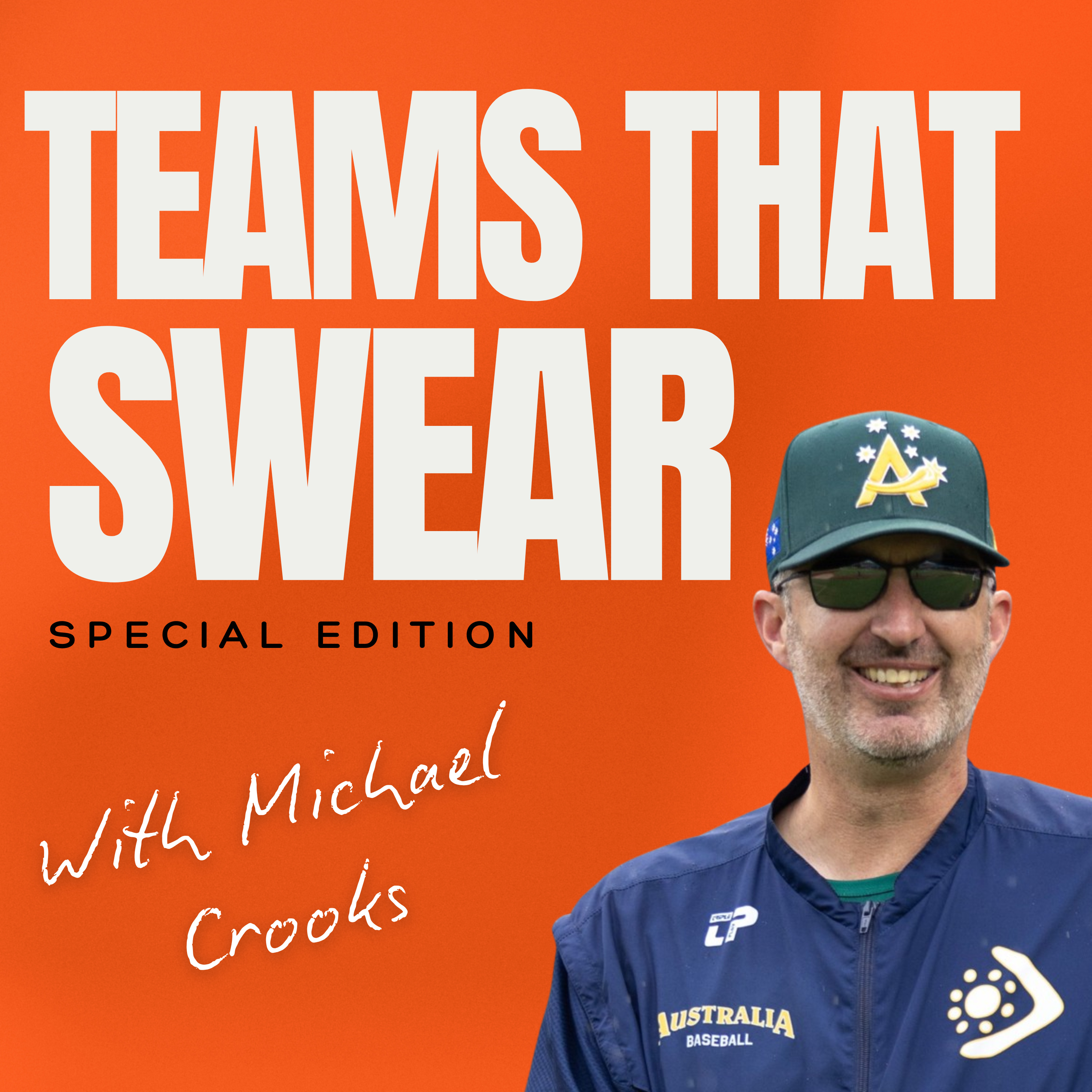
Michael Crookes, General Manager of Performance Pathways and Player Development at Baseball Australia, describes his role as coordinating a complex network of stakeholders to prepare teams for major international tournaments like the World Baseball Classic. He compares himself to a conductor of an orchestra, ensuring that experts from internal business units, state associations, the Australian Institute of Sport, and international partners collaborate effectively. His daily work involves balancing operational tasks with strategic planning, such as blocking time for thinking during walks or car rides to maintain focus on long-term goals like the 2027 Premier 12 and Olympics. Crookes traces his leadership approach to his childhood, where he learned from his musician father’s dedication to practice and performance and his corporate mother’s emphasis on listening and navigating bureaucracy. He prioritizes honesty, consistency, and respect in his team, consciously avoiding individuals who drain energy or waste time. By focusing on productive relationships and separating people from problems, he aims to drive progress within the limited time available for developing athletes and coaches.
Most interesting thing about the classic is because it falls under the auspices of Major League Baseball to fulfill the requirements within the collective bargaining agreement of Major League Baseball. There's a whole bunch of additional staff that get thrown into the melting pot. They've never gone around their team before. So we had 30 players and 30 staff. Think about that for a while. 30 staff of which probably 20 of them don't really have much day to day interaction with our players. So when I sat down with our CEO Glenn Williams in November and we were working through all the requirements, it's like, do I need to be there? I'm just another person. If you've ever wanted to learn how to keep your people accountable to the standards they've agreed upon, learn a new approach to ensure you and your team are aligned, and what it takes to assemble coaching staff for international tournaments, then this episode of Teams It's Where is for you. Teams That's Where is all about helping leaders build teams that square by each other and not about each other. Teams that trust each other and speak honestly perform when it matters most. Now if you're curious about how your own team is really working together, you can take the AB Team Dynamics Assessment. It's a practical way to understand where your team is strong, where it's getting stuck, and what to focus on next. You'll find information on the assessment in the show notes. Now today's guest is Michael Crookes, General Manager of Performance Pathways and Player Development at Baseball Australia. He's also the Chair of Beacon University's Exercise Science Advisory Board. Michael operates an environment where his decisions shape careers. Expectations are high, and performance is constantly under scrutiny. He's played a key role in preparing teams and coaches for major international tournaments, including the World Baseball Classic, where Australia were just one run away from advancing through the finals round. Now be sure to stick around after the conversation. I'll share three practical things that you can apply with your team from the lessons learned in my chat with Michael to help your team square more by each other than about each other. Here is my conversation with Michael Crookes. All right, Michael. Now before we get into the World Baseball Classic, I just want to give everybody an idea of what your job looks like, because you're not necessarily a coach with baseball Australia, but you're the person that's involved with making calls about people who will coach and support the team. You create the system that results in players being selected, and you deal with a number of different programs. It's just not the senior men's team that we saw competing at the 2026 World Baseball Classic. So for someone meeting you for the first time, what does your role mean in real life? What is it that you do? Great question. I struggle to describe it to people half the time myself. The actual title is General Manager of Performance Pathways and Play Development, but that entails quite a lot of diverse areas from anything from working with our senior team athletes with their preparation for major events like the World Baseball Classic, by the Institute of Sport across the country, etc. All the way down to how do we transition with strategy of our players out of, say, the Little League and participate in constructs within the game, and put them on a pathway of performance if their talent is sort of steering them in that direction. So everywhere in between is a sort of a complex nature of stakeholder management, working with families. We do a lot of work with parents, working with overseas partners, domestic partners that may or may not be directly involved with baseball, and kind of coordinating and strategising how all those pieces fit together. So the way I kind of simplistically describe it is that I'm a bit like a conductor of an orchestra. I have some amazing musicians that sit around me on the daily basis. They're all very skilled in their own right. My job is to make sure that when we're playing that tune, everyone knows where to step in, where to step out, to deliver their expertise in a coordinated fashion so everything looks and sounds great at the back end. So it would be some of your stakeholders that you deal with. You've obviously got your team. And we'll talk about your team a little bit, but who are some of the other ex-colt-wa, that might be internal, but other stakeholders that you're dealing with? Yeah, internally we have four predominant business units, whether it's the performance pathways team, the financial team, the marketing team, the participation team, and even though we're once sort of sector within that organisation, how we communicate and work in concert with the rest of the team is really, really important. The next derivative of that is the state associations and how we strategically lead, play development across the country, and what that looks like in terms of execution, so what does success look like in each of those environments and trying to work within modifying it? At the sort of that first degree away from baseball, it's the Australian Institute of Sports, the Australian Sports Commission, and the State Institute of Sport, more commonly referred to as CISAS, who now that we're back in the Olympics, are the primary training environment for our top end guys, so our national scene in teen guys. We do have a number of key international partners, and they could be governmental overseas, such as Future City, where we based ourselves prior to the World Baseball Classic, and they have been basing ourselves since 2018. They invested $9 million in that facility, upgrades for us the last years, etc. It might be USA Baseball, where we share a lot of our design and our coaching education and upskilling of our coaches. We share a lot of information around player development, extending out to an organisation like Drive Line Baseball out of Seattle, which is a private entity who are sort of the forefront of scientific practice in and around athlete preparation, all the way through to an organisation like Trackman, which is a ball motion capture, a company you might see a lot in golf for the non-Baseball people that are listening, where they're based out of Denmark, and we do a lot of R&D with them and a lot of high level technological analysis of our players. So yeah, the State College group goes really far and wide. Yeah, what about. So what is. I don't know if there's an answer to this, because I don't know if there's a normal week or a normal day in the life of what you do. But if somebody wanted to get an idea of what a day or a week looks like in terms of what takes up your time, what are you doing? It's pretty abstract. A day like yesterday, I was literally on the phone from 8 a.m. till 6 p.m. non-stop. I didn't have it literally a minute off the phone or out of a meeting. And a lot of that was split between working with international stakeholders and the morning dealing with the back half of the day in the US. And the rest of the day in Australia was working with our coaching staff, the work internally with baseball Australia, and some technology partners here in Australia, setting up for a series of tests that we're doing with our players across the country in April and making sure that we have access. So the coordination stuff was going on yesterday. Whereas today is a very strategic day for me. I spent the whole morning sort of working through a whole bunch of long-term planning elements in the afternoon. I've got a bunch of planning, very operational planning that I'm going to be doing around our world cup tours this year. And tomorrow I've dedicated the whole day to strategy for the 2027 Premier 12 and how that feeds in the Olympics. So it's really shoe-haunting in the stakeholder management against those strategic pieces that I need to address on the longer-term scales. What stands out to me is that even I've actually got all these different stakeholders you're dealing with. But you're able to block off that white space. Well that's what I call when you need that thinking time because that's one of the challenges that a lot of leaders that I'm working with is just the demands on their times or more like your day yesterday where it's meeting after meeting after meeting. It's like, well where does the thinking get done? But it sounds like you're able to, you've got that strategy in place to go right now. I'm just blocking that time out. Unavailable. Get them work done. I wish I was that disciplined. I get distracted, pretty easy. No, I do block out time every day. Predomely when I'm in the car, I don't listen to the radio. I try and avoid having phone calls in the car. I just don't think it's a very polite way of doing business as more of a casual call that you'll have in checking in rather than formal calls. I actually don't watch television, which helps. I can't remember last time I turned my television on. So quite often in the evening, I'm just having quiet moment. That's where I'll do my thinking for the day. I also walk about an hour and a half to hours a day. I can't exercise like I used to. So I use that time to really get my thinking done and really try and order some of the chaos that can occur in any given day or order what that longer focus needs to be. Great. What's great is you've got your strategies and you know what works for you. So that's you as Michael Crooks, the GM.
I want to dig in a little bit about what's called microcrux of the human. Although there's some overlap in there, right? But love to get it, get a feel for what's shaped, how you become who you are. So when you think about growing up, how would you describe your childhood? If we're watching a little bit of a Netflix doko on it, what would we see happening? Jesus. Interesting. I was lucky. I had an unbelievably good childhood. I grew up in a small court, 14 houses. About 10 houses had kids. We were 20 kids in our street, all within probably about four or five years of each other. So the epic games of Street Creek, Edadon, 40 and everything like that. And the fun that we had in that environment growing up, and I grew up in Springbow, and the time that was right on the fringe of Melbourne, we had a lot of bush land around us, dirt tracks, BMX tracks. And just, we ran a muck all day every day, I'm not going to lie. The environment surrounding us wasn't great. And anyone that knows that area and knows some of the challenges that were in place late '90s early '90s in around that area. Sport was a protective mechanism within that community from getting yourself in a lot of trouble. And again, luckily with that environment, we used that as the vehicle of keeping our noses clean so to speak. So, sport has really been probably the key cornerstone of my life since about seven or eight years of age. Super sporty family, dad played cricket from MCC. Mum was a really good lacrosse player. And brother was a great cricket player. And again, ever on the street plate sport. So, it sort of led to the stage where we sort of were so embedded within the sporting community that I even professionally, I don't know if I've ever really had, I've had two real jobs at last at about 12 months and sort of transitions, a little bit of acrylic carpentry and a little bit of metal work. But I joke around that the only suit I've ever worn is a track suit. So, I wouldn't know what a normal job is. I wouldn't know what a 9 to 5 job looks like. And I can't think of anything worse than sitting in a cubicle 9 to 5 every day. But that's that's mean. It sort of plays with my personality. But we're where I was most likely lucky I think was what I was exposed to with my parents. That was a musician. And he had sales jobs and things like that. But being out of the sea and be surround. And he was an excellent musician. Being at his guitarist or guitarist. All right. Yeah. Yeah. He was a session musician in the 70s. So, it's a lot of recordings, a lot of stage shows. I think it was in the John Farnham band there at one stage for for those those are remembered John Farnham. But you know, we had a constant stream of unbelievable musicians just turning out their house 10 o'clock at night and playing till God knows what hour and my brother and I be asking the 10 down the music one the morning because we had school next day or whatever. But there's some real great lessons from dad inadvertently that he would practice and practice and practice and practice like it was no one's business and make mistakes left right and center and never get frustrated by it. But he'd improvise. But he was always searching for perfection whether it was in terms of what he was practicing or it was the sound he was getting out of his amplifier. And it was all built around the performances that he did on a weekend. And his expectation was when he walked on the stage and they turned on lights deliver a performance. And it I had really thought about till a couple years ago that how how that sort of embeds in your psyche around my expectation of people and my expectation of myself that when we're asked to deliver I expect people deliver because we've done all the work behind the scenes. Whereas mum was quite different mum was. She was very much in corporate in the corporate world she was in RSV insurance quite high up in the management structure there. And the lessons really learnt from mum was as much as the people that surround her mum's she had two great bosses over time that that were very close to our family, Bob Mitchell son and Doug Clarkson, Doug Clarkson got me into baseball. She's some David played for many years with the national team in the old Australian baseball league. But those guys always had adult conversations, even around my brother and I even went more young and were invited into the adult conversation. I'm talking about I talk business around us a lot talk people around us. I talk management round us. So we kind of learnt really young how to work with people and how to work with adults. And when you sort of 10, 11, 12, 13, 14 years of age again it's amazing what you pick up in those just being exposed to those conversations. And from those guys I really learnt how to listen. How to engage appropriately in adult conversations but also the humility and the the ability to navigate bureaucracy from what they were describing within the RAC of and what does long term strategic thinking look like. So that was sort of that's what sort of shaped. I think how I am as a as a leader and a manager within our organization or within the organizations I've worked with. Yeah, I really do trace it back to those young experiences. What about what was the dinner table like? I say in it's an accommodation but you got dad who's the creative and then you got mum who's in the corporate space and then they got the two boys, right? One brother. Yeah, my older brother and we used to fight like nothing else on earth. Yeah, the dinner table was really interesting and it was a rotation between sort of sport, music and just life. Mum and dad had a vineyard as well. They developed from scratch. There's always that kind of business small business conversation going on as well. All the three males in the house mum was the mediator. We all have pretty strong opinions on certain topics as well. So it could be a pretty good debating class around the dining room table as well. But equally too. We we didn't actually spend much time around the dinner table. The nature of dad being a musician and nature of me being in around sports so heavily. It would be lucky if it was one day of fortnight where we're all sitting at round the table together. So when we did it could sometimes be really weird and quite debating in that. Or awkward. What are we supposed to do? Yeah, it was a bit like that. If mum had to just think of a seven year old Michael Crooks and she had to pick three words to describe you at that stage of your life. What did she have said? Good question. Sensitive. Pretty tenacious and pretty focused. Even at that age. When I was headstrong on something that was no stopping it that was for sure. And what about now? So let's say if somebody joined the BAT team. What would they want to know to work best with you? Honesty. Consistency. And treat people with some respect and dignity. What do you think the last one came from? I think that fact is into the nature of this industry being such an emotive industry. And my 28 years of employment with the industry has seen more issues created by a lack of respect and dignity towards colleagues within the industry than the actual problems themselves. So the ability for people to separate the people from the problem and focus on the problem for me is just it's a paramount behavior of the people want to surround myself with. I don't I know there's enough hostility and the white noise that comes into what we do on a daily basis. The last thing we need is that internally all that within the collegiate group that we're working with from any stakeholder group. So what do you do that? Because I think that's that's a common challenge that we face whether that's a work or outside of work. Yeah, it's. It's making choices around who you surround yourself with and who you spend your energy on in my view. I've got some people in our industry, whether it be within baseball or whether it be across other sports I've worked with. And I choose not to engage with because their energy sappers if that makes sense. Every conversation can be an arm wrestle or a debate or a mostly response and then they listen to mostly responses out of you. And we kind of get to the end of that engagement and you go, what are we actually progressed? What do we move forward? And the one thing you don't have up your sleeve, especially when you're developing.
people is time. So if we're dealing with people who are taking energy out of what we're doing and wasting our time, it's not a personal thing, but it's, I'm better off not engaging with those people as other people in the industry are engaged with, they're actually bringing something table, bring energy to the table, bring a positivity to the table and help us drive forward with the limits of time that we have for the people we're working with. So it's a very conscious decision of who we associate with and who we don't. The Tim Ferris book, the four-hour work week, I really learnt that out of there. I think there's a chat to read talks about sacking your friends and divorcing your family and really navigating your way through some of those those energy sappers. Now I just try and live that in a consistent basis and again, I socially I could catch up with those individuals, but professionally they may not be a fit force at this point in time. That's not the say that I won't change in the future, but it's my moment in time you're not rock force. I want to go back, you talked about your dad being on stage. Now I want to go to a different stage. One that was in in March, the World Baseball Classic, the 2026 World Baseball Classic. Fraying listeners who aren't avid baseball fans yet, just to give you some context, the World Baseball Classic featured the top 20 countries in the world. This was truly the best on best. Professional players were participating in this from all the different professional leagues across the world, so it was truly best on best. You just come back from an environment where the scoreboard is very public. The commentary is constant and it was constant here in Australia. I'd love to know how many text messages we're going across once teams were announced and amongst different groups and during games when when certain plays were called and that sort of thing. But so we could see what was happening on field. For someone like you, what was your role at the tournament and how do you support the team at something like that? I had the envious task of being a spectator at the tournament. What the little baseball classic, best way to describe it is the circus. The only event that's probably equivalent to that is the FIFA World Cup. In terms of the quality of players and the availability of those players on the world stage. Even when you talk about the dream team with basketballs, etc, there's still more limitations and enablers for the best players to be on the field any given time. Certainly with the classic, it's best versus the best. You have your world rankings, but the difference between the best teams and the 20th team and that is really tiny margins. So my role in and around the preparation for that was working with the players based here in Australia and making sure they have what they needed to. So when we went into the camp in future on the 16th of February, they'll readily go at equivalent level as what the guys who are playing professionally in the US or college-based for whatever were in terms of their preparation. The most interesting thing about the classic is because it falls under the osmosis of Major League Baseball to fulfill the requirements for the collective bargaining agreement of Major League Baseball. They've never been around our team before. Think about that for example. Wow, 30 staff of which probably 20 of them don't really have much day-to-day interaction with our players. So when I sat down with our CEO Glenn Williams in November and we're working through all the requirements, it's like do I need to be there? So every time we have an additional person on the coaching staff or the support staff, it's another person we've got to manage. It's another voice in the room. It's another bed we've got to organize. And sometimes in these roles, the ability to take us backwards step and go, we've got everything we need. The last thing they need is me and another or anyone else providing another voice in that room that will actually probably hinder performance as opposed to accelerate in the right direction. So I've caught up with the guys for one day in Future. I went and saw a game that we played in in Yoko Homa and yeah, it was at the games of the Spectator and stayed separate from the group and only got into conversations around the team when I was invited. But it was, it's no doubt the best preparation that we've had for a World Baseball Classic since we won silver at the 2004 Olympic Games and we were ready to play. But again, the quality of that competition and the environment that we play in the Tokyo Dome is just there's nothing like on the earth. And if anyone has an opportunity to go to the Tokyo Dome, right with a team Japan's playing there or the Tokyo Giants are playing, take up that opportunity. There's no stadium in the world like it else. I'll say AJ earlier that the game against Taiwan, microphone, pinged 20 times during the game with a disciple reading of 115 or louder. And that's with us winning the game. Imagine what it'll be like if Taiwan was winning or you're playing to Pamir. It's like that literally for three hours straight. So how how did the players deal with that? Because not everybody. So I think one of the things if you look at a US team or a Japanese team or Chinese Taipei, they're used to those environments. Some of the players in the Australian team play out in a local field here now or they played college ball or they played professional ball. There's some that are playing professional but there wouldn't be a lot of players that are used to that. How what impact does that have on them? Yeah, you can only really normalize that with experience over time. Luckily for us, we do play a lot in Japan and career in Taiwan and they're Dome stadiums that we're playing. So over the course of time, some of our players would have 30, 40, 50 games racked up in that environment. And for those places, probably not a big deal right now. But certainly for the younger players coming through all the first time as representing Australia, if that's your first exposure, eight to that level of competition and be that environment. Yeah, it's pretty fall on. We've marked round with some techniques here in Australia to try and train people up for it. So whether we're piping through all the chanting and stuff through PA systems, etc. But it's just not the same. And we do have other events that we prioritize. There's an event called the APBC, the Asian professional baseball competition where it's an under 24's competition. So a bit like the soccer rules for the Olympics, where it's that kind of environment again in the Tokyo Dome. So we can blood sort of our young players into that environment where they're getting some kind of exposures. It's not off on the sheep stations of the world baseball classic, but it's the same noise, distraction, chaos. The best way I can describe it's like playing in a pinball parlor. Just chaos, flashed lights, noise. If anyone's been to Tokyo and been to Shanduku or all some of those satellites, sort of, you'll understand what I'm talking about with some of the craziness that just goes on there. What about any leadership moments or challenging conversations that when you look back on it's like, we did a pretty good job there. Yeah, it probably really revolved around the selection. So we're coming off the previous 12 where we didn't achieve a result we wanted to honor off the field as a bit of distraction off the field and we probably didn't perform as well as we should have on the field as well. We ran a very extensive review last year. We saw a lot of changes to our practices in particular around we communicated with the players consistently across the year and how we communicated with them and how we sought their feedback and that was really, really well in this preparation. There's always white noise around selection and selection policies and the like. I can hand on heart say that our guys did a really, really good job in executing it this time and there'll always be public debate around why people, certain person got selected, why person didn't get selected, etc. It's not for us to comment and commentate on that in the public domain. That's a nuance of sport and we're quite happy for the public to make their own commentary on that. I guess that respect and dignity piece and how that was managed by the staff in working with the players then gets selected I think was well managed. And the test of that is how do we normalise that moving forward and how do we make sure that that is a regular operational principle for us moving forward and when we get those stress points right for all events now. Can you give us any insight into what you talked about communicating with players and gathering their feedback. You've got players probably in different continents, let alone in different cities, different time zones, they've got different priorities. What can you give any?
to what that communication, I don't know if there's a communication plan, it sounds like you guys were pretty intentional with what you were doing and what you were seeking from the players. Yeah, so we have set meetings, so to speak. So, and they're not at a very regular basis. We don't need to be catching up with everyone every second week or something like that. But key moments in time with key information needs to be shared. And the key is the transparency of that, and delivering that information to them as quickly and clearly as possible. And then listening to the feedback, I would say of all the sports I've worked with over the years, the feedback loop, in particular with the guys in the professional construct, is at the lowest level of all the sports. So our guys aren't overcommunicators back to us, but if they do communicate, it's for a good reason. And they want and ask to do a question, they need it to be able to organize their lives, or the only logistics or communicating with the team, etc. And the urgency around the way in which we engage with them is probably more important than how often we engage with them. And combined with that urgency, the clarity of what we're sharing with them, in particular, what their role is going to be within the team is a paramount importance. So how do you know, I was just working with a group of leaders yesterday, and we were talking about to give decision-making authority, let's call it to lower levels, so that not all the decisions are sitting on with the leader. There's two things, and this is based on David Marquette's intent-based leadership approach. So David Marquette was a, this isn't the right title, but he ran a submarine. And he found when he was in the sub, he moved to a new submarine, and all the decisions set on his shoulder. And he's like, this is impossible because I can't make every single decision, and I don't know near enough about how this submarine works. Anyway, so the key to making those decisions was based on two things, competence of the team, and clarity, like the direction given and how clear the goal, the roles are communicated. One of the challenges that the leaders, and most leaders will say, I think I'm pretty clear. I can't be any clear. But if you check with the other person sometimes, it's like, "Mm, they're not as clear." What did you guys do to make sure that what you were saying? One was clear, like it's easy to say that, but it's not always easy to do, but secondly, that what you were saying was getting through, and understood in the right way. I'll be pretty frank on this one, I don't think you really know until after the fact. In the Sun Zoo principle of, if the message doesn't get through, it's not the receiver, the message, it's the messenger themselves, and there has a responsibility. If you're portraying, and this really comes from my coaching background, if you're portraying a message to someone, you need to have the diversity of thought to be able to portray that message in multiple ways, and it's your responsibility to adjust that message based on who you're communicating with, and be able to adjust in real time in the context in which you're asking them to absorb that information, and the context in which they're accepting that information. The test of the success on that to steal some stuff from the classroom is you get them to teach you back or communicate back to you. Their clarity around what you've actually explained. So if they're, it's called reciprocal teaching, if they're starting to teach you the message that you've shared with them, and it's clear to you, the same message that's coming back to you that you've tried to portray, and you're on the same page, with that chances are that message has got across. But one thing you never know is, is deep down how the context and the stress of the situation is going to have the interpretation that information absorbed in real time, especially when people are in stressful scenarios. So selection is always a stressful environment. So you might provide what you consider as a direct piece of feedback, and they may even recite that back to you with absolute clarity and continuity. But then when the pressure comes down, they may reinvent that or reinterpret that, and it may form a completely different context to how that message was initially shared. So that's why I kind of say, you don't really have a no other than to maintain the relationship and to maintain the consistency of the message that you've been sharing. So it becomes a long-term teachable moment around what you're trying on the still on someone. I don't think that matters, whether it's trying to teach someone new task in the office or providing feedback on a selection. The stressors are stressors, and they're relative to only the person receiving their information at that point in time. Yeah. Reciprocal teaching, is that what you know? So tell us a little bit more about that. That's a new term for me. Oh, okay. There's, correct me if I'm wrong, I think Jeff Simon's touched on this in one of your podcasts. There's a researcher out of Melbourne University, John Hattie, who came up with a beautiful book called Visible Learning, and what it did, it looked at all the mechanisms of teaching and instilling knowledge within the classroom. It looked at about 200 different techniques within the classroom, and just ran a whole bunch of meta analysis work that was most effective. A reciprocal teaching is a definition of when a teacher or an educator or a coach or a manager is trying to provide new fresh knowledge, and the way in which it is reinforced is the student or the absorber of the information shares that knowledge seeking back. So it's a 360 of the learning process. So it could be for arguments like if you have a child that you're helping with their mass homework, they'll have a construct from the classroom of how to do that, and you might be able to help them as a parent navigate through the basic arithmetic. But you might come back the next day and go, "Hey, show me how you solved that problem," and get them to actually step you through their processes and their understanding of the solution. And from that, you can start to gain insight into whether they have a true deep understanding of what that education has been. Very effective tool. Yeah, and I definitely can imagine as a leader, it gives you some insight into what's what's stuck and maybe what was missing as well. And I suspect the learner who's now the teacher might even pick up those gaps as well as they're going through it. Yeah, so in our world, it could be as simple as all sitting out guys up on a software program today, etc. I'll apply around with the old dual webinar, etc, etc. But it might be as simple as a conversation and a month's time. I go, "I'm not using this software. I'm not at the call face of it. Can you guys give me a refresher on how to use it?" And yeah, part of it will be, "I'll need a refresher because I will have forgotten," but also to, "I'll get an understanding where the gaps are then, knowledge are." Yeah, as they're teaching me back on that. And then they're very, I think it's a very eonspeakuous, fair lie of drawing out information for people on how they understand a subject. Well, we're always looking for tips from different industries in terms of how we can work better with our teams. And I think there's one right there that's that's perfect, the reciprocal teaching. I want to move to a different part of of leading. And this is where again, you're in a unique role. You're not necessarily the coach of the team, but you've got to pull together a coaching staff. A lot of it worked, a lot of the teams that you're dealing with is around tournament play. So in a corporate space, this could be similar to a project. We've got to pull together a project team and you need to get the project leader and then their support staff to get them going. What's the process of putting together a coaching staff? And what are the things that you're considering when going right? I need to get a head coach and I need to get pitching coach, this coach, this kind of support staff. What are the things that you consider and do when when putting that together? Yeah, it can be really difficult because again, it's no different to putting together a team. There's there's selections for lack of a bit of fries that are going on and how people react to that selection, especially if they're an incumbent or been part of that coaching staff for a period of time for making a change. It can be quite complex to to navigate through. Being really clear on what strategic objective is of that moment in time. So the skill set for our coaching staff for the World Baseball Classic is a completely different skill set to what it's going to be for our under 15 World Cup team. So our under 15 World Cup team, we need more teachers for a lack of a better phrase. So our head coach for our program Nishia is a classroom teacher originally who happens to be an outstanding baseball coach as well.
And the profile needs to be sensitive to how people are taking on information, kind of what we're just speaking about, but also to have the wherewithal of patience and longer term vision of what we're trying to accomplish with that player development over the course of five, ten years versus the here and now if you must deliver this performance on the day for our senior national team. So understanding the definition of what success looks like for that team, underpins everything. The second layer of that then is for me to understand the EQ and IQ. So how they emotionally regulate themselves in different environments and again, that's going to be different for a junior program that is a senior program. And their true intelligence, especially as we'd navigate through a new age of a lot more technology, data and analytics, etc. And it's not to say that you know, have an IQ of 140 or 150, but I guess the helicopter view of how I do that, try to understand what, and understanding what their academic background is, I try and get understanding of what their life experiences, or what jobs have they had over a period of time outside of coaching. And you can very easily start to determine what their level of intelligence is in certain pockets of tasks that we're going to ask them to do and what they'll gravitate towards and what they don't gravitate towards. For example, if you've completed an undergraduate degree in a STEM field, science technology engineering math, I mean my cue for that's about 115. If it's post grad, it kicks up. So on and as I think goes up 120 and then master's PhD, it kicks up to 130 in those STEM fields. So straight away, sitting there, we're dealing with some pretty smart people, but they gravitate towards analytics, they gravitate towards interpretation of factual information and they may not have the nuance of some of the other softer skills that we might see from someone who might come from a sales background or something like that. So that leads us to this whole Yin and Yang scenario of how we marriage up the skill sets, the balance of EQ, IQ within the coaching group, the roles and responsibilities to deliver the outcome that we need to deliver. And how you tease that out in very short periods of time with the constraints you have on the levers of interviews and mechanisms is really difficult and you do take some chances with that. But the key for us is to try and expose and be exposed to many of these coaches as possible and learn about them as people. So I try and spend as much time as humanly possible just in general conversations with our coaches. I try and get them in a disarmed situation. We just chat and it's amazing what you'll discover about their background and their life, what they're into, what they're not. The coaching stuff for us, it's pretty black and white. We have a pretty good understanding of what people's skillsets are in instruction on the field. We check the horizontal back of our house and putting that team together and getting all those pieces to align. That's the difficult one. I've made some mistakes on that. I've had other pointed coaching staffs that the personalities have all been too similar. And when things don't go well to not have that contrast in the room, can lead to either a group think or can lead to a construct of the environment which is too far down one into the spectrum and the other. It could be too aggressive, it could be too passive. It could be a lot of our hate and phrase, the sport, but soft and quite cordial by nature. It could be too edgy and it could be too abrasive. And that's why the dynamic of understanding the EQ, IQ roles and responsibilities is a real importance. That's no different to a project management group. You need your destructor in the project management group. You need your doer within the project management group. You need your analyst in that project management and that some of the parts leads to a better outcome than potentially just having the six best coaches. The six best coaches causes much conflict as the six worst coaches. So if I play back what I heard is everyone putting the team a coaching staff together or you could be the sweet leadership group or project manager, but you'll look at first, what's the purpose of that team? So your analogy was the under 15s is very different than the world baseball classic. There's some sounds like there's kind of a standard bar that needs to be met from a technical on field knowledge. And then, but then you look at the IQ and EQ and look to bring in different, different personalities, but different strengths. So you don't just get a bunch of the same people speaking, using that group think. And then they're just thinking that one way, which could lead to blind spots or missing out on opportunities. Yeah. I've got four profiles I benchmark against. So one's a leadership profile, one's a behavioral profile, one's a success matrix, and other ones a skill competency matrix. And each one has around about 20 or 30 evaluation points, I literally go through that with every person. And subjective, it's subjective. The patterns emerge pretty quickly when you start benchmarking people against each other. And it's like, oh, got all this. We're missing this, we've got this, this gap in our coaching staff profile here. Are there any gaps like trends in gaps that you're seeing now? You talk before, like communicating with different types of people, and particularly this generation, if we're talking with younger players, but also, imagine communicating with professional players is different. But is there any gaps you're seeing that you're going, geez, you know, we struggle to find people that tick this box? Yeah, some really interesting ones emerging. So you're seeing more specialization, and you're seeing less generalists. Which, in small coaching staffs can be problematic. There is a role for the generalist still. And if everyone's an expert just in their field, they tend to stick just to their area of expertise. So that's one that's popping up a little bit more. The second one is some of the leadership characteristics in particular around decision making. So the race in which decisions are made and the reinforcement of data to make that decision. I'm seeing a trend towards almost like a paralysis by analysis. Unless we have all the information, we're not ready to make a decision. That doesn't hit the urgency requirement for us to be pushing things forward. The question should be, do we have enough information to make a quality informed decision as opposed to do I have all the information to make the perfect decision? The perfect decision in our world doesn't exist. It's too dynamic and there's too many factors that pull into it. So watch the threshold of information you need to make an informed decision and then just back it with 100% conviction. Yeah. They're probably the two. Yeah. Let's stand out. We're going to shift a little bit again. So that was great. That gives some insights and I suspect if there's anybody that's listening out there that's going right. If I want to put myself forward in any type of role, what are some of the things that are seeing? That's what I'm seeing in the workplace right now. This is at senior leadership levels. Is there looking for more of an enterprise leadership lens? So IE, it's good that you're good at leading your team or your function. But what CEOs and higher level leaders are looking for is people that can connect the dots and see the bigger picture. And having some generalist, like different areas of expertise provides that because you get how things work and you understand, well, if we pull this lever, what's the impact going to be on this part of the business and that part of the business? So yeah, that's some great insights there. Sport often, you talk about standards. Right? Now I think the fun part is always setting the standards, working out what they are. And that's the stuff that people read. And I suspect again, it's people maybe who not be involved directly with sport, but that's what we see in the movies or on shows is like on this team we're known for this and we do these three things. Sounds all good. Looks good on the walls or documents that get sent out, but keeping people to standards to that higher level isn't always easy to do. That's what you're smiling. Our listeners won't see this, but it's a big smile. What just popped into your head as I explain that. Well, freaking out of this. Yeah.
And it's hard because connecting the dots between the consequence of your actions today, to a result that might manifest itself in 12 months time, 18 months time, is not easy to see. For example, we got knocked out of the World Baseball Classic, virus and around which we should have progressed. And we can sit there and come up with every excuse under the sun of why we didn't achieve the outcome that we set ourselves to achieve. We know precisely why we didn't achieve that. And the test of our system, our coaches, our players is how we adapt and we utilize every day of our able to us between now and the Premier 12 and 2027 to correct that and deliver a performance to qualify for the 2020 Olympic Games. So to leave that as a statement and then just let things roll on for the next 18 months, is to assign a lot of risk to people's value of that statement. Their collective ownership of the lack of delivery of that performance when we needed it to be delivered. So for example, an individual might have had a good game. Well, we still lost. Dumb out whether you had a good game or not. Collectively. And this is a collective responsibility. We've got to get better. Irrespective of whether you achieved them on that day. Great you achieved them that day as an individual, but still team sport. Everyone's still got deliver. And like I said before, now the context in which that statement's made. So how does that context then get reinvented, shifted and recontextualized over a few times. And that might change a dozen times over the next 18 months of how people reflect and contextualise the experience they've gone through relative to where they're going. So being really consistent around what that success looks like moving forward, how do we measure ourselves against that and not being afraid of asking the question of any individual and asking that question of a self, how are my behaviours today led to how are they leading towards a better outcome on that timeline. And then it becomes some choice issues on this. So if we're talking about self-determination modelling, we're talking about what you do on what your commitments are and what your efficacy is to being the best you can be looks like in your own time. And we'll see the product of that play out with our guys across the course of the Australian baseball league season across the course of the winter season across the course of professional seasons in the US or Asia, etc. And the individual players behaviours will manifest itself on whether they're improving or not. And we'll see that really clear. We'll see it within the data. We'll see it from statistical sense, physiological sense, somewhat a psychological sense. But equally to the players have responses other coaches have a responsibility at two. So did we do all our homework? How do we come up with better concepts, philosophies, ideas, training tools, etc. to enhance the environment to solve those problems? The back. I'll be the first to foremost quite old on the testman, on whether we are actually sticking to those values and day out. And it needs to be rigorously and not so much enforced, but insisted upon from each individual themselves. And then the other group and holding a child to a level of accountability. Day, a win life. If you can come, I don't know what culture means as a definition of high performance means. High performance is even worse as a definition. It's an adjective, right? The act of doing something at a high level. Well, you can have a loser. You can be performing at a high level and just circumstance. You know, win on the day, well, you're a low performer? Who were all these low performing teams? Yeah. And my point on this is that the performance mentality needs to be every day. And it goes back to I was talking about the less I learned from my father. He practiced religiously every single night. And it wasn't for us. He wasn't putting on performance for us. He was trying to become better. He was trying to improve his technique. He was improvising. And then the expectation he had himself was when he performed on that Saturday night, he delivered a performance. And that's the consistency piece that we're new from our players. Yeah, in the GM, they're experimenting. They're trying new concepts on the field. They're trying new techniques, etc. But it's all driven by the understand that when you are called upon to perform, you interact with your team and your demo perform. And that's the true test of the consistency of the behaviors I recall, Satan. So from my perspective, that theory sounds really good. And it might be why you're smiling before and talking about how this is hard. What happens? What's your approach when somebody's not upholding those standards? And they might think they are. From your perspective, you're not meeting the bar. How do you manage those situations? Directly. So whether I'm working with staff, volunteers, athletes, support networks, I try and build my relationships on two fronts. Trust and trust is underpin by honesty and directiveness. So if I'm dealing with a stakeholder group and I'm not satisfied with what they're delivering to us or I'm delivering to them, we'll have a direct conversation. So we normalise directiveness. But it has to be underpin by trust. If you don't have a trusting relationship and you start having direct conversations with people, you can very much move into a territory of people asking the question of what's the true motivation of this or what's the angle, so to speak. If we do have a trusting relationship that I'm working with you and we're walking side by side down the street. And then if you see a scenario where I'm not living up to those standards or I am in a scenario where I don't see you living up to those standards, the ability to have a direct and immediate conversation about it enhances the trust even further and gets to the root bloody cause of the problem as quickly as possible. If you're pussy foot round it, you try and manage it and don't deal things head on. It's so much is open to interpretation. So what does that first conversation sound like? Like if you've got somebody who's not meeting a standard and you had to start that conversation, what could it sound like? I start off with a question and it would be, what's the objective you're trying to achieve here? And this is just general's role. What's the objective you're trying to achieve? What does a good outcome look like? Do you think that what we're doing is on course to achieve that? And then we can start to break that down into towards derivatives. But we need to go on the same page of what success looks like first. Because if we don't agree on that, I can ran, rave all I want or give some direct feedback. But there's no understanding of what the hell I'm talking about. You know, the outcome's going to be pretty ambiguous. But yeah, because sometimes I think even with that little model of inquiry, sometimes that's the wake up call and I'll be honest with you, I want you to establish that relationship. You can do it with a look. If you see a behavior of someone that you're in the trenches with and they're just rolling through life or they're late or for us not having their uniform on properly or whatever, just a high joke around, I got resting, bitch face, I can do this pretty easy. Just a look or a moment of silence at the right time. Sometimes that can be the strongest message of all. Yep. You don't need to make a song and dance event. But if you're getting a whole stare through the back of your head, that's the direct form of feedback still. But it doesn't embarrass them in front of anyone. And timing of this is really important too. So you're
to maintain the trust. There's those feedback loops of directness probably inappropriate when there's other people around. It could be a coffee, it could be a walk, it could be a phone call. Picking your time on how to be direct is really critical. But from my experience, pussy footing around the subject doesn't, it leaves too much ambiguity around where we actually need to correct the behaviors. And I expect the same back. If I've missed something or I've had attention to detail or if I'm missing an action, I expect my guy to have a direct conversation and tell me what they really think. I don't want any elephant sitting in the corner. That's what I see with feedback is there's giving it. Or receiving it can often seem difficult because our brain interprets that as social exclusion and we get into the fight or flight or freeze mode. What I've seen is people are concerned if they're giving that feedback. They find that hard to because they're worried about the impact on the relationship. I caught up with Maddie Clements director of the ALS last week and a conversation her and I had was around personal relationships with people you've worked with in the sport. Now Maddie and I have worked together for 20 odd years. She's a great colleague of mine. I've never been in a house for dinner. She's never been in my place for dinner. And I can count on one hand the amount of true friends I have from my 28 years in the industry. So the whole notion around damaging the relationship, what is the relationship that we have? It's a professional relationship. And the professional relationship is built around the delivery of a product for whatever industry we're working within. So for those people who struggle with the threat of damaging the relationship or how it's perceived, the feedback is going to be perceived. And this is quite fatalistic. It's like, okay, so let's say for a second this relationship ends. So what? So how does that affect my life? I work with Olympic gold medal coach and he made a statement years and years ago that rings triggers. What would you rather them upset or you upset? So what you can internalize that sleepless nights, jobs still not getting done, you're not delivering which has consequences on you as a leader as well. Or you can have the tough conversation. And if you do, if you have a trusting relationship and you do so in a respectful way and you stay, you separate the people from the problem, you'd path the emotion at the door. I, you see that I perceive that and it a bit of well, I'm not about you. That's their expectation. And there, again, there's derivatives of that and there's soft touches the time with that and the circumstance you're feeding in someone's life. But what online is, we're here to work together to deliver outcomes. And you can, you can do to not deliver feedback in a clear and concise way is actually doing service to the recipient and to do us the service towards the end goal you're trying to achieve. It's not at all costs, but it's, in my view, you have a responsibility as a leader to have an open, honest, direct, transparent conversation with someone. That reminds me, Joe Madden, another baseball guy. He talked about, and hit one of his books, I think try not to suck. He talks about feedback and whether it's difficult, but he goes, right, I can hold on to that feedback, which means I'm not helping the person in front of me get better, which could impact their career. And he said, if that person finds out five years later, when they're no longer in the industry, they're not doing the job they want to be in, but there was something that I had that could have helped them and I didn't share that because I was worried I might impact a relationship or might feel uncomfortable. He goes, that's the service. He goes, I'd rather, on the flip side, or in that situation where you didn't give the feedback, he goes, that person probably won't like me forever because I've had a massive impact on them because I didn't help them versus I might give them that feedback right away. They might not like me for a day or two because their initial response might be defensiveness. But if they take it on, they get better, they're going to appreciate that. Oh, I agree. And when I talk to young athletes, especially ones that might be a little bit more on the sensitive side, so they're, when I say sensitive side, they they they personalize pressure and pressure elicits change, right? And we can walk, I'll come back to that in a second. But the only caution I give young players is the only time you need to be worried is when you stop receiving feedback because that means people are given up. And the worst thing that can happen in any course of life for me is the people surrounding you given up. So if you're sitting in your office and you kind of know you're not evolving, you're kind of know you're not pushing things in the right direction. Everyone stop talking to you and they just go and know that he just does what he does or she just does what they do. That's not a good position they're being. They've given up actually helping you develop and push forward. So in the workplace, sometimes you'll hear this term, well, if you don't hear anything from the boss, it's good news. Right, because the view would be, I'll just keep doing what you're doing. Otherwise, you'd hear from me. Ask for it. If you're not getting it and you do have the relationships, ask for it. Yep, because that lead is the one that's failing you. Yeah, I think there's a lesson for leaders to go, just pick out somebody's doing a good job. Don't leave them alone. Monotony is a high-why. It's the people moving on. And if you got a good person, why would you allow them to get in a position of Monotony? Yeah. I like that. Accelerating and keep, and this comes back to the pressure piece. So we talk about offering conditioning modeling. It's very much a model that's built around on how mammals in particular learn and mostly dichotomies of how you're trying to pet dog. If anyone watched "Must-a-Dogs", "Must-a-Dogs" is a great example. The ABC series about the working dogs. Check it out because you'll get amazing insight on pressure manipulation. And what pressure manipulation is that in the context of performance sport, is that we have people that have skills. And the last thing we want to do is put so much pressure on them where you could curtailing their abilities and their skills. And they'd be coming what we call push buttons, push button people. They don't react and they don't know what to do unless you tell them what to do it. But what we want to do is either create pressure or alleviate pressure to elicit the behavior that we want. So if we want more focus, we can put constraints or we can put pressures or direction and providing some clear direction is a pressure to focus and hone their attribute to execute what we're asking to execute. Likewise, two of them are being overwhelmed or flooded. We can take that pressure off. No, no, no, no, we're going to take these other tasks off. We just need you to focus on this one task. And the manipulation of applying and we're drawing pressure is the thing that will elicit a sound sustainable behavior outcome. So to knock your feedback to someone who's achieving, they're not feeling enough pressure. They're not feeling enough pressure. Where's their evolution coming from? They don't need to evolve. They're getting their paycheck. They're happy doing what they're doing. That's mediocracy. I'm sorry, mediocracy in my world. I don't want mediocracy. I want the top end performance, which might mean it's pressure. And then you'll get the flip side where you'll get the overachiever and the person who wants to take on everything is working. Adia, for God's sake, how do you take the pressure off that person and give them some space to decompress? So you talk about an overachiever. Let's throw this one in and see how you've dealt with this or seen this dealt with because baseball, people always say it's a game of failure, right? When you're hitting, you fail more often than you succeed. Typically in your arena, in terms of, I'd say with either the coaches or the players, you're dealing with people who have succeeded for
a good chunk of their life. All right, they progress to that point and they lead to the lead. But eventually short failure will show up. How do you deal with that with high performers? Like when you see that regression to start, what are the early signs that you look for? How do you preempt it? And what do you do in the aftermath so it doesn't become the normal so that they can progress? There's a bunch of academic papers out there around people who finally achieved extra-ordinary goals and the dissatisfaction at the endgame of achievement. So it might be winning Olympic gold medal in my world. It might be a musician that releases a multi-platinum album. And they get to the pinnacle of the mountain and they realize there's another mountain or they realize that that was not the fulfilling thing that was they were really searching in life. And quite often for those ultra-high achievers, it comes back to their action and love with the process of doing something really frickin hard. And you see this with retirement performance athletes as well. They go into this, a lot go into this rut. It's really sad actually. And the OAS is doing a brilliant piece of work right now to try and address some of these mental health issues with athletes that are retiring. That the alcohol abuse and the self-destructing behavior, et cetera, and the career is because now they've been to the high and or they've been tied up in the process of achieving the high, what are we doing now? So if I was to instill that down, I'd bring it back to monotony. So if I can cure monotony and focus someone on the next near unachievable task, I'm giving a new impetus, so I'm giving a new stimulus for them to work towards and struggle and they already have work ethic and they already have great self-determination, great self-regulation, they'll attack that. I remember, I'll never forget, I was sitting in a room with, so Drew Gien, Olympic Gold Medalist, I was fortunate enough to work with him for a couple of years. And him and Duncan Free, one, the World Cup pair, so or at each side of the boat, two guys on the boat, at the '07 World Championships in China by like 12 links. It was just beyond exception or what they produced on that day. And we had our first planning meeting for the 2008 Olympics. And Drew, and Drew, already won multiple gold medals by this stage. Duncan had had a couple of medals, he had a couple of silvers but hadn't actually won an Olympic gold medalist stage. And Drew goes, I'm not sure I want to do this anymore. And this was a Sunday morning where all, oh God, this is not good. Anyway, we distilled it down across the course of the day and his point was that he's already achieved everything he wants to achieve. And that last race was its suction, its exceptional level that the likelihood of them producing anything close to that again was pretty small. But he wanted to set a target for something that was so unattainable that it would just, it would be a memorable experience for anyone involved. I think the record at the time was 607. He targeted six flat for that two A racing guys. And unless we commit to this, I'm out. When the whole room's like, seems like pretty fun goal to try and get. And it was, and this played out over about three or four hours but a simple reset of what the standard looks like when you've already achieved everything was the impetus for something that was pretty remarkable who went through up in the next 12 months. So that's how I kind of frame an up Ajay on how you identify that. It's gotta be an issue of motivation first and foremost. - Yeah. And then what it sounded like is, well, in that example Drew is pretty straightforward with where his motivation was that and what he needed. - 100%. - So now, so I'm thinking about how does that play out in the workplace, in the office, that leaders can take from that is to go, if they see that performance regressing, it's typically a reason why. Like, it's not because they don't want to but there may be something around, in this case it was motivation, but to have that conversation and not wait for that athlete to come to you is to dig in sooner and go, "Hey, what's happening?" - Yeah, and there's some, I think there's some ways you can play around. I was, I remember 2011. I've been at the working at the Victoria Institute of Sport for a number of years by that stage and there was a fair bit of monotony in my job. I didn't feel like I was getting as stimulus I needed to. And then out of the blue, I just decided that right, every six months I'm gonna rewrite my job spec. And it was from two fronts. The first front was, well, if my job resembled what it was six months ago, have I really nudge the bar of the people I've surrounded myself with? And am I having influence on those programs? Because if we're pushing it forward, the job changes right? - It's all, yep. - And the second one was to reset what my expectations were of myself and my tasks on the daily basis. And I'd always include something that was new and fresh, even if it was just seeking knowledge or whatever. I found that that was a really motivating tool for me with respect to avoiding enforcement not near around me, if that makes sense. So enforcement not in the especially the bureaucracy, the IAS, which was a government entity, so on, so forth. You have a job spec, you're expected to do the job spec, get it done, go ahead. Yeah, you're part of teams and you're interacting with players, et cetera. But you still were a bureaucrat for lack of a better word. So if I wasn't gonna take responsibility for that, I wasn't gonna get that stimulus from anyone else around me. And for me, it actually every vigorated my whole view on how I interacted with the organization. I've been doing that ever since. That was the 2011, was 15 years ago now. And same deal, it's not like I'd do it officially. I just get a note pad out and go, right, what about, what has my roles and responsibilities been? What do I think they look like going forward? And all of a sudden there's some nuggets of goal that'll come up and just re-stimulates the motivation to keep driving things forward. Love it. Even if it's selfish for your own maintenance. Yeah, well there might be certain things you want to do and enjoy doing. How about that corporate that in? Well, change the mindset, right? If you're working on something you get and you're getting a net positive benefit out of doing that, that's gonna manifest itself in everything else. Yeah. Love it, that's great advice. 'Cause I hear a lot from different leaders being in that position. And particularly I think as they get older it's going, "Is this really what I want to be doing?" But I don't want to leave. But that idea of looking every six months and going right, if I'm right in the PD, what does that mean for the next six months? It's great. As you get older, you get more experienced and you get more senior. The feedback loops get smaller and smaller. It's just a reality of it. So you better create your own stimuli. Yeah. So that's it at the individual level. We're gonna wrap this up. It's bottom of the ninth. We'll speak in some of your language here. I can't come up with another metaphor for how we end this. But we always end up saying, if there was one message you wanted leaders to take away that ultimately would make them a better leader but would have a bigger impact more broadly. And I'll go as big as you'd make an impact in the world. There was one piece of advice that he could class there on a billboard that it would be the start of any podcast in the world that everybody would shoot here. What's that one thing that you think leaders should be doing more of right now? Step back and let your team celebrate the successes. Step forward and tight responsibility for the failures. Step back and let the team celebrate the successes. Step forward and take responsibility for the failures. Pretty straightforward. It protects, so the latter protects your staff. It gives them scope to learn, to evolve, to innovate and get better from you taking responsibility. But no manager is successful without their team execute what they need to do. They're the operational arm of what you do. Let them celebrate it. You'll get your kudos in other ways. Let them celebrate that. It's not about you. It's about your time. Perfect. Great way to finish up. Really appreciate you giving us your time today. Michael, a lot of gems there, I think from a leadership perspective in teams, but also at the team level as well. And I think the one thing that I found the most interesting out of this was
How you were brought up with that might not be defined as what we call high performance environment But definitely the habits of the things that were happening around you Embedded that it is what what high performance can be like and and to see how that's then played out for you now It was embedded early and that you continue to carry it on so really appreciate you making the time. Thank you my any tongue Hey there, it's Adrian this time a few days after I caught up with Michael Listening back on our conversation. There was one moment that really stayed with me Michael talked about the world baseball classic Literally years of preparation countless decisions endless conversations and meetings and stakeholder management and everything else We probably aren't aware of but this was all happening behind the scenes And when the final tournament arrived his work was done He went to the games in Japan, but he said that he was a fan He didn't need to be in the center of things So he was there if they needed him, but in his words they didn't need another body hanging around That is humility But more importantly, that's what leadership is about Great leaders do the work early they prepare their people they build clarity and confidence and when the big moment arrives They step back and let their team perform Now before I share three practical actions you can take with your team based on the chat we had with Michael Can ask a small favor If this episode made you stop and think or gave you something you want to pass on Hit follow on the podcast or share it with somebody else who needs to hear it The more people that listen to teams that swear The more people that we can get on as guests And this means that we can help more teams swear by each other and not about each other Now here are the three things that you can try with your team based on what Michael shared first Keep the standards high by making the visible and discussible Now visible doesn't mean pulling them up on the wall or having big poses with them It can But what makes a bigger difference is having the conversations Michael suggested using questions Use questions to make sure everybody's clear on what food looks like and how the team is tracking So here are some words you might use What standards are we holding ourselves to hear See what kind of answer you get from the team There's another one on a scale 1 to 10 how well are we leaving that standard right now Those questions create clarity without creating pressure The second thing you can try is prepare your team so they can perform without you standing in the middle of everything Do that work early Prepare Have the conversations sooner Build confidence for your team before the big moment arrives Then when that time comes Step back and let them do their job See what you learn but also see what they've left Now third thing you can try is this idea of reciprocal teaching I love this Come our talk Now instead of explaining the standard yourself Ask a team member to walk through through it You might say Hey can you show us how you approach this so the rest of us can learn from it When people teach things they own them And ownership is what allows a team to perform without you standing over them So I'd suggest giving one of the doors go Treat one of them like an experiment and see what changes Either for the team or for yourself And if you want to talk about how I can help you and your leadership team work with clearer language, deeper trust And team dynamics that actually work please reach out My details are in the show notes Cheers
Podcast Summary
Key Points:
The World Baseball Classic involves 30 players and 30 staff, with many staff having limited daily interaction with players, creating coordination challenges.
Michael Crookes, General Manager of Performance Pathways and Player Development at Baseball Australia, acts as a "conductor of an orchestra," managing diverse stakeholders including state associations, the Australian Institute of Sport, international partners, and technology companies.
His role spans from elite athlete preparation for major tournaments to developing youth pathways, requiring strategic stakeholder management and long-term planning.
Crookes emphasizes blocking time for strategic thinking, using car time and daily walks to order chaos and focus on long-term goals.
His childhood, shaped by a sporty, music-filled environment and exposure to adult conversations about business and management, influenced his leadership style.
He values honesty, consistency, and respect in team members, consciously avoiding "energy sappers" to focus on productive collaborations.
Summary:
Michael Crookes, General Manager of Performance Pathways and Player Development at Baseball Australia, describes his role as coordinating a complex network of stakeholders to prepare teams for major international tournaments like the World Baseball Classic. He compares himself to a conductor of an orchestra, ensuring that experts from internal business units, state associations, the Australian Institute of Sport, and international partners collaborate effectively. His daily work involves balancing operational tasks with strategic planning, such as blocking time for thinking during walks or car rides to maintain focus on long-term goals like the 2027 Premier 12 and Olympics.
Crookes traces his leadership approach to his childhood, where he learned from his musician father’s dedication to practice and performance and his corporate mother’s emphasis on listening and navigating bureaucracy. He prioritizes honesty, consistency, and respect in his team, consciously avoiding individuals who drain energy or waste time. By focusing on productive relationships and separating people from problems, he aims to drive progress within the limited time available for developing athletes and coaches.
FAQs
Michael is the General Manager of Performance Pathways and Player Development. He coordinates stakeholder management, player pathways, and coaching strategies, acting like a conductor to ensure all parts work together harmoniously.
The team had 30 players and 30 staff, with about 20 staff members who typically had little daily interaction with players. This was because Major League Baseball requires additional staff under the collective bargaining agreement.
He blocks out time for strategic thinking, avoids phone calls in the car, doesn't watch television, and walks 1.5 to 2 hours daily to organize his thoughts and manage chaos.
His father, a musician, taught him the importance of practicing relentlessly and delivering a performance when it matters. This instilled an expectation that behind-the-scenes work leads to reliable execution.
He emphasizes honesty, consistency, and treating people with respect and dignity. He also advises consciously avoiding energy-sapping individuals to focus on those who bring positivity and drive progress.
He makes a conscious choice to limit engagement with energy-sappers who turn conversations into debates without progress. Instead, he focuses on people who bring energy and positivity to the table.
Chat with AI
Loading...
Pro features
Go deeper with this episode
Unlock creator-grade tools that turn any transcript into show notes and subtitle files.
 PodcastTranscript AI