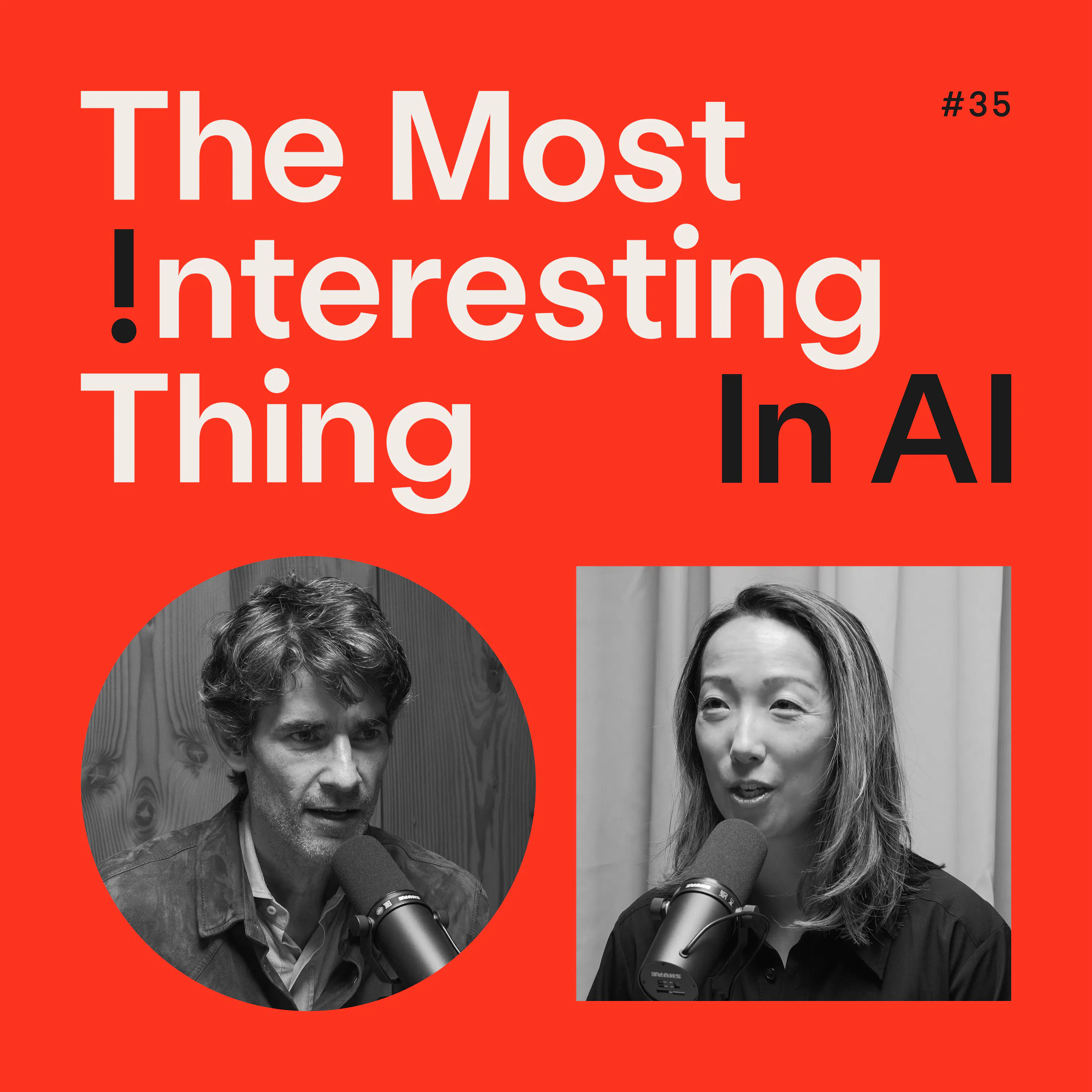
How to Get Hired in the AI Era - Clara Shih with Nicholas Thompson
50m 43s
AI is triggering a profound and disruptive shift in the job market, creating a clear hierarchy of job types—from those building AI models to those being managed by it. Young people, particularly Gen Z, are deeply concerned about job prospects and the future of work, not due to fear of the unknown, but because they understand AI’s impact on education, environment, and employment. A growing number of white-collar roles are being automated or reshaped, especially in administrative and entry-level functions, leading to significant job losses and declining market demand. While some jobs—like professional soccer or skilled culinary work—remain resilient due to human creativity and social interaction, many others are at risk. The transition is not just technological but economic and social, with large corporations expected to shrink due to inefficiencies. A key concern is that workers, especially young graduates, feel demoralized by AI-driven hiring filters and lack of feedback, and many fear losing purpose in a world where work is automated. However, hope lies in community-driven models, such as volunteer programs in Arlington Heights, which restore social connection and meaning. To navigate this shift, individuals must cultivate agility, embrace lifelong learning, and avoid dependency on AI early in their development. The future of work is not predetermined; it depends on decisions made today by leaders in tech and media. Policymakers should ensure equitable access to AI tools—similar to public services like healthcare—through subsidized government programs, so that all individuals can benefit from AI's potential while maintaining agency, creativity, and human connection. Ultimately, the outcome hinges on how society chooses to adapt, not just to technology, but to human values.
There's going to be a very disruptive transition.
And that we shouldn't just look at the numbers of jobs.
We should look at the quality of jobs.
Because there's different kinds of jobs.
I think there's three kinds of jobs out there
from most to least desirable.
There are people who build AI models
and they're commanding exorbitant salaries.
There are people who use AI to do various things.
And then there are people who essentially get managed by AI.
And I think we like to think that most people
like to think that they're in that middle group.
But it's not that big and it's shrinking.
And that third group, a lot of elites, I think,
like to think that, oh, that's not going to happen to me.
Because that's just my Uber driver.
That would never happen to me.
But that is actually creeping into white collar work now.
Hey, I'm Nicholas Thompson.
I'm CEO of the Atlantic.
This is the most interesting thing in AI.
I am fascinated by the backlash among young people
against AI.
According to a Gallup survey of Gen Z, just 18% enthusiastic
about AI.
They have, of course, used it with the homework,
the well aware of how it works.
This is not people fearing something they don't understand.
It's people fearing and disliking something they do understand.
They don't like the environmental consequences.
They don't like the effect it's had on education.
And they really don't like their job prospects.
There is a lot of concern that AI is going
to make it much, much harder for young people
to go out into the working world.
I wanted to bait around that.
But the evidence suggests they might be right.
So I wanted to talk to someone who
would be really smart that helped me understand it.
That person is Clara Shai.
Clara's the founder of the new work foundation,
a nonprofit dedicated to new work.
Helping young people find jobs in the AI era.
And she knows quite a bit about hiring.
For her current role, she was met as head of AI for business.
For that, she was the CEO of Salesforce AI.
She also had a startup.
It was quite successful, and then she sold.
So she's helped build and deploy AI.
She's seen how it affects the way business is hiring.
It's that down.
Ask her what young people can do, and whether they're right
to be worried.
She'd note, this podcast is from my team
on the business side of Atlantic and not the editorial team.
Clara Shai, welcome to the most interesting thing in AI.
Thank you, it's great to be here.
You are doing God's work.
I have three sons, 18, 16, and 12.
Your work right now is helping young people figure out
how to make it in the AI economy.
So thank you, Clara.
I hope so.
I feel called.
Well, one of them, I think, wants to go to government.
One wants to be a professional soccer player,
the other wants to be a professional soccer player or a chef.
Those are all, like--
That's pretty good.
Those are AI proof, I think.
Particularly the chef, I think, right?
Like, actually, a professional soccer player,
but a little hard to make.
But the chef, I think, should be very AI proof.
Well, yeah, I think some of the tasks
may be robotized, but if you're the head of house,
friend of house, and you're coming up
with the grand plan and the creativity--
And also the dexterity of the fine cut of the sushi,
the social interaction.
Nobody wants to be served by a robot.
Cutting and serving are different.
You would be surprised.
I was shocked to see some of the latest AI robotics.
So you think in the restaurants there'll
be AI robots working in the back?
I think potentially.
Wow.
All right, well, so what I want to do
is start this interview.
So you run the New Work Foundation.
Very cool.
You've had a great career in tech.
You had to start up, but now you're focused on this.
And you have a website where young people--
I guess old people-- can type in their degrees.
And then it tells you how cook they are.
So what should we start with?
What's-- I've got it up here-- field report.
What major should we begin with?
What was your major?
Mine was environmental science.
OK, let's look it up.
OK, environmental science.
And field report is one of the tools that we're doing.
We're taking this AI approach at New Work.
And we operate under the DRCC.
That's our Gen Z brand.
And we're just putting out a lot of AI tools
out there to see what sticks.
Yeah.
OK, so here we go.
Environmental science-- this is what it says.
Realtalk.
Environmental science grads are starting around $53,000.
The market is dropping.
52,000 openings a year.
That's not good.
6.7 grads are throwing hands for every single opening growth
is trending plus 2.2%.
And AI exposure sits mid at 5.1 out of 10.
That's not bad.
Yeah, there are worse.
Let's find one of the ones that's worse.
How about computer science?
Oh, great.
That's what I studied.
Computer engineering general or computer programming?
It's up to you.
Let's go for computer programming.
All right, computer programming.
Realtalk, computer programming.
Grads are starting around $72,000.
That's better.
The market is dropping at $162,000 openings a year.
9.9 grads are throwing hands for every single opening.
Growth is trending plus.
And AI exposure is spicy 8.2 out of 10.
That's not great.
So explain what you mean by AI exposure is spicy.
Well, there's this recent anthropic index that's
come out in terms of how AI exposed just every job.
That's different, although I think probably strongly
correlated.
With the spiciness versus the security of that job.
Although, who knows?
I mean, everything is changing so fast.
In even areas we thought, like creative writing and art,
that we thought were immune from AI a few years ago,
we've been proven wrong.
So we're just doing our best and trying
to help people who are just finishing school,
who've been struggling to find work, one
and two college grads, a recent college grads in the US,
are either unemployed or they're under-employed,
often doing gig work.
So we want people to know that they're not alone,
and we want to give them mentorship and community and tools.
Which is great.
So the AI exposure does that mean how much you'll
use AI in your job, or the likelihood
that AI will take away your job?
Neither.
The way that they've defined it, and there
have been a few different studies of this,
and these are best guesses at least.
I mean, nobody really knows exactly.
And it's changing all the time.
But it's taking a look at the typical tasks
in the day of a life of someone who
is an environmental engineer or a computer scientist,
whatever the job is.
And looking at, of those tasks today,
how many could be performed fully by AI?
And then how many could be done with the AI plus human
versus which ones are human only for now?
So when my environmental science degree
is 5.1 out of 10 AI exposure, it means roughly half
the things that an environmental scientist does right now
could be replaced by AI, and half of them could not.
Roughly.
OK.
So if I'm a young person, and I'm looking at this,
I clearly want the AI exposure to be as low as possible.
Like, what is the thing when I get that, right?
And it says AI exposure is this.
AI exposure, field is growing.
Which of the variables is most important
if I'm trying to build a life that
protects me from the AI transformation we're going through?
So first, I want to take a step back.
I think that young people need knowledge,
knowledge is power, and there's this information asymmetry
today that exists between people who work in tech,
especially in AI and Silicon Valley.
I'm part of that group, and kind of everybody else.
And so so many people are going into college blind,
and millions of grads are coming out of school every year,
utterly unprepared.
And what we want to do at Newark is help young people
be more strategic.
Totally.
Because if they understand where the puck is going,
proverbially, they can skate there.
And so in terms of what they can do with this data,
I've seen some young people say, yes,
I want to go where there's the least AI exposure,
because I want something steadier.
I want something more predictable.
I've also seen a lot of young people say,
I know I want to be an environmental engineer.
I know I want to be in media.
And I know it's highly AI exposed.
I'm going to do everything I can to learn about AI,
because it's never been easier to learn AI,
and it's also never been easier to build with AI.
I kind of actually, you know, one of the arguments
that I've made to young people when I talk to you
in journalists is that there's kind of a joy
in being in the field that has the most AI exposure, right?
Because it's the field that's going to change the most.
And if you're good, change is fun.
And so like going into media right now, clearly,
I don't know what the AI exposure is.
I'm a little scared.
Let's do that.
Let's type in journalism.
Let's see what happens when we go to journalism.
But clearly, the AI exposure is quite high.
Right, search your major journalism.
Graduates are starting around 48k.
Lower market is dropping.
That's true.
No, not at the Atlantic.
We're hiring more and more.
So come apply here.
- Nice plug.
- Lots of applicants.
Yes, thank you very much.
Growth is flat, fine.
AI exposure is spicy, 7.5.
So more than environmental science,
less than computer programming.
- Yeah.
- But I like the argument, and I'm drawn by the argument
that actually AI exposure is risky, but potentially good.
Yes, and I think that's when people ask me,
oh, what should I teach my kids?
The way I look at it for my kids is there's
not anything specific.
There's no knowledge that I want to teach my kid.
I want to teach my kid the first derivative,
which is that it's always going to be changing.
And that agility, I think, if you're used to it,
if you're expecting it, a lot of people, I think like us,
we like it, and you'll thrive.
- So how do you teach agility?
- I mean, I think a lot of it is,
I mean, I don't know if you teach it,
but I try to role model it.
And I've tried to do a lot of different things in my life.
I mean, I could have years ago easily stayed at Google,
which was my first job at a school.
After that, I worked at Salesforce.
I could have easily stayed there.
After that, I started a company.
It was really hard to leave a startup that you founded,
but I did after 11 years.
So I think it's important to not fall in love with a path
or an identity that we used to want.
or the worst that other people have chosen for us and just to reflect and we try to do this
as a family. I have one of my kids is 11 now and every year I check in and I ask him,
do you still like playing piano? Do you still like tennis? If not, let's stop. Let's do something
else. And then they learn, right, so they're learning new skills, they're learning their moments to stop
and their moments to start. All right, so let's work through. So your job right now is to take young
people who are graduating from college and to prepare them for this new world, right? And part of
preparing from this new world means explaining to them how this new world will work, part of them
means giving them the skills. Let's take a step backwards. What do you think should change
in the college experience, right? How should they be preparing kids differently from the way they
do now and is college still valuable? So before I answer that, I want to reframe a question,
because you just asked me how I'm going to prepare young people or how colleges and universities
are going to prepare young people. And in these sentences, the young person is the object of the
sentence, not the subject, not the doer. And I think that's kind of the whole problem. And we
need to shift from that to really instilling from an early age and throughout K to 12 and higher
education, this notion that every young person, every person in our economy is responsible for their
career for their future. And to seize this opportunity, because yes, there's all these risks we've
been discussing them, but there's also never been a better time to have an idea and to see it all
the way through. Amazing. All right. So we're taking the kids and we're taking them from the
objects to the subjects. Explain how that happens. I mean, I think it's shifting and doubling down
more on project-based work. But instead of project-based work, that's theoretical. The more that we can
return to apprenticeships, but a modern day version and have kids when they're in school
help an actual small business, help a local ice cream shop or help a local marketing agency
do real work. I think that that's that's the way to give them the real world experience.
And the hands-on AI skills that so many kids are graduating school without. All right. So I make you
the president of a university. I said, "Claric congratulations. You now run the College of ABC.
You're going to tell me about the curriculum and then tell me how you incorporate the core
curriculum with this apprenticeship work." Well, I think there's a lot of good already. I mean,
we went to Stanford. It's an excellent school. It just as an example. And I mean, I think there's
a lot of good there. So we don't want to throw out what works in terms of both the broad-based
humanities liberal arts education. I think that's more important than ever to think about the social
ethical ramifications of our decisions and what we choose to build. I think technical skills
are also very important computer science, especially the fundamentals of how algorithms work.
Certainly AI. But then beyond that, really encouraging each person to try a lot of different things
until they discover what they love. Because when they discover what they love, then it doesn't
feel like work. I mean, I think that's what you and I, where you and I have probably gotten
gotten to in our careers. And I think that's what drives the human creativity that we see.
So is there anything you studied at Stanford? You're very young. You're much younger than I am.
We weren't there at the same time. It's all relative. You. I worked with 20 years old.
With 20-year-olds all day. I'm not a young around. So was there anything you studied or anything
you did there that you think would not be relevant to a student today? Like if somebody said,
"I'm going to take exactly the same courses that Claret took." Which are the ones you would say,
"No, don't do that." In the computer science major, there's a lot of classes that go deep
in technical areas that I think were, I guess, important at the time, but a lot of, I mean,
it's for what I'm doing. I'm not a software engineer. Yeah. I don't know if it's as relevant as
some of the the more crossover classes. So that's interesting. So like the intro CS class was like
106A, right? So you should take that or you would recommend kids take that or because then they're
learning the basics of computer science. Here's how this thing works. But maybe not a class that is like
your third class in advanced Python because really, you know, CodeX could do that for you.
I might reshape 106 and I'm coming up with this on the fly. So I have to even look at, I don't
know the latest 106 curriculum, but I might shift it from just writing lines of code and making it
compiling and building these things to starting to introduce more algorithmic patterns and thinking.
Because those are the structures that are building blocks for AI coding agents and for logic.
Yeah. Okay. So you're restructuring the class, but it's my argument that you shouldn't take
like an advanced code class because really that can be done. Is that you think correct?
I think for a lot of people, yes. But they should be taking, you know, we had this, I think I took
this thing. It's called lit in the arts, right? And where you read some philosophy, you look at,
you know, I don't know, you look at Rembrandt, you like read a lot of great books, right? You should
do that, right? So that you're grounded in civilization, philosophy, ideas of the 20th century.
I think so. And especially I took a freshman literature course on Russian literature.
Yeah. And it would be so interesting, not only just for that, but to talk about it in maybe
in section about how I would apply today. Right. Right. Okay. So your ideal education is like
broad-based, also understand the core structures and follow your passions and have apprenticeships.
Are those the key components? Yes. And team building skills. And then should a university
abandon lectures? I think there's so many different kinds of learners. And I learned a lot
in some of my lectures. Sometimes it's just more efficient to kind of go through that way.
But then I think having the discussion afterwards is really helpful. And then the project-based
learning. So you hear something in a lecture, maybe it's 20 minutes instead of an hour,
but then right away you're applying it and you're building it. Yeah. And then let me ask you about
this tension. So my kids about to start college in the fall. And we've talked a lot about this.
There's this interesting tension where, and he and I both kind of agree that learning how AI
works is essential and important. Right. You really want to be like a master at these models.
You want to understand the difference between Gemini and Claude and Deepsea. Right. That's like
super helpful. But you also, there's the cognitive offloading that happens when you start
to rely on this model. So you should really learn a lot. And he was explaining to me in a car ride
the other day that he's really grateful that AI wasn't there for his whole education because he
got to do some deep research at libraries. I'm like learn how libraries work. And you want to have
a lot of time where you're not with your machine. Right. Where it's just you and your brain. And so
how do you set it up so that the students are both learning a ton about AI?
But they're also in classrooms that are like not even connected to Wi-Fi. How do you balance that?
I think that's so important because a key part of having personal agency is having the time
to focus and owning your attention. Yeah. I think the the the challenge that we've seen with kids
and phones and especially with these AI chatbots is you might start with agency because there's
a specific thing you want to ask. Yeah. But then before you know it, you've been screw you've been
doom scrolling for three hours or talking to your AI chatbot for three hours. And so I think
that personal discipline, which by the way doesn't just apply to kids, but also grownups.
But I think back to K to 12 education in college, I believe very strongly for beginners learning
something new, whether that's creative writing or it's programming that you should not use AI.
Because you need to struggle through that beginning step because it's through that struggle and
making mistakes and getting that feedback and working through and correcting those mistakes
that we build the foundation that we need to become experts. And we need expertise in order to
critique AI's outputs. So don't use AI when you're starting anything. Have some moments in school
where you're disconnected from AI, but also do you agree that these students should really be using
it to understand it? Yeah. So once you've once you've mastered something once you've gotten you know
once you're in creative writing 201 or maybe ideally 301 or computer science 301, now you really
understand like your code is good. It's good enough. And you are you're able to evaluate
whether an AI agent generated code is good. Right. Before that point, you really are in no position
to use AI because you're delegating to something that you can't judge.
So now let me make a maybe a counter argument which would be I agree. You shouldn't use it in
computer science 101. You shouldn't use it in computer science 201 because you're really trying
to learn about it. But maybe you shouldn't use it in 301 or 401 either because once you're really
good at it as soon as you start to use AI, you'll become worse at it and you'll weaken. You know
every time you use a machine to do something for you kind of weaken the tools inside your head.
So I don't use AI to write a word. And I don't use it for like ethical reasons. Right. We have a
promise at the Atlantic. I'm not on the editorial side, but it's true too on the business side.
We're a book didn't use AI to write a word. I do that in part for those ethical reasons and part
for other reasons and in part just because I don't want to weaken writings. It's so core to my
personality. So you could also make an argument that don't use it at the beginning, but also don't
use it at the thing you're most expert in. That's core to your being. What do you think of that?
I would revise that. I would I would say yes and I think that it is important to continue
practicing and honing your craft to stay sharp and to keep improving because we're never done.
We're never fully expert and that's it. Right. And computer science has always been about
abstraction. You know way back in the day, you were doing assembly language, then you did memory
management, then that was handled for you and then you went to these more abstract programming
languages where you had to do less and less. Did we get dumber at memory management? Certainly,
a lot of kids now aren't even learning it. But learning higher order languages allows you to do
more and build more and achieve more and that's how I feel
about AI agents. And so to only handcraft code, you're missing out on this generational opportunity
to build AI agents and a fleet of them until really understand how these agentic systems work.
I mean, that's also interesting, right? Because so the example I gave you is writing where
it's kind of replacing what I would do, right? It's a, if I start with a blank piece of paper,
and then I end with words on a piece paper, either I wrote them or the computer wrote them,
and it's the same outer product. Whereas with coding, if you have a fleet of agents and they're
doing, it's kind of like you're entering a whole new world on a whole new realm. So maybe there's
a different paradigm for that. I think that's a great point. Yeah, it's as if you were writing
an entire library of books. Right. Right. And if I was writing a library of books, like how could I
be so like self-centered to think that I'm going to write them all, right? That's a super interesting
argument distinction. Okay, so now we've got, so now we started to work on the curriculum.
Your advice to the students who are entering college is follow passion, learn agility,
learn the basis, like try new things all the time. And then what do you tell them as they're like
coming to the end? What should they be thinking about on their last year in college?
I don't know if I would wait until the last year, but I believe to get hired today,
people need to have subject matter expertise from having actually worked in the real world.
Yeah. And they don't have to be the most expert, but just having actually delivered a marketing
campaign, having actually shipped code that people use, not just them, other people use. So I
think the earlier they can start that, I think it makes it actually makes school fun, because I always
felt like some of the classes that were aboard, it was because they were so theoretical and I didn't
understand how it connected to the real world and things that I could actually tangibly see and use.
So, okay, so then people have these apprenticeships, they're going out. Okay, so now they've graduated,
congratulations. And you're still convinced, by the way, you're not, are you one of the Silicon
Valley people who thinks that college is becoming less important? Maybe you don't need to do it,
if you're 18 year olds and you're smart, why don't you just go start a company? Do you believe that?
I think college is a luxury, and that we may have over pivoted a few years back when we told
everyone, including people who can't afford college and are graduating with mountains of debt,
that it was the ticket. So I think the answer is depends. That's interesting. So you think that
somebody who, you know, it's going to be a real financial burden to go to college, it's a hard
call. It's a hard call, whether it's worth it. Whereas 15 years ago, it really did seem,
particularly as white-collar work was skyrocketing up and blue-collar work was struggling in the
American economy. And now we may have an inversion of that. Maybe college is less necessary,
particularly if you're bringing out a lot of debt. Yeah, and maybe the way that college looks
is going to evolve like it did decades ago. And maybe there's more trade schools because the lines
are blurring between white-collar work and blue-collar work. And I think we just have to be more flexible,
and today a lot of university structures are fairly rigid, and they haven't evolved very much
in the last decades. Right, universities don't, and for some good reasons, you don't want them,
you know, changing willy-needling due to the political tides, but yeah, they don't evolve as quickly
as other institutions. Okay, so now someone comes to you, they've graduated, they're 21, or maybe they
haven't graduated, maybe they've gone through community college, or they've known with everything,
they've come to you, and they say, okay, here I am, trying to figure out now how do you help guide them?
So usually by the time they come to us, they've been searching for several months through traditional
methods, and they feel demoralized, because young people today, their experience is they apply
to hundreds of jobs, thousands of jobs, and they often never hear anything back, because it's these
AI recruiting filters that filter out their resume, and no person actually even reviews their
application. Right. And I just imagine spending your whole day, I mean, it's one thing- But they're also
using AI to write the application, so yeah. They are, there's a lot of slop and kind of unfairness
both ways, but I think we have to, we have to coach kids on how this works, and give them a community
that supports them, so they're having some sort of human interaction as they go through this process.
But is this actually, like when I graduated college, I applied to a hundred jobs and got none of them,
it was very frustrating, and then I got one that got fired from it, it was, it was a rocky period,
but I recently was going through old notes, and I found this list of places I'd applied and
been rejected from that I'd kept. I was like, my god, I applied to a lot of places that didn't get.
Same. How new is, I mean, this is kind of the way, like youth unemployment,
unemployment of recent college graduates has always been 40 plus percent. How new is this crisis?
Well, I think what's new is that it was so good, maybe too good for the last few years,
and so my dad always used to say, right, happiness equals the reality minus expectation, so maybe
people's expectations are too high, so I think part of it is resetting people's expectations,
and that's kind of what we're doing, is we want people to know that the economy has shifted,
but by no means is this a reason to adopt a victim mindset, because it's your future,
and the only person who can do something about it is you. So that's part of it, so yes,
it's been hard in the past, but what's different is, let me ask you this, when you didn't get
some of those roles, did you ever get a call back, and did anyone ever take the time to give you
feedback on why? I did, actually, it was a question I applied my recollection of the exact
conversation I applied to the New York Times, which I didn't have business being hired at when I was
22 years old. But I love the ambition. It was great, and they called me back. They said,
"Hey, thank you for applying, you didn't get the role." I said, "Okay." And they're like, you know,
at the New York Times, we asked for perfection, and frankly, we usually get it, and you're not it.
That's my recollection about how that conversation went, which is, I remember in my sister's apartment,
I remember talking on the phone with the recruiter from the time saying, "Was that necessary?"
Anyway, so a little harsh, but still good to get the feedback. Some sort of feedback,
I had the same thing, I applied for a job at McKinsey, I didn't get it, but the person,
one of the people who interviewed me, took the time to call me. I know he must have been super busy.
Yeah. Took the time, and he gave me three things I could have done better, and he encouraged me
to apply again. Yeah. And that's what kids today are not getting. That's interesting. They feel
like they're applying into the ether, and no one has even seen it, and they're not wrong, because
no one is actually seeing it. Okay, and the reason they're not seeing it is because A, we have
a couple of choices, and you can choose from among. A, the economy is genuinely worse, right? It is
generally harder for young people to get jobs, partly because of the canaries in the coal mine,
because of the economic transition, because AI exposure. B, companies don't trust young people
as much anymore, particularly post-COVID, right? There's all kinds of cultural classes. C,
it's just this weird moment where they're AI intermediaries, right? Where people are using
AI to apply, and using AI to evaluate, nobody really knows who they're talking to anyway,
and we're trying to sort through that. Which of these is correct?
I mean, a little of all the above. I mean, there was overhiring companies are looking at their
head count, and the easiest head count to cut are the postings, or the people you haven't hired yet.
There is a little bit of this, you know, maybe entitlement, and that's why we want to help
shift some mindsets with the work that that we're doing. But I think a lot of it, and just having
been a hiring manager for the last 20 years, is that the work, a lot of the tasks that traditionally
you would assign to an entry-level salesperson, marketing person, product manager, market analyst,
it's just easier and faster. I mean, even if you put the cost aside, it's just faster
to use AI. Right. So they're using AI, and it's not humans getting, it's not humans responding
to people. So people are getting demoralized, and you're seeing young people getting demoralized
by the hiring market. Very much so. I mean, we have of our staff at the New York Foundation,
our people in Gen Z, and everyone, even those who have eventually found work, they describe,
you know, having done everything right, they did everything that they were supposed to do,
and they interned in college, my co-founder Samantha, she graduated from Berkeley,
double major, she had interned at Tesla and Warner Brothers, she had had multiple campus leadership
positions, she thought it was in the back, and I, honestly, as her friend, I thought that she,
I mean, obviously somebody that would be hired, she was out of work for a year,
she applied to ten jobs a day, she's very diligent. Yeah. And by month six, I could see her kind
of start to question her identity, and everything that she thought of herself as a high achiever
from childhood started to loosen, and I think thankfully she found something, but there's a lot
of Samantha's all across the country. It is that what you just said about the high achiever
loosening is very real, and I felt that when I, you know, in my early, in my 20s, also again,
in my late 20s, like the sort of the sense that I was someone who were turning up things,
like does collapse, right? When you're in with the real world, it's, it can be very hard on you
in lots of different ways. How much of the concern of the young people is not just because they're
not getting these jobs, they're not getting these callbacks, but because they're also terrified
that, you know, all white collar work is going to be automated, right? And that there will be no jobs
in seven years, and it doesn't really matter what they do. That's certainly a pervasive
feeling as well. I mean, the latest Pew Research polls from June show that a third of Gen Z Americans
feel anger toward AI, and a majority don't feel hopeful about AI, and I think a lot of that is
directly tied to how they see AI shifting their, their own futures. And they also don't have
the experience, right? So I've been working for however long I've been working for like 30 years
now, and you know that their cycles, and you go up and down, and then in the last 30 years,
right? Like things steady out after you go up and you go down, and they haven't been through those
cycles. They haven't been through those cycles, and it's also unclear whether this is a typical cycle,
or whether this is a secular shift in jobs. And I do think that there, I mean, there's a lot,
we don't know, but there are some signs that I see that are worth, you know, thinking about.
You know, I do believe that for, for a variety of reasons that I'm happy to get into,
that big companies will get much smaller, and that as we're already seeing,
there's going to be a lot of growth in small businesses and solar partners.
Okay, well, let's pause there. Which big companies specifically? All big companies?
All big companies. All big companies you can get smaller because they're more efficient ways to do things.
Yes. So a lot of people talk about automation, but what I think just having worked inside big companies is that in any big company,
the amount of inefficiency and miscommunication and frankly redundant work.
It grows exponentially as a function of the team size and probably how long you've been around.
And so there's just a lot of inefficiency glut that is there.
And the thing that AI is so good at doing is identifying that wasteful work.
And so a lot of the initial ROI is actually just from removing this waste, but turns out that redundant work, that amount of time that's spent waiting on someone else to get back to you.
That's actually what makes work fun, intolerable and enjoyable and gives you kind of a built-in break.
And by the way, a lot of it is also people's jobs.
That's super interesting. So you think the big organizations are going to get smaller, but like a little less fun to be at.
I think that's because often with AI, I don't know if you found this, but when you start building these agents, I feel like I'm the bottleneck.
And so in the past, you know, I work pretty fast.
In the moments when I was waiting to hear from a colleague or to review something from my team or waiting just to get feedback, that's down time to do strategic thinking, to grab a coffee, to go for a walk.
I mean, this is, of course, knowledge, work, luxury that we've all enjoyed.
But if you start using AI agents, often I feel like I'm the bottleneck.
And so I feel guilty taking those breaks because I want to, at any given time, there's an agent, one or more agents waiting for direction.
Right, waiting for your approval to like, can you approve this? Should I actually do this? Give it another instruction.
It is, it is very weird to be in a world of work where I'm, you know, and I have a whole bunch of agents and then you just talk into this, makes me want to open my laptop and hit like a proof approved.
We're both here at the bottleneck and they're so manifestly smarter than you in so many things, right? And like, so quick, so smart and can do things that you are pretty good at, much better.
Yeah, so that messes with you. And then the other part of it is if you look inside any, any company, there are a lot of people whose job it is today.
To prepare information or a memo or research for someone else in that company to consume.
And those jobs, I mean, AI is just really good at that.
What else do you believe about the future of work that most experts in AI disagree with?
It's kind of a downer.
And?
So one of my fears is, are you familiar with Richard Sutton's bitter lesson?
Of course. So we've seen time and again from chest to go that the human crafted way of doing things, you know, we think will perform.
But in the long run, the general purpose, AI, large amounts of compute, always outperformed.
What if that were to happen to jobs?
What if the way that a person conceiving of what a job should entail isn't actually the optimal way to construct a job?
What if that happens at an organization level?
I mean, if you look at how organizations are structured with marketing, sales, customer service, finance, accounting, HR.
I mean, these are modern constructs that, you know, people at Harvard Business School made up in the 1980s in terms of matrix organizations.
And we've just, we continue to use flavors of that.
And so, I mean, I think we're starting to see this with some of the AI native startups.
And even the team that I built out at Meta is what used to take, like stripping a product, right?
Used to involve 12 different teams from competitive analysis, to product marketing, to user research, to product management, to product design, to front and engineering, to back and engineering, to machine learning, to product analytics, to sales.
What if that collapsed down to just a few individuals?
I mean, that works. I've seen at work, both at Meta as well as how we're structuring the new work foundation now.
And so I do, one of my fears is that the bitter lesson will play out in organizational structures and that it will result in a lot of people losing their jobs.
How do you, I mean, listening to you there, it's like, oh my gosh, a lot of work is going away, right?
The last time work changed, we have all kinds of like political transformation in this country, some of good, some of the bad.
If that's true, we're like entering a period of like fires and chaos.
I think there's still time for us to act.
I think a lot of the people who know that this is going on, they were trying to speak up about it, they got canceled, and so now they're taking, they're singing a different tune.
But I don't think that they've actually changed their minds on this.
People who are like actually like all works going to be automated, you know, hope for the best, and we'll figure out societal structures to support that world, right?
You feel like that kind of person or the people making those arguments still believe that they just don't say it.
I do. And it doesn't, and just to be clear, I don't think all work is going away.
I think that there are many jobs like the ones that your sons want to do, like people who work in sales, people who are excellent PMs that can deliver things end to end.
People who are engineers who are full stack. I think there are, there are many jobs.
What is the unemployment rate going to be in 10 years?
I don't know. It doesn't have to be very higher or lower than 20%.
I'm not an economist and I don't want to get into the forecast game.
My point is if you look at what happened in past disruptions, like the manufacturing shock, we've seen this play out before in the Rust Belt.
And the unemployment rate doesn't have to get very high in order for people to really be hurt.
Yeah.
So you are where you disagree with most people AI is you think employment is going to be much worse than the conventional list of us.
Because the big companies are going to shrink, right? A lot of work is going to go away.
It's going to be a lot of change. It's going to automate a lot of things. There will be opportunities for solo entrepreneurs, small teams will have great opportunities to build things.
There will be some jobs that are relatively protected, like professional soccer players and maybe certain kinds of chefs.
But in general, it's going to be pretty rough out there.
I think that it's unknowable at this point. But what I do know is that there's going to be a very disruptive transition.
And that third group, a lot of elites, I think,
like to think that that, "Oh, that's not going to happen to me."
Because that's just my Uber driver. But that is actually creeping into what color work now.
So your fear or view or prediction is not just more unemployment, more change,
but also a lot of people who essentially work for an algorithm.
It's that people will be shocked that the only jobs available to them are not nearly as desirable as the job that they've had.
Because they were working for an algorithm.
For young people, for older people, for everybody.
Yes.
Okay. So when we first started talking, I had this image in my mind that your view of the future of work was tricky, complicated, but we're going to help you navigate it.
I now realize it's actually a little starker and it's tricky, complicated, and you're really going to have to think through these things because it's going to be. You're not climbing a hill, you're climbing a mountain.
Well, we climb the hill first, or we get to the middle of the mountain first, and then we go there.
And I think that's what makes this whole conversation so difficult is that it's changing so fast.
It's impossible to predict the timelines.
The way that I think my own mental model for it is, there's a here and now.
What can we solve today? And in my view, the numbers are very clear that it's entry-level workers.
The number of postings is down double digits versus a year ago. It continues to fall.
On the hiring manager side, I've seen it myself. I've taken down those job postings myself.
And just. I think we have to address that broken pipeline and help young people.
For their sake and also for our country's sake.
And do you think that. Okay.
Where we're seeing the biggest problem right now is young people. Do we think that two years from now,
what all have happened is. That curve will have deepened, meaning we'll have more of a problem for young people, but everything will be the same for everybody else.
Or do you think that the curve will have widened and we'll have similar problems for different cohorts?
I think a little bit of both, because there's more young people graduating from college every year.
About four million of them, and two million specifically if you look at four-year degrees.
And then as AI's capability improves, it's going to expand beyond the bottom rung of tasks to more higher order.
So I think the near term is what the hearing now that we see today.
The medium term is what you describe, which is we start to see this in multiple sectors, in multiple seniority levels.
And I get I think the people who are most exposed are those inside big companies today that prepare.
information for other people in the company right and then the long term is
this you know I don't even think it requires like this AGI thing right is if
we if we get to that world of abundance how do we you know of course address
the affordability issue in this country but not stop there for 250 years
Americans have looked to work for purpose and for social connection right if
work is going to be automated increasingly by AI we have to rebuild those
constructs of where people derive meaning and connection so where are we going
to do that we're we're going all over the place okay so good the reason one of
the reasons I feel hope is seeing what's happened in the town where I spent most
of my childhood from age 8 to 18 Arlington Heights Illinois Arlington Heights
has a lot of retirees and a lot of them felt bored after retirement they
missed the purpose and the connection that they had gotten network and so through
a grassroots grassroots initiative and working with my friends dad who's
the long-time mayor there they started this this program called
connections to care where generally newer more recent retirees they'll sign up
to volunteer and help elderly people go to their doctor's appointments get
groceries go to the dentist not just as a ride but to actually sit there
with them to help them make understand what's going on and remember what the
action items are and it's it's become this hallmark of the community that's
brought people together and given people that that purpose that community that
social connection and that programs like that give me hope that we can do that
here I mean so there's an interesting argument to make that right as you say
those two things you can make the argument that America's been like to
obsessed with work and that we can like we derive too much self-value from work
and so the decline of work is a bad thing is the thing where we get self-value
but maybe actually it makes us like humans were traditionally where you
derive a lot of your value from things outside of work or the way it is in
many other cultures and countries yes I think that that is I think if we can
let the AI apocalypse bloom requires some coordination though my fear is that
you know current course and speed and we already see this among young men
today I don't know Scott Galloway Andrea Yang they they've written and talked
about this extensively you know there are a lot of them are sitting at home
they don't show up in the employment unemployment numbers because they're not
even trying anymore right they're sitting at home maybe living with their
parents adult age playing video games all day I don't think that that is that's
probably not a utopia because people are not happy right I it would be great
just inspired by the work that that Arlington Heights has done to see us put
people to work in service of each other can I ask you a question about AI layoffs
which is always interested me which is a lot of companies layoff people because
of AI or they say it's because of AI are they actually laying off because of AI
and they see the world the way you see it like companies are going to be
smaller we have to anticipate that we're going to need fewer people in AMD or
do you think they're just using it as an excuse because they need to make layoffs
and AI is a good excuse does it matter little bit because if it is because of
AI then it's a little bit more of a harbinger of what's to come if it's as kind
of a marketing excuse to justify layoffs that were necessary otherwise then it's
maybe just a one-timer see I don't think it matters because I generally don't
think that companies make layoffs because of the disruptive substitute so look
at the manufacturing companies the 1980s they didn't move to China and
Mexico because China and Mexico are available they moved to China and Mexico
because they were feeling margin pressure and something had to give and I see
the same thing with companies today is they're not moving to AI for AI maybe
some of them are but most of them they're feeling some sort of you know some
short sort of shareholder pressure and they don't know where else to cut and
this seems like an easy one and if AI weren't a good enough substitute they
wouldn't be able to so this is how I've seen it play out so when you when you
roll out AI usually especially big companies the first thing you do is you try
to train everybody up and you know generally I don't think that really works
because you know you have some people who are just clicking through and they're
not they're just going through the motions they don't really get it yeah they're
so busy with their day job and how they've been doing things that they're not
really you know thinking of of retrain of of redoing or resetting that whole
business process but generally you'll have a handful of people on any given
team who become you know so-called AI-pilled yeah and they could be anyone and
you know they could be a designer on a product team or the product manager
on the product team or an engineer on the product team and then what happens is
that they start building agents and they realize that they can automate with
agents an entire workflow that used to span across ten people yeah and then you
start to realize okay not only are they you know taking this over but they're
their output is much more consistent because you don't you don't have this
coordination cost across all these ten people you're not waiting you're not
blocked in anybody and then the come and then you start seeing the AI build
run up and then you're like well where do I cut well the first thing to go are
job-postings because again the easiest job to cut are the ones that you haven't
hired yet and then the bill keeps going up and then you also have these 18
people sitting around who used to be part of that workflow and you try to read
deploy them and in some cases you can read we deploy some but you're not
going to be generally able to read deploy all of them and then you've got that
next earnings call come up and that's how I see it happen wait so who okay so
who are the employees who are going to be in this hypothetical company the
employees are still going to be there in two to three years are the ones who are
AI-pilled and learned how to use their agents are the ones who are like AI
friendly but not fully AI-pilled or the ones who are like you know block AI
group one group one but those are also the people who as they become AI
building me like oh wow this is super interesting I'm gonna go start my own
thing right and then they're gonna go leave and go do their own thing right so
there's this other kind of interesting risk there there is but during that
time horizon more people from the second group become that first group right so
you're advised to someone who's at a company right now has become AI-pilled
and if you're a manager it's get as many of your employees AI-pilled as
possible yes and no so yes for the individual managers themselves I so this
my view I don't think managers can just delegate to people who use AI if you
want to be an effective manager doesn't matter if you're a first-line manager
or you know the senior vice president running a division they too have to be
AI-pilled to manage their organization and they're kind of orchestrating
across all these other people let me ask you if the government or the big AI
companies right could change one one thing to make it more likely that we have
an economy with a smooth transition to whatever the AI economy is like do
something differently that will make it more likely will have a better outcome
right that we won't have like chaos and pitchforks what would it be well it's
never just one thing but if you could choose if you or give me one one of the
many things that could be done that you think would be very helpful I think for
one we need to and I know both sides of the aisle have talked about this we need
to stop incentivizing private equity firms to take over businesses and and then
lay off Americans and in fact you know there are private equity firms that run
entire models in AI of what the companies look like figure out their targets to
acquire and then you know I know I have friends who work at these companies
where like Claire should I be concerned that an AI is watching everything that I do
uh yeah very last question if you had an unlimited budget and you could spend it
on anything in AI what would you do I would view AI tokens as as how we've
allocated budget I mean you look at budget at the federal level at the state
level at the city level there are public goods that we've all as a
democracy voted for yeah and constitutionalized as important rights benefits
parts of being an American yeah in healthcare and education and social
services and these days I think that having access to those tokens especially
from frontier models it's as valuable in some cases potentially more valuable
than the actual money that's interesting so I was just talking to someone who was
you know off talking to the Chinese government about AI and he said well the
difference is that in China they view AI is basically like clean water right like
everybody should just have access to it you kind of think think that is the
framework well it's not just access it's an opinionated deployment so we don't
just I mean we don't take all the taxes and just give it to people I know some
people in the country want us to do that right but we we set up public schools we
have healthcare programs we have you know medic medicare Medicaid and I think
that we should think about AI tokens and access to frontier models in the
same way in that there should be subsidized government access like like
Medicaid like Medicaid for AI right so below a certain income threshold you
get subsidized access to frontier AI models yes for certain use cases I mean
there's some you can do whatever you want with it but some of it is is for
your learning right some of it is for your health and so the interesting
complexity here is you and I both worry about the speed of this AI transition
the more AI there is the faster the transition comes you have a tradeoff
there where you're kind of accelerating the transition but you're making it
a lot fairer because everybody has access to the best of it yeah and you're
you're funding scientists to do more more drug discovery and getting it
reducing the cost so that more people have access to it maybe funding
personalized medicine all these different areas that have been you know
lacking in funds and then we can all live for much longer in a world where we
have no idea what the jobs will be all right thank you Claire
Hi, it was amazing to have you.
No, I wanna say, I am an optimist.
I know we've talked about some stark realities
and possibilities, but I am an optimist,
but I'm a conditional optimist.
And so if there's one takeaway that I wanna share
is that the future is up to us.
And every day people, we can make decisions,
especially those in media and tech.
We can make decisions that will determine
how this plays out.
- Wonderful, all right.
- Thank you very much, Clara Schei.
- That was Clara Schei of the New Work Foundation.
If you enjoyed this episode, please check out
my conversation with Stanford economist, Eric Brinjolson
from May of this past year.
Lastly, please rate and review us.
Thank you for listening.
(upbeat music)
Podcast Summary
Key Points:
AI is reshaping the job market, with a growing divide between high-skill, high-wage roles (like AI model builders), mid-skill roles (using AI), and low-skill roles (being managed by AI), the latter of which is expanding into white-collar work.
Young people, especially Gen Z, are not afraid of AI due to lack of understanding, but are deeply concerned about job security, education disruption, and environmental impacts, leading to widespread anxiety about the future of work.
The future of work will involve significant disruption
Summary:
AI is triggering a profound and disruptive shift in the job market, creating a clear hierarchy of job types—from those building AI models to those being managed by it. Young people, particularly Gen Z, are deeply concerned about job prospects and the future of work, not due to fear of the unknown, but because they understand AI’s impact on education, environment, and employment. A growing number of white-collar roles are being automated or reshaped, especially in administrative and entry-level functions, leading to significant job losses and declining market demand.
While some jobs—like professional soccer or skilled culinary work—remain resilient due to human creativity and social interaction, many others are at risk. The transition is not just technological but economic and social, with large corporations expected to shrink due to inefficiencies. A key concern is that workers, especially young graduates, feel demoralized by AI-driven hiring filters and lack of feedback, and many fear losing purpose in a world where work is automated.
However, hope lies in community-driven models, such as volunteer programs in Arlington Heights, which restore social connection and meaning. To navigate this shift, individuals must cultivate agility, embrace lifelong learning, and avoid dependency on AI early in their development. The future of work is not predetermined; it depends on decisions made today by leaders in tech and media.
Policymakers should ensure equitable access to AI tools—similar to public services like healthcare—through subsidized government programs, so that all individuals can benefit from AI's potential while maintaining agency, creativity, and human connection. Ultimately, the outcome hinges on how society chooses to adapt, not just to technology, but to human values.
FAQs
AI exposure refers to how many tasks in a job could be fully performed by AI, or done with AI plus human input. A higher score means more tasks are at risk of being automated.
Jobs in fields like environmental science have moderate AI exposure (around 5.1 out of 10), while journalism has high exposure (7.5 out of 10), indicating a greater risk of automation.
Young people are not afraid of AI out of ignorance, but because they see its negative effects on education, the environment, and their job prospects, leading to fear and disapproval.
AI won't eliminate all jobs, but it will automate many tasks, especially in entry-level roles and administrative work, shifting the nature of work and reducing demand in certain fields.
Focus on developing agility, pursuing passions, and gaining hands-on experience through apprenticeships. It's important to understand that the future is unpredictable and adaptability is key.
Students should avoid using AI during foundational learning stages to build problem-solving and critical thinking skills. Once they have expertise, AI can be used to enhance and support their work.
Chat with AI
Loading...
Pro features
Go deeper with this episode
Unlock creator-grade tools that turn any transcript into show notes and subtitle files.
 PodcastTranscript AI