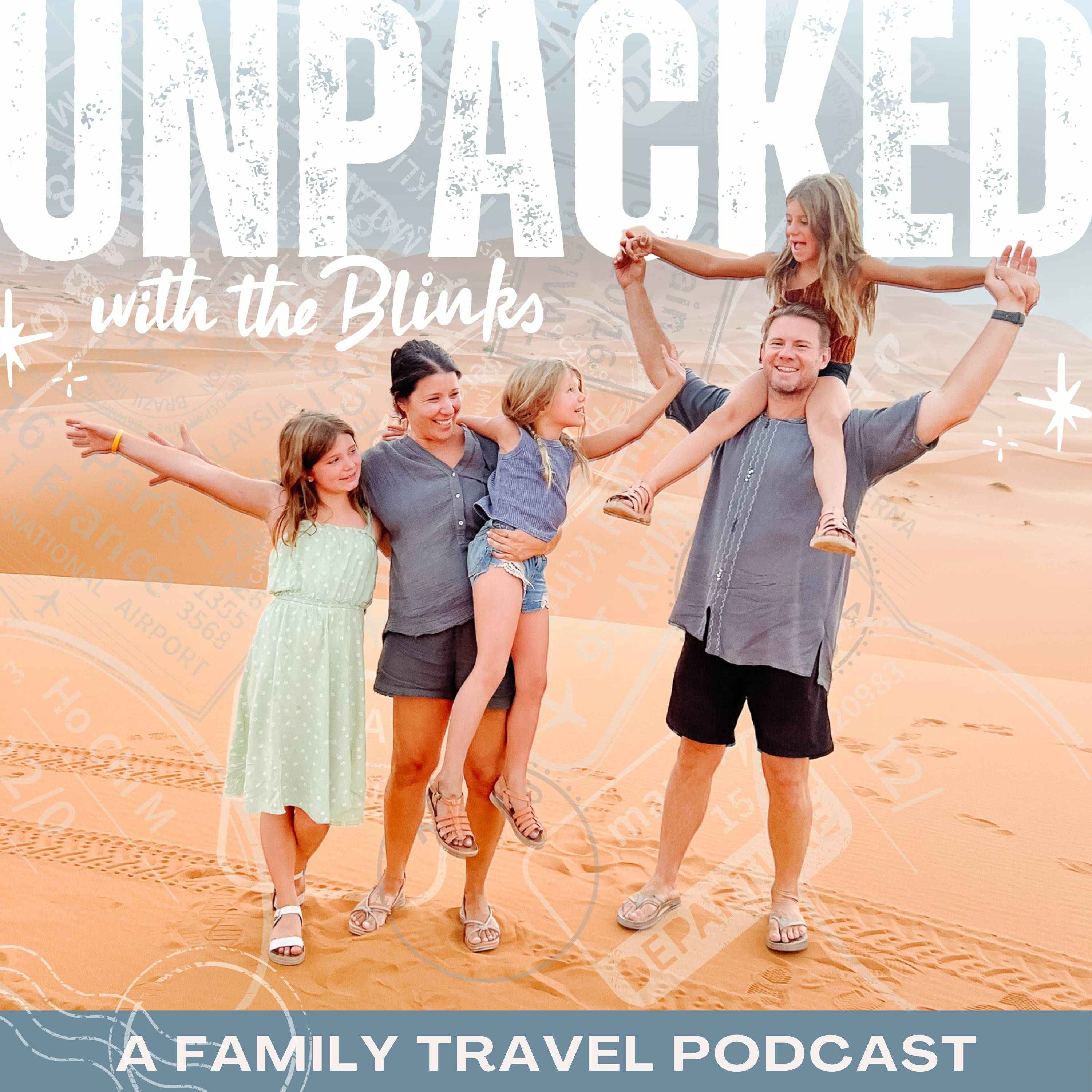
04. How to Earn Free Flights and Hotels: Special Guests, The Travel Hacking Moms
50m 19s
Travel hacking is the practice of using credit card welcome offers—large point bonuses from opening new cards—to fund travel at minimal cost. Unlike slow accumulation on a single card, this method involves opening multiple cards strategically to rack up points quickly. The Travel Hacking Moms, Alex and Jess, founded their platform to address the underrepresentation of women and families in this field, as women make most travel decisions. They emphasize that travel hacking is not one-size-fits-all; beginners should start with a specific trip goal, like a family vacation to Hawaii, and choose cards that align with the destination’s airlines and hotels (e.g., Chase Sapphire Preferred or Hyatt cards). Key rules include avoiding store cards, being mindful of Chase’s 5/24 rule (which limits approvals after five new personal cards), and not adding spouses as authorized users unnecessarily, as this can use up card slots. Points should be transferred directly to airline or hotel partners for greater value rather than booked through a portal. Annual fees are often worth it for the welcome offers, but it’s critical to pay off balances in full each month to avoid interest. With careful planning, families can travel extensively—like visiting 25 destinations in a year—without financial strain.
[MUSIC] Life is an adventure and now we're taking you along for the right. We're the Blinks family and you've probably seen our travels on Instagram or TikTok. After traveling to over 30 different countries with our three kids, we've learned a thing or two about how to see the world without losing our sanity. Welcome to Unpacked with the Blinks, a podcast where we'll unpack what you didn't see on social by sharing an in-depth look at what it's really like to travel as a family. From finances to flight hacking, sightseeing to sleep habits and everything in between. We haven't been everywhere, but it's on our list. [MUSIC] Hey, and welcome to Unpacked with the Blinks, a Family Travel Podcast. I am so excited for today's episode. I have been waiting for this episode for a long time because this is a topic that honestly, I feel like is how we're able to travel as much as we are. We definitely don't talk about it enough. I think a big part of it is because Scott and I really don't feel like we're experts. So we brought to our very own experts the travel hacking moms to be here with us today. Thank you, ladies, for coming to talk all about travel hacking. Yeah, thanks for having us. We are very excited to be here, so thank you for having us. Yeah, well, before we get started and deep dive into the whole travel hacking world, because there's a lot to unpack. Why don't you tell us a little bit about yourselves? So I'm Alex. I founded TravelHackyMom back in December of 2018. So four years ago, which is kind of crazy. Five years ago. That's five years. Oh my gosh. Yeah. That's crazy. I even thought what I was thinking was like four years ago seems like a long time ago. Five? Oh my gosh, that's real crazy. So yeah, time flies by. I'm a mom of four boys. I live in Salt Lake City. Yeah, if we love to travel, our favorite place to go is probably Hawaii. We usually like to try to travel hack that every year, typically. What about you, Jess? I'm Jess. I joined the TravelHackyMom team about a year and a half ago, but I have been travel hacking since 2015. So a very long time, our family could not afford to travel the way we do without travel hacking. And so yeah, I started in 2015. Just dip my toes into it and then quickly became addicted, felled on the rabbit hole, and have not looked back ever since I live in Houston, Texas. My husband and I have a 10 year old daughter. And then I also have three stepkids. So we have like a blended family going on. And so TravelHacking is a necessity for our family of six to be able to travel the world for very little money out of pocket. I love that. So much of that resonates with me as well, because as you guys know, Scott and I love to travel. That's what we do full time now. And we get the question all the time, you know, how do you travel so much? Last year, we visited over 25 different destinations. This year, we're going to approach close to 30 different trips. And so I love to tell them about travel hacking. I tell all my friends about travel hacking, because it really is the reason we were able to get in the position we are. Now, not all of our trips are we use travel hacking. We obviously can't do all of them that way. But a large majority of them, and I think a lot of my audience is surprised to hear that a large majority of them are through travel hacking. So we're getting kind of into it, but I also, I want to, you know, talk about what is travel hacking. Because people are listening to like, wow, these girls are really excited about travel hacking. I have no idea what this is. So maybe Jess, you can explain just like in really basic, you know, a basic way for the person who hasn't even heard of this term before, what travel hacking is. And why are we so excited about it? Okay. So in its most simplest terms, it is leveraging credit card welcome offers, like the points and miles that you get from opening a new credit card and putting those towards free travel. And so I think a lot of people, when they, when they think of credit card points and miles, they think like they have one credit card and they put all of their expenses on that one credit card and they earn their miles and points that way. And that is one way to do it. We call that the slow burn, but like you're only going to earn so many points that way by just putting your expenses on the same card. So we continually are opening new credit cards for those big welcome bonuses of like 50,000 points, 100,000 points, 150,000 points. And that's how we're able to rack up so many points for our large families to be able to travel. And when we first heard, like, I think Alex and I both when we first heard about travel hacking, it's a very male dominated space. It's a lot of men who are traveling by themselves and flying, you know, first class or business class and they're not having to worry about traveling with six people, you know, and so we felt that women and moms were really underrepresented in the travel hacking community. But women, I think it's something like women make 80 to 85% of travel decisions for their families. And so we feel like it's really important for women and moms to like feel empowered to do this for themselves and their families. And so that's why we're that's why we started our businesses and why we're so excited about it. That's amazing. Yeah, Alex, you want to speak a little bit about the travel hacking mom site and how you were kind of inspired. Like I know you said, a male dominated business. And that's incredible because it is so true. Even today, a large portion of content you're consuming about points about miles are for males. So what is it about your site and would inspire you to kind of create this site to kind of gear it towards women maybe in a time when women really weren't thinking about points and miles? Yeah, so when I started, I learned from a very beginner friendly site and then they stopped doing it. Like they did it and they did it for just like a in between jobs type of thing. And then I had friends that were seeing me travel and they're like, how do you do this? And so I'm explaining it to them and I'm like, here, I'll just send you the blog I learned from and it didn't exist anymore. So then I'm scouring the internet to find another very beginner friendly resource. And at the time, I didn't find anything that just broke it down in very simple terms. Like Jess said, like a lot of things were geared towards men, business travelers, people who'd already been doing this for a long time. And so I just felt like there was a spawn the market for beginners and a voice for women. And so that's what motivated me to get started with it. And it's been the best decision I ever made. That's awesome. Yeah. Yeah, you know, the start for travel hacking for Scott and I was kind of like the same thing. I actually, I kind of want to get your opinion on this because when we first started, it was really hard for us, I think, to take the plunge at first because as you know, a lot of these cards that have like the best sign on bonuses they have annual fees. And I feel like at the time when we were looking at it, there was all of this negative connotation around there's no way. One, Cret, just holding credit cards in general. There's still a lot of negative content about that. And then two, about paying an annual fee. Was that kind of hard for you to wrap your head around it first to kind of get this idea of like, wait, I've been told my whole life, I'm not supposed to accumulate debt, right? Which I guess we'll talk about kind of what that means to hold debt. But you know, now I have to open these credit cards that have these annual fees. And I'm essentially paying the credit card company. So was it kind of hard for you to kind of get your head around it as it first? I was exactly the same way I actually learned about travel hacking from a coworker at the time. And she told me about it. And it's so funny because I told I tell this to Alex, I'm like, all the people who are in our DMs who are skeptical of this, like I can see myself in them. And I can relate to them so much because that's exactly how I was. Like I went into her office and she was telling me about it. And I was like, this is going to ruin my credit score. Why would I ever pay to have a credit card? You know, like all those thoughts are the exact thoughts I had. And even the first couple of cards I opened were cards that didn't have an annual fee. Because I was like, why would I ever pay for a credit card? And now I'm opening like cards with $695 annual fees. But it's just, you know, you have to kind of take it, you have to kind of take it slow at first and get comfortable with it. And now I've learned that like all these cards with these huge annual fees have benefits that more than offset those fees. And so it's just a math, you know, it's like we call like travel hacker math, you know, they have like the girl math thing. It's like travel hacker math. Like it makes sense. If you really dive into the numbers and the benefits of the cards, it makes sense. Yeah, especially that first year when you're getting that big welcome offer, it's always worth it. Because let's say you're paying a $695 annual fee, your bonus is maybe, you know, 150,000 points, that is worth more than $695 worth of travel. So the first year, the annual fee is always going to be worth it. And then after that, you just have to decide for yourself if the benefits going forward are helpful for you and things that will benefit you. Yeah, yeah, I agree.
you have to look at it and see what works really for your family too and how much you travel a year. That's why I tell my friends when they ask me, like, well, what are your goals? Are you looking to just take like one major trip a year and looking at the benefits from those specific cards other than just the points and miles, right? Because you can utilize those other benefits that the cards have. Yeah, and we always say that travel hiking is not one size fits all. Because people will come to us and they will say, okay, what's the best card? Tell me which card to open. And I am like, this really depends on your specific situation. What airlines you're going to fly. What hotels you're going to stay at. What, you know, I mean, there's not like, I mean, we do have our cards that we recommend for beginners, but everyone's going to have a different strategy when it comes to approaching this. It's not going to be like, okay, here are the cards you're going to open. Here's your 10 cards. Go ahead. You know, it doesn't, it doesn't work that way. So, right. And I think that's when like, arming yourself with as much information as you can. Yeah. And then you're able to distinguish, okay, this is the best strategy for me and my family based on whatever our travel goals are. So, I said it before Scott and I kind of stumbled into travel hacking. I wouldn't say we were intentional or prepared one bit. And so we made a lot of mistakes. We made a lot of mistakes in the beginning. We were putting each other as authorized users on every card. We weren't paying attention to the like, the chase, you know, kind of rules at first. And so if we could go back a couple years and do it all over again, what would your advice be to someone brand new to travel hacking who hasn't opened any cards? Like, how would you advise them and kind of starting this journey? I would say to have a strategy. Yeah. Because if you're just going in and like, signing up for cards, willing, willing and having no plan, you might say, oh, we want to go on a trip here. And you have it off in your mind where you want to go, but your opening cards that aren't going to get you that trip. Let's say you're opening those help cards. And well, that location doesn't have that hotel brand. So then you're kind of stuck or that airline might fly there, but it's the most expensive flight. And so you really want to have a plan and a strategy of the cards you're going to get before you just go jumping in and signing up for cards. Granted, you'll figure out a way to use those points, but you'll be much more, what's the word? I don't know, strategic and efficient. That's what I'm looking for. You'll be much more efficient with the cards you're getting if you have a strategy. And you won't get into trouble with those rules like the Chase 524 rule, which you were mentioning, which is if Chase has a rule that if you open five or more personal cards from any bank. So let's say you open American Express, a target credit card, a couple of Chase cards, you know, you get up to five credit cards, then they won't approve you for any more of their cards. And so that plays hugely into our strategy where we try to get all the Chase cards we want before we go over that rule. And then I'm sure the authorized user element is something that we consider as well because of both of you, you and your husband, your spouse are on the same cards, you're missing out on the opportunity to earn double, right? You can still open a card even if you're an authorized user on it, but it counts like the Chase 524 rule that Alex was talking about. If you're an authorized user, it counts towards that. And so yeah, we do not add our spouses as authorized users like she was saying all personal cards count towards that rule. And so if you go to gap and they say, oh, would you like to open a card? You can save 20% on your purchase today and you open that card, that's going to count. And so instead of, you know, you can get cards that are going to be worth way more than saving maybe $20 on your gap purchase. And so we do not ever, ever open store cards, ever no matter what. That is just one of our rules. And I think the other thing is that this is just a rule with travel hacking. You want to make sure that you can pay off your statement balance on time and in full every month because if you are paying interest on your credit cards, then that's totally negating any of the travel benefits that you're going to get. And so if you can't pay off your credit cards on time and in full, then this is not something that you're going to want to get into. Yeah, I'm glad you mentioned that because I think it's really important that we talk about that and leave space for that because if this is not something that can be paid off every month and it's causing you to go into financial debt, it then becomes not worth it. All of those points and all those freebies are no longer free. And the last thing we want is to provide you information that would get you in a worse off financial situation that you're in. So definitely number one tip, make sure you're paying off your credit cards. So you're maximizing on those benefits that you're getting from these points and miles, right? Yeah, we basically say treat your credit cards like a debit card, charge all of your monthly expenses. We know how expensive it is to have a family right now. Groceries are crazy. Medical expenses, utilities, gas, anything you can charge your credit card, charge it, use it like a debit card, but then pay it off as if it were just coming right out of your checking account. Now would you say a good strategy would be to at first, if you're new and maybe you don't know that much about travel hacking would be to start off with a trip and base kind of like your strategy on like Alex, you said you guys go to Hawaii every year. So let's say I want to go to Hawaii with my family. And so maybe start there and that would help me strategize and have direction in regards to hotel credit cards I could sign up for and kind of seeing what flights from my city would go to Hawaii and then looking at what you know credit cards you could do with airlines or some of those bigger credit cards that are more flexible that you can transfer points. Yeah, that's actually exactly how I got started. My first trip I traveled hacked was a trip for my husband and I and we went to Hawaii. We stayed and I knew the hotel I even wanted to stay at. So if you can break it down as detailed as you can and then you know, okay, what points do I need for this specific hotel? It'll be very much more simple I feel like I think it just makes it easier on yourself. So I highly recommend starting off that way by having a goal. So that's what we did. We got chase Sapphire preferred. We got an in business card. We got a hi-hat card and then we got another card for our flights and my husband and I had an amazing trip at the Grand Hyatt Kauai which Jess and I both love and highly recommend that hotel for anybody who wants to try to travel hot Kauai. Oh yay. Well, hi-hat too with their points. You know, get so much bang for your buck with the high points. Okay, so I decided I want to go to Hawaii. I'm opening up my cards. I got my chase Sapphire preferred which was our first card too and so I got them. I opened the cards. So now what? What do I do now? So it's gonna yeah like Alex said, you're gonna want to find the flights that are available from your city like for example, I'm in Houston which is a United Hub and so chances are I'm gonna either fly United or I might fly Southwest which is another great option but so like I have never had a Delta card. For example, Alex lives in a Delta Hub and so she has a Delta card. I have a United card and so that's what we're like when we're saying it's not one size fits all like I have never I've been doing this since 2015. I have never ever had a Delta card because where I live it just does not make sense for me to have a Delta card and so yeah, you're gonna want to look at your flight options. We really like just Google flights for seeing you know what your what your airline options are. There are also several search engines like award flight search engines that we use to see what our options are and so yeah, you're gonna want to see what airlines there are what the award availability is like and then once you have those points wrecked up go ahead and book the flights. We like I I am particular like to book as far in advance as possible especially somewhere like Hawaii because it tends to it's a very popular destination and so like the Grand Hyatt Kauai is a very popular property for award travel and tends to sell out award rooms pretty quickly so I would get all that locked in as early as I could. Another thing that we do is a lot of people they get their points like for example from a Chase Sapphire preferred and they just log into their Chase account they go to the Chase Ultimate Rewards page they put in their search and they book through the Chase portal which is basically Expedia which sometimes you can find some great deals there if there's really cheap cash flights to Europe or something it can be a great option but I will say I think I've looked in the portal maybe once and the whole time that I've been traveling which has been since 2017 so I don't really do that so what we recommend doing is taking your points and transferring directly to the airline or the hotel that you want to book with and your points can often be worth significantly more you can get significantly more value out of your points by transferring them. Yeah I agree that's the strategy we use as well we made the mistake of using the portal once and I was like how are people traveling so much with these points when I just use every
every single point, just like this really easy domestic flight. And then when I realized that no, I could be transferring these points to the airlines, that's really the way to go because I was able to find maybe a quarter of the points that I was using through the portal by doing it directly through the airlines. And so do we want to talk a little bit more about kind of like that, not going into the nitty gritty of like step by step, this is how you do it, but just like the basics. So obviously you can get a free account, you know, rewards account with every airline, but you're at particular airline like Alex, you're saying you use Delta. So you get your free account and then you just go find out, make sure your card is compatible also, right, to transfer that to that particular airline. And then you just essentially do it through the back end, right? Exactly. It's actually pretty easy. I think people at first get a little overwhelmed of wait, I have all these options and how do I do this? But it's like it's pretty intuitive on their back end. It's just a few clicks and your points are over. You just need to have that loyalty account with the airline or the hotel that you want to book with. And those are just your free loyalty account. So it's not like I have to have a Delta card to transfer my points to Delta. I just need to have my MX gold card that earns membership rewards to be able to transfer to Delta. Right. For me, the hardest part was navigating which affiliations are with which cards. And then as I kind of got more advanced in the travel hacking and I started diversify the cards that I was carrying so that I was having a well balanced amount of points. But again, that's getting, I guess, more complicated into the strategy. Sounds like you need our free printable cheat sheet that has all of the banks and all the airlines and hotels and which banks transfer to which partners. But yeah, we are huge, huge fans of the cars that earn the flexible points and miles. I think especially for beginners, that's a great place to start. It's just accumulating those flexible points and miles. We love Chase because Chase transfers to Hyatt and Southwest and United. Those are probably three of our most used programs, especially for domestic travel. They're also super beginner friendly. I feel like Chase is the most beginner friendly bank to start with. They have the most domestic partners like Jess was saying. And so I feel like that's the easiest. Yeah, I agree. Yeah. So we just rack up Chase points as much as we can. Because you'll pretty much always have options with Chase points as you can't go wrong. Yeah. And sometimes you're lucky and you can find a pretty good welcome offer. I know that's something that we did in the beginning. I think that's kind of what got us started is they were like, "Hey, look at this really great welcome offer." That's, however, much more than what it normally is. And so you kind of want to talk about welcome offers in case listeners might not be familiar with that or how you strategize using welcome offers. You kind of talked about a little bit in the beginning just about the slow burn idea versus just using and earning points per dollar spend versus kind of strategizing and opening new cards to get the welcome offer benefits with a minimum spend. Yeah. So for example, like the Chase Sapphire preferred, which I think is mine and Alex is both of our favorite cards, especially for beginners. You will earn the standard offer on that card is that you will earn 60,000 Chase points after you spend $4,000 in the first three months. So that $4,000 is what is referred to as a minimum spend. That is the minimum amount that you have to spend on the card in order to earn that 60,000 point welcome offer. How we do that is like we said, we charge our everyday expenses for a family $4,000 over a course of three months is a little over $1,300 a month. I don't know about you. For my family, it is very easy to spend $1,300 in a month just on our normal everyday purchases. If you didn't have the Chase card, let's say you had a United card. This is how I used to do it before I started travel hacking. I had a United card. If I were to charge $4,000 on that United card, I'd have $4,000 United miles. Exactly. Instead, I opened the Chase Sapphire Preferred. I spent $4,000 on that card. Now suddenly I have at least 60,000 points from earning that welcome offer. I technically have 64,000 points because I did that $4,000 in minimum spend. So you're just completely changing the game and multiplying how many points you earn by continually opening new cards. Alex and I, when we first started, I think we probably each opened maybe four to six cards a year. Yeah. I opened even more than that now, but I have worked my way up to it and I am comfortable with it. But for beginners, we say like one new card every 90 days is like a good starting point for beginners until they feel comfortable with it. So if you think about it, if you're earning 60, 70,000 points each card you're opening and you're opening for a year, you know, that's hundreds of thousands of points. You're referring your spouse or significant other travel companion. It doesn't have, you don't have to be married. You can have a friend that you want to travel with. You didn't travel with your, like my mom is my player three. You know, I have my husband who's my player too. I also refer my mom for cards. I refer my brother for cards. And so you're just racking up all these points by both of you getting cards, referring each other, getting those referral points. And it really just all adds up to hundreds of thousands of points. Yeah. And the same strategy we used in the beginning to get us all to Europe, it was we just started with one. And then once we hit that minimum spend, we're like, okay, what's next? And then the minute we hit that minimum spend, and I think also too, for us, we felt like it was what we could manage. Then we weren't thinking how much do we spend on this card, how much do we spend on this card, how much do we spend on this card. And so we were just like, okay, once we hit that goal, and maybe if it was early, maybe we took us the full time, whatever it was, then we went for that next card. And that's how we kind of like accumulated and built and then also got comfortable. But I think when people hear about this kind of strategy of opening that many cards a month, they have their own opinions on that. So maybe let's talk about the misconceptions about credit cards and opening that many credit cards, because I have heard it. I've heard it. And I'm sure you hear it day in and day out about how it is. So let's talk about maybe your biggest misconceptions you've heard about opening credit cards. I know credit score is going to-- Oh yeah, credit score is definitely probably the number one. Probably number one. And that was my biggest concern when I got started was what is this going to do to my credit? And so that was the first thing that I read up on is learn how it impacts your credit score. Thankfully, if you do it all right, can actually increase your credit score, which is what Jess and I have found in our experience. In the case for me too. Yeah, my credit score went up. Yeah, so as long as you're responsible, you're paying off your cards in full each month, it should increase your score, because one of the big factors besides paying your card off in full each month, not missing payments and all that, that's what's going to kill your score. But the other thing is that's a high part of your score is your utilization. So how much of your available credit are you using? So if you have one credit card with a $10,000 balance in your using $2,000 a month, you're using a high percentage of your available credit. But if you have a lot of credit cards, so let's say I have a credit-- I have $100,000 of available credit, and I'm still using $2,000, that is a very, very low percentage of my available credit that I'm using. So we score really high in that area, and it's a big portion of your credit score. So for us, that's where travel hacking has really helped our credit score. So we don't worry about it at all. We both have credit scores that have around 800. When I started, I think I was more in the 750 range. And so as long as you're responsible, you don't have anything to worry about. That's right. You're making responsible choices. Any other misconceptions that you hear? Maybe that travel hacking is difficult. I think a lot of people think that they don't have the time. 100%. Yeah, I do think in my travel hacking does require a lot of time. Like the finding out what cards and then figuring out how much points, and then searching for me the most time consuming is the redemption, like searching in regards to redemption. Yeah. No, I agree with you. But for me, like the amount of travel that we're able to do and the amount of money that we're able to save, like we have over the course of our eight years of doing this, we have saved hundreds of thousands of dollars on travel. And so it's one of those things like I never got into the extreme couponing craze because I'm like, that's too much work for some free toothpaste. Like I, you know, free toothpaste, free cereal, that's too much work. Right. But when it comes to travel, I'm like, I will put in the effort to be able to fly business class to Australia and stay at a luxury hotel.
for free. Like yes, I will put in the effort required to do that because that, like the payoff is just so high with this hobby. And like everything, the thing is if it were super easy, if it were like, okay, open a credit card the next day, I have a free trip. Everyone would do it and it wouldn't exist anymore because you know, everyone would do it. So yes, it is going to require a little bit of effort on your part. And it's going to be time, you know, obviously the more complicated the trip, the more time consuming it's going to be. Alex and I could book a trip to Hawaii in about an hour now, you know, I mean, we could, that would be really easy for us to do. But the more complicated the trip, you know, the more time consuming it's going to be. But I just think the return on investment when it comes to this hobby is huge. Yeah, I mean, it allows us to do things we literally would never be able to do otherwise. I cannot afford to fly myself on a business class flight to Europe and stay in a luxury hotel. Like, we went to my husband and I went to Maldives a couple of years ago, we stayed in the overwater villa, business class flights there and back. Literally never would have had a trip like that without traveling. So I think too, when it comes down to is how badly do you want to travel and see the world? If you're not interested in travel, then yeah, this probably is going to seem like a lot of work and you're not really going to care. But if you really want to travel, I feel like there's just a lot of people, even in my own circle of friends, who think it's so cool what I do, but have they opened a credit card? No. Are they interested in what I do? Do they talk about wanting to travel? Yeah, like they would love to take their family to Hawaii, but they have it in their head that for some reason, like I'm not capable of doing this. Like you figured out this secret thing that only like you can do. And I'm like actually, like we've taught thousands and thousands of people how to do this too that are doing it. It's just as a matter of one, believing that you can and two, just doing it. So it's kind of like how bad do you want it? It's kind of how I feel about it. Yeah, there's a ton of limiting beliefs that people have and they I think that they we will have people say, you know, oh, well, you're an influencer. I hate that term, but that's how you're able to do this. And I'm like, no, you don't understand we have been doing this since long before we had a business. You know, I used to be a lawyer before I quit my job to join travel hacking mom. And I was doing it, you know, working full time, had a kid, but decided like I wanted to show her the world and I wanted to see the world. And I didn't grow up traveling. I flew for the first time when I was 18 years old. And so it was just really important for me and something I wanted to have my kids experience. And so I decided I was going to make the time for it. And we have a Facebook group of over 50,000 people, mostly women who are doing this for their families. We have courses. We have over 1,300 students who are doing this for their families. And so it's definitely doable. But yeah, you do have to just be willing to put in a little bit of time and effort to get started. I love that. And it resonates with me so much because it was the same for me. Is and I think also like you said, speaking to the idea of influencer, is you're not always going on free trips. You're not not all of those trips that you see that people are taking on social media. When they say free, I'm meaning like sponsor trips or hosted trips. Right, right. More than half of the trips and people are so surprised when I tell them this. More than half of the trips that we take, even though we've been content creators now for years, are paid out of our own pockets. And we do that on purpose. We turn down trips. Because we don't want to just go to all the places that they want us to go and say all the things that they want us to say, you know, we want to give our girls the experiences that are meaningful to us. And so it's really important to us. And when my husband and I started to think about like, how are we going to be able to do this full time? Was okay, what resources do we have? What could we utilize to be able to make this dream of traveling essentially almost full time a reality for us and our kids? And like we talked about before, it's one thing when you're just like a business guy traveling by yourself all the time. When you're a large family, that's pricey. It's hard. And so and flights cost a lot. So I will say 90% of our points do go to flights because we're just flying so much. Yeah, it's you don't have to be an influencer to be able to travel hack. And you don't have to have a really special talent. You just have to give it the time. And now what I find is now my pastime, like I love love to search for fly deals. Like it's like putting a puzzle to I tell people it's like putting a puzzle together. And I find it I find it really fun to like for me, it doesn't seem like work. I find it fun to do. Yes. But the other thing is, you know, time is money. But I personally have more time than I have money to spend on these trips, you know, and so I would rather put in the time to earn these points and then use those for my trips versus using actual money. Because if I were using actual money, then I probably just wouldn't go. You would definitely not be trying business class. No, I wouldn't be like, no, I wouldn't be flying business class. We're staying at like part heights or anything like that. No. And the thing is like, Alex and I, we practice what we preach, you know, we use points and miles for the vast majority of our trips. And we are opening these cards and we are earning these points and we are referring our spouses. You know, we're doing this exactly the same way. Everyone else is doing this to earn these points and miles. We just have to earn a lot more point because it's our job. Yeah, we have to earn a lot more because we travel. We travel a lot. But like we're not, you know, people will message us and say, oh, will you get your points from from the airlines and hotels? And I'm like, they're not giving us anything. We're opening cards the same way everyone else is, you know, so we're not. There's some like secret out there that I didn't know that you could like work with the hotel to get extra points because yeah, they're not doing that for me. Yeah, if they were doing that, we'd be knocking on their door, but they have enough for that. Yeah. I was just at a high and I was like, don't forget my number. You put my number down there. I need the credit for this, for this, yeah, for this state. No, that's awesome. Okay. Now I need your help because like obviously, I know a little bit about travel hacking, but I feel like I'm I've hit it like a plateau where I'm just like, I don't know where to go next, right? Like what? I've opened the most major cards, most of the major cards. And I know you guys are like the chase fans, but I love my capital one venture X. My favorite. We do love our venture. We do. I love that car. That's one of our favorites. I that's what wouldn't call that necessarily the beginner card because there's a higher annual fee, right? But so I feel like I've done the like big guys. And now I'm thinking I don't have airline loyalty, right? So and I'm not really in a hub, you know, I do have some airlines I fly, but I'm not really loyal to any airlines. So then I'm kind of like, well, where do I go next? You know, and so kind of what's your advice to people kind of in that intermediate stage? So they've they kind of get the gist of what it's like. They know how to redeem their points. You know, they're logging into, you know, hi, and finding their words, their word nights. But like kind of where does the next strategy go? And to making sure always having this kind of like pipeline of points consistently coming. I think one thing that we do is we cancel some cards so we can get the bonus again. And so from most of the chase cards, except for the Sapphire Prefer and reserved, you can get the bonus on those cards again 24 months after you last got the bonus. So we love the chase ink business cards and some of them, two of them that can't cash any gun limited, don't even have an annual fee. So those are amazing because you can get a bunch of points, no annual fee. And I actually just canceled one a couple weeks ago so that I can get it again. And so that's what we'll do. We'll start cycling through some of those cards so we can get the bonus again. The Sapphire Prefer and reserve have a 48 month waiting period. So it's quite a bit longer. But still like we've we've cycled through those ones as well. So I would say that's a huge factor for us in enabling us to continuously get welcome offers because a lot of people do. They wonder, am I going to run out of cards like how can what's the longevity here? Right. Haven't even hardly scratched the surface. I know for myself, I have only opened two American Express Membership Awards cards. So I have a lot more that I could get. My husband has a bunch that he can get. And so there's just and there's always new cards coming out. Right. And so like the Venture X came out last year. That was a brand new card. And so there's always, they just came out of the Venture X business card, which we love that one too. So there's always new cards coming out that make it so we can keep getting more points. The bank
are essentially competing with each other non-stop. And so it works in our favor because they're constantly increasing the welcome offers or coming out with a new product. And yeah, that's what I tell people is I'm like, if this ruined our credit scores, do you really think the banks would keep approving us for cards? Like Alex and I probably have over 30 cards each currently open across all the banks. I think they would have cut us off by now if this were ruining our credit scores. And so yeah, the banks want your business. They want you to open these credit cards. They're hoping that they're going to be able to charge you a ton of interest. Of course, we all know that we're coming out on the better end of the deal here because we're paying off our cards on time and in full every month and getting all those points. But yeah, they want your business. They're competing with each other. And so they're always coming out with new offers and new cards. And it's really great for us. Yeah, I think we need to kind of look at our cards that we have, see which ones we can close. I think that's a really great idea. Especially those ones that are just sitting in our wallet that we're not really actively using anyway, digging in day out, and then kind of figuring out what just kind of the next step. And are you looking at, you know, trying to have an even amount of Mx versus capital one to like strategize your points in that way. Or are you just kind of looking mainly at okay, I just want to gain as many points as I can. As many points as I can. Like I'm like, okay, what's the current welcome offers? I'm going to get whatever flexible points out there have the current highest welcome offer. That's my priority is to get as many flexible points as I can. Yeah, that's mine too. I mean, I know we said at the beginning like to have a goal and we do think that that's, you know, a goal destination trip. I do think that's a good starting point for someone who's brand new. Because I think once you get that first trip under your belt, you're like, this was amazing. This was totally worth it. And that sort of lights that fire under you to keep doing it. But now we've been doing it so long that like we're all about just racking up as many flexible currency points as we can. Yeah, because you never know when you'll find that amazing, you know, award flight that's so so low. And you're like, oh, I have those points. Yes, exactly. We're all about building up our stash of points because you never know when a good deal is going to come out. Yeah. And we kind of got more into like the advanced side of things. But if you're listening and you're just starting out, pick a trip, pick your dream destination, and just remember baby steps, you know, utilize all, obviously the travel hacking moms and all the resources they have on their sites too. And then just start to build. And then once you book that first reward trip, you'll know so much more that it won't seem so intimidating. Because I know starting off can feel really intimidating. And the other thing is it doesn't even have to be somewhere fancy. You know, we started travel, my husband's from Chicago. We started travel hacking as a means to go visit family. You know, like that was our goal is to like, we want to be able to fly free to Chicago and stay for free to visit family. And like we did that and we were ecstatic. You know, it wasn't anything fancy. It wasn't Hawaii. It wasn't the Maldives. But it was like, wow, we are able to like go visit our family for nearly free. And that's amazing. And like we've slowly built up over the years, feet to these amazing trips. But that's not how it started. So really like there's Pam always, Pam is our third travel hackie mom and she's not here. But she always says you do you like that's her thing is like, there's not one right trip. There's not one right goal. It's just going to depend on what your goals are. Yeah, that's great. Okay, I want to hear your best travel hacking trip. Like what has travel hacking got you? Like what was your favorite trip that travel hacking got you? Let's hear it. My favorite flight I did this year. My husband and I went to Italy and we flew Emirates business class on the way there. And then on the way home, we flew Emirates first class. And I was able to take a shower on the airplane. Wow. And that was like my number one travel hacking goal for a very long time, like a bucket list experience. I'm pretty sure that if we paid cash for those flights, they would have been over $30,000. Wow. So that was trip for sure. $30,000 flights to Italy. And we paid I think around $400 and taxes each. Wow. How did you find that award? You were searching like in advance for the bit Emirates business class isn't very isn't super difficult to find as long as you book in advance. Coming home, we upgrade we actually upgraded to first class at check-in. You can upgrade with I think it's 30,000 miles. You can upgrade from business to first class. So we upgraded at the check-in desk at the airport for 30,000 miles each to first class. And it was amazing. Oh, okay. I'm adding that to my book. And now my husband has spoiled forever. And he is like why we have to fly Southwest again. And I'm like, yep, back to reality. Yeah. Yeah. I've only flown on one business class flight actually. So I'm hoping I can fit another one in there. I would love to take the whole family on business class. That's a goal for sure. But Emirates business class, that's the top of the line. Okay, Alex, what's yours? Well, I already touched a little bit on my Maldives trip. So that was the favorite trip that my husband and I have ever done. But I think one that really stands out to me was the first time that I took my kids to Hawaii. And we were able to get a two bedroom condo right on the beach, ocean view. It was just one of those times where it kind of hits you that, wow, I was able to bring my family here and stay in this amazing place. And I didn't pay for it. Like my hotel stay was literally zero dollars. It would have been close to $10,000. Had I paid cash for it. And so that was a pinch me moment being able to take all four of my kids to Hawaii for the first time. Oh, that's amazing. I would say for for me, it would be the very first time I use points. Because I think I was still skeptical. Yeah, like we open the first card. We got the welcome offer. And I think we opened two cards at this point and got the welcome offers. And I was like, okay, what is this? Because then I took me forever to figure out how to redeem it all and all of that. But then when I found lights one way to Europe, 22,000 points each, I was like, you have to be kidding me. This and I was like, it wasn't that hard. Once I figured it out. Yeah. And I was like, okay, I'm hooked. I am completely hooked. Like this is it. And then I still had points left over. I still had points left over. Yeah. Now we weren't in business classes straight up economy, but it was a great fight. And I've used points that since then to upgrade myself to business class and all of that. But I think that first taste of what you could get travel hacking and what it could provide my family and kind of knowing the future of what our travel memories would look like because of learning this really unique skill. I think like nothing will kind of compare to that. So I remember on one of the first trips that we took as a family of six, we flew to Europe and we flew from Chicago to Edinburgh, Scotland and all six of us were in line to board the plane in economy. But still I was hyped and the guy behind me said, wow, this flight must have cost you a fortune. And I turned around and I was like, actually, it was only about $30 in taxes for all of us and like winked at him and just like continued to board the plane. And I was like, oh my god, I feel amazing right now. Yeah. Oh, you can't beat that. That had to feel good because if in one of my episodes, my very first episode of the podcast, I kind of talk about this mentality that my husband and I had and we first got married 15 years ago, like that we had to get all of this travel out of our system before we had kids. Because we met this traveling family and they had like six or seven kids and he was a doctor and my husband and I were like looking at each other like, we're not doctors. So probably not in our future. And it's just kind of ironic now that we've taken over 25 trips this year. Yeah. And we're not doctors. But we did learn this really unique skill set. And so you just never know what the future holds. So thank you, ladies. I really appreciate you taking the time to chat. This was so helpful, so many good resources in this podcast episode that I hope all the listeners will be able to start using and implementing so that they can start traveling with their family. And if you're listening and you want even more information about how you can travel for free, you can go to the Travel Hacking Mom website. I will put all of their handles and stuff in the description and check you next week. Thank you. Hey, thank you. Thank you. Thanks for tuning in to this episode of Unpacked with the Blinks. We hope it inspired you to step out of your comfort zone and finally book that bucket list trip. If you liked what you heard, please hit that subscribe button to get notified when a new episode hits the tarmac. And be sure to leave a review wherever you listen to podcasts. If you have a suggestion of something you'd love to hear on a future episode,
So please send us a DM on Instagram, @withublings, or Mrs. Blinks. We'd love to hear from you. And don't forget, magical memories are within your grasp. See you next time. [MUSIC PLAYING]
Podcast Summary
Key Points:
Travel hacking involves leveraging credit card welcome offers (points and miles) to fund free or low-cost travel, not just using one card for everyday spending.
It is especially beneficial for families, as women make most travel decisions, but the space has been male-dominated; resources like Travel Hacking Moms aim to empower women.
Strategy is crucial
Avoid common mistakes like opening store cards, adding spouses as authorized users without considering Chase’s 5/24 rule, or paying interest on balances.
Transfer points directly to airline or hotel partners for better value rather than booking through a card’s travel portal.
Annual fees on cards can be worthwhile if the welcome offer and benefits offset the cost, especially in the first year.
Pay off credit card balances in full each month to avoid interest that negates travel benefits.
Summary:
Travel hacking is the practice of using credit card welcome offers—large point bonuses from opening new cards—to fund travel at minimal cost. Unlike slow accumulation on a single card, this method involves opening multiple cards strategically to rack up points quickly. The Travel Hacking Moms, Alex and Jess, founded their platform to address the underrepresentation of women and families in this field, as women make most travel decisions.
, Chase Sapphire Preferred or Hyatt cards). Key rules include avoiding store cards, being mindful of Chase’s 5/24 rule (which limits approvals after five new personal cards), and not adding spouses as authorized users unnecessarily, as this can use up card slots. Points should be transferred directly to airline or hotel partners for greater value rather than booked through a portal.
Annual fees are often worth it for the welcome offers, but it’s critical to pay off balances in full each month to avoid interest. With careful planning, families can travel extensively—like visiting 25 destinations in a year—without financial strain.
FAQs
Travel hacking is leveraging credit card welcome offers, like points and miles from opening new cards, to get free or cheap travel. It involves opening cards for big bonuses and paying off balances monthly.
Start with a specific travel goal, like a trip to Hawaii. Research flights and hotels, then choose cards that earn points for those airlines or hotels. Have a strategy and avoid opening random cards.
Yes, especially the first year, because the welcome bonus often exceeds the fee. For example, a $695 fee might come with 150,000 points worth more than $695 in travel. After that, evaluate ongoing benefits.
Chase will not approve you for their cards if you've opened five or more personal credit cards from any bank in the past 24 months. Strategy is to get Chase cards first before hitting that limit.
Transfer points directly to airline or hotel partners for better value, rather than booking through a portal like Chase Ultimate Rewards. This can make points worth significantly more.
Avoid opening store cards for small savings, adding spouses as authorized users too early (which counts toward 5/24), and not paying off balances in full. Always pay on time to avoid interest.
Chat with AI
Loading...
Pro features
Go deeper with this episode
Unlock creator-grade tools that turn any transcript into show notes and subtitle files.
 PodcastTranscript AI