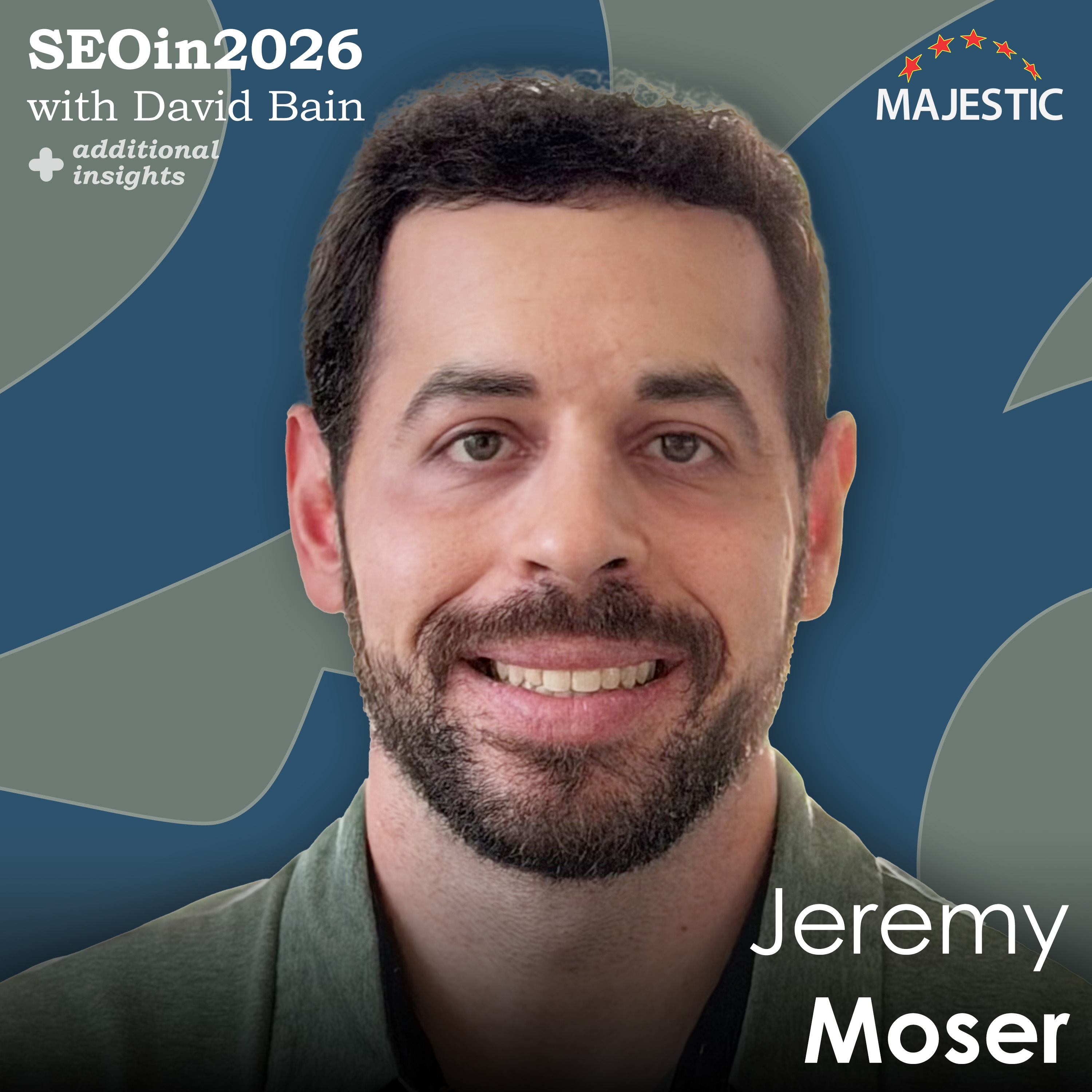
How To Create a SERP Monopoly with Off-Page SEO - Jeremy Moser
19m 7s
In this transcription, Jeremy Moser outlines the "topic taker" strategy for SEO in 2026, emphasizing a shift from traditional single-site content to a multi-platform approach. The core idea is to monopolize search results by ranking owned content on your site while also appearing on third-party sites, directories, and social platforms like LinkedIn, Reddit, and YouTube. This ensures brand visibility across multiple touchpoints, especially in AI-driven search where users see fewer traditional links. Moser highlights the importance of controlling the narrative through buyer’s guides and thought leadership articles on authoritative external sites, which can rank quickly and generate significant pipeline, citing $500K in revenue from such efforts. He advises focusing on middle and bottom-of-funnel keywords, where click-through rates are higher, and leveraging native advertising for paid placements. However, he warns that the window for this strategy is short as competitors catch on, so early adoption and monitoring of search feature changes are key. Overall, the strategy integrates on-page, off-page, and social tactics to build brand affinity and capture traffic across the entire funnel.
The key takeaway here is really building a content strategy that's both on an off-page. Especially in the AI search era where it's really being about having your brand be everywhere currently is really key. We're seeing that you need that own strategy, you need an off-page strategy, a social strategy, and it should all be interconnected and cohesive, all targeting a very specific subset of keywords that you want to rank for. The strategy shifts from typically an SEO a couple of years ago where you publish an article on site. You distribute that around on socials, you try to pitch it for links. Really we want to flip that script a little bit and say, "How do we create that same message and distribute it on a lot of different platforms individually and rank those individually so that we're showing up multiple times and search results?" We're getting more mentions at the bottom of the funnel in AI search as well. I'm Jeremy Moser and this is SEO in 2026, additional insights. Jeremy, what's your number one SEO tip for 2026? Yeah, my number one SEO tip is really focusing on what I call a topic taker strategy. So it's really a blend of an on and off-page combination that something I shared actually with Wix's enterprise customers a few years back and we found that it really still works today and actually works even better in the current landscape of traditional SEO and AI-driven search models and LLMs. Something that we use for ourselves, we use for our clients as well and really the premise of the strategy is finding what are your core keywords there and really owning the surplus just beyond your additional or your listings on your own site. So it's really going beyond the owned content on your own site and how can you expand that in search results. So for example, looking and seeing are there directories listed there, are there narratives you can control from a content perspective on third party sites? Are your search results showing anything around forums and discussions? For example, LinkedIn posts are resurfacing on key search results now as well as Reddit threads and YouTube videos as well. So there's a lot of stuff you can do here from a search strategy where we're looking to see how do we monopolize a given serpent? How do we show up more than one time with our own brand? So how do we control that narrative long term? And really the strategy there is going after both an on page, so the content that you own on your own site, obviously creating a good quality article or for the landing page for a given serve and making sure that you have your own content there that's really good. Then also looking beyond that and saying are there directories showing up that I can get listed on? Are there LinkedIn articles I can create and write on this subject and get those ranked for that given search results? Are there Reddit threads here that we can dominate as well? And then looking at a off page strategy to what sort of industry publications are covering the subject? How do we get involved with those and control the narrative? And that's really how you dominate some of these individual serve results so that you can show up more than one time. So you mentioned the phrase control narrative a couple of times. I love that. I'd certainly like to get back into that in terms of how you go about doing that. But something else you mentioned to me beforehand was talking about how this can also drive massive pipeline for your own business. I think a lot of SEO struggle to measure success, don't they? You know, I mean, the struggle to get traffic to begin with in the world of AI search, but when traffic arrives, you know, how do you actually measure the impact that that traffic has? So how do you measure the impact? How do you know that it's created that pipeline? Yeah, absolutely. One of the things we typically look at here is kind of a, it approached that's multifaceted. So we're looking and seeing what is any self reported attribution that we can collect from folks that come in the funnel. This could be both from, you know, as soon as a lead magnet. So we want to have attribution reported at both the early stages of the funnel all the way down to the end conversion of why someone came in the door. And so we can attribute this basically with self reported attribution, we can attribute it with if it's more of a narrative based control campaign where we're looking and seeing. So in this case, it'd be more specifically. We'd see if we're, you know, for example, as a link building agency ourselves, we have done posts and collaborations on like search engine, journal search engine land in these areas. And so we work directly closely with them to attribute success there of what's traffic is coming in kind of creating UTM links, things of that nature. So we can track direct metrics here around some of the efforts that we do. So there's a lot of ways you can structure it from a pipeline perspective to get a really good idea of are these leads coming in directly from that? Where do they originate? How did they actually hear about you in the first place? And one of the most interesting things that we've seen doing this for ourselves. So for example, like I mentioned, we did sort of what I would call narrative control based articles for ourselves for you, sir, on search engine journal and search engine land where we writ article, we wrote articles essentially around how do you vet link building agencies? How do you discuss with them? What are some key questions you should ask? What are like red flags you should look out for? How do you just go about finding one that knows what they're doing in the space? And so our article was touching on all of that and really controlling the narrative of what people should be discussing with a given link building agency before hiring them. And we found that upon publishing those, those ranked within a matter of days of publishing because of the strength of a brand like search engine journal and search engine land. So we were able to capture traffic at the bottom of the funnel for keywords that brands are bidding thousands of dollars per month in cost per click. They're paying thousands, tens of thousands of dollars a month in links for themselves to try to rank for those with landing pages. And we found direct attribution is really strong there where a lot of folks that came in the door just immediately said, "Hey, I saw your guys' article on search engine land, search engine journal. They're really interesting. Wanted to reach out and talk to you guys and see if it was a good fit." So there's a lot of kind of unique ways you can measure this from a pipeline perspective. And what we've seen is that a lot of folks reading these articles and finding them will reach out directly and even acknowledge that this is where they found you. And so we've been able to attribute a little bit north of 500K and revenue directly to these articles that we've produced for ourselves directly. Rohingya, okay. So many questions I could ask as a follow-up to that. Let's go with the fact that you talk about publishing content on third-party websites. Is it less important to rank content on your own site nowadays? Yeah, that's a great question. I think really ranking content on your own site is just really one piece of the puzzle these days. And there's so many unique serve features that are showing up. There's so many ways that you can capture more than one position on search results. And that's really the goal of the strategy at large is like, we definitely want to consolidate and have our own landing page on site where we're ranking, we're trying to rank for our best quality terms there that are ideally middle at bottom of the funnel. So for example, us, we want to rank for link building services or link building agency. And we've got our own great landing page that ranks for that. But we also want to look and see what else is ranking in that search result. Is it maybe directories? Is it maybe Reddit or LinkedIn or YouTube thread showing up things of that nature? And then also too, can we leverage the strength and quality of other good sites out there? To really shape that narrative and just talk about that subject as a whole. So that our brand, whether it's your personal brand, whether it's your company brand, is just guiding the conversation on that. And so I think, you know, having content on your own site is really one core aspect, but you can just go so much further these days. There's a lot of other ways that you can capture more search traffic from a single given search result there and show up just more time so that we're building brand affinity along the way. We're showing up multiple touch points when folks are reading whether it's more of an informational piece of the reading all the way down to something like a conversion based landing page on your site. You touched on YouTube threads there. You also talked about LinkedIn posts earlier on as well. And you're seeing that showing up more in the conventional Google Serp, I think. What kind of searches are throwing up those types of results? Yeah, absolutely. I'm seeing it across the board from top of the funnel all the way down to the very bottom of the funnel. For example, I've seen LinkedIn posts that are showing up. So one thing that's changed on LinkedIn is that their distribution has gone from just on LinkedIn to actually showing up on search results being part of AI overviews and citations and LLMs. And so what we're seeing from like a LinkedIn specific perspective, for example, is that they're showing up for more broad like informational stuff. So if someone wrote an article or just even a basic post on LinkedIn around, hey, here's some of the best local SEO tools that I've found. We've seen those ranked directly for just a basic Google search around best local SEO tools. And then we've seen it even move further to the bottom of the funnel. So this might still be ranking depending on when you're listening to this podcast. But if you look for, or if you search on Google for a link building agency, a post from my LinkedIn personally ranks for that in the kind of just box of threads for Reddit and LinkedIn and some posts from YouTube there. So we're seeing that span across like, you know, like I mentioned, LinkedIn used to just be its own channel that you would focus on. Whereas now we're seeing that kind of bleed into traditional search results as well. You say you're wondering if that post may still be ranking at some point in the future. Is there any particular length of time that you can imagine that a social post would it actually be incorporated within a conventional Serp and do they have a shorter lifespan? Yeah. That's a great question from what I've seen. They typically rank for at least four or five months, if not a bit longer. So the post that's currently referenced that I've seen just repeatable on search results for
in our case targeting link building agency, I've seen that article or that post rather from my personal LinkedIn has been. I think it was originally published some time in late 2025 and is still ranking for that keyword. So there's pretty good longevity there, even though LinkedIn is of course a platform that rewards freshness and posts every day. I'm finding that there's more evergreen posts there that tend to stick around and search results, which is really interesting. So I think there's a lot of potential there too. And I've seen this across the board in a few different industries too, where folks are creating more long form LinkedIn articles. And those are sticking in rankings for at least four, five, six months even. - And when you talk about controlling the narrative, obviously you mentioned YouTube, Reddit, LinkedIn, and other platforms as well, it's ever worthwhile publishing the same piece essentially on all these different platforms or would you actually always publish a different type of content to different, maybe length and completely different take to attempt to rank for the same keyword phrase on a different platform. - Yeah, absolutely. So typically we like to do a little bit of a mix there and ensure that we're not doing anything that's too heavy on a duplicate content standpoint where we're just repeating the same message. And what we like to do there is take another unique aim. The law in it. So for example, articles that we did on search engine journal were around like a buyer's guide for folks that were shopping for elite building agencies. And then for search engine journal, we wrote a similar article, kind of similar premise and really the idea was, of course, we want to drive bottom of the funnel leads. But that article was focused a little bit more around like what are some ways that you can look at link building agencies from an AI perspective. So there's a lot of the unique angles that we prefer to take on these. And think if you're doing this strategy at scale, it's really about crafting sort of unique angles that still fit within search intent. So looking and seeing, you know, what sort of pages are ranking already from a search perspective for your keyword? What sort of different topics or narratives are being pushed there and then creating those at scale on your own. So making sure that each individual sort of narrative based article that you publish there, whether it's on different sites externally or your own, takes a unique angle and topic there that may already show kind of overlap in search intent so that you have a good idea that this is going to rank well when you actually go to write it and publish it, but that it's unique enough to where you're not competing with yourself so to speak on a bunch of different articles. - And you mentioned bottom of funnel quite a few times there as well. Is that where the key opportunity is nowadays or it's still worth an SEO's time to also produce content for top and middle as well? - Yeah, I think a lot of the best efforts tend to be around middle bottom of the funnel really just because a lot of the search features that are showing, first off, that's more top of the funnel just tends to eat up your CTR really quick. And so even though top of the funnel terms might have high volumes of traffic potential, a lot of your CTR is just swallowed up by search features. So yeah, overviews are gonna do a pretty good job at explaining those things that are very top of the funnel, very broad based. But we see a lot of those search features disappear when you go further down the funnel and we see click through rates actually increase significantly. That's really where we've at least focused a lot of our time and effort is that middle and bottom of the funnel where it's more like comparison stage based, it's more maybe ranking various different solutions in a given space or even like I mentioned, some of those narrative control pieces where the keyword term there is super bottom of the funnel, like maybe it's around the best services for XYZ niche, whatever it is. And your article there is like a buyer's guide and in that case where it's very kind of straddling that line of middle and bottom of the funnel, your CTR is gonna be much higher and it's gonna lead to a lot of good quality conversions. And you also talk about how leveraging paid off paid strategies can still work. What do you mean for that? - Yeah, absolutely. I think a lot of folks when they hear link building and they hear sort of paid thrown in the mix, they get a little bit weary. And it's been that way in SEO for a while where there's like a negative connotation built around paid link building. But I think approaching it from more of like a native advertising perspective is really the way to look at it in that. There's a lot of good quality publications in any given niche and in a given space that are considered very authoritative in your niche. So whether you're in something, you know, like commercial real estate development or something all the way on the other end, like a SaaS company, there's a lot of different publications in your area that focus and have niche expertise. And a lot of these are not necessarily gonna be open to just naturally linking back to you. They're not going to typically be open to you just writing an article for them. And so it's really about developing like a brand and native advertising relationship with these types of providers where they've got really good quality access. They have the exact sort of audience that's in market that is a good fit for your brand. So there's overlap not only from, you know, just an SEO perspective but an actual business use case perspective. And those ones we typically find are really good fit for this where they've got good, kind of sponsored content, advertising options where you can write good quality. Articles there and those will still rank in search. So all they typically won't give you, you know, the benefits of like, you're not gonna get a followed link, it's gonna be, you know, more sponsored or no followed. So not, you know, traditional SEO benefits but these articles still have the ability to rank and that's really what you're going after is not necessarily the link itself but the ability to get your message out to folks that are really in market and the ability to rank really quickly for keywords that are just otherwise too difficult for your own site to rank for. And as well as the ability to rank, you say that top it, the top it takeer is currently the most impactful answer or engine optimization lever you can pull but you'll see that the window won't last forever. What does that mean? - Yeah, absolutely. We're just seeing a lot of change in search results right now where, you know, a couple of months ago, we were seeing that things like new to shut up more frequently now that shifting a little bit more to Reddit, some are shifting a little bit more to LinkedIn. So the real struggle here is how do you pinpoint where your efforts are best used and if that window closes quickly, how do you adapt? And so what we look at here is sort of a multi-pronged approach of like I mentioned, we wanna have owned content. So of course we wanna retarding that search result or that keyword with any given page on our site that we wanna focus on, whether that's content-based, whether it's a landing page, whatever it is, we wanna have an owned content there. Then we wanna look at things like directories. Are those showing up in your search results? If so, we wanna make sure you're listed on those that we wanna look and see what has been the search changes in the last three or six months from the forums, threads, social perspective, and then targeting the ones that have stuck around the longest. And then we wanna look at the narrative control window there too, where those are gonna stick a little bit more long-term because the site that you're doing this on are just gonna be more authoritative than yours in most cases. And so these windows tend to close pretty quickly as they just get more competitive, right? As more people catch on to this sort of strategy, the ability for you to rank in some of these spaces is gonna be far less than if you jump on this quickly. But that's typically what we find in most spaces is that once you get going on this, savvy competitors can kinda see and they understand, okay, you're going after these sites you're publishing these kinda posts, they're working, they're sticking, they're matching search intent. We're gonna kinda replicate that and then your competition window there gets, you know, really, really wide. There's a lot of folks going after a very small set of supply and there's just, you know, outsized demand. - Derby, what's the key takeaway from the TITP shirt today? - Yeah, the key takeaway here is really building a content strategy that's both on an off page. And so especially in, you know, the AI search era where it's really being about, having your brand be everywhere currently is really key. So we're seeing that, you know, you need that own strategy, you need an off page strategy, a social strategy and it should all be interconnected and cohesive. All targeting a very specific subset of keywords that you wanna rank for. And so the strategy kinda shifts from typically, you know, an SEO a couple of years ago where you publish an article on site, you distribute that around on socials, you try to pitch it for links. Really we wanna flip that script a little bit and say how do we create that same message and distribute it on all the different platforms individually and rank those individually so that we're showing that multiple times in search results, we're getting more mentions at the bottom of the funnel in AI search as well. Jeremy Moser is CEO at usurp. Find them over at usurp.io. Jeremy, thanks for watching with a big part of SEO in 2026. - Thanks for having me. - I've been your host David Bane. Get your copy of SEO in 2026, the book over at SEO in 2026.com. (upbeat music) [BLANK_AUDIO]
Podcast Summary
Key Points:
The "topic taker" strategy blends on-page (owned content) and off-page tactics to dominate search results by appearing multiple times for the same keyword.
Off-page efforts include leveraging third-party sites (e.g., Search Engine Journal), directories, social platforms (LinkedIn, Reddit, YouTube), and native advertising to control the narrative and capture bottom-of-funnel traffic.
Social posts and third-party articles can rank quickly and remain visible for months, providing high click-through rates and direct pipeline attribution (e.g., $500K in revenue).
The strategy adapts to AI-driven search by targeting keywords where search features (e.g., AI overviews) are less dominant, focusing on middle and bottom-of-funnel terms for better conversions.
The window for this approach is limited as competition grows, so early adoption and monitoring of platform changes are crucial.
Summary:
In this transcription, Jeremy Moser outlines the "topic taker" strategy for SEO in 2026, emphasizing a shift from traditional single-site content to a multi-platform approach. The core idea is to monopolize search results by ranking owned content on your site while also appearing on third-party sites, directories, and social platforms like LinkedIn, Reddit, and YouTube. This ensures brand visibility across multiple touchpoints, especially in AI-driven search where users see fewer traditional links.
Moser highlights the importance of controlling the narrative through buyer’s guides and thought leadership articles on authoritative external sites, which can rank quickly and generate significant pipeline, citing $500K in revenue from such efforts. He advises focusing on middle and bottom-of-funnel keywords, where click-through rates are higher, and leveraging native advertising for paid placements. However, he warns that the window for this strategy is short as competitors catch on, so early adoption and monitoring of search feature changes are key.
Overall, the strategy integrates on-page, off-page, and social tactics to build brand affinity and capture traffic across the entire funnel.
FAQs
His top tip is a 'topic taker strategy,' which blends on-page and off-page efforts to dominate search results by ranking multiple pieces of content (e.g., owned pages, directories, Reddit, LinkedIn) for the same keywords.
No, ranking on your own site is still crucial, but it's just one piece of the puzzle. The goal is to also capture other positions in the SERP using directories, social posts, and third-party articles to control the narrative.
Use self-reported attribution via lead magnets, track UTM links from third-party collaborations, and monitor direct inquiries from sources like guest articles. Jeremy's agency attributed over $500K in revenue to such efforts.
These appear across the funnel, from top-of-funnel informational queries (e.g., 'best local SEO tools') to bottom-of-funnel terms (e.g., 'link building agency'), often ranking for months.
No, avoid duplicate content. Instead, create unique angles that fit search intent, such as a buyer's guide on one site and an AI-focused take on another, to avoid competing with yourself.
Yes, middle to bottom of the funnel offers higher CTR and conversions because search features like AI overviews eat up top-of-funnel clicks. Focus on comparison-stage and narrative-control content.
Chat with AI
Loading...
Pro features
Go deeper with this episode
Unlock creator-grade tools that turn any transcript into show notes and subtitle files.
 PodcastTranscript AI