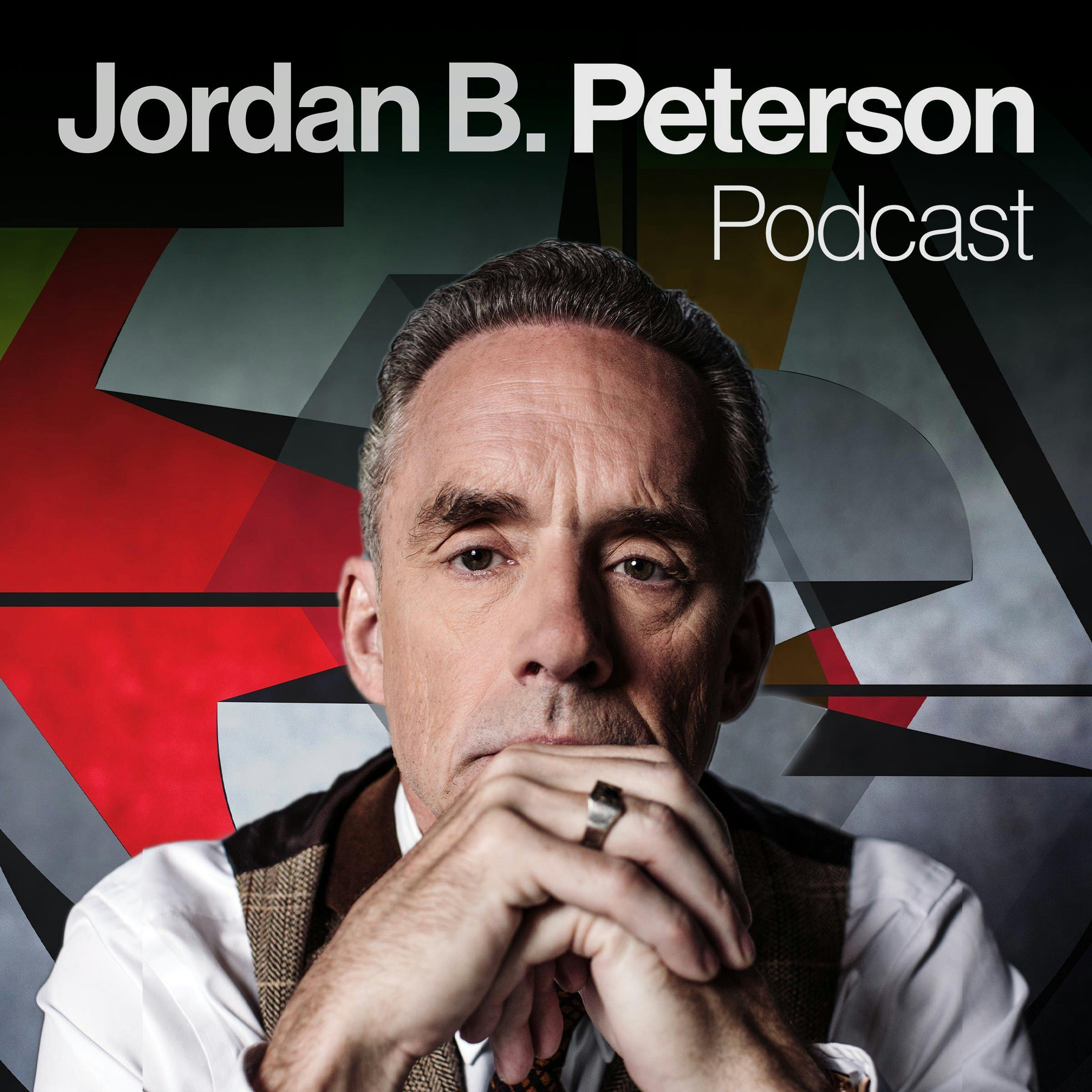
The speaker argues that human perception and action are not driven by raw facts alone, but by a structured, value-based orientation that shapes how we interpret and respond to the world. Attention is not passive—it is a prioritized act guided by internal values, such as love, sacrifice, and pursuit of growth. This value system is embodied in character and revealed through behavior, attention, and emotional response. Stories—especially biblical ones—serve as narratives that distill complex moral truths, allowing individuals to understand and emulate the values of righteousness, sacrifice, and moral courage. The speaker critiques Richard Dawkins' view of religion as solely evil, arguing instead that religious traditions offer a deeper understanding of good and evil as interwoven with human purpose. In the biblical framework, God is not a supernatural entity but a spirit of order, adventure, and moral transformation. From Genesis to Abraham, the stories illustrate how humans, when committed to sacrifice, faith, and long-term vision, can achieve meaningful, purposeful lives. This journey is marked by challenges, failures, and growth, reflecting the human condition as one of moral striving. Ultimately, the speaker concludes that true peace, harmony, and opportunity emerge only when individuals align their lives with a higher value system—walking with God through conscious, courageous, and faithful action.
What if a few minutes with God could change the direction of your entire day with pray.com? You can begin each morning with powerful daily prayers, inspiring Bible stories, and messages created to strengthen your faith. Whether you need peace, encouragement, or a fresh start, pray.com helps you make prayer part of your everyday life. Download the pray.com app today. I was reading The God Delusion by Richard Dawkins today. In principle, I'm going to speak with him publicly at some point in the next five or six months. I don't really want to have a debate with him. I want to have a discussion, and I think we can manage that, um, I've been trying to contrast the way that he views the world with the viewpoint that I'm putting forward in everything I do, really. Probably culminating to some degree in this new book, the topic of this tour. We who wrestle with God. See, I think the Dawkins is wrong and not just on not even primarily on religious grounds. Not exactly. I think he's wrong on scientific grounds. I think he's behind the curve. Scientifically speaking, and I want to tell you why first to set the stage for what we're going to talk about tonight. So Dawkins is an empiricist or a rationalist. Now, an empiricist is someone who believes that essentially that we get all of our information from sense data, so to speak, that we orient ourselves in the world as a consequence of understanding the facts. Now, the empiricists have been aligned to some degree since the enlightenment with the rationalists and the rationalists believe that we can use our rationality as well as the empirical facts that are disposal to organize the facts, say, in a rational manner. But there's some real problems with that perspective. I mean, one real problem scientifically is that isn't how the large language models now that mimic human thoughts so accurately actually work. They work by waiting facts, and there's something crucially important there. So the problem with the idea that you can orient yourself in accordance with the facts, which is let's say the scientific rationalist doctrine, is that there's an infinite number of facts. So there's one fact per phenomena. That's one way of looking at it. But that doesn't even encompass the world of facts because there's one fact for every combination of phenomena. And there's an innumerable number of things that you can attend to. And the fact of the existence of those facts provides you with no guidance. Now, David Hume, Scottish philosopher, figured this out about 200 years ago, and he think he was right. He said, "We can't get to an ought from an is by which he meant something like. There's no navigating your way forward on the mere basis of the facts. You have to prioritize the facts." And that's a non-trivial observation that you have to prioritize the facts. Now, there's something even more subtle going on with regards to the facts. The empirical hypothesis is something like you look at the world, the unfiltered sense data comes rushing in. You evaluate the data, the data, and then you act. But that's not right. It's not even close to right. And the reason it's not right is because in that schema action comes last. But that isn't how perception works. When you're looking at the world, we'll use vision because that's the primary human sense. But the same thing applies to all the senses. When you're looking at the world, you're moving your eyes. Now, and you're not just moving them voluntarily, although you have eye fields at the front of your brain, called the front-eye fields, that allow you to move your gaze voluntarily. But your eyes also vibrate at a very rapid, at multiple different frequencies. And if they ever stop moving, even for a tenth of a second, you go blind. So your eyes have to move back and forth. They have to move the light back and forth on the retina for you to even be able to see. And when you're looking at the world, gathering sense data, objectively, you're doing nothing of the sort because you have to prioritize your attention. So here's a simple example of that, although you're doing this all the time. Imagine that you're in a crowded restaurant on a first date. And maybe there's 30 conversations going on around you. The place is buzzing. Maybe there's some background music as well. Now, you can filter what you hear. You can direct your attention and filter what you hear. Now, we don't exactly know how we do that, but we can do it. And what you're likely to do, if you have any sense, is prioritize attending to the person that you're on the date with. Right? Okay, so now everybody thinks that's funny. So that's very interesting, because you you understand exactly what I mean. You know that your attention could wander, right? It could wander, especially if the date's dull. Your attention could, and that's a bad sign. Either because there's something wrong with you or because there's something wrong with the person or both or both. You could you could have your attention attracted by a distal conversation and focus on that. And that's a very interesting, because you know, as soon as you do that, that you can start to make sense of that conversation and filter out all the other ones, including the one that your date might be attempting to have with you. You could focus on the background music. You you don't do that because generally, especially if you're polite, because you prioritize the exchange of information that you're attempting to undertake in the course of the evening. Okay, now I said you do that because you're polite, but there's many reasons that you do that. So we could kind of walk through the reasons because it gives you some sense of the structure within which your attention is prioritized. So maybe you're a maybe you're someone who engages in short-term mating strategies. That's let's phrase it that way. And and your goal is to entice or bribe or fool this person into bed with you that night. Well, then you're prioritizing your attention with that end in mind, but that end is nested in something broader. It's nested in inside your broader conceptualization of sex and relationship. And that's nested inside a broader conception of the relative role of men and women. It's nested inside your idea of what your moral orientation might be in terms of establishing a relationship. That's nested inside a moral concept of sex and relationship as such. That's nested inside a broader perception of what it means to be human. And it's that nesting that constitutes the grounds for the direction of your attention. You're up to something when you're attending. You're aiming at something when you're attending. You're you're pursuing an aim. And because of that, you prioritize the facts. And so you filter the world of facts through a structure of value. Okay, so I was thinking backstage. I'd elaborated this idea of a structure of value. So we don't attend to the facts. We attend to the relevant facts. We attend to the meaningful facts. Okay, now, what makes fact? What makes a fact meaningful? Now look, here's something else to understand. Almost everything that you could apprehend has zero meaning. As long as it doesn't misbehave. So, and we know this from intensive experimental analysis. So for example, it's dark now. It's highly probable that none of you can remember
remember what color the carpet that you walked in on was. Or even if there was a carpet, the reason you don't remember is because it doesn't matter. As long as the floor stays solid underneath you as you make your way to your seat, you can ignore it, and you ignore almost everything. All right, so what don't you ignore? Which is the same question as how does the world lay itself out in front of you? You're a mobile creature, right? You're always moving, you're moving in order to sense, you're moving in order to move towards your aims, you're always on a journey, you're always on a quest, you're always in pursuit of a vision, you're always pursuing an aim, you're always up to something. It might be something short term, it might be something medium term, it might be something long term. With your reasonably coherent, your short term preoccupations are linked to your medium term desires, and those are linked to your long term plans, and the way you take care of yourself is now. The way you pursue what you want and need now is associated with you taking care of yourself as you repeat into the future. You don't do things that are foolish, but enjoyable in the immediate present. If you understand that they're going to cause you misery and grief in the future, or at least you don't do that if you're disciplined and mature, so you constrain your aims in consequence of your knowledge of the fact that you exist across time and you do the same thing in relationship to other people. You constrain your aims in the moment knowing full well that the things you do have impacts on other people and that those impacts are reciprocal and that they're going to propagate across time as well. The construction of your aim, the construction of your value system is very complex matter that takes into account what it is that you need and want now, but also what you'll need and want as you progress through the future and then takes into account you, but in relationship to everyone you are in relationship with, okay, so the structure of values that you inhabit has to account for all of those realities. How does the world of facts make itself evident to you in terms of relevance? What's a meaningful fact? A pathway forward, that's a meaningful fact, something that lays itself in front of you as a stepping point, a stepping path, a pathway to something that you value. That's an opportunity. A quest is a pursuit of an opportunity, a quest is a pursuit of a treasure. Why is the mythological story the quest? Well the answer is because you're always in pursuit of the treasure. You're always moving from where you are to somewhere richer and better, as insofar as you're aiming up and attempting to expand your domain of opportunity. What facts that are relevant might you come across along the way? Well, tools, you can use tools to facilitate your movement forward. Cooperative agents, people that you can work together with to attain a goal, obstacles, they trigger negative emotion, they stand in your way, markers of failure and transformative agents. That's the landscape of meaning and as you traverse your, as you traverse the landscape of meaning, you aim up and you move away from what's down and that's the landscape of good and evil. Good is the ultimate up and evil is the ultimate down, the abysmal down, then you orient yourself along that axis. You see the pathways forward, you move uphill, things come along with you that facilitate your movement forward and indicate progress. Those things please you, obstacles occur and indicators of failure. Those things displease you, produce negative emotion and agents of transformation change your goal and that's the magic of an agent of transformation, agents of transformation are common figures and fairy tales, for example, as they change the way you look at things. So there is a world of facts but the world you live in is the world of relevant facts and the world of relevant facts is a reflection of your structure of value and that in turn is a reflection of your aim. Imagine your favorite lecture dialed at on one max or that on steroids and then add some cinematic elements to it, that's the best way I could describe a Peterson Academy lecture. I went to college because I had to. I go to Peterson Academy because I want to. I'm still paying off college from 10 years ago and I'm also still questioning the value that I got out of college. In traditional universities a lot of times this is pretty dry. They don't bring the same energy as the professors at Peterson Academy. It is a completely different experience to learn from somebody who actually wants to teach you. If you've been on the fence about this, this is the time. That thing that's going to you won't have an answer for it unless you enroll and see for yourself. You have the opportunity to investigate that calling. No aim, no value, that's a conclusion you can derive from that outline. Ultimate aim, ultimate value, that's another conclusion, that's worth knowing. If you experience positive emotion in relationship to a goal, what that implies is that the more lofty the goal that you're pursuing, the more opportunity there is for hope. Hope is the emotion that indicates progress towards a valued goal. No goal, no hope. A goal also, an aim, a value structure also constrains you. It delimits possibility in a manner that's equivalent to the regulation of chaos. If you're aimless and directionless, not only are you hopeless, you're anxious. And so a well-constituted structure value moves you towards your ultimate goal, specifies your objects of perception, orients you emotionally, provides you with hope and quells anxiety. The embodiment of someone's structure of value is their character or their personality. Okay, so that's the next link you need to know, to understand what we're going to talk about tonight. People portray their structure of value in their actions, in their patterns of attention and their actions. Their patterns of attention and their patterns of actions are their character or their personality. Okay, now an account of someone's character or personality is a story. Okay, so now you know why you need stories. You need stories because it's very hard to perceive the world. There's an infinite multitude of facts in their combinations and getting a grip on those and determining which of them are relevant and which aren't under which circumstance is extraordinarily difficult. One of the things we do when we're communicating with other people is we look at their eyes. You know, when you talk to someone, you look at their eyes. The reason you do that is because you want to see where they're pointing their eyes. And the reason you want to see where they're pointing their eyes is because you assume that they're pointing their eyes at something valuable. And the direction of their gaze is an indication of the presence of value. Now, if they're looking at you, which everyone hopes for, at least under the appropriate circumstances, then you understand that they regard you as a source of value. That's what you'd be trying to do on the date that we described at the beginning of this lecture. Indicating your value of the person for whatever nefarious ends you might be cooking up. But you could be playing a straight game as well, indicating to the person by your direction of attention.
their value in your eyes. Our eyes actually evolved to allow that kind of signaling. You know, our iris is colorful. It's surrounded by a ring of contrast. It's against a white background because the direction of our gaze is such a tremendously important signal. It's a signal of attentional focus and aim. It's a place of signaling of associated emotions. When you get to know someone, you get to understand their character and their personality and you can step into their shoes. That enables you to understand them and that enables you to cooperate with them. But equally importantly, perhaps it enables you to see the world through their eyes. And that's a tremendous gift because it means you can get access to the wisdom they've earned through their struggles without having to go through those struggles yourself. That's what you do when you go see a movie. It's a great mystery that you go see a movie. You'll pay to do it. You'll line up to do it. You'll be enthusiastic about it. The root word of enthusiasm is "theos" "deos" means to be inspired by God. You can be enthusiastic about going to see a movie. Well, why? Well, it's in a way. It's because you meet the gods in a movie. Now, sometimes literally, right? Or as literal as a movie can be. You go watch a Marvel movie and there are gods in it. Thor, Loki, and the rest of the superheroes. But even if you're just watching a movie that's a more realistic portrayal, you're watching characters and personality unfold in real time. Okay, so what are you doing when you're doing that? Well, let's start with what the movie is doing first. You want the movie to be interesting. You want it to grab your attention. And so what the writer does is he distills the experience of one person or many people into a set of associated interesting experiences. Right? So when you go see the movie, you don't see every single thing the character does second to second in real time. You see something edited, so only what's gripping remains. And you see characters that in the main are more than human. Right? Even if the movie is realistic, it's edited so that everything that's only predictable is gone. And only what's informative about the person's character is left. And then you might ask yourself, well, why do you want to see a value structure characterized? So that you can inhabit it, understand it, and benefit from it. So you watch The Dark Knight. It's a mythologized movie. It's halfway to a religious story. A superhero story is halfway to a religious story. Why are you interested in the characterization of the Joker? Because you're interested in the author of all ill. You want to identify the pathway to the abyss. You want to understand the nature of evil. And not only as it makes itself manifest in characters in the real world who have wandered off the path, but as an essence, you want to understand evil as that which all people aiming down have in common. And so a great writer extracts out all the structures of value that orient people downward towards pain and suffering, and distills it. And then you can watch that character, adopt his frame of reference, evaluate the obstacles and facilitators and pathways that make themselves manifest to him, experience the accompanying emotions, embody the experience, and walk away somewhat wiser. You do the same thing when you watch the hero, except it's in the opposite direction. The hero in a movie is an amalgam of heroic patterns of attention and action. And you have the opportunity to evaluate them as they lay themselves out in the fictional world and to embody them as you observe them. The fiction is a distillation. In our world, because we're naive, we contrast fiction with thought. We say that fact is one thing in fiction is another. Fiction is a distillation of the prioritization of facts. It's an abstraction. It's a very, very, very profound form of truth. It's truth as it manifests itself in character. And since you're a character, there is no truth deeper than mythological characterization. So what happens in the biblical corpus? The character that defines the highest possible orientation is portrayed and explored. The biblical, the Bible is a library of stories, and each story presents the character from a slightly different angle. Who is the character? Well, there's two. There's God and human beings. And God is characterized and human beings are characterized in relationship to God. And that means that human beings are characterized in relationship to the infinite. It's something like that. We have to be characterized in relationship to the infinite because we exist despite our finitude in relationship to the infinite. Managing that relationship is very difficult because we're bounded and mortal. There's only so much we can do and take. So the relationship has to be filtered and particularized. The God of the tabernacle is veiled. That's because the infinite is veiled from us, but also has to be. There's only so much you can take as you tell yourself and other people frequently. The full revelation, a full revelation would destroy. How is God characterized? All right, so now you see this is a different approach to the religious problem. I made some reference to Dawkins at the beginning. Dawkins characterizes the religious endeavor. Well, first of all, as the sum of all evil, which I think is not very fair because you can find evil everywhere and limiting it to the religious domain is foolish. There's economic evil and political evil and social evil and familial evil and there's evil and love and it's everywhere. And to delimited our maturity like that and to attribute it, let's say to the religious enterprises convenient but preposterous. But also it's it's based on a misapprehension of what the religious endeavor is attempting to do. It's attempting to characterize the good. It's attempting to characterize good and evil and it's attempting to characterize man in relationship to good and evil. Now you might say I don't believe in good and my response to that would be you don't know what you're talking about. You simply don't know what you're talking about because you can't prioritize your attention without acting out a relationship with the good. What you believe is good is what you attend to. That's why you attend to it. Attention is expensive. It's a sacrificial gesture. When you attend to one thing, you forego the attention you could pay to everything else. That's an opportunity cost. That's a sacrifice. When you attend to one thing, you celebrate it and worship it. You put it on a pedestal. You can do that excessively. You might do that on your first date, for example. But, because everything in its proper place.
But to attend to something is to raise it above all else. To raise something above all else and to devote attention to it is the same as establishing a relationship with what's good. It's the same thing. And so you may have a fractured idea of what constitutes good. You might have an incoherent account of it. You might not be able to make sense of how what's good makes itself manifest in your life. But that doesn't mean that you're not inhabiting that landscape. You have no choice. That's why we wrestle with God. Because every decision we make, every decision we make, every glance we take is a moral act within the landscape of up and down, within the landscape of good and evil. The biblical corpus is an attempt to characterize good and evil and man's relationship to them. It sets forth a series of characterizations. So let's walk through them. The first characterization occurs in Genesis 1, where God is presented as the spirit associated with the word that moves on the face of the chaotic and deep. What's that? It's something like possibility. Okay, so what's the idea there? The idea is that the spirit that gives rise to the order, to the order that is good, is the spirit that interacts with possibility in a certain manner, in a manner that's characterized by the definition of the divine word. The divine word is conceptualization that aims upward in love and orient itself in truth. The spirit of divinity in Genesis 1 is characterized as the spirit that brings order to possibility in chaos with upward aim and in truth. Okay, so what does that mean? Well, it's best understood in a relational manner. There's an insistence in Genesis 1 that human beings are made in the image of God, man and woman are made in the image of God. Now, that's a fundamental proposition. Make no mistake about it. The reason that you all have rights, the reason we understand the idea of rights and their requisite responsibility, is because the system of conceptualization in which those ideas exist emerged from the notion that human beings are manifestations of the transcendently divine order and have the inconsequence and intrinsic worth that's inviolable. You can't violate it even with your own criminality. The state cannot impose on it. You can't impose on it even in relationship to yourself. Your intrinsic value transcends the natural and social order. Okay, is there any justification for that claim? Well, here's a way of thinking about it. Your spirit is made in the image of God. The closest word we have in modern parlance to spirit is consciousness. You might ask yourself, "What does your consciousness do? What are its objects?" Well, we leave it out a little bit. The objects of your consciousness are not facts. They're relevant facts. But there's more to it. The objects of your consciousness are something like the realm of the infinite potential. That's a good way of thinking about it. When you wake up in the morning, what occupies your consciousness? This is why you're conscious in the morning. Well, it's the possibilities of the day. Now, if your life is in disorder and disarray, the possibilities of the day will make themselves manifest to you in a manner that evokes anxiety. Too many directions. Too many things crowding in on you. Too many facts at hand. If things are well ordered for you, then the possibilities of the day will make themselves manifest as the opportunity that compels you forward. What is it that you undertake to do when you awaken? You undertake to take the possibility that's at hand and to wrestle with it so that you produce the order that is good or very good. If you're operating as you should in relationship to yourself and to those you love and to your community and to the future, then you shape that possibility, that chaos into the actuality that's beneficial at all those levels simultaneously. And that makes you admirable, self-confident, relatively free of existential terror, faithful, courageous, and possessive hope. There's no difference between that and the biblical idea that's expressed in Genesis one of walking with God. That's the same idea. Paradise vanishes when people cease to walk with God. Paradise vanishes when people cease to employ their central affinity with the divine word, when interacting with the possibility that lays itself out in front of them. The fundamental object of your consciousness is equivalent to the chaos that God moves upon not only at the beginning of time but now and forever. It's that affinity that defines the human being. And it's that transformation of possibility into beneficial actuality that constitutes the first characterization of God. The second characterization of God occurs when Adam and Eve overreach as a consequence of their sin of pride. Human beings are characterized as those creatures that will overreach as a consequence of pride. And God is characterized as the spirit that objects to that prideful overreach. How can you understand that? Well, how often do you bite off more than you can chew? And how often do you do that because you fail to attend? How often do you do that because you're putting forward something within yourself that shouldn't be put forward? Adam overreaches to impress Eve. That's the eternal sin of men. Eve overreaches to impress herself with her ability to even class serpents to her breast. That's the eternal sin of Eve. Those are characterizations of human beings and their proclivity to go astray. And God is the spirit that responds to that overreach with the disillusion of the paradisal state. How does that make itself manifest in your life? Well, how many failures have you encountered that were a direct consequence of your cataclysmic arrogance? Well, it's really a serious question. There's an emphasis in Christian theology. It's very difficult to make sense of there's an idea in Christian theology that's suffering enters the world with Adam and Eve sin. So the idea there is that suffering is a consequence of prideful overreach. Now this is a hard idea to wrestle with because suffering in some way seems to be built into the structure of existence, right? Because we all. our fragile, we're mortal, we age, we're subject to decay, to some degree that appears to be independent of our ethical orientation, although you can certainly make your life a lot shorter and a lot worse with some effort. And so we do understand what we do understand that there's a relationship between our inability to aim properly and the suffering that visits us and there's an open question, in consequence of that, which is something like, if you ceased overreaching and continued to walk with God, how much of the suffering that characterizes the world would vanish? It's a it's akin to a related question, the question being, if you are as good as you could be, how much better would everyone around you become? In the story of Canaan Abel, God is characterized as the object of proper sacrifice. This is a definition. What does sacrifice mean? If you understand this, you have a key to understanding the entire biblical story. If you understand sacrifice, it's difficult to understand because it's a multi-dimensional and it's meaning. But one of its more straightforward meanings is simply work. There's no difference between sacrifice and work. Human beings work. Why? Because we're self-conscious. Part of Adam and Eve's awakening is the dawn of self-consciousness. Their eyes open and they realize that they're naked. They realize their mortal vulnerability. And the reason we work is because we realize our mortal vulnerability. We know that even if things are good right now, look, imagine you're a zebra. You're out on the belt with all the other zebras. And the lions are sleeping. And what do you think with your zebra mind? Something like, there's nothing dangerous about sleeping lions. Well, what's the problem with that theory? Well, the same lions in the future will be awake and then they'll be hungry. And so a sensible group of zebras would get together and stomp the lions when they're asleep. But because they have no sense of their boundaries or their future, they have no comprehension of the future and its dangers. We have plenty of apprehension of the future and its dangers and its promises. And in consequence, we organize our actions so that we sacrifice the present to the future. That's what work is. Right? Work is delayed gratification. Work is investment in tomorrow. Work is a covenant with tomorrow. Right? Work is a covenant with the spirit that rewards proper sacrifices. That's why the relationship with God in the Old Testament is characterized as covenantal. It's because we act out the notion of a contractual relationship when we work. You work so you can get a paycheck in two weeks. You put some of your money in the bank so you can invest for the long run. You do that on the understanding that if you make the proper sacrifice in the present, you will be rewarded in the future. That's a contract in the covenant and it's faith-bredicated. Now if you're sensible, you keep the covenant in all its dimensions because by doing so, you stabilize your society in precisely the manner that increases the probability that your future investments will in fact pay off. Right? Because you invest wisely only if only under conditions of sufficient stability so that immediate gratification is not the best bet. And you do that in your faith that things are organized well enough so that what you invest will be returned to you. That's an action of trust. And trust is dependent on the maintenance of an ethos of honesty. And so the value of your work is dependent on the trust that characterizes your society and that in turn is dependent on the moral action and orientation of everyone who makes up that society. The covenant that guarantees that sacrifices will be amply repaid extends to include the actions that stabilize the processes that make that return likely. And there's no real difference between that. There's no real difference between that and the psychological sense and maturation. If you're a mature person, you don't run your life by impulsive whim. That's what you do when you're two. When you're grown up, you take into account the ramifications of your behavior into the future to govern your behavior in the present and you take into effect the effect of your actions on the people around you. And that's the definition of maturation and it's really the ability to see over that long span of time and in that multi-dimensional manner that actually characterizes neurological maturation and development. When you're young, when you're two, when you're a toddler, when you're impulsive, you're at the mercy of your instinctual whims and they have a very short term time horizon. And you might, there's something wonderful about that. There's something wonderful about being around toddlers with their unbridled emotionality and motivation and enthusiasm, but if you put ten of them in the forest for a week, they're dead. And while that's an indication that the notion of moral relativism is incorrect, right, there's a directionality in maturation and the directionality involves the transformation of that short-term mode of apprehension into the long-term and pro-social view that characterizes the proper covenant. Cain and Abel make sacrifices. That's a hard thing to understand because it's couched in archaic language. Cain offers what second rate? Abel offers the finest that he has. What does that mean? God accepts Abel's offering and rejects Cain's offering. Well, how do you understand that? It will take everything you have to keep the covenant properly. That's how you understand it. Anything you offer that second rate will be insufficient. To adapt properly to the conditions, to the dreadful conditions of your life, it will require your total commitment. God is conceptualized in the story of Cain and Abel as the spirit that punishes those who sacrifice in a second rate manner. And then you can ask yourself with regard to your own moral orientation. Do you admire people who are convicted and committed? Are you proud of yourself in those moments when true self-esteem is justified, when you observe yourself convicted and committed, or when you're playing both ends against the middle and trying to pull the wool over your eyes, the eyes of people you love, society at large, and God. Conscience calls you out on your failure to sacrifice properly. In the Old Testament corpus, conscience is one manifestation of God's character. In the story of Noah, which is the next story, Cain sacrifices him properly. Okay, so what happens to him? Well, it becomes murderous first. It becomes insanely jealous, right? And not only insanely jealous, but insanely jealous of his brother, not just his brother, his own ideal, right? And then he destroys his own ideal in his bitterness and resentment, and then his children become murderous and genocidal. Cain's inhabitants fill the earth, and God determines to destroy everything. Is that real? Well, what happens when everyone becomes bitter and resentful?
stops making the right sacrifices, becomes vengeful and murderous and destroys their own ideal. It's happened in many countries in the 20th century and the consequence was the flood, a flood of blood. That's what happens in the story of Noah. Okay, what's God in the story of Noah? God is the spirit that calls the wise in their time to prepare when chaos looms. It's a definition so imagine that you're like Noah, you're someone wise in your generations. What does that mean? It means that for your time in place, you're a good man or a woman, which is all you can really expect from, which is almost all you can expect from someone, right, to be good within the confines of your time and place. And Noah is presented, that's his characterization. And he receives a message telling him that all hell is about to break loose and that he needs to shepherd his family, his community and the natural order itself through the flood. And that's what you're called on to do. What does that mean? Well cataclysm has come in various orders of magnitude. We'll all go through periods in our lives where things fall apart around us and now and then collectively we go through periods of time where everything falls apart around everyone, everywhere. If you're wise, you'll harken to the voice that warns you that such occurrences are pending and you'll make whatever preparations are necessary, despite the noise of the mob. And that's Noah's role. And so his characterization as a good man presents him as someone who's in alignment with his calling and his conscience, but whose vision is also untrammeled. One of the things I realized many decades ago that scared me to the core, I would say, was that there are times in your life where you will have to rely on your judgment, your judgment. So then you ask yourself, well, how do you know you can rely on your judgment? How do you know if you can rely on anyone's judgment? Well, you ask yourself that whose judgment do you rely on? Well, you rely on the judgment of people who approved themselves to you as honest and reliable. Their patterns of attention and action indicate their honesty and reliability. You assume in consequence that their vision is clear and that they can be trusted. Those are the people you might call upon for counsel or use as a confidant. The same thing applies to yourself. The acuity of your vision is proportionate to the clarity of your purpose. If you have deviated from the path, which is what sin means, sin means to miss the mark, by the way, three different languages have the same derivation, same insistence that to error is to miss the target. If you purposefully miss the target, you obscure your vision. What's the consequence? When the crunch comes, first of all, you might not even notice it until it's too late, or you'll be so addled in your judgment that you won't be able to make the proper preparations. And if the crisis is acute, that'll be worse than fatal. And you might say, well, what's worse than fatal? Well, how about the occurs that results in the prolonged suffering of the people you love? Disorient yourself at your peril. That's a violation of the covenant with what is described as God in the Old Testament Corpus. Noah walks with God. That's the definition of his goodness. In consequence, when he has an intuition, a revelation, that trouble is brewing, he can trust himself, he can take action, and he's correct. That's what makes him a prophet. How do you become a prophet? By seeing what's right in front of your eyes. How does society's fall apart under the dominion of the false sacrifices of Cain? The flood comes. That's not the only way. Totalitarian tyranny beckons. That's the Tower of Babel. Cain's descendants build cities. They worship technology. It isn't that technology in and of itself for human intellectual activity is reprehensible. It's that it's reprehensible when it's put in the highest place. And those who worship technology do that. They're the builders of the Tower of Babel. Babel is Babylon. Babylon is the symbolic city of the tyrant in the biblical corpus. Now you see variants of that. Sometimes it's Rome. Sometimes it's Sodom. Sometimes it's Gomorrah. Although those are more holidays of chaos. Babylon is the tyranny of the presumptuous spirit. Why a tower? Well, because at the time in Babylon, potentates in the Middle East had competitions within cities and between states to build the highest tower as testaments to their divine presumption. Societies that deteriorated in the past made their leaders into gods. We haven't stopped doing that. It's exactly what happened in the Soviet Union. It's exactly what happened in Nazi Germany. It's exactly what happened in Maoist China. It's still happening in North Korea. The ruler who's elevated to the position of the highest becomes the tyrant who produces the Tower of Babel. That's a technological enterprise oriented to the wrong end. No one can understand each other anymore. All right. Words lose their meaning. Does that ring any bells? What is a woman? When that word loses its meaning, we all speak different languages, and the tower comes tumbling down. I mean that very specifically because I believe as a cognitive psychologist that there is no category of apprehension more fundamental than that of sex. Creatures without nervous systems can detect the difference between sexes. Otherwise, they die. Right. If people lose their apprehension of that fundamental reality, all words lose their meaning. Right. And you can see part of the reason that you're here tonight is because you can see that happening. Right. The next story is the story of Abraham. Now Abraham is as the stories progress that the human characters become more realistic. They become more fully human. Can and able are almost purely archetypal. Can and able are representations of the two patterns of adaptation that war with each other eternally within the human soul. The proclivity to aim up and to sacrifice properly. The pathway of able and the bitter, resentful, callous, prideful, murderous pattern of Cain. The earliest representations of the eternal battle between Christ and Satan in its nascent form. Noah, again, is deeply mythologized. Right. He's emblematic of the pattern of being that shepherds, family and society through crisis. With Abraham, we get quite a fully developed character person.
With much of the historical context left intact, who is Abraham? Well, he's a late bloomer. Abraham comes from a rich family. And he lulls around his tent till he's 75, not his tent, his father's tent. And why? Because he can. Abraham has everything that you hypothetically need. This is why you maintain skepticism in the presence of utopian promises. There's no reason for Abraham to leave home. All of his needs are satisfied. Insofar as the conceptualization of need and satiation covers the domain of human experience, which it does badly. An infant who's been fed and is sheltered and held can sleep. There's no need for consciousness. Abraham is living a life of ease, but it's not a life. Because a life of ease is not a life. A life of voluntarily undertaken difficulty is a life. And there's no difference between that and an adventure. God in the story of Abraham is the call of the spirit of adventure. And it comes to Abraham when he's 75. And it says to him something very direct. It says, "Get out of your father's tent. Get away from your family. Leave your country men and your comfort. And go to strange and foreign places and make your way." And if you do that, then I'll make you a blessing to yourself. I'll make your name resound among other people. I'll make your descendants numerous beyond count. And I'll make you and them a blessing to everyone. Now, that's the promise of God. Do you believe in that promise? It's not a matter of your acceptance of a set of descriptive facts. It's a matter of your willingness to be motivated by a particular spirit. Did you leave home? Why? Do you find yourself impelled to leave your zone of comfort? Do you find yourself dissatisfied with mere comfort? That's a deeper question. You can imagine infantile security as the logical end of striving. But that's not in accordance with the reality of your own experience. If all your romantic partner offers you is security, you're going to be bored into frustration rapidly. What do you want? You want a challenge. The word Eve means beneficial adversary. Why? Well, because a beneficial adversary is a partner in play. Imagine you're playing one-on-one basketball. You're six foot four. Your nephew's over. He's four foot two. So you think, "I can stomp the little guy." And you go out into your driveway and you make 50 baskets and he makes none. And maybe you push him over once or twice just for good measure. And you've won. So why not do that? Well, the answer is. well, there's two. That's not the right way to play. And it's no fun. Well, why not? You're winning. Well, isn't winning the point? Well, your children will ask you that, especially when they're cheating to win. Who isn't winning the point? You don't know how to answer that because obviously winning is the point. But the way you answer is doesn't matter whether you win or lose, it's how you play the game. You've got that cliche at hand, but you have no idea why it's true, even though it is true. Why is it true? Cheat and have no friends. Right. Well, then you win the game, but you lose the game of games, right? Because if you try to win and you play by the rules and you play fair and you're fun, then people keep inviting you to play games. And that's how you win. And the spirit of play is an indication of the presence of that occurrence. And what you really want is not security, but life optimally on the edge. And you need a partner who keeps you there, and that's where you dance. And you dance so that you're flexible in the face of life's challenges. And you manifest sufficient faith to make those challenges welcome. And that's what Abraham does. The voice of adventure comes to him. And he follows it. Well, that means he believes it's not a stateable set of propositions precisely. It's an orientation to the world. Now, there's an offer embedded in the story that's unbelievably profound and it's so optimistic. So, you know, you want to encourage your children. What does it mean to encourage them? It means to reward them for surpassing their limits. Right? You want them to move continually and more effectively farther and farther out there into the world. Okay. Why do you want that? Because you assume that if they develop that ability, if they develop the courage and the faith to move forth rightly out into the world, that they will be a credit to themselves and to you and to everyone who knows them. And to the degree that you love them in your encouragement, that's what you want to see. And when you see them doing that, then that fills you with the sense that you're manifesting the proper spirit of the Father. That's what Abraham endeavors to do. And God tells him that if you abide by the calling of the spirit of adventure, then you'll be a blessing to yourself and to the world and the founder of a nation. Now, that's a good deal. So, imagine this. Imagine that you have an impetus towards an adventure. The adventure can be of any scale. It's the adventure that puts you outside your zone of comfort in a manner that's optimally challenging. Right? Not too much, but not too little. Right on the edge. That's the line between yin and yang, by the way. That's the dao. That's the eternal way. You can feel that because you're maximally incentivized when you occupy that position. What's the promise in God's revelation to Abraham? There's nothing you could do that would be better for yourself, now and in the long run, and for everyone you love and your descendants, and for everyone else, then to harken to that voice, in faith and courage. Now, you know that you wished that you had the courage to believe that. And you know that the best times in your life have been when you dared that. And you ask yourself whether you want to or not what your life could be like if you did that all the time, wholeheartedly, all in offering your best without reservation. And God has an answer to that in the story of God is the source of the answer to that in the story of Abraham. The answer is everything you want need in a manner that gives everyone else everything they want and need forever. No difference between that and the reappearance of paradise. No difference between that and the establishment of the heavenly Jerusalem. The same thing. What's Abraham called upon to do? Lift the burden of his life and make the appropriate sacrifices. Abraham leaves and he brings his wife, he brings his family, he brings his staff with him on the adventure. You don't have to go into the world alone. You can journey with other people. They'll be plenty for them to do in the adventure as well. He leaves, he makes the first sacrifice. He offers something up to God. What does that mean? It means to offer something upward. What does that mean? to take something of value and to devote it.
towards something that's even more valuable. You know, when new opportunities emerge in front of you in your life, you have to sacrifice. Well, let's say that you started a business and it's starting to be successful. And you're not the world's best manager because you're too lazy, fundamentally. You're not disciplined enough. So there's a part of you that's immature. There's dead wood. You're partly dead wood. And so you wanna move forward with that opportunity. So that it makes itself fully manifest. What do you sacrifice? You painfully sacrifice your own stupidity. And that is a sacrifice that's pleasing to God because you're probably in love with your stupidity. And it pleases God to be offered something that you love in service of something that's higher. And I would say as well that that's also a hallmark of maturity and commitment. And you could imagine that as your scope of opportunity grows, the magnitude of the sacrifices that you're called upon to make continually increase. Not least because as your opportunities grow and your horizon of possibility expands, there's less and less room for foolish error. The costs, the opportunities multiply, but the costs of foolishness multiply as well. And so what you see in Abraham is life as a secession of expanding sacrifices and opportunities. And so that lays out the pathway for a life that's successful. Abraham journeys with his family, with his wife, he makes the sacrifices along the way. But he also encounters the harsh realities of everyone's life, right? So he's on the adventure and he's harkening to the call of adventure, but that doesn't mean that his life is without challenge. Quite the contrary, the challenges are profound. He almost immediately encounters a famine, very common occurrence throughout history, rare at the moment, so far. The elite in Egypt conspired to steal his wife. He parts company with Laught, his nephew along the way. Laught turns towards Sodom. There's a civil war in the vicinity and Laught is captured by the warring kings. And so Abraham has to organize his people into an army and go rescue his wayward nephew. Abraham fully confronts a sequence of catastrophes and opportunities, making the appropriate sacrifices in good faith as he moves forward, determining regardless of the consequences to maintain his faithful commitment to the adventure, which is equivalent to his willingness to abide by the spirit that calls to him. It's a good thing to know that God is portrayed in the Old Testament as the spirit that calls you to adventure, that calls you to meaning, is the manifestation of that spirit. In the story of Moses, Moses is going about his business as a shepherd, this is before he becomes the leader who will combat tyranny and slavery. The story of Moses is a story about how to become the leader that can combat tyranny and slavery. And you might say, well, I'm not called upon to do that. It's like, yes, you are. You are called upon to combat the tyranny that you exert against yourself and the fact that you're a slave to your own idiot whims. You're called upon to fight the tyranny and slavery that exists in the workplaces you inhabit and in the social communities that you're part of. And the families that surround you and you develop that ability by becoming a leader. How do you become a leader? Moses is at the foot of Mount Sinai as a shepherd. He's an ordinary man at this point. Something attracts his attention. That's worth noting, things attract your attention. Why? Well, the biblical hypothesis is that's because that's the spirit of being and becoming itself beckoning to you. That's what happens in the story of the burning bush. Something attracts Moses attention. He goes off the beaten path to investigate. He investigates thoroughly. He gets closer and closer to this thing that's revealing itself as compelling. He takes off his shoes. He dispenses with his current identity and his current preoccupations. He investigates even more deeply this transformation of life that the burning bush represents. As a consequence of his commitment to that pursuit, the voice of being and becoming itself speaks to him and says, you have within you what it takes to become a leader of men. You're to return to the community that spawned you, you're to confront the forces of tyranny, you're to lead your enslaved people from their captivity into the desert of their hopelessness to the promised land. By harkening to the voice of adventure. Now that's something to know. What's the price? You have to orient yourself properly so that you know that the voice that's speaking to you is a genuine manifestation of what's highest. How do you do that? By genuinely aiming at what's highest. Whatever you call upon will answer. That's about the most terrifying thing that you can ever learn. - Let's recapitulate. In order for us to perceive and to act something has to come before something else. That begs the question, what should come before everything else? That's the question that the biblical stories are attempting to address with their characterization. Your ability to wrestle potentiality and possibility into the order that's good. That's what you do in your family. Your determination to make sacrifices of the highest quality, your foregoing of bitterness, resentment, faithlessness, and cowardice, your decision to walk with God so that you can be apprised of the chaos when it's about to manifest itself, your commitment to the highest good so that the tyrants of technology don't build for you false paradises. Your willingness to follow the calling of the spirit of adventure in good faith and with courage wherever it takes you. That's the characterization of the values that should establish the priorities in your life if peace, productive harmony, and opportunity are to make themselves manifest to you. - Thank you very much. (audience cheering)
Podcast Summary
Key Points:
Perception and action are not passive; attention is prioritized through a structure of values that shapes how we interpret the world.
The human mind does not respond to all facts equally—only relevant, meaningful facts that align with our goals and values become significant.
A person’s character and personality reflect their internal structure of values, which is revealed through attention, actions, and emotional responses.
Stories—especially mythological and biblical ones—serve as distilled expressions of value systems, allowing us to understand and embody moral truths without direct experience.
The biblical narrative presents God not as a source of evil or opposition, but as a spirit of order, adventure, and moral transformation, guiding humans toward good, sacrifice, and purpose.
Human beings are defined by their capacity to prioritize, sacrifice, and act with long-term vision, especially in response to crises and challenges.
The failure to prioritize values leads to suffering, chaos, and moral decay—exemplified by the story of Cain, the Tower of Babel, and the collapse of society under false ideologies.
True spiritual and moral development involves aligning one’s life with a higher purpose, such as walking with God or embracing the spirit of adventure and responsibility.
Summary:
The speaker argues that human perception and action are not driven by raw facts alone, but by a structured, value-based orientation that shapes how we interpret and respond to the world. Attention is not passive—it is a prioritized act guided by internal values, such as love, sacrifice, and pursuit of growth. This value system is embodied in character and revealed through behavior, attention, and emotional response.
Stories—especially biblical ones—serve as narratives that distill complex moral truths, allowing individuals to understand and emulate the values of righteousness, sacrifice, and moral courage. The speaker critiques Richard Dawkins' view of religion as solely evil, arguing instead that religious traditions offer a deeper understanding of good and evil as interwoven with human purpose. In the biblical framework, God is not a supernatural entity but a spirit of order, adventure, and moral transformation.
From Genesis to Abraham, the stories illustrate how humans, when committed to sacrifice, faith, and long-term vision, can achieve meaningful, purposeful lives. This journey is marked by challenges, failures, and growth, reflecting the human condition as one of moral striving. Ultimately, the speaker concludes that true peace, harmony, and opportunity emerge only when individuals align their lives with a higher value system—walking with God through conscious, courageous, and faithful action.
FAQs
We don’t perceive all facts equally. Our attention prioritizes meaningful, relevant facts that align with our values and goals, filtering out irrelevant information and guiding our actions.
God is portrayed as the source of value, calling people to adventure, sacrifice, and moral responsibility. God is also the spirit that responds to human pride, suffering, and failure, offering guidance and hope.
It means living in alignment with higher values, maintaining a conscious connection to purpose and possibility, and making decisions that reflect long-term moral and spiritual growth.
Sacrifice represents delayed gratification, commitment to a greater good, and faith in future rewards. It is seen as a covenant with the future and a sign of maturity and moral integrity.
Stories distill complex human experiences into meaningful narratives, allowing us to see different values, emotions, and moral paths—both good and evil—through character and action.
It represents a call to leave comfort, embrace challenge, and pursue growth. Following this spirit leads to personal transformation, blessings, and a deeper connection to purpose and community.
Chat with AI
Loading...
Pro features
Go deeper with this episode
Unlock creator-grade tools that turn any transcript into show notes and subtitle files.
 PodcastTranscript AI