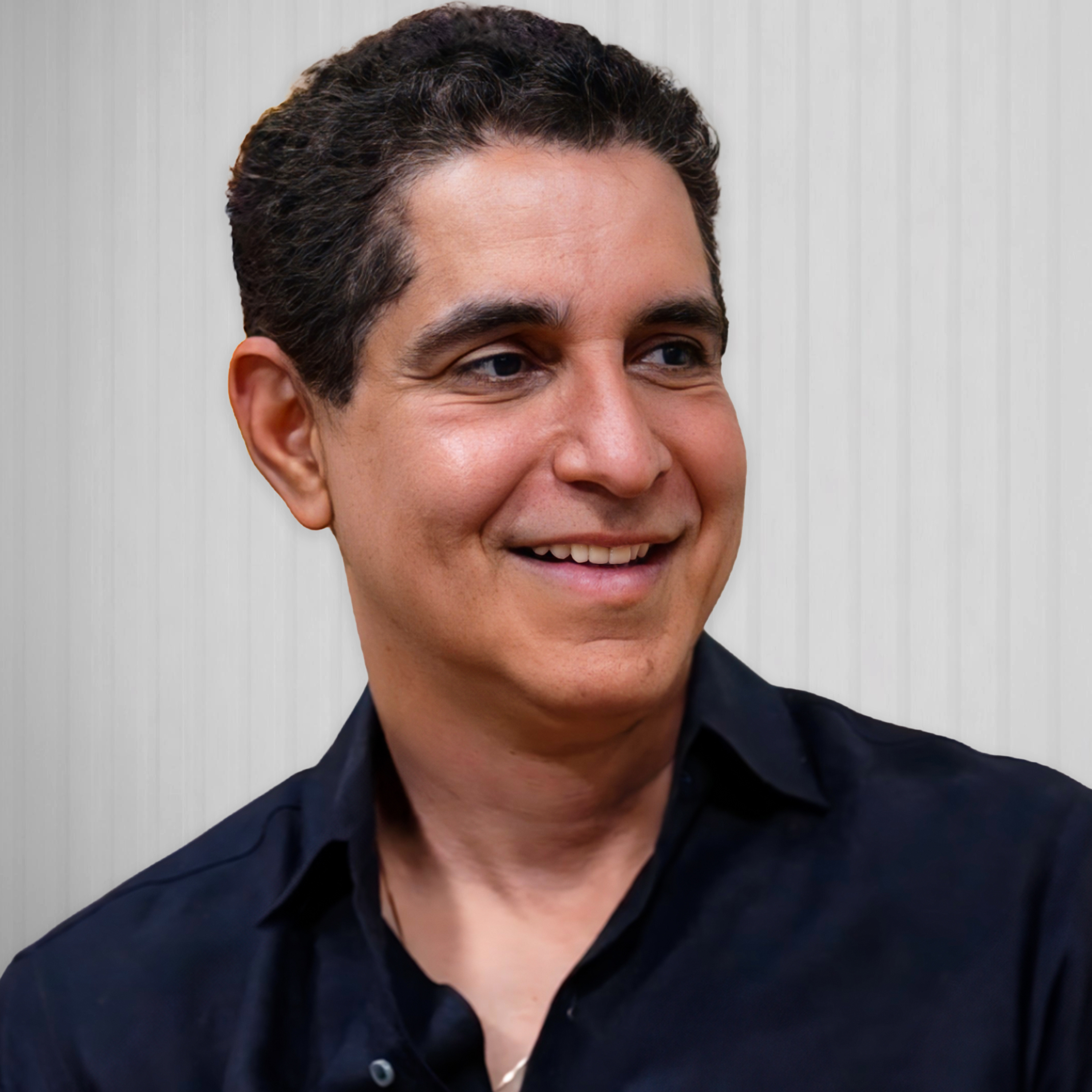
How to Actually Live Longer | Harvard Cardiologist Dr. Daniel Yadegar
from Nourished with Natalie
46m 45s
In this podcast, Dr. Daniel Yatagar, a Harvard-trained cardiologist with a psychology background, discusses the balance between longevity science and emotional well-being. He argues that wellness should not become an obsessive pursuit of biomarkers or rigid routines, as this can detract from joy and spontaneity. Instead, he advocates for a holistic approach that includes self-love, quality sleep, anti-inflammatory nutrition, daily movement, and community connections. Chronic stress, even in people with seemingly perfect health metrics, can trigger inflammation and lead to serious diseases. He recommends managing stress through daytime mindfulness and journaling rather than relying on nighttime meditation alone. Regarding sleep, he suggests cutting caffeine by noon, using temperature drops, and limiting screen stimulation. He notes that wearables like CGMs can empower some but cause anxiety in others, so personalization is key. Dr. Yatagar emphasizes that true nourishment involves body, mind, and spirit, and warns that wellness can become a harmful form of control if it eliminates joy. He shares his own hard reset at a Swiss wellness retreat and highlights the importance of values and emotional health as foundations for longevity.
What is enough? What is enough longevity? What is enough health? At the end of the day, we're all going to die. We want to have the best, most meaningful, loving, purposeful life and part of that's being in the present moment, making memories, laughing, having joy on a regular basis. And if your longevity program is preventing you from having joy, then you're probably not doing something right. I struggled with a needing disorder. I was extremely orthoracic, anorexic, and didn't realize what it really was until I went in and my doctor said your heart rate is in the 20s, you are going to die. If you become hyper focused and obsessed with this in a way that there's not joy coming from it, it's not adding to your overall health, and it's possibly detracting from it, that that can be a problem. What does being truly nourished mean to you? You're cut being full, mind-body and soul. Hi, I'm Natalie and welcome to Nourished. Today, we are joined by Dr. Daniel Yatagar, a Harvard trained physician board-certified cardiologist in one of the leading voices exploring the intersection of physical health, psychology, longevity, and emotional well-being. Dr. Yatagar challenges the idea that wellness is simply about metrics, routines, or discipline. Instead, he helps us understand the emotional and psychological foundations beneath the choices we make every day, and how healing often begins long before physical symptoms appear. Okay, Dr. Dan, I'm so happy to have you here. I'm so happy to be here. I know, I feel like it's been a long time coming, but thankfully your team has been amazing to work with. I love to start this podcast off with really your origin story. Okay. So, have such a unique background. You immigrated here, if I'm correct. That's right. Yeah, in 1980, shortly after the Iranian Revolution, my family left Iran, and that took us on an international trip across the globe. So, we moved from Iran to London, and then my dad at the age of 38 decided he wanted to go into medical school. So, we moved to the Dominican Republic. I grew up in the DR. My two sisters were born there, and then we moved to the US after that when I was about eight. Amazing. So, do you feel like that move and your father's path to medicine is what inspired your path? I feel like if I go back to my med school application essay, that's exactly what it was. Is it really? Which was coming from a family of doctors and practitioners and healers, plus being exposed to poverty and disease in the third world, like in the Dominican Republic, sort of was really formant for me. Is that because you have such an interesting science background as well in terms of the psychology degree? So, how did you go from? I'm a world of contradictions. Okay, tell me. I'm like Eastern medicine, Meets Western medicine, psychology, major goes into cardiology. I kind of just love everything health and medicine related. I've always been fascinated by the mind. I was a psych major in college, and I thought I was going to become a psychiatrist, but when I went to med school, cardiology really spoke to to my heart. Which is amazing. So, that's the direction I ended up taking. Okay, and now you are very focused on wellness, longevity, functional medicine. So, how does the cardiology and the psychology components play a role to what you're doing now? I mean, it's kind of like mind and body and the importance of the connection of mind and body. I think whenever I'm taking care of a patient, thinking about their psychological state, how they think about their values, their thoughts, their emotions is important. And then cardiology is important for longevity because it's the number one killer. Men and women, so it all ties in really beautifully in a very holistic way. Now, I am a big believer that you have to look at the whole being, right? Like, what does it mean to be truly nourished? That's the body, mind, spirit. Exactly. So, huge believer of that, and we're going to get into it. Okay, I can't wait to hear that. But I also like to start this podcast with a very personal question that is, "When is the last time you hit the hard reset button across any point?" I can tell you it was actually at a wellness retreat recently, and the wellness retreats in Switzerland. Now, I think that was a pretty hard reset because you're in 850 calories. It's meant to sort of support autophagy. It's not easy. Was it Shana? It was Shana. Okay. Yeah, so I went to Shana with a bunch of friends. I'm actually really good friends with the medical director there. I send a lot of my patients there. So, that was kind of like my hard reset. I've been dying to go there. I'll send you there. Okay. Amazing. Yeah. What was the hardest part? I think just like the restriction on calories and you're sort of like detaching from your cell phone. It's like a detox on all levels. It's hard, but by the end of it, when you leave, you feel so invigorated. You feel like you got a hard reset. So. Yeah, I think people who are addicted to wellness and longevity, all of these different aspects, they get addicted to that feeling. Do you agree? Absolutely. It's a feeling you chase for. I think it's a good one. As long as it doesn't add anxiety. So, there are people going into longevity space who get so obsessed about their biomarkers, what supplements to take. And that almost overtakes the benefits of what they're doing for age management, health span, longevity. Because all of a sudden, like Brian Johnson, if you think about him, he's not really living. You know, he's always saying that. He's a giant science experiment. So, great. He'll live forever, but we're at the moments of joy, of sheer just like reckless abandon. And enjoying your time with your family. Spontanity. Spontanity. So, I think it's a balance. I think sometimes it can be too much. So, as long as you're doing it with joy and purpose, I think it's a good feeling to go after. I completely agree with you. And I think right now, there's so much thrown at you at social media, right? That it's kind of hard to have that component of spontaneity. Because you're like, well, I have to do this. And like this routine and regimen comes in. So, walk us through like, what is your relationship to wellness? Like, how do you balance obviously all the knowledge of the science and the biomarker components that you know with, okay, I'm going to live my life every single day. Yes. I love that question. So, if I were to do everything that promotes longevity, I would never leave my house. I would just be working out and taking supplements. But the truth is, if you take that many supplements and if you overexercise, you're going to tax your mitochondria. So, you know, the enemy of good is better. It's a balance. You know, trying to get to that steady state of what's healthy and still enjoying life, having ice cream every once in a while, having a birthday cake every once in a while. I think it's really attending to the basics and getting back to the basics. One is self-love, you know, to come from a place of what are what are my values? You know, I am peaceful. I am loving. So having core good values is important part of longevity. Is that orient you in terms of your thoughts and your emotions? First thing is, you know, figure out what your values are. Mental health. Do an exercise on values. The next thing is good sleep. I think sleep is imperative for everything. You know, the majority of growth hormone gets made at night time and phase three and phase four of sleep. So if you're not sleeping while you're not getting the goodies, you know, good nutrition. And we can have, you know, so many discussions about what that means. Yeah. But overall healthy nutrition, maybe Mediterranean style, diet, anti-inflammatory, healthy fats, healthy carbs, nice good sources of protein, exercise and movement. And I think exercise and movement, it's great to do it in the gym. But I did a second recently that people who actually do movement in the outside world and get out and don't just snack on movement, but they're moving regularly. That's really good for your mind, body and soul. Right. So getting those steps in and then the last thing is community. You know, having good community, you know, connections, things that stimulate you, inspire you, make you feel connected, and part of the greater good. I actually have a question about sleep. Yes. I am someone who suffers a lot from like, I can't shut my mind off. I have a really hard time falling asleep. I will take something to fall asleep because one, I'm very holistic, right? Like, I don't like taking things. Right. But I do feel like sleep is so important that I'm like, okay, if there's one thing that I'm going to take to like, help this. Yes. So what are some tools? Obviously, everyone says like, do a meditation before bed. All the things that has not worked for me. Yes. I literally need general anesthesia to like, oh my goodness. So, I'll look at Michael Jackson. I know. Literally. So I'm like, what are some other tools? They are tricks. There's a couple of tricks. If you want to avoid all supplements, the first thing is like, cutting off caffeine after like about 10 hours before sleep. Some people are slow caffeine metabolizers. What does that mean? They'll drink caffeine at one o'clock and it's still lingering in their body when they're going to sleep because they can't break it down. So how do you find out if you're just. Testing for that. There it is. Is it called one o'on? And you can actually test to see if you're slow or fast caffeine metabolizer. And just say that's one thing. But as a general, like without, let's say you don't get tested, stop caffeine 10 hours before sleep. So if you sleep at 10 pm, noon is your cutoff for coffee. Right. So that's one thing. So anything that's a stimulant. Two, I'm a really big believer that what you do during the daytime affects your sleep. So, I think the meditation shouldn't happen at night time. I think you have that moments of mindfulness and slowing down during the daytime. So your brain can drop. If you're going really fast, like you and I are professionals who are trying to achieve make an impact, you know, if we don't take moments to slow down during the daytime, it's really hard to do it right before sleep. I definitely agree with you. I mean, you're going all day long than all of a sudden. You're like, it's good.
Hey, let's stop. It's a big ask for your body. This is impossible. It's a big ask. You have to incorporate that during the daytime. The other thing that I would say is find a time in the day because we all have the ego chatter and all the, I need to pick up my kids tomorrow. This deadline is coming. The taxes are due. Pick a time. Let's say 5 p.m. And journal everything. Get your worries out in a specific time. And your brain is going to start associating that time with, okay, I get to release all my worries and concerns at that time. And then other sort of hacks dropping the temperature AC so that can actually help increase release of melatonin. What do you think the right temperature is? I think it depends on the person. I mean, the studies are, I think it's a little too cold for me is 65. Okay. I keep it around 67 or 68. You sort of get used to it. If you take a hot shower and then get into your bed when you're ready, that process of going from hot to cold causes your pineal gland, the part of your brain that produces melatonin to secrete melatonin. Interesting. So hot shower at nighttime also good sleep hygiene. So bed is only for sex and sleeping. You know, iPhones. And that brings us to the other thing. We're all on our iPhones. Super simulated. Yeah. Our brain's getting all this sort of input. So like a blue light filter on your phone, your iPad. I was going to actually ask you about that. Is that a myth? 30% think it's important. Okay. The blue light. The blue light filters. Okay. So I think we got too much sensory input in this modern age of technology, AI, iPhones, and it makes people have a difficult time unwinding. So those are different tricks. None of them use supplements. Okay. So if we are talking about the supplement route, what are your thoughts on magnesium? Like what is the right magnesium? I feel like a lot of people say this glycinate. What is your professional opinion? I think magnesium's work for different things. So if you have hard palpitations, the magnesium you're going to use for that is different than magnesium you're going to use to go to the bathroom for sleeping. For sleeping, I kind of like the combination of either magnesium glycinate plus magnesium 3 and 8. That duo combination, 3 and 8 is really good for brain health and glycinate is really good for getting your central nervous system to quiet and calm down. And that combination seems to be really good. Okay. Interesting. I've never heard of that other one. 3 and 8? Yeah. Yeah. It's a good one. Okay. And I'll send it to you. Okay. Yeah. I like it. So I want to talk a little bit more about the emotional component of longevity, especially with someone who has a degree in psychology. Yes. What? Okay. Let's say someone has perfect biomarkers, right? Yes. But they are living in a state of chronic stress and they cannot get their mind to calm down. How is that eventually going to lead to further health issues? Wonderful question. First, I think if someone's under chronic stress, they probably don't have perfect biomarkers. They might just not be the biomarkers that your primary care doctor checks. In fact, they've looked at these things called cytokines. They're inflammatory markers in the blood. It's IL-1, IL-6, TNF-alpha. And they're all responsible for heart disease, Alzheimer's, cancer, these different cytokines. They're messengers in the body. We don't really measure them, but people are under chronic stress have higher levels of those cytokines. So it's inflammatory cytokines. The other thing is if you're under chronic stress, you're producing a lot of cortisol. Cortisol is the primary stress hormone made by the adrenals. This tiny little gland that sits on top of your kidneys. So if you put in cortisol out, cortisol can be pro-inflammatory. It can disregulate other hormones. And there's even evidence that chronic cortisol can cause the hippocampus, the memory center of the brain to actually get smaller and smaller and smaller. So interesting. Can that lead to Alzheimer's dementia? It's quite Alzheimer's. But it might be a form of memory loss. OK. Alzheimer's is a very specific kind of memory loss. OK. So if you're under chronic stress, it's going to have an effect on your body at some point. Because you're sort of playing with your immune system. And your immune system is the cornerstone of everything in terms of regulating, make sure we don't develop cancer. Even heart disease, the cardiologist, did you know that heart disease starts out as an inflammatory process first? No idea. I don't know. But when you're in a state of a condition, before the plaque can get into your coronary arteries, there has to be a level of inflammation. So I feel like most people, when they may be there on their path to more functional medicine versus the primary care physician, they go in for a cortisol test. Yeah. Right? But that can be thrown off by so many things. So what is the right test that you should be going in for? For a measurement of cortisol? Well, the stress. Well, I forget what you said. And I'm not going to like-- So you could do an am cortisol level. That needs to be drawn. I believe between 7 and 9 am. And then there's more advanced fancy, schmancy tests. Which is the one that you were saying. Salivary. You can do salivary cortisol testing. You can check your DHA sulfate level. Should you be fasted for this? No. The fasting doesn't matter, but the timing of the day does matter. Okay. So first thing in the morning. Yeah, if you're going to do a serum blood cortisol from your blood, it should be, I believe, before 9 am, 7 to 9 am. And why is that? Because your cortisol peaks in the morning. Okay. The cortisol is a stress hormone that wakes you up. So if we want to get-- and it's a reference, it changes throughout the day. That changes. It's called diurnal. So peaks, and then over time, it comes down. So you're not high cortisol all day. And you can check your am cortisol and see if it's elevated or not. And do you feel like that's a good indication? That's one indication. At the end of the day, if you're stressed, it's really how you feel and how you respond to the world. You know, we're hoping to catch it in a biomarker. And there's different ways to sort of get at it. But for me, the story matters. Like how are people sleeping? Do they have anxiety throughout the day time? Are they having difficulty focusing? Are they wired and tired? You know, those are all indicators of someone who might have chronic stress going on. Right. So on one side, there's a story. And then on the other side, there's some biomarkers that we can measure and then you can put it all together. Yeah. And we touched on this a little bit, but I do think the mental component of biohacking is huge, right? And especially with social media and this influx of information, it's become more prevalent than ever. I am definitely someone who is an anxious person. Like, I don't have a lot of stress in my life. Thank God I have such an incredible family who supports me. But I overthink things. Like the smallest little things. So wearables are huge, right? Everyone's wearing aura, whoop there doing the CGMs, like all of these different things. To me, whenever I've had those, it's given me more anxiety because there's just so much data, but there's no action to be taken, right? Yes. So patients that come in to see you, are you seeing this new tracking mechanism drive anxiety? For some people, yes. It's not a one size fits all. It's in precision medicine, every patient's different. Their genetics is different. Their psychology is different. For some people, it gives them a feeling of agency and that actually provides relief and loss of anxiety because they're like, oh, now I can track my glucose and they feel better. For other people having a CGM, a continuous glucose monitor, we're creating anxiety. So it's really trying to size up the patient and their psychology with seeing if wearables, you know, measuring biometrics really makes sense for them. And do you feel like people who are wearing them? Are they, yes, they have agency maybe, but do you feel like they're proactively taking steps to change the data? I think most people are. I've seen patients who've been sort of pre-diabetic, you know, with the A1C that's elevated or a fasting glucose that's elevated. We've had the conversation about CGMs and I think it's affected behavior. They'll be like, all of a sudden, Dr. Yattagar, I never knew that beats raise my blood sugar so much. And then they can eat beats more sparingly. So I think it can for the right person. Okay. And I like that you said the right person. I am very open about the fact that I struggled with a eating disorder. Yes. I was extremely orthoracic, anerachic and didn't realize what it really was until I went in and my doctor said your heart rate is in the 20s. Right. You are going to die. Yes. I had no idea that what I was doing had become such a significant form of control. Yes. Versus, I just thought I was being really healthy and, you know, super focused on wellness. So I want to dive into that a little bit about how it can for some people. Wellness can become an extreme form of control. And how you see that in patients, like how I guess you can kind of deter them from going down that road. Yeah. I mean, that's sort of what we talked about in the beginning about, you know, if you become hyper focused and obsessed with this in a way that there's not joy coming from it. It's not adding to your overall health and it's possibly detracting from it. That can be a problem. And there are people, especially with all the, what we have available in terms of supplements and content and things that you can do. You want to make sure you're still in the present moments. Yeah. You're not losing the present moment and just focusing and hyper focusing on longevity. It's really hard. I'm not going to lie because I was so far down that road that I didn't even realize I had become so obsessed with the control of it. You know what I mean? You know, in one of the conversations I had with a friend of mine and this can be flat to all aspects of life is what is enough. So you know, you might go past enough. So the first.
The first thing is, what is enough? Because if you don't have a benchmark, you're sort of chasing a goal that's constantly going to be running away from you. That's running away from you. Same goes with money, same goes with love. What is enough? I like that you also used Brian Johnson as an example because I do always point to him in the sense of he's not living. It's literally a science experiment, which is just no way to really live life. I agree with you. Yeah, so what is enough? What are in a reasonable goals? Also being kind to yourself. You don't have to get it perfect. It's not like I've got to check every longevity box in the world. I mean, at the end of the day, we're all going to die. We want to have the best, most meaningful, loving, purposeful life. And part of that's being in the present moment, making memories, laughing, having joy on a regular basis. I think that's a really good way to put it. To go back to what you've said, it's measuring your version of enough against your value system. Right. And I think a lot of people don't think about it. It's okay to go past enough. You know, enough for me might be 80%. I might get the 84%. But at least I can celebrate once I get to 80%. And if you don't have that celebration marker, then you're going to be chasing your tail. Right. How do you think people can identify whether or not they have taken it too far? Is what they're doing, bringing joy? Or is it bringing anxiety and stress and keeping them from having those moments of, you know, connection, memory, you know, laughter? You know, so that's a question. This is what I'm doing, you know, for instance, like giving an example, people who overexercise actually have a higher, have had higher risk of heart disease. They looked at extreme marathon runners. And because of all the oxidative stress and inflammation and using their bodies, there are like 5% body mass eating perfectly in cardiologists or stumped. And we realize that overexercising can actually lead to premature heart disease. That's interesting. So from the inflammation buildup. Inflammation buildup, you know, your body's under so much stress and it's like after we act to that, it creates a lot of inflammation. So speaking of heart disease, when obviously when I was going through the eating disorder, my heart rate was super low. Why is that? Like what was happening internally that was causing my heart rate to be that low? Was it just because of the lack of minerals and all of those different components? It could be, I mean, your heart is as tubing. That's the corner arteries that provide the circulation. And then your heart is a complex electrical system. So at some point in your, in your process, the electrical system of your heart wasn't healthy. So that the part of your heart that's the pacemaker that's saying, okay, let's keep our heart rate at 40, 50, 60 beats per minute, wasn't doing what it was supposed to do. And another question on that, because I feel like a lot of people will say, oh, you have low blood pressure. You're an athlete, right? You're a marathon runner. You have low blood pressure, whatever it is. So in my mind, I always thought, yeah, I work out all the time. I'm an athlete. I have low blood pressure, but I didn't realize how my resting heart rate was affected. So is that correlated or is it two completely separate issues? For you particularly, I think it's complicated because it sounds like you're eating disorder and you're an athlete. So it's kind of hard to know exactly what contributed to your baseline heart rate. There are a lot of athletes who have very low heart rates and don't have eating disorders. So just because you have a resting heart rate in your 30s or 40s, I don't think that's something to worry about. But if it's indicative of a larger process where you're not getting enough nutrition or you're severely hypothyroid or some sort of metabolic issue, then that's something that needs to be addressed. But it's not always low heart rate is not always a marker of disease or a problem. Okay. And so, I mean, obviously people are doing blood work, right? Testing biomarkers. Should the average person also be looking at on a regular basis their resting heart rate and those things? Yeah. Because I don't feel like people do. It's not second nature. I didn't have one of those blood pressure monitors. I was like, I'm not 100 years old. I don't need one of those until I did. Yes. So, okay. Yeah, I think it can be a good thing to look at. And they're super easy to get. You can get them at like Walgreens. Totally. Okay. Interesting. How is that correlated to HRV? So heart rate variability has to do with the variability between each one of your beats. So, if your beats are very, very fixed and there's no variation between the beats, that's called low heart rate variability. High heart rate variability means like you might get a beat here and then it's not a perfect interval between the beats. And that's indicative of like our healthier, more conditioned heart. So super athlete's usually, you know, heart rate variability is above 80. You know, so the higher your heart rate variability, but the thing with heart rate variability is impacted by genetics, your hydration status, your stress level, how you're sleeping, your nutrition, what you eat the night before. So it is, there's a lot of contributors to what that number comes out to. And I ask about this because all of the trackers, right? I feel like HRV is the thing that everyone's tracking. But I didn't understand why. Why do you feel like it's become such a huge topic in the wellness world? It's been correlated with longevity and like health outcomes, like cardiovascular health outcomes. So it's not like defining. It doesn't mean that if you have a low heart rate variability, something bad's going to happen to you, but on population levels, people with high heart rate variability tend to be healthier and into marker of greater health. So I want to dive into a little bit of a deeper conversation around women over exercising and just overall women's health. I think it's an area of medicine that I don't want to say it's understudied, but there's like less information out there about women's health, right? And I don't know why it's talked about less, but let's say you have a woman who comes in and she's overexercising her hormones are all over the place. She's about to enter pariamenopause. Like what advice are you giving her? Because I, you know, I think a lot of my girlfriends now too, it's like running around, they're taking the kids are like, oh, I ate ones and I did my workouts and I'm running all over town. But then they don't feel great. So what should she be doing differently? That's a great question. I have a lot of friends who sort of fall into that category, but you sort of want to get the different pieces of the puzzle. So when you're a doctor, you're sort of like a detective. So the first, you know, you ask about sleep, how are you sleeping? What's your menstrual cycle like? You might do some day, day three, you know, hormones, progesterone, estrogen, FSH, you know, how much, what's your nutrition, give me your average nutrition for the day. What do you eat? And then you start, you know, what's your thyroid like, you know, you get the thyroid asses and then you start piecing it together and trying to get them. So it's not something that gets fixed at once. It's a piece at a time. I feel like there are less inclined to like pause and actually pay attention to hormonal health, even though it's such a huge variable for us. So, you know, one component of having eating disorder was I did not have a cycle for almost two years. What was happening? Was that because of the hormone levels? Yeah, your body was just malnourished at that point and your hormones were probably dysregulated. So the normal menstrual cycle wasn't happening. Mencees and the ability to have children, you know, is often a sign of overall health, like how healthy you are. So that's probably what was going on. Can the loss of your cycle also be tied to stress? Yes. Why is that again, just hormones and valves? Because cortisol can interfere with some of the sex hormones. Okay. And what would be your advice to someone who maybe has lost their cycle, like what's a way to get it back? Depends on how they are. They might be in perimenopause and they might, you know, be on the way to not getting it back. I think getting blood work is important. Looking at stress factor. You know, all the things we were talking about, stress factors, nutrition, sleep is important. But I do think perimenopause and menopause is really coming front and center now in a lot of health verticals. It's a part of a lot of people's dialogue and I think we're going to hear more and more about it. I do agree. I feel like we're hearing more and more. We definitely are. Why do you think it's become such a big topic now and what can women do to support that change that's inevitably coming? I think it's been overlooked for so long that now people are focusing it on it with like a hyper focus. It's like, oh my gosh, we've talked about everything, but we've sort of neglected perimenopause. And even now people are talking about pre-perimenopause. So the stage right before perimenopause and beyond. So it's become a real topic that people have really been able to identify as having knowledge gaps in like the public not really knowing about. What are things that you can do? I mean, the first thing is you want to sort of, you know, establish care with your primary care, your gynecologist, get your baseline hormone levels out. You know, if you're going into perimenopause and you're having symptoms, it could be a good time if you're the right candidate to get on hormone replacement therapy. And do hormone therapy? Yeah. And for the long, and there's a generation of women who lost out on the benefits of hormone replacement therapy. But always talk about this. I don't know why it had such a negative connotation for women. It was just so associated with a risk of breast cancer and then people just got really scared. So we were in a 20 year period, I think, from the women's health study where we weren't recommending hormones. Now we're looking at heart health, bone health, brain health and realizing in the right patients, you know.
getting on hormone replacement therapy early before you know your true menopause is really going to be advantageous over the long term. So pre-pairy menopause, what is the average age range for that? That might be like, you know, late 30s, early 40s. Just like to our listeners. You know, early late 30s, early 40s, and then around, you know, mid 40s are sort of looking at parimenopause. Everyone's different though, there's a window, you know, I've had patients who've gone into parimenopause in their 30s. You know, just it's just genetic, carretta-tary, you know, so everyone's different. I do feel like as a part of this conversation as well, another huge topic is bone density, especially for women. Bone density and hustle mass. Okay, so tell me. Go two things should go together. Okay. Yeah. Because right now, all I keep hearing from all my friends is like, you have to lift weights. You have to lift weights because of bone density as you get older. Yeah. Why is that like, why is it so important? Well, obviously it's important, but like as you get older, especially for women, why is there such a pressure on it right now for women who are 40s and above to be focused on that? Because as you're going into parimenopause, your estrogen and progesterone levels are going down, and those hormones are responsible for keeping your bones strong. So as you lose those hormones, your bones get weaker over time. So doing weight bearing exercises is a way to keep your bones strong. Okay. When those hormones, hormone levels are going down. When they're going down, that puts your bone at risk. And the first stage is osteopenia. That's the stage before osteoporosis. And then comes osteoporosis. And osteoporosis puts your risk for fractures when you get older, both spine fractures, hip fractures, etc. Crazy. And we want to stay mobile, right? We want to stay mobile, limber, able to do everything we want to do without worrying about fractures. Yeah, 100%. Do you, are you seeing that more and more, like women who are coming into you or no? Or hormone replacement? Yes. Okay. Yeah, we're seeing that more and more. And you want to be really thoughtful about it. Obviously if someone has a family history of breast cancer, or if they have a gene like the brachogyne, we're going to have a different thought process about hormone replacement for that person. But for the average person who doesn't have a family history of breast cancer, they're on top of their breast imaging, like getting mammograms and ultrasounds regularly, and monthly breast exams, I think the overall benefit from a heart standpoint, brain standpoint, immune skin, you know, beauty, bone standpoint, metabolic bone health standpoint are tremendous. So I think there's a lot of people should consider it. So as a part of that, I mean, I personally, like we've moved from the West Coast, I used to go to New York and then we came here. I've had a really hard time finding like an OB/GYN and a functional medicine doctor that can work in tandem. And, you know, I was a part of one medical that tried to say that there were providers of both of those realms that could work together. It's never happened. So how, what is the best way for a woman to have those two different dualities, like working together, considering how important it is for women's health? It is very important. There are women's health specialists who are, you know, real experts in biomedical or hormone replacement therapy. I know it's hard to find those people, but they do exist. Sometimes you do have to couple your care together where you'll have one primary care doctor and then a women's health specialist who sort of focuses on your hormones. Ideally, it would be under one roof. That would be the gold, the North Star, but it doesn't always work out that way. Okay, can you be the one room? Sure. I'll be everyone's. Okay, she has the one room with everybody. We love it. Okay, so in terms of replacement therapies, I want to talk to you about peptides, NAD. Okay, let's do it. Right, what are your thoughts? High level. So we'll start with peptides. I think peptides are a controversial. There's a lot of controversy around it and two, they're an evolving science. What I mean by that is that peptides have been studied in animals, GLP1's, Menjaro, Ozembik, those are peptides. Those are FDA-approved peptides that I write for. So when someone asks me if I write for peptides, I say, "Yeah, I do. I do write for those things." But then there's the whole class of BPC157, the copper peptides, etc. My concern is that there hasn't been enough long-term human safety data for me to say, "Okay, if you go on the stack of five peptides, I can categorically tell you that you're not at a higher risk of developing cancer. Or if you have an occult cancer that these five peptides are going to cause your cancer to grow faster." It might not, but we need data to show that. I'm absolutely convinced of the benefits of peptides. I think that I've just heard from enough people, but it's really the safety that I'm waiting to hear out. Yeah, I mean, at the end of the day, you're the doctor. You're putting your name on the line prescribing this to sound nice. Yes. How are you going about? Because so many, I guess a lot of people are getting them right from even Instagram. Right. Every medspon in the world is selling these things. People don't know where they're actually coming from in terms of regulated compound pharmacy, etc. So what's your advice on that? My advice is if you're going to do peptides, go to someone who does high-volume of peptides, find out which compounding pharmacy they're using. And at least you have a sense of there's a practitioner who's supervising it, who has experience. They have a relationship with a compounding pharmacy that's being audited for contaminants and making sure that you're getting the real thing. So at least start there. And then the last thing is be on top of your health maintenance. Get your colonoscopy when you're 45. Get your PSA level checked. Get your mammogram. So be on top of your health maintenance as well. And in terms of like the protocols around them, because they're supposed to be enhancements, right? So you should be taking them periodically. Obviously every single person is different. You can't give like a universal answer to this. But you shouldn't be on them every single day, right? I don't prescribe them. So I don't quite know the protocols. I know there's a lot of cycling on and cycling off of them. Some of them people take every single day. And it is different protocols for different patients. It's an inexact science that's developing in front of our eyes. And I haven't personally been ready to jump into that pull yet. No, I appreciate the honesty there. What are your thoughts? Okay, maybe a less extreme version is IV therapy. Yes. What are your thoughts on that? I think there's IV therapies that I use on patients that help them feel better. I can't promise that it's going to prolong life or make them healthier. But definitely in terms of feeling better, those IV therapies can have an impact. It's like that initial jolt. Got it. Initial jolt. Yes. And what are your thoughts on NAD? So NAD, I think NAD is great. NAD decreases as we get older. And it's a part of cellular aging, the loss of NAD. Can we just talk what is NAD? Can we talk about that? Because it's thrown around. What is it? What exactly does it do? Yeah. So NAD is like a compound that's a co-factor that's responsible. Like do you remember in high school biology, like the crap cycle and producing energy? 100% no. You happen to agree. Great. Science did not pay attention. But it's basically part of like how that mitochondria and the cellular machinery works to produce energy. And when NAD decreases, it's sort of like your energy system, your ability to produce energy is more sluggish. Okay. So NAD is instrumental in allowing your machinery, your cellular machinery that produces energy to do that optimally. Why is it that when you do it? Because I've done it a few times. We are often in Colorado. It's a higher altitude. So a lot of times that actually helps me like boost my energy. But it takes me at least two and a half hours to get through the bag of it because I literally feel like I'm having a hot flash. It's for everybody. Yeah. That's why is that? I think it makes your heart rate co-faster. Like it sort of has an effect on your body when it's getting infused. In general, if you've never done it before, we usually recommend doing it over four hours. And then as you get used to it, you can do it faster and faster. But that's for everyone. And does it need to be you can't drink it or can you? You can you can drink precursors NAD that help boost your NAD levels. Drinking NAD itself is not going to necessarily help. But there's two main precursors, NMN and then NR which is nicotinamide riboside. And those are precursors that allow your body to produce more NAD. And do you believe in like the injections of it? Yeah, there's all different forms. It's like you can do it different ways. You can do IV. You can do intramuscular, you know, under the skin or even the oral NAD precursors. They'll all boost it differently. Okay, that's good to know. So I want to play quick game. If you're up for it, okay, we're going to do rapid fire. It's either you're rating one to 10. Okay, optimize or over hyped. So one to 10. And then you can give like a little, give like a quick little snippet. You want to say, yeah, quick fire. Okay, intermittent fasting. Eight. Eight. Yeah. Okay, you want to add more there? I'm an intermittent faster. Okay, I am too. We're on the same team. Yeah, okay, one meal a day. Five. Okay, this is a new trend. Apparently it's called O-mad. I don't know. I'm not a big fan of that. I mean, we need energy. Our body needs fuel. I think eating one meal a day would be really hard. Yeah, listen to your body. Listen to your body. Listen to your hunger signals. Okay, magnesium.
- Eight. - Eight. - Okay, red light therapy. - Seven. - I wanna ask, is there a specific one that you recommend that you really like? - No, there's, none of them are super well validated. There are some LED beds, like, you know, what they call them reverse tanning beds, that I absolutely love. - Reverse tanning beds. - I love that. - So they have one as you know, actually. - Really? - Yeah, you go into the bed and it's like infrared and red light therapy and you stay in it for 20 minutes. It's amazing. We're getting inflammation down. - I need to go there right now. Like, I'm getting on a plane after this. - Yes. - Okay. Cold plunges. - Six. - Six. Why is that? - I think they're good. I think there's more evidence around sauna, like, in terms of, like, health benefits, like, it's been more studied. Again, these are evolving things into a three years. From now, I might be changing my numbers, but as of now, I would say sauna, if I had to choose sauna, or if I was cold plunger, I'd pick sauna. - Okay, opinions are subject to change. - Better hygiene. - Okay. - And evolving science. - Colonics. - Zero. - Zero. Okay, tell me more. - Do not like colonics. It gets rid of, like, good, your microbiome. There's a risk of colon perforation. I'm not a fan. Do not recognize. - Okay, that's scary. I'm never gonna do one again. - Yeah. - Ever. - But, GLP1 medications. - I think for the right patient, it's a 10. You know, so if you're someone who's diabetic, pre-diabetic, you know, you're hypertensive, you're overweight. It can be transformative. I think there's a lot of off label use of GLP1 so people don't really meet requirements. And for those people, I don't think it's necessarily a 10. The greatest risk with GLP1s is the loss of muscle. That's what I concern myself. So up to 40% of all your weight loss can be from muscle loss. So if you're on a GLP1, make sure that you're going to the gym, you're eating enough proteins, and you're maintaining your muscle mass. - What are your thoughts on this new one, RETA? - It supposedly helps maintain muscle mass and lose fat at the same time. - I'm hopeful about it. I'm excited about it. - Okay, that's good to know. But more to come. - More to come. - Hyperbaric oxygen therapy. - I don't think it's something that I standardly, I'll have to give it a number. I'll give it like a six and a half. I think for some people, like I have patients who have like cognitive brain impairment, dementia, and like for them it's been amazing, or they can't wound heal, they've had like a diabetic ulcer. 12 out of 10, amazing. - Woon healing. - Woon healing, it's really good for wound healing. But I don't think it's a standard thing that I would recommend for people. - Okay, I like that. Dry brushing. - I don't even know what that is. - I love it. It's like these hard brushes that women put all over this. And I think women in men, I don't know. - I don't know, sounds like a one. - Sounds like a one. He's good at this game. - Mouth taping. - I actually mouth taped my son. - You do. - Yeah, so he has a palatal expander and he's been a mouth breather forever. So we mouth taped, but it's one of those mouth tapes where the middle's open. So just sort of like closes his lips together. - And do you do this at night? - We do it at nighttime. - Okay, it really helps him. - He's a nose breather now. - Wow, okay, so basically like retrained his breathing. - It does. - That's amazing. Last one is seed oils. Seed oils. So we're talking about like. - When you go to a restaurant, everyone's like no seed oils. - No, no seed oils. - No seed oils. - I think seed oils generally tend to be in flammatory. So I'd say no seed oils would be a nine. - No seed oils. - I think try to avoid seed oils. - And olive oil or avocado oil. - Olive oil, I still take. - You still take. - I still take. - No, that's good. We need olive oil. Okay, we're fans of olive oil. - I'm just gonna go over here. - What do you feel is the single most underrated habit for long term health? - Movement, just movements, getting out, getting your body moving. I think that's probably number one. Getting sunlight going for a walk. I have to say movement, getting enough steps in. - I like that. Do you feel like vitamin D is underrated? - Yes, I mean vitamin D has got to be the most well studied and documented supplements out there for everything. - Are you not, I was the biggest believer. I love being in the sun. I would land on this all day long if I could. I thought I was just getting enough vitamin D, but I don't think I'm actually absorbing it the way that I think I am. - Yeah. - Do you need to supplement it? - You have to measure your levels. - Okay. - You have to measure and then decide. Some people play hours of tennis and they write them and do you-- - And they get enough. - They're amazing. - Okay. - Other people need to supplement. So measure your levels and get it at the minimum above 30 in my book, above 50. - If you had to pick one, what wellness trend currently is concerning you the most? - Seeing things on TikTok or Instagram and social media and ordering them without really understanding the science. So sort of putting things or ingesting things or injecting yourself with things. - You are consuming something foreign. - Foreign without medical supervision without really understanding the science. - I completely agree with you. - Yeah. - Well, to close us off, I would like to ask you, what does being truly nourished mean to you? - I think it's being, you're cup being full, mind, body and soul. - Mind, muscle. - You know, and to feel that you're leading a value driven life, that your body feels good, that your mind, that you have moments where your mind is still and fulfilled. - I really like that. And I love that you continue to point it back to intuition. - Yes. - Because again, there's so much information out there. It's super easy to just look at the tracker, do the blood work and then focus on that, but how do you actually feel? - Absolutely. I mean, come from a self-careing place, intentional and self-care. - Non-planishment, nourishment. - You kind to yourself. - Yeah, I completely agree. Guys, if you heard some crazy planes and noise around us, it is Memorial Day weekend, so bear with us. But I hope you enjoyed this episode. Please go like, subscribe and listen, wherever you listen to your podcast. And thank you, Dr. Dan, so much for coming off. - Thanks for having me on. It's been a pleasure. - Amazing. Thank you guys so much for listening to this episode. Please follow us on Instagram, subscribe to the podcast, wherever you listen to your podcast. You can message me, please leave comments, asks questions, and let me know what you want to hear more of. So thank you so much.
Podcast Summary
Key Points:
True wellness balances longevity practices with joy, spontaneity, and meaningful living, avoiding obsession that detracts from health.
Dr. Daniel Yatagar integrates cardiology, psychology, and functional medicine, emphasizing the mind-body connection for holistic health.
Core longevity pillars include self-love, good sleep, anti-inflammatory nutrition (e.g., Mediterranean diet), regular movement, and strong community.
Chronic stress, even with perfect biomarkers, can cause inflammation and health issues; management should include daytime mindfulness and journaling.
Wearables like CGMs can help or harm depending on individual psychology; wellness can become a harmful form of control if it eliminates joy.
Summary:
In this podcast, Dr. Daniel Yatagar, a Harvard-trained cardiologist with a psychology background, discusses the balance between longevity science and emotional well-being. He argues that wellness should not become an obsessive pursuit of biomarkers or rigid routines, as this can detract from joy and spontaneity.
Instead, he advocates for a holistic approach that includes self-love, quality sleep, anti-inflammatory nutrition, daily movement, and community connections. Chronic stress, even in people with seemingly perfect health metrics, can trigger inflammation and lead to serious diseases. He recommends managing stress through daytime mindfulness and journaling rather than relying on nighttime meditation alone.
Regarding sleep, he suggests cutting caffeine by noon, using temperature drops, and limiting screen stimulation. He notes that wearables like CGMs can empower some but cause anxiety in others, so personalization is key. Dr.
Yatagar emphasizes that true nourishment involves body, mind, and spirit, and warns that wellness can become a harmful form of control if it eliminates joy. He shares his own hard reset at a Swiss wellness retreat and highlights the importance of values and emotional health as foundations for longevity.
FAQs
Balance is key—focus on basics like self-love, sleep, nutrition, exercise, and community, while allowing joy, spontaneity, and treats like ice cream or birthday cake.
Stop caffeine 10 hours before bed, practice mindfulness during the day, journal worries at a set time like 5 p.m., lower the room temperature, take a hot shower before bed, and keep the bed for sleep and sex only.
A combination of magnesium glycinate and magnesium 3 and 8 can help quiet the nervous system and support brain health for better sleep.
Chronic stress raises inflammatory cytokines and cortisol, which can promote inflammation, disrupt hormones, and shrink the hippocampus, potentially leading to memory loss and diseases like heart disease.
An AM cortisol level drawn between 7 and 9 AM is a common test, but salivary cortisol testing or checking DHEA-S can also provide insights. The patient's story and symptoms matter too.
Yes, for some people, wearables can increase anxiety due to excess data, while for others they provide a sense of agency. It depends on the individual's psychology.
Chat with AI
Loading...
Pro features
Go deeper with this episode
Unlock creator-grade tools that turn any transcript into show notes and subtitle files.
 PodcastTranscript AI