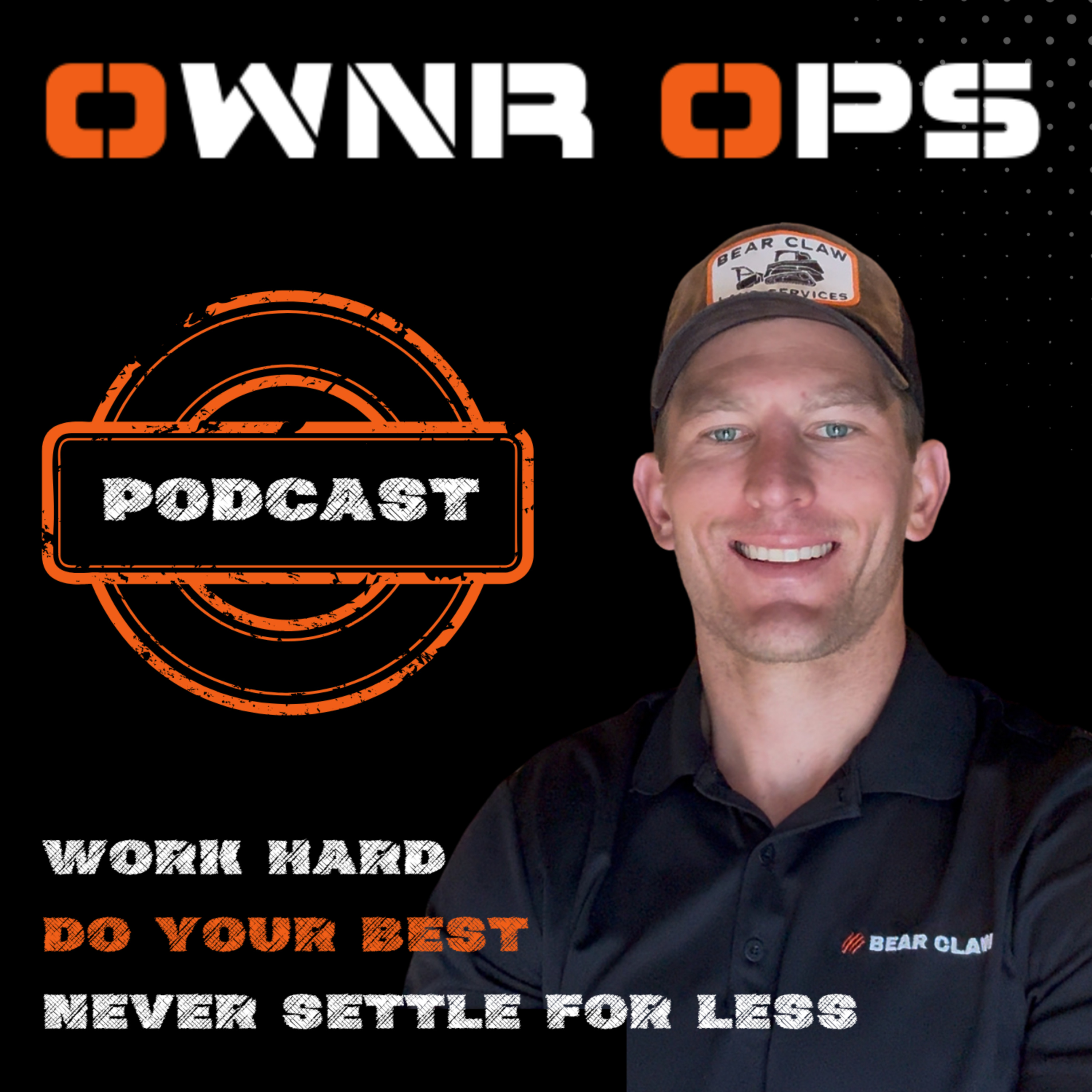
How This 19 YR Old Made $37k Month 1 of Land Clearing Start
from OWNR OPS Podcast
71m 23s
Owen, a 19-year-old entrepreneur, turned a land clearing business into a success by generating $37,000 in revenue in his first month, including $20,000 pre-sold before even buying a skid steer. He initially started with stump grinding, which earned $20,000 in its first month but required 30-40 customers. He pivoted to land clearing due to a larger market (high eight figures vs. limited $4 million for stump grinding), higher ticket sizes (averaging $2,500+ vs. $500), and simpler operations (just 9 customers for $37,000). Owen prioritized sales and marketing, running Facebook ads at $30-40/day to generate leads. He pre-sold jobs by taking deposits and used a structured process: responding to leads within 60 seconds, qualifying over the phone, and conducting in-person site visits with a risk assessment checklist. He anchored his pricing against expensive alternatives (e.g., dozer work or manual clearing) to make his day rates seem reasonable. Owen also used scarcity to drive sales, such as posting in a Facebook group that he had two days open due to a reschedule, which led to four jobs totaling $9,900 with a 100% close rate. His approach highlights the importance of choosing a scalable business model, effective sales techniques, and leveraging paid ads for high-ticket services.
Being a 19 year old with 180 grand in debt, I'd rather do that with a skid steer. I think the first month of stop grinding to do 20 grand I had. 30 or 40 customers do 37 grand in the first month of land clearance. I operationally so much more simple that you understand this at 19 years old. It's pretty incredible. I'm really continuing for one million in revenue. I made a few posts. I had nine leads the next day. It took me 20 minutes and I had bleeds to totaling almost 10 grand. I did pretty low. I got pretty close to running out of money because I was running paid to ads with no revenue coming in. We're going to be kicking season three off with Owen, who grew a land clearing business. Zero to $37,000 in his first month of operating. What's more impressive is he pre-sold $20,000 worth of land clearing services before he even bought his first machine. And even more impressive than that, the kid is 19 years old. So if he can do it, why can't you? [MUSIC PLAYING] But before we dive in, we have been having a lot of fun building or school group. I've documented a lot of resources that we've used to grow bear claw from zero to seven figures. Things like how to optimize your Google business profile, how to run profitable Facebook ads, how to dial in your messaging so that you're targeting your ideal customer so that you can find your most profitable jobs, how to set up and optimize jobber so that you can save time on the back end with all the office admin work, how to streamline systems, things of that nature. So if you haven't joined yet, you can join at school.com/ownerops. That's skool.com/ownr. OPS. My goal is to offer as much free value as I can in there. I would absolutely love to meet you if I have not already. It's free to join, just jump in that group, make sure to introduce yourself in the community and can't wait to meet you in there. Oh, and welcome to the show. Thanks, Austin. So whenever we got introduced, you were doing stump grinding. And then you've jumped in the land clearing. Can you tell us how you got into this? Stump grinding. What I guess that was a few months ago now, I started at June 17th, but I had just wrapped up my first year in college. And I was learning everything in theory. I was getting a little stir crazy. And I wanted to go put my knowledge to the test. So I got into stump grinding. I had seen some guys on the internet. And it went well, I put up 20K in my first month. But I ended up pivoting to land clearing because of a couple of things with market size. It was a big one, ticket size. And then being a 19 year old with 180 grand in debt, or needing to raise some debt here, I'd rather do that with a skid steer and have the versatility as a cushion. Yeah, yeah, definitely. Well, the one thing I love about you and all of our conversations that we've had is that you were a guy who just makes things happen. You don't make excuses. And very quickly, from the time we got introduced, I'm like, man, this kid's got it. And you heard it right, 19 years old. 19, and he is putting up some pretty awesome numbers right out the gate. Let's dive deeper into why the switch from stump grinding into land clearing. You mentioned ticket size. You mentioned marketing. Talk me through your thought process. Yeah, so a couple of things I was thinking of. One of the big ones was market size. I think I did some napkin math. It seemed like the stump grinding market. And St. Louis really dimmed its surpass, maybe say, four million in revenue with the independent companies. Where the way in clearing industry there is minimum high eight figures. And I'm thinking in the long term. Like I really just want to stick to one thing and grow it with everything I got. And you really, grinding is a good business, but you really don't see, I just could not find anybody past seven figures in revenue. And that was a big reason for the switch. Ticket size was a big reason for the switch for a couple of points there. Oh, operationally, it's a lot easier. I think the first month of stump grinding to do 20 grand I had 30 or 40 customers to do 37 grand in the first month of land clearing. It was nine. It was like operationally so much more simple. The other thing with ticket size is stump grinding. It was really iffy if I could make paid customer acquisition pencil. But land clearing is high ticket enough where I can dial in my tack to LTV ratio and actually make that pencil. That's something super important. I'm glad you brought it up. So for listeners, he's talking about when he says, "Cack," he's referring to customer acquisition cost. And I'm working to define terms better on the podcast rather than you throw them out. So for listeners, customer acquisition cost is the cost that you incur to acquire your next customer. And in this context, Owen is referring to how much did he spend via Facebook ads in this context to go acquire a customer. And so what you said was very interesting. You're good at running Facebook ads. When you and I got introduced, you had already edited your own ad for stump grinding. You were running it. You were getting leads. But can you talk to me about the difference between running ads for stump grinding versus running ads for land clearing? In terms of the, at the ad level, the creatives very similar, the campaign settings are very similar. What is different though is that even if you're even if you're spending the same amount to acquire a customer in each business, it does not make as much sense in a lower ticket business at stump grinding. Could say it cost me $100 to acquire a customer. And my average ticket in stump grinding was 500. In my lifetime value, I have a 1 to 5 CAC to LTV. In land clearing, I just raised my minimum to 2,500. So my average ticket's going to start floating up a little bit. Let's just say 10 grand, for example. And then it's costing me like 500. That'll float up to that. What is that? 1 to 20? It just makes so much more sense as a business model. And I based everything with both of these businesses off of sales and marketing and put that first. So I really want to be in an industry that pencils. These are all incredible points. So listeners, what Owen has done a really good job of his identifying that his skill sets lie in his ability to go run paid ads via meta. He's also identified that there are higher ticket services in land clearing or higher tickets on the average order value. So he can afford to go spend more money to acquire the next customer in this business model. And the fact that you understand this at 19 years old is pretty incredible. I wish I knew this kind of stuff when I was 19. It's so fun. I love all of it. So the next piece is that you're not only great at marketing. You've proven to be able to close jobs effectively. I know this about you because we got that conversations offline. But you had revenue or jobs on the books before you even had your machine. How did you go pre-sell these services? Talk us through that. The first thing I did-- I just did the math. So stump grinding to start that business. It took me three weeks before I had the first dollar. Wayne Clearing was five. But I had to source a lot more equipment. I had to go get my class A, C-D-L, all that. But the first thing I did before anything else was run paid ads. And at that point, I was winding up stump grinding. And I wound down my paid ad campaign for that. Return the grinder, whatnot. So in hindsight, I would have taken deposits on all those pre-sells. But I was running paid ads. I think it was like $30, $40 a day on Facebook and just selling. While I was trying to put the business together. But yeah, not all of it was booked for month one. But by the time I had my first job, I had sold, I think, $35 grand worth of jobs. And that way, when I started, instead of scrambling to keep the machine productive each day, I already had those on the books. So then I could shift my focus from sales and marketing to teaching myself how to run a skid steer. And getting five star reviews and not dropping the ball with the first nine customers. Talk us through your first job. The first sale that you closed. Was it friends and family? Was it from an ad? OK. First job I completed or the first job I actually closed. Let's start with first job you closed. How did you close your first sale? Yeah, man. I showed up. It wasn't friends and family. It was actually-- I didn't want or two friends and family jobs. But the first one I actually went out to look at was from the paid ads and the guy.
I had a bit of know-how he had rammed bobcats before, so I really had to. You act like you was a company way bigger than I was and really walking with confidence, but I showed up in the F-550. I had a boots on, my pants from tree climbing, nice polo and everything. I bought one of those big metal clipboards and I printed out some site visit form that I walked them through. I had a risk assessment checklist on there and we walked through it and I just bit it at the market rate and yeah we got the job. I booked that, we booked it out for. I think a little over a month. I just did it a bit ago and it went great, but yeah that was job one. I just showed up and acted like I knew what I was doing and agreed to pay me a couple thousand dollars. I love it. Thanks man. Did you print that off a physical copy of the site visit checklist and it's cool. Yeah and I showed up with that on the. I got to flip board right here. Look, one of these things and I. yeah. I showed up. I printed a little logo on it. It says MoLampro site visit. It's got. you know. It did the trick. I love it. I love it. Did you pull that from owner-opster? Did you make your own? Actually, yeah. I pulled the risk assessment checklist from that and a few other things for your SOP. Sweet. I'm glad to hear that. Yeah, still I still use that risk assessment checklist on every site visit. I recently got back from launching a land clearing business down in Austin and this last winter I launched a snow-striveling business alongside Bearclaw. And in both businesses, I've implemented Jabber as a way for us to efficiently manage quoting job schedules and invoicing. And even collecting online payment, why? Because it's worked so well for us in Bearclaw and it saved us a ton of time and headache. So if you are looking for a software that can help you manage the back end of your business, look no further than Jabber. You can visit go.getjobber.com/owner-ops-o-w-n-r-o-p-s. Cool. And then have you tweaked it to make it your own as far as the checklist for how you conduct your site visits? Yeah. Yeah, tweaked a couple things. Let's talk through that. Let's talk through the process. You show up on the job. What are you thinking about and how are you conducting your site visit? How about we start when the lead comes in and we walk all the way to close? Yeah. Let's absolutely do it. So, the lead comes in. I'm like off doing something but I'm getting to every lead within 60 seconds, picking it up. And then I have like a lead call, SOP to them. And then I just lead with an open-ended question. I ask them to tell me a little bit more about their project. I start rambling, giving me a ton of information. Then I steer them a little bit. I ask them about vegetation type, e-grade. I like to learn their motivations. What time frame they want to have it done in. Whether it's commercial, it's private property. What's going on there? I just walk them through. I qualify them really heavily. So, I just up my minimum to 2500. So, I always hit my minimum over the phone. And then I'm bidding everything on by time right now. I'll limit my downsides since I don't know how long stuff takes. But then, they'll ask me how much it's going to cost over the phone. I'll always find a reason to convert it into an in-person site visit because my close rate is a lot higher in person. So, I'll book that. Then at that point, let me make sure I don't miss anything there. This is awesome, man. I love that you're implementing the process. Yeah, it works. Yeah, then I book the site visit. Say the site visit. I'm driving out there. If it's a larger ticket job, I'll listen back to the call recording. Yeah. I would tell everybody to record every single call. It is saved my ass so many times. But yeah, I'm listening to that as I show up, greet the homeowner. I'm walking through with the process is going to be like after I take a couple notes on access for the skid steer and my trailer. We do a property walk through, go over general scope and everything. Then if it's a larger ticket job, break it down into priorities, which I got from you. Different zones. The other thing with day rate is if you get cut short or some reason, I don't want to leave them with a ton of patchwork. Sometimes it's as simple as they want me to start at the area closest to the house and work out words. And then they can see if they want to pay me for an extra day or whatnot. And then so yeah, property walk through, we go through priorities and then we go through the risk assessment checklist, which is just a nice little. And it helps me and it's also it brings a degree of professionalism that it's a nice way to cap it off. And then a lot of guys are split about this. I know you send quotes. I think you send quotes 24 hours. Yeah, after like when you guys get back to the office, I try and throw together. It's easier for me since I've just done things by day rate, but I always get the price in person and trying clothes on the spot. Love it. Love it. Yeah, yeah, that's most of it. I'm sure I forget something. It's incredible. Yeah, I love the fact that you're implementing the checklist and the process. And to your point, I love that risk assessment piece because I believe that that's the extra step that most guys don't take on site. Because if we're proactively thinking about like where's your septic, where is your well head? What do you want us to do with these fence lines? Do you want privacy on the fence or do you want them removed? If we're thinking about that as the pro and asking them the questions, then they're subconsciously trusting us even more because you shouldn't drive equipment over a septic or a leech field. You don't want to smash a well head, right? And so these are all the things that some people don't even know that they need to be aware of as a homeowner. But then you as the contractor, you're the pro guiding them through the process and by asking those specific questions, we are building trust with every single chance that they give us back. And so whenever we implemented that, I totally believe that it increased close rate. And also once I get my first field operator, I'm going to need this stuff documented so he can be up to speed on any sort of obstacles to avoid on site. Absolutely. Have you implemented the one thing I love that our project manager does is he always asks at the end. So like in sales, you want to assume the close, right? He starts asking where can we access. So as I've been walking this site, I've seen two different access points that we can bring our equipment in. Would you prefer us to come in through that gate over there or this one right here? Have you implemented anything like that? Yeah, man. I have a lot of phrasing that starts to you can hear when the customer starts to shift to, okay, this is happening. And I have just a ton of little things on intuitively throw it them and then they'll start using the language. Like when you guys come out or when I have you out here, they're selling themselves. It's a lot of this stuff. It makes such a large visual impact that you really just need to, you need to sell the customer on their own transformation, their own vision. And once you have that, like it's not a hard sale. One line I love that he uses as well is something along lines of like, I've got a big ask for you. There's like close at the end of the same. I've got a big ask and you might hate me for it. So you're like framing, framing them to get this like, what are they going to hit us with? You know, they're going to charge us a hundred to $100,000 or what, right? When we bring our equipment in, it costs a lot more and it takes a lot more time for us to pull the equipment off. I see this area right here is the best spot to stage the equipment overnight. Would you be against us leaving the equipment here overnight? And then people, oh, no, no, no, it's all good, man. Like you leave your, so you've like framed it to be like this really bad ask. And then you're hitting them with a question that asks them if they're opposed to it. Then they answer no and then they're selling themselves one step further in the close. Yeah, that's, I've had a lot of luck with things like that where you create a little bit of suspense, set expectation really high and then coming with something like that. There's a, this is a little bit similar, but I always, whenever I cannot, like, yeah, I don't know if there's just sales guru term for this or something, but I'll anchor the price really high. So I start talking, for sure, mulching is one of the cheapest lane clearing methods, but I will usually talk about how much it would cost to do it by hand since I used to work in the tree industry, which is tens of thousands of dollars more. And then I'll talk about traditional lane clearing coming in with dozers, operating stops. So now what could start if they have an acre and I can do it in the day for 2500 plus mobilization. That seems expensive until way to many.
the other option is 10 grand, 15 grand, or doing it by hand would be third. You've just made what would seem like a lot of money, seem like a little bit of money. So I've had a lot of luck with that, and it's really fun to constantly test things like that. - Let's talk pricing. - Oh, go ahead. If you have something to finish, please keep going. - Yeah, real quick, I'm at Main Street, when I had two days open, and I brought my machinery up here, 'cause it's just two hours from St. Louis. I was like, "I want to book those two days." So I made a Facebook group post, it just organic, put together some things. I'm gonna post the copy for it on my Twitter soon, just so everybody can use it. But I landed four jobs, four 9,900, at an 100% close rate. So I got paid to go to Main Street. Striker Digital specializes in SEO services, specifically for local service businesses. Bodian Andy, the two co-founders, have helped me get Bearclaw land services to the number one search result on Google, inside my state, for my specific search term. If you wanna learn more, visit strikerdigital.com. That's strykbr-digital.com. - So you closed four different land clearing jobs by traveling to Main Street Summit. - Yeah, I just posted, and yeah, I think Columbia, like Columbia Bicell Trade, Columbia 411, all that. And I just said, "Hey, like, I created a ton of scarcity." I said, "What I say, I said a client rescheduled and I had two days open it." And I posted this on, "What is it today, Wednesday?" I posted this Saturday night at 6 p.m. and I said I had Sunday and Monday open. By the time Sunday morning came around, I already had. I went and bid the job, closed it, did it, went and bid another job, the next day, closed it, did it, and then I bid the two more, and then I'm doing those in December when I'm back up here. But yeah, 100% closed right across 10K. - I love it, I absolutely love it. - Thanks, man. - And there's absolutely, like, the frame and the urgency is like, "Hey, "if I'm going into that group, "or if you're going into that group, "it's like, "Hey, I'm going to be here for these two days "and I have two days open." Or like, "How are you frame that? "I have two days open for these days. "I have this machine and here's the price, right?" Like, that's some trigger something in people to take action. Like, "Oh, sweet, this guy's here." - I had an expiring offer to, it was like two fixed amount off, like $200. - Perfect. - That's so incredible. Facebook groups, I want to have, I think it's his last image. - Danny Magazoo? - Magazoo, yeah. I want to have the wave. - Yeah, I want to have him on and he and I have been discussing when to get him scheduled here for season three. But I want to have him on his far as Facebook groups go. - Yeah, man, it seems like he has a stuffed dial. Facebook groups, so far, I've done all paid acquisition for Lane Clearing, just because, like paid ads, you're trading money for leads, but then Facebook groups outbound, things like that, you're trading time for leads. And I've had more money, or money has been more abundant than time in the first month. Now that operations are smoothing out, I'm willing to start trading more time for leads. It was like stump grinding. I made a few posts, I had nine leads the next day. This, it took me 20 minutes, and I had four leads, totally almost 10 grand. It's definitely something there. - There's definitely something there. - Yeah. - So I'm going to continue focusing this conversation on marketing, sales, and operations. - Yeah. - And the reason I'm going to do that for the listeners who are listening, I'm not going to use this hour talking about the start of. And the reason I'm going to do that is because Owen is a great example of all those questions that you're asking in your head, do I need to do? It's just yes, and you need to go figure it out. And that's what I absolutely love about working with you, is like, it wasn't like, do I need my CDL? It's like, no, I need to go find out how to get my CDL. And you just did it. And then you were inized conversations was like, how do we do paid acquisition and how do we implement the system to make this work? - Yeah, I have this one post I'd want to pull up real quick. It was what I had, I felt like I was moving slow in the business. I felt like I was sitting on my hands during the pivot, the five wood pivot. But then I sat down and I thought about it. It was, this was the post. Basically, in the past 20 days, I had pivoted the business and fully rebranded, burned through two weeks, a stump backlog, and a few sunrise sunset days with the subcontractor. I sold my truck, my one ton, source and finance, the trailer, skid, searing, F-550. I learned to drive semi-trucks and got my class ACDL. I launched paid ads for the new business before I ever touching the equipment. I moved my personal residents and then sourced a lot to keep my equipment. And I also went to Chicago during all of them. It was a 20 day period. So yeah, it's easy for me to feel like I'm moving slow and then I sit down and look back and it's low. - And what I love about it, I guess, I will spend a little bit of time on it because we can't discredit all the work that you put in to getting that pivoted. Like the guy sold his truck, then had to go find another truck, couldn't get financing 'cause he's 19 years old. Nobody would get financing. - That's part of it. - I think that was like one to two week period that between two different calls, right? - Yeah. - The ultimate thing is like, he just figured it out. It wasn't like he's not like asking for help. And I think that's such an important piece to this equation is the most important skill I believe in that zero to one phase is the ability to figure it out. And I believe it comes back to mindset. It's like, I don't care what curveball you throw at me, I'm going to figure it out. And you have that ability. And I believe that that's why you've moved so fast through this. And so if there are listeners who are listening to this and you're asking the questions of like, do I need to go get a CDL? The answer is yes. Do I have to go through the two week? Yes. Do I have to test? Yes. Do I have to go find a 550 to put? Yes. Like do I need financing? Yes. Like, just figure it out. - I'm daily driving a F550 flatbed. I'm going to buy dinner, do groceries in this giant flatbed truck. But yeah, I don't know if this is a saying or anything. I want to learn to swim while I'm drowning a little bit. I want to fail faster, succeed faster, and iterate faster, and just move as quick as possible. Some things that fall through the cracks, definitely, on the office and the admin side right now, like I probably needed offshore some of that. I'm in a way better place than if I had sat around twiddling my thumbs thinking about napkin mass and thinking about trying to optimize everything. I really like the hall like two-way door versus one-way door. I mean, if you've heard about that. - It's a bit of a business. Yeah. - Can you talk about your thought process on that? Yeah, basically, business decisions are two-way doors and one-way doors. One-way doors, you cannot go back on and those decisions, you should place a lot of weight, a lot of time making the perfect the right decision. And then there are two-way doors, which are most decisions in business, which are things you can go back on. And the real risk starts to become not making the decision fast enough. So the pivot from stunk grinding to land clearing was kind of like that for me. Like I really started to chew on it. I took a full day off like no screens just to sit down and think about it. But at some point, you know, whether I stayed with stunk grinding or had a blended model where I'm still doing stumps and land clearing or I keep taking and leads for stunk grinding and so contract those and then I do land clearing or go all in on land. At some point it just became, just I started to burn up too much time and I just needed to go or I wouldn't be where I am today. I think a lot of my success lately has been recognizing which decisions need to be made quickly with 80% of the knowledge and which very few decisions I need to sit down and make with 100% of the knowledge. - So give us an example of the decision of a two way door decision you've made recently. - Let's see, I was in the pivot. I'm obviously starting to run out of the cash I had set aside from stunk grinding. I haven't really said this much but I got, I did pretty low. I got pretty close to running out of money 'cause I was running pay to ads with no revenue coming in. But I started to dip down and I had spent all that time trying to get financing for that FY50. I went through credit union for lower bureaucracy.
I had to pull a lot of strings to finally get and it was only it's a $41,000 for us. I only find it's 27 grand, but I finally got it secured. I found an F550, which they're not a lot on the market like they can go like that. And I'm going out to buy it. I'm pulling insurance and I learned that my commercial auto is going to be what at that in now it's higher because I have a trailer but two and a half grand a month. I'm just a screw the entire pivot. So I'm driving over to the Kansas four hours away, five hours away. Like trying to decide do I scrap the whole pivot? Do I just eat the costs? Do I try and pull auto insurance on it and take the huge legal exposure? So then ultimately I realized, hey, I've got the truck for five grand under market. Insurance cost me 2.5 grand a month. That really buys me like two months runway where I can use that truck. And if like I just need something to take me to the first month of jobs. Once I have that I can come back and optimize. And if I do that after using it for two months, I can recoup the really high insurance costs because I bought it under market. But it was like, yeah, I think my instinct was to sit there and crunch numbers and go through this decision and call a ton of people. But at the end of the day I had to just decide. Which is what I decided to do is just buy the truck and then just go sell more. Yeah, it's so awesome. It's so simple, but it's so great. Yeah, I'm learning, man, like each time I hit a road bump or something, anything with the business, like most things can be fixed by just getting more leads and going and selling more. Yeah, like I need a focus on bottom line. And I think some people focus too much on bottom line and like optimization and not to speak generally, but I've had a lot of luck just selling my way out of problems and not getting too wrapped up in anything like that. Okay, before everybody jumps in, you know, all the business acquisition guys jump in and blast ones were too many people focus on bottom line. I believe what he means and I agree with him on this is like if you're the zero to one guy, you got to be the maximizer, right? Like you can't just like get bogged down in the like optimize optimize. I think at a general point, it's like you understand your numbers at a certain point, like hey, I'm going to be somewhere between five and 10 K on average order size somewhere over the next year, right? That's a best guess and it's going to cost me somewhere between three hundred and fifteen hundred dollars for customer acquisition costs. Like those are the assumptions I think you make whenever you start and then it's just like I don't know for a hundred percent fact, but having the ability to make the decision without all the information is something important that I want to come back to that you said. Yeah. I truly believe is important because otherwise if you don't make those decisions, especially in the actual like zero to 100 phase, like in that position, like you don't have any data to work with. You're looking at actual real numbers and the fact that you just take action, move forward, you're taking your best guess, there's risk associated with it absolutely. But there's also, and I'm curious to hear if this is motivating for you, I would make a guess that it is. I love having that risk and I love having my back against the wall because then I know I have to go perform and make it happen. Yeah, man. I really like having no backup option. Well, a lot of the last few months, I've really been in the arena. It's just been about like learning Owen and learning how I can incentivize myself to go work ten times harder. And yeah, one of those things, not having any backup options and putting myself in positions where my back is against the wall. Even with like my goals, like I will, like my goal for month one revenue was 35 grand and to do that ten times harder. And yeah, one of those things, I had to work every day most of the waking hours of the day. And I almost see it as like, I would want to go as hard as possible right at the ten times harder. And yeah, one of those things, because everything is going to be easier after the first month as I get better at operations, like Word of mouth and brand awareness compounds and everything like that. So I just want to move as fast as possible, as quick as possible. And like you're saying, put myself in a situation where my back is against the wall. And I need to go achieve, I need to go hit my goals. What are your goals for 2026? If you go read my Twitter bio, it says half a million in 2026. I'm flirting and this is going out there. So I'll be, I'll do this, but I'm really flirting with the idea of shooting for one million in revenue in my first calendar. It's not operationally, it's not terrible or too complex with the business like this. I'd be in the field, I'd have one more field higher early in the year and then I'd have someone overseas for office support. And in my market with work, I'm luckier, weather wise than you or Alex. I can keep a machine productive 500 grand, 600 grand each year. So I'm flirting with the idea of one million in 2026. And I have some minor goals with the personal brand and a few other things, but that's really the thing. I haven't written on a whiteboard right by my wall. I wake up every day. I have to stare at it. I'm putting everything to this goal. Have you changed it to one mill from 500? I'm flirting with the idea. I'm thinking I will, like, or chart, like how I would do it when I would make those hires what I would need cash wise. It's not, it's so achievable. So I might up it. For me, it's not a question of whether or not I can hit the goal. I'm 100% confident I could hit it half a million. I'm 100% confident I could hit a million in revenue. But for me, it's a little bit like, okay, to do that, how many cracks are there going to be in my foundation? I'll get to a million in revenue, but how much am I going to have to give up on stability of the business or systems or so? That's my consideration, not whether or not I can hit it. You want to talk through that right now and break down the plan to get there? Yeah, it's so okay. We'll talk about a million because to do it half a million, I just did 37 and you need to do 42 grand a month to do half a million like that. That would be cake. Yeah. One million in revenue for me looks like an office hire within the next two months overseas to help. I'm getting home sometimes at 9 pm and I have 50 emails and little things to do in the CRM and Google Calendar. I need someone to do that, but certain portion of that. And then also, like with everything else, like I don't know how to hire. I don't know how to manage. I don't know how to delegate. I don't know leadership. But I also didn't know all the sales marketing stuff. I didn't know the finance stuff. I didn't know how to run a skid steer. I didn't know how to drive a semi truck. So I think make that first hire office staff for the first two months is going to be a good way to get my feet wet with delegation and leadership in a low stakes kind of way. And then I can take my eye off some of the admin while I'm trying to squeeze out as much cash before that first hire. Now to hit a million in revenue, assuming I have like five or 600 grand on a fully productive machine, I can either hire and I would stay in the field the whole year. I would either hire one guy very early in the year and then toast with that and that would put me in a million or I hire one guy a third of the way into the year and then a second guy two thirds of the way into the year. I'm thinking I'm going to just make one hire early on because you see a lot of my expenses being unresumably high with that F 550 because of the insurance. But if I get a larger trailer and I have two machines and one other guy, I can start to make some of that overhead make a little bit more sense because I've just you doubled my revenue, but my vehicle costs have not doubled. So yeah, I'm leaning towards office hire within the next two months then squeeze out as much cash as I can. Go get another machine early in the year and go hire another guy and then coast through to the end of the year with that, but as a chance I do that and I'm like, now I want to do two million reform. So I need to slow myself down a little bit, but that's what it would look like. And the cool thing is we're not in a tech startup and it's a business that we has been done and works and we don't have to guess these things. You're exactly right. So recapping this for the listeners. So your plan and your strategy is next to go hire back office admin. Yeah. Perfect. Chris Berg who's been on the podcast before, who's become a. a friend and early on, that was the first thing he challenged me to do. Yeah. I remember being right in that phase. He texted me and I specifically remembered the day, and I remember being in my truck and he said, "How's it going?" And my response was like, "I'm running around like a chicken with my head cut off." Yeah, I feel that. Because I'm in the field. You're selling. You're managing customer expectations. So you're playing not only sales rep, but then you're managing the expectations as project manager, but you're also playing form and of the field crew at the same time and equipment operator. So like when you're solo and operating, you're wearing all those hats, right? And then to your point, whenever you get home at 9 p.m., all those estimates that you sent on site visits where you're screaming around in between jobs and doing the site visits, making things happen, people have email follow ups and they need communication. So you're handling all that at night and then you're waking up at probably three or four in the morning again and doing it all over. And you, I know you remember the days, like I'm answering sales calls in the skid to steer and like operating and I just lost my headphones so I just got my phone to my ear like that and I'm doing a million things at once. It's been a good time with it, but I need to do it and do some higher leverage tasks with my time. Also to your point, yeah, if you go selling eight hour day, you got to think about the, but I think people don't acknowledge or don't realize like an eight hour day of work for the customer then becomes like a 10, 11 hour day for you in the field because I need to do maintenance on your machine, you need to drive out there, you need just like dropping the trailer or whatever you need to do there. Like it really starts to add up. So you're getting out early in the morning. You got to do a few office tasks, few admin tasks, maybe call some leads back. Then you're sending that all up, you're getting home back or getting back home really late in the day. Maybe you get the chance to squeeze in one site visit after that and you're coming home. Oh, you got to figure out dinner or something because you didn't eat in the morning or you didn't have time to pack watch and then scramble for dinner real quick and then just to admin work. I've been working all day. This episode is brought to you by dialed in bookkeeping. Ben and his team provide bookkeeping services, job costing reports and accurate financial information for the home services industry. If you're looking to keep your books up to date, visit dialed in bookkeeping.com/OWNROPS. When you use this specific landing page, you'll get your first three months 50% off. Yep. Yep. Oh, I hear you, man. I remember it. I remember it very, very clearly. The term burning at both ends has never been more true than that phase of luck. Yeah. Yeah. It's an absolute grind, but it's also unbelievably fun and exhilarating. It's so fulfilling. Yeah, I'm having a great time. And like I know that I talked to Ty about the stomach grinding. He's like, I just love doing what I'm doing. I love the hustle of it. I love the grind of it. There's no pun. Yeah, I don't know if he built his brand off of pun or not, but it's like his brand is grind time. And it's funny. Like, I've seen so many people chime in on his posts. Like, it's time to hire man. He's like, you know, I'm loving what I'm doing. Yeah. I need the hire too. So I think it really comes down to just like what type of business do you want? And I'm seeing you, you're going to just take it and scale it. Whereas other people who listen to this podcast might resonate more with Ty's episode where he's like, dude, I'm, I love the interactions with my customers. I love texting them. I love doing the jobs. I love running the equipment. I love video and our services. And that's my life right now. And he makes great money doing it. Most of the land clearing guys in my market are, it's one guy on one machine and they make a really good living. So they're, they're not looking to scale or anything. They're running very late and making a ton of cash. And they're able to make their own hours a little bit. And yeah, yeah, there's a lot of appeal to that. And there's nothing wrong with it. I respect it a lot. I just want more. I want to grow this like crazy over the next five, ten years or even next 40 years. I want to scale. Are you ready for the work chart to get to one million? What do you mean? One office person, Admin, like you said, the next hire is the sooner you can get the field responsibility off your plate into somebody you trust and pay them well, you're going to have more time for sales and marketing. So I think you need two machines, two guys in the field, you and sales marketing project management, one back office to get there. Yeah, it might, I think what it'll look like is I make that get that early in the year I get that first machine in the other field hire. I run in the field with them for a few months and then I hire out, you know, that role as well. So I got, yeah, two guys in the field, two machines that I am doing all it's sales is going to be the last thing I probably one of the last things I delegate. Um, I think I stumbled into this. I think it's the big thing you hear everybody struggling with is delegating in the early stage with the field work. Cause they're like, nobody's going, it's my baby. Nobody's going to do as well as me. But the really cool thing is I didn't grow up operating a skit's like I'm, I'm decent at operating now, but I'm going to be able to hire someone that blows me out of the water. So I'm like, I'm not married to fulfillment to the point where there's this big mental hump to delegating the field work. Now maybe like some of the office work, like there's a little bit of a mental hump, but it's not like guys who grew up doing the work their whole life and then they can't delegate because nobody's going to do it as well as them. I am 100% confident. If I make the correct hire, they will blow me out of the water. They will. They absolutely will. And you know what else? You're going to have less repair bills than if you're operating the machinery. Yes, true. I've been rear-ended by some trees. So I know for a fact because of how you're wired. You will have less repair bills. If you're in the machine, you're going to, here's what's going to happen. You're going to be on the phone. You're going to be, yeah, yeah, well, get there. Like literally fed project we landed in year one. I'm still in the machine like I'm out there. I'm trying to run the crew. I'm trying to do sales. I'm trying to do all that stuff. When in all reality, I had somebody on our team who I could have easily just said, hey, your responsibility is around the crew. I pull myself out of the field and I wish I would have pulled myself out of the field faster. Day one, I was so amped up on that project and I'm going a million miles an hour. We had this dead fall. You know, we're cleaning up all this burn area. Yeah. And this dead tree comes straight through my attachment, my tree shear attachment, hit the hydraulic connector like sheers a weld off and then spews hydraulic oil all into the cab and it's just like steaming hot into the cab all over me. I'm only feeling with a customer and that's when I was like, this is stupid. Like, yeah, I'm much more into do three things at once. I got a potential hire. The younger guy like me grew up on a farm and he's a technician at one of the brands I have machinery from. Now, the thing I don't want to fall into the trap. Oh, I got the perfect hire because the way I see it is with sales, like I expect to have 10 leads and then close three. I think I should think about hiring the same way. Absolutely. Have you listened to the podcast with Patrick Murphy? Go listen to that one. That dude had his hiring funnel. I hired him to come build out our hiring funnel. We built up the one down in Texas and are ripping right now and we just treated just like inbound leads. So he owns a cleaning business. He's ex Amazon employee. Yeah. And they could just replicate an Amazon hiring process and he built out this whole funnel with automations, text sequences. He has all the SOPs so he trained our team on it. And I think he was like 35 hundred bucks. Something like that. He may have increased his prices since then, but qualified hired.com. I'll give him a plug here because I've used him multiple times and then Colby in the owner, I was pro group hired him using him for hiring. So it's very similar. It's like the first question is how do I go get leads? We've checked that box. How do we go close deals? We check that box and then it's like how do we go find the people? Same concept. We just got a market to him and then we got to sell them that, hey, this is the company and we're going somewhere, come work with us. Here's the comp package. And it's working. Yeah. Nick, you were, he had a post I like. And something about asking companies how much of their marketing budget are they putting towards their hiring? Oh, you're almost always being a big zero dollars. I really, I think thinking about the hiring process, like I think about lead gen and sales. That makes sense to me. Yeah. It all comes down to same as your marketing. It's like we're going to go attract the ideal customer after we define that ideal customer and then the next piece on hiring what Patrick has taught me is why would you view it any different? Awesome. And it makes complete sense. Like craft who your ideal person is who you want to recruit and then write the job post to go attract them. Throw marketing dollars.
that the Indeed budget and then recruit and take them through an interview process and Yeah, it's all straightforward We have no excuses in today's world We have no excuses. Yeah There were everything's on the internet now Everything's on the internet and everything's figure outable 100% and you've done a great job of that Thanks, but I'm excited to see your growth here and uh I think you can hit a million in twenty twenty six Yeah, it's just So achievable So I have super actionable plan It's gonna take Working seven days a week All day, but I'm more on they give it up What do you think your average order value is gonna be if you had a guess? I think I just did a math and it was a 4500 but that I was still doing a half-day jobs I just bumped to a $2,500 minimum So I think it's gonna push it up a lot more towards like what you're seeing which Through the 10 grand maybe between seven and nine I'm also Give us start qualifying a little bit harder. I am pushing for those larger jobs You know your clothes right right now in total amount of leads I need to go back and calculate that. Yeah, yeah, I need it This is the thing like I'm not doing snow work this winter a lot of we only have two three weeks of snow work The gross margin would be pretty low on it for one, but also I move quick enough where if I'm not forced to take a break somehow like There there are a lot of things I need a week of snow as an excuse to go sit down and do Like run a lot of marketing numbers Catch up on some financials which I'm onboarding with an accounting firm right now I'll fix some compliant stuff some insurance stuff Yeah, sorry one winded answer Yeah, dude like If I'm in the Midwest and no chance I'm doing snow the only reason I do snow here is because we have five months of it right like I have Yeah, feet of snow that piles up and it takes us Like we would have to increase our price on the clearing work to come in and bring a snowblower in first and blow everything I'm working here and then what happens whenever you get two feet of snow the next day all that work goes out the window and you had all that overhead Right, so like I thought through building one service and like Like doing everything that we can but like our market constrains us right we have to do snow if we want to keep guys you're out If I'm you like no chance of my team snow it's a pain in the butt business. It really is yeah, I think it's only two weeks I had someone a snow colony called call me and say they pay me I need to run my numbers, but that might put me at a negative Gross margin as they pay me $125 an hour to Snow they provide the attachment everything I'm charging what like 300 Lose 300 an hour we like 315 to run the skid steer and it's not machine hours even I'm I get 30 minutes to take lunch and up It's just it just doesn't pencil. I think that and this is something I think we should talk about because I've got to learn from your lessons on it a little bit And I'm glad to start like this out the gate, but I want to make Every dollar right now doing one very specific thing and it's so easy to Especially being on Twitter like all these new ideas all these other ways to make money. I just one Have one core business right now just because I'm zero to one ever all every ounce of attention needs to be gone towards this but within the business having a Super narrow service offering only doing one thing and then also having a super narrow like ideal customer profile Is taken off a lot of operational headaches and it seems like a lot of guys And you we've talked a lot about this, but especially in blue collar if they have the equipment to do it and someone's willing to pay Like they'll go do it and I've been Saying no to so many I know how to treat climb I used to do that for work like I've been saying no to Jobs like that even though I can do it. I've been saying no to it Those are jobs or jobs with the miniacs. I've been saying no to dirt work. I've been saying no to pretty much everything except for Forstery mulching in a very specific repeatable way and like when I hire it's gonna be butter Training them because every job is the exact same All my sales processes are the same All my marketing funnels are the same All my financials are this like So I think that would be a good thing to hit on a little bit Yeah, and I appreciate you bringing it up and oh and I have had these conversations offline Over the last I don't know when we start working together Yeah, three months ago And I think where you're you're going with this and what I've shared with him is that When I started the business I fell into that trap Hey, I bought a skid steer Any way that I can make money with this thing I should be because I'm optimizing for cash flow That was my mom said we're started the business three years in I'm seeing demand in multiple different areas like we could take it Down the fire mitigation route we could take it down the excavation route we could take it down the driveway Grading route we could take it down the snow route But here's what I got here Here was my decision that I needed to make The first decision that I needed to make was like should we do all for them and my answer was That's going to be way harder and somebody said this I don't remember who You don't get any kudos or any extra money for building a harder business model Yeah, why build a harder business model so for me And I'm sharing this with everybody on the podcast when you have four different services inside your business Especially when you're starting out that means you have to go build four different processes for your marketing Four different processes for your sales process four different processes for the operational process And it isn't absolutely nightmare Whenever you try to manage it all as an owner So if you want to go crazy Do that route if you want to stay sane and build the easiest model to profitability pick one and that's that's me telling that to myself three years in right And I hope by sharing this on the podcast that people can take it and go implement it like you are If I'm starting over and they're picking one service like you're doing Land clearing or forestry mulching however you position it And I'm putting all of my marketing dollars into marketing that one service Why because I've seen the power of these outroll them what they can do if you call out your ideal customer in your ad or if you call that out in YouTube videos The algorithms are going to go show that content to that ideal customer sense To say yes to anything outside your core service because what are you doing? You're just distracting yourself You take away operational capacity because you as an owner and as an operator You have a limited amount of operational capacity that goes on up here Even though in the early days you feel like you're invincible You know and you can do anything like you do have a limited cap as to what you can do And so every minute that you take away from the main service you are Taking away from time that you could be either marketing your main service more knocking on doors handing out flyers selling your service more Building out your SOP for your operational process for how to increase efficiency in the field So it's like if I can tell myself again what to do starting out I'm saying Spend every single waking hour perfecting fire mitigation and the services within that right like the process from the time that the guys show up at the job site to the time that they leave Every single thing if I've got a snow day and I'm in your market where there's two weeks I'm spending all my time on building that out right Rather than making a hundred and twenty five or thirty dollars an hour for a skid steer the last thing I'll finalize with If you have a hundred and thirty thousand dollar forestry skid steer I can guarantee you You're not even making enough money at a hundred and thirty dollars an hour to pay down that equipment in a manageable way And so you're actually losing money I may be going out on the limb to say this I should break this down before I like make this bold claim The point I'm trying to make here your machine has a limited life Let's just say that that useful life of the machine before you start having major repairs is three thousand hours Let's assume that so that means every hour that you're operating within zero to three thousand hours you have The ability to make a set rate with land clearing right what is it three hundred jenner bucks an hour two hundred eighty bucks an hour whatever If you go jeopardize those hours and push snow at a hundred and twenty five with that machine You're now Missing out on the opportunity that that machine could be producing for you with another service And it's so hard to grasp in the early days and I'm stating this to myself and also to my listeners And I know that you grasp this concept Owen But I would really really really encourage you now it probably sounds like I'm doing the opposite because we offer snow here we have snow five to six months out of the year here Like we physically cannot operate on the tree stuff Otherwise if I'm in a market that I can I'm going year-round on one service all day long And it simplifies everything
everything that last thing I'll wrap up with and Hormosi talks about this. Every change you make in the business, you're not only detracting away from your operational capacity, you're taking away from time that your team and your crew and your salespeople and your marketers could be getting better at their current job. And that stuck with me whenever I heard that. Yeah, I think it is. I think your point about like utilization rate and putting that towards snow makes a lot of sense. Again, I need to run financials but to do snow I might be at a negative gross margin because I have a lot more overhead than a lot of the guys. I have skins for other reasons. And then I'm out didn't snow. I have a the she-consuming around which is like 44 grand. Exactly. The other thing is back to the point of like specialization. It has been so powerful in sales and site visits to say, this is all I do. And I mean Columbia right now from Main Street. Part of my 100% close right here has been in this market there are zero specialized land clearing companies zero. Which so yeah, I mean what I'm doing on right now is whether I move here for the business or not, but that's a whole. I always talked about that and I dropped that until I showed up here had a 100% close rate and every customer's talking about how there's nobody that will do the work. Yeah, that's a long conversation though. So my question for you on that is is going to be what you brought up earlier. Is that a one-way door or that a two-way door decision? Yeah, that's a and that's what I'm starting to realize. I put weight following my own advice. I should make this decision fairly soon because I put a lot of time into like market research. And what first up was instead of spending 40 hours looking at keyword volume and like calling tree companies to see why nobody offers it here and all that. Like going from that to actually landing jobs here and performing them was a big step and then now yeah, it's a big it's a big decision but it's reversible. I'd have places I can stay here before I commit to an apartment. Like can always go back to St. Louis. But yeah, I'm getting to the point where I just need to take the jump either way instead of wasting brain power off to music. Because it's taken away brain power from where you could be optimizing. Yeah, money. So very quickly here the way I'm thinking about this right now. Like how do you just keep this a two-way door without jeopardizing what you've already started right now. And in my answer to that would be so like I view acquiring the data for making new location decisions a two-way door. A one-way door is like we bought equipment we bought a shop we set up a yard we hired a crew that starts to become a one-way door. Once you get that deep into a new location I think that's one-way door. But the two-way door is still like what's the harm in you're having a business profile there running some ads to test demand. Like I have no prop testing demand in new locations before it's exactly what you did right with your marketing strategy. And that's how I view expansion at least in-bearable. Yeah, that's what this trip has let me do. And really it's only hour 40-minute drive. I'm staying with some people up here. I have places to stay in between back in St. Louis. So it is I can test it out for the next one to do. And then I want to go into 2026 with that one million revenue goal 100% committed to a small market just because I'm thinking about everything in terms of compounding and j curves. And when it comes to locations like I don't want to be split because the word of mouth brand awareness referrals local SEO like all of that compounds in a very specific way. And also brand omnipresence if I'm casting a really wide net I can't really be omnipresent with a similar amount of marketing spend. So yeah, I have the next month or two to iterate I think and then I want to go into 2026 very clear about where I'm putting down roots so I can really start to crank word of mouth and brand awareness. I love it. I love it. Oh, and is there anything else you'd like to share with the listeners? Yeah, I think we hit on it everything big. I'm just figuring it out as I go and I'm having a good time. If anybody wants to follow along, I'm on Twitter. It's just the the accounts. It's like Owen Wayne clearing biz. The username is Owen 0 to 1. It's 0 the number to one number. Yeah, just follow along, check it out. I think Boston I talked about having on quarterly and doing some update series. I'm looking forward to it. Yeah, fantastic. I appreciate your participation in the pro group over on school as well. So thanks for jumping in that and thanks for sharing your journey as well. Yeah, for sure. Me, you impression. Yeah, yeah, that sounds like a great plan. Well, Owen, thanks again for being on the show. I appreciate you and keep cranking. It's going to be fun to watch. Yeah, for sure. All right. Awesome. Well, listeners, thanks again for listening to another episode of the Oneros podcast. We publish weekly episodes in 2026. I'm going to be leaning more into the land clearing and forestry side of things. It doesn't mean I'm not going to bring somebody on from another industry, but a big area of my focus is along those lines that we ended the podcast with here. I'm challenging myself to focus and become great at the service that we offer here. And so in doing so with the content and with the media and the podcast, I want to bring on people who will not only challenge myself to become better at the services we're offering, but also challenge you as the listener to become better at what you do. So if you're in the land clearing forestry, fire mitigation space, I believe that you are going to love the direction that we go here in 2026 with the podcast. Right now, as it stands, I have a standing by weekly recording every other Friday with Jacob from land clearing growth. He is an agency who runs ads for 120 different land clearing businesses across the United States. And then the opposite Fridays schedule, I have Andy from Striker Digital who has helped us grow our SEO presence here. And so those two Friday live streams will be published to YouTube and they will be live Q&A. So if you are in the industry and you have specific questions, come on to the YouTube live stream, bring your questions and we will talk about the service that is related to that person being on. Then I'm also going to be doing more regular recordings with Alex from brush works up in Ohio. He's got a great brand for those of you who haven't seen him. You can find him on YouTube or on X. He's been on the podcast before. And then as I'll mention, I was going to start coming on quarterly to share his updates. I'm also going to be bringing on people like Colby and Leo who are part of our owner ops pro group on school. They are in tree service in the Western United States and they do fire mitigation work. So we're going to be doing a big push for forestry fire mitigation and land clearing. And I believe it's going to do two things. One, challenge me to become better at the services we offer. Two challenge you as listeners to become better at what it is that you are doing. So long story short, we're drinking a little bit of our own Kool-Aid working to focus in 2026. The last thing that I want to share with you all here, I haven't mentioned this on the podcast yet, but the group that owns a part of owner ops pro, we do have a program called gas where it is a gross accelerator system. And in that training series, we teach people how to launch and optimize Google business profiles, how to run highly targeted Facebook ads to get profitable jobs in these types of services. And then how to implement or customize automation system that we have built on top of GoHydel level. Because we use jobber for our system for quoting scheduling and sending invoices, but there's this whole front end piece that Owen and I didn't get into for sales and marketing. And we believe that we can fill the gap for marketing automations for text, emails, speed to lead. Oh, and while you're still here, is there anything that you'd like to share with listeners about owner ops pro and how it has helped? Yeah, for sure. You know, I was definitely going into it. I'm just a very skeptical person, but I mean, my numbers don't lie. I say just anybody considering it, just go for it. And it's helped me move along the jk curve a lot quicker. But yeah, like you absolutely, if you're doing this, if you're putting money towards ads, you absolutely need to have lead nurture dials. You need to have speed to lead dial. And I didn't know what those were. I'm on
or two, y'all. I know I needed to learn about them, but yeah, it's been huge. Fantastic. And then you mentioned earlier in the podcast, site visit and the risk assessment checklist. You pulled that from there, so peas in the sales process, correct? Yeah. Yeah, I think there's a ton of value in, I did this with stomach running too, but just be talking to people who are a few years ahead in the game. There's a lot of really specific things, like the exact SOPs you can get that can just move you along so much quicker and let you focus on the bigger picture stuff, like going and selling and fulfilling. Cool. Well, thanks again, Owen. I do appreciate you being on the podcast. Listeners, thanks again for listening. If you do enjoy this podcast and you want to check that out, if you're in forestry, land clearing or fire mitigation services, you can visit school.com/gas. That's skol.com/gas and you can learn more about what we have as far as trainings go in there. Thanks again for listening. Don't forget guys, work hard. Do your best. Never settle for less. See you in the next one. [Music]
Podcast Summary
Key Points:
Owen, a 19-year-old entrepreneur, grew a land clearing business from $0 to $37,000 in revenue in his first month, pre-selling $20,000 in services before buying equipment.
He switched from stump grinding to land clearing due to larger market size (high eight figures vs. limited $4M market), higher ticket sizes (average $2,500+ vs. $500), and simpler operations (9 customers vs. 30-40 for same revenue).
Owen used paid Facebook ads ($30-40/day) to generate leads, pre-sold jobs before starting, and focused on sales and marketing first, achieving a better customer acquisition cost to lifetime value ratio.
His sales process includes quick lead response (within 60 seconds), phone qualification, in-person site visits with a risk assessment checklist, anchoring prices against expensive alternatives, and assuming the close.
He demonstrated success with a targeted Facebook group post offering scarcity ("two days open"), closing four jobs totaling $9,900 with a 100% close rate.
Summary:
Owen, a 19-year-old entrepreneur, turned a land clearing business into a success by generating $37,000 in revenue in his first month, including $20,000 pre-sold before even buying a skid steer. He initially started with stump grinding, which earned $20,000 in its first month but required 30-40 customers. He pivoted to land clearing due to a larger market (high eight figures vs.
limited $4 million for stump grinding), higher ticket sizes (averaging $2,500+ vs. $500), and simpler operations (just 9 customers for $37,000). Owen prioritized sales and marketing, running Facebook ads at $30-40/day to generate leads.
He pre-sold jobs by taking deposits and used a structured process: responding to leads within 60 seconds, qualifying over the phone, and conducting in-person site visits with a risk assessment checklist. , dozer work or manual clearing) to make his day rates seem reasonable. Owen also used scarcity to drive sales, such as posting in a Facebook group that he had two days open due to a reschedule, which led to four jobs totaling $9,900 with a 100% close rate.
His approach highlights the importance of choosing a scalable business model, effective sales techniques, and leveraging paid ads for high-ticket services.
FAQs
Owen started by running paid ads on Facebook before buying equipment, pre-selling $20,000 in services. He then shifted from stump grinding to land clearing for higher ticket sizes and market potential.
He switched because land clearing has a larger market, higher ticket sizes, simpler operations (9 customers for $37K vs 30-40 for $20K), and better customer acquisition cost to lifetime value ratios.
He ran Facebook ads at $30-40 per day, booked jobs totaling about $35,000, and took deposits. This allowed him to focus on learning the equipment and delivering quality service.
He responds to leads within 60 seconds, qualifies them over the phone, and books in-person site visits. During visits, he uses a risk assessment checklist, discusses priorities and access, and aims to close on the spot.
He anchors the price high by comparing land clearing costs to manual labor (tens of thousands) or dozer work, making his day rate of $2,500+ seem affordable by contrast.
He posted in local Facebook groups with scarcity, saying he had two days open due to a reschedule. This led to four jobs totaling nearly $10,000 at a 100% close rate.
Chat with AI
Loading...
Pro features
Go deeper with this episode
Unlock creator-grade tools that turn any transcript into show notes and subtitle files.
 PodcastTranscript AI