This is the Ted Radio Hour.
Each week, groundbreaking Ted Talks.
Our job now is to dream big.
Deliver it at Ted Conferences.
To bring about the future we want to see.
Around the world.
To understand who we are.
From those talks, we bring you speakers and ideas that will surprise you.
You just don't know what you're gonna find.
Challenge you.
We truly have to ask ourselves, like, why is it noteworthy?
And even change you.
I literally feel like I'm a different person.
Yes.
Do you feel that way?
Ideas worth spreading.
From Ted and NPR.
I'm Manouche Zamorodi.
Today on the show.
Part two of our exploration of the creator economy.
How people are making money off of creativity.
And what creativity even means in the age of AI.
This is day one of becoming a full-time travel influencer.
A lot of here is everywhere in this past week.
If given the opportunity, more than half of Gen Z in the US say they'd like to be a social media influencer.
Making a living by creating content often in the form of short videos online.
Like Adam Alexic.
I speak in a what I call an educational influencer accent.
I'll talk very quickly.
I'll stress more words to keep you watching my video.
And all of that is part of this expected way to talk through the algorithm.
Adam calls himself etymology nerd on social media,
where he has over three million followers across platforms like TikTok and Instagram.
I studied linguistics in college and the classic question you ask yourself
when you're graduating with the linguistics degree as well.
What do I do next?
Yeah.
I thought, you know, I might as well give social media a try.
Made a bird language.
It's called.
Adam started posting about language back in 2022,
including an early series about his own habit of communicating like a bird.
Other videos explain phonetics.
I'm pretty sure the first one sounds singer Cardi B makes.
Obviously the is held longer than a regular true.
All the while he watched as the audience grew thanks to yes, his endearing nerdiness,
but also how the algorithm responded.
Take one of his most popular videos, which explains why some of us use the word "chai"
while others call it "tea".
This video has been watched over 16 million times.
Think I've known about this thing since high school
and I didn't even consider making a video about it for the longest time
because I thought, wow, everybody knows this, but I guess people don't.
In the video, Adam stands in front of a map, pointing out centuries old trade routes.
Every language basically has one of these two words.
The word "chai" spread by land along Silk Road landed trade routes.
And then the word "tea" spread along ocean trade routes.
Now every country in Europe wants to get their hands on some tea
so they start trading with a dutch through ocean trade routes.
There's an intense, slightly manic feel to the whole thing.
Like he's rushing through this history lesson.
Even though every word he says has been chosen with care.
Yeah, I think I open with a hook. First, there's the intro.
Oh, you didn't know about how every country uses one of two words for tea.
So right off the bat, I use the word "you", which is a second person pronoun
which always goes more viral because people like videos about them.
So if I just said as an intro instead, this is a video about "chai" and "tea".
That's not going to go viral.
Even if it's the exact same content, the exact same like idea.
Then there's the storyline.
It's maybe slightly reductive, like Polish has the word "atbata",
but I'm sort of simplifying the story because simple storytelling is so important to go viral on social media.
You cannot have multiple narratives.
You have to tell one narrative at a time on social media.
And his delivery.
I am talking quickly using my educational influencer accent.
I am pointing around in the map and kind of moving around like creating visual disruptions.
And all of that kind of is part of how you go viral.
But also, in addition to history lessons, Adam turns the spotlight on words.
His followers are using right now.
You know how the phrase "he" cooked is a good thing, but the phrase "he" is cooked. Which seemed to change by the day.
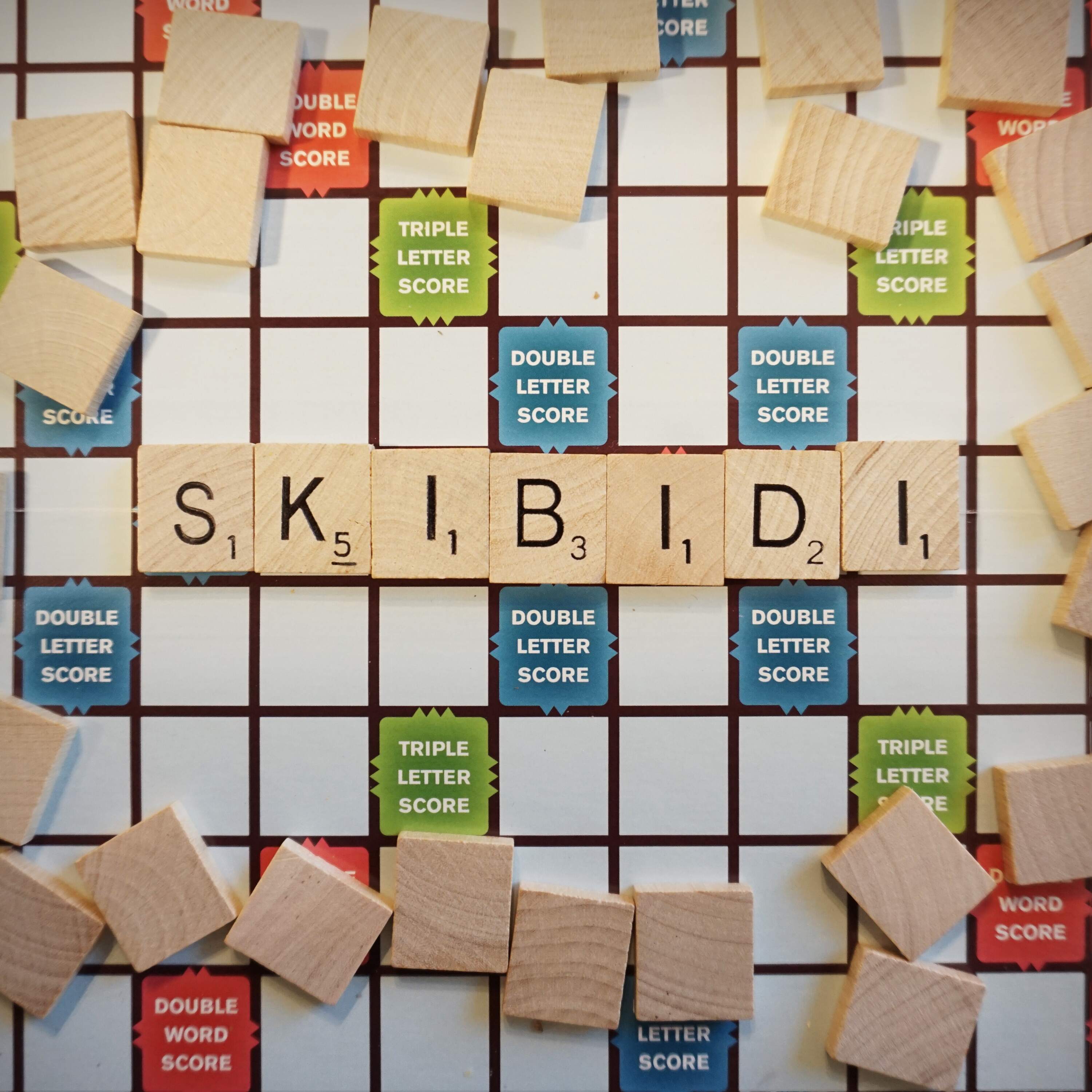
The most interesting thing about the word "skivity" is that the thing about "w" is that "w" doesn't mean. His special sauce is explaining to his users why they talk the way they do.
But the algorithm likes it too.
So is he working the algorithm?
Or is the algorithm working him?
Working everyone who makes and consumes content.
Today on the show, we're continuing our series exploring the creator economy.
How we're buying and selling creativity.
And how it's changing what we value.
Last time we looked at the business side with entrepreneur and artist, ANC Strickler.
This time, how the creator economy is influencing our culture and language.
So in the last couple years, Adam has parlayed his videos into a multi-hyphenate career.
I'm a linguist, influencer and author of AlgoSpeak.
He's now in his mid-twenties and makes what he calls a decent salary for a college grad who majored in a relatively obscure field.
In college, my research was more focused on government and linguistics, and my undergrad stuff was all about language nationalism and Serbia and Croatia.
Oh.
So that's how I ended up in that line of work.
I really don't mean to be impertinent by asking.
I know some people will say, like, how can this guy, he's like in his early twenties?
How can he call himself a linguist?
Yeah, of course.
Some people might come across you and think, oh my god, anybody can be an expert about anything.
It is true that I have an undergrad degree in linguistics, not a graduate degree.
I think what I'm doing is actually uniquely suited to studying slang etymology
because to really understand what it means for something to spread online, you have to be online yourself.
And I definitely never knew I'd end up studying social media linguistics,
but it's just happened that I started making videos about language about etymology on these platforms.
And I started noticing my own speech being restricted a little bit.
I started noticing how I would reroute my language around platform constraints.
Can you give me an example of that? Like what?
Yeah, well, you can't say the word "kill" on TikTok. I mean, I guess you can, but it's suppressed.
Your videos are going to be shown to fewer people.
So people turn to alternatives, like, on a live.
What happens after you unalive?
I might be.
I had not heard of "On a Live" until I read your book, actually.
Clearly, I don't hang out with enough young people.
But like, people started saying "Unalive" instead of someone was killed or dead
to get around censorship or get around restrictions on language on these platforms.
Exactly. It's a more platform-safe alternative.
As far as we can tell, the word "On a Live" started in 2013
with an ultimate spider-man meme that then turned into a Roblox meme in the late 2010s
that then started being used by the mental health community on TikTok.
But then I also found that people were using the word "On a Live" offline.
There are kids in middle schools who talk about hamlet contemplating "On a Live" himself in their classroom essays.
Or a classroom discussion on the "On a Live" that happens in Dr. Jekyll and Mr. Hyde.
Here's Adam Alexic on the TED stage.
And these aren't hypothetical situations.
These are actual examples drawn from the thousand-plus middle school teachers I've surveyed about this word.
Clearly, for such a recent word, "On a Live" shows up in an impressive range of scenarios.
But the main function appears to be euphemistic.
Many kids use the word when they're uncomfortable talking about topics like death,
since "On a Live" sounds like a less scary word.
And in many ways, this is nothing new.
We've been euphemizing death as long as we've had language.
The word "decease", for example, comes from Latin de Casus,
which was a euphemism for the previous Latin word for death, Morse.
Apparently even the Stoic Romans were as "queasy about death" as today's middle schoolers.
But there is a crucial difference between "On a Live" and "decease".
And that's that we only got the word "On a Live" because you can't say "kill" on TikTok.
They have a mysterious algorithm that removes or suppresses any post that might violate their community guidelines,
so people got around with that with the word "On a Live".
The middle schoolers don't know this.
They see the word online or hear from friends and assume it's a word like any other.
And fair enough, you probably didn't know where the word "decease" came from,
unless you're some kind of etymology nerd.
But "decease" didn't happen because it was impossible to carve the word "Morse" into an ancient Roman tablet.
We are entering an entirely new era of language changed driven by social media algorithms.
The "Algo" speak, that's what it's traditionally called, this sort of platform circumvention,
is only the tip of the iceberg of how these platforms are affecting our language.
I also noticed, you know, myself playing into viral trends.
I'd look at other influencers doing this too.
I look at attention grabbing language because these platforms are designed to monetize your attention
and all the incentive structure is there for influencers to replicate how do we grab people's attention.
So language is also kind of revolving more around ephemeral trends and what grabs attention.
And we have algorithms creating in groups and echo chambers through how they categorize users.
And these in groups actually serve as incubators for language formation.
And all of this is sort of what I call "Algo" speak, the expanded definition,
that our language is broadly being shaped by social media.
algorithms right now.
- Can we talk about the first part of that word,
Algo Speak, Algo Meaning Algorithms, right?
Like, let's talk about the algorithm as a former tech reporter.
I'm like, well, it's not the algorithm.
- I was about to say.
- Like millions of algorithms, right?
But when people use it, what are they referring to?
And can you walk us through what exactly you have noticed
or how you've learned about how it does work
in certain places?
- Yeah, and I'm so glad you brought up
that it's not the algorithm
because one of the biggest tendencies we have
when talking about the algorithm is to simplify it,
to personify it.
And that makes it feel more normal
what's happening, I guess.
It is a lot of different algorithms.
How users are classified is one algorithm.
How content is classified is another algorithm.
And actually, even within those algorithms,
there's a bunch of sub algorithms
that are all doing their own thing with content classification.
So there's a lot of different processes
running at the same time.
And all of these are playing a part
in the greater machination of how a video ends up
from someone uploading it onto your for you feed.
- I mean, I'm thinking of myself.
I love how I have bullied the algorithm on Instagram
into only giving me nature and pets.
I've protected my experience on that platform.
But it obviously knows I'm a middle-aged woman
who likes to go on long walks
and doesn't want to look at the news
when she's on Instagram.
- Yep.
- Yeah, tell me about like, is that basically
what we're talking about here?
- There's a lot of sense that you can train your algorithm
that you can personalize it.
It is after all called the for you page.
And people often say things like,
oh, you know, I built my own for you page
or the algorithm really knows me.
And I think this is also playing into that idea
of training your algorithm.
It is a simplified story.
Yes, you partially have trained some aspect
of what content is being recommended to you.
But also on your Instagram feed
that is mostly outdoors content.
Every third video is probably an advertisement.
And you don't actually want to see the advertisement.
So is the algorithm really for you?
No, it's kind of both for you and for the platform's benefit.
And every video that's shown to you,
every video that shows up on the for you feed
is actually something that benefits the platform,
definitely because it gets your engagement,
it gets your attention.
So the things that spread are more for the platform
than for you.
But it's all kind of packaged under this guise
of for you.
And I think the personalization is one of the most
dangerous things because we really forget
what's going on on a broader level.
In a minute, more with online linguist,
Adam Alexek on how social media algorithms
are influencing influencers online.
It's constantly changing what priorities
and incentives it's rewarding.
And influencers have to just feel it out.
They have to be aware of the algorithm
by interacting with it on a daily basis.
On the show today, the creator economy, part two,
I'm Manusha Zamaroti, and you're listening
to NPR's Ted Radio Hour.
We'll be right back.
(upbeat music)
Hey, before we get back to the show,
if Ted Radio Hour has ever made you laugh or cry
or just think deeply about the world around you,
please do us a solid and leave the show a review
wherever you like listening to podcasts.
It really helps more people find us,
and it helps us make the show even better.
We really appreciate it.
Now back to the show.
It's the Ted Radio Hour from NPR, I'm Manusha Zamaroti.
On the show, part two of our look
at the creator economy.
Our guide today is creator, Adam Alexek.
Adam is known as etymology nerd
to his three million followers online,
where he's cracked the code of how to go viral.
His videos dissect how different people use different words,
like demure.
Demure.
Is Demure changed forever?
Can you explain to people what's happened to Demure?
Yeah, there was a Demure trend about being
demure, mindful, and cutesy in the workplace.
Can we make up for work?
Very Demure.
We're playing into cultural ideas of reserve in this.
It's a green crease, not Demure.
Demure used to mean modest and reserved.
Demure is a solid, very Demure.
It trended on TikTok,
where understatement became performative.
How ironic.
It went everywhere from teens to celebrities
like the Kardashians and Jennifer Lopez.
Yeah, there is this huge, genzi aesthetic
of non-chalance.
And Demure was sort of making fun of that,
but at the same time, I think some people used it genuinely.
This new use of Demure made it dictionary.com's word of the year
in 2024.
And it's not just new words to avoid algorithmic censorship.
The very structure of social media
is changing where words come from,
how words get popular,
and how quickly those words spread.
I believe some of you might be familiar with this song.
♪ Givety, you're so fannum tax ♪
♪ I just wanna be your sister ♪
Sticking out your yacht for the Rizzler.
You're so skittity, you're so fannum tax.
I just wanna be your sigma.
Freaking come here, give me your Ohio.
For those of you out of the loop,
these are the lyrics to the Rizzler song,
a meme that went massively viral last year.
It's full of current middle school slang words,
like Rizz, Giat, and Skibbity,
and was instrumental in popularizing those words
to a broader audience.
♪ Sticking out your yacht for the Rizzler. ♪
♪ You're so skittity, you're so fannum tax. ♪
♪ I just wanna be your sigma. ♪
Social media algorithms reward repetition.
If a song is funny or catchy and people interact with it,
the algorithm will then push that song to more people
since it's proven to drive engagement on the app.
The same is true of memes or words in general,
since trending metadata like hashtags
will also be pushed to people
who previously shown interest in similar content.
Creators are very aware of this,
and we actively use trending audios or hashtags
to make our videos perform better.
In the wake of the Rizzler song, for example,
we saw an explosion of people making videos
with the words Rizz, Giat, and Skibbity,
because they knew those videos would do well.
And as a result, the word spread.
Language has always been a little bit like a virus.
Words are transmitted from one host to another,
reproducing and changing
as they infect different people along social networks.
But now the literally viral nature of social media
is accelerating this process from start to finish.
In the span of just a year,
a word like Rizz can go from complete obscurity
to becoming the Oxford English Dictionary word of the year.
And the algorithm is the culprit,
but influencers are the accomplices.
We use whatever tricks we can to keep you entertained,
because that makes our videos do better,
which helps us earn a living.
This means that we often end up creating
and spreading words that help the system.
Clearly, you understand how the algorithm works
in that you have been able to leverage it in a way
that gets more people interested in the roots of language
and explaining it to them.
How did you do that?
Absolutely. There's sort of a deal with the devil
that has to happen, right?
You have to accept as a creator,
yes, I'm playing into what the algorithm is rewarding
and they're going to reward, for example, trends.
So I started talking about trending language,
also analyzing the trending language where it came from.
It's good for my business
that the word "skibbity" goes viral,
because now I get to talk about the etymology of "skibbity"
and because people are socially fascinated in this phenomenon,
my video is going to go more viral
than an analysis of the word "chair" or "table" or whatever.
That's less interesting to people.
Let's pause, footnote, "skibbity."
What's it mean where to come from for those who don't know, like me?
I feel like at this point,
at least most people have heard of "skibbity" somewhere
in the news that it was just added to the Cambridge dictionary,
but "skibbity" is a nonsense word.
It can be used completely randomly as an interjection,
that doesn't mean anything,
but it could be an intensifier,
so you could say "skibbity" raises like very intense raise
in either a good or a bad direction.
Meaning charisma, just, you know.
It's NPR, we have an older rock.
No, of course you have.
Very important to clarify.
Yeah, so these are all kind of called brain-wrought words,
and it's this meme aesthetic of supposedly words
that are bad for your brain.
As a linguist, I have to say there is nothing actually
about these words that is mentally deleterious at all,
but it is sort of the catch-all meme aesthetic
of nonsensical repetition of algorithmic slang.
And "skibbity" comes out of that YouTube short series,
"Riz" comes from this Twitch streamer, Kaisenot,
but both are kind of taking on this role of absurdity
in the algorithmic kind of milieu.
It's more of, it's absurd because it's absurd
because it's being recommended to us by the algorithm.
And then middle schoolers start saying it
because it sounds funny.
And then when older people start saying it,
they stop saying it.
Exactly.
I think we're well past "skibbity".
I think "skibbity" is on its last throws right now.
It may be in the dictionary,
but it's getting less and less popular
in the middle schools.
In the middle schools?
Yeah.
I feel like these new words come up,
and I'm like, I can't, I don't know.
By the time I understand it, they'll have moved on.
So what's the point?
But that's probably smart,
'cause nobody wants to hear me saying "skibbity"
but anyway, except they just did.
- Well, you know, some of the trends that really stick out,
I think they have shorter life spans
because it is that thing that you mentioned
once your grandmother starts saying,
"Skip to you no longer want to say skip to yourself."
- Hey, I'm not a grandma yet.
- I wasn't calling you a grandmother.
- Okay.
(laughing)
But there is that aspect to how trends die out,
that once it starts being used by an out group,
it initially had value because it was in the in group
and now it no longer has that value,
so it no longer has any cash as a joke.
And then we move on.
And there's constantly new jokes percolating.
I also think it's important to pay attention
to the jokes that don't seem as obvious
or don't even appear as jokes in the first place.
I think these are the words that are actually
going to change our language more permanently.
Words that are percolating from usually minority groups
or from more fringe phenomena,
those are the ones that actually end up influencing our language.
So I talk about the distinction between
skibbity and low key.
So low key is this adverb.
It's been around since the 1800s
as a word meaning like muted or something,
but it was recently popularized in an adverbial sense
and this is from African-American English
where people would say, "Oh, that party was low key good."
- Meaning like chill?
- Yeah, well low key, yeah.
It kind of means like, you know, nonchalant,
I don't want to say it too much, being more low key about it,
right, it's muted.
It's mutedness, it's reservedness.
- Also, the way you just use nonchalant,
not how I use nonchalant.
- Oh yeah, the word nonchalant is evolving as well.
There's been an internet meme since like 2023
about how people are using this.
So I guess it's tough being a translator
when you're also deep in the kind of algorithm yourself.
But yeah, so low key I think
and these changing definitions that we see
with a lot of other words are also happening
but don't stick out as much as skibbity.
And I think it's those words that don't stick out
that are going to have a greater impact
on our language hundreds of years for now.
- So what you're just saying actually
is explaining a lot of my 15 year old daughter's behavior.
I mean, teenagers, whatever, it was ever thus,
every generation has its own way of rebelling.
But nonchalants is definitely a thing.
- Oh, absolutely.
I also, an important point about the 15 year olds,
I think these kids are the bellweathers of where language
is gonna go.
They are the ones that are actually most flexible
with their linguistic behaviors.
The elementary schoolers aren't quite
as tapped into social trends yet
or as searching to create identities.
And older people are more entrenched in our ideas
of how language should be or what words are supposed
to sound like.
And middle schoolers are forming their identity.
They're trying to differentiate themselves from adults
and from previous generations.
They're trying to build a collective kind of identity
for themselves.
And so they are more flexible with adopting language.
So you should be paying attention to your 15 year old
if you want to really understand
what the state of the English language is right now.
(soft music)
- So I guess someone would say like, yeah,
but in my, you know, at my school I remember
there was like, strengthen words.
This is kind of gross, but in fourth grade,
there was a kid who would spit at people
but only using his glands under his tongue.
And he called it a greek, the super weird.
But then it did just took off in the fourth grade.
It was like boys would greek the girl that they liked,
gross, but also clearly good word
'cause it stuck with me for all these years.
But that's always been the case.
Like, how is it different than, you know,
social groups coming up with their own language
or for that matter like the printing press, the radio?
- I'm so glad we're bringing up the printing press
and the radio because the medium is the message.
The way we're talking is going to shape the way
that trends diffuse.
And I'm not going to say, oh, it's new
that humans are using language to communicate
or come up with social trends.
No, that is a fundamentally human activity.
And we will always do it
and we will always find new ways to do it.
But the algorithm is now mediating that interaction
in the same way that the classroom did with the word greek.
The story of language as a whole is told
by what mediums we're using to communicate.
Before we had parchment and papyrus and everything,
we relied a lot more on oral communication.
Stories would be told through rhyme and meter
and then we moved to parchment and paper
and people were really concerned about that at the time.
I think Plato was concerned about brain rot
from people not memorizing things as much.
Then we start segmenting our stories differently
with paper, right?
We can have chapters.
We can actually put spaces between words
as opposed to stone tablets where all the words are smushed together.
And then we start mass producing things with the printing press.
And the printing press now allows for vernacular language
to reproduce and kind of solidify also at the same time
the traditional gatekeepers of who gets to control how we talk.
And so for a while, the printing press
is the dominant mode of communication.
You have a lot of standard language being replicated
in all these different languages rather than just church Latin.
And the internet finally creates this opportunity
for the written replication of informal speech.
You have people using slang words.
You have people writing in lower case
and using abbreviations.
And this is sort of this revolution in who can talk
and who can vote on what language is supposed to be like.
And that sort of lays the foundation
for what I think is the new inflection point.
And to the beat, some to the beat, some to the beat.
Algorithms govern the distribution of content.
I don't know what type of video
is I'm gonna post on here yet.
- Okay, but why is your content not blowing up
if you're doing everything right?
- Let me put you on.
- Things don't go viral unless they work for the algorithm.
And what that means is that the language we're using
is always sort of performing for the algorithm as well.
And this is this medium that is always there,
that is always shaping how ideas diffuse online.
And that means any idea that diffuses
is either good for the algorithm
or it's created for the algorithm.
That means using words like on a live.
That means playing into trends like Skibbity.
That means a lot of creators are just incentivized
to come up with new words or use trendy language
because the algorithm sees that language as metadata.
In the past metadata was something like a hashtag,
something that gives you information about the content.
Now the algorithm sees everything.
The natural language processing, computer vision components,
all sub algorithms analyze that.
And they create this numerical representation
of what a video is.
And they already know what the video is about.
But the word is part of that.
So we're incentivized to use words
that aid in the distribution of our own video.
- Just to follow up on the classic Marshall McEwen
idea of the medium is the message.
The algorithm is the one that's shaping language.
But to be clear, the algorithm is programmed by people,
people who work for very large tech companies
who want to monetize.
- Absolutely.
And they create those structures that are then replicated
by other influencers down the line
that, oh, you need engagements.
You need retention, which is how long people watch a video.
You need likes.
And so now as an influencer, I'm trying to make all my videos
to get people to watch the whole time.
And I want to get likes.
Otherwise, the video's not going to be distributed.
So I have to play into that.
I also want to note that there's emergent social phenomena
that aren't programmed just by these engineers.
It's not purely this top-down process.
There's social expectations that come with each medium.
- Live from NPR News in Washington.
I'm Dave Madaglia.
- On NPR, you have an NPR voice that's been studied.
- President Trump is making his first official trip
of this-- - Clearly, I am not good at adapting into this.
- Oh, I think they've been trying to get rid of that
for years, though.
But at the same time-- - And yet, here I am.
- You're speaking in a more radio-friendly voice.
I'm speaking in a more algorithm-friendly voice,
because that's what we've learned to talk
when we're kind of communicating like this.
- Well, wait, somebody might be like,
what do you mean an algorithm-friendly voice?
Define that.
- There's actually a bunch of different types
of influencer accents, but you're probably familiar
with the most famous sort of lifestyle influencer accent.
The, hey guys, welcome to NPR.
Today we're going to be talking about algorithms.
It has that up-talk, it has the rising tone.
- Well, could you lengthen-- - Not getting any response
from anyone, so you're like--
- Well, trying to have a conversation with yourself--
- Exactly, this is a one-sided communication
that is an important part of shaping it,
but that's not all.
I could just continuously monotone deadpan into the camera,
and that wouldn't go viral,
because there's an expectation of how people are supposed
to talk.
And this sort of lifestyle influencer accent
came out of the previous YouTube accent,
which came out of the valley girl accent.
So there's layers of social prestige in how we talk,
and there's an expectation of what the lifestyle influencer
is supposed to sound like.
- Now, wait, wait, wait.
Are you saying that the human brain is attracted to those,
and therefore it gets more listens,
and therefore the algorithm continues to push it,
or are you saying that the algorithm
is hearing those intonations and pushing it harder on people?
- No, I don't think the algorithm is picking up
on accent intonations.
I think there is actual human bias toward social prestige.
We evaluate any kind of social situation
through our lens of, like, is this something worth listening to?
And then, like, our slight scroll patterns
get replicated through what the algorithm recommends.
The algorithm doesn't even need to analyze
whether or not this person speaking
in a lifestyle influencer accent.
It's merely telling that, oh, this viewer
scrolled away quickly because this person wasn't speaking
in a socially approved accent in their minds,
and that means I'm gonna recommend this video
to the viewer users.
And so there's sort of a selection that happens for--
Socially desirable accents to replicate and I also want to clarify that's only one type of accent
That's the most stereotyped because you know women are scrutinized with language
I speak in a what I call an educational influencer accent. I'll talk very quickly
I'll stress more words to keep you watching my video. I get the sense though that you were a fast-talker always no
I definitely am a fast-talker and I'm definitely giving away myself here
But also there is a perfection that I strive for in the videos where I'll retake
Certain clips if it seems like I don't have the right intonation on the right word or if I stumble on my words
If I don't talk fast enough and so what now is still like a kind of more natural way of speaking for me
And I again would probably speak differently if I was in a larger group conversation where you don't need to
It's like more laid-back, you know, it's more
Demure
You're so not a lot out of my game. I don't want to be salon all the time
There's a time in a place to be Shalant and that there's a time to be non-shalant. Wait. There's a
There's a difference between Shalant and non-shalant
Well, non-shalant is being reserved and then
But Shalant is not its own word what but it is it is now
It's a slang word that was popularized through like social media and people talk
Meaning the opposite of non-shalant meaning you are overt about something like jazz
Yeah, you were excited about something. I'm Shalant about language, you know when I say jazzed
Are you like whoa 87 or what? I mean, I probably would just use the word Shalant exactly
When we come back
Adam's concern and
Optimism for social media users younger ones in particular plus
Adam and I go viral maybe oh, you didn't know about the right. How do we begin? Oh, sorry?
Today on the show the creator economy and its effects on language
I'm minutia Zomarodi and you're listening to the Ted radio hour from NPR stay with us
It's the Ted radio hour from NPR. I'm minutia Zomarodi
We've been talking to Adam Alexic about the creator economy
Adam calls himself a social media linguist. He's also the author of Algo speak how social media is
Transforming the future of language and he has built his career explaining the cultural and
generational divide on how we use words
We didn't have the idea of a social generation in the 1800s
This is like a new thing people are coming back from World War one
We called them the lost generation. Oh, the people come back from World War two
That's the GI generation and then we have baby boomers and then we actually don't know what to call you the next generation after that
We're like, well, I guess they don't have a desire to be defined
So we'll call them Gen X and then we just keep running with the idea that generations exist and then we have like
Millennial yeah, because it's 2000 and then well, we don't know what to call Gen Z either
So we'll just do whatever was two after Gen X and now we just ran out of the alphabet
So we'll call it Gen Alpha
But I think influencers play into these labels because there is a human social fascination with being labeled
We love things like MBTIs and zodiacs and the idea of belonging to a bucket and with a generation and it's shorthand
Right, it is it is shorthand obviously. It's reductive and I think people realize that but we're using more
generational language than we were before because it works
It works to talk about the Gen Z finger heart versus the millennial heart or before
Gen X people will start a short-form video. They'll they'll do like a little breath in
It's it's so strange to me that we put ourselves in buckets like that
And they actually serve as algorithmic trend bait to say that you are oh, this is a Gen Z thing
This is a the Gen Z stare went viral recently. I did a video on the boomer ellipses
I do that I phrased it that way because I knew it would go viral like why do boomers put dots in their text?
Which is not a normal thing that young people do
So it was simply more efficient to separate I did but it's like trailing off in your language
Yeah, yeah, it's just it there's different texting etiquette among different generations and again to use that word generation already feels like
I mean all of language is putting things into categories
But I think some categories are more reductive than others
For example the suffix core has recently gotten very popular in Gen Z slang to describe specific aesthetics
like cottage core or goblin core or angel core
And on the surface level. These are cute
You watch a cottage core video you like it later on you get more cottage core content
You might even start to identify with the cottage core aesthetic
But here's the thing
It's all fake the entire reason these aesthetics exist is because tiktok algorithm has decided that words like cottage core
Qualifies trending metadata so creators respond by making more cottage core content that propagates the word
And then more people interact with it which makes the word trendier and this happens because social media algorithms
Wants to make you identify with hyper compartmentalized labels since they can then give you extremely specific commercialized content catering to that identity
Now that you're a cottage core person
You feel special every time you get a cottage core video
You're like cottage core
Well the algorithm really knows me
The algorithm gave you that identity
You might even start buying cottage core clothing or cottage core decorations to fit your new lifestyle as a cottage core person
And that's exactly what they want
The craziest part is they're not even trying to hide this
This is this is a
At the heart of the capitalist maker economy, no?
This is such an important point to understand about how algorithms work. They want more categories
It's really good for them if I'm a demisexual goblin core gen Z-Swifty
I don't even know what you two said but yes, go on
The point is those are all little identifiers little pieces of metadata about myself as a user
The algorithm actually doesn't need the words but humans sense that they are trying to perform for the algorithm
And they create these words and they actually circularly
emergently make more of a cluster of users who identify with this label and then it makes more for the algorithm to award
And it's all part of this surveillance capitalism system where now they have more things to label about us more ways to target us more specifically
If you look at tiktok's business page in 2021
It says that subcultures are the new demographics and it gives businesses ideas for how to profit off things like cottage core and
the hashtag baddie aesthetic and what's crazy to me about that page they are using the word demographic
Because in the past a demographic was like race age gender and now it's also whether you're cottage core or not
So so as a gen X or part of me is like dude you're totally selling out
But I'm guessing that that was an extremely time-specific way of
Testing you on why you are in the career you're in. I think I'm extremely aware of the dissonance
I guess that is required to be a creator talking about these words and caring about how algorithms are affecting our culture
I think it is possible to use these algorithms subversively otherwise. I would not
It's also I think very important to mix forms of media if we're going back to Mcloen and media theory
There's a scholar called Harold Innis who came before Mcloen in Canada
I think he has a fascinating point about space bias versus time-biased communication
And time-biased sticks with the cultural record like books and oral traditions
And so while it might take way longer to reach an audience that's the same size
Space bias media fills up a lot of space really quickly
But doesn't stick around something like a newspaper or mass media or tv or right now algorithms are incredibly space bias
They they fill our consciousness and then they go away
So it seems that both types of media have their pros and cons right space-biased media is very good for
Communicating to a big audience and time-biased media is very good for
Maintaining some kind of cultural consensus or longevity
And so I think we should be mixing as much time-biased and space-biased media as possible where we
Build a more holistic picture of society and reality by consuming and engaging with all these different types of media
So that's why I wrote a book
Yeah, I did want to ask you that
Writing a book seems kind of retro in a way, but based on what you've just said
Am I right to assume that you were happy to create it will A because you got paid and B gets your ideas to more people but C
it's more
Tangible that it'll stand the test of time maybe unlike some of your TikTok videos
Yeah, I don't think anybody's looking at my TikTok videos from 2023
Somebody might look at this book two years from now, though
So there is a difference to how ideas can diffuse and ideas will diffuse differently depending on the medium
So a lot of this is just built-up layers of human social constructs
The NPR social construct of how we're supposed to talk versus the book social construct of how I'm supposed to write
Which is in formal English, mind you and then there's the TikTok construct of how I'm supposed to talk
And each of these has a different layer of respect or understanding of how I should be communicating
So who are you really Adam? I think a good communicator should know to adapt to different media and to different types of people
And to different social settings and we are constantly code switching all around us
You are a different person talking to your grandmother then talking to your best friend and that is super normal
that your grandmother's house is a different medium
than the bar that you're hanging out with your friend at.
So this is a aspect of human nature
to switch with the medium,
but kind of maintain conceptual constancy, I guess.
Still have your own moral system
and your own direction with what you're trying to do.
- I asked Adam to make a video with me.
- How do we begin?
- Oh, sorry.
And use his formula to see if we could go viral.
The lighting's kind of bad.
- By playing to the algorithm.
- Okay, yeah.
- Our first requirement, a trendy new word.
- Oh, you didn't know about the word clanker.
- And you always need a good hook.
Gen X versus Gen Z.
- No, I have no idea, I'm Gen X.
- It's kind of a speculative slur for robots.
So the idea that they would become more ascension
in the future and they could be treated
as a human minority today.
- The point of this video, to get people thinking
about why we would even invent a slur
for something that humans created.
In this case, robots, which we are now calling clankers
as a slur.
- Exactly.
So the idea is a derogatory play on the idea
of clanking as a robot, but also the N word itself.
It comes from Star Wars where robots are seen
as sort of a secondary race.
And there's a lot of ideas about clankers
being a lower class.
But sort of anthropomorphized citizen in the future.
- In some ways, that makes sense.
Like they're not humans.
So shouldn't they be treated as clankers?
- You know, it's just the idea that in the future,
they would become conscious.
And we aren't recognizing that.
It's sort of an online meme that's speculating
about your daughter bringing home a clanker
in the year 2060.
- So like, 2060, my daughter's gonna bring home a robot
who is really, really nice to her.
Therefore, a nicer boyfriend than a real human,
but he's kind of a clanker.
- Right, well, the idea is you don't want
your daughter dating a robot.
- Amen to that.
- Well, in 2060, that might be racist.
(laughing)
- Well, the word clanker be around a year from now.
Maybe not.
Are these trendy words and memes
among the world's most urgent issues?
Definitely not.
But as much as they are fun and interesting,
there is a darker side to this world of algorithms
and memes.
I do want to make sure that I ask you,
there are people who are using language
and the way the algorithm works
to get across all kinds of ideas.
Last year, we saw the shocking murder of Charlie Kirk,
the conservative influencer.
That trial is ongoing, but before his death
as an influencer, he built a big following online
in part through a very particular use of language, right?
It was short, punchy, geared for viralness.
From your perspective, how does that illustrate
the way that social media platforms
are shaping the way public figures communicate?
- Yeah, there's a sort of gotcha style
that goes viral that you'll see Ben Shapiro
or Charlie Kirk in the past use.
That's like keep it concise, keep it clip-formed.
So something that can go viral as a 30-second clip,
some snarky sound bite.
Doesn't matter who's more correct,
just who can go more viral.
And if you can go more viral than the other person,
you can out-compete like rebuttals or counterpoints.
So it's more about just get your idea out there
than have some measured response.
And algorithms reward extreme things, right?
When we were talking about engagement optimization,
what these algorithms are doing to get our attention,
things that are good at getting attention
are unfortunately really extreme things.
So far left and far right, opinions and voices
are going to be amplified.
You know, AOC and Marjorie Taylor Green
are always gonna go viral
than my congressman or I grew up in Albany, New York,
Paul Tonco.
No offense, he's kind of boring.
He doesn't go viral, right?
There's no kind of extreme point to his views,
so it's not gonna go as far on the algorithm.
And so you have this ability of more extreme views
to out-compete less extreme views, diffuse further.
And then more people maybe start adopting that.
It represents a new chance for people to donate money,
or I think Donald Trump is the first algorithmic president
in the same way that Kennedy was the first TV president.
He was famously kind of elected over Nixon
because he looked more photogenic.
And I think Donald Trump is the more memeable president.
And if photogenic candidates were good
on TV, memeable presidents are good for algorithms.
- I mean, one illustration, I think of how,
just back to Charlie Kirk,
how this can play out in real life.
I had a conversation with a friend, a mom,
who said to me, I hate to admit it,
I had not heard of Charlie Kirk.
But I asked my 14 year old son if he had,
and he said, duh, mom, of course I have.
I'm a white 14 year old kid on social media.
I'm targeted exactly by them.
Of course I've seen his videos.
The fact that he understood what he was getting
and why he was getting it.
Do you think that this younger generation is more savvy?
And are they questioning what the information
that they're getting because they are thinking
about the medium?
- Yes, I actually have so much optimism
for the younger generation.
I actually think older generations
are maybe more concerningly illiterate of the new medium.
The first people to get tricked by slop
were boomers on Facebook,
and there was like a shrimp Jesus that went viral.
I think young people generally have a decent understanding
of, oh, this could be AI, this might not be real.
Or like, this is the algorithm
and the algorithm is not necessarily showing me what I want.
When people engage less with new media,
they are less aware of how some things are fake
or overrepresented.
But yes, definitely it is still a pipeline
for younger people to get radicalized.
A lot of this comes directly out of extreme ideology
built on forechan.
- Some of the linguist communities
created by the algorithm can be actively harmful.
Many younger people have started using the suffix
"pilled" to mean, "convinced into a lifestyle."
If I recently discovered that I really like eating burritos,
for example, I can say, "I'm so burrito-pilled."
But that word was formed through analogy with blackpilled,
a term meaning "convinced into in-cell ideology."
Now, in-cells are a dangerous misogynistic group.
And yet somehow, the vocabulary is filtering
into Gen Z slang because the algorithm
gave these hate groups a space.
And again, many people don't even know where it came from.
But for the few people who might be interested
in the underlying idea, it's now more accessible to them
because of the way that slang spreads on the internet.
- What do you think that means?
You just said you were an optimist for younger generation.
But after hearing you say that, I worry a lot.
- I'm an optimist for younger generations
having literacy about this stuff.
I am not an optimist in terms of algorithms
and how they impact our culture.
I do wanna draw that distinction between language and culture
because I sort of comment on both a lot.
And I think language is fine
and there's nothing wrong with individual words.
They're never brainwrought.
I do think the same way as trying to language
points us towards greater cultural shifts.
You see a lot of words coming from that forechan,
manisphere space, and we should be paying attention
to why are these words coming out of that space?
It's because that space is good at creating memes
that export their ideology.
And sometimes their ideology is very intertwined
with far right ideas and aesthetics.
And yeah, that's kind of a problem of algorithms themselves.
How they push extreme perspectives.
What I said earlier about mixing media,
I really hope that we come to realize as a culture
that we should not just be relying on algorithms for our news.
But also, you know, mainstream news has its own biases.
It's good to get news from as many places as possible
and build a greater picture of reality.
It's good to build your stories of who people are
through in-person connections as well
because algorithms are going to show you
a flattened representation of what society is.
I do think we should be aware.
We should be aware when the way we're talking
may have been conditioned by the algorithm.
We should be aware when the words we're using
may have been engineered to sell us things.
We should be aware when our language regurgitates
extremist rhetoric and we should be aware
when that language can be used to harm other people.
We should be aware of etymology in general
because it helps us better understand who we are today.
We should be aware.
And with that, I've just one final piece of slang for you.
It's a common phrase used by younger people
when we finish a long-winded explanation of something.
Thanks for coming to my TED Talk.
- That was Adam Alexic.
He's the author of AlgoSpeak.
How social media is transforming the future of language.
You can find him at etymology nerd on social media
and you can see his talk at TED.com.
- Thank you so much for listening to our show today.
If you enjoyed it, leave us a comment.
What words are you using?
We would love to know.
You can do that on Spotify or email us
at
[email protected].
We love hearing from you.
This episode was produced by Matthew Cloutier
and edited by Sanna's Meschkinpor and me.
Our production staff at NPR also includes
James Del Hussi, Rachel Faulkner White, Katie Montelione,
Fiona Gehrin, Harsham Nahada and Phoebe Lett.
Our executive producer is Irene Nuguchi.
Our audio engineers were Damian Herring and Gilly Moon.
Our theme music was written by Romteen Arablui.
Our partners at TED are Chris Anderson,
Roxanne Highlash and Daniella Balorezzo.
I'm Manouche Zamorodi and you've been listening
to the TED RadioHour from NPR.
 PodcastTranscript AI