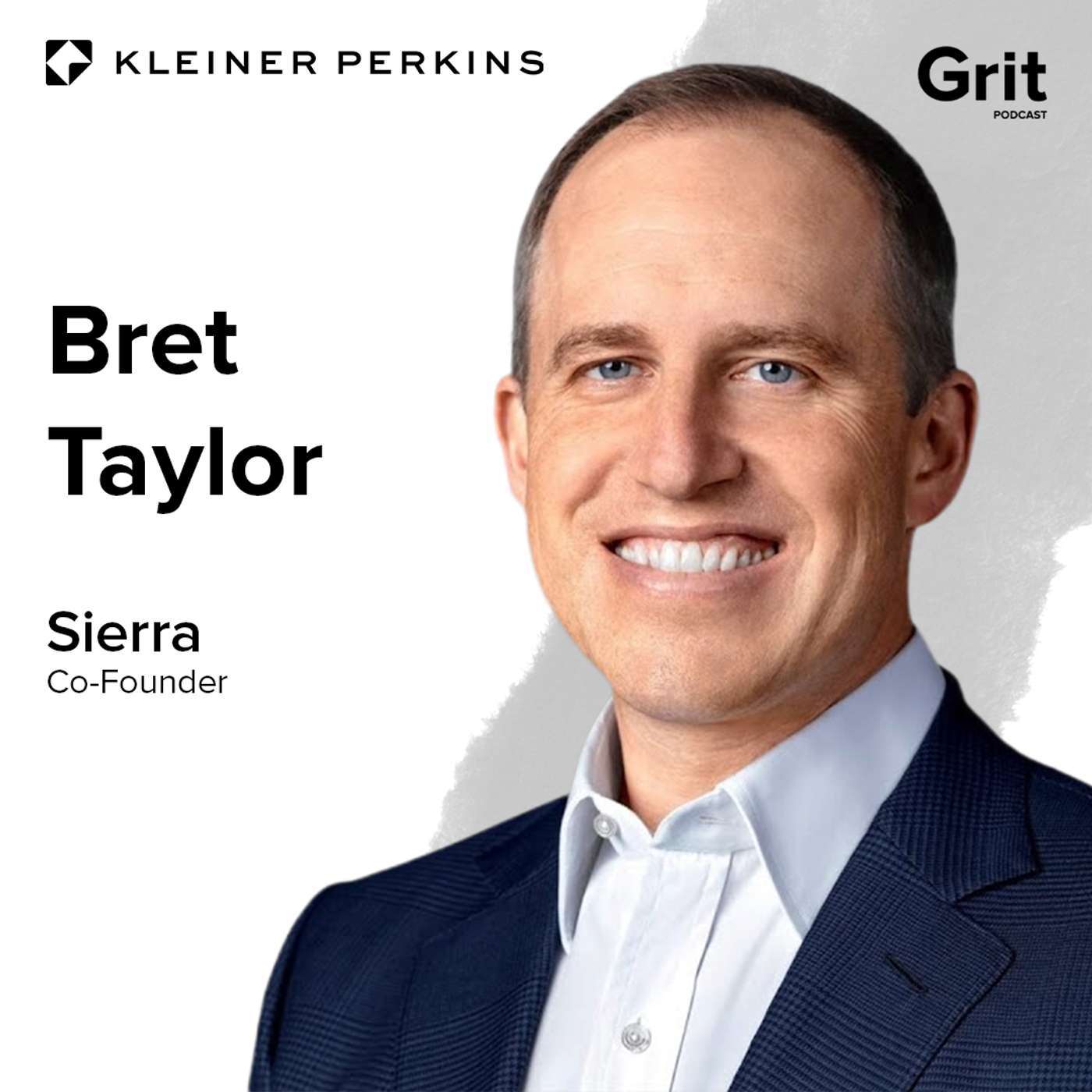
How Sierra Is Pulling Ahead in the AI Race | Co-founder Bret Taylor
from Grit
72m 38s
The discussion centers on the immense economic potential of current AI models, business challenges, and company-building strategies. A core theme is the difficulty of discerning truth in organizations, where successes attract many claimants and failures are often orphaned, leading to harmful internal narratives. The speaker emphasizes the need for entrepreneurs to stay directly connected to customers to avoid these pitfalls. Regarding his company, Sierra, he explains the deliberate strategy of hiring both seasoned executives, for credibility with large enterprise clients, and young, AI-native talent through a rotational program. This approach targets the Fortune 100 from the start, which is reflected in their rapid revenue growth. Finally, he analyzes the competitive AI customer service landscape, noting it is both enormous and crowded due to available venture capital. He predicts eventual industry consolidation as valuations adjust, allowing leading independent companies to emerge as the new incumbents.
If we paused innovation and just absorbed the intelligence of all the existing models, my guess is there's still trillions of dollars of economic value we haven't realized yet, which is interesting unto itself. I'm an optimist in all of this. I just don't believe that humans will stop doing things. Success has a thousand fathers, failures and orphan. Anytime there's a successful product at a company, everyone who's remotely adjacent to it takes credit for it. And then similarly when a project fails, everyone deflects blame. So when I say failures or if an I was thinking about it because every time someone tells me a story rationalizing why something happened, I'm immediately skeptical. And I'm almost almost seeking out the other side of that argument. But this is the hardest part of building a business is like fighting storytelling. Welcome to Gret. I'm Jouven, partner of Clienter Perkins, a show where we go beyond the highlight reel and explore the personal and professional challenges of building history making companies. Today on the show we have part two of Brett Taylor. I'm not sure he needs much introduction for folks that are in Silicon Valley. My personal opinion is he's one of the greatest CEOs of our generation leading, but I think is one of the most interesting tech companies. Enjoy the episode. Good to see you. Good to see you too. Last time I saw you was in Dallas. Twice. Yeah. How was that? Great. Was it like a you know I've seen a lot of pretty big time CEOs come into that room. Yeah. And I've seen a lot of pretty big time CEOs like it's you know 25 it's a room of 25 CIOs each time. Yeah. The biggest CIOs in the world. And it doesn't matter how much you've prepared, it doesn't matter how many times you've done this. Was it daunting? I love it. No, there's these are my people. And so I got a lot of energy from it and kind of give feedback on to like we've got a lot of clients from that. So it was really actually essentially just partly because they are like I met a lot of those people I've helped a lot of them. It's like I go in less like I'm trying to pitch something and more like let's have a conversation and I find it really energizing. Yeah. He did a great job. I appreciate it. Yeah. He did a great job. Did you get good feedback from our episode one? I did. How about you? Yeah. Do more of these than ideas. I have no idea. So you do a fair you do a fair bit. Yeah. Try to do more. Yeah. Oh, it's good to see you. Um Congratulations on the like my man. I don't even know where to start congratulating you. Um maybe I'll start with congratulations on the growth. Is that a fair place to start congratulations? Seems fair. Seven quarters. What was it that that I read? Seven quarters, 150 million of error, 100 million and then like a 50 million or a quarter. What have we did? A hundred million seven quarters, a hundred fifty and eight. So we were really proud of that 100 million dollars in your current revenue in seven quarters just because I think we and Wiz, there's been a very maybe one or two companies that have done it and so it was certainly in rare fight air. I think just the reason we decided to be more public about it is I think there's a lot of you know a lot of venture funding available, a lot of competition in the space were definitely growing faster. We felt like you know it was worth worth letting the market know that just because we do think and then to follow it with a 50 million dollar quarter exceeded my expectations to say at least. So really the business is growing really rapidly. I think we're actually getting well but I also think it's just a really unique environment right now where the product that we sell which is AI agents to replace your IVR system or AI agents to engage with their customers is so valuable that they're just you know every client we talk to you needs it and the question is why us versus some other solution which were I think pretty effective at explaining but it's amazing. I mean that's what a fun privilege to do. Yeah to run a company like this. Tell me if this is true or false but one of my observations actually just looking at the Sierra employee base is seemingly from the beginning you hired both aggressively and senior like again I don't know I'm just reading back to you what I have observed from looking at the leadership team like you had executives that I would say we're pretty senior kind of from the jump and you've staffed the team accordingly basically since the beginning and you know like my first of all do you think that's true before I continue. I'll start with the reason why and then end with basically agreeing with you. Uh-huh. We started the company with the thesis that a lot of the impact we can have on the economy and the world is through some of the largest companies in the world. So we said hey the Fortune 100 is you know the cohort of that's our ideal customer profile and to serve you know a company like Signal Healthcare or you know direct TV you have to be able to actually go into those companies and know what you're talking about understand you know what a mainframe understand that not every company uses like next generation software as a service but there's legacy systems you have to understand regulations and so part of that is when we built the company we built that are really being able to serve these businesses and so as a consequence we wanted in parts of our business we want to make sure we had people with some experience just because it's hard to go into you know we serve a pretty high percentage of the Fortune 20 at this point and to do so you have to be able to have credibility in that room. We coupled though with a lot of very young people too so we have this program called the APX program which is modeled after where I got hired at Google where we hire new graduates out of engineering degrees and teach them how to be agent product managers or agent engineers and it's like a rotational program just like the APM program at Google. So I would say we kind of get both ends of that where we have people who understand the business of enterprise software and understand how to work with the most complex businesses the world and the most talented young people we can find to our AI native I guess you could say and we think that's our kind of sweet spot in the market but yes we have tired more experienced people we're planning for success to some degree and actually I think it's poured out in the numbers not just the ARR numbers but over a quarter of our customers have over 10 billion in revenue which for a company that's been in the market for two years is very unusual you tend to usually start with smaller customers and without from there and we've started kind of at the top end of the market which was very intentional. Yeah you just had to be right right because if you have you know like call it big company executives I don't mean that disparagingly but executives that come from big companies that are used to managing big teams with big whatever per views and you're in obscurity for several months and they don't get to hire teams there's trouble right like it's harder it's harder well it's interesting because you said big company executives said not to be disparaging but it sort of is that phrase is right like you know no one says that I guess it's disparaging in the in the context of like a baby starter well that's the thing actually but even if just the phrase itself is I would argue probably rarely used except for disparaging yeah disparagingly and I would say that is more of a mindset than you know if you go into a larger firm you'll find people who are extremely high agency and have grit and you know and have intensity and you'll find people who are good at managing politics and all that so the sweet spot for us was to find people who had experience who weren't big company people totally because and and that's a nuance thing and I think it's something we really try to hire for you know we one of our values is competitive intensity which is sort of an unusual company value but it's one of our company values like and a part of it is like we want people who relentlessly focus on outcomes more than anything else which is distinctly probably not what you meant by big company people right it sounds more like startup like grit and I would argue there are those gems everywhere and especially right now you just look at the software market which is you know it's a really tough spot in the public markets I think a lot of people are saying who are the sort of like new guard of companies that will come to be the people who define these markets and we're trying to you know be one of those companies so that those you know folks who have experience who have grit want to work at our company and that's kind of the culture we're trying to create yeah the thing that I'm like really poking at and mostly like I think it's a counter example of success here which is why I'm so interested in it and by the way like the irony is like you are the I'm not really sure what bucket you fall into but you've certainly been a big company executive and now you're running it startup but like let's just say across the top eight KP portfolio companies and let's put the top five executive positions in those companies so 40 roles I think in our top companies 39 out of the 40 report to the founder for the first time in their career and that is somewhat against conventional wisdom because conventional wisdom says like these are the people that have been there and done that and seen the scale and I guess my observation at least in our portfolio is that that's not necessarily the case and I started asking myself like why is that and I think the core answer is because it's very hard to find the people that have all of the things that you just described the competitive intensity while also being at a big company. I think in some ways like
that is the ideal profile. You just have to sift through. You just have to really make sure you know. - It's the hardest thing for a founder, and this is, you know, there's some downsides to, you know, I'm kind of an old guard at this point. It's still like on value, you know, if this is the third company I've started it. And instead I've started to your company's prior to this and I've worked at Google and Facebook and Salesforce. So I've seen big, I've seen small. One of the benefits of that experience, and there are some downsides. See, one of the benefits is, I actually can identify people I think more effectively. I mean, the hard part for a first time founder is, if let's say you're a software engineer making an enterprise software company and you have to hire your first head of sales, you probably never, assume you've never run a sales team. It's not an area that you like studied or an expert in. And so you end up relying on other people's advice on what, you know, there's sort of the fit that you have, the personality match. And you rely a lot on your board members, investors, other things, oh, this person's a great head of sales. And there's just so many examples of organs rejected by the body and, you know, failure is an orphan, right? So everyone blames everybody else. In Stardew and Sierra, there's a lot that are really new about it. You know, the AI market is completely novel. So you think about, you know, writing software in the age of coding agents and it's completely novel. And then there's parts of the business where like, I know what I want, you know, I know what I want and Clay knows what, Clay, my co-founder and I like, we decided this is who we want and we decided, let's shoot for the stars. Like, let's get the person we want in this role to help scale the business. And I would say, like half our executive team, it's their first time in a role like that in half or quite seasoned and it's a really nice mix. But the nice part of the experience is I can sift through because I've seen hundreds of sales leaders and I kind of know who I want. And I know them. And I, yeah, exactly. Yeah, exactly. Yeah, that makes sense. So like, you use the phrase failures in orphan, can you explain that? So especially at larger firms, but I think broadly, you know, success has a thousand fathers, failures in orphan. And basically what that means is anytime there's a successful product at a company, cloud code, at Anthropic or Google Maps at Google, everyone who's remotely adjacent to it takes credit for it. You know, I've had people who described themselves as creators of Google Maps, I've never met before. (laughing) Like, sure, you're involved with it, but I might have been overstated a bit. You know, it's like, well, the product manager blames the engineering team, the, you know, we couldn't really get the marketing we needed. The classic thing in enterprise sales is, if your sales are bad, the sales team blames the product, the product people blame, the sales team. And it is actually the ultimate challenge with recruiting, but as an entrepreneur, it's actually the hardest challenge in building a company. I had a really impactful moment when I was working on Quip where I went up to Microsoft's campus and saw a lot of people on campus using Windows phones. And I had, you know, down here, there was like, I'd never seen one. And a while, you know, they exist. But, you know, there weren't, it was just not a popular product. And I went and I talked to someone just on campus, like I was in a waiting area, kind of thing. And they had so much optimism that Windows phone was gonna beat Android or, you know, beat iOS. And this was like, well past the battle being done. You know, like, if you had talked to anyone in our circle, they'd be like, no, it's a two horse race, Android, iOS, but somehow in the echo chamber of Redmond Washington, there was still a chance. And you ask, like, why is that? Because Microsoft tires really, really smart people. Yeah, and I think it's arrogant to say otherwise. I heard like some of the best of the best. Somehow all these smart people could convince themselves of something that was self-evidently not true from the outside looking at. Well, if you think about a larger company, Clay gave me this metaphor, but it's like a sphere that grows. And the surface area of the sphere is your engagement with your clients. And the middle of the sphere is your company. And the volume grows faster than the surface area. So what ends up happening is the people in the middle of that sphere, all they can see is the sphere. They can't see the surface. And you end up with internal narratives, driving, decision-making. And I think storytelling kills companies. You know, you end up with these stories of why your product isn't selling. And that story becomes the truth. When in fact, if that story is probably someone covering the rass, you know, that story is the sales team blaming the product or the product team blaming the sales team. And if you actually think about being in the environment or now, which is I would argue one of the most competitive environments I've ever been in, the most important thing is understanding the truth about your product market fit, about understanding your competitive landscape. And so when I say failure's morph and I always think about it because every time someone tells me a story that essentially is a rationale or like rationalizing why something happened, I'm immediately skeptical. Or I immediately think about all the incentives of all the people involved and sort of synthesize that story through that lens. And I'm always almost seeking out the other side of that argument. And I think it's why, like, as an entrepreneur, you just need to be on the surface of that sphere at all times. You need to be listening to your customers not a middle manager telling you why something happened. And it is the hardest part. And then when you're doing recruiting and someone says, you know, explaining something on the resume, I can promise you, every initiative that was successful was solely because of them and everything was a failure because of someone else. Like it's like a tale as all this time. And then your job is to like, as it's like a detective novel, like what actually happened. And that's where references and all that happened. - It's like a VC when a company is going well. Like they were, you know, they were intimately involved from the beginning and they knew it when nobody else knew. And then when it's not going well, like it's not even under the-- - We found no one listen to me. God. - Yeah, 100%. - You mentioned like this is one of the most competitive times that you've seen. And like I'm curious like, okay, yes, in the space that you're in, like a support, AI native support, okay. You're right. There are like, I don't know, at least seven companies and growing, some of which are like good companies. Like you're not fighting legacy old, stodgy solutions. And by the way, you're also probably fighting some version of like open AI going into an account or anthropic going into an account. Like it's competitive in that respect. Okay, like I buy that. But do you think it's maybe somewhat less competitive in the sense that the pie is so much bigger that maybe that's why there's so many sharks in the water here? Like I'm curious how you think about like, yes, there's more companies in the space. But it seems to me that this space is, you know, like next to coding, one of the biggest spaces or markets that I've ever seen. So I don't like square that for me. I think you're right. I would say there's two reasons why I think there's a lot of competition. One is the market is gigantic. And you know, prior to large language models and generative AI, about $400 billion a year were spent on contact centers and BPS and that sort of category. And I think that, you know, with AI, you end up generating more demand when the unit economics go down. So, you know, put another way. If you do 100 million phone calls a year with your call center, when the cost of phone calls go down, you'll probably do a lot more phone calls, you know, as a consequence of it. So I think the market is gigantic. And which is why there's a lot of people going after it. I also think there's, I'll use a, that I mean there's two unfairly, there's sort of an excessive amount of venture available as well. And so as a consequence, you don't really get right now. We're not really getting the culling effect of the winners and losers. We estimate we're, you know, three or four times larger than the next biggest player in our space, but none of them have been consolidated. Yeah, I think, and it's, that'll happen. I believe it will. Not because they're not bad coming. They just mean there's like, you know, it's like the economics of software. You know, there's basically you tend to get a large number of companies all going after a space, then you tend to get incumbents purchasing the second, third, fourth place players. And it works out well for everybody. It's kind of the economics of Silicon Valley. Right now, because of the wide availability of capital, the valuations for the second, third, fourth, fifth, sixth, seventh, ninth place players are also high, that they're not really affordable for the incumbents to absorb. So you just end up with sort of, you know, lots of players in the space. I imagine we'll just see some consolidation over the next few years, just because that's sort of the abs and flows of these technology cycles. And you'll end up where, you know, the folks in lead have the privilege of sort of becoming the next incumbents, if you will, you know, and remaining independent. But because valuations are so inflated right now, it's just not economical. And especially with valuations depressed with a lot of the incumbent software stocks because of the gray cloud of it.
I hanging over all of them. So it would just be interesting. I think we'll need probably a modest correction to for a lot of the natural Kind of consolidation to happen, but I think it will I think it's sort of a matter of timing and more than anything else But I do think the markets are different and it's not just service One of the things I firmly believe is that There is not enough applied AI companies working on AI agents for business processes that are extremely valuable as opposed to working for tooling around AI itself You know, I think Software engineering and customer service are certainly two of them I think the legal tech market the legal agent market is is maturing You know, we're really close to Harvey one of the entrance, but there's a couple other decent players They have competition now as well and And and just like you said their credible companies, right? They're not their good companies And so competitions good. I'd love to see that in finance. I'd love to see that and You know other parts of I'll say the back office It'll be interesting to see what happens in marketing and martyck is sort of famously saturated with a billion different vendors But I think there's a lot that can be sort of truly automated there from purchasing ads to you know Content marketing where you see some investments as well and my view is that that will be I think that's what most companies would prefer to buy well i.e. buy solutions to the problems or you know buy improvements to core business metrics but just because the The market is so new right now There's just not a really mature apply day. I market in a lot of categories And so it's going to have to go through a way of like we're going through and coding agents and customer service agents Which is you need a lot of companies trying it you need to have the free market do its job of of calling and then you'll see some consolidation on the other side It's interesting your point on like the Venture dollars that are creating somewhat artificial Growth and expectations in these markets and then creating more competition like If you think about that like if you put your kind of chair of the board of open AI hat on Your argument is like as the cost per unit of token basically goes down demand will go up I guess couldn't you make the same argument that all of those venture dollars are also now artificially deflating the cost per unit of The tokens like these actual underlying models or do you think that we are in an inevitable race to the bottom and it's just going to continue to get cheaper and cheaper Independent of the venture funding for the underlying models. It's a good question I I don't think the venture economy is what's driving token demand I think it's actual like the revenue numbers are real in these companies So I think the venture this is my take and I'm not Sophisticated economist. I'm just like a business person in this world But to me it's inflating valuations and it's like making it just really easy to start company It's like too easy to start companies like you're starting a company in a crowded market with no particular uniqueness, you know in a Market with less venture capital you wouldn't get financing for that now. We're just in a different world We're like so that's sort of it That's where I think the venture is playing in more in the quantity of competition as you said There's really smart people building these companies. I don't mean it in a Disparaging way at all. It just you know, it's not it's there's not enough room in the market for all these players to thrive as an independent company But I think demand like the revenue is real and I think that's what's driving token demand I mean just look at software engineering like it used to create all the other markets, you know quip and Sierra Harvey they go away and you just have software engineering that could probably saturate demand that in chat GPT And you've got enough demand for all these tokens and I think the Moore's law characteristics of you know these models will drive token cost down Because there's every incentive to do so and also scientific breakthroughs that facilitate it just like the you know transistor in the early days of Moore's law the interesting thing is The way the way I see the models playing out is a little bit more of a heterogeneous set of models for applied AI applications I think if you look at the pursuit of AGI You know you end up using a lot of tokens because you do both that Training but also inference time with these reasonably models you're using a ton of tokens but producing remarkable amounts of intelligence in the more applied air world you're seeing this with Codex and modern versions of cloud where they're actually thinking for long periods of time consuming a lot of tokens But writing extremely high quality software so you know It's not like the actual you know iterative like each iteration of using codex like the cost hasn't gone down It's probably gone up, but you're actually building software you couldn't do before so it's quite valuable And then the other end of the market you might be using Let's see your making an L.M. Augmented thing to detect credit card fraud Well, you can't you don't use a reasoning mall for that. It's too expensive and high frequency for that So you might that you probably want you care about latency and other things if you're doing voice AI You care a ton about latency and so my sense is we're in depth with a we use the term internally It's here a constellation of models where you have different price Performance which is both latency and throughput and different applications are sensitive to both quality and you're in a trade off all those different levers for your application and if there's an analog in the pre LM world That's probably databases, you know like I don't think there's a database you use for everything right if you want a Trillion data points and you want to do analytics on it You'll use one column or data store or type thing if you want a transactional database for credit card transactions You'll use something different and if you want to you know eventually consistent cash You'll use a different thing and engineers have for the you know past three decades of building cloud applications have Pretty much a shares set of rules of thumb to figure out which you know data storage technology is for different applications I think that's the way models will play out over time and I think I think we'll sort of grow up and you know five years and There'll be a lot of different Things that we call large language models today, but sort of in that heritage of model Probably with new advancements just like the reasoning models and there'll be a lot used in concert for to power an agent And I think that'll be a really healthy Healthy Progress in the ecosystem earlier you mentioned Hey like a market correction might be good here. Let's like play fake economists for a second like we don't know I'm curious if you think that will come from I don't know like models slowing down progress in air quotes If that will come from all of a sudden public sass comps are down 50% and so people start getting jittery Like I'm curious if you're like as you read the tea leaves obviously you have to think about some of this because you have to capitalize the business as a Vi-product of what you see coming down the pike like how do you yeah like how are you like indexing the risks here? I think it probably will happen I think As you said the juxtaposition of multiples of software stocks being lower than they have been and the premium on AI Investments which are largely private creates this you know Aquardness which is like what happens when these companies go public to the valuation settle down and so you know You could end up where a world where you know as some Some all quote unquote AI companies and that definition isn't interesting one just because I'm not sure exactly what it is I clearly open the eyes one right there's everyone else is striving to be one just me just encounter you put dot AI It could be the you end up where a few of these nominally AI companies you know inter public markets and don't get the reception and that that sort of trickles down to private markets late stage and then early stage Maybe the more likely one is macro though, you know when interest rates went up because of inflation You know after the pandemic that corrected a lot of the software market and so You know it does feel like these macro forces are greater than any sort of insular tech specific thing And you know will generally make you know just change the way people invest I'm not sure what which will cause it but it does feel like I don't think it's unhealthy by the way. I mean just just say like I'm a capitalist so like I think it's really healthy that there's lots of companies going after these problems because It enables the market to kind of like do more exploration of ideas So it's but my sense is it just can't go on forever just because you can't have 20 companies going after the same space with it just like there's just too much sort of saturation in the market But I think there will be a some form of correction there and then some form of consolidation and I think it'll be fine I think I think we'll Survive it and it'll be fine and actually the economic of impact of AI will be viewed probably with as much optimism as anyone has right now I It's truly changing let we can feel it deeply and software engineering and customer service It's completely transformed those industries and for those of us in the middle of it You can just see the capabilities of the models because you you feel it You know you feel like the difference between using codex today Compared to three months ago and you see what it can do differently and it's easier if you're in the middle of one of those industries to extrapolate to all the others But I just I do think it will have a
a huge, huge impact. - I'm sure you read that article. I guess it was yesterday that came out. It was like, do you remember the name of the article? - I don't, but I did read it. - Okay, yeah, it was like, how would I characterize it? I would say like sounding the alarm bell of the change that is to come through the lens of coding as the like models are improving. Basically like the author was arguing that people, no matter how bullish you may be, you're still underestimating how quickly this rate of change is. And as most like primarily evidenced by what's happening in coding today, with how good the models are getting, where like two years ago, you could barely write, I think like, you know, it could barely write a line of code. And now it's like writing like thousands of lines of code autonomously well. - Yeah. - Like really well, like full code basis. And then checking that code and it's really good. - Yeah. - And, you know, I think the point of the article was like, hey, for people outside of the valley, that don't really aren't living and breathing it like we are, like you have no idea, basically. And I kind of viewed it as like, there was definitely a dystopian lens to it. Would you agree with that? Like it was somewhat dystopian. - It's hard to tell, it sort of ended up the mistake. But it was, yeah, I sort of said, I agree. It had a kind of anxious dystopian lens to it. I agree. - Yeah, like the world's gonna change and we're not ready for it. And, you know, it's interesting. Like I think every, what's crazy is like every three to six months, I feel like we, the pendulum swings from like, the models aren't improving to nobody's gonna have a job anymore. The day like I did, I mean, like it just keeps going back and forth between those two things. Like it's overrated and nobody cares about AI anymore to like we're all gonna sit on the beach and have my ties one day. - Yeah. - And that's like a pretty, like I think if you don't come from, I think if you come from our world, it's still like a pretty heavy feeling. I can't imagine basically the rest of the world, how they feel, just reading these things from the outside in. And Sam at OpenAI also talks about this in, and like Dario, like these guys are also talking about this, like this, like almost change management of society that is coming. And you know, in some ways like there, I think everybody's right in that like we are, like things are gonna be like drastically different. But in other ways, I'm like, you know, the pendulum is definitely swung into like we're all gonna be on the beach in my ties. I'm curious like, I like really follow it. Yeah, like I, - I'm not in camp my tie, but I also, not in the other camp either. I find, I don't, I question the premise of the two extremes. I'll give you my perspective. So first, part of the reason I think you have the juxtaposition of the models aren't changing, and oh my God, everything has changed, is how much intelligence you need for the task. So if you're using chat GPT to plan your vacation, and you use GPT 40 and use GPT 5.3, my guess is the experience won't be that different because planning a vacation on chat GP doesn't require a huge amount of intelligence to do. It was already, it had reached sort of sufficient quality, you know, a year or two years ago, that actually like everything sort of feels like incremental on top of it. In contrast, if you're using the model to write a rust module that is going to do something low level systems software with like high sensitivity around both correctness and latency, the models were like woefully, like they just could not do it two years ago. And all of a sudden, over the past three months, they could. I think what's any up happening is if you end up, I don't think it's really possible to do, but if you're just like, take every task you do in your life and sort of order them by how much intelligence is required to do them, we're sort of moving down that line. And if you're testing something that we'd already, like the horizon had already passed, you're like nothing's changed. And that's actually people's lived experience with chat GPT. A lot of it is these sort of simple, and they're useful, right? But we already solved that. So now it's a commodity. And then if you're trying to do drug discovery or software engineering, that's you're seeing it change on a daily basis. That's why I think there's a juxtaposition. And put it out of the way, one interesting sort of thought exercises, we've reached sufficient intelligence for a lot of tasks. Put it out of the way, if we paused innovation and just absorbed the intelligence of all the existing models, my guess is there's still trillions of dollars of economic value we haven't realized yet, which is interesting unto itself. I think it's really interesting. Then you go to like the what's gonna happen. I think a couple of things are true. The reason why I'm not in camp my ties, I just don't believe that humans will stop doing things. I think we've through automation, like eliminated a lot of jobs. And the jobs of a bank teller to a lot of agricultural jobs, which of I think it's like what, 5% of our jobs are in agriculture today compared to like 95% a few hundred years ago. And so just because we automate jobs, I think we often lack the imagination to imagine what comes on the other side of it. And I firmly believe that. I just think that we are, I believe this technology is fundamentally a tool, even though it's a really impressive and super intelligent tool, but it's fundamentally a tool. And we will create an economy and identity around it. And I don't believe that because it took something we're doing now, it's taking away our identity and we want to go sit on the beach. I just don't believe that as a human being. The other thing though to temper the excitement is software engineering is both getting the most attention right now because the research labs know to create self-improvement for AGI, a automated AI researcher as a prerequisite. So as a consequence, all the smartest research labs are specifically working on this. So we can write the next series of models. That's right. And if you saw the OpenAI post on 5, 3, there's a lot of openness about sort of using the model to help build the model, which I thought was really interesting and what's happening in all the labs right now. So first, just because software engineering is getting great, the idea that that's completely general is not, it may be true, but it's not obviously true. It's there's a lot, how much this generalizes the G and AGI is the hard part. And it certainly generalizes, but how broadly is an interesting question. The second thing is like which parts of the economy can basically absorb intelligence completely fluidly. Software engineering is definitely one of them. It's a purely digital profession, right? You write code, you compile code, you produce binaries. And so the entire process is digital and you can test it digitally, contrast that to a drug discovery. It might work until you need a wet lab. And then you need a wet lab and all of a sudden you need robots. OK, then unless you do robots in the wet lab, then you want to bring it to market. Well, you need a clinical trial. And that clinical trial, even if you have great ideas on how to do it better, it's still a process that is regulated by the government. There's no amount of intelligence you can just pour onto that process and make it run faster. And so the interesting thing I see is clearly finance and software engineering are professions where you can take intelligence and sort of absorb it into the profession quite efficiently, because a lot of the job is essentially operating in the world of information. And then you say, OK, what are all the other parts of the economy? And not only are we absurdly focused on coding agents just because of the-- it's importance to the AGI labs. But also, it's not obvious to me that every other profession is as easy to take a information, orient a digital agent, and transform the profession. So I think it's going to have a really big impact. But I think the takeoff in the AI labs might be faster than the takeoff in society to some degree, just because different professions will be sort of differently impacted by it. And it's useful. I actually have started doing this, which is like, I'll walk around and just think about, OK, if we had super intelligence by any measure, what would happen to that flower shop right there? What would change about it? And it's really interesting to simulate that, because I do think it sort of shows, but the short-term opportunities and the complexity of how this technology gets rolled out around the globe. Super interesting. And then a lot of what the labs are saying right now is we're not going to be hiring engineers in the future. There's this big take from the heads of the labs that they're going to reduce their own head count. Sierra seems to be growing. There seems to be a lot of people that you're hiring. It seems like you're still hiring a bunch of software engineers and salespeople. It seems to me, from the outside in, that you're building a high growth company and staffing it with the resources that I would have seen for any company growing of this size. Square that. I think it's a correct critique. Yeah, I always laugh. Like if you look at it and throw up a pick in an open AI, they don't look that different. Then a high growth company that proceeded-- I would argue. Sam and Darryl might disagree, but they're not fundamentally different. It's hard to know, though, because on the other hand, Ravini's revenue scale is truly unprecedented.
There's no way to AB test what you would have needed, you know, proceeding is. So maybe that's an unfair comparison. I think one of the things just to state it is, these coding agents have only gotten this level of quality literally over the past few months. So these companies have been built over the past years, not months. And so one of the, I think the perhaps an interesting question to ask is, with the current technology, what shape would you want your company to be, maybe as a proportion of your revenue or users or whatever the right, you know, proportionality might be. And I think one could argue that if you project out the skill set, you may want a different shape in the future. So one reason may be that actually we just hadn't gotten to the point where the kind of new shape of the company were really possible, but for the smart leaders of these labs, they're projecting forward and it might be right. Going back to my, you know, bank teller example, though, you know, when the banks automated distributing cash with an ATM, they decided to keep their branches and keep employees in those branches, but have them do higher value things. And so we live in a, well, hopefully in a free market that's very competitive. And so clearly the people who are soft-for-engineers won't be doing that, they're already not doing the same things as they were a year ago. Like they're operating, you know, cloud and codex, not typing. And just nine months ago, they were in cursor. And like nine months before that, they were in VS code. So like every, you know, it's, it's incredible how rapidly it changes. But will you want the same number of people? I don't know. The way it answered that question is does having more people enable you to gain more market share than your competitors? And the answer is yes, I think the answer will be yes, because you don't just like recoup efficiencies in your business and pass them on to shareholders because every one of your competitors has access to the exact same technology. And so what's going to happen is the second order of fact is if you assume every company in a market has access to this technology, which is truly democratizing, you know, what does every company do with those like that new higher leverage operating model? And that's what's exciting about it. And this is why I find a lot of people's projections about jobs to be simplistic because let's just take the mobile phone market in the United States. So you have Verizon, T-Mobile, AT&T, all fighting for the same, how many mobile subscribers are in the US? I don't know. 300 million, I don't know what it is. It's a fixed pie. So like, you know, just assume all of them have access to the same AI technology to improve their business. Well, then the question is like, okay, they're not going to pass that on its cost savings. I mean, they can, but if one of the most prices, the other one will have to learn prices. If one of them finds a new interesting channel for customer acquisition, the other person will. And so I think the key in all of this is you in a competitive market with a technology like this, everyone's going to absorb the impacts of the technology and then compete. It's a little bit like to some degree, if we went back to 1995 and I were trying to sell you the prospect of making a website. And I said, if you make this website, you'll be able to do X and Y and Z. And if I ended that with, and none of your competitors will do that, it would be a lie. In fact, with the benefit of hindsight, the correct sales pit for a website is you should go to the website, X, Y and Z, because if you don't, all of your competitors will, and here's what's going to happen to your business, which will be not have access to these new digital channels and search and all the other demand generation, all these things. And all of a sudden it becomes an imperative. That's kind of how I view AI is. It's sort of a strategic opportunity, but it's actually more of an imperative. If every software company in the world can produce software to marginal costs, it's like much lower than you can, you're at a disadvantage. And I think because everyone is going to do it, it's going to play out in the second order of fact, as we're all the job creation will be, but also the interesting competition and it's fascinating. And I think it's very hard to imagine just because, you know, if people knew people would be doing it already, it's like you kind of need this to wash over the market and then, you know, have these companies compete. And I think it will surprise us what comes of that competition. When you think about capitalizing the business, like I'm really curious, like, is the last valuation public? Is that out? Have you guys? 10 billion. 10 billion. 10 billion. Yeah. Okay. And so we know your AI are roughly. We know about when you did the deal. So it was like 100 ish million at 10 billion. Okay. Those revenue multiples do not resemble the public market comps. It's high. It's expensive. Like why? Like what? Like, you can probably raise even higher, but let's just assume that's a pretty high clip for you to raise that. How do you, why even capitalize the business so much right now? Why raise it a higher mark? Is it like, I'm just curious like how you think about the strategy of what capital and valuations means as an edge to your business? There's a lot to the Y because you're probably saying why I did it and why maybe our investors chose to do it. Actually, less the latter. Yeah. Why we did it. Yeah. It's to be the platform of choice for every company in the world in particular, the largest companies of the world when they're thinking about using an AI agent for their customer experience. So, you know, whether it's, you know, healthcare companies like Blue Shield of California and SIGNA or revenue cycle management companies like R1 or telecommunications companies like Direct TV, Series XM or the banks that we work with or the FinTechs that we work with or the insurance companies we work with, we want to be the default. We want to be the company that you can partner with that will enable you to go live, get success and we want to be your first phone call. And I think that requires a lot. You know, one is, you know, I think part of the reason we've grown so much is we have by far the best sort of customer base. And so, you know, when people are saying they look around and say, I'd like to use a partner that companies I respect to use, we're in that. It also requires scale. So, we open it off as a Monday and we have a soft and Singapore open office in Tokyo. You know, you need to be present in these markets to work with the clients who are present in those markets. And so, I just don't think, you know, being so lean, you know, focusing so much on that is really the right way to win in this market. We want to, we use the term face in the place like we won't be next to where our customers are. We work with, you know, one of the large Spanish banks. We need to be present in Madrid to partner with them. You know, we work with one of the, you know, Southeast Asian's telcos and you know, you don't want to have to wake up in the middle of the night to have that phone call. You need to be present there. And then similarly, you know, I want to make sure we're scaling our product as well. I think I will admire sort of what the Ripley and Guys talk about this, but like your pace of innovation is, it is actually almost important than your product, right? Because in a world where AI is changing so rapidly, your roadmap matters a lot, right? Because you could have the state of the art today and 12 months from now have something that looks pretty archaic. And you know, our goal is to have like the fastest pace of innovation as well. So, we want to capitalize investments so we have the fastest pace of innovation. We can grow our customer base to fastest and be present in all these markets. So, we just need to grow up pretty quickly to do that. And it's important because if you are one of the largest banks in the world, you want to know your partner is going to exist in 10 years. You know, you want to know that you're not the first, you know, structurally important bank to go live on this platform. You know, second or third is probably five and not first. So that's, and that just requires capital and growth and maturation. And that's what we're investing in. That makes sense. And then on the valuation piece, like do you have a philosophy on like, just take the highest valuation so you can have the least amount of delusion. Like, I'm curious like, you know, the, let's take the market correction example. Like let's imagine that it happens this year and it happens meaningfully. The counter argument to raising whatever a hundred at 10 billion is, I'm just making up numbers, but just for the story sake, you, you just have a proverbial gun to your head of a really big target that you have to hit. And a valuation that was quite frothy at that given moment. So like, I'm more just like philosophically curious about how you think about it. We definitely don't choose the highest valuation. In fact, in all three of our rounds, we had higher evaluations available that we didn't take. So, yeah, factually, we definitely don't do that. We have a dilution that we care about, but within that range, we're choosing a partner. And that's how we think about it. So it is a general style, I think it was actually quite simple, which is how much capital do we need to grow into the next milestone, which, you know, might end and enter in the public markets, but between that, it would be to have a revenue scale and growth rate to just to capitalize the business in the next round in a way that all of the existing cap tables happy with that outcome. And so the way I think about it is, you know, if you take the $10 valuation scale, what does it mean to sort of fill in that valuation, what revenue scale and growth rate, how much capital do we need to achieve that? That's all it is. And I think the, so we're very much focused on like our business plan, which is like how
or we can invest in the products and our go-to-market teams to grow our revenue. It's sort of a spreadsheet, to be honest with you. That's how we think about it. The unknowns, but we just put a lot of air bands around it, or the demand environment competition. When you're company like ours, you just assume you're going to remain the best product on the market, which is not something you're entitled to, but that's why you exist. Then some of the things, like there's a lot of unknowns around we've talked about, well, how many software engineers will we need through the years? I don't know. I have no idea. But what usually, what these things is you try to plan somewhat conservatively, because the last thing you want to do is under-capitalize your business, and then be in an environment where you have to raise money on terms that aren't favorable, which has happened a lot, but you don't want that to happen to you. We tend to sort of put a bunch of padding in on different assumptions, and run some contingency plans and all those other things, and just make sure that you have enough capital to get to where you want to go to. By the way, the reason why 100 to the dozen, but most companies aren't growing 50% quarter of a quarter either. That's the dynamic. I'm not sure it's right or wrong, but I would invest in that. No judgment, past. I'm more just curious. One of, I incubated a company here with Mamoon, who's on the board with me, and we came out of stealth, and there was a lot of investor demand, and things were working. Let's put it that way. I really wanted to bet on, call it flipping over one more card or two, because there was giant multi-million deals, dollar deals that I was pretty confident we're going to get done, and I could calibrate accordingly. I don't think he'd mind me sharing this. Ilya here at KP, he heard about a lot of demand. He was like, "You know, there's an old, climber law." I guess there's a climber laws, and one of the climber laws is, when the appetizers are passed, take an appetizer. That's stuck with me. Maybe there's just something to it. That's the thing is macro matters a lot. There were a lot of companies and whenever interest rates started growing up, that maybe could have been healthier than they were, but just to not have capital available as well. That's the thing that is always like, whether, my first company, the banking crisis happened in the middle. It turned out fine, but it just changes markets. Right now, there's just a lot of volatility in the world. When the appetizers are served, eat. That's right. You guys do paid POCs. Is that right? Maybe the question behind the question is that every CIO, every large company, maybe it's not the same voracious demand as a year and a half, two years ago, where they're bored to telling their CEOs that they have to go use AI, but they are looking for wins. Then that trickles all the way down. What do they do? They go online or they start asking their peers, and then they usually do a bottoms-up market first. What are the good markets? What are the projects that we should start in? Then they'll usually start encoding. They probably are doing something with Microsoft. Then they'll make their way to whatever win surf, and then they'll go straight to clot or codex or whatever. Then they'll probably look at legal. They'll probably look at support. There's a few buckets. You're in one of those buckets. The good news is you're in one of those buckets, and you have more demand than supply in some ways. The bad news is, I don't know, but I'm just parroting this back to you. There's probably a lot of tire-kicking. It's not that your software can't scale. It's like you have a forward-deployed engineering model, where I suspect the reason you do it is because the underlying technology is nascent, the LLM's are nascent. Sierra is early, and you want to, it's your prerogative to basically give these large enterprises a bear hug, a Bret Taylor-sized bear hug, to make sure that they are successful. You want to invest a bunch of resources in making sure that they are successful. In order to do that, you need great people that can partner with them. Maybe I'm not to put words in your mouth, but I'm curious, do you then have to raise the bar of when you are supply, not demand constrained, who you choose to work with and how those engagements go? That's a very caviar, but interesting problem right now. Yeah, I think you're right. Just talk about the kick-in type ribbon name for it. We call it AI Tourism. There are companies often, as you said, due to bored and CEO pressure, where you're trying to show AI momentum, but without necessarily a businessman date. That's where you have those that MIT study that got sent around everywhere about fail-the-eye projects. I think a lot of that is AI Tourism, where people start ostensibly POCs, but they're essentially POCs marching into the void. There was no path to production for any of them, but they were showing motion or trying to learn about the technology. We, with our proof of concepts, more often than not, we're essentially always paid. The reason for that is, we want companies that are serious about doing this. We don't want the companies that are doing AI Tourism. It's modest. It's a little bit more just like, "Hey, you're for real." You actually want to deploy this project at the end. Going to your point on the bear hug, more often than not, our product can fix itself, and it's pretty easy to use. The forward-deployed part of it is different than just having a seat at the table with our clients. Sometimes it's change management. We work with one large-scale medical device company that had 40 call centers, and they're consolidating into one with AI. Some of it's technical, right? There's 40 different stacks, and that's where a forward-deployed motion helps. But they also need help with that transformation as well. Part of the benefit we provide at Sierra is whether you're smaller or big, by the way, it's not really a size thing, but the hard part of AI is like, successfully deploy it. And some of it's human, some of it's technical, and what we want to do is actually be accountable for that outcome. It's why we have outcomes based pricing. It's why we call it Asian Development. That's sort of forward-deployed team, but we have a lot of clients who are like, "Hey, I want to do this all myself," and that's great. And we'll just say, "Here's the product. Go to town." We have some who really need a lot of help, but our bastards co-innovation. We're there helping you, the consults, if you will, on sort of like the right way to do it. And I think it's the way a lot of companies want to work in AI, because they want to know best practices. They want to know, "Hey, I noticed you went live with this health care insurance company in two months, and that's really impressive. That's almost unbelievable." How did that tell me how to do that? That's actually kind of the thing that we can do at Sierra that's really unique. As we can kind of come in and say, "We have experience with the largest banks. We have experience with the largest health care companies. We have experience with the world's largest telcos. And if you want to be faster, we can help you do that." And that's not always technology. It's all been a lot of other things. And so that's really been our sweet spot. And it does, though, it is a higher touch model, if you will, and it's not all engineering. But what we want to be is a partner, not a vendor. That's how we want to show up with our clients. Can I ask, personally, one of the things that I was thinking about this morning, in anticipation of this conversation, I'm like, "You know, given your pedigree, both with what you're doing in OpenAI and everything else that we know, and obviously what you're doing today at Sierra, you're probably getting hit up on like, it's got to be like five to ten cool things a day. You know? Like, I don't know how else to say it. And some of them are customer things, which I suspect you prioritize. Then some of them are like, "Should I go talk to Jubin today?" You know, on grit and whatever, do that, right? And then some of them are like, "Yeah, you did twice now, thank you." Some of them are probably like the other founder dinners and stuff. Some of them are like, "Go give a talk somewhere." The list goes on. Some of them are like, fly you to, some awesome place in GoSkiing with investors. Whatever it is, right? It starts to add up, like, have you had to develop the no-motion? Like, it's a, again, it's kind of a caviar problem. It's the same problem as like too much demanded Sierra, right? But like, there's a lot of demand on your time. And you have a wife and kids at home, like, like, tell me about the time management piece. I'm very curious about that. First, I work a lot. I love to work. What's a lot? I mean, I guess all the time. I think you know this as a founder. You know, if you're in bad and your eyes are closed, you're still thinking about work. I mean, at least I am. But I enjoy it. It doesn't mean it's always easy. But I just love what I do. And I love Sierra and I love opening up.
So just to really enjoy it and I do put in a lot of effort into it and a lot of time into it and I don't know, it's fun and I but also like my my wife likes like we're like we're this is sort of she knew she was married and like we love talking about it. It's great. So I I do put in a lot of time. I do prioritize my time. I try to spend basic time on our product and technology and time with our clients and I try to do as little other things as possible and the idea being that I think I love spending time with our customers or partners. AI learn a lot. You know I always joke if I'm talking to a banking CEO or a banking CIO they've forgotten more about banking than I will ever know. I know a bit about AI but to actually have the combination of Sierra and that that client produce something great is like the the two of us together and that requires a relationship and like deeply listening you know truly being a partner and you know when I was talking about that sphere and the surface of this fear versus the center of the sphere like I try to live live on the surface and really spend time with our customers and then I try to spend all the rest of my time on product and engineering and I'm you know fortunate enough to have both an amazing co-founder and Clare Bavore and also just an amazing team so I have the luxurious spending time on you know product and engineering and spending time with clients and more or less keep my calendar to those things and the occasional podcast. That makes sense. Yeah. You use the word fun to describe like how you feel. People ask me all the time like how am I enjoying you know like building a company and doing doing all this stuff. I like you mentioned rippling earlier like I like Parker and McKinnis is metaphor which is like it feels like playing my favorite sport. That's how I feel. I love the way Parker talks to me like I know Parker like not that well but like every time he talks I'm like yeah he's one of my. Totally. He's one of my. I'm good for the same. Like he's a sicko for the game. Yeah. A complete sicko for the game. I love that he's great. And I like the way that he uses that metaphor because I feel the same way but I would not describe even if I'm playing my favorite sport as fun the way that I would describe it is like I feel deeply fulfilled and the the reason I don't say fun is like a different version of fun for me is like I don't know going and playing golf or hanging out with friends or doing other things. And those days are like long gone at this point but I would never I never long for doing that version of fun if that makes sense because I can't imagine doing anything else. It is what I want to be doing and it is all consuming because it is extremely fulfilling but because it's also all consuming I wouldn't necessarily describe it as fun because sometimes at two in the morning when my eyes are closed I would like to actually be asleep. You know what I mean? What is? And you're right fun is to some post-ego word for it. I actually agree with everywhere that you said and I I feel almost exactly like no notes like that is also I feel but there are moments of fun. I mean that's the interesting thing about sport like you know yeah I'm a huge Niners fan and you know it was fun when we were winning games and we shouldn't have and it was really painful to lose against the Seahawks in the divisional round but and that wasn't a fun moment that was a tough moment I can't even imagine if you're Christian McCaffrey and you've been like burning the kettle at both ends you get to that point probably didn't feel fun but you did probably feel fulfilled and I think the NFL honors honored that like yeah I think you deservedly won come back player of the year and like uh and so kind of similar you know where I think the interesting thing about being an entrepreneur is you you do feel every bump in the road I think you I generally I hate to lose more than I like to win I think that is something that's pretty typical of most entrepreneurs that I know which makes the lows feel particularly low you know if you lose a deal or you you know something goes wrong you you candidate says no whatever it might be like it it haunts you which is why you know the I think it's hard to be not I think the intensity in that are like two strands of DNA that are really intertwined but you also have those moments of true fulfillment but also fun they go along with it one of the things I would say I'm a huge believer in having a co-founder I like I it's not sort of a philosophical thing on solo founders not working I don't mean that at all I think those generally speak out a group of rules like there's uh rules of thumb or uh lack first principles thinking in my general view I think it's just hard to be a founder by yourself and like playing I do everything together um we're like internally we're playing Brad there's not like one of us separately and like having that partnership makes it more fun because in those moments where you're about to go too low the other person lifts you up and when you have those moments of great things happening you have someone you can share it with and it's actually why I like I'm a huge believer in marriage I'm a huge believer in co-founders like life is hard it's really great to do it with someone that you care about and what's nice about a spouse or a co-founder is there's something sort of unconditional about it because you're literally kind of in it together like it's either gonna work or it's not gonna work and so for me I would say like clay makes it fun but you're right it's more fulfilling than fun that's like it's yeah complicated yeah I um one of my other observations that I've had in this same vein um that you just did kind of made me think about with the co-founders thing I have two co-founders and both in them but also in my team the trait that I have come to value almost more than anything that has surprised me is default optimism like uh you can't handle the passive it like I can't handle it yeah and with them it's like true in spades like they just um they've never met a problem that they don't think they can solve yeah and there's um I think like we all feel this way across like the three of us and I think it permeates through the company like um I think when you are a default optimist it starts to imbue a sense of inevitability into the organization and I think that's really healthy because like it builds momentum towards an end state that is like promising and like momentum does to me feel like the oxygen of at least roadrunner maybe you feel the same way at at Sierra like it just feels really critical to continue to stack wins and now I've even in employees I have started to crave that value of of optimism the venture version of this of this world is the expression that um pessimists sound smart and optimists make money and apply to startups like uh it's not about making money but like there's something to that and anyway like maybe one of my most unexpected things that I look for now is that I think it's I agree with you and it's hard because uh it's sort of uncool as a founder to you know show up and be like I'm freaking out you know because as a founder you're you have to essentially manage a lot of stakeholders like you have to whether your your employees your customers your investors your the public writ large in their opinion of your firm there's a it's part of why there's sort of that distasteful kind of like hustle culture and performative stuff on social media is people need to act like everything's great and it's so obviously bullshit but people do it anyway but it's partly because you're trying to convince yourself and try to convince everyone else the thing I'd say is I agree on the optimism but I also think you have to be careful not to bleed into inauthentic optimism uh you know there's a we we have a um a philosophy um etsyra related to our value of craftsmanship which is like basically the idea is like we fail as a team um so in engineering there's this idea of a root cause analysis when the system goes down and the spirit of an RCA a good RCA is you don't blame people because the whole point of a well engineered system is it should be impossible for a human operator to accidentally like trip over the wire and have the whole thing go down so for example if you push new code and it failed in production it's not the person who pushed who wrote the bad code or in the version of bushes like why wasn't there a test you know it took the whole service down why didn't uh why didn't we uh roll it out to set up canary servers first and measure the metrics and you say okay like what is the system that could have been in place that would have prevented that thing from happening we try to deal with all parts of our culture um if we lose a deal if we lose a candidate if we you know anything goes wrong we'll do a dispassionate blame-free you know our root cause analysis so we call it lessons learned across the company yeah we do in front of the company every week um and the idea being that it's a way of making uh failure collective because it makes it not pessimistic but it's like here's how we're gonna keep this from happening again um and i think it's important because for us when i brought up the the flip side of optimism is storytelling and you know you want to have people who can solve a problem but you also don't want people uh the collective delusion that everything's okay when it's not because it might actually impact your decision making so it's interesting because you sort of want people who are like optimistic um but like with a real solid sense of reality and sometimes you get people are optimistic and they're like height men you know and like everything's great when it's not and then there's the toxic people they're like everything sucks we're gonna lose yeah blah blah like get those people out like i don't know the meant i don't have the emotional capacity for that and so our tactic is uh losing collectively and i think it's really important when i mentioned
going back to the beginning, success as a thousand fathers, failures in orphan. How can we make failure have a thousand fathers? And like, how can we make it so that when something goes wrong, there's a cultural, it's like cultural antibodies come out and say, we're going to make sure that we never make that mistake again. And that's our mechanism. It's like Andy Grove only the paranoid survive. It's like our way of operationalizing paranoia. Yeah, I think it's very well said. And I totally agree with it. I think on the optimism thing, like it's very easy to be a default optimist when things are going well. Yeah, you know, like the other slice of this is like, almost I view it as a responsibility to inject tension and pressure into the system when things are good and then be supportive and optimistic when things are tough. And I think when things are tough, I really value like, yeah, no shit. Like this bug just took down our system. Like it's pretty easy to be down on ourselves. And I think we all collectively agree that shouldn't have happened that it actually didn't happen. But I think that in those moments of like real vulnerability, that's the moment where I like crave the opposite. You want the person who's like, let's go fix it. Not. Oh my god. I appreciate you doing this. Like we do it more. Like I would love to do this more. I'm right down the street. Are you? Yeah. Where are you? We're right around like right around second and how are you? Oh, good. Yeah. All right. Yeah. We could do like a bioannual or something. That sounds great. I mean, there's so much change. Like we could do six months is like a year. I was going to say, we could do it weekly. And we have like, we run out of things to talk about. Yeah. Absolutely. Good to see you. Thank you. Are you hiring any roles that you want to shout out? We're hiring in all functions. Engineering, products, our agent development team, which is mix of sort of both engineering and some consulting roles, sales. We're also hiring in the UK, Europe, Singapore, Japan. So if you are talented, please reach out. Right. Thank you. Thank you. That's it for now. If you like the episode, please leave us a review or go back into the archives where we've done more than 200 episodes with some fantastic folks. This podcast is a Client of Perkins production and I'm Juvon. Thanks for listening.
Podcast Summary
Key Points:
The speaker believes that even without further AI innovation, existing models hold trillions in unrealized economic value.
A major challenge in business is combating internal "storytelling" and rationalizations that obscure the truth about failures and successes.
The company Sierra intentionally hires a mix of experienced executives and young talent to serve large enterprise clients, focusing on competitive intensity and outcomes.
The AI customer service market is vast and highly competitive, with many well-funded players, but consolidation is expected as market dynamics mature.
Summary:
The discussion centers on the immense economic potential of current AI models, business challenges, and company-building strategies. A core theme is the difficulty of discerning truth in organizations, where successes attract many claimants and failures are often orphaned, leading to harmful internal narratives. The speaker emphasizes the need for entrepreneurs to stay directly connected to customers to avoid these pitfalls.
Regarding his company, Sierra, he explains the deliberate strategy of hiring both seasoned executives, for credibility with large enterprise clients, and young, AI-native talent through a rotational program. This approach targets the Fortune 100 from the start, which is reflected in their rapid revenue growth. Finally, he analyzes the competitive AI customer service landscape, noting it is both enormous and crowded due to available venture capital.
He predicts eventual industry consolidation as valuations adjust, allowing leading independent companies to emerge as the new incumbents.
FAQs
There are still trillions of dollars of economic value that haven't been realized yet, even without further innovation, highlighting the vast untapped potential of current AI technologies.
It means that when a product or project succeeds, many people claim credit, but when it fails, everyone avoids blame, reflecting common organizational dynamics.
Sierra hires both experienced professionals with enterprise credibility and young graduates through programs like APX, blending industry expertise with fresh talent to effectively serve Fortune 100 companies.
Storytelling can create internal narratives that distort reality, such as blaming others for failures, making it hard to discern the truth about product-market fit and competitive landscapes.
It's highly competitive with many players due to a large market and abundant venture capital, but consolidation is expected as valuations adjust and winners emerge.
Sierra focuses on serving large enterprises with AI agents for customer engagement, leveraging a team mix of seasoned experts and new talent to address complex business needs.
Chat with AI
Loading...
Pro features
Go deeper with this episode
Unlock creator-grade tools that turn any transcript into show notes and subtitle files.
 PodcastTranscript AI