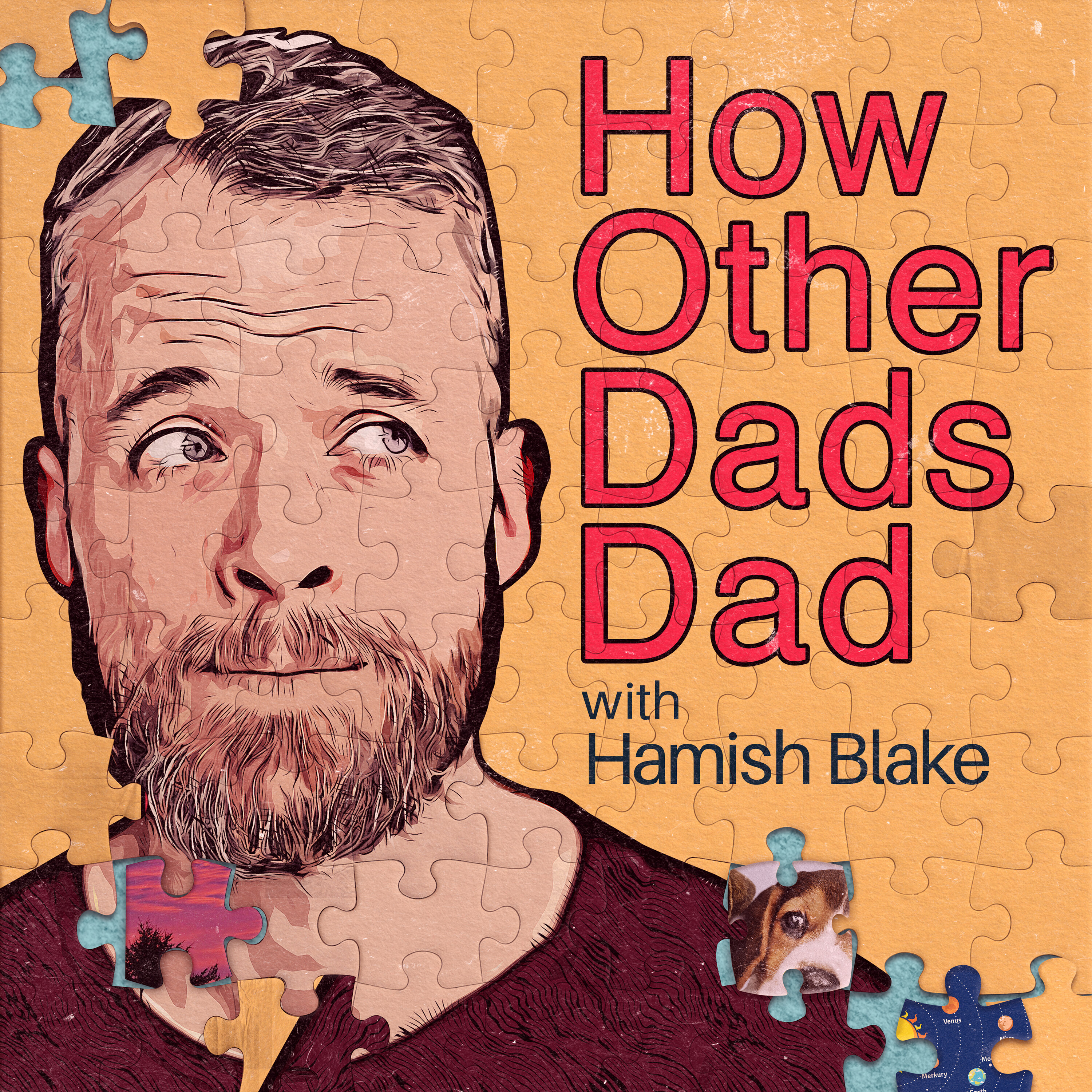
Hey, Mish is a dad who loves to be a dad, but he knows there's more to learn about being a dad So he may be sure where he talks to all the dads so Big and mind dog, how are the dads dad? How are the dads dad? All right, welcome to episode one of How are the dads dad? I'm Hamish and let's start from what is this? That is a fair question. You've heard we've got a song that we've got a diddy that explains a little bit about what it is, but essentially this is a podcast, a series of podcasts where I talk to other dads and I find out how they go about their dadding. What are they used? What are the ideas that they use? What are the principles they use and their philosophies? Because to me, I think there's not a ton of that out there. I think it's hopefully a good thing to put into the world that we can all listen to. I think this is something that I've been thinking about for a while. I am a dad. I adore being a dad. I've gotten eight-year-old and now a five-year-old. It's obviously not an expert show. I'm not a, you know, way anyone turned up here. I think I was a parenting expert. And there are a lot of those. There are a lot of good places where you can listen to parenting experts. I'm a big fan of a lot of those podcasts and books. What I wanted this to be more was a bunch of conversations because as I go about trying to be the best dad I can be and it's something I think about. All the time. I find myself reaching a lot of the time for stuff that I don't really know what to do or how to go about it. And you're improvising a lot of the time. So we're trying to build our own playbook. I think a lot of us as guys. And everyone says there's no manual for fatherhood. And that's true. We are trying to build it as we go. Like we've all got a wardrobe from IKEA and there's no instructions. Obviously in that analogy we obviously love wardrobes with our entire hunt and we would die for the wardrobe and building the wardrobe correctly is the most important thing in the world to us. So it's not the best analogy. But eventually you look around and you see that all these other people are trying to build wardrobes as well. And I think this is the bit where it's okay to look around and go, "Oh, that's where that panel goes." And I didn't really thought about doing that. That's a really good idea. So hopefully that's what this podcast is because I find in the past those conversations that I've had with other dads about parenting or about being a father. Sometimes it's even like little tidbits, little little little golden nuggets that you pick up. I've often found them so helpful in my own life. And sometimes they kind of like spur a whole new perspective and take on being a dad and giving me another idea or a better way to go about things. But they're often just like very piecemeal of those conversations. Like again, I don't think we really do that too much as guys. Just sit down, you know, download for an hour. So that's the idea that we can sit down and I can interview these people so we can all steal tidbits from each other. So I contacted a bunch of people that I know that I think are good dads, that some people are my friends, some of them I'm just, I just know of. But men I admire and would be interested to find out about what it is that makes them ticker as far as what their principles are, what they learn and how they dad. So I recorded them in various spots. Some in Sydney, some in Melbourne over about a month. We're going to play them out in this series in no particular order. On a selfish note, I got so much out of this podcast and these conversations. I loved doing it. So I hope that's a good sign and that that means that they're worthy of listening to if you're a dad right now. Or, you know, of course you could be a mum or you could be, you could be a child that's really getting the work in early before you become a parent yourself. But I really loved it. So I hope people do get something out of this. As you might be able to tell, so I'm going to flag it right at the top here just to give you the rest of the day off. If this is what you're hoping for, not a funny, not trying to be funny. They're trying to be unfunny, but the goal of this podcast, this is something a little bit different for me. It's probably a lot more heartfelt. It's something that I deeply deeply care about and wanted to, you know, whilst we do end up laughing at times because, you know, there are funny people that appear on the series. The goal is not to do like a tight hour of observational, dad comedy, which again, there are great places in the world. You can get that. But this is something that, yeah, is from the heart. And I, in advance, thank all the men that came and sat down with me and were super open and willing to explore this thing that drives us because as any dad knows, listen to this, that love that you have of being a dad is something that is all consuming. So in no particular, first guest off the ranks and the intro, I'm sure will not be this rambly in future episodes, but I thought probably best to set the time at the top. Rob Sitch, an icon of the Australian entertainment industry. People of course would be familiar with Rob's work from that from the early days in the 90s where he was one of my heroes watching him on the late show. But then, of course, through the panel, movies like The Castle and The Dish, then TV shows, like a zillion TV shows, Utopia, Have You Been Paying Attention? Thank God you're here, which is where I probably got to know Rob really well and I'm lucky enough to call him a mate. And it was around that time, actually, when I was doing thank God you're here, I was probably in my late 20s and Rob's a little bit older and they were just finishing up having their kids. But he early on was someone that I was like, "Well, he's a guy that's similar to me in this industry that I'm like love and want to be a part of, but gee, he does it so well." And as you're about to hear from Rob, not only is he one of the funniest people alive, but he's I think one of the wisest and most considered and God is fun talking to Rob because he is always like alive before your eyes, formulating a hypothesis about something. And I've found it amazingly fun to talk to him. So I think the only thing you need to know going to this conversation is if you haven't seen the movie The Castle, I mean, shame on you, but I'll forgive you. We do talk about it at a fair bit. I know I came out like, you know, 20 or 25 years ago, but there is a classic. We just mentioned the dad in The Castle a lot, Darryl Kerrigan. I don't think you even, I think it kind of even makes sense if you've never seen the movie, but he does get mentioned. Thank you for making it this far. Rob is here, how Rob's edge, dad's. Rob, thank you. Oh, that's a pleasure to be here. It is home, isn't it? It's home, isn't it? I know you do a lot of these. I was actually thinking, I was actually thinking of walking here today, I was going, how far a friendship goes back. It's amazing. Yeah, I guess 20s, you know, when you do trees, you do an a tree rings. With us, it's like loggy ears. You just see how it is. There really was a genuine first loggy ear. Yeah, I think it was McEun's second goal, to be honest. That dates it well. I think I remember, it would have been my first year at the loggies. It was huge to meet you and I was such a fan and I think it would have said to me like, "Oh, you guys excited about tonight?" And you'd said to me, very generous and like, "Oh, you know, well, it's good, but I think you said to me a long lines of, I'm not sure where our loggies are." Not in an arrogant way, but I went, "Wow, I'm mad." Imagine not being here for the first time and being excited about a free dinner. I'm free to. I've never got an over there. But you know, it's funny. You mentioned how far it goes back because I, we've been friends since long before I had kids and you just started to have kids, right? So one thing I like to do on the show is give us your dad's stats. Like, what are you, how many kids? How many age? What age is it? I've got five kids, a 21-year-old daughter, just turned 21 and I've got 15-year-old twin boys and in between I've got. I've got the rest. As we affectionately refer to them, an 18-year-old boy and a 20-year-old boy. You're right. And I think when you've got. I remember you, this is another one of the things. I think we're going to. This will come up a lot today that a lot of the stuff I realize, well, a little bit of the stuff I'd know about parenting or kind of the idioms sometimes have come from you. I remember you telling me, after three, it just became a herd. My thing is that once they outnumber you and you have to go to zone defence, that your tactics have to change. So, a fellow friend once said to me, "It's the first time a kid stops their toe and you're dialing triple-o." And the next one, someone, you know, stops their toe and you don't look up from a newspaper. And with a third, they break their arm and they said, "Did you hear a crack?" Yeah. You're sure. But that stage you get to emergency and they're like, "Oh, I rub. I like it. I like it. I got this. I remember one of the things you told me early days before we had our first kid, before we had sunny." You said something that really stuck with me. One of the things you said was, "Look, it's easy to make jokes about sleep deprivation and all that stuff." That's the obvious stuff that comes with a first kid. You said, "But the first six months of your first child, that's the most magic time of your life." And I really think that was true. I hold to that. I sort of, without invitation, so that everybody, I've extended it now. It's the first year of your first child's best year of your life. It really is because everyone says, "Oh, I don't get any sleep now." You know, kids, "Oh, I'm done." And then they arrive and you sort of wonder, "How's this using my spare time prior to?" That's it. Prior to this. You suddenly realize that maybe, yeah, this is the doing of being a parent is the bit that makes you feel connected to life. Yeah. I said something and I sort of, first time she said it, "I'm not sure mom's well."
I'm not sure that makes sense. And I've thought about it since like the penny drops. She said, they arrive with their own love. And what she means by that is you doubt yourself. Well, wonder if I'm the guy that just doesn't have the instinct or doesn't have the, or resents the effort or, and kids arrive, they supply their own love. You don't have to change. I think that's true. - That's really interesting. Did you worry about that? Do you remember 21 years ago, before you had your first, if you were, - Well, I was nearly 60 when we had a, (laughing) I've done a lot of that better amput. - A little bored. No, it wasn't. I was really, I was sort of, I was at that time where you went, no, this is, this will be fun. This will be ready. What, the thing I remember is, after 36 hours in a maternity hospital, you pick up the child and go to your car, and like a 40 year experience paternal nurse doesn't drive with you. - Yeah. - They open the boom gate, and that's it. You go home without a license to look after a child, and that's the terrifying bit. - I think that's common for a lot of dads, isn't it? Just that realization that, I think that's the realization, and it comes with the finale. Like I talk about this with other, I've talked about this with other guys where you're like, that's the scary thing about being a dad is, no matter what, there is not a rip caught. It's almost at the door, it's almost like the entire maternal nursing system at the door says, you know from now on, we don't care. (laughs) - See you. - Yeah, that's true because in the nine months leading up to it, there's a lot of care, and a lot of we'll see you next time. - And you know that there's a whole bunch of criminal statutes that will put you in jail, if you don't properly look after this job. - That's true, that's true. - Now it's for real. It's not just frowned upon, you've got to keep this thing alive. - That shit gets real real quick. - One thing I asked in the lead up to this, the homework that everybody has, by the way, I mean the whiskey I should point out, it's for the end. If we feel like we've earned a drink for the end, I don't know if you're familiar with some Sullivan's code, but when, yeah, when, when Sonny was born, I got a whole, I got a barrel and I got bottled. And so I thought it'd be appropriate to drink. So that's our end game. - Did you get that whiskey by a chance mention or was it, did you say something? - Someone had recommended it to me. And I went to buy one bottle to keep for his 21st birthday, and they'd sold out, and you could only get a barrel. I don't know if it was a scam or not, but I'd break, you know what? I'll get a barrel and I've given it to people in his life, like, you know, grandparents and, you know, significant men to kind of like, let's have a drink and think about him. And then I was like, I should do the same for Rudy when my little girl was born, but I am, I'm lagging a bit and getting her a barrel. I think I was gonna get her a bit closer. Or something. Honey, I got you think on stablecoin. Now we're at the time. It was good. - It was pegged. - It was pegged. But one that one, one small bit of homework asked was three words. Three words for what you think you're fathering. Style, mantra, goals could be, if you could boil it down. - Okay, one word is stable. - Yeah, great. - I think that's the most underrated component in-- - I love that. - That's important to you. - Yeah, I think you can make lots of excuses for, you know, the, you know, a bit, boil over the shop and a bit of ratic and a bit, I don't think kids are raised well with instability. - That's a great one. - And I, I think volume matters. I, I, I, I was much more poetic, I reckon about 15 years ago and I've come to realize that, that volume of being there. - Yep. - Yes, just to clarify in case people would just yell. - No, not yelling. They won't hear you unless you yell. - No, I, I've used that. It just doesn't work. - Yeah, I can quantity. - Yeah, quantity. - Yeah. There's two things I don't understand and that, and it speaks to volume. One is that before a child can speak or seems conscious or do any of the higher functions, your love and touch and presence matters massively to their neurodevelopment. - Mm. - And why? I don't, it's, you're not communicating with English. You're not, it's touch and it's face and it's look. - Do you think it's the feeling of safety? - It's, it's, it's, it's, it's, it's, it's at a micro level that we don't, I mean, scientists understand. But, you know, it's sort of like, you sort of think, I'll, I'll, I'll be good dad once I can communicate with it. That's, that's, that, I gotta start really early. And then the third one I'd go is, I got, you got through some fun in. - Yeah. - That's where the erratic stuff can, can go. - Erratically fun is, is, yeah. - Unpredictably fun. - Yeah, bit of mischief. - That's true. Not to be confused with unpredictably, will dad be home? - No. - Unpredictably are you around this weekend? - That's true. - I think it's probably best to stay within this criminal statutes again. - Of course. - And legal. I'll throw a fourth in legal. - That's a really interesting one, though, stability. And it's interesting to me because you, you know, that has five kids. You're 21 years into being a dad. As opposed to, you know, other people, I'm, I'm eight years in, other people that we have on the podcast might, you know, be brand new. So, I find it interesting because it carries with it, obviously the weight of experience. But purely, because you're right, it's unsexy stability. It's not flashy and it's not, hey, the most important thing you can teach your kid is, you know, high level skills. It's, it's saying, to my ears, like one of the things I care so much about and try and instill in the kids is that idea of going, I'll just be beside you. I won't do things for you and I won't push you. I tried to think of ways that I could almost be a shurper. Rather than, and I think that comes back to stability, right? Yeah. How do you do that? I mean, you're a busy guy. You're doing a lot of things. What are your, it obviously comes into prioritizing your time. Yeah, not everyone can, but I reckon there was the time where you went, there's a few forks in the roads where you go, "Oh, this could be an LA directing a movie for six months." Yep. Or do it, try and do it from home. Yeah. And I reckon along the way, you don't know what the motivation is, but I think you look at it, you go, "I don't know how people do it where they go, you know, three months, two or a year or something." I blest my mind. I mean, things like, you know, actual important jobs, me, because yes, growing up ones, growing up ones, like you know, probably we have temptations in our life that are completely frivolous, like, if I do what I remember as the game show in London. But a far more important thing, like, "Oh, hey, you're a cave diver, we need you in Thailand." And kind of think, that's obviously like, "Okay, I've got to go." But for people that do that, I mean, yeah, some of the times spend away a huge, huge amounts of time. I think FaceTime, I think electronics changes that a bit. Yep. I've found that FaceTime and the kids are certainly with little kids for an eight years, it doesn't mean anything to them. Making videos, like, I've had to travel a little bit to early days when they're little. The maximum, I'd probably be away as two weeks, and that's done. But we'd be overseas making a TV show, and I found that making a video, like, a small episode of something to go, "Here, this is what we're doing today." Far better than FaceTime, 'cause I would just stare at themselves in FaceTime and do filters. But I do love stability, because I think it's one drip every day, rather than a flood. And it's also, you gotta remind yourself of that, because you do get to that point where you go, I haven't taken my kid free diving or barricading. All those things that you think is the, it's probably called McDonald's Dad's Side of Things. Yeah, yeah, yeah. I don't know that that's the. The Hollywood dad stuff doesn't count. It's funny what kids do and don't care about too. Yeah. Jane said to me once again, kids don't care about views. And I remember being old at the same. We said the same conversation. And I went, "What are you kidding me?" Of course they do. And I've had the good fortune to be in the other side of the world, the most magnificent views you've ever seen. And it's like I took. I took one of our kids to the zoo one day, about two and a half, three, old enough. And I'm going, "Oh, and I got to a sweet spot." There was, I don't know, it was a giraffe here. There's mountain gorilla there, is there? And the kids looking at a sparrow. I didn't come all the way here for you to look at us back. Right. Yeah, a thousand misintegrate. I mean, the day we went to the Kimberley with the kids last year, the most memorable part of that trip after is I didn't lead the witness. And I said, "You know, suddenly what do you remember from Western Australia?" I think it was the pancake machine at breakfast. I went, "Yeah, that was Darwin, but yes, okay." No worries. Oh my God. So two things, I should have done a list of what. Jane said, "Kids love pools." They do. One of the beach as much as you think, they love pools. And they love heated pools. And I just went, and I looked at that and I went, "Before you, go here." And I go, "No, that really, really matters." Kids also love buffets. That's like, "Yes." Oh, I know. And I mean, it is this funny thing where I'm like, "Are we surprised?" Because I look back at my childhood and that is what I loved. It was kind of interesting to say that you'd been so. I didn't actually go overseas when I was a kid, but it was, you know, I don't remember, you know, we'd go to places in country Victoria, country New South Wales. None of the historical significance of what we were doing there mattered. But if you walked into a B&B and they had jam and scones, you're like, "Oh, a couple of years." We just walked in and there was free scones. It's the little things. I remember a great saying. I remember reading somewhere where it was like, in terms of playing with kids too. I think this comes back to quantity time and stability. I remember reading somewhere once that was like, better.
really care what game you're playing. You're the game. You're the game. Yeah, wow. Just interesting. You know, I try and remember that a lot with my little boy. I like to think I'm quiet up for play. Yeah. But some games are fucking boring. Yeah, they do. I mean, most of the games I play with my little boy were dinosaurs. I must slow her before. He is often a hybrid of two predators. So he's got the power of two different types of dinosaurs. And I'm often a herbivore who has bad eyesight and can't see the predator becoming. And after about the ninth molley you go, I always feel my, I feel, I feel ashamed, but I feel myself getting wanting to check a phone or go, all right, mate. I think we're kind of done. And I do have to for I know it's just the sheer quantity of time you spend in the nets here. It doesn't matter what you're doing. You have to keep getting mold. And when you've started it and the next day they go, I doubt we are playing in search boring game here. Of course we are. Yes, we are. Do you think I could be a predator? No, unfortunately. You're a star, I guess, or as again, actually, I've got there is as they get older, there are positives. I found my Texas Holden, you know, poker set. Yeah, right. Anyone want to learn and they're older. You just saw their eyes just glint. These worthless plastic chips. I go, I got you in the middle of COVID, I'm going, oh, so we do that. Now the game, I learned a game. So they got into it. They got that. That was a winner. Are you kidding me? That's a good tip. I mean, because I often find that if I make a suggestion, sometimes the very fact that I suggested right rules it out. But as there was, they just hit that age where accumulating chips at the expense of a family member is that drug. But funny, I thought it was funny. You said that. I've watched one of my kids learn Catan. Catan? It's something like that. It's highly recommended. Takes a while to work at our. What is it? It's territory. And so you have five resources. Wood, stone, board game, it's board game. Yeah, okay. And it's not, it's over reasonably quickly, like a 40 minute game. Highly strategic. Not that hard to learn, but someone's got to learn it to teach to the others. Yeah. And I watched one of my kids spend a couple of hours getting to that speed and then comes the, he hit me when I'm busy and he said, so I've learned, are we playing? And that's the fork in the road. That's a real, that's a, your brain is saying no effing way in your lips are going off. Of course, good buddy. Good job. But that said, it was a great game. Catan. Fantastic. That's the, that, that, that moment plays out, you know, must play out thousands of times. And that's the bit where the temptation is to go, sorry mate. And the older they get, you probably think the more reasonable they are. Yeah. In terms of you, like you said before, you can, that's your verbal, you can explain it. Sorry mate, but you know, this is due tonight. I got three hours, maybe tomorrow. When we all hear those words and we kind of cringe here because we probably, you know, remember maybe times our dad did that to us and you go, I will never remember that work. But remembering in the moment. Yeah. Of going, when I'm 80, I will never remember that work and he will remember or she will remember playing ball games. You've got to go to another room and play the cats and the cradle to yourself. Not joking. Literally the day after we recorded the first one of these, I'd read that and that played on random. This is a bit of a setup. Gold standard. Danny, is there a moment in time or is there a moment in even an example in pop culture or possibly from your own father where you, where you go, that was the gold standard of father. Gold standard. Do you know what? I'll pick something mine because this is, I think they're my favourite ones. Yeah. So this is something Jane did and I went, I, it would be great for everyone to know this from a very early stage. So kids love buffets, right? They do. So middle of COVID went to Jane recreated a motel buffet in the kitchen and bought from big W, a $40 bay Marie and got the Nespresso machine out and actually assembled like actual with tongs with the plastic come out and a little thing saying scrambled eggs in the get and I'm telling you it's just, it was all blue. I just stood back and went this, you know, you should do it. If blogs were still a thing, this you put this on your blog. I love it. I love it. I love it because I think it's our first example of a mum doing gold standard editing. Yeah. But I love it because I think, I reckon it comes back to something that I think about a lot, which is just effort. Yeah. Yeah. Yeah. That's to me, that's a classic example of, you know, a tiny bit of pre thought. Like she probably just had the idea one afternoon and that's the moment where you could go. Yeah, I could go to, you know, I could do this. I could make little name tags. That could be fun and it'd be very easy to not do it. I reckon that is another fork in the road. Where you go, I've had an idea. I do know how to execute it and it's almost like triple points for the ideas that you carry to me because no one will ever know if you didn't do it. No of your kids will wake up the next morning and go, gee, mum didn't do a buffet. No, whatever, no. So there's no penalty for not doing the idea. Try. It's only in your head. Put the reward for like seizing on it and putting in that little bit of effort I agree is magic and they create the best memories. I'll introduce this by saying Glen Robbins has got a really great idea of the guys of grading themselves. You only had, you know, most people know what a golf handicap is, you know, between 25 and 30 year hack, 20, you know, you can play 15 year of decent golf, single figures are you're good. Yeah. And he says, he says, what do you like at finding a car park in the city and Glen goes, I'm off three. I'll go, oh, you're, and I've played that game because I love it. And he turned to me one day and he said, what do you like it? What's your goal? Are you dad handicap? And I went, oh, good. I'd love to be think I'm single figures, but I'm a brand of lear. He said, I had you off eight. But one time when I felt like I was off scratch was we had, they're all young. And I thought kids love tunnels and secret places. And I got some, something was delivered and I got a whole bunch of gaffer tape and gaffer tape the boxes together. So it was a tunnel. And then I went, oh, wow. If I, it's your point, if I literally, instead of watching the football, spent all Sunday, a cent, I went down to office works and got maybe a hundred cardboard boxes. Awesome. And 10 gaffer, you know, the automatic gaffer rolling thing and build and build and build and build secret holes. And, and the, and then I was the, I was the monster that would try to track the kids down because they had tea towels over holes and they just, they just would not get enough of it. If there's a hole in one of just that hole, just that day of deading, it's an eagle at least. And eight months later, Jane Cain, we said, it's time. It's time. You've been sleeping in here for two years. It's time. Yeah, that's beautiful. I mean, that's the, I mean, effort, a great, a great lesson. Just a great lesson in effort. You're a constructor, though, aren't you? You, you, you, you, I'm, I feel the same way. The times that I've been able to seize on, on an idea and apply effort and, and just capture the spark, I suppose. I feel very proud. I think it comes back to the fun aspect of deading. We all want to feel like we're fun and like we're creating those moments. And, and I think it's, it's funny because we're sort of talking to sides of the same coin here. Quantity time over quality time. Yes. But then these, these are different. Like, you know, what I mean? Like this is a, sparks, these are spikes. And they, but I think that I think they're a different kind of spot to because it's not taking everyone to Disneyland or it's not, um, you know, I bought you an expensive bike. It's, it's effort. Like the message that it carries with it is effort. That's something I would love to teach my kids somehow. It's just just, just hopefully by modeling, just to go, effort is always worth it. Yeah, yeah. Because it, it creates an adventure. And it's not easy. Some just, because you, you get to the end of a work week in your time. That's why we remember these. These are rare moments. And then the next challenge is to not just rest on the laurels of going, I didn't I do that. Remember I did tunnel world eight years ago? Oh, short memories. That's why I haven't been over three weeks because we love tunnel world. Do you know what memory making is something I wanted to talk to you about a little bit today in a couple of different contexts. But I know that you and Jane have have a thing where when your kids are of a certain age, you, you, you make it a, you have a tradition where you, you take them on a trip. Yeah. A one-on-one trip. Now, is that a thing that, that came to you from somewhere else? Or is that because you're like, we have five kids, so one-on-one time is rare. Someone that, someone that I sort of regularly have lunch with who's a bit older than me.
said you got to take him individually as well as collectively. And that sort of stuck with me. So maybe when I was a, our daughter was 11, I said it was someone put up a cheap flight. And I said, I literally said, do you want to go to New York tomorrow? And, and I went, oh, that guy's right, my mate's right. So we just, it's that, it's, I think it's excitement of, I gave them more notice after that. Actually, rather do tunnel world again. Are there things that you're going for on these trips? Or do you let them unspool naturally? I would love someone to write down the definitive list of, you know, when you take them on a trip and you go, oh, wait till I see this view. And then someone breaks it to you. The kids don't care about views. I'd love to give two columns of the things they will like and they won't like. So the last trip they did in, it was school holidays. They got to vote. And you'd think it's Hawaii. No, it was to go to the crappiest country motels that you could find. Because one of their thrills was that, you know, the trap door that opens and your breakfast comes in and the cocoa pops back at the little mini cocoa pops back. That's a highlight of their trip. Any going, okay. So that's like once you don't know that that's, so they picked a, they were going, let's try and pick not your type of museum moment had, our type of museum. So they did pilgrimage to the pinball museum in the town of Niel, I think on the south Australian Victorian. Awesome. And then they stayed at Crile Castle on the way home. And you say, I think kids have got that. I think you got to let them vote a bit. Yeah, I like that. Letting them have the, the, the, and of course as, as, you know, that's interesting here in there. Because I know my natural instinct would be like, no, no, but guys, you know, or, you know, if I've taken one away, I've got the most amazing stuff. Yeah. This is a slight deviation, but I reckon there is a link to memory making here. Can we talk the castle from moment? Because apart from bandit healer, from Bluey, the dad on Bluey, I mean, Darryl Kerrigan has got to be one of the great creations as a dad. You created him. Yeah. Was, was that, were you drawing on any experience there? Or were we stole from, we all tell, you tell funny stories and, and then your friends go, hey, Rob, tell that story about your dad or I would say to Santo about his, his father was an Italian lawyer in, I think about 100 meters from where we gave Dennis to Nudos office. And he would tell stories about, look, I can't, I can't, why are you vote, I give you in, in, in chicken, live chickens. And I've one thing we did put in the film was said he said, turn up in a suit and then I turn up in a Dennis Tuxley, don't know. I'm all truce. I, I repaired a time you went. You get, it was more the feedback from others where people said, oh, that's a funny story about, you know, you're, so he became in a malgommation of dad, dad. Yeah. Why do you reckon he resented so much as a dad? I, because he, I reckon the one thing that not many people master is, is thinking life's half full all the time. Yeah. The glasses are full. Yeah. And he, he, once, once streaked my father did have, was he used to, the true, he used to go, my mum would put a chicken breast with a few veggies on her ass. He'd just drop his cutlery and go, boys, how good is this one? Why would you go to a restaurant and is that straight out of it? That's, that's the, that's the city household. Yeah. Yeah. That was, it just, and so you grow up with someone, he's just lauding my mum just the whole time and just go and some kid, one of us had to do something minor and, and he'd go, how good is Greg? How's do you work, Greg did? And that's where Dale, like a whole came from, but because, and then we had to ban him from boasting about his children. He goes, I don't talk about you. Well, don't worry, I don't, I don't mention a thing. And then we went to his golf club once and the, and the, the lady behind the, in the, served the drinks goes, oh, is this the lawyer or is this the guy? And he goes, oh, I hardly mention it. And he went, and so he was so positive. I used to say, you, you'd, you'd love it because he'd like you more. So there's that power of, there's that power of liking things. And the past just been passionate about whatever's in front of it. Whatever a kid's, oh, that sounds so clever. And you just tell us about, gee, what, and it's, it's, as a kid, you, you, you kind of, you're a bell against it. You go, Dad, don't talk about me with your friends. Don't, don't, you know, we go to a parish picnic and the guy goes, oh, here you got an A in, oh, he goes, I hardly mention it. So as a kid, you're going, you just with, and he literally had to shut that side of him down. Wow. But out of sight, he was the worst. But now you look back on it, growing up, are there parts of your personality and how they go, okay, that grew in the fertile soil of having a father that was, that adored for stuff we were doing. Yeah. And, and was, and had that air of thinking things were good and always possible and, and, and he'd, he'd look up and someone would say, I, gee, that's interesting. And I think that when you think of Darryl Kerrigan, it's that, it's, and it was also the big thing was, it was pitched at an age when you think your dad's a hero. Yeah. So, Dales, I don't know when it changes. I just thought it was only, maybe 15 and I realized, my dad can be an idiot. That's a shock. When do you reckon your kids found out for you? Can you feel the shift? I don't think that's happening. I managed to scoot through. I don't, it's, it's when you do something, you look around at every one of your children is laughing. Don't you tell the Billy Arley's post rough my one, put a photo of you up there? That was the Whitney Houston post, actually, it was the, it's funny, you go, you go, wait a second. No, no, no, I'm not going to be the butt of children's generation gap humor. I know, I, with an eight and a four year old, I mean, I know, you're safe. I know. And it terrifies me that it's coming, especially with my daughter. I feel like it's coming within the next few weeks, where the gloss is about to wear off. It is, it is an age that I reckon somewhere between 11 and 15, they, they find your faults. And any, I mean, can you prepare for that? Is it good to, I mean, is it useful to have a good, good assessment of your faults before you get there? I reckon there's some things you're blunt, totally, totally blind to. And it's only the laughter of your children that, that pointed out. But it wasn't a malgum that thing because, because some of it, you know, I've got a little bit of that. I mean, I think it's safe to say you and I, Hamish, have, have interests. We have hobbies and interests. We do. And in that mode, you're enjoying, no one's here, pecorate in their, in their pleasures. And I think there was one, there's a couple of lights from the castle that are not against me. We were driving up to Tellum Marine one day and, and again, the laughter of your spouse or your children pointed out. And he goes, and I went, um, oh, smell that. After or afghast, but again. And I just said laughter. And I went, what do you, what's the laughter? Because when you smell that, you, it smells jet, it's jet fuel. You're excited. You're, you're, you're getting on. You got a holiday. Yeah. And, and I went, I didn't see anything odd about that, but I remembered the laughter. And we put that in the film. The smell of two strokes. And the other one was I, I used to read the trading post and love the miscellaneous column at the back. And one day I was reading the miscellaneous column and I, without, before, again, I was, I was, I started speaking before I, I caught myself. And I said, red telephone box, $600. To which Jane said, what would you want with a red telephone box? And I said, I don't know, but I wouldn't come up that often. Again, laughter. And I'm at a mental night. I go, that's normal to me. Odd to everybody else. Absolutely. One of the things I think about, I think you're about Darryl Kerrigan too, is in terms of memories, in terms of like having Bonnie Dune as a place to create memories, having the pool room as a place to store memories. I reckon that resonated with me a lot too in the couple. When I look at him as a dad, the positivity is absolutely, you know, of course, that makes to that absolutely ease. That is the magic, isn't it? I think, you know, well, Oscar, you hit the nail on the head. You created it so well done. But the, but the idea of just having the thing I love about Bonnie Dune in the movie is it's not flashy. It's not, it's just another place, like it's a place for the family to color less. Right. I mean, as adults, we see things in, oh, it's not very attractive. Kids are, kids, I know, the colors of the rainbow are brighter when you're a child. So all these things, you go, it wouldn't matter whether you're eight kids are in a bunk room. It's somewhere else, you're somewhere exciting. And the pool room comes from my cousins who lived near the airport where we shot. And we went around to that house. And I remember as a kid I'm going, this is the best house to live in the world. You walked, I mean, there's a pool room, their own pool room. That was magic. Absolutely phenomenal. And it is that thing of, I
I think everyone has different versions of it in their house, but it becomes a museum of your life. It becomes a museum. And the other thing was, I thought that a song, when we used to go down to Rosebud, which is a beach resort in a vertical, near Melbourne. And he had a song where we'd sing the following towns on this trip by Aspendal, me, either failed, and he made it up that song. He had a song. And once we'd tick it off and we'd go sing the song again because we've Aspendal's in the rearview mirror. And I remember thinking, that was just the fantastic thing. So when we did we're going to Bonnie doing the song, when we did the plurum addition of it, we actually had never written the sheet music for we're going to Bonnie doing it. You know, it can't be. It was in. Yeah, we got a musicologist to actually write the sheet music. And it was the most underwhelming piece of semi-quavarquave. It's barely music. Just one note that we tell you you don't need me. More a chance than a song. Funny, just you mentioning that, I've got a song that annoys my daughter, what I like to try and keep the vibe up as I take her to kind of a preschool of the morning. And I'll sing. I'll sing about, you know, I love her and she's great. And I'll try and sing my favorite things about her in a song. And then she goes, Dad, stop singing. I don't like this song. Then I sing a song called the, I'm going to stop singing song and I just sing this song. And it's that thing of like going, I know I'm annoying her. I know. But in such a clever way, what is it about that? What I didn't have that gene before I became a father. And it just turns on. Well, you know, because I used to think, does Dad not understand that he's annoying me. He's embarrassing me. And he thinks it's hilarious. It just turns on when you become a dad, when you go, we're more physical though it's Dad's now. Yeah. You know, the friend of mine was sent to boarding school. So he's older than me and and I think he said to boarding school at like eight, you know, and it was a train journey. And his father, father loved him. But as he bit fell well, he put his hand out to shake his hand, goes, all right, best of luck. And he going, that was just the way it was. And I just go, I just remember wrestling kids the whole time. Yeah. Yeah. I mean, has it changed for you 21 years of being a parent? Were things different at the start to how they are at the end? Or does it feel like it's evolved naturally? I think, I, when you approached me about doing this podcast, it triggered something in me because I went every time you had a good idea, you went, what if you got 100 dads and you got the best of them and you put 100 great ideas together? Because I'm telling you the buffet, I didn't think it up. The buffet is a great idea. It's in. Yeah. Trust me, it works. Hopefully if we do a hundred episodes of this, we'll do a super cut with just 100 best ideas. And trust me, the little cardboard rat mouse house. I'm telling you, it was just like it was heroin for kids. Just a love tunnel. It's bulletproof. I'm going, I want if you got 100 dads together. So hopefully, you know, as the podcast continues, it's a really interesting idea is that there are ideas out there that are that should not be just living in one household. That is the hope of this. That is stillable. I mean, he's scalable. He's scalable. But that's the thing. I mean, and in talking to a lot of people too, that's the common feeling, I think, and a lot of guys out there that are going, no matter what your relationship with your own father was, you're like, well, I'll take some stuff. But we are building a current day father's, trying to do something that just feels very unique to this time and age rather than inheriting a fully written playbook. I feel like my mum has a lot of recipe books at home. And then they have bits and pieces of paper falling out of it from other recipes or ideas. I feel like I've just got the bits of paper none of the book. I mean, so it's true. I'm telling you, it's, but I would love a collection of bulletproof ideas because when someone says I do X, and he goes, we should have heard that when they were nine. It reminds me of one of the other things I think you said to me when the other bits of advice was you don't get that many summers. I mean, you say you get about 10, maybe nine because zero to one and two, they're little. That is so true. Then by the time they're 12 or 13, they want to see their friends. And you don't, we think back to our childhood, you think summer's a hundred summers, you got a hundred summers and they last for about nine months each. It just goes on and on and on to the tune of Lord Moe's and cicadas at night. And you get nine. I think about that a lot, especially now feeling like I'm kind of halfway through the summer. That's interesting. You say that because I said that once to one of my brothers and I said that don't forget you don't get as many summers as you think. And I remember seeing his eyes going, wow, actually, just hit him. And of course, be acted on it. He was always probably on a act on it. Did great holidays around that just before they want to go with friends, not you. And then you blink and I realize she's about to start a PhD. It's gone. Robby mentioned Jane a lot and I'm a huge fan of your life and the works he does. And you guys have both had pretty chockers careers between film TV shows, Jane recently with Radio. And what's the juggle like for you too? What does that look like in terms of professional satisfaction? But also as you said, making sure you guys have enough time for the stability and the quantity of parenting. I think there's just a limit and you give things up. So what's that saying is you can have at all, just not at the same time. And so I mean, we waved the white flag on various for a whole period of time, Jane stopped working. I did even something more important. I gave up golf. I mean, I know, I know, we'll put a charity line at the end of the episode. It was after Jane gave up. You can donate. It wasn't the first. Donate. It was probably. It was a self-golfing. And I think I look back, you know, we recently flew and I saw a young mum packing up the pram to get on the plane to, you know, and all the gear. And I had post-traumatic stress disorder. Yeah. So I think you do it in a, you know, you've got a lot of capacity, but looking on from outside, I went, I can't do that, even though I've done it in retrospect. So I think there's a little bit of your capacity does, you know, it does lift. But I think it's, I think it's well said. And it's probably not something that I think it's probably romanticised this idea of like, no, no, there's systems as way that you can game the system. And the real answer is you have 24 hours in the day. You can at least spend 24 hours. And if your time cost is 38, something's got to go. Things have to go. I don't, I don't reckon there is a book of hacks on that one. Yeah. Because it's, it's just so much work. That is the lesson. A parenthood isn't it? It just slowly bends you to it. Yep. It wins. Can I ask one more question? Having kids in an inner situation when you're financially secure, where are a few things you're able to put in place just to go, okay, here are some techniques to not have things go too easily. I think if a kid's got an interest, you can't wait to spend a bit on them. You know, if the kid mad, keen cyclist, you know, it's, go for it. It's the best dollars you'll ever spend on a kid that's putting in effort. I even like that as a rule. We will spend on effort. We won't spend before effort. Oh, I like that. There's something in that that you got the, the spark has to come first. The expense has to follow the effort, not the effort after the expense. Absolutely. Not, not expense at the home, but it might inspire effort. Yeah, I know, no, because, because kids, there's something that I've never understood about kids, but it matters. A spark goes off in certain kids. A lot of kids. Yeah. Different things. And it often happens, you know, between 10 and 13. I think the story about Dave Grohl when he went, I want to be in a rock and roll band at 20s. His mother was a buddy school teacher and she had to accept that he was going to leave school. But he knew. And there is a bunch of kids that, you know, that sleep with the football or whatever. That's a spark. And I reckon that's an easy, an easy road for the parent because they're just, they're just acting as an Uber driver for the next 14 years. But at the end of the day, like, I, I'm looking forward to that. Yeah, I love that. I mean, at the moment, I don't, I don't know if there's a professional application for pretending to be a dinosaur. But there's those walking with dinosaur shows and like Andy Circus from, you know, in all of the rings and stuff. The man there is, it's neat. There's options. It's niche. But I'll show some of you a more suit with the ping-pong balls on it. That's right. There's motion caps. But I do, I do, you know, some, it's, it's, it's, mind you, there's certain things you just don't want your kid to come to you. And so you won't believe what I'm good at. Motorcross. Yeah. Because literally you're going to have 14 collar bones broken. And, you know, you know, there's certain sports we go. That's, that's, that's, that's, that's, another bit of homework that I gave you is if you could go back to any point in your father in career, what bit of advice would you take from now to, it,
prove the handicap that you had in that particular era. - I think time, like clear cut fun time, at almost say, book nothing for Sunday or something. Pick a day and make it consistent, 'cause if you get a habit, the habit does the work for you. I reckon it's like, it's a little bit, take something out of the religious playbook and get a family Sabbath. It doesn't have to be solemn. I reckon I reckon make it pick a day and it's just family. - I love that. And I think that's a great way of putting in terms of habit. And the hard thing is, the hard and the easy thing for habits, the hard thing and the easy thing for habits, I think we all know is they are hard to start. - Hard to start. - They're hard to start. But then once you're in. - Yeah, once you're up and running, they're sort of. - They're sort of. - They're autopilot. - Double is hard now, as I reckon, phones throw a huge spanner in that. - You know, guilty. - I guilty. I'm not. In the handicap sense. - It adds 10 to your hand. - I reckon I'm off 30. - 10 to your hand. - PGA limit. (laughing) - We're gonna kick you off the tour if you can't put your phone down. (laughing) - And the one piece of advice I would give to anybody, I can't remember what ages is, prior to three. There was a way at two year old or three year old laughs. - Yep. - You got to record it. - Yeah. - Film it sure, but get the sound of it. - The cacking. - 'Cause it goes. - When they cack themselves. - They just, they're something so pure. I think you got to record them. I photograph them and record them. And. - Can I give you a hack? - And I know this is a little bit of a must-be-nice, 'cause it requires an Apple Watch. (laughing) I don't, I didn't film my first born enough. And we realized the videos, you forget the way the face moves. - Oh, yeah. - And it's just film them, even though you'll want to take photos. And then it comes to us, we're like, "I don't want the memory to be that we were filming you all the time. "I don't want that to be a thing." And until we get some sort of like cyber implant in your eye, that you can like, that's constantly buffering and you can go, "Hey Siri, I just captured "a last 10 minutes of video for me from bedtime." And they don't have to have seen you videoing them. One thing you can do with an Apple Watch is do a voice memo. So you hit record on the voice memo and I've recorded a bunch of my daughters bed times, where she's cacking herself too, because she's silly at night. She's silly in a way that you don't get on film and she's just funny and hilarious in bed. And I've never really gone back and listened to him, but they're there and I'm glad I recorded it secretly. We're basically wired tap, you bedtime. - You're wired tap. - So I'll tell this story is that, one of our films got released and so they're forgetting, they said, "Would you come over to the, "and we see, yeah, a lot too." And then they said, "Oh, we've got a connection "with Robin Island, would you go out to, "would you get up early?" 'Cause you can, anyway, I'm at Kastrada who was imprisoned with Nelson Mandela for all of those years. Took special guests out there, took us out there. - Wow. - And it was such a thrill to talk to him, he sort of had that calmness and wisdom that you can only achieve by being locked up against your will and human rights for all the pretty time. But afterwards we went back to the hotel for a drink and we said, standard questions. We got to talk to all day. And one of us came up with a one is, what did you miss most? He said, "Oh, this is a good parlor game. "Try and guess." And wow, we were just half to half an hour is going, you're done, you're going, "No, we are not done." What were some of the big guesses? - Oh, just everything under the plan. Food, take us, dinner, yeah. (laughing) And what was it? - And we none of us got it. And it was the sound of children. - Of course. - And I go, "Just you?" You go, "No, Nelson is well." We, it's amazing what it was like to be deprived of new life and young life. And so that's why I say record 'em because you'll miss it as you go older. - And if you ever end out of the power of just a baby or the young child, I remember the first time, my grandma was passed away now, I would just take something of it and he was like six months old. Can't do anything, just a blob. And it was unbelievable to see the effect. - The effect of babies on, that's where you start to go, "Okay, I'm in my 30s, but there's something in this." (laughing) - This is not our life for you when I see a baby. - But this is like we've just given her, but painkillers, five coffees. She's just up and about, 'cause there's a baby in the room, just the smell. - Yeah, so if I say, you know, the first six to eight weeks of a baby is so hard, yeah. And my advice is really simple is that, you know, you've got a pram, is rug 'em up and go for a walk with a new baby. Watch the street stop. - Yeah. - Like, you know, rock beats scissors, baby beats puppy. - I always try and think of a clever way to say it to people that now that I've got an eight year old and it, but I just can't think of any smell. - It does sound young to me. - I know, and you have mates that are having their kid for a brand new baby. And I just kind of think of a clever way to say it, then it's very fast. - Very fast. - It's very fast. - But as you say, you don't get that many summas as a good way of reminding you is make the fun windows sunny and fun. - Yeah. - And jump on that effort. I think it's a beautiful message. - Yeah. - Well, do you feel like we've earned a drink? - I would love to try. - Do you mean, do we. - To effort, I think. - To effort. I think that's been the theme. - Yeah. - And glass half full. - Even though it's eight percent full. - And little white. ♪ Hey, Mrs. Glad that he talked to another dad ♪ ♪ Now he's gonna say some other stuff ♪ ♪ But he will be by himself ♪ - Such an amazing chance. Such a fun, I loved that so much. We've all loved so many parts about that, but the one thing that sticks out for me is, well, many parts together, but the one thing I really took away from it was, you know, hear that Rob's dad, what the support and the love that he had for, you know, his partner and the boys growing up. Like, that's definitely one of these things that you might find yourself doing this to is you listen to these chats in future weeks where you just immediately steal something and I did have to doing this with Rob. I was like, you know what, something we could do around the dinner table more is just the pump and up mum. I mean, we're always, I'm always proud of my wife and what she does, but I immediately, I'm not a shame to say, immediately incorporated that into that night's dinner where I was like, guys, do you know what mum did today? And like, really good everyone's, you know, we've got a few cheese going on in there. But it's funny, it really hadn't effected. It really hadn't effected. So whatever it was for you, the turn that you got out of this, I hope you can thief some of Rob's wisdom and go and use it wisely yourself. I should point out too. I mean, it's just me and my mate Tim producing this. Tim's not even here in the room at the moment while I'm recording this little bit, but we've got ourselves a website and we've got ourselves an email. So if you do want to ever contact the show, we have howotherdadstad.com. And if you want to send us an email, it's
[email protected]. I texted Tim and I was like, should we get a J-mail address? And then he went and got our website. So even in the space of one episode, that's how this started off as an indie podcast. And now it's a leap. I hope you got something out of today's chat. Thanks, guitar. ♪ How other dads die ♪ This episode of HowotherDadstad was recorded on the lands of the war-undry people of a cool nation who have passed their wisdom down for thousands of generations. The theme song is by the very clever and very funny Tom Cardi and the episode was produced by the pretty funny, but also very clever Tim Barley and also by me. I just organized some of the headphones and stuff, but that counts as producing. And catering was provided by ourselves. We were just sort of bought our own lunch. Okay, if you want to drop us a line, head to our website howotherdadstad.com. Thanks again for listening. ♪ Hey, Mish is a dad ♪ ♪ Who just spoke with a dad ♪ ♪ And a blue his tiny mind about what he learned ♪ ♪ So he'll keep on a dad's and force him to talk to him ♪ ♪ So he can find out how other dads die ♪
 PodcastTranscript AI