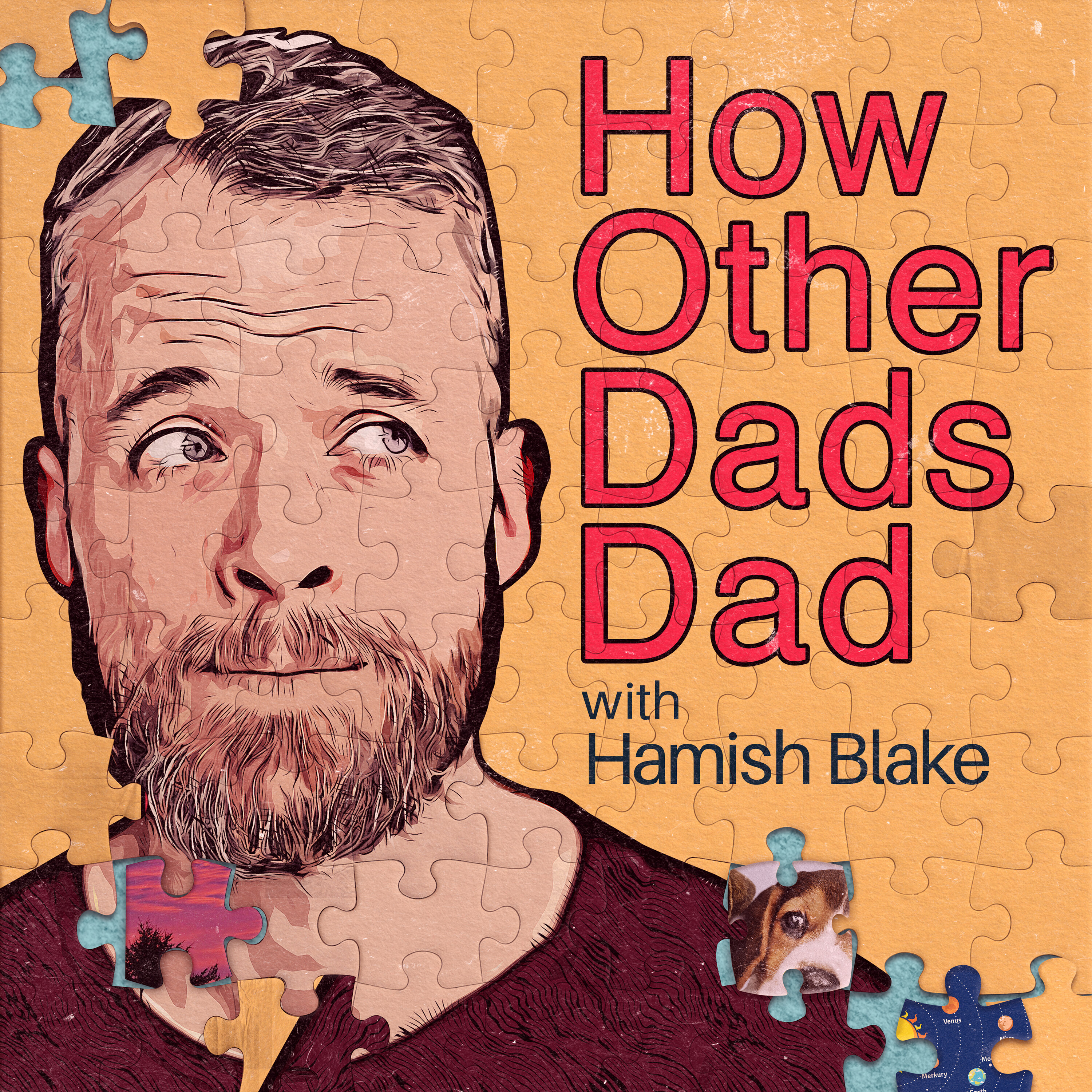
How Nathan Fa’avae Dads - Creating the ultimate team… your family!
from How Other Dads Dad with Hamish Blake
62m 48s
Nathan Fa’avae, a champion adventure racer and father of three (ages 18-21), shares his parenting philosophy, which centers on effort rather than performance. He gives himself an 8/10 as a dad, noting that while outcomes are unpredictable, what matters is the honest effort put into fathering. His approach is built on three pillars: freedom, experiential learning, and consistency. From a young age, he gave his children as much freedom as practically possible, empowering them with information to make their own decisions. For example, at a playground, he allowed his kids to play in puddles, warning them they’d be wet all day, and then held them to that choice, reinforcing the lesson through consistency. He also advocates exposing children to manageable risks, like playing with fire, to teach resilience and decision-making, but stresses that parents must stay within their ability to manage or rescue situations. Raised largely outdoors, Nathan used that environment to teach values like courage and independence, tailoring risk levels to his own skills. His core message is that parenting is about giving kids the tools to navigate life, not shielding them from every challenge, and that effort, not perfection, defines a good father.
Hey, Mish is a dad who loves to be a dad, but he knows there's more to learn about being a dad So he may be sure where he talks to all the dads so He can find out how other dads can be How other dads can be This episode of How Other Dad's Dad is a special one, another one that Tim and I went to New Zealand or a part of our little New Zealand adventure Today's guest is not someone that you would immediately know, perhaps, I mean like some people might, but I just generally speaking His name is Nathan Farve and he is pretty much unrivaled in the world of adventure sport racing And adventure sport racing is not one of the mainstream sports in the world But some people might be familiar with the eco challenge or World's toughest race, which was on Amazon It was a show that was made during COVID, I saw it and loved it Nathan is the New Zealand team captain, yeah, they spoiler alert, but you know this was four years ago They won that particular race, but he has won seven world championships with New Zealand adventure racing all around the world Adventure racing is in a nutshell bloody difficult It's just you versus terrain teams of four usually across many days Hundreds, sometimes thousands of kilometers and you have to navigate and self support yourself And carry your own stuff, so you know it's kayaking, it's running, it's mountain biking It's basically just being extremely resilient in the outdoors and obviously Nathan's extremely good at it This is not an episode where I was like, oh I'm friends with this person I would love to have a deeper conversation with about fathering I just became aware of Nathan through that world I have a bit of an interest in that kind of thing And the more I sort of saw bits and pieces of Nathan the more I was like, this man seems to be extraordinarily impressive And I would love the chance to sit down with him He was very kind in granting us that wish So, flew in while we're in Wellington, flew in early one morning, sat down with Tim and I and boy, well we not disappointed And I do not think he will be, he's such a legend of a bloke Such as you're about to hear kind, but adventurous and thoughtful Just a remarkable mix of someone that's extremely gritty obviously the world's best at grittiness but also mixed with humility and compassion And I love this conversation so much and I hope you do too So I'll stop rambling so you can enjoy how Nathan Farve adds Thank you so much for being here Yeah thanks for inviting me along, hopefully I've got something interesting to share Well I'm having to wrap it up in five minutes if you don't know I'm pretty sure you do, even us chatting before this start of like You're a man that has many adventures under his belt Is that a fair thing to say as a professional adventure racer? Yes, that would be something I couldn't deny But on top of that, the thing that I'd be interested in getting into today is the role that Fartherhood plays against that life and your role as a dad and as a partner and the philosophies you use Raising your kids and embedding in them, perhaps some of the same spirit Before we begin, what are your dad statistics? Like how many kids do you have? So we have three children, my wife and I, my youngest child is my daughter Tide, who is 18 Who is currently finishing her final year at school So in theory she should be at school right now I have. Are you pretty sure she is? I'm pretty sure she's possibly there I've got a son who is 19, so into betweenty Has name is Zepha and right now depending on the time zone he is in Birlond and Denmark at legal end Is he really? Yeah, he's there for a few days As a tourist or is a. As a. As a legal enthusiast? As a. As a possessive legal enthusiast That's great He's warned his girlfriend that he's going to need a lot of time there And. What can I just say, I mean, so, to jump in, haven't been to Billond myself in legal end You're better off spending as much time as you can at Legoland because there's nothing else in Billond Like that town only exists for Legoland Yes So if he's like, "Oh, let's leave a day to check out all the cool restaurants in Billond" I'd say take another Legoland Yeah, he'll happily do that I have a seat to him that just up the road in Silkyborg There's some quite fun adventure activities to do if he wants to Diff his time in the water with some canoeing or something else I feel like I could name any place in the world and you'd go Oh, yeah, yeah, there's some good rock climbing near there Yeah, hopefully, hopefully I could give you some tips And then I've got another daughter, GC, who is 21 right now, soon to be 22 And she is currently on a long haul flight returning from Europe back to New Zealand So she'll be back here in New Zealand tomorrow Okay, beautiful Well, I mean, so it's quite quick succession to the kids like they're quite close in age Yes, they are, my wife's pretty organised with most things in her life And I believe they're about 18 months apart Yeah So I just sort of did what I was told basically All those years ago Where we are, I feel like, to start on this podcast is if it comes to mind The three words you would use to describe perhaps, you know, if you could The three legs of the stool of your fathering philosophy, what would they be for you? Yeah, I thought about that a little bit I guess I would restrictively be looking back on my fathering and finding out three words that would perhaps represent that period as opposed to having things in front of mind during those years Yeah, right But it's more of a looking back and categorising it Yeah, I think so But I would like to start off by saying that, yeah, if I was to rank myself on performance of a father I would give myself probably an eight out of ten, like I'm certainly not here claiming to be a ten out of ten And I would measure myself and I'd encourage other fathers to do this Not so much on your performance or your output but more on your effort Like I think that, you know, I think I've given it a pretty honest effort But I think if I was to be completely honest and sort of look back on it, I reckon I could have given more But I think it's what's really important is to focus on the effort is that I know some dads who don't actually have the opportunity to spend much time with their kids Because they're split up or they're just required to work a long hours away from home So I think it's really important that it's the effort that's important to not necessarily what your output is Extremely well put when you have the opportunity in that window, what's the effort? Yeah, I think so and I also think too that you're never really going to know the real output because your kids have got long lives to live I think I could look at where my kids are now and go, hey there's some really cool things happening and some really good stuff But you know, that may change in ten or twenty years I might be going, oh my god, look at what they're doing now, that's horrific We'll do a check-in episode, yeah, I'm right, but I do like I do I think about that all the time that I dear of like, you know, because of course there's no certainties as you're saying like there's just no guarantees We don't know how it's going to turn out, we don't know what we're doing today is going to have the positive ripple effect we hope it will But then we also know from our own lives when you think back to your own childhood and you think of some of the formative stuff It's always comes as a surprise like everyone I talk to my mum and dad about stuff that I remember as being really formative There they're going, oh my god, I had no idea that was a big deal for you, I don't ever remember saying that And so you're like, you don't know what is going to land Totally But because we don't have any certainty, that's no reason not to put the effort in It's sort of again that idea was like, it's twice the reason to put the effort in because you're playing a numbers game now Like you just have to put it all in there and hope that something yeah, something hits Yeah, that's right and I think to the kids, especially when they go to adults They can see that you're putting in the effort and they might be like, "Dad's not that good, but hey, Lissy's trying" Yeah You know, whatever it is, so. I really agree because I think everyone that sits in this chair, no one's a 10 out of 10 When no one's given themselves a 10 out of 10 But I'd love that idea of going, but we can assess ourselves on honest effort Yeah, yeah, yeah In that spirit, what are your three? Well, I think. Is effort one of them? Oh, no, I think they just sit as an over-over-and-compatient thing So if I think back, I mean, wife and I collaborate a lot on how we want to parent as a couple But certainly, myself, the things that have been important to me So I think one of the big things has been freedom And right from a young age, right from our kids, we're basically born really It was important to me to give them as much freedom as was practically possible And the reason for that, or my reasoning for that, was to build them up to be independent people And be able to make sensible, independent decisions, and to have the ability to explore and try things and take risks And essentially not have limitations on them for lots of reasons And that is something I think we did really well I think it's a dead I've done really well I know it's something that, again, really generalising, but for a lot of people listening that perhaps live a pretty. or suburban lifestyle. - I do think there's a hunger. - I detect, certainly in my friendship group of people that are like, I'd love to give my kid more freedom. I'm not really sure how to do it. You know, it always comes with like nervousness about their safety and what, you know, a bunch of what ifs. What are some of the things you did that allowed the kids to have that freedom? Like what did it look like practically at different ages? - Well, I think a lot of time was just more empowering them with information. So I remember many years ago when they were quite young, there were possibly one, three, and five or something like that around those ages. And for the listeners who don't know, you should know me or know what I don't. I've been a professional athlete for a period of my life. And one of the great things about being professional athlete was that I could be around a lot for the kids at certain times. Sometimes I'll be, I'll disappear. I'll be in the jungles of the Amazon, literally the Amazon for a while and then I'll emerge back. But when I was back, I was back. And I could spend time with the kids at any time of the day. So I was at a play game one day and it'd been raining and where they were cleared, but there was big puddles of water everywhere. And I saw that my kids, like all kids, you know, the sea sore and the whale and the kind of swinging lions, not of interest, these puddles away more interesting than all these toys and colorful things. So they're naturally drawn to the puddles. And so my style of parenting, and this is not original. My other parents do this as well, but what was important to me. So in that instance, well, I did. And this actually happened as I gathered the kids around and I said, hey, look, guys, this is a situation where in the city for the day, I don't have any spare clothes for you guys. So you can play in the puddle, but if you get saturated, you're gonna be wet for the rest of the day. So it's up to you. And so for me, it was in pairing the information so they can make their decision. And they go, yep, it's worth it. It's worth getting wet. (laughing) And being wet for the rest of the day. And I basically say, well, yeah, that's up to you. Now I'll go and sit back down and then go for it. But then I also noticed that most of the other kids that were going to the puddles, the parents were basically screaming at them to get out of the puddle. And you know, my kids are in there basically splashing around having a great time. And other kids are being told, you know, I'm allowed to be in there. And on the same day, there was lots of kids running around. And I couldn't believe how many parents were yelling at their kids not to run. They're like, don't run, don't run. Johnny, stop running. You know, and I'm like, isn't it running a good thing? I mean, what is actually the real risk here? You know, sure, they trip over and get a grays or something, but they're in playground. They're not running amongst high speed traffic. So it was just a really interesting thing for me, but it was an example. - But is it stuck from that? - That's where you first have to notice, like, hey, maybe I'm doing things a little differently after some other parents. - Yeah, and it made me question, well, why are they like that? I mean, what is actually the real issue here? And I realized that they're not actually pretty in the kids, I don't think. They're actually just pretty in themselves. - I think it comes from fear first. - Yeah, yeah. And it's more, I think for some people, it's just, it's just the energy and logistics. I just, I want weak kids. - Yeah, I think I was gonna say, and there's definitely that element. And I'm probably being guilty of that too myself, just all that thing of going, you know, if I think back to my kids at a similar age, I can imagine going, all right, guys, here's a deal. You can play in the puddle, but you'll be wet. And then them taking the deal in the moment, taking the upside, which is bigger to be in the puddle, but then really complaining heavily about the downside afterwards, 'cause you're like, I know this will now be four hours of going, but this was the deal, which is admirable that you're willing to take that cost to go even if they complain. I know I'm gonna start from the rest of the day explaining to them that you took the deal. - Yes. - That's the other part of it, isn't it? - It is. And I think facing the consequences, like when they're little, kids have a real tendency, which I battle with all the time, when I try and probably I feel like I try and sort of, if I'm as of in similar situations, but one thing I really struggle with is, like it seemed to have a difficult time comprehending the downside that inevitably comes, the cost, they're very happy to take the benefit. - Yeah. - Then like, if they're explaining the cost after a while. - Totally. - Especially when the cost comes after the benefit. - Yes, yes. - They're like, oh no, no, no, now the benefit's gone. We're not interested in the cost anymore. - Totally. And I think to that point, which is a good point, what worked for us was just complete consistency. And my wife and I both were our bonus drivers, and at our bounty moment, no, but essentially, the philosophy of our bonus is essentially an experiential learning model. So it's like, go and have the experience and then see what you can learn from it. And so we adopted that in our parenting. And so if you apply that model, it is essentially about empowering the kids to go, right, this is the information you need. It's up to you what you wanna do, you're your own human being. But we'll have to be consistent. So you're right, in the early days, or some of the times it would backfire, well, it wouldn't backfire. What you'd expect would happen would happen. It's an hour later, the kids are cold and wet, and they're going, we're cold and wet, and we're not happy. And then we had to be, well, let's just, let's just go back to a conversation we had earlier in the playground. This is what we discussed. You chose this, and now this is what's happening. And our kids learned real quick. - Yeah. - That's the, again, very memorable, and the consistency is probably the absolute key to it. - And it was never, it was never you can't do this. You know, often my language would be, I wouldn't do this if I was you. But it's up to you. So yeah, good luck. - In terms of just taking physical risks and. - Could be anything, could be, we could be at camping, and my son's playing with the fire. And I look at him and going, "What he's doing right now is broad-align, dangerous, but it's not life-threatening." - Yep. - But there's a hazard there that probably, and he needs to be aware of. I'm not going to say to him, "Don't play with the fire." So I might go over and say, "Hey, look, what you're doing is risky for these reasons. Keep doing it if you want. I wouldn't. That's up to you." And then, have he burns himself? It's kind of like, "Well, you can have that discussion." Yeah, so what happened? How was that different from what we talked about? He's going, "Well, funny, it's funny enough. It was what you see it." - I know it's one of the all-time tropes, but the burning yourself and never doing it again. He's just, I mean, when it happened to myself, we were camping and he held the end of it, like, had a stick in the fire. Had a stick in the fire and it gone white, right? And so he didn't explain to him, "I think this will still be white, hot." And/or freshly burned. And he just touched the end of the stick. You know, it's amazing. And I'm not saying we should all be out and burn our kids. But I mean, it's one of the old lessons for a reason that it never happens again. - Yeah. Essentially, the philosophy behind it is, well, maybe it's philosophy's not even right word, but my thinking behind it was is that, yeah, as a father, that right from the young age with my children was to expose them to as much risk as I possibly could without it being careless. So there's a point. - It's so interesting, 'cause I think people would hear that and be like, "I want to do that." Like, we know that modern society's becoming way more risk in the earth and everything's bubble wrapped and then helicopter parenting. And I reckon there's a huge desire for people to be like, "Oh, definitely want to expose the kids to risk, but I'm scared." And it's a hard thing for people to do. To know where that line is as you put it so well between a healthy risk and carelessness. - Yeah. - How do you find it or how would you advise someone that's like a young parent to go about, perhaps putting a little bit more of that into their kids' life if they want it to be? - Well, I think the situations come down to your ability to essentially manage or rescue the scenario, the situation. So for me, my wife and I raised our kids largely in the outdoors, that's where we taught a lot of the stuff they know, the basics, sort of values and morals and resilience and courage and various things. So for us that environment, we were very comfortable in that environment and we knew that if we exposed them to risk in that environment, we knew what our ability to rescue things would be or recover a situation. So I think parents need to stay within their ability to manage a situation. - Because I think yes, for you both being outdoors educators, outdoor band instructors, adventure racing enthusiasts and professionals, the outdoors is your comfort zone in a sense, whereas for a lot of people it would be outside their comfort zone. So the idea of going, have the kids in an area where you feel super competent and then within that it allows you to let them take more risks in that area. - Yeah, I think so. And maybe to put it in an example where people could sort of measure it a bit more is I think, you take your kids to the beach and, you know, there's hazards around water if they can't swim whatever it is and they're supposed to have that small. So I think that's probably an area where you think a good example of what is your sort of risk tolerance. So for me, you know, back when I was young I was a fast runner, I was agile, I could run on sand, I could swim on UCPR. So for me sitting at the beach monitoring my kids, I could give them a lot of rope. You know, they could be one turn meters away from me and I'm comfortable because I'm assessing the risk. And going right now I can recover the situation. If something happens to one of my children, I can recover this. You know, I've got this. But there'll be a point where they move out of that. I go, okay, now they're too far away or now there's another risk is moved into the, you know, constantly doing their risk assessment. So it's really important
a parent stay within that. So for me it might have been turnermeters, another parent might be 100 meters, another parent might be 50 meters, it doesn't matter. I think it's more about allowing your kids to have that experimentation, the freedom, which is I guess the word that I'm sort of highlighting. And it's also probably a little bit more about, you know, the freedom is also about responsibility transfer. So it's more about just educating the kids to saying, right, here we are at the beach, these are the hazards that I can see. You go and play, but it's on you, actually. You choose how this is going to sort of, and I'm just going to be here as a supervisor. And as they get older obviously, you're adjusting and adapting that as they grow up. Totally. Did you find that had a big impact on their self-confidence and their self-esteem? I think so. I think they all grew up, all have grown up knowing that there is a sort of a consequence to all actions, whatever it might be. And so, and I think in terms of what they learned from that about their individual characters, their individual humans, they probably have, I think they've got confidence to go and what they have, I look at what they're doing. They've got a lot of confidence to go and try different things. I'm sure they've got some fears and concerns about some things, but by a large, I think it was a good model. I mean, obviously you have to ask them. Yes, yes. But I mean, I'd take your call on a tour to a judgement. Do you-- Just on that last note, because I think a lot of this too is about, especially with little kids, it is about confidence building. Yeah. How would you build confidence in a kid? If you were given a young kid that kind of lacked a bit of confidence, if you'd like, let's say, and you're instructing them, what are some of the things you'd do to build up confidence in, let's say, like a, I don't know, 12-year-old? Yeah, I think if you sort of try to build up, seeing a steam and essentially self-confidence, probably the simplest way that I know will have had experience with working with people in the outdoors is people do gain confidence from doing the thing they couldn't do. So it's largely your out-- I guess if you bring that into a child or a young adult, it's about finding out from them what it is that they would like to do. But for whatever reason, there's sort of barriers around it. There's fears or phobias or just there just lacking the confidence, even, try it or do it. So I think it's about identifying those things, and then supporting them through it. So going, well, OK, this is the thing you want to do. And then it's really going and doing it with some tools and support, and then essentially going, well, that was nowhere near as bad as I thought it was going to be. And so I think it's a real simple one. So I think it's about just finding out what that might be. And it could just be a conversation with your child, say, oh, I've noticed you haven't been on the giraffe. There was that. So it's about high or something. Would you like the climb the giraffe? I'd like to. Yeah, well, should we go and have a go? What do you need? And then you just go through some natural progressions and just take your time and get using that example. Once that kid has basically conquered the giraffe, then they'll essentially break in some confidence and it's seen from that. And just learn that pathway. I like that. I like that a lot. I mean, essentially, what you're doing is, in order to give you, because that true freedom, there is-- you do have to basically have-- A knot of stomach. Yeah, yeah, yeah, for sure. Oh, recon. Yeah, yeah. Yeah. All right, freedom-- Sorry, word up. What's word up a two? So the second word I'll use is teamwork. You could probably narrow it down to team. I love that. Like I think, again, Jody Molyff and I came from working as outdoor instructors. And a big part of that is, oh, we're also-- we're actually we're to, as our educators, a number of different fields out of enter tourism and secondary schools and various other things. But essentially, a big part of what we've done for our traditional careers when we were actually working in that space was essentially team building. And we sort of taught that approach into our family as well, that we are creating the ultimate team. That's such a great-- I love that. And that's been awesome. And so we are a team of five. And I guess the reason why we did that was-- because we wanted to-- all of the team members to feel a strong connection to the team and know that there's a team that's got their back, forever. And there's a safe place. These people are-- they're essentially non-judgmental. They love you. They're there for you. All those great things about being in a team. And so we knew what the end goal was that we wanted. And so we just had to figure out how do we sort of engineer that. That's really interesting. And what things did you learn along the way? Like what works as a team? Like, you know, I know it's a very, very broad question. There are a million books on teamwork. And you've gotten to do 10-year courses on how to build teams. But what things worked-- if it easy to synthesize into a few things to build a team? Well, it's kind of said that true friends are either made from knowing someone for a long period of time, or from having shared intense experiences. So we're like, well, we can do both here, because we're going to know each other for a long time. So all we need to is add in the intense experiences. So we just started doing epic, epic things. And I guess why I'd say that, because I'm also mindful that not everyone who listens to this podcast can do what we do, because we were professional outdoor instructors. You have a very specific set. And it also happened to be the world champion. So we're all so close. But my point to that is, is that-- or not my point. But what I led to that is that I think all parents should just play to their strengths. Totally. So whatever it is. So I agree. I mean, I hear this, and I'm like, well, and knowing you as I do, and I know you've extremely humble about your achievements. But I was like, I don't think, yeah, you want to get it confused with going, you must take kids on things that require high skill level, outdoor stuff. But more the point of it's like, everyone has something relative to their life that would be an epic adventure. Totally. That we're all capable of, and it will look different for every family. Yep. And in terms of building a team, in terms of parents playing to their strengths, it doesn't matter what industry you work in, or what your profession does, or what you do. There'll be something that your passion and good at. And that, essentially, will most likely be the vehicle where you teach those things. So for us, that was just our-- that's what we wanted. And I think-- It was the outdoors. And now, let's say if you're a violin player, then taking a kid on tour would be awesome. And that's an epic adventure. So acknowledging that it will be different for everyone, I am interested to know what you did with your kids. What were some of the epic things that you did with your kids? Well, I guess I'll just sort of back a track up a tiny little bit is that I wouldn't consider myself a particularly spiritual person, but I'm interested in some spiritual philosophies. And there was one thing that, before Jody and I had children, was we liked this concept that the children choose their parents. And so we had this kind of just sort of a vision that the kids essentially experience or whatever, cruising around up there in the clouds. And then they basically look down. They go, yeah, I want to go in and look with those people. They look cool. So we kind of thought, yeah, the kids are going to find us. Now, I don't actually deep down believe that. It's true. But I like-- I like-- Yeah, as a thought expert, it's a beautiful place to start. So what we identified-- and this was actually from observing some other parents that had children before us-- is that the kids are choosing us because they're looking at our lifestyle that we've got now and what we do. And that's where they want to be part of. Now, what we had noticed with a few people was is that they had children and completely changed their lifestyle. And for us, we couldn't help but think, man, those kids are going to be pretty ripped off, because that's not what they signed up for. And I think it's just parents who are trying to do their best. But they were-- often these cases, we had noticed them because they were kind of struggling. And we couldn't help but think. And this was only our observation. It could have been well, could be well wrong. But it's kind of like-- I think you need to just kind of not change anything. Because I think a lot of people really panic about being the perfect parents and sort of reading parenting books and saying, oh, you know, kids need this and this and that. And it's kind of like, well, they need sort of maizlow's hierarchy of needs. But they don't necessarily need all this other stuff. I don't like that. So keep it simple and just play to your strengths. I imagine being the best version of you, you can be for your kids. Like being the most you version of you-- Yeah, yeah. --to show your kids. Totally, totally. It's most genuine. And that's what it is. So anyway, for us, what we do is outdoor adventures. So we'll walk our kids turn up. As soon as they came up, we'll go and start doing some outdoor adventures. And that's what we did. So yeah, from quite a young age, we were just out doing just really legitimate trips. In fact, well, I look back on it now. It's kind of crazy. Well, I don't know what we're thinking, to be honest. Give me some crazy ones. Well, when the kids were quite young, we decided we'd go and kayak around the Wetsundae Islands. And hook island and Wetsundae, I think. We did about 150 KC kayak in Trip. How old were they? Oh, I think they were probably like 4, 6, and 8 or something. And before you were paddling? None of the kids were paddling. They were all in the kayak with me. Just passengers. Yeah, we were just basically on this big mission. en. '40 e., 40, 20, 30. wick Ernie. wief mesures bayrlie,. wai uwerazo. wh есть nikesongpoxaksxas. he'll go see… Stevie who? Oh, well tricky questions. ckirds. we're not going to do it. we were going canoeing,. rott climbing, skiing,. caving,. trapping,. every weekend. it was basically. we were off doing something. and that was because that's what we enjoyed. but it was also about. spending that time as a unit. and we were very. cautious. about. spending, like breaking up that intense experience. and we were doing stuff with other people sometimes. and there was another family that we did a lot of big missions. with like literally like, you know,. 10, 12-day adventure journeys and things. but we would always be very protective of the type 5. we noticed that if it's just the five of us out there on a big adventure,. we were the team. when, you know, as they're getting older and you're doing. doing more of these trips,. they're other things that you're finding in the team,. in the team building side of things. like when you're on them and they're things that you notice. that help facilitate that, you know,. jelling the team together or, you know,. whether they're little rituals or traditions or things that pop up. where it strengthens the bond, or is it merely just the fact that you are all in it together?. Yeah, I think it's more that we're all in it together. and I guess you're just living together 24/7. and so, just by the nature of that environment,. you're just learning about each other all the time and you're picking up on little things. and you're over here that can talk to each other,. all they'll talk to one of our swords. all the other things. you know, if you've got dirt, water and sun,. just provide that environment and then let it grow from there. Yeah. see what grows. and then, and I think for us,. you know, I'm sure my children would agree with us,. that they will get on super well. and it has been commented to us as they're growing up. and, you know, how tight they are as a three pod. of siblings. and for many years, they stayed in the same bedroom for ages. they all had their individual bedricks in the house,. but they all slept in one room because they were so used to sleeping in a tent. that they felt uncomfortable. I was like, "Where is everyone?". So. what was your policy on taking kids out of school to go on adventures?. If they had to miss a few days here and there?. Oh, yeah, they. with the school always had us about where are they?. Yeah. but they also knew that we were out doing these things. pretty educational stuff. Yeah, and we were. we were really blessed, you know, like we. Joey and I come from both working class families,. but just the way life's kind of unravelled. Like, we've found ourselves in a pretty great situation financially,. and, you know, we've got opportunities. and I think for us, you know, our kids, you know,. they live in a very privileged household. I mean, they can. we can support them to go and do the things they want to do. And I'm so proud of that from Jody and I that we've been able to be up managed to create and provide that. But equally, you know, we want them to know about suffering and discomfort and toughness. and that's why we chose what we did. You know, they're tough. You know, they've spent days out in the mountains and just, you know,. pouring rain and pushing through things. So they're gritty and nugity and so they, even though, you know,. like I said, you know, we live in this kind of privileged sort of two comfortable life. For them, they never had that for long. I think it was this weekend is going to be a mission. But it's such a, you know, obviously the outdoors is such a great teacher for that. And we, there isn't much of an antidote for that apart from doing things I think in the outdoors. and having to like rely on your own steam to get you through situations. But we all know that lessons, one of the big lessons when I'm a teacher's parents is resilience. And it is, how do you, how will you react when you're backs against the wall?. And it really, there isn't much of a safety net and it's on you and do you have the skills?. And we have a three facilitator of the skills to use feet. Obviously the outdoors is a ferociously good teacher of that. Yeah, I think it is and I, you know, I think it probably is an environment that, yeah, if people can provide some experiences in the outdoors for their kids, I think they are pretty powerful. Like I know that it's not easy for around to get access to the outdoors, but if you can, I do believe that there is something real unique about just connecting with nature. The very simple living, it's very basic, you know, you get forced to strip back to basics. And you just naturally learn such important lessons out there and perhaps a way of describing, you know, what we wanted to sort of facilitate with our kids was essentially that diminished by comparison model where they go out, we outline this big trip we're going to do, whether it be sea hiking around the So Islands and Fiji or big trip we've got somewhere else or whatever it might be. And they go and do this trip and there's a glamorous side to it. It sounds like, oh, this amazing menu because it's so lucky they're going on this trip. Yeah, they're going to be suffering. This is going to hurt. This is not going to be easy. They're going to be pushed and they are. But over time, you know, they start to make that connection. I don't even think you need to explain it to them. They know that something happens at school or something happens in their day of their life and, you know, it's a challenge and it's hard, but they're very quick to probably go, hmm, this is actually not that hard. I've done harder. I've got this. It's amazing. You want to talk about hard?. Well, I'll tell you what's hard. That comes with obviously that takes years to build up those layers of varnish because it's, but they are. But what I'm hearing and what I always love when I hear stories like this is like, you remember, like kids are so capable, you just have to give them the chance to prove how capable they are. Todally, totally. That's probably one of the biggest things that I don't know. I was going to say the word crime. I've seen it now. So, I can't take it back. Probably one of the biggest crimes, I think, that some parents can do to their kids is transpire their limitations onto their kids. And I see that too. I see some talented young people and I listen to the language of their parents. Basically, talking to them and it's like, you're suppressing this child. You're putting limits on them that they don't need. Sure, I can see that that's a limitation for you, but it doesn't need to be for them. And yeah, it's kind of sad. I rest the work for Sport NZ for a number of years, for about a decade, in high performance secondary school sport. And yeah, I saw that a bit, where there'd just be talented young people, but there's limitations on them coming externally. You operate in adventure racing, you're often in a four person team. What did you learn from that environment that you were like, okay, this applies perfectly to building the team on the home front? I think the very common things and the fact is probably almost the other way around. I think I took a lot of things from what I learned as our family team in applying that to the event racing team. The core things are the basic ones as you'd expect. So there's a level of respect. You know, you just respect the person for who they are and accept them for who they are and you were in the team together. And you know, we're just going to get along a lot better if we all just, if we all do that. There's has to be a strong level of trust. And the reason why there needs to be a higher level of trust in both those team environments, where any team environment I think is is that there needs to be honest communication. And that will normally only happen if there's a higher level of trust. Because people are not going to probably be super honest about how they're feeling or what their needs are. E f'r aifio, te desu li'n.
har vysota drゴ reck 'He was kind of leads into probably my third word I would use but well maybe I'll just go straight to that'. The third word I'd use is "compoja" as a father. The reason why that's important to me is because what's really important is to keep communication lines open and to be approachable and that's probably one thing I don't think of achieved that well. I think at times and my kids might listen to this podcast if they listen to it and go, 'no dad's actually wrong there' but I feel sometimes that I'm not as approachable as I'd like to be. Like I think sometimes my kids are a little bit scared of me. And you put that down to like a slight maladjustment of composure or you're just not the composed in the right? I think it's because it's not because of my composure. I think that would be because of some of the consequences that as though younger in those formative years where I would do the whole, 'okay this is the situation, you need to do this for these reasons otherwise if you don't there's going to be a consequence' and then they've not done it and I go, 'okay we had this discussion, you had your warning'. Now, now let's talk about the consequence. And you reckon they looked back on that well and felt it was too harsh or was too. Yeah, I think I know that we've talked about this not that long ago with the kids and I think they sort of laugh a bit and go, 'no that was funny that time you put me in the gorse bush or that was funny that time you threw me into the river'. But I think deep down, you know, deep down, there's some emotional level, you know, that I'm maybe. They're probably like, 'oh dad's a bit full on at times'. I wasn't ready for that. Yeah, sort of things, maybe I could be wrong but. But you know what, I mean just again hearing this, I'm like none of us, this is this to me, just like, you know, not a single one of us could ever know. Like we're all just feeling it. Yeah, yeah, yeah. So of course no one gets to adulthood, and I think anyone gets their children to adulthood and their kids turn around and be like, 'you know what, every decision you made was just just in the goal you walked through'. Yeah, just perfect. Yeah, totally. So of course it's going to be those ones. So what is composure for me? So the composure for me is if, in a sort of another phrase, another way of saying it is, 'it my little mantra is, is that nothing will shock me'. Oh wow, that's great. So when my kids come to me or something happens or they've got a request or they've got an idea, whatever it might be, my thing, my minus response is nothing is going to shock me. So if they come up to me say, 'hey dad, blah blah blah'. My whole thing is no matter how shocking that is. I won't let it shock me. No, exactly. I won't let it. Even if it shocks me, I'm not going to let it show. Because you have to keep that communication line open. So I was like, 'oh that's interesting, even though I'm going, oh my god, what the hell?' Wow, wow. So that's kind of like, and then I'll use that in the ventracing team as well. So it's kind of like, we're out there racing, we're in World Champs, you know, there's big money on the line, we've got big corporate sponsor, above a blah. My lead navigator, Chris, he's to me, man, I don't know what's going on, I'm just making an example. But for me, it's not like, I think we're down the wrong river. Yeah, it's not like, what the hell, you idiot, what's going on, we're trying to win a race, you know, it's kind of like, 'oh that's interesting'. Oh, so really, cool. And do you find by creating that pause almost, it allows, yeah, it allows a communication to keep flowing, doesn't turn it into a panic situation, doesn't shut everything down. Yeah. And it keeps momentum. And I think it keeps the cap on the motion as well, because you kind of just kind of, you know, you sort of just put in that down going, well look, you probably will have to address the motion later, but I'm not going to deal with it now while I am a motive, because that's just not going to be helpful. And what it does in the team environment, what I might experience is is that you move really quickly to what another phrase we sort of developed, and that's not the interesting, which is a solution based thinking. So it's like, okay, I'll give you a real example. Well, I mean, that seems obviously, though, we go hand in hand, because you can't be thinking of solutions when you're shocked. So if you're like, I won't let something shock me, and it's a bit of fake it to your maker, right? So it's like, if I can successfully portray and become a person that isn't shocked by this, I actually have a chance to be that person. And then I can move to solving something. Yeah, exactly. So I don't need to give you an example. So yeah, that's right. That's right. Yeah. So no, I think what is an example? Well, the racing example would be ours. We're in Spain, we're at a World Champs, and Chris is good for in my now lead navigator. I've been trying to navigate her in the world by far. We're mountain biking down through this forest, and he decided to, he saw this sort of short cut single track, short cut that just linked these big zigzag forestry rates. And so he thought, oh, that looks fun. And he just dived off the single track and rode down just for fun. And we're over the handlebars, and break his map, hold off his bike, and damage his front wheel, and could have really heard himself. And then, so we just regrouped. It was just a little bit of fun, but it ended up, well, this is the World Champs. So my initial thing was like, what the hell? What are you thinking? You know, but because I just like going, okay, just compose, chill. You know, I basically ride over across the go, hey mate, how are you? How are you? Are you okay? He's like, yeah, I'm okay. He's just saying, I'm fine. Okay, oh, you met Paul, it's broken. Okay, how would he fix that? And so straight away, you're, you're just getting into the solution. And the thing is, he knows what he's done is stupid. The last thing he needs is me is telling him that I agree. Reminding him, breaking your bike is about I do. Yeah, and we'll bring it up, but we'll talk about it when we have in a coffee and a cream bun a couple of days after the race. And there's no emotion and the race is all done and done. So I was like, what was up man? With you taking that short cut, I mean, is hitting single track during a race really necessary and he'll be like, no, that was pretty stupid. When you've got teenage kids, I can imagine, we, you know, I'm going to face this myself, but you've gone through it now. You know, through many years of your kids being teenagers, they will come to you sometimes. I'm sure there were times when you were like, I'm very shocked, but do you find on the whole you're able to like that strategy of going on a portrayer person that isn't shocked, paid dividends? Yeah, I think so. To be honest, they'll generally go to my wife first. But they'll throw me in the river again. But they will initially come back to me and sometimes they will, they will come to me. But more often, they'll go. And did she run the same policy, I mean, just that like there's a consistency in those policies. Yeah, she's probably not quite as calm and chill as I am. Like she'll say that, I'm half someone. So pollinations by nature are generally pretty chill. So, you know, I sort of do tap into that. And but she's great. She's got chill. She's got really open communication with all the children. And, yeah, they know they can go to her and she's not going to hit the roof. She may have once or twice, but yeah, she's human. Yeah, I think that's the thing. I think in a high performance of entracing team and our family team, you know, people need to know they've got a voice. And they need to know that they can say, speak up, whatever it is, and they're not going to be, you know, I guess judge for that, or that it's going to be a negative thing. And an in an interesting team, especially as team captain, I need to know how people are feeling. And if you're not strong right now, I need to know how the team can change in order for you to be strong again, because we need to everyone strong. So the fact that someone's not feeling great, no drama, what's important is is that we change that. And I guess that's same in the team. If someone in our family team is struggling for a bit, we just need to know. We need to know what's happening, what support you need. We're just there for you. Yeah, it is a parent. I'm very reluctant to give advice. You know, generally just listen. I might flight some ideas, but it's more about just I think that's that's a tough thing to do though to not give advice sometimes. I think it's a great policy to we and we talk about a fair bit on this show that that battle that goes on, especially in a lot of guys heads between wanting to give advice versus the need to just listen. Yeah, to me, it circles back to the freedom thing and you know, I think in order to really do that to walk the walk if you're really giving them freedom. Yeah, yeah, I mean, if they ask for advice, fine, you know, if they seek it out, but my experience with people in general and my children is someone someone needs to ask me more than once for advice before I give it. You know, often the first time they ask, they don't actually really want it. So it's like, yeah, you got to convince me. Wow, a lot before I'm going to give you my honest opinion on this because I don't actually think most of the time they want they actually want it. What do you think they want? They just want to say the but they want to experiment with saying saying, seeing how they want to do it.
feels in the real world, you know, that essentially affects the problem themselves. They just, they're just testing it. They're not, they don't, they don't want me to fix it. And it's not unfair for me too, because if I fix that problem, then I'm, I'm, I'm de-powering them. That's, that's really interesting. Yeah, because it's not. And then, and then the thing is I have no consequence. So if I give advice to my kids and it, and it doesn't work out, it's kind of all just actually no consequence for me. But if it does work out, it'd be good advice. They're going, well, that's kind of dad's advice. I might solve that. Yeah. So I just think you need to stay out of that. It's interesting. Yeah, very, very, very true. And being half someone, are there hearts, you know, of your, some of our heritage you bring into parenting that you want to keep alive or philosophies that are more prevalent perhaps on that side of your family? Yeah, I think there are aspects of the culture that I've sort of plucked out of it and, and put into our family environment. In some way, you know, I come from, our family comes from one of the villages and the children are literally still raised by the village there. So the aunties and uncles and grandparents are still actively involved in raising all the children. So we were the last year where that kids were circled toered around and then hung out of the village. And you see it every day. And basically kids doing something in the village, auntie comes along and says, hey, look, you know, so and so, do this this way or whatever it might be, you know, or don't go there that's dangerous. Yeah, everyone's cross the wall. Yeah, that's not your chicken. So take that back. Whatever it may be. So, so I, you know, I think, and I said old adage that, you know, it takes a sort of, you know, a community or a village to raise raised a child. So I think, I think that model, you know, we have sort of condensed that into our family environment as well, but also used our extended family and our friend network to be, to be around to be. To be there's other roles. Yeah, to be other people. And, you know, we've got some close friends that we've done a lot of event trips worth. And, you know, I've heard my friends disciplining my kids or telling them stuff and doing things and I'm not mind I say, agree, but I'm like, well, it's not for me to decide anyway. It's for the kids to decide whether they take that on board or not. Yeah. But I just like it because it's kind of like, I agree. And you have that feeling that they're just exposed to other good, good people like that you trust and you know, it's such a, it's, yeah, man. Yeah, I feel it. I think a lot of people in modern, Western society feel that missing because it just becomes a smaller and smaller and smaller unit. Yeah. They care and you've got things that aren't the same as having a big extended family, right? Yeah, totally. And I think that, you know, obviously the young people in the, you know, in the situation, you know, they see other role models and they just pluck and take from different things. And I always tend to love the fact that when you see situations like that, it's like, you have like a 15 year old, holding a two year old that's like not, you know, that's a loose relative, but everyone's a sort of mixed in together. And they cross pollinate, I suppose, like their social skills cross pollinate like that. Yeah, totally, totally. I can share a story about that or on that sort of vein. But the other thing I like about, you know, the life in the sort of the village and things is that, you know, if you think back to sort of, I guess, predevelopment of the Pacific islands, they were basically heavens, you know, there was, that's warm climate, there's abundance of food. There's really not much to do. So, because survival is actually quite easy because it's warm and there's plenty of food. So, you know, Islanders, I think the Western world would call them lazy, but I would sort of call them sort of onto it or a bit more chill and calm and sort of composed. And so I've sort of brought that across as well and there's a, there's a, kind of a model or there's a saying in the village that, you know, if someone's got a problem in the village, then they go and see the chief. And what, what this is sort of the model, the story type sort of thing. And the chiefs sort of says, okay, well, yep, let me think about it, come and see me tomorrow. And then so the person goes back to see the chief and says, oh, you know, I've got this problem, this dispute going on, blah, blah, blah. Chiefs like, yep, I'll let me think about it, but more come and see me tomorrow. And they basically do this for three or four days until the person is like, well, the problem's not really a problem anymore. I don't even have to go and see the chief. And it's just like, you know, and I think sometimes that in the Western world we get, we don't need to invent a problem. No, we get wound up on things that are actually not that important. And so often I put that pressure test there and I've done that as a parent as well, I'm going, am I going to see the chief about this? No. Yeah. Because it's not worth it. Or in three or four days time. No, it's not going to go for five days in a row. It's a three or four days time. This is not even going to be an issue. So just drop it now. I like that a lot. It's not worth it. But the other thing I, you mentioned before about in the village, you know, the ten age I walk around with a baby, I was actually 16 when my younger sister was born. And so my brother and I grew up with a baby in the house. And I actually learned as a teenager how to change an appies and how to bath a baby and how to feed a baby. And I watch my sister grow up through all those formative years. And you know, often, Jody and I are my wife and I've been together for a long time and we were dating. So we sometimes take care of her for a walk and people think we were young couple. They go, "Oh look at your little daughter." "It's got to, that's your sister." But anyway, thanks. But as interesting because I guess what that meant was that when I went into parenthood for the first time when my oldest daughter, Jesse, was born, you know, I sort of had this sense of confidence because I'd grown up in a Polynesian environment where you are handed the babies and the kids and you grow up with this stuff. "Oh, I didn't live in the village. I spent a lot of time there. I never lived there." But even in New Zealand, you know, that part of that culture is still here. But more so just with my sister. So when we had our first child, you see, you know, I sort of had this kind of confidence because I wasn't that long ago when I was doing this with my younger sister. But something really interesting happened and my wife will kind of talk about this to this day is that it was all new to her. She was the first time mum. "But yeah, but she had this husband and you want to do that?" But what happened was that she was more actively involved on a day-to-day basis. So she would sort of bath, you know, GC out at a younger daughter and, you know, do this and do that because she was around and the nurse couldn't do anything. But it was quite early on, you know, it was probably only a couple of weeks old. When I started to notice it, my wife had sort of very quickly become an expert at everything. She was starting to kind of really judge me and give me instructions on how to do things. And I'm starting to think, "Hot on a minute." "I've been here before." "I've been here before." So I actually sort of said to her one day, I said, "Look, Jody, I totally appreciate that you were learning all this stuff and you were doing it every day and you're doing an awesome job. But if I'm going to step up and start being apparent as well and you criticise me at every move I make, it's just going to push me away." And she was like, "Oh my God, I don't really think about that." And then she gave me the freedom to be apparent my way and let me make mistakes as a dad and let me do it in my style. And that's being like that right through to the present day. I mean, going back to the teamwork piece, like what a great thing that, you know, as teammates you can do for each other to give each other that slack. It's just like, "That's your style." I might not agree with it. But, you know, the kids need to decide. Yeah. Start to them. I love it. But it also just comes back to that, you know, I guess my original thing of that sort of freedom and just empowering them and letting them, it's their life. You know, I've always had that philosophy that, you know, I'm a very independent person and I, it actually works for me that they're the independent people as well and there's just five independent people living together in this family team. But I think that's what I love so much about your story and what you've shared with us today and I think because I'd say it's a world-class example of giving kids independence but not confusing that with not being there. You've sort of mastered or it sounds like you've mastered or given a beautiful example of like a kid that's completely free to choose what they want to do and be independent but is also surrounded by love and support and the presence of the rest of the family. Not to be confused with like, "Hey, go and have fun in the big world. We're letting you go free." Yes. So I think that's an amazing thing that you've balanced for those kids. Yeah, well thank you. Yeah, hopefully. That's so good. Yeah. It seems like that's a really powerful choice to make and it's obviously, you know, pays dividends because you get the three kids that are doing what they want to do but with the unquestioned feeling of love and support. That's pretty awesome. Yeah, yeah, it is. And I think, I will say too that one of the underlying things that Jody and I have always shared with the kids and expressed in lead by example as much as we could is just being good people and just being honest and kind and tolerant and just being valuable citizens where we can be in our community and in the reach that we have. And I think just by us sort of living that as much as we possibly can, I'd like to think that are the kids of. seeing it by the appears as that as well, just good honest people that are, you know, they're not, they're out, they're good folks, I don't know. - No, and well, thank you for coming, being such a good human for us today. Thank you, mate, I loved it. - Well, it's a cool, cool. ♪ Hey, Mrs. Glad that he talked to another dad ♪ ♪ Now he's gonna say some other stuff ♪ ♪ But he will be by himself ♪ - Thank you again, Nathan, so just so generous with his time. Again, like pretty much just often email was willing to come and have that chat with us. So, I mean, it's just a testament to the kind of guy is, it is worth mentioning, and I'm sure he won't mind me saying this, that when we were talking to him like, "You know, hey, this is what we're doing," he said, "Yep, love to do it." It was the last week of August we recorded this and said, "I just could give you a bit of a caveat." That's the best time for powder snow in New Zealand. And so now that you've heard him, this won't surprise you to know that in his email, he said, "Look, my wife and I have a bit of a rule that if we have anything booked in that like, "back half of August, and it just so happens that near our house is good skiing conditions, we'll have to cancel and go and ski the powder, because that's what they do together." And we wrote that going, "Let's breathe the best email I've ever got in terms of how to say yes with a butt on it." It was like, "There's a man that's got his life priorities straight." A dream of sending the "I'm in" except if there's good snow emails in my future. So as most of the many things he gave us in that chat, he also gave us email inspiration. And it was, you know, it was awesome. Tim and I actually, when we were in New Zealand, we took our kids for a bit of a ski adventure. And you know, when you get kids between 7 and an 11, the the old, let's try and be unshocable mantra, really helped us on some of those longer days. So thanks again, Nathan. Thanks for listening everyone. How are the dads dad is produced by myself and my mate Tim Bartley. The theme song is thanks to the incredibly talented Tom Cardi. You can find him drenched throughout the internet. We recorded this episode in the beautiful country of Alte Roa, a lands of people in a culture we have so much respect and love for. We had the best time. We encourage everyone to visit. That makes us how like it's sponsored. It's not, but we had a great time. If you want to say hi, head to our website, howotherdadsdad.com. But most of all, thank you for listening.
Podcast Summary
Key Points:
Nathan Fa’avae, a world champion adventure racer from New Zealand, discusses fatherhood, emphasizing effort over performance in parenting.
He rates himself 8/10 as a dad, focusing on honest effort rather than output, since outcomes are uncertain and long-term.
His fathering philosophy includes three key elements
He advocates exposing children to healthy risks, within a parent’s ability to manage or rescue situations, to build independence and resilience.
Practical examples include letting kids play in puddles (with information about being wet) and allowing them to interact with fire safely, teaching through experience.
He stresses that parents should stay within their comfort zone when enabling risk, using their skills to assess and recover scenarios.
Summary:
Nathan Fa’avae, a champion adventure racer and father of three (ages 18-21), shares his parenting philosophy, which centers on effort rather than performance. He gives himself an 8/10 as a dad, noting that while outcomes are unpredictable, what matters is the honest effort put into fathering. His approach is built on three pillars: freedom, experiential learning, and consistency.
From a young age, he gave his children as much freedom as practically possible, empowering them with information to make their own decisions. For example, at a playground, he allowed his kids to play in puddles, warning them they’d be wet all day, and then held them to that choice, reinforcing the lesson through consistency. He also advocates exposing children to manageable risks, like playing with fire, to teach resilience and decision-making, but stresses that parents must stay within their ability to manage or rescue situations.
Raised largely outdoors, Nathan used that environment to teach values like courage and independence, tailoring risk levels to his own skills. His core message is that parenting is about giving kids the tools to navigate life, not shielding them from every challenge, and that effort, not perfection, defines a good father.
FAQs
Nathan Farve is a professional adventure racer and New Zealand team captain who has won seven world championships. He is also a father of three children.
Nathan has three children: a daughter named Tide who is 18, a son named Zepha who is 19, and another daughter named GC who is 21, soon to be 22.
Nathan gives himself an eight out of ten as a father. He emphasizes that the score is based on effort rather than output, as he believes effort is what truly matters in parenting.
One key philosophy is giving children as much freedom as possible to build independence and decision-making skills. He focuses on empowering them with information so they can make their own choices.
Nathan provides his kids with information about potential consequences and lets them decide, like allowing them to play in puddles knowing they'll get wet. He uses an experiential learning model, ensuring consistency so kids learn from outcomes.
He advises parents to stay within their ability to manage or rescue a situation. By being competent in an environment, like the outdoors, parents can safely allow more risk-taking.
Chat with AI
Loading...
Pro features
Go deeper with this episode
Unlock creator-grade tools that turn any transcript into show notes and subtitle files.
 PodcastTranscript AI