Donald Trump has reversed U.S. foreign policy by openly supporting Russian President Vladimir Putin, abandoning the longstanding principle of territorial integrity in Ukraine. He blames Ukrainian President Volodymyr Zelensky for fuel price spikes, falsely claiming that Ukrainian attacks on Russian oil infrastructure harm global energy supplies. This stance contradicts the 1994 Budapest Memorandum, under which the U.S., UK, and Russia promised to protect Ukraine’s sovereignty after the dissolution of the Soviet Union. Historical evidence reveals that Russian influence in Ukraine, including through figures like Paul Manafort who advised Yanukovych, led to the 2014 annexation of Crimea and subsequent invasions. A covert plan known as the "Merry Upoil Plan" aimed to create Russian-controlled autonomous regions in eastern Ukraine—directly opposing U.S. goals of a free and unified Ukraine. Since Trump’s return to office in 2025, he has deepened ties with Putin, welcoming him to U.S. events and removing sanctions on Russian oil sales, enabling Putin to fund his war effort. Despite U.S. sanctions targeting Russian officials and the International Criminal Court (ICC) indicting Russian leaders for war crimes, Trump has opposed the ICC and pushed to dismantle it. A federal court dismissed his 2022 lawsuit alleging a conspiracy to tie him to Russia as legally frivolous, with the 11th Circuit affirming that decision. The case remains controversial, but judicial and intelligence assessments indicate that Trump’s actions reflect a sustained effort to undermine U.S. national security and align with Russian interests.
October 10, 2026. So now, after more than a decade of pretending that he is not associated with Russia and that he would honor the U.S. National Security position of support for Ukraine and our European allies, Trump is openly backing Russia's president Vladimir Putin. Just today, by a reporter about concerns that his dropping of sanctions against Russian oil yesterday would funnel money to Putin's war on Ukraine, Trump blamed Ukraine President Vladimir Zelensky for prolonging the war. Zelensky could have settled this war many times, many, many times, Trump said, and he chooses not to. Trump blames Zelensky for the high cost of diesel because Ukrainian forces have targeted Russian oil refineries. Although since Russian oil was sanctioned, the actual choke point for diesel prices is the state of hormones, largely closed because of Trump's war on Iran. Trump accused Zelensky of wanting to make problems for the world. He wants to make problems for our farmers, our ranchers, with diesel fuel because Russia supplies a large portion of the diesel fuel throughout the world. The Ukrainians have hit Russian oil refineries to stop the flow of money into Russia as it evades sanctions and sells oil through its so-called shadow fleet. Russia, in contrast, has been striking civilian targets in violation of the laws of war. Trump continued with a warning to Zelensky, saying, "He'd better damn well stop." Ukraine continues to fight against Russia because Russia has invaded Ukraine and is trying to occupy Ukraine's eastern industrial area, in violation of the United Nations Charter that vows no country will use threats or force against another's territorial integrity. Until Trump took office, the United States was the key guarantor of this principle. The U.S. has stood against Russia's 2014 and 2022 invasions of Ukraine, not only because of the principle of territorial sovereignty, but also because of security guarantees the U.S., along with the United Kingdom and Russia, gave to Ukraine in 1994. After the Soviet Union crumbled in 1991, Ukraine had the third largest stockpile of nuclear weapons in the world. In exchange for Ukraine's giving up those weapons, the United States, the United Kingdom and Russia agreed to secure Ukraine's borders. In the 1994 Budapest Memorandum on security assurances, they agreed they would not use military force or economic coercion against Ukraine. Then, Russian leader Vladimir Putin worked to bring Ukraine under the sway of the Russian oligarchs who rose to replace the region's communist leaders, monopolizing formerly publicly held industries as those industries were privatized. American journalist Paul Klebnikov, the chief editor of Forbes in Russia, was murdered in 2004 after calling attention to what the oligarchs were doing. In that same year, a Russian-backed politician, Viktor Yanukovych, appeared to be elected president of Ukraine. But the election was so full of fraud, including the poisoning of a key rival who wanted to break ties with Russia and align Ukraine with Europe, the government voided the election and called for a do-over. Yanukovych needed a makeover fast, and for that he called on an American political consultant with a reputation for making unsavory characters palatable to the media. Paul Manafort For 10 years, from 2004 to 2014, Manafort worked for Yanukovych and his party, trying to make what the U.S. State Department called a party of mobsters and oligarchs look legitimate. He made a fortune thanks to his new friends. In 2010, Yanukovych finally won the presidency on a platform of rejecting NATO, the North Atlantic Treaty Organization, through which Europe joined together to oppose first the USSR and then the rising threat of Russia. Immediately, Yanukovych turned Ukraine toward Russia. Then, in 2014, after months of popular protests, Ukrainians ousted Yanukovych from power, in what is known as the Revolution of Dignity. He fled to Russia. Shortly after Yanukovych's ouster, Russia invaded Ukraine's Crimea and annexed it, prompting the United States and the European Union to impose economic sanctions on Russia itself, and also on specific Russian businesses and oligarchs, prohibiting them from doing business in the United States and in its territories. These sanctions hurt Russia and froze the assets of key Russian oligarchs, including Putin. Now, without his main source of income, Manafort owed about $17 million to allies of Yanukovych and Putin, especially Russian oligarch Oleg Derapaska. By 2016, his longtime friend and business partner, Roger Stone, was advising the presidential campaign of Donald Trump, and Manafort was happy to step in to help. He did not take a salary. He began as an advisor in March 2016 and became the campaign chairman in late June, after a meeting on June 9 with Don Jr., Jared Kushner, and Russian operatives. It turned out that Russia was looking for a way to grab the Ukrainian land it wanted, without continuing to fight. Special counsel Robert Mueller's 2019 report on Russian interference in the 2016 presidential election, explained that Manafort and his partner, Russian operative Konstantin Kalimnik, in summer 2016, discussed a plan to resolve the ongoing political problems in Ukraine by creating an autonomous republic in its more industrialized eastern region of Donbass, and having Russian-backed Viktor Yanukovych, the Ukrainian president, ousted in 2014, elected to head that republic. The Mueller report continued, that plan, Manafort later acknowledged, constituted a backdoor means for Russia to control eastern Ukraine. The region that Putin wanted was the country's industrial heartland. He was offering a peace plan that would carve off much of Ukraine and make it subservient to him. This was the exact opposite of U.S. policy for a free and united Ukraine, and there was no chance that former Secretary of State Hillary Clinton, who was running for the presidency against Trump, would stand for it. But if Trump were elected, the equation changed. According to the Republican-dominated Senate Intelligence Committee, Kalimnik wrote, "All that is required to start the process is a very minor wink or slight push from Donald Trump, saying he wants peace in Ukraine and Donbass back in Ukraine, and a decision to be a special representative and manage this process." Kalimnik further suggested that Manafort could start the process and within 10 days visit Russia, Yanukovych guarantees your reception at the very top level, cutting through all the *** and getting down to business. Ukraine and key EU capitals, and that once then Ukrainian President Petro Poroshenko understood this message from the United States. The process will go very fast, and Donald Trump could have peace in Ukraine basically within a few months after inauguration. According to the Senate Intelligence Committee, the men continued to work on what they called the "Merry Upoil Plan" until at least 2018. Trump could not make it happen during his first term, although his operatives spent a great deal of time messing around in Ukraine and trying to smear Democratic presidential candidate Joe Biden from there. And after Biden took office, Putin invaded Ukraine again in 2022. As Jim Routenberg wrote in his coverage of the "Merry Upoil Plan" in the New York Times magazine, "Once his troops were in Ukraine, Putin claimed he had a next Donetsk, Luhansk, Zaparysia, and Kerson, two of which were specifically named in the "Merry Upoil Plan" and instituted Marshall Law in them, claiming that the people there had voted to join Russia. Biden pulled together countries from the North Atlantic Treaty Organization, or NATO, along with other allies and partners to stop Russia's attack and to support Ukraine's heroic efforts to repel the Russian invasion. Russia's troops, meanwhile, have committed atrocities and are attacking civilians. The International Criminal Court, or ICC, has indebted.
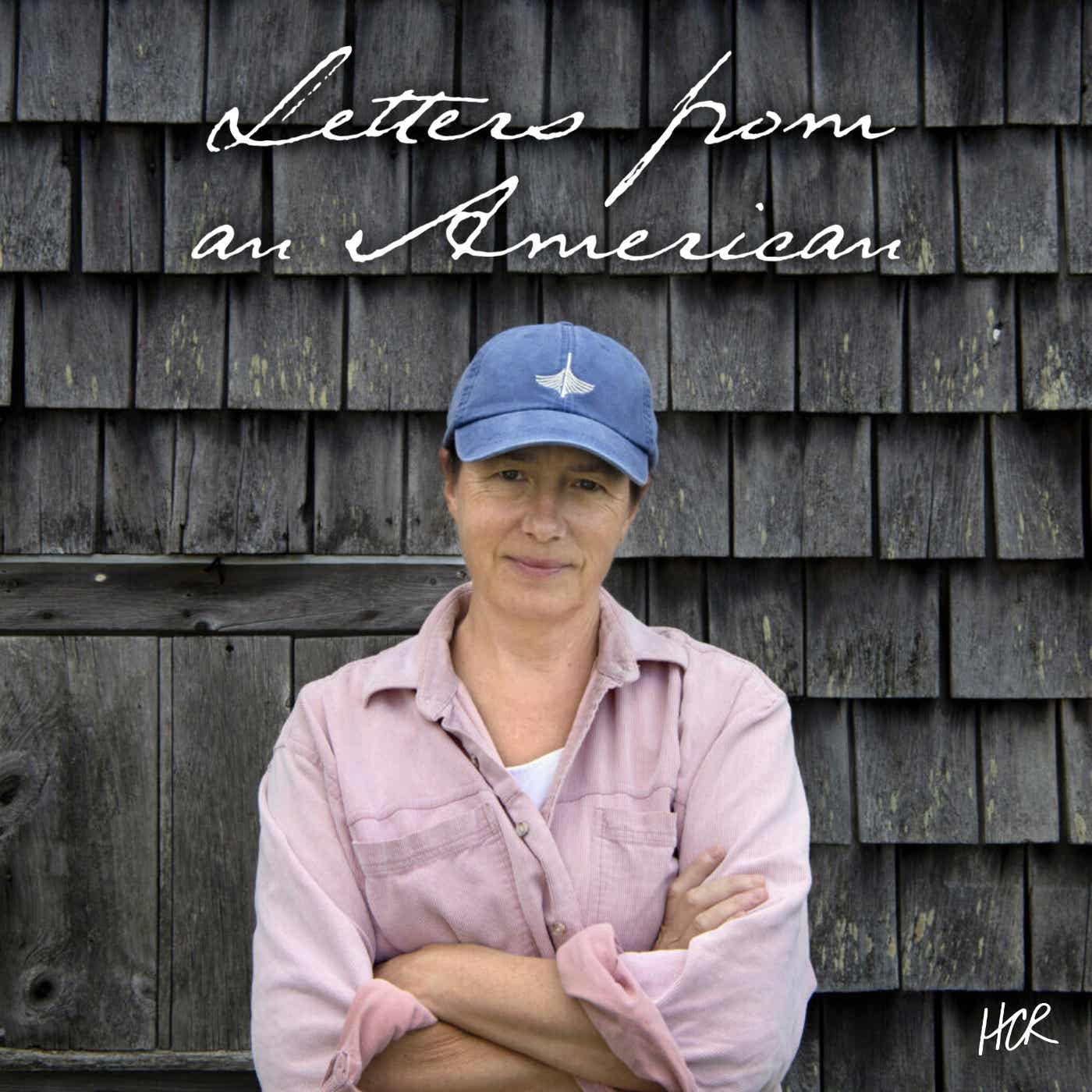
united several Russian officials and commanders, including Putin himself, for war crimes and crimes against humanity. But once Trump was back in office in 2025, he promptly tried to swing the US behind Russia. His appointees insisted that the real story of the 2016 campaign was not Russia's support for Trump, but rather a democratic conspiracy to push the story of the Trump campaign's ties to Russia. Repeatedly, Trump has threatened Zelensky and tried to cajole him into surrendering the territory Russia wants. After the ICC indictment, Trump welcomed Putin to American soil in Alaska in August 2025, ordering US soldiers to roll out a red carpet for him. And he has invited Putin to a gathering of the group of 20 nations with advanced economies at Mar-a-Lago in December. Yesterday, the US announced sanctions on the ICC itself, and Secretary of State Marco Rubio has vowed to take the organization apart, brick by brick. Meanwhile, Putin has behaved like someone who has a strong hand over Trump. In August 2025, Russian Foreign Minister Sergei Lavrov showed up at the Alaska meeting wearing a sweatshirt with the Cyrillic letters SS-Air, which translates to USSR, suggesting that the Soviet Union had won the Cold War after all. On Friday, despite the fact that Russia is backing Iran, whose military is killing US soldiers, Trump proudly announced he was removing sanctions to let Russia sell its oil on global markets. The Ukrainian attacks have curtailed Russian production, so the amount it has available to help the diesel squeeze in the US is negligible. But the ability to rake in cash as the world's current oil shortage has driven up prices is invaluable to Putin for his desperate war effort. Also yesterday, Trump asked the Supreme Court to weigh in on a lawsuit over the 2016 election that he brought in 2022 against Hillary Clinton and former members of the Department of Justice, including former director of the FBI, James Comey, Clinton's campaign share, and a grab bag of others. Trump sued them for conspiring to tie him to Russia in order to undermine his campaign. As John Fritz of CNN reported yesterday, a federal court dismissed the lawsuit as frivolous and ruled that Trump's attorneys were liable for nearly a million dollars in sanctions. The 11th US Circuit of Appeals upheld most of that decision last year. This case should never have been brought, US District Judge Donald Middlebrook's of the Southern District of Florida wrote, "It's inadequacy as a legal claim was evident from the start. No reasonable lawyer would have filed it." And now, Trump is appealing to the Supreme Court. But at this point, how much more evidence is necessary to assess that Trump has undermined US national security and is working for Russia? And how much longer will Republicans in Congress continue to protect him as he does it? Letters from an American was written and read by Heather Cox Richardson. It was produced at Soundscape Productions, "Dad and Massachusetts," recorded with music composed by Michael Moss.
Podcast Summary
Key Points:
Donald Trump has openly aligned himself with Vladimir Putin, reversing U.S. support for Ukraine and undermining the principle of territorial sovereignty.
Trump blames Ukrainian President Zelensky for fuel price hikes, claiming Ukrainian attacks on Russian refineries disrupt oil supplies and harm global energy markets.
The U.S. historically guaranteed Ukraine’s security under the 1994 Budapest Memorandum, which was violated when Russia annexed Crimea and invaded Ukraine in 2014 and 2022.
Paul Manafort, a former advisor to Ukrainian President Yanukovych, worked with Russian operatives to promote a plan to create a Russian-backed autonomous region in eastern Ukraine—known as the "Merry Upoil Plan."
Russian-backed efforts to divide Ukraine, including plans to establish autonomous republics in Donbass, were part of a broader strategy to extend Russian control, directly contradicting U.S. policy.
Trump, during his 2025 re-election, welcomed Putin to U.S. soil and invited him to high-level gatherings, signaling a shift toward active diplomatic alignment with Russia.
Trump’s administration removed sanctions on Russian oil, enabling Putin to profit from global oil prices, despite Ukraine’s ongoing military resistance.
A U.S. court dismissed Trump’s 2022 lawsuit accusing the Biden administration of conspiring to tie him to Russia, calling it frivolous and legally baseless.
Summary:
S. foreign policy by openly supporting Russian President Vladimir Putin, abandoning the longstanding principle of territorial integrity in Ukraine. He blames Ukrainian President Volodymyr Zelensky for fuel price spikes, falsely claiming that Ukrainian attacks on Russian oil infrastructure harm global energy supplies.
, UK, and Russia promised to protect Ukraine’s sovereignty after the dissolution of the Soviet Union. Historical evidence reveals that Russian influence in Ukraine, including through figures like Paul Manafort who advised Yanukovych, led to the 2014 annexation of Crimea and subsequent invasions. S.
goals of a free and unified Ukraine. S. events and removing sanctions on Russian oil sales, enabling Putin to fund his war effort.
S. sanctions targeting Russian officials and the International Criminal Court (ICC) indicting Russian leaders for war crimes, Trump has opposed the ICC and pushed to dismantle it. A federal court dismissed his 2022 lawsuit alleging a conspiracy to tie him to Russia as legally frivolous, with the 11th Circuit affirming that decision.
S. national security and align with Russian interests.
FAQs
Yes, according to the transcription, Trump has publicly backed Russian President Vladimir Putin and shifted U.S. policy to favor Russia, including by blaming Ukraine's leadership for the war and advocating for peace deals that could lead to Russian control of parts of Ukraine.
The 'Merry Upoil Plan' was a proposed Russian-backed strategy to create an autonomous republic in eastern Ukraine, specifically in Donbass, to bring that region under Russian control. It was discussed by Russian operatives and Paul Manafort during the 2016 campaign, and the Senate Intelligence Committee linked it to efforts to influence Trump's policies on Ukraine.
Trump accused Zelensky of targeting Russian oil refineries, which he claimed disrupted the global supply of diesel. He argued that this action increased fuel costs for U.S. farmers and ranchers, blaming Ukrainian actions for economic harm.
Manafort worked for Ukrainian President Viktor Yanukovych from 2004 to 2014, helping to legitimize a regime linked to Russian oligarchs. Later, he advised Donald Trump’s 2016 campaign and was involved in plans to create a Russian-backed autonomous region in eastern Ukraine.
The U.S. committed to Ukraine's territorial sovereignty through the 1994 Budapest Memorandum, which promised not to use military force or economic coercion against Ukraine after it gave up nuclear weapons. This principle was upheld during previous U.S. administrations in response to Russian invasions in 2014 and 2022.
Yes, in August 2025, Trump welcomed Putin to Alaska, ordering U.S. soldiers to provide a red carpet. This event raised concerns about U.S. foreign policy alignment with Russia during his second administration.
Chat with AI
Loading...
Pro features
Go deeper with this episode
Unlock creator-grade tools that turn any transcript into show notes and subtitle files.
 PodcastTranscript AI