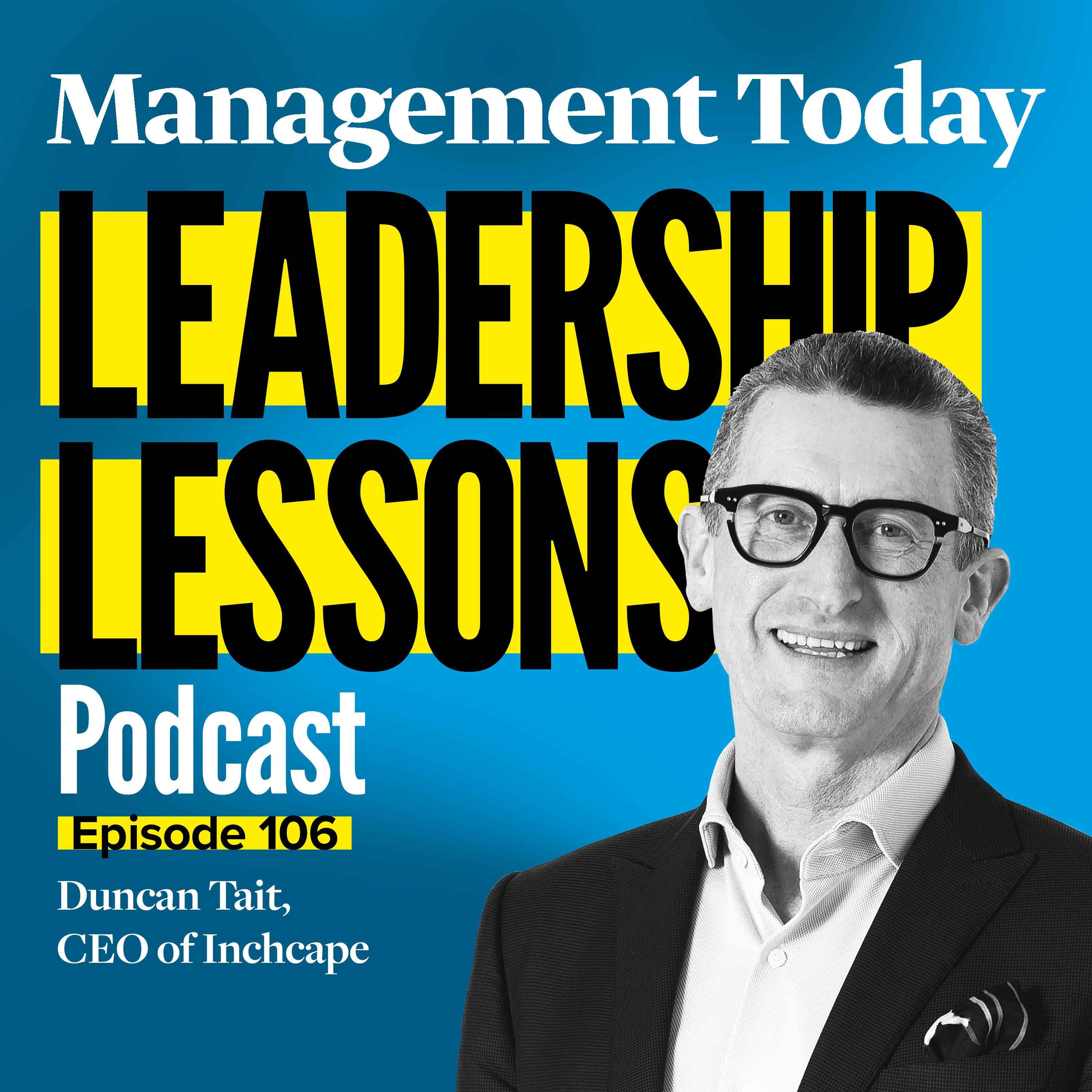
Duncan Tate, CEO of Inchcape, emphasizes the power of purpose in leadership amid global disruption. Inchcape, a 200-year-old automotive distribution leader, operates in over 40 small-to-medium, complex markets worldwide. The company has navigated recent supply chain crises—from COVID to semiconductor shortages and geopolitical tensions—through deep market insight, a technology-enabled sales and operations planning process, and close partner collaboration to balance demand and supply effectively. Growth is targeted in regions with low vehicle ownership rates and through expansion into commercial vehicles, managed by strategically stacking brands to serve different consumer segments without internal conflict.
Inchcape supports the inevitable transition to electric vehicles by introducing new technologies, aiding policy discussions, and reducing its own CO2 emissions. It leverages data, AI, and machine learning for pricing, inventory management, and market entry, while cautiously experimenting with generative AI. Tate highlights industry disruptions like digital consumer journeys, the rise of Chinese OEMs, and the EV shift, which Inchcape addresses by enabling partner performance in go-to-market strategies. The company also actively contributes to communities through initiatives such as free safe driving courses and fostering diversity in its technology centers, aligning social impact with business objectives.
My name is Duncan Tate and my leadership lesson is about the importance and power of purpose. You know, we live in a time of great change and continual disruption and the connection between performance and purpose has never been stronger. And what I believe is when people can connect with purpose in a culture which encourages empowerment and accountability will knock the ball out the park for all of our stakeholders. Could you just give me a very brief outline of what Inchcape is and a little bit about your journey to becoming a chief exec? Inchcape is the global leader in automotive distribution. So we enable brilliant performance for our automotive partners in small to medium sized markets around the world. Companies have been going for a long time. We've been global traders for over 200 years. And in terms of my journey into the company, into this global leader, I spent over 30 years in technology. Then I took a break for a year and then was offered the opportunity to become Inchcape CEO, a great global business and technology is transforming this industry like others and my global experience and technology leadership helps. I want to dive right into talking about some of the issues that's facing supply chains. Recent years have seen what has been dubbed as this supply chain poly crisis. We've seen shortages, extreme weather events, geopolitical crisis and shifting trade policies and all of these are causing a lot of disruption. To what extent have these impacted Inchcape's business and how have you responded? You know, this is a super question. So I joined right in the middle of COVID, which clearly caused a demand and supply crisis all at the same time. As we moved out of COVID disruption, we then had great semiconductor issues inside the industry. So an inability of manufacturers to make vehicles and that caused you had very high levels of demand lower levels of supply. Then we've had Ukraine war. We've had a great increase in the following on from that high interest rates and inflation and all the other things that we know that have gone on, including now the tariff wars that are going on. Look, what our job is to know our markets inside out and back to front. It's also our job to know our OEM partners and what's important to them. We have this wonderful process called sales and operation planning, which is all about matching demand and supply. This technology enabled and we have been able to maintain super healthy supply into our markets, to drive market share for our partners and at the same time keep our customers happy with making sure they can get what they want. So for us, we take a view by market about what do consumers want, what do we need to do with our automotive partners as a result and to manage that on the global basis. So sounds easy, but you need great people to be able to do it empowered by super technology. And how have you navigated the business through a lot of the uncertainty around tariffs specifically and based on the current tariff situation, it seems to be changing very quickly. What's your outlook then on the automotive industry? If I go back to Liberation Day on 2nd of April, we then took a look at what it happened during other big shocks to the world economy. We took the global financial crisis in 2008 or so. We looked at what happened during COVID and what was the reaction to markets and what was the reaction of automotive manufacturers. What you had during 2008 was automotive manufacturers continuing to produce a lot of product as demand dropped. It was unclear what was going to happen during this for us, but then we looked at COVID as well, COVID manufacturers reduce supply and then we go back to our supplied crisis that you spoke about just a moment ago. The thing about both crises, what they taught us was you need to be very careful with your cost base, communicate an awful lot with your partners and be very careful about the levels of the inventory you land in markets. The worst thing for our business to have is low levels of demand and very high levels of inventory that's super bad for our balance sheet. So we made that really clear to our teams around the world about keep closer customers, keep closer automotive partners, be careful on inventory on your cost base. Then in terms of how we thought this could impact us, we have no real impact of direct tariffs. We don't manufacture and we don't work in the world's biggest markets like the United States or China. We did think there might be some impact on supply. Either OEMs are automotive partners trying to supply too much or too little or stopping was bound for the US would have come into our markets and the third one would have been an impact on demand. Now so far what have we seen, no direct impact, second thing in terms of supply, other than a few bumps it seems to be okay and then the third impact which is does it, what does it do to consumer demand? We are seeing some impact on the premium segment in Asia, the buy and large, the market seem to be pretty robust. So we keep an eye on our internal company, we're closely with partners and then we keep ever so close to what's going on in the world economy, tariffs in, tariffs out to see what might happen. Finalized, large so far we're doing okay. Given Inch Caps global footprint, I think you operate across, is it more than 40 countries where do you see the most untapped potential for growth in the future? So if you look at the global automotive market, there's about 90 million vehicles sold every year and a lot of that will be in countries where it's very difficult to see much more growth. They tend to be the developed economies. We focus in on small to medium size and more complex markets and these are the ones where we see longer term potential for growth. And if I give you a very simple statistic which is motorisation rate, the number of vehicles per thousand people in the US it would be around 800 vehicles per thousand people. You're up more like 500. You know, some of our markets have less than 100. So over time, now these are multi decade moves. Over time the number of vehicles sold in some of our markets is just going to be a tailwind for us. And we're a bit more bumpy because you see these markets are volatile and cyclical, which is why we have geographic diversity to give us the ability to perform even when some markets are down. But this is where you'll see much more growth for the automotive sector. The other thing I would add is I talk primarily about our passenger car business, but there's also opportunities for us to grow in construction, in trucks, in commercial vehicles, which we have capability built in some of our markets, which we could expand further. And intercape works with I think it's around 60 automakers, if that's figures correct. Yeah, that would be right. How do you then manage the competing interests between perhaps more established brands like Toyota and relative newcomers like BYD for example, within the same markets? But what we're trying to do in each of our markets is build a ladder of brands that can address consumers from entry level, you know, in some of our markets entry level, be $10,000 to buy a vehicle through to, you know, paying three or four hundred thousand dollars for a vehicle and everything in between. So we try and stack brands. So that in one of our countries, you don't have multiple brands all trying to pursue the same consumers. So that would be the first principle. And that's in individual countries is that's the approach we would take. And in some of those markets, you could never run, and I won't give you the names if you'll allow me to, you couldn't run a manufacturer A and C in the same market. But creating this ladder of brands works really well for us. And ultimately what our partners want is performance. And if we're delivering the right level of share for them and the right level of customer satisfaction, which we have record levels of customer satisfaction in each of our markets, then our early end partners try to try to be helpful with it. The other thing I would say is our automotive partners know the industry is going through great change. They want more efficiencies in their route to market. And by building scale inside our markets, we can give them greater efficiencies and grow our business at the same time. So is it easy? No, it isn't easy, but it is a function of being a successful company that will have more partners. And I tried to build part relationships with these partners, market by market, region by region, and importantly also at the headquarters level. So we have great communication with our partners to overcome some of the challenges growing and having scale creating. And part of that rapid change is this boom in the electric vehicles market. So how are you then sort of supporting your OEM partners, especially in some of those markets where they perhaps like the infrastructure to accommodate EVs? Sure, like the first thing I should say is the move to electric vehicles is inevitable. It moves in different places in different markets. Some of our markets have nearly 90% EV penetration, some have less than 1%. The role in which you can play largely is threefold. The first thing is to bring new technologies to market, where they happen to be hybrids or pure electric vehicles. The second area we can help with is bring governments, policymakers and automotive partners together using our data to inform how you can make the move more smoothly to a zero carbon future. That's a second area. And look, and the third thing we also want to do at the same time is we also want to reduce our impact on the planet and reduce our own CO2 emissions. In fact, we have reduced our scope one and scope two CO2 emissions by over 37% by the end of 2024 and we're making great progress again this year. Now how does that play out? We want to be the leader of introducing new energy vehicles into each of our markets and we use partnerships to make that happen. If I look at some markets like Chile, for instance, we are the market leader with somewhere between 40 and 50% market share in new energy vehicles. So how are you, I guess, supporting brands in building market share in new geographies as they then expand their international footprint? So if I look at, if I go back to that number I gave you before, there's about 10.8 million vehicles that represent our target market today. Some of those countries were already in, you mentioned the number of about 40 before, but there's about another 40 that we could be in. And if I address those separately for you, in the markets we're already in, I'd like us to be a minimum of 10% market share in every last market we were in. And in some markets we have 25% share. And to do that, what we do is we help our existing partners to perform and gain share. And then we have new partnerships which we're leveraging. Great for our existing partners, our new partners and for in-cape and introduce those into markets. Now, and it's because we have so much data on consumers in a marketplace and we're very close to the way governments and regulators will move regulation tariffs, etc. over time that we can help really, really successful market entry for our OEM partners. And this is all about using data to inform what vehicles should be land in the country with which drive train, in what color, with what features at which price points. If I then think about entering new markets for in-cape and helping our partners in the same time, we tend to use our M&A muscle to go on buy businesses to get into new markets. I guess the most risky thing for us to do would be go into a new market with a new OEM. So what we tend to do in a market we want to be in, we just bought a business in Iceland for instance. Well, buy an existing business that's in great shape and then we'll add new brands to that business. So the business we just bought in Iceland ask you, big Mercedes-Benz partner and we think we can add more brands to that portfolio to build that Lajra brand in the marketplace. And then we'll help our partners understand with that SNOP sales and operation planning process I mentioned before about what's the best way to the end to enter the market at which segment. And if I give you a simple example, a lot of the market we've been for a long time Australia, the bulk of the vehicle sold are between 40 and 60,000 Australian dollars. So if you're between 58 and 60,000, the number of cars sold in that segment is super low. You need to be closer to 50,000 to address the bulk of the consumers in that segment. So we bring that type of market knowledge to enable performance. And again, I go back to brilliant people with great technology using data means we can perform better than our competitors. And have you implemented or deployed any AI technologists to help you succeed in that? Much to my happiness, yes. Yeah, we've built two brilliant digital delivery centres, one in Colombia, one in the Philippines. We have about 1,500 people across each centre, across the two centres. They do many things for us, but you've asked me about AI. So they're building machine learning algorithms. We have about 250 inside our business, which we've deployed globally. And our mantra is we build ones, deploy many times. And of course, it is the data within a market that enabled these machine learning algorithms and AI to really work. If you think about when we've got big scale in the market, just a simple example would be, how do you price parts when you might have 250,000 individual partners? How do you price those? Well, it's very difficult for a human being to do it or teams of human beings to do it. So we've been using algorithms to do that, to optimise volume versus margin for us. Another example, and I've gone on about this a lot in our conversation, is about what stock should we land into a market? And we use machine learning algorithms to do that. And they'll take backward facing analytics about what has sold previously, forward facing analytics about how are people engaging with configurators? And other data to understand what do we need to land into a marketplace? And our teams use these now, every day, like they would use their mobile phones. It's that prevalent inside the company. Now, of course, a conversation like this would not be the right one to have if we didn't talk about Gen AI or large language models. And we're going a little bit more carefully in that area, because of course, the power of those models is way greater than just statistical algorithms in machine learning. But we have them to improve our marketing in markets. Throughout our Americas now, we have one centre that does all of our marketing. They use Gen AI, Inchcape Enterprise, the Gen AI to do that. We're also having some parts to engage with customers that we're experimenting with, about helping them with vehicle choices. We're using them in our legal function. So step by step, we're experimenting a lot with Gen AI. I'm super excited about it, but we just need to be careful. What kind of trends have you seen or perhaps disruptive forces? Do you expect to have the biggest impact on the automotive industry and therefore, Inchcape in the coming years? Hey, look, we live in a, I think if you love disruption, you're going to love being in the world of mobility and automotive. The industry has been changed greatly on a number of levels. They're buying journey in a completely different way than they would have done. Everybody starts online. Increasingly people will be using Gen AI to understand what vehicles they might want to buy. I think that will change things greatly and already has been disrupted. The second one, I would say, is the rise of the Chinese OEMs. They've gone from in some markets almost no presence at all just a few years ago. They're now the biggest exporter of vehicles of any country around the world. I looked at producing great vehicles that are well designed, full of technology, a good price, and that's going to change the industry greatly. And then of course, the third one is around what does EV and new energy vehicles do? As that completely changes again, everything for all automotive manufacturers globally, the move to zero carbon future, the pace at which that moves is causing a great opportunity and challenge for this industry all at the same time. Now, what Inge Cape is doing, of course, is we are solving for the go-to-market portion for OEMs in the markets where their models are better suited to the biggest markets in the world, are the best suited to a small to medium-sized, more complex markets. And our job is to make sure that we enable performance for our partners across each one of those things that's disrupting the industry. So great technology, helping the EV transition, working with OEM partners to drive performance and share. If you like disruption, it's a great place to be. I was having a little peruse of the Inge Cape website and it says, "We are united with the interests of all our stakeholders in the need to make a positive contribution to the communities in which we operate for our people, for society and for the planet. I know you've already given an example of your sustainability efforts, but I wondered if you could give just a couple more examples of how Inge Cape is actively making a positive impact, particularly around the sustainability piece." Yeah, sure. Look, if I think about, let's give you a couple of examples and try and connect what's important to our OEM partners to our people and the communities within which we operate in. So, we have the topic of safe mobility or safe driving. We provide for free in many of our markets around the world safe driving courses for people. Road accidents in some of the countries we're in are way too high. So we provide safe driving courses, whether you bought our vehicles or not, you can engage with these programs. I was in Chile just a few weeks ago. We are doing that for passenger vehicles. We're also doing it for two wheelers, so for motorbikes as well. These like Subaru love what we're doing in places like Australia. They want to get road accidents down to zero into the next century, and we are actively helping them do that in Australia, and Peru, and Ecuador, and places like that. The other example I would give you is around social mobility. If you look, I mentioned our two digital delivery centres. If you look at our gender balance in our delivery centres, and of course, I am a believer that talent is equally distributed throughout society, regardless of whether you have an ability, disability, colour of your skin, sexuality, religion. If you look at the diversity in those digital delivery centres, we're getting in brilliant talent. Our gender stats are not yet perfect, but we have about 40% of the people who work in those centres are female. We help women into the world of technology in the Philippines and in Colombia by making it much easier for them to work in. These are the people producing all the algorithms and technology systems that we're using. I am super proud when I see our company doing these things. Of course, it's done in glorious self-interest. We do things because there's a business case for each of these topics, whether it's safe driving, whether it's our diversity and the inclusion programmes. We do them because they make business sense, and we're doing super things for communities at the same time. We've previously mentioned at the beginning of our conversation that you have a very extensive technology background. What lessons from your previous roles within that sector would you say have helped you the most in the automotive sector? If I look at the development of technology over the last, certainly since I've been 30 years, has been the following, which is try and get programmes that you are actually in programmes of work, try and get them down to the smallest possible component and experiment and deliver value as soon as possible. If you look at the way we've developed some of our algorithms, we've tested them out in markets, in real-world examples, and done so in a few weeks or months. When the market operators are there and are going, I need that one as well. We know we can expand them globally. Not small gets super business-focused and if they work scale them rapidly. On the scale rapidly part, you then need to think with the end in mind, which is, I am going to start small, I'm going to prove the value. We want our people at the same time to think about, how would you then scale this globally? There's no point starting small creating value that can only be used in Singapore. I want it in Indonesia, in the Philippines, in Australia, in Peru, in Greece, in Romania, and then can we rapidly move? If I give you some of the examples about how we've got better at scaling, it used to cost us about $100,000 to deploy an algorithm in more markets once we'd originally proved it and it would take us about two months. We're now down to about $2,500 and it takes us about two weeks. So just to wrap up our conversation, what would you say is your long-term vision for the business? Look, we set out to be the global leader in automotive distribution, the undisputed number one performer for our partners right around the world. And I go back to our purpose statement. We are here to bring mobility to the world's communities and to do so for today, for tomorrow, and for the better. And that better word is so important for me, which is it speaks to leadership, but it also speaks to the way we do business. The OEM or automotive partners can trust us in their markets because we'll look up their brand because of our commitment to running ourselves as a super ethical company around the world. We are greater, anti-bribery, anti-corruption, anti-money laundering, great cybersecurity, wonderful health and safety processes that is the bedrock of our business on which we deliver increasing levels of value to the countries we operate in and to our partners. Thanks for listening to Management Today's Leadership Lessons Podcast. If you enjoyed it, please subscribe. You can find us on Apple, Spotify or wherever you get your podcasts.
Podcast Summary
Key Points:
Purpose-driven leadership and a culture of empowerment are crucial for high performance, especially in times of disruption.
Inchcape is a global automotive distributor focusing on small-to-medium, complex markets, managing supply chain polycrises (COVID, semiconductors, geopolitics) through deep market knowledge, sales/operations planning, and technology.
Growth potential lies in markets with low vehicle ownership rates, geographic diversification, and expansion into commercial vehicles, managed by creating a "ladder of brands" to avoid internal competition.
The company supports the EV transition by introducing new technologies, facilitating policy discussions, and reducing its own emissions, while using data and AI for market entry, pricing, and inventory optimization.
Key industry disruptions include digital buying journeys, the rise of Chinese OEMs, and the shift to EVs, which Inchcape navigates by enabling partner performance in go-to-market strategies.
Sustainability and social impact are integrated through initiatives like free safe driving courses and promoting diversity in technology centers, aligning business sense with community benefits.
Summary:
Duncan Tate, CEO of Inchcape, emphasizes the power of purpose in leadership amid global disruption. Inchcape, a 200-year-old automotive distribution leader, operates in over 40 small-to-medium, complex markets worldwide. The company has navigated recent supply chain crises—from COVID to semiconductor shortages and geopolitical tensions—through deep market insight, a technology-enabled sales and operations planning process, and close partner collaboration to balance demand and supply effectively. Growth is targeted in regions with low vehicle ownership rates and through expansion into commercial vehicles, managed by strategically stacking brands to serve different consumer segments without internal conflict.
Inchcape supports the inevitable transition to electric vehicles by introducing new technologies, aiding policy discussions, and reducing its own CO2 emissions. It leverages data, AI, and machine learning for pricing, inventory management, and market entry, while cautiously experimenting with generative AI. Tate highlights industry disruptions like digital consumer journeys, the rise of Chinese OEMs, and the EV shift, which Inchcape addresses by enabling partner performance in go-to-market strategies. The company also actively contributes to communities through initiatives such as free safe driving courses and fostering diversity in its technology centers, aligning social impact with business objectives.
FAQs
Inchcape is the global leader in automotive distribution, enabling performance for automotive partners in small to medium-sized markets worldwide. The company has been operating for over 200 years as global traders.
Inchcape uses a technology-enabled sales and operation planning process to match demand and supply. This approach helps maintain healthy inventory levels, drive market share for partners, and keep customers satisfied despite global disruptions.
Inchcape builds a ladder of brands in each market to address different consumer segments, from entry-level to premium vehicles. This prevents brands from competing for the same customers and ensures performance and customer satisfaction for all partners.
Inchcape helps by introducing new EV technologies to markets, using data to inform policymakers for a smoother zero-carbon transition, and reducing its own CO2 emissions. The company aims to be a leader in new energy vehicle adoption in each market.
Inchcape uses machine learning algorithms for tasks like pricing parts and optimizing inventory. It also experiments with generative AI for marketing, customer engagement, and legal functions, with digital delivery centers in Colombia and the Philippines driving innovation.
Inchcape focuses on small to medium-sized, complex markets with low motorization rates, where long-term growth is expected. It also sees opportunities in commercial vehicles, construction, and trucks, leveraging geographic diversity to manage volatility.
Chat with AI
Loading...
Pro features
Go deeper with this episode
Unlock creator-grade tools that turn any transcript into show notes and subtitle files.
 PodcastTranscript AI